
Thailand is a well-known country, and for many the name may conjure images of rice fields, pristine beaches, ornate temples, and elephant sanctuaries. But as we know, you can’t take home a beach, a temple, and certainly not an elephant.
The goal of this article is to provide a list of things to buy in Thailand that you can not only take home, but that are uniquely Thai and representative of time spent in the “Land of Smiles.”

But first, here are a few things that you won’t find on this list. I won’t recommend taking fresh durian out of the country, given the odor, not to mention the fact that many airlines don’t allow it. You also won’t find knickknacks, and definitely not those blousy, albeit comfortable, elephant pants that have become the uniform of backpackers in Southeast Asia.
Now that the caveats are out of the way, below are 22 of the best souvenirs from Thailand that can be taken home as gifts or mementos from a special trip.
Table of Contents
Thailand souvenirs you can eat or drink
1. Regional varieties of rice
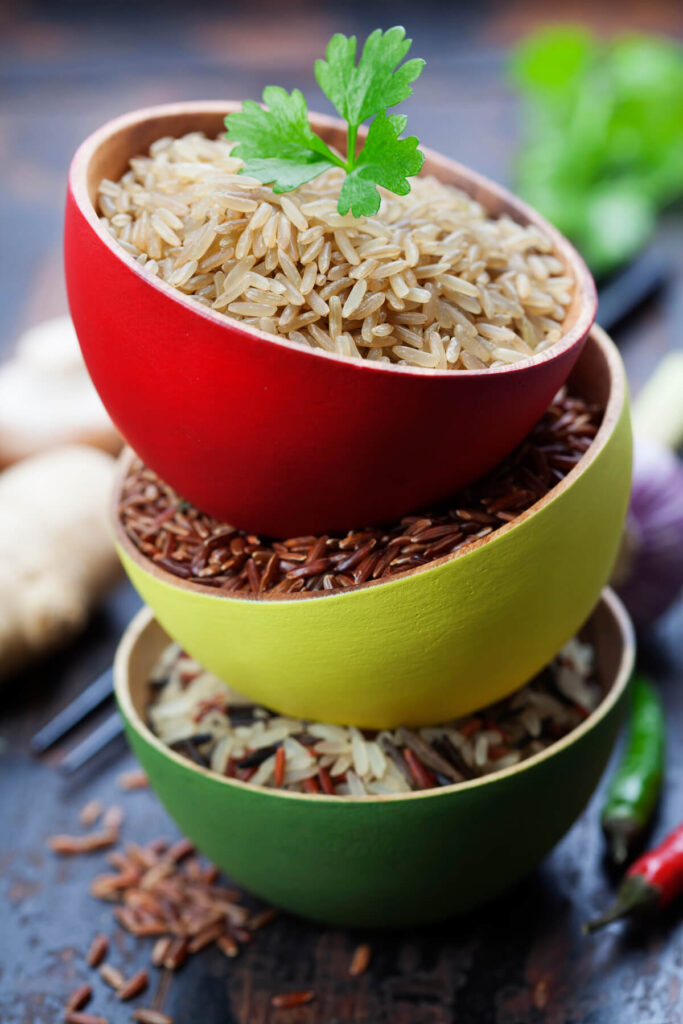
Kin khao reu yang. This is a type of greeting in Thailand, which roughly translates to “Have you eaten yet?” or more literally, “Have you eaten rice yet?” Suffice it to say that rice plays an important role in Thai culture.
It wouldn’t be surprising to see rice served with every meal in Thailand, either as a side, as a filler, a main course, or even a dessert. Rice also plays a role in religious practices, given as an offering to Buddha, and to monks during almsgiving.
Rice has been the lifeblood of Thailand since well before it was even called “Thailand,” and taking home such an essential part of life is a meaningful, yet useable souvenir.
There’s not enough room here to thoroughly cover all of the different strains of rice that are grown and eaten in the country, but here are a few distinct options.
There’s the red/brown sangyod muang phatthalung rice from the southern isthmus of the country. There’s the glutinous rice from Khao Wong in the northeast. And of course, there’s khao hom mali, a jasmine rice that many outside of Thailand are quite familiar with.
2. Dried noodles

Thai cuisine utilizes a staggering variety of noodles, and it’d difficult to pin down any specific kind in particular that best represents the national cuisine. The best move when buying noodles to bring home, is to take a few different kinds.
They are one of the pillars of Thai cuisine. There are cold dishes, warm dishes, noodles that are sauteed, and noodles that are served in soups. There are glass noodles, egg noodles, flat noodles, and even crispy noodles. You’ll find them in street food and in the finest dining in Bangkok.
While Thai food often doesn’t get the credit it deserves for its complexity and breadth that extends well beyond noodles, some of its most essential dishes are in fact, centered around noodles.
Pad thai is the obvious one, but there’s also khao soi, the curry-based noodle soup that’s one of the most popular dishes in Northern Thailand. And there’s, of course, kuai tiao ruea, also known as “boat noodle soup,” which is a delicious dish made with broth from pig and cow blood.
So, take back a few kinds of noodles, and explore the versatility of Thai cuisine while at home.
3. Dried lemongrass
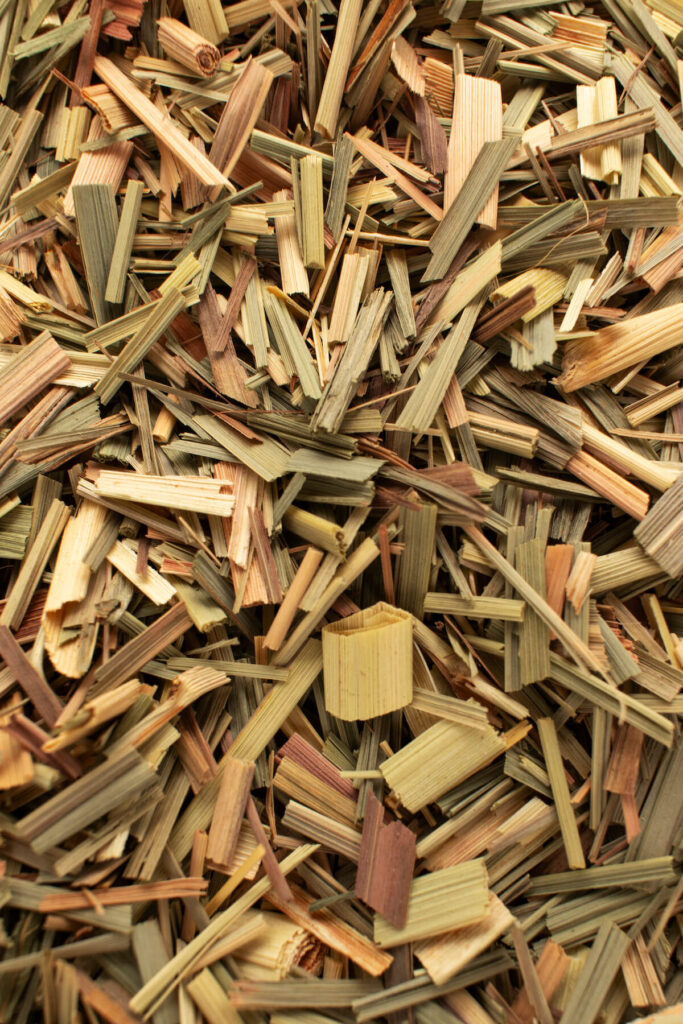
Few other ingredients or flavors are as intimately tied to Thai cuisine as lemongrass. Its fragrant, fresh, citrus flavor is typically a quick indicator that a dish is of Thai origin.
Lemongrass in its natural state, is as the name suggests, a type of grass, with tall, stiff stalks. It grows throughout Southeast Asia, Thailand included. It can take a bit of work to utilize, given it is very fibrous and it has a tough outer layer. Oftentimes, the outer layer is peeled off so that the softer inner layer can be chopped, minced, or muddled into a paste.
It is often an ingredient in curry and chili pastes, as well as part of meat marinades, in addition to being consumed as tea. Lemongrass is also commonly used as an elixir for healing injuries and illnesses, and it can function as an insect repellent.
Dried lemongrass won’t have the same pungency or brightness as fresh lemongrass, but it can still be brought home for use in soups, pastes, marinades, and homemade tea. Its scent and distinct flavor will quickly transport you back to your trip.
4. Thai chilies
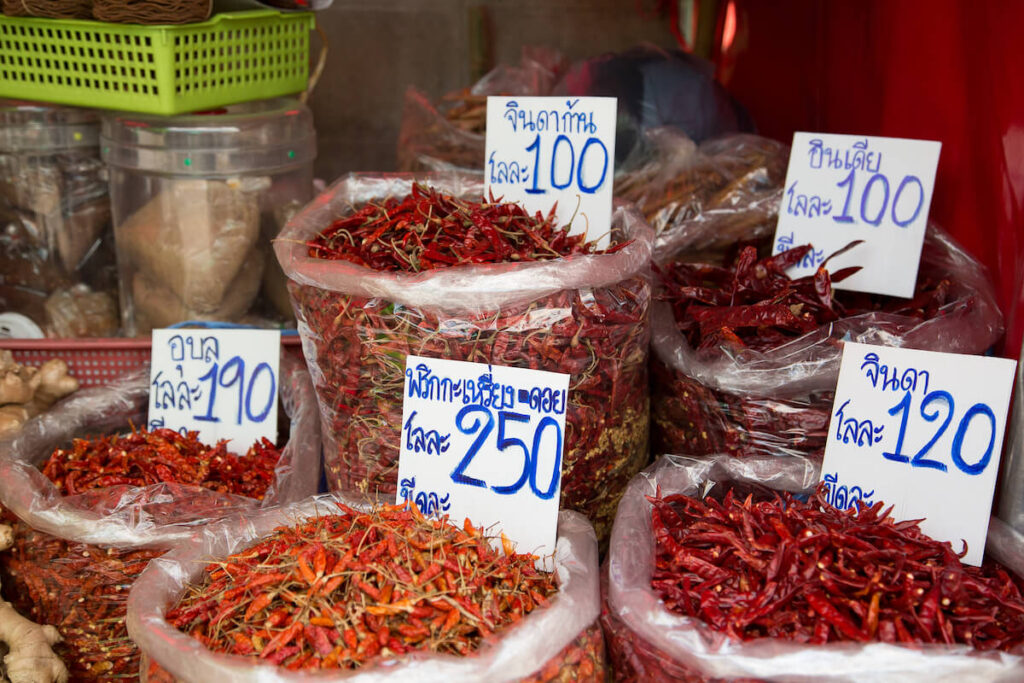
Thai food is known for its heat, and where does that heat come from? Chilies. And Thailand has quite a lot of them.
The names of all chili peppers start with the word prik, which means chili. The most common Thai chili is the prik kee nu, also known as the “birds-eye chili” or better yet, the “mouse droppings chili” (supposedly due to its shape). These are blazing hot, reaching 100,000 on the Scoville scale. For reference, the common jalapeño usually tops out at 8,000.
That said, there are dozens of varieties, and chilies are not merely used to blow away your taste buds, but rather to enhance the flavor of a dish. As we’ll learn next, chilies play an essential role in Thai curry paste, one of the building blocks of Thai cuisine.
While you won’t want to take home fresh vegetables, try taking back some dried chilies, which can be rehydrated or simply ground into a fine powder to add some punch and flavor to your next dish.
5. Curry paste
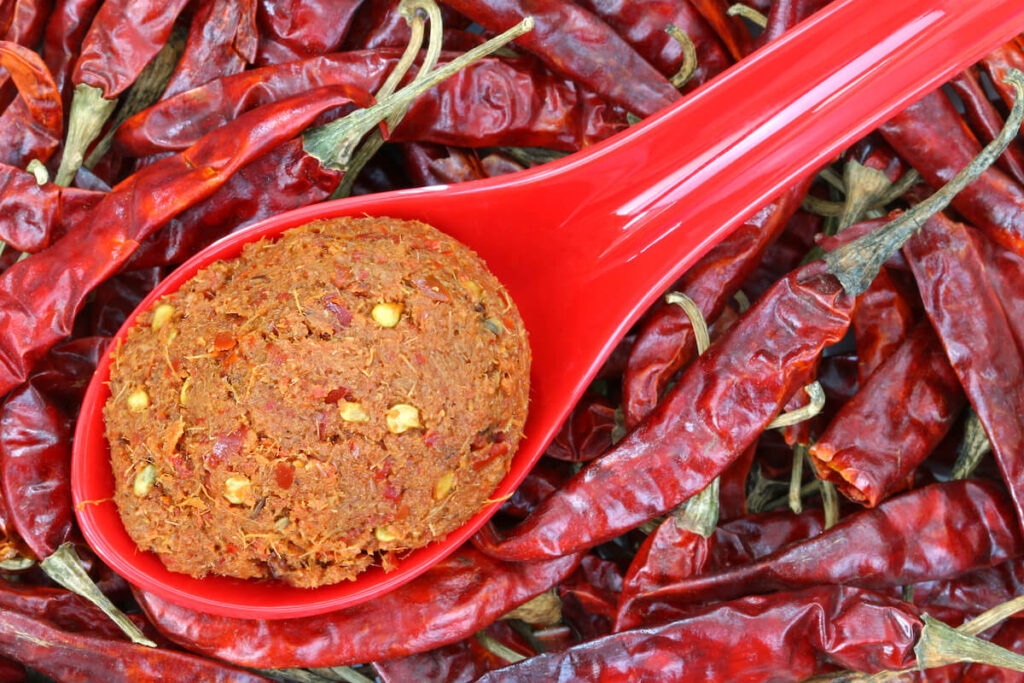
Countless dishes throughout Thai cuisine, ranging from North to South, East to West, utilize curry paste. It can be used as a base for soups, for marinating meat, for seasoning rice, and for sauces.
While you might hear “curry paste” referred to as a singular item, there are in fact many varieties. There are the very popular ones named by color such as red, yellow, or green curry paste. But there’s also the more nuanced panang and massaman curry, as well as the infinite varieties that can be created using different ingredient combinations.
At its most basic, a curry paste is made using dry spices, like cumin or cinnamon, alongside fresh ingredients like lemongrass or onion, in addition to shrimp paste and chili peppers.
You can absolutely make curry paste at home, particularly if you also take a mortar and pestle and chili peppers back with you. But you can also purchase curry pastes while in Thailand at markets and convenience stores, and you’ll have a better chance of finding some unique varieties you may not otherwise be exposed to at home.
6. Dried fruit
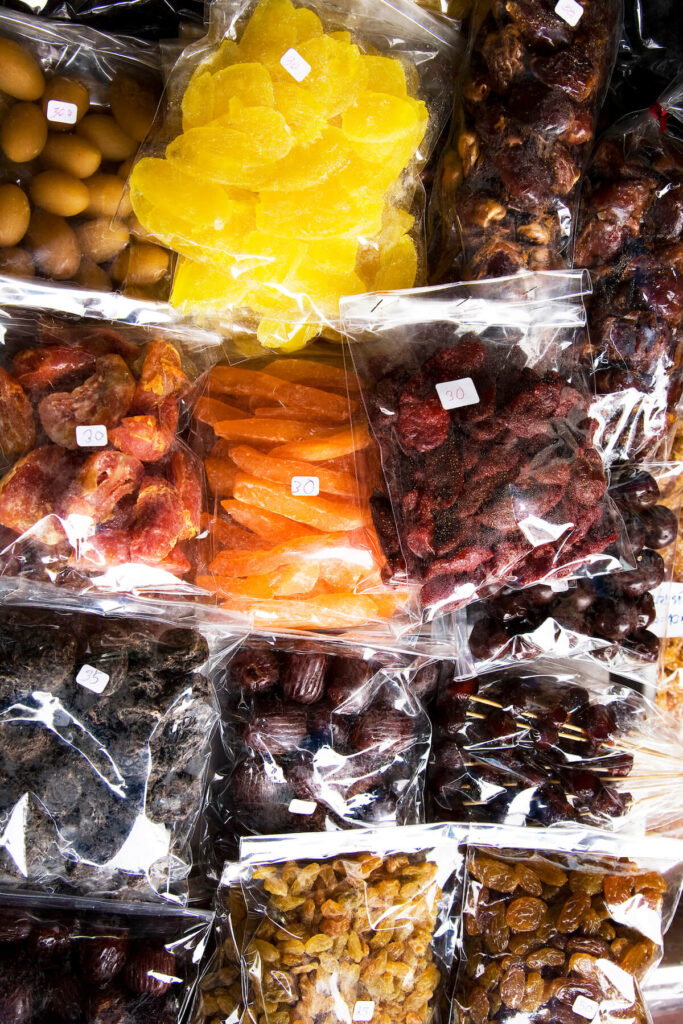
Going to Southeast Asia, for many, opens up a whole new world of food, particularly when it comes to fruit. Thailand is a utopia, with mangosteen, lychee, rambutan, dragon fruit, custard apple, and the infamous durian, representing just a sliver of all the varieties of fruit that can be found within its borders.
But fresh fruit is often not allowed to be taken home, nor is it going to travel well anyway. Therefore, dried fruit is the best alternative, making it possible to bring home a taste of Thailand’s sweet treats.
Be sure to swing by any market or supermarket before heading home, in order to stock up on everything from dried jackfruit to durian to pomelo.
7. Bento dried squid
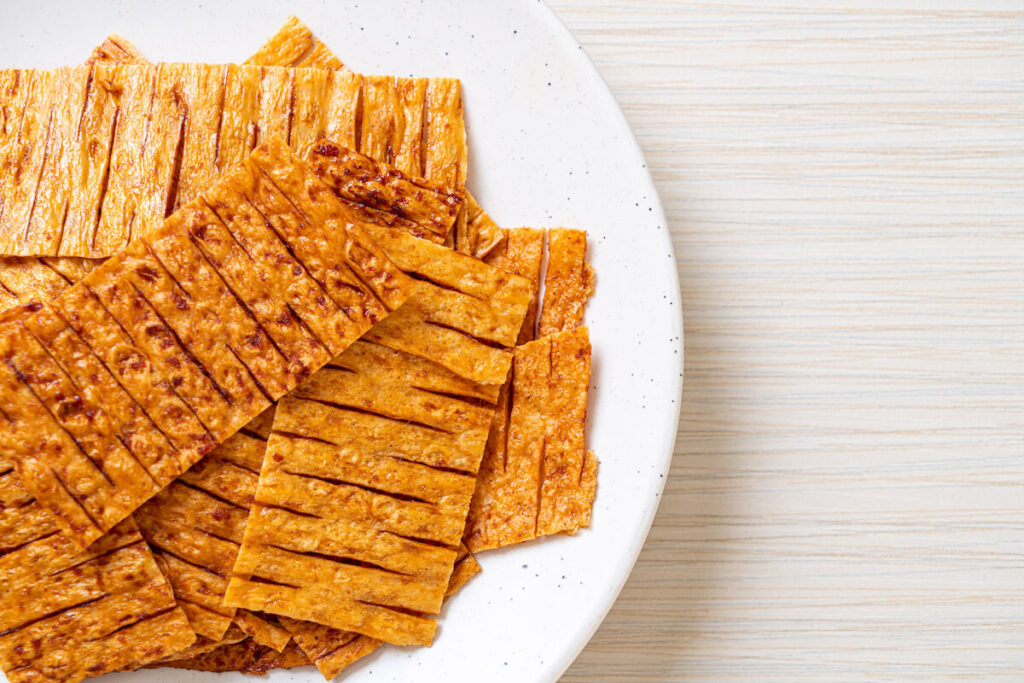
While Thailand may not be quite as internationally renowned for its snacks as a country like Japan, it is still stocked with delicious, snackable, packaged food. Whether it’s Tao Kae Noi seaweed snacks, Koh Kae peanuts, or Manora shrimp crackers, it’s hard to go wrong.
But for the best punch, or the most fun to share with family and friends, go with the Bento dried squid.
Made from real squid, they come in thin sheets that can be pulled apart, and they are slightly chewy in texture. There are plenty of flavors, so when stocking up for the trip home, I suggest grabbing a few different ones to try, especially because many of the flavors are known to be quite spicy!
8. Lao khao

It’s always nice to come home with a new addition to the bar cart or liquor cabinet, and odds are, you probably don’t have a bottle of lao khao in your arsenal. Yet.
Lao khao is a liquor made from fermented rice. Despite the fact that lao khao means “white spirit,” it’s not white, and despite it being a rice whiskey, it’s not brown. It’s actually quite clear.
The drink is popular throughout Thailand, but more so in the rural countryside, where it’s commonly distilled. It can definitely pack a punch, particularly if you’re drinking some homemade varieties that can’t be purchased at stores. But the more commercially produced varieties have an alcohol content in the range of 30-40%, so it won’t totally knock your socks off.
The easiest place to grab a bottle or two is at one of the many 7-Eleven’s throughout Thailand. And when you’re home, pair it with some salty snacks and some grilled meat.
Thailand souvenirs to use in the kitchen
9. Mortar and pestle
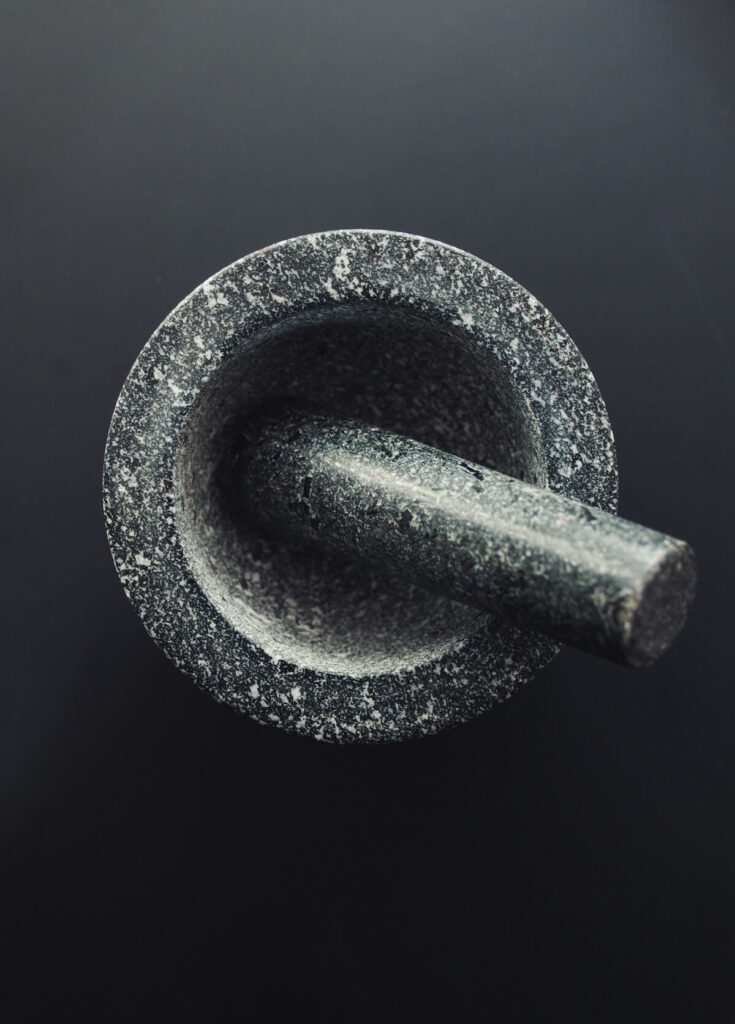
Translating to mortar and pestle, khrok sak is one of the most essential tools in Thai cooking. Think of all the different types of curries, spice mixes, and marinades in Thai cuisine. They are almost always made with a khrok sak.
Part of what makes this essential to Thai cooking is how the pounding and grinding release all of the oils and aromas from ingredients, no matter how tough or stringy an herb, spice, or seed can be. It’s the perfect way to blend all of the different powerful, flavorful components that comprise a dish.
Depending on how many gifts from Thailand you’re already planning on bringing home, it might behoove you to purchase a clay or wooden khrok sak, given ones made of granite and stone can be quite heavy.
Even if you’re not cooking a Thai meal, no kitchen is complete without a mortar and pestle, so why not pick up a special one that’ll last for years while you’re exploring Thailand?
10. Rice baskets

The kratib, or gratib, is a common sight during most meals in Northern Thailand and in Laos. A woven basket, often made of bamboo, these are small, compact, two-pieced baskets used for sticky rice.
Not only are they practical, as they’re designed to keep the sticky rice warm after it’s steamed, but they are often weaved with artistic designs that add a nice touch to any table setting.
The two-piece structure functions somewhat like a lid, so after you pinch off a handful of sticky rice, the lid goes back on to keep it fresh and warm.
These are sold at markets throughout the country, and most vendors selling things like chopsticks, bowls or other baskets will also sell them.
And if you’d like to complete your collection of proper Thai rice cooking materials, you can also purchase a huad neung khao niew. This is effectively a rice steamer basket, which holds the uncooked rice, and sits atop a pot of boiling water so the rice achieves the perfect consistency.
11. Noodle bowls
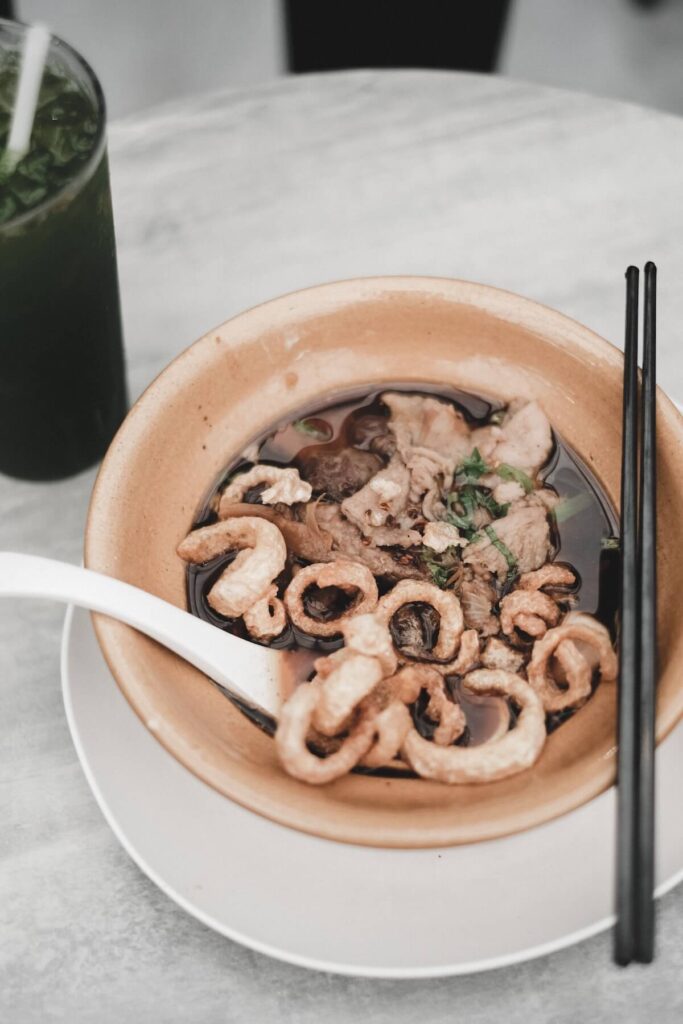
Whether you’re making a homemade version of the dish of Northern Thailand, khao soi, or another dish such as kuai-tiao ruea, Gaeng poo (crab curry from Phuket), or even a classic pad thai, they all need to be eaten out of bowls.
Since many of the dishes that define Thai cuisine – from the herbal, meaty dishes of the North, or creamier, chili-based curries of the South – are served in bowls, much of your time in Thailand will be spent eating out of them.
Ceramic bowls can also be beautifully painted and designed, adding a little color to your kitchen. And if normal serving bowls are too big to transport home, you can always opt for the smaller ones for dipping sauces, which are perfect for classics like prik nam pla (a sweet, sour, and spicy fish sauce).
Thailand souvenirs that you can wear
12. Sarong
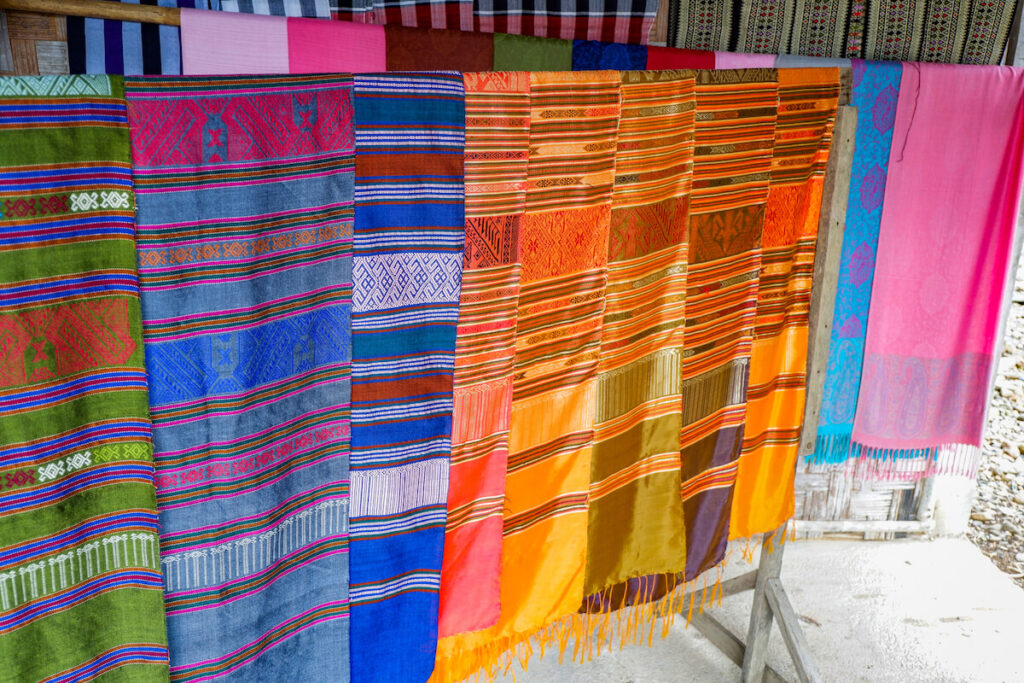
Sarongs, or variations of them, are worn in many areas of the world, ranging from Southeast Asia, to India, to East Africa. They have become associated with Thai dress, and have become very popular with tourists as well.
Essentially, Sarongs are loose wraps to be worn from the waist down. They can be made from silk, cotton, or other fabrics, and provide a large canvas for beautiful designs.
Given it gets very hot in Thailand, they’re the perfect piece of clothing that provides enough modesty to enter temples, while not overheating the wearer. Depending on the quality and design of the sarong, they can be worn anywhere from the beach to formal events.
You’ll find sellers and weavers all over the country, at markets and villages, but finding one where you can see the complex process of dyeing and weaving is your best bet for a higher quality and more meaningful gift.
13. Muay Thai shorts

Because Mauy Thai is the national sport of Thailand, outfitting yourself with a pair of shorts worn by competitors is the perfect gift for anyone interested in martial arts. As the sport has grown in popularity, designs used on the shorts have proliferated, ranging from simple colors to flames to flowers.
One caveat is important, however. Muay Thai shorts are typically fairly loose and baggy, so they may not be best suited for grappling-based sports such as Jiu Juitsu or Krav Maga. Boxing, kickboxing, Tae Kwon Do, and other upright sports are better suited for a pair of Muay Thai shorts.
Since the accessibility of Mauy Thai is one of the reasons to visit a city like Chiang Mai, there are plenty of opportunities there to purchase a pair, including night markets, amateur training centers, or gym stores.
14. Rattan goods
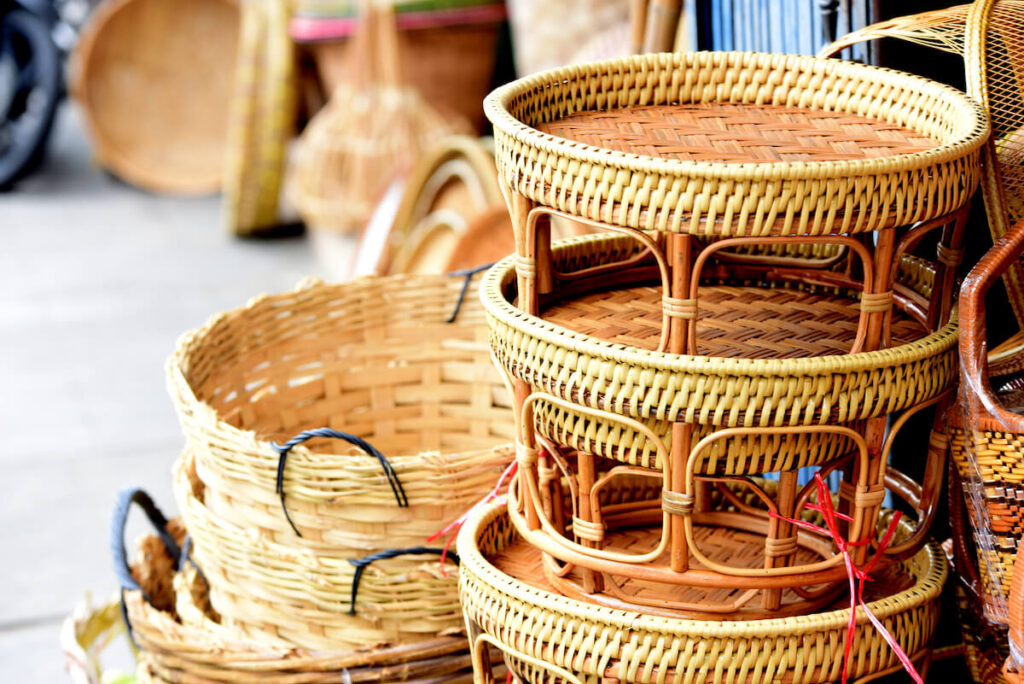
Rattan is one of the most versatile plants in the world. It is used to make baskets, balls used in sports, chairs, and it can even be eaten.
Rattan is a type of palm, but rather than growing like a tree, it spreads like a vine. It grows throughout Southeast Asia, including Thailand, and is the source of many products used throughout the country.
The canes that come from grown rattan plants can be very sturdy, bearing a resemblance to bamboo, except rattan is not hollow. In this sturdier form, they can be used to make things like chairs.
But when splintered, they can be tightly woven to create beautiful bags and baskets. The thin strips can be dyed and woven into patterns, making rattan goods not only practical to carry around at home, but also fashionable.
Thailand souvenirs for home decoration
15. Teakwood carvings
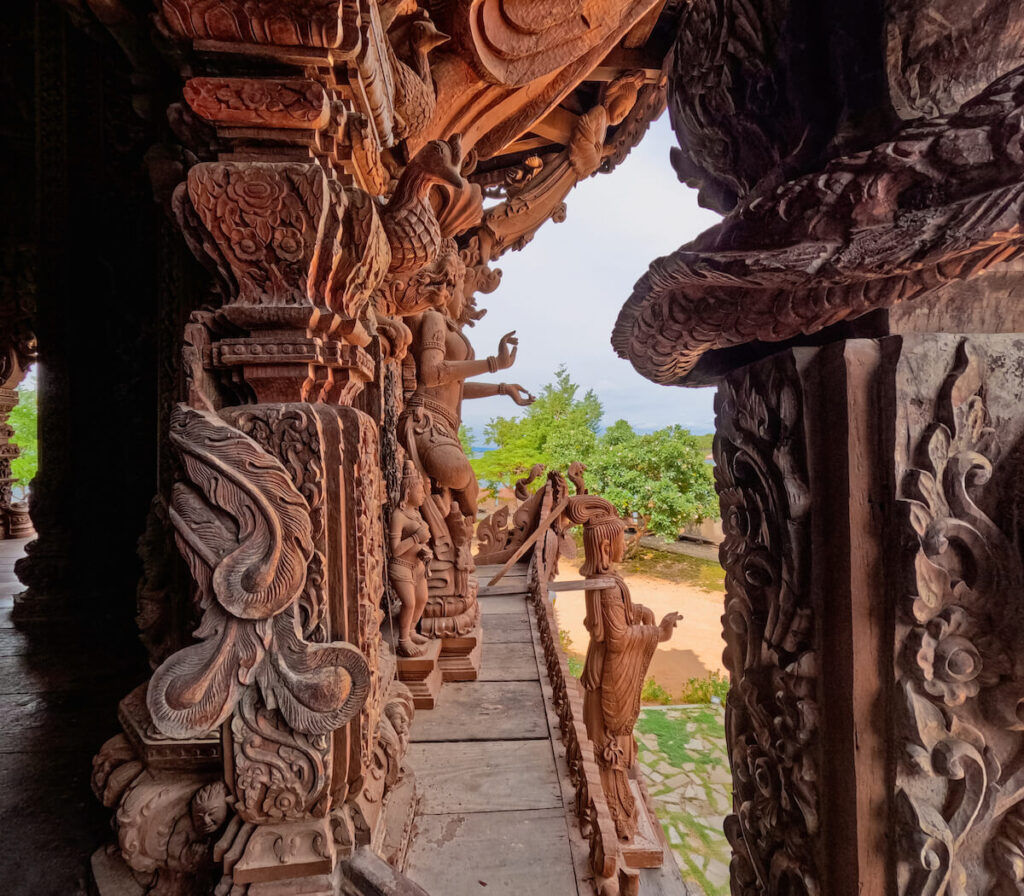
Northern Thailand has quite a bit of lingering influence from the Lanna kingdom, which controlled the landscape for hundreds of years, starting in the late 13th century. Everything from culinary traditions to languages to using teakwood in architecture and carvings has traces back to this old kingdom.
Teakwood was and is a common building material used in temple construction, as well as kitchen and other household products. As a unique regional souvenir, take home a small teakwood carving, bowl, or utensil that you might find meaningful.
Outside of memories and a few photos, it’s difficult to take anything home from a visit to an elephant sanctuary. But you’ll find teakwood carvings of elephants at many small markets, especially in the North, making for the perfect accent piece on the mantle or kitchen back home.
16. Silk products
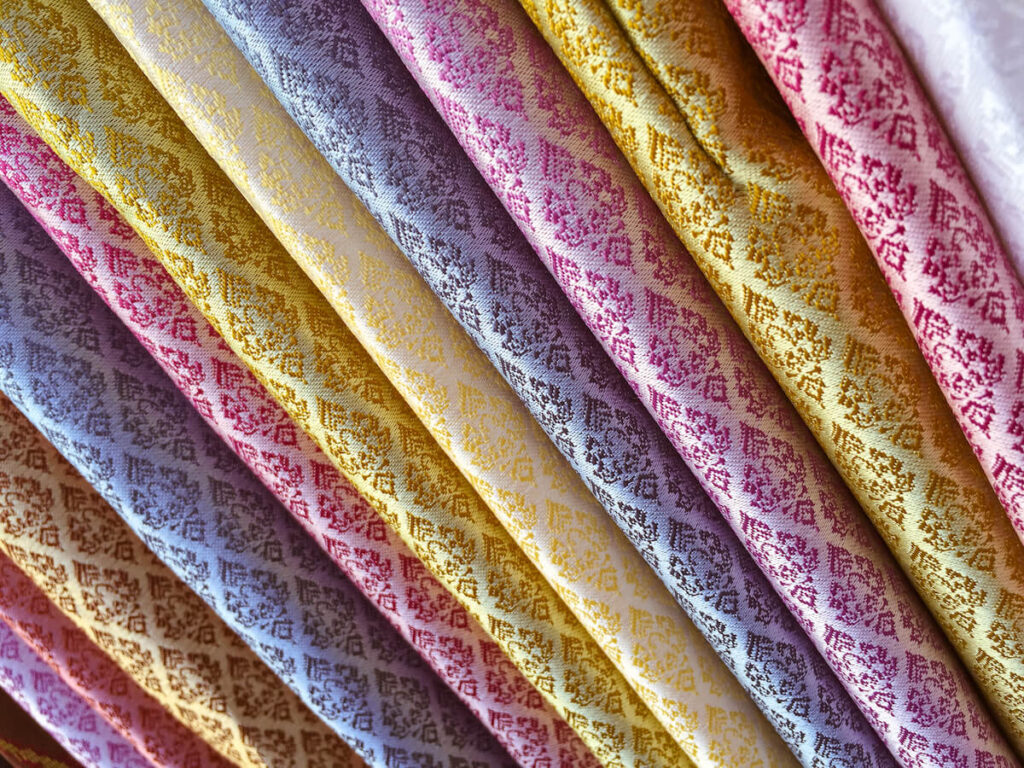
Thailand is famous for its silk. Most silk farms, where silkworms grow and create cocoons, are located in the northeastern part of the country. But you’ll see silk materials throughout the country at markets, specialty stores, and tailors.
It’s an odd story, but silk production actually saw a revitalization due to an American named Jim Thompson, a former intelligence officer who invested heavily in silk production in the 1940s and 1950s. A visit to the house and museum in Bangkok can teach you about the history of silk production in the country.
Also read: 35 Souvenirs From Bangkok to Bring Home With You
There’s a particularly unique style of silk production in Thailand, known as Mudmee. This is a painstaking, handmade process that first dyes, and then weaves individual silk strands to create mosaic-like patterns of cloth.
Because indigo grows in Thailand, you’ll commonly see products with deep blue hue adorning walls and displays of silk sellers.
Due to silk’s versatility, you can bring home everything from pillowcases to sarongs to tablecloths to dresses, depending on your intended recipient. If you’re a seamstress, simply take home a swathe of silk to use as the basis of a new project at home.
17. Benjarong pottery
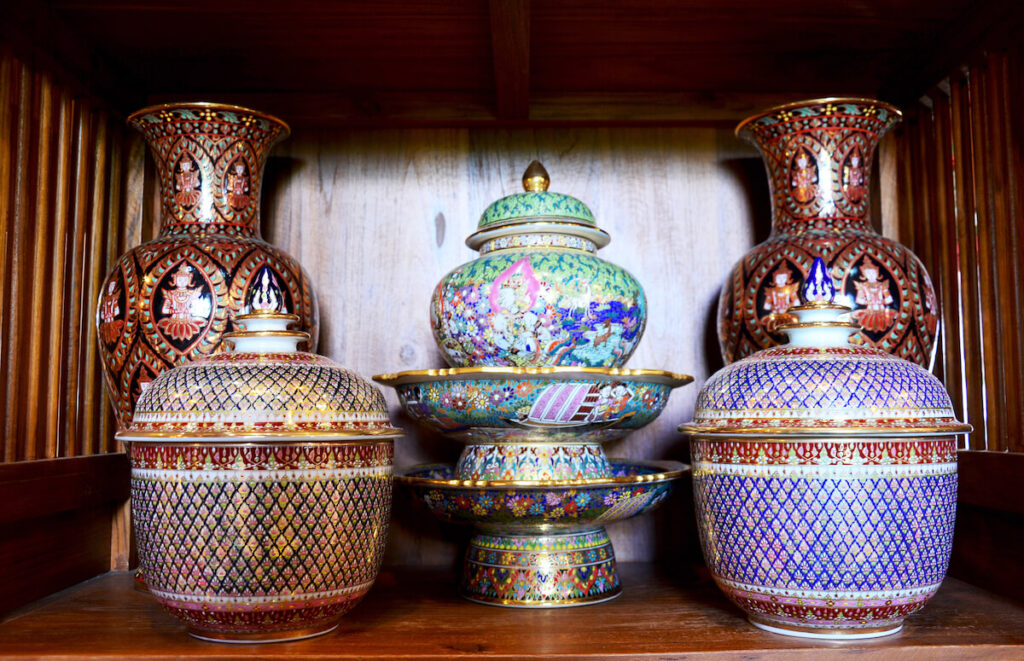
Translating to “five colors,” benjarong is a style of fine porcelain that has its roots in China. Thai rulers had imported it for generations before bringing production in-house, and now it is firmly a style of Thai pottery.
Benjarong pottery is typically impeccably detailed with geometric designs with minuscule patterns and often gold lining. The best hotels and museums showcase it, including the Southeast Asian Ceramics Museum and the Grand Palace in Bangkok.
There are bowls, kettles, cups, and cutlery made in the benjarong mold, and even one of Bangkok’s most ornate temples, Wat Arun, is adorned with benjarong porcelain.
Production has declined over the years, particularly the kind of the highest quality. Many city markets will have cheaper versions of lower quality, which are fine to purchase if you simply like the intricate designs and color schemes, yet don’t want to pay up in price.
But for the real thing, your best bet is heading to benjarong village in the city of Don Kai Dee.
18. Paper umbrellas
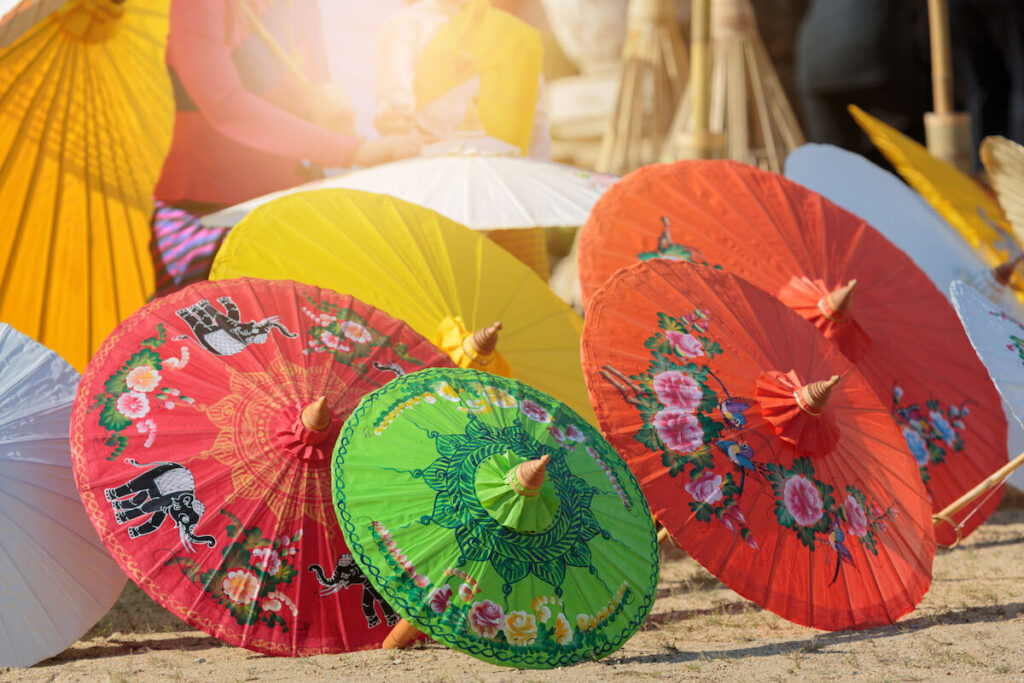
Reported to be an import from neighboring Myanmar, oil paper umbrellas have taken hold in Thailand, particularly in Bo Sang, outside of Chiang Mai. There is even an official umbrella-making center there, making it the unofficial capital of umbrella production in the country.
These umbrellas are vivid in color, often laced with designs of flowers, and are used simply for decoration. High-quality ones, such as the ones made by artisans in Bo Sang, can be used for protection from the rain. The paint used to color the paper contains oils that are water-repellent.
Because of the popularity of the umbrellas, there are now countless different sizes and varieties, so there are plenty of smaller versions that can be brought home.
The best place to purchase an umbrella is in Bo Sang during the umbrella festival. This annual gathering during the month of January highlights the colorful parasols by convening manufacturers, artisans, and sellers all in one place, amidst parades, music, and food.
Other unique souvenirs from Thailand
19. Soap flowers
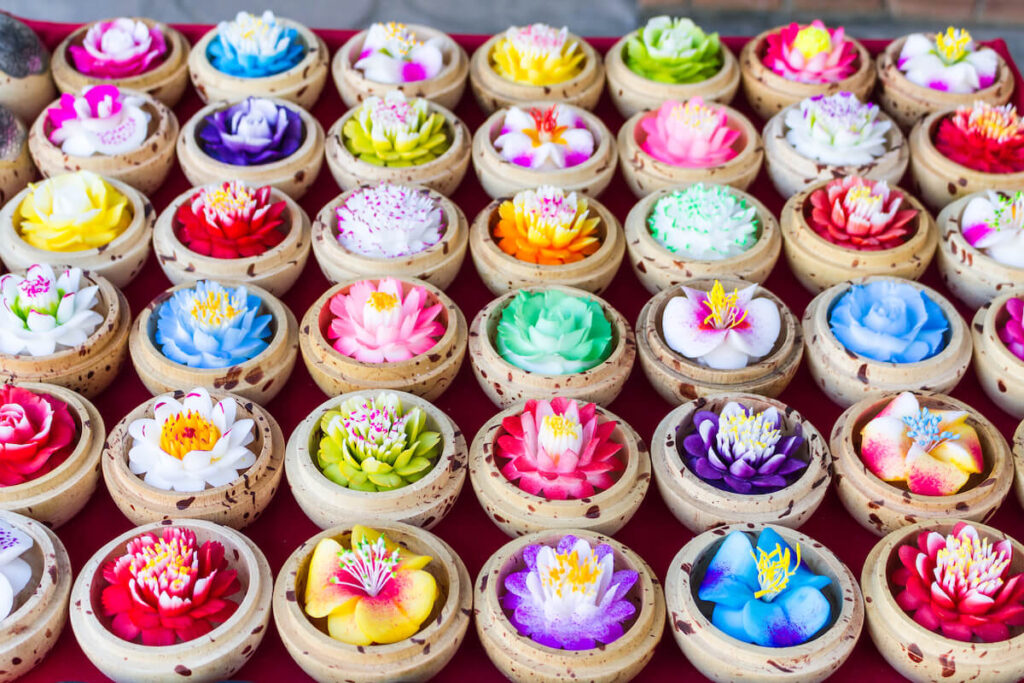
Most lists of gifts from Thailand will include a reference to soap flowers, and for good reason. They smell good, look pretty, and are easy to stow on the way home.
Soap carving has been prominent in Thailand for generations, especially near Chiang Rai and Chiang Mai. Here you’ll find many vendors, markets, and small shops selling a cornucopia of these intricate flowers.
They are truly beautiful, each with multiple layers of color. It’s always impressive to see how anatomically correct the soap can be, with accurate carvings for petals, stigmas, anthers, and all the other visible components of all types of flowers, ranging from roses, to lotus,’ to orchids.
The only downside to buying these soap flowers is that they’re so pretty that you might not actually want to use them as soap, lest you ruin the delicate design.
20. Sepak takraw
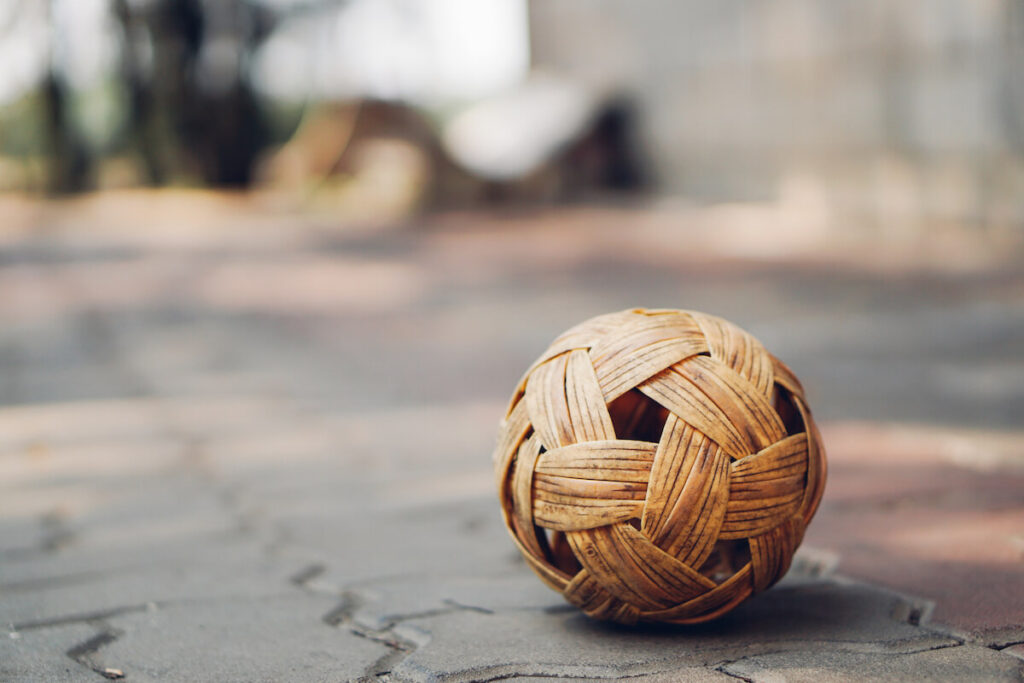
This game is not for the faint of heart. To be good, you have to be coordinated, have a soft touch, and be flexible. Imagine playing volleyball, but with your feet (or knees, head, and chest). That’s sepak takraw.
The game is believed to have roots tracing back to the 15th century in modern-day Malaysia, but it has spread in popularity throughout Southeast and South Asia. The game has already spread throughout the world, mostly through migration, but it remains fairly rare in the West.
The etymology is quite interesting, as its name is a blend of Malay and Thai languages. Sepak translates to “to kick,” in Malay, and takraw roughly translates to “woven rattan ball” in Thai.
The ball is hollow, and in modern times it has become increasingly made of plastic, but historically the ball was woven together from natural materials, typically rattan.
So when you’re shopping in Thailand, buy a ball so that next time you head to a picnic or an outing at the beach at home, you can challenge your friends to a fun, yet difficult game.
To get yourself inspired, take a minute to watch this video, which includes highlights of the incredible athleticism it takes at the highest levels of the sport.
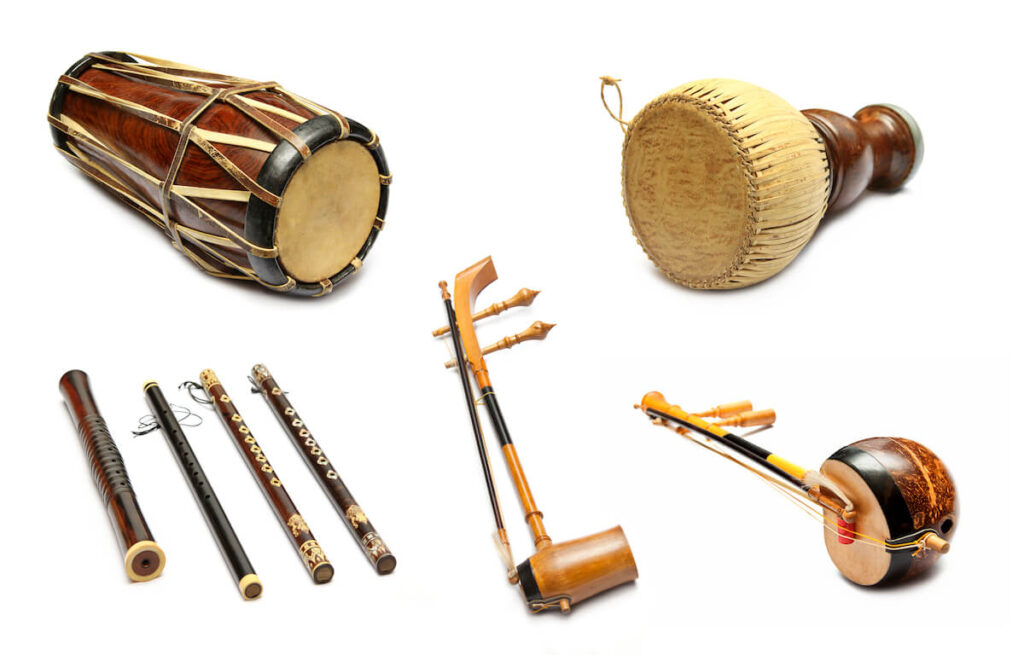
21. Traditional Thai instrument
It’s well-documented that smell is the strongest sense when it comes to triggering and bringing back memories. But sound can also do the same, transporting you back to a moment in time upon hearing a voice, song, or noise. It’s why everybody likes listening to “throwback music” from when they were kids.
So, taking home a musical instrument from Thailand is like taking home a memory machine.
There is quite an array of instruments that play important roles in the more traditional music of Thailand, but let’s focus on ones that could possibly fit in a suitcase. It’s unlikely you’d bring home a barrel-sized taphon or a khong wong yai with 16 mini gongs.
But you could bring home a klhui or a wot, with relative ease. A klhui is a simple flute, often made of bamboo, with a number of holes for different musical tones. It’s very similar to a recorder. A wot is a type of circular pan pipe that’s comprised of many small bamboo tubes of varying lengths.
In the eastern town of Roi Et, there’s even a tower with an observation deck, that’s built to resemble a wot!
In big city bars, you’re more likely to hear pop music, but you’ll hear more traditional Thai music at places like smaller mom-and-pop restaurants and outside temples in small towns. Whether you’re deft at the new instrument or not, simply playing a few notes can quickly take you back to your trip.
22. Water gun from Songkran

Every April, thousands of people flood the streets of Thailand, toting water guns, buckets, and anything that can be used to disperse water, and drench each other for hours on end.
Songkran is the celebration of the Buddhist New Year, and the tradition also includes parades and plenty of music. The celebration is now most commonly associated with water fighting, particularly in large and famous cities like Bangkok, but it didn’t start out that way.
Water has always been a part of the New Year activities, initially for cleansing Buddha statues and for blessing friends and family going into the New Year. But over time, it has morphed into the more raucous celebration seen today.
A couple of tips are worth noting, however. Take advantage of the vendors selling goggles, don’t drink the water, and think about calling it an early night, as there is always an uptick in traffic accidents due to crowds and inebriated drivers.
If you find yourself in Thailand in April, grab a water gun from a local vendor, join the festivities, and bring home a toy with a story to tell (just make sure to put it in your checked bag!).
Where to buy souvenirs in Thailand
Many of the items on this list are best purchased at the source or place of origin. Whether it’s soap flowers from Chiang Rai, an umbrella from Bo Sang, glutinous rice from Khao Wong, or a bottle of locally distilled lao khao in the countryside, certain products carry more meaning that way.
However, for most travelers, the reality is that there isn’t the budget nor the time to do that for every souvenir you’d like to bring home.
So here are a few other places to purchase souvenirs from Thailand, in some of its bigger cities.

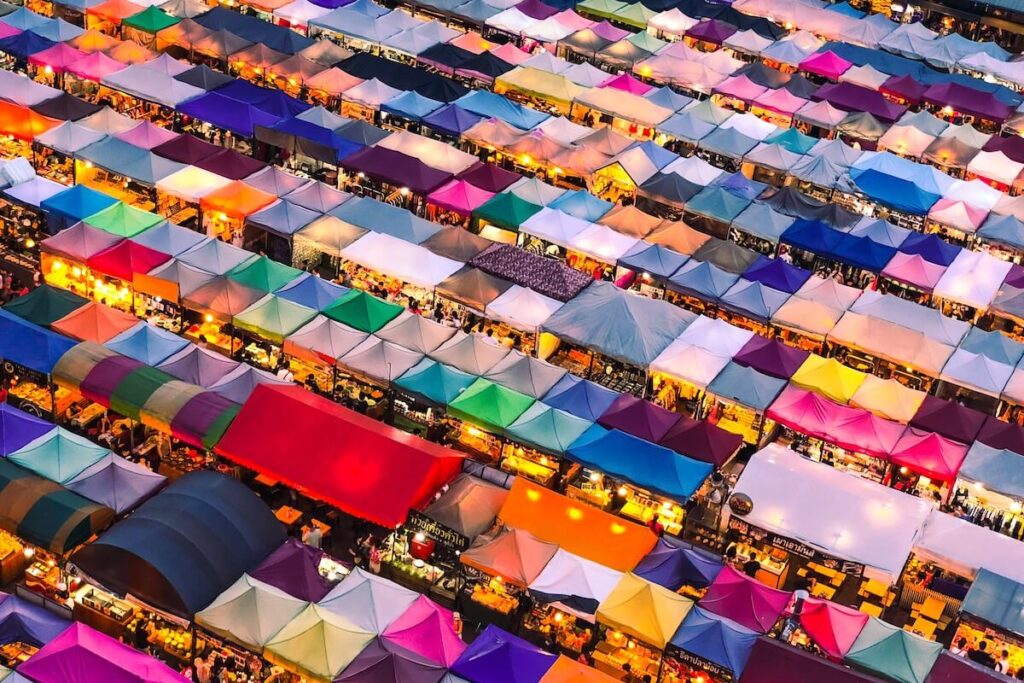
In Chiang Mai, the Night Bazaar is one of its most popular markets. Yes, it’s touristy and often crowded, but if you’re looking for souvenirs, it’s a great place to wander. Muang Mai Market is a wholesale food market, famous for its massive scale, and is the perfect place to buy many of the edible items included on this list.
In Bangkok, Chatuchak Weekend Market, known as the “World’s Largest Weekend Market,” is truly a wonderland. There are over 15,000 stalls, and it’s laid out in sections by product type, so you don’t have to navigate through thousands of vendors to find what you’re looking for.
For a less visited option, try Wang Lang Market, located on the western side of the Chao Phraya River.
Also read: 4 Days in Bangkok: An Itinerary for First-Timers
Wrapping up

Some of my favorite souvenirs are ones that have practical use when you return from a trip. This list of gifts from Thailand errs toward items that can fit seamlessly into everyday life.
While sometimes you just need to buy a semi-functional bottle opener and a keychain (I do so frequently!), it’s more meaningful to use ingredients from Thailand to cook a meal you had on your trip, or to play a game of sepak takraw at your next beach hangout.
So, munch on some Bento dried squid to bring you back to your long bus ride through the countryside, blow a couple of notes from a wot to remind you of a spa day you had in Chiang Mai, or use any of the other 22 items on this list to bring a little piece of Thailand back with you.
