
*This article may contain affiliate links. For full information, please see the disclaimer here.
Having fallen completely in love with Thailand during my own travels, I can tell you that its beauty lies in its incredible diversity. Thailand is known for its warm hospitality, golden temples, and legendary culinary scene, but to truly understand the country, you have to explore its cities.
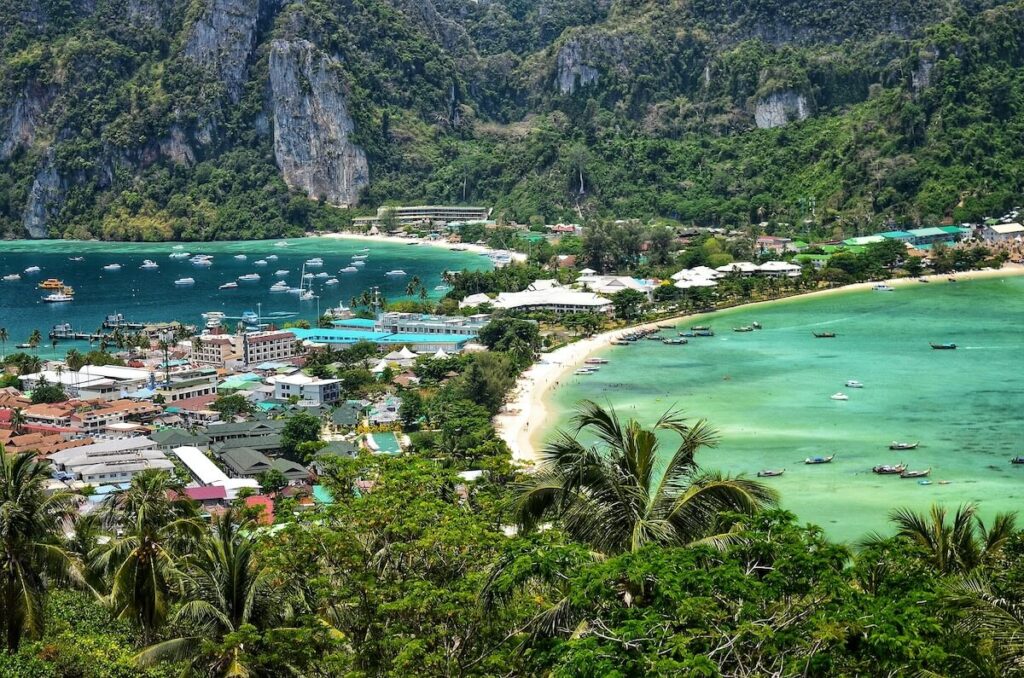
The most famous cities in Thailand capture a stark contrast between fast-paced modernity and ancient, slow-paced traditions. This list includes massive gateway cities and regional cultural gems, broken into distinct zones, each offering a completely different vibe—from the misty mountain valleys of the North to the sun-drenched beaches of the South.
I’ve also included provinces and localized regions, as destinations like Phuket and Koh Samui function just like major resort cities for travelers. Whether you are looking for a bustling night market or a quiet riverside escape, these 18 destinations showcase the absolute best of the Land of Smiles.
Table of Contents
The Central Plains and Gulf Coast
This region serves as the cultural, economic, and historical heartland of the country. Home to some of the most iconic major cities in Thailand, the Central Plains and Gulf Coast effortlessly blend massive urban energy with historic royal beach escapes.
1. Bangkok
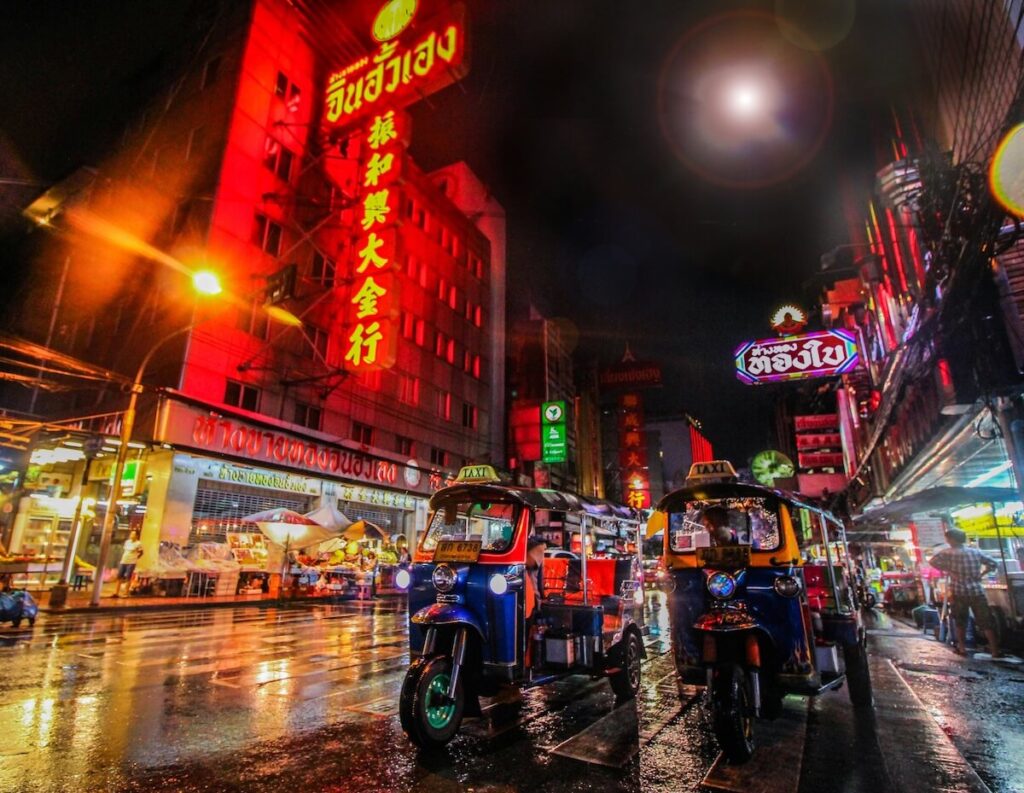
Of course, I’m starting with the most famous of them all. Bangkok, or Krung Thep Maha Nakhon (the beginning of its record-breaking, long, official ceremonial name), is a high-energy, sprawling capital city that’s also one of the most famous cities in Asia. Tracing its roots back to a 15th-century trading port during the Ayutthaya Kingdom, it seamlessly fuses centuries of history with rapid modern development.
The city is globally famous for its electric street food scene, towering rooftop bars, and massive shopping malls like Siam Paragon, alongside the endless maze of the Chatuchak Weekend Market. Iconic cultural treasures like the Grand Palace, Wat Pho’s reclining Buddha, and the porcelain-encrusted spires of Wat Arun define its skyline.

I have fond memories of solo traveling in this city. Some of my favorite days involved slowing down to explore its stylish cafes, contemporary art museums, and catching a brilliant sunset over the Chao Phraya River.
To experience the wonder of this city for yourself, you can book this Grand Palace, Wat Pho, and Wat Arun guided tour. To map out the rest of your trip, this detailed 4-day Bangkok itinerary is perfect for first-timers trying to navigate the city’s wonderful chaos.
2. Pattaya

Pattaya is one of the most energetic and popular cities in Thailand, sitting just a two-hour drive southeast of Bangkok.
Long before it became a bustling nightlife and entertainment beachfront city, Pattaya was a quiet, sleepy fishing village. Its dramatic transformation began in the 1960s when American soldiers stationed nearby during the Vietnam War used it as a rest and relaxation hub, kickstarting a massive tourism boom.
Today, this buzzing beach city is globally famed for its high-energy nightlife along the neon-drenched Walking Street, massive family waterparks like Ramayana, and its active water sports scene.

When you visit, the ultimate thing not to miss is the iconic, hand-carved Sanctuary of Truth temple—a jaw-dropping hybrid of a temple and a castle constructed entirely of wood without a single metal nail. For an unforgettable look at this architectural masterpiece, you can grab your Sanctuary of Truth entry ticket in advance to skip the main lines.
3. Ayutthaya

Ayutthaya is a spectacular UNESCO World Heritage Site located just an hour north of Bangkok.
Founded in 1350, it served as the glorious second capital of the Siamese Kingdom for over four centuries. At its peak, it was one of the world’s largest, most prosperous trading mega-cities until it was tragically destroyed during a war with Burma in 1767.
Today, the city is globally famed for its hauntingly beautiful, crumbling 14th-century brick temple ruins and towering Khmer-style spires (prangs). The ultimate, unmissable highlight here is Wat Mahathat, home to the iconic stone Buddha head seamlessly entwined in the growing roots of a banyan tree.

To easily navigate the massive park and get the deep historical context behind these monuments, I highly recommend booking this small-group tour from Bangkok.
Beyond the archaeological park, Ayutthaya is equally famous for its vibrant floating markets, giant freshwater river prawns, and roti sai mai—a delicious local cotton candy crepe.
4. Hua Hin

If you want a break from Bangkok’s frantic pace without giving up great food and culture, Hua Hin is the perfect escape.
This historic, elegant seaside resort town has been uniquely favored by the Thai royal family since the 1920s, when the southern railway first connected it to the capital. Originally a sleepy fishing village, it transformed into Thailand’s very first beach resort when King Rama VII built his summer palace here, naming it Klai Kangwon (“Far from Worries”).
Today, the town beautifully preserves its old-world, low-key charm. It’s famous for its sweeping four-kilometer sandy shoreline, world-class classic golf courses, and an incredible culinary scene centered around fresh Gulf seafood.
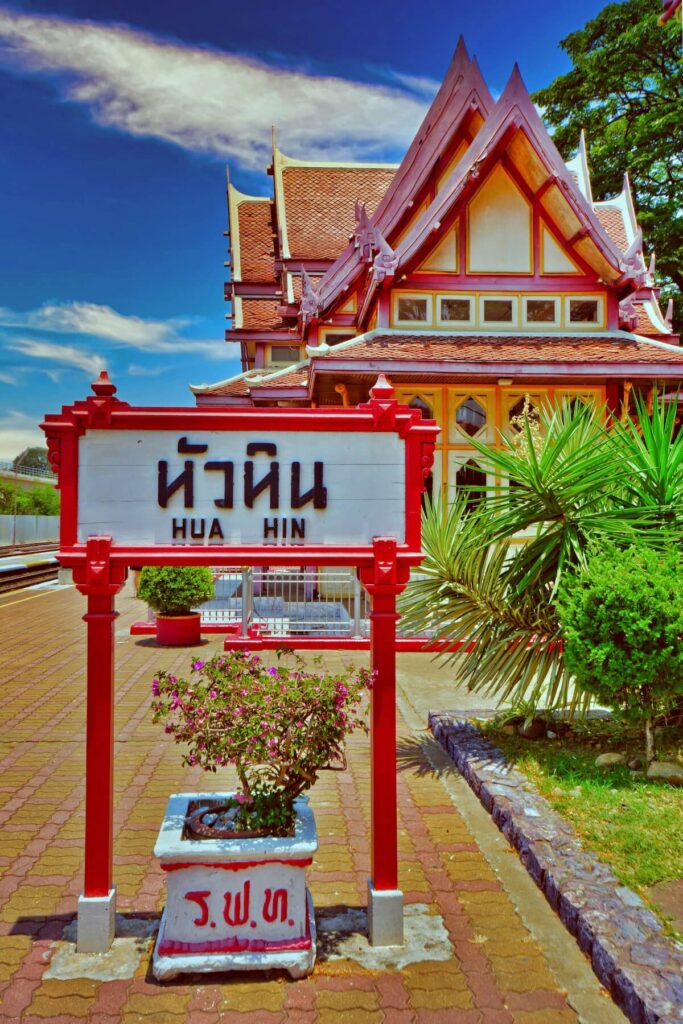
When you visit, do not miss the stunningly preserved, red-and-cream Hua Hin Railway Station—a masterpiece of Thai-Victorian wooden architecture. In the evening, skip the standard tourist traps and wander through the beautifully curated Cicada Market, a vibrant weekend hub showcasing local art, handmade crafts, and fantastic live music under the trees.
5. Kanchanaburi

Kanchanaburi is a stunningly scenic river town deeply rooted in tragic World War II history. Surrounded by dense jungles and limestone peaks, this peaceful region became historically significant in the 1940s when Japanese forces forced thousands of Allied prisoners of war and Asian laborers to construct a railway connecting Thailand to Myanmar.
Today, the town is globally famous for the real-life Bridge over the River Kwai and the notorious Death Railway—an absolute must-visit for history lovers like me. Walking along the historic tracks or visiting the solemn Hellfire Pass is an incredibly moving experience.

Beyond its wartime past, Kanchanaburi is just as famous for its breathtaking natural wonders. You definitely shouldn’t miss the emerald-green, seven-tiered cascades of Erawan Waterfall, or the chance to stay in a floating raft house right on the river.
If you want to experience the absolute best of the area in a single trip, check out this great Kanchanaburi highlights day tour to see everything seamlessly.
The Northern Highlands
Characterized by cooler weather, misty mountain ranges, and deep-rooted Lanna culture, the Northern Highlands are the go-to region for nature lovers, spectacular temples, and bohemian vibes. This section also loops in Sukhothai, the historic gateway to the north.
6. Chiang Mai
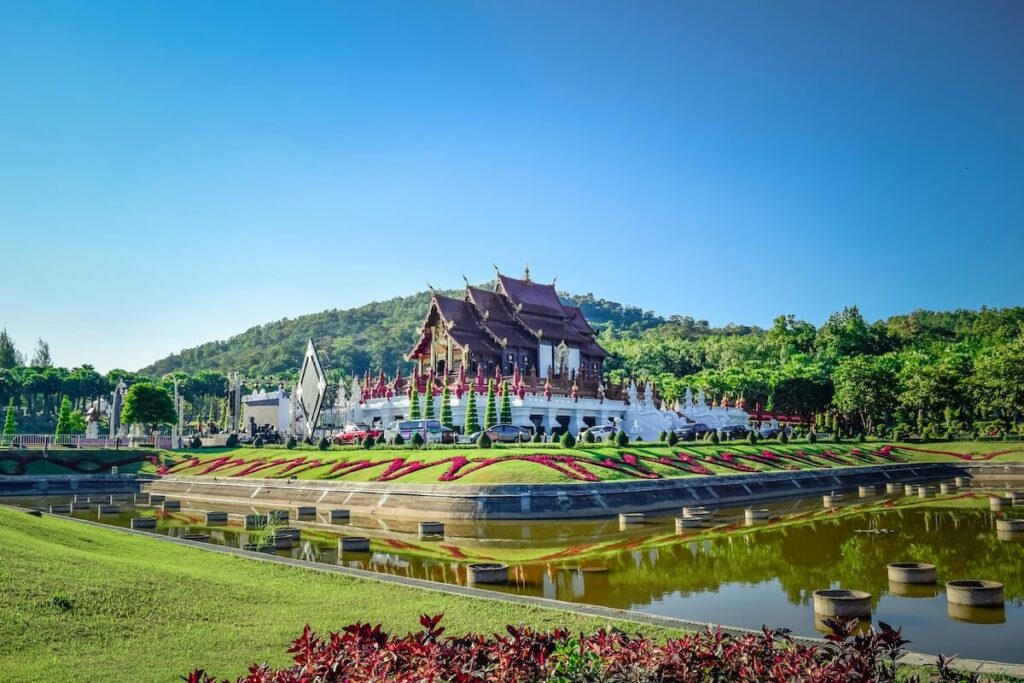
If you’re looking for a slower, more soulful side of Thailand, Chiang Mai is where you need to go.
Fondly called the “Rose of the North,” this vibrant city serves as Thailand’s cultural capital and the ultimate gateway to the northern mountains. Founded in 1296, it was the historic capital of the ancient Lanna Kingdom, and that rich heritage is still visible today in the moats and brick walls surrounding the Old City.
Chiang Mai is known for its dramatic mountainous landscape, massive night bazaars packed with local handicrafts, and hundreds of ancient, gold-accented Lanna temples like Wat Phra That Doi Suthep, which sits high on a mountain overlooking the city. It is also globally famous for its incredible coffee culture, trendy digital nomad community, and its ethical elephant conservation centers.

It is absolutely worth visiting for anyone wanting to connect with nature and history. For an unforgettable experience, I highly recommend booking this ethical elephant sanctuary, bamboo rafting, and waterfall tour.
7. Chiang Rai

Sitting at the northernmost tip of the country, Chiang Rai is a fascinating city that serves as the gateway to the legendary Golden Triangle border, where Thailand, Laos, and Myanmar meet along the Mekong River. Established back in 1262 by King Mengrai, it was actually the first capital of the Lanna Kingdom before the seat of power shifted down to Chiang Mai.
Today, this peaceful city has shaken off its old border-town reputation to become globally recognized for its mind-bending, contemporary architectural wonders. You absolutely cannot miss the famous White Temple (Wat Rong Khun), a surreal, shimmering masterpiece designed by artist Chalermchai Kositpipat, or its striking contrast, the deep sapphire-and-gold Blue Temple.

Apart from the iconic shrines, you should make time to wander through the lively night bazaar for a bubbling local clay-pot hot pot or explore the surrounding lush tea plantations. To take the hassle out of traveling between these spread-out landmarks, I highly recommend booking this comprehensive Chiang Rai highlights day tour.
8. Pai
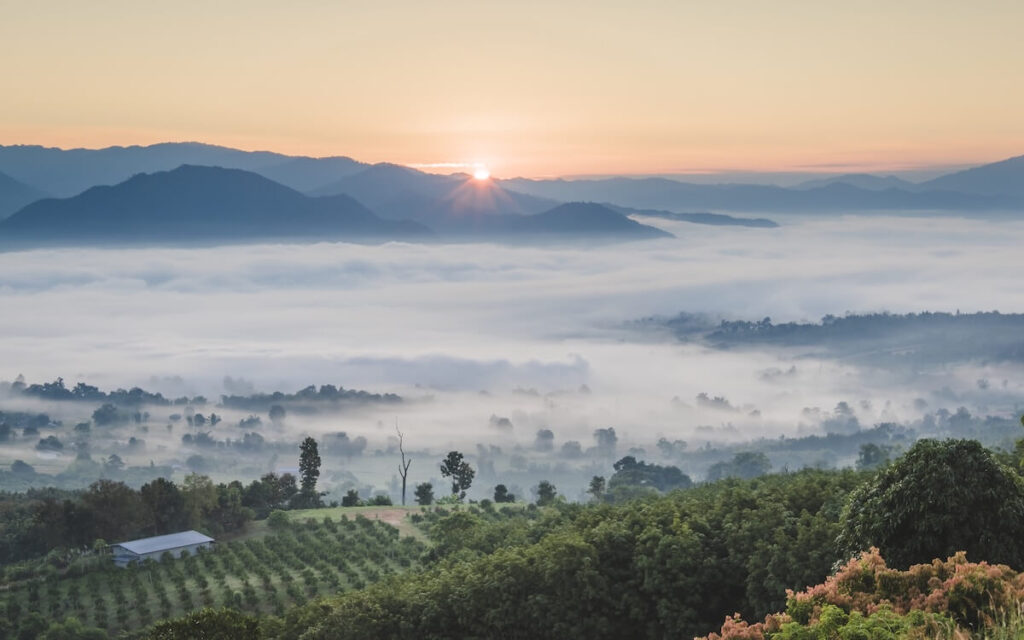
If you don’t mind navigating over 700 dizzying hairpin turns through the mountains, you’ll find the ultimate reward waiting for you at the bottom of the valley: Pai.
Tucked deep into the northern highlands, this bohemian, misty valley town was once just a quiet, isolated farming village inhabited mostly by the local Shan people and hill tribes. It eventually evolved into a legendary stop on the backpacker trail, globally famous today for its ultra-laid-back hippie culture, buzzing night markets, and vegan cafes.
Pai is a dream destination for nature lovers, renowned for its therapeutic natural hot springs and the dramatic ridges of Pai Canyon, which is the absolute best spot in town to watch the sunset.

When you visit, do not miss the chance to rent a scooter to explore the surrounding rice terraces, visit the majestic Nam Lod Cave, or just slow right down and enjoy the live acoustic music playing through the walking street every single evening.
9. Mae Hong Son
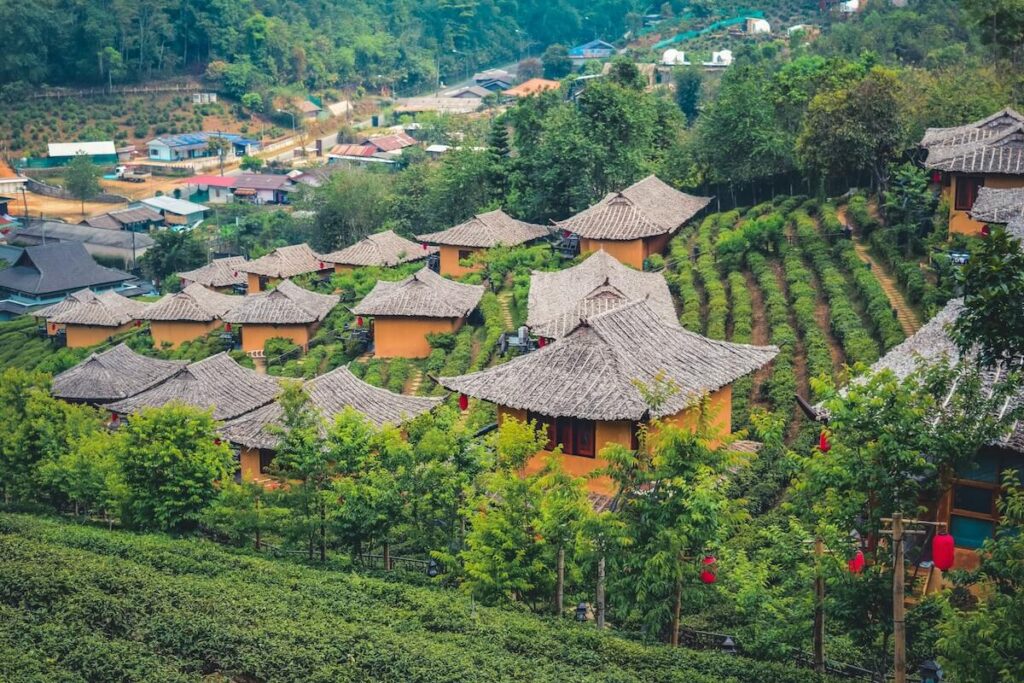
For those who are willing to venture far beyond the usual tourist tracks, Mae Hong Son won’t disappoint.
As one of the most remote (but rewarding) famous cities in Thailand, this mountain destination is cradled by dense forests right along the Myanmar border. Historically isolated by its rugged terrain, it developed a unique cultural identity heavily influenced by the Shan and various ethnic hill tribes who migrated here over the centuries.
Today, it is a legendary stop on the Mae Hong Son Loop, a spectacular road trip highway that features thousands of mountain twists and turns. The town itself is famous for its jaw-dropping rolling seas of fog that settle into the valleys every morning.

On your visit, make sure to see the iconic twin Burmese-style temples, Wat Chong Kham and Wat Chong Klang, beautifully reflected in Nong Chong Kham Lake, or to walk across the long, bamboo Su Tong Pae bridge stretching over green rice fields.
10. Sukhothai
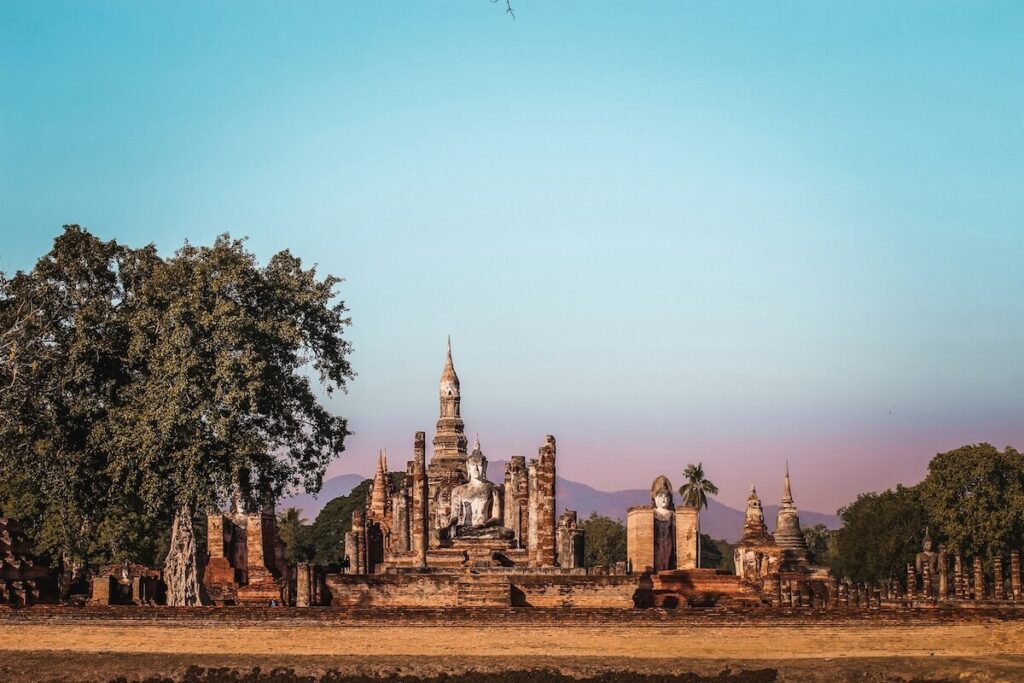
While it lacks the misty mountain peaks of the high north, Sukhothai absolutely deserves its spot among the most popular cities in Thailand. Widely revered as the birthplace of Thai culture, it served as the country’s very first ancient capital during the 13th and 14th centuries, a golden era that laid the foundations for modern Thai language, art, and architecture.
Today, this magnificent UNESCO World Heritage Site is globally famous for its incredibly well-preserved historical park. You definitely shouldn’t miss the towering Buddha statue at Wat Si Chum, tucked inside an open-air enclosure that makes for an unforgettable sight.
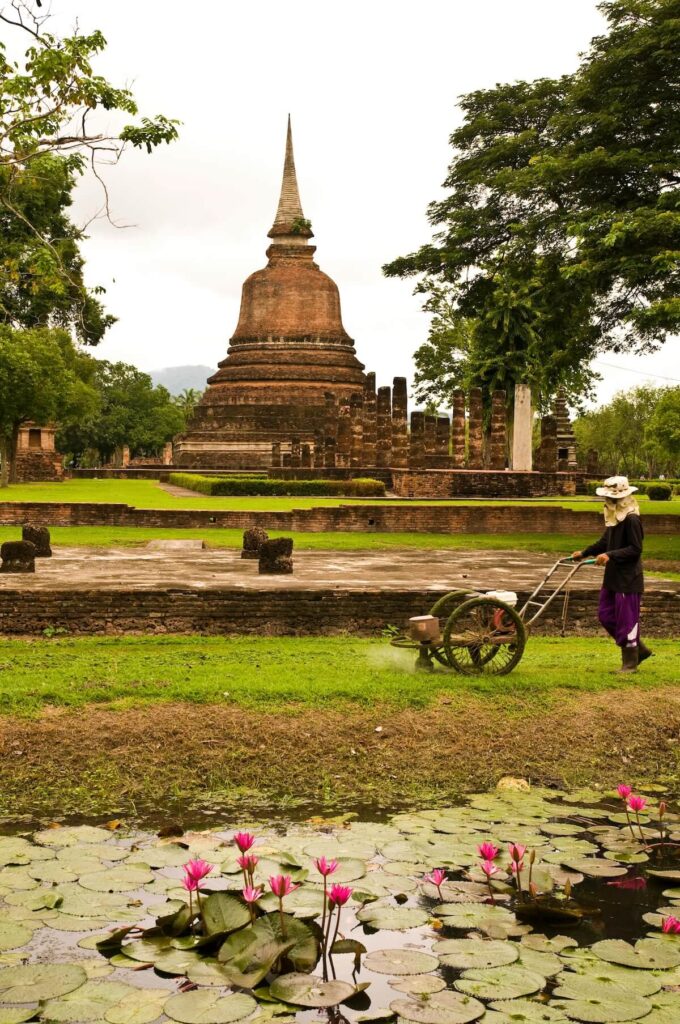
The absolute best way to experience it is by renting a bicycle to pedal peacefully through old palace ruins, crumbling brick walls, and serene, lotus-filled ponds. I highly suggest booking this Sukhothai cycling tour, which seamlessly blends ancient history with a ride through the local rural villages.
The Southern Paradises
The southern region houses some of the most breathtaking and famous cities in Thailand. World-famous for dramatic limestone cliffs, turquoise waters, and thriving island life, this region splits into two distinct coastlines: the Andaman Sea and the Gulf of Thailand.
11. Phuket
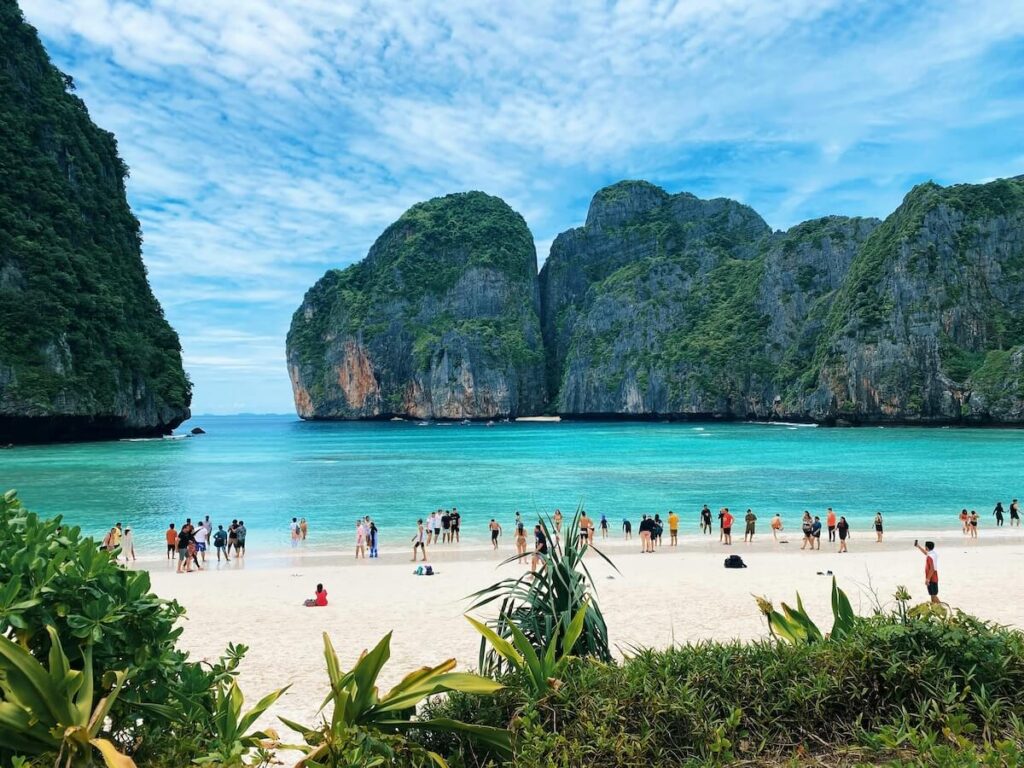
If your dream trip involves sun, sea, and unforgettable energy, Phuket is the ultimate destination. Not only is this ultra-popular international resort island hub one of the most famous places in Thailand, but it also has a surprisingly rich history. The island finds its roots in 19th-century tin mining, which drew merchants from China and Europe.
That unique past is beautifully preserved in the charming Sino-Portuguese architecture of Phuket Old Town, which contrasts perfectly with the island’s legendary white-sand beaches like Kata and Karon. Phuket is globally famed for its high-octane nightlife on Patong’s Bangla Road, its spectacular island-hopping tours to the Phi Phi Islands, and its vibrant culinary scene.

If you are looking for a completely unique way to enjoy the water, you should definitely check out this amazing YONA floating beach club, a multi-level floating oasis perfect for relaxing and partying in style.
12. Krabi
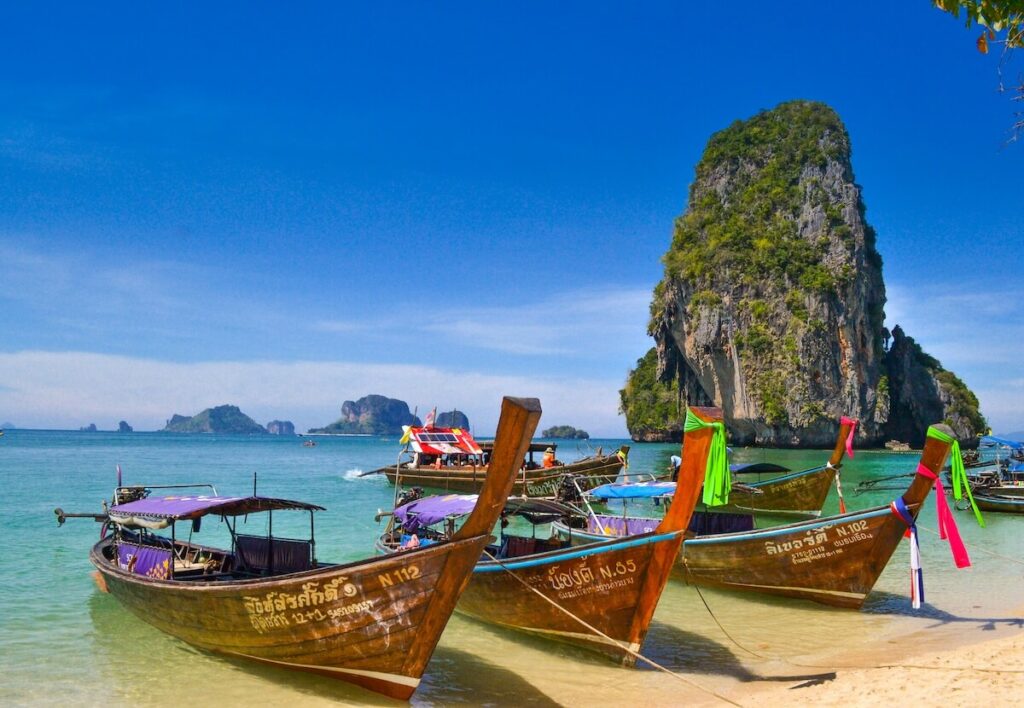
If you are chasing postcards of towering, vertical rocks slicing through bright turquoise water, Krabi is the coastal paradise you are looking for.
Located on the southwest coast along the stunning Andaman Sea, Krabi has a quiet history as a maritime settlement dating back to prehistoric times, but it remained a largely undiscovered paradise until the backpacker boom of the late 20th century. Now, this tranquil province is globally recognized as a premier world-class rock-climbing and island-hopping paradise.
Krabi is heavily distinguished by its dramatic limestone cliffs (karsts) that rise majestically from the water, serving as the ultimate gateway to the isolated Railay Beach, which is entirely cut off from the mainland by steep rock walls.

Make sure to hop on a traditional wooden longtail boat to explore the pristine offshore gems like Hong Island and the Phi Phi Islands. For an inland adventure, brave the grueling 1,260-step climb to the summit of the Tiger Cave Temple for a panoramic view over the jungle canopy.
13. Koh Samui

Koh Samui is for you if you want to swap rugged cliffs for upscale, laid-back luxury. Tucked safely inside the Gulf of Thailand, this lush island city was practically isolated until the late 20th century. Before the first backpackers arrived on coconut boats in the 1970s, it didn’t even have roads, relying entirely on a thriving coconut and fishing economy.
Now a premier luxury resort island, Koh Samui is globally famous for its high-end wellness retreats, expansive coconut groves, and the iconic, 12-meter-tall golden Big Buddha temple (Wat Phra Yai) sitting on a small rocky island just off the coast.

When you visit, do not miss the lively Fisherman’s Village in Bophut for great beachfront dining, or the bizarre Hin Ta and Hin Yai rock formations. To see all the highlights seamlessly without dealing with local transport, I highly recommend booking this half-day tour, which brings together the island’s best cultural and natural sites.
14. Surat Thani

Most travelers only know Surat Thani as the frantic mainland transit hub where they rush off the plane or train to catch a ferry to the Gulf islands like Samui, Phangan, or Tao. But if you slow down and stick around, you’ll discover a city with a deep soul and an ancient history rooted in the maritime Srivijaya Empire.
Surat Thani translates to the “City of Good People,” a title granted by King Rama VI that perfectly reflects the warm hospitality you will find here. Beyond being a transport gateway, this bustling southern province is highly regarded across the country for its massive, sweet, and incredibly creamy local oysters, harvested right from the brackish waters of Ban Don Bay.

Stopping in this city allows you to wander through the vibrant weekend floating markets like Bang Bai Mai, where you can sample fresh southern street food directly from traditional wooden boats under a shady tunnel of nipa palms.
15. Hat Yai

If you are a hardcore foodie who loves nothing more than hunting down local markets, Hat Yai will feel like an absolute jackpot. Sitting down in Songkhla province near the Malaysian border, this city is the undisputed commercial and shopping giant of Southern Thailand.
Hat Yai actually started as a tiny village called Khok Samet Chun, but exploded into a massive trading post in the early 20th century when the southern railway line was laid down. Because of that strategic location, it has evolved into a major culinary and retail hub that draws waves of regional travelers, particularly from neighboring Malaysia.
What makes this city truly special is its incredible melting pot of Thai, Chinese, and Malay Muslim cultures, which is best experienced through its legendary food scene. You absolutely must try Gai Tod Hat Yai (the city’s famous crispy fried chicken topped with sweet shallots).

Plus, do not miss a shopping spree through the narrow, chaotic alleys of Kim Yong Market, or a trip up the hill to see the glistening, stainless-steel pagoda of Phra Maha Chedi Tripob Trimongkol.
Isan (The Northeast)
Thailand’s hidden gem, Isan is famous for rural landscapes, rich archaeological sites, Khmer influences, and incredibly bold, spicy food. This section also loops in historic Lopburi, which beautifully acts as the gateway connecting central Thailand to the northeast.
16. Udon Thani

For a journey deep into Thailand’s authentic heart, Udon Thani is an absolute must.
As a major commercial hub in the northeastern Isan region, the city has a modern history heavily shaped by its time as a bustling US airbase during the Vietnam War. However, its deeper roots stretch back millennia, making it a dream destination for history buffs.
Udon Thani is famous for the ethereal Red Lotus Lake (Talay Bua Daeng). Every winter, between December and February, this massive freshwater lake transforms into an otherworldly, vibrant sea of millions of pink water lilies. To see it at its most magical, you have to catch a wooden boat ride right at sunrise before the daytime heat forces the blossoms to close.

Beyond the lake, a must-visit is the nearby Ban Chiang Archaeological Site, a UNESCO World Heritage Site featuring prehistoric Bronze Age pottery dating back over 5,000 years. Also, don’t miss a relaxing evening stroll around the scenic lake at Nong Prajak Park.
17. Nong Khai
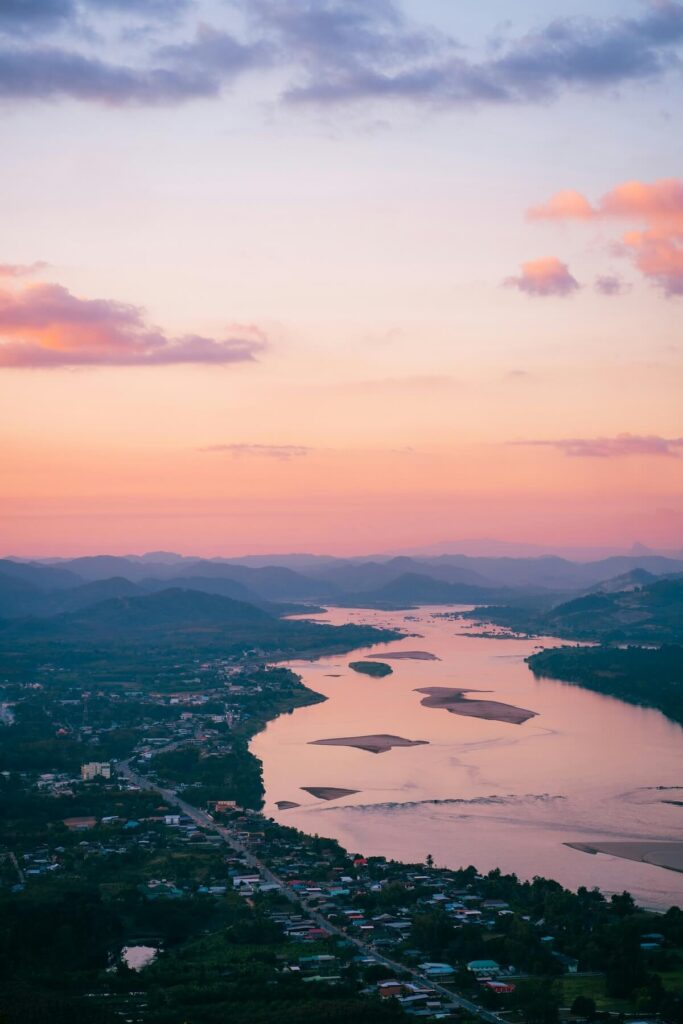
Nong Khai is for those who want to experience a place where time slows down to a crawl.
Perched peacefully along the eastern banks of the mighty Mekong River, this charming border city has long served as a quiet trading post and the primary gateway into neighboring Laos. Because of its unique frontier location, it has absorbed an amazing blend of Thai, Lao, and French colonial influences over the centuries.
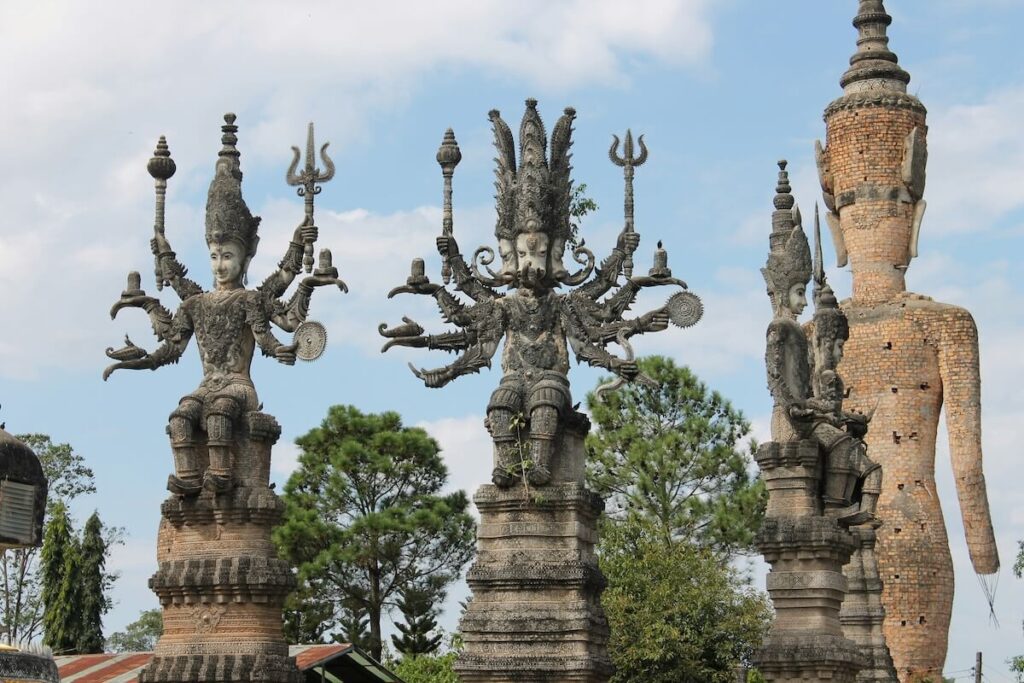
Nong Khai is famous for offering stunning views straight across the river into Laos, but its most iconic highlight is Sala Keoku. This surreal sculpture park is filled with towering, bizarre concrete structures—some rising over 60 feet high—that blend Buddhist and Hindu mythology.
A must-visit is Wat Pho Chai to see the highly revered golden Buddha image, Luang Por Phra Sai. For a classic local experience, you cannot miss a late afternoon stroll down the Rim Khong walking street to browse local handicrafts at the Tha Sadet Market, before grabbing a front-row seat at a riverside stall to watch the sunset over the Mekong.
18. Lopburi
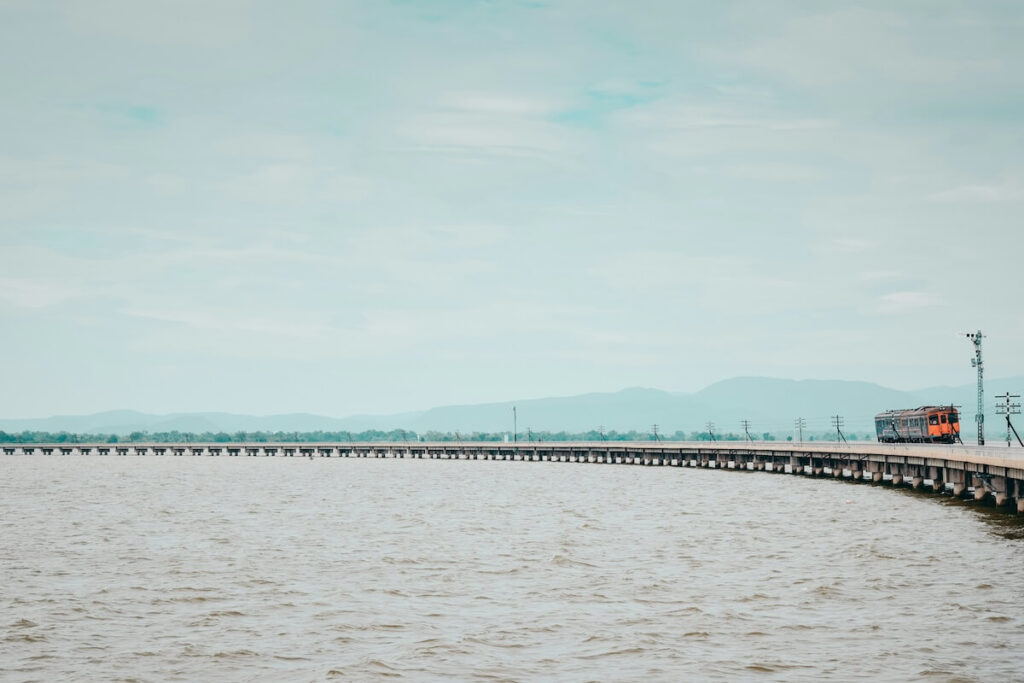
Profoundly historic and utterly chaotic, Lopburi is a mandatory stop in Thailand. Situated in central Thailand but acting as the perfect gateway to the north and northeast, it stands as one of the oldest occupied settlements in the country.
Lopburi flourished centuries ago as a major outpost of the Khmer Empire and later served as the grand summer capital for King Narai in the 17th century. Today, it is celebrated as one of the most famous cities in Thailand because of its resident crab-eating macaques.
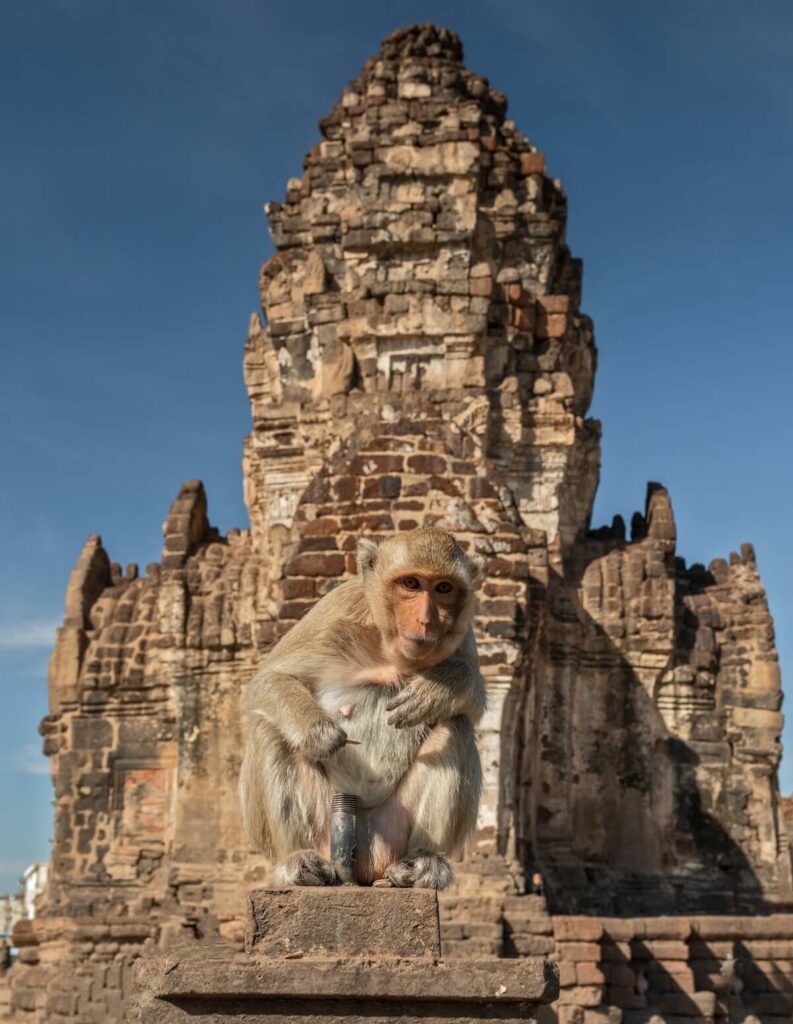
Hundreds of these wild monkeys have completely taken over the town center, scaling buildings, swinging from power lines, and treating the stunning, 13th-century Khmer temple ruins of Phra Prang Sam Yot as their personal playground. To experience the area seamlessly, book this Monkey Temple and Ayutthaya Old City tour, which pairs Lopburi’s playful madness with the magnificent ruins of ancient Ayutthaya.
Conclusion
No matter what kind of adventure you are craving, these famous cities in Thailand won’t fail you. The sheer diversity here means you can completely tailor your itinerary to your own travel style.

If you are dreaming of a pure beach escape, you can jump straight down to the southern paradises, while history buffs can head right for the central plains. To help piece your dream itinerary together, check out this handy list of what Thailand is famous for. Get ready to pack your bags—you’re going to love it!