
It’s safe to say that the Asian continent is the most geographically diverse place on Earth. Be it vast deserts, tropical rainforests, or magical underwater worlds, there are plenty of natural landmarks in Asia to explore.
If you’re wondering which are the most beautiful places in Asia to explore, we’ve got you covered! Check out these natural wonders in Asia that will captivate you the moment you lay eyes on them.
Table of Contents
1. Mount Everest, between Nepal and Tibet

When it comes to natural wonders in Asia, none are as famous as the majestic peaks of Mount Everest in the Himalayan Mountain Range between Nepal and Tibet.
Indeed, scaling the heights of Mount Everest is easily the ultimate ambition for many avid hikers, even if it means just reaching the Base Camp. After all, this IS the highest mountain in the world, towering over everything else at almost 9,000m above sea level!
Most people choose to begin their journey in the remote district of Kathmandu, Nepal. From there, avid hikers can embark on an epic journey toward the peak, admiring the many stunning natural vistas along the way.
2. Gokyo Lakes, Nepal
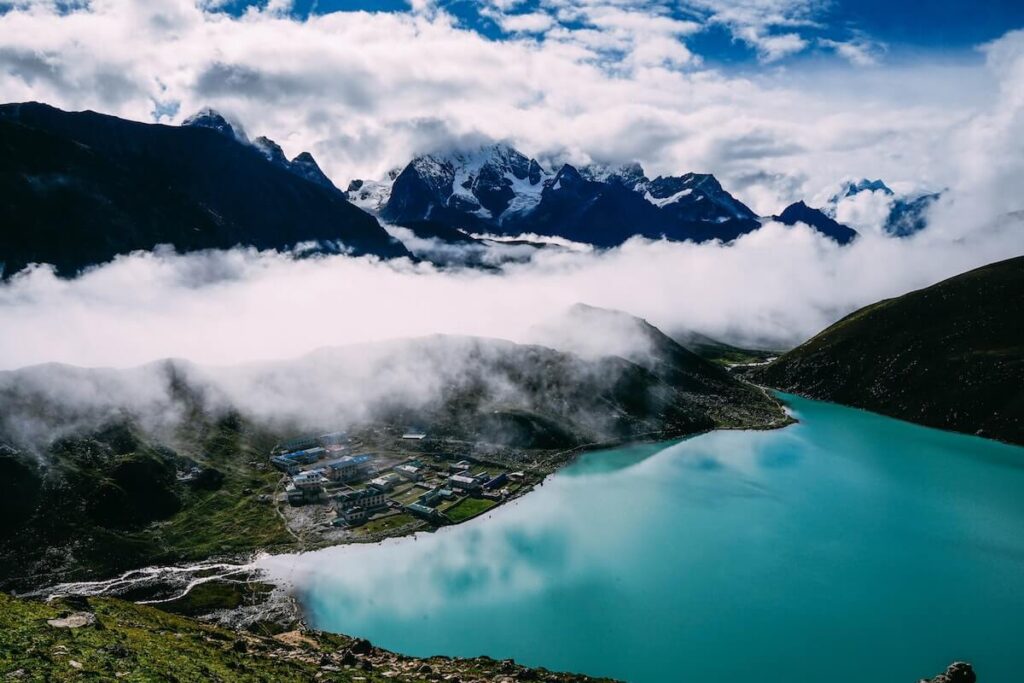
Speaking of Everest, did you know that Nepal is home to the highest freshwater lake system in the world too?
The Gokyo Lakes, located in Sagarmatha National Park, is a collection of six different lakes that fan out from the gigantic Ngozumpa Glacier.
The best way to admire this natural wonder in Asia is to hike to the summit of Gokyo Ri, passing through the different valleys surrounding the lakes and admiring the stunning natural backdrops on your way to the peak.
3. Zhangye National Geopark, China

Upon first glance, the Zhangye National Geopark in China looks like it was painted into existence. It consists of a multitude of rock formations boasting vibrant colors, almost like a gigantic rainbow, that fully demonstrate the creativity of Mother Nature.
This UNESCO World Heritage Site, considered one of the most beautiful natural wonders in Asia, was actually formed by the movement of tectonic plates and the weathering of sandstone millions of years ago. The different colors, meanwhile, are simply because of varying amounts of ferrous salt in the mud and stone!
The entire area covers more than 3,200 square feet and you can admire the landform from the many scenic viewing platforms throughout the area.
4, Zhangjiajie National Forest Park, China

In stark contrast to the desolate beauty of Zhangye National Geopark, the Zhangjiajie National Forest Park is a picture of verdant greenery, often shrouded in a light mist that exudes a fantasy-like ambiance.
The park is home to plenty of scenic areas, including beautiful streams, a misty gorge, and majestic mountains. However, what makes Zhangjiajie National Forest Park one of the most famous natural wonders of Asia are the gigantic quartz-sandstone pillars that are blanketed by dense foliage.
In fact, one of the southern pillars was renamed the Avatar Hallelujah Mountain, after the 2009 blockbuster Avatar, an ode to it being the inspiration behind the film’s fictional setting.
5. Gobi Desert, between China and Mongolia
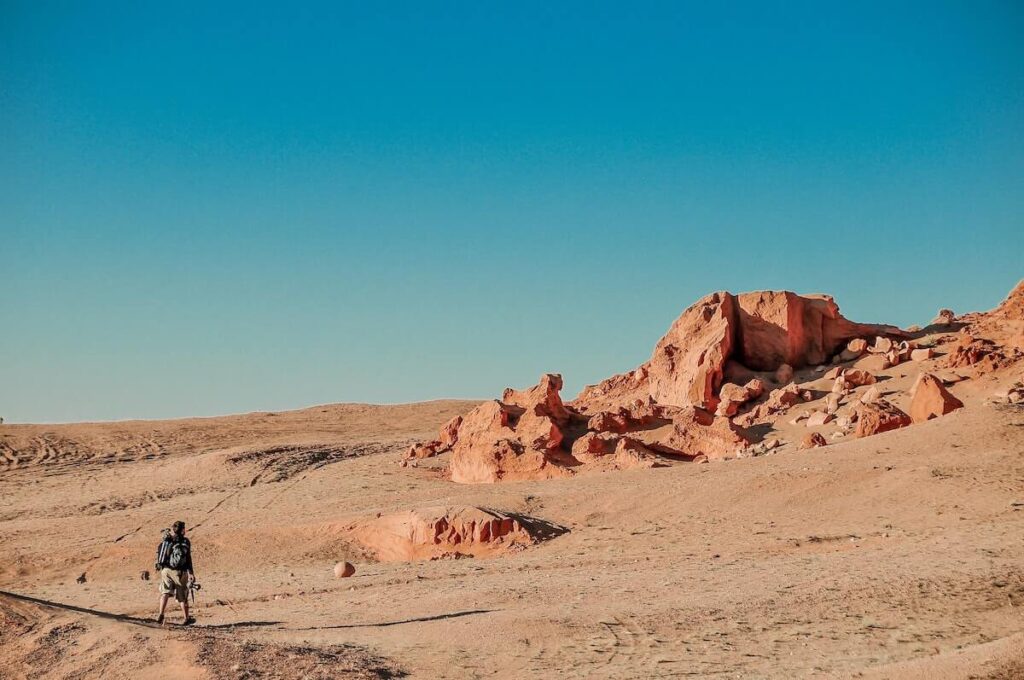
When it comes to nature in Asia, I’m sure not many would immediately picture vast expanses of desert land. And yet, straddling the border between China and Mongolia is the Gobi Desert, one of the most exotically beautiful places in Asia.
Picture an endless horizon of sand, punctuated by enormous dune formations and enigmatic stark cliffs. That is what you first see upon entering the Gobi Desert. And yet, hidden within this seemingly harsh environment are several rivers and lakes both above and beneath the ground.
As a result, the desert is home to a variety of animals, reptiles, and plant life. One of the most popular natural landmarks in Asia can be found here: the Flaming Cliffs, a rocky region that contains prehistoric fossils and even dinosaur eggs!
6. Stone Forest, China

With a name as foreboding as the Stone Forest, you might be forgiven to think that this natural wonder in China belongs in a Tolkien novel. In reality, the Stone Forest, known as “Shilin” in Mandarin, is located in Yunnan Province.
This stunning natural attraction in China consists of a set of limestone formations that span over 100,000 acres, formed by millions of years of seismic activity and erosion. From above, the towing rocks look like a dense forest, hence the name.
However, like a real forest, Shilin is teeming with wildlife and is also home to a few caves and waterfalls which visitors can explore while trekking through well-kept paths.
7. Ban Gioc-Detian Falls, between China and Vietnam

If North America has Niagara Falls, Asia has the Ban Gioc – Detain Falls.
Straddling the borders of China and Vietnam, this epic location is one of the most spellbindingly beautiful natural wonders in Asia. Surrounded by enigmatic karst formations and lush rainforest terrain, the twin waterfalls cascade down in tiers to the Quay Son River.
While Niagara Falls is known for its steep drop, the Ban Gioc – De Tian Falls s known for its impressive width which provides a truly stunning vista. One of the best ways to experience this natural landmark in Asia is to hop on a small bamboo raft and row the very edge of the falls.
8. Hang Son Doong Cave, Vietnam
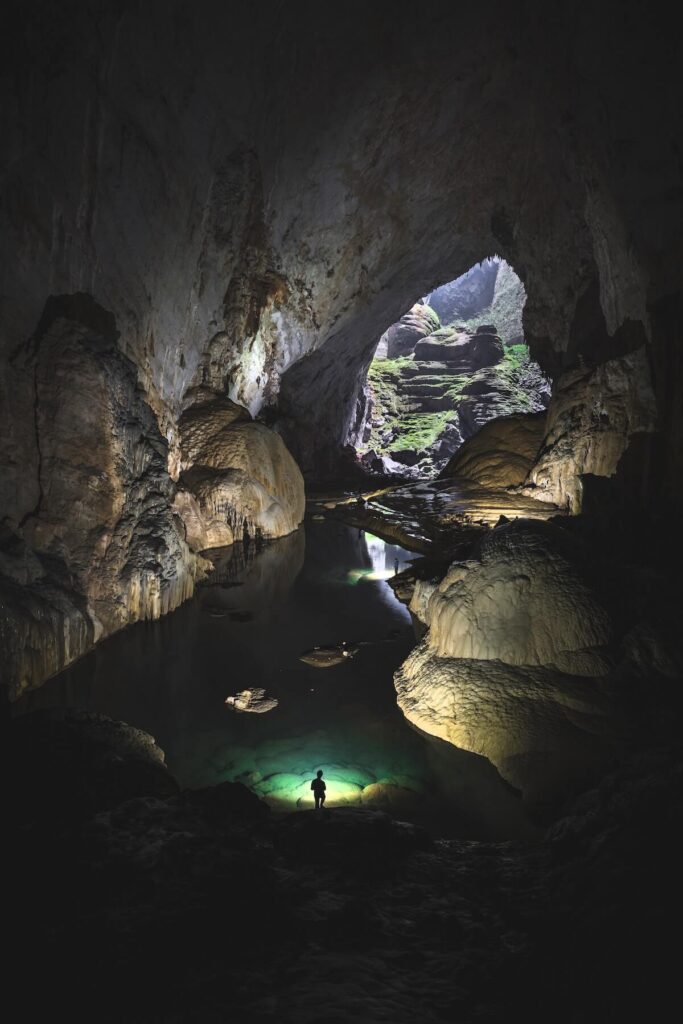
When it comes to natural landmarks in Asia, perhaps none are as mystifyingly alluring as the Hang Son Doong Cave in Vietnam. In fact, I think it is one of the most beautiful places in Asia!
This massive cave, considered the world’s largest, is located within Phong Nha-Ke Bang National Park. The main cavern alone is large enough to fit an entire Boeing 747 plane! However, it is what else is hidden inside the cave that makes it such a magical place.
Inside the cave, you’ll find a fast-flowing river and even an entire rainforest nestled within the cave chambers! The cave is open for tourism but you’ll need to be accompanied by a guide during your exploration in the cave.
9. Ha Long Bay, Vietnam
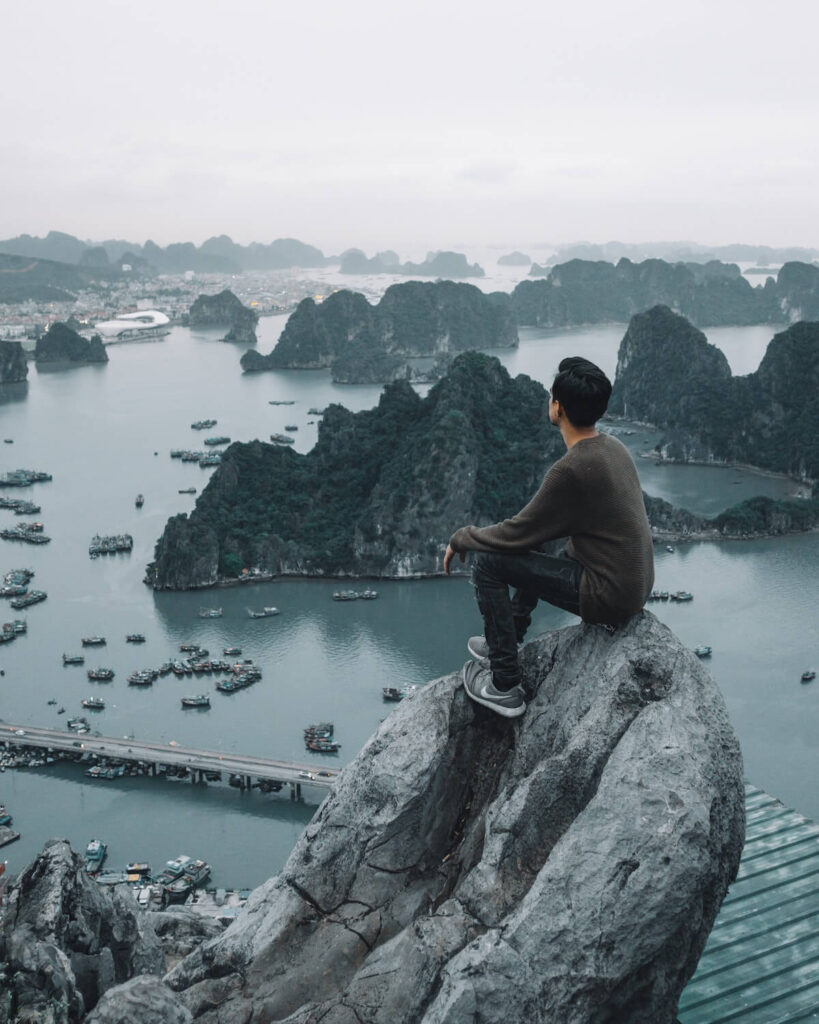
Vietnam’s famous Ha Long Bay needs no elaborate introduction. After all, it is one of the most popular natural wonders in Asia, known for its ethereal beauty and as one of the seven natural wonders of the world.
Ha Long Bay consists of many little islands and islets, spread across a vast bay of sapphire blue water, surrounded by enigmatic limestone pillars that add a touch of fantasy to the area.
Visitors can choose to enjoy the beauty of Ha Long Bay from the comfort of a cruise ship, or set sail on a small boat to explore the mysterious caves in the area and experience the magnificence of Mother Nature up close.
10. Kuang Si Falls, Laos
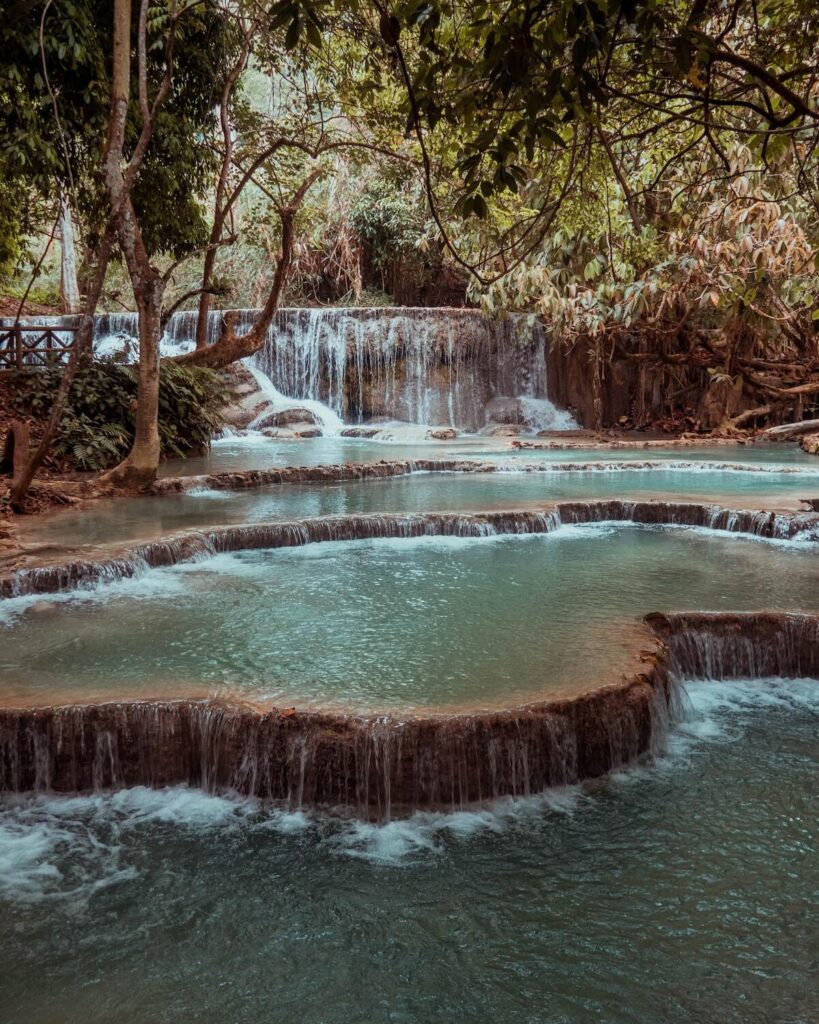
Situated in the province of Luang Prabang in Laos, the Kuang Si Falls is one of the more underrated natural wonders in Asia.
This oasis is a beautiful escape from the hustle and bustle of the city, featuring three tiers of waterfalls that cascade down into turquoise-blue pools. Combined with the verdant forest terrain surrounding the area, the Kuang Si Falls lulls visitors into a sense of visual bliss.
Apart from looking like a masterful painting, the location is also a popular spot for swimming, cliff jumping, and even photo shoots.
11. Inle Lake, Myanmar
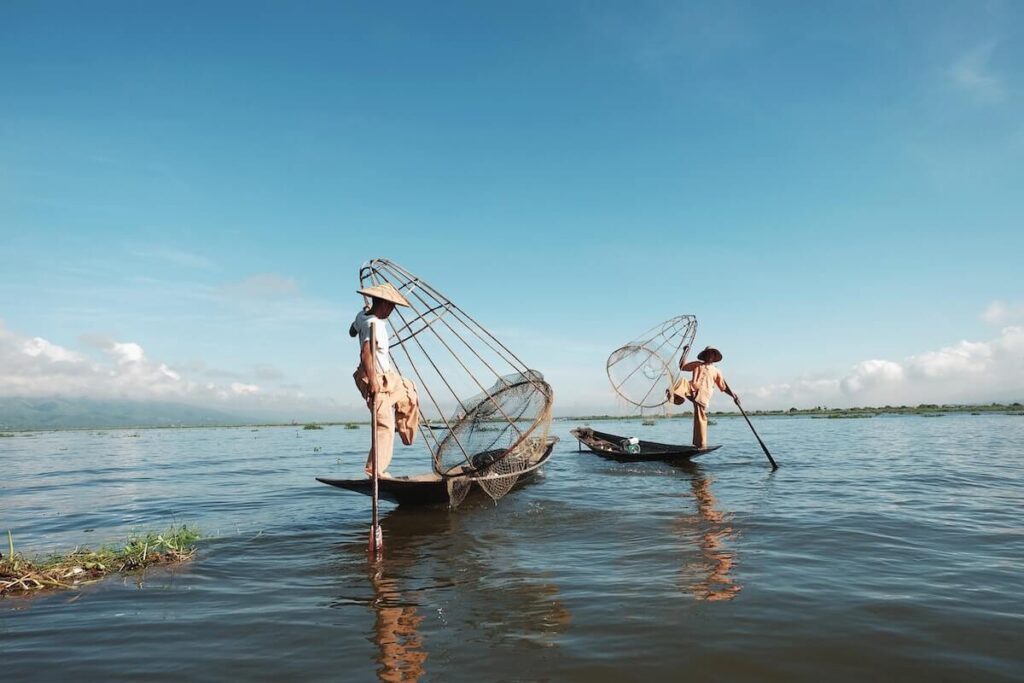
Despite not being extremely well known, Myanmar’s Inle Lake is easily one of the most serenely beautiful places in Asia.
It is the country’s second-largest lake, covering over 40 square miles and stretching out as far as the eye can see. Here, you’ll find majestic mountains, thundering waterfalls, floating gardens, and unique flora and fauna not found anywhere else in the world.
As you might have guessed, the best way to experience Inle Lake and its beauty is by hiking along the many trails in the area.
Also read: 20 Things Myanmar is Known and Famous For
12. Thi Lo Su Waterfall, Thailand

Did you know that Thailand’s biggest waterfall is actually even larger than the world-famous Niagara Falls?
The three-tiered Thi Lo Su Waterfall is one of the most hidden natural wonders in Asia. The majestic falls remind me of Wakanda from the 2018 Marvel film, Black Panther, thanks to its surreal natural allure which you can admire from the many viewing platforms in the area.
Swimming at this UNESCO World Heritage Site is allowed at the first level and honestly, who wouldn’t want to swim in a location as stunning as this?
13. Taman Negara National Park, Malaysia
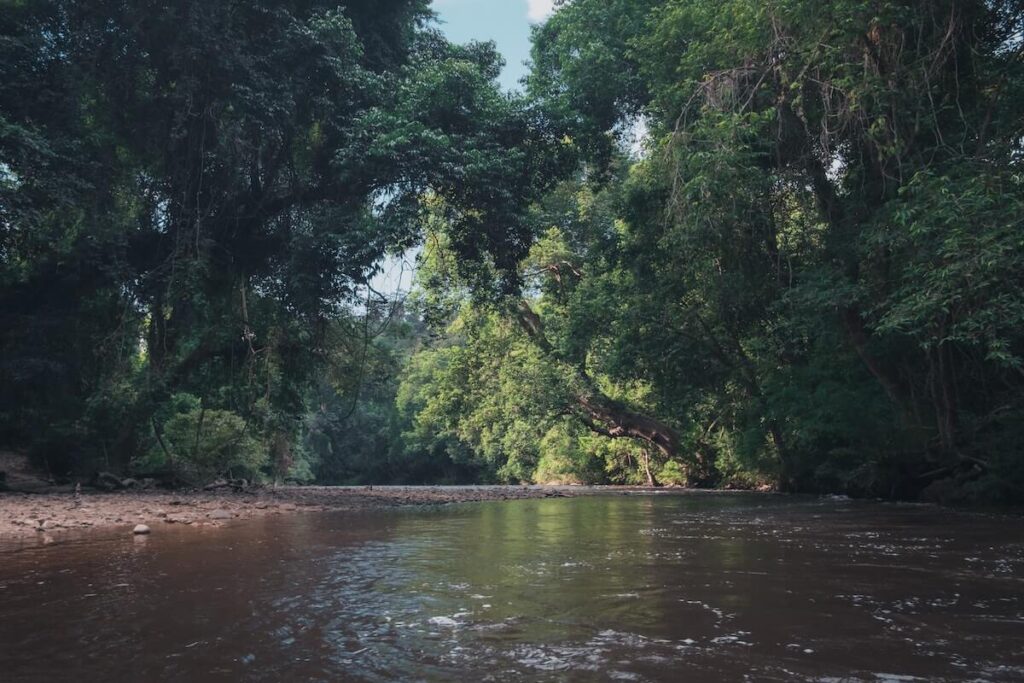
Malaysia, a Southeast Asian travel gem, has no shortage of natural attractions to visit. However, when it comes to natural wonders in Malaysia, nothing stands out more than the country’s national park, Taman Negara.
After all, it is one of the world’s most ancient rainforests, a prehistoric sanctuary that is home to Asian Elephants, unique plants, and even the endangered Malayan Tigers.
With an area covering over 1,600 square miles, Taman Negara National Park is a bucket list-worthy adventure all on its own, providing trekking, white water rafting, spelunking, and mountaineering activities to avid explorers who love being close to nature.
14. The Pinnacles at Mulu National Park, Malaysia

The Pinnacles of Mulu National Park in Sarawak, Malaysia, is one of the most magical natural landmarks in Asia.
Essentially limestone karst formations that jut out of the ground like pillars reaching for the sky. They are the result of receding sea levels from 20 to 30 thousand years ago and, if you hike along the designated hiking trail, you can even spot seashell deposits buried within the limestone!
If hiking up the dense forest to reach The Pinnacles sounds tough (it’s classified as an “extreme hike”), you can still immerse yourself in the beautiful natural surroundings of this UNESCO World Heritage Site dotted with mountains, caves, and rainforest trekking trails.
15. Mount Kinabalu, Malaysia
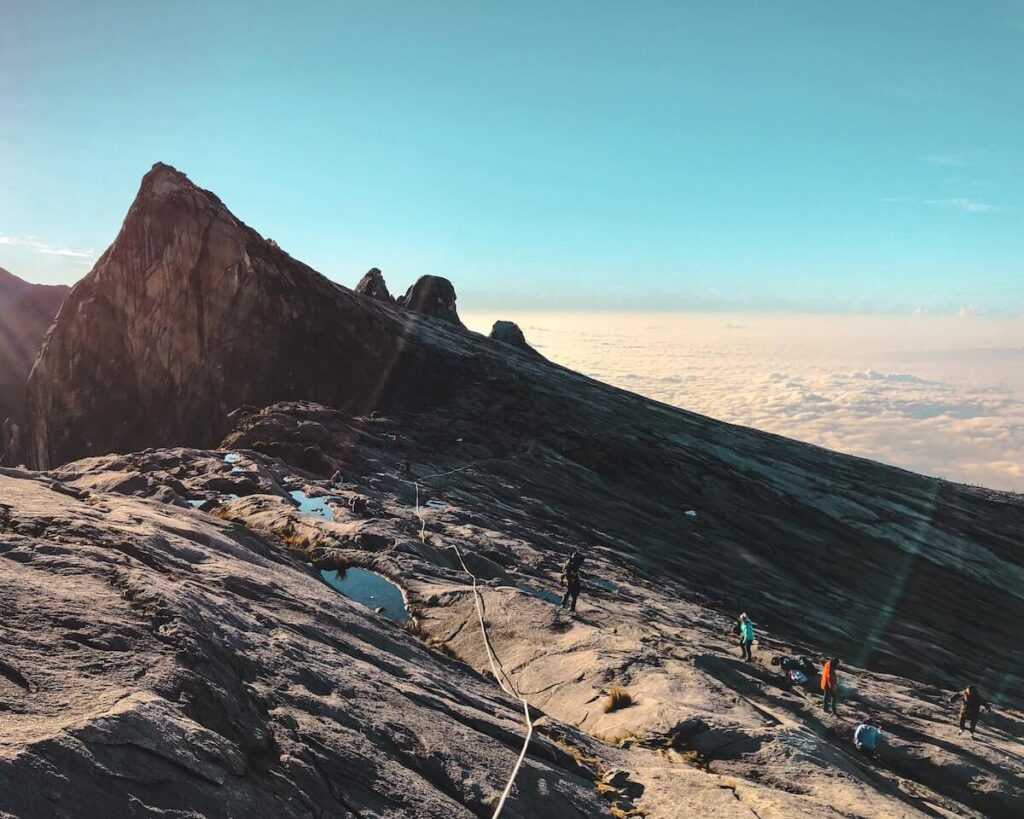
For avid hikers, Mount Kinabalu in Malaysia is a name that is fairly well-known. The tallest mountain in Southeast Asia is one of the places where you can get a rustic experience of nature in Asia.
Located in Sabah, Mount Kinabalu, considered a holy mountain by local tribes, stands at over 13,000 feet, meaning that climbing to the peak is often at least a two-day long journey. Along the way, you’ll pass through diverse landscapes that change the closer you get to the top.
While the base of Mount Kinabalu is full of lush vegetation, the peak features incredible views amidst rocky terrain. As you walk among the clouds (or even above them!), you may sometimes even experience a bit of snowfall when the weather gets cold!
16. Mount Kelimutu, Indonesia
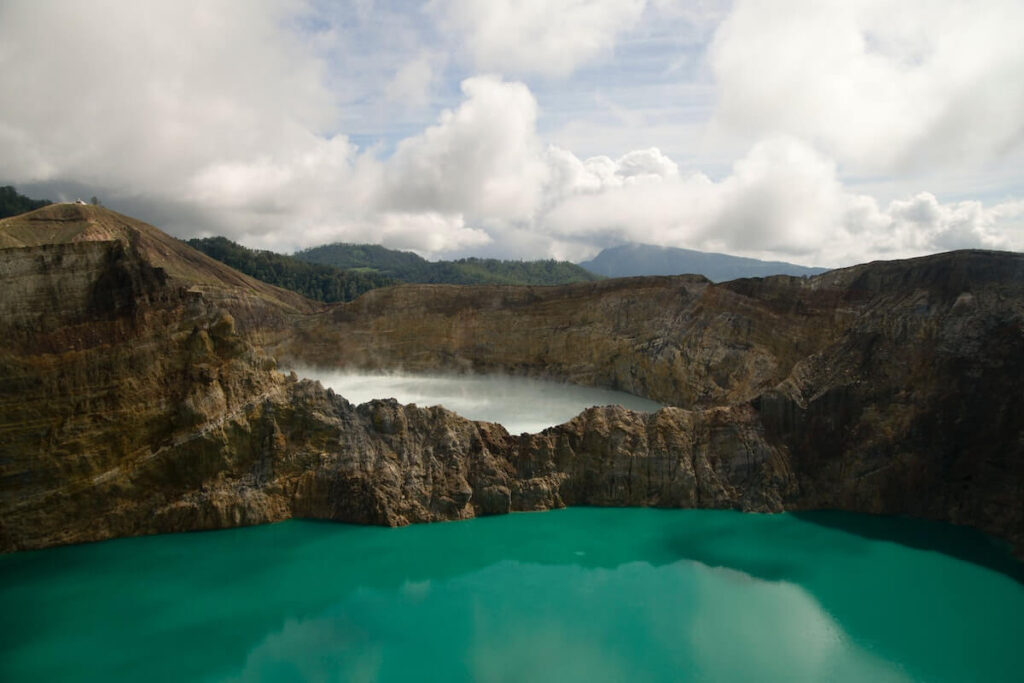
Speaking of majestic mountains in Southeast Asia, the remote Mount Kelimutu on the island of Flores in Indonesia is another one of the underrated natural wonders in Asia that will captivate you with its rustic surroundings.
Besides its diverse landscapes, Mount Kelimutu is best known for its three crater lakes located at the summit. What makes them special is that all three crater lakes boast a different color at different times of the year!
This makes this location a place to visit repeatedly because you never know what to expect the next time you’re there.
17. Kawah Ijen Volcano, Indonesia

Another volcano from Indonesia makes our list of natural wonders in Asia. This one, Kawah Ijen Volcano, is found on the island of East Java.
Unlike Mount Kelimutu which is famous because of its shimmering lakes, Kawah Ijen is best known for being one of the only volcanoes in the entire world that spouts blue flames!
Visible even from a distance, the blue flames appear the most vividly under the shade of night. Needless to say, the whimsical blue lava makes for fantastic photos.
18. Komodo Island, Indonesia

Not all of the natural wonders in Asia are static manifestations of Mother Nature’s handiwork; some of them are living creatures. Take, for example, the Komodo dragons of Indonesia.
Komodo Island is a pristine sanctuary that lies in the southern cluster of Indonesia’s islands. It boasts outstanding untouched natural beauty, especially its exceptional coral reefs. That said, it is the creatures that live on the island that lands Komodo on this list.
Komodo dragons are giant lizards that are said to be the closest living descendants of the dinosaurs! You can admire them (from afar because they’re venomous) at Komodo National Park.
Also read: 20 Best Beaches in Southeast Asia to Visit
19. Tubbataha Reef, Philippines

Speaking of stunning coral reefs, one of the most beautiful places in Asia that doubles up as a must-visit dive spot is undoubtedly Tubbataha Reef in the Philippines.
While not as well-known as the world-famous Great Barrier Reef, the Tubbataha Reef boasts awe-inspiring reef colonies that are well-preserved and devoid of tourists, making it one of the top-secret underwater natural wonders in Asia.
Diving at Tubbataha Reef is only allowed for visitors who journey to the reef on a live-aboard boat. One reason for this is because of the reef’s remote location. For those who are willing to go the extra mile to explore this underwater world in the Philippines, prepare to be greeted by a mesmerizing underwater world complete with manta rays and even whale sharks!
20. Puerto Princesa Underground River, the Philippines

Apart from stunning reef colonies, the Philippines is also home to one of the most peculiar natural wonders in Asia.
The Puerto Princesa Underground River in Palawan, as the name suggests, is a surreal underground river that will leave you wide-eyed with wonder. Sailing into the entrance, you’ll feel as if you’ve embarked on an adventure heading toward the Earth’s very core.
And yet, what greets you isn’t molten lava, but a magical subterranean waterway accompanied by stalagmites and stalactites! Words can do this travel gem no justice. You simply have to visit yourself to see why so many people consider this one of the most beautiful places in Asia!
21. Chocolate Hills, the Philippines
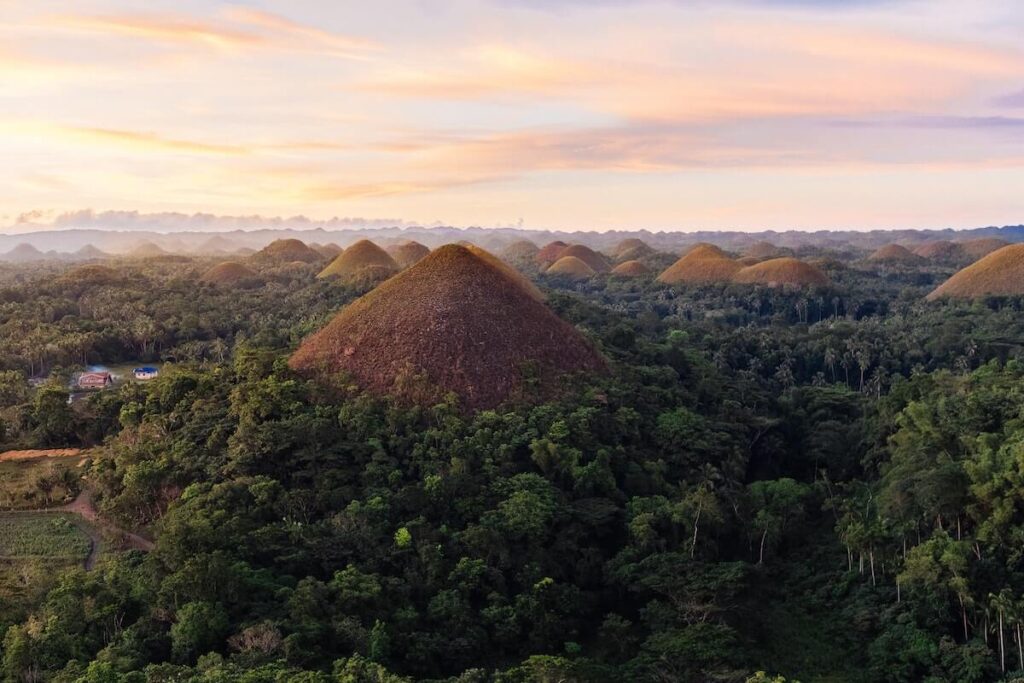
Unfortunately, the Chocolate Hills of the Philippines aren’t literal hills made of chocolate. Instead, these natural landmarks in Asia are simply 1,776 conical hills that change color depending on the season.
During the rainy season, the Chocolate Hills of Bohol are a bright shade of green. However, once the rains stop, the hills turn a shade of brown, hence the name. The hills are a national geographical monument in the Philippines and are said to be the result of karst rock erosion.
As you might expect, the Chocolate Hills are steeped in legend and folklore. But even beyond that, the stunning landscape of the area alone is enough to make you say “wow”!
22. Banaue Rice Terraces, the Philippines
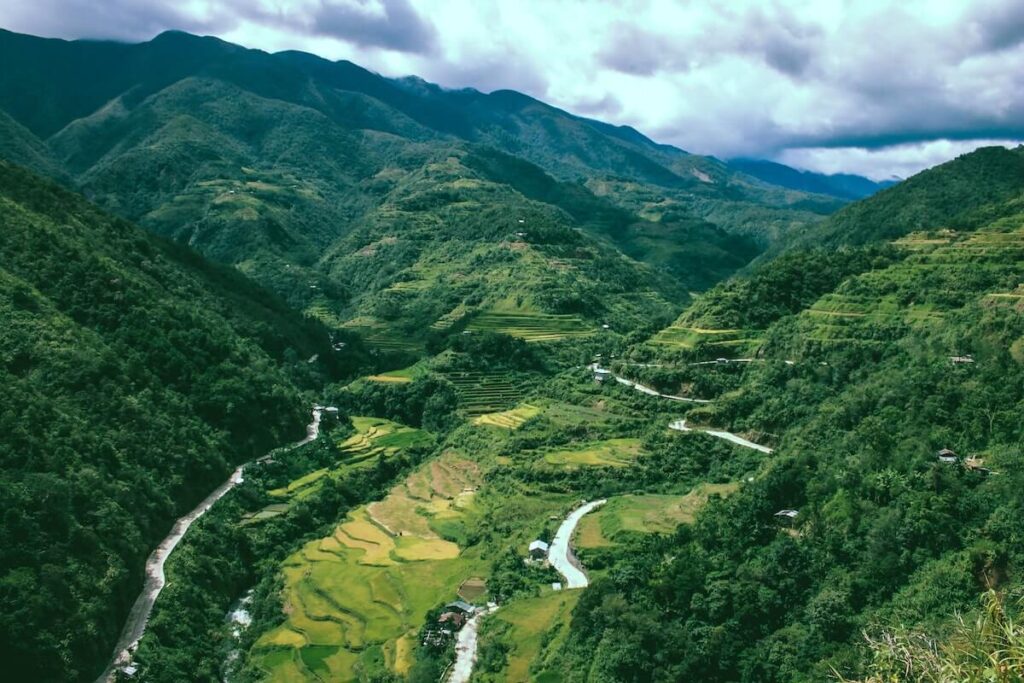
The Chocolate Hills isn’t the only place in the Philippines to admire verdant greenery. The Banaue Rice Terraces in North Luzon, sometimes called the eighth wonder of the world, is another place of incredible natural beauty in the Philippines.
This off-the-beaten-path location exudes a warm ambiance that is complemented by the stunning vista of rice terraces that extend into the nearby hills. Come harvest season, what awaits you is a mesmerizing field of gold and green.
One look and you’ll fall in love with this place for sure!
23. Taroko Gorge, Taiwan
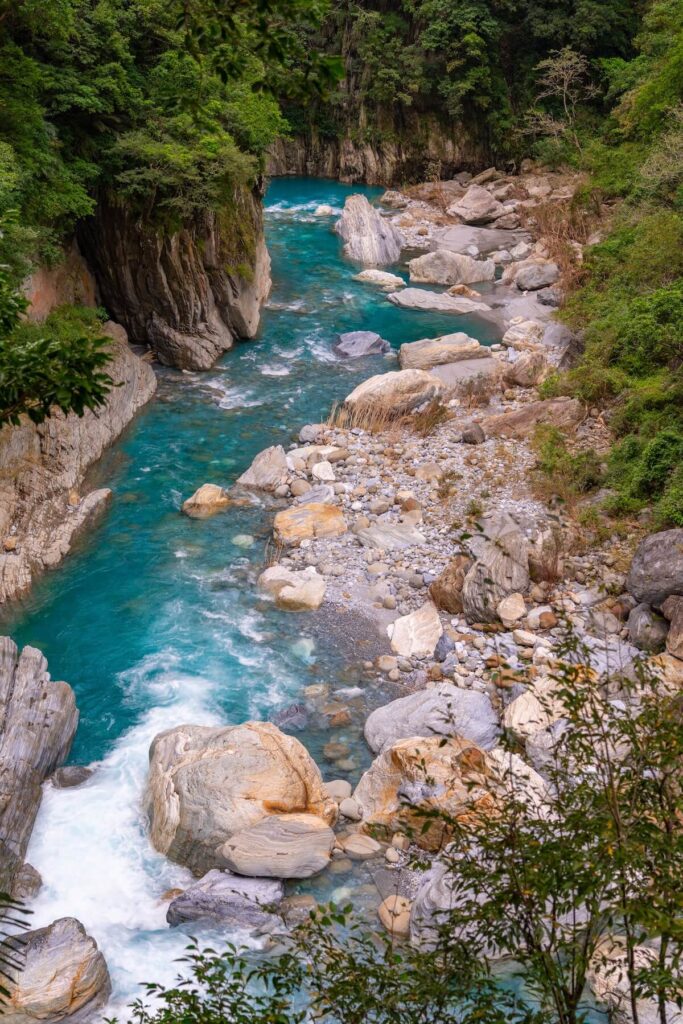
Taroko Gorge in Taiwan is easily one of the most beautiful places in Asia. One visit is all it takes to convince anyone that this natural gem more than deserves that praise.
The gorge, located in Taroko National Park in Hualien County, is sometimes referred to as “The Marble Gorge” because of the marble cliffs that surround the central river (The Liwu). The contrast in color of the white marble cliffs and deep emerald waters is a sight that will ignite the wanderlust in any avid traveler.
What’s more, Taroko National Park is a natural attraction not to be missed in and of itself, with plenty of scenic areas to whisk you away from the mundaneness of daily life in the city.
24. Yehliu Geopark, Taiwan

Yehliu Geopark may only be a short distance away from Taipei, but the vibes here are far removed from the modern confines of Taiwan’s capital city.
The geopark is one of the most popular natural attractions in Taiwan, famous for its unique candle-shaped rock formations that came as a result of erosion from the sea.
Of all the rock formations, the most popular is the Queen’s Head, one of the most iconic natural landmarks in Asia. From the side, this particular rock formation looks like an elegant woman with a crown overlooking the fields with poise. If you’ve ever wanted to snap a selfie with royalty, I suppose this also counts!
25. Mount Fuji, Japan
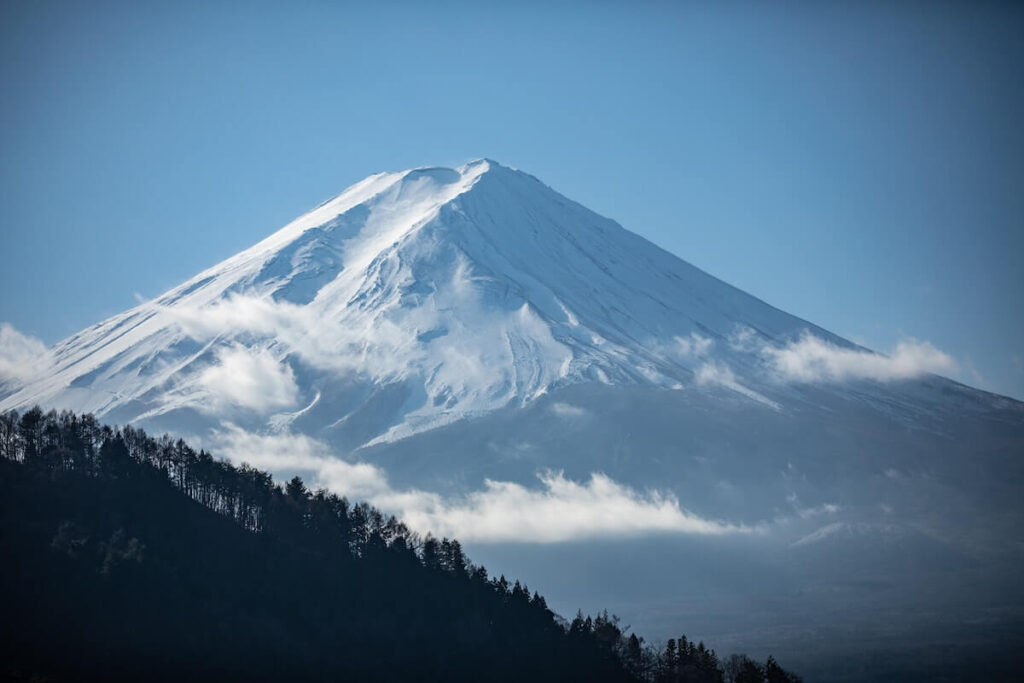
When it comes to natural wonders in Asia, of course, we couldn’t just leave Japan off the list. After all, the Land of the Rising Sun is home to many of the most beautiful places in Asia!
And out of all the natural attractions in Japan, none are as famous as Mount Fuji. In fact, it’s probably the most famous natural landmark in Asia. While it may not be the tallest mountain in Japan, it’s certainly one of the most alluring.
This active stratovolcano is a hiker’s paradise, offering stunning natural scenery and a chance to walk along the crater while you take in the views of the surrounding areas. Even the base of Mount Fuji, Kawaguchiko, is a popular location for its ever-changing beauty according to the different seasons of the year.
26. Jigokudani, Japan

Hokkaido is generally considered one of the coldest places in Japan. However, Jigokudani (literally translates to Hell Valley) in Shikotsu-Toya National Park brings more than just a little warmth to the region.
Jigokudani is a 24-acre geothermal crater surrounded by imposing cliffs that’s famous for its sulfurous hot spring. Blanketed by a thin layer of mist, the valley is open to visitors to explore on foot, via the many boardwalks that have been constructed around the steam caves and geysers.
In addition, Jigokudani is also famous for the snow monkeys that use the springs to keep warm during winter. If you’re looking for a therapeutic dip in a hot spring yourself, you’ll have to visit the spas or public baths in the area.
27. Okama Crater, Japan
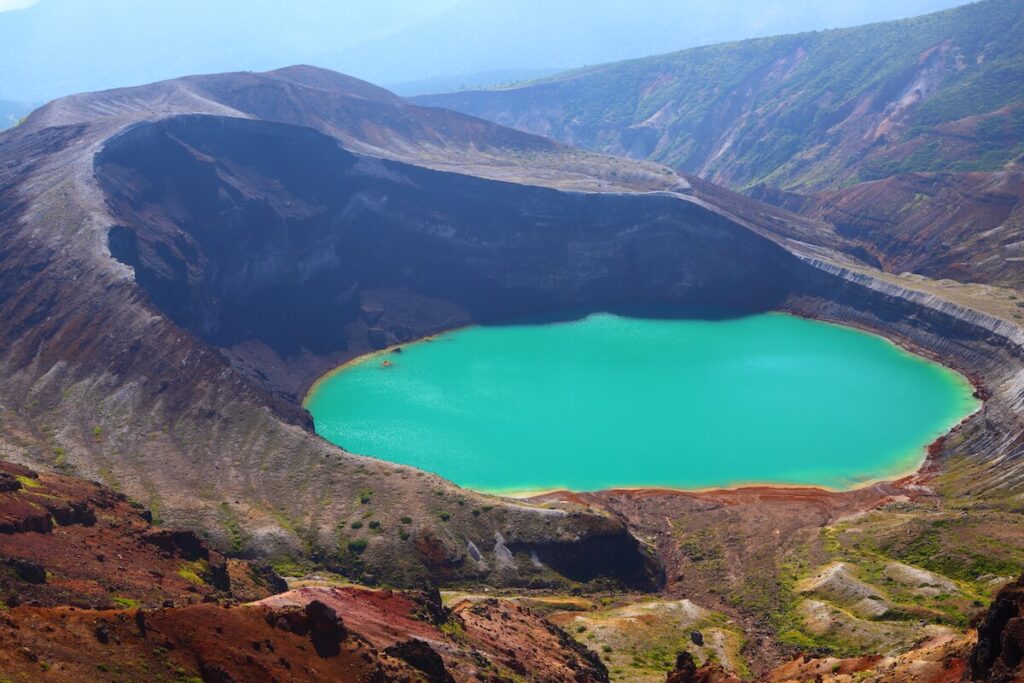
One of the lesser-known natural wonders in Japan is the vividly-colored Okama Crater. Simply put, Okama is a circular crater lake that’s sandwiched between three mountains in the Zao Mountain Range.
What makes Okama Crater so unique is the fact that the color of the water changes depending on the sunlight. This is why locals call it the Lake of Five Colors.
The best way to admire the Okama Crater is by heading to the viewing deck near the Zao Mountain Peak Restaurant.
28. Lonar Crater Lake, India
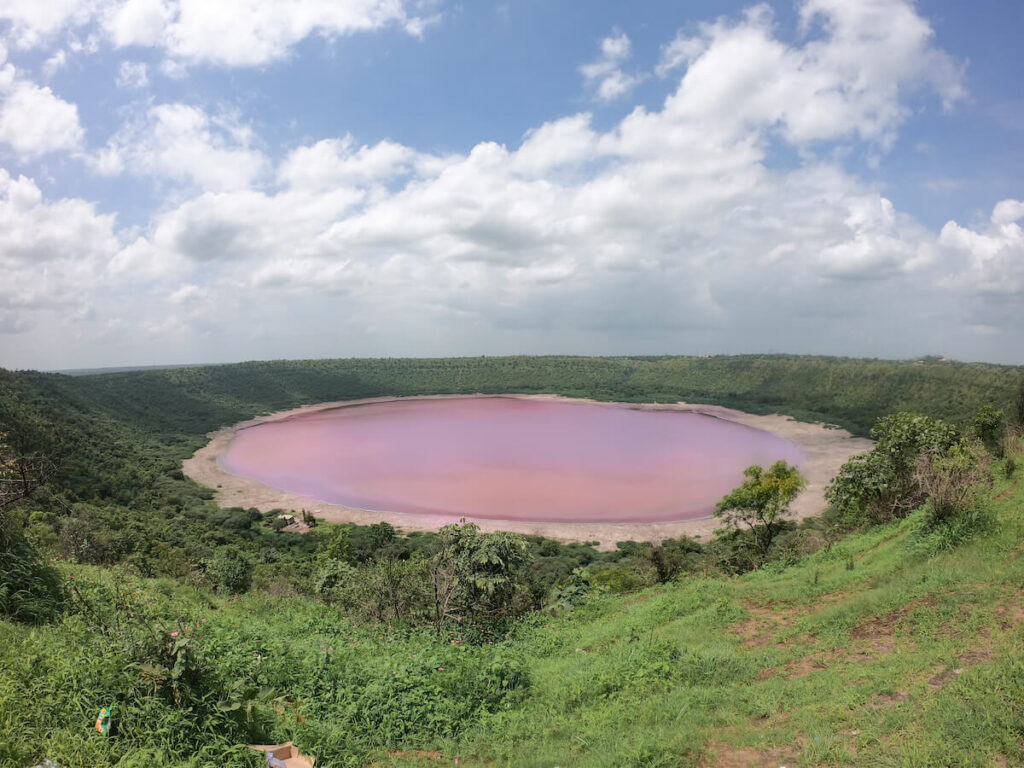
With a landmass that big, it’s no surprise that India has its fair share of natural wonders in Asia too. One of the most beautiful of which is the Lonar Crater Lake.
Formed between 35,000 to 50,000 years ago from the impact of a meteor strike, the Lonar Crater Lake is a deep pool of water that is vibrantly blue when viewed from above. The surrounding greenery only helps accentuate the sapphire hue of the water even more.
However, sometimes due to an overgrowth of certain microbes, the water in the crater turns bright pink! While this phenomenon is quite rare, who knows? You might just be lucky enough to see it during your visit!
29. Living Bridges, India
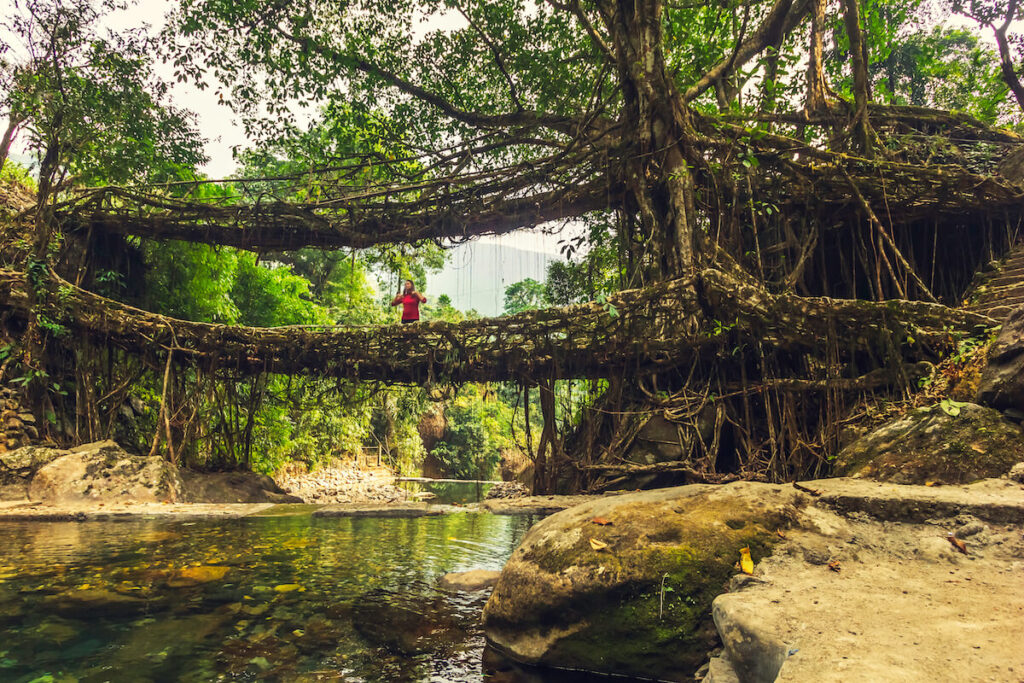
When we think of bridges, we think of majestic man-made constructions. However, the Living Bridges of Cherrapunji in India are nothing like what we’ve seen before.
True natural wonders in Asia, these bridges were grown from rubber tree roots using hollowed betel nut trunks. Over time, the roots solidified and turned into a viable bridge to help villagers cross the rivers!
30. Valley Of Flowers, India
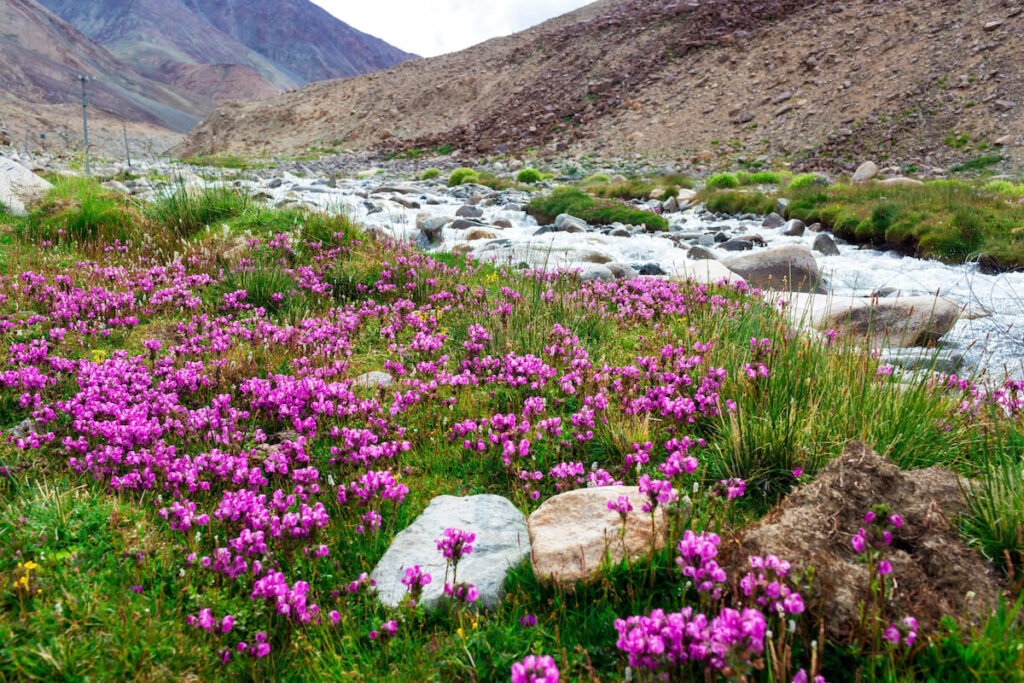
While the Himalayas are usually associated with Nepal, a section of the mountain range extends into India as well, specifically into Uttarakhand in the Garhwal region.
Here, you will the Valley of Flowers, one of the most beautiful places in Asia. What you will find is a wide meadow filled with a plethora of colorful flowers which bloom magnificently in the summer.
There are also waterfalls and streams around the area. So, if you fancy a leisurely walk amidst lovely scenery, the Valley of Flowers is certainly a fine choice. You may even encounter some unique wildlife too!
Conclusion
And there you have it — 30 of the most beautiful natural wonders in Asia!
Has this stoked your wanderlust? In that case, why not add these natural wonders in Europe, North America, and South America to your bucket list too? We promise you won’t regret it!