
*This article may contain affiliate links. For full information, please see the disclaimer here.
What is Malaysia famous for? Towering landmarks like the Petronas Twin Towers and Mt. Kinabalu, UNESCO World Heritage Sites, natural wonders, colorful cities, and fun festivals are just some of Malaysia’s remarkable treasures.

Malaysia’s strategic location in Southeast Asia and its multi-ethnic demography made Malaysia the multicultural nation that it is today.
Malaysia is truly Asia – there is every bit of Asia in it from the colors to the flavors, sights, sounds, and customs. But its long history of Western colonial influences has made it even more uniquely diverse. A fascinating country to visit and explore, if you ask me.
Read on to know what Malaysia is famous for!
Table of Contents
1. Petronas Twin Towers

Malaysia is famous for one of the most iconic Asian landmarks, the Petronas Towers, located in the capital Kuala Lumpur.
At 452 meters, the Petronas Twin Towers were the tallest buildings in the world until Taipei 101 was built in 2004. The Petronas Twin Towers remain the tallest twin towers in the world.
Designed by Argentine architect Cesar Pelli, both towers have 88 floors, made of reinforced concrete, with a steel and glass façade inspired by Islamic patterns. The towers are especially beautiful at night when they are lit up.
Both towers are linked at the 41st and 42nd floors by the 58-meter-long, double-decker Sky Bridge. On the 86th floor, there’s an observation deck. With an e-ticket, you can take in panoramic city views of KL from both the Sky Bridge and the observation deck.
Below the twin towers is Suria KLCC, a shopping mall. Stretching out to the side is KLCC Park, a spacious touch of greenery in the city.
2. Langkawi

As a Southeast Asian country surrounded by waters, Malaysia is famous for its coastal landscapes. Comprising 99 islands, Langkawi is one of Malaysia’s popular tropical attractions.
The island has pristine white sand beaches, including Datai Bay, Pantai Cenang, and Tanjung Rhu.
In Pantai Cenang, both the turquoise beach and the massive Underwater World call attention. The massive aquarium houses over 500 species of marine and freshwater creatures. There is also a 3D theatre and a 15-meter underwater tunnel.
If you want a close encounter with sea creatures, head to Pulau Payar and Pulau Kaca for snorkeling and scuba diving.
Langkawi’s mountains and lush rainforests are equally magnificent. The Langkawi Cable Car, also known as Langkawi SkyCab, takes visitors on an exhilarating 15-minute ride to the top of Mt. Machinchang.
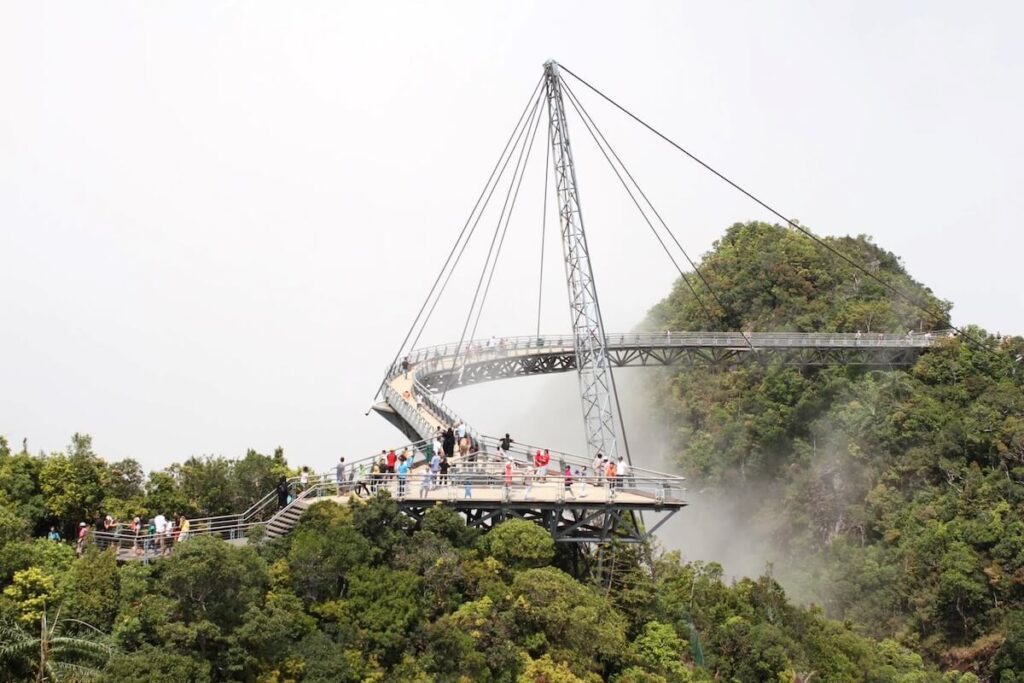
At the top is the Langkawi Sky Bridge, a 125-meter-long curved pedestrian bridge that gives an amazing, and sometimes terrifying, bird’s eye view of the Langkawi landscape. This thrilling private half-day tour of Langkawi includes a SkyCab ride and access to the iconic Sky Bridge.
The best part is that Langkawi is a duty-free island, allowing you to shop for souvenirs without the steep taxes!
3. Melaka City

Despite being a small city, Malacca (Melaka in Malay) charms visitors with its many breathtaking sights and wealthy heritage.
As the oldest city on the Straits of Malacca, Melaka City is the birthplace and center of Peranakan culture in Malaysia. It is also the unofficial historic capital of Malaysia. In 2008, the city earned a UNESCO World Heritage Site status.
As a melting pot of Malay, Chinese, Indian, and European influences, various architectural styles and cultures make Melaka a colorful destination. A mix of historical structures like the A’Famosa, Christ Church, Dutch Square, St. Paul’s Church, Melaka Sultanate Palace, and Cheng Hoon Teng Temple coexist alongside more modern museums, galleries, and shophouses.
Must-tries include the vibrant Jonker Walk Night Market and Melaka River Cruise. A Malacca day trip from Kuala Lumpur is also worth checking out if you want to make the most out of a short visit.
4. George Town

Malaysia is famous for not just one but two UNESCO World Heritage Cities, Melaka and George Town.
Named after King George III, George Town is Penang’s capital city. Like Melaka, it gives off frozen-in-time vibes with its old town city center. Chinese shophouses, clan jetties, colonial churches, temples, mosques, and historical Peranakan and European-inspired mansions pepper the streets.
Perhaps the most popular attraction in Penang is George Town’s street art. In 2012, Penang commissioned Lithuanian artist Ernest Zacharevic to create a street art project called ‘Mirrors George Town.’ Since then, more artists contributed to what are now more than a hundred street paintings and wrought-iron sculptures in George Town.

George Town is also famous for its multicultural gastronomic offerings. You won’t run out of options here. There are plenty of restaurants and cafes in Penang serving Malaysian, Indian, Peranakan, and Chinese foods. Restaurants serving Western cuisines are also present
5. Mount Kinabalu

Malaysia is famous for Mount Kinabalu, Southeast Asia’s highest peak.
Located in Sabah, Borneo, this 4,095-metre-high mountain is easily Kota Kinabalu’s most popular destination and one of the most stunning natural wonders in Malaysia. It is the centerpiece of Kinabalu National Park, Malaysia’s first UNESCO World Heritage Site.
The majestic mountain is distinct for its granite spires and post-glacial slopes. Ascending and descending the Borneo peak is no easy feat. Depending on the trail you take, the weather, and your fitness level, the hike can take days.
Two trails lead to the summit – the relatively easier Timpohon Trail, and the more scenic but taxing Mesilau Trail. Unfortunately, the Mesilau Trail is no longer accessible as it was closed after a destructive earthquake in 2015.
The Kinabalu National Park is also home to botanical treasures, with over 5,000 species of flora, more than 300 species of birds, and over 100 mammalian species.
6. Orangutans

Malaysia is famous for being a country rich in biodiversity. In East Malaysia, Borneo is not just home to Mt. Kinabalu but also the only great apes found in Asia – orangutans.
These primates, now critically endangered, are found only in Borneo and Sumatra, Indonesia.
Orangutans are highly intelligent mammals, sharing 97% of their DNA with humans. The Bornean orangutan is the second-largest ape after the gorilla and the largest tree-dwelling animal. It has grey skin and orange-brown fur. But deforestation, loss of habitat, and hunting continue to pose a serious threat to their existence.
Today, wild Bornean orangutans can be seen in conservation areas like the Danum Valley Conservation Area and Sepilok Orangutan Rehabilitation Centre. Kinabalu National Park and Kubah National Park are also home to wild orangutans.
7. Taman Negara

Malaysia is famous for its diverse wildlife and national parks. Nowhere is this more evident in the Malay Peninsula than in the 434, 350-hectare Taman Negara.
Taman Negara directly translates to ‘national park’ in Bahasa Malaysia.
Straddling the borders of Pahang, Kelantan, and Terengganu, this rainforest is believed to be over 130 million years old. It’s a haven for Malaysia’s astonishing range of flora, fauna, and fungi. The jungle is home to Asian elephants, tigers, leopards, rhinos, flying squirrels, deer, and monkeys.
Aside from observing wildlife, visitors can also walk on the world’s longest canopy walkway, visit the aborigine village, and scale Gunung Tahan. A full-day tour of Taman Negara lets you do all these and more.
8. Gunung Mulu National Park

Malaysia is famous for the largest cave chamber in the world, the Sarawak Chamber, which lies underneath Gunung Mulu National Park. Also known as the Gunung Mulu World Heritage Area, this 52,865-hectare national park in Borneo packs a wealth of natural wonders.
Among its notable features are three mountains — Mount Mulu, Mount Api, and Mount Benarat. Mount Mulu is the second-highest peak in Sarawak. It is famous for the Pinnacles, a forest of razor-sharp limestone spires.
The park’s spectacular rainforest has 17 vegetation zones and is said to be about 600 million years old.
Other attractions include the Deer Cave, the second-largest cave passage in the world, and the Clearwater Cave, the longest cave system in Southeast Asia.
Outstanding for its rich biodiversity and karst features, Gunung Mulu National Park is the most studied tropical karst area in the world. It gained its UNESCO World Heritage status in 2000.
9. Legoland

Malaysia is famous for being home to the first Legoland theme park in Asia. Legoland Malaysia Resort in Johor Bahru is also Malaysia’s first international theme park.
The 76-acre park was officially opened by Sultan Ibrahim Ismail (Sultan of Johor) in September 2012. The theme park packs colorful giant Lego figures, over 70 exciting brick-patterned rides, slides, and shows for families and children of all ages.
The theme park is divided into eight zones: The Beginning, Technic, Kingdom, Imagination, land of Adventure, City, Miniland, and Ninjago World.
Besides the Legoland Malaysia theme park, other attractions include the Legoland Water Park and The Legoland Hotel, which is also the first to open in Southeast Asia.
10. Batu Caves

Just outside Kuala Lumpur lies a 400 million-year-old limestone hill with a 100-year-old temple inside it. Batu Caves comprises three major caves and a few smaller ones. The cave takes its name from the Malay word batu, meaning ‘rock.’
One of the most popular Hindu shrines outside India, Batu Caves is dedicated to Lord Murugan. A giant statue of the Hindu god guards the cave’s entrance. Batu Caves is a pilgrimage site not only for Malaysian Hindus, but Hindus worldwide, especially during the annual Thaipusam Festival.
At 140 feet, this is the tallest statue of Lord Murugan in the world, the tallest Hindu statue in Malaysia, and the second-tallest Hindu statue in the world. The statue is made of 1550 cubic meters of concrete and 250 tonnes of steel bars. 300 liters of gold paint brought in from Thailand were also used to make this shiny statue.
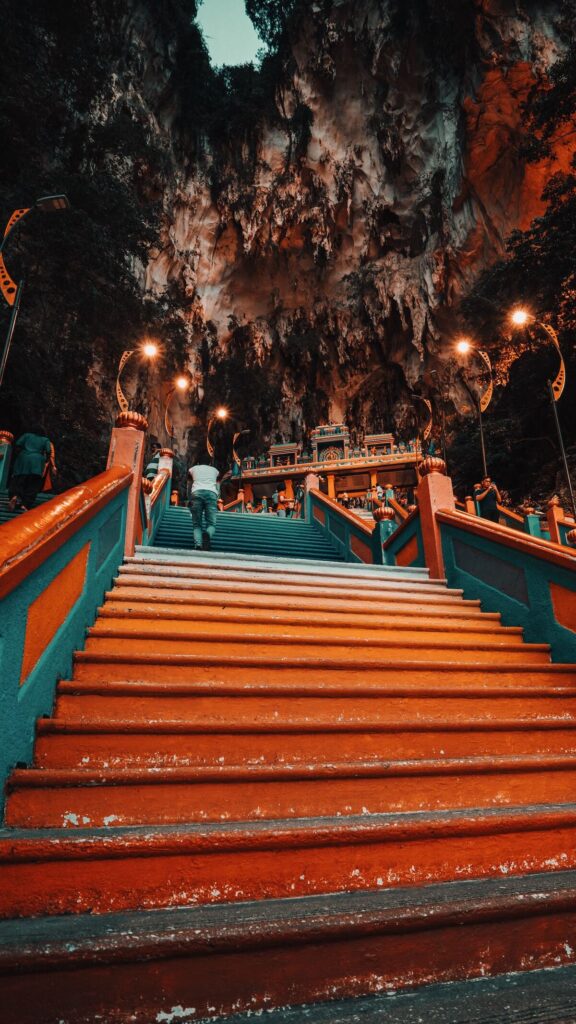
To reach the Cathedral Cave, the most popular cavern in Batu Caves, you have to climb 272 steps (and dodge a lot of monkeys). At the foot of the hill are two other caves temples, the Gallery Cave and Museum Cave, which also house several Hindu statues and paintings.
If you can spare more time, I recommend visiting Batu Caves along with the nearby Royal Selangor, which features the largest and most modern pewter factory in the world.
11. Genting Highlands

Perched on the peak of Mount Ulu Kali between Pahang and Selangor, Genting Highlands (or Resorts World Genting) is one of Malaysia’s most popular holiday destinations.
The hill resort includes theme parks, a golf course, casinos, Malaysia’s biggest strawberry farm, and luxury hotels above a lush rainforest. The surrounding area has great spots for nature hikes, too.
Two massive cable car systems serve Genting Highland. First is the Genting Skyway, which travels between Gohtong Jaya and the peak of the highlands. Second is the Awana Skyway, which operates between Awana Station and SkyAvenue Station. Awana Skyway also serves as the main mode of transportation.
To get to Genting Highlands from Kuala Lumpur, you can purchase a day trip package that includes a two-way Genting Skyway ride. You can also check out attractions such as the Chin Swee Caves Temple, Butterfly Wonderland, the Genting Strawberry Leisure Farm, and Awana Horse Ranch.
12. Multiculturalism

Being bordered by Thailand, Indonesia, and Singapore, and having a long history of diverse influences, it’s no surprise that Malaysia is famous for being a multicultural nation. It’s one of the stereotypes about Malaysia that is actually true.
The Orang Asal, aboriginals of Sabah, Sarawak, and Peninsular Malaysia, were the first people to live in Malaysia. The Malays, an Austronesian ethnic group, came next.
Intermarriage with Chinese settlers in Malacca gave birth to the Peranakan culture. Indian immigrants brought with them Hindu and Sikh cultures. Colonization ushered in Portuguese and British influences.
This multi-ethnic, multilingual society results in diversity in all aspects of daily life in Malaysia – from language to art to religion to cuisine. Which brings me to…
13. Diverse flavors and cuisines

A hotchpotch of cultures, it comes as no surprise that you can find so many types of cuisines across Malaysia. This diversity, in fact, is what draws some visitors to this Southeast Asian foodie paradise.
Restaurants and hawker stalls all over the country serve Indian, Chinese, Peranakan, and traditional Malaysian foods. As Westerners have colonized Malaysia, continental food is also easy to find.
Some of the most famous dishes visitors must not miss include nasi lemak, mee goreng, rendang, nasi kandar, laksa, roti canai, Hokkien mee, and Hainanese chicken.
Also Read:
14. Festivals all year round

Yet another upshot of its multiculturalism, Malaysia is famous for its colorful festivals. With so many races and cultures, come a multitude of celebrations, mostly religious, that fill the calendar from January to December.
Major festivals like Eid Al Fitr, Chinese New Year, Independence Day, Deepavali, and Christmas are widely celebrated. Other festivals worth witnessing include Thaipusam, Wesak Day (Buddha’s birthday), Dragon Boat Festival, Mooncake Festival, and other harvest festivals.
15. Cameron Highlands

Despite being a tropical nation, Malaysia is famous for its top highland retreat spot, Cameron Highlands.
Named after British explorer and geologist William Cameron, the Cameron Highlands is a district in Pahang, Malaysia.
Elevations range from 800 meters to 1,603 meters above sea level. The highlands enjoy a moderate climate with average annual temperatures of 18 degrees Celsius. The topography and climate make it ideal for growing tea, coffee, fruits, and vegetables.
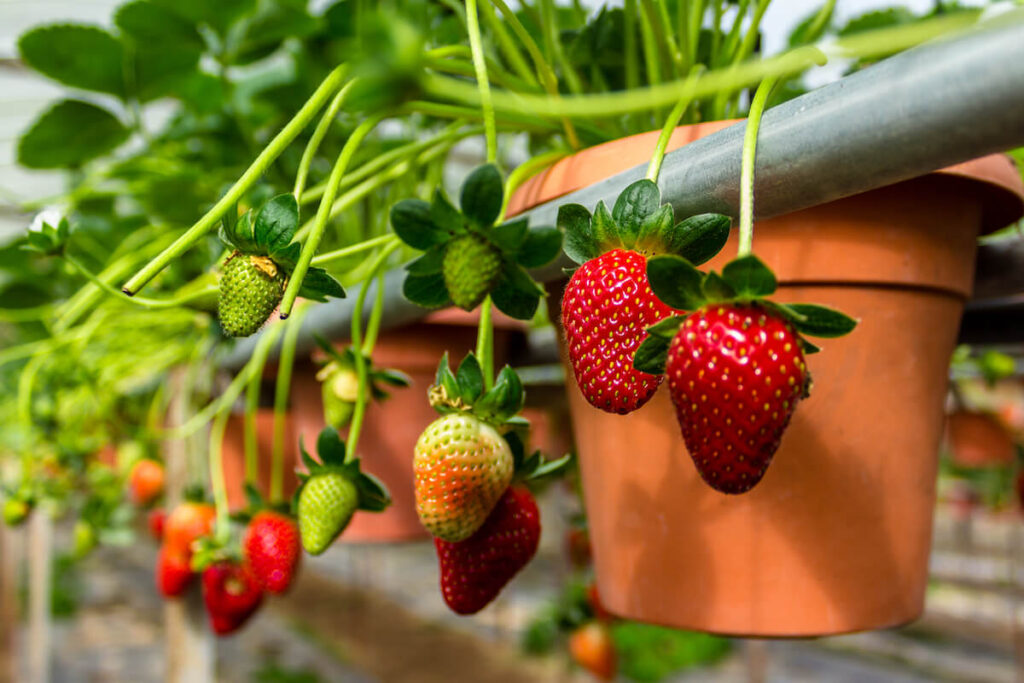
In the mid-1920s, the British started growing tea in Cameron Highlands, a practice that locals still do. Many tea plantations are open to tourists who want to learn more about the process of producing tea.
Aside from visiting a tea plantation, a full-day Cameron Highlands tour lets you explore bee and butterfly farms, visit waterfalls and temples, and even pick strawberries.
16. Jimmy Choo

Did you know that a famous shoe brand traces its roots to Malaysia?
Jimmy Choo Yeang Keat, the co-founder of global luxury brand Jimmy Choo, was born in Penang, Malaysia in 1948. Raised in George Town, Choo spent his formative years in his father’s shoemaking workshop. His father was a shoemaker who made all of his shoes by hand. By age 11, Choo had made his first pair of slippers, a gift for his mother.
Choo went on to study in London and worked at a couple of design companies in Britain. His designs made it to the London Fashion Week in 1988 and were featured in Vogue. This big break led to gaining elite clientele from Hollywood and the British Royal Family.
Today, his brand is known for not just luxury shows, but also handbags, leather goods, and accessories like scarves, eyewear, and fragrance.
17. OldTown White Coffee

Did you know that Malaysia is famous for white coffee? And another Malaysian brand that gained global success is OldTown White Coffee, the largest halal-certified coffee chain in Ipoh, Perak.
White coffee traces its history to the 19th century. The traditional black coffee of the British colonizers wasn’t palatable to the Chinese settlers in Ipoh. The Chinese introduced white coffee by adding sweetened condensed milk to the black coffee.
The recipe later underwent refinements. The Chinese adopted unique ways of roasting, brewing, and stirring techniques until it became the iconic white coffee we know and love today.
OldTown now operates over 200 café outlets throughout Malaysia, Singapore, Indonesia, and Hong Kong, with plans to expand to other countries as well. OldTown White Coffee instant mixes are also available in markets worldwide. It’s easily one of the best Malaysian souvenirs to take home.
18. Nine royal families

Malaysia is famous for its unique monarchy system. It has not one, but nine royal families that use an electoral system to choose a king every five years.
The country has 13 states and nine of those have royal families. The head of each family has the title of Sultan, and they rotate five-year terms as “agong” or king. Rather than succession through bloodline, the next king is crowned through an election process among the nine royal households.
This unique rotational monarchy system has been in place since 1957, after Britain returned control of Malaysia to the royal family and the new parliament.
19. Formula One

Malaysia is famous for hosting the Asian leg of Formula One World Championship from 1999 to 2017.
When Malaysia launched the Malaysian Grand Prix in 1999 at the Sepang International Circuit, it was the first Formula One event in Southeast Asia.
Designed by Hermann Tilke, Sepang is one of the most technical circuits in Formula One. It featured 15 harrowing turns and long high-speed straightaways, making it a challenging track for drivers. The track can accommodate up to 130,000 spectators and has several hotels around it for tourists.
20. Bukit Bintang

Bukit Bintang or Bintang Walk is Kuala Lumpur’s trendiest shopping and entertainment center. Encompassing Jalan Bukit Bintang and its surrounding areas, the area is popular for its shopping malls, boutiques, markets, nightlife, dining options, and bustling crowds.
Despite being a glamorous and upscale area, Bukit Bintang caters to shoppers and diners with different budgets. The hawker-lined Jalan Alor is perfect for sampling affordable food, while Starhill Gallery offers upmarket dining choices. Changkat Bukit Bintang is the capital’s party hotspot.
For high-end shopping, the Pavilion KL and Starhill Gallery are favorites. Berjaya Times Square is best for mid-range options. But if you like budget-friendly options like I do, the Malaysia Heritage Walk is ideal.
There are also several stunning temples, vibrant street markets, and even amusement parks in Bukit Bintang.
21. Central Market

One of Kuala Lumpur’s popular tourist attractions is Central Market. Called Pasar Seni in Malay, the market is located a few minutes away from Petaling Street, along Jalan Tun Tan and the pedestrian-only section of Jalan Hang Kasturi.
It opened in 1888 as a wet market. Years later, the current art deco style building was completed and the market was revamped into an arts and crafts outlet.
Today, Central Market is a hub for tourists, shoppers, and art lovers looking for Malaysian handicrafts, textiles, souvenirs, and artworks. Shops, galleries, and artsy restaurants and cafes fill up the complex.
Because of its huge contribution to fostering Malaysian culture and heritage, the Malaysian Heritage Society classified Central Market as a Heritage Site.
22. Handicrafts

Malaysia is known for its diversity in its arts, particularly in its handicrafts. It’s impossible to go on a trip to Malaysia and come home bringing only key chains and ref magnets because the country offers so many fascinating and high-quality souvenirs!
Malaysia is famous worldwide for pewter goods, alloys of tin, antimony and copper. They often come in the form of kitchenware, tableware, and gift items.
Hand-woven crafts, which are made of bamboo, rattan, mengkuang, coconut shells and pandan leaves, are also popular. These are usually made into bags, purses, or baskets.
Other famous handicrafts and hand-made souvenirs include beaded slippers, Baju Kebaya (traditional Malay attire), songket (gold and silk fabric), and Sabah pearls.
23. Malaysian Batik

Perhaps the most popular handicraft and type of fabric in Malaysia is Malaysian batik.
A specialty in Kelantan, Terengganu and Pahang, batik fabrics are usually in cotton or silk. The cloth is designed through waxing and dying. Colors used are usually light and vibrant. Designs typically feature flower prints, butterflies, and geometric designs.
Batik fabric is used for clothing, pillowcases, table runners and tablecloths, placemats, sarongs, scarves, or as tapestries.
24. Rubber

Bet you didn’t know this — Malaysia is famous for being a top producer and exporter of natural rubber! The Southeast Asian country is the fifth largest producer and exporter of natural rubber, and also one of the largest consumers of this product.
In early 20th century, rubber overtook tin as Malaysia’s main export commodity. The first rubber plantations were built in Perak, Selangor, and Johor. As demand for rubber grew, rubber planting became more profitable and plantations spread across the Malay Peninsula.
By the 1930s, Malaysia became the world’s largest natural rubber producer. To this day, rubber remains one of the top exports of Malaysia.
25. Palm oil

Lastly, Malaysia is famous for palm oil production. As the second-largest producer and exporter of palm oil in the world, Malaysia accounts for 28% of the world’s palm oil production and 33% of global exports.
British colonizers introduced palm oil trees in the early 1870s as ornamental plants. In the 1960s, the Malaysian government supported the cultivation of the plants to reduce dependency on rubber and tin. Today, palm oil is the 4th largest export of Malaysia.
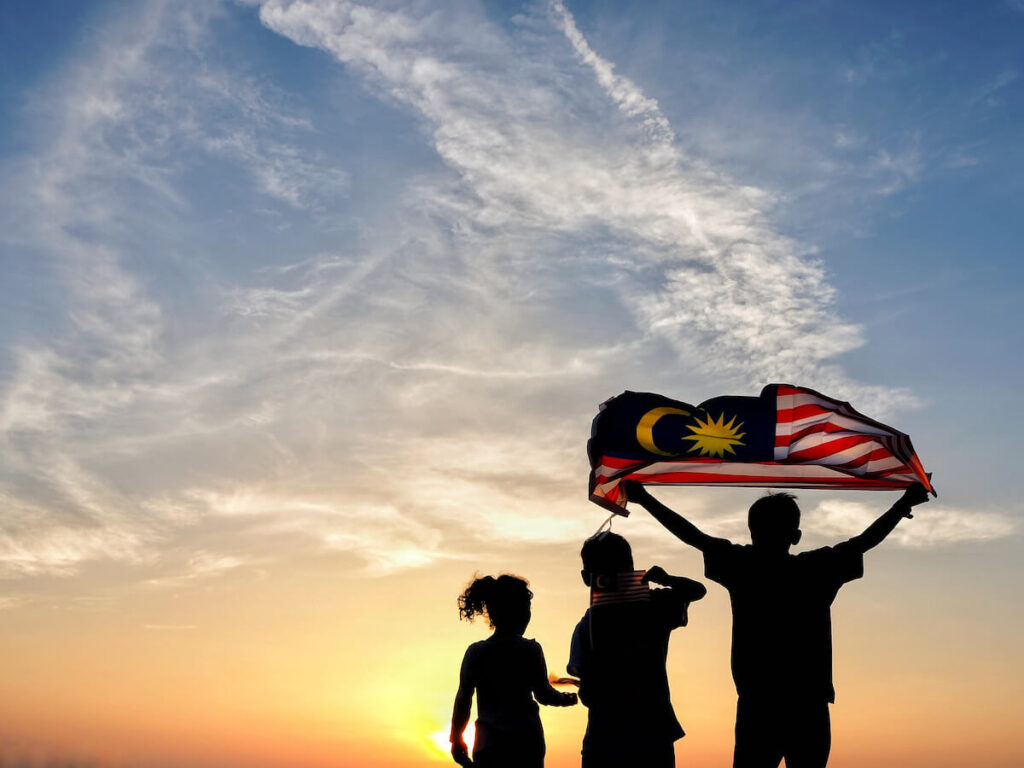
We’re pretty sure this list convinced you to visit Malaysia. You might even be swayed to study in Malaysia. Make sure to plan ahead for safe travels. What else is Malaysia known for? Share it in the comment box below!
Now, learn more about Malaysia with this list of the best books on Malaysia. Before you go, read about Thailand, Vietnam and other Southeast Asian countries in our Explore the World series!
What is Malaysia famous for? – Pin it!


nice
this is a good place for me to know about Malaysia, I have interest in this country
Helped me for my assignment on Malaysia.