
One of the most memorable trips I’ve had in my life was a month-long vacation in Malaysia. There, I met with my friends from university and together we embarked on an epic food tour throughout the country, stopping in Penang, Kuala Lumpur, Malacca, and Sarawak.
To say that I fell in love with Malaysian cuisine would be an understatement. Everything just made me want to eat more! But apart from filling my belly with mouthwatering food, the foodie tour also opened my eyes to the fascinating food culture in Malaysia.
If you’re wondering what Malaysian food is like, here are 40 essential things to know about Malaysian food culture that will inspire you to plan that food trip!
Table of Contents
Basic food culture in Malaysia
1. Most Malaysian dishes are a blend of different cultures

One of my most profound experiences with Malaysian food culture was when my friend brought me to his favorite nasi kandar (rice topped with a variety of dishes) place.
As I stared at the food, I couldn’t help but notice the clash of cultures. My plate was piled high with tofu and cabbage, common ingredients in Chinese cuisine, beef rendang, a traditional Malay meat dish, and topped with various Indian curries and gravies!
Malaysian cuisine is a true reflection of its people — a mixture of various cultures meshed into a harmonious blend of flavors.
2. Nasi lemak is the national dish
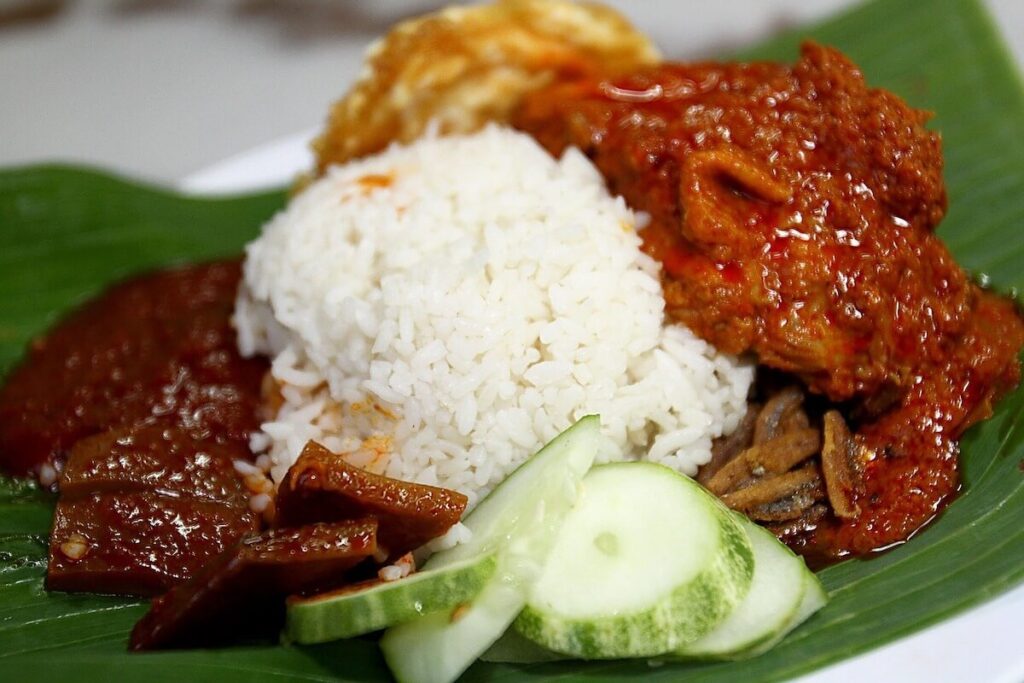
Among the many dishes in Malaysian cuisine, none are as universally adored as nasi lemak. As I came to find out during my trip, nasi lemak is the most popular go-to choice for breakfast.
It’s amazing to me how such simple ingredients — steamed rice in coconut milk, fried anchovies and peanuts, half a boiled egg, and spicy sweet sambal, could make for such a satisfying meal.
3. Malaysians love sambal

Speaking of sambal, one of the unique Malaysian food habits I noticed was that almost every type of cuisine in the country has its own version of sambal.
Sambal is essentially a chili paste made with chili peppers, garlic, and spices like galangal. Traditionally, it is made with a pestle and mortar. However, I realized that there were different kinds of sambal too, such as sambal belacan (made with prawn paste), and one that’s made with green chili peppers.
Despite sambal being Malaysia’s national condiment, it’s also a common ingredient in cooking. In particular, it’s often used with certain types of vegetables like watercress and petai (bitter beans).
4. Coconut milk and prawn paste are essential ingredients

When it comes to traditional Malaysian food, two of the most common ingredients are santan (coconut milk) and belacan (a savory, slightly fishy prawn paste). These two ingredients permeate Malaysian cuisine more than you can imagine.
Santan is also used to make curries, pastries, and even desserts while belacan is used as a flavor enhancer for curries, fried rice, and even fried chicken!
5. No spice, no life
As you can already imagine, one of the greatest lessons I learned about Malaysian food culture was that Malaysian food is spicy. Not just in terms of heat, but in the use of fragrant herbs and spices.
Galangal, ginger, parsley, turmeric, mint (a key ingredient in laksa), and tamarind are all popular spices found in Malaysia. In fact, many Malaysians, including my friend, plant certain spices in their backyard, such as curry leaves and chilies!
Interesting trivia on the history of Malaysian food
6. Nyonya cuisine is a (literal) marriage of cultures

Here’s a piece of Malaysian food culture history that I picked up in Malacca. One of the most popular types of Malaysian cuisine is Peranakan (or Nyonya) cuisine, which combines Chinese and Malay cooking techniques and ingredients.
The story of how Peranakan cuisine came to be is quite fascinating, to say the least. Between the 14th and 17th centuries, Malaya (before it became known as Malaysia) welcomed droves of Chinese immigrants from the southern provinces of China.
As these traders continued to arrive, some of them eventually settled down and married the locals in the region, giving birth to the Peranakan community, a mixture of local Malay and Chinese cultures.
7. There are many Chinese dishes that actually originated in Malaysia

Speaking of the history of Malaysian cuisine, one thing that caught me off guard when I first arrived in the country was the plethora of “Chinese dishes”…which I had never seen in Hong Kong or in Mainland China!
There were many dishes like hokkien mee and Ngah Choi Kai (chicken and bean sprouts — a popular dish in Ipoh), that had Chinese (or a dialect of Chinese) names, but they were dishes that I’d never heard of before or were way different from what is usually served in China.
When my friend brought me out for bak kut teh (pork ribs in herbal soup), I was expecting a teapot with literal pork ribs (a direct translation of the dish)!
8. Malaysia has its own unique Western-style dishes
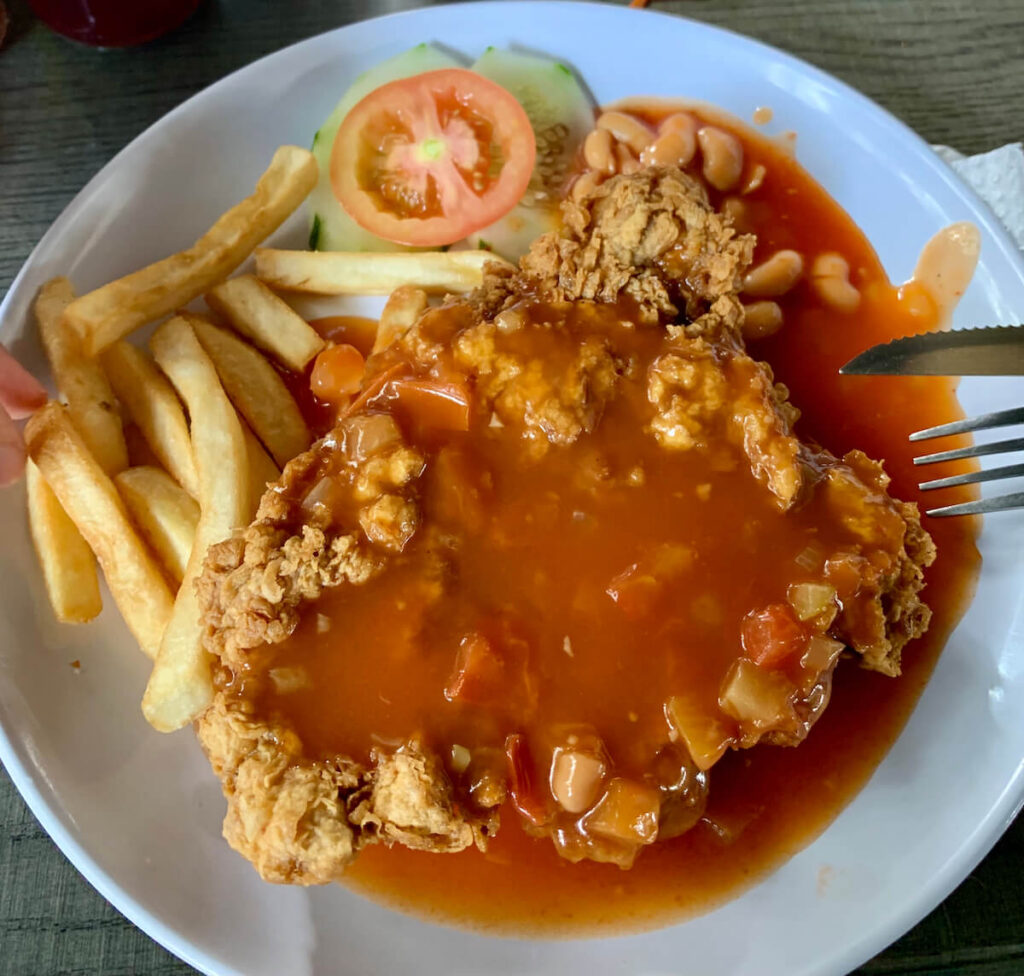
Another unique piece of Malaysian cuisine history is the invention of unique Western-style dishes. “Western food” is quite popular in Malaysia but as my friend pointed out, some of the most popular western dishes in Malaysian cuisine are actually local inventions.
For example, the Hainanese Chicken Chop, a juicy cutlet of fried chicken topped with a sweet sauce, was invented in Malaya during the British occupation. The recipe was initially created by the Hainanese immigrants working as chefs for the British, but it later became popular even among the locals!
Malaysian food etiquette and traditions
9. Food is sometimes served on banana leaves

Another unique experience I had with Malaysian dining culture was I ate at a restaurant that my friend called “banana leaf”. I had thought that “banana leaf” was just a nickname for the eatery, so imagine my surprise when the staff literally laid down a large banana leaf in front of me instead of a plate!
Yes, banana leaves are quite common in Malaysian cuisine. Sometimes, they act as plates, such as in the case of “banana leaf rice” where your food is served on cleaned banana leaves. Other times, they are used as a fragrant enhancer, like when char koay teow (fried rice noodles) are placed on a small banana leaf on top of a plate.
10. Eating with your hands is perfectly acceptable
Back to the banana leaf experience I was talking about. After my food was served on the banana leaf in front of me, I took a look around the table trying to find a fork and spoon. To my surprise, my friend just started eating with his hands!
That’s when I learned that, in Malaysian food etiquette, it’s perfectly normal to eat with your hands, usually when eating rice! The staff eventually offered me a fork and spoon but I decided to try eating as the locals do.
It was a real struggle but what my friend taught me is that the way to use your hands is to grab some rice with your fingers, and use the thumb to push it into your mouth.
11. Wash your hands!

This brings me to my next point in Malaysian food etiquette. It’s simple really: Wash your hands! Whether you’re eating with your hands or utensils, washing your hands before a meal is a must-do in Malaysia, especially when you’re eating out with company!
12. The water pitcher on the table is not always for drinking!
Speaking of that, if you’re visiting a Malay restaurant in Malaysia, and you notice a water pitcher on the table, just know that it is water meant for washing your hand, and not a beverage! Instead, your beverage will be served in a separate cup.
13. Usually, only the right hand is used for eating

When eating with your hands, Malaysian food etiquette requires that you only eat with your right hand. That’s mainly because apart from your individual plate of rice, there will also be communal dishes on the table.
You’re supposed to eat with your right hand while using your left hand to pick out the dishes you want using ladles and spoons at the table. This is obviously for hygiene purposes.
14. Chinese food is often served with soy sauce and chopped chili peppers
When it comes to Chinese eating culture in Malaysian cuisine, I noticed that apart from sambal, Chinese food often came with a savory soy dipping sauce with chopped chili peppers. That, or it comes with soy sauce with raw minced garlic.
While these condiments aren’t completely foreign to a Hong Kong boy like me, back home, these were optional sauces that you had to request or make yourself. In Malaysia, it’s almost as if it’s part of the dishes!
15. Dim sum usually comes with chili sauce and mayonnaise

I’ll be honest, this part of Malaysian eating culture really threw me off. Dim sum is like the soul food of Hong Kong, but I’ve never had dim sum like the ones in Malaysia.
For one, there’s a much larger variety of food beyond the usual meat dumplings and prawn fritters. But what was really surprising was when the dim sum came with a little plate of chili sauce and mayonnaise.
Apparently, the chili sauce is for the siew mai and other steamed dumplings, while the mayonnaise is for the fried dim sum! It was a weird combination to say the least but oddly, it works!
Traditional Malaysian food
16. Malaysian breakfast can be enjoyed at any time of the day
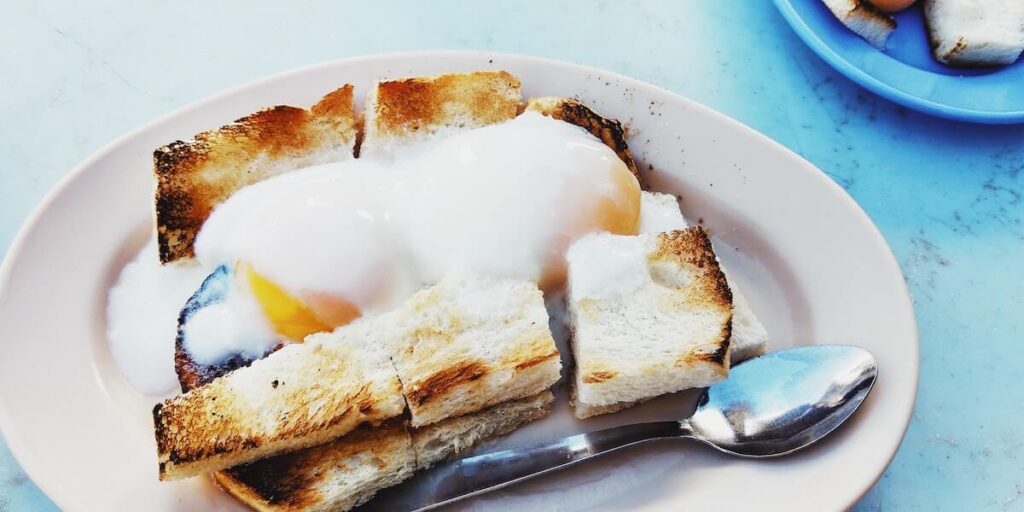
When it comes to traditional breakfasts in Malaysian cuisines, there’s plenty of variety. From savory nasi lemak to various noodle dishes like wanton mee and Indian flatbread (roti canai), there are plenty of choices to start your day with.
However, I realized that Malaysian breakfast foods are actually available throughout the day! Nasi lemak for lunch, wanton mee for dinner, roti canai for supper, it’s all perfectly normal! No wonder so many foodies call Malaysian a food capital. You can literally just spend the whole day eating!
17. Roti canai comes in more shapes and sizes than you think
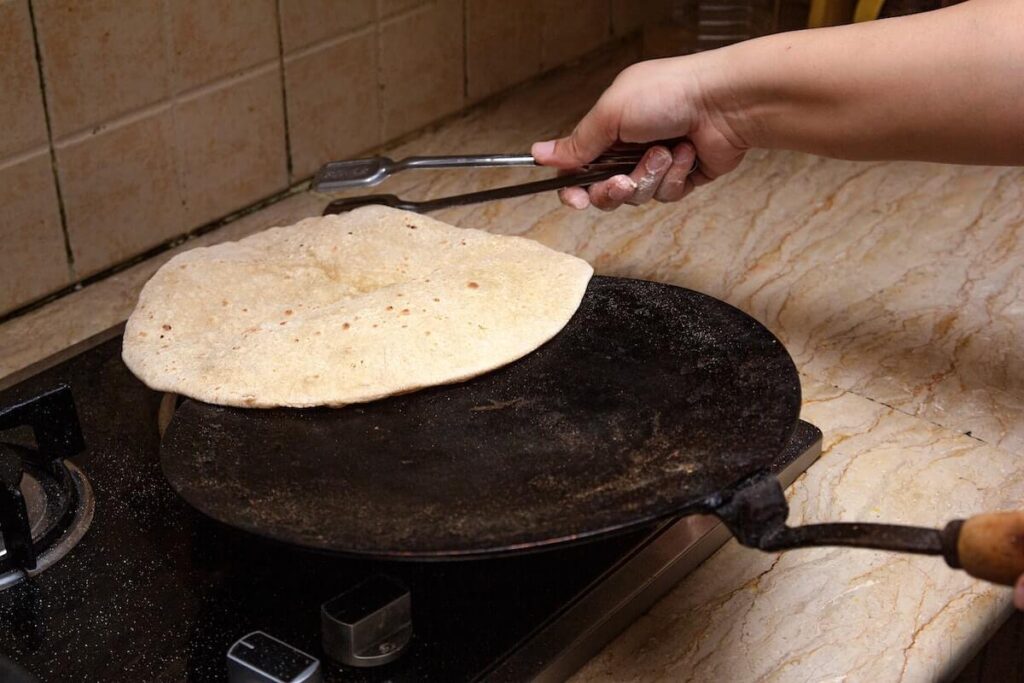
Speaking of roti canai (known as prata by other countries), Malaysia has plenty of unique varieties of Indian flatbread. Sure there are the typical regular roti canai, roti telur (addition of eggs), roti bawang (with onions) and more, but there are also more unique varieties.
My favorites were the roti bom (a denser, sweeter version with condensed milk), roti sarang burung (the dough is spread shaped into a ring like a bird’s nest, with a sunny side up egg in the middle), and roti tisu, an extremely thin flat bread that can stretch up to several meters high!
18. Malaysian rice dishes are as colorful as its people

Just like with roti canai, the rich dishes in Malaysian cuisine are just as plentiful when it comes to variety. Not surprising, given the many different cultures that call the country home.
In Malay cuisine, you have nasi lemak, nasi minyak, nasi kerabu and more, while Chinese rice dishes include Hainanese Chicken Rice, Char Siew Rice, and yam rice, which is unique to Penang. There’s also biryani served with various curries and dhal, and so much more!
There are also rice-based dumplings like the Malay ketupat, Chinese zongzi, and various kuih (light snacks) which we’ll get to in a moment!
19. There are many noodle dishes too!
Similarly, there are plenty of noodle dishes in Malaysian cuisine. There are soupy noodle dishes like Penang’s famous koay teow th’ng, smoky fried noodles dishes like KL Hokkien Mee, and maggi goreng, stir-fried instant noodles, a staple for late-night suppers.
20. Almost every state in Malaysia has its own take on laksa

Depending on where you are in Malaysia, a bowl of laksa (a popular noodle dish) will look and taste different. That’s what I found out when I visit Sarawak after leaving my friend in Penang.
Penang Laksa is savory and has a slight acidity to the broth. Sarawak Laksa, on the other hand, had a lighter, slightly creamier flavor profile, with a broth made of prawns instead of mackerel. I came to find out later that there are many different types of laksa in Malaysian cuisine, including Johor laksa which uses spaghetti noodles!
Malaysian street food culture
21. The best food is often found at modest hawker stalls and kopitiams

When it comes to Malaysian food culture, you’ll realize that most locals choose to dine at humble hawker stalls and kopitiams (small Chinese coffee shops) more often than at fancy restaurants. That’s because the food at these establishments is often tastier!
That’s not to say Malaysian restaurants aren’t good (the country’s recent Michelin Food Guide proves the opposite), but many of these hawker stalls and kopitiams have been operating for generations. So not only do they offer affordable but delicious meals but they also offer a side of nostalgia with every bite.
22. Pasar malam food is next level

Another way to experience authentic Malaysian street food culture is simply to visit a night market or pasar malam in the local language. These vibrant street markets are really where you can find the best-tasting food in Malaysia. Of course, that’s just my opinion after visiting the popular Connaught Night Market in Kuala Lumpur.
You’ll find both local and foreign delicacies, and even some innovative fusion food as you rub shoulders with the locals. Some of the staples you’ll always find are fried chicken, apom (a sweet and savory pancake), and various fried noodle dishes.
23. There’s a drink called “Iced Window” in Penang
Don’t be alarmed, this unique Penangite drink isn’t a mixture of ice and broken windows.
Instead, it is a refreshingly cool sherbet-like drink made with rose syrup, basil seeds, and fresh coconut. What’s more, according to my friend, there’s literally only one stall selling this beverage, and the legendary family business has already been operating for over a century!
Meanwhile, in Malacca, you have coconut milkshake which is popularly sold along Klebang Beach.
24. There are two types of char koay teow

Since we’re on the topic of Penang, one of the most popular street food in Malaysian cuisine is char koay teow, a smoky rice noodle dish that comes with juicy prawns, bean sprouts, and egg.
Well, did you know that there are actually two versions of this popular noodle dish? The more popular one is the version I just described: rice noodles stir-fried over a charcoal wok. The second version is known as wet koay teow (Koay Teow Basah), which is a savory, soupy version that comes with seafood.
25. And similarly, two types of hokkien mee
Another popular traditional Malaysian food that has two distinct varieties is hokkien mee. There’s the Penang version, a soupy noodle dish made with prawn stock, and the version found in the rest of the country, which is a sinfully delicious fried noodle dish served with cabbage and pork lard!
Personally, both are delicious, but I prefer the savory fried one.
26. There are more pastries and kuih than you can count

Apart from main meals throughout the day, Malaysians also indulge in delicious tea-time snacks. These usually consist of crisp pastries like the curry puff, or the large variety of kuih (traditional pastries and light snacks that are either steamed or fried) that are available.
Looking at the colors of kuih in Malaysia is like staring into a rainbow. There are as many colors as there are cultural influences. I can’t possibly list them all (I doubt my friend can either), but some of my recommended must tries are the ang kuih, kuih lapis, and cucur udang.
27. Deep-fried fruits are a popular snack in Malaysia
My favorite Malaysian snack though was the fried banana balls (called cokodok). But as I continued to hunt for tea time kuih, I realized a peculiar thing about Malaysian food culture: Malaysians like to batter their fruits and deep fry them.
There were deep-fried bananas, deep-fried sweet potatoes, fried cempedak, fried jackfruit, and even fried durian!
28. Communal meals are a big thing

Communal meals are a common event in Malaysian food culture. In fact, most meals that locals enjoy involve gathering around a table and sharing various dishes. While I was in Malacca, I came across a unique communal culinary experience called satay celup.
Imagine going for a hotpot meal, but instead of dumping the raw ingredients into clear soup, you skewer them (like actual satay), and cook them in a pot of boiling peanut sauce in the middle of the table.
Similarly, there’s also lok-lok which follows a similar concept, but instead of peanut sauce, you get the actual hotpot-like soup. And, most of the time, lok-lok is sold by food trucks or at roadside stalls.
Malaysian coffee culture
29. Malaysia has its own unique coffee and tea

Coffee culture in Malaysia is blossoming, evidenced by the many artisan cafes and coffee shops that spring up in the cities. However, I don’t think any of those cafe drinks hold a candle to Malaysia’s unique local coffee.
Simply known as “kopi“, a strong and aromatic black coffee that’s roasted, brewed, and strained to get that signature smooth texture. You can have it as it is or with milk, creamer, or ice.
Similarly, Malaysia has its own local tea beverage too, “teh tarik” (pulled tea), a drink that is made by dumping tea from one metal container to another until a thick foam forms at the top.
30. There is a deep love for Milo
Milo is the third drink in Malaysian cuisine that makes up the holy trinity of Malaysian beverages. While Milo isn’t a locally-produced beverage, Malaysians have a deep love for the chocolaty malt drink.
My friend tells me that it’s because Milo was the most popular breakfast drink for children, so many Malaysians grow up with a fond, nostalgic appreciation for the drink.
31. In fact, there are many different types of Milo!

Milo is so big in Malaysia that there are different types of Milo. Basically, there are boxed Milo drinks, Milo powder in a tin can, Milo from a dispenser at fast food restaurants, and Milo trucks that go around selling Milo.
Apparently, depending on which kind of Milo you drink, there’s a subtle difference to the taste! I can’t tell if my friend was pulling my leg, but it seems to be the case since a lot of Malaysians I met agreed. I shall endeavor to try them all on my next trip to Malaysia!
32. There are plenty of unique fruit juices

Apart from having its own coffee and tea, and an obsession with Milo, Malaysian cuisine also has its fair share of unique fruit juices.
I remember stopping by a roadside stall and seeing plastic bottles filled with beverages labeled dragonfruit juice, nutmeg juice, lychee juice, and more. In fact in Penang, there’s a drink called lo han guo, which is made from Chinese monk fruit!
Modern Malaysian food habits
33. Halal Chinese food is on the rise
Despite only being in Malaysia for a month, this is one of the most beautiful aspects of food culture in Malaysia for me. Chinese food often uses pork as a main ingredient, which makes it inaccessible to Muslims.
But in Malaysia, there are so many Halal-certified Chinese restaurants that substitute pork with chicken! There was even a hawker stall selling chick kut teh, which is bak kut teh, but with chicken! I love the inclusivity of Malaysian cuisine.
34. Mamak is life

Traveling in Malaysia, there was never once where I felt that I would have to go hungry at night. Unlike in Hong Kong where many stalls close around 10pm, Malaysia boasts plenty of 24-hour eateries. My favorite though has the be the Mamak stalls.
These sorts of eateries are where you get to taste the best roti canai, maggi goreng, and teh tarik. But more than just a food spot, I realized that Mamak stalls are also an intrinsic part of food culture in Malaysia.
Many youngsters hang out at these establishments until late at night, just chatting about life. The atmosphere becomes even rowdier when there are football matches being played on the TVs!
35. Japanese and Korean food have become popular Malaysian staples

A more interesting aspect of food culture in Malaysia is the popularity of Japanese and Korean food, especially Korean barbecue. While I was in Kuala Lumpur, I couldn’t help but notice that there were so many East Asian eateries.
What I learned is that Japanese and Korean food are extremely well-liked by most modern Malaysians, and are often the cuisine of choice when it comes to celebrating birthdays or special occasions. The more you know.
36. Middle Eastern food is popular among all races
Similarly, people in Kuala Lumpur seem to really like Middle Eastern cuisines, such as shawarma and kunafa. The Bukit Bintang area, a vibrant shopping district, has plenty of Arabic restaurants and every time I passed by, there would be long queues that consisted of different races of Malaysians.
To be fair, I’m not that surprised. Arabic food is awesome!
37. There are plenty of pizzas with local twists

While in Malaysia, I tried ordering some pizza and my mind was again blown away by the creative juices of Malaysian cuisine. Alongside classics like pepperoni and cheese pizzas were local flavors like sambal prawn pizza, a Korean-inspired chicken pizza, and even durian pizza!
38. Similarly, there are desserts with… unique flavors
Just like with pizzas, there are also plenty of local-inspired cakes, such as durian cake, cempedak cake, and even, as I’m told by my friend, nasi lemak cake, for a limited time!
Even the classic Malaysian shaved ice dessert, ais kacang, sometimes gets an upgrade with real durian being added to the chilly treat. I wonder what kind of unique inventions I’ll find the next time I visit!
39. Food delivery services are experiencing a boon
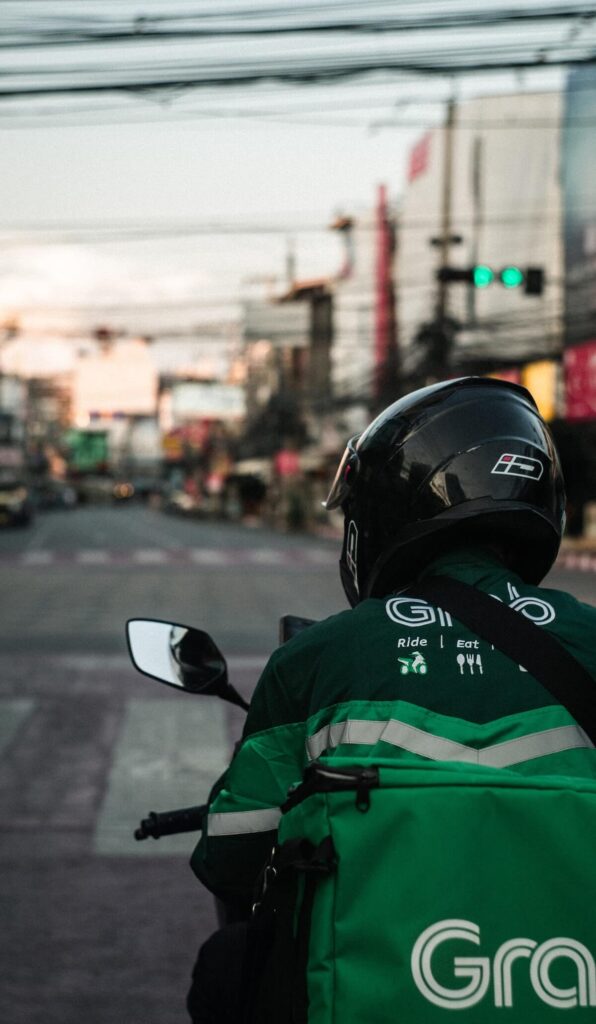
Thanks to the pandemic from previous years, food delivery services have become extremely popular in Malaysia. In fact, food delivery services like Grab Food and Foodpanda are at the forefront of promoting Malaysian cuisine to travelers like myself!
The next time you’re taking a car ride in a big city like Kuala Lumpur or in Penang, keep your eyes peeled. Chances are, you’ll see plenty of these delivery riders zooming past your window.
40. Durian!!!

Finally, no article about Malaysian cuisine and food culture in Malaysia, in general, can be complete without mentioning the King of Fruits: Durian!
As you might have guessed, durian is a huge thing in Malaysia (although some locals don’t really like it either). Whenever the durian season arrives, you’ll see a lot of stalls by the roadside selling a variety of durians, with the Musang King being one of the most popular.
I was lucky enough to visit during the durian season so I went to what can only be described as an all-you-can-eat durian buffet. Simply pick out what you want, and the durian seller will open it on the spot for you to feast on. I don’t think I’ve ever seen something like this anywhere else!
Final thoughts
I’ve always heard phrases like “food is the gateway to understanding a country’s culture”. I don’t think there’s a country that lives up to that saying quite as Malaysia does. Even though I was traveling in Malaysia for only a month, I really felt like, with every bite, I was becoming more Malaysian myself!
If you’ve never been on a food trip to Malaysia, I really hope you get to experience it soon. In the meantime, why not find out more about food cultures in Japan and Korea?