
*This article may contain affiliate links. For full information, please see the disclaimer here.
The City of the Soaring Dragon. The Paris of the East. I’m talking about Hanoi, one of my favorite places in the world! I’ve visited thrice and judging by the number of tourists flocking to the city, I’m not alone in my fondness for Hanoi.
The vibrant capital of Vietnam, Hanoi is known for its rich architectural heritage and historical landmarks like the Hoa Lo Prison and Ho Chi Minh Mausoleum. It’s famous for the lively Old Quarter and mouthwatering fares like pho, bun cha, and egg coffee.
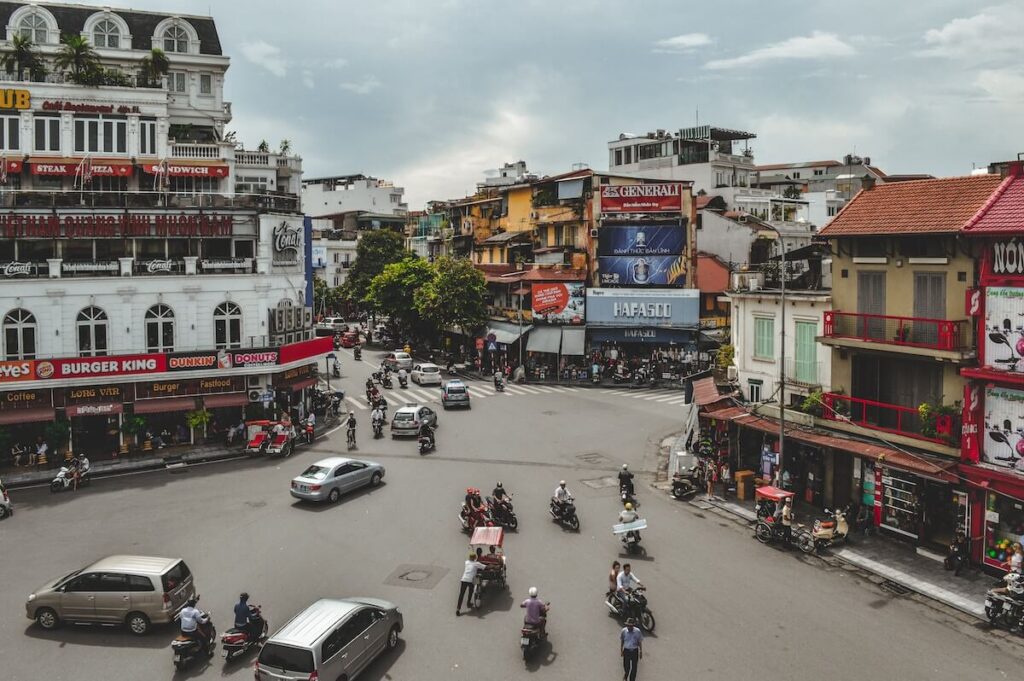
But that’s not all Hanoi is known and famous for. This city has so many iconic attractions and experiences, regardless if you’re interested in history, culture, cuisine, or nature. Stick around as I show you just how charming, beautiful, and diverse this Vietnamese gem is.
Table of Contents
1. Capital of Vietnam
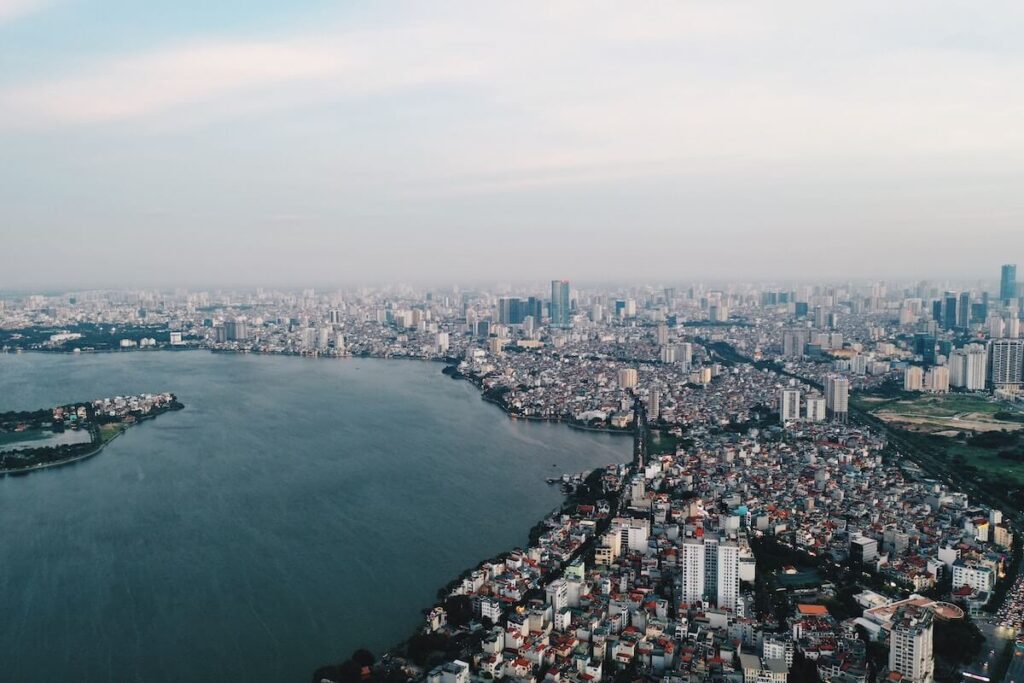
Let’s start with the most obvious. Hanoi, a bustling city in the country’s northern region, has a long and rich history as the capital of Vietnam.
Hanoi was founded in the 3rd century BCE by King An Duong Vuong, who named it Co Loa and made it the capital of his kingdom of Au Lạc (an ancient Vietnamese nation that included parts of modern-day Guangxi and northern Vietnam). The Chinese Han dynasty later conquered it.
In 1010, Emperor Ly Thai To moved the capital of the Ly dynasty from Hoa Lu to Hanoi, which he called Thăng Long (Ascending or Soaring Dragon). Hanoi remained the capital of Vietnam until 1802 when Emperor Gia Long of the Nguyen dynasty transferred it to Hue. However, Hanoi continued to be an important cultural and economic hub, especially during French colonization.
The city regained its status as a capital when it served as the capital of French Indochina from 1902 to 1954. From 1954 to 1976, Hanoi was the capital of North Vietnam. After the North’s victory in the Vietnam War, Hanoi became the capital of a reunified Vietnam in 1976.
Today, Hanoi is not only the political center of Vietnam but also a major cultural and historical hub.
2. Ho Chi Minh Mausoleum
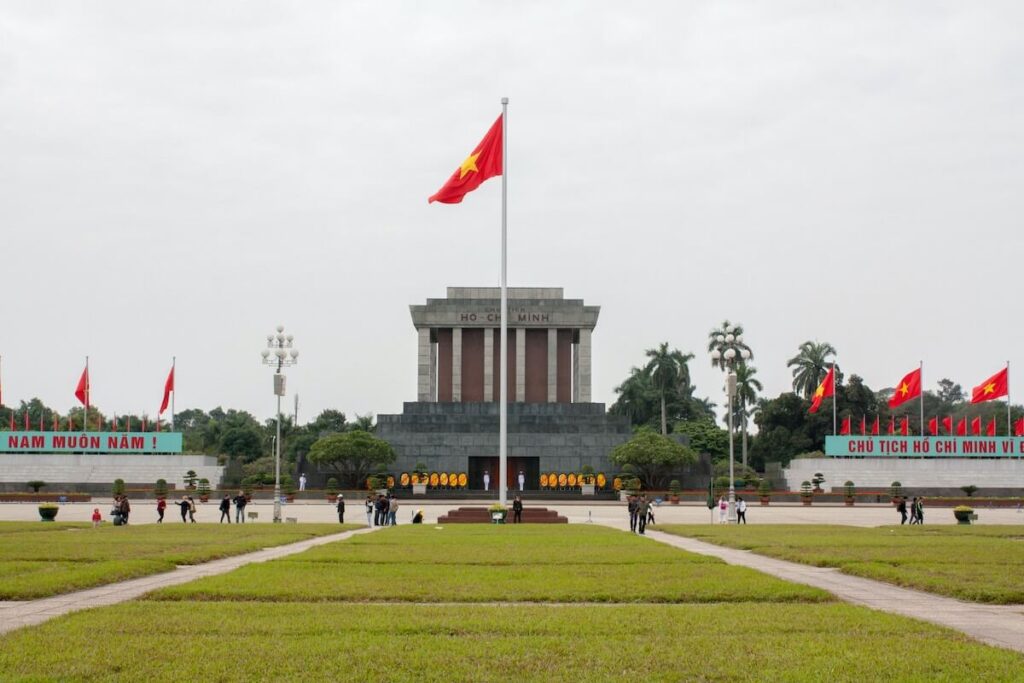
If you’ve ever searched for sites to see in Hanoi, you’ve likely seen the Ho Chi Minh Mausoleum as one of the top results. This popular attraction in Vietnam is a large gray building that serves as the final resting place of Vietnamese revolutionary leader and President Ho Chi Minh.
Ho Chi Minh was the Chairman of the Workers’ Party of Vietnam (formerly the Indochinese Communist Party) from 1951 until his death in 1969. The site of the mausoleum — Ba Dinh Square — is where he read the Declaration of Independence, which led to the establishment of the Democratic Republic of Vietnam (North Vietnam) in 1945.
Built between 1973 and 1975, the mausoleum was inspired by Lenin’s Mausoleum in Moscow. Its exterior is made of gray granite, while the interior is gray, black, and red polished stone. The embalmed body of President Ho Chi Minh is preserved in the cooler, central hall of the mausoleum.
Ironically, Ho Chi Minh wanted to be cremated and for his ashes to be scattered in the hills of North, Central, and South Vietnam. His wishes weren’t honored though; instead, this large memorial was built and people from all over the country often come in droves to pay respects to Uncle Ho’s remains.
The mausoleum is open to the public every morning except Monday. I recommend signing up for a student-led private tour of Hanoi, where you can learn more about this mausoleum and other Hanoi sites.
Read more: 3 Days in Hanoi: An Itinerary for First-Timers
3. The Old Quarter
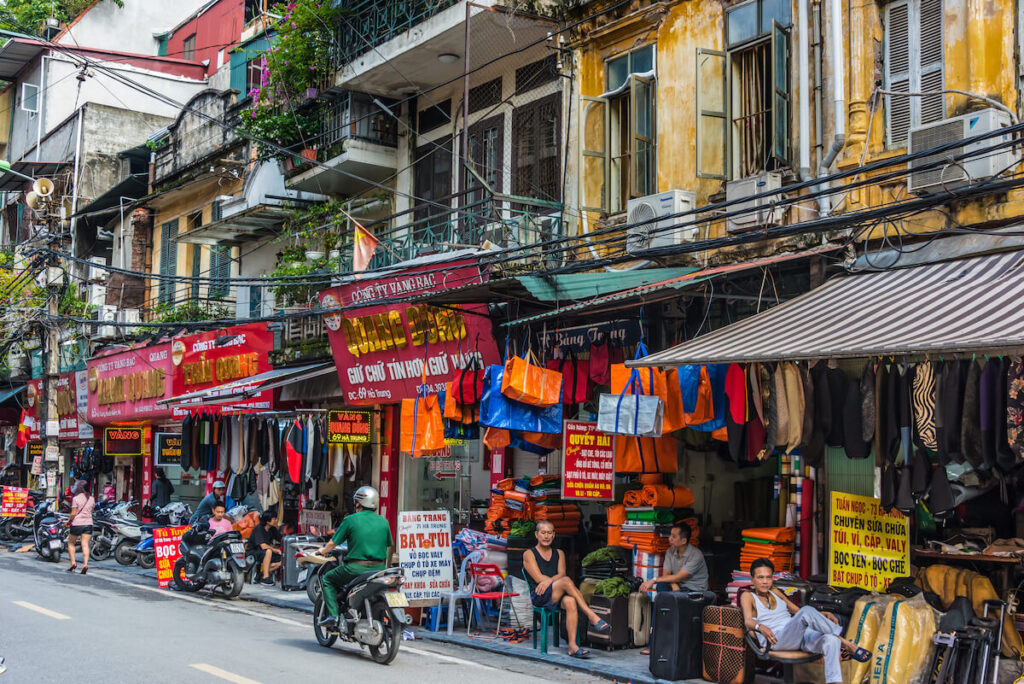
When you hear people say that Hanoi is too busy and crowded, they usually refer to the city’s historical and urban core, the Old Quarter. A cluster of 36 old streets with a nearly 1,000-year-old history, the area is bustling with activity, always crowded with people and motorcycles passing through cafés, restaurants, hotels, and shops.
Each street in the Old Quarter used to specialize in one specific type of manufacturing or commerce. For instance, Hang Gai Street specialized in silk clothing, embroidery, and silver products. Shops in Pho Hang Bun sold vermicelli while paper products could be found in Pho Hang Ma and silver in Pho Hang Bac.
While the Old Quarter is no longer the manufacturing and commercial center of Hanoi, it remains an important historical and cultural hub. Sure, it can get really busy, but love it or hate it, the Old Quarter is undoubtedly the city’s pulsating heart and no visit to Hanoi (at least for the first time) is complete without wandering through this labyrinth.
4. Hoan Kiem Lake…
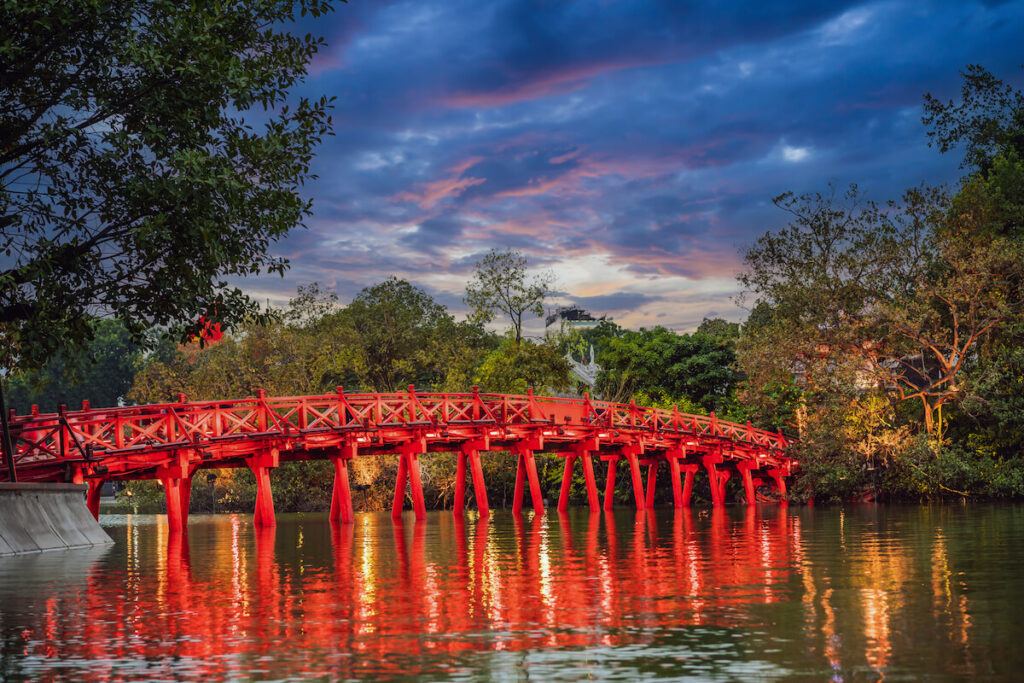
Adjacent to the Old Quarter is another popular attraction in Hanoi (both for locals and tourists), the Hoan Kiem Lake. This freshwater lake located in the historical center of Hanoi has a history that’s deeply rooted in Vietnamese culture.
According to the legend, the lake was named after a magical sword that was given to Emperor Le Loi by the Dragon King to help him defeat the invading Ming army. After the victory, a golden turtle god emerged from the lake and asked for the sword back.
The emperor returned the sword to the turtle, and renamed the lake Hoan Kiem, meaning “Lake of the Returned Sword” or “Lake of the Restored Sword”. The turtle tower on a small island in the lake commemorates this event.
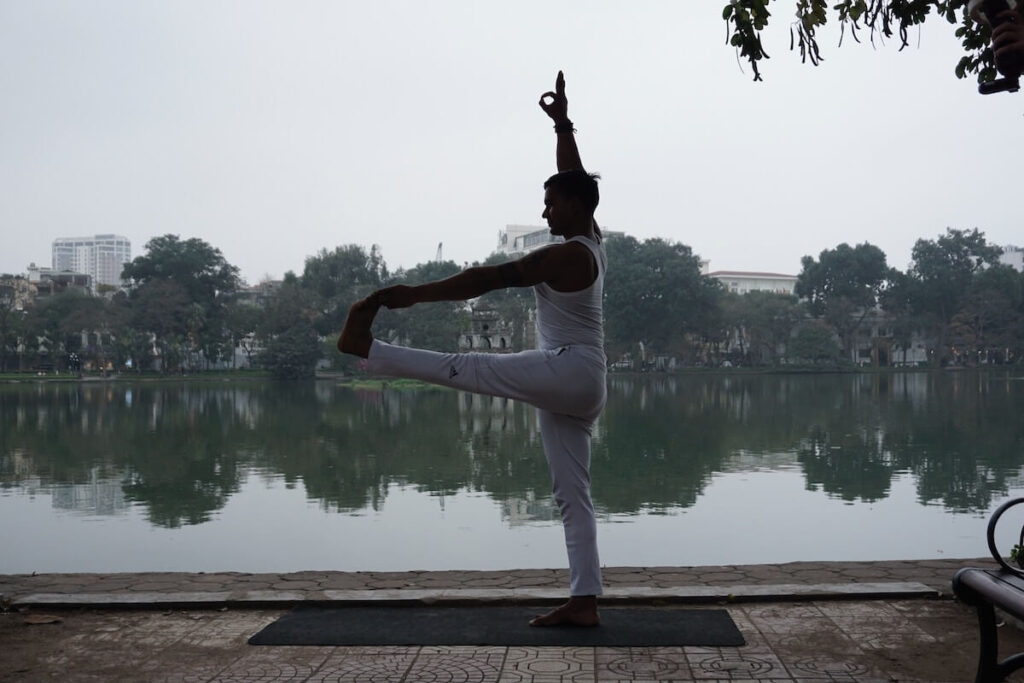
On my last visit, I was amazed at how the lake switches from being a health hub in the morning (lots of people jogging, cycling, doing Zumba or tai chi) to becoming a buzzing area peppered with street food, bars open ‘til midnight, and street performances.
5. …And other lakes
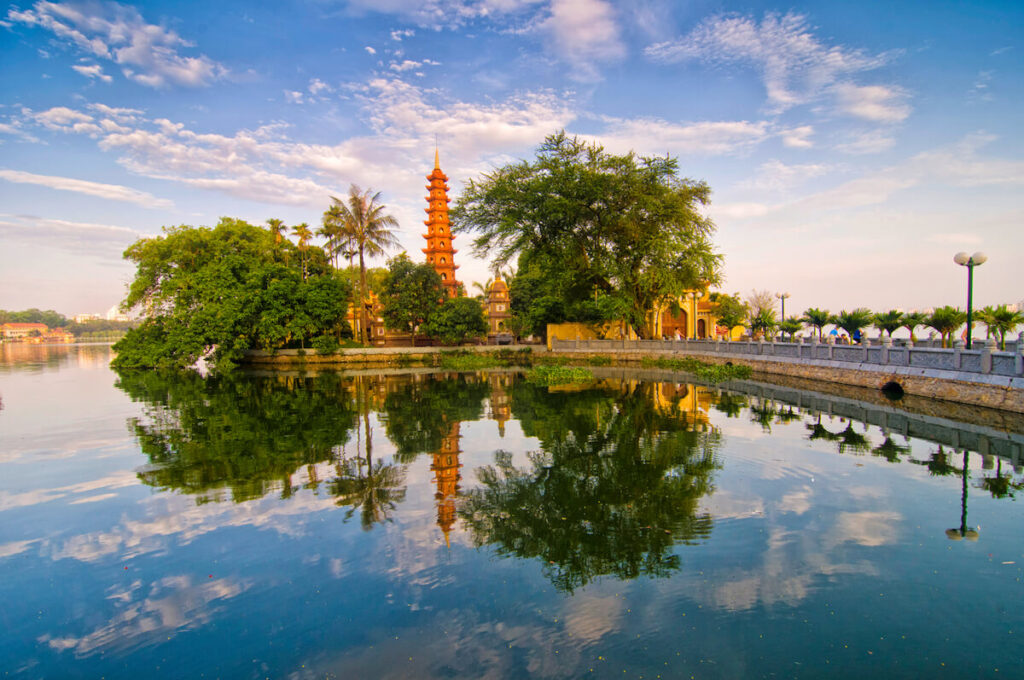
Hoan Kiem Lake may be the most famous lake in Hanoi (and in the whole country) but it’s not the only one. Scattered across the city are beautiful lakes, each with its own charm and history. Often surrounded by trees and frequented by locals, these lakes make up the city’s green lungs and windows to the Hanoian lifestyle.
Some of the most known lakes in Hanoi include West Lake, Truc Bach Lake, and Thien Quang Lake.
West Lake is the largest natural lake in Hanoi. It’s a popular destination for cycling, boating, dining, and sightseeing. Around the lake, there are many old relics, such as Tran Quoc Pagoda, Phu Tay Ho, and Quan Thanh Temple.
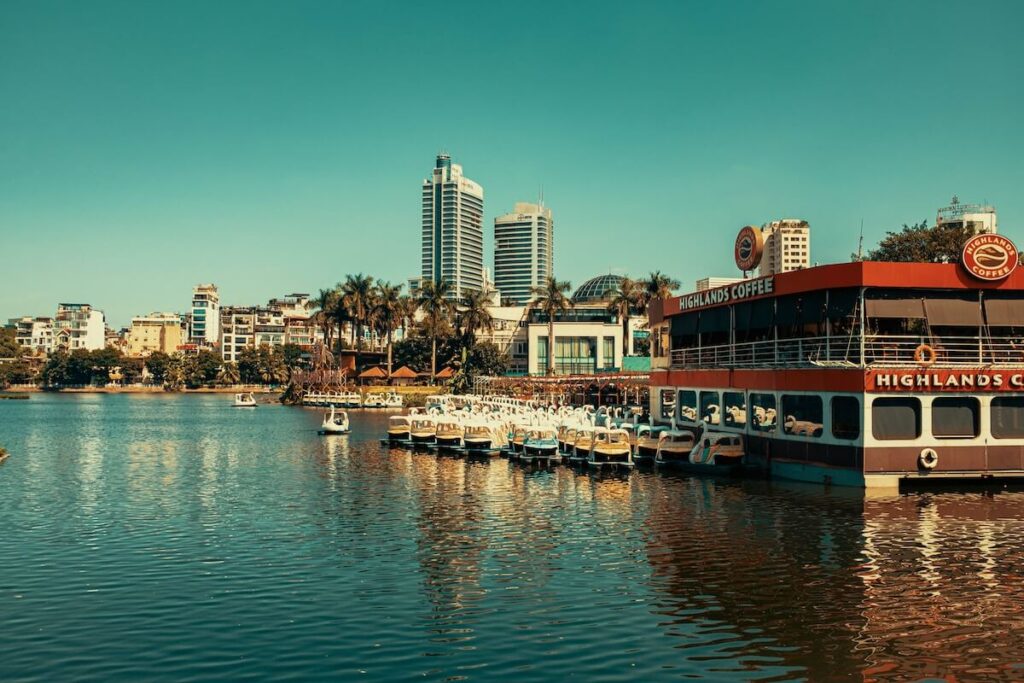
Truc Bach Lake is a part of West Lake that was separated by the Thanh Nien Road. It’s famous for two things: first, for being the place where US Senator John McCain was captured after his plane was shot down during the Vietnam War in 1967; and second, for pho cuon (rice paper rolls filled with beef and herbs), a delicacy that originated in the area.
Thien Quang Lake is a small lake in the Hai Ba Trung District, known for its peaceful and romantic atmosphere. The lake is home to many swans, ducks, and fish. Near the lake, there is a statue of Lenin, the leader of the Russian Revolution, and a park named after him.
6. Water puppetry

With lakes, rivers, and other waterways calling Hanoi home, it’s perhaps not surprising that Hanoian (or Vietnamese, in general) culture is tied to the waters. So much so that one Vietnamese art form involves and takes place in water.
Hanoi is known for water puppetry, a unique traditional Vietnamese art that originated in the villages of northern Vietnam around 1000 years ago. It involves puppeteers standing waist-deep in water and manipulating puppets on the surface of the water to tell and perform Vietnamese folk tales and legends, with topics such as the celebration of the rice harvest, festivals, and national history (like the legend of the restored sword) — all portrayed humorously.
Interestingly, the original water puppet shows were held in harvested rice fields, filled with water to create a watery stage. Today, water puppet shows are accompanied by Vietnamese opera singers and a Vietnamese orchestra that plays traditional music with drums, wooden bells, horns, and bamboo flutes.
The most famous water puppetry theater in Hanoi is the Thang Long Water Puppet Theatre near Hoan Kiem Lake. It’s the only theater in Asia that performs water puppetry daily! I recommend getting a skip-the-line ticket and an audio guide for a better appreciation of the stories.
7. French architecture

Architecture junkies won’t be disappointed with Hanoi for it has a rich and diverse architectural heritage.
Many influences have shaped the city’s urban landscape but the most prominent is the French colonial period, which lasted from 1884 to 1954. During this time, the French built many public buildings, monuments, and residential quarters, some of which are still standing today, offering a glimpse into the history and culture of Hanoi under French rule. No wonder Hanoi is sometimes called Paris of the East.
One of the most iconic examples of French architecture in Hanoi is the stately Hanoi Opera House (more on this later). And then there’s St. Joseph’s Cathedral, the oldest church in Hanoi and one of the first structures built by the French after their Indochina conquest. This neo-Gothic cathedral with twin bell towers is modeled after the Notre Dame de Paris. Today, it’s still an active place of worship for Catholics in Hanoi and a stop in many city sightseeing tours.
Other French colonial structures in Hanoi include the neoclassical Presidential Palace, the Sofitel Legend Metropole Hanoi which hosted Donald Trump and Kim Jong-un’s two-day summit in 2019), and the Hoa Lo Prison.
8. Hanoi Opera House
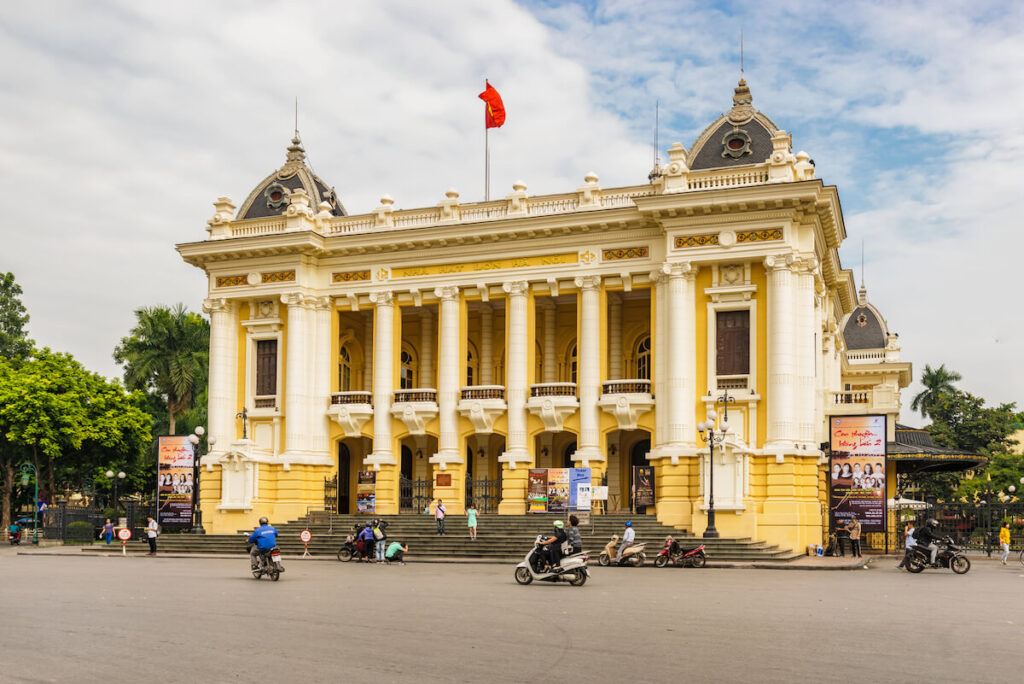
Nowhere is the French architectural legacy in Hanoi more apparent than in the French Quarter. And the jewel that dazzles the most in this neighborhood is undoubtedly the Hanoi Opera House.
One of the most prominent landmarks of Hanoi and Vietnam as a whole, the Hanoi Opera House was built from 1901 to 1911 by the French government. Designed by French architects V. Harley and Broyer based on the style of Palais Garnier (the older of Paris’ two opera houses), this piece of neo-classical French architecture with Gothic and Renaissance elements is nothing short of magnificent.
If you were awestruck by its façade (I was), prepare to be floored inside. The interior of the building is elegant and luxurious, with a large stage, a grand staircase, and a chandelier.
During the French occupation, the opera house hosted touring artists performing French and Italian repertoire for a French audience. Today, this remarkable building hosts various operas, plays, musicals, ballet productions, and concerts, and remains an important piece in Vietnam’s history and culture.
9. Hoa Lo Prison
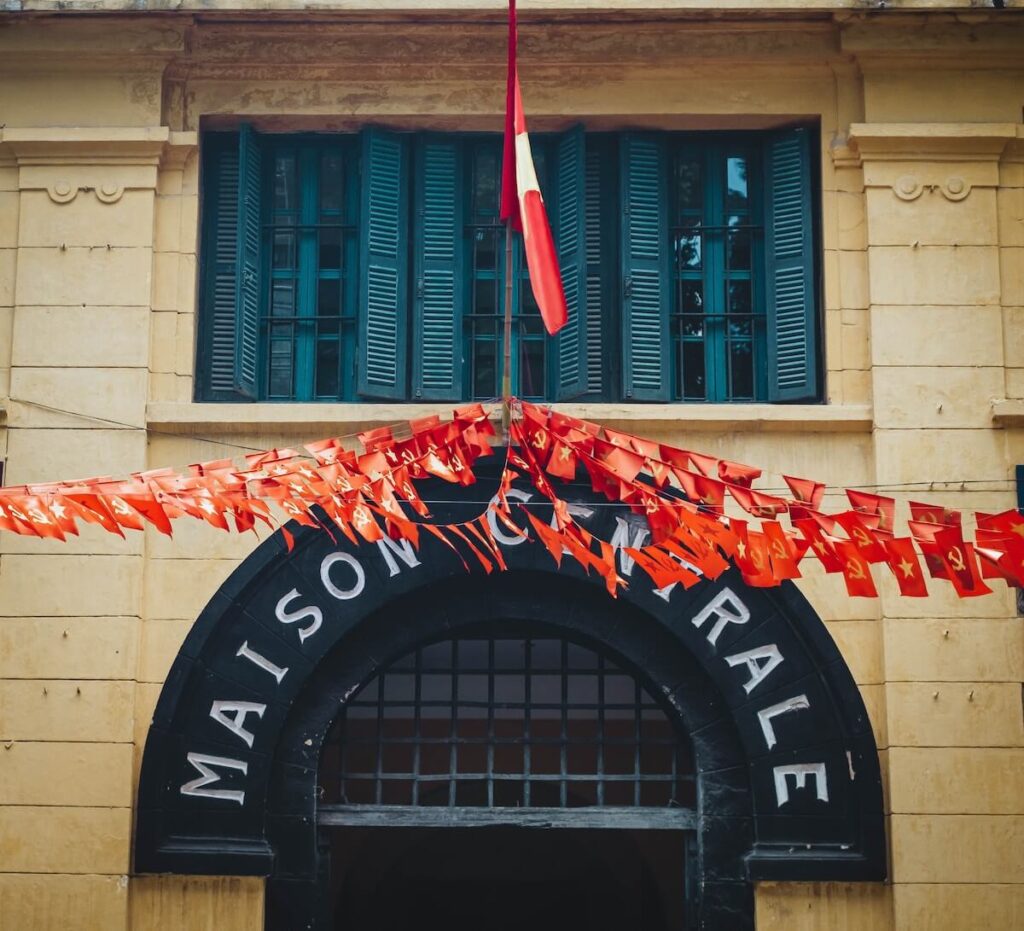
While the Hanoi Opera House offers a glimpse into the opulent lifestyle of its colonialists, the Hoa Lo Prison provides a window into the city’s grim past.
Built by the French in the late 1880s, the Hoa Lo Prison, which the French called the Maison Centrale or Central House, was originally used to hold Vietnamese political prisoners who were fighting for independence from French rule. After the French left, it was used by the North Vietnamese to detain the American prisoners of war (POWs) they captured.
The name Hoa Lo, which translates as “hell’s hole” or “fiery furnace”, originated from the name of the street where the prison stands. There were many stores selling wood stoves and coal-fire stoves in the said street, hence the name.
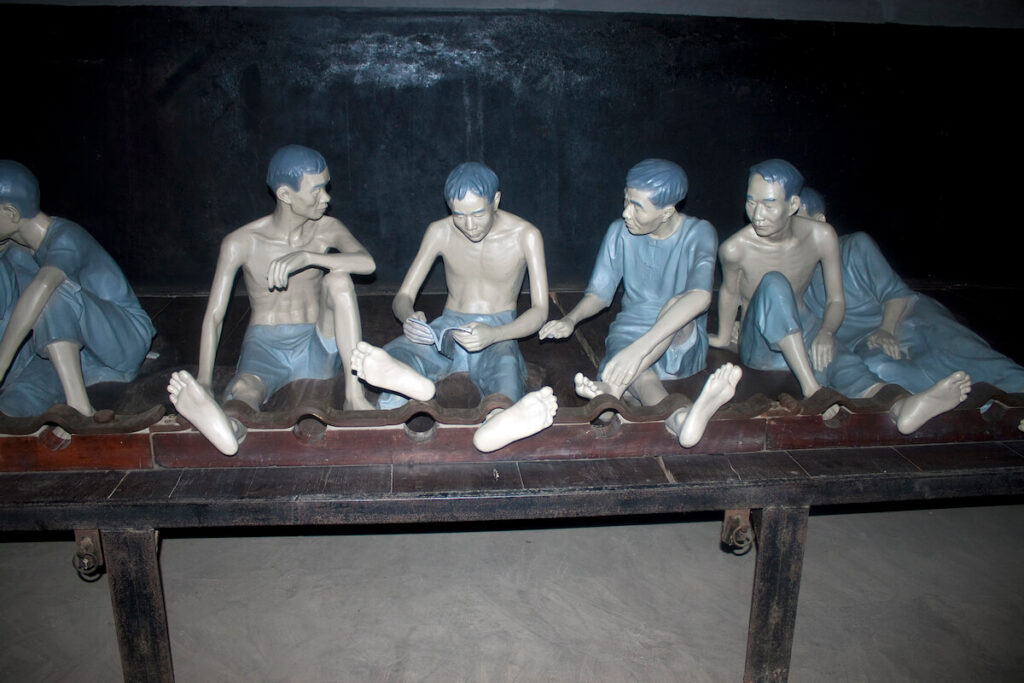
It would later be a fitting name as the prison became infamous for its brutal and inhumane treatment of the inmates. The prison witnessed the torture, starvation, execution, and resistance of many Vietnamese and American prisoners (who sarcastically nicknamed the place “Hanoi Hilton”). The prison was also overcrowded, holding more than 2,000 prisoners by 1954, while it was designed for only 600.
The prison was demolished in 1990 and only a small part remains today as a museum, which is included in this private guided walking tour of the French Quarter. Be warned though, some sections of the museum can be particularly somber and haunting — definitely not for the faint of heart.
10. Temple of Literature
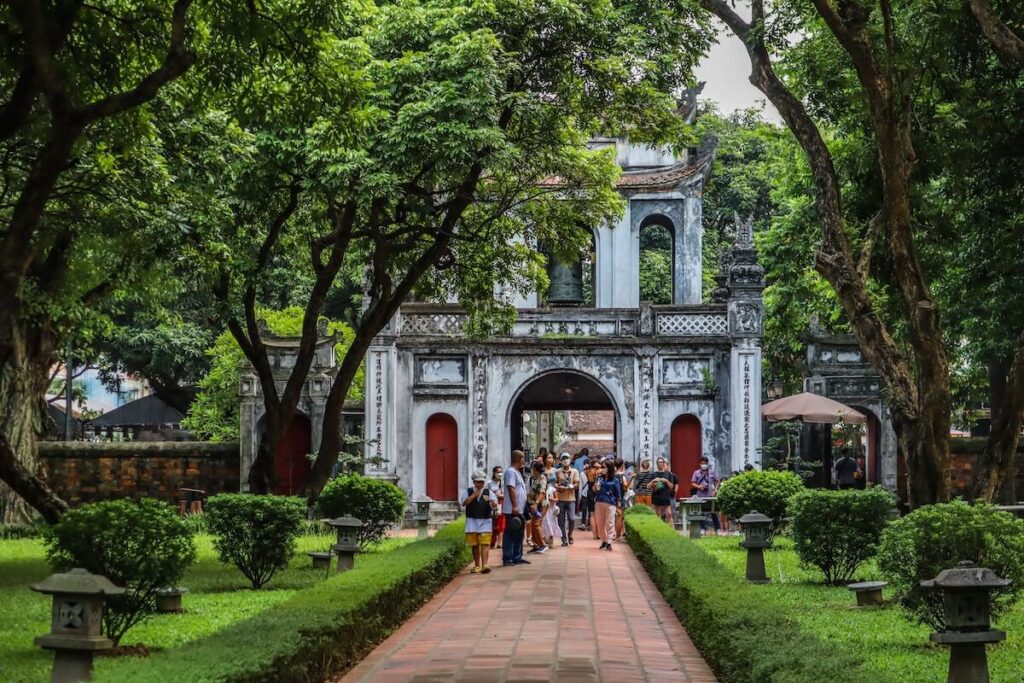
Văn Miếu or the Temple of Literature reflects the values and traditions of Vietnamese education. It was built in 1070 as a temple to honor Confucius, the founder of Confucianism and a great teacher and philosopher. The temple also hosted the Imperial Academy, Vietnam’s first national university, where the most talented students were trained to become scholars and officials.
The temple consists of five courtyards, each with its features and functions. The first courtyard has a large gate and a spacious garden, where the students could relax and enjoy the scenery. The second courtyard has a pavilion with a bell and a drum, which were used to announce important events. The third courtyard has a well and a hall with 82 stone stelae, which bear the names and achievements of the graduates who passed the royal examinations.
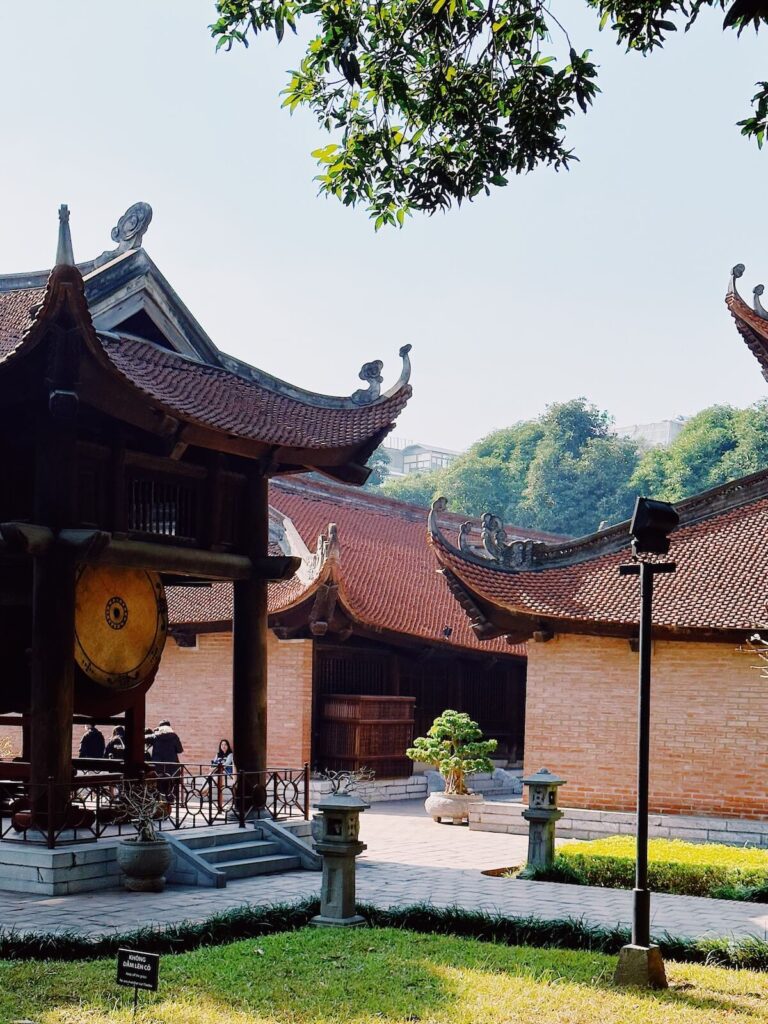
The fourth courtyard has a shrine and a statue of Confucius, where the students and teachers could worship and pay respect. The fifth courtyard has a building that was the Imperial Academy, where the classes and lectures were held.
11. Imperial Citadel of Thang Long
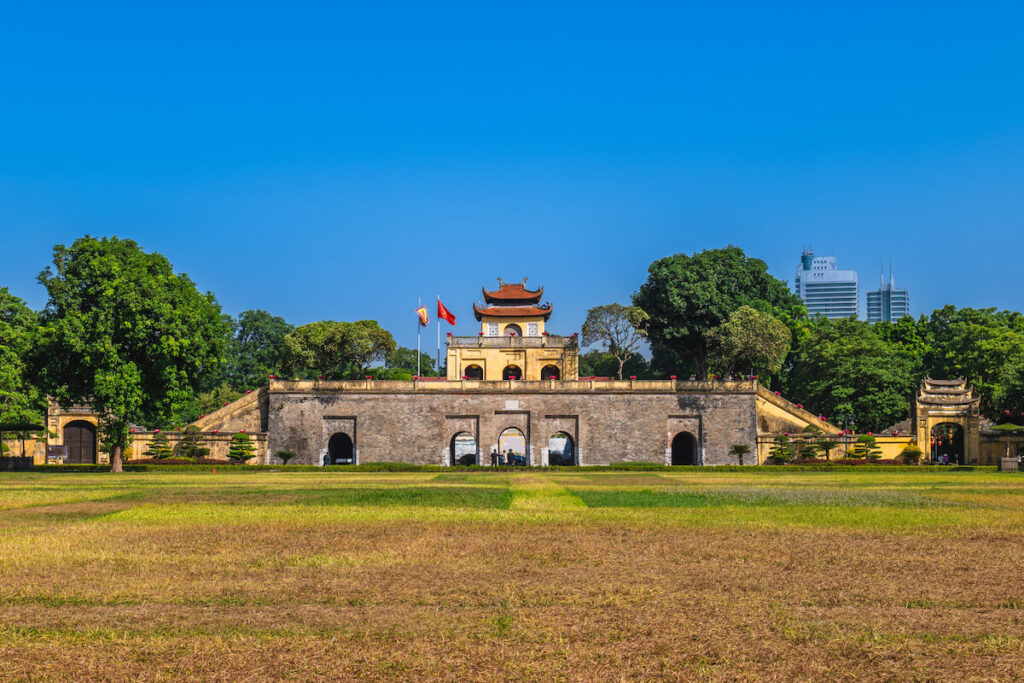
Remember when Emperor Ly Thai To moved the capital of the Ly dynasty from Hoa Lu to Hanoi and renamed it Thăng Long? The seat of the empire rested on the Imperial Citadel, much of which was demolished during the French colonization.
Despite the massive destruction, however, it remains an important historical and cultural site largely because the citadel was the political and administrative center of the country for 13 centuries. The Central Sector of the Imperial Citadel is the most well-preserved section of this huge site, containing the remains of palaces, temples, pavilions, gates, wells, and ponds that reflect the architectural styles and influences of different dynasties.
In 2010, the Central Sector was recognized as a UNESCO World Heritage Site, ensuring its preservation for future generations.
12. Flag Tower
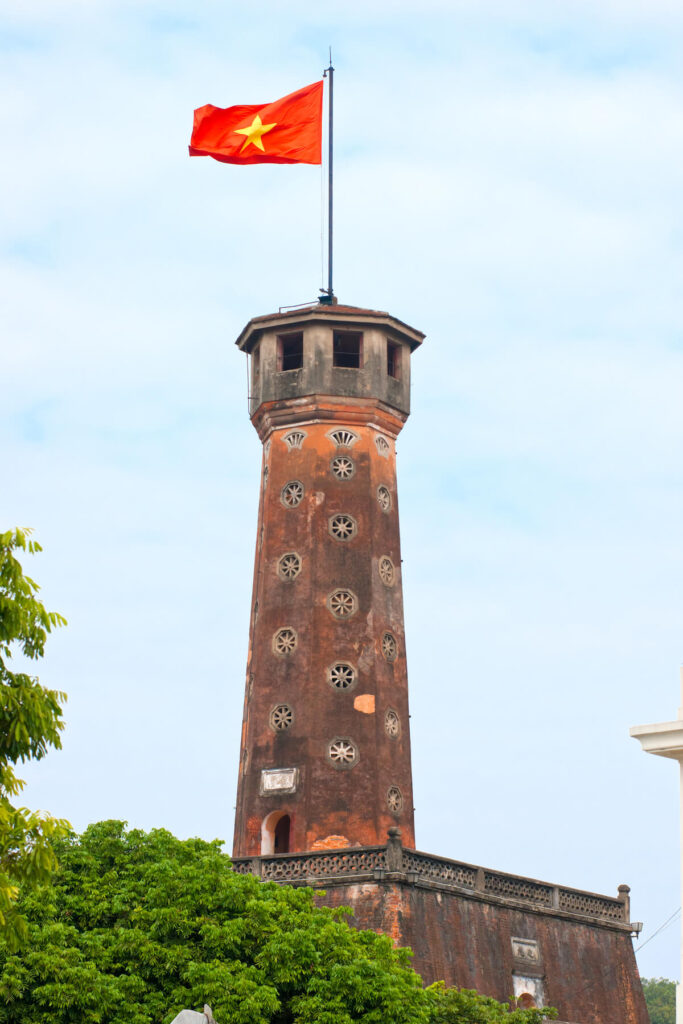
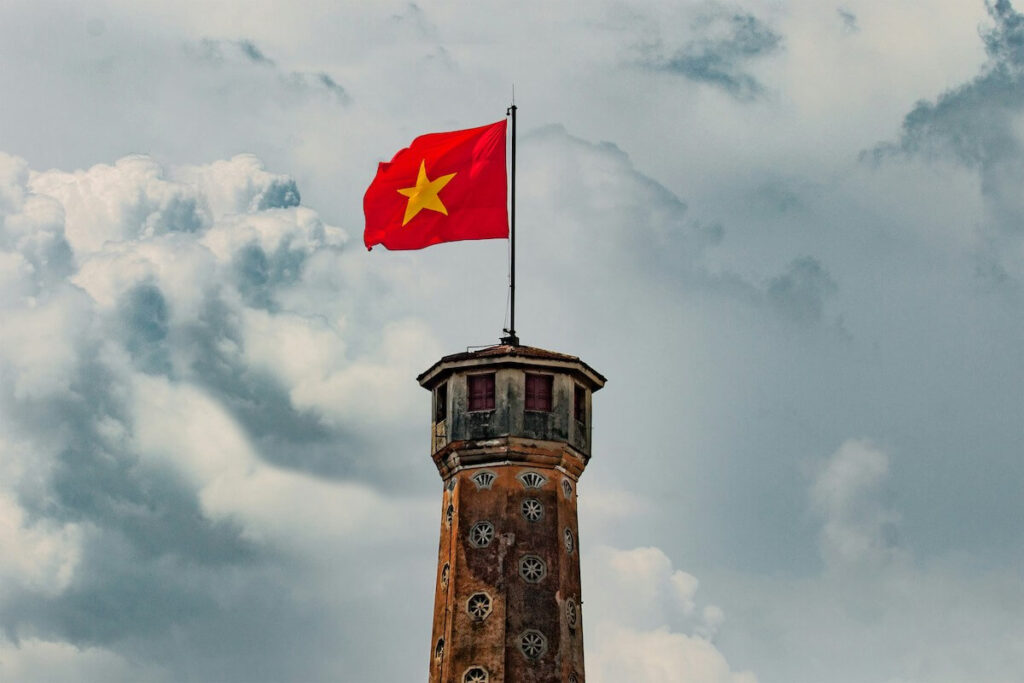
Everywhere in Hanoi, you’ll see the Vietnam flag — dazzling yellow star and bright red background — flying proudly. But the most famous site where you can see it is atop the Hanoi Flag Tower, just beside the Imperial Citadel.
Built in 1812 by Emperor Gia Long of the Nguyen dynasty, the tower was designed as an observation post for the Citadel. The tower has three tiers and a pyramid-shaped top, with a spiral staircase inside that leads to the summit.
The Hanoi Flag Tower has been the site of many historical moments, such as the first time the red-yellow flag of Vietnam was raised in 1945 after the August Revolution, the victory of the Vietnamese people over the French colonialists in 1954, and the celebration of the reunification of Vietnam in 1975.
It’s also one of the few structures that survived the destruction of the French colonialists and the American invaders. Once you realize that it symbolizes the pride and resilience of the Vietnamese people, it’s not hard to be amazed at this imposing structure.
13. Long Bien Bridge
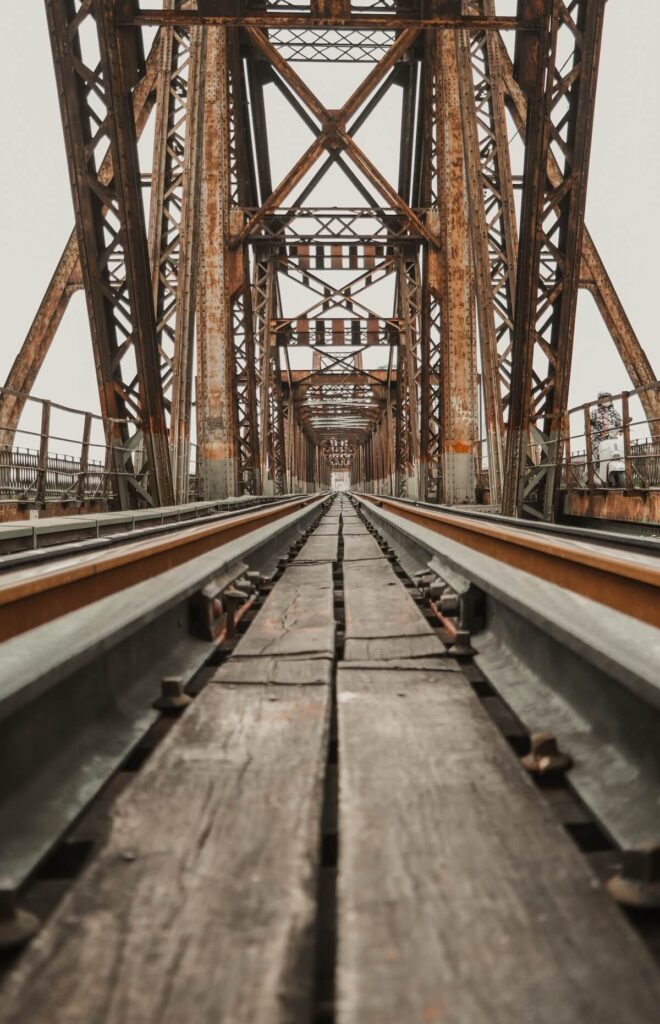
Another historical and architectural monument Hanoi is known for is the Long Bien Bridge.
This bridge spans across the Red River and connects two districts, Hoan Kiem and Long Bien. Like many iconic landmarks in Hanoi, it was built by the French colonialists in the early 20th century and was originally named Paul Doumer Bridge, after the governor-general of French Indochina and later the president of France.
The bridge has a unique design with 19 steel cantilever spans supported by 20 concrete piers. It has a single railway track in the middle and two lanes for bicycles and pedestrians on the sides. The bridge is 2.4 kilometers long and was one of the longest bridges in Asia at the time of its completion in 1903.
But what makes Long Bien Bridge famous is its role in the Vietnam War. As it was the only bridge that linked Hanoi to the main port of Haiphong, it became a strategic target for multiple bombings by the American Air Force.
However, the Vietnamese soldiers and civilians managed to repair the bridge and keep it functional, despite the constant attacks. Today, vehicles and pedestrians still use the dilapidated bridge.
14. Street food

I know I don’t need to tell you that Vietnam is famous for its rich cuisine; many (myself included) have planned their trips around restaurants and cafés in Vietnam. The best part is that Vietnamese fare won’t burn a hole in your pocket, thanks to the many street food options.
Hanoi is a city that offers a feast for the senses, especially when it comes to street food. The streets are filled with the aromas of grilled meat, fresh herbs, and spicy broth, and the sounds of sizzling pans, chopping knives, and slurping noodles.
Some of the most popular street foods in Hanoi are pho, bun cha, and banh mi. You can get delicious pho and banh mi all over the country but bun cha is best enjoyed in Hanoi, where the dish is thought to have originated. I also loved nem ran (fried spring rolls), banh cuon (a type of rice noodle roll), banh ran (Vietnamese rice donut), xoi xeo (sticky rice and mung bean), and kem dua (coconut ice cream).

While you can aimlessly walk around the streets of Hanoi to find incredible meals, joining a street food tour with a local guide will guarantee tasty spots along with a good dose of history. A nighttime foodie excursion is a great alternative if you want to avoid the heat of the sun.
Better yet, sign up for a hands-on cooking class to not just taste but learn how to cook dishes such as pho, bun cha, nem ran, and egg coffee!
15. Egg coffee

Speaking of egg coffee, this beverage-slash-dessert is also one of the top things Hanoi is known for.
Hanoi’s egg coffee combines the rich flavor of coffee with the creamy texture of egg yolk. The origin of this specialty dates back to the 1940s when a bartender named Nguyen Van Giang invented the drink at the Sofitel Legend Metropole Hotel.
Giang was inspired by the Italian cappuccino but had to use egg yolk as a substitute for fresh milk, which was scarce at the time. He whipped the egg yolk with sugar and condensed milk, then poured it over hot coffee. The result was a smooth and frothy concoction that became popular among the hotel guests and locals.
Today, egg coffee is served in many cafes throughout Hanoi, each with its own recipe and variation. Some add cheese, butter, or chocolate to the egg mixture, while others use different types of coffee beans or roasts.
Some of the best places to try egg coffee in Hanoi are Cafe Dinh, Cafe Pho Co, and Oriberry Coffee. But the most popular place to try it remains Café Giang, which Nguyen Van Giang opened in 1946 when he gave up his job at the hotel.
16. Coffee and coffee shops

Hanoi, like most places in Vietnam, is a city that loves coffee. You can find coffee shops on every corner, from traditional sidewalk stalls to modern cafes with cozy interiors. I’ve visited Hanoi multiple times and I just love that with every visit, there’s always a new café to discover.
Vietnamese coffee is strong, sweet, and diverse, with many variations such as black coffee, milk coffee, egg coffee, coconut coffee, and yogurt coffee. But apart from the coffee itself, it’s the Vietnamese coffee culture that beckons people.
Coffee in Hanoi, or Vietnam as a whole, is a way of life, a reflection of history, and a symbol of identity. Coffee was introduced to Vietnam by the French colonizers in the 19th century, but the Vietnamese have adapted it to their own taste and style. Today, cafés are not only places to enjoy a cup of joe, but also to socialize, relax, people-watch, and experience the local culture.
Also read: 27 Best Vietnamese Coffee Brands & Must-Try Coffees
17. Bia hơi
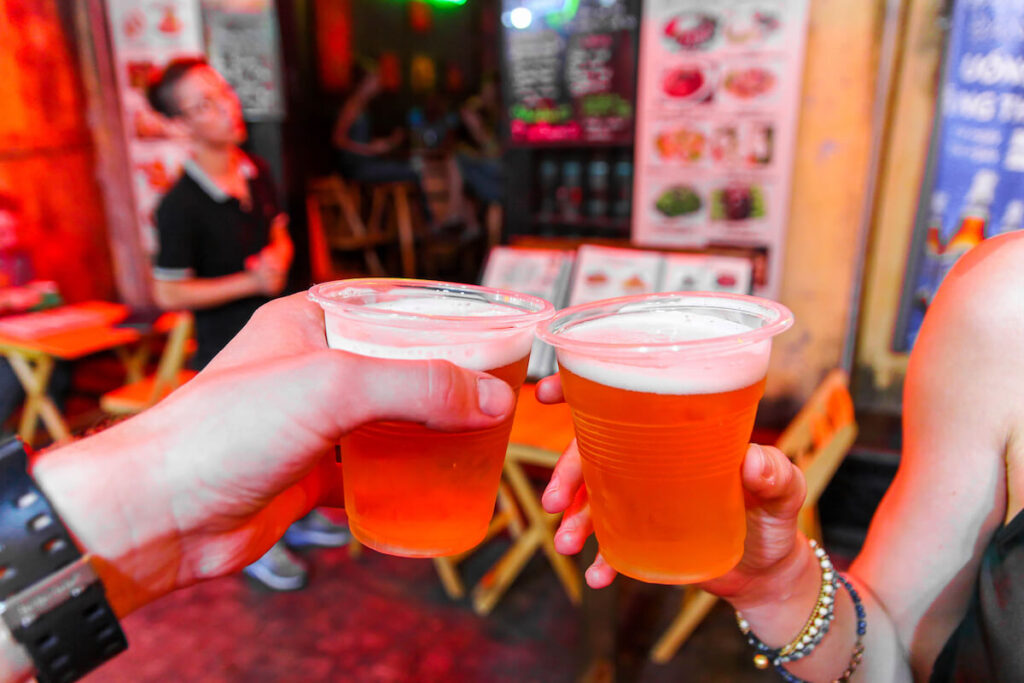
Sure, you can have Vietnamese coffee as a nightcap but you’d probably prefer something more refreshing. Lucky for you, fresh beer in Hanoi is uber cheap.
Bia hơi, literally ‘fresh beer’ in Vietnamese, is draft beer that is brewed daily. It has no preservatives, so it has to be consumed within 24 hours. It’s known for its light and refreshing taste and low alcohol content of about 4%. It is usually served on the street, in small glasses, for a very cheap price of 20 to 50 cents, making it popular among locals and tourists alike.
Bia hoi is more than just a drink though. It’s very much a part of the Vietnamese culture and lifestyle. It is a way for people to socialize, relax, and enjoy the lively atmosphere of Hanoi. It’s also often accompanied by snacks such as peanuts, fried tofu, or grilled meat. A good excuse to enjoy more Vietnamese street foods, if you ask me.
18. Temples and pagodas
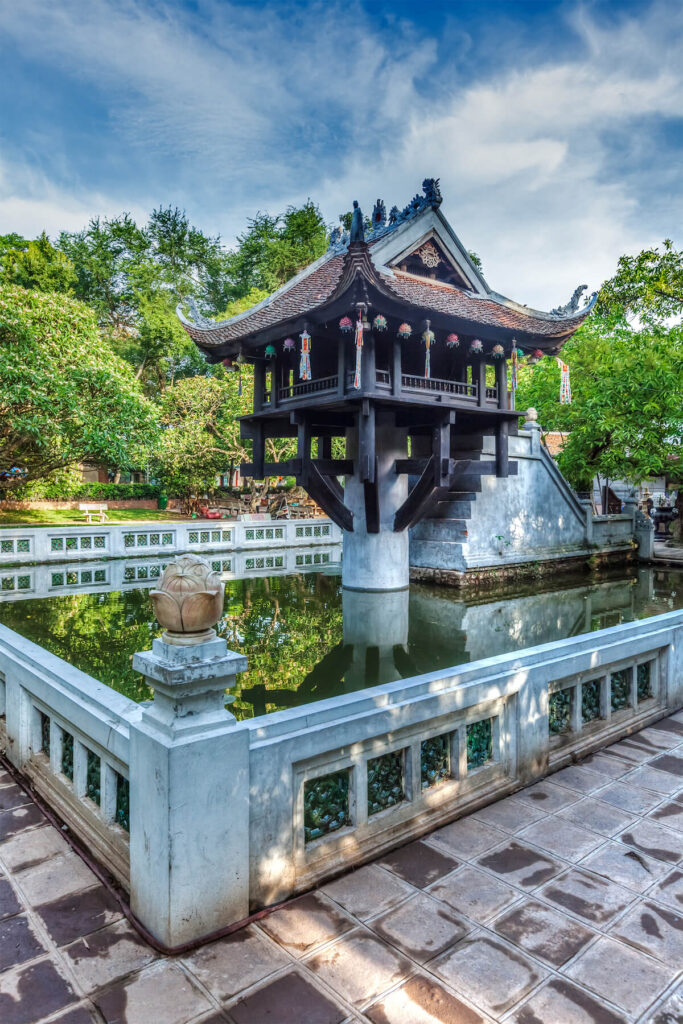
The Temple of Literature is not the only temple in Hanoi. In fact, Hanoi is home to many beautiful temples and pagodas that are steeped in history and culture. These structures are a testament to the country’s rich religious heritage.
One of the most famous temples in Hanoi is the Ngoc Son Temple. Located on a small island in the middle of Hoan Kiem Lake, this temple is accessible via a red bridge called “Cau The Huc,” which translates to “The Bridge of the Rising Sun.”
The One Pillar Pagoda is also a popular Buddhist temple, best known for its unique structure of being laid on a single pillar.
Other temples and pagodas worth visiting are the Ly Quoc Su Temple, the Quan Su Pagoda, the Quan Thanh Temple, and the Bach Ma Temple. If you feel like leaving the hustle and bustle of the city center, it’s worth trekking to the Perfume Pagoda, a huge complex of Buddhist temples and shrines built into the limestone Huong Tich mountains.
19. Conical hats
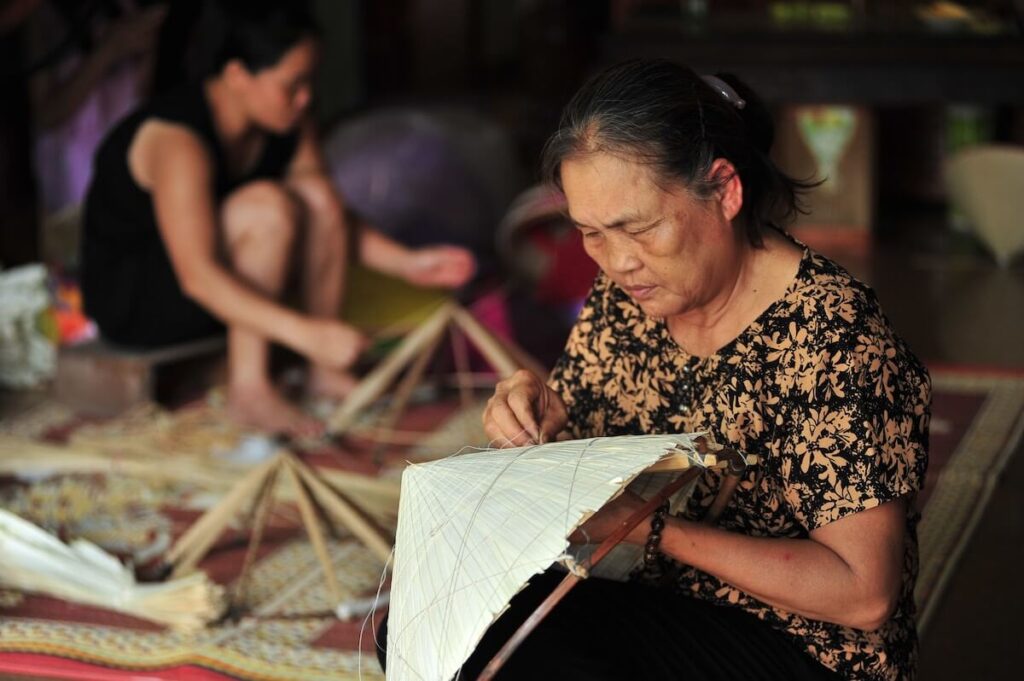
The conical hat, also known as the “non la,” is an icon of Vietnamese culture, gracing the heads of locals all over the country as well as eager tourists. But did you know that there’s a village in Hanoi that’s famed for these hats?
Chuong Village, located in Thanh Oai District, Hanoi, is famous for its high-quality conical hats. These hats are made by skilled artisans using traditional techniques passed down from generation to generation and are an essential accessory for farmers and laborers as protection from the sun and rain.
The main materials used in making the hat are green palm leaves and bamboo, which undergo 15 rounds of weaving. Many of these hats are also decorated with silk and embroidery. Makes for a good souvenir!
20. Flower seasons
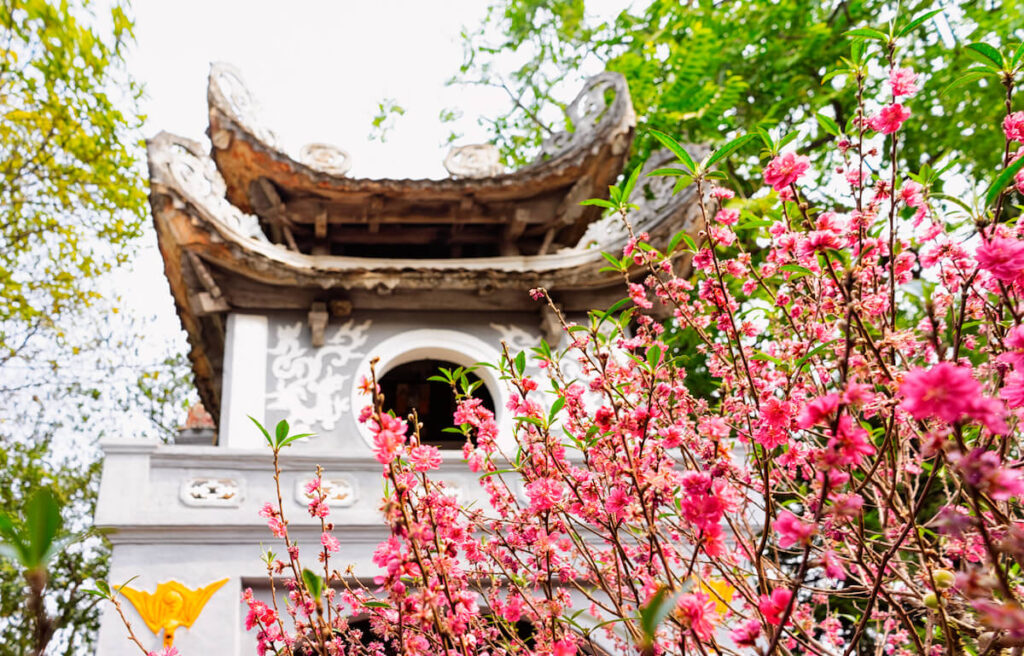
Vietnam may not be as popular as Japan and South Korea when it comes to flower-filled tourist spots. Which is a shame because Hanoi, in particular, boasts different floral beauties throughout the year. Each month, different flowers bloom and transform the city into a colorful place.
One of the most anticipated flower seasons in Hanoi is spring, which lasts from February to April. This is the time when the city celebrates the Lunar New Year or Tet (more on this next). The most symbolic flower of this season is the peach blossom, which represents luck, prosperity, and happiness.
Another spring flower that is popular in Hanoi is the ban flower, which has a delicate white color and a sweet scent. Ban flowers are often seen in the mountainous areas of northern Vietnam, where they are considered a symbol of love and loyalty.

In autumn, that’s September to November, the most prominent flower is the hoa sua, or milk flower, which has a strong and distinctive fragrance. Hoa sua flowers are mostly found in the old quarter of Hanoi, where they create a nostalgic and romantic mood. Sunflowers, with their bright yellow color, also bring much-needed cheer during this season.
21. Tet
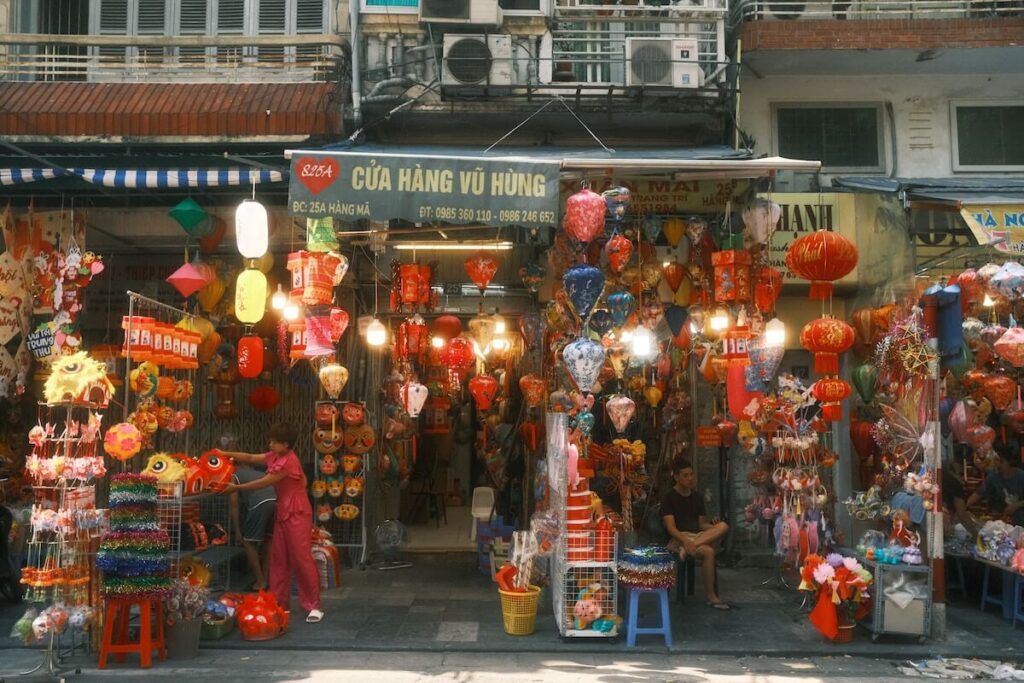
The Vietnamese New Year, which generally coincides with the Chinese New Year, is called Tet and it’s the most important holiday in Vietnam. Celebrations can last up to an entire week, and many Vietnamese students and employees return to their hometowns to celebrate with families and friends.
In Hanoi, one of the most important activities during Tet is visiting the pagodas and temples to pray for good luck, health, and happiness, as well as get one’s fortunes told. The streets are peppered with flowers and various decorations and there are dragon and lion dance performances.
I once visited Hanoi during Tet week and I was shocked at the sight of empty and silent streets. Many shops were closed. On some nights though, the streets were festive and packed with people enjoying outdoor parties, fireworks shows, and parades.
If you’re thinking of flying to Hanoi during Tet, I say go for it but do consider that you might not be able to visit every restaurant or café on your list.
22. Motorbikes
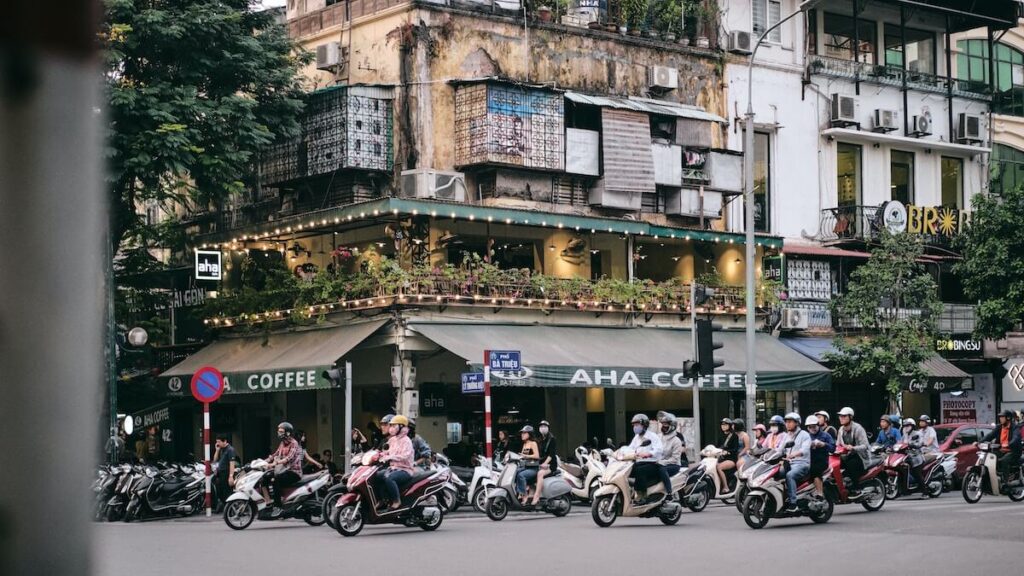
Hanoi’s love for motorbikes cannot be overstated. There are around eight million vehicles in this city and six million of those are motorcycles.
Motorbikes are the dominant mode of transportation in Vietnam, carrying everything from people to goods. Touring the city on a motorbike has become a popular activity for visitors too.
If you’re wondering why motorbikes are so popular on this side of the world, here’s the answer: taxes. Cars are expensive in Vietnam due to high import taxes and sales taxes. Vietnam also has lots of tiny roads and passageways that make it hard for larger vehicles to pass through, so locals choose to navigate via motorbikes.
23. Train street
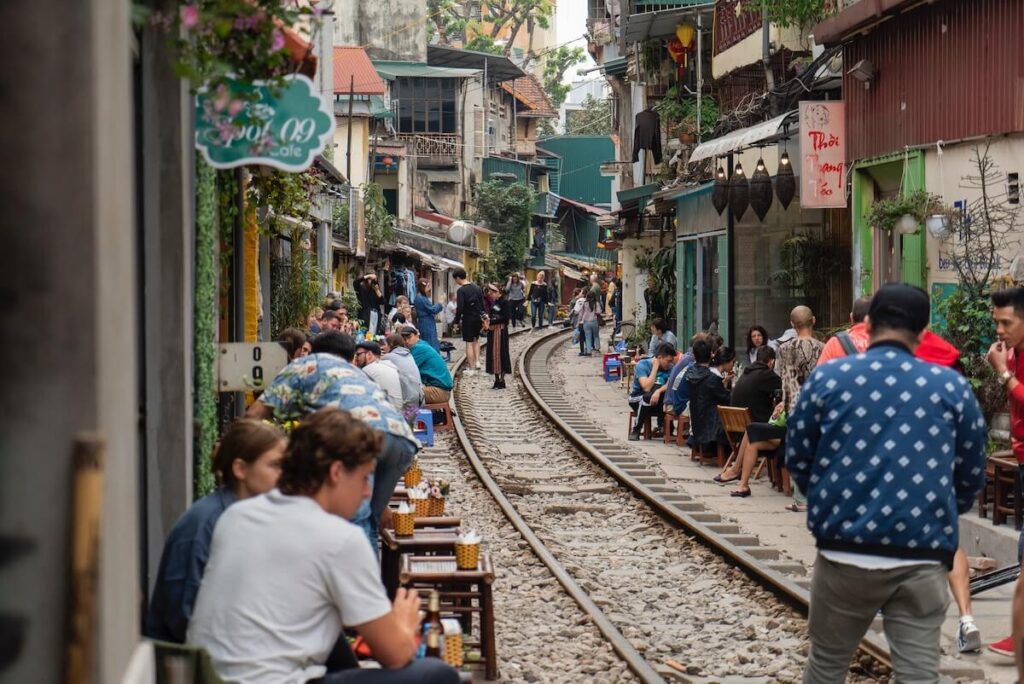
If the Hanoi Train Street isn’t a great example of Vietnamese adaptability, I don’t know what is. This narrow alley in the Old Quarter where a train passes by twice a day, just inches away from the houses and shops that line the tracks, is a place where life and death, tradition and modernity, coexist in a precarious balance.
The railway, which connects Hanoi with Ho Chi Minh in the south, was built by the French in 1902. The “train street” itself is in Le Duan, which is now filled with restaurants and quaint coffee shops. The train passes by twice a day at 3 pm and 7 pm, during which residents must remove tables and chairs set up close to the tracks.
For the locals, the train is a part of their daily routine. But for tourists, the train is a thrilling spectacle worth sharing on social media. It’s a source of controversy, however, and authorities have been trying to shut it down or at least curb tourist numbers.
24. Ceramics
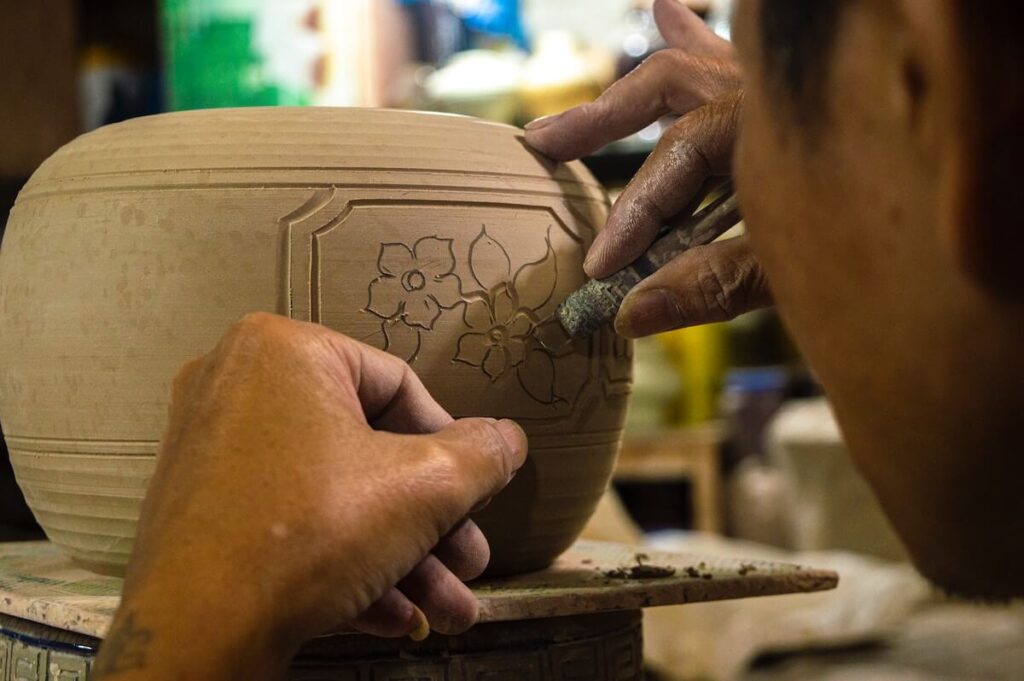
Vietnamese ceramics and pottery are among the traditional arts and industries that Hanoi is famous for. Hanoi is home to some of the most skilled and creative ceramic artisans in the world, who produce a variety of products ranging from traditional pottery to modern art.
All over the city, you can find ceramic items such as vases, bowls, plates, cups, statues, and even jewelry, all made with exquisite craftsmanship and quality. But the best place to explore this art is the Bat Trang Ceramic Village, located about 10 km from the city center.
Here, you can see how the ceramic products are made, from molding the clay to firing the kilns. You can also try your hand at making your own ceramic masterpiece, or shop for some of the finest ceramic goods in the country.
25. Universities
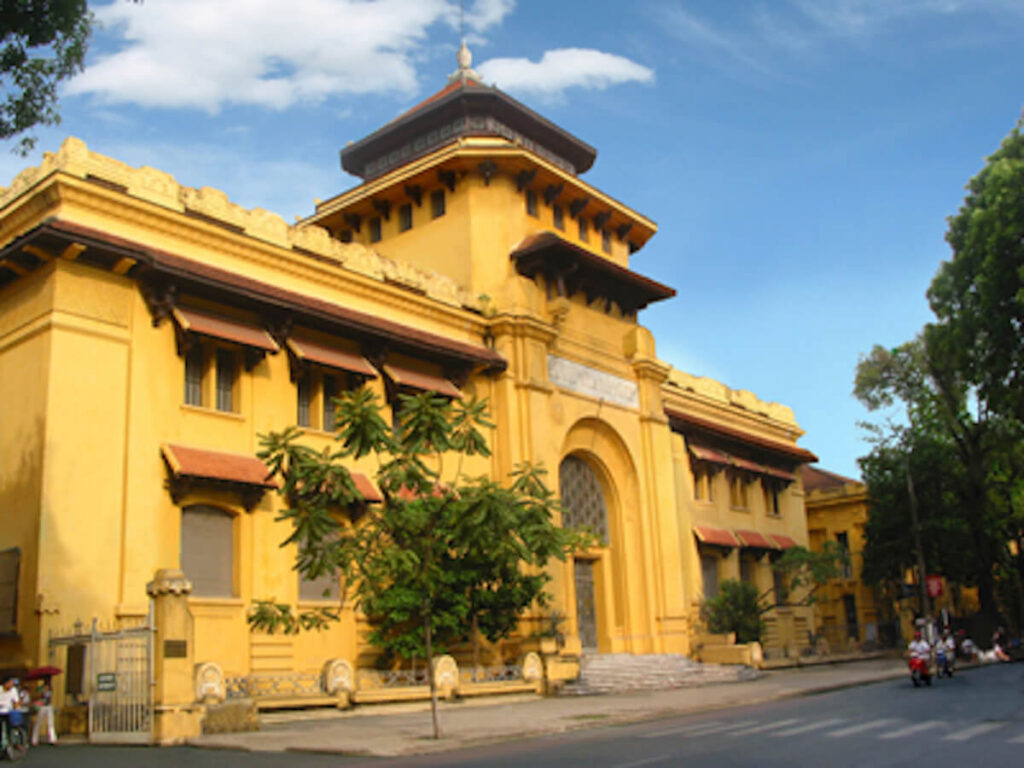
Hanoi is not only the capital of Vietnam but also the capital of education. With more than 20 universities, Hanoi offers a diverse and dynamic learning environment for students from all over the country and the world.
One of the most prestigious and oldest universities in Hanoi is the Vietnam National University (VNU), which was founded in 1906 by the French colonial government. VNU, a public research university system, is ranked among the top 500 universities in the world by the QS World University Rankings. It has 10 member institutions, covering various fields of study, such as natural sciences, social sciences, languages, engineering, law, and education.
Another notable university in Hanoi is the Hanoi University of Science and Technology (HUST), which was established in 1956 as the first and largest technical university in Vietnam. HUST has several departments and research institutes, offering undergraduate and graduate programs in engineering, information technology, biotechnology, nanotechnology, and more.
Many universities in Hanoi offer exchange programs for international students too!
26. Creative City
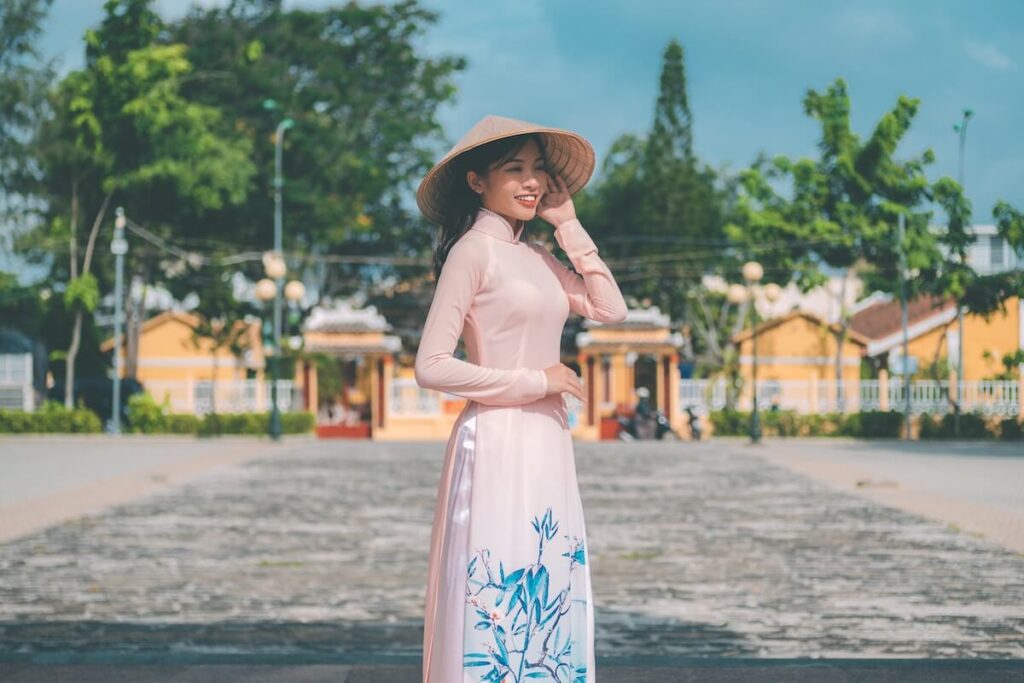
In October 2019, Hanoi became the first Vietnamese city to receive an official designation by UNESCO as a Creative City. It’s not hard to see why.
UNESCO recognized Hanoi’s efforts to promote and protect its rich heritage and foster its young talent. Based on what this list has covered so far, this city is a fusion of tradition and innovation, art and technology, of culture and cuisine.
Whether you’re exploring the ancient temples and pagodas, browsing the colorful markets and craft villages, or enjoying the vibrant nightlife and festivals, you’ll always discover something new and exciting in Hanoi. Take it from me, it’s a city that never stops surprising you.
27. Gateway to other northern destinations

It’s easy to fall in love with Hanoi and wish to stay there forever. But the city is also a gateway to the many wonders that Vietnam has to offer. Just a short journey from the city will take you to a world of breathtaking landscapes such as the emerald waters of Halong Bay, the ancient town of Hoi An, and the terraced rice fields of Sapa.
Hanoi’s strategic location also makes it a hub for culinary explorations. From the city, you can easily embark on a gastronomic journey to enjoy fresh seafood in Nha Trang, the spicy delicacies of Hue, or the exotic fruits of the Mekong Delta. So, if you’re a foodie with a sense of adventure, Hanoi is your perfect launchpad!
28. Hanoians

Last but definitely not least, Hanoi is known for its amazing people.
Hanoians, the residents of Hanoi, are known for their vibrant and resilient spirit. They have a deep love for their traditional culture, which is reflected in their daily life. From the early morning exercises by the Hoan Kiem Lake to the bustling night markets filled with delicious street food, Hanoians know how to make every moment count.
Hanoians are known for their love of food and their ability to turn anything into a delicious dish. But their love for conversation is just as legendary. You’ll often find them huddled around a bowl of steaming pho, or coconut coffee and sunflower seeds, engaged in animated conversations, no matter the time of day!
I don’t want to overgeneralize, but the Hanoians I’ve met were very friendly and hospitable, and some of the most fun bunch I’ve met in my travels. They are proud of their heritage and culture, and they are eager to share it with others.
Wrap up
That’s a long list, but guess what? All these barely scratch the surface of the rich tapestry of experiences that Hanoi offers. Hanoi is a city that can simultaneously surprise, charm, and chew you up.
Looking for more ideas for your trip? Check out this 3-day Hanoi and Ninh Binh itinerary! And while there’s so much to love about Hanoi, the rest of Vietnam has plenty of surprises too. I recommend diving into this list of things Vietnam is known for and these books about Vietnam’s history and culture if you need more convincing.