
*This article may contain affiliate links. For full information, please see the disclaimer here.
Out of all the cities I’ve visited in Vietnam, Ho Chi Minh is the most energetic. Still fondly called Saigon by some locals and travelers alike, this city completely swept me off my feet the moment I arrived.
Maybe it’s the bustling streets, the dark-roast coffee, the street food, or the lively nightlife… this metropolis buzzes with a vigor that’s unlike any other. If you want to feel the true, unfiltered heartbeat of Vietnam, there is no better place to start than the streets of Ho Chi Minh City.

So, what is Ho Chi Minh City famous for? This city is known for its beautiful French colonial landmarks, its waves of motorbikes, amazing food and coffee, war history, hidden alleyways, warm people, and markets you can spend hours in.
For me, Ho Chi Minh is a place that holds wonderful memories, and I truly believe it offers something amazing for every kind of traveler. Read on to find what waits for you in this city.
Table of Contents
What is Ho Chi Minh City famous for?
1. Motorbikes, motorbikes, motorbikes
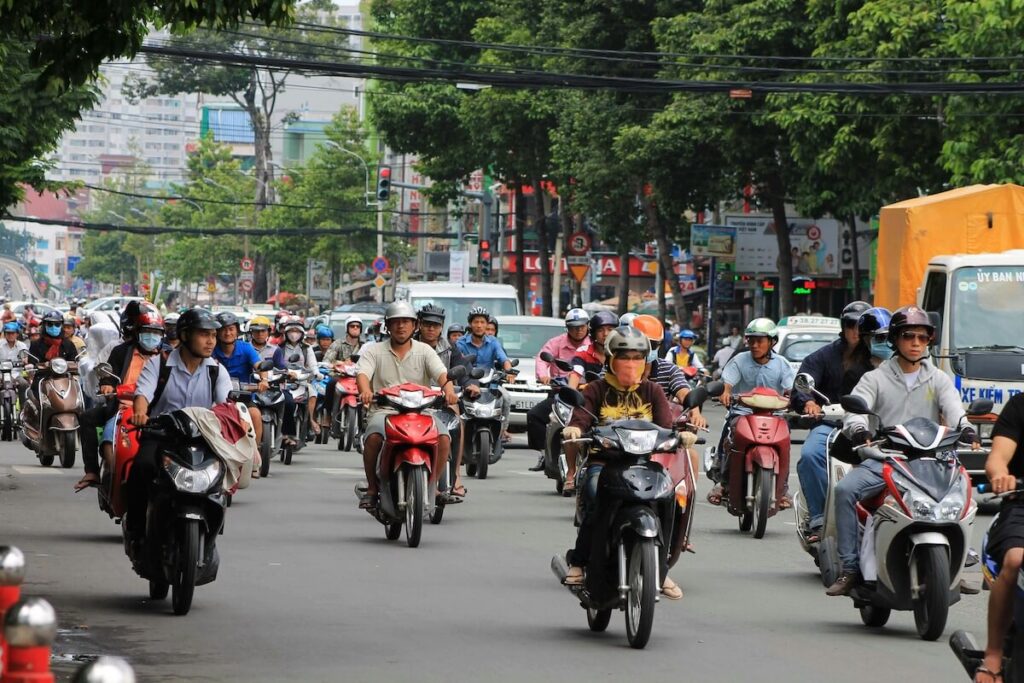
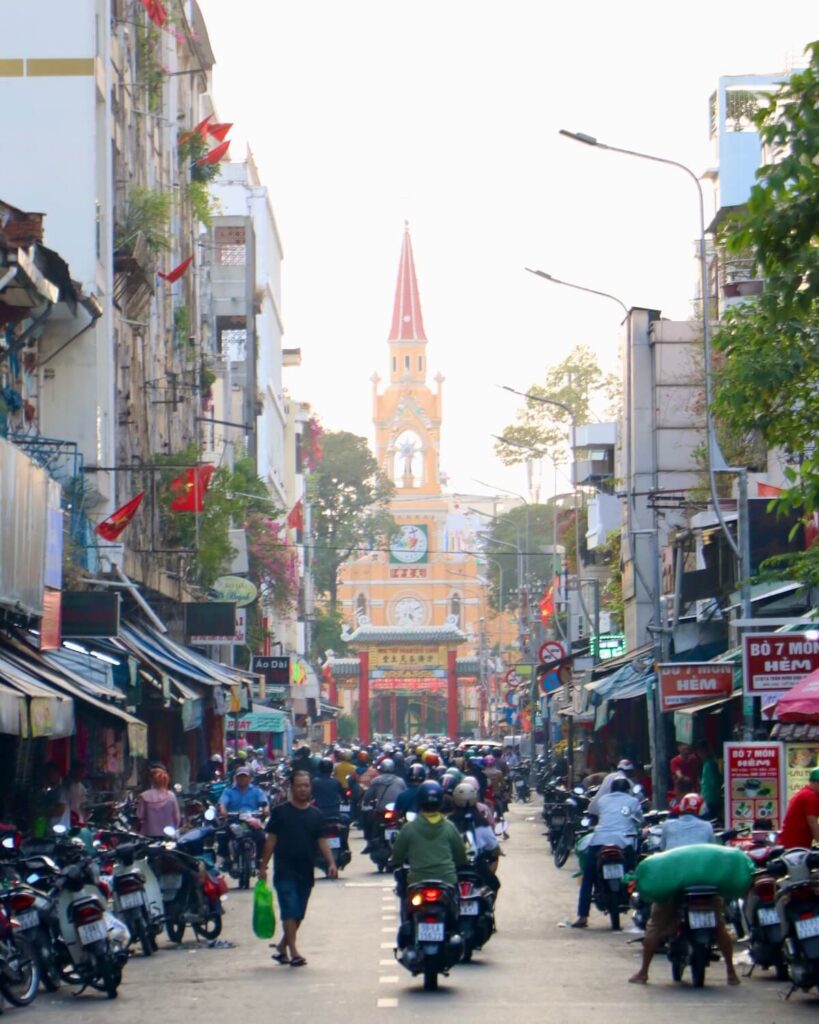
For first-time tourists, simply crossing the street in Ho Chi Minh (or in most parts of Vietnam) requires a massive, terrifying leap of faith. That’s because this city is known for its mind-boggling sea of motorbikes.
Between 8 and 9 million motorcycles rule the streets, functioning as the city’s economic backbone ever since the post-war economic boom made cars an unattainable luxury. Local kids legally hop on under-50cc mopeds at just 16 years old, embedding two-wheelers into the cultural identity early on.
Today, the deluge of motorbikes is a daily part of life in Ho Chi Minh. I learned early on in my trip that you just have to step out calmly and let the river of scooters flow smoothly around you.
If you want to explore the city, doing so via motorbike is a great way to do so. Ride-hailing apps like Grab include the motorbike option. Also, joining a guided motorbike street food tour is easily the best way to dive straight into the city’s organized, high-energy chaos.
2. Saigon
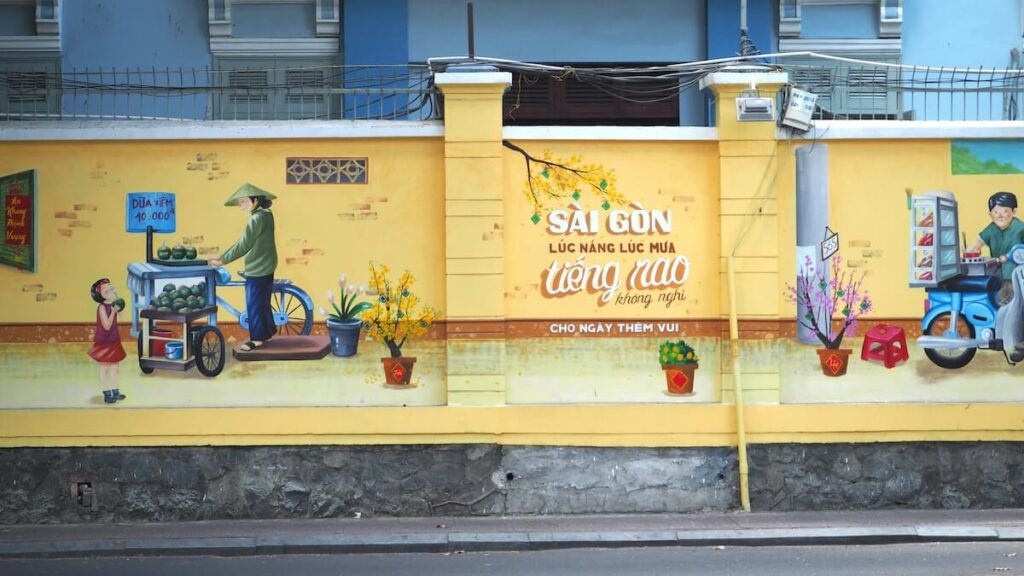
While its official title on your boarding pass reads Ho Chi Minh City, nearly everyone you meet here still passionately calls it Saigon.
The historic (and enduring) name’s origins are beautifully poetic, although uncertain. One widely cited theory traces the name to the Khmer term “Prei Nokor”, where “Prei” means forest and “Nokor” means town, translating roughly to “town in the forest”.
Over time, “Prei” evolved into “Sai” and “Nokor” into “Gon,” forming the modern name Saigon. This theory suggests the area was once a dense forest, possibly with kapok trees used for firewood, though evidence of such a forest is speculative.
Following the end of the Vietnam War in 1975, the newly unified government officially renamed the southern hub to honor the legendary revolutionary leader, Ho Chi Minh.
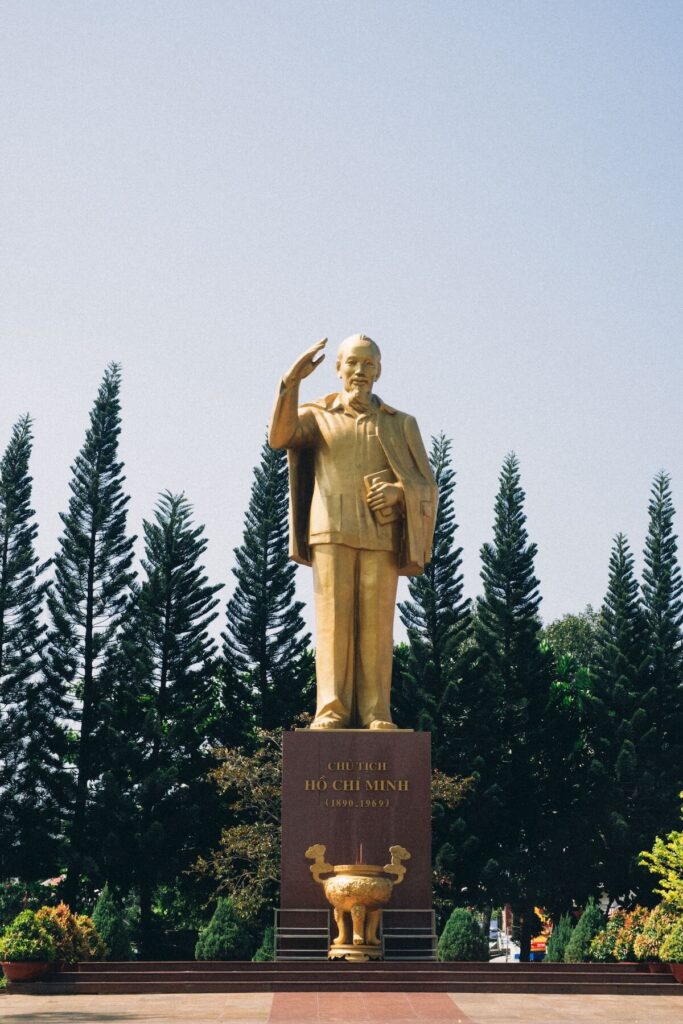
As a traveler, don’t sweat the naming etiquette—using “Saigon” won’t offend anyone. In fact, while northern visitors might stick to the official name, local southerners, especially the older ones, use them interchangeably.
3. The Cu Chi Tunnels

Leave the urban hustle for a bit, and you’ll find that Ho Chi Minh is famous for a jaw-dropping marvel of wartime engineering—the Cu Chi Tunnels.
This massive, 250-kilometer underground labyrinth served as a vital stronghold for Viet Cong soldiers during the Vietnam War. It’s a sprawling network that housed entire communities, complete with living quarters, kitchens, and hospitals, allowing soldiers to orchestrate guerrilla warfare completely out of sight.
If you are prone to claustrophobia, consider this a fair warning—the spaces are incredibly tight. Fortunately, tourism authorities have widened specific sections so travelers can safely experience crawling through them.
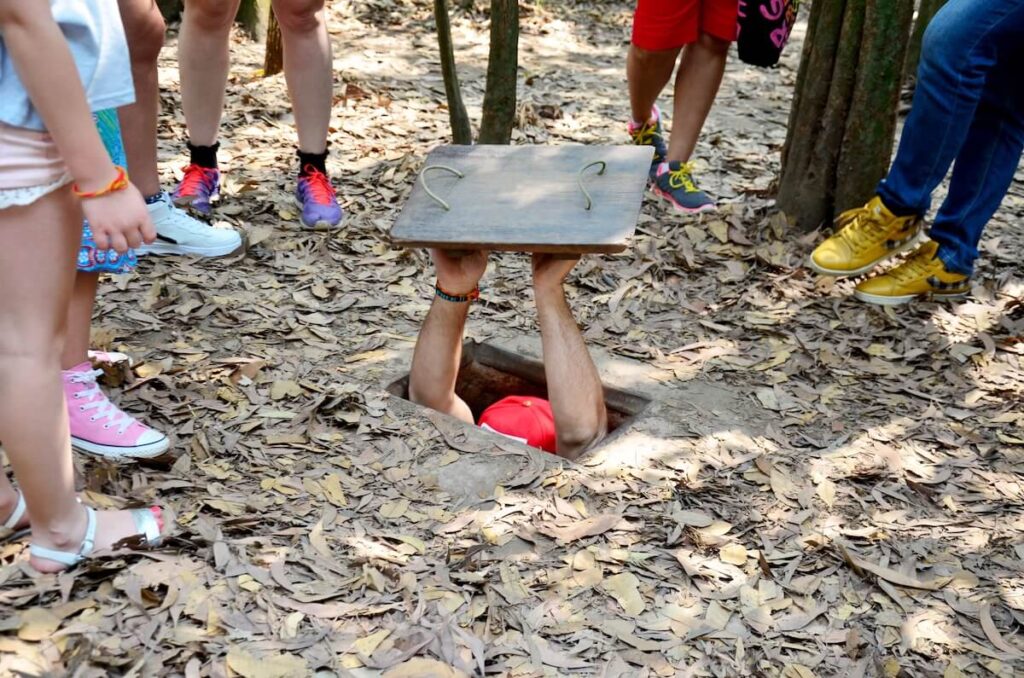
Booking this best-selling guided tour of the Cu Chi Tunnels allows you to explore the tunnel system, learn how local fighters lived, and even try your hand at the shooting range (under supervision).
4. Banh mi and pho
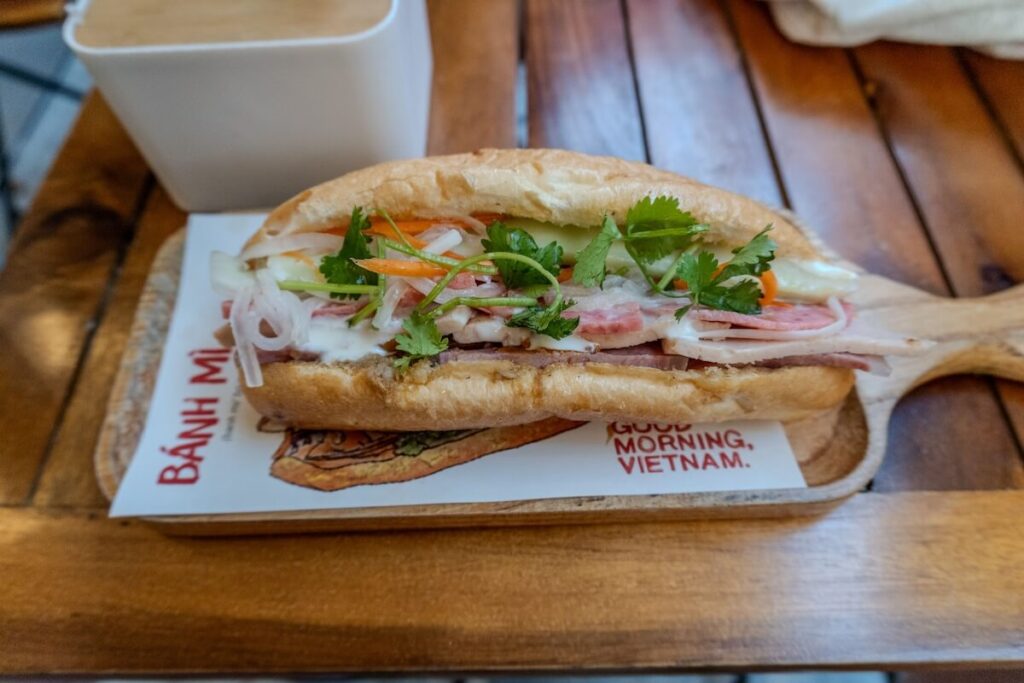
Ah, the food—easily my favorite part about traveling to Vietnam.
Ho Chi Minh City is known for its legendary, street-level culinary scene. While staples like pho and banh mi are loved nationwide, the southern city puts its own signature spin on them. Saigon pho features a sweeter, richer broth loaded with an absolute mountain of fresh basil and thorny coriander, while local banh mi carts load their airy, crispy baguettes with layers of rich pâté and cold cuts.
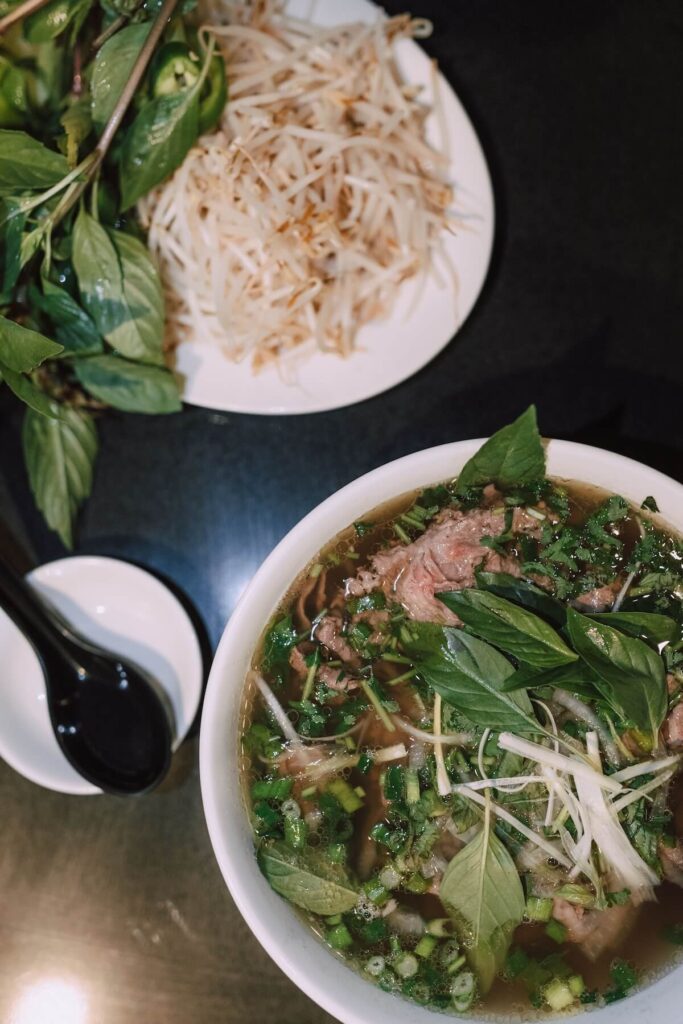
The best part? Banh mi and pho are just two of the city’s delicious offerings. As you explore the city’s alleyways, you will constantly stumble upon local treasures like banh xeo (crispy, savory pork and shrimp pancakes) and com tam (broken rice topped with a perfectly grilled, fragrant pork chop).
Pulling up a tiny plastic stool on a bustling sidewalk to enjoy these dishes is a quintessential local experience you won’t forget.
Read more: 35 Tasty Vietnamese Snacks, Street Foods and Drinks You Have To Try
5. Ben Thanh Market

If you want to experience the true, chaotic energy of local commerce, look no further than Ben Thanh Market.
Dating back to the early 20th century, this historic, yellow-facade marketplace is the city’s ultimate commercial nerve center. It’s an absolute paradise for budget shopping, picking up Vietnamese souvenirs, and diving headfirst into an intoxicating sensory street food tour.
Inside its bustling aisles, you can find everything from embroidered textiles and traditional ao dai dresses to fragrant bags of local coffee beans. While the vendors can be incredibly persistent, friendly bartering is all part of the fun. Once the sun goes down, the surrounding streets transform into a lively night market packed with smoking grills and cold beer.
6. Vietnam War
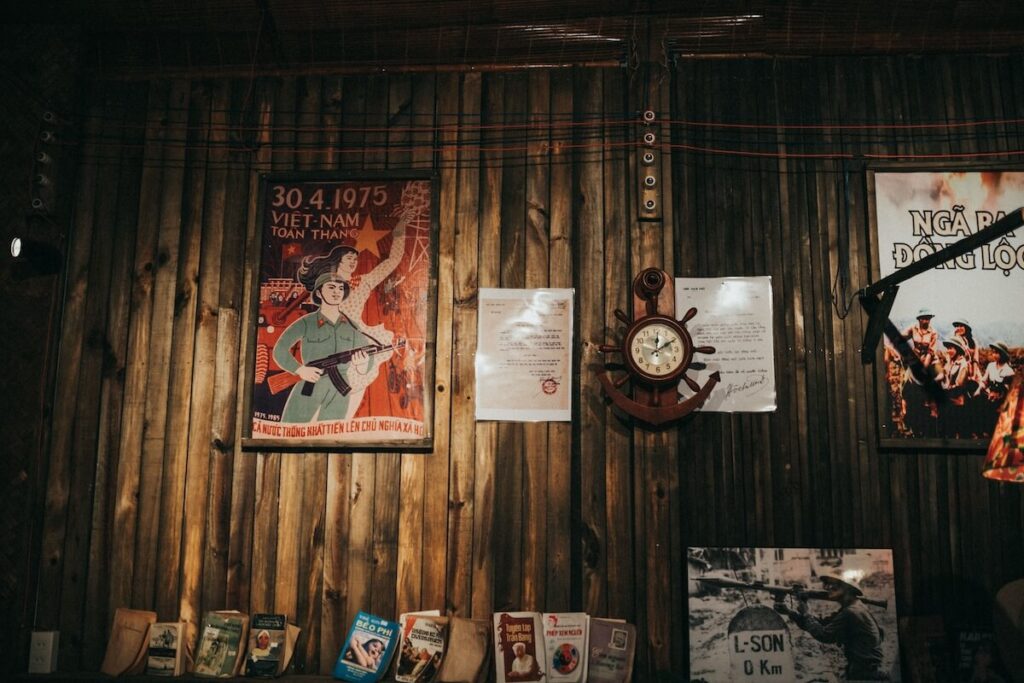
You cannot truly understand modern Saigon without acknowledging its resilient past. The city was the epicenter of what many call “The Vietnam War” or what locals refer to as “The American War”—a brutal, decades-long conflict that finally ended with national reunification in 1975. For the people here, this history marks a deeply defining era of survival, grit, and rebuilding.
To honor this history, make sure to visit the War Remnants Museum, one of the most visited and deeply moving museums in Vietnam.
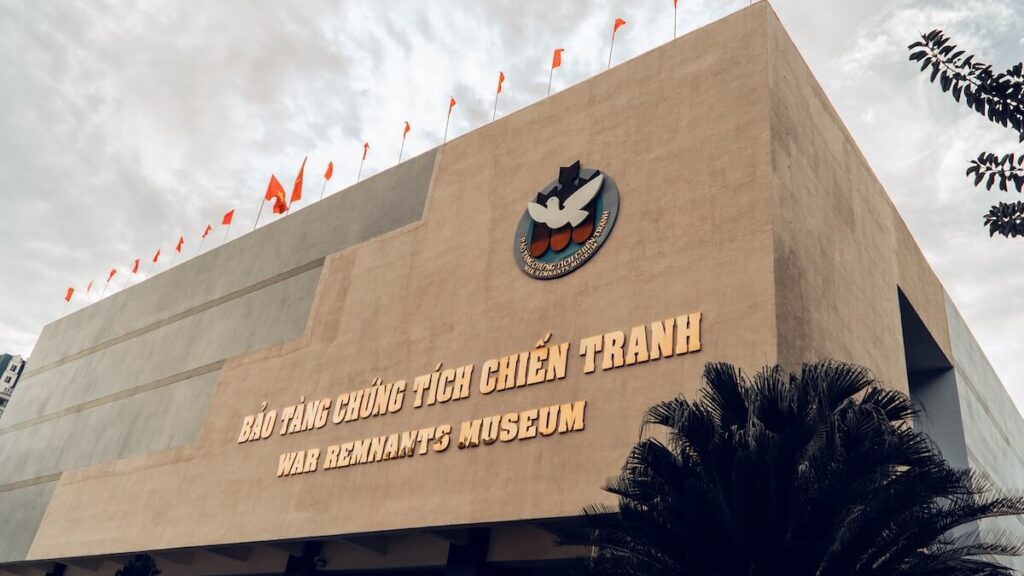
This museum offers a raw, harrowing look at the realities of the Vietnam War from the local perspective, featuring outdoor displays of captured U.S. military aircraft and armor, alongside unforgettable documentary photography exhibitions. It is an emotional but essential stop, one I couldn’t forget even years after I visited.
Also read: 25 Books About Vietnam‘s History, Culture & More
7. Café culture
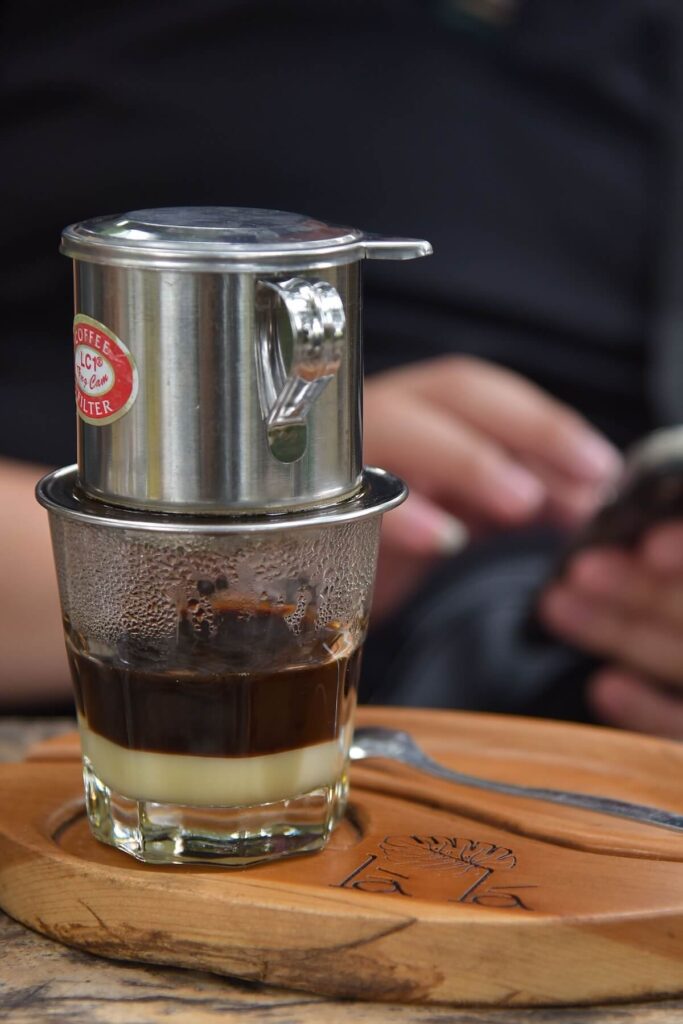
If you think you love coffee, just wait until you experience modern Vietnamese coffee culture in the heart of Ho Chi Minh. Originally introduced by French colonists in the 19th century, coffee quickly evolved from a foreign import into an absolute daily obsession for locals.
Today, the city runs on potent robusta beans. You can’t leave without trying ca phe sua da (an intense iced coffee with sweet condensed milk) or the surprisingly decadent ca phe trung (egg coffee), which tastes exactly like a liquid tiramisu.
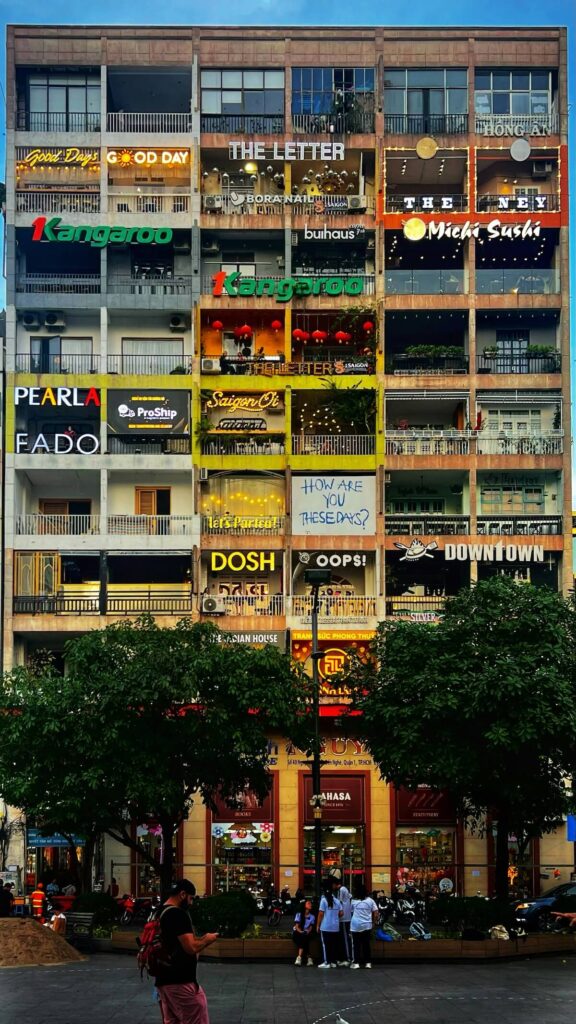
The ultimate monument to this caffeine fixation is the famous Café Apartment at 42 Nguyen Hue Street. This iconic, 9-story 1960s residential block has been completely transformed into a vertical hub of indie coffee shops, tea houses, and quirky boutiques. Sitting on one of its tiny balconies with a cold brew, watching the crowds move along the walking street below, is an experience not to be missed.
8. Independence Palace
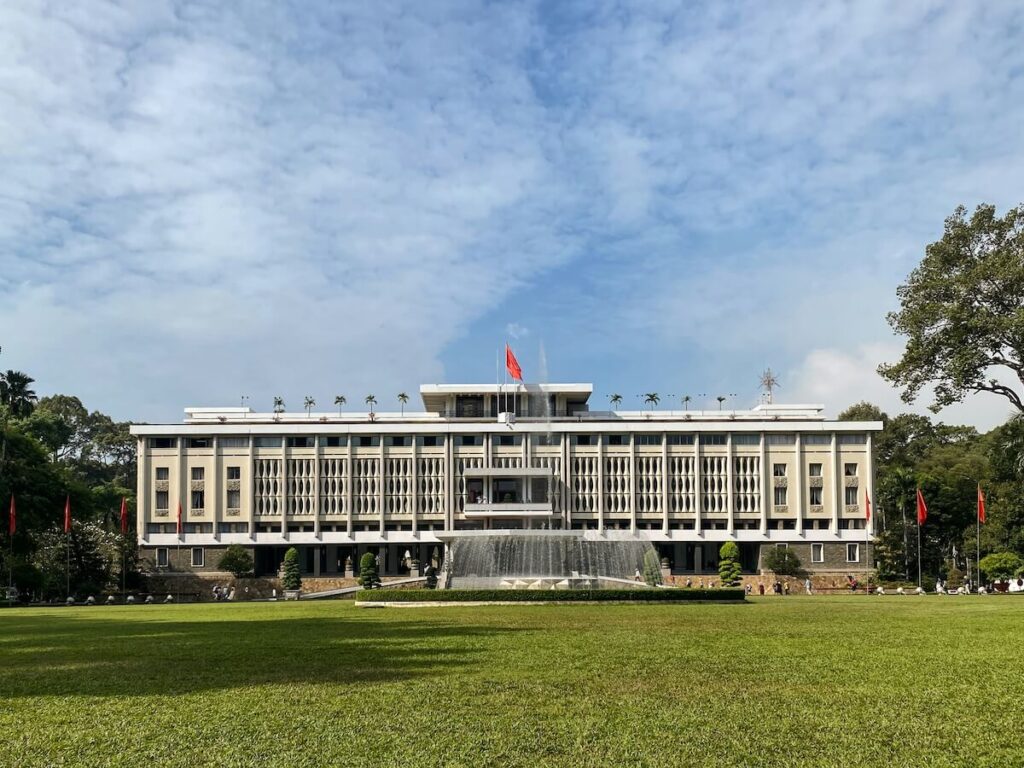
Walking into this leafy District 1 landmark feels like stepping straight into a mid-century time capsule.
Officially called Independence Palace—but widely known as Reunification Palace to honor the post-war merging of North and South Vietnam—the property remains remarkably frozen in time. This airy, 1960s modernist structure carries immense historical significance. It was the home of the South Vietnamese president and the site where a tank crashed through the gates on April 30, 1975, ending the war.
Today, you can tour opulent reception rooms, walk the manicured lawns, and explore an eerie, fascinating maze of intact underground command bunkers.
9. Saigon Central Post Office
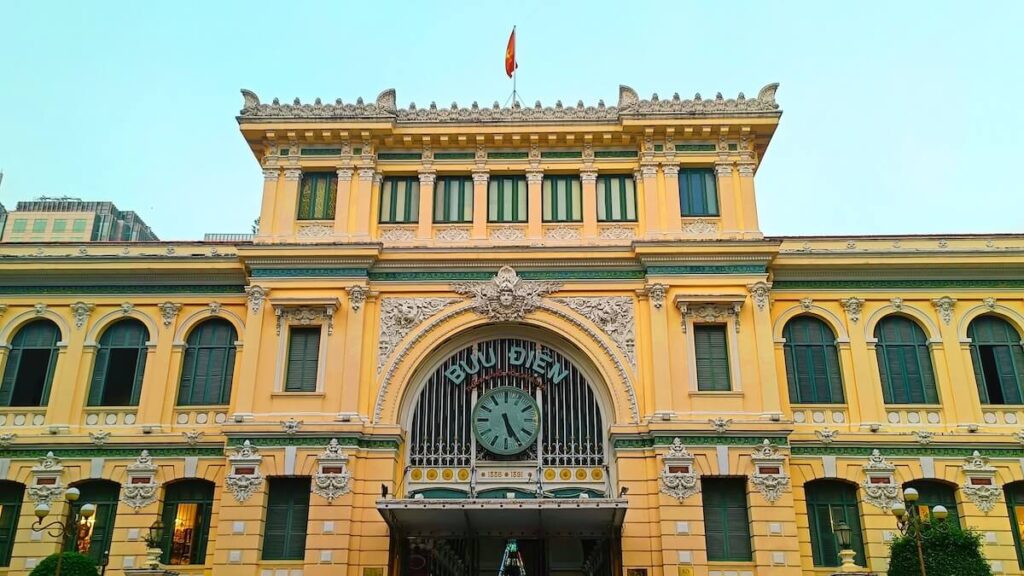
Right across from the cathedral in District 1 sits a landmark that beautifully showcases the city’s French colonial architecture. Built in the late 19th century, the Saigon Central Post Office features a grand, arched interior often credited to Marie-Alfred Foulhoux (though frequently misattributed to Gustave Eiffel).
Stepping inside feels exactly like walking into an old European train station, complete with historic hand-painted maps and vintage wooden phone booths. Even more amazing is the fact that it remains a fully operational post office rather than just a dusty museum exhibit.
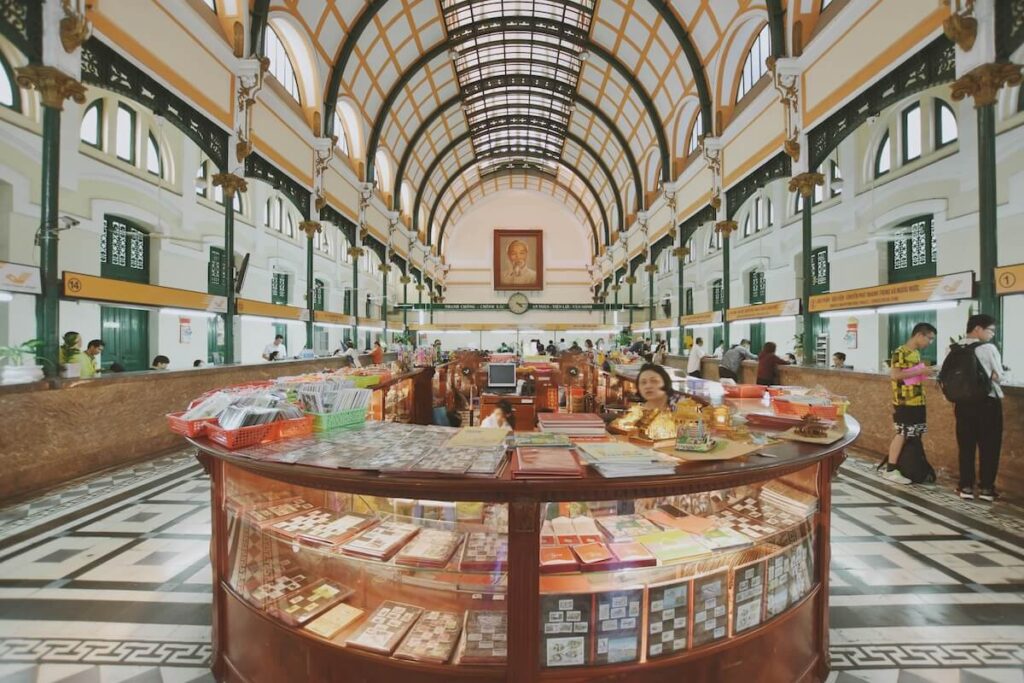
Sitting at one of the heavy wooden tables to write and mail postcards to friends back home was easily one of my favorite personal highlights. When you visit, expect a bustling mix of busy locals shipping packages and travelers browsing souvenir stalls under a massive portrait of Ho Chi Minh.
10. Bui Vien Walking Street
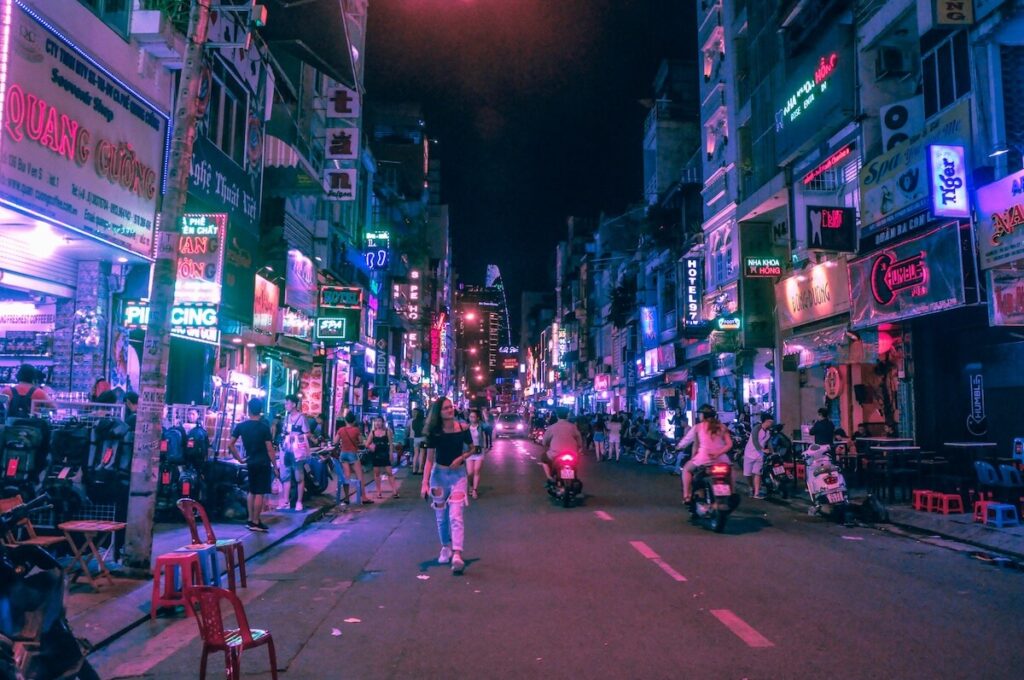
For those looking to experience the city at its absolute loudest, head straight to District 1 after dark.
Known as the “Western Street” or the city’s main backpacker district, Bui Vien Walking Street started out decades ago as a quiet hub for budget travelers. Over the years, it evolved completely organically over the years without any master designer behind it. Today, it stands as the undisputed, high-energy heart of Ho Chi Minh’s nightlife scene.
On weekends, the strip turns into an adventure for the senses. The pedestrian-only street quickly fills with thumping electronic music, flashing neon lights, and endless rows of low plastic stools packed with tourists. Expect cheap beer, loud street performers, and an awesome place to people-watch.
11. The Notre-Dame Cathedral Basilica of Saigon
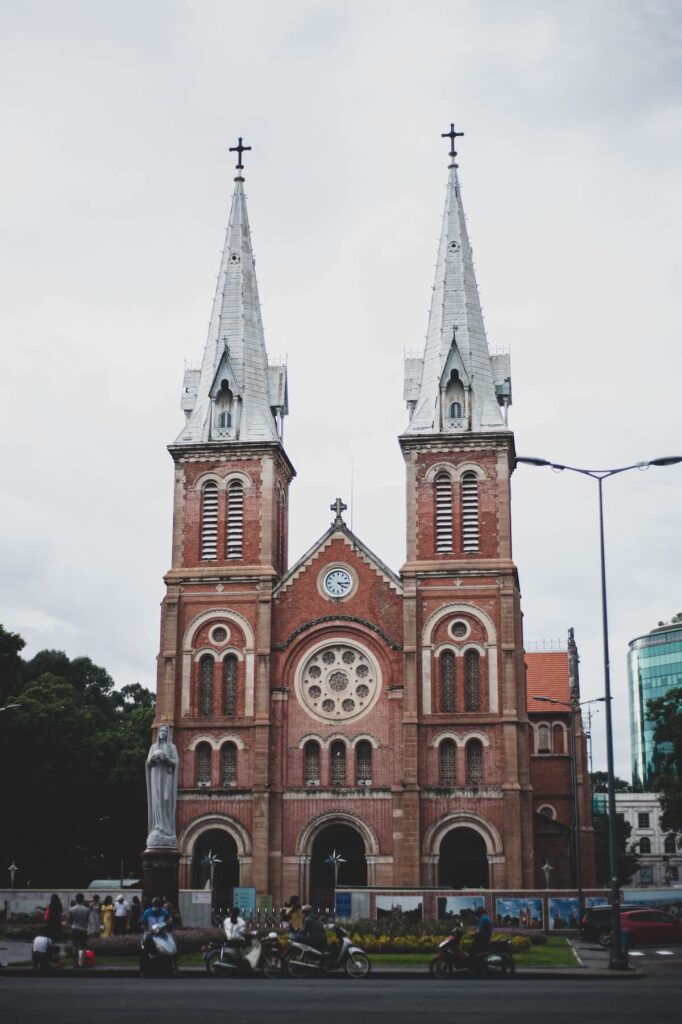
Ho Chi Minh City is famous for the Notre-Dame Cathedral Basilica of Saigon, a late 19th-century masterpiece of neo-Romanesque architecture sitting across the square from the Central Post Office.
A monumental slice of Europe in Vietnam, its most distinctive feature is its brilliant red-brick facade—materials imported entirely from Marseille, France, which have remarkably retained their vivid color over more than a century of tropical humidity. Meanwhile, the 58-meter twin bell towers cut a dramatic silhouette against the city sky.
12. Landmark 81
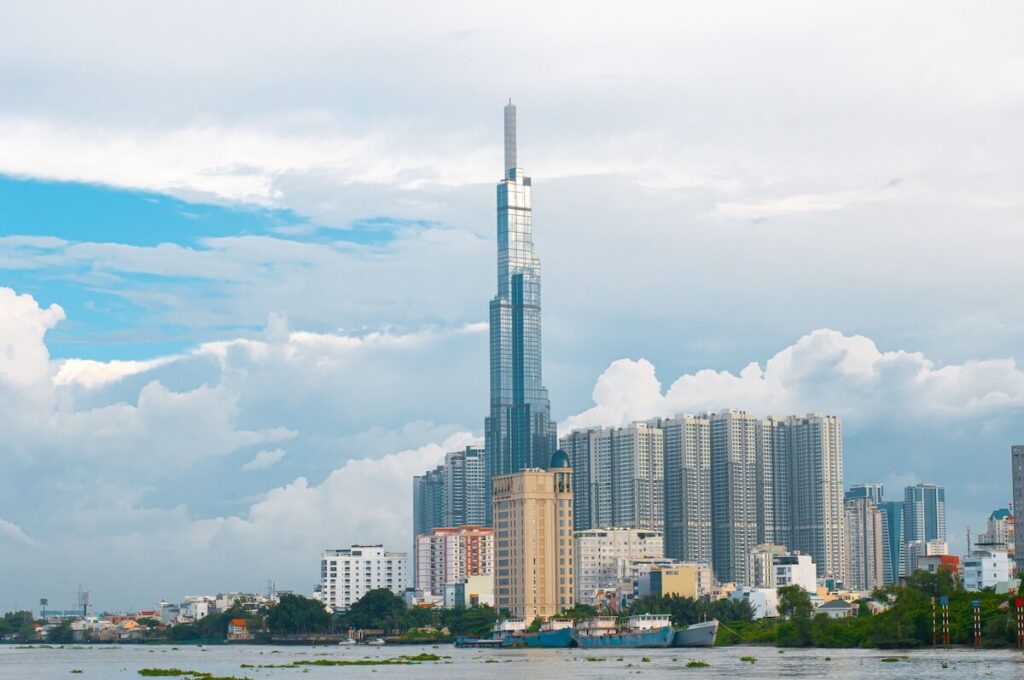
Towering gracefully over the western bank of the Saigon River is Landmark 81, an absolute giant of a skyscraper that stands as the tallest building in Vietnam at 461 meters.
Opened in 2018, its sleek, stepped design is actually inspired by a traditional bundle of bamboo, which beautifully symbolizes strength, unity, and resilience in local Vietnamese culture. But beyond breaking height records, Landmark 81 serves as the ultimate symbol of the city’s aggressive, forward-thinking ambition.
What makes it so fascinating to see in person is the dramatic, visual juxtaposition it creates with its surroundings. You can stand on the building’s Skyview observation deck and look down at a glittering maze of glass luxury towers, only to realize that right next to them lies the old Saigon—sprawling, low-rise residential alleyways where families have lived for generations.
13. Rooftop bars
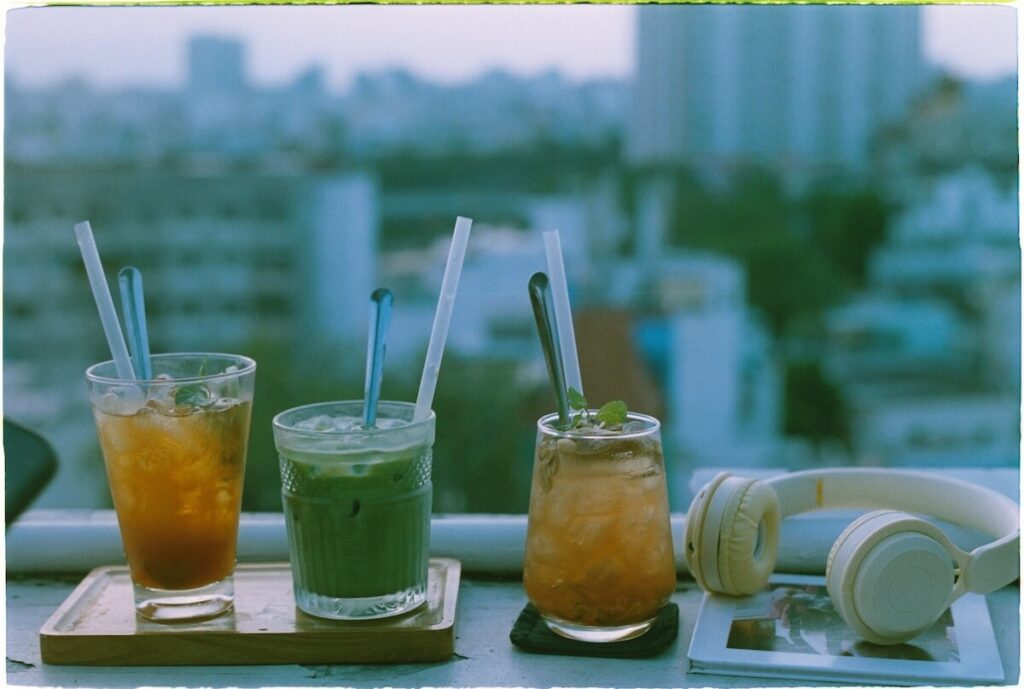
Speaking of tall buildings, they also double as the ultimate escape when the city streets get a bit too intense. To break away from the tropical humidity and buzzing traffic exhaust, Ho Chi Minh’s nightlife heavily gravitates toward its rooftops. Up here, the air is noticeably cooler, and the views are spectacular.
The variety of options is what makes the scene so interesting. You can sip a classic cocktail at historic venues like the iconic heritage hotels near the Saigon Opera House, or head over to ultra-modern sky bars perched atop sleek financial towers. Either way, grabbing a drink and watching the city lights flicker below is easily one of the best ways to wind down your evening.
14. Nguyen Hue Walking Street

Officially opened as a pedestrian zone in 2015, Nguyen Hue Walking Street is an oasis of sorts in a city known for its usual motorbike-heavy chaos.
The massive, granite-paved boulevard stretches for nearly 700 meters, cutting a straight, breathable path right from the stunning, French-colonial Ho Chi Minh City Hall all the way down to the banks of the Saigon River. And this gorgeous, broad promenade is one of my favorite places in the entire city.

While it is a relaxing place to stroll during the day, Nguyen Hue Walking Street truly comes alive in the evenings—especially on weekends when all vehicle traffic is banned. Expect a beautiful, bustling public plaza where local families, skaters, students, and travelers mingle to catch spontaneous street performances, admire glittering light displays, or just sit back with a drink to watch the city move by.
Even better, it is home to the famous Cafe Apartments, meaning you can easily grab a window seat overhead and view the entire lively scene from above!
15. Cholon and Binh Tay Market
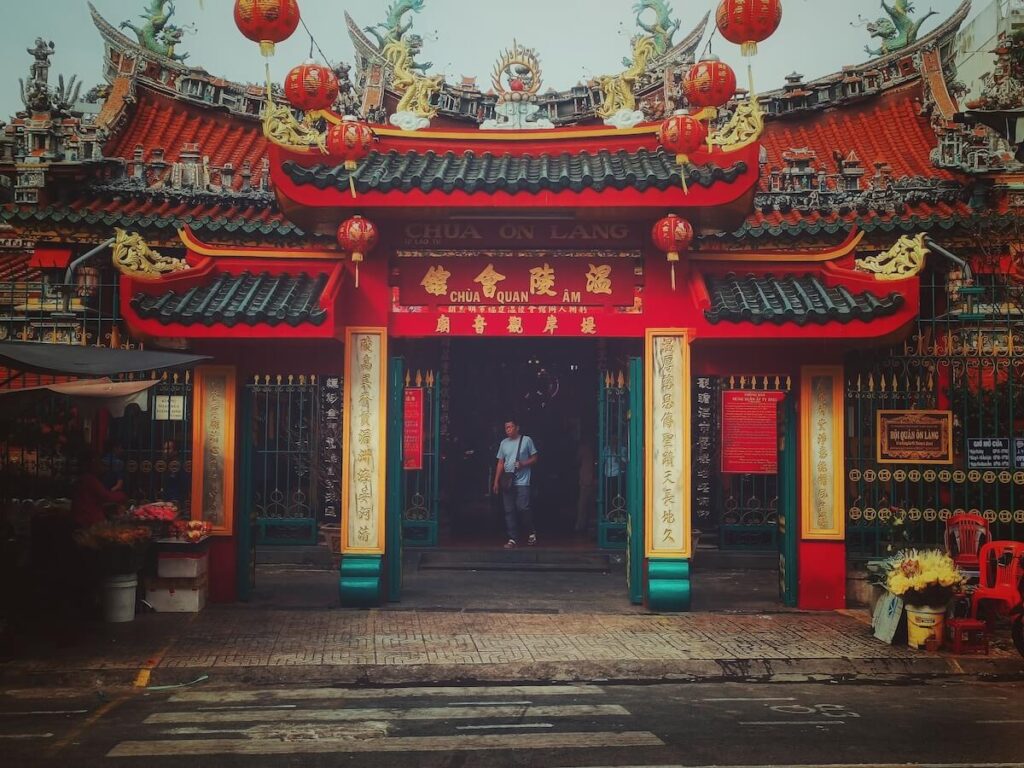
To experience a completely different, beautifully historic layer of the city, take a short trip over to Districts 5 and 6. This area is home to Cholon, which translates literally to “Big Market” and stands proud as one of the largest and oldest Chinatowns in the world.
Established in the late 17th century by Chinese immigrants, it evolved as a powerful trading city entirely separate from Saigon before the two officially merged in 1931. Today, walking through Cholon is like a trip back in time. The neighborhood is a vibrant maze characterized by hidden, smoke-filled Taoist temples like Ba Thien Hau, old residential alleys, and specialized traditional medicine shops on Hai Thuong Lan Ong Street.
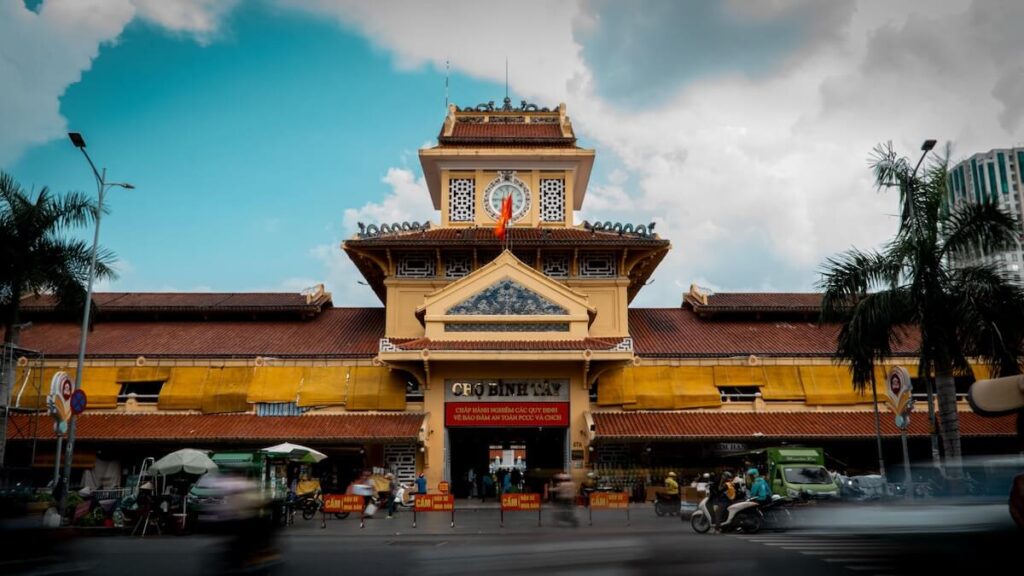
At the core of Cholon sits Binh Tay Market. Built in 1928 by a wealthy Chinese merchant named Quach Dam, this huge marketplace features stunning Chinese-French architecture, a beautiful central clock tower, and a massive courtyard.
Unlike the more tourist-centric Ben Thanh Market, Binh Tay is a hectic, authentic wholesale hub where everyday locals bargain for bulk spices, textiles, and delicious Cantonese-Vietnamese street food like roasted duck and dumplings.
16. The Pink Church

If you’re scrolling through travel photos of Saigon, one building is guaranteed to make you stop and rub your eyes. Ho Chi Minh City is famous for the Pink Church—officially known as the Church of the Sacred Heart of Jesus, or Tan Dinh Church.
Tucked away on the bustling Hai Ba Trung Street in District 3, this active Roman Catholic parish has exploded in popularity on social media due to its vivid, fairytale-like salmon-pink exterior and interior walls. Built between 1870 and 1876 during the French colonial era, it’s the second-largest church in the city (after Notre-Dame Basilica) and functions as a brilliant, eye-catching architectural anomaly.
While its structure proudly showcases a dramatic blend of classic Romanesque, Gothic, and Renaissance styles, the church wasn’t actually born pink. It originally sported a traditional colonial yellow until a bold, joyful renovation in 1957 gave it its signature candy-colored coat.
When you visit, expect to see a striking 52-meter main bell tower, beautiful Italian marble altars inside, and a steady stream of travelers and locals crossing the street just to capture its magical, storybook glow.
17. Saigon River
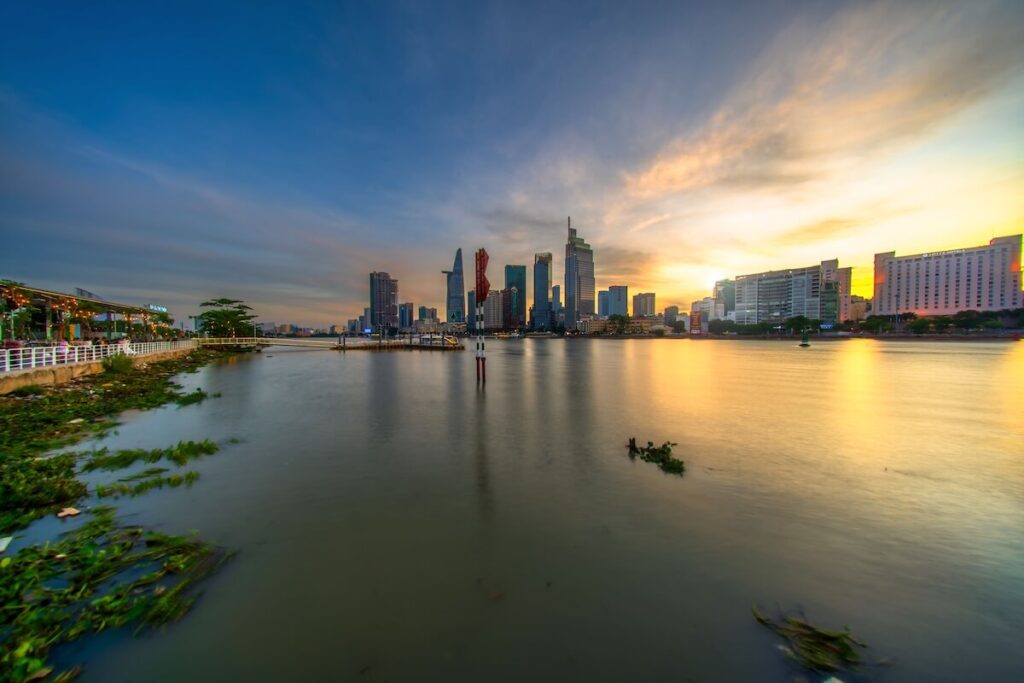
If you ever need a brief break from the constant roar of millions of scooters, the answer is usually flowing right through the middle of the city.
Originally a vital lifeblood of Saigon’s trade and shipping networks, the majestic Saigon River has beautifully transformed over the years into a scenic, incredibly relaxing escape for both travelers and everyday locals.
Depending on your vibe, you can easily hop onto a cheap local water bus to watch the city pass by, or arrange a thrilling speedboat ride that heads out toward the rural, winding mangroves of the neighboring Mekong Delta.
But if you want a short, comfortable escape to catch the sunset, booking this boutique cruise is an absolute must-do. This tour takes you past landmarks like the historic Dragon Wharf and the massive, modern skyline of District 1, while you enjoy a cold drink in hand.
18. The Jade Emperor Pagoda
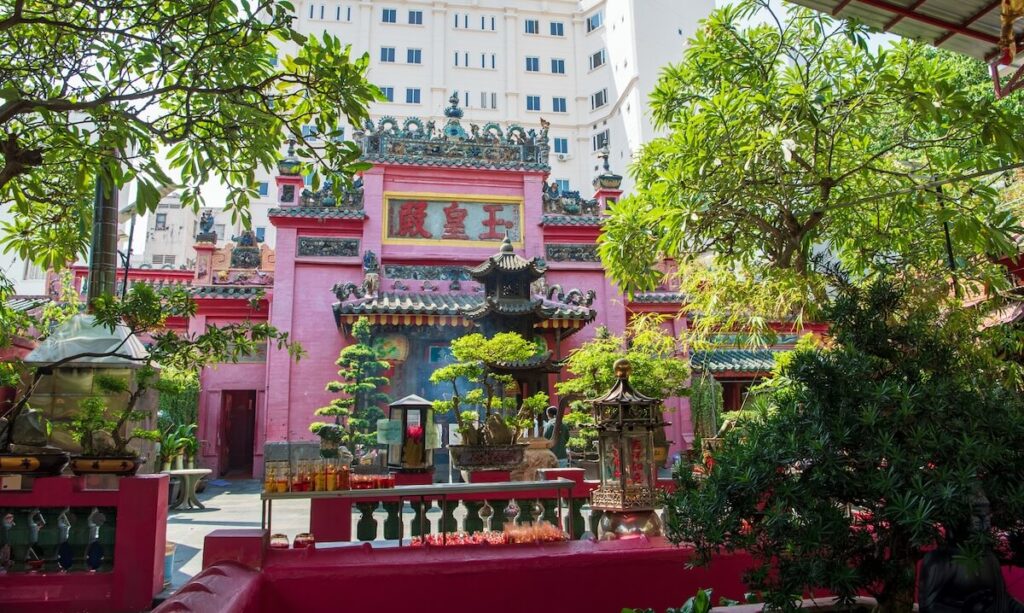
Tucked away in District 1 is another serene piece of history. Built by Cantonese migrants in 1909, the Jade Emperor Pagoda (also known as Phuoc Hai Tu) is one of the most atmospheric places of worship in Saigon.
Inside, pungent spirals of incense smoke fill the air, beautifully obscuring intricate woodcarvings and striking statues of Taoist and Buddhist deities. Outside in the courtyard, you can watch dozens of tortoises swimming lazily in a quiet pond—a local ritual symbolizing merit-making and good luck.
The pagoda is a deeply revered neighborhood cornerstone, and it famously caught the global spotlight when U.S. President Barack Obama made a historic stop here during his 2016 visit to Vietnam.
19. The Saigon Opera House
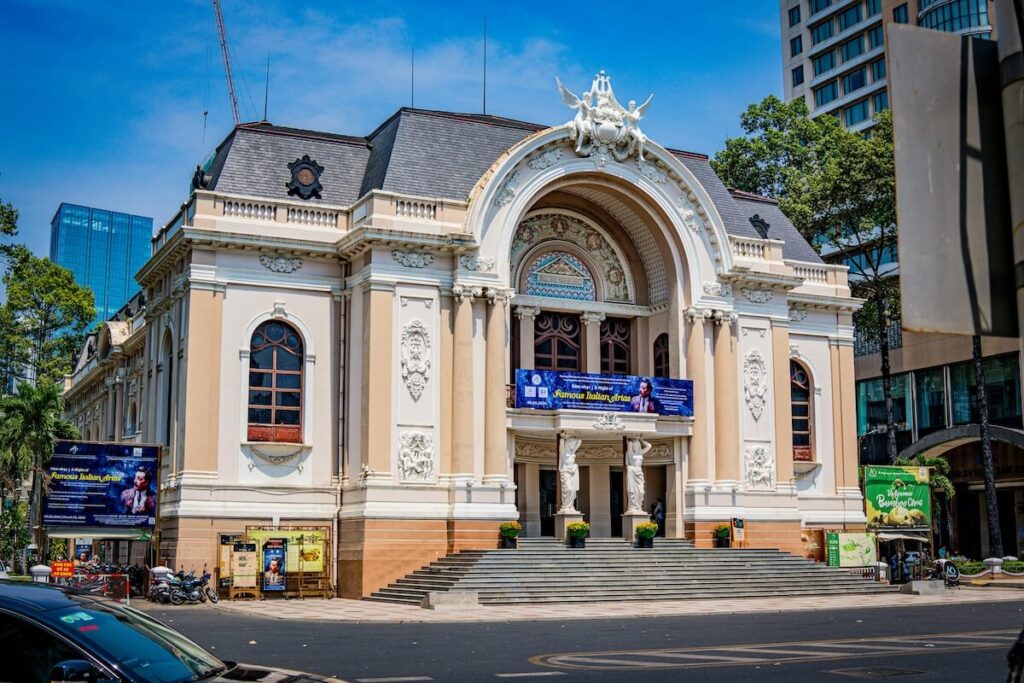
Standing gracefully at the heart of District 1’s luxury shopping strip is an elegant slice of late 19th-century France.
The Saigon Opera House, also officially known as the Municipal Theatre, is an elegant, cream-colored venue showcasing classic French colonial architecture, complete with ornate reliefs and a grand arched entrance. Built in 1898 to entertain French colonists, it has survived wartime periods as a bomb shelter and a temporary national assembly hall before being beautifully restored to its original purpose.
Today, it remains the city’s premier cultural venue, most famously known for hosting the high-energy À Ố Show. This world-class contemporary circus performance uses towering bamboo structures, woven baskets, and traditional live music to tell gorgeous stories of rural Vietnamese life morphing into urban chaos.
It’s a popular performance that routinely sells out, so you’ll definitely want to grab your À Ố show tickets in advance to secure a great seat.
20. Hidden alleyway culture
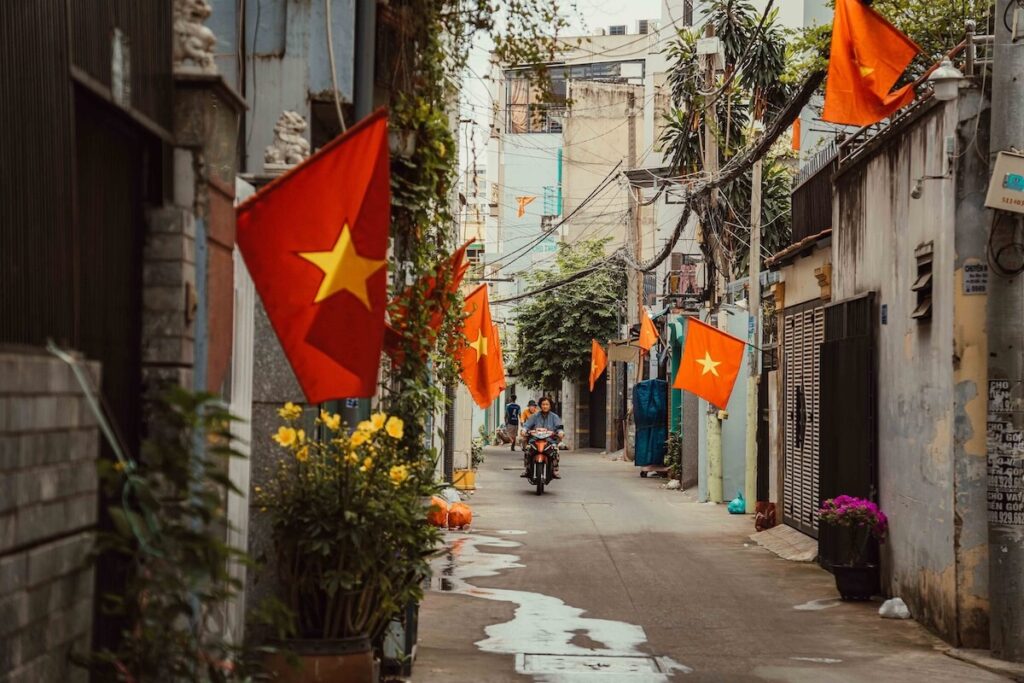
By now, we’ve already established that the main streets of Ho Chi Minh are loud and commercial. And while that’s fine for the modern party seeker, the city’s true local soul resides inside its hem (alleys).
These winding, narrow residential labyrinths are essentially mini-neighborhoods of their own, compressing the city’s vast scale into something beautifully personal and human.
Tucked away from the main boulevards, these passageways hide a whole other world—tiny family-run noodle stalls, quiet local shrines, and hidden speakeasies. Wandering through these alleys offers an authentic glimpse into the city’s warm, intimate rhythm.
Conclusion
The truth is, answering “What is Ho Chi Minh City famous for?” means looking at this city and realizing that it has plenty of layers to peel off.
From the sheer energy of its motorbikes and flavors of street-side banh mi to the deep history written into landmarks like the Central Post Office, Saigon is a place you simply have to experience for yourself. Bookmark this guide to help plan your itinerary, and start booking your trip today.
If you are mapping out a larger adventure, check out what the rest of Vietnam is known for, what Hanoi is known for, or explore what other Vietnamese cities have in store for you.