
Nothing will give you FOMO quite like the hype surrounding The Netherlands. Whether you’re planning a visit or just want to know some fun facts and trivia, here are 30 things that The Netherlands is known and famous for!
The Netherlands is famous for its capital city, Amsterdam, windmills and tulips. The Netherlands is also known for being the world’s second-largest exporters of food and beer. The Dutch locals are keen cyclists with laid back attitudes and quirky habits. The world’s tallest people live there, and they love cheese and soccer!
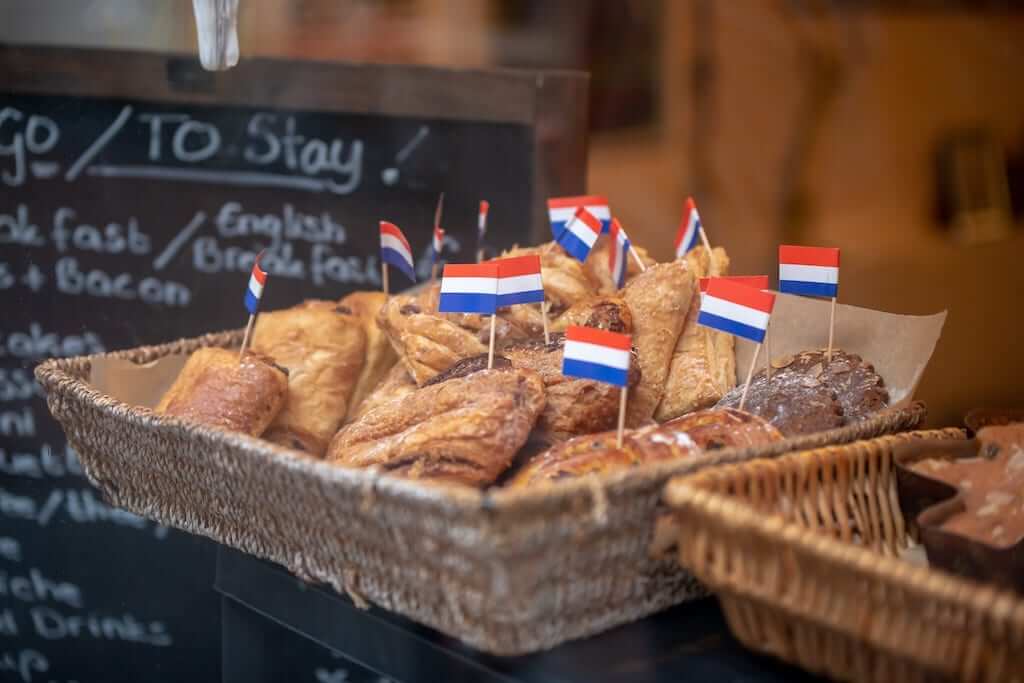
Let’s take a closer look at some of the things you should know about The Netherlands!
Table of Contents
1. Holland or The Netherlands?

Let’s begin by clearing something up. Calling the Netherlands “Holland” is a little like calling the United States “Washington” or France “Île-de-France”. The conflation of names has caused a lot of confusion, and in 2020 the Dutch government rebranded themselves to stop us doing it!
The name Holland is familiar to many of us because it actually refers to the regions we most recognize, namely Amsterdam and Rotterdam. These two cities are located in Noord-Holland and Zuid-Holland, two of the 12 provinces located in the Netherlands.
The country’s rebranding was supposed to begin with the 2020 Tokyo Olympics, where the Netherlands would only be referred to using that name. Because it had to be postponed, preparations are underway to ensure the merchandise corresponds to the new logo, too.
So, remember: if you’re in Amsterdam, you’re in the province of Holland, in the country of the Netherlands!
2. Amsterdam

The capital of the Netherlands, Amsterdam is famous for being the flagship of just about everything we know and love about the country. Cyclists, canals, culture…it’s all there for the taking in Amsterdam.
It’s a melting pot of people with just over a million people, half of them non-natives, and it receives about 18 to 19 million visitors every year. Why all the fuss? Well, there’s plenty of culture to experience in Amsterdam.
You can follow in the footsteps of Anne Frank on this walking tour of the Jewish Quarter which ends at the Anne Frank House where she hid from the Nazis. You can also take a 75-minute canal cruise, or even tour a 500-year-old dungeon!
There’s also a wilder side to the city. Coffee shops attract a certain clientele, as smoking and consuming pot is tolerated in The Netherlands. There’s also the notorious red light district famed for its sex workers posing in windows.
With so many things to see and do, it’s better to stay for more than a day in Amsterdam.
3. The Hague

The Netherlands is famous for Den Haag, known internationally as The Hague. The largest Dutch city on the North Sea, The Hague is the political and administrative seat of the Netherlands.
Many important political decisions are made in The Hague, not just concerning the Netherlands but for other countries too. This is because The Hague is home to international judicial bodies and organizations such as the International Court of Justice, the International Criminal Court, the Permanent Court of Arbitration, the International Residual Mechanism for Criminal Tribunals, the Organisation for the Prohibition of Chemical Weapons, Europol, and more.
Apart from these international organizations, The Hague is also the center of the Dutch government. The Hague holds the seat of the Dutch Parliament (States General of the Netherlands), Cabinet, and Supreme Court. There are also several (former) royal palaces in The Hague.
Without a doubt, The Hague is a great place to know more about the political history of the Netherlands. Fortunately, there are many ways you can explore the city — you can board a canal cruise to see The Hague from the water, cycle your way through the city, or ride a 65-year-old tram!
4. Canals
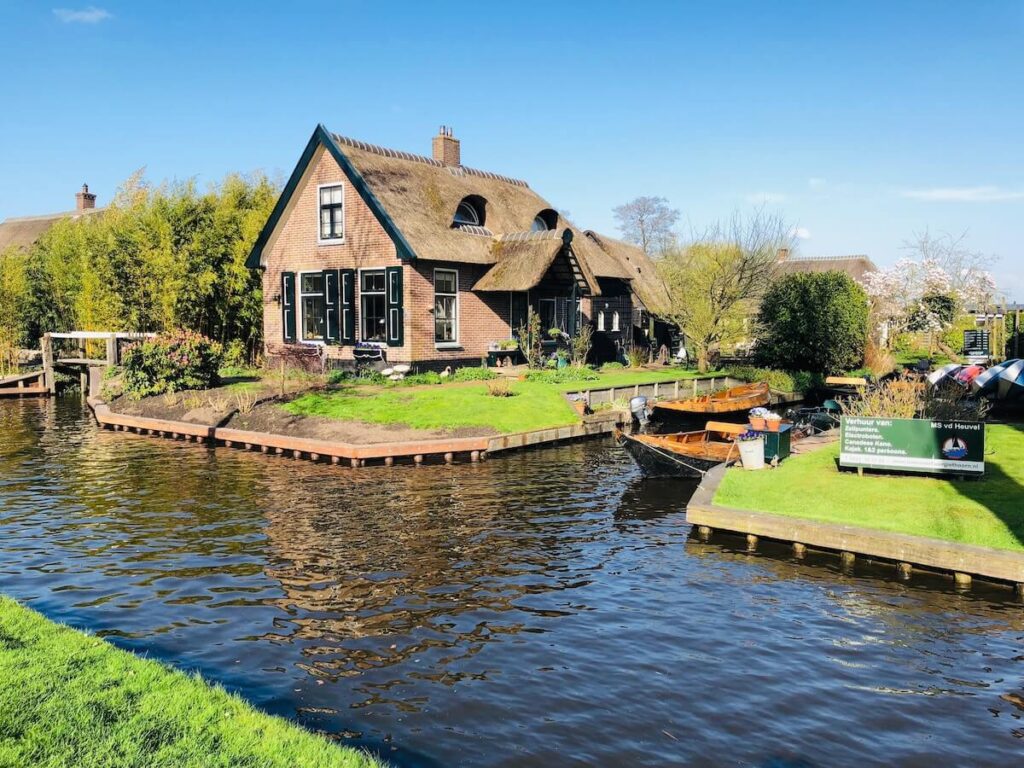
Fun fact: Did you know that Amsterdam has more canals than Venice? Amsterdam has 165 canals while Venice has 150. Yes, there’s no escaping canals when visiting Amsterdam, and cruising along these canals is considered one of the most romantic things to do in the city.
But if you think these impressive waterways are limited to Amsterdam in the Netherlands, think again.
For more than 1000 years, the Dutch have been digging canals for transportation, irrigation, and drainage. The outer canals around the city also served as a layer of defense during wars. Today, these canals are all over the country.
To experience canals outside Amsterdam, board this electric boat canal cruise through Giethoorn — the mostly car-free village with no roads, just cycling paths and canals! You can also join a luxury cruise along the historic Haarlem Canal Belt, or explore the centuries-old canal system of Delft. The villages of Marken and Urk also offer stunning sceneries to cruise through.
5. Obscure Amsterdam activities

There are too many “musts” to include in our brief synopsis of Amsterdam’s greatness, but The Netherlands is famous for having some pretty unique visitor attractions that don’t always make it into the brochures.
Prove that you can eat the most pancakes by stepping aboard Amsterdam’s “pannenkoekenboot” – pancake boat. It’ll take you on a cruise for two and a half hours along the city’s many canals, supplied with an all-you-can-eat pancake buffet. All for €27.50.
Need a snuggle? There’s also a “poezenboot” or “cat boat” in the capital. It’s a floating cat shelter full of kitties wanting pats! It began in 1966 and has been saving felines ever since.
If you’re sick of canals, culture, and cycling, you can play a game of glow-in-the-dark mini-golf for some less high-brow leisure. Hit the links through magical lights and courses themed around famous admirals and pirates. The added bonus of barely seeing where you’re swinging clubs may bring out your competitive streak – or band-aids.
6. Cycling

According to the Dutch, there’s only one way to travel. Because the country is almost entirely flat, the best way to get around is on two wheels. The Netherlands is famous for being a nation of keen cyclists with excellent bike paths!
The Dutch love bikes so much that the people are outnumbered by their favorite mode of transport. There are 22 million bikes and only 17 million people. I guess some people have a spare or a particularly fancy one for weekends?
The official cycle network of the country has 35,000 kilometers (21,478 miles) of cycle paths – and that’s not counting other roads without designated space for bikes. The average Dutch person cycles on average 1,000km (62 miles) a year – more than any other nation.
7. Vincent van Gogh

The Netherlands has produced several influential painters in all of art history. Johannes Vermeer, Piet Mondrian, Anton Mauve, Judith Leyster, I can go on and on…
Arguably the most notorious painter and Dutchman of all time, however, is Vincent van Gogh. Born in 1853, in Groot-Zundert, Zuid Holland, the young Vincent worked as an art dealer, preacher, and teacher, painting a little on the side.
He moved to France in 1886 to learn how to paint better, and settled down in Arles. Vincent struggled with mental illness and died young in 1890 after shooting himself in the chest. In the last two years of his life, van Gogh managed to paint works that would eventually be regarded as masterpieces such as “Starry Night” and “The Sunflowers”.
Wherever you are in The Netherlands, you’ll find museums and galleries displaying van Gogh’s works. Enjoy a private skip-the-line tour of Amsterdam’s Van Gogh Museum, the largest museum dedicated to Van Gogh.
Entrance to the Kröller-Müller Museum also allows you to admire the artworks of not only Van Gogh but also Monet, Renoir, Picasso, and other famous artists.
8. Rembrandt
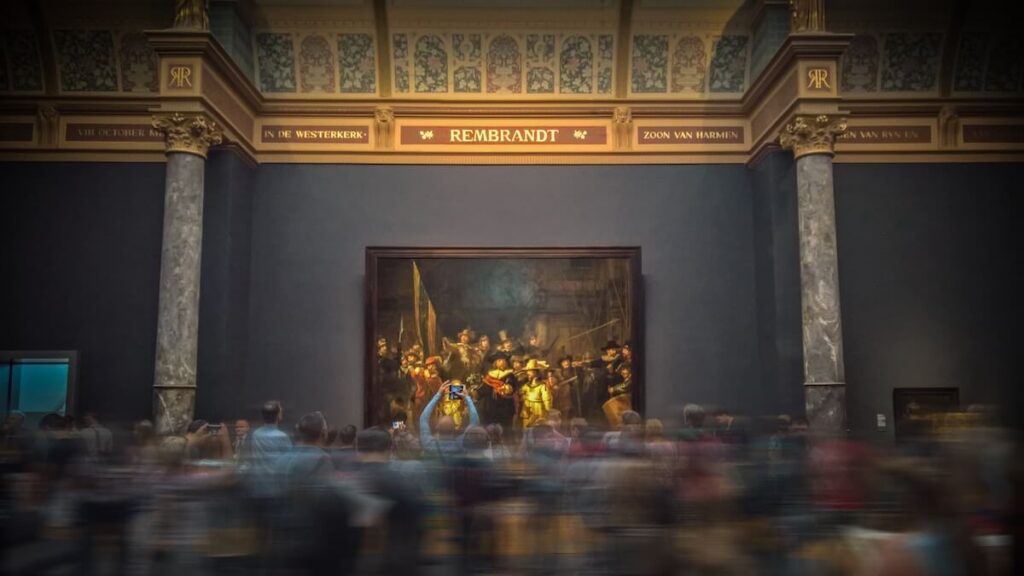
Another famous Dutch artist is Rembrandt Harmenszoon van Rijn, known the world over as Rembrandt. A 17th-century Baroque painter from Leiden, Rembrandt is considered the most popular painter during the Dutch Golden Age.
Rembrandt’s paintings are characterized by their realism and use of light and shadow. While he worked as a portrait, narrative, and landscape painter, he’s most known for his biblical and historical themes.
His most famous paintings include The Night Watch, The Storm on the Sea of the Galilee, and The Anatomy Lesson of Dr. Nicolaes Tulp.
You can see Rembrandt’s paintings and sketches and explore the house where he lived and worked with this Rembrandt House Museum entrance ticket. His most famous painting, The Night Watch, is displayed at the Rijksmuseum where you can admire over 400 masterpieces by great Dutch artists.
9. Utrecht

If you prefer a more laid-back and less party-oriented atmosphere than that of Amsterdam, Utrecht might be perfect for you. Utrecht encapsulates all that The Netherlands is famous for but on a smaller, less crowded scale.
The city of Utrecht is incredibly pedestrian friendly because the city center has banned cars, but bikes are the mode of transport if you have a need for speed. The world’s biggest parking lot for bikes is in Utrecht, with 12,500 spaces available if you want to explore on foot for a while.
Explore De Haar Castle, the largest and most luxurious castle in the Netherlands, or check out the views from the Dom Church. You can also just stroll around until you can’t resist the smell of stroopwafel any longer. Utrecht is a hidden gem that often gets overlooked by tourists because of its size, but it’s got plenty going for it.
It’s also home to the Netherlands’ oldest university, so there’s a young vibe and lots of nightlife options too!
10. Windmills

It’s hard to conjure up an image of the Dutch countryside without seeing some windmills turning against a blue sky. The Netherlands is famous for its 1,000 windmills, and even though very few historic ones are still in use today, they remain a symbol of all things Dutch.
If you want to go windmill spotting, visit Zaanse Schans, Noord Holland, which is a 250-year-old windmill park and an open-air museum. This all-inclusive Dutch countryside tour combines the quaint villages of Zaanse Schans, Volendam, and Marken.
If want to see beautifully preserved Dutch windmills, check out the UNESCO World Heritage Site Kinderdijk, near Rotterdam. This picturesque village lets you admire adorable windmills from 1850 nestled comfortably along the river Noord.
Just because most of the old windmills aren’t in use anymore, that doesn’t mean the Dutch have given up on wind power. All of the trains in The Netherlands are powered by wind, making it one of the most eco-friendly transport systems in the world!
11. Languages

Did you know that The Netherlands is famous for having two official languages, Dutch and Frisian? Both languages are part of the Germanic language family, but differ greatly.
Dutch is spoken all over The Netherlands, even in Friesland (the province where both Frisian and Dutch are the norm). There are also no hard “G” sounds in Dutch, which is probably why they laugh when we try to pronounce Vincent van Gogh!
Frisian is a West Germanic language that hails from the province called Friesland (Fryslân) and is actually astonishingly close to English. Frisians have an enormous amount of pride in their heritage, and always welcome visitors learning to speak a few words. Say hello in Frisian if you meet a local by saying “goeie”!
The Dutch are also the best non-native English speakers in the world, so don’t be shy about asking for directions or recommendations in English. In fact, the Dutch and Frisians alike will welcome the opportunity to show off their language skills a little!
12. Cheese

Only 1% of Dutch people suffer from lactose intolerance, so it’s no coincidence that the Netherlands is known for its love of cheese! Even peanut butter in Dutch can’t escape cheesiness, because they call it “Pindakaas” (peanut cheese).
The mere idea that someone might not like or eat cheese is so baffling to the Dutch that it’s infiltrated their language. If a Dutch person tells you “hij heeft er geen kaas van gegeten” (he hasn’t eaten cheese from there), they’re letting you know that “he” doesn’t know what you’re talking about!
The two most famous cheeses from the Netherlands are Gouda and Edam, and there’s plenty available in the many cheese markets and stores all over the country. Both are named after their respective cities, and the town of Edam is about a 90-minute cycle ride from Amsterdam. The Edam cheese market takes place every Wednesday between July and August.
13. World’s tallest people

All the calcium in that cheese-heavy diet is sometimes rumored to be why the Netherlands is famous for having the world’s tallest people!
On average, Dutch men measure 183cm (6ft) in height, and Dutch women 171cm (5ft 7in). The soaring height average only occurred in the last 100 years, when The Netherlands was actually slightly below average height in Europe.
If you’re sick of being stared at for being tall then you’ll feel right at home among the Dutch. If like me, you already find it hard to see over people’s heads at the movie theater, then you’re in for an even tougher time in The Netherlands. Better get some clogs with heels!
14. Christmas traditions

The Netherlands is famous for having a few controversial traditions, and a Dutch Christmas is almost certainly nothing like what you’re used to if you celebrate it.
Most Christian countries celebrate Christmas on either 24 or 25 December. The Dutch, however, have their main Christmas event on 5 December. “Sinterklaas” (Saint Nicholas) hands out gifts and candy to kids, accompanied by a helper called Zwarte Piet (Black Pete).
It is the addition of Pete that has caused controversy, sparking debate about racism and blackface in The Netherlands. Some towns and cities have phased him out of parades and parties.
The “Christmas man” comes on 24 December, but only with small gifts or in some families, none at all. This is seen as a holy day in The Netherlands where many attend church or spend time with their families.
15. Food exports

If there’s something the Dutch are great at, it’s agriculture! The Netherlands is famous for being the second largest food exporter in the world, earning themselves a massive €94.5 billion ($110 billion) last year!
Flowers, livestock, fruits, and veggies, the Dutch are hard at work farming. The Dutch agriculture industry rose 8% in 2019 with an increased profit of €9.9 billion – not bad for a country with just 17 million people!
Dutch farmers are also championing sustainable farming, and they pledged to produce twice as much food with half as many resources. It seems to be working, they’ve already decreased their water consumption by 90%.
The Rotterdam floating farm is an ongoing project that aims to be an entirely self-sufficient farm in the near future. The livestock will be fed using leftovers from local restaurants – collected in style using electric-powered trucks! Even the manure will then be reused to fertilize the soil for crop growth.
16. Rotterdam

The second largest city in the Netherlands, Rotterdam, is famous for its trade, culture and modern architecture. The locals are made up of 190 different nationalities, making it a multicultural and fascinating place. There are also 905 restaurants, 36 museums, and ten art galleries to keep you busy!
Rotterdam has the 10th largest port in the world and its wealth comes from trade. This made it an unfortunate target during World War II, when most of its historic buildings were completely destroyed.
People have been living there since the 9th century, and it’s now a modern, bustling metropolis. Best examples of Rotterdam’s modern architecture include the cube house formations or Rotterdam’s central train station.
Lastly, there’s a certain statue that gets a lot of attention for the wrong reasons in Rotterdam. It depicts a Santa holding a Christmas tree, except it…doesn’t look like a Christmas tree. The Dutch nickname is Kabouter Plug (Gnome Plug), if that gives you a clue.
17. Soccer
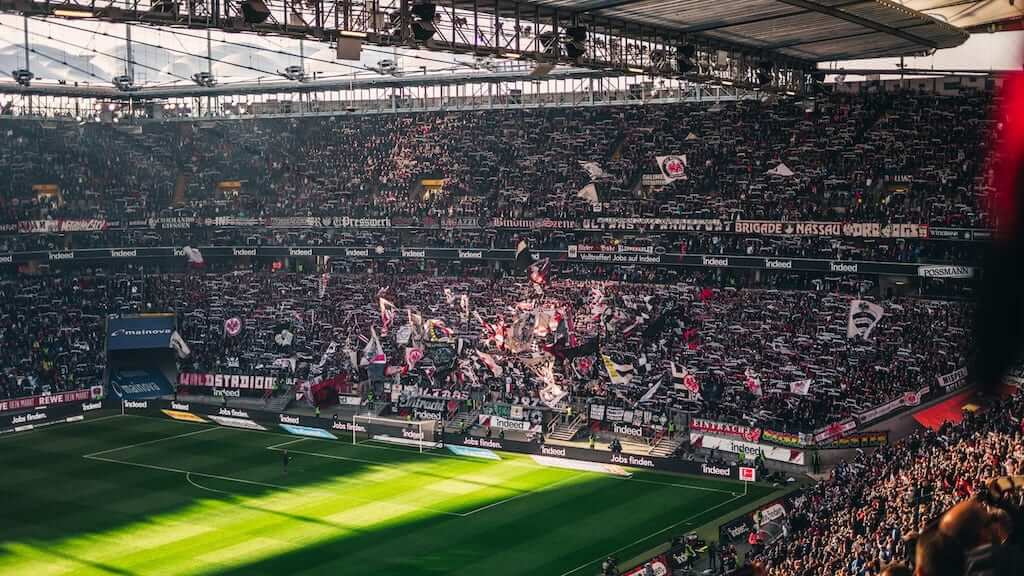
The national sport of The Netherlands is soccer, and they’ve been playing the sport officially for 131 years!
Rotterdam alone has 38 soccer teams, two of which play in the Dutch Professional League. The Royal Dutch Soccer Association (KNVB) was established in 1889, and they joined FIFA in 1904 as a founding member.
The Netherlands is famous in the soccer world as being the best at almost winning. It says a lot about Dutch optimism and faith in their national team: they have never won a World Cup, but have reached the finals the most times without securing a win. Sigh.
The best Dutch goal scorer to date is Robin Van Persie, with an impressive 50 goals to his name.
18. Savory snacks

They might be great at exporting food, but Dutch cuisine isn’t renowned for its finesse or grandeur. That could explain why the Netherlands is famous for eating some foods that many of us aren’t so sure about. Be that as it may, we’ll take their word for it that they taste good (with a pinch of salt).
Let’s start off by talking about Dutch savory snacks!
The snack that bewilders foreigners the most is the snack called “haring” or “Hollandse Niewe” (Dutch New Herring). Hollandse Niewe is raw herring served with chopped raw onions and gherkins. It’s made even more appetizing by the fact it’s traditionally eaten by picking the fish up by its tail and lowering it into your mouth vertically.
I won’t judge you if you give that one a miss. Another Dutch side dish is “Bitterballen”, which sounds like a great insult for a grumpy old man – but it’s actually deep-fried meatballs. Despite the name, these actually taste pretty good!
French fries in the Netherlands are thicker than what you might be used to at home, and are called “patat”. They’re usually served in a paper cone and eaten with mayo, raw onions (of course), and ketchup.
19. Sweet snacks

Maybe raw herring and bitter-balls didn’t make your stomach rumble. Never fear! What the Netherlands lacks in savory culinary expertise they more than make up for when it comes to sweet treats.
The Netherlands is famous for the “stroopwafel”, a kind of cookie where two crunchy waffles are stuck together with syrup. You’ll find these in supermarkets and cafés all over the country, and they actually originate from Gouda, south of Amsterdam.
The description of “Hagelslag” might sound a little gross but it did actually gain popularity overseas. At least, it did in Australia. Hagelslag is a Dutch open-faced sandwich covered in sprinkles, and they come in chocolate, fruit, or licorice flavors. The Australian equivalent, “fairy bread”, is believed to have derived from this Dutch tradition.
20. Licorice

The most popular snack in the Netherlands is famous for making a lot of faces grimace – unless you’re in the Nordic countries or Dutch supermarkets.
Unsurprisingly, it’s licorice that really sets off the Dutch palette. They really love their licorice, and they eat the most in the world. It’s estimated that the average Dutch person eats just over 2kg (4 lbs) of licorice every year – and they’re pretty partial to the salty varieties as well as the sweet!
In Dutch, the word for licorice candy is “Drop” – presumably because that’s what it makes your mouth do when you put it in there. On the positive side, if you enjoy the tangy flavor of licorice you’re in for a treat when it comes to finding a snack in the Netherlands!
Psst: the second largest consumer of licorice is Finland.
21. Delftware
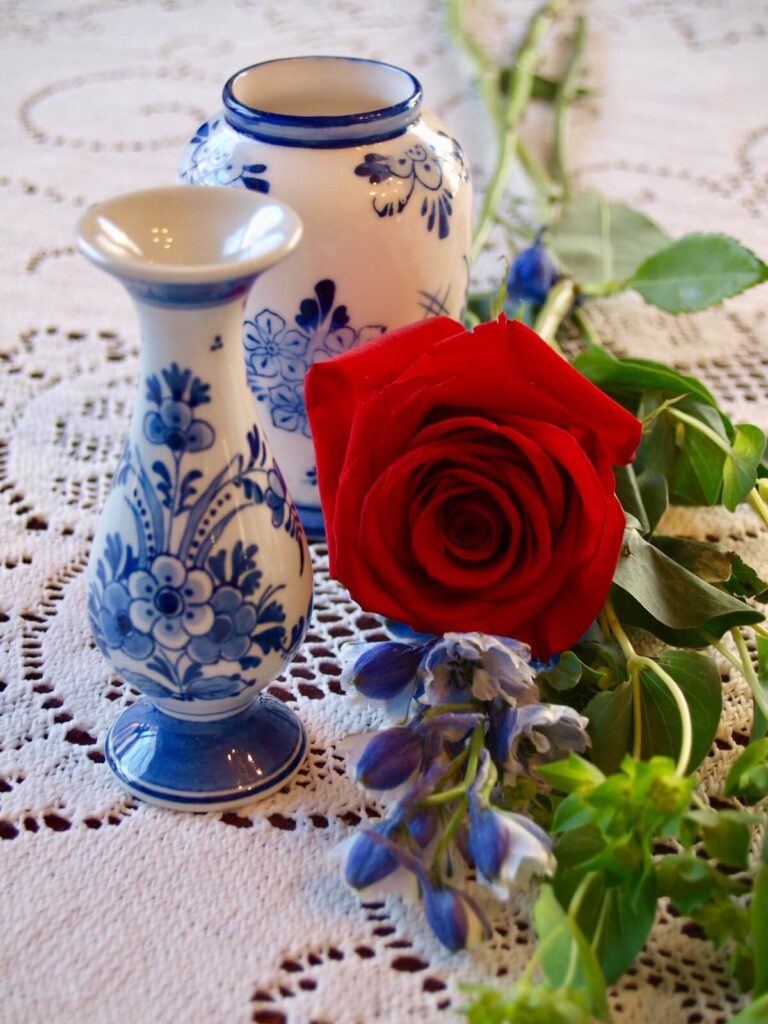
By now, you can agree that the Netherlands has a unique charm rooted in its rich history and culture. You can see it in the art, the cuisine, the landscapes, and the traditions… And fortunately for visitors, this charm is also found in many Dutch souvenirs.
One of these popular souvenirs is Delftware or Delft pottery, also known as Delft Blue. You can easily distinguish this type of tin-glazed earthenware from other pottery styles because of its intricate blue and white patterns.
Delftware originated in the city of Delft around 1600. In the 17th and 18th centuries, Delftware production became a major industry, with products exported all over Europe and even reaching Asia. Today, Delftware comes in various forms — plates, vases, jewelry, salt and pepper shakers, windmill figurines, hand-painted tiles, and more.
If you want to know more about this unique Dutch craft, a visit to the Royal Delft factory and museum is highly recommended. It’s the last original Delft Blue factory from the 17th century that still hand-makes Delftware according to centuries-old tradition. Do pick Delftware to take home, just make sure to pack them properly!
22. World’s first stock exchange

The Netherlands is known for being excellent traders, and they have been for centuries. Part of that reputation comes from the fact that the world’s first stock market was born out of Dutch trading aptitude, as early as 1602.
The Dutch East India Company was established in the 16th century, and is the reason why tea (among other things) came to Europe’s shores. Naturally, it didn’t come cheap. To pay for it, Dutch businessmen and legislators created the world’s first stock market in 1602. Anyone could invest in the Netherlands’ economic growth, and it immediately became popular.
According to some sources, 1143 Dutch investors took the plunge into the stock market in the first year. They say that the value of the 1602 subscription in today’s money would be somewhere around €100 million.
23. Orange

The Dutch horizontal tricolor flag of red, white, and blue is instantly recognizable. But the color that the Netherlands is famous for is actually orange! It has a very long Dutch history that infiltrates everything from their monarchy to carrots, but it all begins with the 80 Years’ War, 1568-1648.
Prince William I of Orange led the Dutch revolt against Spanish rule which eventually led to Dutch independence. Back then, the flag of the Netherlands was orange, white, and blue. It later changed to red, though no one is sure why. Whatever the reason, Dutch people wear their national color of orange to show national pride!
We can also attribute carrots turning orange thanks to Dutch farmers. They added the pigment beta-carotene to carrots which were white, purple, or yellow in those days, giving them their luminous orange color. It’s lucky they did, because the carotenoids are what makes carrots rich in vitamin A.
24. Dutch Royals

The Netherlands is famous for being a kingdom under arguably some of the most down-to-earth royals in the world. The current King Willem-Alexander is loved by his people, even though they nicknamed him “Prins Pils” (lager prince) in his youth.
Willem also asked that he not be called Willem IV because it’s too formal. Some say the real reason is that “four” in Dutch is “vier” which rhymes with beer!
King Willem’s wife, Queen Maxima, is just as laid back and easygoing. The King and Queen’s children attend normal Dutch state schools, and cool Queen Maxima even registered as a “lice mother” – someone who checks kids’ hair for signs of lice.
25. Koningsdag

The Netherlands is famous for being a country with a bit of a free-for-all reputation, but nothing encourages this rumor quite like King’s Day (Koningsdag) celebrations. On 30 April, the current king’s grandmother’s birthday, the Dutch let loose.
On this day in the Netherlands, it’s legal to sell anything anywhere. This means the country essentially turns into an enormous flea market. What could be more Dutch than celebrating by scoring bargains – they really do love trade! People also dress up in their orange clothes and attend street parties.
Drinking, buying second-hand goods, and generally having a good time are strongly encouraged on Koningsdag!
26. Beer

Speaking of drinking, it might surprise you to learn that the Netherlands is famous for being the second-largest exporter of beer in the world. Big Dutch beer names that are available all over the world include Heineken, Amstel, and Grolsch.
The Netherlands has a growing craft beer culture, and you can find many such breweries all over the country. Haarlem and Utrecht are hotspots for beer lovers because of the many varieties of beer available bottled or on tap.
If you want to visit Europe’s largest bar, you need to head to “De Drie Gezusters” (The Three Sisters) in the town square of Groningen. The food ranges from international to local cuisine, but there’s a huge assortment of beer on offer.
27. Flowers

Who doesn’t love the sight and smell of a fresh bouquet of flowers? The Netherlands produces 80% of the world’s flower bulbs, and its national symbol is the tulip. The Netherlands are known for their beautiful flower gardens and fields.
Flower cultivation and sales make up 5% of the Netherlands’ GDP, not just tulips. During World War II, tulip sales skyrocketed in Dutch towns and cities because of widespread hunger. While it’s not common to eat them anymore, there are still regions dedicated purely to growing tulips, called the tulip belt.
Incidentally, the tulip is not actually native to the Netherlands. Tulips came to the country from Turkey after soldiers returned from fighting against the Ottoman Empire.
28. Schiphol

The Dutch are also excellent innovators, and the Netherlands is known for its capital’s impressive and busy airport, Schiphol.
On my first visit, I got so lost that it took me close to forty minutes to find my gate! Thankfully, I’m the daughter of someone who thinks arriving three hours early for a flight is cutting it fine.
Schiphol Airport is actually partially underground, and that’s because the site is four meters below sea level. It’s built on the site of a lake called Haarlemmer, which was drained in the late 19th century. The old control tower is now a restaurant with panoramic views for passengers.
The last time I was there they played birdsong near the escalators – I’ve no idea why, but it was certainly unique.
29. Habits & culture

The Netherlands is famous for being a quirky, open nation with many peculiarities. Some of their habits might make them seem like an uptight bunch, but there’s a method to the madness!
Social policing is common in the Netherlands, and their mania for upholding rules isn’t left to the police. Garbage gets put out after 6 pm, and avoid angry locals by following suit. The same goes for eating or drinking on buses or trains – it’s the Dutch way to show common courtesy in public. And haven’t we all been stuck behind someone eating something gross on a cramped bus?
The Dutch are also the second highest consumers of insurance after the Swiss, and they really are obsessed with it. If you upturn a ketchup bottle on your Dutch friend’s white rug, they might ask to exchange insurance policies.
Also, if you know a Dutch person and it’s their birthday, be sure to congratulate them and their close family members. “Congratulations on your sister’s birthday” might sound weird to us, but to the Dutch, you’re being polite and following protocol!
30. Clogs

What is more quintessentially Dutch than windmills, you ask? You surely know that the Netherlands is famous for its round-toed shoes, clogs!
You’re unlikely to see city locals wearing them these days, but in the countryside, they’re still common. The Dutch have turned a stereotype into a booming money maker, and they produce around 6 million souvenir clogs every year.
Clogs, called “Klompen” in Dutch, had very humble beginnings. They’ve been worn since medieval times since they’re hard-wearing, easy to clean, and waterproof.
They come in all sorts of patterns and colors, so I’m sure you won’t have a hard time finding a pair for yourself. Failing that, I did see a bottle opener in the shape of a clog in Amsterdam – innovative and useful!
Also Read: 22 Best Souvenirs From Amsterdam to Gift Your Friends

To wrap things up, the Netherlands has a heap of history and tons of fun things to see and do. Let us know what we missed in the comments below, and remember to check out our guides to some of the neighboring countries: France and Germany.
What is the Netherlands known and famous for? – Pin it!

What about man gay community?
Slay ig
The Dunes! The North Sea. Noordwijk, Noordwijk Aan Zee seaside tourist town. Police on bikes. Wind surfing. The seasonal beach restaurants. Den Hague…. Global politics, The American school and community in Wassenaar
Next time when you show us what the Netherlands is “know for”, maybe dont use a BELGIAN BEER as a picture. Cuz I am not taking this slander to our country and refuse for ANYONE to believe Dutchies have even comparable beer to us!
Hi, thanks for pointing out the error in the photo! I’ve replaced it with a photo of a Dutch beer instead. Feel free to also check out this article on Belgium: https://heyexplorer.com/what-is-belgium-known-and-famous-for/ 🙂
King’s day is actually not on the 30th of April (that used to be ‘Koninginnedag, or Queens day). It’s on April the 27th.
Loved reading this thank you! One thing i missed in your story is, our battle with the sea. (zeeland, afsluitdijk, flevoland) And that every child have to take swimming-lessons. Well, not sure if you have to but everyone is doing it.
Oh sorry, i forgot to mention, kingsday is 27th of april, not 30th.
we are The best country of The world
I sure hope to one day be able to visit the Netherlands. I love so much about the Dutch people and culture. My wife turned me on to your frites and frite sauce. Hope I’m spelling that correctly.