
*This article may contain affiliate links. For full information, please see the disclaimer here.
What is Turkey famous for?
With its large landmass and unique geography, this Land of the Crescent Moon is dotted with fascinating details you won’t find anywhere else.
Turkey is famous for a diverse set of both oriental and European elements — from the traditional Turkish tea to the majestic Hagia Sophia. It’s also famous for its carpets, hammam, and bazaars, destinations like Istanbul and Cappadocia, and sweet treats like Turkish delights and baklava.

Last year, I traveled to Turkey with my family. To make sure we could taste a bit of everything Turkey could offer, we stayed in the country for two weeks. We were also accompanied by a good family friend who had migrated to Turkey many years back.
“Two weeks won’t be enough to explore Turkey,” she warned us. But at least, the two weeks gave us a sense of everything Turkey is famous for.
Table of Contents
What is Turkey known and famous for?
1. Istanbul

Most tourists visit Turkey for Istanbul. It is, after all, the home of world-renowned structures, like the Hagia Sophia, and shopping hotspots, like the Grand Bazaar. In fact, many people often mistake Istanbul for Turkey’s capital, thanks to its prominence.
Istanbul sits across both Europe and Asia — a properly-known fact that often piques the curiosity of most people. Because of its unusual position, Istanbul boasts of an eccentric fusion of both continents.

This extends to its food; for example, a food tour that showcases both European cuisine and Asian cuisine isn’t uncommon.
Find out how many days you should spend in Istanbul and how to enjoy nightlife in Istanbul to make the best out of your trip. If you’re looking for hotels with great reviews, I recommend Apartman Istanbul, Tulip Guesthouse, and Ottoman’s Pearl Hotel.
2. Hagia Sophia

Considered one of the world’s greatest structures, Hagia Sophia is a cultural gem.
Built as a Christian church, Hagia Sophia eventually evolved into a mosque, and then a museum. Currently, the structure stands as a mosque again; but, tourists are still free to enter and explore it. You can get your tickets with a guided tour here.
3. Bosphorus Strait

The strait that now connects the Black Sea to the Sea of Marmara was actually the Bosphorus River back in the day. Currently, the Bosphorus Strait flows into the Bosphorus Sea.
More than its waterways, the Bosphorus Strait is famously known for separating European Istanbul from Asian Istanbul. Through this strait, a ferry regularly travels to and fro to transport passengers to a different continent in approximately 20 minutes.
4. The seat of the Ottoman Empire
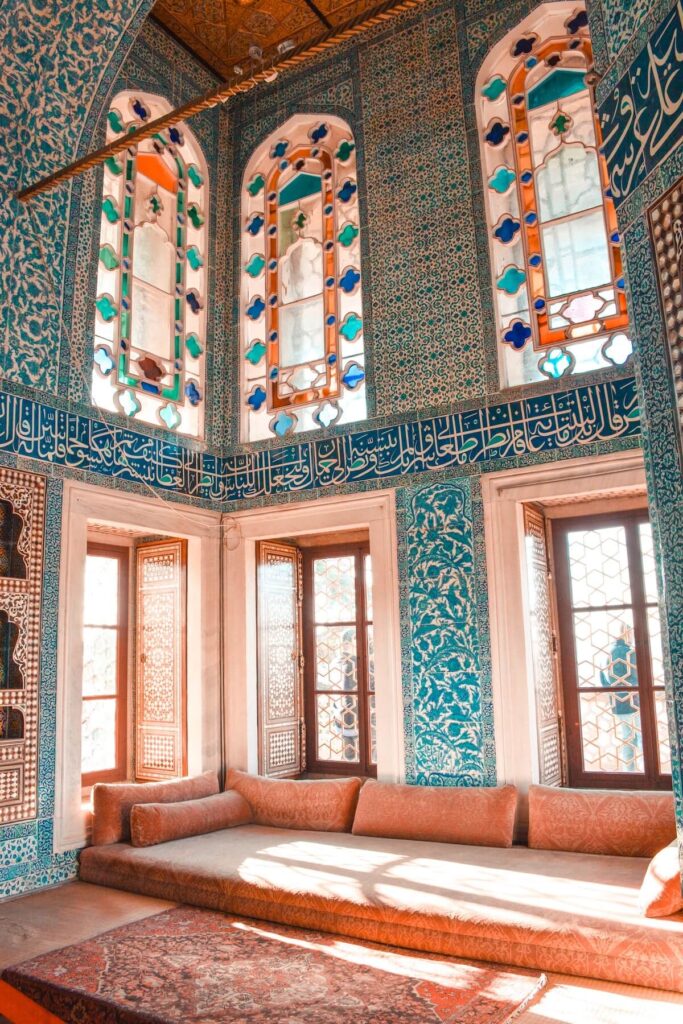
In the late 13th century, Osman I established a beylik or small principality in what is now Turkey. This principality grew into the Ottoman Empire, which conquered more powerful neighbors. Stretching from the Balkans in southeastern Europe to Central Asia, Arabia, and North Africa, the Ottoman Empire was one of the largest and longest-lasting empires in history.
The empire lasted until the early 20th century, ending in its abolition in 1922. Spanning more than 600 years, the empire was known for its achievements in art, literature, architecture, science, medicine, and military prowess.
5. Suleiman the Magnificent
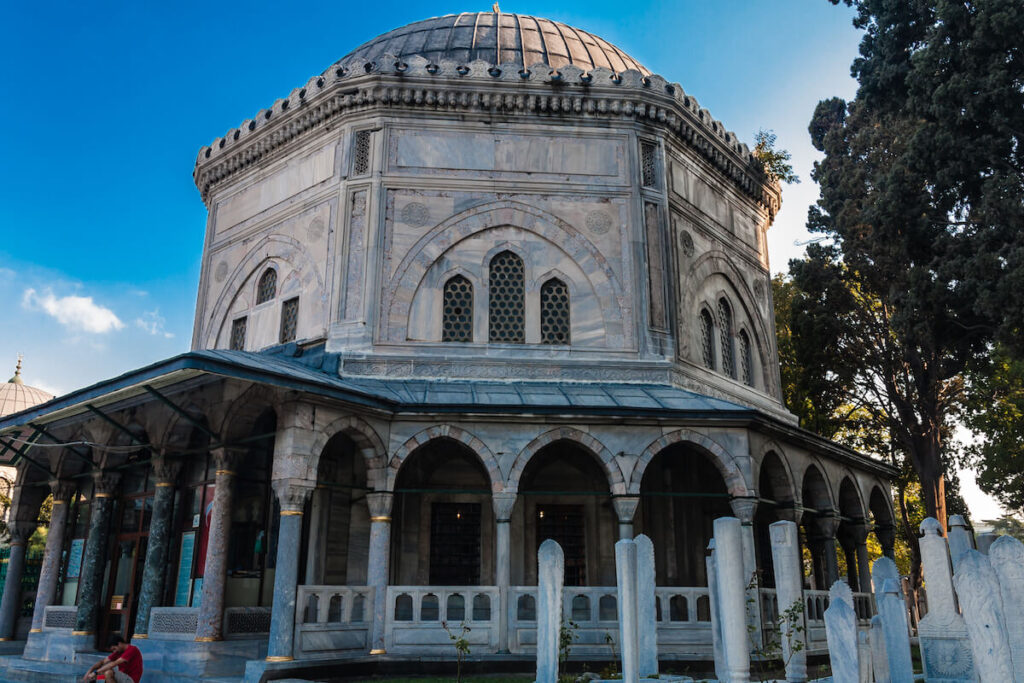
We can’t talk about the Ottoman Empire without mentioning Sultan Süleyman I, also known as Suleiman the Magnificent and Suleiman the Lawgiver.
Suleiman ruled from 1520 to 1566, becoming the longest-reining sultan of the Ottomans. He is also often considered one of the most powerful monarchs in history. The Ottoman Empire reached its peak under Suleiman’s rule, with his armies conquering the Christian powers of Belgrade and Rhodes and the military strength of Hungary. At one point, the empire ruled over 25 million people.
Suleiman’s legacy wasn’t limited to his military expansion though. He’s known as an excellent leader who created a central legal system and established Istanbul as the capital. Under his reign, the Ottoman Empire became an economic powerhouse and entered the golden age of cultural development.
Not only did Suleiman patronize the arts and support artisans, he himself was an artist and an accomplished poet, writing in Persian and Turkish under the pen name Muhibbi.
6. The ancient city of Troy

You’ve probably heard of, maybe even read, Homer’s epic The Iliad. Even if you haven’t, you’ve likely watched Troy (yup, that Brad Pitt movie). At the very least, you’re familiar with the Trojan Horse or the Trojan virus.
Many scholars believe that much of the ancient Greek epic was fantasy — there’s no evidence that Achilles, Helen, or the Trojan Horse existed. But archaeological evidence shows that Troy was a real city and the Trojan War indeed took place.
The historic city is, in fact, located in Turkey, on the mound of Hisarlık, near Çanakkale and Dardanelles. The archaeological site of Troy, now a UNESCO Heritage Site, consists of not one but at least nine cities built on top of each other!
You can learn more about these nine cities with this full-day tour of Troy.
7. Grand Bazaar

True to its name, the Grand Bazaar is known as one of the largest markets in the world.
With this, it offers a wide variety of goods: under its roof, it covers over 4,000 shops and welcomes almost half a million customers daily! Built in 1455, the Grand Bazaar is also one of the oldest markets; hence, it has become a historical treasure of Turkey as well.
8. Spice Bazaar

Alongside the Grand Bazaar, the Spice Bazaar is also one of the most famous markets in Turkey. Evident in its name, this market sells spices, desserts, fruits and nuts, coffee, and other types of souvenirs.
Most tourists flock to the Spice Bazaar to buy Turkish delicacies by the grams.
9. Galata Bridge

Its prominence in postcards and works of art proves that the Galata Bridge is one of the landmarks Turkey is famous for.
Spanning the Golden Horn, the bridge makes a popular sightseeing route for tourists in Istanbul. Just below it, cafés and restaurants line up, allowing people to gather together in a quintessential Turkish manner.
10. The Blue Mosque

The Sultan Ahmed Mosque or the Blue Mosque is one of the most famous mosques in Turkey and the world. An iconic site in Istanbul’s skyline, the Blue Mosque gets its name from the handpainted blue tiles that adorn its interior.
Constructed between 1609 and 1616, the Blue Mosque was a reassertion of Ottoman power and was meant to complement the imposing Hagia Sophia. Today, it’s a functioning mosque that can accommodate up to 10,000 people.
If you want to discover the story behind the intricate tile flowers, elephant-foot pillars, and gold minarets, I recommend this guided walking tour of the Blue Mosque.
11. Ephesus

Back in the day, Ephesus was a center of trade. Now, tourists visit the city to marvel at the archaeological site that holds high esteem to the Christian community.
Peppered with magnificent ruins, Ephesus makes a beautiful destination for locals and tourists alike. I suggest joining this guided tour with a stop at the Temple of Artemis, one of the seven wonders of the ancient world.
12. Pamukkale
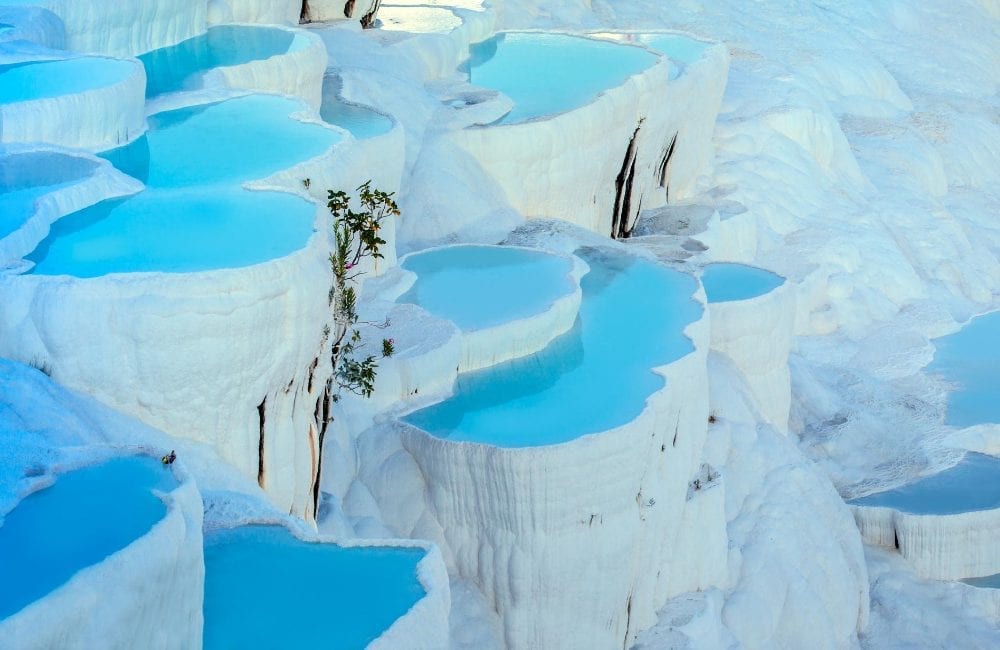
By now, you’ve probably already seen photos of the spectacular thermal pools in Pamukkale.
Resembling a natural fountain, these layered pools have mineral-rich waters flowing down their terraces. Because of its snow-white appearance, this famous town in Turkey has been dubbed the “cotton castle”.
One of the most popular activities here is a hot air balloon flight over Pamukkale. Intrigued? Get a private flight with champagne and breakfast.
13. Cappadocia

Nowadays, Turkey is famous as an Instagrammable country, too!
Unarguably, Cappadocia is a storybook town with its cave houses and cobblestoned roads. But most favored of all is Cappadocia’s hot air balloons — they float upon sunrise, presenting a breathtaking scene of vibrant and colorful aircraft against the spectacular orange sky.
While you’re there, join this one-hour hot air balloon flight over the fairy chimneys in Cappadocia. Thank me later.
14. Ankara
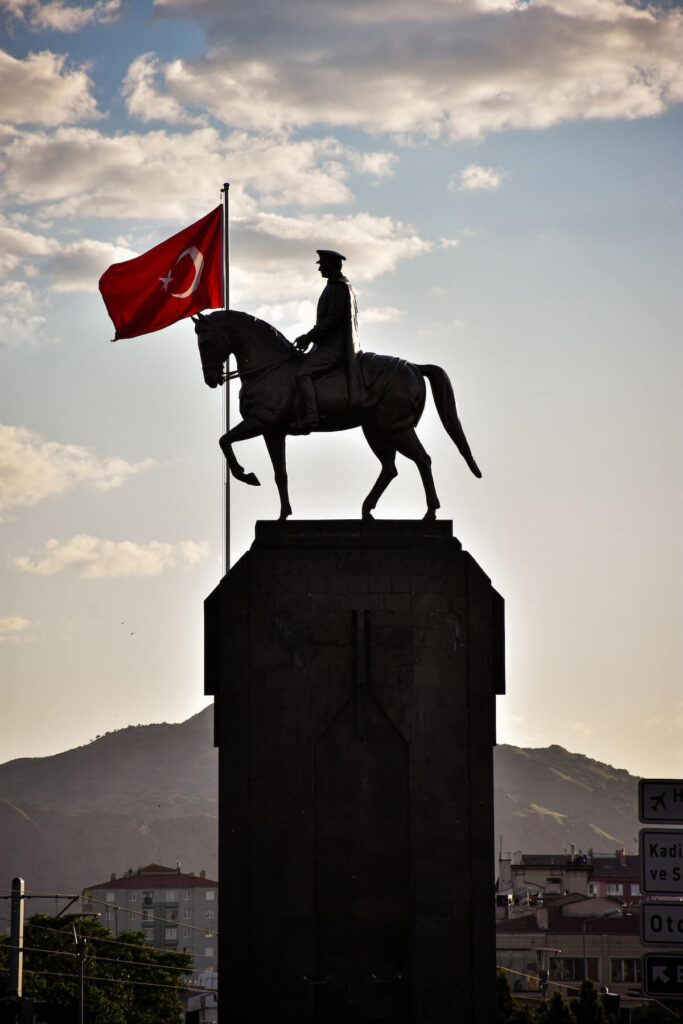
Many people mistake Istanbul for the capital of Turkey. But Ankara, historically known as Angora, holds the title.
Following the fall of the Ottoman Empire, Ankara succeeded Istanbul as the Turkish capital in 1923. The second-largest city in Turkey, Ankara is home to the Turkish Parliament and the Presidential Palace as well as many cultural landmarks and archaeological sites.
It is also known for Angora wool, pears, honey, Muscat grapes, as well as parks and green spaces.
15. Mount Ararat

Many believe that Mount Ararat was the first mountain to appear as the Great Flood (in the Noah’s Ark Bible story) receded. With this, Armenians and Christians alike consider the mountain as sacred as it symbolizes one of the greatest miracles of all time.
Snow-capped in its glory, Mount Ararat stands 16,854 feet and is the highest peak in Turkey.
16. Seaside resort towns

Aside from its cultural landmarks, Turkey is also famous for its picturesque seaside resort towns like Bodrum, Marmaris, and Alanya. These towns boast tranquil turquoise seas, fine Turkish beaches, and exciting nightlife.
Whether you’re into luxurious retreats with golf courses and five-star resorts or into sleepy fishing villages with friendly locals, there’s definitely a seaside resort town you’ll love in Turkey.
17. Turkish tea

In Turkey, offering tea is a common rule of etiquette. Whether you visit a local home or drop by a souvenir shop, expect to be presented with a glass of tea.
Typically, Turkish tea is served in a tiny glass, on a quaint saucer with sweets like kurabiye (biscuits) or Turkish delight.
18. Turkish coffee

The Turks have a very specific method for their coffee: They only use finely ground beans, boiling the mixture on a cezve (small pot) until it froths. Sugar, if preferred, is added while boiling.
Once the preparation is over, the coffee is poured into a kahve finjanı — a tiny porcelain cup the size of an espresso.
19. Baklava

Turkey is famous for its baklava!
How do you spot traditional Turkish baklava among a variety of sweet, layered pastries? Look for the pieces sporting a pale yellow-green crest. This color comes from the pistachio, an original Turkish rendition of the syrupy dessert.
20. Turkish delights

In C.S. Lewis’ The Lion, the Witch, and the Wardrobe, we witness how an innocent teenage boy practically trades his family for a box of Turkish delights or lokum. In this scene, we get a sneak peek into how luscious these confections are.
If you’re on a budget, you can score Turkish delights by bulk just outside the Spice Bazaar in Istanbul.
21. Iskender Kebab

Iskender kebab draws its name from Iskender Efendi, who invented the recipe in the late 19th century. Today, it’s one of the most beloved dishes in northwestern Turkey.
Undoubtedly, Iskender kebab is a cut above the rest. It’s made of tender lamb, warm pita bread, hot tomato sauce, and tangy yogurt. Normally, waiters serve this savory dish hot; then, they pour over as much melted butter as the customer desires.
22. Hazelnuts

Have you had hazelnuts recently? Chances are, those came from Turkey.
Turkey is the world’s largest producer of hazelnuts, accounting for about 70% of the world’s supply. Turkish hazel trees are mostly grown in the Black Sea region, where the soil and steep slope are said to be too difficult for any other type of crops to grow. The provinces of Ordu, Samsun, and Giresun are particularly popular for high-quality hazelnuts.
Today, aside from being eaten raw or roasted, hazelnuts are used in many products such as chocolates, baklava, coffee, ice cream, and more.
23. Dondurma
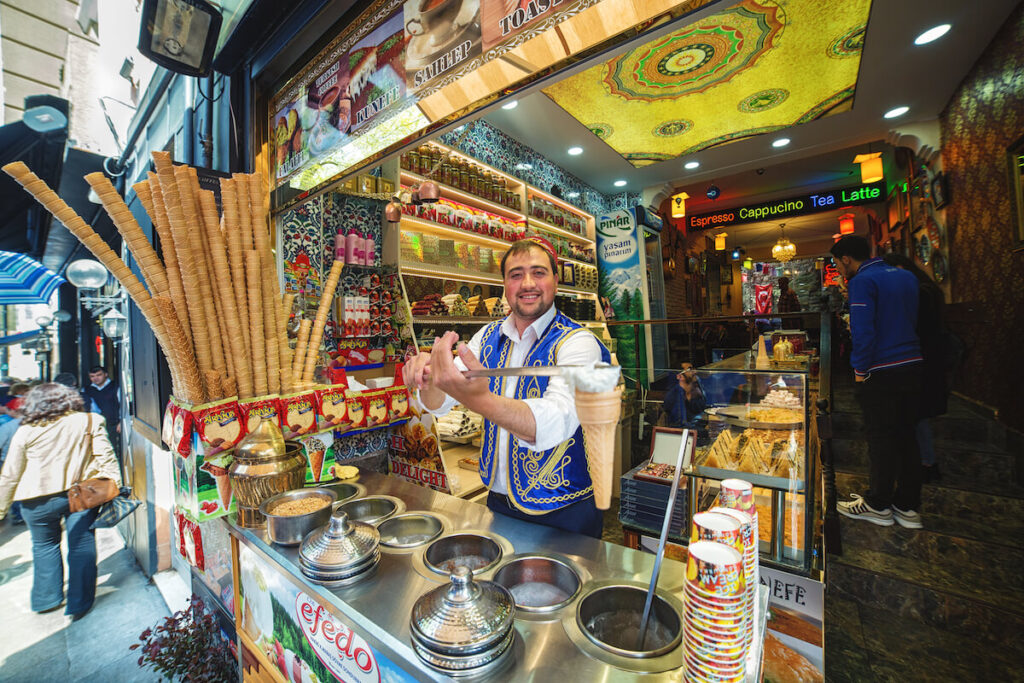
Speaking of ice cream, Turkey is also famous for dondurma a.k.a. Turkish ice cream. But what’s so special about this ice cream?
Compared to regular ice cream, dondurma is harder and chewier, taffy-like in texture and is incredibly resistant to melting, thanks to the thickening agents that are included in making it. Also, having traditional dondurma in Turkey means being teased by a vendor as he twists and turns a scoop of ice cream attached to a long stick.
24. Tulips
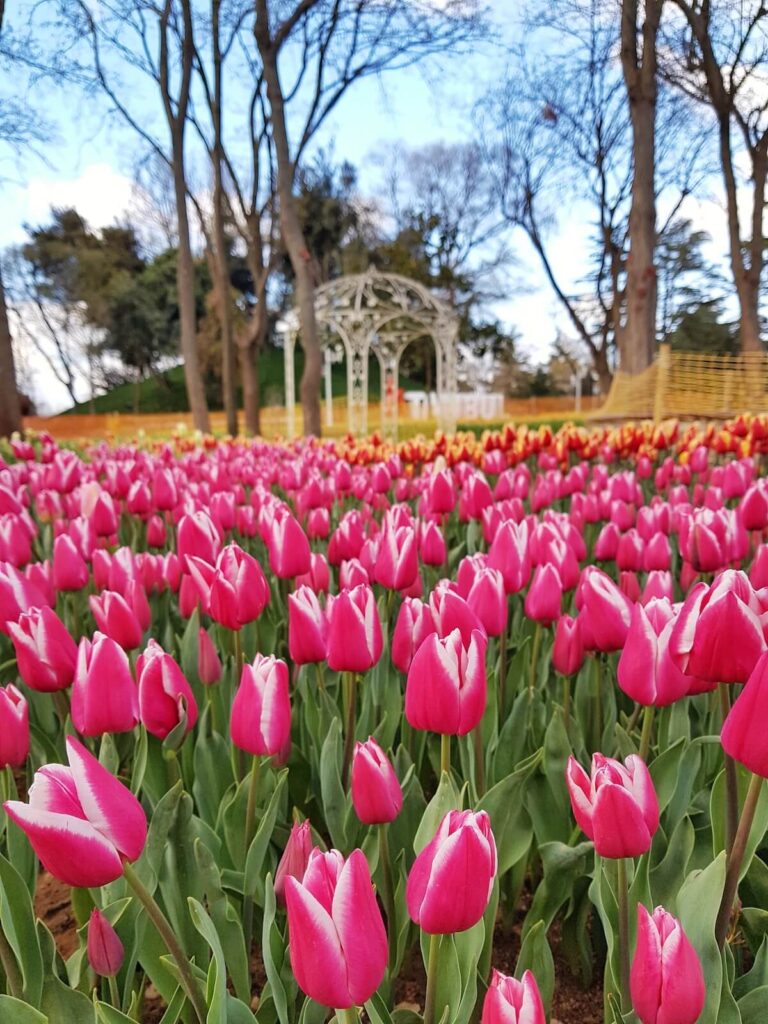
Although many people think tulips came from Holland (the Netherlands), it is said that they were first cultivated in Persia but this is not entirely certain.
That said, tulips were already popular in Turkey prior to being introduced in the Netherlands. These beautiful blooms were already being cultivated by the Turks as early as 1000 AD. By the 16th century, it had become the most prized flower and a symbol of power in the Ottoman Empire.
The Ottoman elites love their tulips. They held tulip festivals and their fascination extended to everything you could possibly decorate — carpets, clothes, paintings, buildings (fun fact: the tiles of the Blue Mosque have tulip patterns), pottery, and more. To this day, you can still find many tulip-decorated items in Turkey.
Eventually, a botanist is said to have planted tulips in Leiden in South Holland, and the rest is history.
25. Turkish carpets

Turkey produces some of the highest-quality carpets in the world. In the country, every rug and carpet represents history and culture.
You will find Turkish carpets of all sizes and prices — some are affordable and woven for especially for tourists; others are very expensive as they have been passed down from generation to generation.
Some of the costliest Turkish carpets even have royal roots!
26. Hammam

When in Turkey, you can’t possibly miss the well-known hammam experience. The hammam is a public bath where Turks go to unwind and cleanse themselves.
The process starts with the bather relaxing in a steamed room. After perspiring, he or she then will bathe in cold water. A masseuse will then scrub and massage the bather; finally, the bather will relax in a cool room to complete the experience.
For an unforgettable Ottoman-style spa experience, I recommend this private bath at a 600-year-old hammam. Not only do you get to relax but also admire this historic spa’s architecture.
27. Turkish towels

Speaking of baths, Turkey has also grown famous for its Turkish towels.
Made of premium Turkish cotton, these towels are generally high-quality: very absorbent, lightweight, and incredibly soft.
Not to mention, Turkish towels are also often minimalistic — or in millennial terms, aesthetically pleasing!
28. Olive oil soap

Because the Turks love their baths, it’s evident that they’re particular about what they lather on themselves, too. Typically, Turkish soap has an olive oil base and is mixed with salt and other natural fragrances.
Olive oil soap bars leave bathers with soft and supple skin — and guess what? They’re incredibly affordable, as well!
29. The Lycian Way
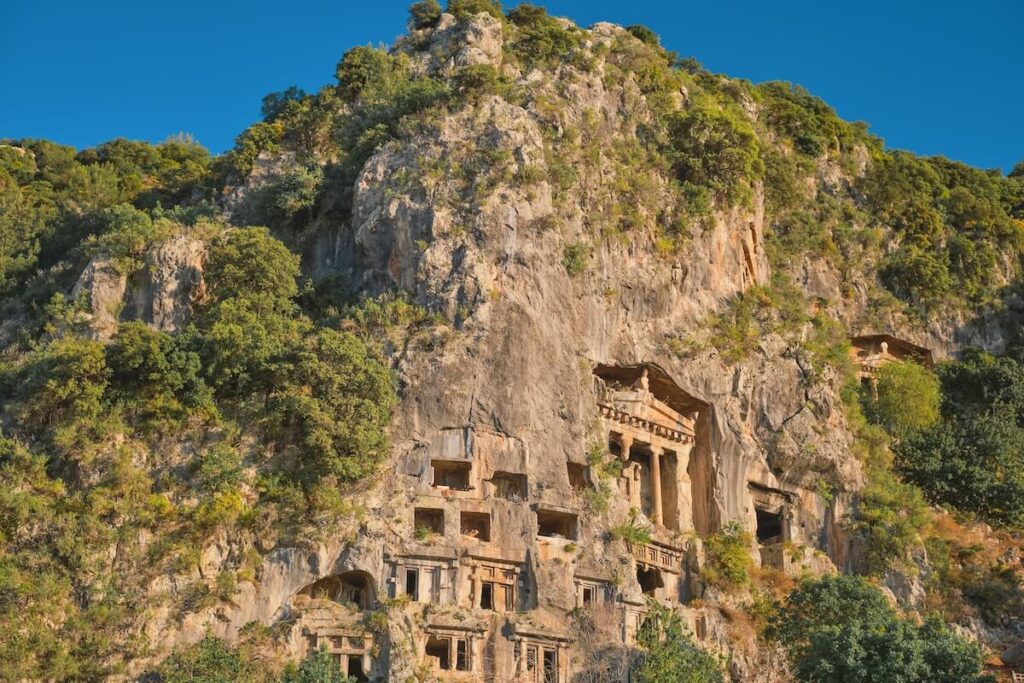
Are you a fan of hiking? If yes, you’ll absolutely love the Lycian Way.
The Lycian Way, named after the ancient civilization that once ruled the region, is a long-distance walking trail in southwestern Turkey. It is about 500 kilometers long, stretching from Hisarönü to the Aşağı Karaman neighborhood in Konyaaltı.
The trail takes walkers through beautiful and majestic sights in Turkey, including the rock-hewn Lycian tombs that date back to the 4th century.
30. The second oldest subway in the world
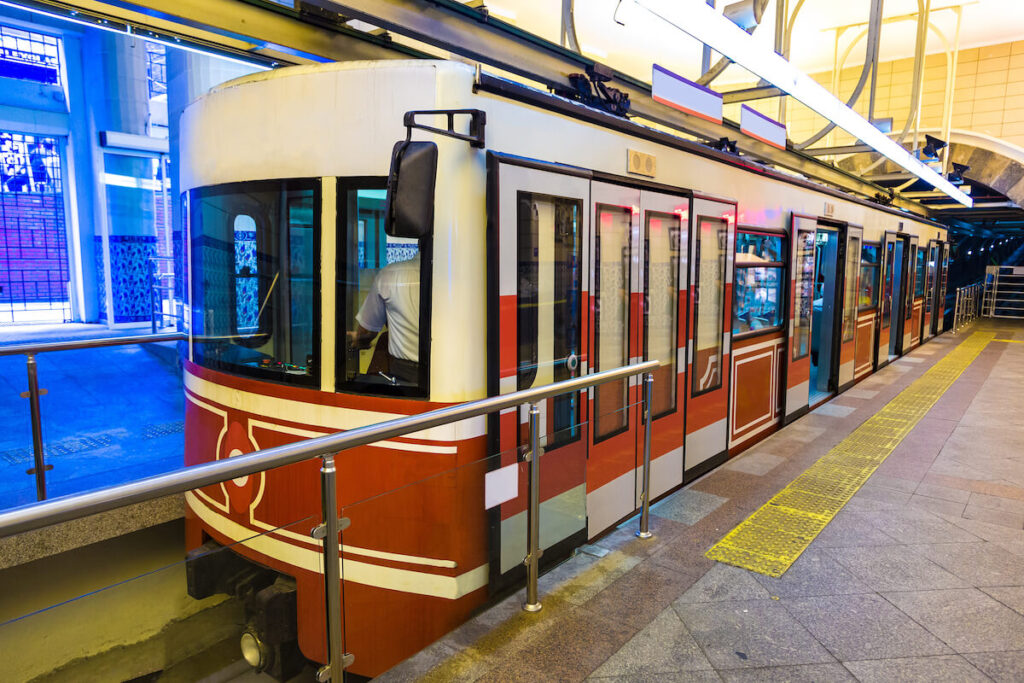
The Tünel underground funicular in Istanbul opened in 1875, making it the second oldest underground railway in the world after the London Underground and the oldest in continental Europe. And it’s still fully functioning today!
Tünel runs for about 573 meters between Beyoğlu (Pera) and Karaköy, two of Istanbul’s famous tourist districts. The train travels at a maximum speed of 14 mph and a one-way trip takes about 90 seconds.
Despite the short trip, tens of thousands of passengers use the funicular every day, especially since Beyoğlu is a hillside area.
31. Evil eye

In Turkey’s culture, the evil eye is often worn as a charm. People who wear this, usually as a bracelet or a pendant, believe that the charm wards off evil spirits and bad luck.
You can find the famous evil eye in several souvenir varieties too, such as keychains, wall ornaments, and even teacups!
32. Dervish dance

A longstanding part of the Turkish religion, Sufi whirling is a meditation practice performed by Sufi Dervishes during worship ceremonies. It involves whirling (thus the name) as a representation of the planets orbiting the sun.
Back in the day, Turkey culture prohibited women to participate in the Dervish dance. But with the growing modernization and secularization of Turkey, some communities now allow women to take part in this culture.
33. Cats

The Turks value cats so much, it’s astounding!
In fact, it’s common to find cat houses and cat food lining the streets of Turkey. The worth the Turks place on cats isn’t without reason — cats have a high place in their society because they are traditionally considered ritually clean and sacred.
34. Mustafa Kemal Atatürk

Mustafa Kemal Ataturk, the known founding father of Turkey, served as the first president of this young nation. He held his position from 1923 to his death in 1938.
Through Atatürk, Turkey transformed into what it is today: a modernized democratic state — industrial, secular, and progressive.
35. St. Nicholas

If discovering that the red-clad, white-bearded, plump, and jolly Santa Claus is not real ruined your childhood, here’s something that’ll surprise you more: Saint Nicholas, the progenitor and inspiration behind Santa Claus, actually lived in Turkey and not in North Pole.
Saint Nicholas of Myra was a fourth-century bishop of Greek descent. It’s said that he was born in Patara, now a maritime city near the small town of Gelemiş. He lived most of his life in the nearby town of Myra (present-day Demre), which was a Greek town under Roman rule at the time.
Saint Nicholas is said to have a habit of secretly giving gifts and became widely known for his generosity and love for children.
There you have it — 35 things Turkey is known for! Is there anything else we missed? Share it in the comment box below!

Dude, we do not think cats are holy .They are just very cute.Also Atatürk deserves more than just a few sentences. Atatürk is not just our founding father, he’s the only reason we are still Turks now.>Seriously if not for him we’d be some assimilated nation without a language or culture of our own.
Nerden girdim bu yaziya cikamiyorummmm😀😀😀kutsal yazmis yaaa😀😀
istanbul içi pasif var mı
I’m not saying anything to Atatürk, but do you think Turkish culture is still standing? Haven’t you seen what the Turks destroyed their own culture almost? I see every day in social media.
what culture exactly do you mean, the Islamic Turkish culture, the Seljuk culture, the Turkic culture or the more western and European / Balkan culture. Turkish people isn’t a isolated population.
What do you mean by that ?.
I think nothing was wrong with Ottomas. They were one of the best ever existed islamic rule.
Turkey itself is a beautiful country which is completely different from other countries and everything in Turkey attracts towards itself.
Famous for the Armenian Genocide of 1915, and for the current government’s continued denial of it, which saw the massacre of not only 1.5 million Armenians but also of other ethnic Christian minorities such as Greeks and Assyrians living in Turkey.
Famous for propagating a false narrative to its citizens and manipulating them into believing that their national identity was ever at stake. That these Christian’s were “moved” and displaced safely. Google Der Zor in Syria and read the History. You will learn that Armenians were buried there in mass graves,
Famous for denying this. Famous for their heartbreaking lack of empathy and understanding of why and how this denial is what is preventing Armenians, Greeks, and Assyrians from forgiveness and moving on from the past trauma.
You guys still don’t understand that actually Turkey didn’t Armenian genocide, Ottoman Empire did it. Look dude Ottoman Empire was ruled only by 1 family. And they are arabs not Turks. Stop blaming us for that because we didn’t do Armenian genocide we are not from ottoman family
Nearly everything you said was right and I completely agree with you. But I want to say, the Ottoman family WERE NOT ARABS.
You cannot hate all of Turkey because of the Armenian Genocide. Do I hate Germany because of the Holocaust? Of course not. Therefore, you can’t hate all of Turkey just because some Turks killed tons of Armenians.
no war no trouble those things is in history book armenian ar same turkish people you have to bleam the people who let the war to turkey and armenian
nice to know.
wtf? Cats holy? I’ll have you know my grandfather invented cats
My Majec is there Working I Miss him
Umm… sorry but Atatürk actually died in 09:05 10 November, 1938. Please update this text as soon as possible. Also, we don’t just love cats, we love every stray animal and care for them. But still, thanks for visiting our country and sharing what you saw there!
Hi Arda, thanks for the fact check! I’ve updated the article to reflect the right date. I’ve been to Turkey and I absolutely love how locals care for their stray cats and dogs. It’s wonderful. 🙂 I’ll be back again for sure!
Where should a women stay for fist visit ?
Thank you,
Turkish food please , looking for as a production supervisor job in Tobacco processing in Turkey , please help
Thanks
Robert
istanbul içi pasif var mı
Turks are a great nation, people are friendly and welcoming. And one of the greatest regimes of the world, TURKISH EMPIRE. My respect and best regards to the Turkish nation. Stay blessed.
Hi…i’ve heard so much about TURKEY,The Ottomon Empire,the contributions of ATATURK,the geographical location and spices,i am interested,one day i will be there…i love u guys from Nigeria
Hey why is getting vegetarian and vegan food such a major problem in turkey
Please inform me if there’s a place serving vegan food anywhere in Istanbul, Cappadocia
This blogpost highlights the natural beauty and cultural heritage of Turkey nicely. From the iconic
Hagia Sophia to the stunning Cappadocia and Pamukkale, and the ancient city of Ephesus, Turkey
truly offers a range of attractions.