
*This article may contain affiliate links. For full information, please see the disclaimer here.
If you’ve been searching for the perfect blend of modern city excitement and stunning coastal relaxation in Asia, you’ve probably heard the name Da Nang.
I’ve visited this central Vietnamese gem and genuinely fell in love with its unique vibe. Most people use it as a quick hop to Hoi An, but trust me, this place is a destination in its own right.
So, what is Da Nang known for? It’s a beautifully planned hub where modern skyscrapers meet stunning beaches, earning it the title of Vietnam’s “Most Livable City.” It’s famous for architectural wonders, like the fire-breathing Dragon Bridge and the spectacular Golden Bridge at the Ba Na Hills resort.

Beyond the landmarks, the city is a paradise for foodies and beach lovers. I’m talking about long stretches of clean white sand like My Khe, incredible fresh seafood, and, of course, the Central Vietnamese specialty, mi quang. It’s a hub of history, culture, and relaxed coastal vibes that you can easily explore.
Ready to dive deeper? Keep reading for the full list of things that make Da Nang a must-visit destination!
Table of Contents
What is Da Nang known for?
1. City of Bridges

Da Nang proudly carries the nickname “City of Bridges,” and for good reason. Its skyline is defined by numerous impressive, modern structures crossing the Han River, each with a unique flair.
The most famous is undoubtedly the Dragon Bridge (Cau Rong), which is an engineering marvel that breathes fire and spits water every Saturday and Sunday evening—an absolute must-see spectacle. If you’re looking for an exhilarating, close-up experience of this water and fire show, I highly recommend this motorbike tour. Alternatively, for a more relaxed experience and a stunning vantage point, hop on an evening Han River cruise.
Not far from the Dragon Bridge is the Han River Bridge (Cau Song Han), Vietnam’s first-ever swing bridge, which gracefully rotates on its axis late at night. You also have the striking Tran Thi Ly Bridge, which looks like a massive sailboat catching the wind.
Outside the city in the Ba Na Hills is the Golden Bridge (Cau Vang), a spectacular pedestrian bridge held up by two giant stone hands, which brings me to the second entry…
2. Ba Na Hills
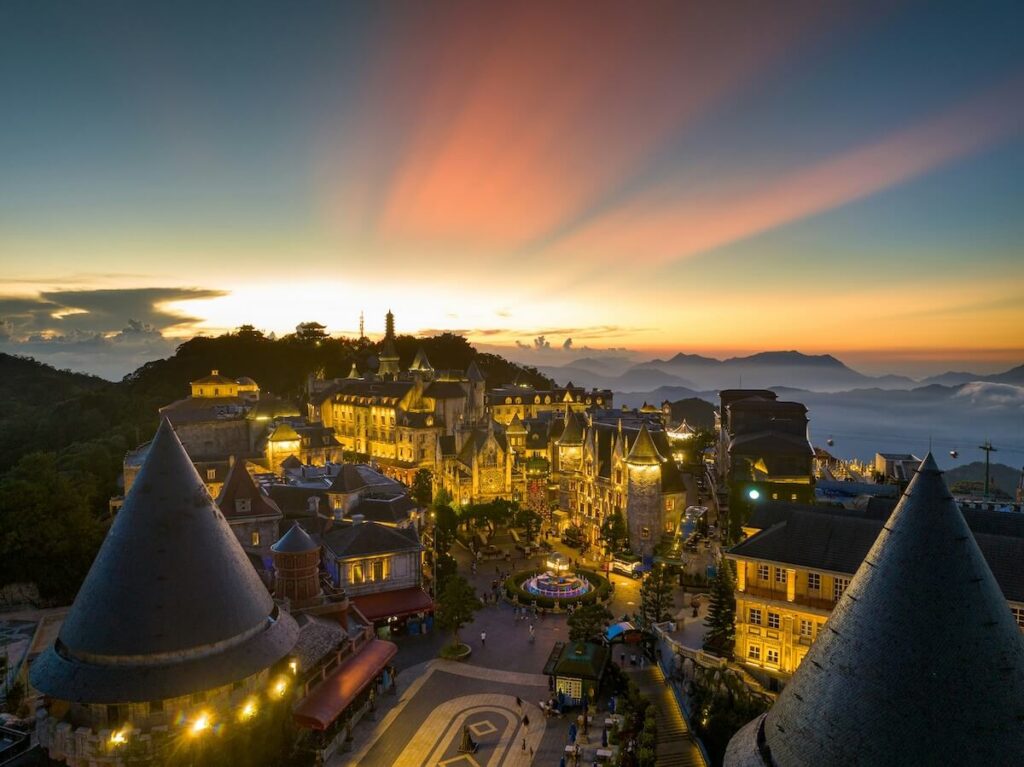
A visit to Da Nang wouldn’t be complete without a trip to Ba Na Hills, a hugely famous and utterly surreal resort complex located high up in the Truong Son Mountains, about an hour outside the city.
It all started back in 1919 as a French colonial-era hill station, built as a cool-weather retreat to escape the coastal heat. After falling into disrepair, it was totally revitalized into the massive Sun World Ba Na Hills resort it is today. You take a world-record-breaking cable car to the top, where you’ll find a whimsical French Village, an enormous indoor Fantasy Park, and the magnificent Linh Ung Pagoda.
The real superstar here, however, is the aforementioned Golden Bridge. This breathtaking, 150-meter-long pedestrian walkway is held aloft by a pair of colossal stone ‘Hands of God’ and has become one of Vietnam’s most iconic photo spots, often appearing to float above the clouds!
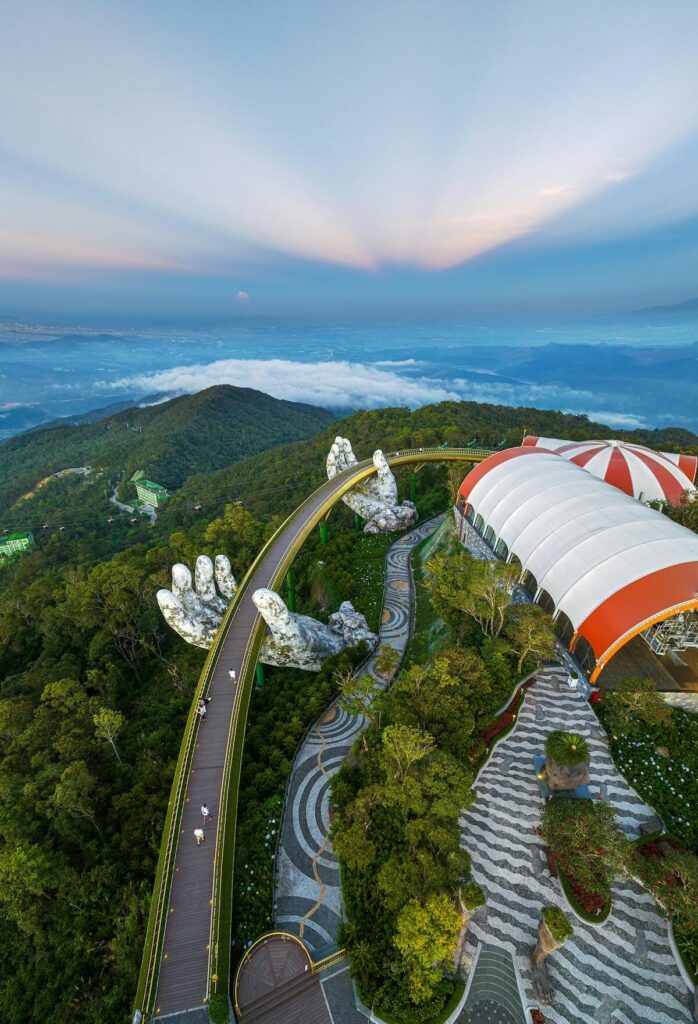
To make your trip completely stress-free, I recommend this Ba Na Hills tour, a full-day package that includes your round-trip transportation, the cable car ride, a delicious buffet lunch, and access to all the main highlights of the resort.
3. Marble Mountains

The Marble Mountains, or Ngu Hanh Son, is an incredible cluster of five limestone and marble hills, each named after one of the five elements: metal, wood, water, fire, and earth.
One of the most memorable experiences for me was when I explored the mountains’ interior. You can spend hours winding through the cool, dark caves and secret tunnels—some of which even served as a hospital and hiding spots during the Vietnam War. Then you emerge to find stunning Buddhist sanctuaries nestled right into the rock face, complete with intricate statues and altars carved directly from the marble.
The whole area, located just a short drive from Da Nang’s center, is a perfect mix of history, nature, and spirituality. Climbing up Thuy Son (Water Mountain), the largest and most popular peak, is a must-do, even if you take the elevator part of the way! Once you reach the top, you’re rewarded with a breathtaking, panoramic view of the coastline and the surrounding countryside.
4. Coastal relaxation
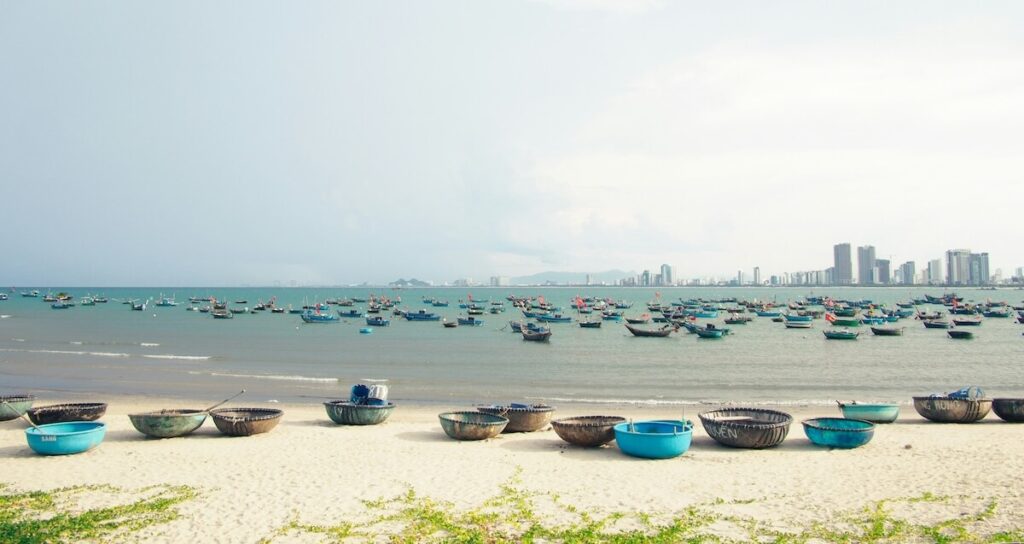
While its neighbors, Hue and Hoi An, draw crowds for their deep historical roots and charming Old Town vibe, Da Nang is the place for travelers seeking a more straightforward, relaxed, and sun-focused getaway. Its sprawling, immaculate coastline, complete with a modern cityscape backdrop, makes it an ideal spot to simply unwind and soak up the sun.
The extensive shoreline is home to a host of famous beaches, each offering its own slice of paradise. You can stretch out on the renowned sands of My Khe Beach, known for its gentle waves and soft white sand, or head slightly south for the more tranquil and private stretches of Non Nuoc Beach at the foot of the Marble Mountains.
For a quieter, more local experience, Bac My An Beach offers a laid-back atmosphere perfect for an afternoon dip. This superb combination of top-notch beaches and accessible city convenience makes Da Nang worth visiting for anyone whose perfect holiday involves sand, sea, and zero stress.
5. My Khe Beach

It’s easy to talk about the general coastal beauty of Da Nang, but any proper guide to the city has to give a separate spotlight to My Khe Beach. This stretch of coast, running along Vo Nguyen Giap Street, is easily the most famous and well-developed beach in the area, and is one of the most beautiful beaches in Southeast Asia.
What makes it a star? The long expanse of soft white sand meets clear, warm, and gentle waters—perfect for a leisurely dip. It’s a hub of activity, too, offering everything from sunbathing and volleyball to adrenaline-pumping water sports like parasailing and jet skiing.
The best time to visit and truly enjoy the calm waters is during the dry season, running from March to September. However, if you’re an early bird, a visit at sunrise is a must-do, offering a beautiful golden view and a glimpse of local life as fishermen bring in their catches.
I recommend staying at beachfront options like the modern Sala Danang Beach Hotel with its stunning rooftop pool, or the equally comfortable and well-rated M Hotel Danang just a stone’s throw away.
6. Fresh seafood
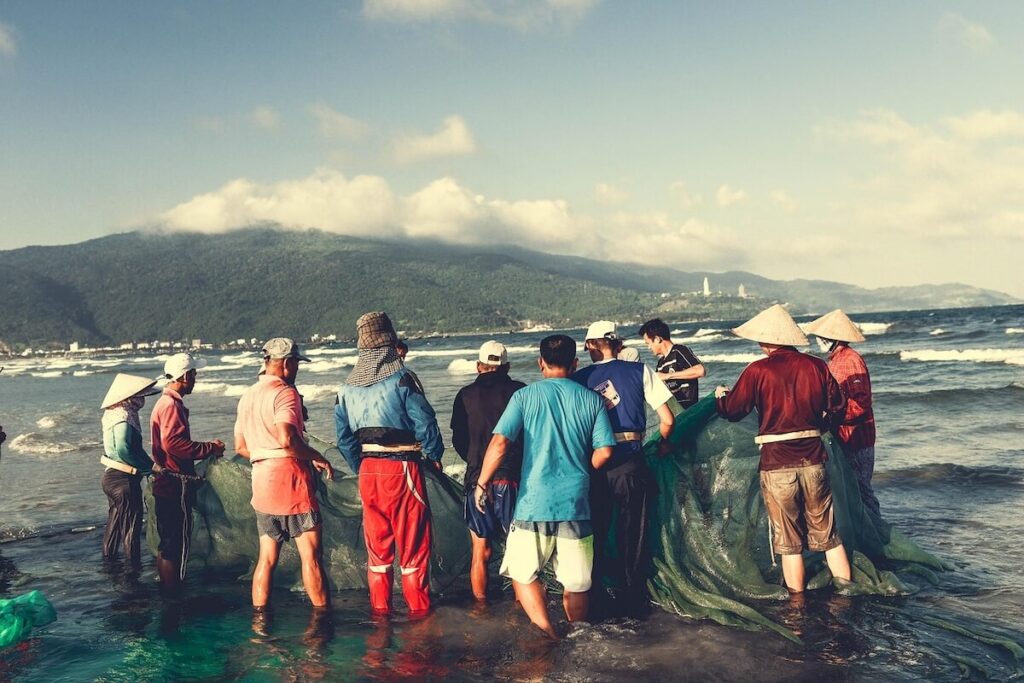
You’ve enjoyed the white sand and the gentle waves, so naturally, the next stop should be the incredible local seafood. The prime coastal location that gifts Da Nang its stunning beaches also ensures an astonishing abundance of fresh, high-quality seafood.
Da Nang is famous for its seafood scene, which is both fantastic and remarkably affordable. Every evening, seaside restaurants along the main beach roads are buzzing with people cracking shells and sharing plates.
Don’t leave without trying the local specialties, such as grilled scallops with peanuts and green onions (so diep nuong mo hanh), chili-salt-roasted prawns, or a hearty bowl of banh canh cua (crab tapioca noodle soup).
7. Golf tourism

Switching from beach towels to golf carts, Da Nang is known for being a major hub for world-class golf tourism, earning a reputation as one of Asia’s most exciting destinations for a golf holiday.
The region attracts international visitors with its lineup of championship courses designed by legends like Greg Norman, Colin Montgomerie, and Luke Donald. This strong golf culture benefits from stunning coastal and mountain scenery, allowing for unique, visually spectacular rounds of golf.
The most popular courses are conveniently clustered between Da Nang and the nearby ancient town of Hoi An. You can hit a links-style round at the BRG Da Nang Golf Resort (Norman Course) right on the coast or head slightly inland for the dramatic, mountainous terrain of Ba Na Hills Golf Club.
8. Son Tra Peninsula

Right on the eastern edge of Da Nang city, you’ll find the majestic Son Tra Peninsula, affectionately nicknamed “Monkey Mountain” by American soldiers during the war. It’s a gorgeous green lung where mountain and sea meet, offering some of the best panoramic views of the entire coastline and city skyline.
Whether you’re cruising the winding roads on a motorbike, hiking the forest trails, or simply soaking up the atmosphere at the Linh Ung Pagoda with its towering Lady Buddha statue (more on this later), the peninsula is a must-see for its natural beauty and diverse sights.
What really makes Son Tra a unique natural treasure is its incredible biodiversity. A critical nature reserve, the peninsula is home to the largest known population of the extremely rare red-shanked douc langurs.
Often called the “queen of primates” for their striking, colorful fur—including those maroon-red “stockings”—spotting these shy creatures in the high canopy is a truly special experience. But beyond the wildlife, the area offers peaceful beaches for snorkeling and a thousand-year-old banyan tree, giving nature lovers plenty to explore.
9. Lady Buddha
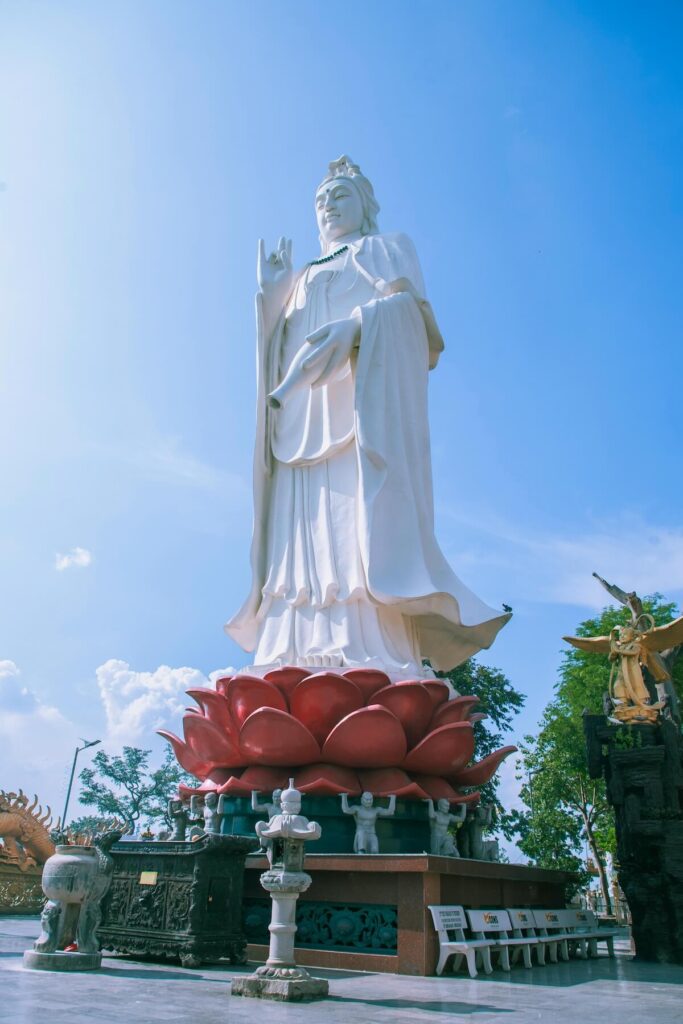
Da Nang is known for the magnificent Lady Buddha statue, which majestically oversees the city from the hills of the Son Tra Peninsula.
Officially part of the Linh Ung Pagoda complex, this towering Goddess of Mercy, or Quan Am in Vietnamese, stands at an impressive 67 meters (about 220 feet)—the tallest Buddha statue of its kind in Vietnam. Her construction, finished in 2010, was a massive undertaking. The statue faces the East Sea, and inside the statue itself are 17 floors dedicated to other Buddha figures.
The statue holds deep spiritual importance, particularly for local fishermen who visit the pagoda to pray for safe voyages and calm seas, believing her presence wards off typhoons and disasters. The iconic landmark is so tall that it’s easily spotted from the city’s beaches.
10. Linh Ung Pagoda
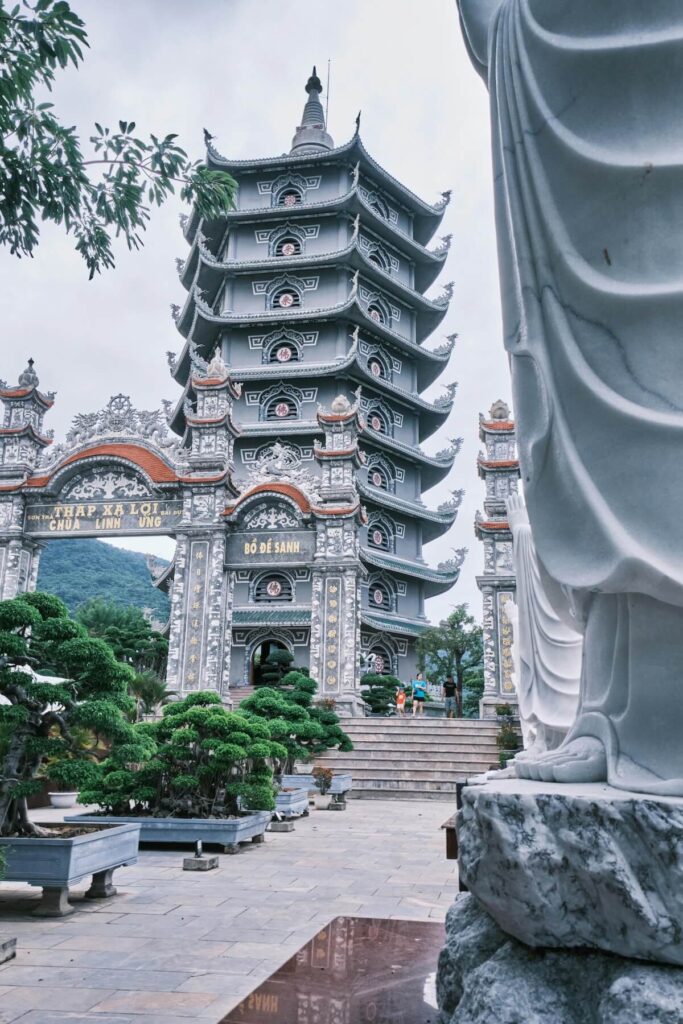
“Linh Ung” translates to “wishes answered miraculously,” and for the people of Da Nang, it’s a name so significant they have three major pagodas sharing it.
This sacred trio creates a spiritual triangle believed to protect the city from natural disasters like typhoons. The oldest, Linh Ung Pagoda at the Marble Mountains, dates back to 1825, offering a tranquil, cave-laden escape with a strong sense of history.
The other two are more recent: one sits atop Ba Na Hills, accessible by a spectacular cable car, providing misty, high-altitude serenity and a view of a large sitting Buddha. The third and most famous is the one on the Son Tra Peninsula and is home to the previously mentioned Lady Buddha.
Each pagoda offers visitors a unique blend of spiritual peace and breathtaking panoramic ocean and city views, making them essential stops on any Da Nang itinerary.
11. Central Vietnam cuisine
Da Nang’s coastal location makes it a central hub for an exciting range of dishes that perfectly represent the flavors of Central Vietnam—think fresh, spicy, and perfectly balanced.
The region’s star player is mi quang, a turmeric-dyed noodle dish served with a rich, shallow broth and toppings like shrimp, pork, and a crunchy sesame rice cracker. It’s the ultimate local comfort food.

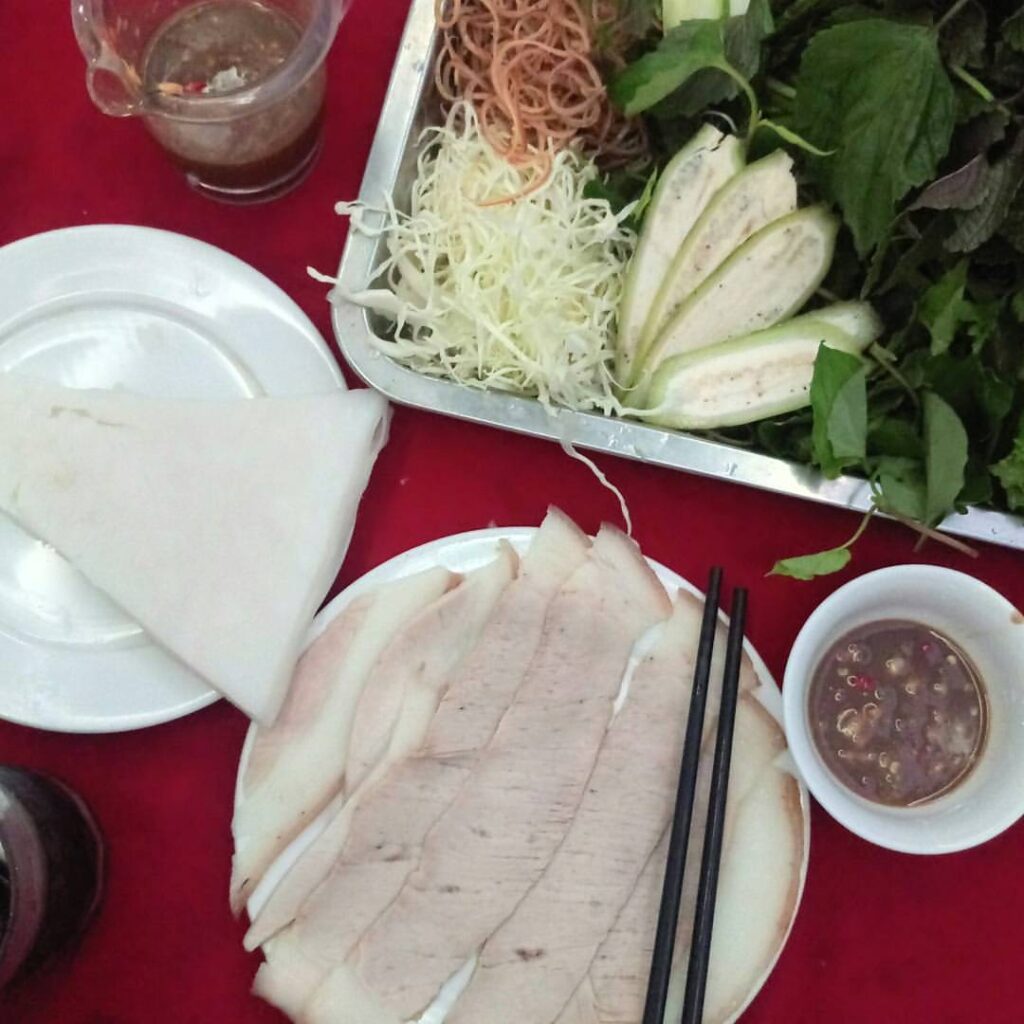
Other essential local specialties include com ga (chicken rice), the refreshing banh trang cuon thit heo (pork slices and fresh veggies wrapped in rice paper—my favorite!), or the uniquely flavorful bun cha ca (fish cake noodle soup). For a bolder taste, try bun mam nem, a vermicelli dish tossed in a pungent but addictive fermented anchovy sauce.
12. Street food

While Da Nang’s main dishes give you the delicious foundation of Central Vietnamese cuisine, the vibrant street food scene is where the city’s culinary heart truly beats. This culture isn’t just about quick snacks; it’s a centuries-old tradition of affordable, fresh, and hyper-local specialties sold from unassuming stalls and carts.
You’ll find a thrilling variety of affordable bites at any corner or night market. Don’t leave without sampling some of the local favorites. Check out the crispy, savory banh xeo (pancakes), perfect for wrapping in lettuce and herbs. The addictive little banh beo (steamed rice cakes) and banh bot loc (tapioca dumplings) are fantastic, too.
For a savory bite, look for the fragrant nem lui (lemongrass pork skewers) or a local-style banh mi, often packed with flavorful fillings. Exploring these bustling stalls and sampling these dishes is the best way to get a real, fun taste of daily life in Da Nang.
13. Da Nang International Fireworks Festival (DIFF)
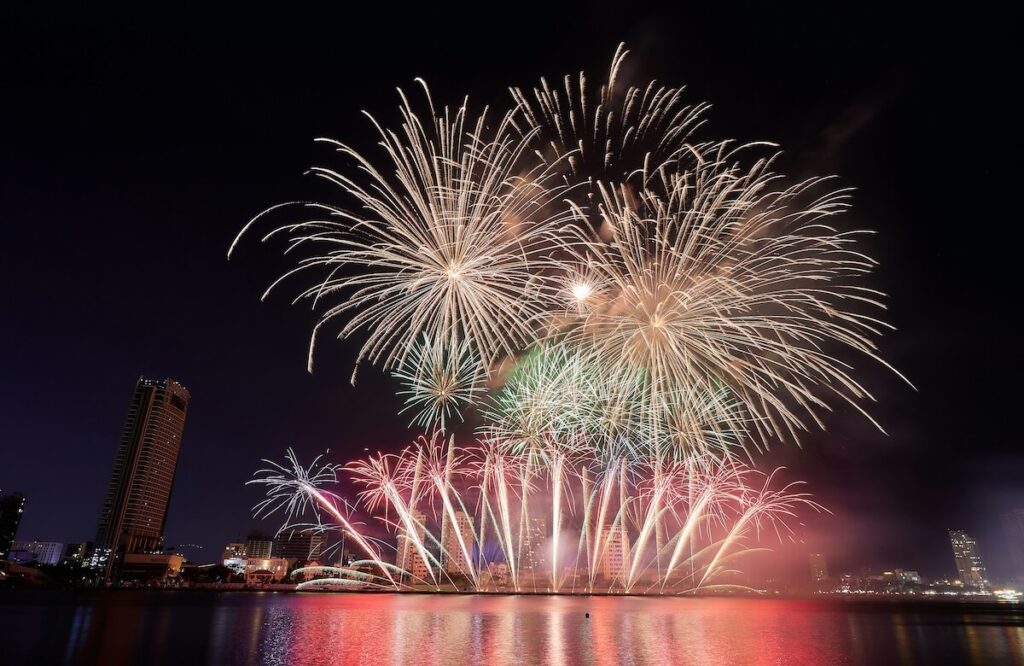
One of the most spectacular events Da Nang is known for is the annual Da Nang International Fireworks Festival or DIFF. Launched in 2008, it quickly evolved from a local competition into a massive, multi-week international spectacle, earning the city the nickname “Fireworks City.”
Held every summer, usually from late May to early July, the breathtaking shows take place over the Han River, creating a stunning backdrop of color and light against the city’s iconic bridges. The vibrant, city-wide celebration draws top-tier professional pyrotechnic teams from around the globe.
Each night, two teams perform an intricate, 20-minute show choreographed to music and centered on a specific theme. The events are huge, attracting millions of visitors and featuring side attractions like street festivals and art shows.
14. Museum of Cham Sculpture
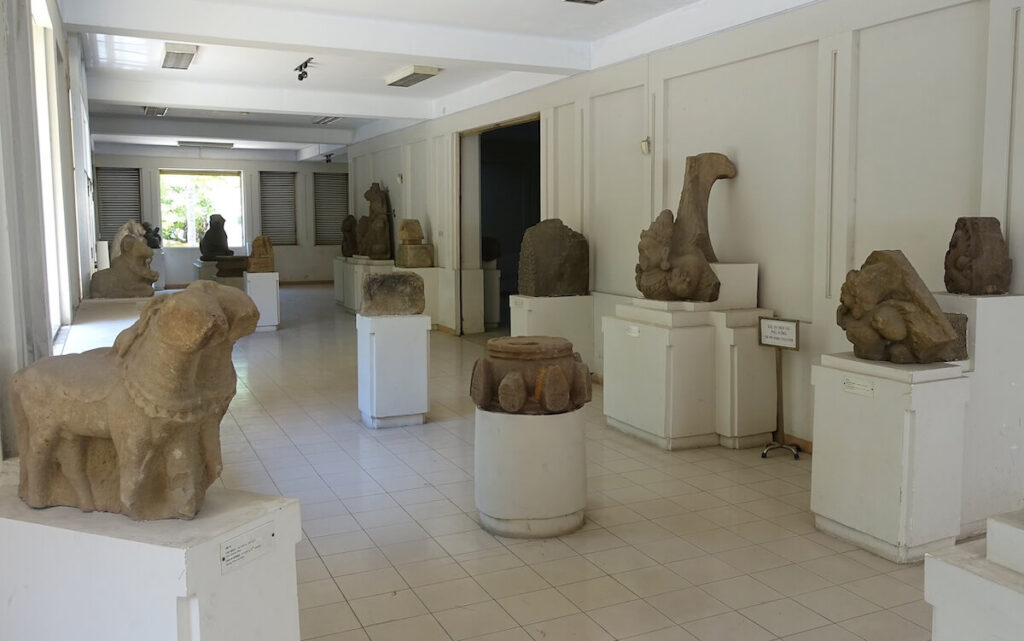
When you need a break from the beaches, Da Nang’s Museum of Cham Sculpture offers a fascinating dive into the region’s deep history. Right in the city center, near the Dragon Bridge, this beautiful colonial-era museum (which opened way back in 1919) houses the world’s largest collection of Cham artifacts.
But what exactly is “Cham”? It refers to the ancient Cham Pa Kingdom, a powerful, seafaring civilization that flourished across Central and Southern Vietnam for over a thousand years, roughly from the 2nd to the 17th century.
The collection in this museum is truly incredible, showcasing stunning sandstone sculptures of gods, mythical creatures, and religious scenes, primarily from Hinduism, which was central to Cham Pa culture. These pieces were mainly recovered from the Cham Pa holy site of My Son and other key locations.
If you’re ready to dive deeper into Cham history and culture, consider booking this historian-led tour, which kicks off at the Cham Museum and includes a few other local sites.
15. Gateway to UNESCO Sites
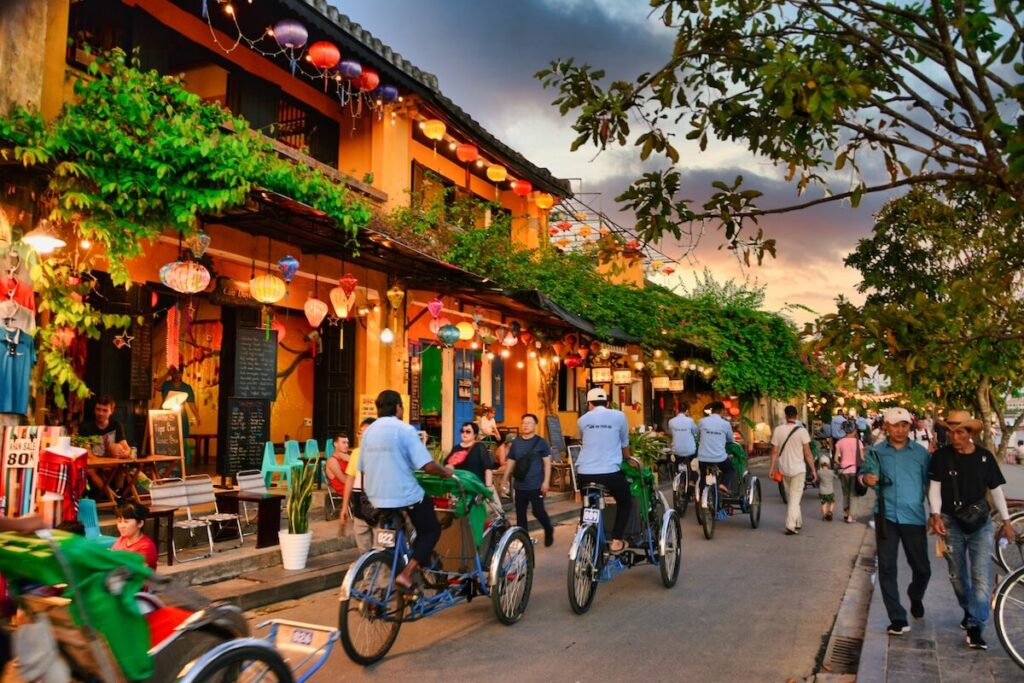
Da Nang is perfectly positioned as the ideal launchpad for exploring Central Vietnam’s amazing history. You can literally hop in a car for easy day trips to not just one, but three nearby UNESCO World Heritage Sites.
First up is the charming Hoi An Ancient Town, a beautifully preserved trading port famous for its colorful lanterns and unique architecture, just a short drive south. You also have the ancient Cham kingdom’s heartland, the mysterious My Son Sanctuary, with its ruined Hindu temples tucked away in a lush valley.
Beyond those, you can head north over the stunning Hai Van Pass (more on this below) to reach the former imperial capital, the Complex of Hue Monuments.
Da Nang’s modern infrastructure and central location mean you can easily balance beach time and city fun with incredible historical exploration, making it the smartest hub for your Central Vietnam adventure.
16. Hai Van Pass
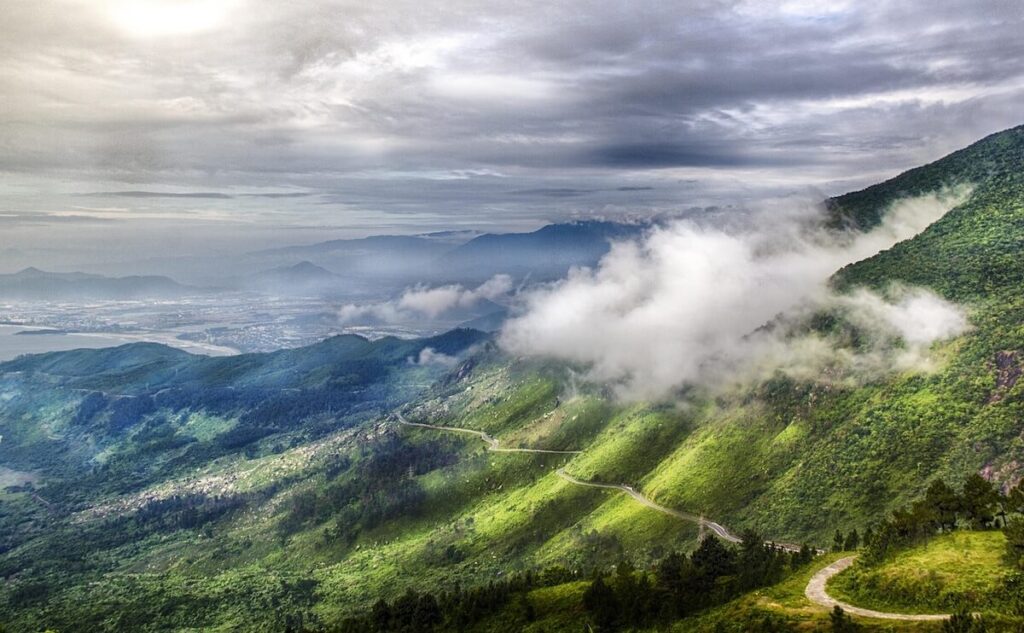
The Hai Van Pass, whose name translates fittingly to “Ocean Cloud Pass,” is a stunning 21-kilometer stretch of winding road that carves its way over the Truong Son mountain range. It acts as a dramatic geographic and climatic border, connecting Da Nang and Hue, and offers a legendary journey for travelers.
The views here are what it’s all about: on one side, you have the majestic green mountains; on the other, the expansive, turquoise East Sea and the sweeping Lang Co Bay. It’s no surprise Top Gear famously dubbed it a “deserted ribbon of perfection.”
Historically, this pass was much more than just a scenic route. It was a vital strategic military post and a traditional boundary between the ancient kingdoms of Dai Viet and Champa. At the summit, you can still visit the old fortifications of the Hai Van Gate, or Hai Van Quan, built centuries ago.
While the modern Hai Van Tunnel now handles most of the heavy traffic, the old pass remains an unmissable adventure—especially on a motorbike—promising thrilling bends and breathtaking viewpoints.
17. Da Nang Cathedral
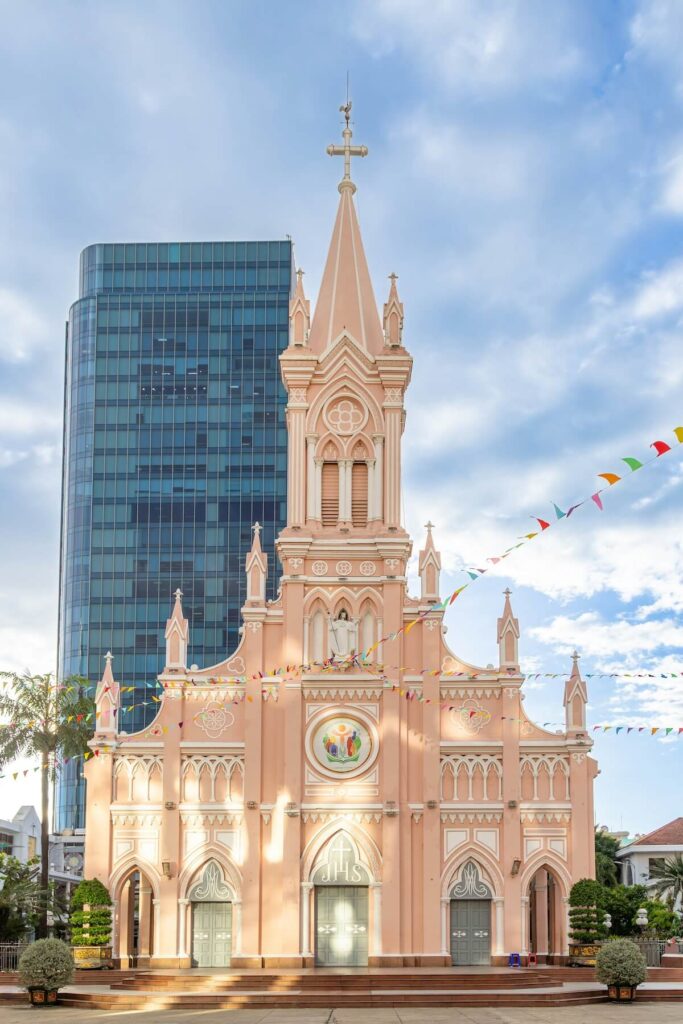
Da Nang is known for having one of Vietnam’s most photogenic religious sites: the Da Nang Cathedral. Built by the French in 1923, this Gothic-style church stands out dramatically against the city skyline thanks to its distinctive pastel pink exterior.
While its official name is the Sacred Heart Cathedral of Jesus, tourists flock to it for its vibrant color, often appearing as a backdrop for social media snaps. It’s a beautifully unique architectural hangover from the colonial era and remains an active place of worship for the local Catholic community today.
The cathedral also goes by the quirky local nickname “Rooster Church,” or Nha Tho Con Ga. This is thanks to the small, gray, rooster-shaped weathercock perched on the tip of its 70-meter-high bell tower.
Fun fact: that rooster isn’t a symbol of France, as many assume, but represents Saint Peter’s story of awakening and repentance from the Gospel. The church is conveniently located right in the city center, offering a tranquil yet visually stunning break from the modern hustle of Da Nang.
18. Han Market

No trip to the city is complete without a dive into Da Nang’s bustling Han Market. Positioned right in the heart of the city—a short walk from the Han River and Dragon Bridge—this central trading hub has been a pillar of local life since the 1940s.
Han Market’s two spacious floors are a vibrant, organized maze offering everything under the sun, from fresh produce and delicious local food on the ground floor to tailored clothing and textiles upstairs. For tourists, it’s a prime spot for stocking up on souvenirs and local specialties.
You’ll find countless vendors selling dried seafood, Vietnamese snacks, and packaged treats like banh keo (candies) and exotic dried fruits, often offering samples. For gifts, look for beautiful embroidered goods, silk fabrics, and the classic Vietnamese conical hat (non la). Remember to brush up on your bargaining skills—it’s expected and part of the fun!
19. American Military Base

Da Nang played a critical role in the defining conflict of modern times. It was here, in March 1965, that the first American combat troops—US Marines—splashed ashore on the beach to secure the nearby airfield, marking the true beginning of the American ground war.
Da Nang quickly grew into the largest US military base in South Vietnam, serving as a massive logistical, air, and naval hub that funneled troops and supplies to the northern part of the country.
This city’s history reflects a key turning point, establishing Da Nang as a major headquarters for the US Marine Corps. Today, the former air base has been completely modernized into the city’s international airport, a quiet transformation that mirrors Vietnam’s journey from conflict to a thriving, global destination.
20. Most Livable City in Vietnam
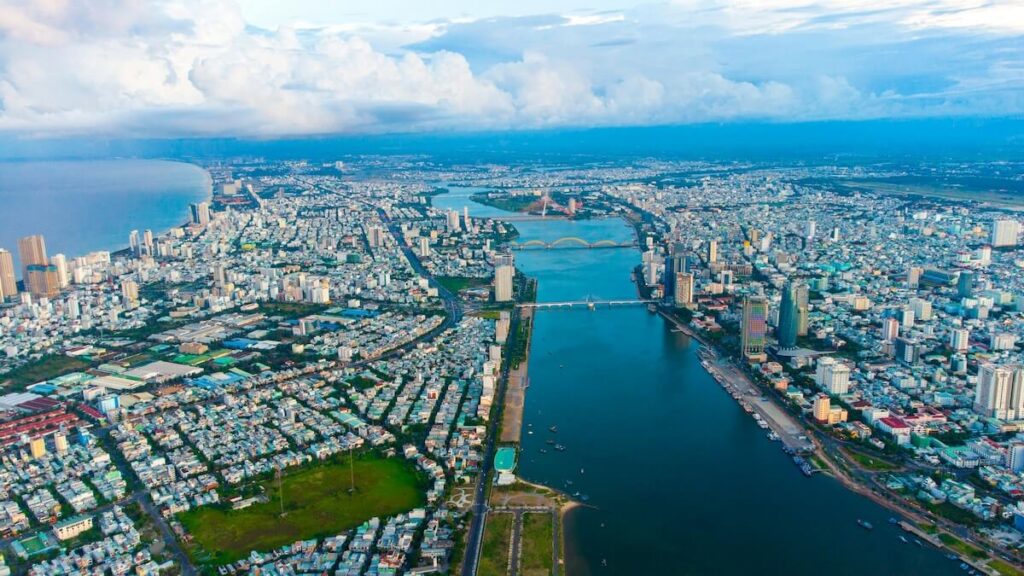
Finally, Da Nang is known for carrying the unofficial title of Vietnam’s “Most Livable City.”
This nickname isn’t just a marketing ploy—it’s been repeatedly affirmed by locals and expats who appreciate its superior quality of life. Compared to the energetic but often overwhelming chaos of Hanoi or Ho Chi Minh City, Da Nang boasts an easy-going vibe (something I really loved about the city), excellent municipal planning, and notably clean streets.
The city earned this distinction for several key reasons, including modern, well-maintained infrastructure and its success in tackling issues like traffic congestion and pollution. Residents enjoy a relaxed pace of life, affordable living costs, and access to both city amenities and beautiful natural scenery like the Son Tra Peninsula.
Essentially, Da Nang offers the perks of a thriving urban center without the typical big-city headaches, making it a genuinely chill and comfortable place to call home.
Conclusion
So, what is Da Nang known for?
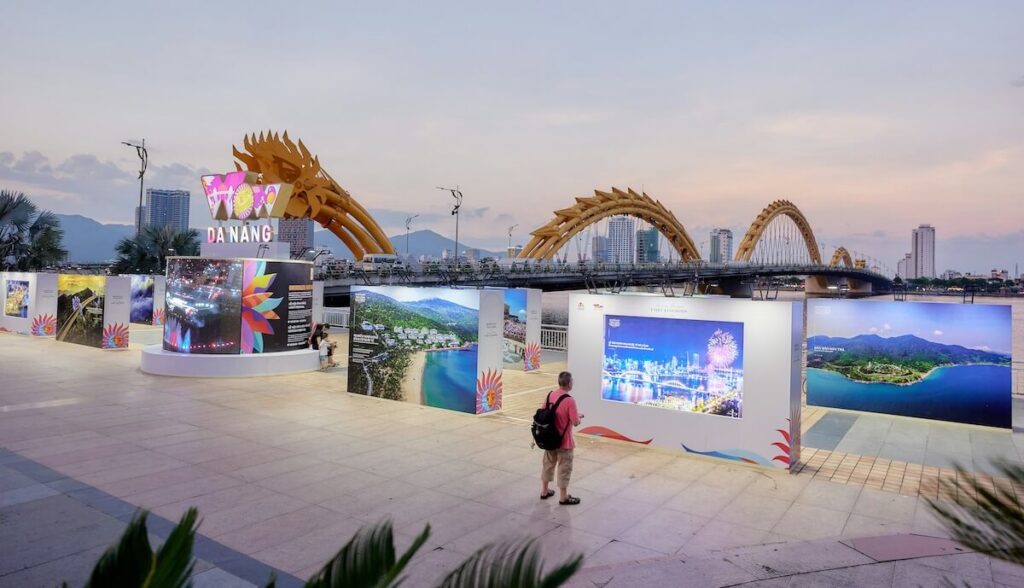
It’s a city that nails the balance between ambition and ease. From the iconic Dragon Bridge lighting up the Han River and the resort vibes of My Khe Beach to its reputation as Vietnam’s most livable city, Da Nang offers a clean, modern, and incredibly laid-back coastal experience. If this central hub has convinced you to explore further, it’s time to start planning your trip!
To get to know more of the country’s fascinating culture, check out this list of things Vietnam is known for and explore other amazing Vietnamese cities.