
Mexico is famous for its incredible culture, amazing food, and world-class beaches. If you need another reason to visit (as if!), Mexico is also home to an astonishing number of natural wonders.

We’re talking canyons that rival the Grand Canyon (arguably the most famous of all canyons), pink lakes, underground lakes, wild volcanoes, and even one really old tree. In fact, some of Mexico’s natural wonders are among the most stunning in North America.
Alright, I’ll stop leaving you hanging! Let’s get to it: here are 38 of the most beautiful natural wonders in Mexico.
Table of Contents
1. Copper Canyon

Copper Canyon (Barranca del Cobre), Mexico’s answer to the Grand Canyon in Arizona, is located in the Mexican state of Chihuahua. The best way to see it is via the Copper Canyon railroad, an engineering marvel.
2. Monarch Butterfly Biosphere Reserve

One of nature’s marvels, the annual monarch butterfly migration from Canada to Mexico, has millions of these monarchs wintering in one forested section of Mexico. The Monarch Butterfly Biosphere Reserve, a few hours north of Mexico City, is the best place to see the monarchs.
3. Tehuacán-Cuicatlán Valley
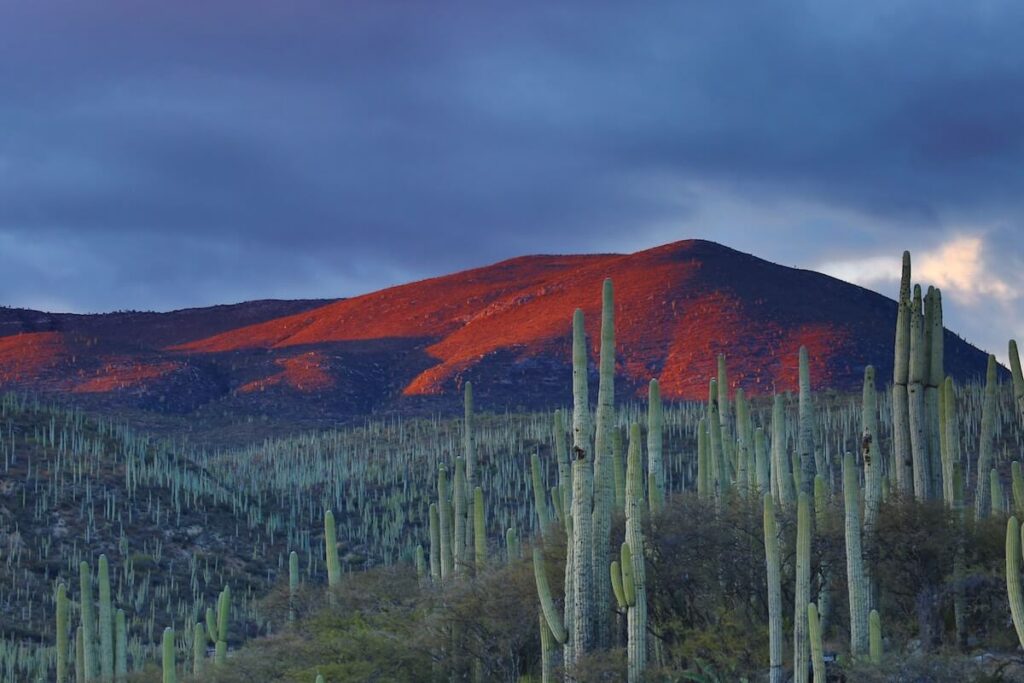
The Tehuacán-Cuicatlán Valley, one of Mexico’s UNESCO Heritage sites, has the richest biodiversity in North America. In addition, it’s also home to several important archaeological sites, and some of the most incredible cactus forests in the world. (Who knew cactus forests were even a thing? Added to bucket list!)
4. Mesoamerican Barrier Reef

For some of the best scuba diving in the world, the Mesoamerican Barrier Reef (also known as the Great Mayan Reef) stretches for 700 feet along the Caribbean coast of Mexico and down to South America. The reef is home to many species of fish, sea turtles, and whale sharks, and can be reached from Cozumel, Cancun, Tulum, and more.
5. Cenotes of the Yucatan Peninsula

Known as the “jewels of the Yucatan Peninsula,” cenotes are water-filled limestone sinkholes scattered throughout the landscape. Considered to be windows to the underworld by the local Mayans, there are thousands of cenotes throughout the Yucatan that make incredible places for swimming.
6. Nanacamilpa Fireflies Sanctuary
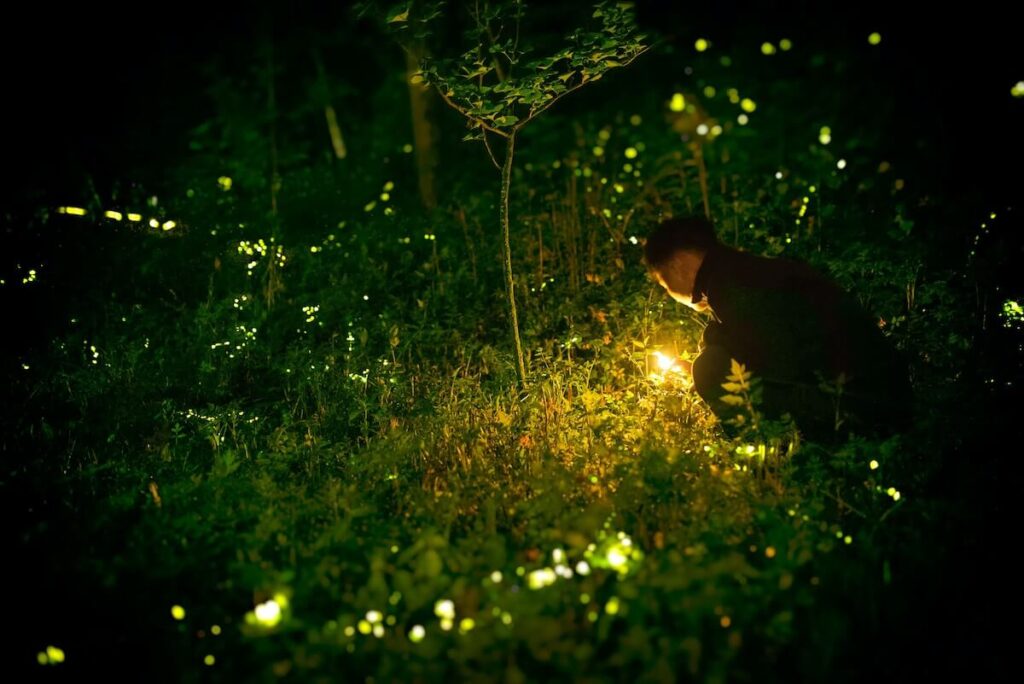
The magical Nanacamilpa Fireflies Sanctuary in Mexico, in the state of Tlaxcala, sparkles with millions of fireflies between July and August.
Although an easy day trip from Mexico City, you must stay at least one night for the full experience. Camping under the stars, surrounded by fireflies, is absolute (say it with me) magic.
7. Parícutin Volcano, Mexico

Parícutin Volcano, near the city of Uruapan in Mexico, is known partly because of its science-fiction-type beginnings. The volcano burst through the valley floor (from nothing!) in 1943.
The volcano remained active until the 1950s, destroying several towns. Nowadays, Parícutin lies dormant, but you can still hike the slopes to the famous ruins of San Juan Parangaricutiro Church, which is mostly obscured by (hardened) lava.
8. Islas Marietas

Off the coast of Puerta Vallarta lies the small island chain of Islas Marietas (Marietas Islands).
A protected area due to their abundance of wildlife, these islands can still be visited by official tour. Book a tour that takes you to the incredible Hidden Beach, an open sinkhole/beach that is only accessible at low tide.
9. Basaseachic Falls

Mexico’s tallest waterfall (well, it gets edged out during the rainy season), Basaseachic Falls cascades majestically from a steep canyon wall. The eponymous national park in the state of Chihuahua is also well worth the trek, with its scenic cliffs and dense pine-oak forests.
10. Hierve el Agua

One of Mexico’s most unique natural attractions, Hierve el Agua near Oaxaca, resembles a waterfall from a distance—but is really a rock formation!
Made over thousands of years by bubbling mineral hot springs, it’s amazing to see from afar—but it’s even more incredible to take a dip in one of the hot pools along the cliff.
11. Tamul Waterfall

Tamul Waterfall, or Cascada de Tamul, is one of Mexico’s most gorgeous waterfalls—and one of the hardest to get to! Although it is accessible via hiking, it’s best to hire local guides and paddle upstream for two hours in a large, local canoe (panga) to get a glimpse of the falls.
12. Lake Chapala

Mexico’s largest freshwater lake (also a volcanic crater lake) is a lively tourist spot. The expansive lake provides a plethora of outdoor activities, including hot springs, plus a balmy year-round temperature that entices many visitors.
13. Calakmul Biosphere Reserve

Although the Calakmul Biosphere Reserve is most famous for the extensive ruins of the Mayan city Calakmul, it also preserves a large chunk of tropical rainforest.
At the base of the Yucatan, Calakmul isn’t easy to get to, but its rich biodiversity and jungle ruins (sometimes called “the Lost City of the Mayans”) is unmatched.
14. Pico de Orizaba

Pico de Orizaba, or Citlaltépetl, is Mexico’s tallest mountain, which also happens to be an active volcano. Pico de Orizaba is also the third-highest mountain in all of North America and is often used as an “Everest prep” mountain.
15. Sea of Cortez
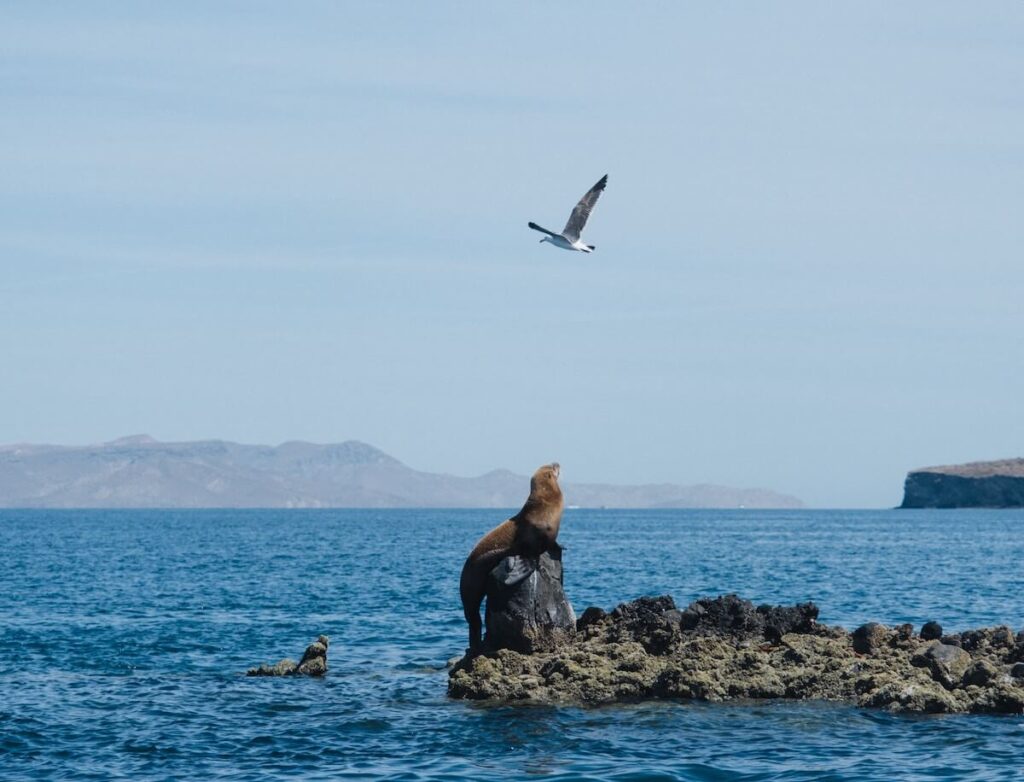
The Sea of Cortez lies between the mainland of Mexico and the Baja California peninsula.
Famous for its clear water and varied marine life, such as whales and sea lions, it’s a UNESCO Heritage Site that will surely take your breath away (figuratively and literally, if you decide to scuba or snorkel).
16. Sian Ka’an

Sian Ka’an (“where the sky is born”), a nature park about 20 minutes outside of Tulum in Quintana Roo, is famous for its unique natural resources.
Take a guided wildlife safari boat tour through the mangroves and even along an ancient Mayan canal; keep your eyes peeled for colorful birds, crocodiles, dolphins, turtles, manta rays, or manatees.
17. The Arch of Cabo San Lucas
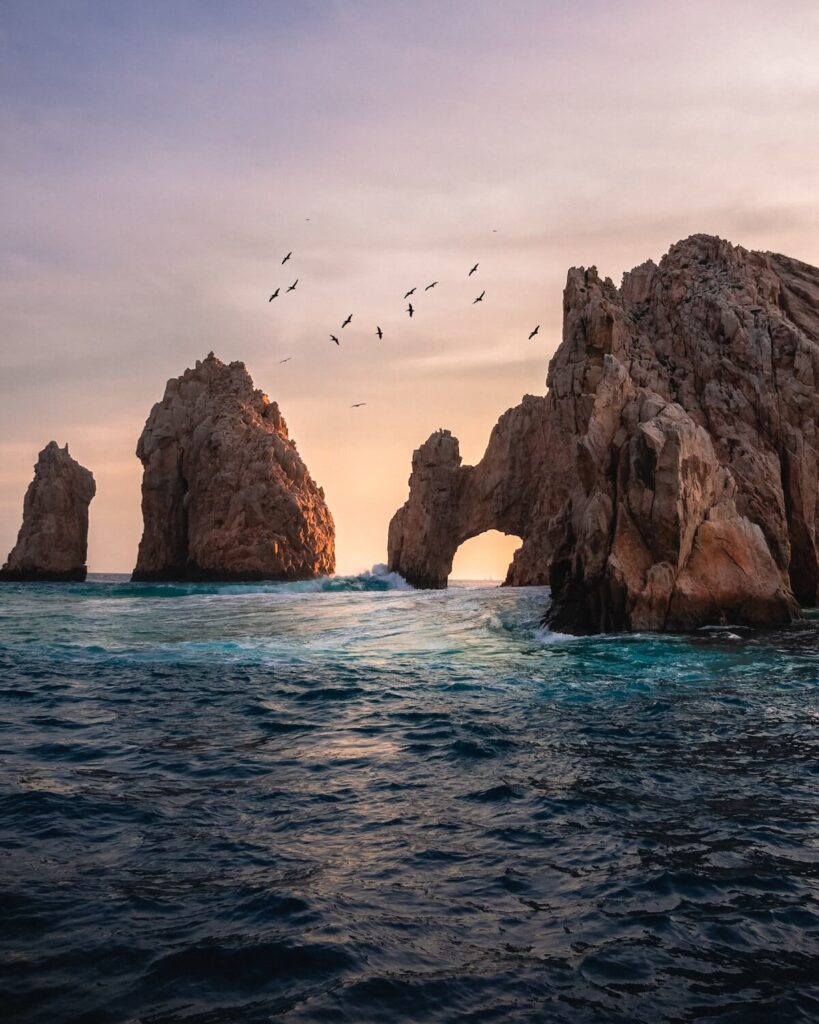
Also called “El Arco” or “Land’s End,” the Arch of Cabo San Lucas is a natural rock formation on the very tip of the Baja California peninsula. The limestone arch, which stretches three stories high above the crystal clear waters of the ocean, is best seen via boat tour.
18. Peña de Bernal

Peña de Bernal (“Bernal’s Boulder”) is a giant monolith in the Mexican state of Querétaro. It’s one of the tallest freestanding monoliths in the world, rising 1,420 feet above the nearby town.
Anyone with some ability can hike halfway up to a small chapel, although to make it all the way to the top, you’re gonna need a rope (and some guts).
19. Las Lagunas de Montebello

The lakes of Montebello, a national park near the border of Mexico and Guatemala, is famous for its many striking, different-colored lakes (59 in total). The largest is Lago Tziscao, which has an adorable nearby village.
Some other famous Montebello Lakes include Montebello itself, Pojoj, and a group of lakes known as the “Lagunas de Colores.”
20. Palenque

The mysterious Mayan ruins of Palenque are some of the most breathtaking in Mexico, and their surroundings only enhance this. Along with the grass-covered, crumbling temples, you’ll find a lush rainforest full of hidden cenotes and plenty of wildlife to spot.
21. Revillagigedo Islands
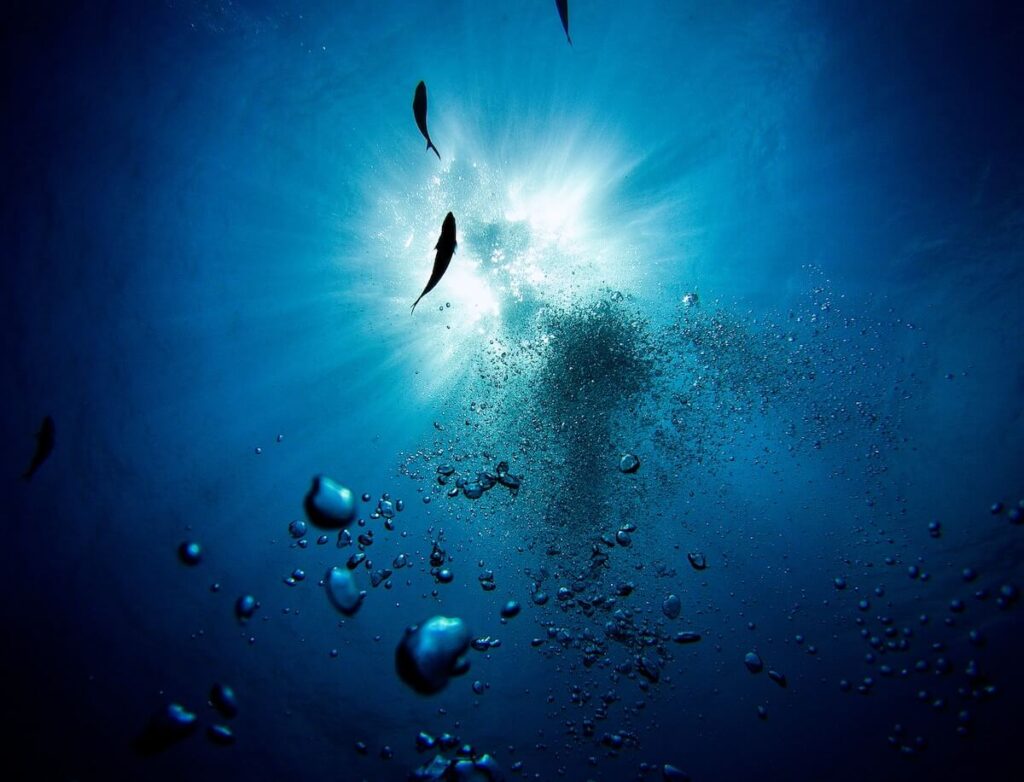
This one’s for the divers! (But everyone else would appreciate it, too). Now, this incredible volcanic archipelago is not easy to get to—while there is an airstrip on the islands, most people get there via boat, which takes around 28 hours (!).
Sometimes known as the Galapagos of Mexico, the Revillagigedo Islands are popular for live-aboard dive boats, which are ideal for the fragile island ecosystem.
22. Basaltic Prisms of Santa María Regla

Tall, otherworldly formations of columns of rock (known as basaltic prisms) line a ravine in the Mexican state of Hidalgo. The end of the ravine forms two waterfalls, framed by the giant prisms, that are visible from a nearby rope bridge and platform.
23. Sumidero Canyon

One of Mexico’s most incredible natural wonders is Sumidero Canyon and the surrounding national park.
Located in southern Mexico in Chiapas, Sumidero has vertical walls that reach up to 3,300 feet. Although Sumidero is remote, it’s a once-in-a-lifetime river trip that will take you to at least five waterfalls, thirty waterfalls, three beaches, and several hot springs.
24. Tule Tree

The Tule Tree (El Árbol del Tule), a rare Montezuma Cypress, is the widest tree in the world as well as the oldest in Mexico, at over 2,000 years old. Located near the city of Oaxaca, the Tule Tree was documented during the time of the Aztecs and the early European explorers.
25. La Bufadora Blowhole

La Bufadora Blowhole in Ensenada, near the border of California in Mexico, is one of the largest marine geysers in the world. When ocean waves are forced into the sea cave, the pressure builds, and the water shoots out of the partially exposed cave like a, well, geyser.
La Bufadora has been known to geyser over 60 feet high.
26. El Chiflón Waterfalls

El Chiflón Waterfalls in the state of Chiapas are considered some of the most stunning waterfalls in Mexico. There are actually five waterfalls in the national park, all of which are accessed via an easy hike (round trip: around 30 minutes).
After you visit all of the waterfalls, make sure to take a dip in the cool turquoise pools at the bottom.
27. Centla Swamps

Between the Mexican states of Tabasco and Campeche, you can find some of the most important wetlands in the world: the Centla Swamps (Pantanos de Centla). This natural paradise is important due to its many aquatic plants (over 500 separate species) and as one of the last homes of the critically endangered Central American turtle.
You can also potentially spot jaguars, crocodiles, and howler monkeys as you cruise through the mangroves on a boat tour.
28. Cacahuamilpa Caves

The Cacahuamilpa Caves (Grutas de Cacahuamilpa) National Park is one of the largest cave systems in the world. Known as a “live” cave, as flowing water is still forming rock, there are also two underground rivers to visit.
Caving and (for the less adventurous) cave tours are available, and the caves even host a yearly concert honoring a local writer.
29. Balandra Beach

Balandra Beach (Playa Balandra), near the town of La Paz, is often known as Mexico’s most beautiful beach. And when you see it, I have a feeling you won’t argue with this claim!
The light turquoise waters and white sand, paired with the calm waters of the bay, which eventually leads into a mangrove forest full of colorful fish, all combine into a scene almost too idyllic (almost!).
Bring your swimsuit and maybe a kayak or a SUP, and a whole lot of (reef-safe!) SPF.
30. San Ignacio Lagoon

If a (safe) close encounter with a gray whale is on your bucket list, San Ignacio Lagoon is a must for your Mexico visit. A winter sanctuary and calving ground, San Ignacio Lagoon is home to the “friendliest gray whales on the planet.”
Local guides take visitors out in their pangas (local canoes) to visit the whales, who will approach the boats on their own. The whales will even roll over onto their backs so you can scratch their bellies, like one giant blubbery dog.
31. Popocatépetl

Popocatépetl, aka “Popo”, one of Mexico’s most famous volcanoes, named by the Aztecs (“Smoking Mountain”), is known for its many eruptions over hundreds of years—the latest one on record occurring in February 2023.
Although I would currently recommend viewing Popo from one of the nearby scenic villages, it does have trails for the intrepid climber.
32. Las Coloradas

Instagrammers, this one’s for you!
The pink lakes of Las Coloradas are actually man-made from salt production, starting during the Mayan Empire. Thanks to many years of the high salt content in these lagoons, small microorganisms that turn the water pink began to thrive.
These little shrimp are also favorites of the flamingos that live nearby in the Rio Lagartos Reserve—and responsible for their bright pink hue! You can’t swim in the pink lakes (despite what Instagram may tell you), but there are nearby beaches galore.
33. Whale shark migration

Here’s another item to check off your bucket list: swimming with whale sharks (the world’s largest fish that most definitely will not eat you). Although you can only legally swim with the whale sharks during the high season, you can find them on both coasts of Mexico.
From November to May, you can see whale sharks in the Sea of Cortez, while the high season for these gentle giants off of the Yucatan is from June to September.
34. Poza Azul
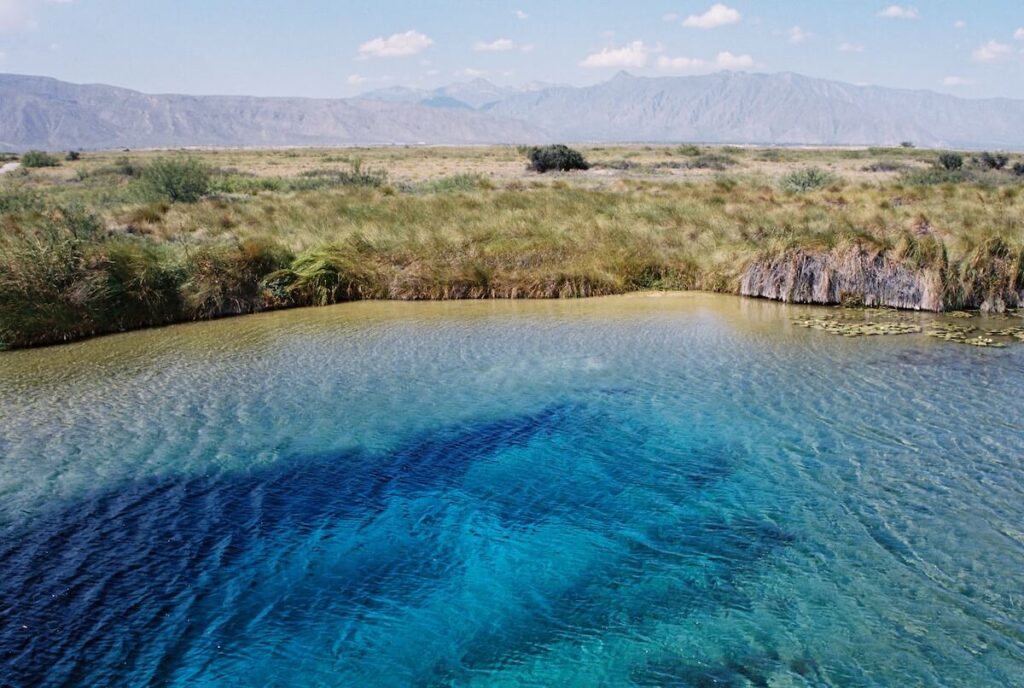
Mexico has some seriously gorgeous waters, and one of these is Poza Azul in the Cuatro Cienegas Valley. The Cuatro Cienegas valley has over 250 bodies of water—the last remnants from when Mexico was under the Tethys Sea—but Poza Azul might just be the most unique.
You cannot swim in the clear waters thanks to their fragility, but it’s worth a visit to see the changeable, clear pool.
35. Dunas de Yeso

Not too far from the above Poza Azul, also in the Cuatro Cienegas valley, you can find these otherworldly gypsum sand dunes, known as the Dunas de Yeso (white sand dunes).
I recommend you visit at sunset, because a sunset over the white dunes is, in a word, spectacular.
36. Puente de Dios
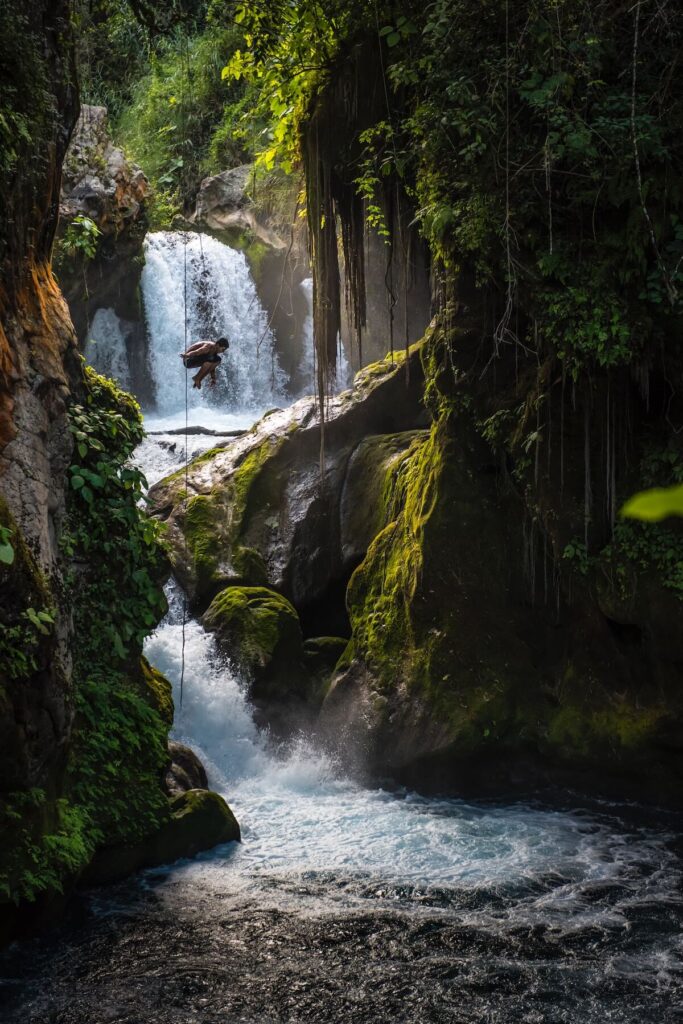
Puente de Dios, or Bridge of God, is an incredible hidden gem in the state of San Luis Potosi. The Enscanela River, flowing through the lush Cañon de la Angostura, passes under the Puente de Dios, giving the area a cave-like feeling.
Visitors can jump into the water from rocks and swim in the pools (using the installed ropes to withstand the current). Avoid the rainy season, as the water is too high for safety (June-August).
37. Laguna de Kaan Luum

Another off-the-beaten-path gem for ya!
Technically an open-water cenote, the Kaan Luum Lagoon near Tulum is known for its clear waters and local flavor. Many tourists still don’t know of this spot, but it’s worth it for the relaxing swimming, hammocks, and piers.
38. Espíritu Santo Island
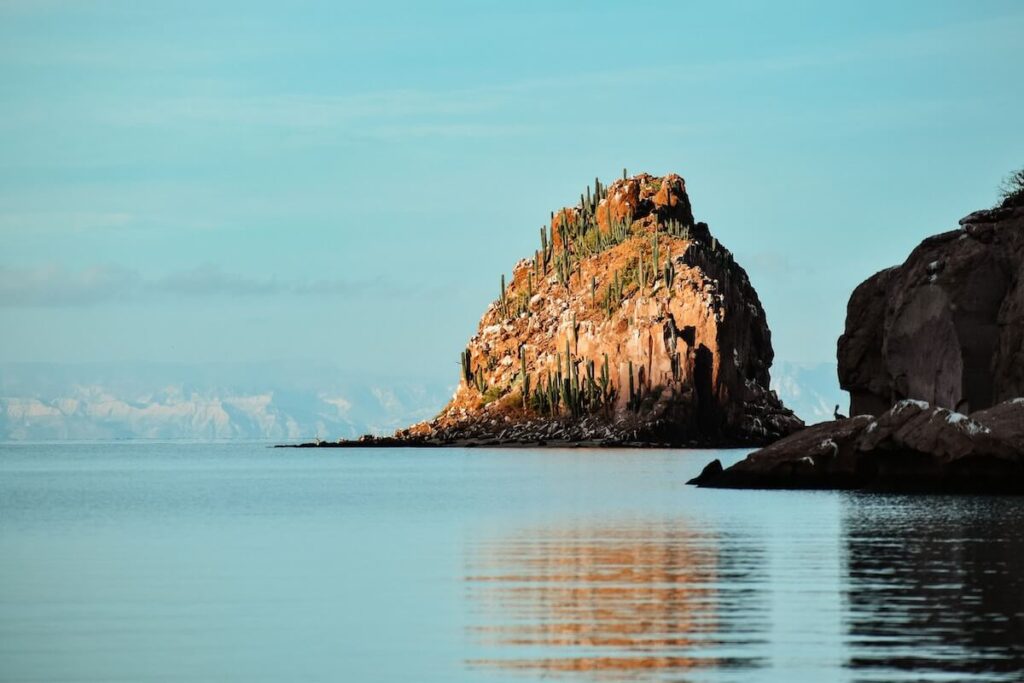
Considered one of the most beautiful islands in Mexico, Espíritu Santo Island off the coast of La Paz is a UNESCO Heritage Site.
The island is teeming with marine life and many other endemic species, and many visit to swim with sea lions, lounge on the pristine beaches, or dive into sunken ships in the crystal water.
Conclusion

Mexico, the land of plenty… plenty of natural wonders, that is! You could spend the rest of your life exploring and not see every wonder that Mexico has to offer.
So, tell me—which one of these are you most likely to visit? If you’ve been to one (or more) share in the comments and inspire more people to discover the beauty of Mexico.
Want more inspiration? Check out amazing natural wonders in Asia to visit, and beautiful natural wonders in Europe.