
The sunny, riverside city of Seville is the epitome of the culture of Spain’s southern Andalusia region. In fact, Seville’s beauty is so well-known that when you think of Spain, Seville probably isn’t too far from what comes to mind.

Seville is a cradle of flamenco and tapas culture, two heritages that Spain is famous for. Its sprawling historic center features iconic examples of architectural styles like mudéjar, Renaissance, and Gothic. Seville has lived through some fascinating eras, making its history endlessly curious.
But is Seville worth visiting? In short, yes it is, but before I tell you why you should, let’s chat about why it might not be your ideal location.
Table of Contents
Why you may not enjoy Seville

Before we get to the good stuff, let’s talk about why you might not enjoy Seville. The reasons are few and far between, but for some, one particular thing about Seville could be a deal breaker.
Seville finds itself seated in the Guadalquivir River valley, which is sometimes called la sartén de Europa, or the frying pan of Europe, for its extremely high summer temperatures.
I was once in Seville in late May when temperatures reached a muggy, exhausting 40 degrees Celsius. If you can only travel to Seville in the summertime, it might be best to search for a different destination in Andalusia. Perhaps a coastal one like Málaga.
Why you must visit Seville
1. Seville has the largest casco antiguo in Spain

The casco antiguo, or historic quarter, of Seville is enormous. It’s the largest in Spain and the largest anywhere in Europe outside of Italy. The nearly four-square-kilometer quarter is packed dense with monuments, museums, and historical sites
When you visit Seville, you’ll find yourself wandering endlessly around the historic quarter. It’s comfortable to explore, but its streets and alleyways can at times be labyrinthine. If you have a tight agenda, make sure to have a map handy as it’s easy to get turned around.
But rushing around isn’t the Seville way. Take it easy and enjoy the many marvels big and small of historic Seville.
2. Some of the best mudéjar architecture is in Seville

Editorial credit: joserpizarro / Shutterstock.com
The Iberian Peninsula is known for mudéjar architecture, which arose from Islamic and Christian cultural mixing throughout centuries of connected history from the coasts of Andalusia to the mountains of northern Spain.
You can find mudéjar details hidden in plain sight across the city, in church doorways and building facades, as well as in popular landmarks, like La Giralda and the Royal Alcázar.
I find mudéjar to be one of the most beautiful architectural styles in the world. When it comes to mudéjar architecture, very few places can hold a candle to Seville.
3. If it’s good enough for film sets, it’s good enough for you

If you’ve paid even the slightest amount of attention to blockbuster films and acclaimed TV shows over the past few decades, Seville might seem a bit familiar. That’s because some of its most iconic landmarks have served as the settings in productions like Star Wars and Game of Thrones.
The Plaza de España, built in 1929 for the Ibero-American Exposition, served as the backdrop for the royal palace of Naboo in Star Wars: Attack of the Clones (2002).
Similarly, the palaces of Dorne in Game of Thrones seasons five and six came to life in the Royal Alcázar of Seville.
Seville makes appearances in other productions such as the classic Lawrence of Arabia (1962) and Warrior Nun (2020).
4. The Royal Alcázar is like no other

While I’ve already mentioned this monument, the Royal Alcázar of Seville is reason enough to visit this sunny Andalusian capital.
The palace as it appears today was built in the 14th century for King Pedro I of Castile, but the site’s history stretches back to before the Muslim conquest and paints a picture of the cultural changes throughout Seville’s history.
When Catholic Spaniards conquered Seville, they turned the alcázar, or residential fortress built by Muslim caliphs, into a lavish royal palace. Much of the original buildings were destroyed, but some elements from the Almohad era remain.
The palace was elaborated during Pedro I’s reign and to this day, the Royal Alcázar of Seville stands as one of the most stunning examples of mudéjar architecture in the world.
5. La Giralda is a treasure

The towering La Giralda is a Muslim-minaret-turned-Christian-belltower that displays the intricacies of mudéjar in the heart of Seville. Attached to the stunning Seville Cathedral, La Giralda is one of the tallest structures in the city and offers mighty views of the city.
Climbing to the top is well worth it, and not too difficult either. A gentle, broad ramp winds around the tower and takes you to the top, making La Giralda an accessible monument in Seville on top of it being an architectural treasure.
6. An evening in La Alameda is an evening well-spent
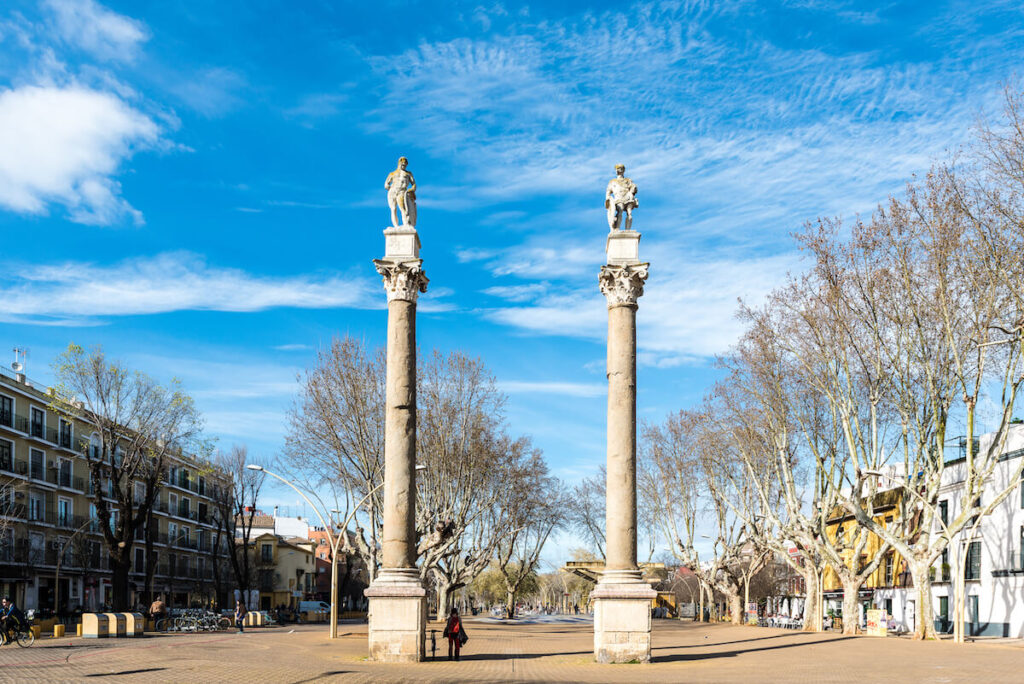
La Alameda de Hércules is an iconic pedestrian avenue in the historic center of Seville. Essentially an extensive plaza, an evening in La Alameda is essential to a visit to Seville as it is core to the city’s identity.
La Alameda is lined with bars, eateries, cafés, and community centers that make it a community hub favored as much by locals as by visitors, international students, and more. La Alameda is a great place to enjoy an afternoon coffee or a Sunday morning stroll, where you might stumble across a pop-up market.
But you can’t miss La Alameda at night when bar-hopping and socializing are as easy as walking a few paces down the pleasant, broad boulevard. As a focal point of social activity, La Alameda makes Seville worth visiting.
7. You can lounge along the Guadalquivir

The Guadalquivir River is an underrated part of Seville as a city. The river, one of the longest in Spain, divides the historic quarter from Triana, which is connected by the historic Triana Bridge.
One of my favorite things to do in Seville is to lounge on the riverbanks on a sunny afternoon with a book or good company. It’s also a great place to take a stroll or go for a bike ride.
8. Seville is a city that feels like a village

Seville is one of the largest cities in Spain, but it doesn’t leave you with that impression. Seville has un encanto, a charm, that reminds you of a village or a small town, in areas like the historic center and Triana. El encanto is part of what makes Seville so pleasant and inviting.
But despite this ambiance, Seville has all the perks of a modern metropolis, from nightlife and cultural activities to a diverse food scene and endless concerts and music festivals.
9. You can walk all over Spain in La Plaza de España
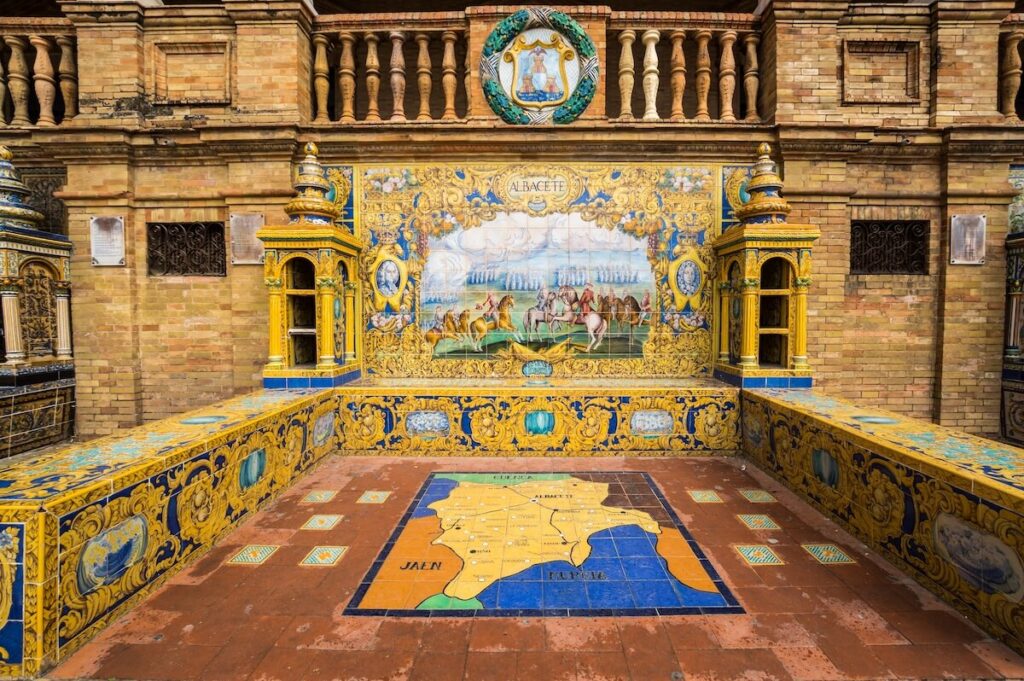
Stunning and enchanting, La Plaza de España is one of Seville’s most iconic sites. At the base of the curving gallery, you can find beautiful tile mosaics depicting historic scenes and maps of each of Spain’s 52 provinces.
In La Plaza de España, you can check out all the places you’ve visited and those you don’t have time to visit. It’s a budget-friendly and time-saving travel hack.
10. Seville has some of the best flamenco in Spain
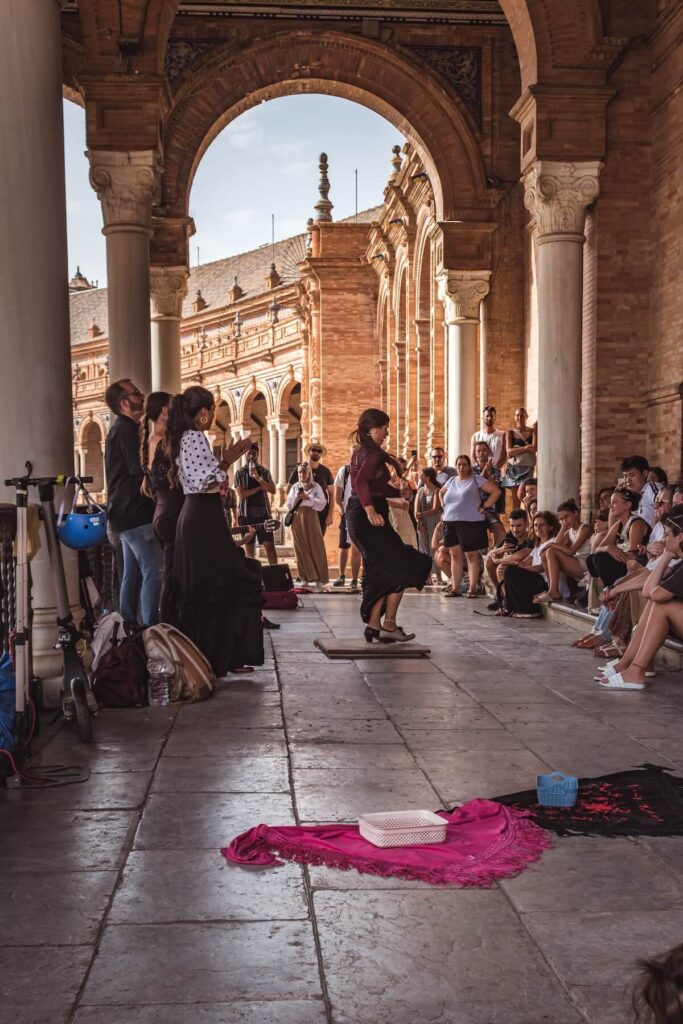
Seville is the capital of Andalusia, the region where flamenco was born. It only makes sense that you can find some of the best flamenco in Spain in Seville.
The most surefire way to see flamenco in Seville is to head to a show, which you can often catch at a casa or a tablao de flamenco. Neighborhoods like the historic center and Triana have plenty to choose from.
Beyond the casas and tablaos, flamenco lives in the heart of Seville. Performers strike up to sing and dance for crowds in well-trafficked places like La Plaza de España. Or you might stumble upon a man strumming his guitar and singing in one of the city’s many plazas.
11. Seville has great tapas and much more

The food scene in Seville is endlessly variable. When it comes to Andalusian food, Seville is nearly unrivaled.
Gazpacho, huevos a la flamenca, and pringá are among the dishes that reign supreme in this capital city. They can be eaten as tapas or as raciones, or full dishes, in many of the city’s restaurants and bars, but the options don’t stop there.
Seville is also a hub of international food due to its diverse immigrant population, including a hub of Nicaraguan restaurants in Macarena and a small Chinatown centered on Calle Marques de Pickman.
Also Read: 20 Essential Things to Know About Spanish Food Culture
12. Seville has one of the most iconic ferias in Spain

Feria is ubiquitous across Spain. Whether it’s a small village or a massive metropolis, people in all corners of the country celebrate a feria, or fair, at some point in the year.
But nowhere does it quite like Seville. La Feria de Abril, or the April Fair, begins a few weeks after Easter. The feria is centered around the fairgrounds across the river from the old quarter, but the parties extend across the entire city for seven days.
If your trip overlaps with feria, enjoy the parades, sip sherry and rebujitos, and relish in the celebration of Sevilian heritage.
13. Seville is just so romantic

They say that Seville tiene un color especial — has a special color. And it really has, from its warm-toned facades and bright blue skies to its flowering orange trees and mesmerizing Andalusian tiles.
But the color goes beyond how Seville looks. The city exudes a certain romance that is deeply ingrained in its identity. I don’t mean romance exclusively in the way of love, as Seville’s romance can be enjoyed solo, with your partner, and with friends and family.
Instead, Seville imparts upon you a desire to deeply know it, to wander its beautiful streets and absorb the details big and small of its culture. Seville is irresistible and unforgettable.
Wrap-up

Claro que sí, Seville is worth visiting. If these reasons haven’t convinced you that Seville is worth visiting, I don’t know what will. I’ve traveled to many cities in Spain, but Seville remains among the most impressive. Upon leaving every time I visit, the encanto of Seville calls me back to return.
To come to Spain and not visit Seville is to miss out on one of the country’s finest cities. Have you visited Seville before? Let us know if you think Seville is worth visiting in the comments.