
When planning a trip to Italy, asking “is Genoa worth visiting?” is quite common, as the city is often eclipsed by Rome, Venice, and many other destinations in the country.
Yet Genoa is a lot more than Columbus’ hometown: it’s also where pesto and focaccia were created. Marked by steep topography and rich history, Genoa is filled with stunning views and beautiful landmarks as well.
If you still haven’t made up your mind, worry no more. I’ll give you plenty of reasons to fall in love with Genoa even before visiting. But first, let’s take a look at why the city’s not that popular with travelers.
Table of Contents
Why you may not enjoy Genoa
It’s not as monumental as other Italian cities.

Genoa had its heyday as a maritime republic from the 13th to the 16th centuries, when architecture was less sumptuous than in the two to three centuries that followed.
Its charm derives from its laidback ambiance, eventful history, and close relationship to the sea rather than a lavish architectural heritage.
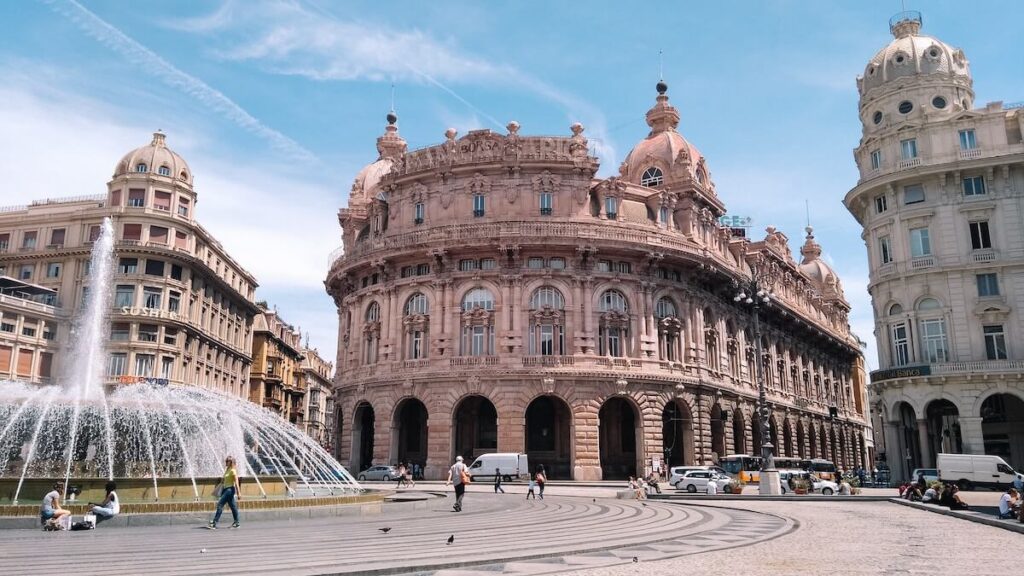
Yet the city does have its fairs share of impressive landmarks, among which the 12th-century Cathedral, the Baroque palazzos along Via Balbi and Via Garibaldi, which were listed as a UNESCO World Heritage site in 2006, and the turn-of-the-century complex around Piazza De Ferrari (pictured in the post cover).
Its street layout is crazy and set up on steep terrain.

Americans are especially sensitive to this, as Europeans, Latin Americans, and Asians are usually more familiar with spontaneous layouts.
Still, walking around Genoa can feel challenging to visitors of every sort, and not just for the maze-like setting of its old town and adjacent neighborhoods.
Like San Francisco and Lisbon, Genoa was built on steep hills overhanging the sea, meaning it’ll take its toll on even the most athletic travelers.
Having said that, the highest point in the historic core (the Castelletto overlook) is only about 260 feet tall — and a set of public elevators will help you get there anyway.
Genoa lives for its port.

Genoa sometimes comes across as a somewhat gritty city that doesn’t go out of its way to look attractive to visitors.
That’s because its port, the largest and for over a century the most important in the country (Trieste’s passed it ten years ago), is the city’s no. 1 breadwinner alongside the dense network of services and industries that developed around it.
Many travelers, including those who layover in the city while on a cruise, treat Genoa as a mere springboard to the Italian Riviera.
Luckily, that’s been changing lately, and Genoa is already the ninth-most visited city nationwide. Hopefully more and more globetrotters will want to visit — so book your trip now before it falls prey to mass tourism.
Why is Genoa worth visiting?
1. Breathtaking views are all over the place.

This is where Genoa’s uneven topography comes in handy, as each turn will give you a different perspective where hills, buildings, and the azure Gulf melt together. Even better, Genoa is also dotted with lookouts where you can soak up commanding vistas of the entire city for free.
Two of the nicest panoramas are the one on Corso Carbonara, which is pretty close to the port, and the one in the Righi neighborhood, which you can access through the funicular from Largo della Zecca.
2. It’s the birthplace of pesto and focaccia.

No other place has a more typically Mediterranean cuisine than Genoa, except perhaps Greece. Fresh and locally sourced ingredients are the name of the game all over Italy, but here a general preference has turned into a strict rule.
The city’s culinary tradition is based on six essential elements: native herbs like rosemary, thyme, and sage; traditional produce which includes basil, tomatoes, zucchini, asparagus, and artichoke; baked delicacies like focaccia and farinata; pasta; olive oil; and seafood.
Genoa’s old town is peppered with budget-friendly eateries like Trattoria delle Grazie and Trattoria dell’Acciughetta where you can savor the finest specialties of the local cuisine.
3. Genoa is brimming with history.

It’s not a coincidence Genoa is home to Italy’s biggest port; the city was once one of the naval powers in the Mediterranean and clashed with Venice for supremacy over the region.
The wealth generated by the then-independent republic was so immense that it triggered the creation of the first bank on Earth in 1407.
And that was not even the only consequential invention Genoa gifted us with: denim was used there from the 15th century to protect goods at the port and to make outfits for sailors as well.
Soccer fans, in turn, will enjoy learning Italy’s oldest soccer team, Genoa Cricket and Football Club, was born here in 1893.
4. Its maze-like old town is unique.

Who would’ve thunk that a pretty unassuming place like Genoa features the largest medieval old town in Europe?
Marked by 12th-century stone walls and winding hillside alleys where the sun often struggles to shine through (the so-called caruggi), Genoa’s historic core is a truly fascinating area that seems almost like a hidden secret.
Parts of it were destroyed by air raids during WWII, but the bulk of Molo, the oldest neighborhood in town, has survived.
5. There are virtually no crowds anywhere.

As much as I love cities like Venice and Florence — and I really do! —, they’re like playgrounds for culture- and history-obsessed grown-ups. Regular businesses have given way to cheap gift shops, you can barely walk without feeling like you’re being herded around, and so on.
That’s not the case at all in Genoa. Though you’ll spot a few fellow travelers on the waterfront and around Piazza De Ferrari, the bulk of the folks you’ll see on the streets are locals going about their business.
To me, that authenticity is simply priceless when I’m visiting a city. Places like Brussels, Santiago, and Portland feel exactly like that, and they’re unsurprisingly three of my favorite cities in the world.
6. Genoa’s Mediterranean weather will win you over.
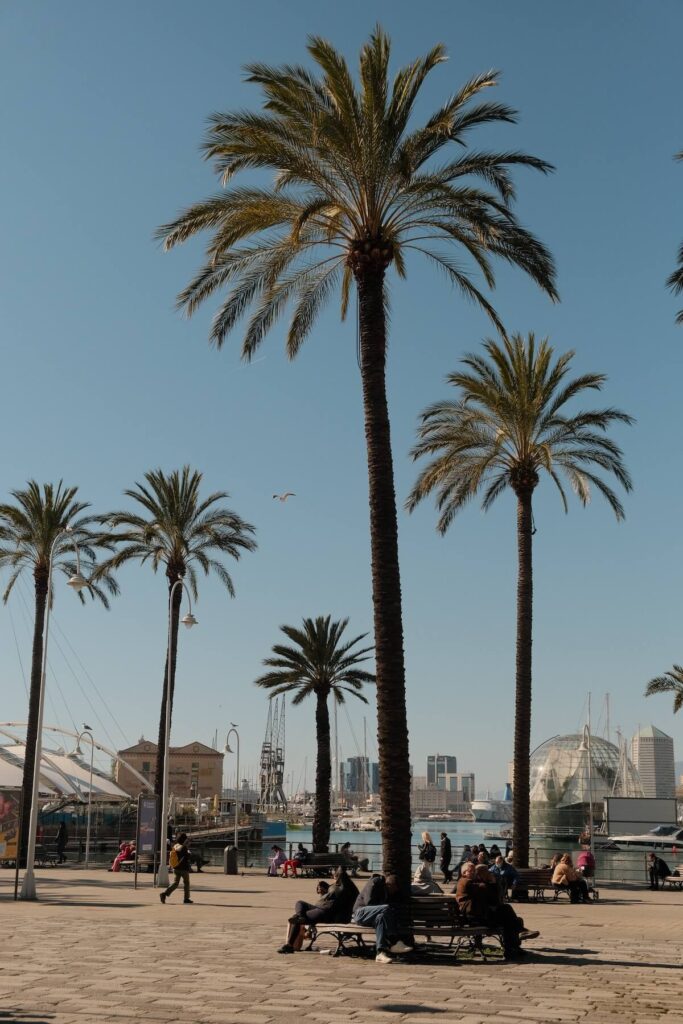
With average annual temperatures around 72℉ and a daily temperature range that is hardly wider than 40℉ between maximum and minimum, Genoa boasts an incredibly mild climate year-round.
Like a typically Mediterranean city, its summers are dry, which is one of the reasons why beachside vacations on the Italian Riviera are so glorious.
7. Portofino and Cinque Terre are a stone’s throw away.
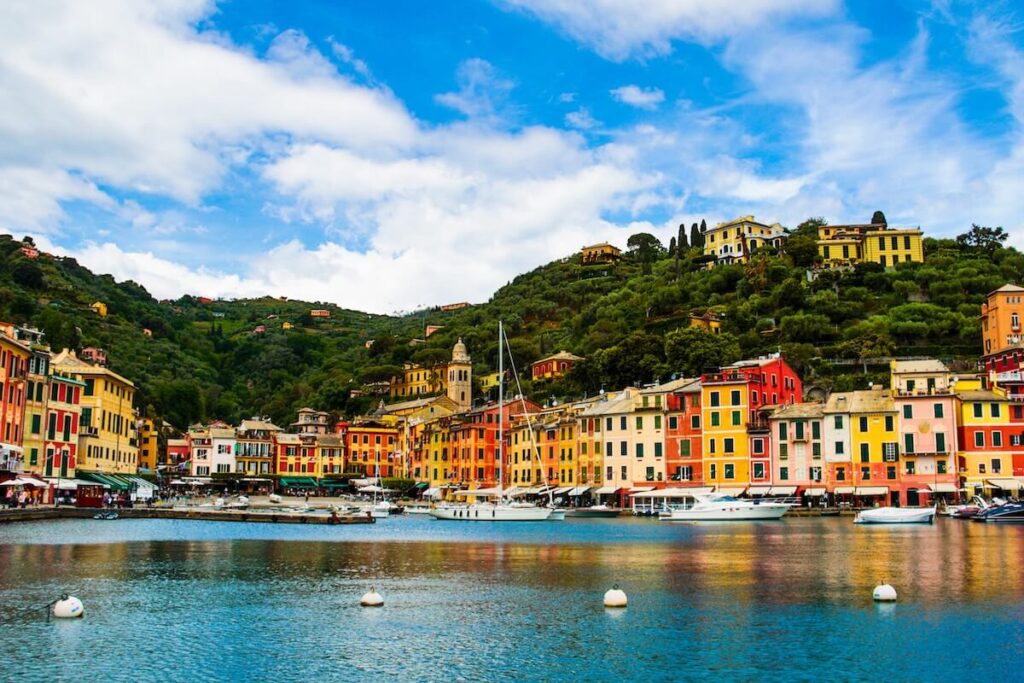
Iconic beach towns in Liguria like Portofino and the villages of the Cinque Terre are of course gorgeous. But staying there can be expensive at peak season, during which time driving around normally becomes a quite stressful experience.
That turns Genoa into a privileged launchpad for exploring the jagged coastline of the Italian Riviera.
A little more than 20 miles separate the city from Portofino, which is actually located within the province of Genoa. To get to the Cinque Terre instead, you’ll need to drive for less than 60 miles.
And in case you don’t want to plan an itinerary, just book a boat tour of the region from Genoa, sit back, and take in the views.
8. It’s easy to reach from Rome and Milan.

Milan is so close to Genoa that there’s no direct flight between the two. From Genoa’s international airport, however, you can easily fly to destinations all over the country and to major European cities like London, Paris, Amsterdam, Barcelona, and Vienna.
If traveling from the Italian capital, book in advance and hop on a high-speed train for $20 — you’ll be in Genoa in four to five hours.
From Milan, the trip lasts 90 minutes, or about two hours if you choose to drive. Turin, Venice, and Florence all have direct high-speed connections to Genoa as well.
9. It’s an affordable city.

Northern Italy is notoriously more expensive than the south of the country. Still, Genoa is cheaper than most other destinations to the north of Naples, including Rome, Milan, and Florence. Only Turin seems to be more affordable, probably because it’s more spacious than Genoa.
You can easily find a three-star B&B in the historic core for about $100, which is more than you can say about the majority of European cities.
10. It’s also quite artsy.
Genoa doesn’t have the world-class museums most of the big Italian cities are equipped with.
Several palazzos, however, have been turned into first-rate art galleries, such as the Royal Palace, Palazzo Bianco, and the majestic Palazzo Spinola National Gallery.
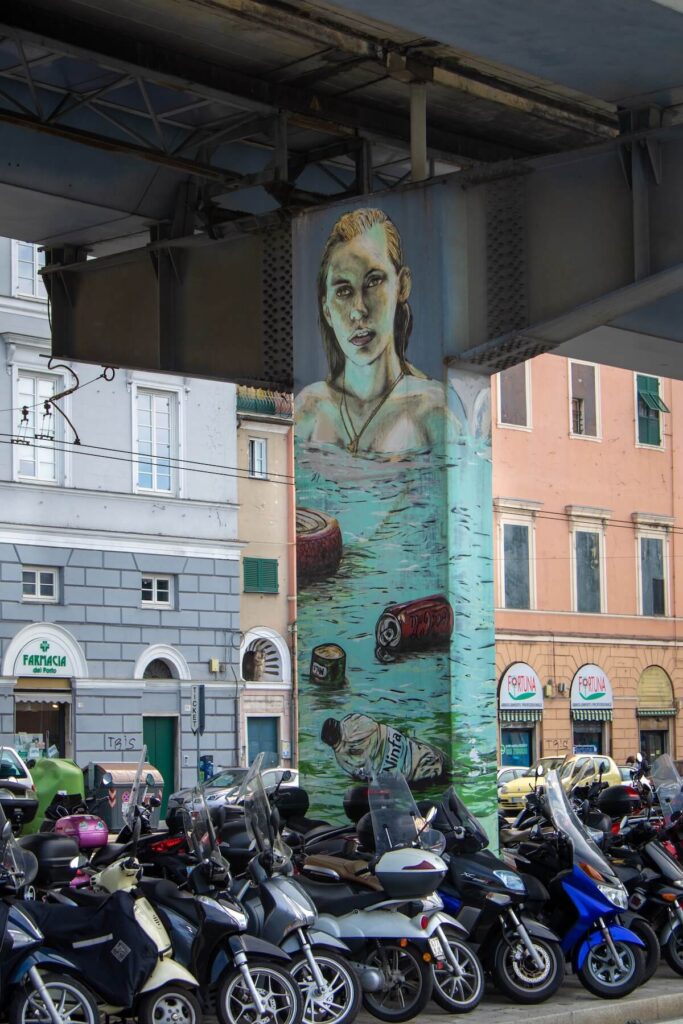
What’s more, huge murals often filled with social criticism are spread across the old town and turn a predominantly red, yellow, and beige cityscape into an almost psychedelic one.
11. Shopaholics won’t be let down.

Everyone knows Rome and Milan are among the best shopping hubs on the planet, and unfortunately Genoa can’t hold a candle to them.
But within the elegant Galleria Mazzini and along adjacent Via Roma you’ll find brands like Louis Vuitton, Yves Saint-Laurent, Ferragamo, and Michael Kors.
If you’re looking to load up on less exclusive items, head to Via XX Settembre instead. Locals flock to this wide and imposing street to buy books, clothes, shoes, watches, lingerie, and all kinds of accessories.
You’ll get to hunt for souvenirs on Via XX Settembre as well. While you’re at it, don’t forget to stop by Coin, the most popular upscale department store chain in Italy.
12. The nightlife isn’t too shabby either.

Genoa claims to be the birthplace of aperitivo, or the Italian happy hour. Whether that’s true or merely wishful thinking doesn’t matter that much. The fact remains that Genoa features a slow-paced, sensuous nightlife that is best enjoyed outdoors.
With such amazing views everywhere in town, the coolest spot to grab a drink over sunset is a rooftop bar like Bisù.
In other news, the city takes pride in its top-notch craft beer tradition, so make sure that’s also on your radar.
After dark, locals and visitors jam-pack winding alleys in the old town, particularly in the area around Piazza delle Erbe and Piazza San Donato, to chat over wine and focaccia or frisceu, a sort of Genoese fritter.
And if you don’t feel like calling it a night just yet, hit the dance floor at Tao Disco Club, jam to headbanging tunes at Quaalude Rock Club, or, for a chill nightcap, listen to excellent jazz at La Bottega del Conte.
Final thoughts

Is Genoa worth visiting, after all? As a fan of port cities, I can’t give you an unbiased opinion. I really enjoyed Genoa’s laidback vibes, characteristic sea air, and maze-like cityscape. If one thing, you shouldn’t skip Rome or Venice to visit the capital of Liguria.
Having said that, you should definitely include Genoa in your itinerary if you’ve covered the most famous cities in Italy already or if you have plenty of time in the country like I did when I studied in Milan a few years back.