
If you’re planning an itinerary through South America, chances are you’re wondering “is Santiago worth visiting?”. Chile’s capital often gets overshadowed as a destination by the Atacama desert and the Andes as a whole, which I think is quite unfair.

Santiago was the last stop on a month-long Peru-Bolivia-Chile trip I took a few years back, and despite being exhausted I really adored the city.
That’s why I’ll give you as many as 12 reasons why you should swing by Santiago on your way to or from other stunning sights in South America.
Table of Contents
Why some travelers avoid Santiago
It faces fierce competition in the region.

As exciting and gorgeous as Santiago certainly is, it is normally eclipsed by more popular destinations in South America.
Countless travelers will rather admire the archaeological wonder that is Machu Picchu or experience the decadent glamor of Buenos Aires before they chose to fly over to the Chilean capital. Even other sights within Chile like the Atacama desert seem to have the upper hand over Santiago.
Though it’s hard to argue against personal travel preferences, you could maybe consider visiting the city after checking off your top priorities on the continent — or, if planning a trip through the Ande, going the extra mile to squeeze Santiago into your itinerary.
It’s frequently plagued by smog.

Santiago’s smog problem has worsened since the 1990s, as the city grew exponentially. Polluted air gets trapped above the capital, which was built in a valley surrounded by mountains.
The phenomenon peaks during winter and can both impact your health and block the marvelous views of the Andes mountains that Santiago is famous for.
The local government has been adopting a series of measures to address the issue, such as the expansion of the subway system (now the second-largest in Latin America after Mexico City’s) and driving restriction policies.
If smog is particularly bad when you visit, don’t forget to wear a face mask whenever possible and to stay hydrated.
Earthquakes are commonplace as well.
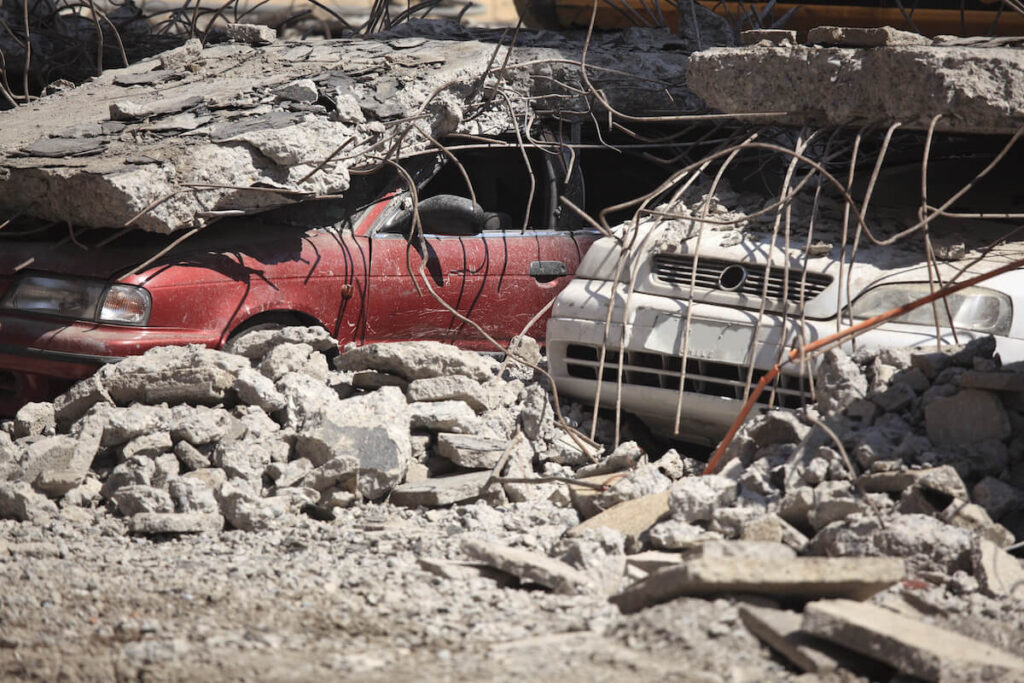
Chile makes up the southeast end of the Pacific Ring of Fire and has the biggest seismic activity on the planet. While that may sound scary, Chile is a high-income nation and has managed to commit enough resources to reinforce the structures of its buildings.
Proof of that is the fact that, out of 14 major earthquakes over the past 10 years, only 25 people have died countrywide.
Still better, Santiago hasn’t been the epicenter of a quake in many years and is hands down the safest place in Chile every time the earth shakes.
Why is Santiago worth visiting?
1. The views of the Andes will leave you speechless.
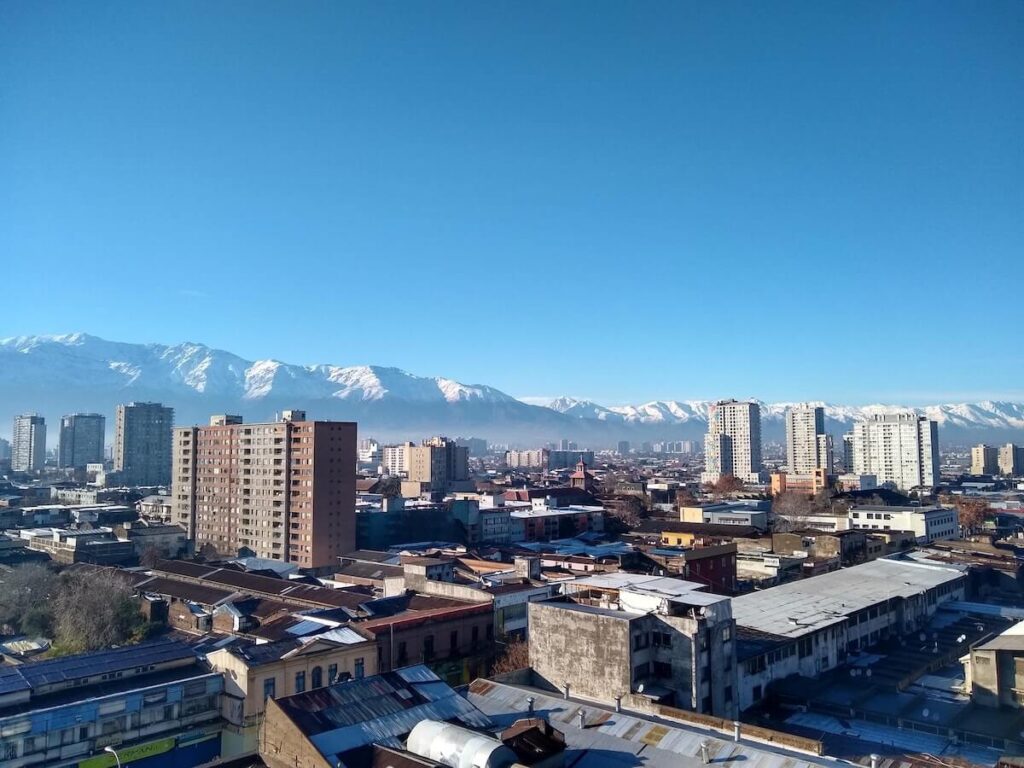
At an altitude of 1,700 feet, Santiago sits at the foothills of the majestic Andes mountains, which tower over the east of the city.
This section of the range along the border with Argentina is one of the tallest and features the astonishing Mount Aconcagua (22,840 feet) and Mount El Plomo (17,800 feet), which is visible from the capital.
The best spots in the city to gaze at the Andes in all their glory are the overlook on top of Cerro San Cristóbal, which you can reach by funicular or cable car, and Sky Costanera, the observation deck of Gran Torre Santiago (i.e. the tallest skyscraper in Latin America).
2. Santiago is steeped in history.
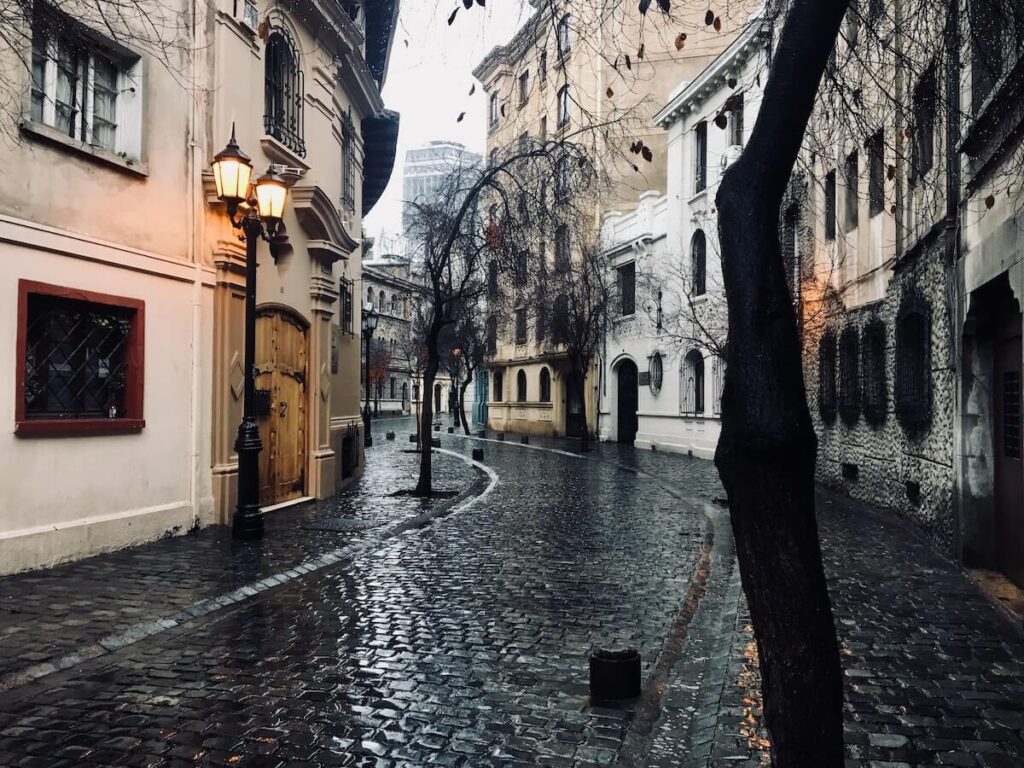
Despite lacking a homogeneous historic center, Santiago is peppered with lots of centuries-old gems that attest to its rich history. After all, the city was founded in the distant year 1541.
Landmarks worth visiting include two churches from the late 16th century (San Francisco and Santo Domingo), neoclassical palaces like La Moneda, the seat of the Presidency of Chile, and the monumental Plaza de Armas, the oldest square in the capital.
You should stroll through quaint districts like París-Londres (pictured above) and Lastarria, as well as along the Alameda Bernardo O’Higgins, which, as Santiago’s main thoroughfare, is lined with buildings from the city’s five centuries of existence.
3. It’s a first-rate gateway to Chile and its culture.

80% of the Chilean population lives in the central region of the country, where Santiago and the city of Valparaíso are located. No wonder: the north is too hot, and the south is too cold, while the center boasts a perfect Mediterranean climate.
Chile is of course a vastly diverse nation in terms of culture, yet greater Santiago encapsulates much of that wealth. Apart from the cultural institutions headquartered there, the city is home to large indigenous and foreign communities.
Santiago is also a tremendous gateway to the country in a more literal sense. From the capital, you can fly to Easter Island, San Pedro de Atacama, or Punta Arenas in the southernmost tip of Chile to see the awe-inspiring Torres del Paine peaks.
4. The wine is the finest in Latin America.
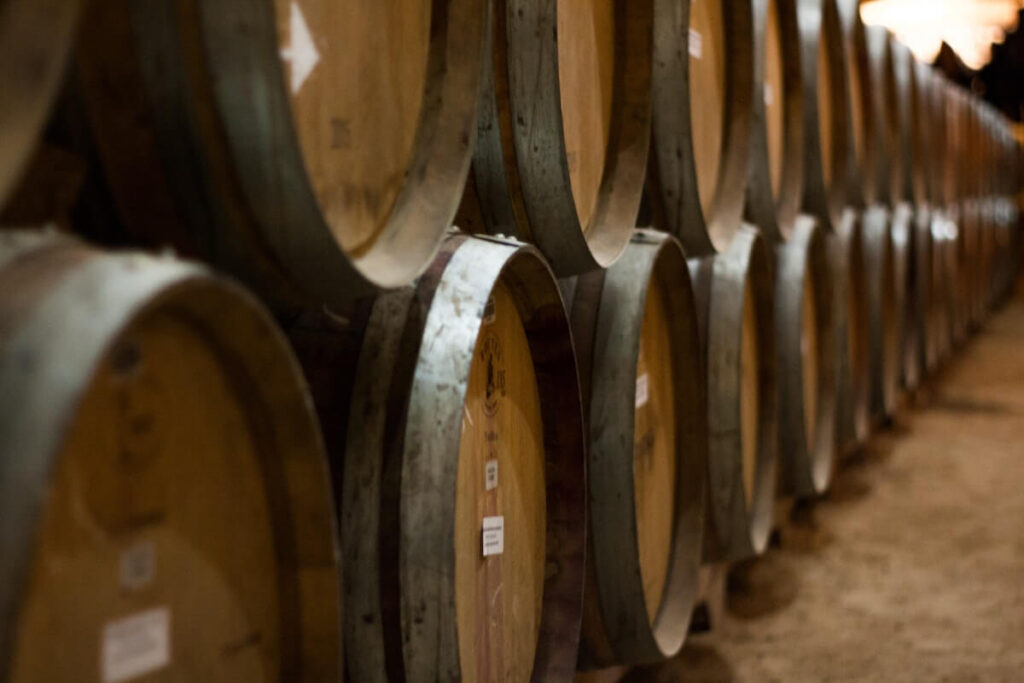
Unlike Europe, winemaking in the Americas is not an ancient tradition. That said, the Chilean vineyards are one of the oldest in the region and date back to the mid-16th century.
The craft became a full-fledged industry three centuries later, but it would only start gaining an international reputation in the 1990s.
Now, Chile is one of the top wine exporters on a global level. The best thing you’ll find is tons of renowned wineries in greater Santiago, which has an ideal climate.
Aside from wine, Santiago is known for its stellar pisco, an unaged brandy that is the national liquor of both Chile and Peru.
5. It’s extremely safe by South American standards.

By most measures, Santiago is the safest city in all of Latin America. The capital’s murder rate, for example, is on the same level as that of Zurich, Brussels, and Amsterdam.
These numbers are partly due to how security policy works in Chile: the Carabineros, a federal force, are responsible for it,
In addition to that, Chile has good living standards when compared to its neighbors, which also favors a safe environment in big cities.
You’ll notice how strolling the streets of Santiago, even late at night (at least in the richer boroughs), is a nice, carefree experience.
6. There’s a lot to see and do around the capital.

Chile is dazzling through and through, yet Santiago’s metropolitan area is packed with mesmerizing sights that you can discover on a day or weekend-long trip.
Winter sports lovers will find their own piece of paradise in the ski resorts to the east of the capital. Travelers looking for a wine-soaked adventure can hit the hundreds of wineries surrounding the city instead.
Toward the coast, you can stop by the fascinating port city of Valparaíso as well as Viña del Mar, its fancy neighbor which features the imposing Concon dunes.
7. It’s great value for money.

Chile has an export-oriented economy, so it needs a cheap national currency in order to guarantee competitiveness. Right now, the U.S. dollar is worth almost 800 Chilean pesos, which gives you a fabulous head start.
Though Santiago is among the most expensive destinations in Latin America, it’s still far more affordable than anything in Europe and North America. You can easily book a grade-A double room for 90 bucks and spend 40 dollars a day on everything else.
8. Locals will welcome you with open arms.

Chileans aren’t as cheerful as, say, Mexicans and Brazilians. They tend to be similar to Argentinians, who are more introverted.
However, they are eager to interact with foreigners, show them around, or tell them which sights they shouldn’t miss out on.
In Santiago, locals will go out of their way to help you out, which is striking considering the capital’s huge dimensions and fast pace. This is just another element that can transform a cool trip into an unforgettable one.
9. Santiago is a walkable city.

Because Santiago is located on a plateau, the city is remarkably flat. Not only that; pedestrian infrastructure is good, and several streets near the Plaza de Armas are car-free, making walking around the city center a pleasant experience.
Chile doesn’t have a deep-rooted bike culture, which at least in the capital is a shame given its superb topography.
The majority of cyclists still ride their bikes on roads, but Santiago’s cycling path network is consistently expanding. You can already pedal from downtown to the upscale district of Las Condes safely.
10. It’s efficient and 100% ready for visitors.

As a Latin American, I’m well aware the region’s patchy infrastructure can bum out visitors coming from richer nations.
In Chile overall and Santiago specifically, that’s not much of a problem. Just to mention two crucial elements, the metro reaches all areas of the city, and customer service is usually excellent.
The national and local governments invest heavily in inbound tourism services to ensure a stress-free time for all travelers who land in the capital.
Plus, the city boasts a fantastic hotel infrastructure that includes both household names like The Ritz-Carlton and local brands like the W Santiago.
11. You’ll love the vibrant art scene.
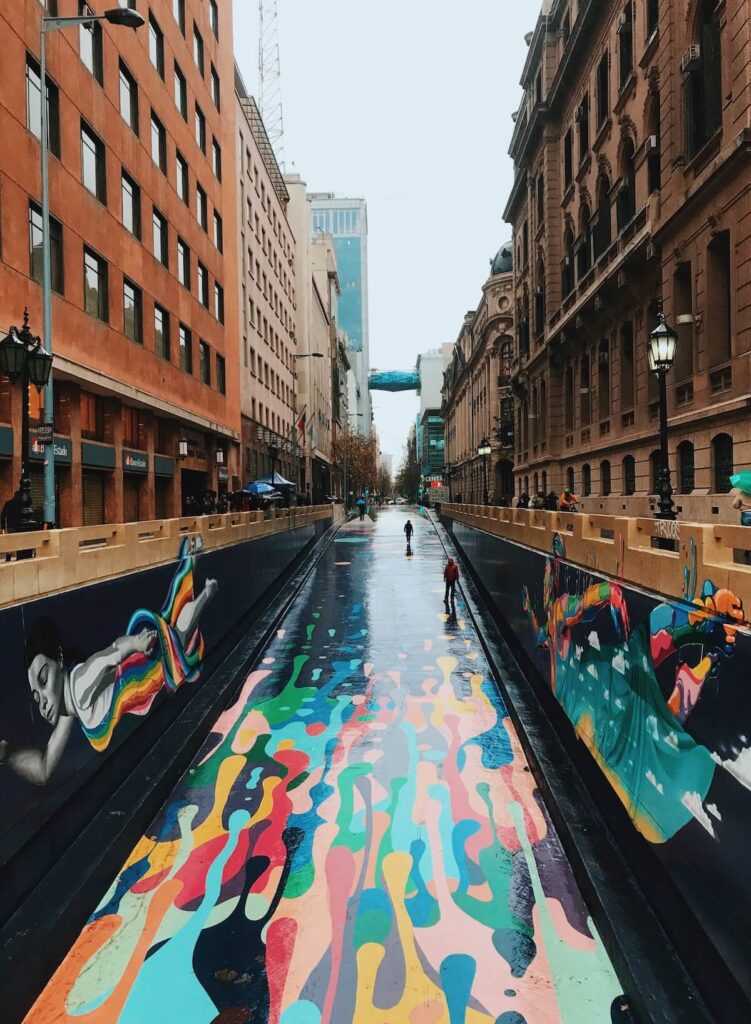
Here, I’m not talking about the Museum of Fine Arts, which you should by all means drop by. Instead, I want to shed light on Santiago’s contagious arts scene, which splashes entire neighborhoods with vibrant colors.
Street art is all over the place, but a large number of galleries are concentrated in a few areas. You have, for instance, the bohemian Bellavista (where La Chascona, one of Pablo Neruda’s unique houses, is located), and the charming Lastarria.
A sea of antique shops and craft markets is another calling card of Santiago and contributes to the city’s delightful artsy vibes.
12. It’s dotted with lovely parks.
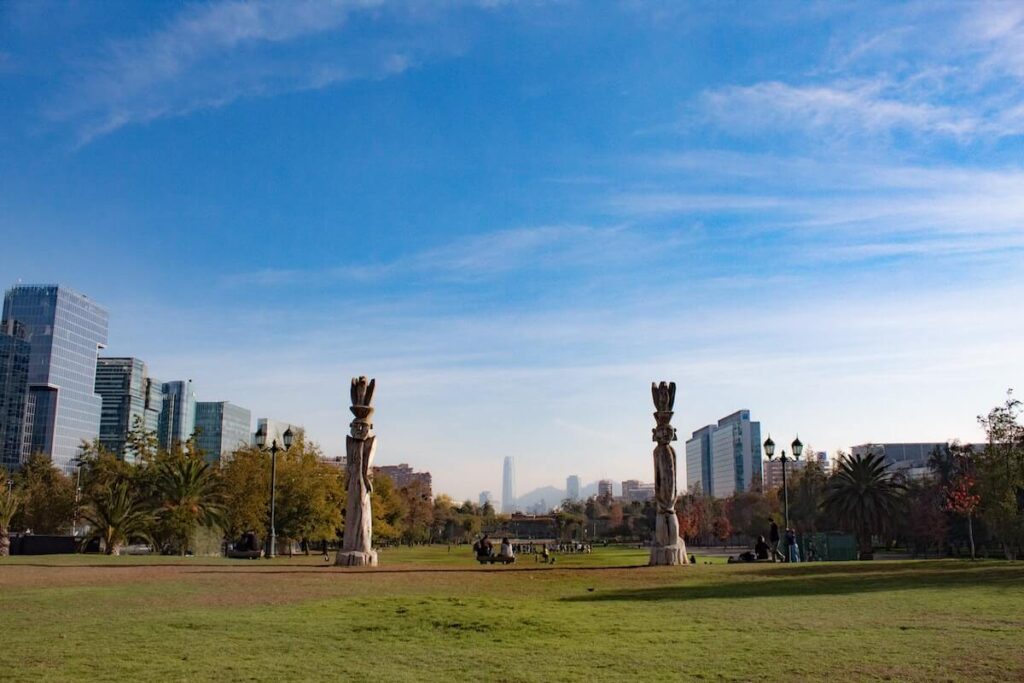
You have immense parks like Metropolitan Park, with its miles of hillside trails, the family favorites like Quinta Normal and O’Higgins, and dozens of smaller green areas spread across Santiago.
Even the tinier spaces like Parque Forestal are flawlessly manicured and will tempt you to spend a whole afternoon picnicking or just lounging on the grass.
My favorite spot in the city, by the way, is a park. From Parque Araucano’s sprawling lawn (which you can see above), you can view the Andes snow-covered peaks on one side and Gran Torre Santiago on the other.
Sunset there is a spectacle in its own right, as sunbeams reflect beautifully on the curtain-wall buildings that line the park.
Final thoughts

Friends who are debating whether to travel to Argentina or Chile often ask me “is Santiago worth visiting or what?”. I never think twice before replying they should absolutely see the Chilean capital for themselves.
The history-laden city is safe, affordable, and equipped with top-notch infrastructure, all of which make a trip there an amazing experience.
Besides being the no. 1 spot to load up on souvenirs from Chile, Santiago is also a fast-paced but welcoming city where you’ll experience the country’s culture in a nutshell.