*This article may contain affiliate links. For full information, please see the disclaimer here.
South Korea consists of the southern part of the Korean peninsula, Jeju Island, and some smaller islands. A land of contrasts, this East Asia country is known for its geographical diversity that ranges from towering mountains and serene coastlines to bustling metropolises and quaint historical towns.
This diversity becomes even more evident in South Korea’s famous cities. These cities serve as cultural hubs, economic powerhouses, and of course, appealing tourist destinations. Each city offers unique attractions and experiences, which is why it’s hard to choose just one when planning a trip!
But I’m here to help you out. In this article, we’ll be exploring 20 of the most famous cities in South Korea, what makes them stand out and why they are must-visit destinations for travelers.
Table of Contents
Major metropolitan areas in South Korea
1. Seoul
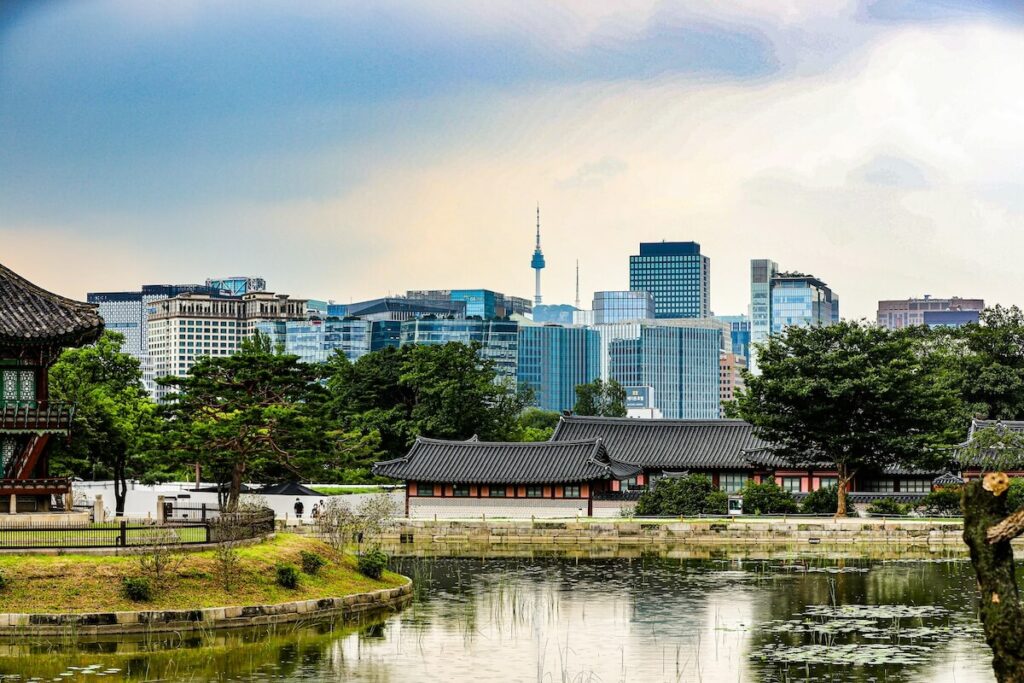
Of course, I have to start with South Korea’s capital city and biggest economic hub — Seoul.
Seoul is a vibrant metropolis that has become popular with tourists from all over the world, in huge part thanks to K-entertainment. But K-pop and K-dramas aside, Seoul is a dynamic city that offers a captivating mix of historical landmarks, cultural sites, and modern attractions.
Seoul is known for being home to the Five Royal Palaces of the Joseon dynasty: the Gyeongbokgung Palace, Changdeokgung Palace, Changgyeonggung Palace, Deoksugung Palace, and Gyeonghuigung Palace. It also boasts major tourist spots such as the Namsan Tower, Jongmyo Shrine, Joygyesa Temple, and Gwangjang Market.
Beyond its tourist attractions, Seoul is also a thriving hub for fashion, art, and entertainment. The city’s trendy neighborhoods, such as Gangnam and Hongdae, are filled with designer boutiques, art galleries, and vibrant nightlife. And thanks to its world-class transportation system and advanced infrastructure, it’s quite easy to navigate this city.
If you’re considering Seoul as your next destination (you totally should!), this 3-day Seoul itinerary will be helpful.
2. Busan

Some of us may have only learned of Busan from the movie Train to Busan. But as South Korea’s second-largest city and its biggest port city, it has always been an important economic and cultural hub in the country. Busan is a vibrant coastal metropolis renowned for its stunning beaches, delicious seafood, and rich cultural heritage. Located in the southeastern part of the country, Busan offers equal parts urban excitement and natural beauty.
One of the city’s most popular attractions is Haeundae Beach, a bustling stretch of sand where you can enjoy sunbathing, swimming, and a variety of water sports, and romantic evening cruises. For a more serene experience, head to Gwangan Beach, where you can admire the breathtaking views of Gwangan Bridge, one of the longest bridges in the world.
Busan also boasts a rich cultural scene. The Gamcheon Culture Village, a colorful hillside neighborhood with vibrant murals and unique architecture, is a must-visit. The Busan International Film Festival (BIFF), held annually in October, is a major event that attracts filmmakers and movie enthusiasts from around the globe. Plus, it’s the home of the biggest seafood market in South Korea, the Jagalchi Market, where you can enjoy fresh local seafood!
3. Incheon

Incheon is South Korea’s third-largest city. Located just west of Seoul, Incheon serves as the country’s primary gateway for international visitors. If you’ve visited Seoul, chances are, you went through the Incheon International Airport. Aside from being Incheon’s most prominent landmark, it’s also South Korea’s biggest airport and one of the world’s busiest airports.
Aside from its transportation hub, Incheon offers a variety of attractions for tourists, including the historic Wolmido Island. Once a popular amusement park destination, Wolmido now features a charming coastal promenade and beautiful beaches.
For a glimpse into the city’s past, you can visit the Incheon Chinatown, one of the oldest Chinatowns in Korea. Incheon is also home to Ganghwa Island, a popular day trip destination known for its temples, museums, and forts.
4. Gwangju

Gwangju, a major city in southwestern South Korea, is famous for its vibrant culture, delicious cuisine, and rich history. The city is particularly known for its role in the Gwangju Uprising of 1980, a pivotal event in South Korea’s democratization movement.
If you want to know more about the Gwangju Uprising, visit the May 18 Memorial Hall in the May 18th National Cemetery. The hall features exhibits, films, and interactive displays that tell the story of this important chapter in Korean history and its impact on the country.
Gwangju is also a thriving cultural center. The city is home to a variety of museums, art galleries, and theaters, showcasing the talents of local artists and performers. And don’t forget the food! Gwangju is known for local specialties such as tteokgalbi (grilled short rib patties), Gwangju-style bulgogi, ori tang (duck soup), and yukjeon (savory beef pancakes).
5. Daegu

Daegu is South Korea’s fourth-largest city and one of the country’s biggest industrial hubs. The city is home to various specialized sectors, such as textiles, metals, and machinery manufacturing. Many big Korean companies, including tech giant Samsung, were founded in Daegu.
Daegu’s long history of textile production is the reason why it’s known as “Textile City.” If you find yourself in this city, make sure to visit the Daegu Textile Museum, which showcases the history of the textile industry. Alternatively, visit Seomun Market, one of the largest traditional markets in Korea, which offers a wide variety of textiles, clothing, and other goods.
Like many cities in Korea, Daegu has local delicacies worth indulging in — gopchang and makchang (grilled pork intestines), Daegu-style jjimgalbi (braised short ribs), and megi maeuntang (spicy catfish stew). Plus, Daegu is home to the country’s best apples and oriental melons.
Also read: 20 Best Things to Do in Daegu on Your First Trip
6. Daejeon

The undisputed science capital of South Korea, Daejeon is known for its scientific advancements and educational institutions. It is home to numerous research institutes, universities, and technology companies. Korea Advanced Institute of Science and Technology (KAIST), one of South Korea’s top universities, is located here, as well as the National Science Museum, Korea’s flagship science museum.
Daejeon’s not all about science and tech though. The city also boasts a lot of cultural sites and stunning scenery.
If you’re a nature lover, an autumn day tour at Jangtaesan Recreational Forest and Hanbat Arboretum is recommended. History and art junkies can visit the Uam Historical Park and any of the several art museums in Daejeo. The city even has a massive zoo and theme park, Daejeon O-World, which houses 600 animals of 130 different species, 150,000 trees of 100 different species, 200,000 flowers of 85 different species, and exciting rides.
7. Ulsan

South Korea’s industrial powerhouse, Ulsan, is located on the southeastern coast of South Korea. The city’s economic prowess is primarily driven by its thriving automotive, shipbuilding, and petrochemical industries.
Ulsan is home to the Hyundai Motor Company, one of the largest automobile assembly plants in the world, as well as the Hyundai Heavy Industries, the world’s largest shipyard. The city’s petrochemical complex is also a major contributor to its industrial might, with the third largest oil refinery (SK Energy Ulsan Refinery Complex) calling Ulsan home.
Despite its industrial focus, Ulsan has no shortage of natural beauty. There’s the coastal Daewangam Park, the riverside paths of the Taehwagang National Garden, the silver grass of Ganwoljae Plateau, and the largest urban park in South Korea, Ulsan Grand Park.
Historical cities in South Korea
8. Gyeongju

Often referred to as the “museum without walls,” Gyeongju is a city steeped in history and tradition.
As the capital of the Silla Kingdom for nearly a thousand years, Gyeongju boasts an extensive cultural heritage evident in its numerous historical sites and artifacts. The city is home to a UNESCO World Heritage Site, the Gyeongju Historic Areas, which includes a collection of ancient tombs, temples, and palaces.
One of the most iconic landmarks in Gyeongju is the Cheomseongdae, the oldest astronomical observatory in East Asia. This ancient tower provides a glimpse into the Silla Kingdom’s advanced scientific knowledge.
Other notable attractions include the Bulguksa Temple, a masterpiece of Buddhist architecture; the Seokguram Grotto, a stunningly preserved Buddhist shrine carved into a mountainside; and the Yangdong Folk Village.
9. Jeonju

Jeonju, a city located in the southwestern part of South Korea, is famous for its well-preserved traditional Korean architecture and delicious cuisine.
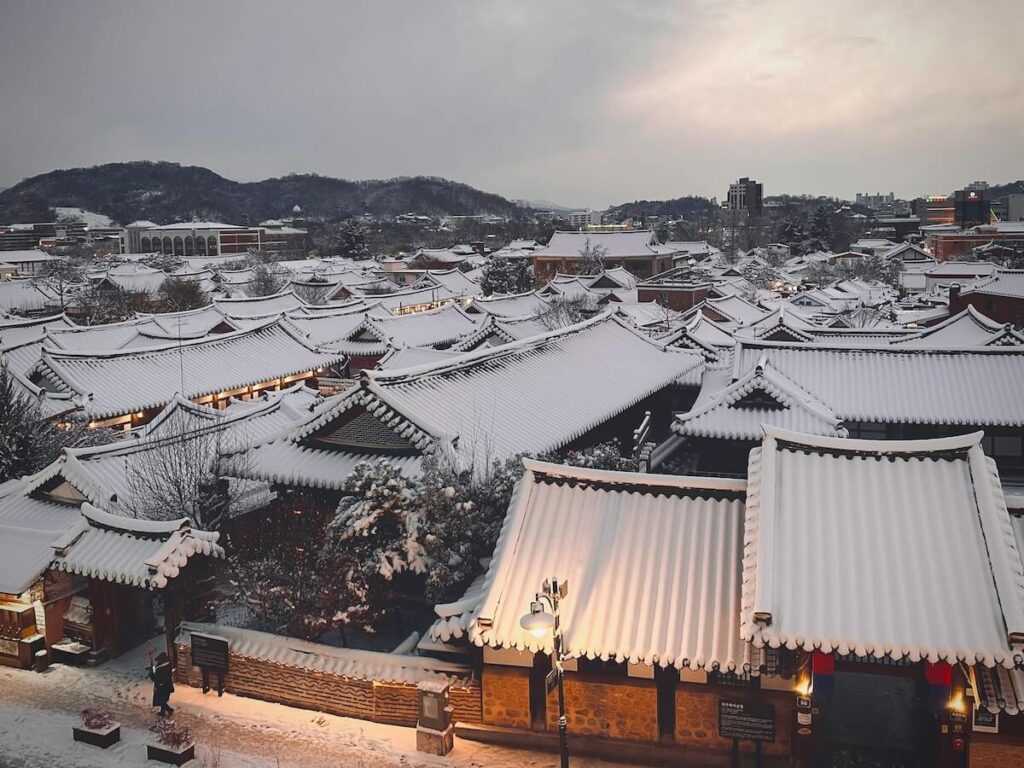
The city is home to Hanok Village, a large-scale preservation area where visitors can explore traditional Korean houses or hanoks. These beautifully restored structures offer a glimpse into the daily lives of Koreans during the Joseon Dynasty. Like Bukchon Hanok Village in Seoul, Jeonju’s Hanok Village is a great place for traditional tea ceremonies and hanbok rentals.
Jeonju is also a foodie paradise. Its most popular dish is bibimbap, a popular Korean dish consisting of rice, vegetables, meat, and a spicy gochujang sauce. What makes Jeonju-style bibimbap different is that it’s usually topped with soybean sprouts, yellow mung bean jelly, jeopjang (a soy sauce fermented for over five years), and seasoned raw beef. This dish is so representative of Jeonju that the city even annually holds a Bibimbap Festival at the Jeonju Hanok Village.
Aside from its historical and culinary attractions, Jeonju is also famous for the Jeonju International Film Festival, which showcases independent and experimental films.
10. Andong
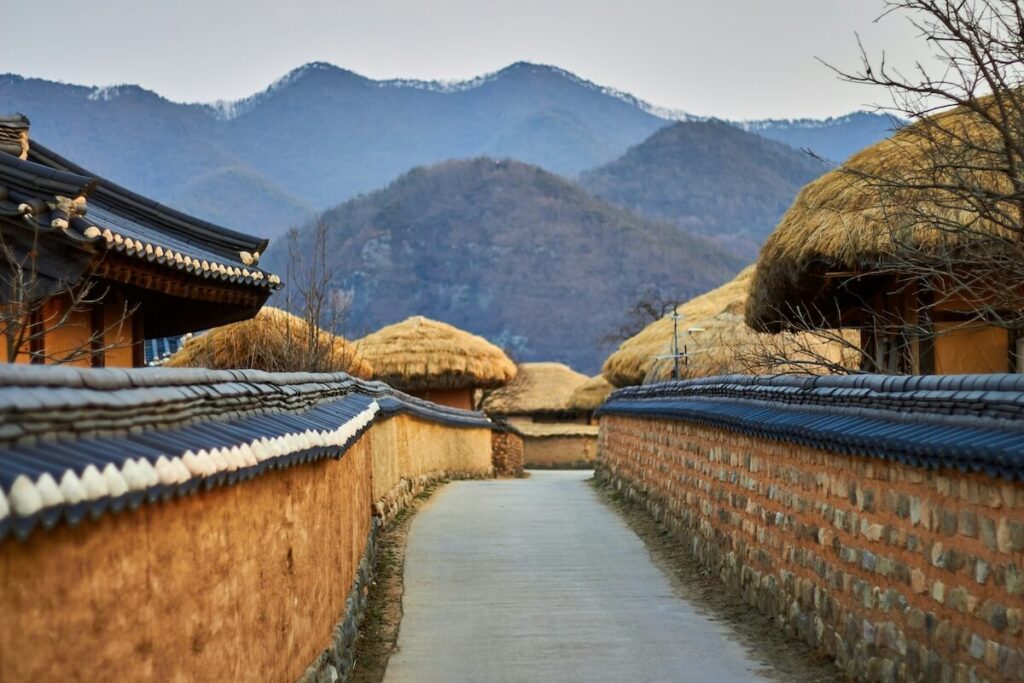
In the southeastern part of South Korea lies Andong, a city known for its rich Confucian heritage and well-preserved traditional Korean villages. As one of the centers of Confucianism in Korea, Andong has a long history of promoting education, filial piety, and social harmony. The city is home to numerous Confucian academies (the Dosan Seowon being the most popular), temples, and shrines.
A visit to the Hahoe Folk Village, a traditional and largely unchanged Korean village from the Joseon Dynasty, is a must. The village features thatched-roof houses, traditional workshops, and beautiful scenery, providing visitors with a glimpse into the way of life of Koreans in the past. The village is also home to the Ryu family, a prominent Confucian clan that has lived there for centuries.
The city is also famous for its traditional Korean dishes, such as jjimdak (braised chicken a.k.a. one of my favorite Korean dishes), doenjang jjigae (soybean paste stew), and various types of kimchi.
11. Suwon
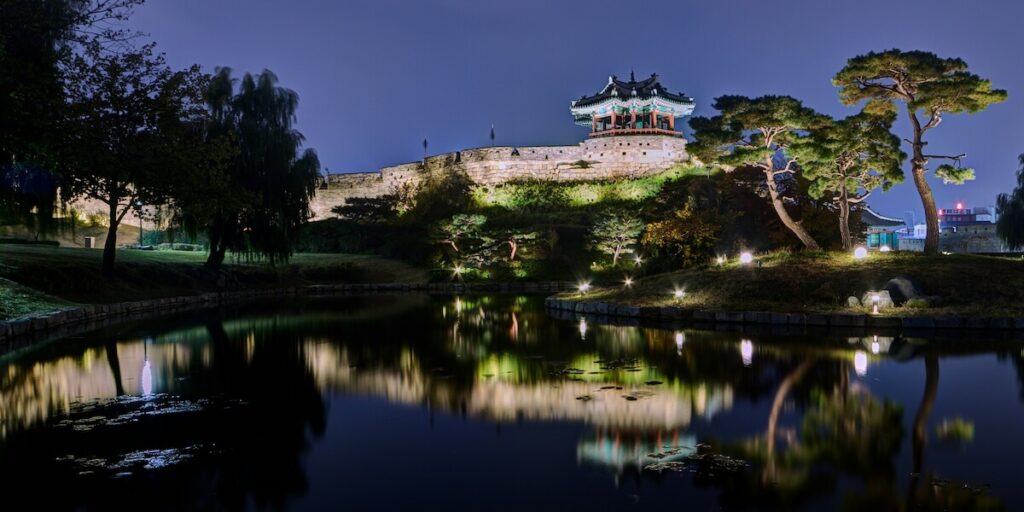
Suwon, a city in Gyeonggi Province, is best known for Hwaseong Fortress, a UNESCO World Heritage Site. Built in the late 18th century by King Jeongjo, the fortress is a masterpiece of Korean military architecture, featuring imposing walls, gates, and watchtowers. Today, it serves as a popular tourist destination.
Suwon is also a major economic hub, thanks in part to the presence of Samsung Electronics. The multinational technology giant has its headquarters in Suwon, and its vast manufacturing facilities have contributed significantly to the city’s economic growth. Suwon is also home to several world-class research universities, including Sungkyunkwan University and Ajou University.
Food lovers will not be disappointed with Suwon. This city is famed for Suwon galbi, its version of the Korean beef rib dish, and Suwon tongdak (whole fried chicken).
12. Cheongju

Cheongju, the capital city of North Chungcheong Province, is the former capital of the Baekje Kingdom. So it’s no surprise that the city has a lot of well-preserved historical and cultural sites.
One of Cheongju’s most notable attractions is the Cheongju National Museum, which houses a vast collection of artifacts from the Baekje Kingdom and other periods. The city is also home to several ancient temples, such as Sangdam Temple and Sinseonsa Temple. While these serene temples offer you a chance to witness Korean Buddhism, they’re also great spots for admiring Cheongju’s natural beauty.
Cheongju is also a center for arts and culture, hosting the prestigious Cheongju Craft Biennale every two years. This international event showcases the works of talented artisans from around the world and highlights the importance of traditional crafts in contemporary society.
13. Gongju
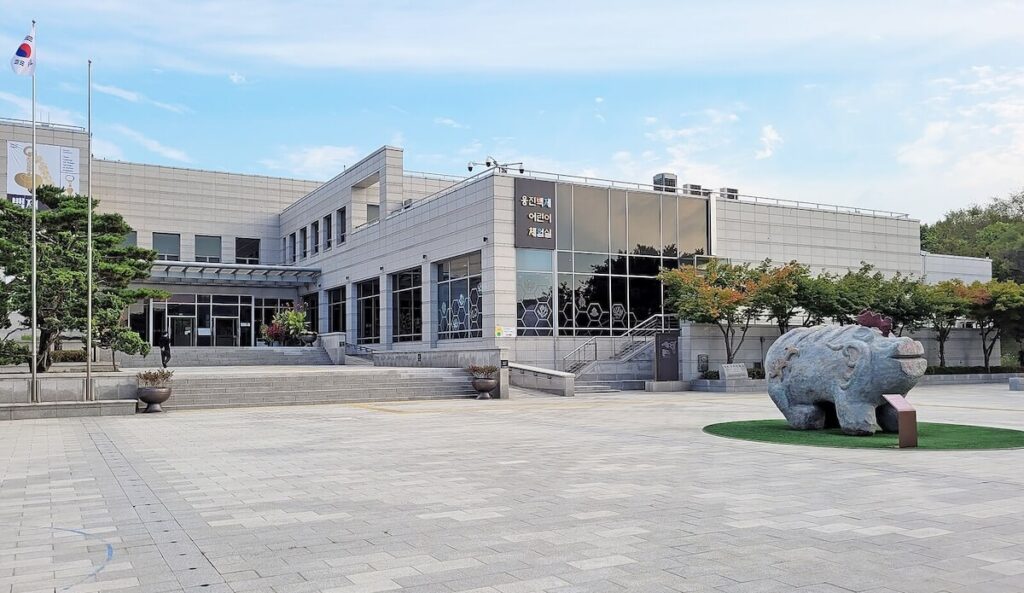
Like Cheongju, Gongju in South Chungcheong Province was once the capital of the Baekje Kingdom. Thus, it boasts a wealth of archaeological sites and historical landmarks.
One of these iconic landmarks is the Gongju National Museum, which houses a vast collection of artifacts from the Baekje period, including pottery, jewelry, and sculptures. Another is the Baekje Cultural Complex. This sprawling complex is made up of several historical sites, including the Baekje Royal Tomb Complex, a series of burial mounds that were used to bury the Baekje kings and their families.
Gongju is also home to several temples, such as the Magoksa Temple and Gapsa Temple. Additionally, the Gongsanseong Fortress, a well-preserved ancient fortification, offers panoramic views of the city and surrounding countryside.
Coastal cities in South Korea
14. Gangneung

Nestled along the eastern coast of South Korea, Gangneung is a charming city known for its pristine beaches, extensive cultural heritage, and stunning natural landscapes.
Two of the city’s most iconic beaches, Jeongdongjin and Gyeongpo, boast crystal-clear waters and a variety of water sports. They are particularly popular for their breathtaking sunrises, especially during the New Year. For those seeking a more cultural experience, Gangneung offers a wealth of traditional Korean temples and shrines, including Ojukheon, the birthplace of renowned poet and scholar Yi Hwang.
Gangneung has also gained international recognition for its role in hosting major sporting events. The city successfully hosted all of the ice events for the 2018 Winter Olympics and 2024 Winter Youth Olympics, showcasing its world-class facilities and organizational capabilities. Plus, being a coastal city, Gangneung is also known for its delicious seafood, from grilled squid to spicy seafood stew.
15. Tongyeong
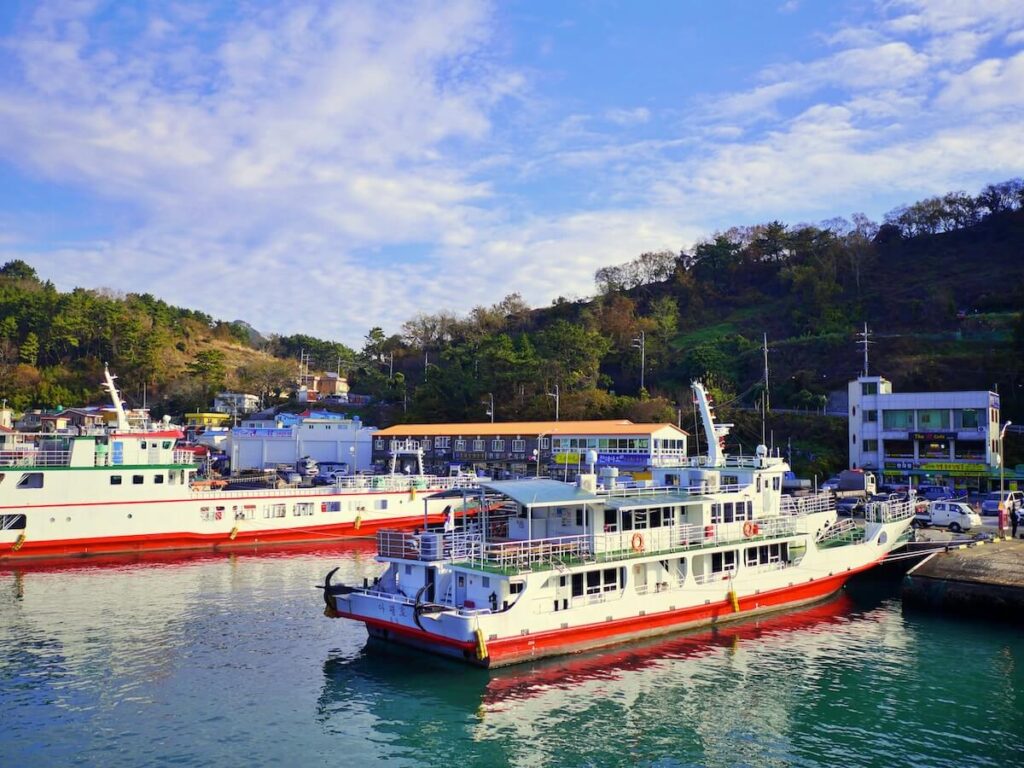
Located on the southern coast of South Korea, Tongyeong is a charming city steeped in history and maritime heritage.
The city’s strategic location has played a crucial role in its development over the centuries, and it is particularly renowned for its association with Admiral Yi Sun-sin, a legendary Korean naval commander who defended the country against Japanese invaders during the Imjin War. Tongyeong served as the base for Yi Sun-sin’s fleet, and his legacy continues to be celebrated throughout the city, as seen in the several historical sites, museums, and monuments dedicated to the admiral.
Aside from its historical significance, Tongyeong is also known for its delicious local cuisine. One of the city’s most famous dishes is chungmu kimbap, a type of gimbap made with only rice as the filler ingredient. Another popular food is the Tongyeong kkulbbang, a sweet bread filled with red bean paste, and sweet potatoes, which are grown in abundance in the nearby Yokji Island.
16. Geoje
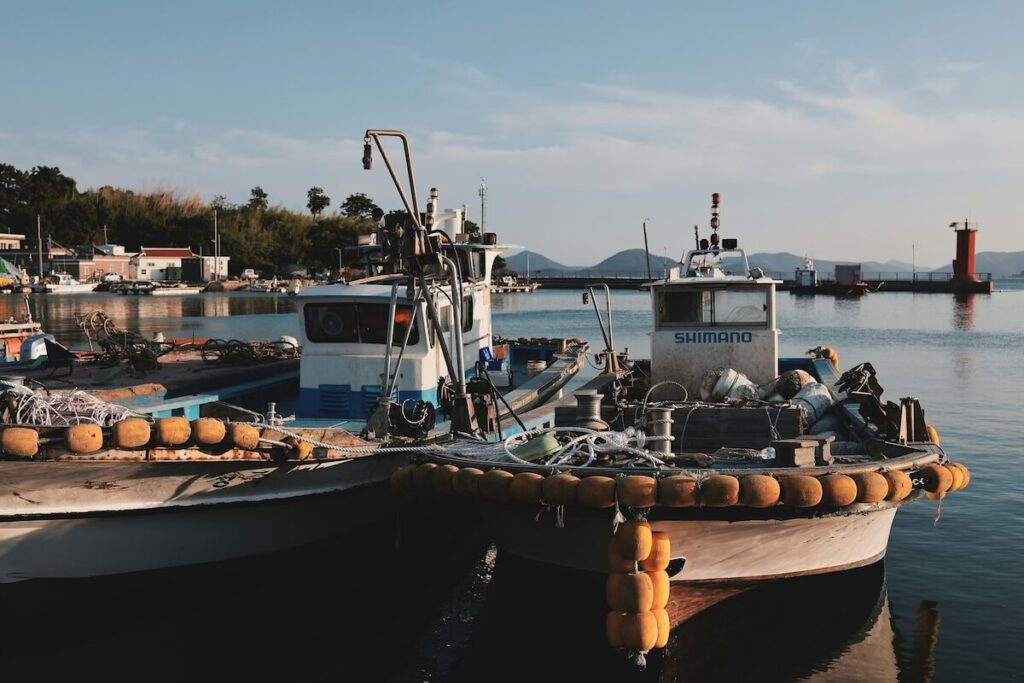
Geoje, a beautiful island located off the southern coast of South Korea, has a diverse landscape that offers something for everyone, from tranquil beaches and rugged cliffs to lush forests and charming fishing villages.
One of Geoje’s most popular attractions is Oedo Botania, a tiny island transformed into a terraced & manicured botanical garden; Haegeumgang, picturesque islets within the Hallyeohaesang National Park; and the Windy Hill, a seaside hill with an old windmill and stunning mountain & ocean views. You can explore all three attractions with this Geoje day trip from Busan.
Geoje is also home to a thriving fishing industry, and its coastal villages offer a glimpse into traditional Korean fishing culture. You can witness the daily activities of the fishermen, sample fresh seafood, and even participate in fishing tours.
17. Sokcho
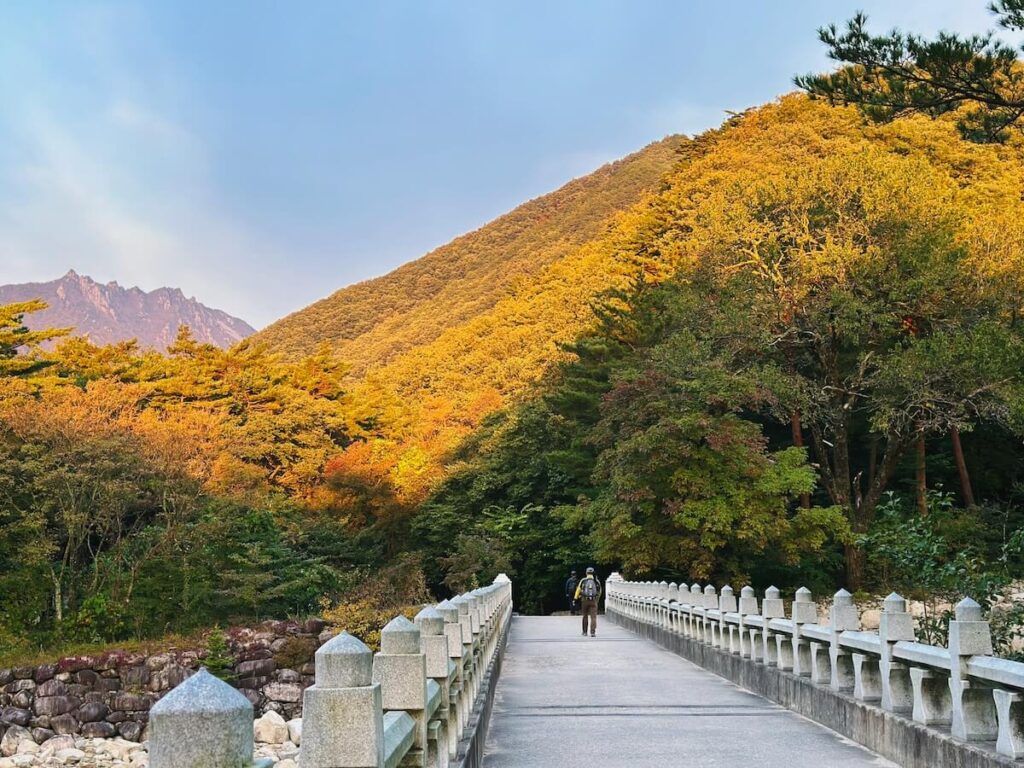
Outdoor enthusiasts will love Sokcho, a coastal city nestled in the northeastern corner of South Korea. This city doesn’t just offer breathtaking seaside views but also mountainside adventures.
Sokcho is a popular gateway to Seoraksan National Park, one of South Korea’s most iconic natural landmarks. The park boasts towering mountains, lush forests, and cascading waterfalls, making it a paradise for hikers, nature lovers, and spiritual seekers. This full-day Seoraksan tour will take you to the summit and the nearby seaside Naksansa Temple.
Sokcho’s coastal charm is also evident in the beautiful Sokcho Beach, the scenic oceanfront Yeonggeumjeong Pavilion, and the bustling Daepo Port. The fish market at Daepo Port is particularly popular among seafood lovers as it offers a variety of fresh and delicious seafood dishes.
18. Yeosu

Yeosu, a charming city located on the southern coast of South Korea, is often overlooked by tourists. Which is a shame because it’s nestled amidst picturesque mountains and surrounded by the ocean.
One of the highlights of Yeosu is Odongdo, a small island connected to the mainland by a picturesque bridge. The island is home to a beautiful botanical garden, featuring camellia flowers, a variety of plant species, and stunning coastal views. Another popular attraction is Dolsan Park, a scenic park offering panoramic views of the city and the ocean. There’s also the Yeosu Expo Station, a former exhibition site that now houses a range of exhibits and interactive displays.
Yeosu is also renowned for its delicious local cuisine. One of the city’s most famous dishes is gejang, a marinated raw crab delicacy. Another local specialty is gat kimchi, a type of kimchi made with mustard greens.
19. Mokpo

Mokpo, a vibrant city on the southwestern tip of South Korea, is a haven of natural beauty, cultural heritage, and delectable cuisine. The city’s strategic location on the Yellow Sea has played a significant role in its history, and its maritime influence is evident throughout its attractions and traditions.
For those interested in learning more about said maritime history, the National Maritime Museum offers a fascinating collection of exhibits and artifacts. If you’d rather explore the outdoors, check out Yudal Mountain, a popular destination for hiking and enjoying panoramic views of the city and the surrounding coastline. The mountain is also home to Gatbawi, a large rock formation with a unique shape that is believed to bring good luck.
Mokpo is also renowned for its fresh seafood, especially raw fish dishes like sashimi and hoe. Other local specialties include Mokpo samgyeopsal (grilled pork belly dish), gulbi (dried yellow corvina), meongge (sea squirt), jeonbok-juk (abalone rice porridge), and bibimbap with seafood.
20. Jeju
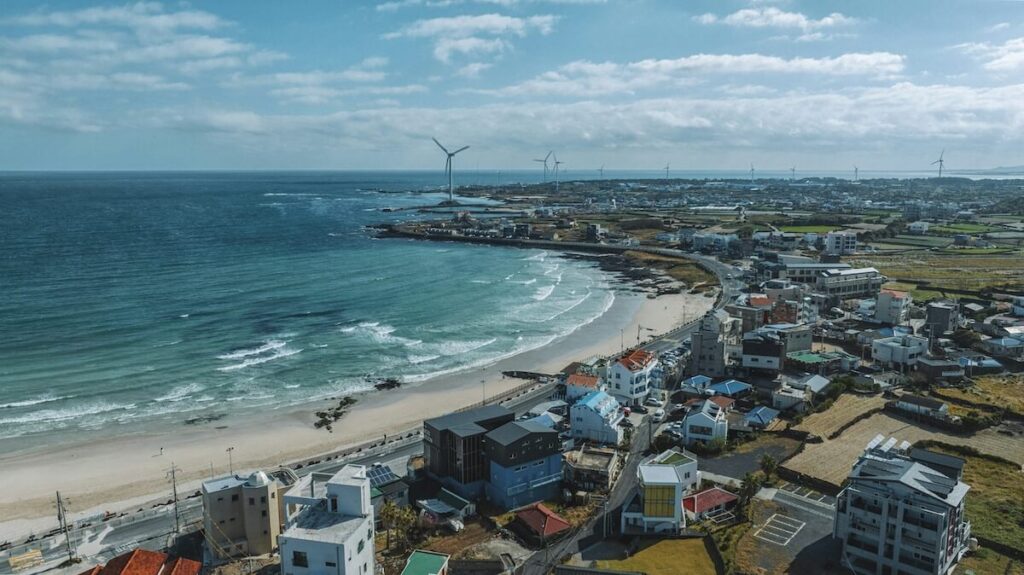
I can’t conclude a list of famous cities in South Korea without mentioning Jeju City, the capital of Jeju Island, also known as the “Hawaii of Korea” due to its lush landscapes, volcanic formations, and warm weather.
Jeju has a lot to offer visitors. It’s known for geological wonders, such as the Jeju Stone Park, Manjanggul Lava Tube (a UNESCO World Heritage Site and the longest lava tube in the world), and the Sangamburi Crater. Beach lovers can visit Jeju’s beautiful beaches, like Udo Island, Hamdeok Beach, and Hyeopjae Beach, popular destinations for swimming, sunbathing, and water sports.
Jeju City is home to the bustling Dongmun Traditional Market, which offers an array of goods such as vegetables, fruits, seafood, medicinal herbs, grains, and clothing. It’s a go-to place for seafood lovers, and worth adding to your Jeju itinerary. There’s also the Jungang Underground Shopping Center, which has hundreds of stores selling clothing, shoes, accessories, cosmetics, as well as food.
Read more: Is Jeju Worth Visiting? 10 Reasons That’s a Yes
Conclusion

And that’s a wrap! South Korea boasts a diverse range of cities, each offering its own unique charm and attractions. From the bustling metropolis of Seoul to the historic cities of Gyeongju and Jeonju and the picturesque coastal cities of Jeju and Sokcho, there is something for every type of traveler.
Whether you’re seeking cultural experiences, natural beauty, or culinary adventures, South Korea has it all. With its vibrant cities, friendly people, and delicious fare, there’s just no reason not to visit. And if you’re thinking of flying soon, do check out this list of things South Korea is famous for.
Famous cities in South Korea for your next visit – Pin it!