
*This article may contain affiliate links. For full information, please see the disclaimer here.
Ever dreamed of an island holiday where you can hike a dormant volcano in the morning and satisfy your cravings with high-end BBQ by sunset? Well, then vacationing in Jeju Island would be a dream come true!
Jeju Island is essentially South Korea’s favorite playground, a place where rugged basalt cliffs meet soft, turquoise beaches and a warm tropical breeze. This stunning destination balances UNESCO-certified nature with some of the trendiest cafe scenes in Asia.
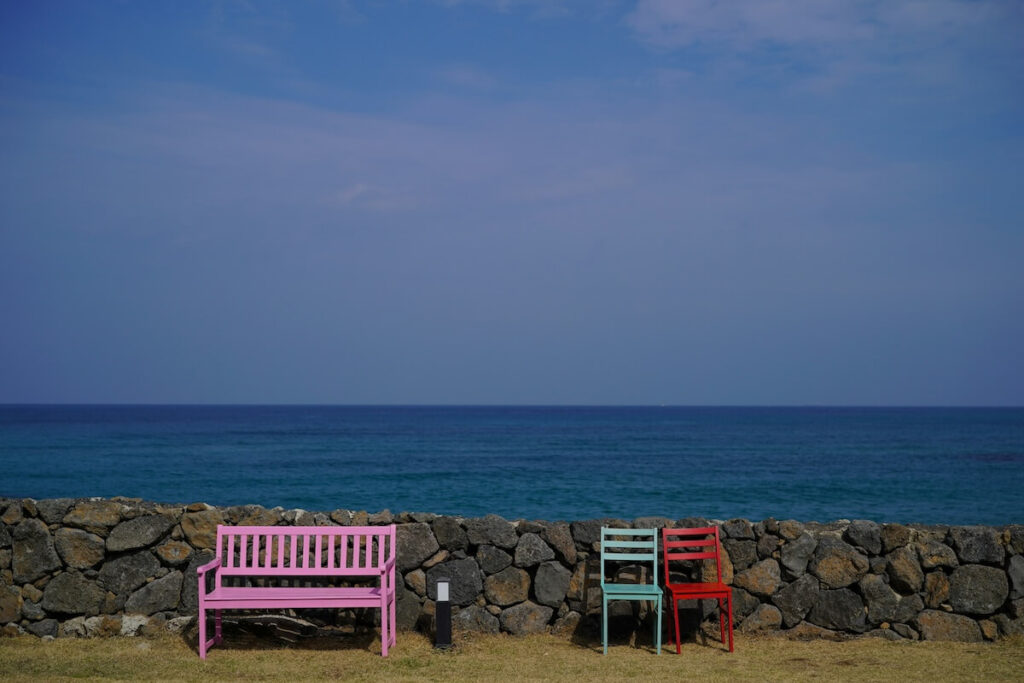
But beyond the scenery, what is Jeju Island known for? It’s a mix of legendary figures and incredible flavors—from the resilient haenyeo (female divers) who free-dive for fresh abalone to the iconic, hump-backed hallabong citrus that flavors everything on the island. It’s famous for the “three abundances” of wind, rocks, and women, the perfect plate of smoky black pork, and the country’s biggest tea brand.
Enough with the teasing—let’s dig deeper into these fascinating things about Jeju that turn first-time visitors into lifelong fans!
Table of Contents
What is Jeju Island known for?
1. Hallasan

Standing tall at the center of Jeju Island is Hallasan, South Korea’s highest peak at 1,947 meters (6,388 feet). It’s actually a massive shield volcano, meaning it was formed by highly fluid lava flows that created a broad, gently sloping profile rather than a jagged, steep one.
This UNESCO World Heritage site is famous for Baengnokdam, the stunning crater lake at its summit, whose name literally translates to “White Deer Lake” from local legends.
If you’re planning to reach the top, you’ll need to book a reservation in advance—slots for the popular Seongpanak and Gwaneumsa trails fill up fast.
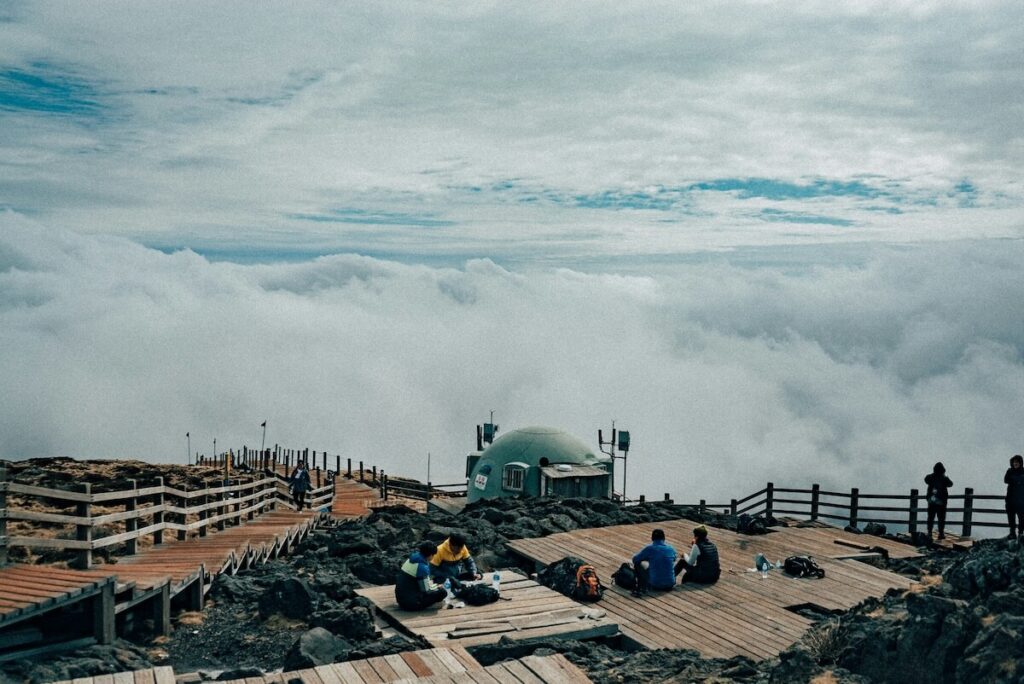
While the hike is a full-day commitment (expect about 8 to 10 hours round trip), the views of the entire island and the unique alpine vegetation make it worth every step. Just remember to pack plenty of water and check the weather, as the mountain has a climate all its own.
Alternatively, if you’re visiting in winter, this half-day hike along the Witsae Oreum Route is a beginner-friendly option that offers amazing vistas.
2. UNESCO Triple Crown
Jeju Island is famous for being a geological heavyweight. It’s one of the very few places on Earth to hold the UNESCO Triple Crown, meaning it’s recognized as a Biosphere Reserve (2002), a World Natural Heritage site (2007), and a Global Geopark (2010).
Essentially, UNESCO looked at the island’s volcanic cones, ancient lava tubes, and rare ecosystems and decided the whole place was a literal “volcano museum” that the entire world needs to protect.
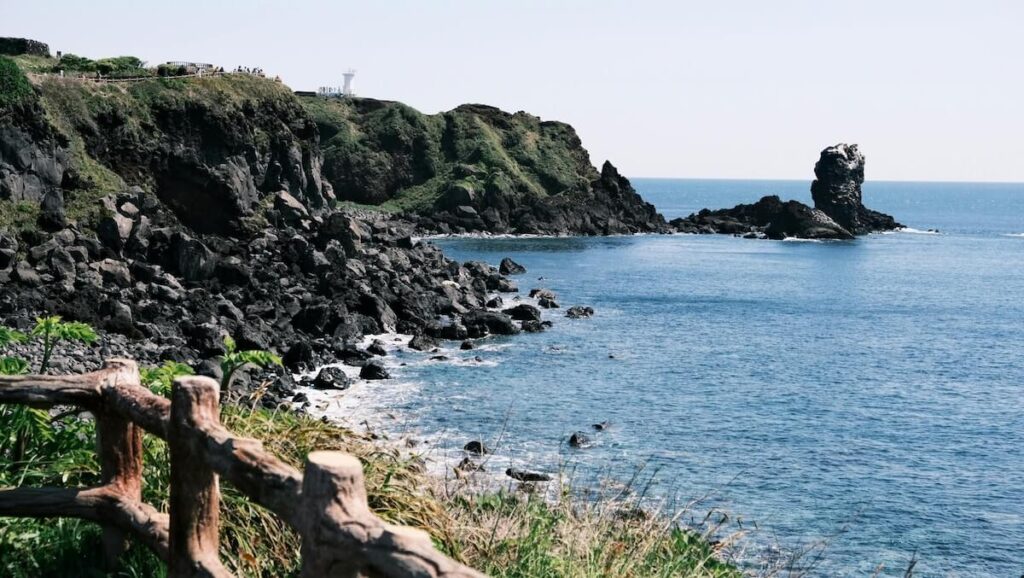
The “Heritage” part specifically covers the Jeju Volcanic Island and Lava Tubes, which include the towering Hallasan, the fortress-like Seongsan Ilchulbong, and the Geomunoreum lava tube system.
While the titles sound formal, they translate to some pretty incredible experiences for you—like walking through Manjanggul Cave, where you can see one of the world’s largest lava columns. It’s a rare trifecta that proves Jeju’s landscape isn’t just scenic. It’s a vital piece of Earth’s history that you can actually hike through.
3. The haenyeo
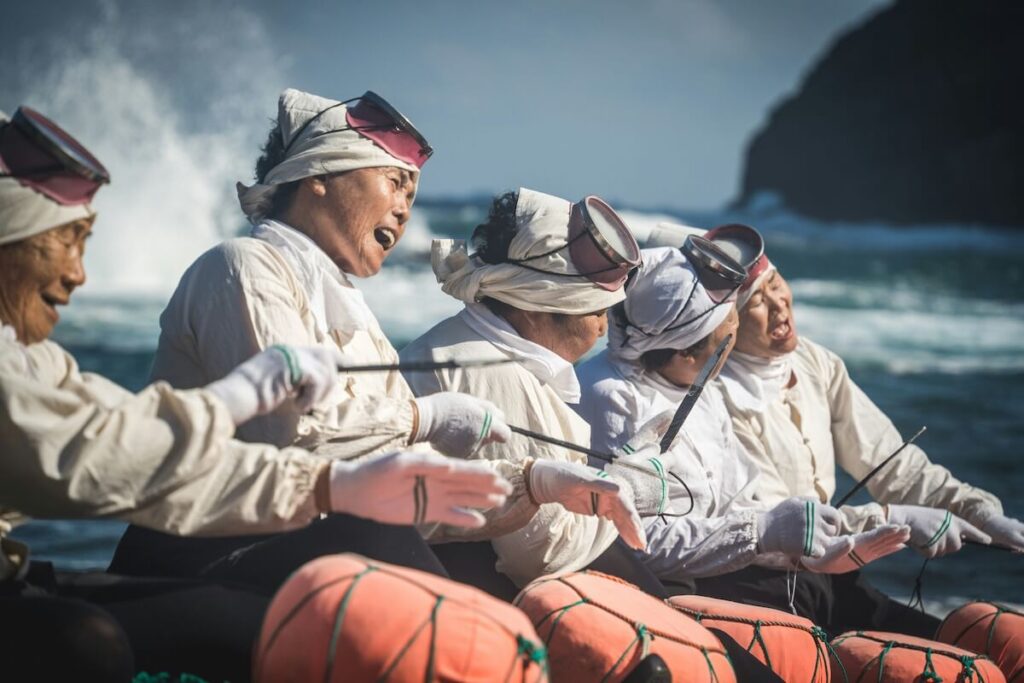
One of Jeju’s most inspiring legacies is the haenyeo, or female divers.
Often called the “mermaids of Jeju,” these women—some well into their 80s—harvest seafood like abalone and sea urchins by free-diving up to 10 meters without oxygen masks. They represent a powerful matriarchal tradition and are recognized on the UNESCO Intangible Cultural Heritage list. It’s a grueling job that relies on incredible lung capacity and a deep respect for the ocean’s limits.
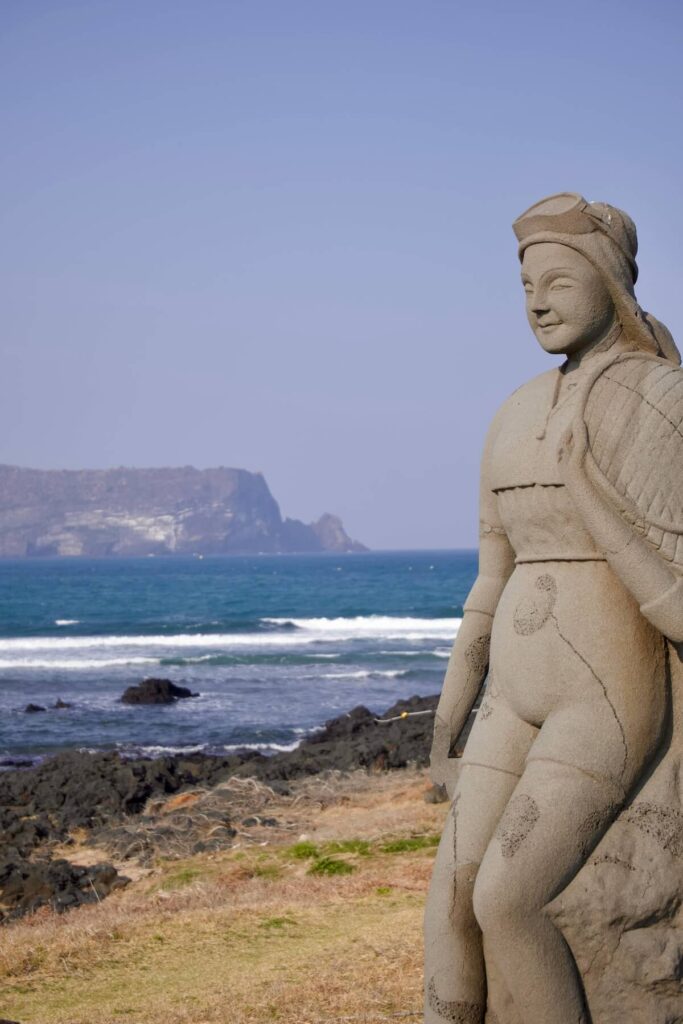
To get a closer look at their history, you can visit the Haenyeo Museum or look for the bright orange buoys bobbing near the shore, which mark where they are working. If you want to dive into the culture yourself (without the 10-meter breath-hold), you can even rent traditional haenyeo clothing for a unique photo shoot.
4. Seongsan Ilchulbong

Rising like a giant stone crown from the ocean, Seongsan Ilchulbong, or Sunrise Peak, is arguably Jeju’s most recognizable silhouette. This “fortress-like” tuff cone was formed about 5,000 years ago by a dramatic volcanic eruption under the shallow sea.
Today, it’s a UNESCO World Natural Heritage site and the absolute go-to spot for catching the first light of day. Watching the sun break over the horizon from the crater’s edge is like a local rite of passage.
The hike to the summit takes about 20 to 30 minutes up a well-maintained (but steep!) staircase, so wear sneakers. Admission is 5,000 KRW, and it’s open from 7:30 AM, though they often open earlier specifically for sunrise chasers.
Since it’s located on the eastern tip of the island, a great way to see it is by joining an Eastern Jeju UNESCO day tour. It’s a convenient way to pair the peak with other nearby gems like the previously mentioned Haenyeo Museum and the Manjanggul lava tubes.
5. Black pork
No trip to the island is complete without tasting black pork, or heuk-dwaeji. This native breed is Jeju’s most famous culinary export, prized for a flavor profile that’s significantly richer and smokier than standard pork.
Black pork meat is known for its intense marbling and a unique, chewy texture—especially the skin—which locals almost always grill over charcoal to let that natural fat render into something truly spectacular.
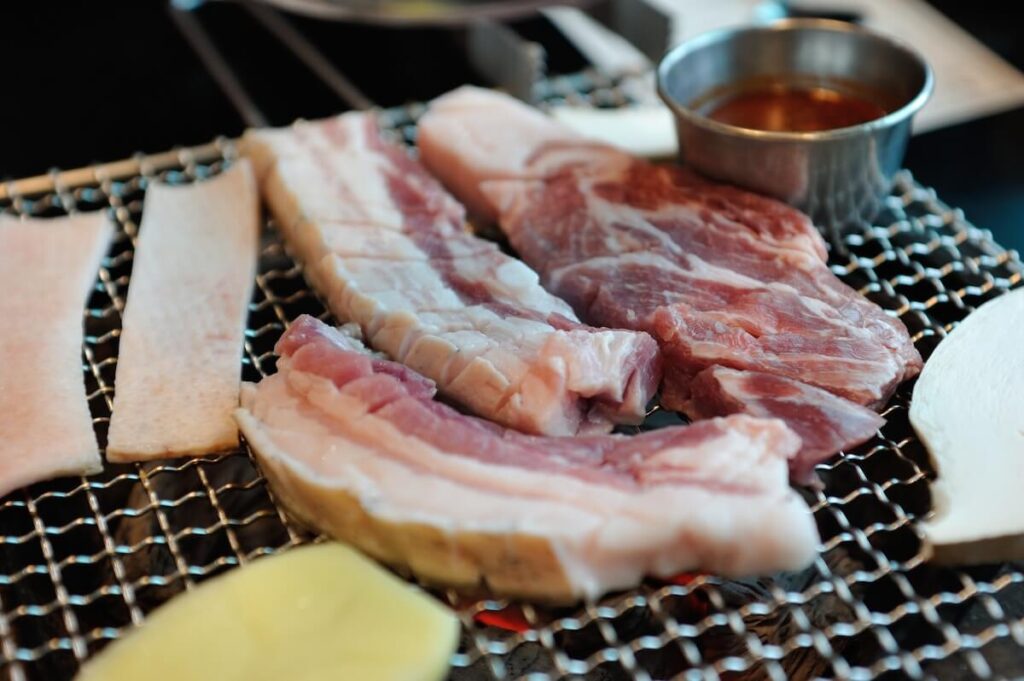
For the full experience, head to Black Pork Street in Jeju City, a dedicated hub where the aroma of sizzling BBQ hits you the moment you arrive. Here, you’ll find legendary institutions like Donsadon, which is a local favorite for its thick, succulent cuts, and Hwaro Hyang, known for its traditional charcoal setup.
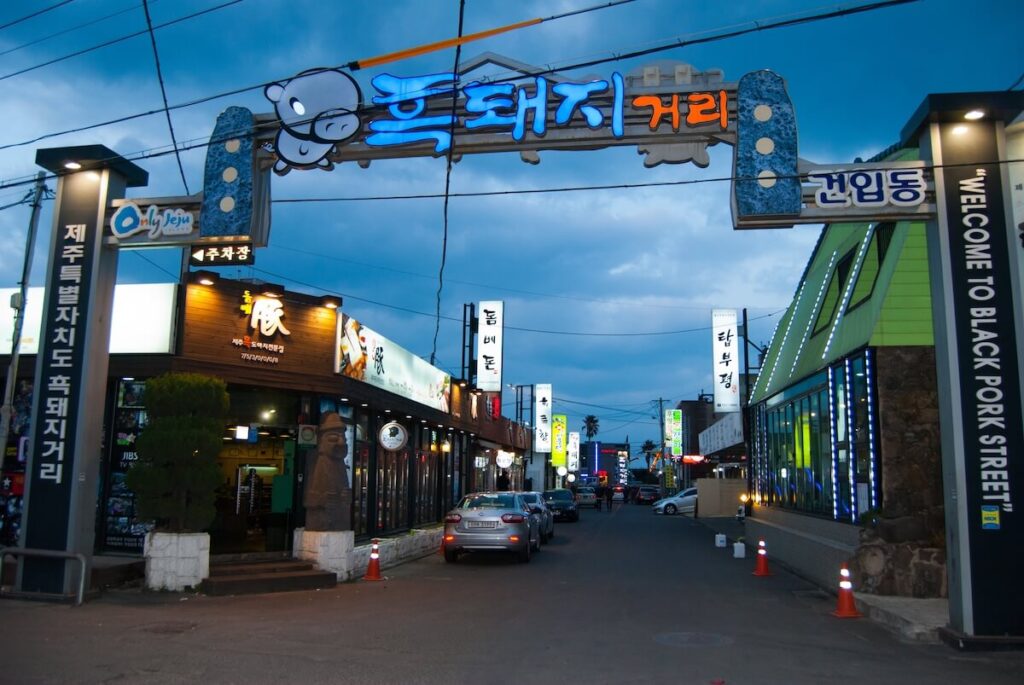
If you’re feeling a bit adventurous, try dipping your meat in meljeot (salted anchovy sauce) for that authentic, salty kick that perfectly cuts through the richness of the pork.
6. Dol hareubang
Everywhere you turn on the island, you’ll be greeted by the bulging eyes and grin of the dol hareubang, or “stone grandfathers.” What is Jeju known for if not these iconic guardians? You’ll find them guarding everything from airport terminals to modern cafes.
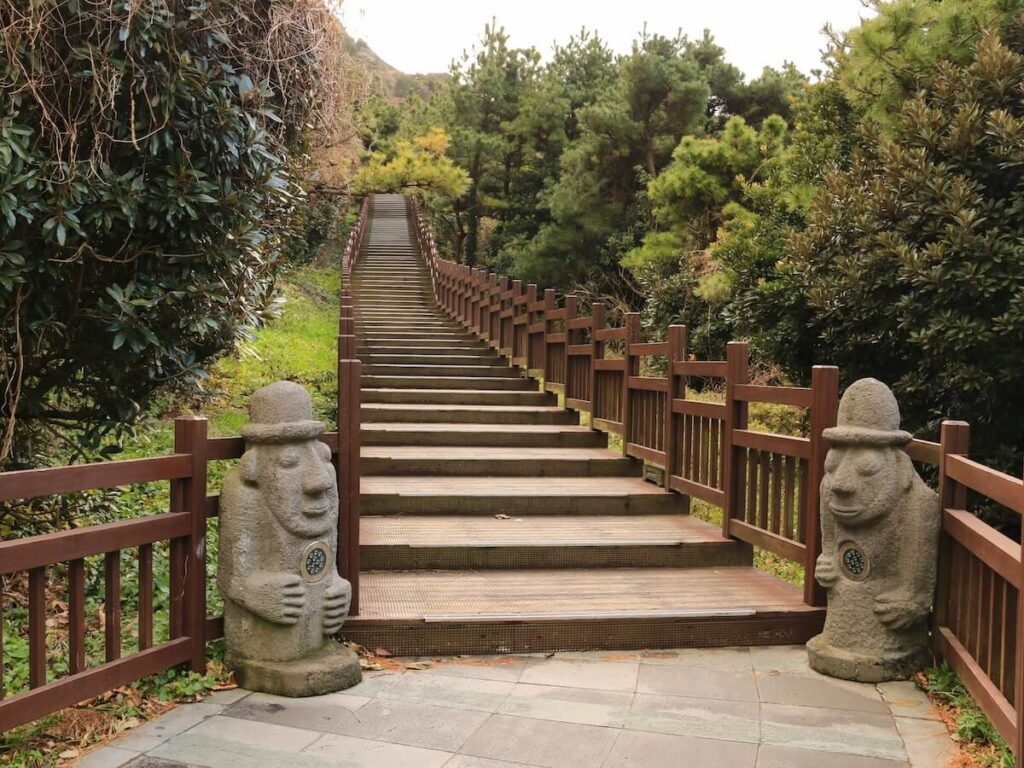
These mushroom-capped basalt statues are carved from local volcanic rock and were historically placed at fortress gates to ward off demons and offer protection. They’ve since evolved into the island’s official mascot.
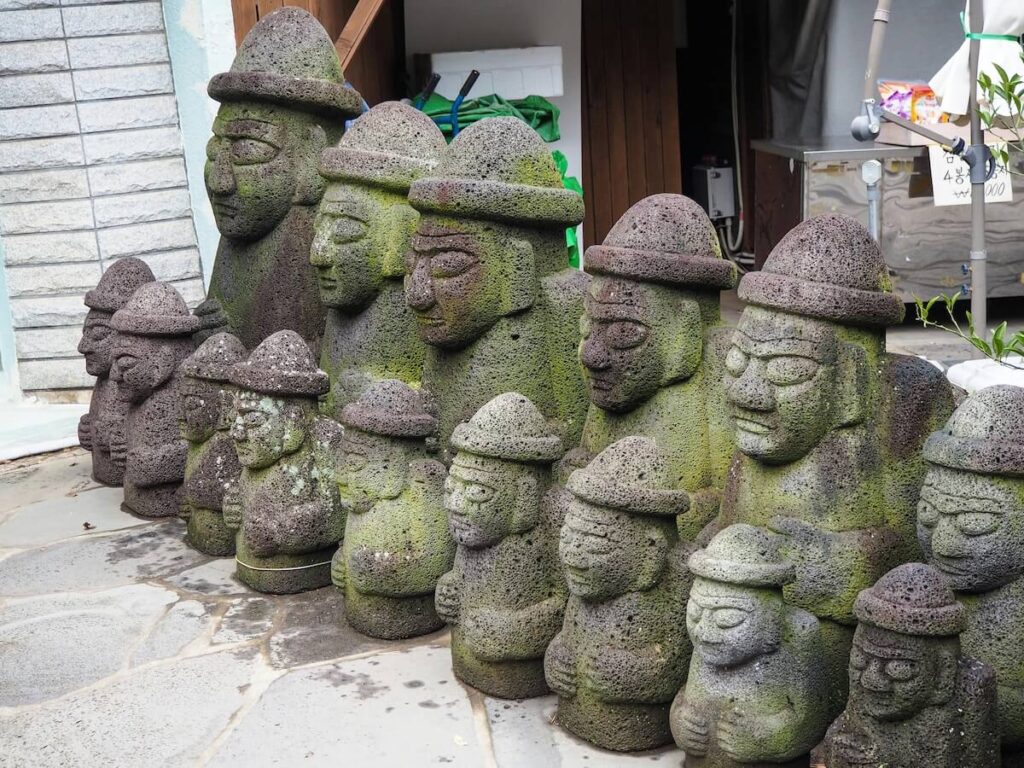
Legend says that if you rub their noses, you’ll be blessed with a baby boy, which is why you might notice some statues have particularly worn-down snouts. While they vary in size—some are tiny enough to fit in your palm as a souvenir, others are taller than you—they always maintain that same distinctive pose with one hand slightly higher than the other.
7. Manjanggul Cave
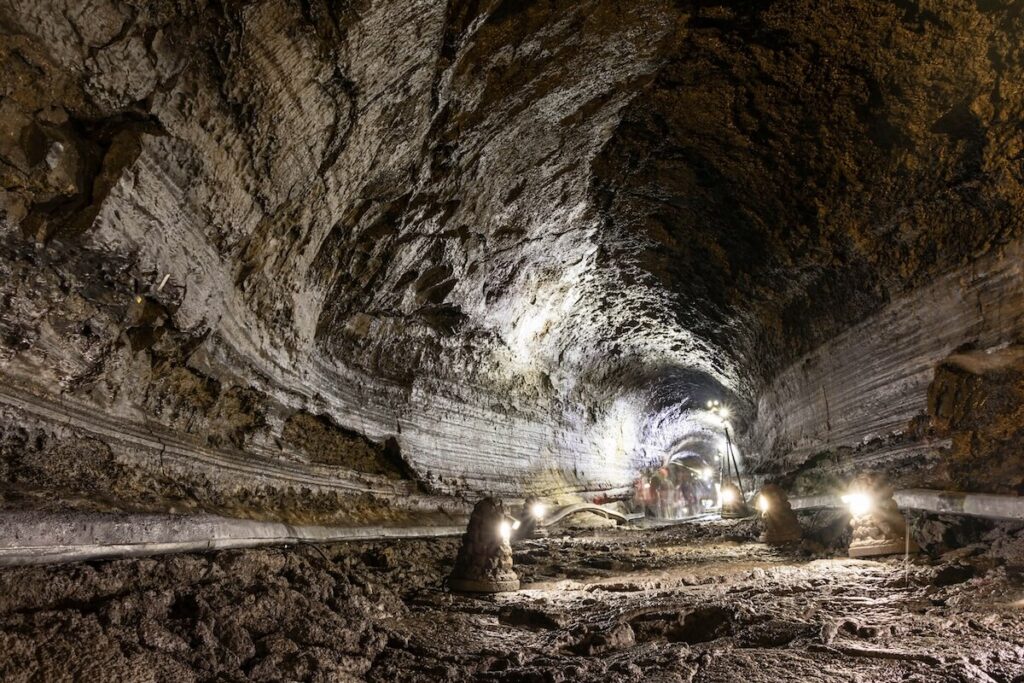
For a change of pace, go underground at Manjanggul Cave, one of the finest and most expansive lava tunnels on the planet.
Manjanggul Cave isn’t your typical damp cavern. It’s a massive, cathedral-like tube formed hundreds of thousands of years ago when molten lava cooled on the outside while the core kept flowing. The highlight is the 7.6-meter lava column at the end of the public trail—the largest of its kind in the world.
The cave stays a steady, chilly 11 to 14 degrees Celsius year-round, so even if it’s a sweltering summer day outside, you’ll definitely want a light jacket. While the tunnel stretches over 7 kilometers, visitors can explore a well-lit 1-kilometer section that takes about 45 minutes to an hour round-trip. Be sure to wear sturdy shoes, as the volcanic floor is naturally uneven and can be a bit slippery from the dripping ceiling.
8. Hallabong
If you see a bright orange fruit with a distinctive “topknot” at the stem, you’ve found a hallabong.
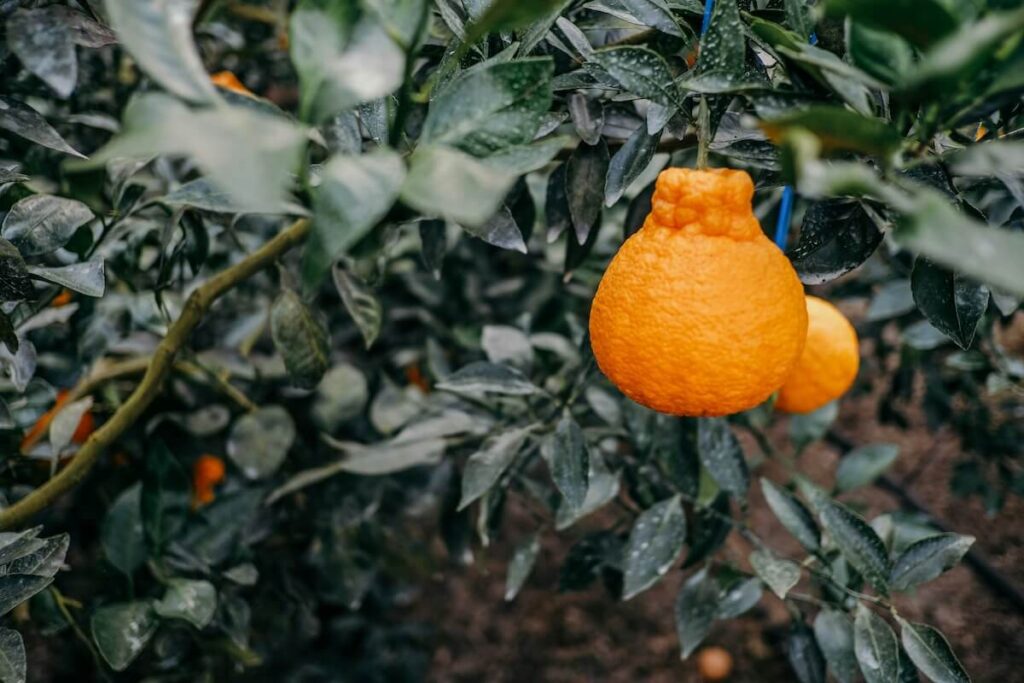
Named after Mount Halla because its unique shape mimics the island’s central peak, this sweet, dekopon-style orange is Jeju’s most prestigious citrus. It’s prized for being incredibly juicy, easy to peel, and much sweeter than your average mandarin, making it the ultimate premium snack or a high-end gift for friends back home.
While you can find hallabong-flavored everything—from lattes and chocolates to candles—nothing beats eating the fresh fruit, which peaks in sweetness from December to March.
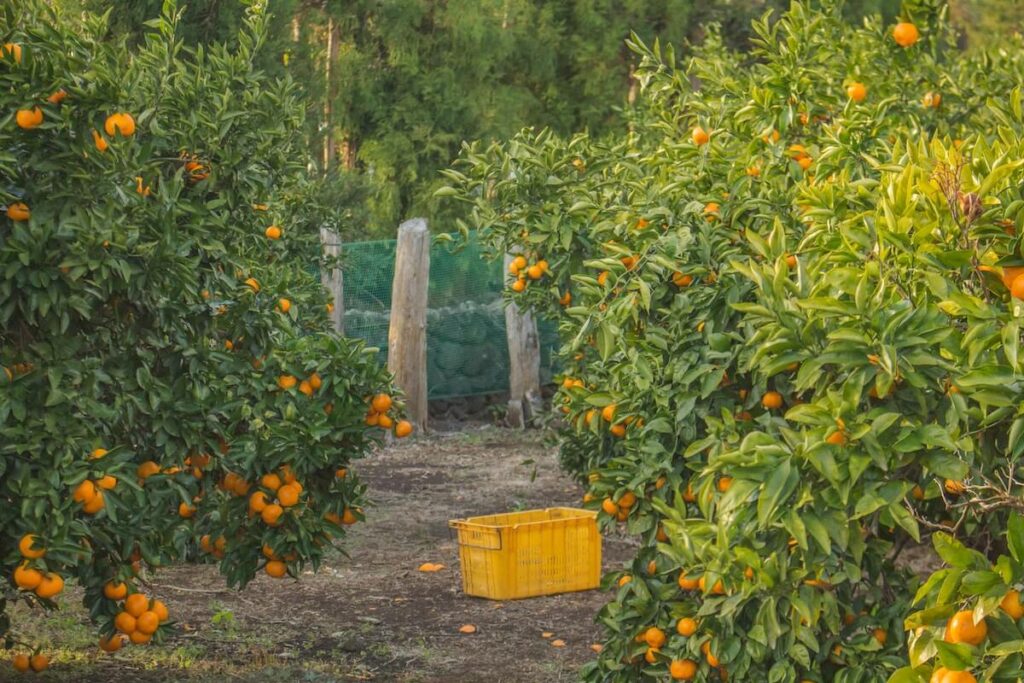
If you’re visiting during the winter, look for “pick-your-own” farms where you can wander through the fragrant groves yourself. Even out of season, grab a bottle of freshly squeezed 100% hallabong juice from a street vendor.
9. Jeju Olle Trail

If you really want to see the island’s soul, hop on the Jeju Olle Trail. This is a massive network of 26 connected walking paths that circumnavigate the entire coastline.
This trail actually sparked a national hiking craze across Korea by focusing on “slow travel.” Instead of rushing between landmarks, these trails lead you through quiet back alleys, stone-walled farm plots, and hidden coastal cliffs that you’d never see from a car window.
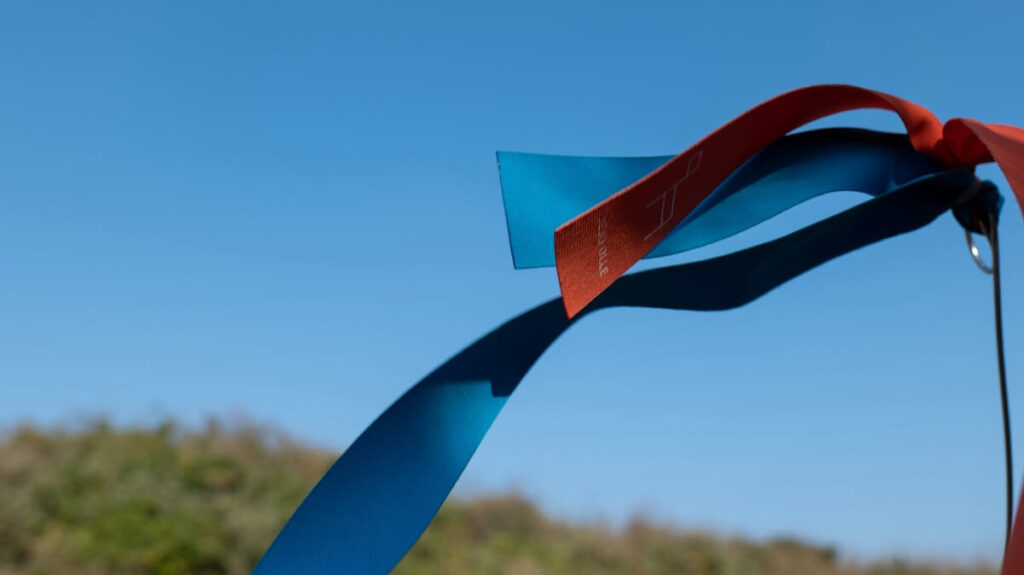
Each route is marked with signature blue and orange ribbons or “ganse” (little pony) statues to keep you on track. The paths vary in difficulty, but most are manageable for casual walkers.
A fun way to track your progress is by getting an Olle Passport and collecting stamps at the start, middle, and end of each route. Whether you tackle a single afternoon stretch or spend weeks finishing the loop, it’s truly an intimate way to experience Jeju’s landscape.
10. The Hawaii of Korea
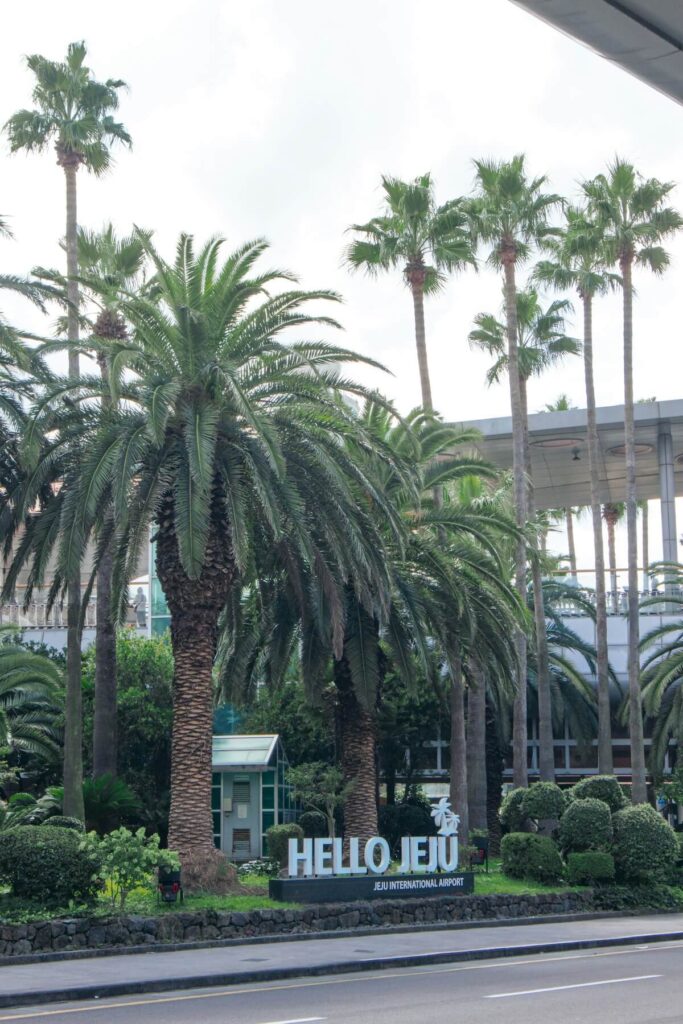
You’ll often hear people call Jeju the “Hawaii of Korea,” a nickname earned thanks to its dramatic volcanic landscapes, swaying palm trees, and emerald waters. For decades, it’s been the top honeymoon and holiday destination for Koreans, offering a tropical escape that feels worlds away from the mainland’s bustle.
Interestingly, it even shares Hawaii’s volcanic origin, being formed almost entirely by eruptions that left behind fertile soil and a ruggedly beautiful coastline.
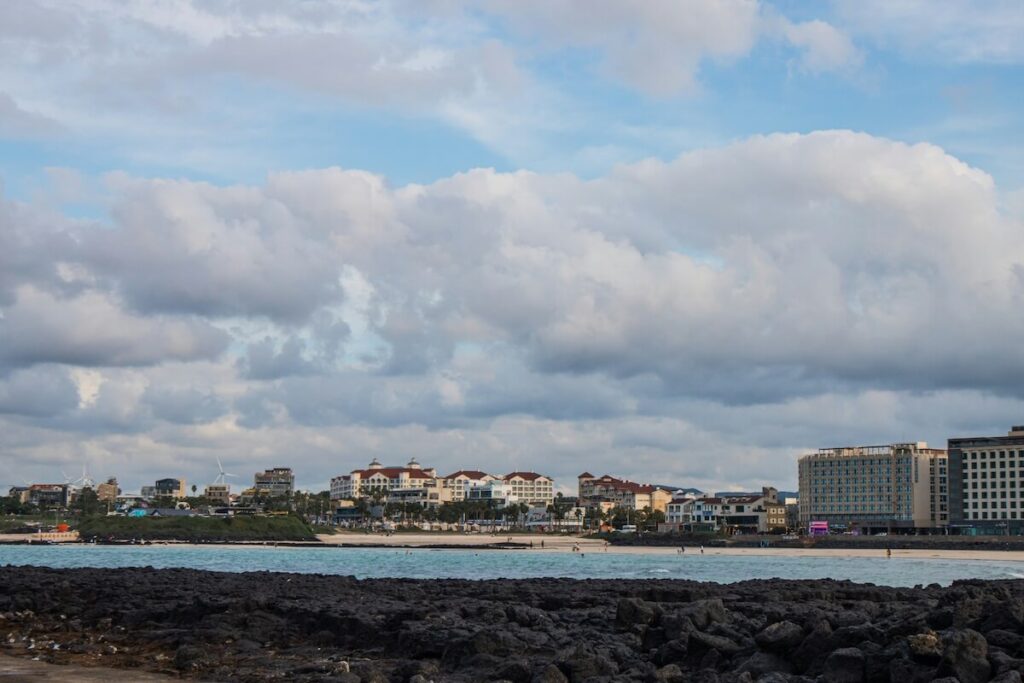
While the nickname hints at its resort-heavy reputation, the island has its own distinct personality that goes beyond just lounging by a pool. Here, modern luxury hotels sit right next to traditional stone-walled villages.
If you want that classic vacation feel, head to the southern Jungmun Tourist Complex, where the beaches are pristine and the weather stays mild year-round.
11. Stunning beaches

Jeju’s coastline is a diverse collection of emerald waters and white sands, but no two beaches are exactly alike.
Hyeopjae and its “twin,” Geumneung, are the heavy favorites for their shallow, turquoise lagoons and views of Biyangdo Island offshore. While Hyeopjae has a buzzier vibe with plenty of cafes, Geumneung feels a bit more laid-back and tropical with its palm tree-lined edges. Both are perfect for wading out hundreds of meters during low tide.
On the north side, Hamdeok is often called the “Maldives of Korea” due to its incredible clarity and exotic sandbars. It’s a great spot for families because the water stays calm, and there’s a massive hill nearby, Seoubong Peak, for a quick hike with a view.
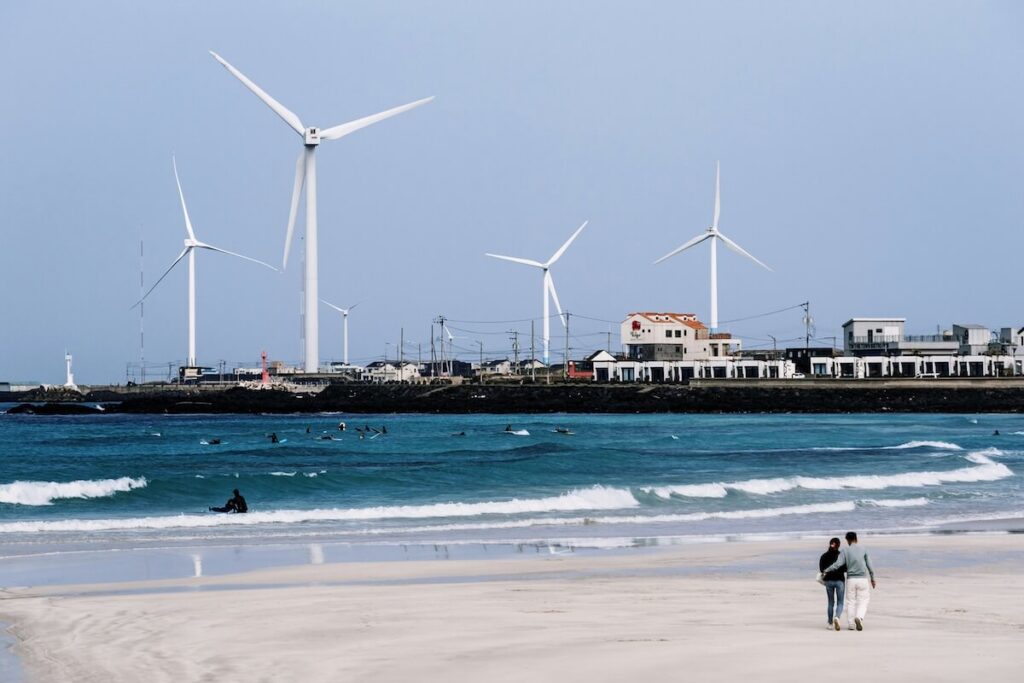
Meanwhile, Woljeong-ri on the east coast is the go-to for the aesthetic crowd. It’s famous for its line of colorful chairs and trendy cafes that sit right on the sand. Whether you want to surf at Jungmun or just sip a latte by the sea, there’s a stretch of sand for every mood.
Check out our longer list of beautiful beaches on Jeju Island here.
12. Samda
Beyond the scenery, you’ll likely hear locals refer to the island as samda, which translates to “three abundances.” This nickname stems from the legendary claim that Jeju has an overflow of three things: wind, rocks, and women.

The wind is a constant presence thanks to its location in the middle of the sea, while the “rocks” are the black volcanic basalt you see in every wall and statue. Historically, “women” were considered abundant because many men were lost at sea, leading to a resilient, female-led society.
While it’s a bit of an old-school saying, you can still see these elements everywhere today. You’ll notice the wind power generators spinning along the coast and the endless stone fences (more on these later) that protect crops from those same gusts. And, of course, there are the haenyeos. It’s a simple but accurate way to sum up the island’s rugged character.
13. Osulloc tea fields

Jeju’s volcanic soil and year-round mild climate aren’t just good for citrus—they are perfect for growing some of the best tea in Asia.
The Osulloc green tea fields are a prime example, offering rows of vibrant, emerald-green shrubs that stretch out toward the horizon. As one of the most photographed spots on the island, these plantations represent South Korea’s premium tea culture and provide a serene, almost therapeutic backdrop for a walk.
You should definitely include the Osulloc Tea Museum in your itinerary, even if you’re more of a coffee person. The building itself is shaped like a teacup and features an observatory with panoramic views of the surrounding fields.

While you’re there, don’t leave without trying the famous matcha ice cream or a green tea roll cake at the cafe. It’s a popular spot, so try to arrive early to beat the crowds and enjoy a quiet moment with a view of the Seogwang plantation.
14. Jeongbang Waterfall
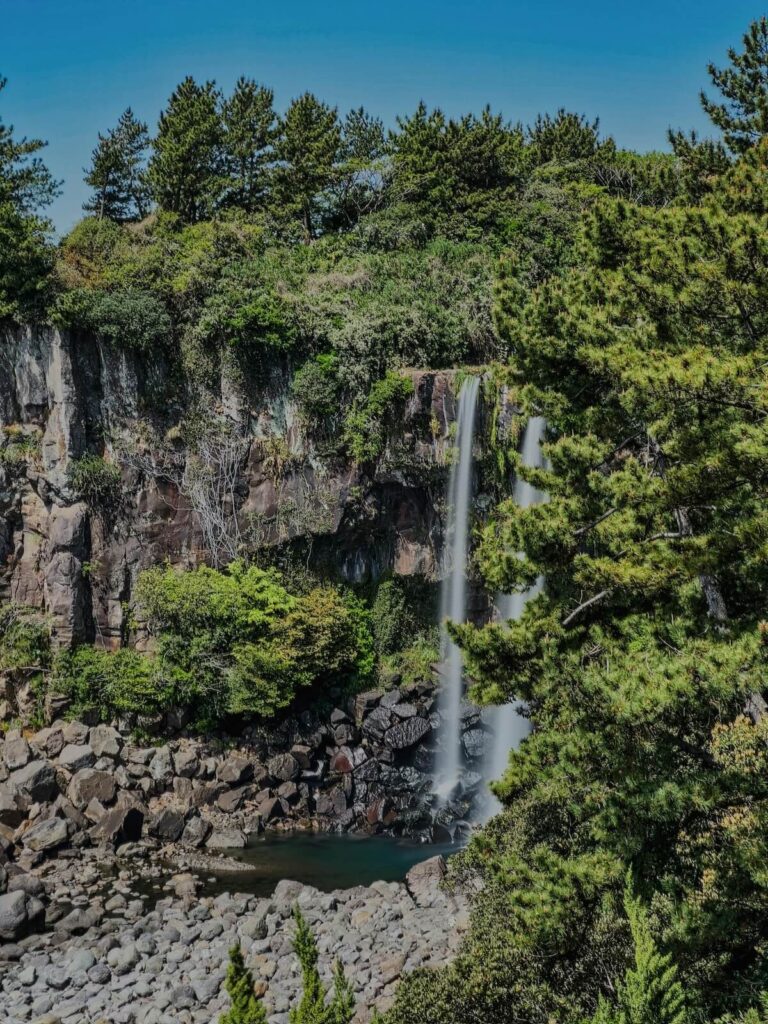
While Jeju has several famous falls, Jeongbang Waterfall is the one you can’t miss for its sheer rarity. It is one of the only waterfalls in Asia—and the only one in Korea—where the water plunges directly into the ocean.
The two-stream falls drop about 23 meters down a black cliff face, meeting the salt water in a dramatic spray that’s especially impressive right after a good rain. To get the best view, you’ll need to head down a series of stairs and navigate some large, slippery boulders at the bottom, so leave the flip-flops at home.
Admission is a modest 2,000 KRW, and it’s a quick trip, taking about 30 to 45 minutes to explore. While you’re down there, keep an eye out for the haenyeo who often sell fresh, raw seafood right on the rocks nearby.
15. Jusangjeolli Cliff
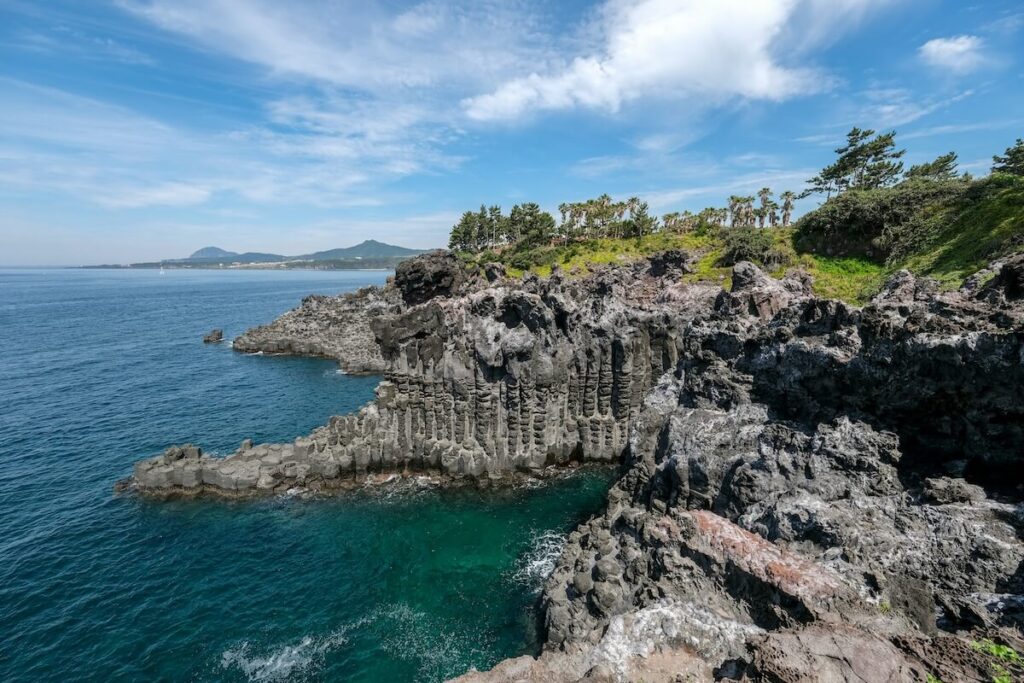
The Jusangjeolli Cliffs look like a massive, man-made honeycomb, but they are entirely the work of nature. These striking hexagonal rock columns were formed when thick lava from Hallasan cooled rapidly upon hitting the cold sea, shrinking and cracking into perfect geometric pillars.
It’s a surreal sight, with some of the columns standing up to 20 meters high, looking almost like they were chiseled by hand into the coastline of the Jungmun District.
A wooden observation deck runs along the cliff edge, giving you a safe and elevated view of the waves crashing against the stone. The contrast between the dark volcanic stone and the bright turquoise water is incredible, especially on a sunny day.
16. Jeju language
While most people think of it as a dialect, Jejueo is actually a distinct language that is largely unintelligible to people from the mainland. It’s a linguistic time capsule, retaining archaic Korean words from the Middle Korean era and even incorporating terms from Mongolian and Japanese.
Because of its rarity and the declining number of fluent speakers, UNESCO has officially recognized Jejueo as a critically endangered language—a vital piece of the island’s heritage that locals are working hard to preserve.
You’ll still hear the unique cadence of Jejueo if you wander through traditional markets or chat with older residents in rural villages. One of the most famous phrases you’ll encounter is “Honjeo-opseo,” which means “Welcome,” a stark contrast to the standard Korean “Hwangyeong-hamnida.”
Even if you only pick up a few words, using a local greeting is a great way to show respect for the island’s unique identity.
17. Abalone
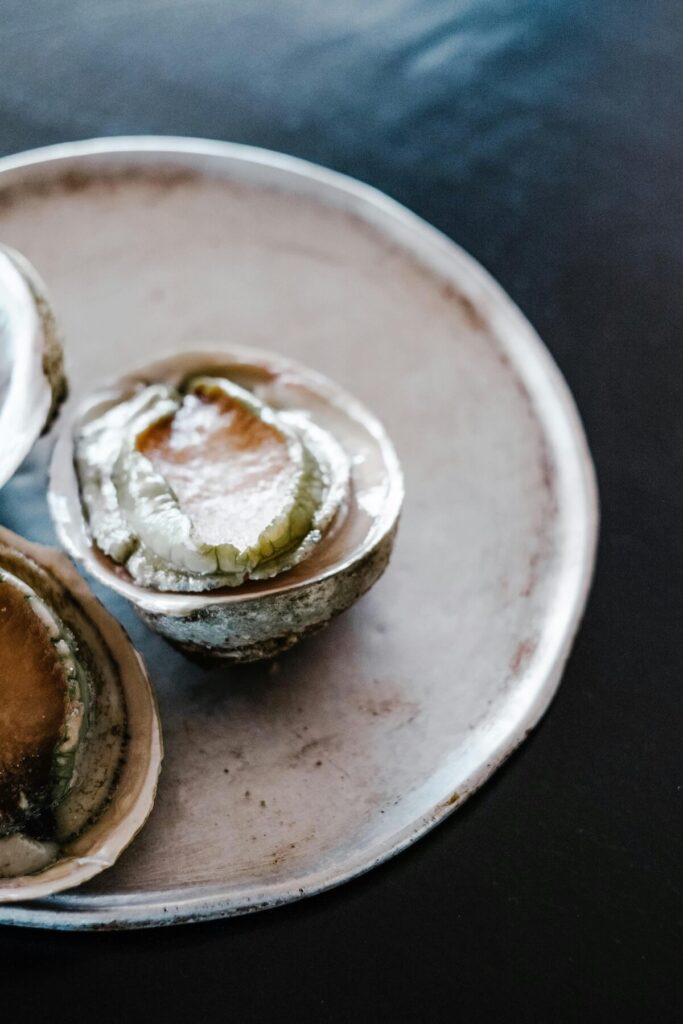
In the world of Korean cuisine, Jeju abalone or jeonbok is the ultimate luxury, often referred to as the “wild ginseng of the ocean” for its nutritional value. These aren’t your typical farm-raised mollusks. Instead, they are painstakingly hand-harvested from the rocky seabed by the haenyeo.
Because they grow in the island’s clean, oxygen-rich currents, the meat is exceptionally firm and sweet, making it a culinary staple that represents the very best of Jeju’s coastal pantry.
You’ll find it served in various ways, but the most iconic is jeonbok-juk, a rich, savory porridge made with the abalone’s nutrient-dense internal organs, which give it a signature greenish hue. For something heartier, look for haemul-ttukbaegi, a bubbling seafood stew served in a stone pot.
While abalone can be pricey elsewhere, Jeju offers some of the freshest—and relatively more affordable—options at local seafood shacks. More reason for you to visit!
18. Udo
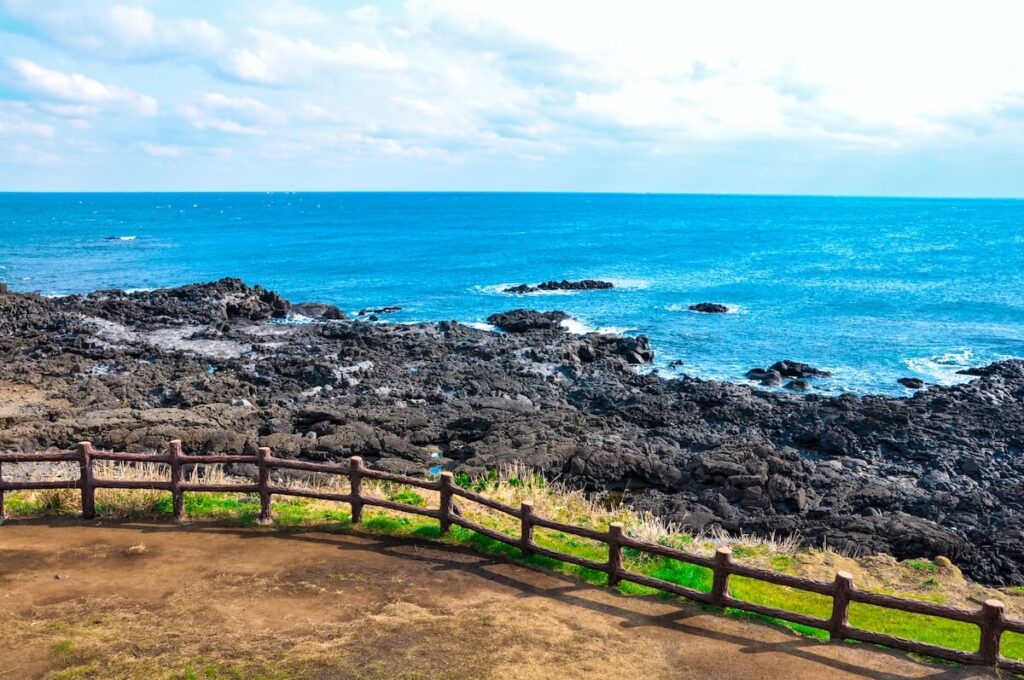
Just a short 15-minute ferry ride from Seongsan Port, Udo (or Cow Island) is Jeju’s favorite satellite escape. It’s famous for its remarkably clear turquoise water and Seobinbaeksa, the only beach in Korea with sand made of white coral and red algal nodules.
The island is relatively flat and easy to navigate, making it a playground for travelers who want to trade the car for a more open-air experience while soaking in the coastal views. The signature move here is to rent an electric bike or a tiny two-seater electric “buggy” to circle the entire perimeter in a few hours.
Along the way, you absolutely have to stop for Udo’s peanut ice cream. The island is known for its small, intensely flavorful peanuts, and almost every cafe has its own version.
If you have time, hike up Udobong Peak for a panoramic view of the main island and the “lying cow” silhouette that gave Udo its name.
19. Camellias
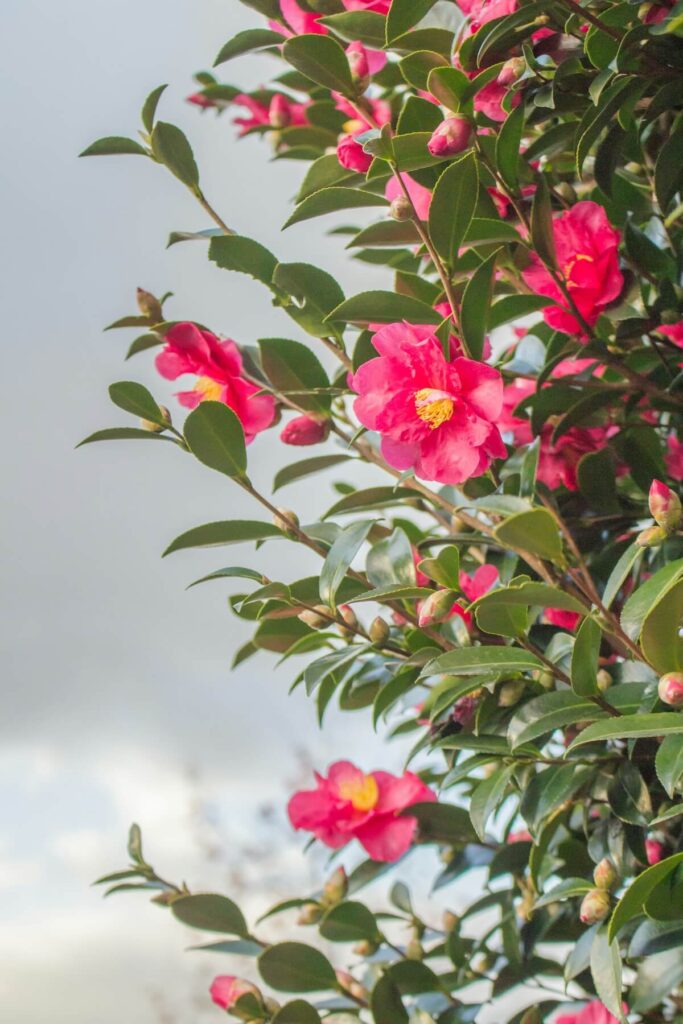
Jeju is one of the few places in Korea where winter actually feels colorful, and that’s thanks to the camellias.
These vibrant, hardy flowers are synonymous with the island’s winter identity, blooming in shades of deep crimson and soft pink when most other plants are dormant. They are so central to the local culture that you’ll find them everywhere—from coastal roads to sprawling dedicated parks like Camellia Hill, which is the largest camellia arboretum in East Asia.
The best time to see them is from late November through March, with the peak usually hitting in mid-winter. Camellia Hill is a must-visit as it features over 6,000 trees and 500 different varieties, along with themed walking paths and a massive greenhouse. It’s a huge spot for photography, so try to go on a weekday morning to avoid the crowds.
Before you leave, check out the gift shop for camellia oil or skincare products—they’re a local specialty and make for a great, practical souvenir.
20. Galchi
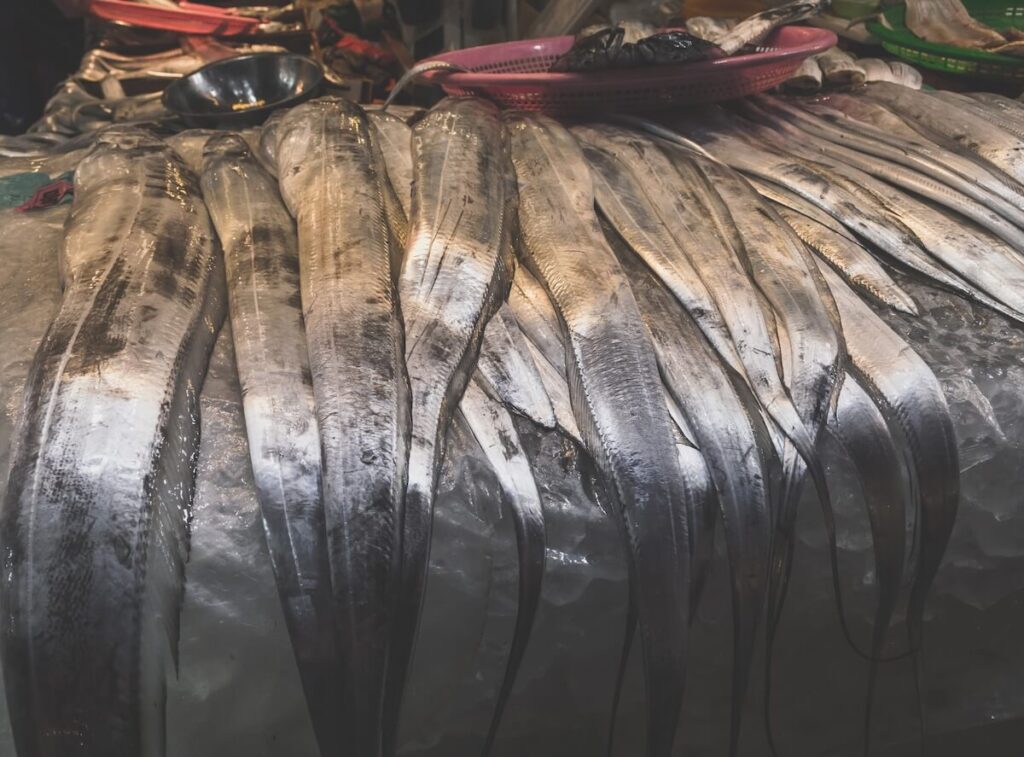
Often called the “silver of the sea,” galchi (hairtail or cutlassfish) is one of Jeju’s most prized seafood delicacies.
This long, slender fish is famous for its shimmering, metallic skin—a result of being caught individually by hook and line rather than nets, which keeps the delicate scales intact. It’s incredibly versatile, with a sweet, white flesh that’s much lighter and less “fishy” than it looks, making it a hit even for those who are usually picky about seafood.
The most dramatic way to eat it is tong-galchi-gui, where the fish is grilled whole and served as a meter-long centerpiece that barely fits on the table. For something with a bit more kick, try galchi-jorim, a savory and spicy braised stew where the fish is simmered with thick slices of radish and potato.
While it can be a bit of a splurge, seeing that massive silver fish laid out in front of you is a classic Jeju food experience you won’t soon forget.
21. Stone walls
If you look out the window while driving across Jeju, you’ll notice a literal labyrinth of black volcanic stone walls called batdam. Historically, these were built without a single drop of mortar. Instead, the stones are expertly stacked so that gaps allow the island’s fierce winds to whistle through rather than knocking the wall over.
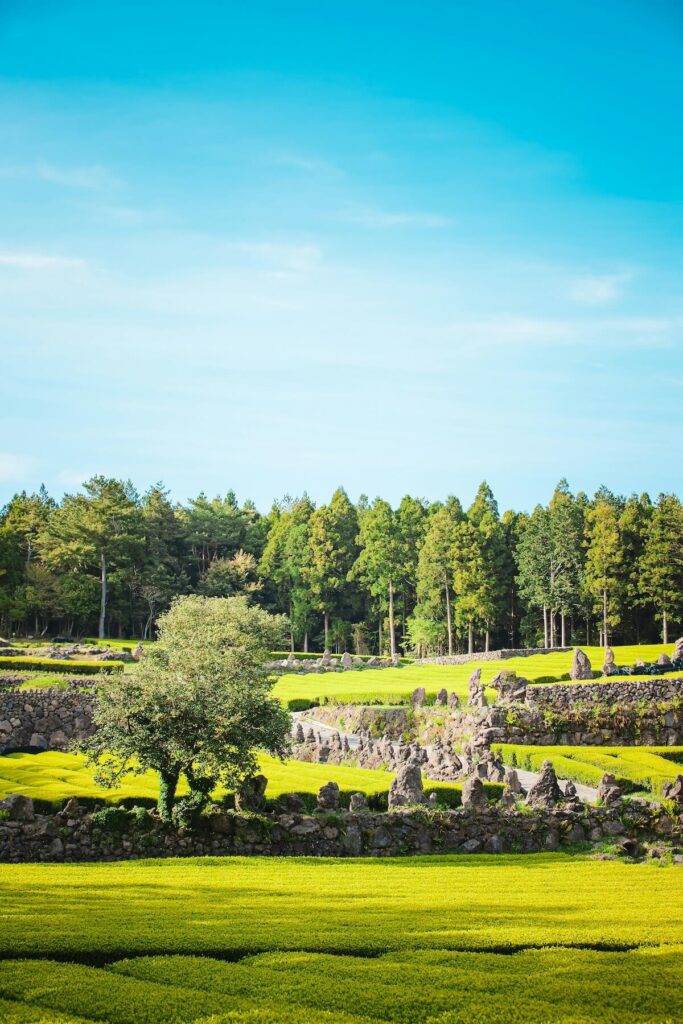
Spanning an incredible 22,108 kilometers in total, they act as a massive, natural windbreak that protects precious crops like radishes and carrots from the salt spray. These walls are so integral to the landscape that they’ve been recognized as a FAO Globally Important Agricultural Heritage System.
You’ll see them marking property boundaries and surrounding traditional graves, giving the island its signature patchwork appearance. It’s a low-tech but genius solution to living on a windy, volcanic rock.
Next time you pass a field, take a second to appreciate the hand-stacked precision—it’s a centuries-old craft that still defines the island’s look today.
22. Stylish cafés
What is Jeju Island known for if not its vibrant cafe culture?
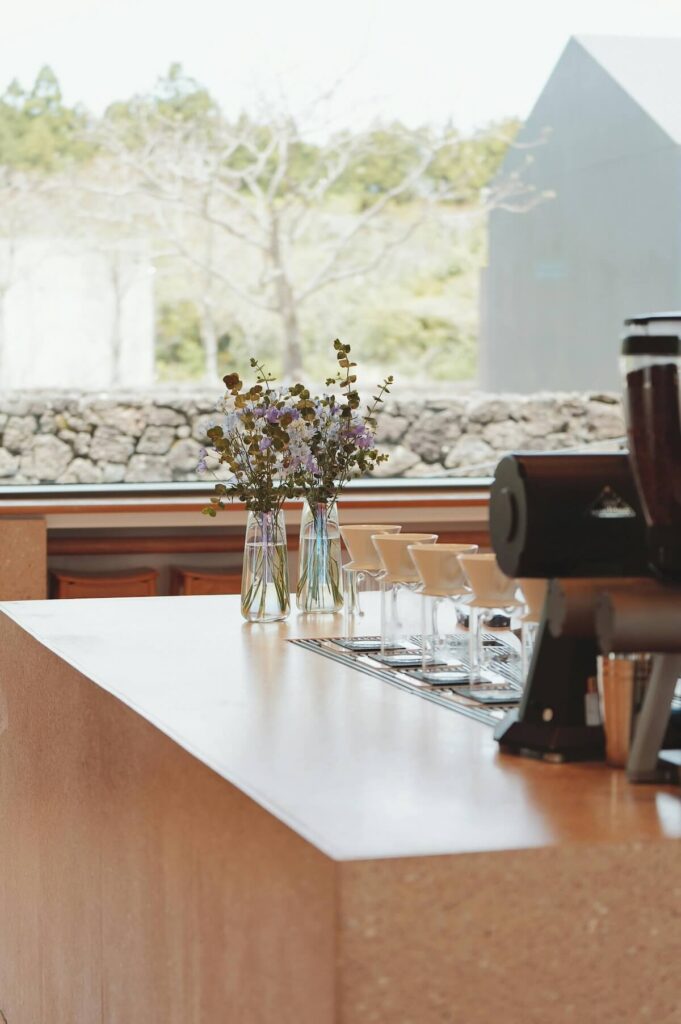
Jeju has mastered the art of the “destination cafe,” where the architecture and views are just as important as the beans. Because the island is a third space for relaxation, you’ll find everything from minimalist concrete structures hidden in citrus groves to renovated stone warehouses. These spots often showcase local ingredients, serving up specialty drinks like peanut lattes or hallabong-infused cold brews that you won’t find anywhere else.
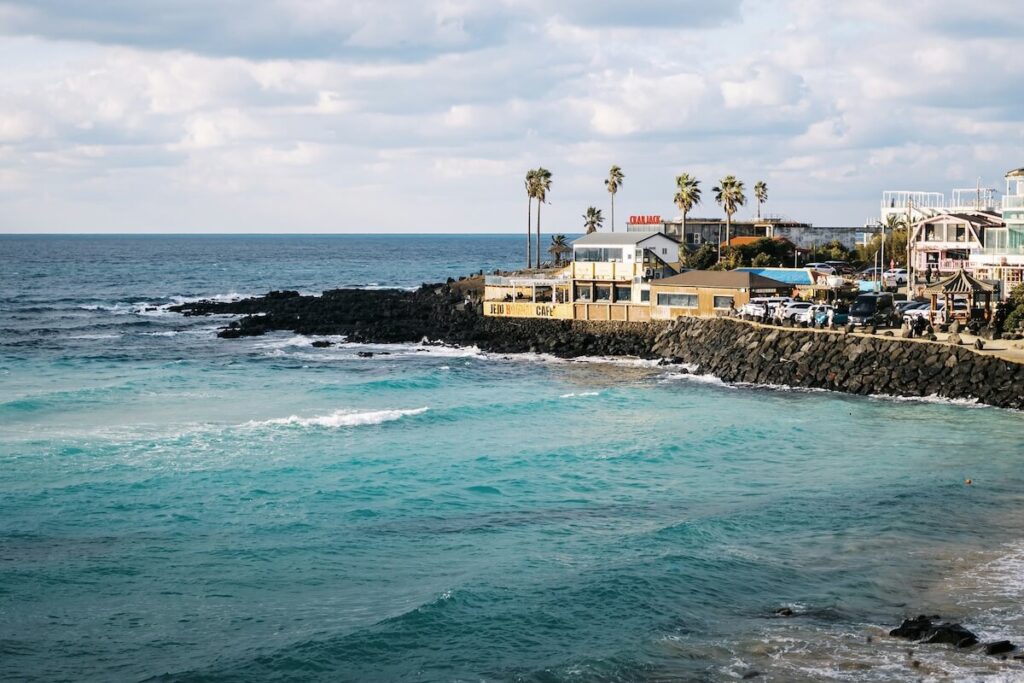
For the ultimate cafe-hopping experience, head to Aewol Cafe Street on the northwest coast. This trendy stretch is packed with stylish spots that overlook the emerald sea, including the famous Bomnal Cafe and Tribe, Cafe Aewol Mônsant, and Team Blow. It’s a prime location for catching the sunset with a coffee in hand.
While the area can get a bit crowded on weekends, the “chill vibes” and endless photo ops—like the transparent kayaks floating nearby—make it a mandatory stop for any modern itinerary.
Wrap up

From its volcanic “stone grandfathers” and winding Olle trails to the unique taste of hallabong and fresh abalone, Jeju is an island that truly packs a punch. This list barely scratches the surface of its identity, but it’s a great starting point for understanding what Jeju Island is famous for.
Whether you’re here for the vacay vibes or the deep-rooted local history, there is always more to discover around every coastal bend. Ready to see it for yourself? Now is the perfect time to start planning your trip and experience the island’s magic firsthand.
If you’re curious about more than just the coast, you can also find out what the rest of South Korea is known for, explore what Seoul has in store, or dive into the unique charms of other South Korean cities.