
Thanks to the country’s status as the largest producer of the brown beans, it’s not an overstatement to say Brazil helps the whole world indulge in its passion for coffee.
But Brazilians also love them some good ol’ brew. In this post, I’ll tell you everything you need to know about Brazilian coffee culture.

While I’m not as addicted to the beverage as most of the folks in my circle, as a Brazilian I do know a thing or two about the way we brew it and drink it down here.
Table of Contents
1. Brazil is the world’s leading coffee producer.

And it has been for the last 150 years! Brazil actually accounts for a third of the global output of coffee, or roughly 6.6 billion pounds each year.
Brazilian coffee history goes back 300 years, when the beans originated in Ethiopia were brought over to colonial Brazil. It would take around a century, however, before it replaced sugarcane as the newly independent country’s no. 1 export good.
Grown primarily on rolling hills between Rio de Janeiro and Sao Paulo, coffee cemented that area as the country’s wealthiest and, eventually, most populous.
2. It’s also the most significant net consumer on Earth.
Brazilians drink 2.8 billion pounds’ worth of coffee yearly, or 42% of all the coffee that is grown in the country. That turns us into the main coffee-drinking nation on the planet, ahead even of the U.S. (whose population is one and a half times as big).
Yet when it comes to per capita consumption, Brazil trails behind a bunch of other nations and in fact ranks 14th. Here, northern European and specifically Scandinavian countries lead the way: Finland, Norway, Iceland, the Netherlands, and Denmark top the coffee-drinking chart.
3. Arabica accounts for the bulk of Brazil’s coffee output.
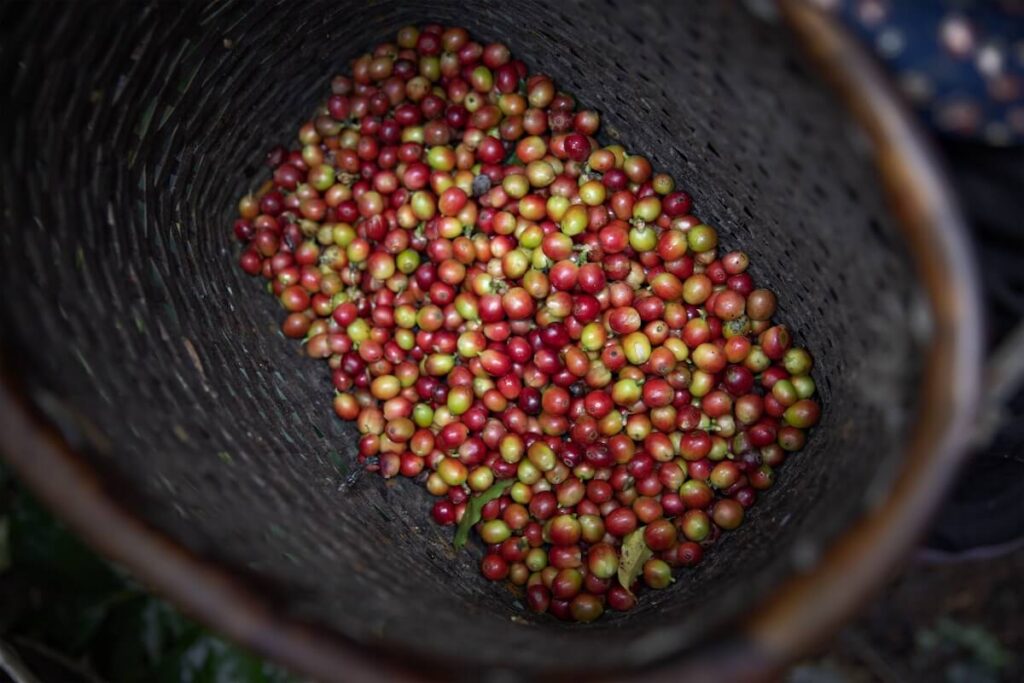
Arabica is widely considered the most valuable variety of coffee, the other being robusta. It is, however, harder to grow, given its yield is typically smaller and it’s more easily attacked by pests.
So many farmers choose instead to focus on robusta, which is used to make instant coffee and often espresso.
In Brazil, arabica corresponds approximately to two-thirds of all coffee production. That’s probably why, in demanding markets like the U.S., Colombian and Peruvian coffee are more prestigious: those two nations grow almost only the arabica variety.
4. Brazilians are liberal in the kitchen, but coffee is sacred.
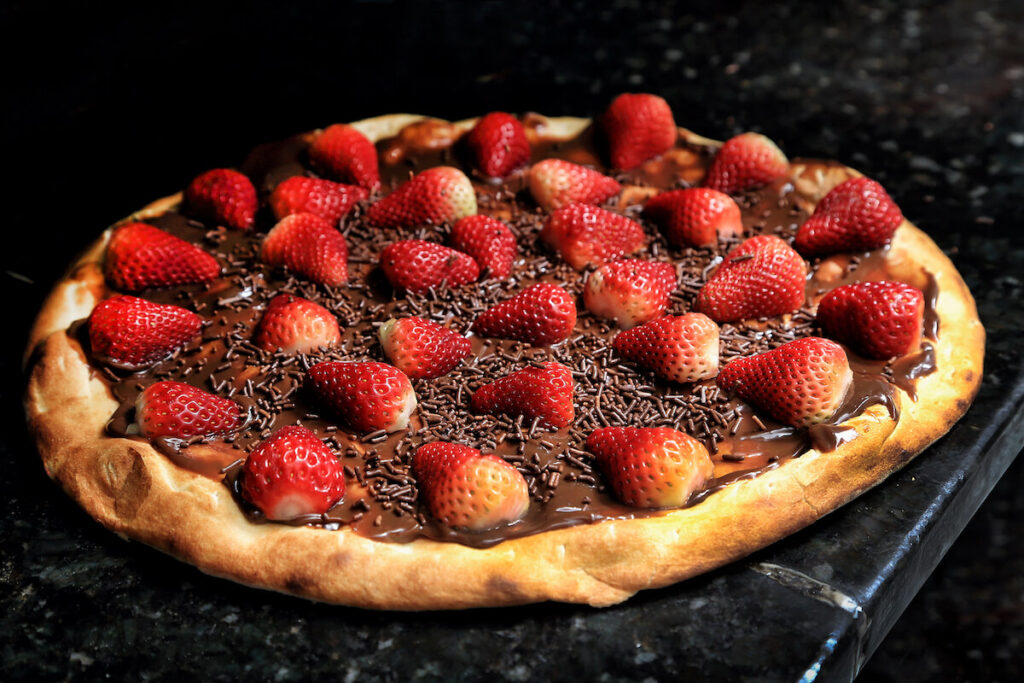
Less is a bore is one of the mottoes of Brazilian food culture, as we’re constantly upgrading foreign dishes to make them more decadent. Just take a good look at the strawberry and chocolate pizza above and you’ll know what I mean.
Oddly, with coffee, it’s a whole nother story. The beverage brings out the conservative side of Brazilians, as you’ll notice in our deep-seated preferences below. Novelty typically goes totally ignored and has to settle for the occasional hipster that will buy into it.
5. Filtered brew is the name of the game.

Although the electric coffeemaker is really common, old-school Brazilian coffee is brewed with a cloth filter placed on top of the cup, exactly like your least favorite hipster would do. The middle ground is the paper filter with a plastic holder, which is a more practical system.
6. Brazilians like their coffee black and strong.
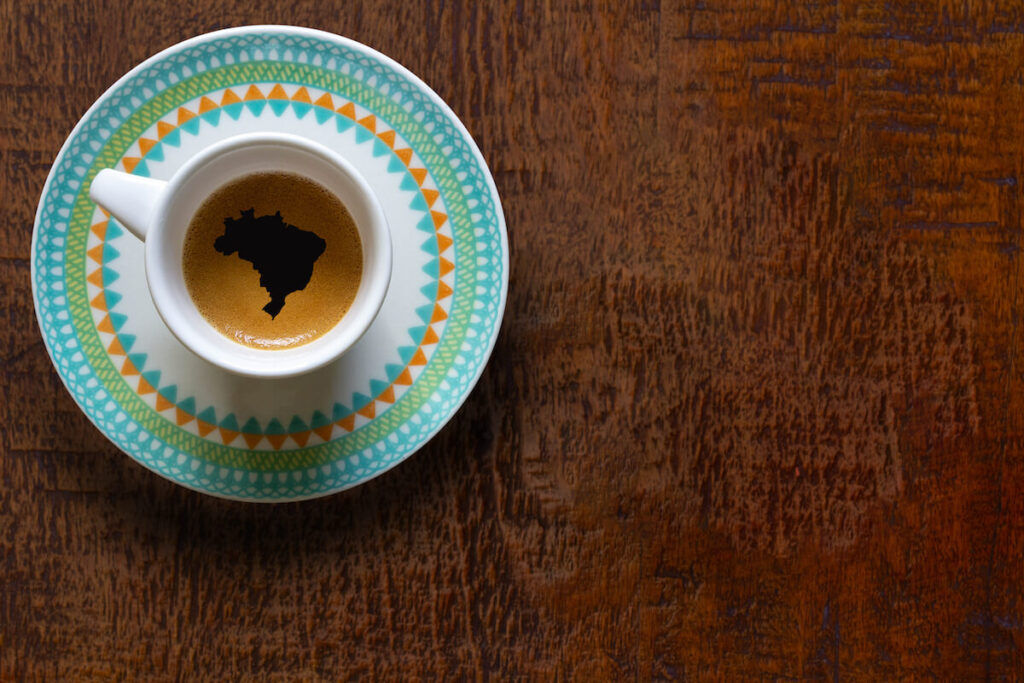
The exception is milk and coffee, which is a holy morning combo. That’s why, as I’ll break down on no. 9, cups are normally quite small.
I’ve yet to meet a Brazilian who enjoys the watered-down American coffee, which most of us won’t think twice before writing it off as chafé (a portmanteau of chá, i.e. tea, and café). Coffee snobs will drink theirs with no sugar, but mixing in a couple of spoonfuls is never frowned upon.
7. Espresso, however, is a tad too strong.

While Brazilians love salty and sweet, spicy and bitter are far less popular tastes. Coffee and booze are basically the only outliers, as not even dark chocolate is much in demand.
So most folks don’t actually go crazy about espresso, which remains a niche item. Granted, that’s partly because machines are relatively expensive and because you can get filtered coffee at the bakery for a fraction of a coffee shop espresso.
8. There’s never a wrong time for coffee.
My mom has had sleep issues since forever, yet she was taken aback when I told her she should cut down on that coffee shot she would almost literally chug every evening.
That’s a direct consequence of the tradition of capping all meals in Brazil, including dinner, with coffee. A hard-earned cafezinho wouldn’t be so vile as to give someone insomnia, right?
Now, as per my suggestion, mom has taken to drinking decaf and is sleeping just fine, thank you (or thank me). Having said that, she sticks to regular coffee in the morning, as decaf tastes too bland for her liking.
9. Cups are normally tiny.
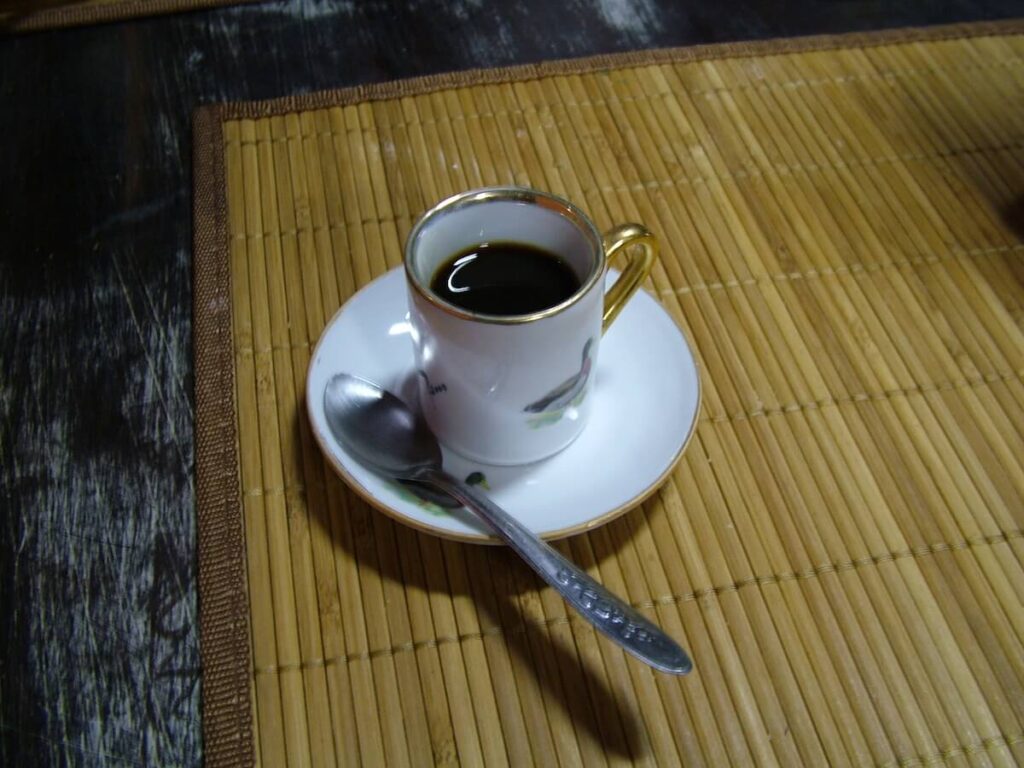
Brazilians usually drink coffee in a demitasse, which at 2 to 3 fl oz is half the size of a standard coffee cup. Alternatively, we use the ubiquitous “American glass”, which ironically was invented in Brazil and is hands down the no. 1 glassware item nationwide.
Mugs and larger cups are rarely used, except at coffee shops or if you’re making a cappuccino or simply pouring milk into your coffee at home.
10. Breakfasts call for bread and butter…
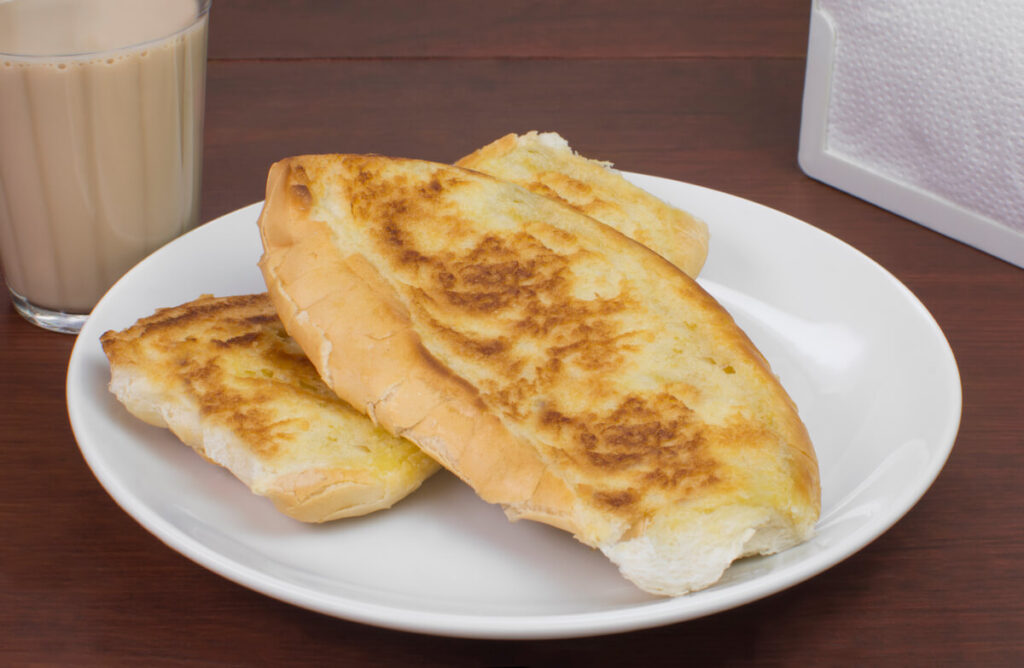
While typically not as heavy as an American or British morning meal, breakfast in Brazil is a salty affair as a rule of thumb.
You won’t spot any bacon and sausage around, but eggs, ham, and cheese are commonplace. There’s one thing, however, that always keeps company to the cup of coffee: bread and butter.
So-called French bread, a roll that is crunchy on the outside and soft on the inside, is the lifeblood of Brazilian breakfast.
11. …which is why you grab your morning coffee at the bakery.

If you bring a batch of fresh French rolls home from the bakery, you may just spread some butter over it and eat it as is alongside a cup of coffee (with a splash of milk, if you will).
Weirdly, though, at the bakery people will normally have it grilled. I figure that’s because nobody seems to be able to toast bread like that — especially when you add a generous layer of cream cheese to create a golden crust on top.
12. Cakes make another superb match.
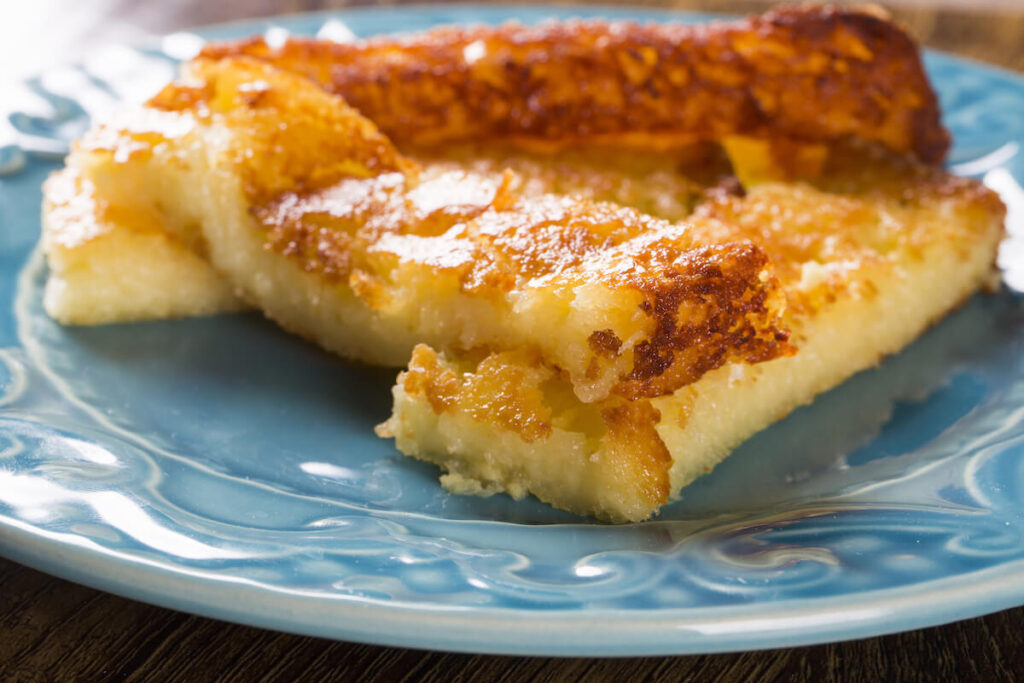
I still didn’t get over that cassava and coconut cake I ate a great deal of over the weekend; it looked exactly like the one you see above.
That’s one of the most beloved cake flavors to pair with coffee, particularly in the afternoon — Brazilians unsurprisingly have five o’clock coffee instead of tea.
Other traditional flavors on this yummy occasion are orange, marble, carrot with chocolate sauce, as well as cornbread. The older crowd enjoys butter cookies too.
13. In fact, each region pairs coffee with its own specialty.

Depending on where you go in Brazil, you’ll get to savor a number of delectable dishes as you sip on your coffee.
In this regard, the Northeast is the richest of all the regions. You’ll be treated to tapioca (i.e. cassava starch) crepes, cornmeal couscous, bolo de rolo (guava jelly Swiss roll), and tamales (locally pamonha).
Boiled cassava, which is occasionally eaten in the Southeast, is also pretty big there. Speaking of the Southeast, the great state of Minas Gerais gave us the mouthwatering (if weirdly rubbery) cheese bread pictured above.
In the South, where European influence has been historically stronger, you’re more likely to see sausage and toast with jelly on the breakfast or afternoon snack table.
14. Decaf still has a long way to go.
I know this from experience, as regular coffee (even when I drink it in the morning) steals the joy of a good night’s sleep away from me.
At any Brazilian supermarket, you’ll find as many as a dozen brands of coffee in at least a handful of varieties. When I’m lucky, I’ll spot one or two decaf options stashed on the bottom shelf.
15. Yet American-style coffee is catching on.
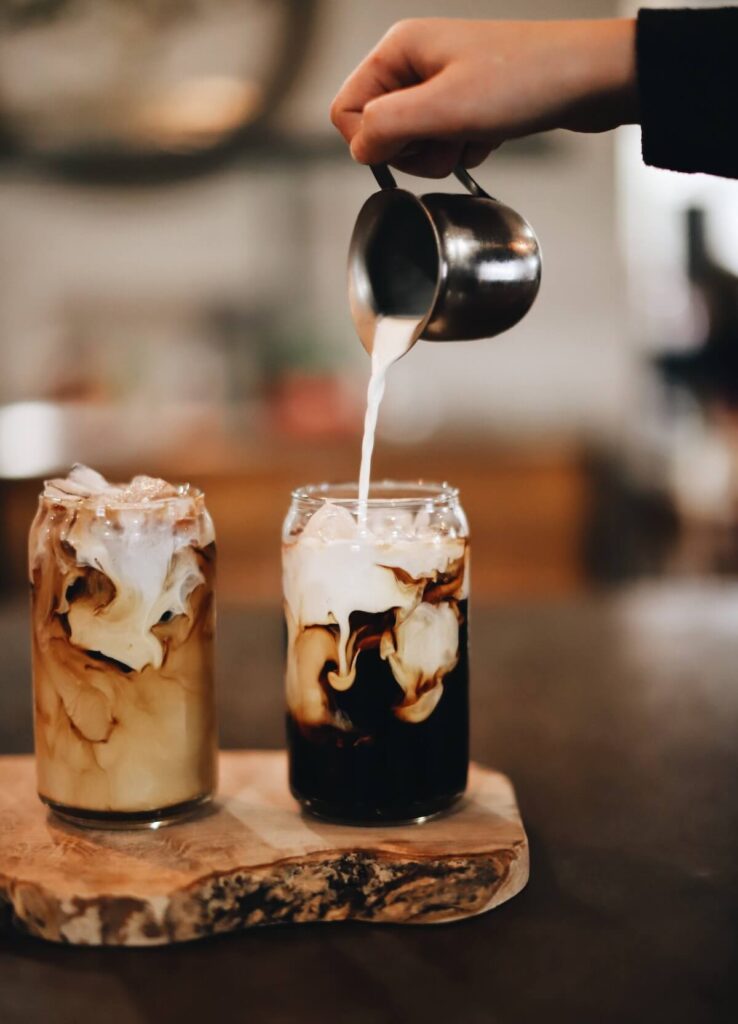
When Starbucks landed in Brazil in 2006, a lot of people outside a very limited circle heard about iced coffee for the first time.
Now, the American chain and several local knockoffs seem to be all over the place, but in reality, they remain restricted to the richest areas of big cities in the South and Southeast and midsize ones within the State of Sao Paulo.
16. While coffee can be made into desserts, that’s not common.
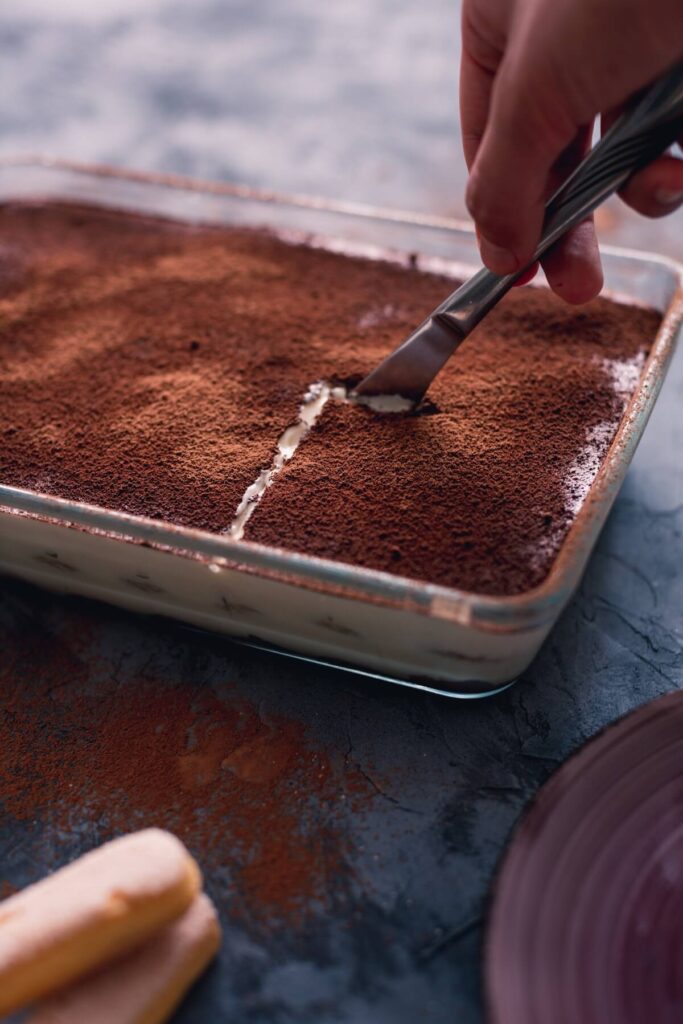
Since Brazilians infamously love extremely sweet concoctions like brigadeiro (a cocoa powder and condensed milk truffle), it shouldn’t come as a shock that coffee is rarely used as an ingredient in desserts.
Tiramisu is well-liked among a better-off crowd. Still, our own version of it (which of course features condensed milk), which is called pavê, is considerably more widespread.
17. Though a few brands dominate the market, the choice is almost endless.
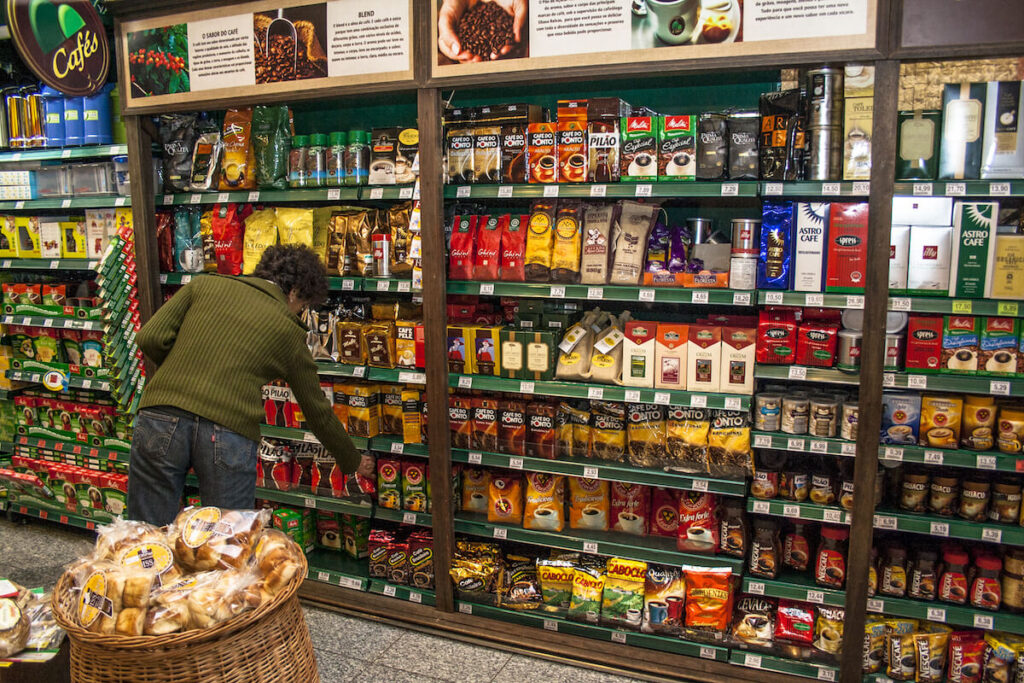
With the current exchange rate to the American dollar, the price of coffee in Brazil is really affordable: in a major city like Rio, a pound of coffee from the leading brands will cost you four to five bucks.
In case you’re willing to spend one and a half to twice as much that amount, you can taste Orfeu, Coffee++, or Baggio, all of which grow their beans between the Sao Paulo and Minas Gerais countryside.
Otherwise, stick to Melitta, Pilão, 3 Corações, or Pimpinela, the best-selling Brazilian coffee brands.
18. Big cities are jam-packed with fantastic coffee shops.

The quintessential Brazilian coffee shop of yore, which sort of channeled New York-style luncheonettes, is gone for good virtually everywhere.
Yet over the last ten to twenty years, cozier spots have popped up in large cities across Brazil to cater to an ever more refined clientele.
When you visit Rio, don’t miss the laidback and flawless Curto Café in the historic core or the fancier Coa&Co Café in Copacabana. In Sao Paulo, check out Por um Punhado de Dólares (literally “For a Fistful of Dollars” like the Sergio Leone western) or Coffee Lab.
19. Free coffee is easier to find than free water.
This speaks volumes about how addicted to coffee Brazilians indeed are. In some corners of the country, restaurants are required by law to serve water for free. Most people will avoid it, though, given tap water has quite a bad taste in Brazil.
On the other hand, many restaurants will set up a table by the front door where customers can help themselves to coffee and tea before leaving. That’s routine at lunchtime and in major cities, where you need that quick fix to escape the dreaded food coma and head back to work.
Final thoughts

It’s probably fair to say few countries have a coffee tradition as strong as Brazil’s; Italy and the U.S., each in their unique fashion, come to mind.
Brazilian coffee culture is known for favoring the black and filtered version of the beverage, which is often mixed with milk when it’s consumed in the morning.
Unlike any of the national food preferences and trends, coffee culture in Brazil is deep-rooted and suspicious of change. Yet foreign creations like American-style coffee and decaf are slowly but surely making inroads into the country.