
France covers over half a million square kilometers in terms of land area — more than 600,000 if you count its overseas territories.
With a landmass as vast and significant as that, it’s no wonder that France is home to countless natural wonders and marvels of every shape and form.
Today, let’s get inspired and take a tour of some of the most impressive and beautiful natural wonders in France! Whether you’re looking for the most challenging trails, the most breathtaking scenery, or a fair mix of both, I bet you’ll enjoy discovering these miraculous natural attractions in France just as much as me!
Table of Contents
1. Le Cirque de Gavarnie

Deep within the Pyrenees, close to the Spanish border lies an enormous cirque — a type of rare valley formation created by millions of years of erosion by glaciers — known as Le Cirque de Gavarnie.
Victor Hugo famously dubbed it “the Colosseum of nature” because its silhouette resembles that of an ancient amphitheater.
Not only is the Cirque one of the most picturesque destinations in the French mountains (no matter whether you stay near the foot of the valley or hike all the way to its peaks, it’s breathtaking), but it also sustains a unique ecosystem of rare plant and animal life.
Because defining the start and end points of the Cirque is difficult and it lies extremely close to the Spanish border, to begin with, it is often counted as a natural wonder in Spain, too, where it is known as El Circo.
2. Mont Blanc
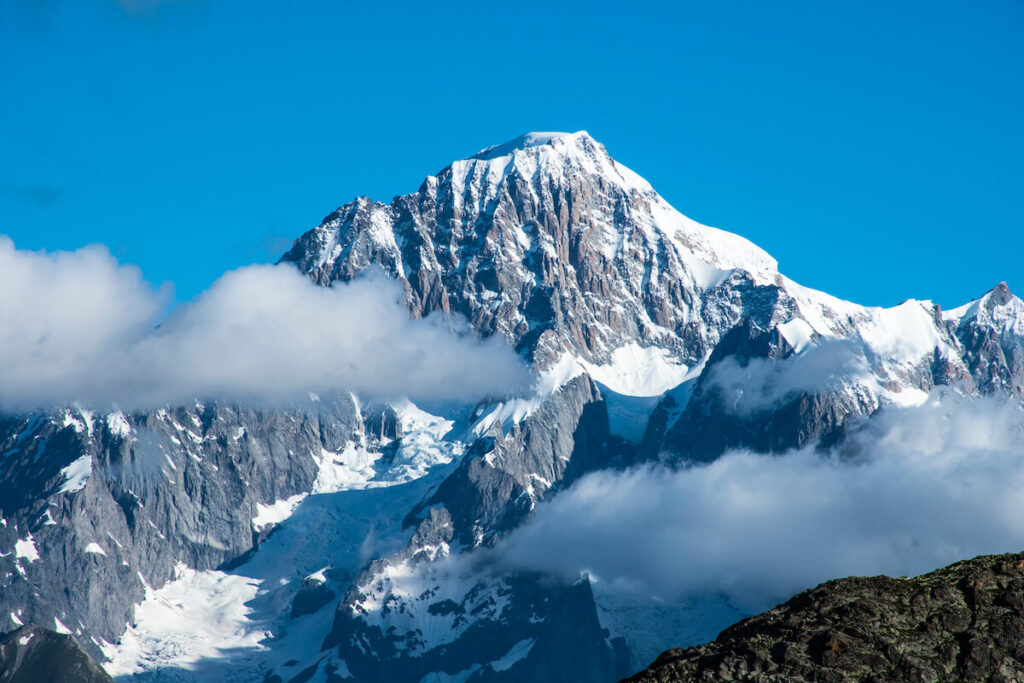
No list could do the wonders of France any justice without a mention of Mont Blanc! At a staggering 4,807 meters, it forms the highest peak of the Alps, and indeed of Western Europe as a whole.
Mont Blanc is also known by its Italian name Monte Bianco, and even though its peak lies beyond the Italian side of the Alps, the massif formed by the mountain does extend into the country and is still considered one of the greatest natural wonders of Italy.
3. The Purple Hills of the Provence

Ask the average person to imagine a view of the Provence, and you’ll be hard-pressed to find any answers that don’t contain swooning mentions of those rolling, purple-lavender hills.
Of course, the lavenders never grew naturally in this way before humans began cultivating them here. But because nature has taken over at this point and the lavender fields have become a self-sustainable, intrinsic part of their region’s landscape, many (including yours truly) consider it fair to label them among the most significant natural wonders in France.
No matter where you stand on that debate though, you can’t deny that without the beautiful seas of purple, the Provence countryside could never be the same!
4. The Sea of Ice at Chamonix

Called the Sea of Ice in France (or Mer de Glace), the stunning glacier at Chamonix is one of the world’s largest at over seven kilometers in length!
It snakes along the Chamonix valley, nestled in between mountain peaks not unlike an actual river, which makes you wonder why it was never called La Rivière de Glace instead.
Language aside, it’s a stunning place to be. From Chamonix, there are local trains that can take you all the way up to the main natural attractions along the Sea, including a hollowed-out underground ice cave called the Grotto, as well as a panoramic hilltop restaurant!
There is also a really nicely-appointed glaciology museum (only open during the summer months) that explains not just how huge glaciers like the Sea of Ice in France can form, but what role they play within the larger-scale environment.
5. The Quiberon peninsula

Far away from chilly Chamonix, in the region of Bretagne, the Quiberon peninsula stands out as one of Northern France’s most stunning geographical features.
Long a hot spot for tourists seeking to explore the French Atlantic coast, Quiberon is full of miraculous sights. From sharp-edged cliffs to kilometer-long trails along quiet, serene beaches and from whale-watching to scuba diving, Quiberon has amassed a large community of travelers who come back to visit, time and time again.
Whether you just want to watch the waves as they dramatically crash into the jagged coastline or whether you are up to discovering some of the most out-of-this-world natural attractions, Quiberon offers a lifetime’s worth of adventure.
6. The Salt Flats of Camargue

The little region of Camargue, located where the Rhône river flows into the Mediterranean sea, is home to one of the most unique natural wonders in France.
The salt flats of Camargue are not just huge and stunning to behold — they are a major feature of Southern French geology and an important source of salt for European industry.
What’s more, unlike most salt flats around the world, the Salin d’Aigues-Mortes, as they are known in French, shine in a brilliant, alien-looking pink color.
That’s courtesy of a unique algae species that has made the flats their home — a stunning testament to the importance of the flats to their ecosystem.
7. The Dune of Pilat

When you think of sand dunes, images of Arabian deserts, or perhaps the landscapes of Saharan Africa are likely to emerge in your mind’s eye. France? Not so much.
That’s why the most common reaction when visiting the Dune of Pilat for the first time is a state of complete, pure shock.
The largest of its kind on the continent, the sand dune of Pilat covers some 60 square kilometers along France’s southwestern Atlantic coast. Most visitors choose to ascend to the cliff edge of the towering dune by foot, with paragliding and boating by the coast also being popular activities.
But even a relaxing walk by the beach can prove to be a moving experience!
8. Étretat

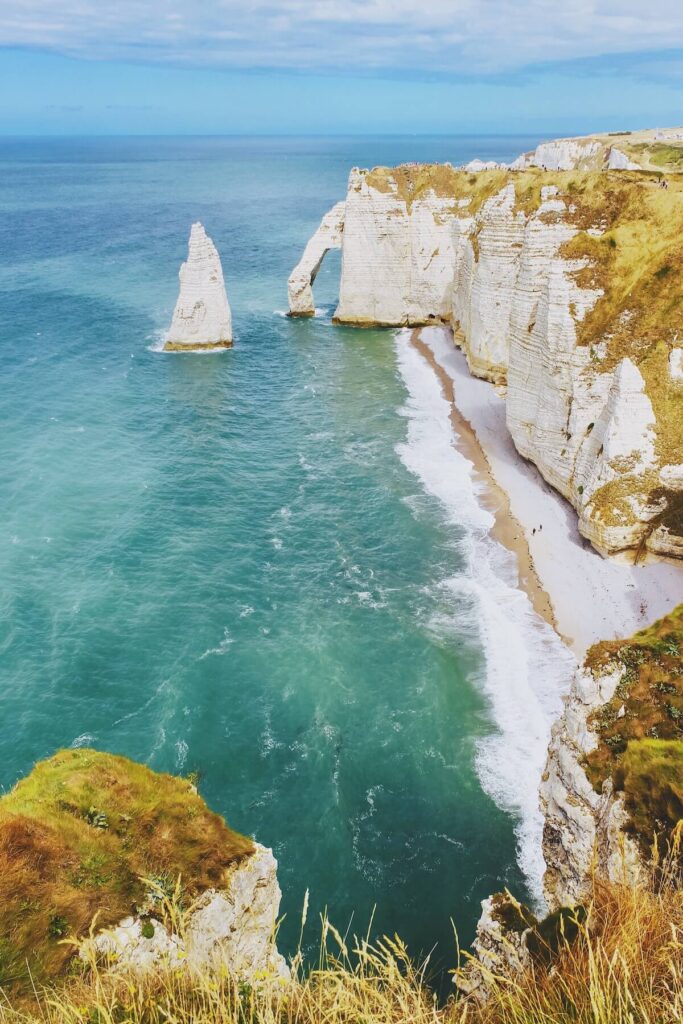
Known by Parisians as one of the most popular summer getaways since the 1800s, Étretat is known as one of France’s most iconic natural landmarks. In big part, this is due to its breathtaking coastline flanked by a series of falaises, sharp, mineral-rich cliffs that glisten in shades of white and green.
The view from Étretat has inspired countless artists throughout France’s history, most famously Boudin, who painted the cliffs and seaside numerous times.
9. Lake Annecy

Considered by many to be one of the longest-lasting natural symbols of France, Lake Annecy is located in Haute-Savoie, on the eastern border shared with Switzerland and Italy.
That proximity has helped the Lake to amass an international reputation — that, and its famously clean, calm, deep blue waters.
As sort of a gateway to the French Alps and the surrounding landscape, it remains one of the most popular spots for winter sports enthusiasts, hikers, divers, and travelers from the world over.
10. Les Calanques

Just outside of Marseille, the biggest city along the French Riviera in the Mediterranean region of the country, the serene Calanques are a stunning contrast to the urban, loud ambiance of the big city.
Formed by erosion, the Calanques are a network of limestone and other mineral rocks that have formed complex valleys, canals, ponds, and even islands. The marine life inhabiting the Calanques is unique to the region and formally protected, thanks to its status as a natural reserve and public park.
Some of the Calanques are actually within the city limits of Marseille, making them easily reachable by public transport.
Many choose to explore the rocky valleys from up close by kayak or sailboat, though climbing and hiking, along with paragliding are also popular activities in the area.
11. Mont-Saint-Michel
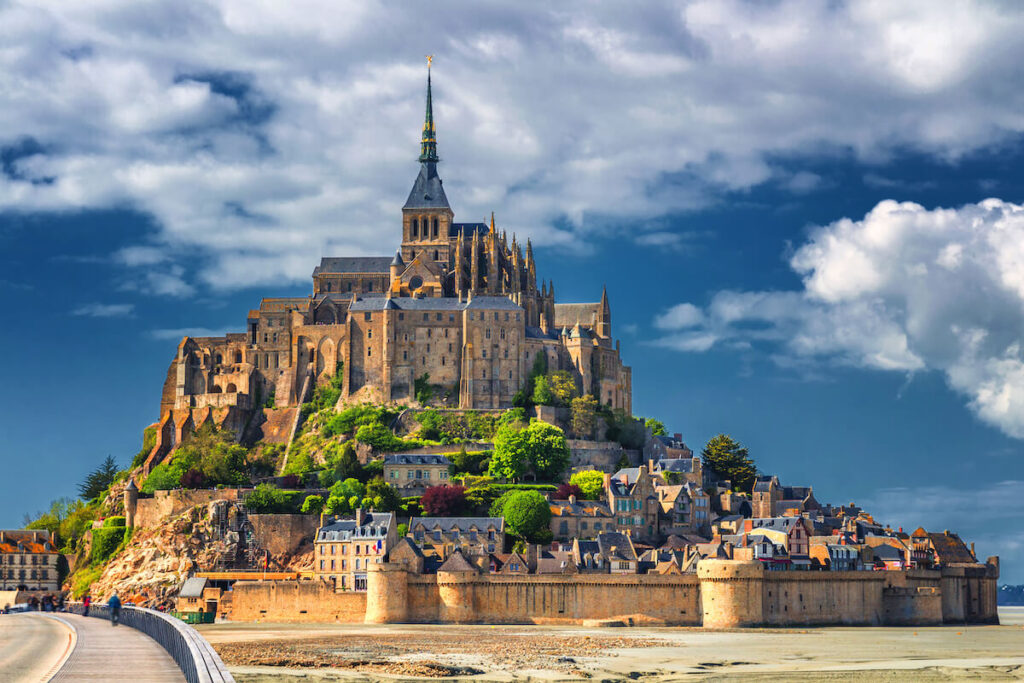
Just off the coast of the mainland by Normandy, the island of Mont-Saint-Michel is a symbol of a bygone era in French history.
Even today, it still looks like a time capsule from the Middle Ages — city walls and cute timber houses included. Not to mention the world-famous Christian abbey literally towering above, of course.
Not only is the island itself a UNESCO World Heritage Site, but the majority of the buildings on it are also protected monuments under French law. This is meant to ensure that the timeless flair of Mont-Saint-Michel will continue to live on for centuries to come.
Romanticist paintings often make it look as if the island is located far out to the sea, completely separated from mainland France. In real life, the distance to France proper is barely a single kilometer, making it easily traversable by means of a footbridge.
12. Les Orgues d’Illes-sur-Têt
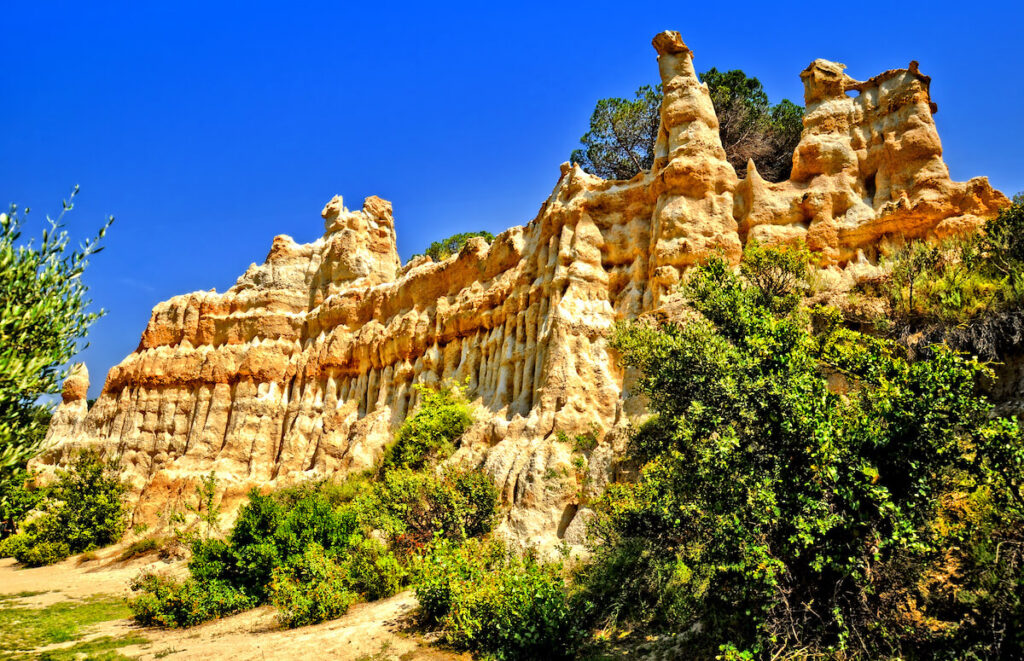
Illes-sur-Têt is a charming, bustling old town just at the edge of the Pyrenees. While beautiful to see on its own, it obviously wouldn’t make this list just like that, being manmade and all.
However, if you venture just outside of Illes-sur-Têt, you get a chance to see the Orgues, a stunning rock formation shooting up from the ground like large pillars and series of pipes.
Traditionally, they have been compared to church organs, which is where their name derives from.
In addition to their unique shapes, the dense mineral layers throughout the Illes-sur-Têt Orgues also lend them a unique color scheme. Many display bands or stripes of yellows, reds, or oranges in addition to sandy white.
13. Pont d’Arc

Though it never set any world records in size, height, or any other physical extremes, the Pont d’Arc nonetheless reigns on as one of Europe’s (and indeed the world’s) most recognizable natural land bridges.
Kayaking and paddle-boating through the 60-meter-wide arch remain popular pastimes, and the views are absolutely priceless.
Fun fact: the Chauvet cave, where some of the earliest paleolithic cave paintings were famously discovered in 1994, is very close to Pont d’Arc, leading to its official name of La Grotte Chauvet-Pont d’Arc.
14. Monet’s Garden
Throughout history, France has been known for its generations of daring artists, from the Renaissance to the present day.
Often, these artists took the natural wonders of France as inspiration for their paintings, drawings, and writings — a perfectly reasonable choice when you consider the immense beauty that they hold.
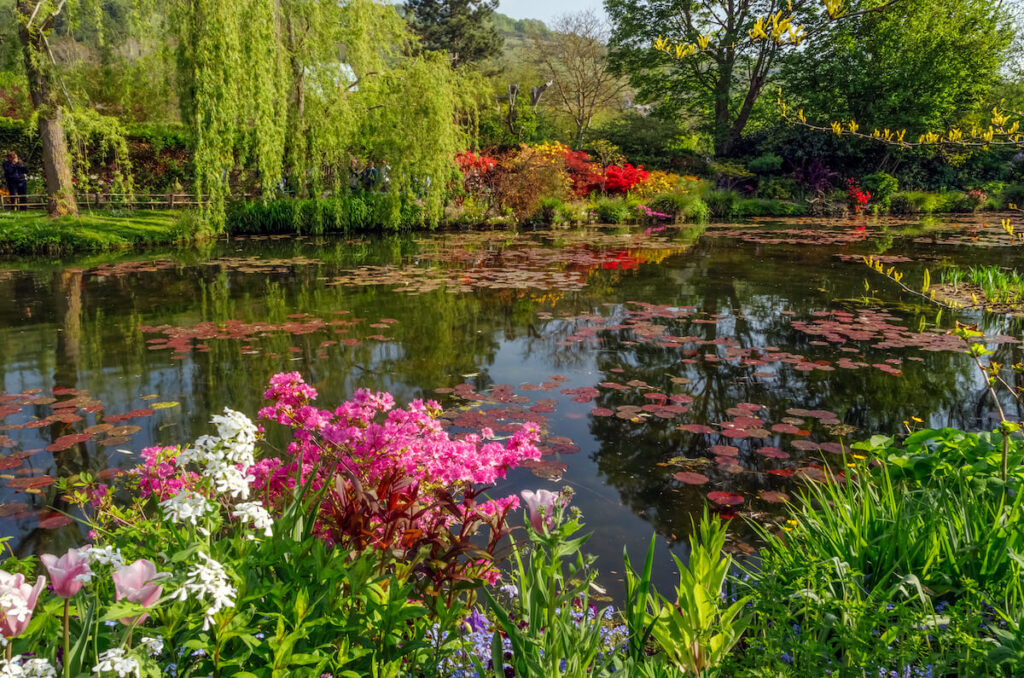
Arguably the most famous example is Monet’s Garden. The painter lived here, in his own spacious, still-preserved studio, and practiced his craft for most of his life.
As a result, dozens of his most famous paintings are taken from natural scenes straight out of his garden. The fact that you can still visit and stroll through the same beds of flowers that inspired one of the most creative minds of the 19th century makes Monet’s Garden one of the most significant natural wonders in Europe.
15. Scandola Reserve
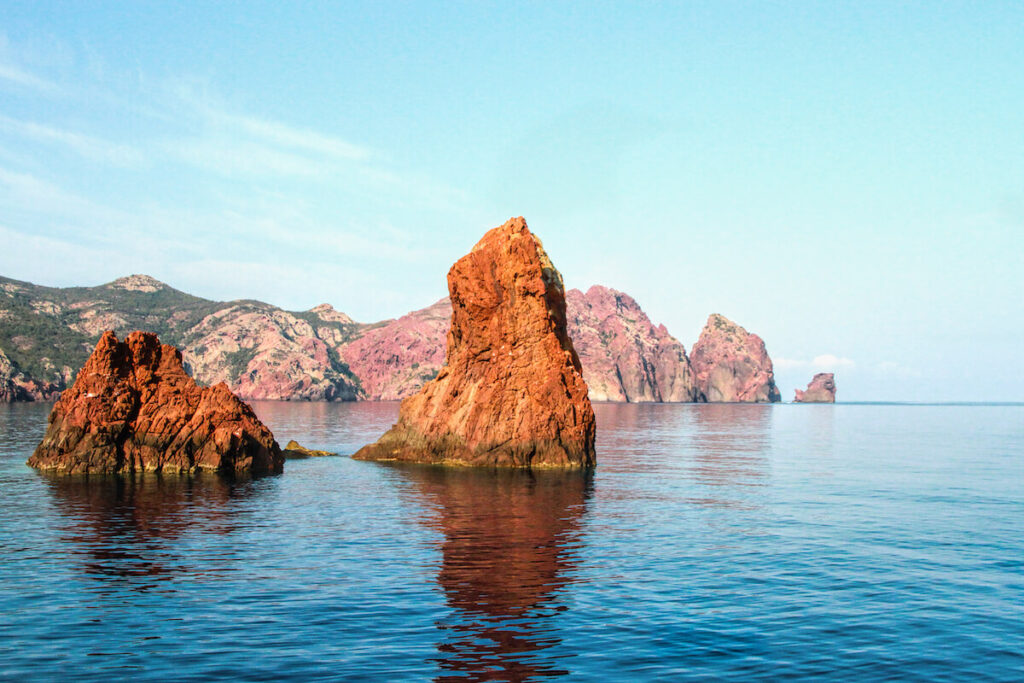
Located on the west coast of Corsica, the Scandola Reserve is one of the most stunning natural wonders in France off of the mainland.
A thriving marine ecosystem full of rare biodiversity co-exists here alongside downright terrifying, cinder-red rock formations, cliffs, and islands in strange, otherworldy shapes.
Down below, there are hundreds of grottos and underwater caves, plenty of which remain unexplored.
To preserve not only the sights but also the one-of-a-kind marine life, the Reserve has been strictly protected since the 1930s. However, it’s still possible to visit under certain terms as long as you don’t interact with the Reserve in any significant way.
16. La Côte de Granit Rose
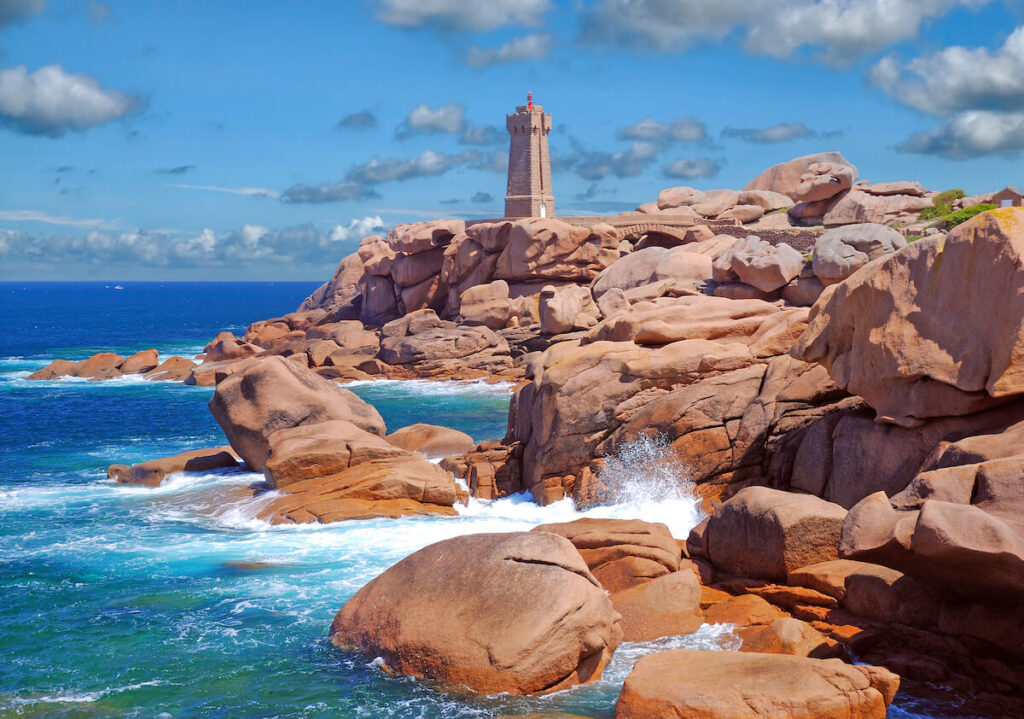
Speaking of that marvelous red rock, La Côte de Granit Rose is also world-famous for its oddly-colored towers of stone. Along the Atlantic coast of Brittany, pink sands straight out of a fairytale glisten in the sun next to imposing, golden-red pillars.
The geological formations along the coast are surprisingly complex and remain an item of fascination among researchers. For the rest of us, they’re also a marvel to look at and admire!
17. Les Gorges du Verdon

Along the very edge of the Côte d’Azur, close to the quiet mountain town of Castellane lies the Gorge of Verdon, one of the most impressive canyons on this side of the Americas.
Stretching across 25 kilometers with a depth of between 500 and 700 meters, the canyon (like most) was formed by the erosive action of the river of the same name over the course of millions of years.
Despite the dramatic and somewhat scary appearance, the Gorge is actually relatively safe to navigate, and you can even take a road trip along the perimeter or traverse the Verdon down below by kayak.
18. The Volcanoes of Auvergne

The landscapes of Central and Western Europe aren’t particularly known for their volcanic activity. Germany, for example, has only about two dozen, of which none are active and only one — the Wasserkuppe — has achieved any kind of international fame or glory, in this case, thanks to its historic role as one of the most important airstrips for early sailplanes.
France is a different story. Where most of the country is completely free of volcanoes altogether, the region of Auvergne more than makes up for it with a whole chain of over 80 of them, stretching across more than 100 square kilometers.
Don’t worry, they’re all dormant and long overgrown in beautiful forests, pastures, and fields!
The chain is known in French as the Chaine des Puys, and beyond its geological significance, it’s also visually distinct: the landscape is dotted with dozens of craters and cones that you won’t find anywhere else.
Conclusion
As you can see, France is a country full of impressive wonders and miraculous artifacts of nature.
If you would like to follow up to this excursion to the countryside with something different, consider our article on the most famous cities in France and what makes them so special, including the undying capital of Paris.
Now, it’s your turn to shine: which of these (or other) French wonders have you had the chance to see with your own eyes? Which were your favorites? Let us know in the comments!