
From its far-flung Atlantic islands to the verdant stretches of the rugged northern coast, Spain is a country with a wealth of natural wonders. The nature in Spain is unrivaled and jaw-dropping. I never tire of seeing sunsets over the Andalusian mountains or exploring the arid landscapes of the Mediterranean coast.

But beauty isn’t all it has to offer. Spain is also one of the most biodiverse countries in Europe. Its many national parks and nature reserves are critical ecological niches. When these parks and reserves are combined with its plethora of geological attractions, you’ll see it’s impossible to pin down just seven natural wonders in Spain.
Follow along as we explore the 17 most beautiful natural wonders in Spain.
Table of Contents
1. Gaztelugatxe

If you’ve ever watched Game of Thrones, Gaztelugatxe might strike you as more than familiar. The tiny island, accessible from the mainland of Basque Country in Northern Spain by a twisting, narrow stone path, was the film set of Dragonstone in various Game of Thrones episodes.
Rising from the Bay of Biscay, this rocky islet has captured wonder for centuries. Additionally, the humble hermitage that caps the island has witnessed many historical events across the ages.
2. Río Tinto

In Huelva, a province in the southwest corner of Spain on the border with Portugal, a river tinted deep red and magma orange cuts through the landscape. For this reason, it’s called Río Tinto, meaning Dark Red River.
For nearly half of its 100-kilometer course, Río Tinto holds these vibrant, otherworldly colors due to the concentration of acids and heavy metals. Don’t try to swim in this natural wonder in Spain, as the only living things who can tolerate these conditions are extremophile microorganisms.
3. As Catedrais Beach

As Catedrais Beach in Galicia is a unique place to visit in Spain, so unique the sea itself hides it for much of the day. The beach is humble at high tide, but don’t let looks deceive you.
Some call it the Cathedral of the Sea because when the tide ebbs out to sea, dramatic rock formations reminiscent of cathedrals come into sight. Slate and schist formations one hundred feet tall rise into arches, domes, and ravines that invite exploration as you walk along.
Be sure to know when the tide returns, or else you’ll find yourself swallowed by the waves just like this unforgettable natural attraction in Spain.
4. Cuevas del Drach

Spain has many impressive caves, but in how many of them can you see an orchestra performing from boats in a subterranean lake? Probably not many, but at Cuevas del Drach, you sure can.
This network includes four interconnected caves on the island of Mallorca and is one of the most alluring of Spain’s natural attractions.
5. Laguna de Fuente de Piedra

An elliptical-shaped wetland so shallow and calm it mirrors the rolling landscape of Málaga province, Laguna de Fuente de Piedra is a critical spot for nature in Spain. Great flocks of flamingos come from across the continent to lay and hatch their eggs.
Laguna de Fuente de Piedra is a popular destination for birdwatchers, as many other bird species also nest, mate, and rest in and around the wetland. It’s a stopping point for migratory bird species as they prepare for winter in the warmer climates of the African continent.
6. Enchanted City of Cuenca

If the name itself doesn’t pique your interest, let me tell you more about this unique place to visit in Spain. In the heart of the peninsula’s Castilla-La Mancha province, bizarre rock formations rise from the Spanish landscape, shaped by millions of years of water and wind erosion.
This is the Enchanted City, a geological site near Cuenca. Emblematic of how nature so curiously shapes the landscape, the Enchanted City is one of Spain’s natural wonders.
7. Cueva de Nerja
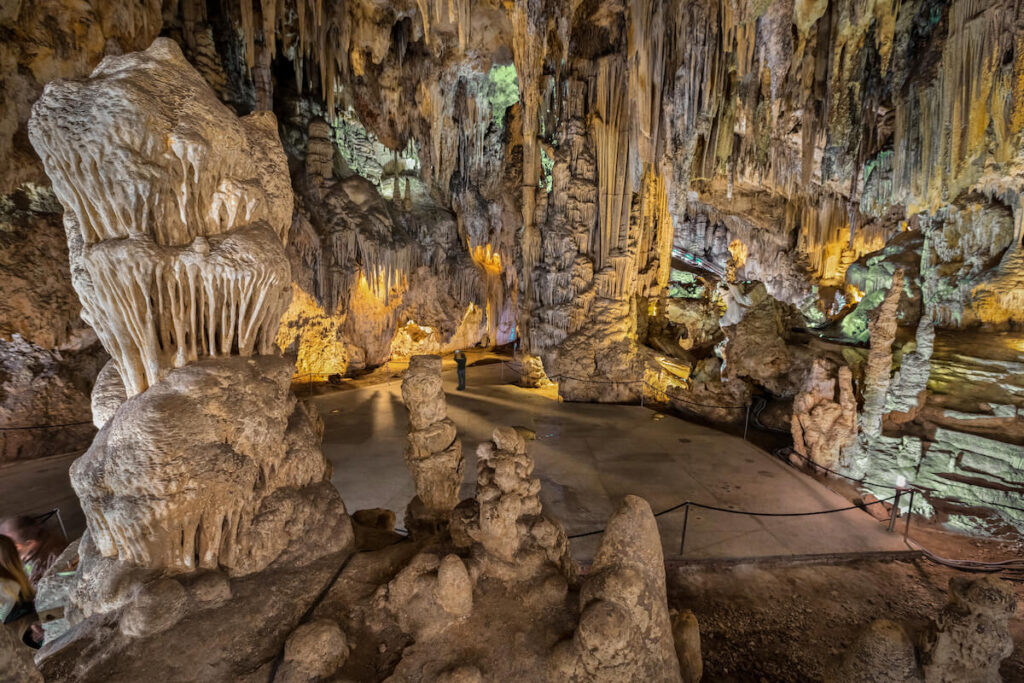
Another one of Spain’s natural attractions is the Caves of Nerja, a subterranean network that extends for over three miles in Málaga province.
The cave system features jaw-dropping stalactites and stalagmites, a cavernous concert hall with natural acoustics, and cave paintings. The paintings, which mostly depict seals, might be the oldest works of art in human history and assert the Caves of Nerja as one of the most fascinating natural wonders in Spain.
8. Cabo de Gata-Níjar Natural Park

Andalusia’s largest natural park, Cabo de Gata (as it’s commonly called) is an impressive coastal expanse whose beaches feature volcanic-rock formations and vivacious coral reefs.
It’s also the driest point in Spain, but don’t worry. Cabo de Gata-Níjar Natural Park is beachfront, meaning you can cool off in the crystalline Mediterranean waters. The beaches are some of the most beloved in southern Spain and have been the backdrop to more than one iconic movie scenes
9. Pulpí Geode

Another Almería natural attraction is Pulpí Geode, a crystal geode that’s one of the largest ever documented. After descending into the silver mine where it was discovered, you can enter the geode itself and marvel at its enormous gypsum crystals.
10. Mount Teide
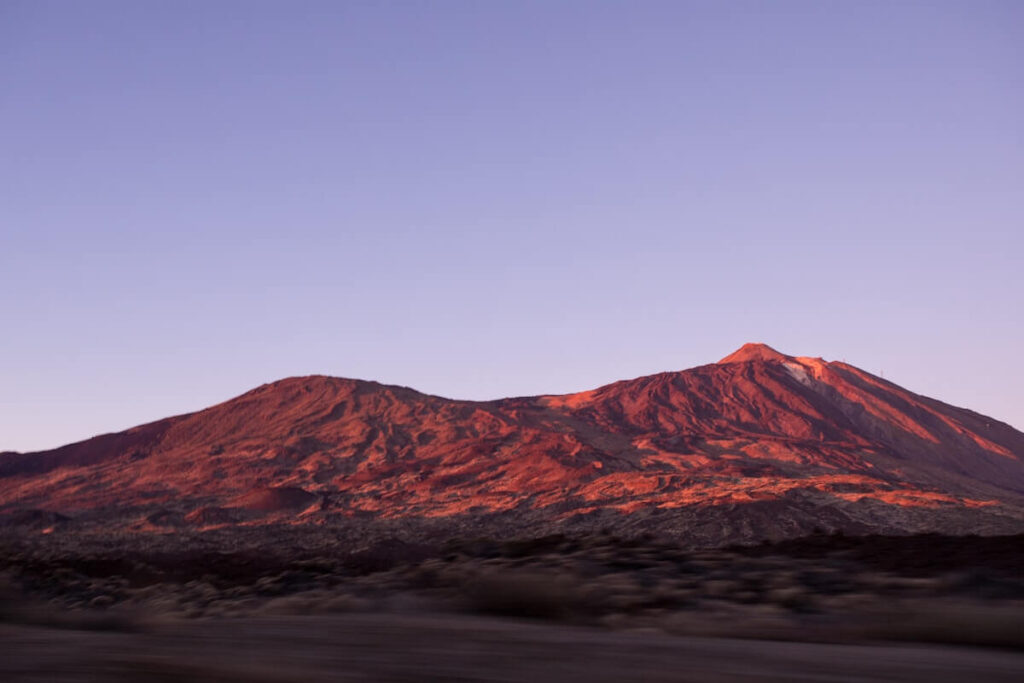
Mount Teide is the tallest mountain in Spain and one of the world’s highest volcanoes, located in the Canary Islands. It’s also the centerpiece of Teide National Park, Europe’s most visited national park. How’s that for superlatives?
Because the extreme conditions of the volcano bear striking similarities to the surface of Mars, Tedie has become a hotbed for testing space-faring instruments. It’s also home to an international observatory due to the lack of light pollution around the mountain.
Without a doubt, Teide is one of the most out-of-this-world natural wonders in Spain.
11. Laguna Rosa de Torrevieja

The famous Laguna Rosa of Torrevieja is part of a network of natural parks in Spain’s Alicante community. Similar to the Laguna de Fuente de Piedra, it’s a crucial spot for migratory bird species and ecological processes.
But unlike the other lagoons, everything in the Laguna Rosa is pink, from the algae that thrive in the highly salty water to the flamingos that nest and rest here during their migrations.
12. Montserrat
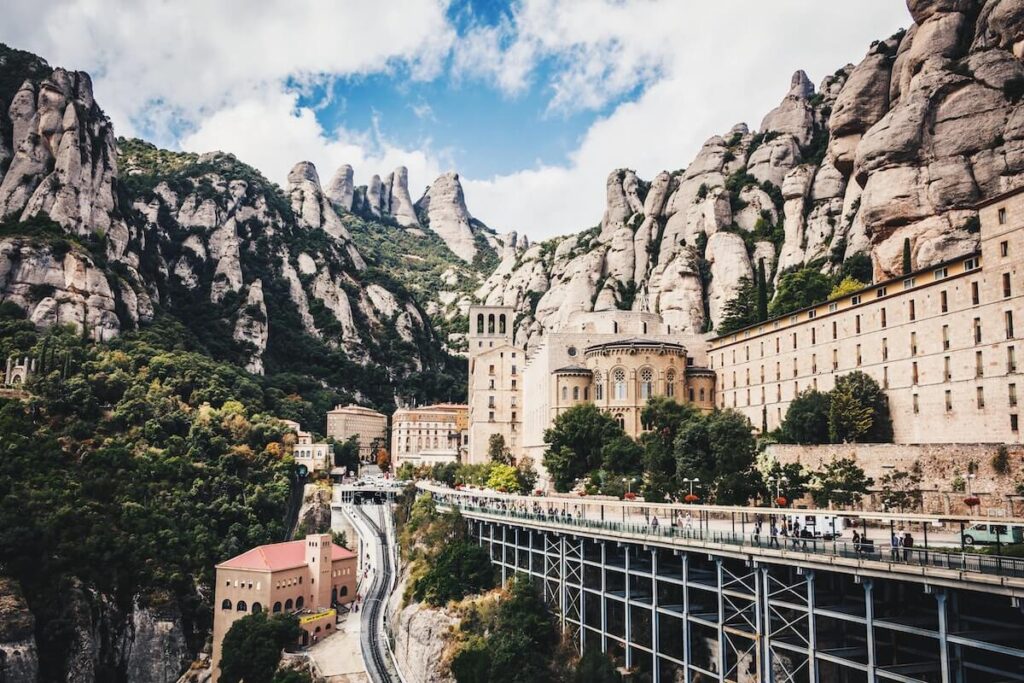
This saw-toothed mountain range is perhaps the most famous natural wonder of Spain’s Catalonia community. Literally meaning “serrated mountain” in the Catalan language, Montserrat and its jagged, folding slopes dominate Spain’s landscape.
The mountain range is home to the Santa María de Montserrat monastery, a sprawling Benedictine abbey nestled among the dramatic peaks. Visitors flock to the monastery to enjoy the architecture and breathtaking views that accompany the cable car ride to the site.
13. Picos de Europa National Park

Chamois and wolves and bears, oh my! Impressive fauna thrives in Picos de Europa National Park, where a glacier-carved mountain range stretches across the communities of Cantabria, Asturias, and Castilla y León.
Among the valleys and slopes of this mountain range, you can find some of the continent’s deepest caverns, pristine lakes, gorgeous gorges, and flocks of livestock herded by traditional shepherds. Picos de Europa is one of the best places to experience nature in Spain.
14. Cueva de los Verdes

Deep in the bowels of Lanzarote in the Canary Islands, Cueva de Los Verdes offers a fascinating glimpse into the volcanic history of the island. Cueva de Los Verdes was formed by lava flow and is divided into various tunnels that extend for miles.
One such tunnel is the mile-long Túnel de la Atlántida, which is completely submerged by the Atlantic Ocean and a hotspot of marine biodiversity.
15. Doñana National Park

Known to locals as La Doñana, this national park is a sprawling, transregional preserve in Andalusia. La Doñana boasts a plethora of ecosystems, such as wetlands, shifting sand dunes, and pine forests.
The park is one of the most ecologically important in Europe, where endangered species like the Spanish imperial eagle and the Iberian lynx can thrive in protected habitats.
Hundreds of migratory bird species also frequent Doñana National Park, a phenomenon that draws in scientists and birdwatchers from across the world.
16. Parque Natural de Mondragón

Due to its small size and understated reputation, Parque Natural de Mondragón might not top the list of natural wonders in Spain. But I can speak firsthand for the sheer beauty of this corner of Mallorca, where light pierces to the bottom of deep emerald waters.
Scraggly pine forests and shrubland cling to the rugged cliff tops of Mondragón, between which the park’s many calas, or coves, harbor intimate beaches. Without a doubt, Parque Natural de Mondragón is an unforgettable, unique place to visit in Spain.
17. Sierra Nevada

While the Sierra Nevada is not as tall as Mount Teide —which is not geographically in Europe — it is the second-highest mountain range on the European continent. Mulhacén, the highest peak in the range, towers over the romantic city of Granada.
The mountain range is rich in history, ecology, and culture. From the idyllic villages of La Alpujarra to the national park of the same name, Sierra Nevada’s snowy peaks and narrow valleys compose one of the most expansive and beautiful of Spain’s landscapes.
Wrap up
To attempt to list all the natural wonders of Spain is as foolish as Don Quixote attacking windmills thinking them giants. That’s to say, it’s a tall task that no one, not even the most heroic Spaniards, has yet accomplished.
There’s a reason Spain is widely considered one of the most scenic countries in the world, as Spain’s landscapes, ecosystems, and natural wonders are infinite. You’ll see for yourself, but this list is a good place to start.
Let us know if any other landscapes and natural wonders in Spain have left you speechless.