
Beijing, China’s capital and second-largest city at 21.5 million people, is one of the most fascinating and complex cities in the world. Beijing is also one of the oldest cities in the world and has a history stretching back three millennia.
Originally founded in 723 B.C., it wasn’t named Beijing, formerly known as Peking, until 1423. The name change all has to do with the translation of Mandarin into English, and the current modern system translates “northern capital” into Beijing, not Peking.
This doesn’t mean that Beijing is just steeped in ancient traditions and old buildings. Quite the contrary — it’s also a modern, dynamic city. But besides being really big and really old, what is Beijing known for? And what is Beijing famous for?
Beijing is famous for Peking duck, Chinese New Year celebrations, hosting both the Winter and Summer Olympics, and as the Gateway to China. Beijing is known as the Forbidden City and holds famous monuments like the Summer Palace, Tiananmen Square, the Temple of Heaven, and the Great Wall of China.

There are so many things Beijing is famous for, it’s hard to choose what to include on this list! And when you go to the Celestial City, you’ll have the same problem: picking and choosing what to see and do, because you’ll never be able to see it all. That’s okay—you’ll just have to visit Beijing again.
But everyone has to start somewhere! Here are 23 things Beijing is known and famous for.
Table of Contents
1. Great Wall of China

The Great Wall of China is one of the most enduring symbols of both China and Beijing. The wall stretches along the northern border of China for more than 3,000 miles and took generations and dynasties to build.
Unfortunately, most of the Great Wall is now in ruins, with a few exceptions. One of the best-preserved sections (and therefore the most visited!) of the Great Wall is at Badaling, just north of Beijing.
The Great Wall at Badaling was built during the Ming dynasty, in the 1500s, and restored for visitors in 1957. Nowadays you can get a tour, have a bite, take a ride up to the Great Wall in a cable car, or stay nearby.
Pro tip: wear very sturdy shoes, and take the cable car up! This way you can take a leisurely walk down and escape most of the crowds.
2. 2008 Winter Olympics & 2022 Summer Olympics (both!)

Beijing is famous as the first city in the world with the distinction of hosting both the Winter and Summer Olympics. Beijing hosted the Summer Olympics in 2008, and the Winter Olympics in 2022.
Although the Summer Olympics were considered a success, the Winter Olympics were plagued with scandal, including the fact that all of the snow used for the Games was artificial.
Many considered Beijing an odd choice for the Winter Olympics, as Beijing receives very little snowfall annually.
3. The Forbidden City
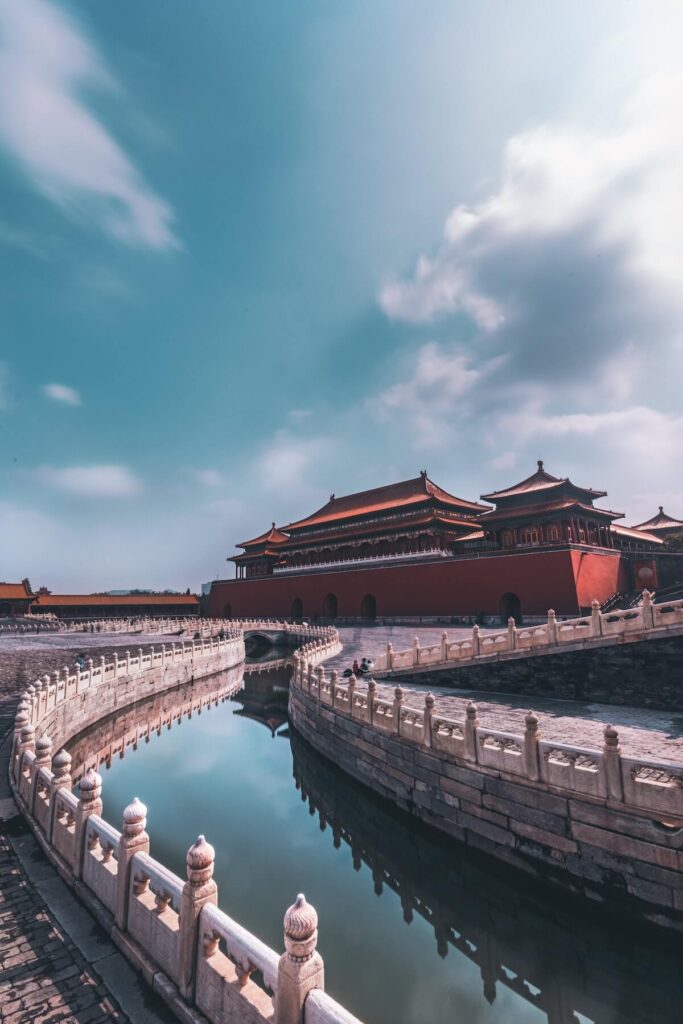
The Forbidden City in Beijing is a palace complex that used to house the Chinese emperor—24 of them, in fact. The Forbidden City is the largest palace complex in the world and is the largest collection of preserved ancient wooden structures in the world.
It covers 128 acres and has 980 buildings, including the Palace Museum, which houses hundreds of pieces of Chinese art and artifacts.
The Forbidden City is a must for any visit to Beijing, but beware—with millions of visitors annually, it can get pretty crowded.
4. The Summer Palace
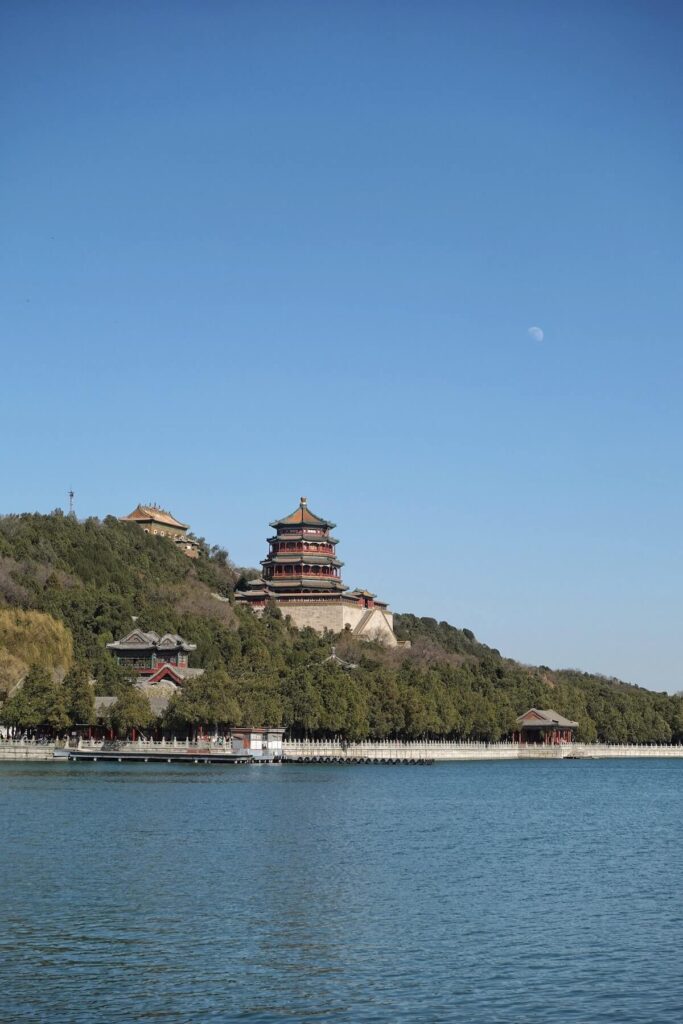
The Summer Palace is the largest imperial garden remaining in China, and one of the best-preserved in the world.
The Summer Palace used to be a retreat for the Chinese royal family, to escape the heat of the Forbidden City in the summer months.
There is another imperial garden nearby, the Old Summer Palace, which is now in ruins after it was burned down. The ruins are also open to the public and are well worth a visit.
5. The Temple of Heaven
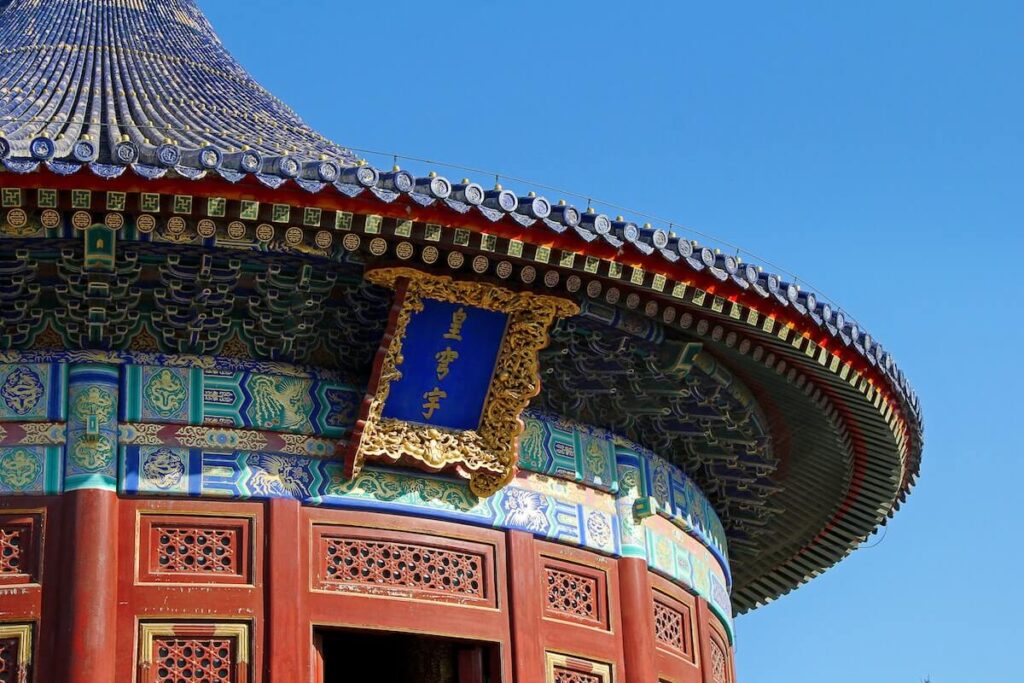
Yet another UNESCO World Heritage site that Beijing is famous for, the Temple of Heaven is considered the ultimate example of traditional Chinese architecture.
The Temple of Heaven is a religious complex that was once a place for the Emperor to provide sacrifices to God, in hopes of having a year of a good harvest.
It was a significant religious locale for years, and although it fell into disrepair after the last emperor died, it has been beautifully restored.
6. Peking duck

Peking duck has been the signature dish of Beijing for at least the last 400 years. Traditionally, Peking duck is made with a certain breed of duck—the Imperial Peking—and served in three courses.
The first course is the skin of the duck, served with hoisin sauce and scallions eaten together in a small pancake; the meat of the duck is cut up and served with vegetables, and the third course is a soup made of the duck’s bones (plus cabbage).
There are certainly variations of this nowadays, but you must try the traditional way to get the full experience. Then you can venture out to see these newfangled ways of prep if you wish.
7. Hutongs

Beijing is known for its hutongs, which are small alleyways that traditionally connected the courtyards of traditional Chinese houses (siheyuan). These alleys connecting the houses would form larger streets and eventually neighborhoods.
Although the original hutongs have been altered or destroyed throughout the years, many do remain. As they give a glimpse of everyday life in Beijing for the last hundreds of years, they’re an integral cultural part of past, present, and future Beijing.
Each hutong has a name, often given for a direction, nearby landmark, or unique feature (such as especially narrow walls or many turns).
8. Tiananmen Square
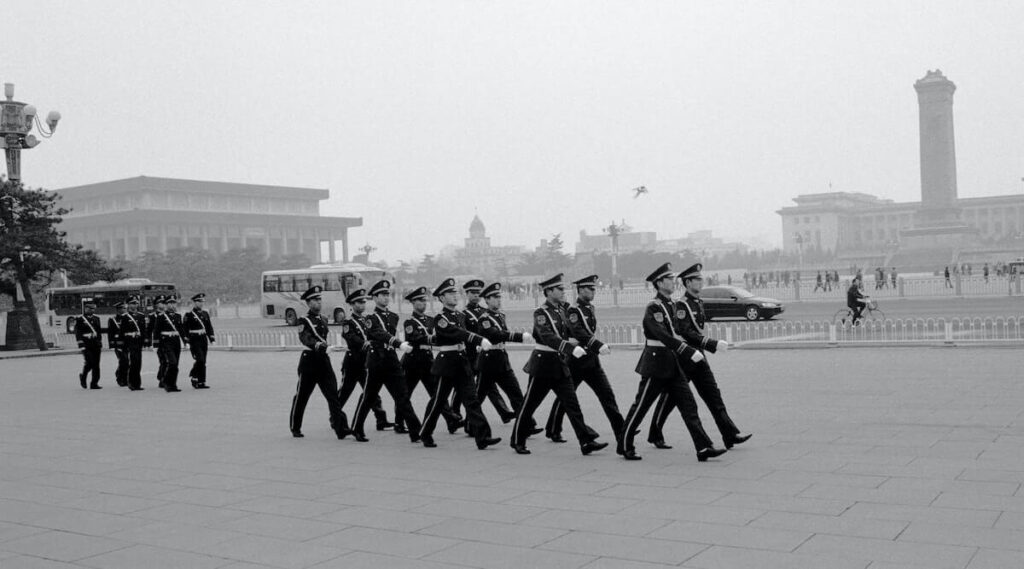
Tiananmen Square, a giant city square in the middle of Beijing, has had important cultural significance for centuries. Tiananmen Square once held one of the gates to the Imperial City, known as the “Gate of Heavenly Peace” or the “Gate of China.”
In 1954, the gate was demolished following Chairman Mao’s wishes, who wanted to make it the largest square in the world.
Nowadays, the square holds Chairman Mao’s Mausoleum, the National Museum of China, and the Great Hall of the People.
It’s most known outside of China for the June Fourth Massacre in 1989, and within China as the site Chairman Mao officially formed the People’s Republic of China.
9. Qianmen Street

Right near Tiananmen Square, you’ll find Beijing’s oldest shopping street, Qianmen Street. Here you will feel the real spirit of Old Beijing, with its architecture, proximity to famous hutongs, and long history.
The shops that line Qianmen Street are no longer traditional (think Zara or H&M), but there are still many teahouses and restaurants that serve classical dishes from both Beijing and other Chinese provinces.
10. Beijing Noodles

Beijing Noodles, or Fried Sauce Noodles, are a classic Beijing (and northern Chinese) dish. Beijing Noodles are traditionally handmade, thick noodles coated in fried bean sauce.
Beijing’s version of fried sauce in this instance is made of pork, yellow soybean paste, fermented black beans, and scallions all simmered (or stir-fried) together.
Other provinces in China have their versions of Beijing Noodles, but most are served with a topping of fresh, crunchy veggies, such as cucumbers or radish.
You can find Beijing Noodles all over Beijing, from small street vendors to fancy restaurants, and for any meal—breakfast, lunch, dinner, and snack!
11. Chinese New Year

The Lunar New Year, commonly called the Chinese New Year, is the most important event on the Chinese calendar and is celebrated all over Asia.
The dates follow the phases of the moon (hence the name), and so aren’t on the exact days every year, but usually fall between mid-January and mid-February.
The festival lasts for 15 days and culminates in a Lantern Festival. The event is also marked with dragon processions, rituals for banishing lingering bad luck from the previous year, fireworks, feasts, money exchanged in red envelopes, and a full seven days of vacation time.
12. Peking opera
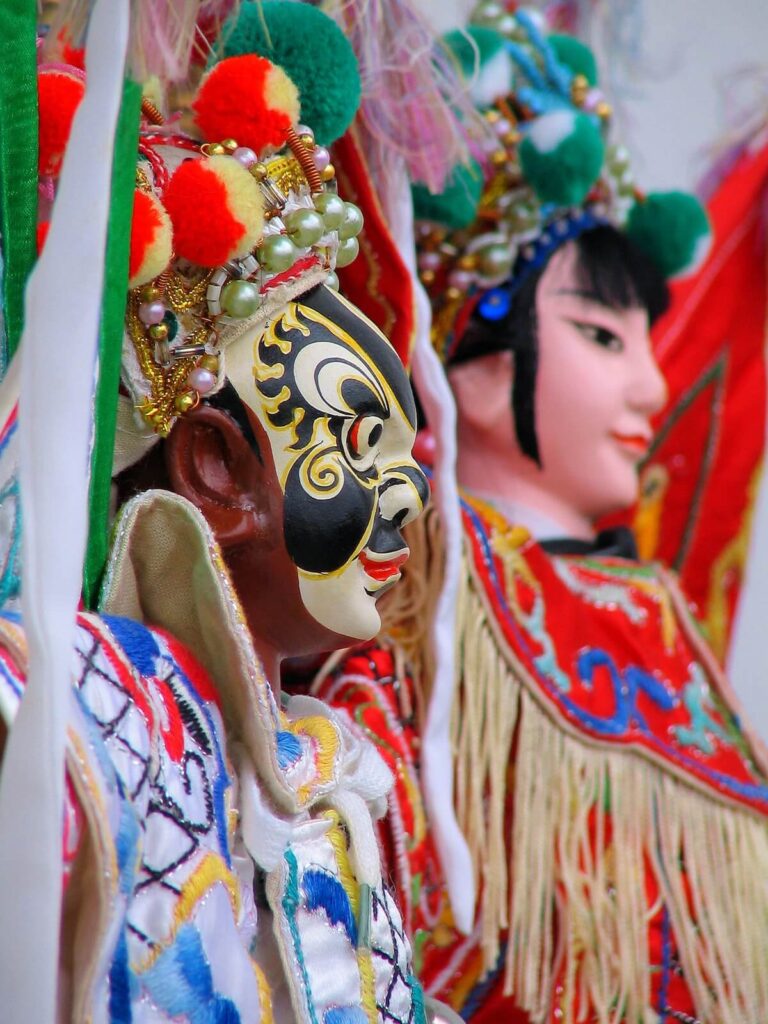
Beijing is known for Peking opera, the most dominant and influential form of Chinese opera. Peking opera was first performed in Beijing in the late 1700s and has become entrenched in the culture ever since.
Peking opera combines mime, singing, music, martial arts, dance, and acrobatics. Peking opera is known for having four character types: sheng, dan, jing, and zhou (male, female, painted face, and comic). Jing (painted face) is the iconic symbol of Peking opera, known around the world.
13. Baijiu

Baijiu, the drink of China and Beijing, is a white liquor (or clear) with a very high alcohol content, traditionally made with sorghum or other grains, depending on the region it’s made. Baijiu has been distilled in China for centuries, although no one knows its exact origins.
Traditionally baijiu is served at room temperature, although now it can be found in mixed cocktails or casual bars. Certain high-end baijiu bottles can sell for around $3,500 U.S. dollars, depending on the process made, and the alcohol content (usually between 35%-60%).
Baijiu is often used in Chinese business deals, as a common belief in China is that your true self only shows when you’ve been drinking. Imbibing the hard liquor is also a sign of manliness, and drinking it during a business meeting is thought to show your trustworthiness.
14. The Grand Canal
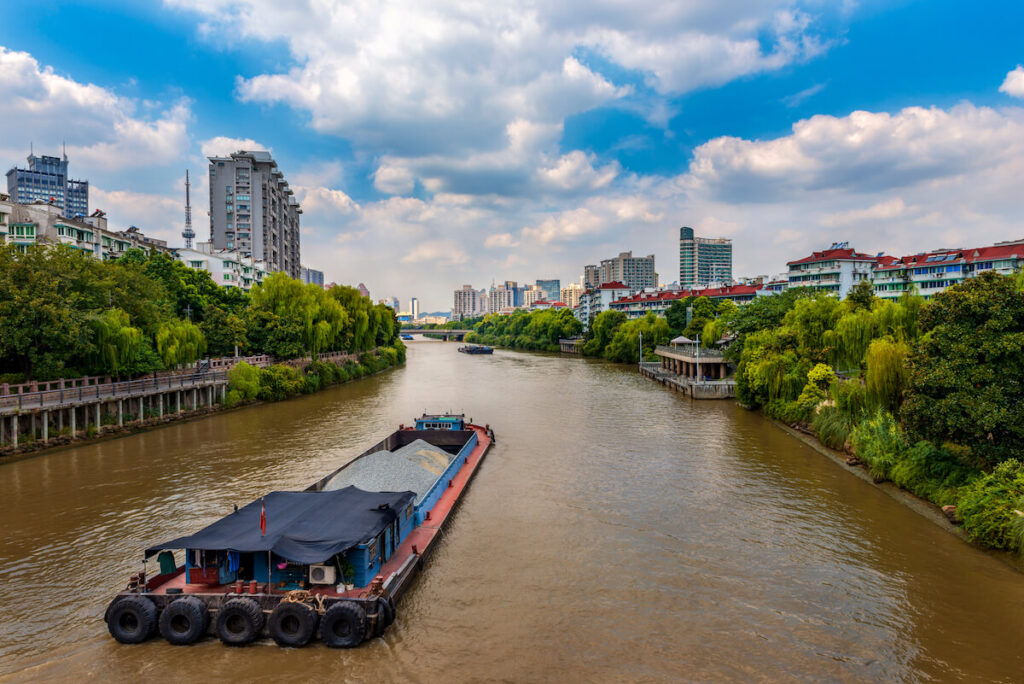
The Grand Canal is considered the most extensive hydraulic engineering project in the history of the world and remains the longest and oldest canal in the world.
The Grand Canal is a long waterway system that originates in Beijing and moves through eight current provinces. The construction began in the 5th century and quickly became integral to China’s inland communication system.
The Grand Canal also enabled the delivery of grain and rice around the province, and the transport of troops, and provided a means to unify the Chinese empire.
Today, the Grand Canal is considered a vital reason for China’s stability and prosperity over centuries and is still used for important communications and transportation.
15. Peking Man Site

The Peking Man Site at Zhoukoudian, in suburban Beijing, is the location of several crucial archaeological finds within China.
The site is a system of caves, which yielded one of the first specimens of Homo erectus, who lived there potentially 700,000 years ago. Other finds include ancient tools, fossils, and other artifacts.
16. Gateway to China

Beijing is the top gateway city to China, meaning most international visits start in Beijing first.
China has not always been the easiest country to visit as a tourist (or, as anything else), but recently Beijing instituted a 144-hour visa-free policy, making it easier for visitors to enter China.
As Beijing is considered the cultural hub of China, it also serves as a jumping-off point to the rest of the country and gives you a good taste of what China is all about.
17. Cloisonné

Cloisonné is an ancient form of enamel art used to make jewelry, vases, and other decorative items, like boxes. Cloisonné is produced all over the world, but as it was likely invented near Beijing, it is most associated with China.
It’s common to find cloisonné in souvenir shops in Beijing, often on beads, used to make earrings or bracelets.
18. Air quality
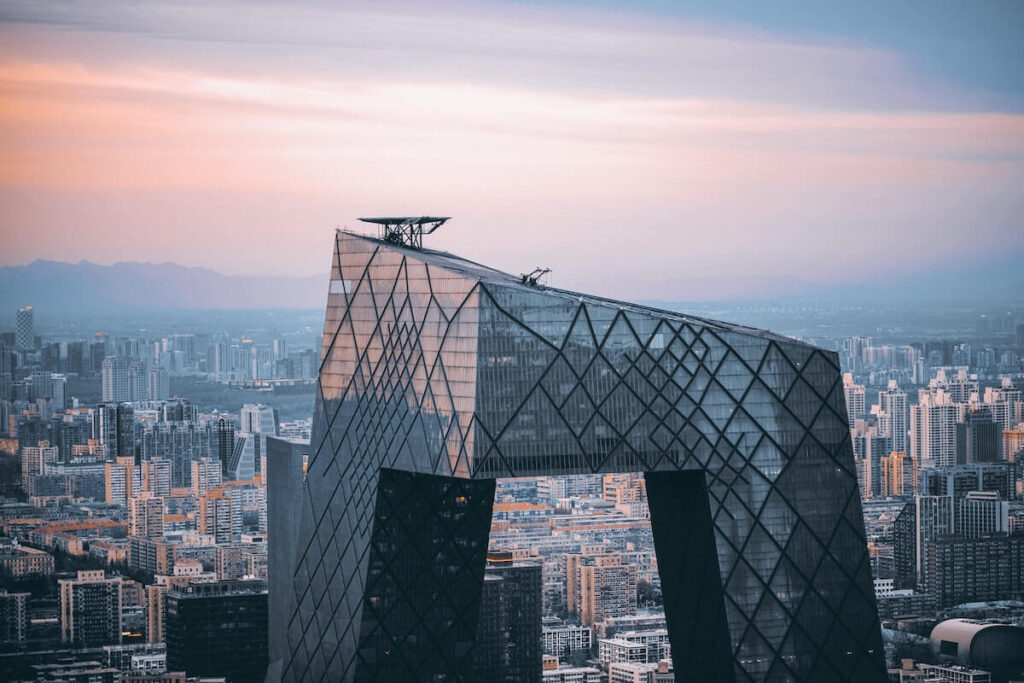
For better or for worse, Beijing is synonymous with poor air quality. Air pollution can be so bad, locals in Beijing will wear face masks to protect their lungs.
However, in the last ten years or so, China has aggressively targeted pollution with its “war on pollution.” This has led to an air pollution reduction of 40% countrywide, and a 50% reduction in Beijing.
Of course, pollution levels are still higher than recommended by the World Health Organization (WHO), but it’s a start!
19. Most billionaires in the world
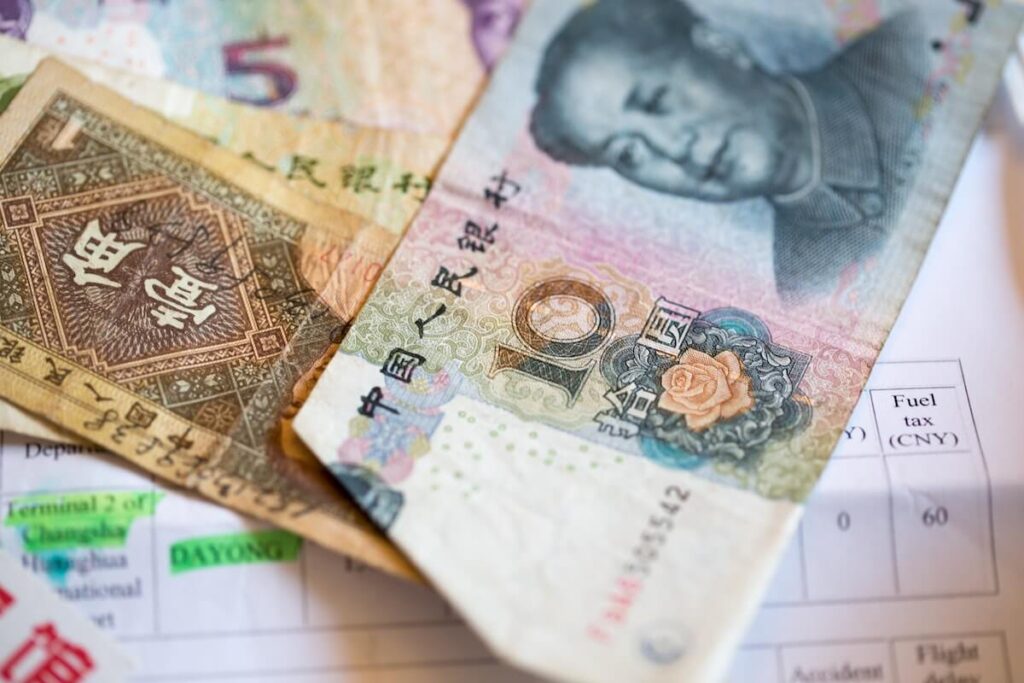
Beijing is known for having the most billionaires in the world, although they were recently bumped (in 2022) down the list to #2 by New York City.
Beijing has 83 billionaires (NYC has 107). Due to some issues with Asia’s market and the influx of wealth into New York, Beijing lost a few of its billionaires. (Bummer).
China does still have the most number of cities in this top-ten list, with Shanghai at number five and Shenzhen at number six.
20. Sugar-coated haws on a stick
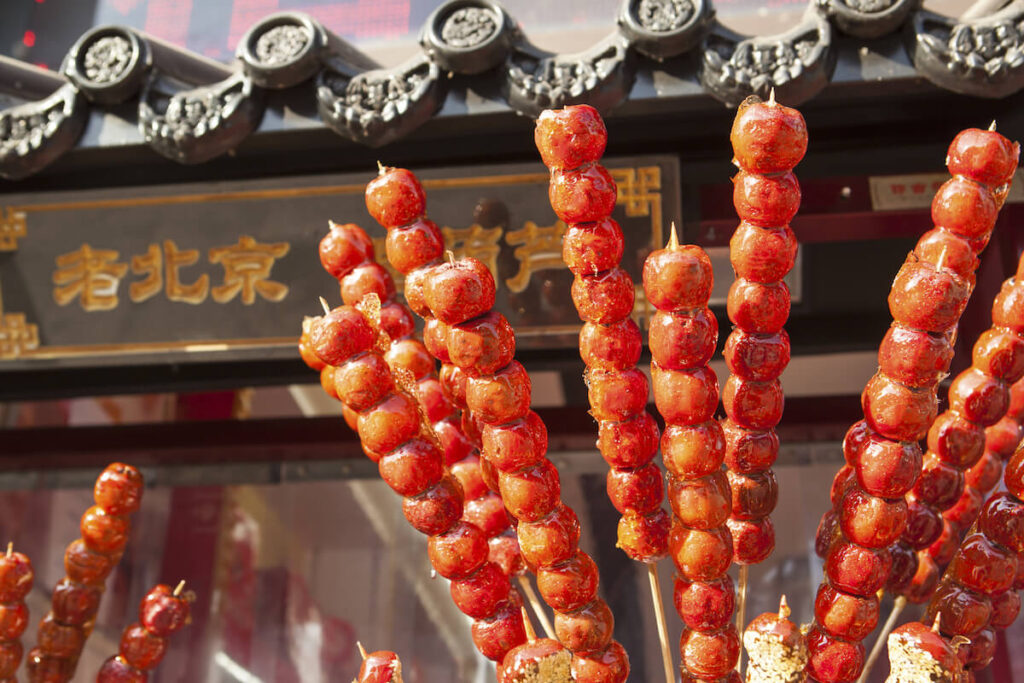
The street vendors of Beijing sell a whole lot of foods on sticks, including scorpions. If you’re wary of trying scorpions on a stick (no judgment here!), give candied fruit on a stick a try!
One of the most ubiquitous street foods you’ll see in Beijing is sugar-coated haws on a stick, which are balls of fruit (usually hawthorn, hence the “haws”) coated in simple sugar syrup. They are truly everywhere, and truly delicious.
21. Chinese dumplings (jiaozi)

Chinese dumplings, or jiaozi, are practically a symbol of Beijing. Jiaozi have a savory filling wrapped in a thin dough and can be served boiled, steamed, fried, or in soup.
Each province of China has its spin on dumplings, but they are often served with sesame oil, and have special variations for important holidays, like the Chinese New Year.
22. The Great (Fire)wall of China

China has long been known for censorship of books, news, television, and more. This is especially prevalent in the internet age, and most social media sites are blocked or heavily regulated in China.
If you were to try to log into, say, Facebook or Instagram in China, you’d be blocked by what is known as the Great Firewall of China.
China even has its own Google, to better control what information is widely accessible.
23. The busiest metro system in the world

With a rail network that covers over 480 feet of track, and an average of 10 million trips per day, Beijing is known for the busiest metro system in the world, and one of the largest.
The cheap (around 30 cents) and fast metro has often been credited with aiding Beijing in cutting down on its air pollution. The metro is slated to grow even bigger, to around 630 miles, by 2025.
When you visit Beijing, the metro is the best way to get around, and although it may be a little confusing at first, you’ll soon get the hang of it, and be zipping around just like a local.
Conclusion
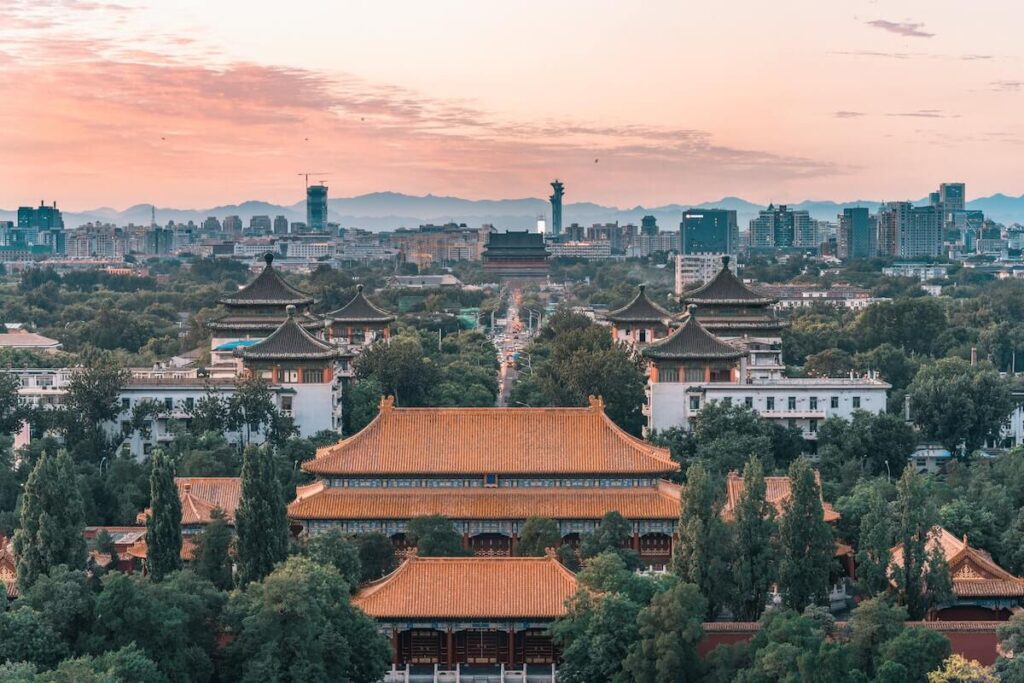
Beijing has so many more unique things to see and try, to eat and do, that you could spend months there and still not experience everything.
Beijing also really is the Gateway to China, though, and there is so much more to see in this ancient, complex, gorgeous country. Read what else China is known and famous for, and get some tips for traveling to China on a budget.
So, I gotta know: have you been to Beijing? What would you add to this list?
And, if you haven’t visited Beijing (yet!), would you be more willing to try Peking duck or sugar-coated haws?