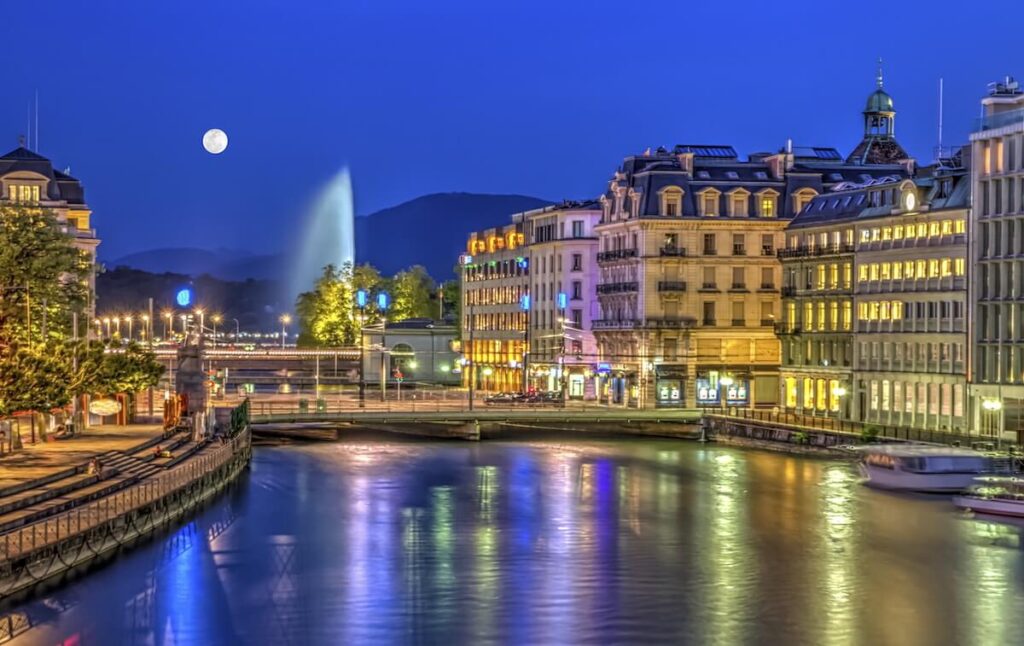
What better way to live out your wildest dreams of joie de vivre than by spending a weekend in Geneva? Though 48 hours are just about enough for getting a fine taste of this beautiful city, planning is paramount when your time is this short.

That’s why I decided to compose this handy itinerary for all first-time visitors coming to Geneva! Loaded with tips and recommendations based on my own experience with the city, it should serve as an excellent primer for those who want to get the most out of their stay.
Table of Contents
Where to Stay
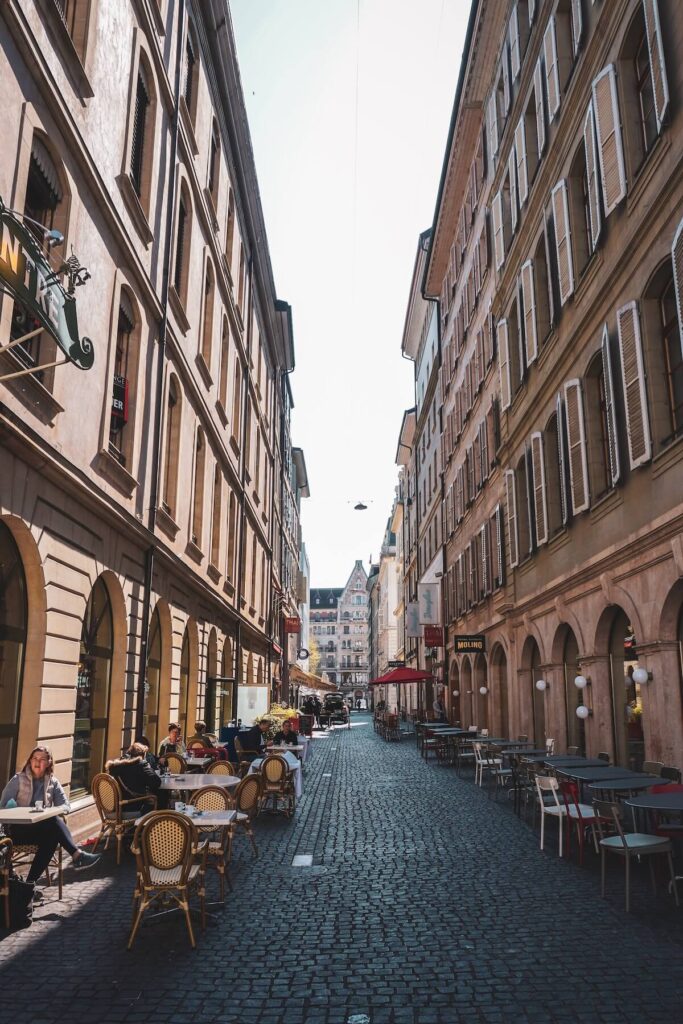
Geneva is Switzerland‘s second-largest city after Zurich, and as such, there is a lot of room separating its distinct neighborhoods.
For a first-timer, my recommendation goes out to the Old Town, which puts you into the city’s heart with every major sight perfectly within reach.
If you would prefer some more contemporary downtown vibes while also saving a bit on accommodation, consider the borough of Plainpalais.
This puts you within spitting distance of the university, which means lots of young faces all around and tons of nice spots to eat and socialize nearby. It’s also the beating heart of Geneva’s nightlife scene, so if you like to stay up late, Plainpalais might have your kind of vibes.
How to Get Around
As it would be almost anywhere else in Switzerland, public transportation in Geneva is downright excellent. The network consists of buses, trams, special river boats called mouettes, as well as conventional trains.
The most convenient ticket options for your short-term visit are the 1-hour transferable ticket, which can be used on a combination of all types of transportation throughout the city, as well as the 1-day card.
Both can be bought in person only at designated ticket machines. Make sure to bring cash, since most of them don’t accept credit cards!
Day 1
Morning: Experiencing the Charm of the Old Town

Geneva’s beating heart is without a doubt its Old Town, the glorious remains of a medieval capital that is as impressive today as it was centuries ago.
Experience the magic of this perfectly walkable neighborhood yourself by getting up early and heading for the Place du Bourg-de-Four.
Since it’s the oldest centrally located public square in all of Geneva, it’s the perfect place to start your adventure! On an average weekend morning, you will find the square bustling with life, full of small boutiques, cafés, and restaurants.
Head onwards to the Cathedral of St. Pièrre, which is but a short walk from the square. Originally built in the 4th century, it now stands as one rare example of neoclassicism in this part of Europe.
Perhaps more importantly, this originally Catholic church made a name for itself during the Reformation when it became the home seat of one of the movement’s key leading figures, John Calvin.

Calvin lived and worked in Geneva most of his life, and since most of his waking hours were spent right here, the site of the Cathedral has become a bit of a mecca for those interested in Protestant and Reformation history.
Appropriately, there is also a museum dedicated to the history of the Reformation movement and John Calvin’s role in it located right beside the Cathedral.
Right around the corner, you will find the Barbier-Mueller-Museum, one of Geneva’s and Switzerland’s most distinct. Dedicated to preserving the remains of antiquity, it houses a unique collection of thousands upon thousands of relics from both pre-historical Europe as well as Africa.
This area of central, old Geneva is also fantastic to explore if you’re a fan of obscure collectibles and luxury in the old-fashioned sense.
For example, just by the Place du Bourg-de-Four is the inconspicuous little Galerie Insolite, housing a rare collection of handmade pottery, jewelry, and even fragrances.
Similarly, the Galérie de la Béraudière specializes in unique and quirky pieces of visual art, especially paintings and ceramics.
Many other galleries and boutiques like this exist in and around Geneva’s medieval Old Town. If you want to make sure you don’t miss a single thing, why not book a comprehensive guided tour?
Afternoon: The Beauty of Plainpalais and Carouge
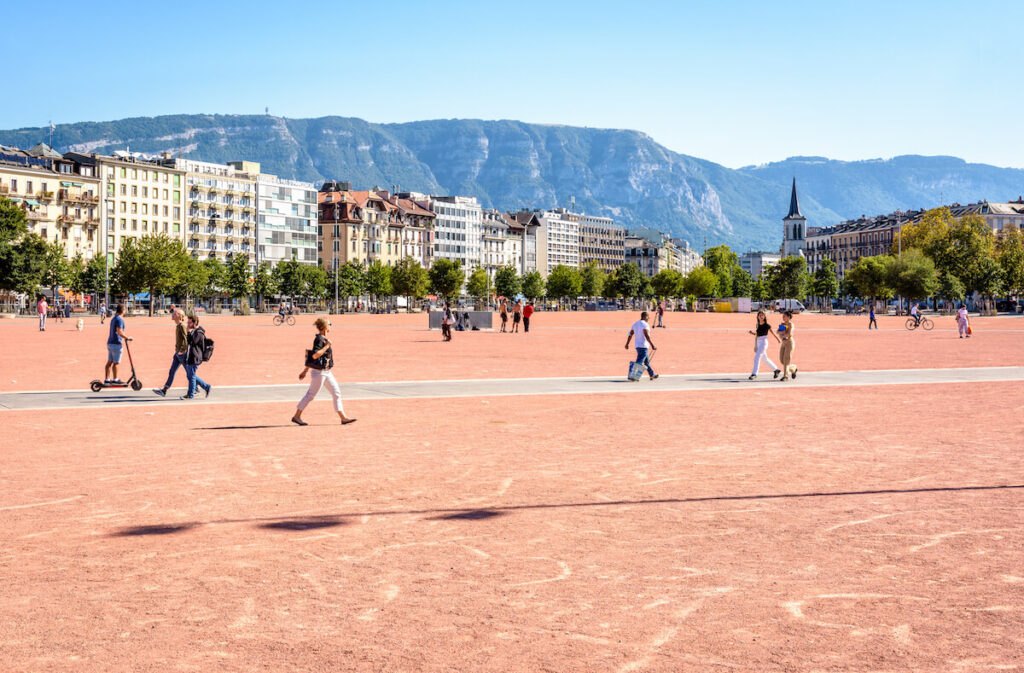
The waterfront borough of Plainpalais is our next target. Close to the center but with a wholly different vibe compared to the Old Town, this neighborhood teems with activities and movement.
Visiting on a weekend allows you to experience one of the most fun manifestations of this fact: the Marché de Plainpalais, a sort of massive flea market held every Wednesday and Saturday, as well as on every first Sunday of the month.
The market usually assembles on the big Plaine de Plainpalais, a large open space that is also called simply Plainpalais by those who live here – needless to say, it does a lot to define the borough’s personality.
Apart from the Marché de Plainpalais, other events frequently held here include a famous farmer’s market on Sundays which is among the largest in the French-speaking world.
A couple of times per year, circuses and amusement parks also choose to set up shop here, so anytime you’re in Geneva, be sure to check out Plainpalais!
From there, it’s only a short tram ride to the district of Carouge, which has got to be my favorite part of Geneva to spend a relaxing afternoon in.
Known as the city’s “Little Italy”, Carouge originated as something like a planned town designed by Italian architects on the outskirts of Geneva proper.
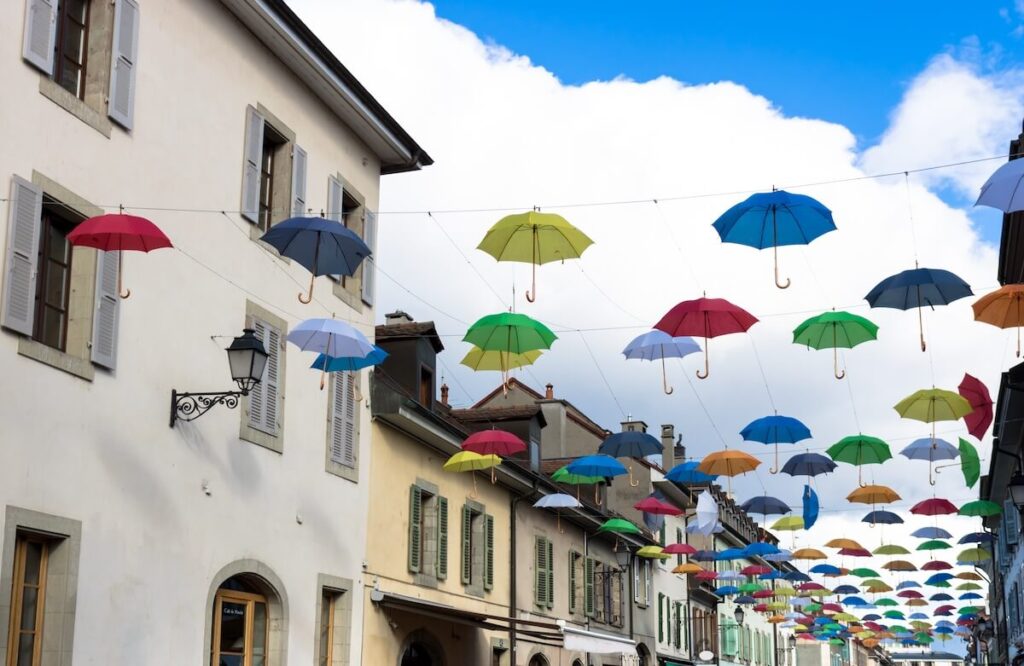
Today, Carouge is culturally and legally very much a part of Geneva and its residents enjoy all the benefits that come along with that. On the other hand, it retains some distinctive Mediterranean and Latin flair that is absent from its more Francophone surroundings.
There are dozens, maybe even hundreds of excellent cafés, bars, and nice restaurants in this part of the city. My shoutout goes to La Ruota, one of the quintessentially and unabashedly Italian eateries this side of Lombardy.
The stylish Bar du Nord is probably a safer bet if you’d rather exchange a smaller plate for a more exotic and exciting selection of drinks and cosmopolitan company.
A large open-air pool, called the Piscine de Carouge “La Fontenette”, is an excellent visit, particularly in the warmer months of the year, and the Carouge mall also invites you to hours and hours of luxury window-shopping if that’s your thing.
Evening: Lakeside Views in Pquis and Eaux-Vives

During the later hours of the day, I recommend a hop over to the lakeside quarter of Paquis. Despite appearances, no part of Geneva is truly as diverse and cosmopolitan, and the food scene here is to die for.
You have a dizzying number of choices – from the Lebanese delights of Azar & Co to the Michelin-starred sushi served at Nagomi, supposedly one of the best Japanese restaurants in all of Europe.
Just remember to call ahead of time to make sure that they can reserve a seat for you, as the best in fine dining in Switzerland usually only stays open Mondays to Saturdays, with Sundays available upon request.
From Paquis’ dense alleys, it is not far to the lakeside, with views so stunning they draw crowds of dozens of Genevois there day after day.
A prime attraction here are the bains des Paquis – public baths and pools featuring artificial beaches that are converted to Turkish-style hot baths come wintertime.
Instead of or in addition to a dip in the pool, many opt for a guided cruise along Lake Geneva in the evenings, and it’s no big wonder why: the sunset-tinged views can get utterly beautiful, and I can only recommend it.
If you would like, you can continue onwards along the embankment in the direction of that giant fountain you are probably able to spot in the distance from there.
That’s the jet d’eau, one of Geneva’s more famous landmarks. It shoots literal tons of water a whopping 140 meters into the air, making it one of the world’s most gigantic water fountains.

To get closer to the jet while also getting to know another side of Geneva entirely, just cross over the water into the borough of Eaux-Vives.
You’re now at the intersection between the Old Town and the “New Geneva”, the one favored by diplomats, bankers, and the social elite.
Eaux-Vives is full of beauty, not only in the direction of the water. Parc de la Grange, the city’s largest public park, is an amazing place to spend a sleepy afternoon or evening. A section called the English Garden, featuring a large functional flower clock, is one of my personal favorite corners.
Elsewhere nearby, music events and performances are often staged at an open-air theater, which also happens to be surrounded by a further rose garden – talk about a pretty view!
In stark contrast to that kind of display, Eaux-Vives also houses CERN, arguably the foremost and most famous particle research center in the world.
While guided tours are strictly regulated and in very short supply, you can still visit the complex for free and enjoy some of its permanent exhibitions open to the public.
Day 2
Morning: Geneva from Above

Get up early on your second and last day in Geneva, because we’re going on a hike! Feel free to grab some breakfast out in the Old Town first, at Café du Centre for instance.
Next, take one of Geneva’s public buses to Veyrier-Ecole, followed by a cable car up from there. Within only a few minutes, you’ll be standing a kilometer or so above the very tip of the Jet d’eau!
Alternatively, nearly the whole route is perfectly walkable or bikeable should you prefer that, but do note that it will take much longer to arrive.
This peak that you will now be standing on is known as Mont Salève, and it has been the Genevois’ favorite way of looking at their city from up above since at least the 1800s.
Despite its intimate cultural association with the Genevan landscape, the mountain itself is actually in French territory, so you can consider this an international morning trip if you will.
While you don’t have to take the long hike all the way up from the cable car station, it’s definitely worth it. At the summit, you will be greeted by the L’Horizon du Salève restaurant, just in time for lunch, in addition to some of the Alps’ most stunning views.
During winter, you can also expect plenty of cross-country skiing opportunities down the Salève!
While this journey is a fairly simple one to manage by yourself and come back home with plenty of time to spare in the city (as many locals do), Mont Salève is not the only alpine wonder you can see within a day from Geneva.
If you’re so inclined, you can book a private tour all the way to Chamonix. From there, you can hike up and marvel at the views from Mont Blanc, the highest and most dramatic peak in the Alps!
Note that this will inevitably take the form of a day trip though, so plan accordingly.
Afternoon: The Cosmopolis of Geneva

By now, you have seen Geneva from many angles, including the medieval beauty of the Old Town and the breathtaking nature of the nearby Alps.
One facet of this city that is still left to cover is Geneva’s modern, international downtown. Locals often refer to this as the “diplomat’s quarter” or the “banking zone”, and I think you can imagine why.
Still, I believe the clichés fall a bit short of doing this neighborhood justice, so I implore you to explore it for yourself!
Start by heading north from the Old Town along the western bank of the lake to arrive at the International Red Cross and Red Crescent Museum.
As you might already know, Geneva is the place where the Red Cross was originally founded following the ratification of the Geneva Accords (remember those?).
The museum is often regarded as one of the most startling exhibitions in Geneva, dealing profoundly with the ethical issues that have concerned the organization since its inception. It definitely leaves a mark on you though, that’s for sure.
Right around the corner, you’ll also get a chance to see the Palais des Nations, the famous marble-white complex that housed the headquarters of the League of Nations and has served as one of the primary offices of the UN since 1946.
Unlike the Red Cross Museum, the Palais des Nations is not generally open to guided tours throughout the whole week, and since the outbreak of the pandemic availability for visitors, in general, has been limited.
However, even taking a walk through and around the Palace’s large open spaces and green areas is sure to instill you with a sense of awe, both of the architecture and the monumental world events that have taken place behind its walls.
Beyond the UN and the Red Cross, this district of Geneva houses the headquarters of more than 200 other international organizations, most of them NGOs! How many can you spot?
The diplomat’s quarter is also full of public art.
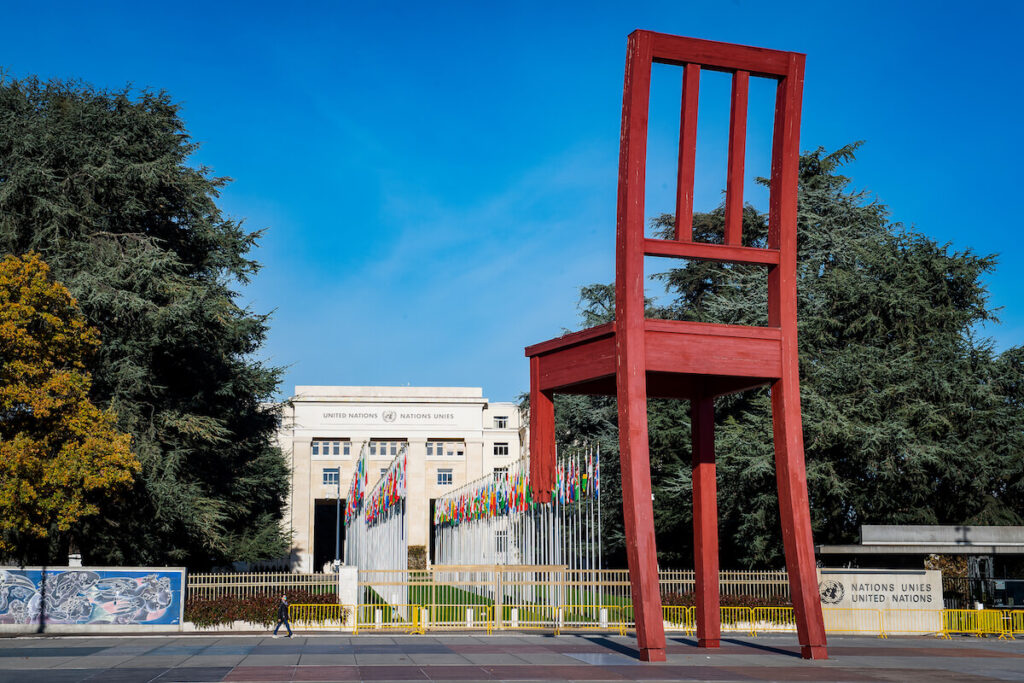
The most notable has got to be the broken chair, a giant monument that was erected here to commemorate and call attention to victims of landmines following the civil war in the former Yugoslavian states.
Evening: A Goodbye in Luxury
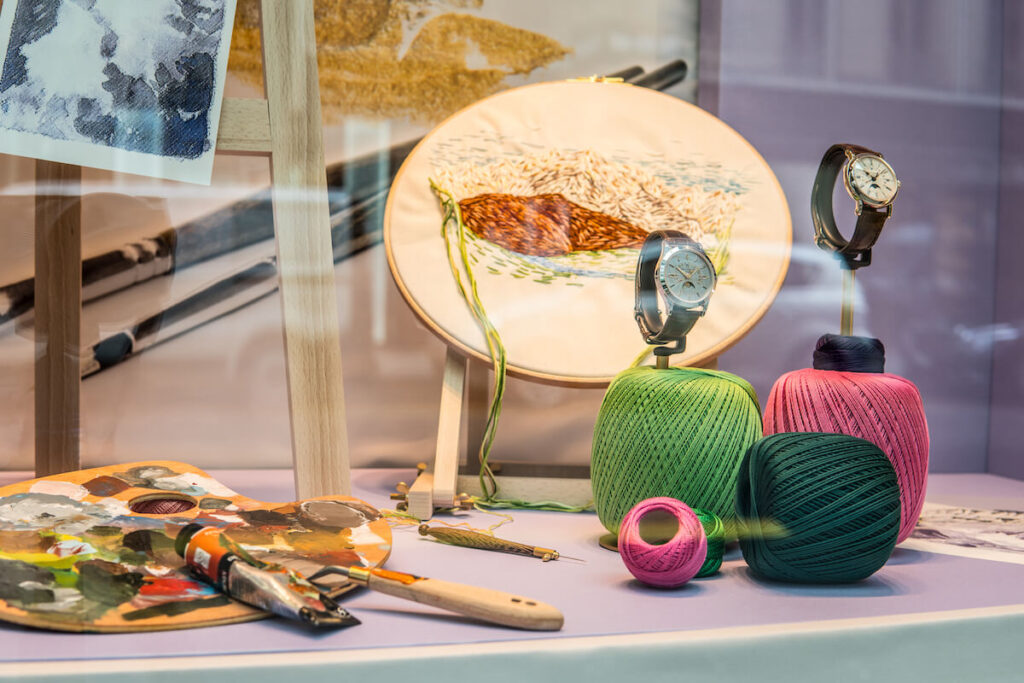
For your last hours in Geneva, consider going out in style. By that, I mean for instance a visit to the Patek Philippe Museum.
Geneva is the foremost center of Swiss traditional watchmaking, and nowhere else in the world can you probably view as many pristine examples of this craft as here.
For more, take a walk along the Rue du Rhône, where you will see plenty of flagship stores carrying names such as Rolex, Blancpain, Breguet, and more.
This is also where the other famous artisanal craft of Geneva can be found: Swiss chocolate!
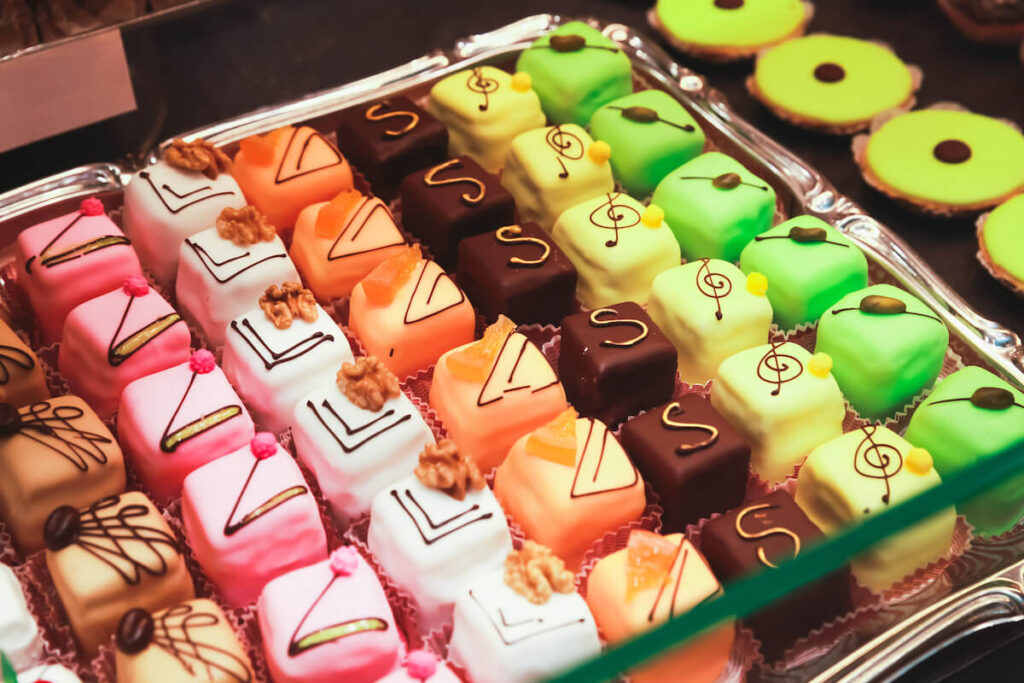
Indeed, the Rue du Rhône and much of its surroundings are chock-full of excellent chocolatiers whose shop windows are sure to make your mouth water. Whether that’s mainly from the sweetness on display or the exorbitant price tags is another matter, however.
To end your last day like a real Genevois, head to the lake just in time for sunset. I recommend the embankment in Paquis or the nearby park, known as the Perle du Lac, which often has the best views around this time.
By the time you’re done admiring the beauty of the water and the place you’re in, it’s probably already time to head back to your hotel.
Consider booking a transfer in advance to make the transition easier next morning – alternatively, public transport is just as reliable of an option, if slower and a bit less convenient.
See you back in Geneva soon! Don’t forget to let us know about your favorite memories from the city down below in the comments!