
“Man tager vad man haver,” said Cajsa Warg, Sweden’s most famous cookbook author from the early 18th century. Except, she didn’t. Roughly translated, it means “you take what you have”. And that just about sums up Swedish cuisine and the mentality that goes with it.
And even though there’s no proof she ever actually said it, it’s still a commonly used Swedish expression. The reason? You can attribute it to much more than food.
Swedish food culture is a smörgåsbord of history, flavor, and nature’s bounty. And it’s the stories behind Swedish cuisine that remind us that even fridge magnet quotes can be salient: “a refrigerator is proof that it’s what inside that counts.”
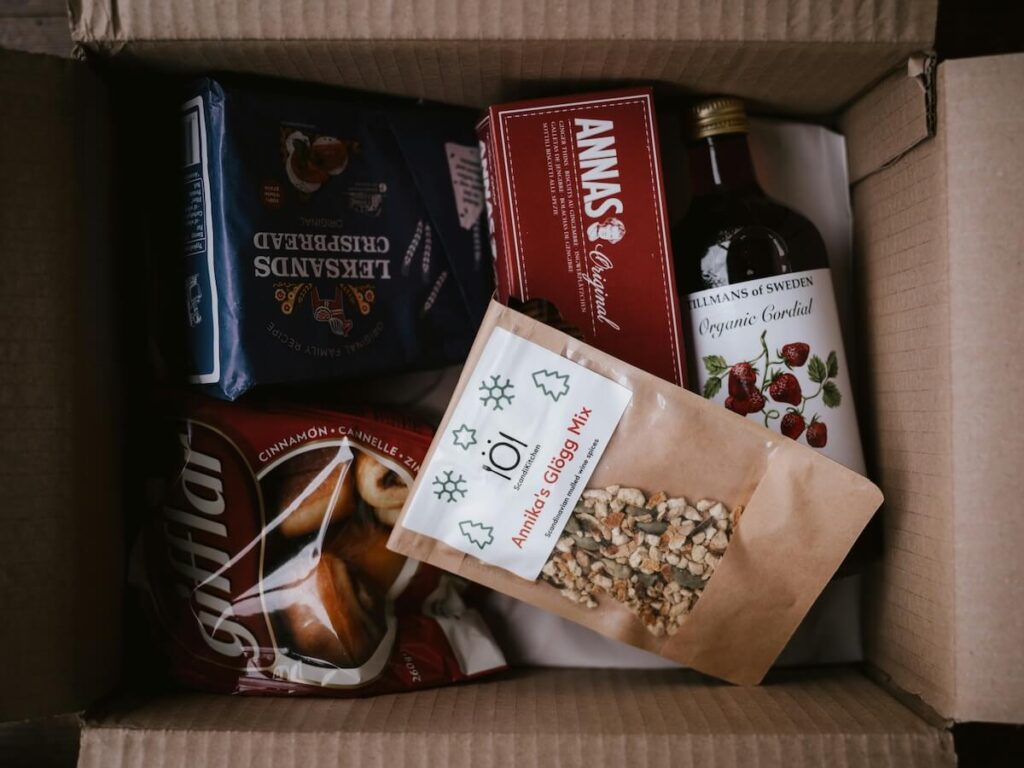
In recent years, people have become more and more interested in the Swedish diet. In an endless quest to make our waistlines smaller and heights taller, many have found themselves pondering the so-called Nordic-Mediterranean diet and its benefits. But actually, I’d argue that Swedish food wasn’t designed to keep anybody slim or make anybody tall.
For me, Swedish food is about comfort, living in touch with nature and the seasons and not over-indulging too often. Here’s what you need to know about Swedish food culture, including etiquette, unmissable dishes and Swedish food trends.
Table of Contents
History of Swedish food culture
The history of Swedish cuisine tells us so much about how the past has shaped modern Sweden. Read on to find out how a combination of new flavors from far-flung shores and ancient cooking methods influenced Sweden’s food culture history.
1. Not-so-Swedish meatballs
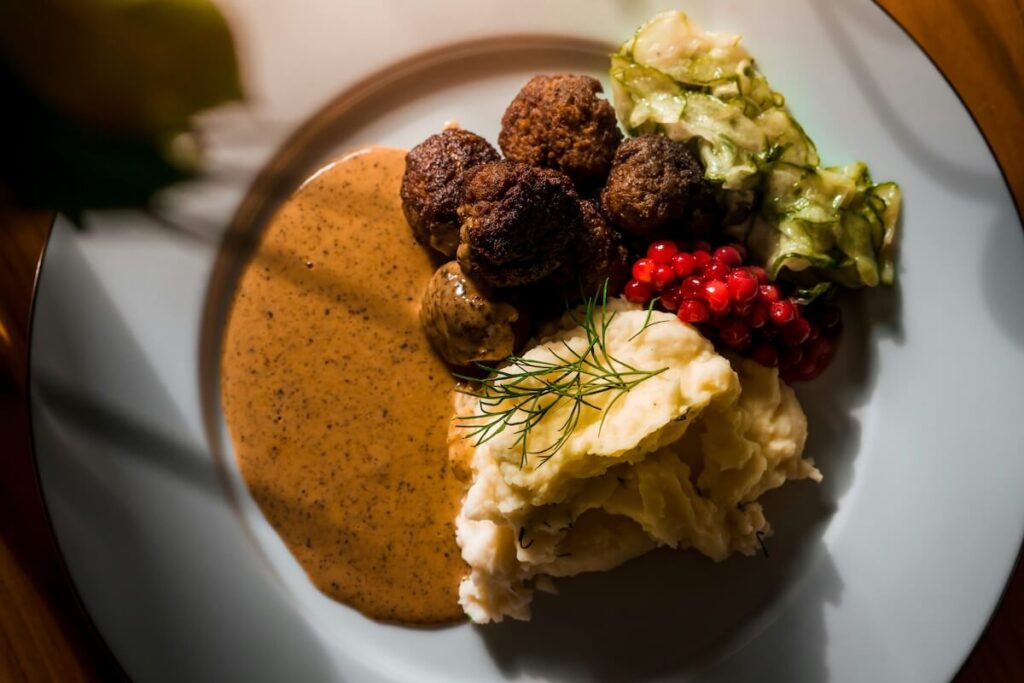
As surprising as many people find this, the original recipe for Swedish meatballs didn’t come from Sweden.
Researchers from Uppsala University have found evidence that shows that meatballs, along with other iconic Swedish favorites such as kåldolmar (cabbage and pork rolls) and coffee, came to Sweden via King Karl XII and his travels to Turkey.
That said, the Swedish meatballs found around the world in IKEA canteens today have been Swede-ified. Traditional Swedish meatballs are prepared with a combination of beef and pork mince (called blandfärs in Swedish), onion, egg and breadcrumbs. They are then fried and served with boiled or mashed potatoes, lingonberry sauce and pickled cucumber.
2. A Swedish scientist ‘invented’ potato vodka

Before potatoes arrived in Sweden, people largely survived off of bread made from wheat, barley or rye. In fact, when potatoes made an appearance in the 18th century, people were mostly interested in them for their medicinal properties.
This led to scientific experiments being conducted on the potato to discover more about its properties. One scientist in particular, Eva de la Gardie from Västergötland, made some astonishing discoveries. She discovered that potatoes could be used to make starch, powder, and alcohol.
3. Fish has been a Swedish staple food for thousands of years

Thanks to DNA analysis, scientists can be sure that even ancient Swedish people had fish on their menu. In fact, Sweden’s abundant freshwater lakes and long coastline provided sustenance to ordinary people long before other foods became available in the country’s harsh climate.
Sweden’s harsh, freezing climate is responsible for many of the nation’s famous fish dishes. Due to limited access to fresh foods, people had to come up with ways of preserving their food to last the long winters.
A combination of burying, fermenting, curing and salting gave Sweden iconic fish dishes such as inlagd sill (pickled herring), the Christmas lutfisk, böckling (kippers), and everybody’s favorite: surströmming (the stinky, foul, fermented fish people like to watch being opened on YouTube).
4. Fika wouldn’t be the same without Indian spices

“Fika”, the practice of drinking coffee and eating cake with a friend, colleague, or family, is a cornerstone in Swedish culture. And no fika is complete without a cinnamon or cardamom bun.
Swedes take their baked goods very seriously (there are very real, angry Swedes who regularly discuss America’s interpretation of the cinnamon bun on the internet*) but what’s left out is that nearly all of them are largely dependent on imported spices.
Without cinnamon, cardamom, or saffron, there would be no kanelbullar (cinnamon buns), Lussekatter (traditional Lucia buns made with saffron), or Semlor (Cardamom buns filled with whipped cream and marzipan).
*It’s the icing that upsets Swedes. Traditional cinnamon buns should be topped with pearled sugar, never, ever, ever icing or glazing.
Also read: 21 Scrumptious Swedish Desserts to Try at Fika Time
5. Traditional Swedish food has global influences

Swedish food culture has been influenced by many different things over the centuries: religious changes, migration, and globalization, to name a few. But few people know that even though Sweden was neutral during both World Wars, Swedish people were still subject to rationing.
Classic Swedish dishes such as the smörgåstårta (sandwich-cake) are believed to have their origins in post World War II celebration. Due to meat shortages and increased fish prices, many Swedes made classic dishes vegetarian. Today, Sweden is still a pioneering nation for vegan foods—Oatly was the first creator of oat “milk.”
Even the Fika came as a direct result of hard times. Around 1910, most people couldn’t afford to invite a friend over for dinner (food was scarce and expensive). But most families could afford to offer a friend or acquaintance a cup of coffee and so, the concept of Fika was born.
Swedish cuisine basics, customs & traditions
Traditional Swedish food comes under the umbrella term of husmanskost. Linguistically and gastronomically speaking, this term has come a long way and from very humble beginnings. Read on to find out about Swedish eating habits and customs…
6. Keep it simple
The whole idea of husmanksost is that everyday food should be simple to make with very few ingredients. The idea is to keep it as fuss-free as possible, so busy parents, exhausted students and older people can all whip up a dish in no time and with limited resources.
Does this mean that Swedish food sacrifices flavor for simplicity? Well, if you like super-spicy food, then traditional Swedish food probably isn’t for you. Husmanskost tends to be lightly seasoned and relies on fresh, high-quality ingredients more than fiery explosions.
7. High fat but low carb
Swedish people have one of the longest life expectancies in the world. Some researchers believe that this is down to the Scandinavian diet being rich in minerals and vitamins, as well as an interest in keeping active outdoors.
A typical Swedish person’s diet is high in fats but low in carbs, something that is reflected in husmanskost. Most Swedes consume a lot of full-fat dairy, and take particular delight in consuming filmjölk (fermented milk with a yogurt consistency). The average Swede also eats 200 eggs a year, accounting for a lot of their protein intake.
And even though potatoes feature in most husmanskost meals, there’s no need to worry. Swedes typically boil their potatoes which means they remain low in calories and high in vitamins.
8. Seasonal eating

Swedish cuisine is closely entwined with the seasons. This is a dual process of adapting dishes to fit the changing weather and using ingredients which are only available during certain months of the year.
Foraging has become a popular hobby for many Swedes, and for this reason you’ll find fall menus featuring locally picked mushrooms and summer food includes plenty of berries. Similarly, hunting season begins in Norrland on 1 September and the rest of the country on 8 October, which brings elk or deer to Swedish tables.
Finally, who could forget about the iconic kräftskiva (crawfish parties)? Crawfish may only be caught in Sweden during July through to October, making crawfish parties in August one of the best Swedish food culture traditions.
9. Swedish kids don’t eat dinner with other families
As difficult as it can be for other cultures to understand, many Swedish parents aren’t keen on feeding their kids’ friends in their homes. This seemingly unfriendly cultural phenomenon went viral in recent months and has stirred up controversy, but it’s worth taking a look at the reasons why before we judge Swedish parents too harshly.
Firstly, Sweden is perceived to be one of the most family-friendly countries in the world. Dinnertime is, for many families, sacred family time. Secondly, Swedes are very organized. Many Swedish parents plan meals for the whole week to avoid unnecessary waste and to help keep their food budget under control. An unexpected guest could, for some families, topple the system.
Finally, parents often take different approaches to managing their children’s diets. Some parents, for instance, do not allow the consumption of soda or sugar, meat or other food types for religious or allergen purposes, and it’s believed easier if everyone is accountable for their own kid(s). You may or may not agree with it, but there you have it.
10. Taco Fridays and other traditions
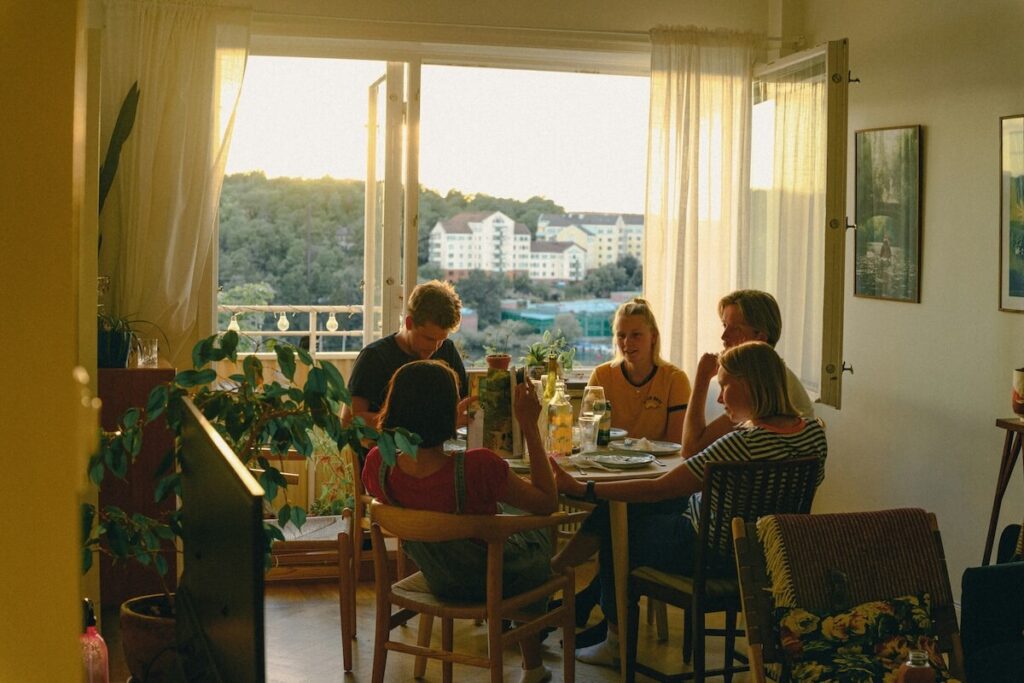
In general, Swedish people love routine. And that shows with the allocated days for eating certain foods. Towards the end of the week, you’ll find old and new traditions dictating the Swedish diet.
On Thursdays, it’s traditional to eat a hearty pea soup (ärtsoppa) and pancakes served with whipped cream and fruit jelly (or jam).Tacofredag (Taco Friday) is the relatively new tradition of eating tacos every Friday.
This is extremely popular all over the country and essentially consists of a build-your-own taco Tex-Mex style with a variety of sides, dips, and unconventional toppings (Swedes put cucumber, pineapple, and even canned sweetcorn on their tacos!).
Friday is the most popular day of the week to grab a takeaway in Sweden, and is often combined with a bag of chips or other ‘forbidden’ food to ease into the weekend cozily. And as if that wasn’t enough, the next day, Saturday, you’re free to grab your lördagsgodis (Saturday candy).
11. The Smörgåsbord
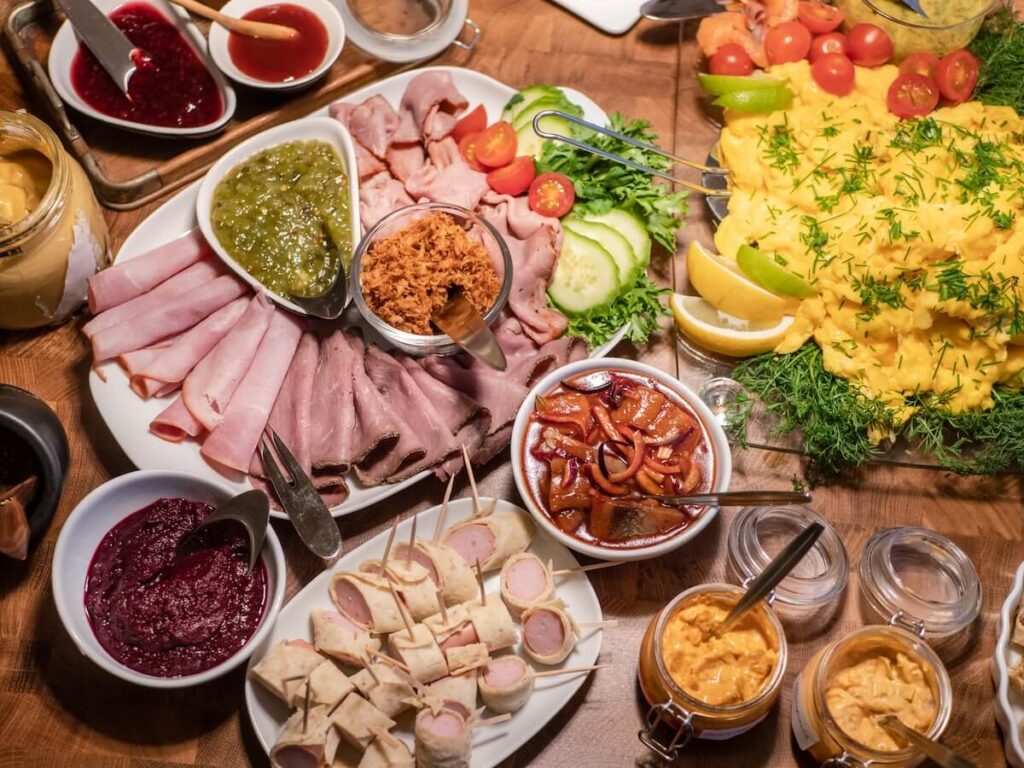
One of the biggest Swedish culinary exports is the smörgåsbord. Even though it’s essentially a buffet, what makes the Swedish smörgåsbord special is what’s included in it. Christmas, Easter and even Midsommar tend to feature the exact same foods and that’s how you know it’s festive season again.
So what goes on a traditional smörgåsbord? Sill or pickled herring is a particular favorite, along with gravlax (cured salmon) and röktlax (smoked salmon). Boiled potatoes and a variety of breads are also available, as well as boiled eggs, salads, cold cuts and sometimes even meatballs (we can’t resist them either).
During Christmas, it’s very likely to feature a Christmas ham (julskinka) and the word ‘smörgåsbord’ is substituted for julbord (Christmas table).
Swedish staples and popular traditional dishes
12. Potatoes

Potatoes are the staple food of Swedish cuisine. In fact, I’d argue that nobody reveres the potato quite like the Swedes, who include it in most of their traditional recipes.
Potatoes are typically served boiled as a kind of side dish, but can also be pan-fried in butter, mashed, or incorporated to a recipe in some other way. Swedish pyttipanna is a classic Swedish dish which uses leftover boiled potatoes to make a kind of hash by frying potatoes with onion and leftover meats such as bacon, ham or sausage.
Another fancier traditional potato side dish from Sweden was created by the renowned Swedish chef, Leif Ellisson, from Värmland, who created the recipe for Hasselback potatoes (potatoes that are thinly sliced halfway and roasted in the oven).
13. Falukorv
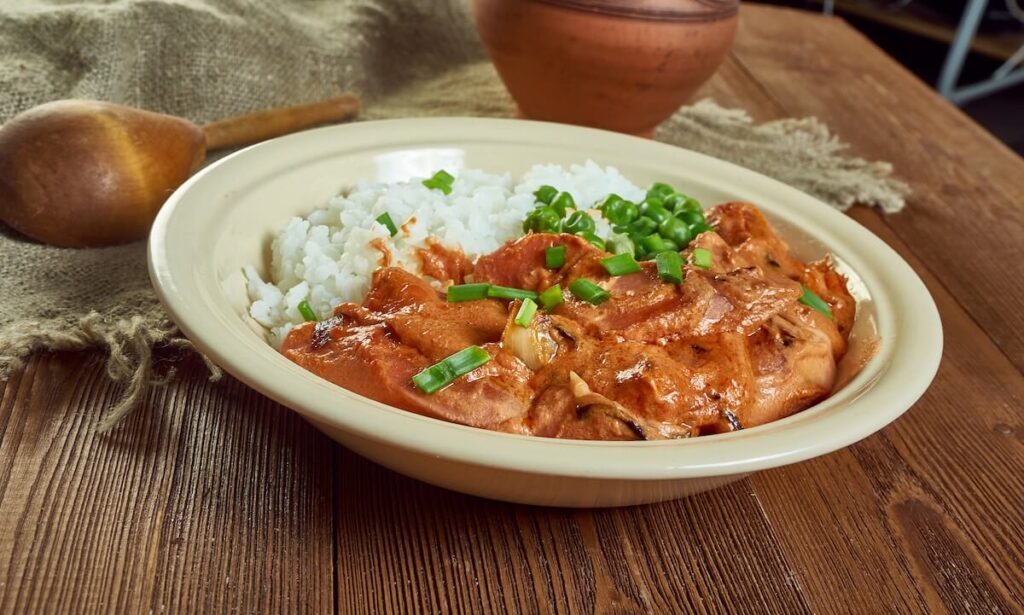
Loved by students, Swedish children and adults alike, the falukorv is one of the most loved ingredients in the Swedish kitchen. Falukorv is a pork sausage which comes packaged in an iconic red plastic sleeve and can be cooked in a variety of ways.
One of the most popular dishes featuring falukorv is korvstroganoff, where the sausage is pan-fried in a knob of butter and onions and served with either rice or pasta and a tomato-based sauce. Many students rely on falukorv, fast-cook macaroni and ketchup as a meal.
14. Knäckebröd & topless sandwiches
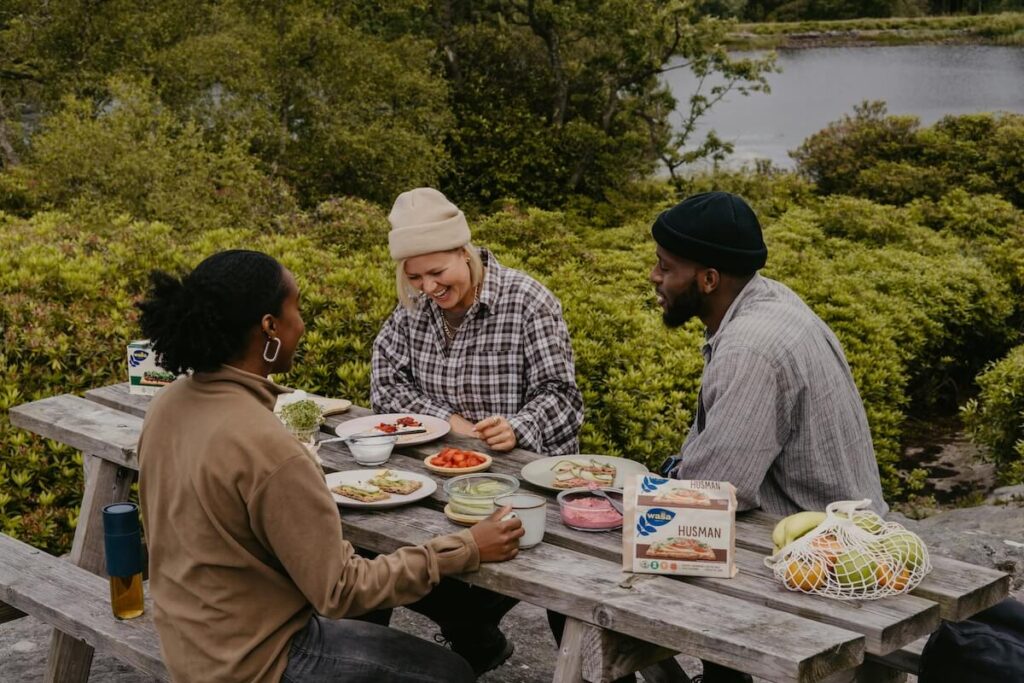
Swedes typically eat sandwiches for breakfast and also as a mid-morning or afternoon snack known as a mellanmål (in-between-snack).
Knäckebröd (crisp bread) is a particular favorite and a Swedish pantry icon. This leavened, crunchy bread is typically made from rye or wholewheat and is high in nutritional value.As to what to put on your sandwich, many Swedes opt for one or some of the following: butter, cheese, cucumber slices, bell pepper slices, ham, or most iconically of all: Kalles caviar straight from the tube.
Finally, remember that nearly all sandwiches in Sweden are open or, if you prefer, “topless” (the toppings are visible and placed on one piece of bread, not between two).
15. Smörgåstårta
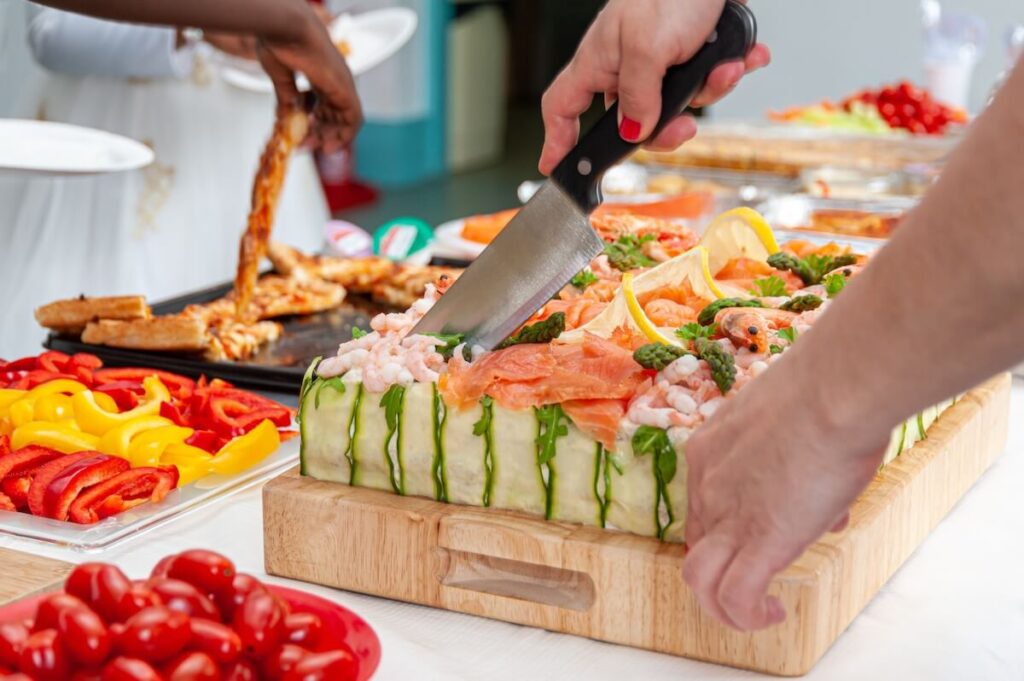
One of the only exceptions to the topless sandwich rule is when you’re being treated to a smörgåstårta or “sandwich-cake”. The smörgåstårta answers the age-old question of what a savory cake would look like, and making one is an art all of its own.
The smörgåstårta is sliced and served just like a typical cake. It’s made up of three or more layers of bread combined with eggs, cucumbers, mayonnaise, and often topped with shrimp.
Just remember, this is a typical “festive” food which is often served for lunches where the host is expecting a larger group of people—you won’t find it in any restaurants.
16. Renskav
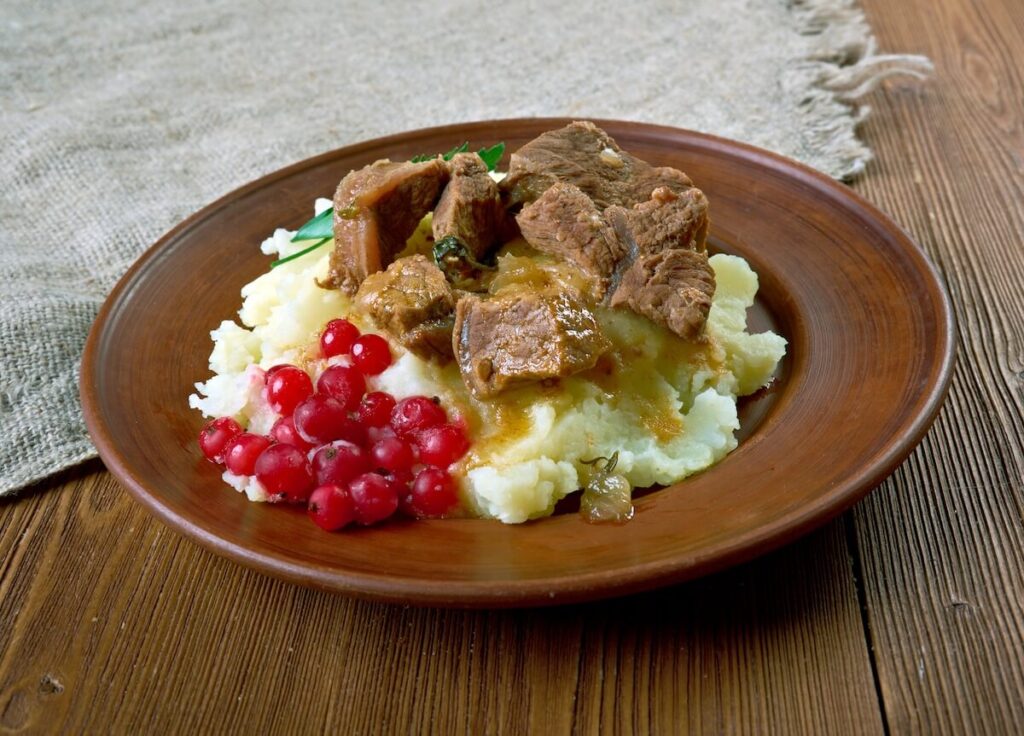
When we talk about Swedish cuisine, it is essential to include Europe’s only indiginous peoples, the Sámis. The largest Sámi contribution to Swedish food culture has to be one of its best-loved dishes, Renskav.
Renskav is a reindeer stew that takes a lot of love and care to cook. Reindeer meat is typically frozen (or stored underground) and then thinly shaved before being fried in butter in a cast iron skillet. Onions, cream, mushrooms and potatoes are added and of course, a healthy spoonful of lingonberry sauce is included on top.
If you can’t get your hands on reindeer meat (and it is tricky outside of the Nordic countries) then elk makes a decent substitute.
17. Raggmunk

Sweden has its own version of potato pancakes similar to hash browns or latkes, called Raggmunk. This wholesome, warming dish is a particular favorite during the winter months as it’s simple to make and has a rustic feel to it.
Grated potato is combined with traditional pancake mixture to make delicious, crunchy potato pancakes which are typically served with salted pork (or thick cut bacon). Serve with a delicious scoop of lingonberries (you’re getting the hang of it now, aren’t you?)
18. Rutabaga
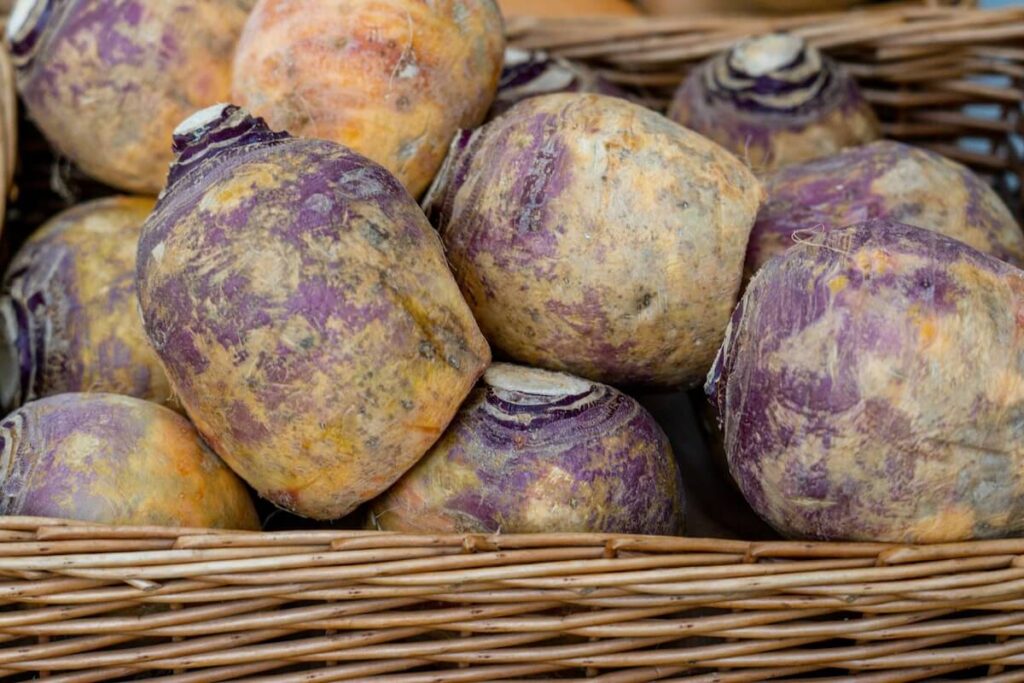
One of the most quintessentially Swedish meals, and a personal favorite of mine, is fläsklägg med rotmos (pork and mashed rutabaga). To make this, boil swede, carrots and some sweet potato in a salty stock. Serve it with fried pork.
While we’re on the subject, did you know that the word ‘rutabaga’ is actually a Swedish dialect word? It comes from two words “rota” and “bagge” (‘root + bunch’). In British English, the name for the same vegetable “swede” gives an even more direct clue to its origins.
Swedish dining etiquette
19. Always thank your host
As you may have worked out from the “kids don’t eat with their friends” tradition, eating at another person’s house in Sweden is a very big deal. It takes a lot of forethought and planning, and your host’s generosity should not go unthanked.
A simple “tack för maten” after you’ve finished eating will suffice, but you can check out our guide to saying ‘thank you in Swedish for more elaborate phrasing.
20. Saying cheers and eye contact
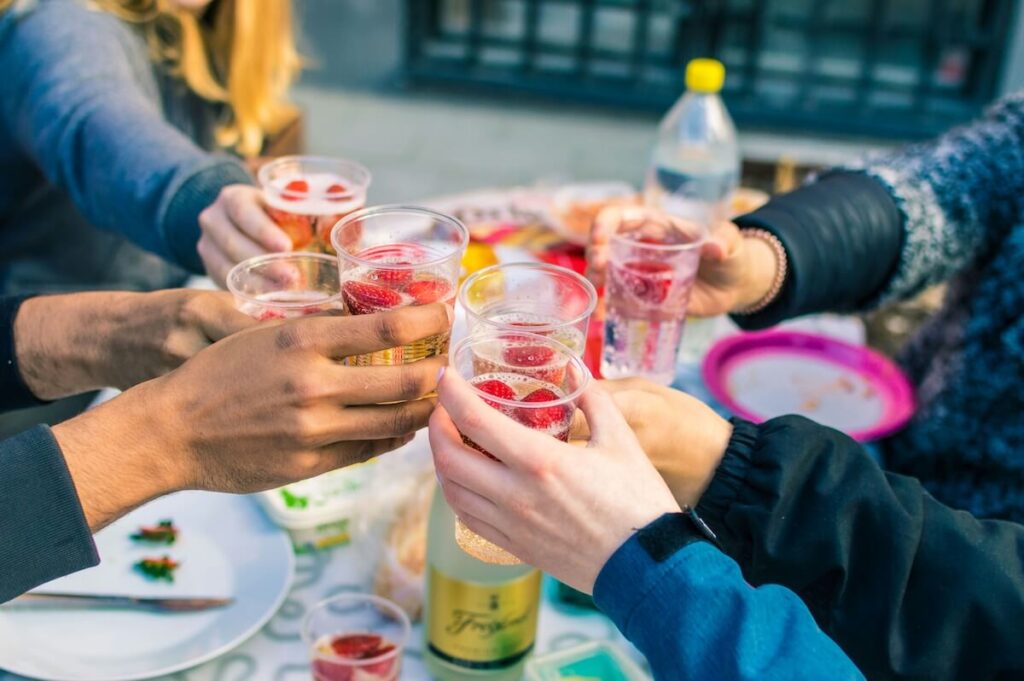
There are some unique Swedish eating habits and customs, and one of them goes back as far as Viking times. Luckily, all you have to do is look your host in the eye when they toast you and your fellow guests.
It’s traditional in Sweden for the host to give the first toast at a dinner party and they will probably welcome everyone with a short “skål och välkomna!” (“cheers and welcome”).
Look your host in the eye as you touch or raise your glass to them, and then be sure to take a look around the table at the other guests. They’ll be waiting for your queue to allow them to take a sip, and it’s polite to include everyone.
21. Arrive on time
The most important rule of Swedish food etiquette: if someone invites you for dinner, don’t be early, don’t be late, ARRIVE. ON. TIME.
I cannot emphasize this point enough because Swedes are sticklers for punctuality and it is considered incredibly rude to turn up late. Your host will, most likely, have timed everything to perfection and you will offend all the other guests as well as your host by making a late appearance.
22. Take your shoes off
You might be thinking this has nothing to do with dining, but believe me, if you don’t do this, you’ll ruin dinner for EVERYONE.
Swedes do not ever wear outdoor shoes indoors and if you trapse mud or snow into your host’s home they will have to leave the kitchen and instantly start mopping up your mess. That will make dinner late and everyone will be angry with you. You have been warned.
23. Swedish table etiquette
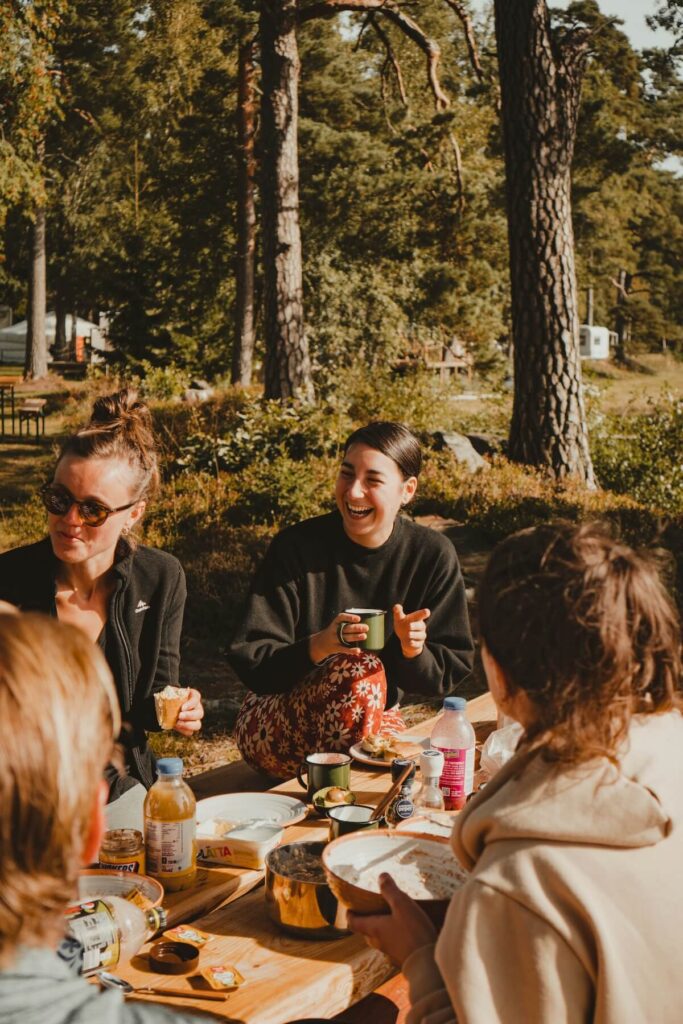
Nearly everything you were probably taught as a kid applies at a Swedish table. Don’t talk with food in your mouth, try to keep your elbows off the table, and don’t burp or break wind at the table.
That said, announcing you need the bathroom at the dinner table is a casual thing to do in Sweden if among friends or acquaintances, so don’t be shocked if someone suddenly announces they need to pee (or worse). Similarly, reaching across someone while they’re eating isn’t considered rude in Sweden so if there’s something you need to get your hands on, go for it.
Lastly, there will be a special, usually wooden, knife already in the butter if it’s on the table. Don’t use your own knife, it’s there for a reason.
24. Singing at the table

Not every dinner party in Sweden has its own soundtrack but, chances are, if you’ve been invited to spend a holiday with a Swedish person and their friends or family, there will be singing involved.
There are special songs dedicated to certain festive periods, and others are used on many occasions. I can recommend brushing up on Helan Går before you arrive for a midsummer or crawfish party. These songs are called snapsvisor and are typically sung before taking a shot of strong spirits, most commonly brännvin or snaps.
Swedish restaurant and takeaway culture
25. Lunch is the best time to eat out
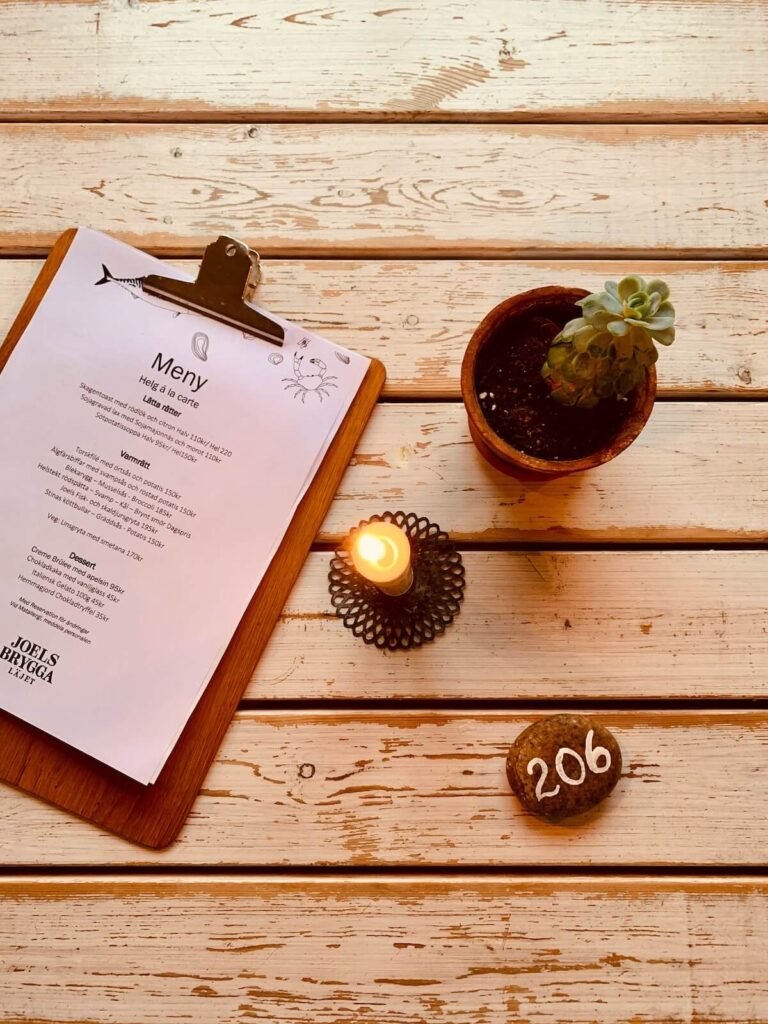
Swedes typically prefer to eat lunch in restaurants. This is because most restaurants offer a discounted price during lunch hours (typically 10am to 3pm, or thereabouts).
Dishes off the lunch menu usually come with access to a salad bar, after dinner coffee and a drink and you can save a lot of cash by eating out at lunch rather than dinner.
26. Tidy up after yourself

While this certainly isn’t the case for all restaurants, it’s worth a mention anyway. Some Swedish restaurants follow the IKEA method of asking diners to tidy away their used tray, plate and cutlery after they’ve finished eating.
You may be wondering how to figure out if this is expected of you, so here are a few hints. Take a look at the doorway or bar area. If you see a huge queue, chances are you’re expected to pick up a tray and your own cutlery and order food at the bar (no table service).
Note that this is always true in fast food restaurants such as McDonalds, Burger King and Max. Swedes are used to separating their recycling at home and don’t feel weird about doing it in public. There are separate trash cans for cardboard, plastic, food and a sink for ice and drinks.
27. No obligation to tip

Tipping is a highly controversial subject in Swedish dining culture and to be brutally honest, many Swedes abhor the idea. There is a general sentiment that anybody who works should be able to comfortably live off their wage. This means that tipping has, until recently, been non-existent in Sweden.
However, it has been on the increase in recent years. Some American-style bars and sports bars offer their patrons the chance to tip them, though this actually puts some people off. Something else to bear in mind is that cash is no longer king in Sweden. People who tip do so by adding an extra amount to their bill and pay via debit or credit card, never with cash.
It’s worth adding that most restaurant and bar workers in Sweden earn a fairly decent hourly wage compared to other countries, so don’t feel too bad about only paying for what you ordered.
28. Swedish street food culture

The increasing popularity of street food has not passed Sweden by. And if you’ve ever been to IKEA, then you might already be able to guess what it is.
It’s the humble hot dog, of course. Still Sweden’s most popular street food, Swedish hot dogs come in all sorts of shapes and sizes. The hot dog that is fairly unique to Sweden is called a tunnbrödsrulle, or “thin-bread-roll”. A tunnbrödsrulle is a hot dog made up out of a thin piece of flatbread wrapped around mashed potatoes, a boiled sausage and usually some salad. You can add sauces such as ketchup or mustard, and some people (myself included) love a dash of shrimp salad too.
In Sweden’s larger cities you’ll find food trucks selling all kinds of world cuisine (falafel, tacos, pad Thai, etc) but these are still comparatively rare in rural parts of the country.
29. Kebab pizza and other unusual toppings

Sweden’s most popular pizza is the kebab pizza. Yes, you read that correctly.
This is truly a “fusion” dish because, as we know, pizza is Italian, and kebabs are of Turkish origin, but it was in Sweden that someone decided to combine the two. And if you’re wondering what a kebab pizza could possibly look like, take a look at the ingredients: tomato sauce, cheese, onions, fresh tomatoes, pepperoni, and shaved kebab meat, served with a yogurt-like spicy sauce.
But kebab pizza isn’t the only controversial pizza topping in Sweden. Other unusual toppings include banana, bearnaise sauce and finally, peanuts. Another thing to remember about pizza in Sweden is that it is typically served with a “pizza salad” (finely chopped fresh cabbage in a vinaigrette dressing.
People from overseas also often point out that takeaway pizzas in Sweden are rarely if ever, sliced for you when they arrive in their box. That, I’m afraid, is something you’ll have to do yourself.
30. Food delivery is popular in big cities

On average, most Swedes only eat out at restaurants once or twice a month. Food is expensive in Sweden and eating out is more of a treat than a social habit.
Many Swedes are, by nature, homebirds—they feel most comfortable at home, where they can cozy up to their heart’s content. And that’s perhaps why food delivery is becoming increasingly popular in Sweden.
There are several food delivery companies in Sweden that promise their customers fast and cheap food delivery. Young people in particular make use of companies such as Foodora, Wolt, Uber Eats, and Godsmak, but there’s a catch.
Most of these companies only exist in big cities (Stockholm, Malmö, Gothenburg, etc). If you live rurally in Sweden, you might struggle to find a takeaway, let alone someone who’ll deliver it to your door.
Wrap up
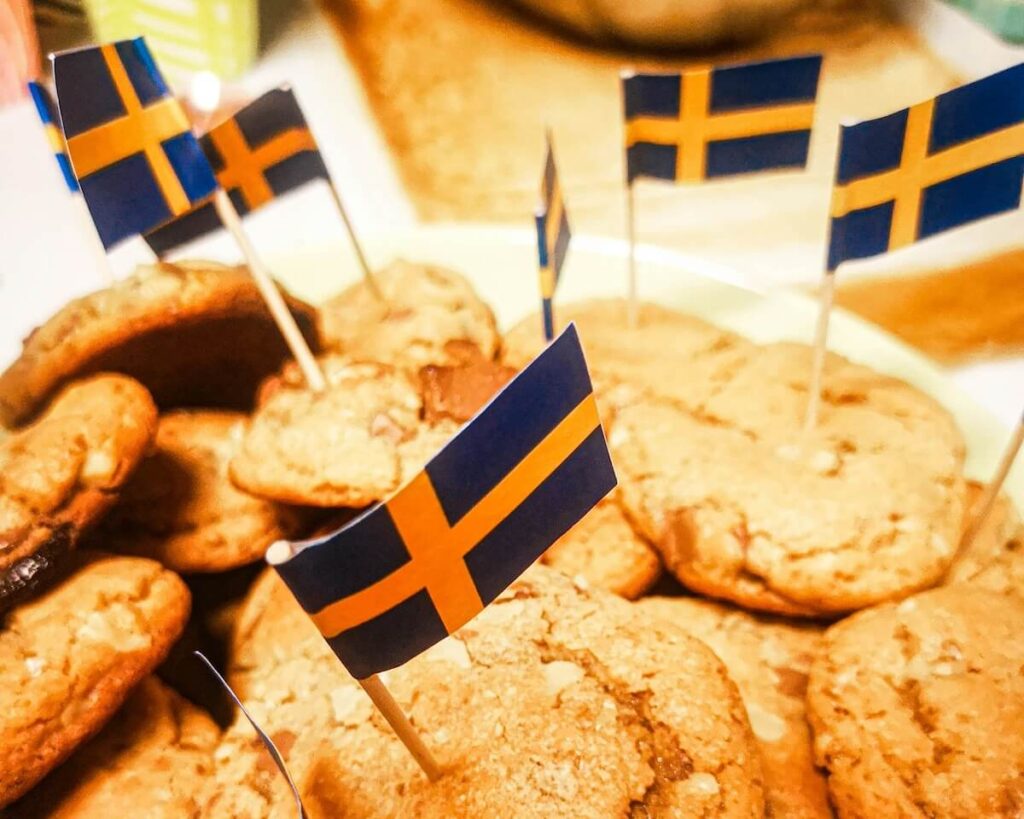
From the iconic smörgåsbord to the cozy ritual of fika, Swedish food culture is a fascinating blend of historical global influences and deep-rooted seasonal traditions. Whether you are sampling “not-so-Swedish” meatballs or braving a taste of fermented herring, Sweden is known for its emphasis on high-quality, simple ingredients that celebrate the natural bounty of the land and sea.
Bookmark this article for your future trip to ensure you don’t miss a single bite!