
South Korea, famous for its stunning landscapes, grand palaces, glitzy entertainment industry, exquisite cuisine, and trendy fashion, has become a popular travel destination in the last decade. Whether you’re drawn to Seoul’s hanok, Busan’s beaches, or Jeju’s chill vibes, bringing home a piece of this enchanting nation is a must.

Souvenirs are more than just novel trinkets. They make great gifts for loved ones, interesting décor for your home, fab additions to your souvenir collection, or tangible reminders of memories you made from your trip. Aside from photos, the random souvenirs I’ve amassed from my trips kept my travel memories fresh in my mind, especially when I couldn’t travel during the global pandemic.
From handcrafted treasures to delectable treats to cute knickknacks, I listed 28 souvenirs from South Korea to help you cherish your Korean adventure long after you’ve returned home.
Table of Contents
Traditional arts and crafts
1. Celadon pottery

Renowned for its distinctive, soft green glaze, celadon pottery is a highly-prized ceramic art piece. This unique hue is achieved through a careful firing process that involves iron-rich clay. The result is a ceramic piece with an elegant and timeless beauty.
While celadon pottery has a rich history dating back to ancient China, Korean celadon, in particular, became popular during the Goryeo Dynasty (918-1392). It has since become a versatile choice for souvenirs — whether as functional pieces like teacups and bowls or decorative ones like vases and sculptures. Some high-quality celadon pieces can appreciate in value over time, which makes them a potential investment!
Remember, though, that while the term “celadon” is often associated with a specific green shade, it actually refers to a broader category of pottery characterized by a transparent or translucent glaze.
2. Hanji paper products
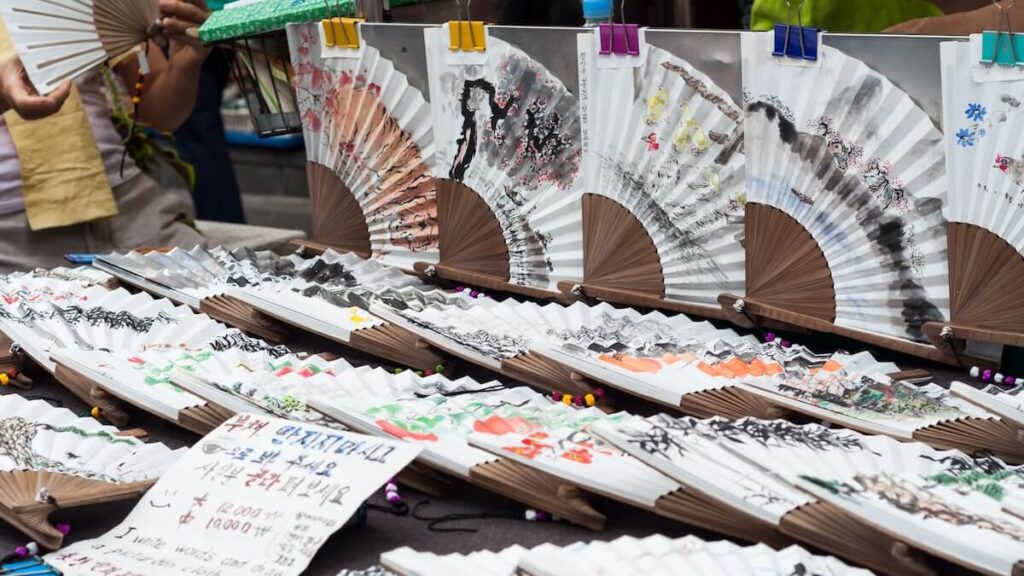
Hanji is a traditional Korean paper known for its strength, durability, and elegance. Unlike Western paper that’s mainly made from wood pulp, hanji is crafted from mulberry bark fibers. Making hanji sheets involves a meticulous process — from soaking to washing to beating the fibers into a pulp.
Like celadon pottery, hanji reached its peak during the Goryeo Dynasty and made its way into everyday items like official documents, books, artwork, household items, and even windows and doors. Fun fact: hanji is used in hanok (traditional Korean houses) to make airy windows and doors.
Today, a visit to hanji villages (like in Wanju and Cheongju) or to craft or antique stores will lead you to a variety of hanji paper products — stationery, home décor, wallets and purses, bookmarks, dolls, etc. Traditional crafts like paper lanterns and intricately designed paper fans are particularly popular among tourists.
3. Hahoetal

Hahoe masks, or Hahoetal in Korean, are traditional Korean masks used in the Hahoe Byeolsingut Talnori, a special dance-drama ritual performed in Hahoe, Andong.
Apart from their detailed carvings, hahoe masks are known for their expressiveness and for depicting various characters in Korean society, such as aristocrats, scholars, farmers, clowns, monks, old women, and more. And it makes sense because these masks were originally created to satirize social classes and societal norms!
Hahoe masks are typically made from wood and painted with vibrant colors, displaying the craftsmanship of Korean artisans. In fact, the South Korean government recognized the cultural importance of Hahoe masks by naming them a National Treasure and the talnori as a National Intangible Cultural Heritage. I guarantee, keeping these masks in your home will spark conversations among your visitors.
4. Najeonchilgi

Another stunning Korean handicraft is the najeonchilgi. This craft involves the inlaying of colorful and vibrant pieces of shellfish, primarily mother of pearl, onto objects and then coating them with lacquer.
While mother-of-pearl lacquerware originated in China, najeonchilgi itself flourished during — you guessed it — the Goryeo Dynasty, when it was widely used to decorate Buddhist artifacts and aristocratic possessions. Its popularity waned over time but in recent years, more artisans are preserving and reimagining this timeless art form.
Today, you’ll see najeonchilgi in the form of jewelry boxes, furniture pieces like chests and tables, accessories like hairpins, brooches, and even phone cases, and decorative household items.
5. Korean Hanbok dolls
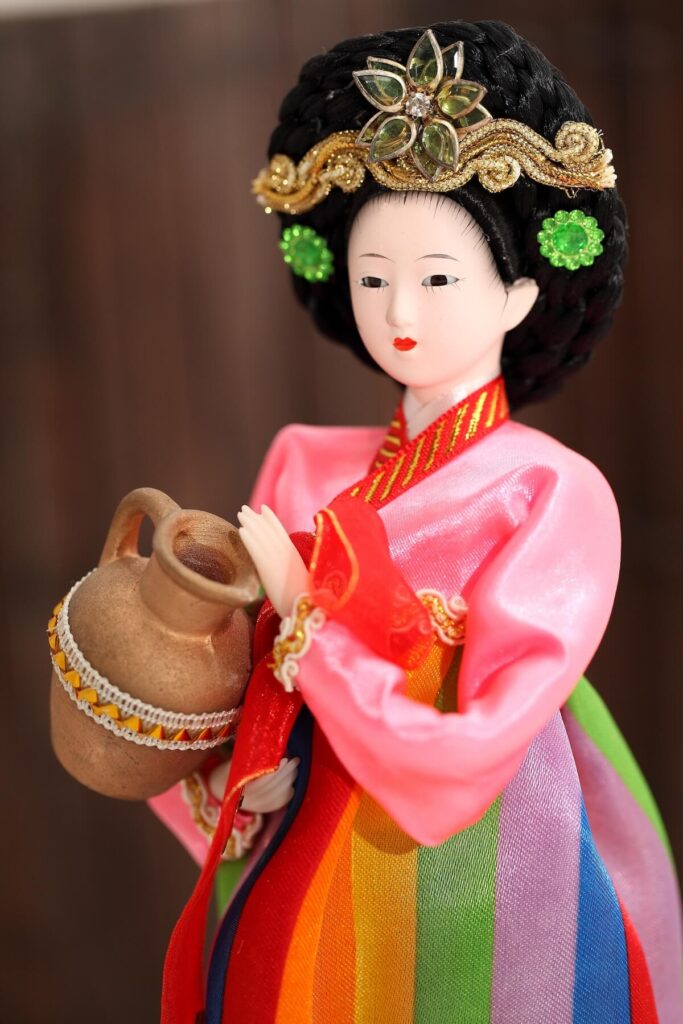
You’ve probably seen these cute dolls online, and the good news is, you’ll easily find them in souvenir shops in South Korea too!
Korean hanbok dolls are adorable miniature versions of people dressed in hanbok. Known for its vibrant colors, elegant lines, and unique silhouette, hanbok is a Korean traditional attire that consists of a jacket (jeogori) and a skirt (chima) for women, and a jeogori and pants (baji) for men.
The dolls are meticulously crafted to show the hanbok’s unique details and aesthetic. They depict historical figures, characters from K-dramas, or everyday people. Plus, they come in various sizes, from tiny keepsakes to large ornamental pieces.
6. Bokjumeoni
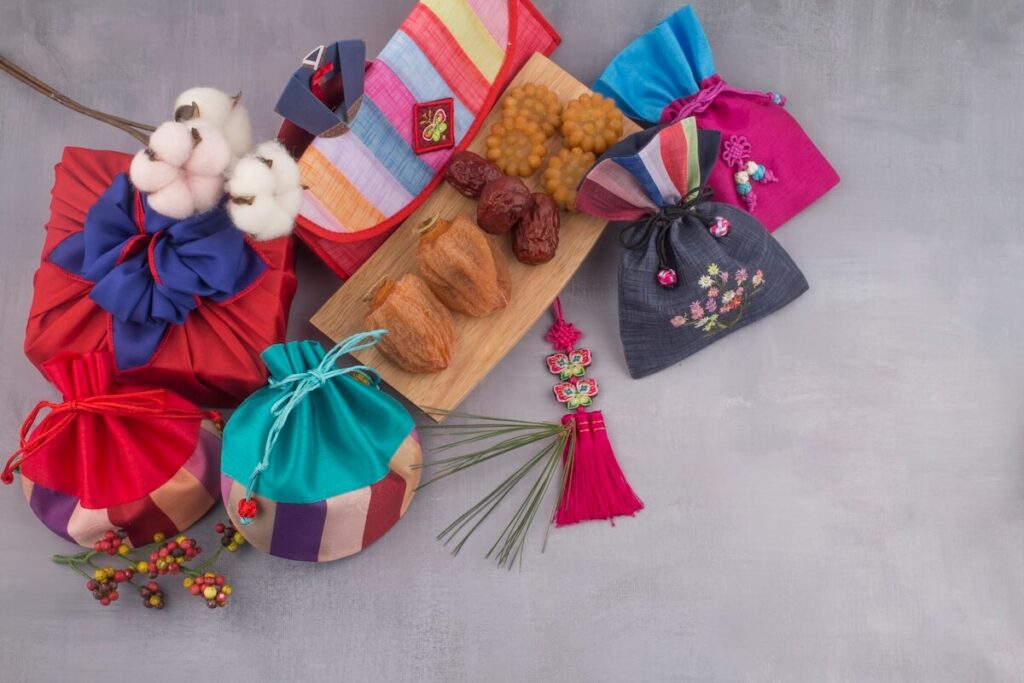
Korean silk purses, often referred to as bokjumeoni, are traditional pouches made from silk. These small, classy bags typically come in bright colors and are adorned with intricate embroidery.
These silk purses have been around since the Joseon Dynasty. Because hanbok didn’t have pockets, the purses were used to hold coins and other small valuables. The delicate embroidery and high-quality silk also came to signify the wearer’s social standing.
They’ve since evolved into stylish accessories and lucky charms. Traditionally, bokjumeoni is also used on Seollal (Lunar New Year) or Chuseok (Korean Thanksgiving) as “money pouches”. Though not many people use bokjumeoni as money pouches now, it still makes for a beautiful and practical souvenir.
7. Calligraphy brushes
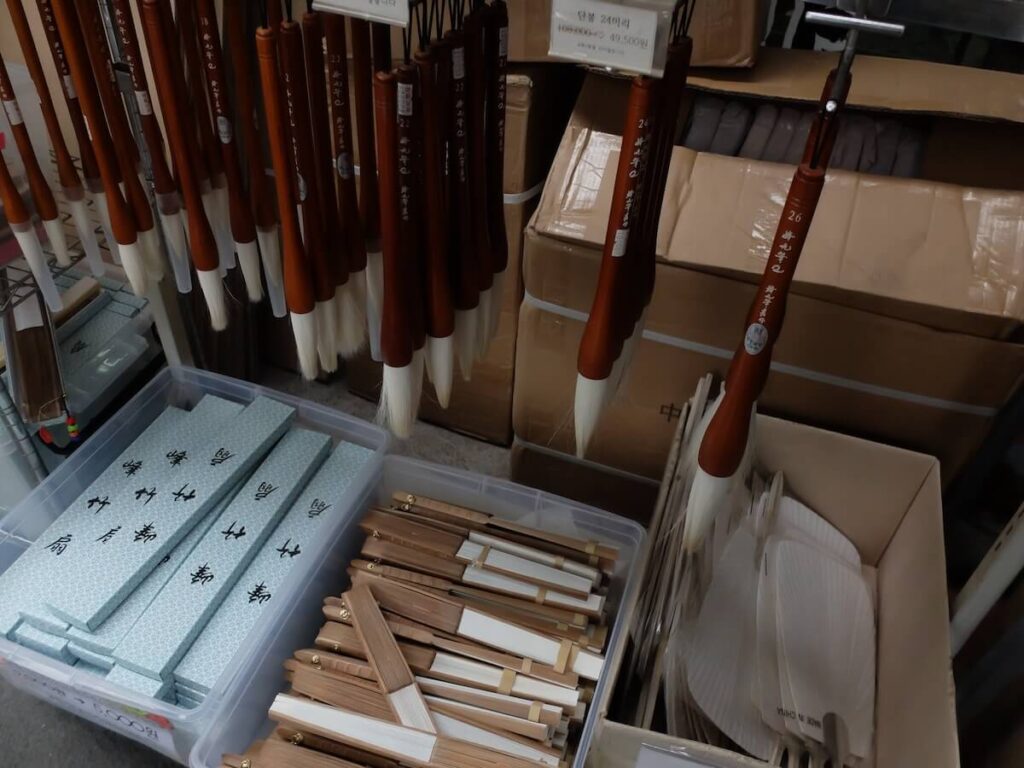
Korean calligraphy, or seoye, has a rich history connected with the country’s cultural and intellectual development. Its roots can be traced back to ancient China, where calligraphy was and still is considered a high art form. However, Korean calligraphy developed its own unique style and characteristics over the centuries.
If Korean calligraphy is something you’d like to learn (or you have loved ones who’d be interested in learning it), why not invest in a good set of calligraphy brushes?
Korean calligraphy brushes are typically made with animal hair, such as goat or rabbit, and attached to a bamboo handle. Because these brushes are made from high-quality natural materials and undergo a rigorous production process, you can be sure that they are uniform in quality and size, and have good flexibility, absorbency, and durability.
8. Korean name stamps
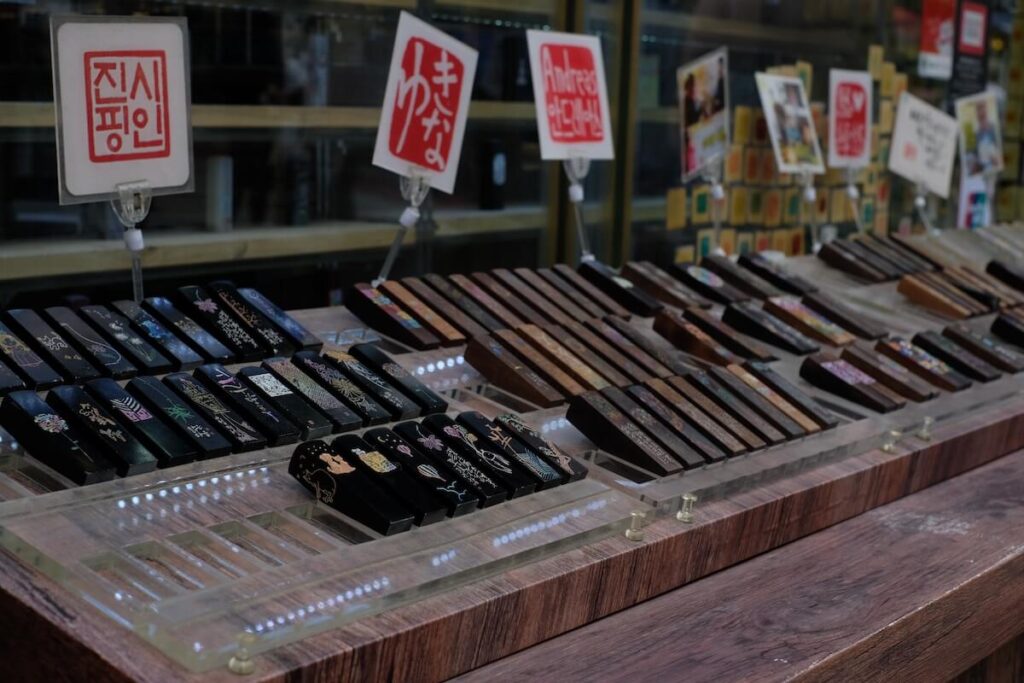
A Korean name stamp, or dojang, is a personal seal that’s traditionally carved from wood or stone, bearing a person’s name or initials. It’s used in place of a signature on official documents and contracts. Think of it as the Korean version of a fingerprint or signature, but with much richer cultural significance.
Dojang has been used in Korea and other East Asian countries for centuries. Initially used by the upper classes and only men, it eventually became a common practice for everyone to have their own personal stamp.
Not everyone uses a name stamp now (some opt for handwritten signatures) and dojang souvenirs do not hold any legal significance. But you have to admit, they’re unique keepsakes!
9. Korean chopsticks
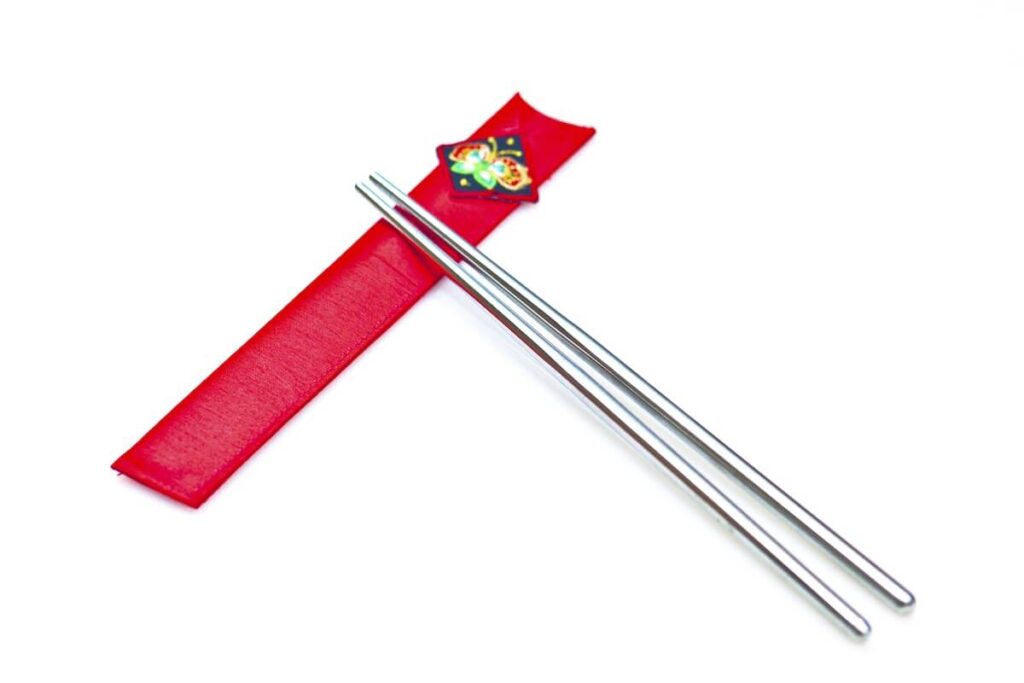
Chopsticks are common items you can pick up when you travel to different Asian countries. But if you’ve watched Korean shows or have eaten at a Korean restaurant, you’d know that Korean chopsticks are distinct.
Korean chopsticks, known as jeotgarak, are versatile utensils. What sets them apart is the length (shorter than Chinese chopsticks but longer than Japanese ones) and the material.
Unlike wooden chopsticks commonly found in other East Asian countries, Korean chopsticks are often made from metal, such as stainless steel or silver. This makes it more durable and more hygienic.
10. Sam Taeguk fans

While you can buy folding fans made of hanji, I recommend looking for Sam Taeguk hand fans if you want something truly distinguishable.
“Sam Taeguk” refers to the three-color flag of South Korea, often depicted on the fans in various artistic interpretations, commonly with a yin-yang-like design. These fans are typically made from paper, silk, or other lightweight materials, with intricate designs and patterns showcasing the beauty of Korean culture.
Clothing and accessories
11. Hanbok
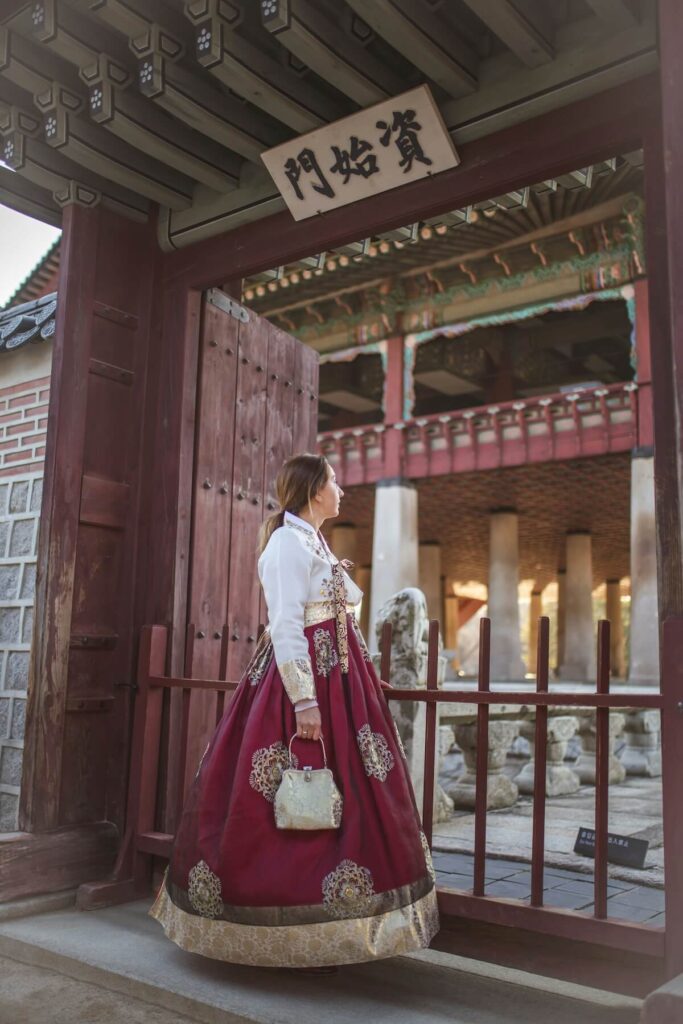
I previously mentioned Hanbok dolls, but now it’s time for the real thing.
Hanbok, the traditional Korean clothing, is famed for its vibrant colors, flowing lines, and intricate designs. A set consists of the jeogori (upper garment), chima (skirt for women) or baji (pants for men), and otgoreum (sash). And while it’s no longer used as a daily attire, many Koreans still wear hanbok on special occasions such as weddings, traditional holidays like Chuseok and Seollal, and cultural events.
There are various types of hanbok — from the everyday hanbok to ornate wedding hanbok to ceremonial hanbok. They also come in different sizes and prices will often depend on textile quality.
12. Fashion accessories

Seoul is a major fashion hub not just in Asia but also all over the world. From K-pop idols to regular citizens, people place great importance on appearance and style and fashion is a way to express personality.
If you dig Korean fashion, clothing and accessories can be a way to take home some of that fashionista vibe. You’ll find handbags, jewelry, hats, sunglasses, scarves, clothes, and more in major shopping districts in Seoul (e.g., Myeongdong, Gangnam, Hongdae, Dongdaemun, etc.) and shopping malls across the city.
13. Korean socks

Korean socks, or yangmal, technically count as accessories, I suppose. But I think they deserve a special mention because they’re so easy to find and they’re so cute!
Made from a variety of materials, including cotton, wool, and bamboo, Korean socks offer a perfect blend of warmth and breathability. But what really sets them apart is their quirky and often adorable designs. From cute animal motifs to playful patterns inspired by traditional Korean culture, there’s a pair of socks to suit every taste.
The pair of “Shin Ramyeon” socks I bought in Hongdae is one of my favorite purchases from that trip.
14. Korean skincare and cosmetics
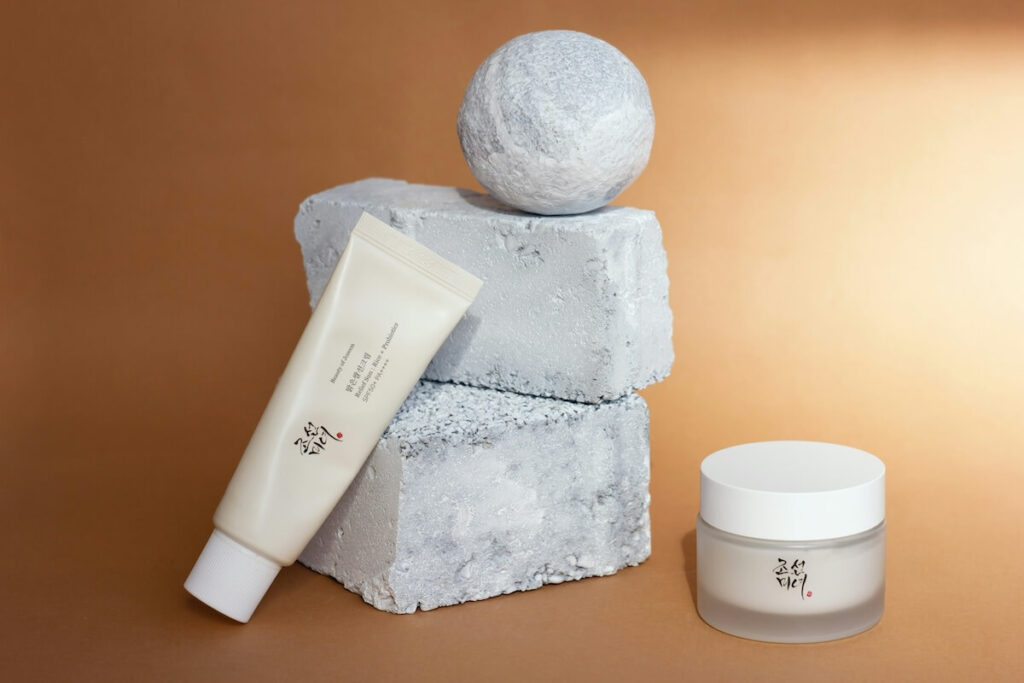
South Korea is famous (or infamous?) for skincare and beauty standards. Over the years, Korean skincare and cosmetic products have been known for their innovative formulas, luxurious textures, and effective results. No wonder every tourist comes home with sheet masks after a trip to South Korea.
Sheet masks aside, you’ll find a variety of skincare and cosmetic products in Seoul alone. BB creams, cushion foundations, cleansers, essences, moisturizers, pimple patches, serums, sunblock, eyeshadow in various hues… South Korea has them all!
Often, these products incorporate natural ingredients (e.g., ginseng, green tea, and snail mucin) and focus on gentle, yet effective formulations to achieve a dewy, glass-skin complexion or address specific skin issues.
Food and beverages
15. Kimchi

One of the cultural symbols of Korea, kimchi is an iconic fermented vegetable dish and a staple of Korean cuisine. Made with a variety of vegetables, such as cabbage or radishes, and seasoned with chili peppers, garlic, and fish sauce, kimchi offers a unique and tangy flavor profile.
While it might be challenging to bring back fresh kimchi due to its perishable nature, you can find various types of kimchi products available for purchase in South Korea. These include pre-packaged kimchi, kimchi powder, and kimchi-flavored snacks. The latter is ideal for people who aren’t particularly fond of kimchi taste (or smell).
Also read: 30 Fun Facts About Kimchi That You Might Not Know
16. Ginseng products

Ginseng, an important root and medicinal herb in Korea, is believed to have numerous health benefits, including boosting energy, improving cognitive function, and strengthening the immune system. Its unique flavor and aroma make it a favorite ingredient in various Korean dishes and beverages.
Korean ginseng, particularly the prized Korean Red Ginseng, is renowned for its high quality and potency. It is often processed into various forms, such as ginseng tea, ginseng extract, and ginseng candies. These products offer a convenient way to enjoy the benefits of ginseng and make excellent souvenirs.
When purchasing ginseng products, however, it’s important to look for reputable sellers who can provide information about the quality and authenticity of the product. Ginseng is a valuable commodity (read: expensive), and it’s essential to ensure you’re getting a genuine and high-quality item.
17. Korean snacks
Of course, no list of souvenirs from South Korea is complete without mentioning Korean snacks. Some are sweet, some are savory, some are spicy, and some are combinations of all three.
Popular Korean snacks that your family and friends (and you) will love include tteokbokki (spicy rice cakes) packs, choco pie, crispy seaweed snacks, flavored almonds, chips, Pepero, and my favorite, yakgwa. Yakgwa is a traditional honey cookie shaped like flowers and it pairs well with coffee or tea.
Read more: 35 Yummy Korean Snacks You Can Buy Online
18. Korean tea
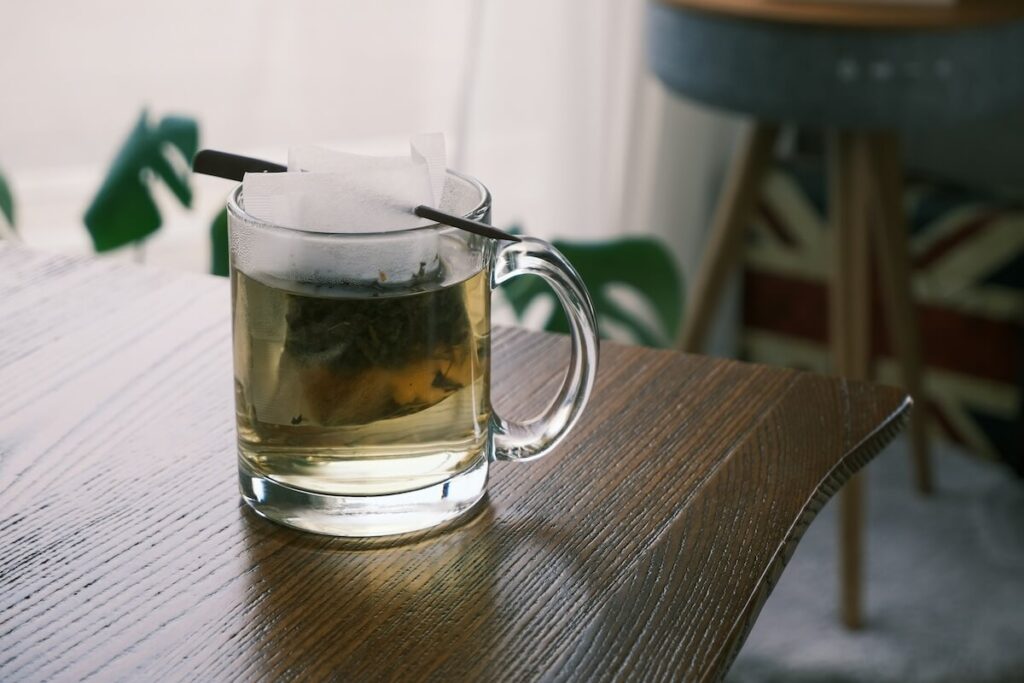
Korean tea, or cha, is more than just a drink; it’s a way of life. Just like in neighboring countries such as China and Japan, Korean tea is enjoyed in traditional tea ceremonies and as an everyday beverage.
There are numerous types of Korean tea, each with its own unique flavor profile and health benefits. There’s green tea (nokcha) is perhaps the most well-known, prized for its refreshing taste and antioxidant properties. You can also go for black tea (hongcha), oolong tea (urongcha), ginseng tea (insamcha), corn tea (okususucha), barley tea (boricha), and brown rice tea (hyeonmicha).
O’Sulloc, a renowned Korean tea brand, is a great place to start your journey into Korean tea. It offers a wide selection of high-quality teas, including organic green tea, herbal blends, and specialty teas like matcha and hojicha (roasted green tea). I stumbled into the O’Sulloc café in Insadong by accident and ended up trying a variety of teas. It’s worth adding to your Seoul itinerary.
19. Soju
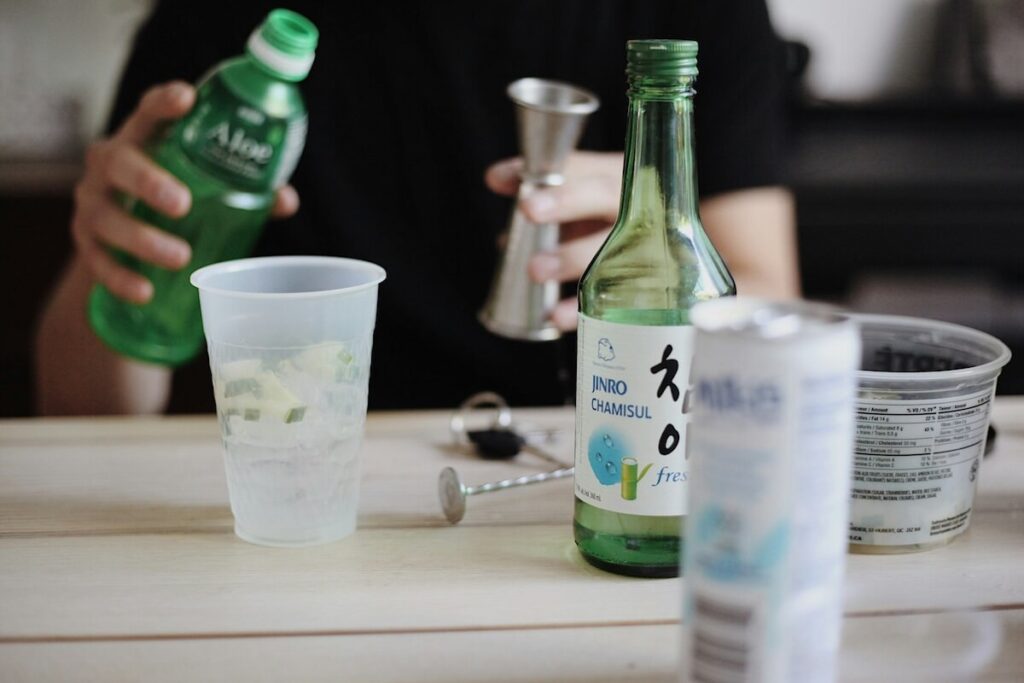
Ah, soju, the national liquor of South Korea. This versatile and popular beverage makes for a unique and flavorful souvenir. Distilled from rice, wheat, barley, or sweet potatoes, soju has a clear, slightly sweet flavor that’s often compared to vodka. It’s enjoyed both neat and as a mixer in cocktails.
While many brands of soju are available, consider purchasing a premium or limited-edition variety for a more unique and memorable souvenir. These special editions often feature unique flavors or packaging, making them a conversation starter and a collector’s item.
Before making a purchase though, take note of the rules regarding bringing alcohol on a plane. If drinking in Korea, make sure to educate yourself about Korean drinking culture.
20. Makgeolli

Another popular Korean beverage is makgeolli, a traditional Korean rice wine. This cloudy, milky-white beverage is renowned for its refreshing taste and slightly sweet, tangy flavor that best pairs with jeon (Korean pancake).
Makgeolli has lower alcohol content than soju, commonly between six to nine percent ABV. Unlike soju, it’s not as popular outside of Korea. But that might change soon as more bars in South Korea are serving it.
While makgeolli can make a wonderful souvenir, as mentioned previously, do check with your airline first before you pack any alcoholic beverages in your luggage. Your best bet is to purchase duty-free bottles after security.
21. Ramyeon
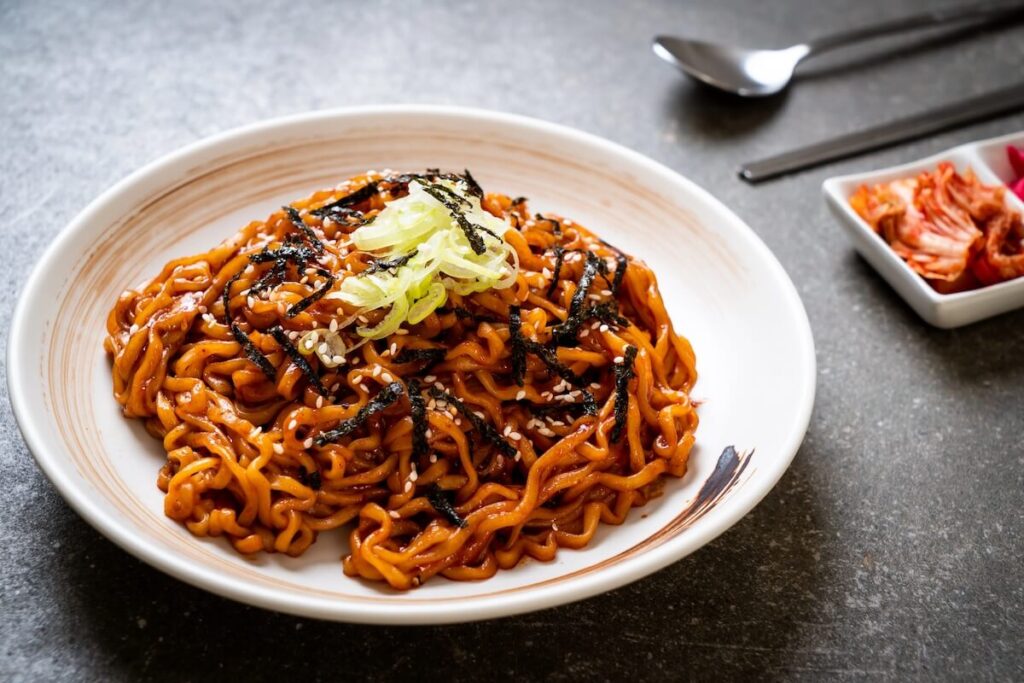
Sure, you can buy Korean instant noodles, or ramyeon, anywhere in the world now. But a visit to a supermarket (or convenience store) in South Korea will give you more brand options than you’d find anywhere else.
Ramyeon is available in three types — the stir-fry type like Buldak Bokkeummyeon, soupy ones like Shin Ramyun and Neoguri, and saucy ones like Chapagetti. The spice levels vary too, from the fiery heat of Buldak to the comforting warmth of Ottogi’s Cheese Ramen.
I’ve mentioned Shin Ramyun and Ottogi already, but other popular brands include Samyang, Nongshim, Jin, and Paldo.
22. Instant coffee mix
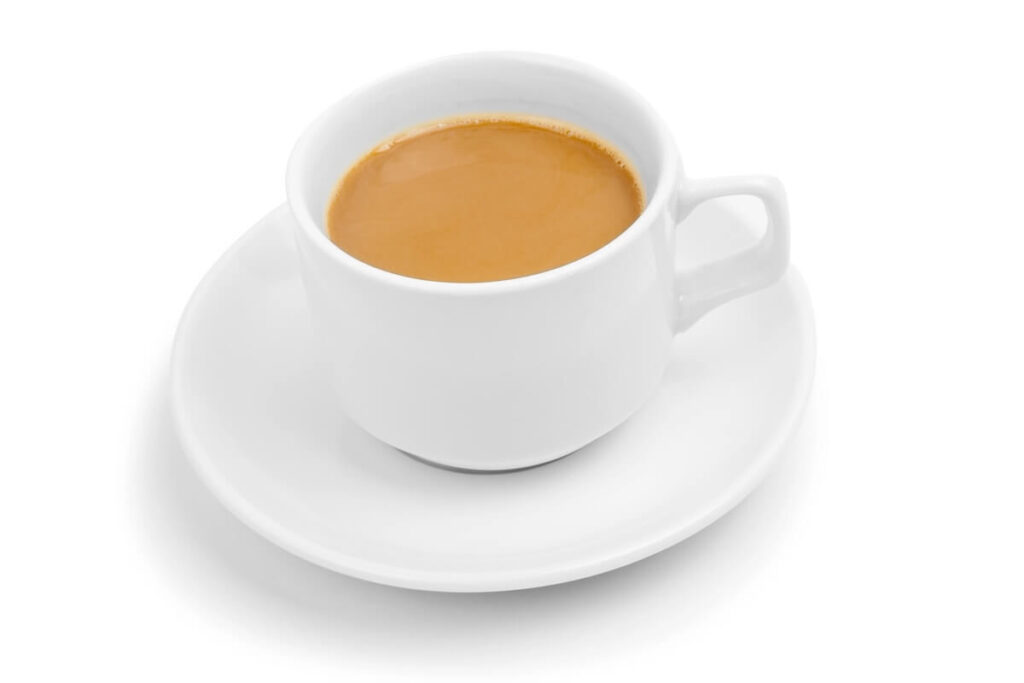
Instant coffee mix is a ubiquitous beverage in South Korea, enjoyed by people of all ages and socioeconomic status. It’s convenient and affordable, and good enough for a quick caffeine fix.
Beyond its practicality, however, instant coffee holds a significant cultural place in South Korea. It’s often associated with comfort, relaxation, and social gatherings. Many Koreans enjoy sipping a cup of instant coffee while reading, working, or simply taking a break.
Popular brands of instant coffee in South Korea include Maxim, Kanuk, and T.O.P. These brands offer a variety of flavors, from classic to flavored options like hazelnut, caramel, and vanilla.
Miscellaneous souvenirs from South Korea
23. K-pop merchandise

For K-pop enthusiasts, there’s no better place to buy merchandise than where it came from.
From albums and photocards to posters and light sticks (and light bands, if you’re a fan of Day6 like I am), there’s a vast array of items to choose from. Albums often come with various inclusions like photo cards, photobooks, and more.
Other popular K-pop merchandise includes posters, key rings, DVDs, K-beauty and cosmetics (that K-pop idols endorse), dolls, and even clothing. These items can be found in various places, from malls to online stores. For a more authentic experience, consider visiting any of the top entertainment agencies’ official entertainment stores, such as Weverse, JYP Shop, SMTown&Store, and YG Select.
24. Korean postage stamps
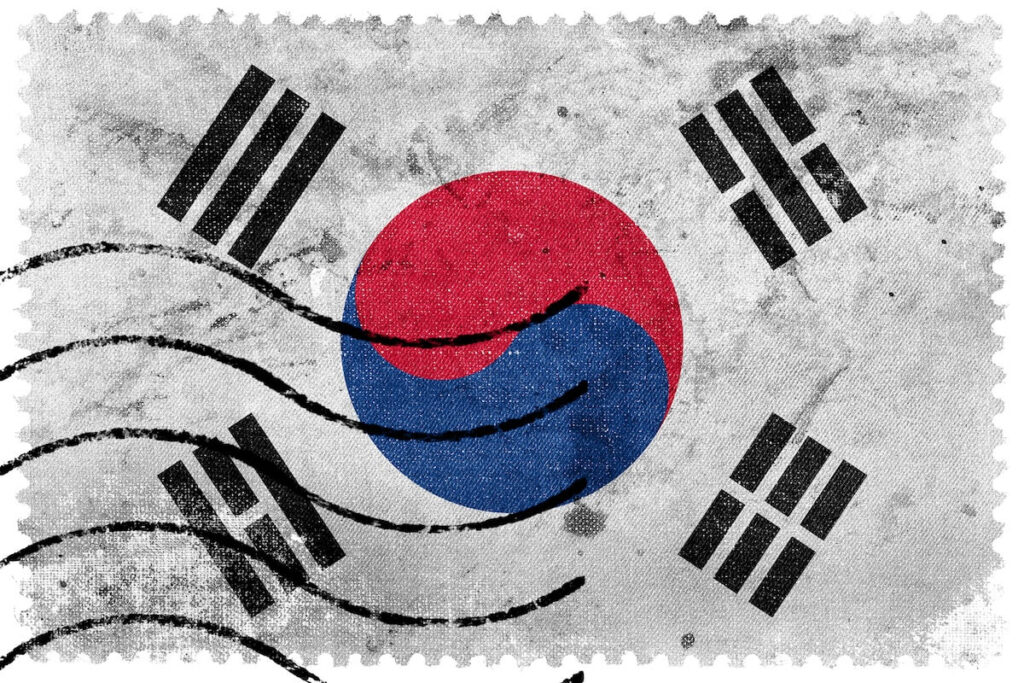
If you’re a philatelist, or you know someone who is, and you’re visiting South Korea, you’re in luck. Korean postage stamps offer a unique and affordable souvenir.
Korean stamps are known for their beautiful designs, often featuring traditional Korean art, landscapes, and cultural events. From vibrant illustrations of ancient temples to stunning depictions of modern-day Seoul, there’s a stamp for every collector.
To find these collectible treasures, head to any post office or convenience store in South Korea. You can purchase individual stamps or entire sheets. If you’re looking for something truly special, consider visiting the Korea Postage Stamp Museum in Seoul, where you can explore a vast collection of stamps and learn about the history of philately in Korea.
25. Soju glasses

For more unique and functional souvenirs from South Korea, consider adding some soju glasses to your collection.
Soju is typically served in small, glass bottles and a set of soju glasses can be a great way to recreate the fun and festive atmosphere of a Korean drinking session at home. These glasses come in a variety of shapes, sizes, and designs. Some are simple and minimalist, while others are more ornate and decorative. You can find glasses made from glass, ceramic, or even metal.
26. Phone cases
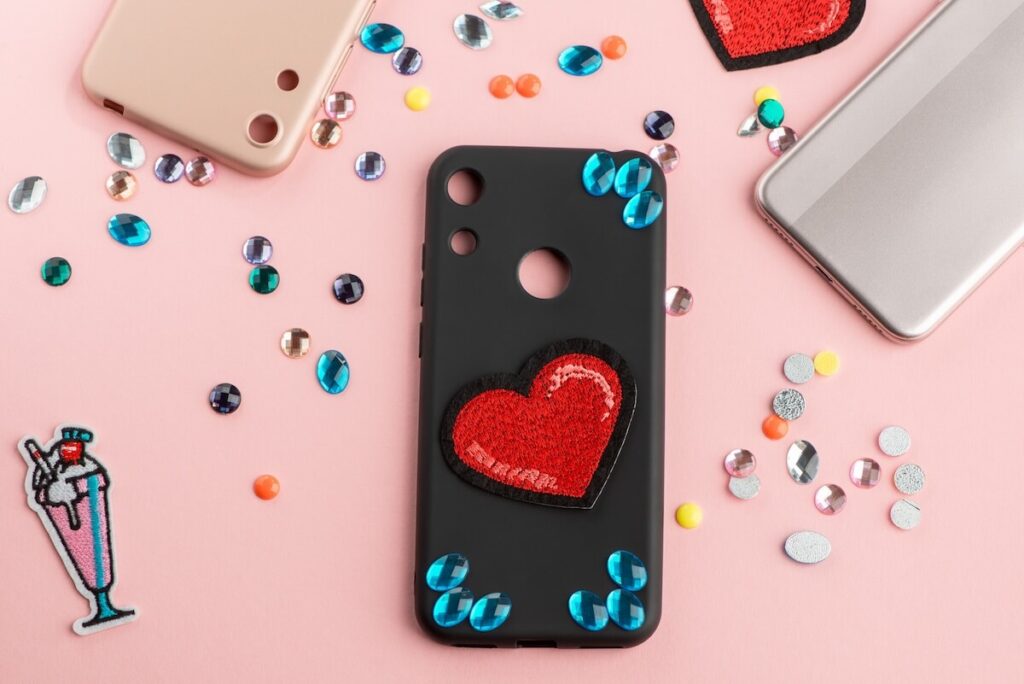
Let’s talk about the ultimate accessory for your phone: the case! When you’re in South Korea, you’ll be surrounded by a plethora of adorable, quirky, and downright stylish phone cases that will make your device look and feel like a million bucks. They’re not super expensive so you can buy them for your loved ones too.
One of the best things about Korean phone cases is the attention to detail. You’ll find cases featuring popular K-pop idols, cute characters from beloved animations, and even traditional Korean motifs. Whether you’re a fan of K-drama or just love all things cute, you’re sure to find a case that speaks to you.
27. Tote bags

I’m a fan of tote bags. They’re light, easy to carry, and add to my personal style without me shelling out big bucks.
In South Korea, tote bags offer a versatile and stylish way to carry your essentials. From trendy designs featuring iconic landmarks to minimalist patterns inspired by traditional Korean art, there’s a tote bag for everyone.
Plus, Korean tote bags are also a great way to support local artisans and designers while bringing a piece of South Korea home with you.
28. Stationery

Sometimes, the most delightful souvenirs are the little things that bring a smile to your face every time you use them. And when it comes to South Korea, there’s a whole world of adorable, quirky, and high-quality stationery just waiting to be discovered.
From pastel-hued notebooks and intricately designed pens to cute stickers and artsy sticky notes, Korean stationery is a feast for the eyes. Many items feature cute characters, whimsical designs, and traditional Korean motifs. These souvenirs are the best gifts for journaling enthusiasts, planner junkies, or simply someone who appreciates beautiful things.
Where to buy souvenirs in South Korea
South Korea offers a diverse range of shopping experiences, from bustling markets to high-end department stores.

To find traditional arts and crafts, consider visiting Insadong in Seoul, a historic district renowned for its antique shops, galleries, and traditional tea houses. You can also explore Gyeongju, a UNESCO World Heritage City with numerous museums and markets selling celadon pottery, hahoe masks, and hanji paper products.
For clothing and fashion accessories as well as skincare and cosmetic products, Myeongdong in Seoul is a must-visit destination. This vibrant shopping district is filled with trendy boutiques, international brands, and local designers offering everything from traditional hanbok to modern streetwear. To find affordable and unique fashion items, check out the Dongdaemun Market complex, which is open 24/7 and offers a wide variety of clothing, accessories, and textiles.
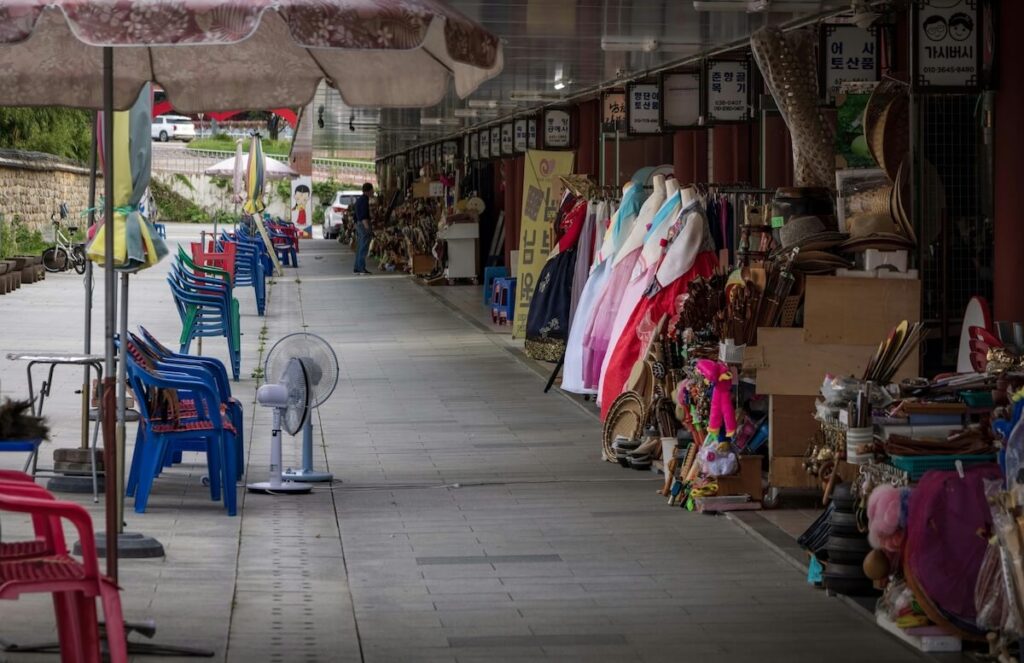
To indulge in delicious food and beverage souvenirs, explore Gwangjang Market in Seoul or Gukje Market and Jagalchi Market in Busan. Traditional markets offer a variety of local snacks, dried seafood, and Korean sweets. For a more upscale experience, visit Lotte Department Store or Shinsegae Department Store, where you can find high-quality gourmet food items and specialty teas.
Finally, for miscellaneous souvenirs, Hongdae is a trendy neighborhood known for its unique shops and street vendors. Here, you can find a variety of phone cases, tote bags, stationery, K-pop merchandise, and other quirky items.
Conclusion
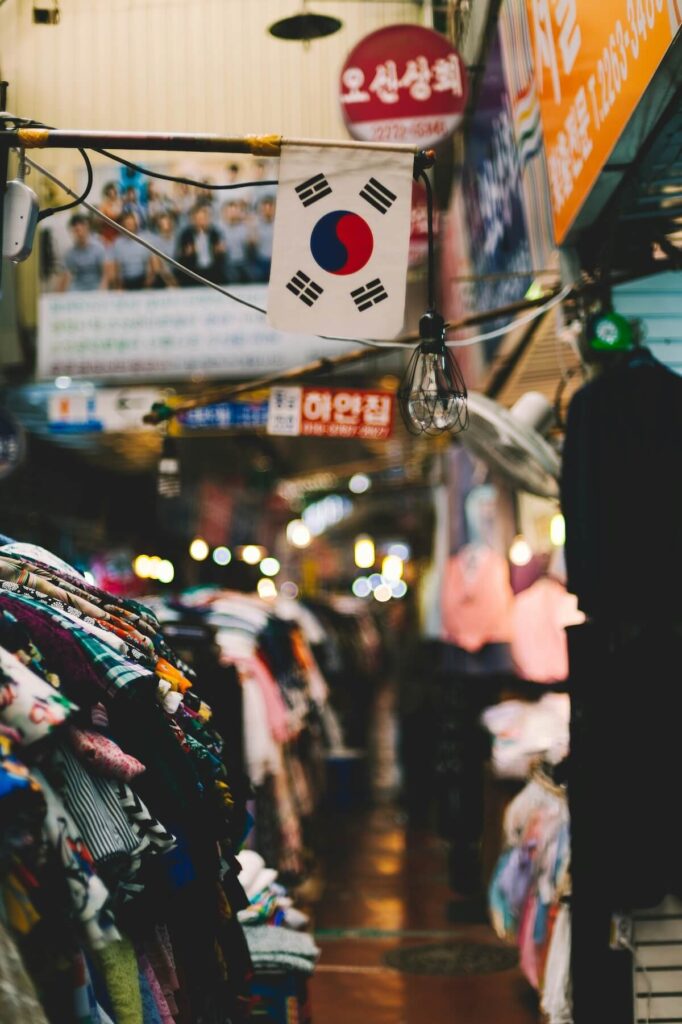
From the intricately designed traditional crafts to the cute and fashionable modern items, South Korea offers a diverse range of souvenirs to cherish. Whether you’re seeking a piece of history, a functional item, or simply a unique memento of your trip, I’m sure you’ll enjoy shopping in this country.
So, explore the vibrant markets, visit local artisans, and bring home a piece of South Korea that will remind you of your unforgettable experiences.
From an even longer list, check out these Korean gift ideas.