
Sure, Rome, Venice, and Florence are on the bucket list of 10/10 travelers. Yet if you want to discover a less obvious side of the country, you should visit one of the nicest mountain towns in Italy.

Breathtaking views, lovely cityscapes, tons of mountain sports options, and delectable cuisine are just a few of the things that’ll be waiting for you under the towering peaks of Italy.
For the sake of fairness, I decided to arrange the towns as they appear on the map along a north-south axis. That’s so you won’t think some are more worth seeing than others — they all stand on an equal footing in terms of beauty.
Table of Contents
Most stunning mountain towns in Italy
1. Bolzano
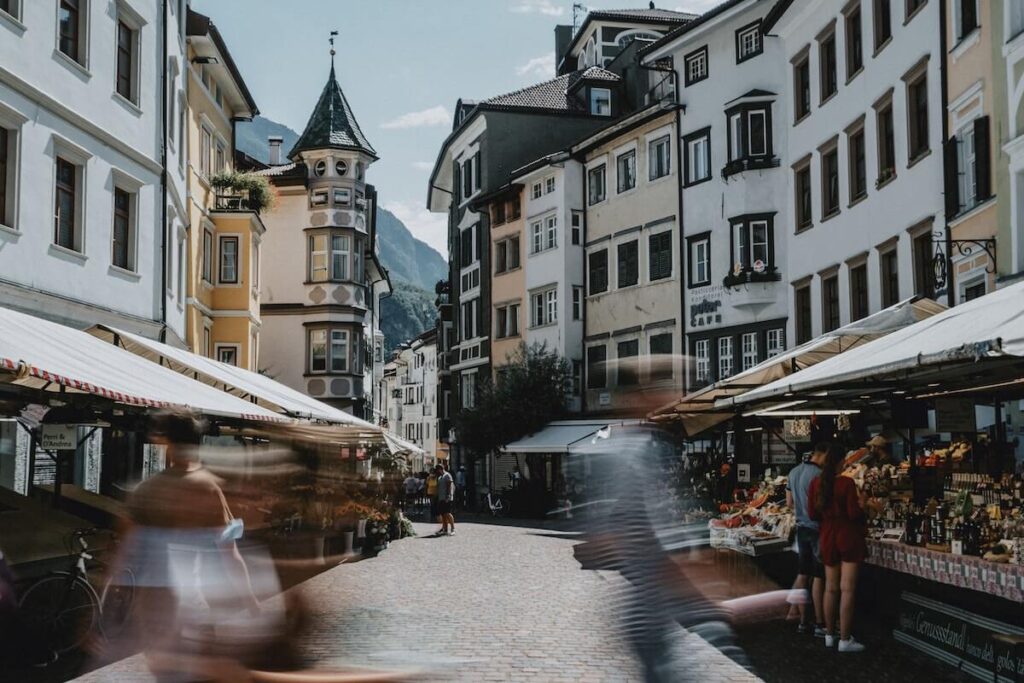
Looking straight out of a fairy tale, Bolzano is where Italy starts to melt into Austria. In fact, the capital of South Tyrol is a mere 50 miles from the border, and German is the native language of about a quarter of its residents.
Though a midsize city, as a regional capital, Bolzano boasts a lively arts and culture scene and hosts many events year-round.
Its typically Central European cuisine is proudly showcased in the city’s six Michelin-starred restaurants — an astonishing number relative to its modest dimensions.
Tucked in an alpine valley, Bolzano is also a superb place to hike, ski, or simply enjoy the dramatic scenery and breathe some crisp and clean air. What’s more, you can treat yourself to a stay in a castle hotel.
2. Bruneck
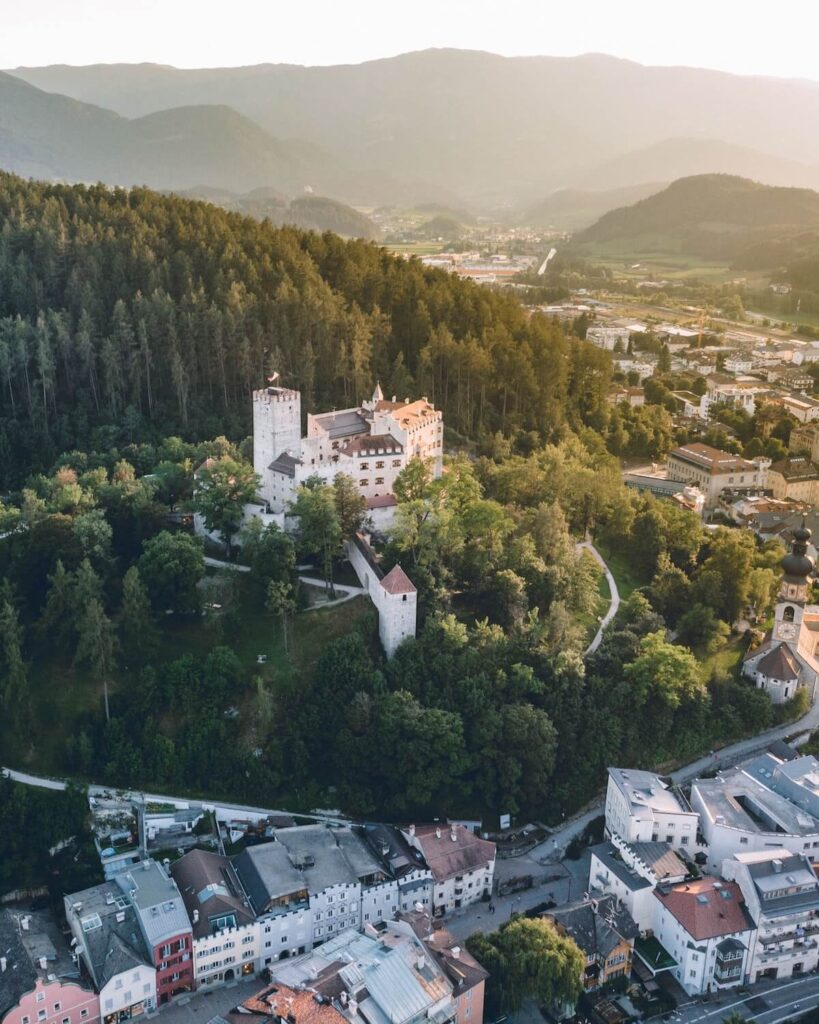
Bruneck, locally Brunico, is the most important town in the Puster Valley, right in the heart of the Italian Alps. Despite being only 48 miles from Bolzano, it has a much stronger Germanic culture: over 80% of its residents are native German speakers.
The historic core is enchanting if tiny — after all, less than 17,000 people live in Bruneck. The original row of 13th-century houses is dominated by the castle around which the town was built.
Bruneck makes an excellent day trip from Bolzano. Be sure to swing by Brixen on your way there, then head to the mesmerizing Lake Braies, one of the nation’s natural wonders.
Yet in case you could as well use a couple of days of peace in the Italian Alps, the town does have a handful of first-rate hotels where you can stay.
3. Trento

Like Bolzano, Trento is located in the Trentino-South Tyrol region (and is actually its capital). That said, it stands in sharp contrast with Bolzano given it looks like a typical northern Italian town — even though the two are just 35 miles from each other.
Trento is dotted with castles, towers, and medieval churches that turn strolling around into a truly pleasant experience.
Plus, the city is a 45-minute drive away from Lake Garda’s northern end and is encircled by snow-capped summits and natural reserves like Monte Corno and Adamello Brenta, which, at 153 acres, is the largest in Trentino-South Tyrol.
4. Canazei
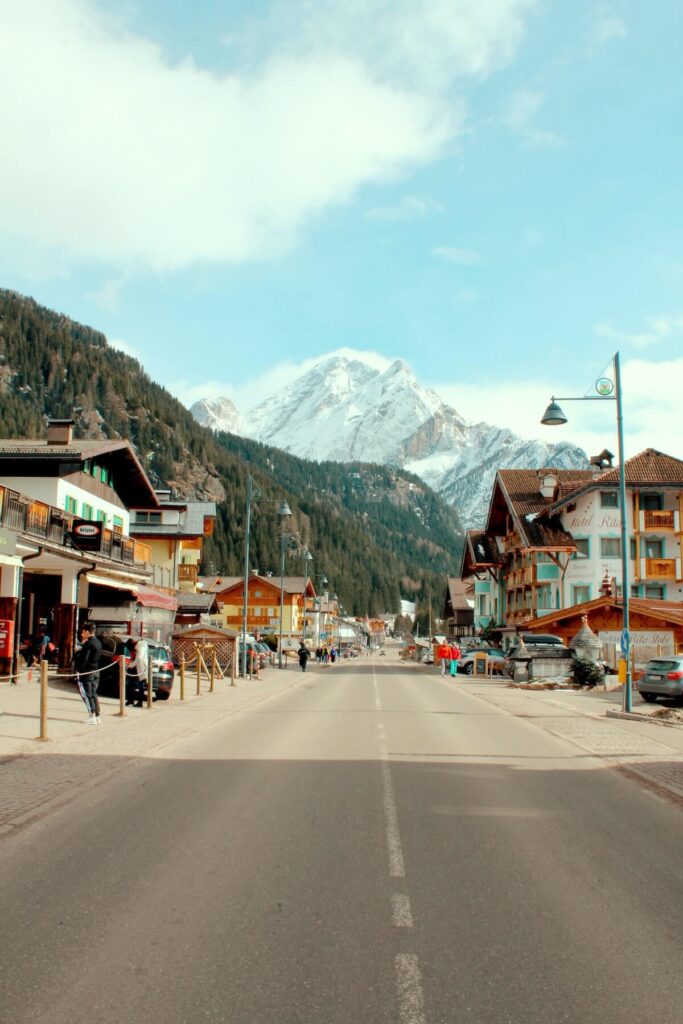
Officially, Canazei is located within the province of Trento. Ironically, it’s much closer to Bolzano — which helps explain its quintessentially alpine look.
Surrounded by striking peaks like Langkofel, Piz Boè, and Marmolada, Canazei is an ideal destination for skiing in the winter, but mountaineering and hiking are in high demand in the area during the warmer months.
While the town center is equipped with better tourism infrastructure, you shouldn’t miss out on Gries and Alba, two neighboring districts with equally marvelous views and charming vibes. In case your launchpad is either Bolzano or Trento, try to book at least an overnight stay here.
5. Belluno

Moving on to Veneto (the region of Venice), there’s the imposing Belluno in the foothills of the Dolomitic Alps.
Nestled in a mountain valley midway toward Cortina d’Ampezzo and the Three Peaks of Lavaredo, the town makes a great spot if you’re touring the Prosecco wine country or if you’re coming from Venice.
Founded by the Romans and subsequently ruled by barbarians, Venetians, and Austrians before being annexed into Italy, Belluno is brimming with history on every corner.
It is one of the coldest and rainiest provincial capitals in the country too. Rainfall, however, tends to be a lot heavier during the summer, so visiting in wintertime should be a far nicer experience.
6. Cortina d’Ampezzo

Cortina is quite possibly the most famous mountain town in Italy, and for good reason. Not only is it the access point to the dazzling Three Peaks of Lavaredo, which feature 250 miles of trekking trails, but it’s also home to the most challenging ski runs in the area.
That’s because several slopes that were built for the 1956 Winter Olympics were eventually opened to the public. Thanks to this popularity, the town boasts the best dining scene and hotel infrastructure in the Dolomitic Alps.
It’s no wonder, then, that Cortina draws a glamorous crowd and that it’s often the setting of foreign movies, such as The Pink Panther (1963), For Your Eyes Only, and Cliffhanger.
7. Bormio

Bormio is located in Lombardy like Milan, but it’s actually closer to Switzerland and Austria. It’s tucked in Stelvio National Park, which borders a Swedish and two other Italian natural reserves spanning a total area of almost a million acres.
The town flourished in the Middle Ages owing to its strategic position in the middle of a mountain pass, and as such has a much more impressive architectural heritage than its population of 4,000 would suggest. It’s also noted for its hot springs, where you can relax after a long day outdoors.
Due to its isolation from modern life, Bormio has managed to preserve many age-old traditions and hosts a bunch of Catholic and ancient pagan festivals throughout the year.
8. Ponte di Legno
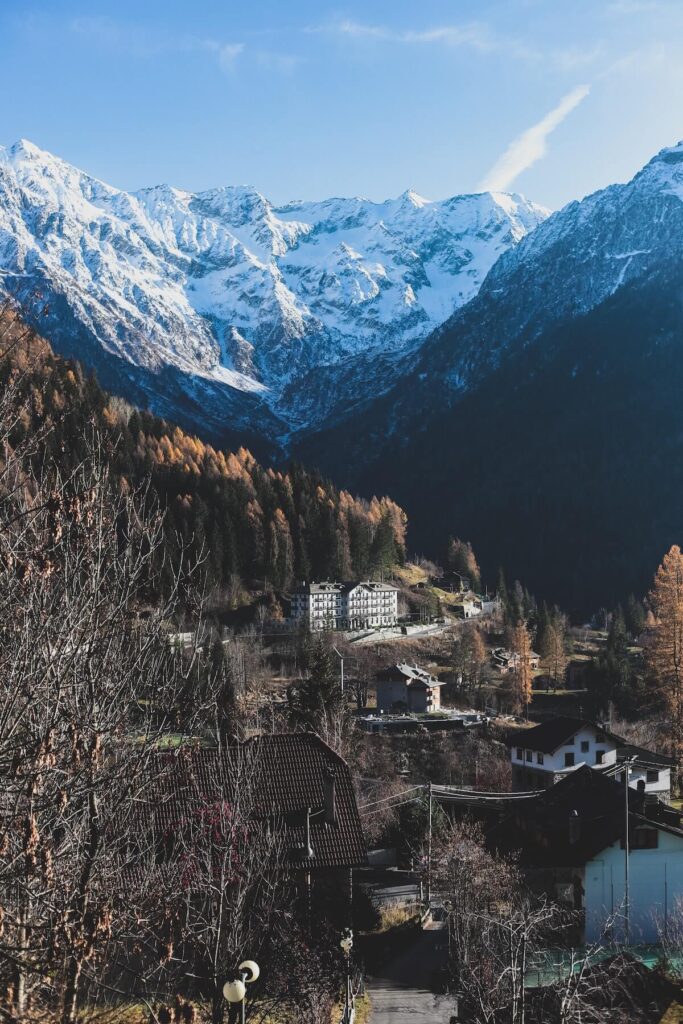
Ponte di Legno was one of the earliest mountain resorts in Italy, thanks to the commanding views of the Alps and fantastic skiing opportunities.
It’s located in the heart of the Camonica Valley, which connects the beautiful Lake Iseo 44 miles to the south to the Tonale mountain pass on the border of Lombardy with Trentino-South Tyrol.
Ponte di Legno is dotted with a dozen trekking itineraries as well. Nearby, you’ll find Adamello Brenta and Stelvio national parks. What’s more, the town has a couple of historic landmarks like the 13th-century Church of Sant’Apollonio.
9. Sestriere
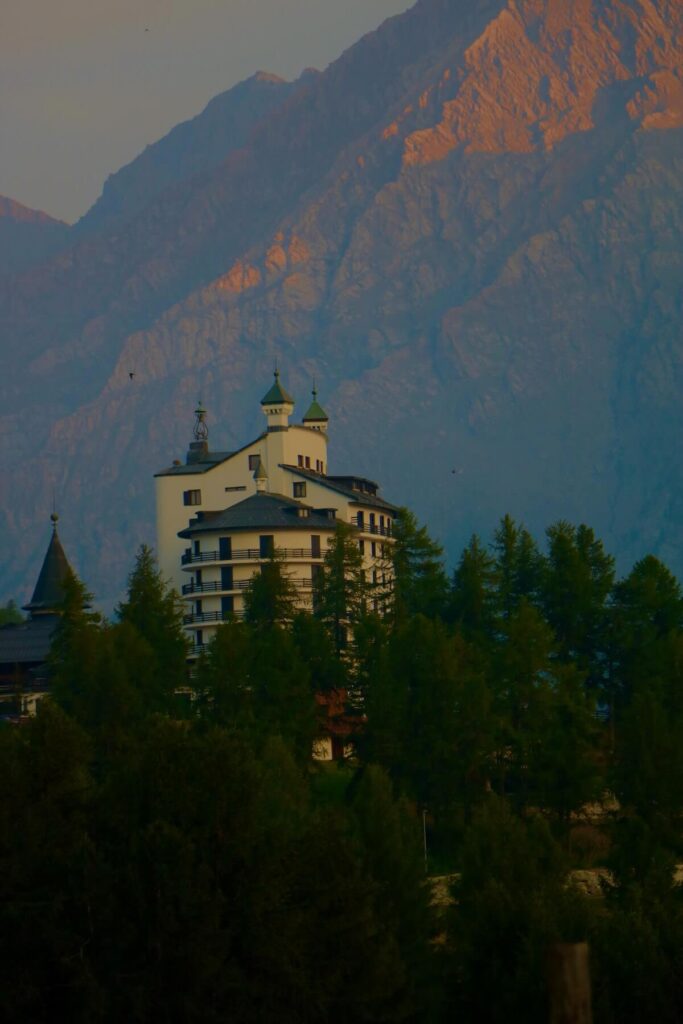
Although Sestriere is within greater Turin in Piedmont, it’s over 60 miles from the region’s capital. At 6,700 feet above sea level, it’s the highest town in the nation, which is one of the reasons why it’s so popular with travelers (mainly from Italy). It’s one of the snowiest places in the country too.
Sestriere is less than 100 years old, but the glaciers all around it allow for skiing even during the warmer months of the year. If you can afford the time, cross the French border to visit Écrins National Park on your way to Grenoble.
10. Alba
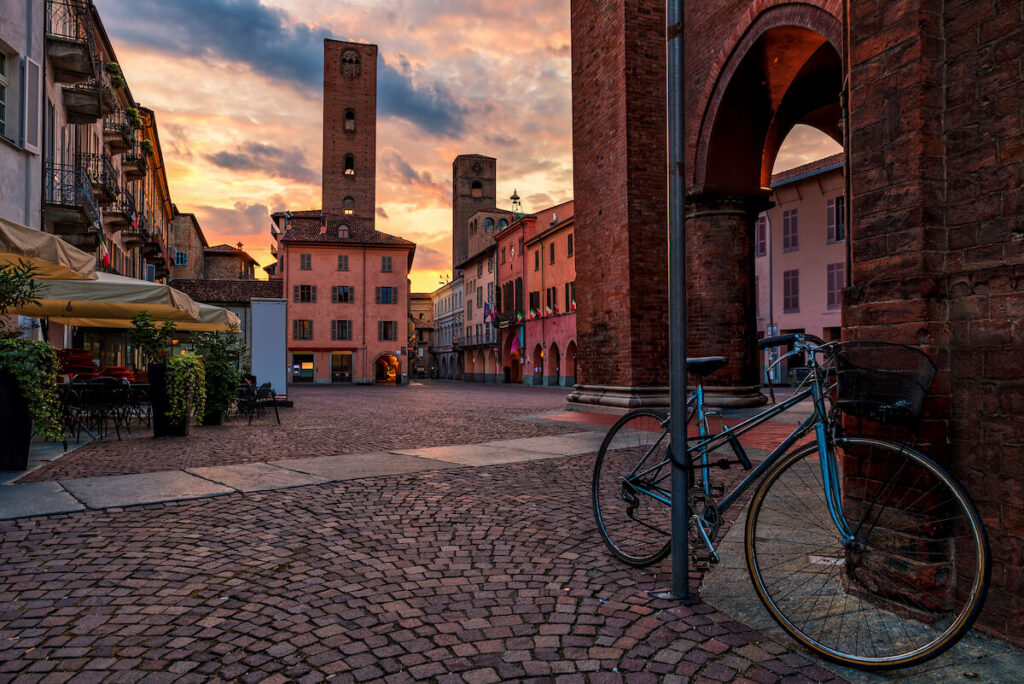
While Alba is also located in Piedmont, its landscape is entirely different from Sestriere’s. We’re in the heart of Langhe, one of the most prestigious wine regions in the country. Here you can taste Barolo, Nebbiolo, and Barbaresco.
Snow-capped summits are nowhere to be seen, as this is the northernmost tip of the Apennines where the gentle mountain chain fades into the sprawling Po Valley. Still, Alba’s rolling hills are a spellbinding sight.
Plus, besides prime wine, you’ll get to savor mouthwatering specialties like vitello tonnato (i.e. veal with tuna sauce), hazelnut cake, and the region’s world-famous white truffle.
11. Macugnaga
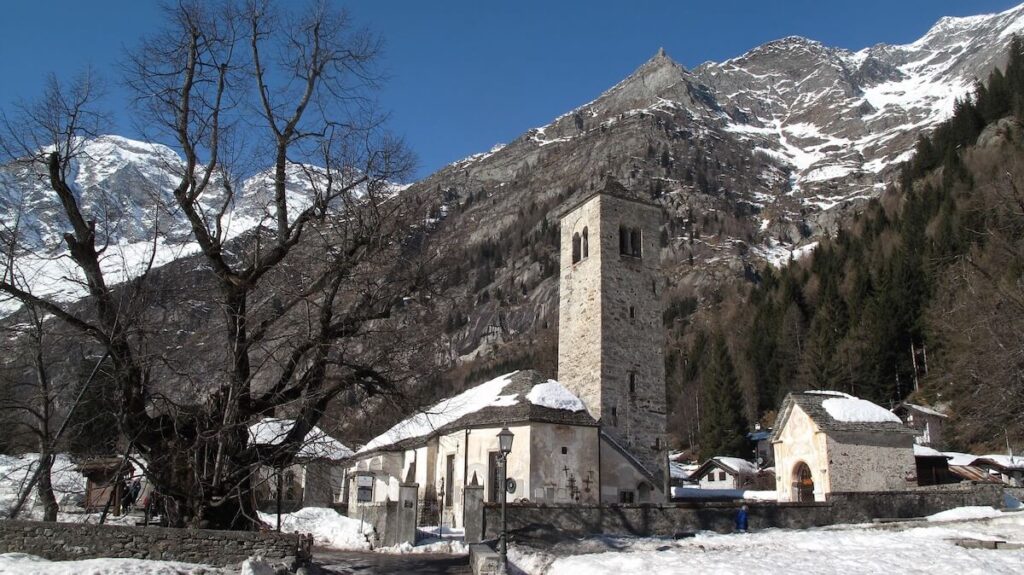
A little larger than a hamlet, tiny Macugnaga sits under Monte Rosa’s majestic eastern wall, the steepest in the Alps.
The smallest town in our list is probably the remotest too, yet it’s an hour’s drive away from iconic Lake Maggiore and about two hours from Milan. Italians flock to the town to ski during the winter and, weather allowing, in the warmer months as well.
Otherwise, you can always trek amid glacial ponds and pine trees, tour decommissioned gold mines, and visit the town’s landmarks, which include a 14th-century church and a 700-year-old linden tree.
12. Courmayeur
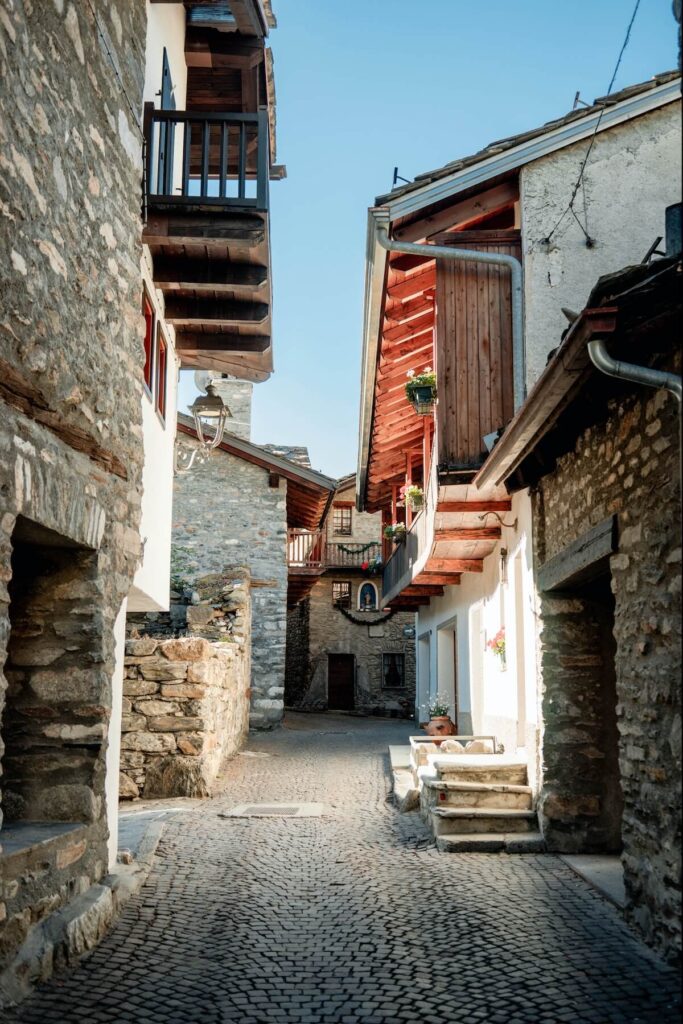
Courmayeur is a must-see within alpine Italy due to its proximity to Mont Blanc — one of the tallest peaks on Earth — which it shares with the French town of Chamonix.
One of the starting points of the Tour du Mont Blanc, a 105-mile walk around the Mont Blanc massif spanning Italy, France, and Switzerland, the town is also surrounded by 30+ ski runs.
On top of that, Courmayeur is noted for its vibrant culture and plays host to several film and literary festivals year-round.
13. Aosta
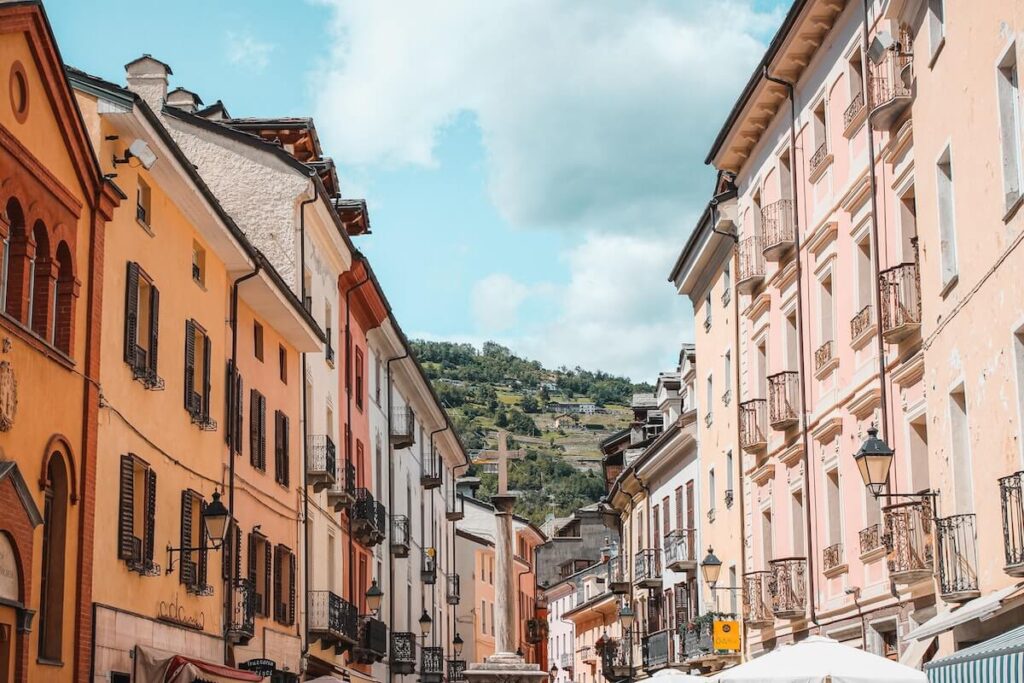
Featuring prehistoric archaeological sites and the ruins of a Roman theater as you can see at the top of the post, Aosta is one of the most underrated mountain towns in Italy.
It’s the capital of Val d’Aosta, but Courmayeur consistently overshadows it. The nearest peaks are along the Swiss border (which is approximately 20 miles northward), yet the city itself is peppered with parks and trails worth exploring.
If you’re time-pressed, you can stop in Aosta while headed for Courmayeur. Otherwise, visit the city on a day trip from Turin, which is an 80-minute drive away.
14. Scanno
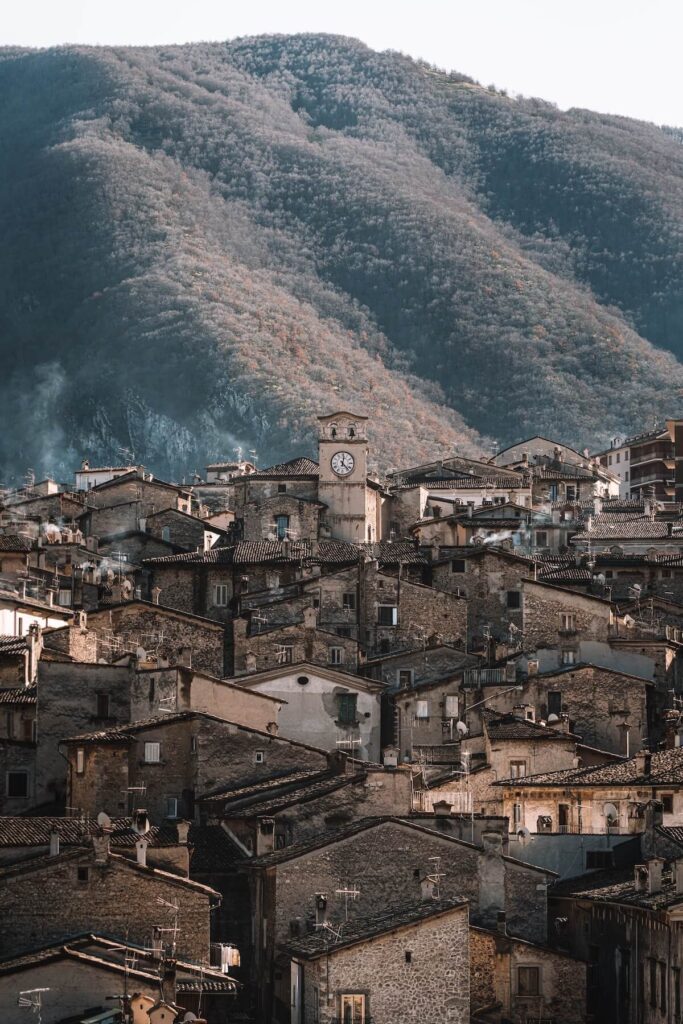
One of two entries in our list that are located in southern Italy, Scanno is 96 miles away from Rome, which means it can make an amazing weekend getaway when you visit the capital.
This hidden gem within Abruzzo National Park in the lush Apennines was settled in pre-Roman times and is made up of narrow streets and stone houses.
Apart from wandering through the suggestive historic core, here you can sink your teeth into authentic, wholesome food, browse the goldsmith shops, and hike all the way to the peaceful Lake Scanno.
15. Bagnoli Irpino
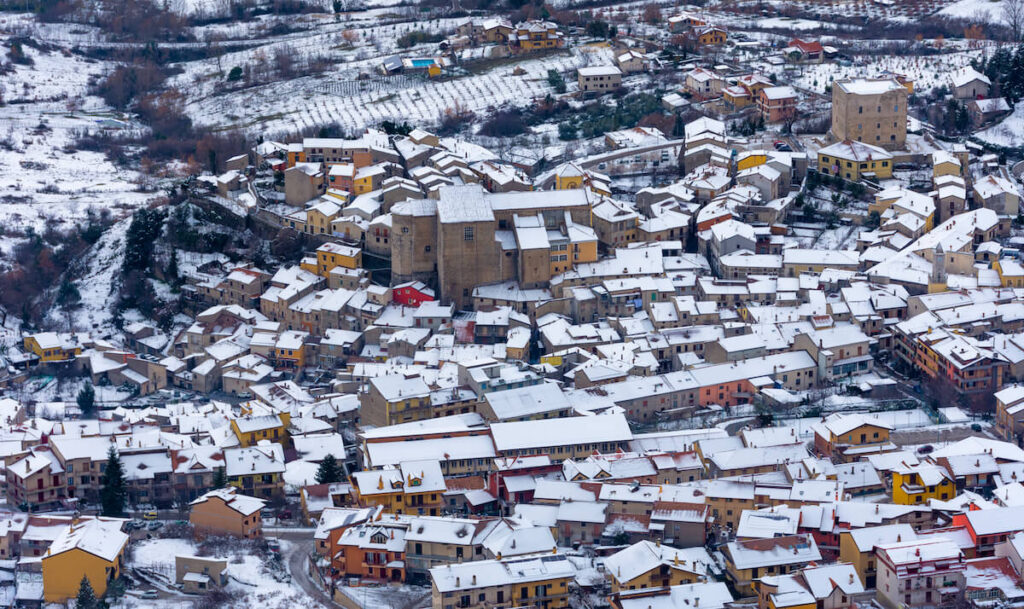
Inhabited since 1000 BCE, Bagnoli Irpino is a land of black truffles, Pecorino cheese, and chestnuts. Though filled with medieval landmarks, the town is better known for the 11 miles of ski slopes around the gorgeous Laceno Lake.
The tiny lakeside district is home to an amusement park and a handful of restaurants, but it’s less evocative than the town itself.
Bagnoli is nestled in the Piacentini range within the southern Apennines. Because it’s a mere 56 miles from Naples, it’s a top-notch destination for a weekend-long or a day trip from the birthplace of pizza.
Wrap-Up
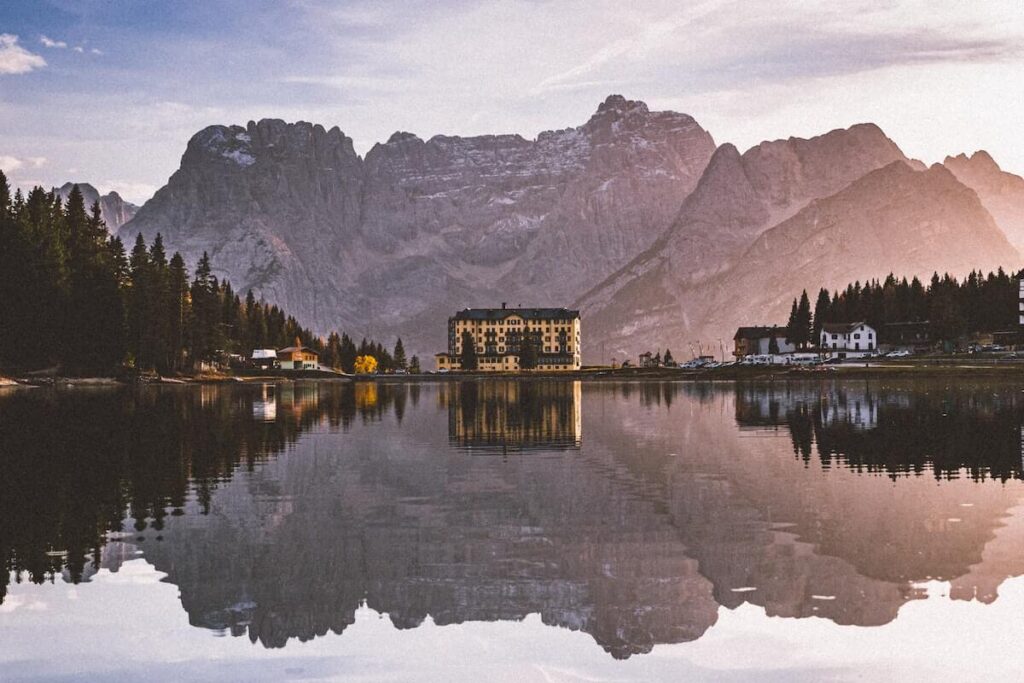
For the perfect Italian getaway, you can pick one of the mountain towns in Italy I’ve just listed, or even a few of them given many are so close to one another.
The Alps border Italy to the north, while the Apennines run along the entire center of the peninsula. That means you’ll have plenty of quaint little towns all over the country to discover whenever you feel like escaping the hustle and bustle of the major cities.