
“Why is Buenos Aires worth visiting?”, you may ask. That’s exactly what I’m here to show you today. The Argentinian capital boasts an incredibly multicolored cityscape with superb architectural value, besides an art scene that stands on an equal footing with that of the most exhilarating world cities.

On top of that, Buenos Aires gave us tango, mouthwatering cuisine, and one of the most riveting soccer traditions on Earth. So let’s get to discover it right away! For the sake of fairness, though, I’ll start off by giving you a bunch of reasons why the city might as well disappoint you.
Table of Contents
Why some travelers avoid Buenos Aires
Argentina’s politics and economy are mildly unstable.

Throughout the 20th century, Argentina went through a shocking six coups d’état. Luckily, its transition to democracy in the 1980s made it considerably more stable.
Yet a severe economic crisis that broke out as recently as the early 2000s made four presidents succeed one another in a matter of two weeks between December 2001 and January 2002.
From then on, the boom and bust cycles of the Argentinian economy have often puzzled foreigners and triggered massive protests in the capital.
The country has notoriously struggled with inflation, which has been on the rise for years and reached a bewildering 94,8% rate in 2022.
Having said that, I don’t think Argentina’s complex situation should impact your trip that much. Buenos Aires is anyhow one of the safest cities in Latin America and, as you’ll see below, it’s pretty affordable too.
It’s not as lavish as your favorite European cities.

Porteños, as Buenos Aires natives are called, take pride in the fact that their hometown is the most European-looking city in Latin America (and probably the whole Western Hemisphere).
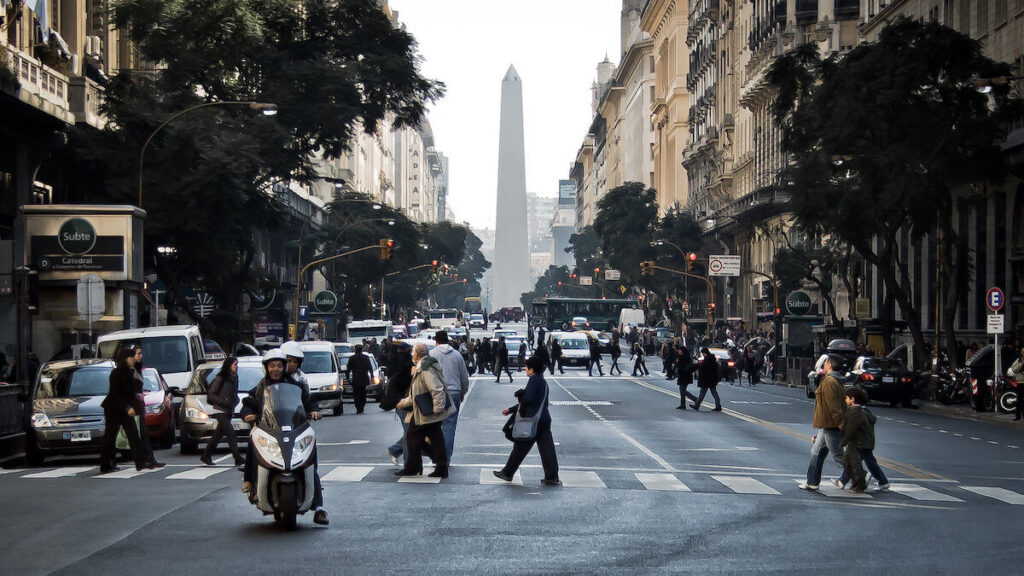
While its colonial heritage is naturally more modest, Buenos Aires does boast an impressive neoclassical and Beaux-Arts architecture that mirrors local rulers’ obsession with replicating the grandeur of Paris between the late 19th and early 20th centuries.
In the end, however, Buenos Aires didn’t come out as monumental as Paris, as unique as Rome, as overwhelming as London, or as crazy as Berlin.
It could as well be compared to Brussels, which owes a lot of its charm to simply doing its own thing. I view that as something that works in Buenos Aires’ favor, and I do think you should check it out for yourself.
When it’s summertime in the Northern Hemisphere, it’s wintertime there.
Because Argentina is located in the Southern Hemisphere, seasons are always opposite to those in the north of the planet.
That means June through September are actually the coldest months in the capital, whereas the warmest time of year goes from December through March.
Still, despite getting quite hot in the summer, the city features few options to cool off. Visiting Buenos Aires in the winter, in turn, can be a lot nicer.
Winters are really mild in the city, and snowfall is extremely rare: before the last blizzard in 2007, it had only snowed there in 1918. Alternatively, though a bit rainier, spring and fall are also great periods to discover Buenos Aires.
Why is Buenos Aires worth visiting?
1. It’s the birthplace of tango.
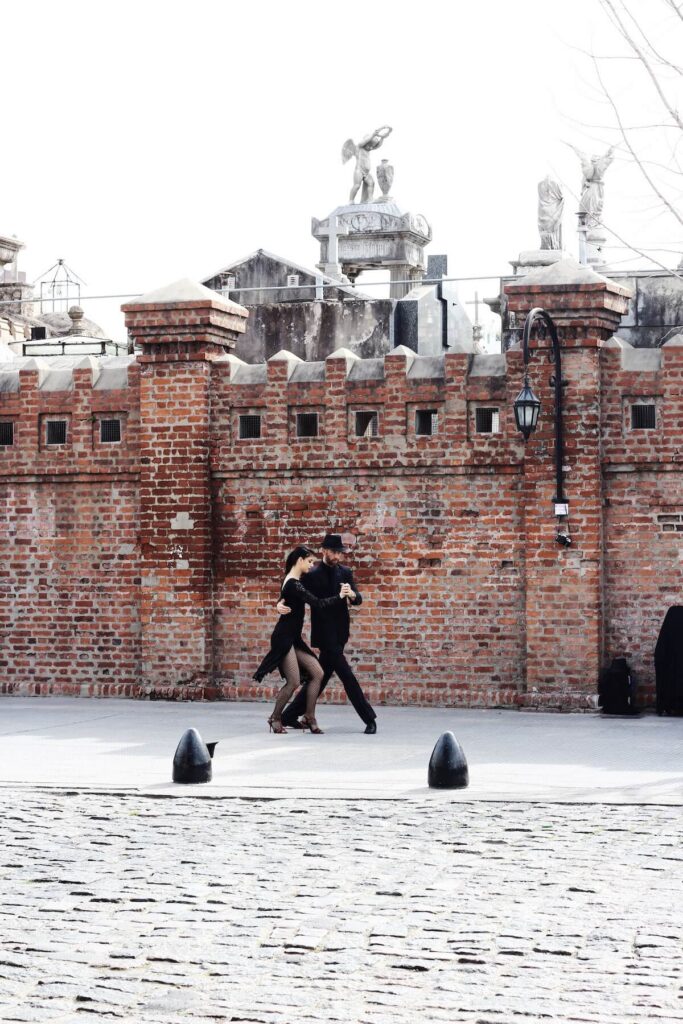
Tango was born in the brothels of Buenos Aires and Montevideo on the opposite shore of the Río de la Plata. It would be associated with “lowlifes” for decades until the mainstream slowly embraced it.
To this day, the genre and its sensual and intricate moves remain Buenos Aires and Argentina’s ultimate symbol.
Around Buenos Aires must-sees like the colorful Caminito and the Recoleta Cemetery, talented couples dance to tango for tips.
But if you wouldn’t mind indulging in a full-on feast for the eyes, hit hundred-year-old cabaret-style Café de los Angelitos or dedicated venues such as Piazzolla, where the elaborate performances are accompanied by breathtaking pyrotechnics.
2. It features the most stunning architecture in Latin America.

Buenos Aires is not known for a homogenous historic core like Quito or Machu Picchu or for a bold skyline like Santiago or Bogotá.
Yet its splendid and eclectic mix spanning three centuries is unrivaled on the continent. The city is in fact dotted with imposing buildings in styles ranging from neoclassical to turn-of-the-century, to Art Deco, to brutalist, to contemporary… You name it.
Even if that’s not your thing, you won’t fail to be amazed at the variety of shapes that created such an unusual cityscape.
Architecture buffs, on the other hand, will go insane in Buenos Aires. If that sounds like you, consider having a local show you around all the hidden gems on a tour of the city’s palaces.
3. You’ll be treated to tons of delectable food.

As a gigantic and cosmopolitan city, Buenos Aires is home to a wide range of options catering to healthy diets. But a trip to the capital is ultimately a comfort food lover’s wet dream.
I say that because Argentinian cuisine is notoriously decadent: their steak is the thickest, their pizza is the cheesiest, and their desserts are the sweetest.
Besides their world-famous steak, don’t miss out on cheese and onion empanadas, choripán (a local version of a hot dog with chimichurri sauce on top), and provoleta (provolone cheese dip).
As for desserts, savor the yummiest dulce de leche, or caramelized milk, in the region and alfajores, scrumptious chocolate-coated cookie sandwiches that are stuffed with dulce de leche.
4. The world-class art scene will win you over.
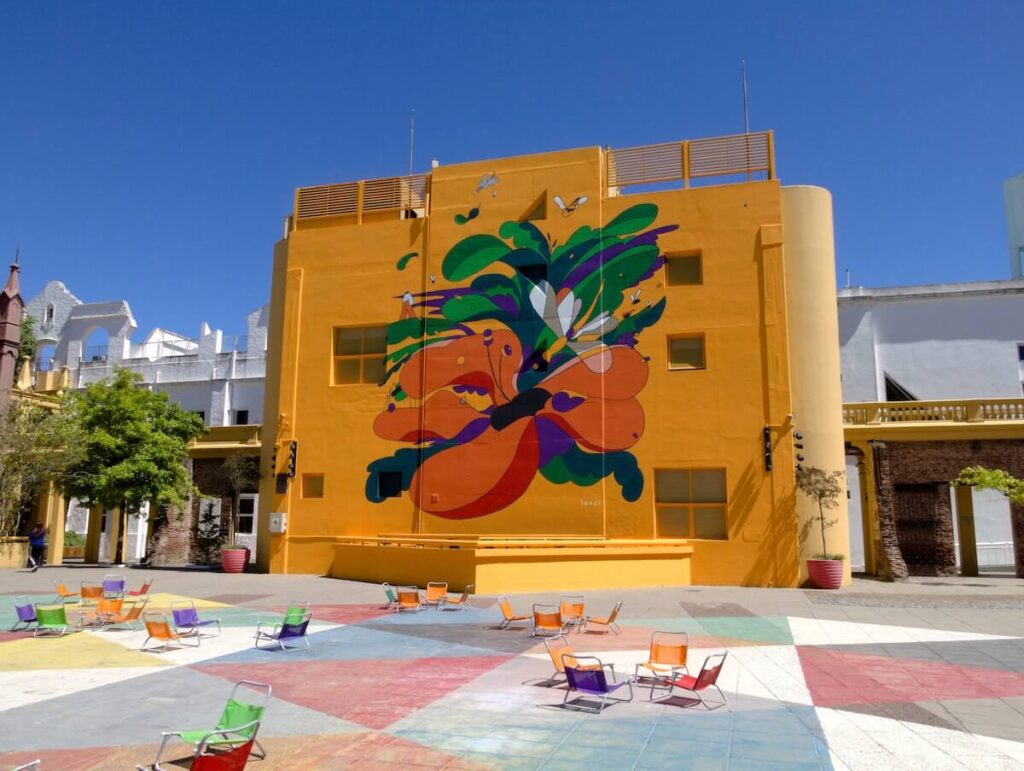
In the whole of Latin America, only Sao Paulo and Mexico City have an art scene as vibrant as Buenos Aires’. Peppered with art galleries and top-notch museums like the MALBA and the Fortabat Art Collection, the capital is jam-packed with dazzling street art as well.
Buenos Aires is also famed for the dozens of theaters lining Avenida Corrientes, the avenue that never sleeps, and for Teatro Colón, one of the most prestigious opera houses on Earth.
5. There’s so much color everywhere.

Buildings in Buenos Aires are predominantly off-white or grayish, which highlights the contrast between architecture and the multicolored murals that have taken over the city in recent decades.
One of the coolest activities in Buenos Aires, by the way, is a street art tour through trendy Palermo.
Then you have La Boca, where art was born out of necessity: poor workers who lived there in the early 20th century painted their simple houses bright and often clashing colors with leftover paint brought over to the port by sailors.
6. The nightlife is wild.

Clubs in Buenos Aires typically just get popping by 2 a.m., which can sound a bit too intense for a lot of folks. If you’re not down to stay up till sunrise, however, you can stick to pregaming and skip the game itself.
And Buenos Aires is indeed second-to-none in that realm. The area around Plaza Serrano in Palermo Soho, which hasn’t been named after New York’s legendary district for no reason, is the hottest spot in town.
But the waterfront, both in Puerto Madero and in the northern parts of the capital, is also restless all night through. For more chill vibes, head to the bars and tango venues in San Telmo and Villa Crespo instead.
7. The weather is for the most part perfect.

Buenos Aires is overall a sunny city and gets as much yearly sunshine as New York, Barcelona, and Sydney. On average, it never rains for more than 10 days in any month of the year, though summertime is normally far rainier than winter.
Thanks to its humid subtropical climate, the capital rarely gets too hot or cold; in fact, the median temperature for the year is 64℉.
8. The parks and plazas are beautiful and inviting.
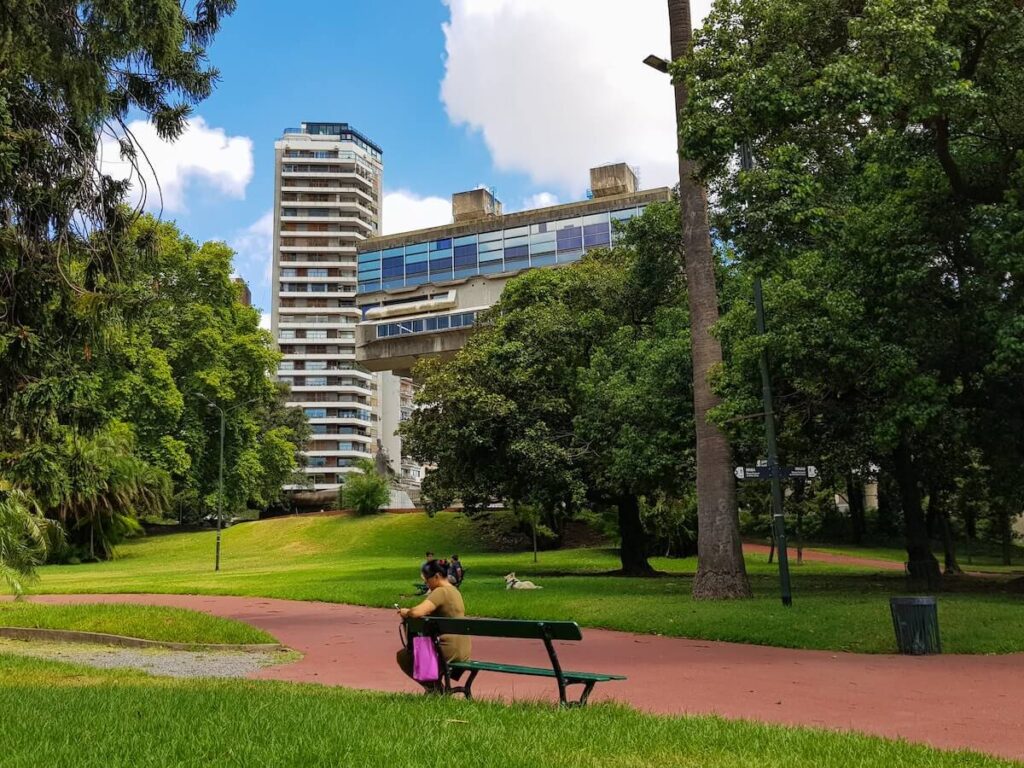
Downtown Buenos Aires lacks a park to call its own, yet it’s peppered with flawlessly landscaped plazas like the iconic Plaza de Mayo (where the Casa Rosada presidential palace stands), Plaza Lavalle in front of the stately Colón Theater, and the immense Plaza San Martín overlooking the Monumental Tower.
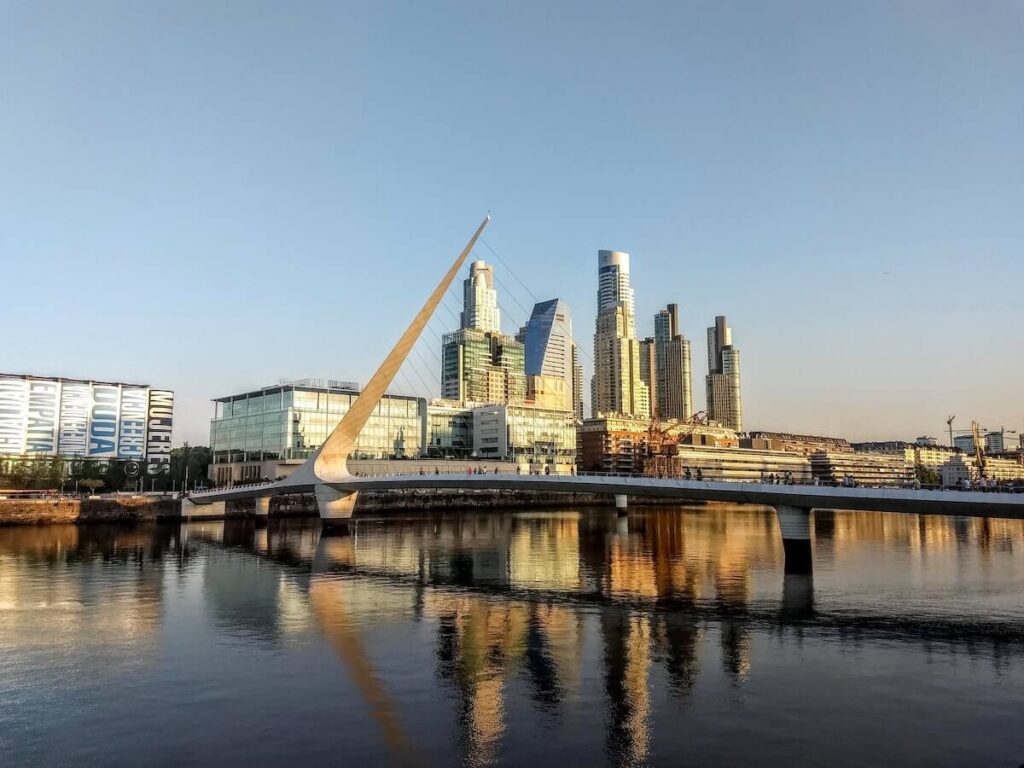
As you head toward the coast, however, you’ll find a row of plazas around the Recoleta Cemetery, and more importantly, the Costanera Sur Ecological Reserve in the state-of-the-art district of Puerto Madero, which features a relaxing wild beach.
Last but not least, you can’t miss the cluster of parks known as Bosques de Palermo. This is the go-to green area for Porteños, as it features a Japanese garden, a rose garden, the city’s zoo, a planetarium, and a botanic garden, as well as countless lawns and ample room for picnics.
9. Buenos Aires fits in your pocket.

As I mentioned earlier, inflation in Argentina is no joke: an individual sausage pizza from Guerrín, one of the city’s most traditional spots, rose from 250 pesos five years ago to 2,505 pesos today. Still, given the current exchange rate, that’s a little more than $12.
You’ll get excellent deals almost everywhere else — you can grab a six-alfajor box for less than $10 or book a fully equipped, four-star B&B like Gorriti Palace for $80 a night. What’s more, a subway ticket will cost you an astonishing $0.30.
10. Getting around is a no-brainer.

The Argentinian capital is served by six subway lines which, despite extending for approximately 44 miles of tracks, cover the bulk of the areas you’ll be interested in visiting in a comprehensive and efficient way.
Cabs are all over the place too, and ride-hailing apps like Uber and Cabify are reliable and affordable (a 15-minute trip from Recoleta to Plaza de Mayo will cost less than six bucks).
Since Buenos Aires is virtually flat, it’s also extremely walkable and bike-friendly, which makes strolling or cycling around its wide avenues and quieter side streets an even more pleasant experience.
11. Locals are passionate and fun.

And I don’t mean passionate about soccer only, though that’s definitely the source of a great deal of the vital energy of Porteños.
Buenos Aires natives can be as assertive and opinionated as Italians — from whom half of them actually descend — but have that lovely flair Latin Americans are known to display.
While I wouldn’t say they’re the friendliest people on Earth, Porteños are certainly among the most interesting and exciting.
12. Soccer is always an intense spectacle.

Besides Pope Francis’s tiny San Lorenzo, Buenos Aires is the home ground of the two most legendary Argentinian soccer teams, La Boca and River Plate.
When the two face off, the capital and the country stop to watch. At the stadium, supporters chant relentlessly, turning the whole thing into a contagious ritual where fans and players seem to become a single entity.
Interestingly, Argentinians are so superstitious about soccer they’ve come up with a tradition called cábala (from the Jewish Kabbalah): whenever their team wins, they have to recreate the same setting for the following match, sometimes going as far as not washing their jersey.
Final thoughts
I hope by now you have no other answer but “absolutely!” to the question “is Buenos Aires worth visiting?”. I’ve been lucky to visit the birthplace of tango a couple of times; it immediately won me over and became one of my favorite cities on the whole planet.
Buenos Aires is famous for the humongous steaks and juicy empanadas that are served at its restaurants and cafes, for a hectic art and culture scene, and for a gorgeous and functional cityscape. With so many strong points, it’s almost impossible to not want to book your tickets asap!