
To the delight of Greek people, Gordon Ramsay once said that Greek cuisine is better than Italian cuisine. While I may be biased, I agree entirely.
But I think it is more than the actual food that makes Greek cuisine stand out. It is the idiosyncrasies of the country’s food culture that make it one of the best in the world.
Greek food culture is all about celebrating fresh ingredients, sharing dishes, and enjoyment of life. Here are some of the things that make Greek food culture so special.
Table of Contents
1. Food delivery is extremely popular.

Uber Eats does not exist in Greece and the country was slow to hop on the food delivery app train. But when it did, it did so with a vengeance. Getting food delivered is incredibly popular in Greece.
The biggest food delivery app in the country is called e-food and you will see its characteristic red logo on motorbikes everywhere.
It could be argued that Greeks have embraced the convenience of food delivery to an embarrassing extent. They do not just use the apps to get food from restaurants that are not in their vicinity. They even use them to get a single cup of coffee from their local cafe around the corner! It’s definitely a blessing and a curse at the same time.
2. Coffee culture is big.

Coffee is very important to Greek people. Drinking it is about a lot more than a caffeine dose to wake you up in the morning. It’s an integral part of Greek life and brings people together.
Foreigners always seem to be surprised by the number of people in coffee shops at all hours of the day: don’t they have jobs? The truth is meeting for a coffee is the number one way to socialize in Greece.
Modern coffee shops put a lot of effort into decor. They create inviting spaces where people can hang out in a cheap and accessible way.
3. Bakeries are the best.

There is nothing better than a Greek bakery, called “fournos” in Greek. Wherever you are in the country, you are never far from one.
Some are small hole-in-the-wall shops that only sell basic goods like bread and cheese pies. Others are big trendy establishments where the staff all wear modern aprons and sell a huge variety of pies, cakes, tarts, and more.
The quality and variety of baked goods in Greece are unparalleled. They are the best places for a fast, cheap, and filling breakfast or lunch!
4. Grans prepare “taperakia” like it’s their full-time job.

In Greece, any plastic container that holds food is referred to as “taperaki”, which comes from the word “Tupperware”. And if you go to lunch or dinner at any Greek home, chances are you will be leaving with one.
Greek mothers and grandmothers are known for cooking massive amounts of food. There are always leftovers. And these are put in taperakia and divided among the entire family. Students in Greece basically live off them.
If you are given a taperaki, etiquette suggests that you return it with a different food in it. That way you will be proudly contributing to what essentially is a never-ending cycle of traveling Tupperware!
5. Greek salad is not a main meal.

A surefire way to identify yourself as a foreigner in Greece is to order a Greek salad as a main meal.
A Greek salad is called “horiatiki” in Greek, which translates to “village” salad. It is a very popular dish that can be found on almost every dinner table, but it is there to be shared. Even though in other countries it is typical to order a salad, such as a Caesar, as a main at a restaurant, this is not the done thing in Greece.
And, while we are on the subject, it should also be pointed out that an authentic Greek salad will never contain lettuce!
6. Ladera is a category of delicious olive oil-based dishes.

Olive oil is the foundation of the Mediterranean diet. In Greece, there is a whole category of foods defined by it. It is known as “ladera”, which means “in oil”.
The category encompasses a variety of recipes, but mainly vegetable dishes cooked in tomato sauce with onion, garlic, and lots of olive oil. They can be stewed or baked in the oven.
Some classic ladera foods include gemista (stuffed tomatoes and peppers), fasolakia (green beans), and papoutsakia (eggplants filled with meat and bechamel sauce).
7. Meal times are late.
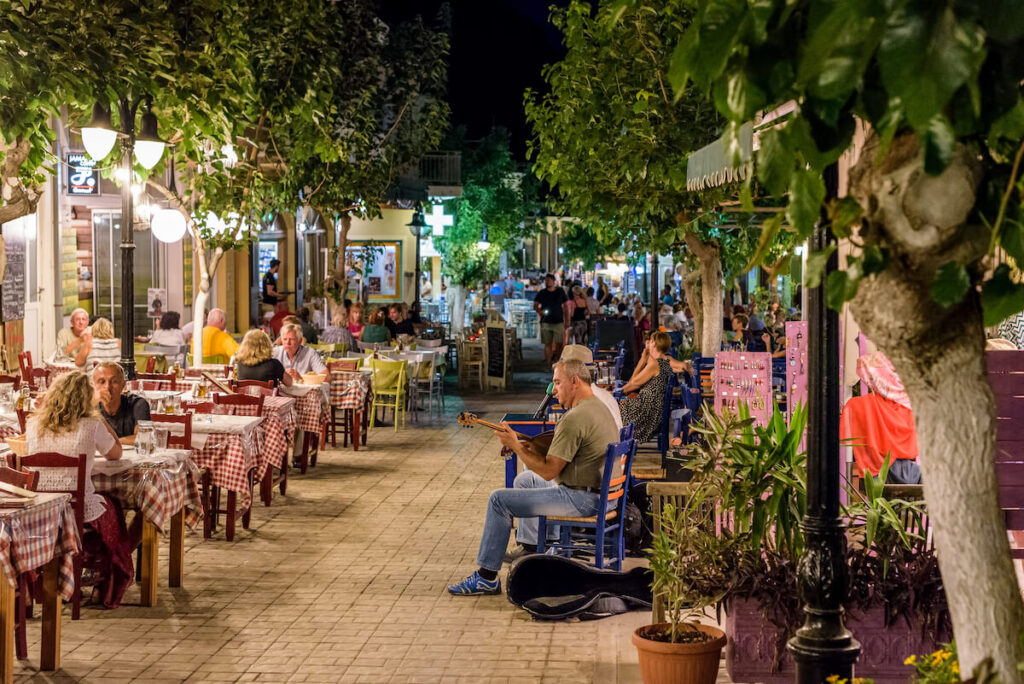
Greek people eat late.
Breakfast is not a big thing in Greece. Most Greeks will only grab a small snack with their coffee and then have small snacks throughout the day. People in Greece tend to reserve lunch for after finishing work. This means it could be as late as 5 pm!
For this reason, dinner is also pushed back. It is quite common to have dinner around 9 pm or even later. Many foreigners are surprised by this, but it could largely be explained by the hot climate. When it’s sweltering outside, a big meal is not that appetizing!
8. Sharing is the norm at tavernas.

If you sit down to eat at a tavern in Greece, forget about your typical one starter and one main per person.
The norm is to order many different dishes “for the middle”. This can include a Greek salad, tzatziki dip, fried zucchini, saganaki cheese, calamari, and more.
Heartier dishes, like moussaka or a steak, are considered main courses, which are served after you are done picking at your shared appetizers. The great advantage of this type of shared meal is that it allows you to try almost everything on a tavern’s menu!
9. Koulouri is the perfect on-the-go breakfast.

Even though Greeks are not big on breakfast, it is not uncommon to grab a koulouri with your coffee if you’re hungry.
Sometimes referred to as “koulouria Thessalonikis”, because they originated in the city of Thessaloniki, these are bread rings that are crisp on the outside and soft on the inside.
A classic koulouri only contains sesame seeds, but you can find many variations of them these days, such as Philadelphia-stuffed ones. You will see them sold on the streets or in bakeries. At 50 cents a pop for a basic one, they are the ultimate Greek breakfast.
10. Tipping isn’t mandatory.

You don’t have to leave a tip when dining out in Greece. While tips are, of course, appreciated, they are not mandatory or expected.
Greek waiting staff receive a liveable wage and do not rely on tips for their income. Having said that, salaries are relatively low in Greece, which can make it challenging to get by in the current global cost of living crisis. This means that leaving a tip could make a significant difference in someone’s life.
If you receive outstanding service, consider rounding up when you pay. But there will not be any hard feelings if you don’t, especially if you’re only ordering a coffee or a small meal.
11. Mezedes and ouzo go hand in hand.

Mezedes are small Greek dishes that are the equivalent of Spanish tapas or Italian antipasti. They include delicacies such as marinated anchovies, cheeses, olives, and a variety of dips. They are served as accompaniments for local spirits, such as ouzo, tsipouro, and raki, so that you don’t drink on an empty stomach.
Having a drink with some mezedes is a big part of Greek culture and a popular way to socialize.
The city of Volos is actually famous for its tsipouro and mezedes scene. There, you don’t choose your mezedes, but rather, they are chosen for you. With every round of tsipouro you order, the mezedes get better.
12. Souvlaki is the ultimate street food.

Everybody’s heard of souvlaki. There is no denying it is the most popular street food in Greece. But there are a lot of misconceptions about it. Before you go to Greece and order yours, there are two things you need to know.
Firstly, souvlaki is not synonymous with gyros. Gyros is meat cooked on a vertical rotisserie that is used to fill pita bread. Secondly, even within Greece, there are semantic differences about souvlaki. In Thessaloniki, souvlaki means a meat skewer. In Athens, a skewer is referred to as “kalamaki” and souvlaki is taken to mean a pita wrap filled with meat and other ingredients.
To be 100% clear, if you want a pita wrap souvlaki, add the word “pita” to your order no matter where you are!
13. Don’t bother ordering dessert at tavernas.

Greek taverns are not known for their dessert offerings. They may list a couple of basic desserts on the menu, but it is extremely rare that anybody orders these.
The unspoken rule is that, whether you want dessert or not, you will get some. After you have finished your meal and before they bring the bill to you, a complimentary dessert will land on your table. This is either yogurt with honey, a plate of fruits, or some traditional cake.
Don’t be surprised and don’t protest against it: it is the establishment’s way of saying “thank you”.
14. Greece boasts a wide variety of eating establishments.

Tavernas are the quintessential Greek eatery, but they are far from the only type you can find in the country.
You can expect different menus, settings, and etiquette from different types of establishments. For example, in Greece, you can also eat in cafes, bistros, and restaurants in Greece that are much more similar to your average modern European establishment. You can also eat at mezedopoleia, which only serve small mezedes, and mageireia, which offer only one or two dishes of the day in a very informal setting.
Greece truly has something for everyone when it comes to food.
15. Easter is a big food holiday.

Easter is bigger than Christmas in Greece and a big reason for that is the food. Greeks don’t have a specific meal, like turkey, that they eat on Christmas day. Most Greek families improvise and have their own Christmas traditions.
But Easter is a different story. The majority of Greeks look forward to Easter because they get to have a massive outdoor celebration with their family, roasting an entire lamb on a spit. They follow this meal up with a sweet brioche-like bread called “tsoureki”.
It is always safe to assume that Easter leftovers will last for at least a week!
16. Freshness is king.

Greek food is simple. The country’s cuisine does not use heavy sauces and overpowering spices. It is not uncommon to have some grilled meat or fish served with only a slice of lemon on the side.
But you shouldn’t underestimate Greek cuisine because of that. Greek food is all about fresh, seasonal ingredients.
Greek people believe that quality ingredients shine on their own and do not need anything to mask their flavors.
17. Unless you want house wine, ask for the wine list.

Greece produces some fantastic wines, but you wouldn’t know that by going to your average tavern.
The menus typically list the prices for one-quarter kilo, half a kilo, and kilo carafes of house red, white, or rose wine. These are great value for money and perfectly palatable, allowing the flavors of your food to stand out.
But if you’re a wine aficionado, try asking for a wine list. Many tavernas have wine menus that they do not proactively offer to customers. On them, you will be able to find gems from regions like the Peloponnese, Epirus, and the Greek islands.
18. Picking your own fish is a sign of a good taverna.

Sometimes when you order fish at a Greek taverna, you will be asked to follow the waiter inside. Don’t let this throw you off: it’s actually the sign of a good establishment.
They are asking you to go inside to pick your own fish. It can be hard to determine if a fish will be big enough for you just by the weight listed on the menu.
When you actually see the fish with your own eyes, not only are you making sure you’re getting the right size of fish but you also get to check if it’s fresh.
19. Free water is ubiquitous.
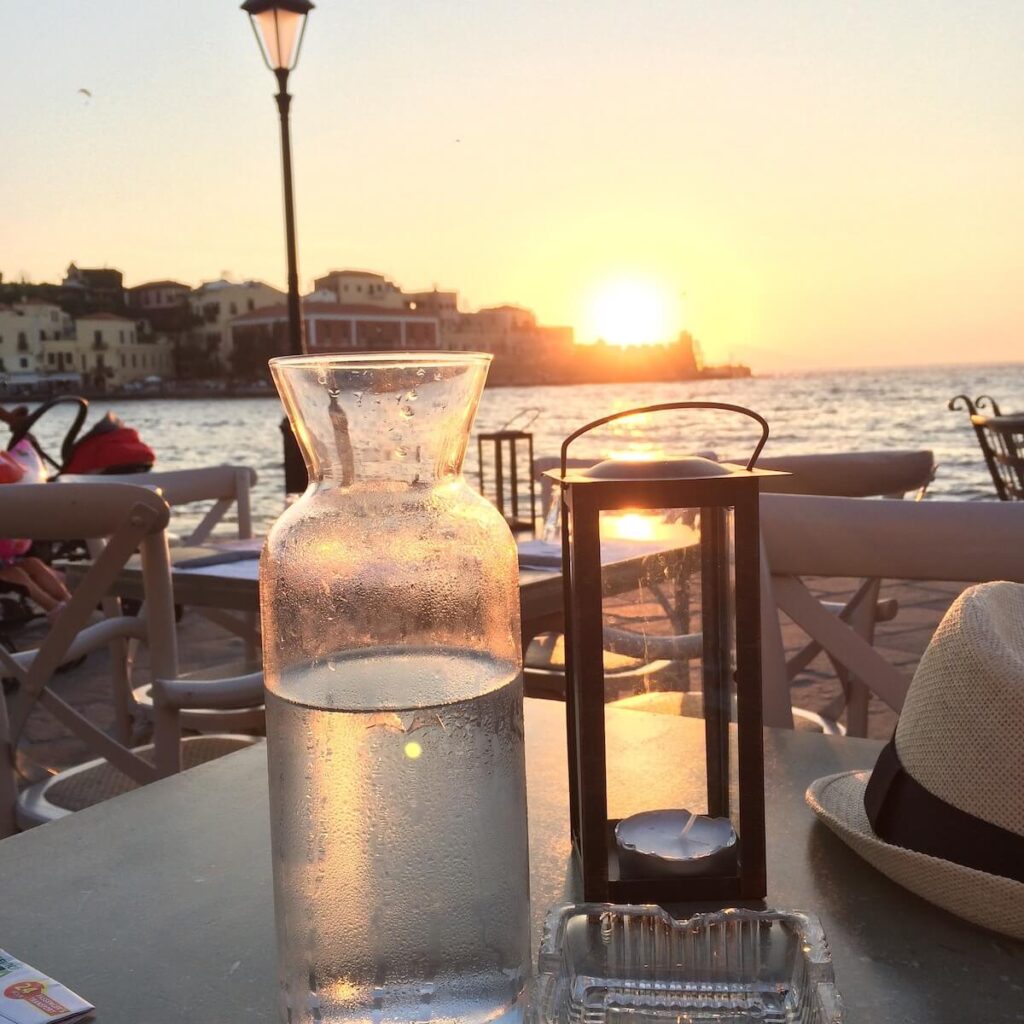
A common question I have received from friends from abroad visiting Greece for the first time is about water.
When you sit down at a cafe or restaurant, a carafe or bottle of water is automatically placed on your table along with the menu. Foreigners always seem surprised, asking “Is it free?”.
The answer is yes, it’s free and it’s a common way of being welcomed to an establishment. In a country as hot as Greece, it is considered common decency to offer water for free to customers.
20. Thessaloniki is a foodie’s paradise.

Athens is the capital of Greece and you will have no problem finding any type of food your heart desires there. However, real foodies will know that it is actually Thessaloniki that is considered the food capital of the country.
The city is responsible for producing many celebrated Greek foods like bougatsa, koulouri and trigona Panoramatos and its restaurant scene is booming.
With many Turkish and Jewish influences, the food in Thessaloniki boasts a unique amalgamation of flavors that makes for unforgettable gastronomic experiences.
21. If it’s your birthday, you’re buying.

In most places in the world, when you are celebrating your birthday, you are bought drinks and food by your friends. In Greece, the opposite happens.
On your birthday or name day, it is customary for you to be the one buying the food and drinks. Even though it sounds unorthodox, it makes sense if you think about it.
After all, you only celebrate your birthday once a year… but you get to be invited to many celebrations throughout the year where you don’t have to spend a penny!
Wrapping up
When you travel to Greece, chances are the food there will be one of the best parts of your holiday. And now you know exactly how to navigate the country’s food scene and what to look out for! And if you ever want to know more, you can also read this list of facts about Greek food.
I wish you bon appetit or, as we say in Greece, kali orexi!