
Germany has a rich history dating back over a millennium, so it’s no wonder that the country’s culinary culture is rich and complex. In part due to its historically strong economy and international presence, German recipes have been widely exported globally.

I firmly believe that to really get to know the culture of a country, understanding its cuisine is one of the best things you can do. That is what this article is meant for!
We will not just go over the history of the German kitchen, but also cover aspects such as table manners, current trends, and different popular styles.
Sounds exciting? Then read on and let’s explore together!
Table of Contents
The basics of German cuisine and its traditions
Germany spent centuries until 1871 existing as a rough patch of countless city-states, duchies, and smaller kingdoms. While they interacted with each other a lot, they were still culturally and in many other ways separate entities.
This means that quintessentially German food culture is somewhat hard to pin down. From region to region and even from town to town, different traditions evolved. It is only fairly recently that an attempt has been made to somewhat unify these under the banner of a national German cuisine.
Keep this in mind as we take a look at some of the most basic things to know about the German way of cooking and enjoying food!
1. Main courses are hearty and all about strength

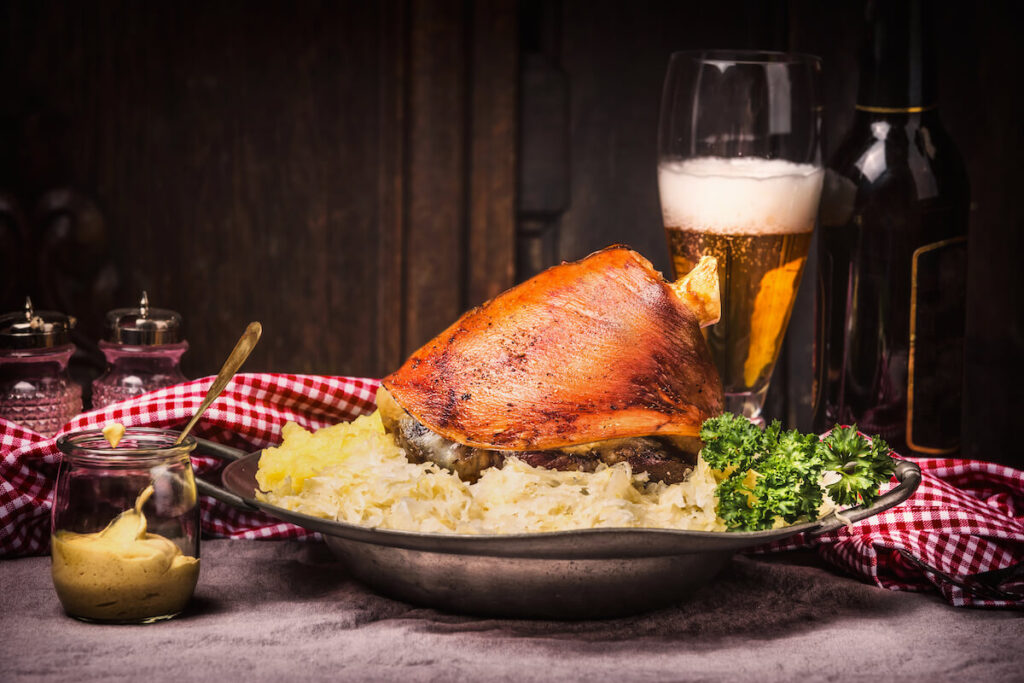
There’s a stereotype of Germans going crazy about sausages, and while that’s overblown, there is a kernel of truth to it. The traditional German lunch and dinner are very heavy in red meat, especially pork and beef.
Typical examples include different kinds of livers, Schnitzel (cutlets), filets, steak, and of course, literal hundreds of species of sausage. For the most part, German meat tends to be roasted or pan-fried, though exceptions exist for certain dishes.
Even besides the meat, you will find that the bigger meals of the day in Germany are very heavy in protein and fat — a stark difference even compared to some neighboring countries!
2. Lunch reigns supreme
In many cultures, breakfast is considered the main meal of the day, and in others, dinner is the largest and most culturally important.
However, in (most of) Germany, it is lunch that takes the reigns. Usually served around noon, lunchtime was traditionally the only time where more than two courses are commonplace.
I say “was” as modern working habits in much of today’s urbanized Germany have very much changed these patterns. Many families have switched to the ‘American’ model of bigger family dinners instead to compensate for the 9-5 lifestyle.
Still, in many places you will still see the kind of cultural emphasis that Germans place on a filling, hearty mid-day meal!
3. Breakfast takes the back seat

In line with the traditional heavy emphasis on lunch as the most important meal of the day, German breakfasts are usually more snack-like than in many other cultures.
Staples include various forms of bread, referred to by an array of German names. Brötchen are the most basic kind, a style of often home-baked bun that is often filled with fresh meat, cheese, and sometimes vegetables in the style of a sandwich.
Depending on the region of Germany, you may also find Semmel and other specific types of baked goods often served early in the day. The bread is usually either dressed up as a sandwich like I just described or spread with Konfitüre (a kind of marmalade) and/or eggs.
It’s not unusual to have a cup of tea or coffee with your morning meal as well, but it usually doesn’t go too far beyond that. In other words, simplicity is key!
4. Tea time is not just for the British

It’s not unusual at all in Germany to reserve some time in the afternoon for a little hot beverage break, often with a few sweets or other delicacies on the side.
Traditionally, this is simply called Kaffee or Kaffee und Kuchen, coffee and cake.
It doesn’t really count as a daily meal and it’s not a routine anymore for many Germans, but it’s not uncommon either. Interestingly enough, there is no strong leaning in German culture today in favor of either tea or coffee — it’s mostly considered a personal preference. How refreshing!
5. Abendessen is where the vitamins come in

With breakfast being a relatively minor feature of the German diet and lunch being so traditionally full of heavy calories, what room does that leave for all those healthy greens? That’s precisely what the German dinner is all about.
For Abendessen, (also called Abendbrot, evening bread, in some places), Germans typically have salads, stews, and hot soups. The most common veggies in the German kitchen are turnips, onions (often fried and added to almost any main course), cabbage, asparagus, and kale.
Of course, it’s also pretty normal to add some leftovers from lunch to the evening meal, especially if it’s consumed in the style of a large family dinner as is increasingly common nowadays.
Compared with what you’re used to, German dinners might also come a bit early: the usual time frame is around 6 or 7 in the afternoon.
German staples and traditions
The landscape of German recipes is ever-evolving and, compared to culinary stalwarts like nearby Italy, relatively young overall. This means that there is a lot of experimentation and many areas and regions where dishes that some would consider “classics” haven’t quite caught on yet.
The following is a nice selection of some of the most widely served staple foods throughout Germany, as well as some general rules that almost any German kitchen will follow to some extent.
6. Potatoes are special

If you’ve been to Germany or had a certain amount of German meals before, you might be wondering why the potatoes were left out above when I was talking about the most commonly used veggies in German cooking.
The answer is that Germans like to differ with the rest of the world about the status of potatoes as vegetables. In fact, many German cookbooks still refer to potatoes as an entire category separate from both vegetables, fruits, meats, and seafood!
Why is anyone’s guess, but what it means in practice is that potato-based recipes are super-widespread, though they’re usually seen either as standalone dishes or as side meals. It’s not really common or expected to add boiled potato dumplings to your evening salad, for example.
7. Bread is the most common side dish

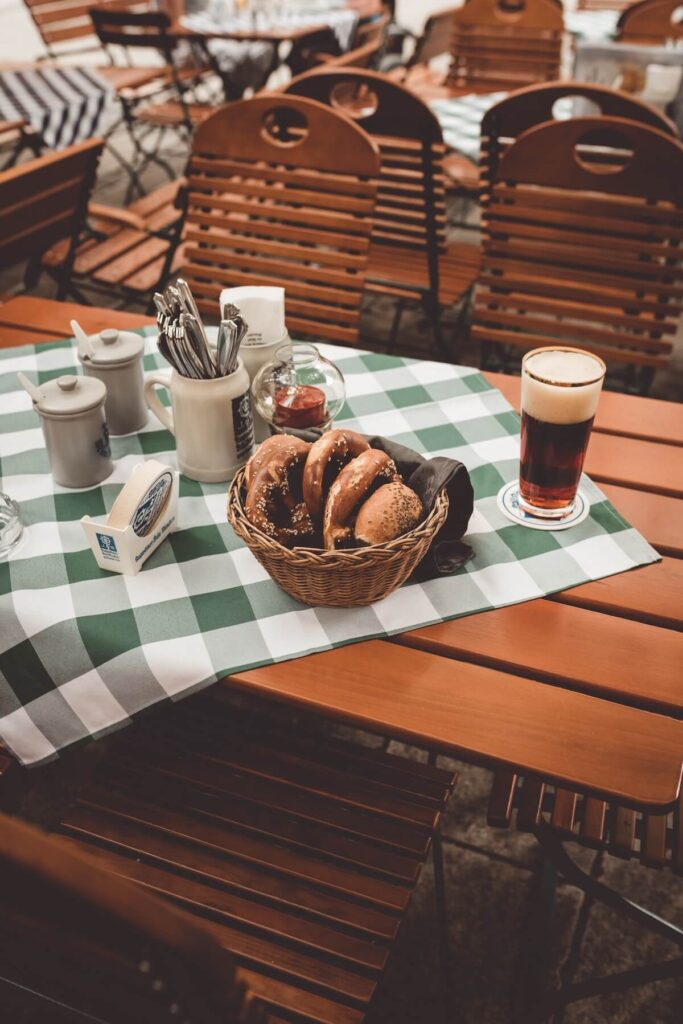
For practically any meal, Germans will have a plate or basket of fresh bread on the side. This can be plain white, whole-grain, or something more refined such as Schwarzroggenbrot (very dark, almost black rye-based bread).
The bread helps in digestion, which is particularly useful for those big lunches. In restaurants, the bread on the side is usually added free of charge as a courtesy instead of a “proper” side meal, similar to how it works in France.
8. Beer all year
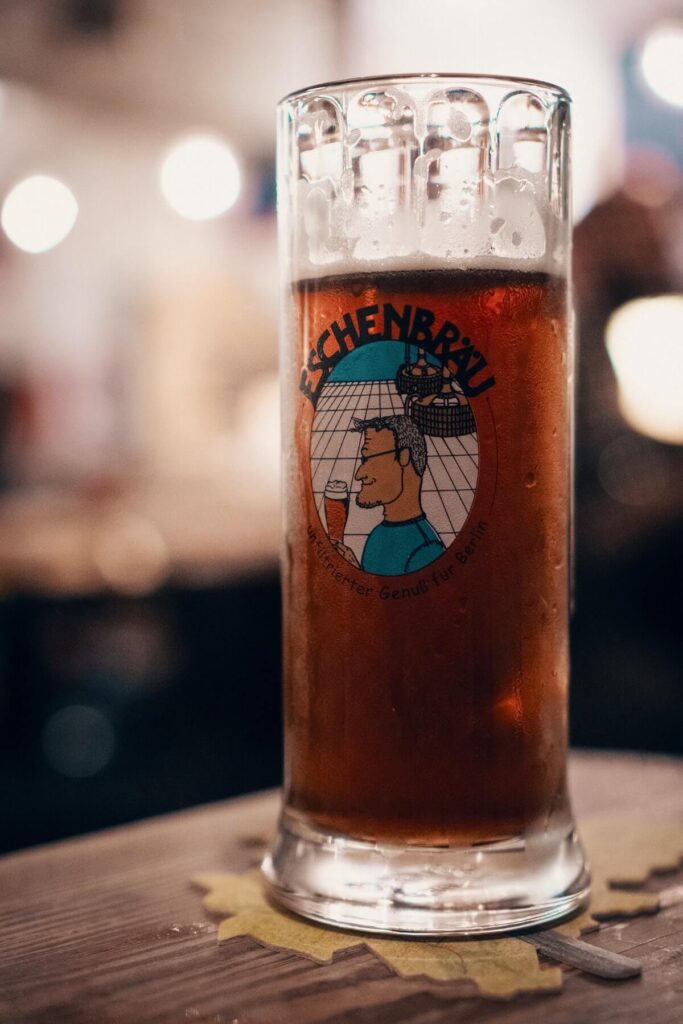
There certainly is a very strong association between Germans and beer thanks to Oktoberfest. However, what’s a bit less talked about is that most Germans, even those who don’t attend the annual Bavarian festival, do consume a lot of beer year-round.
Like in neighboring France, Italy, and most of the Mediterranean, alcohol is more commonly reserved for the later hours of the day, but it’s not terribly unusual to have a glass for lunch, either. Especially if it’s beer.
As with potatoes, beer has become such a big staple in Germany that it’s treated very differently from other kinds of alcohol.
The law also reflects that! German teenagers can legally drink beer starting at age 15, even earlier under the oversight of their parental guardians. But for almost all other alcoholic beverages, they need to wait until their 18th birthday.
9. For meat, roasting is king

There are many ways to serve German meat, and countless recipes to choose from. However, the most popular ones, such as pork chops, Rouladen (beef rolls), Schnitzel, and of course, Bratwurst are all usually roasted.
Barbecues are also a very common feature of German culinary culture, and as much a meal as they are a social activity, often proposed for housewarming parties and get-togethers of all kinds.
10. Would you like a few Klöschen with that?

Though fries have become a more common alternative of late (you can thank McDonaldization for that), the traditional universal side meal in Germany are Klöschen, a kind of boiled potato dumpling.
In the south, especially in Bavaria, Spätzle are a common substitute. Made from egg-based dough, they are also often prepared as a main course of their own, dressed with herbs, sauces, and a vegetable salad or fresh meat.
Dining rules and table manners in Germany
Like any other country, Germany is full of culinary traditions and informal rules regarding table manners and cooking. Sometimes, these can be a bit confusing to foreigners, especially as they are rarely explained out loud. Let’s fix that!
11. Not all sausages are equal

Sure, sausage is a staple in German culture, and you will find it on nearly any social occasion where food is involved. However, a common mistake is to assume that sausages are, well, interchangeable.
The truth is that there are a lot of hidden rules about which kind of sausage should be served in which kind of context. Bavarians famously insist that the Weißwurst, with its distinctive near-white meat, should only be had for breakfast.
Currywurst, a relatively modern invention combining a classic Bratwurst with a spicy sauce dressing, is almost exclusively served as street food or in snack bars. That might sound strange at first given its status as a real German delicacy, but it’s true!
12. Remember to toast

Germans like to have a drink with larger, communal meals, especially in the afternoon. So if you’re ever invited to an occasion like that, chances are you will be offered a glass of beer or wine.
In that context, it’s important to remember to toast everyone at the table. Yes, even if there are 20 people or more seated. Germans take toasting quite seriously – they basically expect it as a matter of course.
Not toasting any of the other guests, even if some contortionist skill is necessary to do so, is considered quite rude. A proper German toast is thankfully pretty simple though — a clink of the glass, a loud ‘Prost’, and a moment of eye contact is all that’s expected.
13. Schnapps, the German-style digestif

In Italy and in France, you open a major meal with an aperitivo or apéritif, usually a light non-alcoholic drink or a cocktail, have a few courses of wine throughout, and finish it off with a digestivo or digéstif, a stronger drink that soothes the palate and the stomach and aids in digestion.
In Germany, this works a bit differently, though the cultural relationship between the three countries is still apparent. The aperitivo doesn’t really exist here, and as I went over above, beer is the majority preference over wine in most cases.
However, Germany does have its own version of a digestivo, where after a large lunch or dinner, guests are often served a second round of drinks. The classic choice for this occasion is Schnapps, a traditional German sort of hard herbal liquor.
If you know Jägermeister, you are already familiar with one very popular kind of Schnapps.
Schnapps is usually served in its own style of small shot glasses. It’s considered a courtesy, so don’t be surprised if saying Nein, danke turns out more difficult than expected.
In many German regions, Schnapps is not just used as a digestive drink, but also as a folk medicine of sorts. Because of its high alcohol content and herbal flavor, it’s often recommended for stomach aches, indigestion, and many other common ailments.
14. Mind German use of cutlery

Germans hardly ever eat with their fingers unless it’s take-out or street food. Forks and knives are basically guaranteed, and unlike other cultures where it’s more flexible, the fork is always held in the left and the knife in the right hand in Germany.
Also, remember the rules about hand placement. In many countries, having your elbows on the table is considered rude, and the same is true in Germany.
However, it is also not polite to leave your right hand free and on your lap — you’re supposed to be using your cutlery with both hands basically at all times except while drinking.
A corollary of this is that it is also thought of as improper to cut your food up into smaller slices or chunks right at the beginning of the meal. Only cut just the portion you are about to eat at the moment, using a fork and knife in tandem.
15. German restaurant culture and rules

If you’re dining out at a restaurant, there are a few quirks to consider.
First of all, it is very unlikely that you will be served complimentary water with your meal. You can generally still ask for water, but expect the restaurant to charge you a small amount for it.
In many places these days, there might even be a charge for the traditionally “complimentary” bread basket.
Secondly, many restaurants in Germany remain cash-only. This has slightly changed due to COVID-19, but especially at more upscale locations and further away from the big cities it still holds true.
At a German restaurant, holding a conversation past a certain level of volume is considered rude. If the people at the table opposite to you can hear you, you’re being too loud (it should be easy to notice, as they are likely to let you know with gestures).
16. Tip with discretion

In Germany, tipping is alive and well, though not nearly as commonplace nor as expected as in the United States for instance. In general, most people just tip by rounding up to the next biggest number on their bill.
More than that is optional and remarks exceptional service. Note that you generally don’t tip by leaving cash inside the little booklet the waiter hands you with the bill — I have made that mistake a few times too many myself!
Instead, the waiter will stay by your table for a moment as you prepare to pay. This is where you declare how much you’re tipping. They will give you back the change on the spot before you leave.
The German food culture trends of today
We learned a lot about what Germans typically eat and how the social aspect of dining usually plays out. But what about the biggest trends of today’s German eating culture — what kinds of places are most popular, which are the latest trends, and what’s ordering take-out like?
Read on below to find out!
17. Food delivery is a hit

Even before the pandemic, having your groceries delivered to your doorstep has been a really popular choice among many Germans, urban and suburban residents alike.
That’s not surprising, considering that delivery is usually very affordable and, befitting the German stereotypes, exceptionally punctual.
While the usual delivery services like Wolt and UberEats are present, there is also a uniquely German brand known as Lieferando. It’s currently ranking as the most popular, eclipsing even some supermarket chains in popularity in many areas!
Plenty of Germans also enjoy food delivery that offers customized recipes and meal plans, like HelloFresh.
18. Learn to distinguish between a bar and a Kneipe

Bars and pubs are popular hangout spots in Germany, just like in most of Europe.
However, Germany also features its own spin on the formula in the form of the Kneipe, a style of old-fashioned bar that mainly serves liquors and beer. Often, these will be a mix of local favorites, bigger national brands, and maybe even a few “specials” brewed by the Kneipe themselves.
At a Kneipe, seating is more communal than at other kinds of bars. It is perfectly acceptable and sometimes even expected to take a seat at a large table with strangers and get to know each other over a drink or a few. Just remember to kindly ask: Ist hier noch frei?
Kneipen have had a bit of a resurgence of late. Though they never entirely went out of fashion, many Germans have made a conscious effort recently to reconnect with or rediscover this old art, and as such, the businesses are booming all over the country.
19. Go to trendy cities for the latest fusion mash-ups

In Germany’s biggest, hippest, and youngest metropolitan areas like Berlin, Hamburg, and Cologne, fusion restaurants are all the rage.
Foreign food has always been popular here, especially since the end of World War Two. Frankfurt is full of excellent Thai, Korean, and Japanese restaurants, whereas Berlin has some of the oldest and greatest Turkish, Vietnamese, French, and Italian places you can find.
However, it’s only in recent years that fusion, creatively mixing ingredients and recipes from many cultures, has become popular. This is as many of Germany’s biggest immigrant minority groups reach their third, fourth, or even fifth generation, blending together with the majority population much more than ever before.
To catch the latest on the fusion food craze and see what it’s all about, I recommend visiting places like HafenCity or St. Pauli in Hamburg or Kreuzberg in Berlin. These are the most youthful and trendiest places in Germany to be, and they are where these hot new trends are currently emerging.
20. In the countryside, tradition still rules

While the bigger cities celebrate new and exciting spins on existing recipes, Germany’s countless smaller towns and rural villages are mostly still holding on tightly to established, often very local, customs.
This is more true than anywhere else in Bavaria, in many ways the most conservative of Germany’s 16 states.
The bottom line: research where your favorite German dishes originate from, and pay a visit to a small town in that region.
You might be surprised at the sheer quality, authenticity, and passion for tradition that you will be served with!
21. Street food is always an option

Again, this is more true in the big cities than anywhere else, but an increasingly common trend in Germany is the availability — sometimes even an outright expectation — of cheap, ready-made street food.
Because of the long-standing cultural influence of Turkish Germans, a lot of the most popular street foods are Turkish in origin, such as döner kebap and köfte.
Others, like Shakshouka and Shawarma, while not Turkish, have mostly been popularized by Turkish immigrants to Germany over the past five decades.
Unlike some other countries, street food is generally not looked down upon and is often considered in the same breath as going out to a “proper” restaurant. A lot of Germans are also increasingly replacing their traditional lunches with street food to make up for the tight schedule of many full-time jobs.
22. The Rhineland is where German wine culture is booming

Drinking well in German company doesn’t have to mean a tough choice between beer and hard liquor. There’s also a little-known tradition of German winemaking — a tradition that goes back millennia, all the way to Roman times.
Nowhere else will you find a finer example of this tradition than in the Rhineland, the vast region of Germany bordering France. This is the birthplace of Riesling, a wonderful German white wine that is often served here for dinner, as well as many other variations.
More and more Germans and foreigners living in Germany are becoming aware of how well the Rhineland treats its wine heritage, and as such, it’s becoming a really popular place to be.
Wrapping up
Now that was a lot to take in, but I hope you enjoyed this trip through the fascinating world of German food culture, eating habits, and local customs!
Of course, German cuisine is only one aspect of the diverse and rich culture of this country, and there’s so much more worth exploring!
Of course, without a doubt, the best thing you could do would be to go and pay Germany a visit in the flesh. But even without leaving your home, you can still immerse yourself in some of the greatest things that define Germany’s culture!
How about you start with our roundup of the most famous cities in Germany and the stories, places, inventions, and people that have made them famous?
Enjoy, and bis bald!

GRRRRRRRRRRRR MCDONALDIZATION AAAAAAH