
Germany’s cities rank among the most heavily visited in Europe, in large part thanks to their high quality of life and huge wealth of history and culture. But what really makes them special?
Throughout each of the nation’s 16 federal states, Germany’s cities are like personalities all of their own, with individual histories, local cultures, and sights that should never be missed.
Let’s take a good look at the most famous cities in Germany!
Table of Contents
1. Berlin
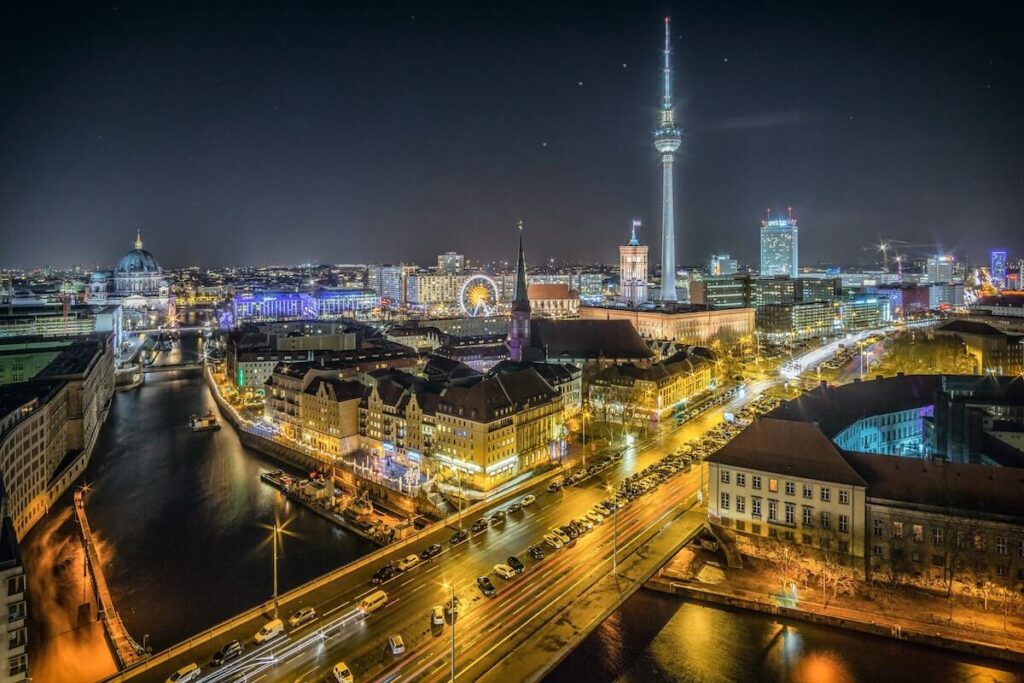
As the largest city and the capital of the Federal Republic of Germany, it’s no big wonder that Berlin tops our list. Throughout history, Berlin has helped to define the character of Germany as a nation and has changed faces countless times.
Berlin is famous for its jazzy interwar period which produced countless innovations, including some of the first examples of modern cinema. Later during the cold war, it attained further recognition as one of the world’s sole divided capitals.
East and West Berlin ended up developing entirely distinct cultures, and the clash between the two is still felt today.
Especially since the turn of the millennium, Berlin has further established itself as a key European hot spot for nightlife, political activism, and music. Of course, the German capital is also a major financial and economic powerhouse as well as the location of countless museums and world-renowned pieces of architecture.
2. Hamburg

Hamburg spent centuries operating essentially as a city-state under the Hanseatic league, so you would expect it to have developed a personality highly distinct from that of the rest of Germany.
That is definitely the case today. Famous for its highly diverse neighborhoods, from the sleazy Reeperbahn to the calm and serene Speicherstadt, Hamburg is a city full of variety and laidback fun of just about any kind.
Add some genuine Hanseatic culture and the best seafood this side of the Mediterranean, and Hamburg looks like an amazing place to be!
3. Munich
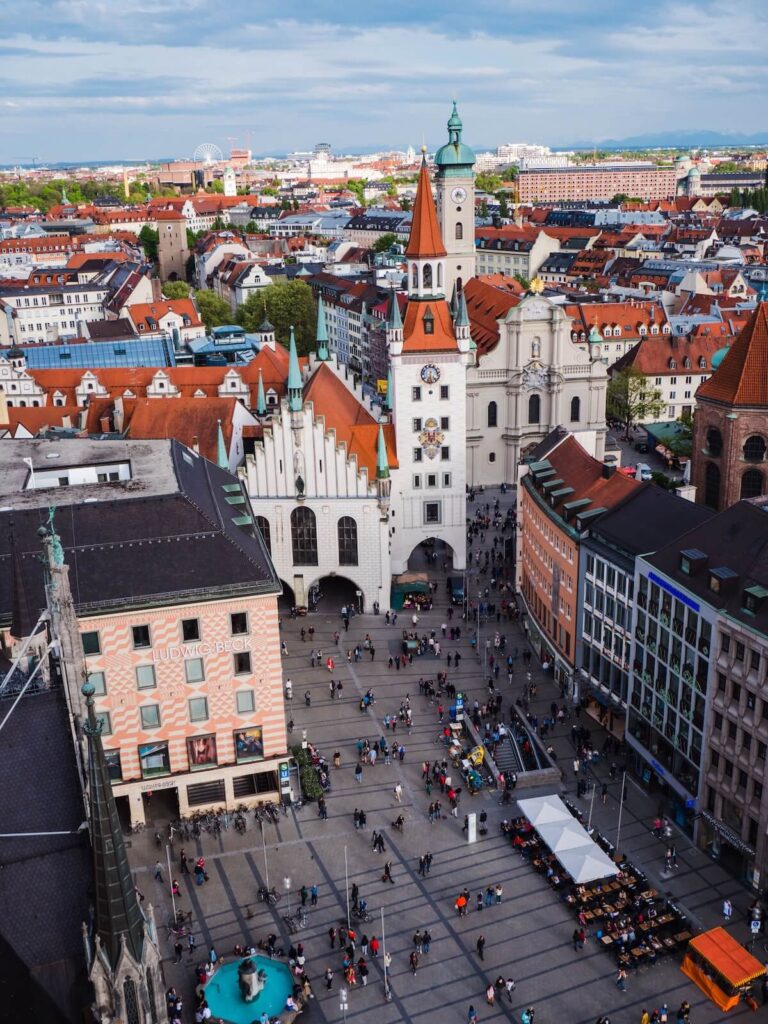
The geographic, political, and cultural capital of Bavaria, Munich is as much the beating heart of Germany as Berlin is.
Most foreigners get their first taste of the Bavarian metropolis from Oktoberfest, that quintessentially Alpine-German festival of lavish street performances, cultural exhibitions, and of course plenty of local beer.
But there’s more to Munich than that, of course! Not only is Munich an incredibly picturesque city thanks to its remarkable architecture and lavish English Gardens, but it also forms the economic bedrock of Bavaria thanks to globally successful enterprises like BMW.
4. Dresden

Most of Germany was in tatters in the wake of the Second World War, but few cities suffered as much as Dresden. Then an industrial center integral to the German war effort, the city was the subject of an intense Allied siege campaign that famously included firebombing, burning down most of Dresden between 1944 and 1945.
Since then, Dresden has attained fame and recognition worldwide for its amazing rejuvenation, among the clearest examples of the so-called postwar miracle of Germany.
Taking a stroll through its streets, marveling at the pristine reconstruction of the Opera House, where Wagner staged some of his debut performances, it is very difficult indeed to imagine that only two generations ago, nothing stood here but rubble!
Today, Dresden is as it used to be before the mid-20th century a national and regional center of culture, especially music. Its concert halls and renowned exhibition centers such as the restored DDR-era Kulturpalast attract hundreds of thousands every year.
5. Cologne

Located near the French border along the Rhine, Cologne is the largest city in the German region known as the Rhineland.
Cologne culture is defined by three things – predominant Catholicism, a casual social atmosphere (which even extends to the local dialect, eschewing the formal address more common elsewhere in Germany), and multiculturalism. In line with that, a common joke refers to Cologne as “the most northern city in all of Italy”.
The city is most famous for its Gothic Cathedral, a major European landmark built in the 12th century that has been the object of Catholic pilgrims since before the Reformation.
Of course, Cologne is also one of the most famous cities in Germany for precisely that — eau de cologne. Where else to shop for world-class fragrances than in the place where they were first invented?
6. Frankfurt

The finance and banking capital of Europe, Frankfurt is home to the European Central Bank, Commerzbank, Deutsche Bank, and many other important financial institutions.
However, the bustling downtown with its skyscrapers and huge office complexes is only part of what shapes Frankfurt’s identity. The city is also notable for its world-renowned Goethe University, its numerous large public parks and green areas, as well as the charming medieval Old Town.
Frankfurt is further famous for its prominent expo center which continually hosts important pan-European and international shows and events. Among these is the annual Book Fair, the world’s largest. From 1951 to 2019, Frankfurt also hosted the IAA, an international automotive expo widely considered the industry’s most important in the Eastern hemisphere.
7. Stuttgart

Often counted as one of the best places to live in the South of Germany, Stuttgart offers both a modern urban downtown as well as the nearby Black Forest and Neckar riverbank with its valleys and vineyards right by the Jura mountains.
This highly diverse geography makes the city much more spread out, even fragmented in parts compared to other German cities. At the same time, Stuttgart is among the most industrious cities in German history, being the home to a large part of the country’s most vital industry: carmaking.
Both Mercedes-Benz and Porsche have their headquarters and associated museums here, making Stuttgart a key pilgrimage spot for petrolheads worldwide.
8. Heidelberg

A medium-sized town just half an hour south of Frankfurt, Heidelberg nonetheless claims a spot on the list of the most recognizable and popular cities in Germany.
The biggest reason for that, apart from Heidelberg’s truly charming old town and well-preserved medieval architecture, is its public university.
Founded in 1386, it is not just the oldest in Germany, but among the oldest universities worldwide still teaching today! It also helps that Heidelberg consistently tops international rankings, particularly in the natural sciences.
9. Bremen
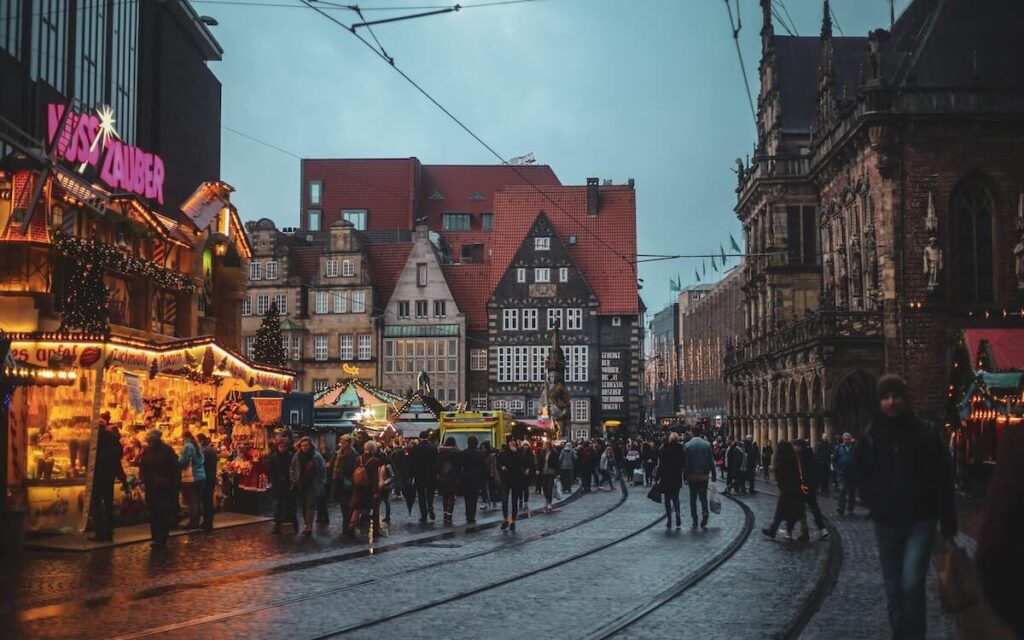
Unique as one of only three German cities to function as its own state (the other two are Berlin and Hamburg), Bremen achieved immortality in the public consciousness thanks to the Brothers Grimm.
Some of Jacob and Wilhelm’s most well-known tales, including that of the town musicians of Bremen, played out in the city and are nowadays commemorated with monuments.
Today, much of the city still looks like it did during the Grimms’ time, further adding to the romance and nostalgia associated with the place.
10. Nuremberg

A pivotal city throughout Germany’s history, Nuremberg is the city that spawned painter Albrecht Dürer, along with plenty of important poets, writers, artists, and musicians between the 1500s and the 1800s. The city is also renowned for its culinary scene, especially when it comes to the local tradition of Nuremberg gingerbread.
More recently and somewhat more grim, the global recognition of Nuremberg can be summed up by two of its most infamous milestones. One, in 1935, are the Nuremberg Laws, the Nazi-era discrimination doctrine that paved the legal path for the Holocaust.
The other, in 1945, are the Nuremberg trials. Often named the most important, complicated, and influential legal process in human history, the trials essentially gave birth to many of our current principles of international law and human rights.
11. Hanover
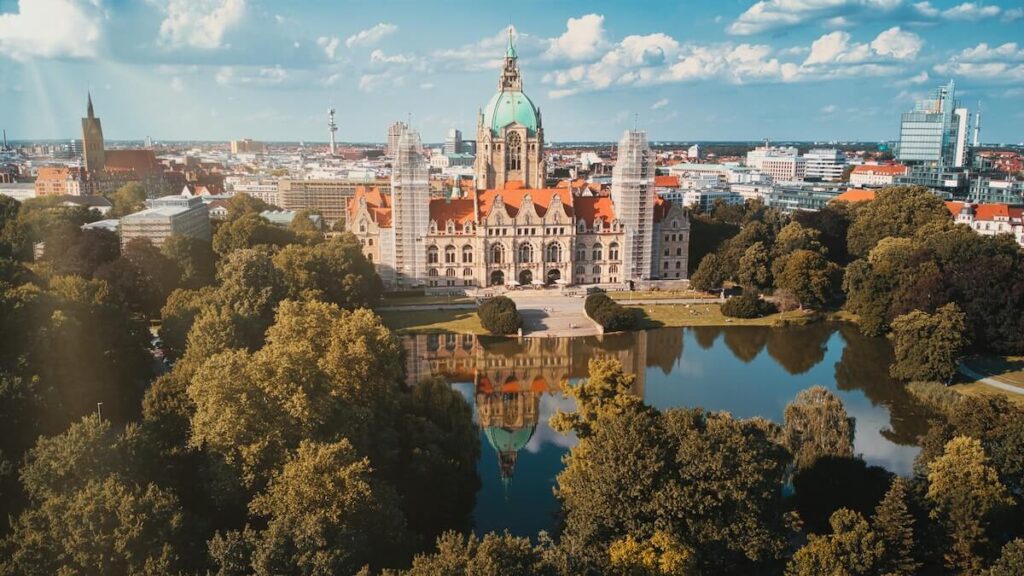
Traditionally a kingdom neighboring Prussia, Hanover and its ruling house spawned a legacy that spans beyond borders.
Perhaps the most famous chapter of the Hanover-based monarchy is its centuries-long rule over the British Empire. You might be more familiar with them as the House Windsor, which they officially changed their name to at the height of anti-German sentiment during World War I.
Looking at the city’s layout today, you can still recognize this aristocratic heritage. The Eilenriede, a truly gigantic public park and forest (actually one of the biggest on the whole continent) abruptly bisects Hanover downtown, and lavish former palaces (nowadays mostly serving as museums) cut through relatively pale, working-class areas.
12. Bonn

The capital of West Germany from 1949 till Reunification, Bonn was not chosen at random. In fact, Bonn had played a key role in the development of Western German culture throughout the ages.
Bonn occupies a particularly romantic spot in the hearts of millions as the birthplace of Beethoven, arguably one of the most famous and influential composers to ever have lived.
Besides the many remnants of the former West German government, Beethoven’s birth home, the Beethoven Concert Hall, and the yearly Beethoven Festival are among Bonn’s greatest attractions.
13. Kiel
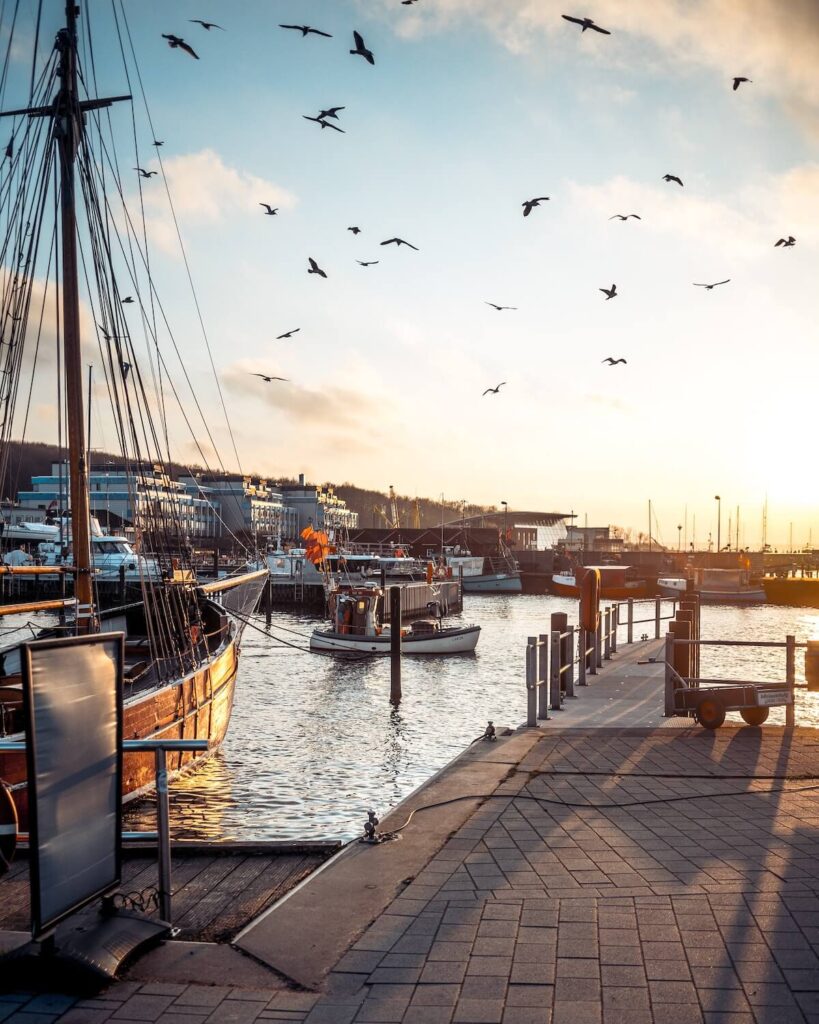
A seaside city in Germany’s north with a centuries-long tradition of sailing and fishing, Kiel played a monumental role in Germany’s interwar period at the end of the first World War.
Because of a huge strike-cum popular rebellion led by navy sailors here in 1918, the Kaiser was forced to abdicate and the Weimar Republic was proclaimed soon after.
Even today, the “Sailing City” hasn’t let go of its heritage. Avenues for watersports, world-class shipyards, and excellent seafood are still among the most distinguishing features of Kiel, alongside its surprisingly young population — courtesy of the public university which enrolls 30,000 per year.
14. Leipzig
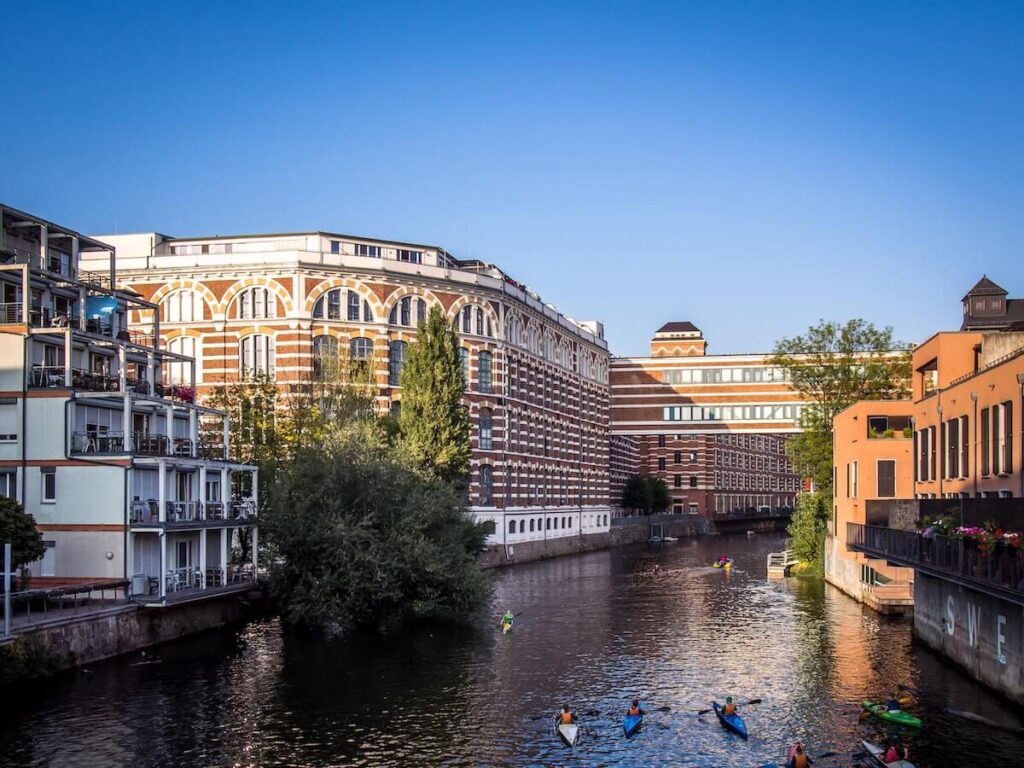
Like some of the other famous and notable German cities on this list, Leipzig, too, has music flowing through its veins.
The longtime residence and workplace of Johann Sebastian Bach, Leipzig has been a monument to the composer’s achievements for generations. You can still visit the marvelously well-restored churches and cathedrals where many of Bach’s compositions were first played!
Beyond historical charm and breathtaking architecture (including Leipzig’s world-class university and its nearly all-glass main building), Leipzig also occupies a soft spot in many a German’s heart for its association with East German culture.
As one of the most important major cities of the former GDR, Leipzig was instrumental in the rise and fall of the regime. Today, a number of museums chronicle Leipzig’s relationship with East Germany during the cold war, and the Ostalgie (East German nostalgia) movement is stronger here than perhaps anywhere else apart from East Berlin.
15. Wiesbaden

A spa city located in the beautiful Rheingau region, Wiesbaden is among the most beautiful and picturesque German cities.
Wiesbaden has made a name for itself not just with its awe-inspiring aristocratic architecture and lush open spaces, but especially with the surrounding nature, excellent opportunities for hiking, cycling, and rock climbing, as well as some of the cleanest air in all of Europe.
Compared to its rather dense and urban neighboring cities in the same region, Wiesbaden is a laidback oasis that beckons you to explore and let go.
Which of these cities have you visited, and what were your impressions of them? What other famous cities in Germany do you know? Feel free to share your thoughts down below in the comments!