
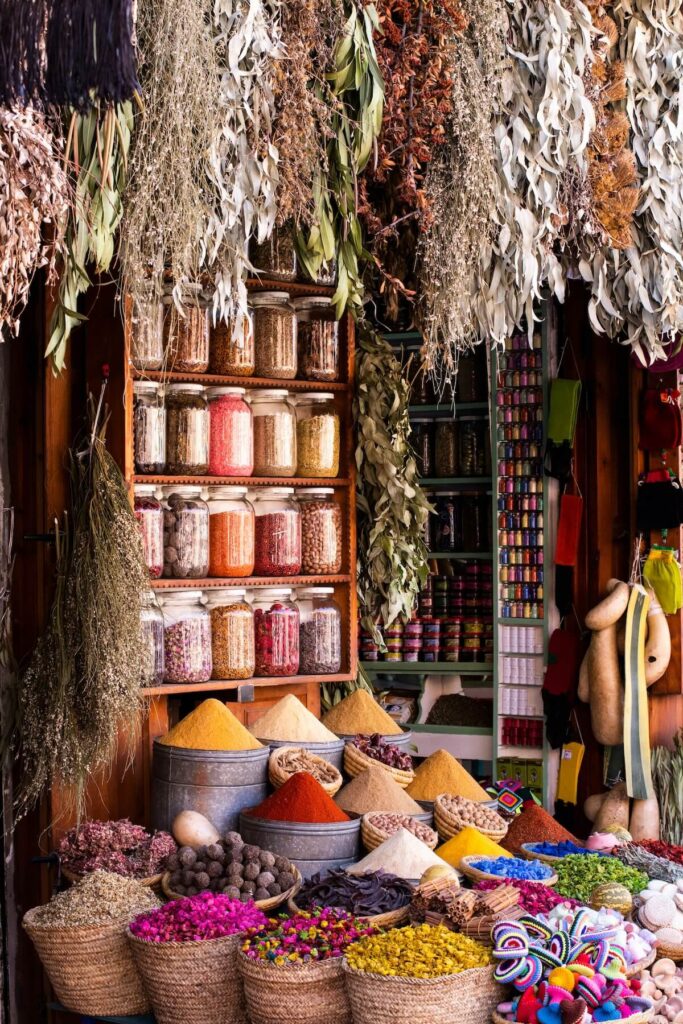
You’ve just spent your afternoon wandering through a vibrant spice market, and you’ve found the perfect jar of Moroccan saffron or a custom curry blend that you can’t wait to use back home.
But as you start packing, a stressful question pops up: Can you bring spices on a plane, or will security toss them in the bin? Understanding the specific TSA rules is essential to ensure your flavorful souvenirs don’t cause a scene at the X-ray machine.
This guide covers everything from powder quantity limits in carry-ons to checked bag strategies, helping you avoid unnecessary delays, confiscations, or a suitcase full of loose turmeric.
Please note: The following has been written using the FAA and TSA guidelines for flights in the U.S. If you are traveling from or in another country, please ensure you check their guidelines for safe flight and permitted substances before check-in.
Table of Contents
Can you bring spices on a plane?
The short answer is yes, you can bring spices on a plane, but the method of packing makes a difference.
According to the TSA, dry spices are permitted in both carry-on and checked luggage. However, if you are packing them in your hand carry, any powder-like substances over 12 ounces (about the size of a soda can) may require separate screening.
Because the final decision always rests with the individual TSA officer at the checkpoint, placing larger quantities in your checked bag is often the smoother choice.

Spices occasionally trigger extra inspection because dense powders can obstruct X-ray images or resemble prohibited substances. If an officer can’t clearly identify the item, they may need to open the container for testing.
To keep things moving, never try to conceal your spices deep inside your gear. Instead, keep them accessible and labeled.
Can you bring spices in your carry-on luggage?
As I said earlier, you can certainly pack spices in your hand luggage, but you’ll need to keep an eye on the volume.
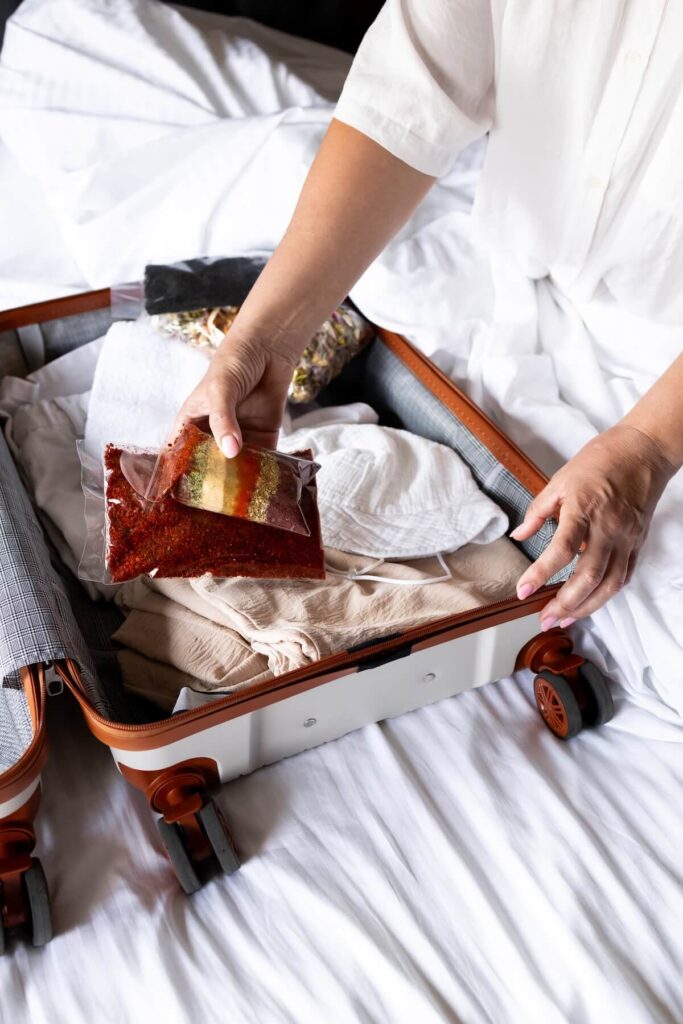
The primary guideline to follow is the TSA powder-like substance rule, which sets a threshold of 12 ounces (or 350 ml)—roughly the size of a standard soda can. Any individual container of spice larger than this may be subject to additional screening. This powder rule applies to makeup, coffee, other food items, sand, and even ashes.
In recent years, scanners have become more sensitive. Even “clumpy” spices or salts are being treated under the 12 oz powder rule to ensure nothing is masking explosives.
1: Containers of ground spices are allowed in carry-on bags. It may require add'l screening, to include opening the container. If the container is larger than 12 ounces, we recommend removing it from your carry-on bag and placing it in a bin for X-ray screening.
— AskTSA (@AskTSA) May 6, 2024
If your spice collection exceeds that 12-ounce limit, be prepared for a bit of extra attention (as mentioned by TSA above). An officer might need to perform a manual inspection or a quick test to resolve the X-ray image. If the substance can’t be cleared through these additional checks, you might be asked to dispose of it, so it’s always safer to put larger quantities in your checked bag.
Also, note the clear distinction between your dry rubs and “wet” seasonings. Items like chili oils, honey-infused glazes, or liquid vanilla extracts aren’t considered powders—they fall under the 3-1-1 liquids rule.
This means they must be in containers of 3.4 ounces (100 ml) or less and fit inside your single quart-sized clear bag. If you’re bringing a specialty sauce or a large bottle of liquid seasoning, it’s best to skip the carry-on entirely and pack it securely in your checked luggage.
Coffee pods, tea bags & dry packets of oatmeal are good to go in carry-on bags. Liquid, creamy or spreadable food items must be in containers 3.4oz or less and placed in your quart-sized bag w/ other travel-sized liquids, gels and aerosols. See details at: https://t.co/4KLR9PffjI
— AskTSA (@AskTSA) August 23, 2025
Can you bring spices on a plane via checked luggage?
If you’re planning to bring bulk quantities, heavy glass jars, or a large variety of blends, the checked bag is your best friend.
Unlike carry-ons, checked luggage doesn’t have a 12-ounce limit for powder-like substances, giving you the freedom to pack as much as your weight allowance permits. It’s the most straightforward way (as you can see from TSA’s response below) to transport your finds without worrying about the specifics of X-ray density at the security checkpoint.
On flights within or departing the U.S., ground spices are good to go in checked bags. Safe travels!
— AskTSA (@AskTSA) November 24, 2023
However, keep in mind that packing spices in your checked bag isn’t entirely “set it and forget it.” Spices are organic matter, and on a scanner, dense organic materials can sometimes look similar to prohibited items.
Because of this, don’t be surprised if you find a “Notice of Baggage Inspection” tag inside your suitcase later. It just means a TSA officer did a quick manual check to verify your stash was indeed cinnamon and not something else.
To minimize the risk of a spice explosion or broken glass, double-bag your containers and cushion them well. While checking them saves you time at the security line, you’ll want to ensure they’re packed securely enough to survive the bumps and pressure changes of the cargo hold.
International travel and customs
While checked bags offer more freedom from a security perspective, crossing international borders brings a new set of rules regarding agricultural safety.
Many countries, including the United States and Australia, have strict biosecurity laws to prevent the introduction of invasive pests or diseases. Because of this, herbs or certain seeds are often restricted or entirely prohibited because they pose a higher risk than dried, processed spices.
2: Customs and Border Protection manages entry procedures into the U.S. For their guidance on bringing food into the country, pls visit: https://t.co/4izJPbxbpU
— AskTSA (@AskTSA) December 22, 2023
If you’re bringing back something like star anise or whole peppercorns, it’s a good idea to check the specific agricultural registry and rules of your destination before you fly.
3: Since you're traveling internationally, we recommend that you also reach out to the customs agency at your destination to ensure these items are allowed into the country.
— AskTSA (@AskTSA) February 29, 2024
The way you pack your spices also plays a huge role in how quickly you’ll get through customs. Original, commercially sealed packaging is always superior to a “mystery bag” of loose powder. Labels provide customs officers with the botanical name and origin of the spice, which helps them verify that it isn’t a restricted plant species.
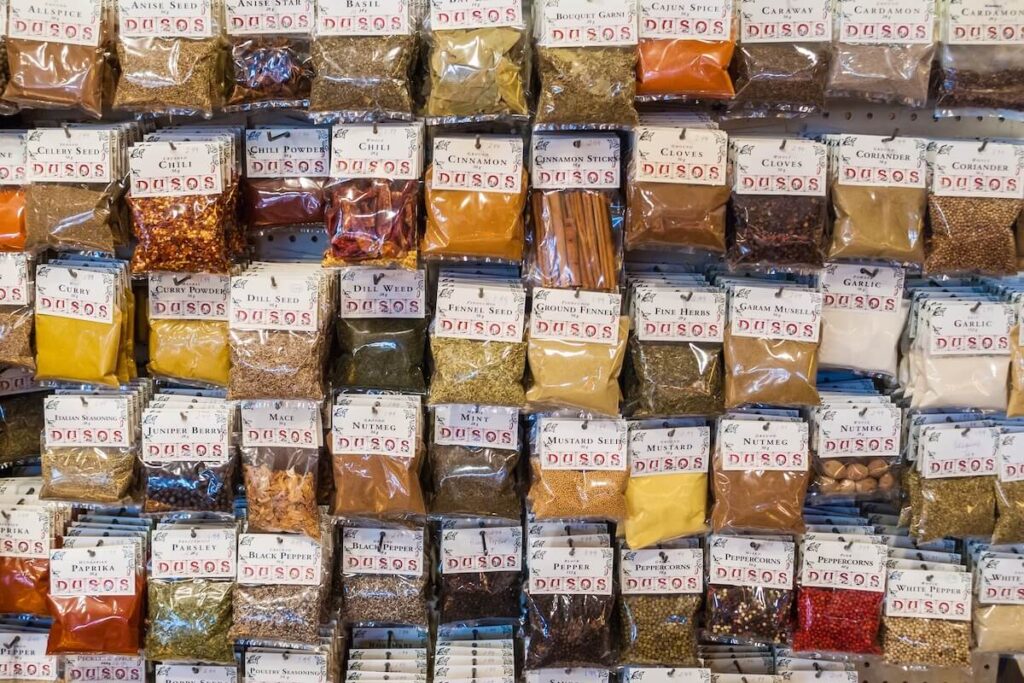
If you’ve purchased spices from a local market that aren’t labeled, consider transferring them to clear, marked containers.
Finally, the golden rule of international travel is simple: when in doubt, declare it. Even if you are certain your spices are allowed, listing them on your customs form ensures you are acting in good faith.
If an officer decides a particular spice isn’t permitted, they will simply dispose of it. However, failing to declare a restricted item can lead to heavy fines or even the loss of your travel privileges. Being upfront about your flavorful souvenirs is the best way to keep your trip stress-free.
Pro tips for packing spices
Double-bagging is a must
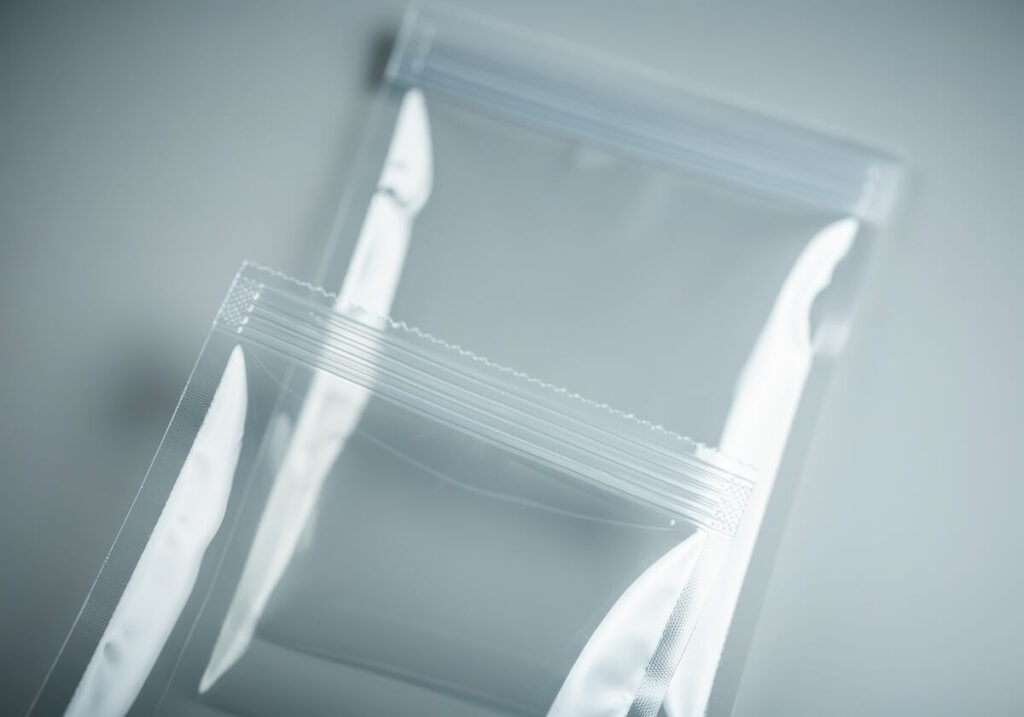
Even the sturdiest-looking lids can pop open under the pressure changes of a flight.
To prevent a turmeric explosion from permanently staining your clothes neon orange, place each spice container inside a leak-proof Ziploc bag, then put those bags inside a larger one. This secondary barrier ensures that even if a seal fails, the mess stays contained.
Glass vs. plastic

While glass jars are great for preserving flavor long-term, they are heavy and prone to shattering in a tossed suitcase.
If you’re traveling light, consider transferring spices into food-grade plastic containers. If you stick with glass, wrap each jar in bubble wrap or tuck them deep inside thick socks to provide a DIY cushion against the rough handling of checked luggage.
Use clear bags

To make your trip through security as fast as possible, keep your carry-on spices in a dedicated clear pouch. Just like you do with your liquids, pull this pouch out of your bag and place it in the bin before it goes through the X-ray.
Being proactive about showing the TSA officers exactly what you have reduces the chances of them having to dig through your neatly packed bag for a manual inspection.
Conclusion
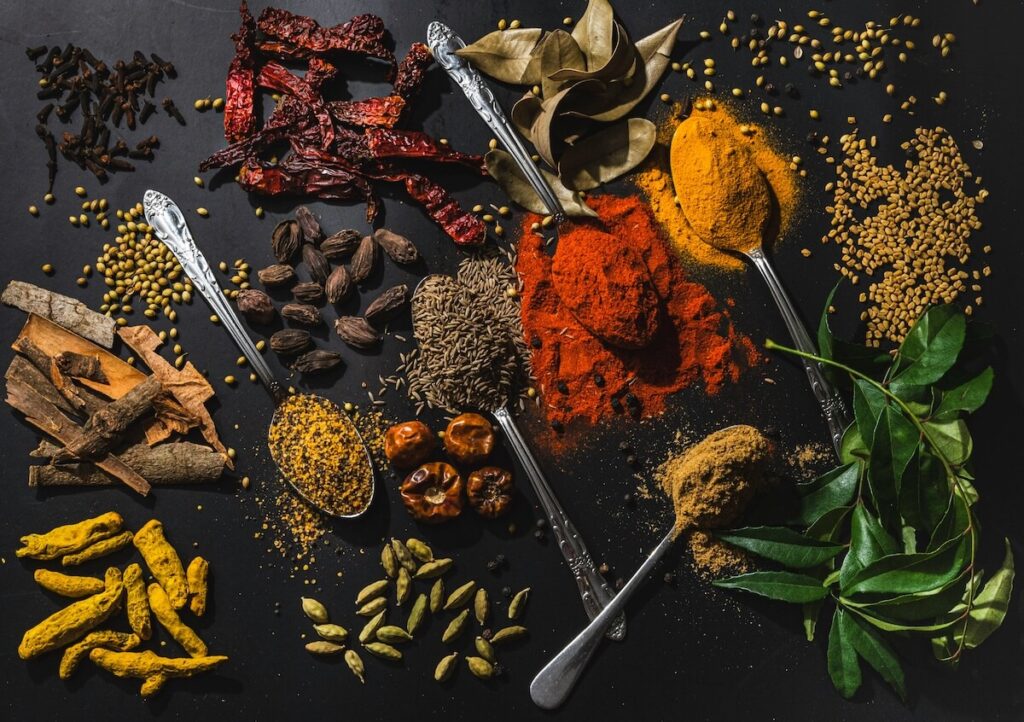
Ultimately, bringing your favorite flavors along is simple as long as you plan ahead. Remember the general rule of thumb: keep small amounts in your carry-on while sticking to the 12-ounce limit, and put anything bulkier or heavier in your checked luggage to avoid delays.
Since rules can vary by airline and destination, always double-check the latest TSA guidelines and the prohibited items list for the specific country you’re visiting. With your spices securely packed and labeled, you can focus on enjoying your trip and cooking up something delicious when you land. Safe travels!