
Bringing home aromatic incense sticks from a local market is a wonderful way to preserve travel memories. But no one wants airport security triggering alarms over them.
If you’ve been asking yourself, “Can you bring incense on a plane?”, the short answer is yes. However, your packing strategy depends on whether it is a solid stick, a cone, loose powder, or liquid oil.

This complete guide navigates the official rules enforced by the Transportation Security Administration (TSA) for carry-on and checked luggage, handling intense aromas, protecting fragile sticks, and packing burners or lighters. Knowing these rules eliminates stress, preventing unexpected checkpoint delays and heartbreaking confiscations.
Please note: The following has been written using the FAA and TSA guidelines for flights in the U.S. If you are traveling from or in another country, please ensure you check their guidelines for safe flight and permitted substances before check-in.
Table of Contents
Can you bring incense on a plane? The quick answer
Let’s get it out of the way: yes, you can absolutely bring incense on a plane. However, security regulations vary significantly depending on whether your incense is a solid, powder, or liquid, and whether it is going in your carry-on or checked baggage.
Here is a quick, at-a-glance summary guide to help you sort your packing strategy before heading to the airport:
| Incense / accessory type | Carry-on luggage | Checked luggage |
| Stick / cone incense | Yes (unrestricted) | Yes (unrestricted) |
| Loose incense powder | Yes (quantities over 12 oz / 350 ml subject to extra screening) | Yes (unrestricted) |
| Liquid incense / aromatic oils | Yes (subject to the strict 3-1-1 liquids rule) | Yes (unrestricted) |
| Incense burners & holders | Yes (unrestricted) | Yes (unrestricted) |
Because incense is dense, aromatic, and powder-based, it often triggers extra screening by masking odors or resembling explosives on X-rays. The best way to avoid delays is absolute transparency.
Never try to wrap or conceal your items; instead, keep your incense easily accessible in its original or clear packaging so TSA officers can quickly verify it.
Can you bring incense in your carry-on luggage?
Dealing with airport security when you’re carrying aromatic finds doesn’t have to be a stressful guessing game. If you prefer keeping your fragile souvenirs within arm’s reach in your hand-carry bag, you will be happy to know that the TSA gives solid incense sticks and cones a green light. And because they are categorized as non-liquid solids, there are absolutely no official quantity restrictions holding you back.
However, if your collection includes loose incense powder or unprocessed botanical resins, you will need to watch out for the TSA’s powder rule. Any powder-like substance exceeding 12 ounces (roughly 350 ml, or the size of a standard soda can) must be placed in a separate screening bin for X-ray inspection.
Now, if you’re bringing liquid incense or essential oils, that’s a different story. Liquids must strictly adhere to the standard 3-1-1 rule, which basically means your liquids must not exceed 3.4 ounces (100 ml) per container. These containers must be packed in one quart-sized bag.

Do note that while security agents are perfectly fine letting your aromatics pass through, your seatmates might not share your enthusiasm for a potent, unfiltered cloud of jasmine or sandalwood mid-flight. Pack your incense tightly in sealed Ziploc bags or airtight containers to prevent intense aromas from bleeding out and triggering sensitivities in the cabin.
Can you bring incense on a plane via checked luggage?
If you’re worried about your incense getting intercepted or inspected at the security checkpoint, here are two words for you: checked bags.
Checked baggage is the perfect place for large souvenir hauls, bulky boxes, or liquid varieties because the TSA’s strict liquid restrictions and powder limits do not apply down in the cargo hold.

That said, checked bags endure plenty of rough handling from airport staff. So, you’ll need to protect your fragile incense sticks. Safeguard them from snapping by sliding them into a hard sunglasses case, a rigid PVC tube, or by cushioning them between thick layers of clothing. Also, use airtight Ziploc bags to lock in the heavy aroma so your clean clothes don’t smell like a heavy spice market upon arrival.
What about incense burners and accessories?
If you are like me and want to ensure you have everything needed to enjoy your new aromatics the moment you get home, you will also need to plan for the accessories.
Thankfully, the TSA has no issues with incense holders and burners. Whether they are crafted from delicate ceramic, rustic wood, polished brass, or heavy stone, you can pack them in both your carry-on and checked luggage.

But if you are flying with a heavy metal or stone burner in your carry-on, pull it out and place it in a separate bin. Because they are so dense, they can completely block the security X-ray’s view, which often triggers a manual bag check.
When it comes to lighting your incense, read up on the rules. The TSA allows you to bring one standard disposable butane lighter (like a BIC) or one book of safety matches strictly in your carry-on bag or on your person. However, do not make the mistake of tossing them into your checked suitcase, as loose lighters are banned in the cargo hold due to fire hazards.
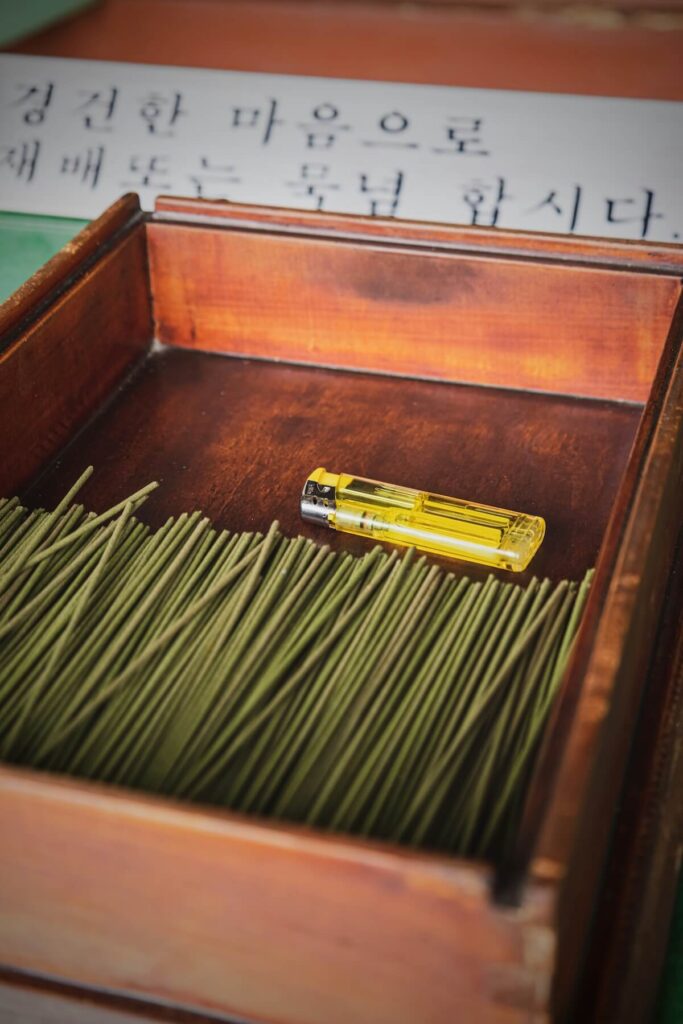
Remember to leave the heavy-duty gear behind. Torch lighters (like jet or blue flame lighters) and containers of lighter fluid are strictly forbidden anywhere on the aircraft.
International travel and customs regulations
While the TSA manages immediate flight safety at the security checkpoint, international travel introduces a whole separate layer of scrutiny: customs.
Agencies like U.S. Customs and Border Protection (CBP) or foreign agriculture authorities are heavily focused on protecting local ecosystems from foreign pests and diseases. Because incense is made from organic raw materials—often containing unprocessed botanical resins, tree bark, or raw plant matter—it can sometimes face strict agricultural restrictions depending on its country of origin.

It’s best to be completely transparent and declare your incense on your customs form if it contains raw agricultural elements. It is always better to be upfront with customs officers about your aromatic souvenirs. Declaring them outright eliminates unexpected fines and saves you from a time-consuming secondary screening headache.
Conclusion

So, a quick recap: solid sticks and cones are completely unrestricted, loose powders over 12 ounces simply need a quick separate scan, and any liquid oils just have to follow the standard 3-1-1 rule.
When you know these rules, you can comfortably bring home your aromatic souvenirs without any airport anxiety. Just remember to seal them tightly to save your clothes from intense scents and pack them defensively so they do not snap in transit.
What is your absolute favorite travel scent you’ve brought home from a trip? Let us know in the comments!
You can also check out our other TSA guides to master your packing skills before your next big trip. Safe travels!