
Few things trigger travel dread quite like facing stale hotel coffee or watching security toss out an expensive bag of local souvenir beans. As someone who loves traveling and always brings home regional roasts, I know the stress.
If you’ve thought of the question, “Can you bring coffee on a plane?”, the short answer is yes. However, your strategy hinges entirely on whether your java is a liquid, powder, or whole bean.
This guide unpacks the essential TSA rules for carry-on and checked bags, alongside practical packing tips. Knowing these regulations helps you avoid checkpoint delays and confiscations, ensuring your favorite blend lands safely.
Please note: The following has been written using the FAA and TSA guidelines for flights in the U.S. If you are traveling from or in another country, please ensure you check their guidelines for safe flight and permitted substances before check-in.
Table of Contents
Can you bring coffee on a plane? The quick answer
Can you bring your favorite morning brew along on your next flight? Yes, but that depends on whether you’re bringing dry coffee (beans or grounds) or liquid coffee, and whether you’re bringing it in your carry-on or checked bags.
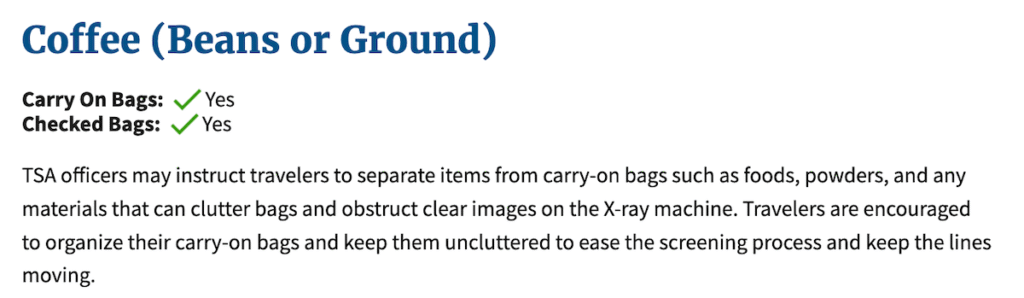
According to official TSA rules, whole beans and coffee grounds are treated as solid foods, allowing them in both your hand carry and checked luggage without strict volume limits.
Liquid coffee, however, is strictly bound by the 3-1-1 liquids rule for carry-ons, meaning your pre-brewed lattes or cold brews must be 3.4 ounces (100 ml) or less unless purchased after security gates.

Note, however, that even though solid coffee is completely legal, it can still trigger extra screening. Because coffee is highly dense and can block X-ray images, or because its strong aroma is historically known to mask other smells, TSA agents may pull it aside to ensure it isn’t concealing illegal items. Large amounts of ground coffee over 12 ounces are also heavily scrutinized since organic powders can resemble explosives.
To save yourself time and unnecessary stress, never try to wrap or conceal your coffee packs. Keep them accessible, preferably in their original packaging, so agents can quickly verify your souvenir blend and send you on your way.
Can you bring coffee in your carry-on luggage?

When packing your hand-carry bag, the rules split drastically between solids and liquids. As I said above, the TSA gives whole beans and ground coffee a clear green light. Since they are considered non-liquids, there are no official quantity restrictions.
However, be mindful of the “clutter” guardrail. Dense packages of coffee look highly suspicious on X-rays, and organic powders can resemble explosives, so agents may step in to clear the visual obstruction.
Liquid coffee faces much stricter limits. Your favorite cold brew or latte must comply with the 3-1-1 rule, capping containers at 3.4 ounces or 100 ml. It’s not ideal, but if you want to bypass this and bring home more than 3.4 ounces of liquid coffee, you’d have to buy it at the airport after passing security.
Can you bring coffee on a plane via checked luggage?
When it comes to your checked luggage, the regulations are much more straightforward.
Since you aren’t limited by security checkpoint rules, you can pack solid coffee—whether whole bean or ground—in any quantity you like. Checked baggage also acts as the perfect haven for liquid coffee, specialty syrups, and heavy glass canisters because the strict volume restrictions no longer apply.
The real challenge here isn’t the policy—it’s your packing strategy. Cargo holds experience intense pressure drops and rough handling that can cause unsealed packages to burst or leak. For smart protection, it’s best to seal your coffee in airtight bags and cushion them deep between thick clothing layers.
What about travel coffee gear?
You now know what to do with your beans and cold brew… but what about if you’re planning to brew your own coffee with an AeroPress or V60?

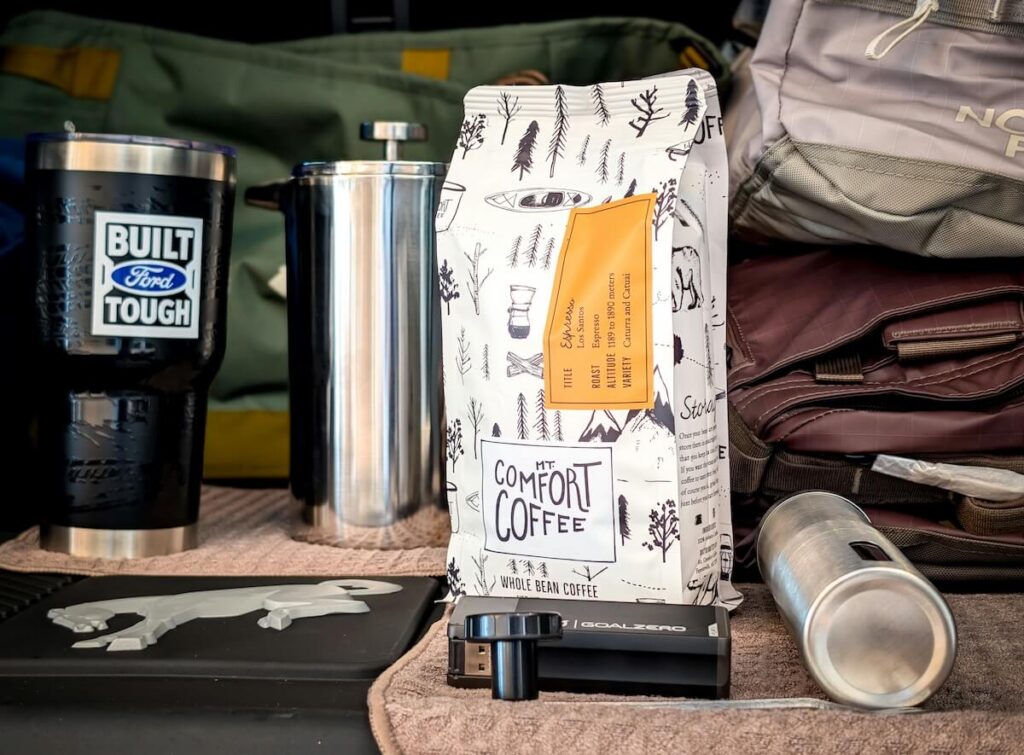
The good news is that navigating airport screening with your custom coffee gear is mostly a breeze, provided you know which bag to put them in. Portable electronics like espresso makers and coffee gear, such as an AeroPresses or French presses, are perfectly fine to pack in your carry-on luggage or checked luggage. Do make sure all cords are wrapped properly.
Manual hand grinders are also generally allowed in your hand carry, but keep a close eye on the mechanics. Models with sharp, exposed cutting blades must be securely packed into your checked luggage instead.
Your coffee thermos, coffee pots, and favorite travel mugs are also welcomed in your carry-on bag under one very strict rule: they must be completely empty when passing the scanner. Even a tiny splash of leftover morning liquid will flag your bag for manual inspection and trigger extra screening.

To keep the line moving smoothly, make sure to completely dump out your liquids before your luggage goes down the conveyor belt.
International travel and customs regulations
When crossing borders, your security clearance isn’t the only thing to think about. Customs and agricultural regulations play a massive role, too.
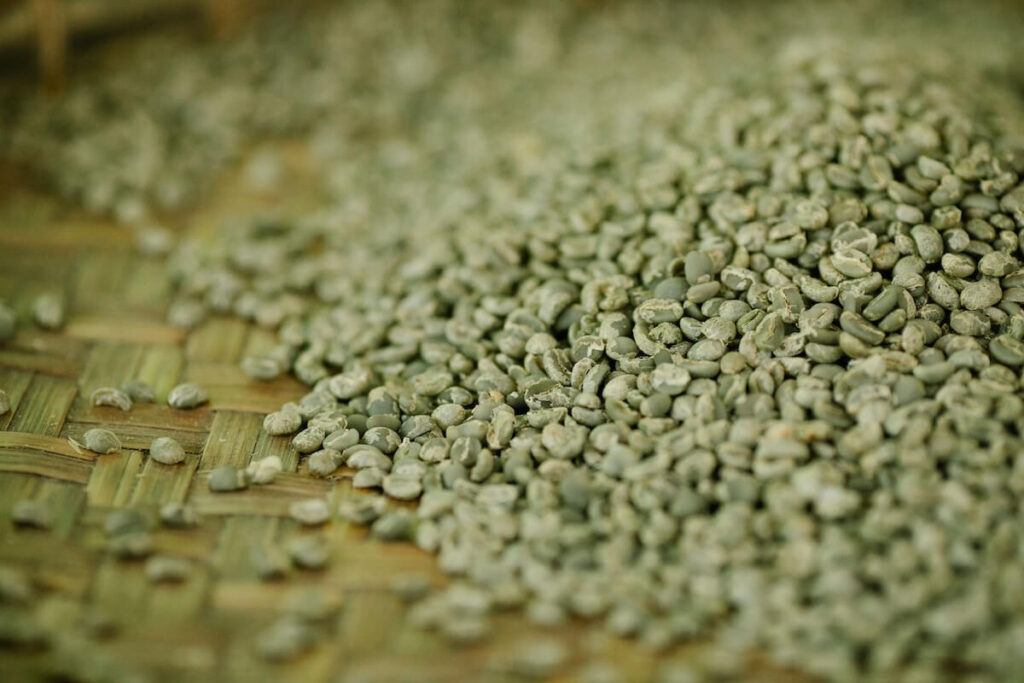
While the TSA checks your bags exclusively for security risks, organizations like U.S. Customs and Border Protection (CBP) or foreign agricultural bodies focus heavily on what you are bringing into the ecosystem. They are particularly strict about raw agricultural items, meaning unroasted green coffee beans will attract serious scrutiny due to the risk of pests and invasive insects.
To keep your journey smooth, filling out a mandatory declaration for your coffee souvenirs on your customs form is absolutely essential. Being fully transparent about your haul completely prevents unexpected secondary screening headaches or costly fines at the border.
In general, fully roasted beans or ground coffee packages pass through inspection lines effortlessly as long as you declare them upfront to the agents.
Conclusion
Ultimately, traveling with your favorite blend comes down to the simple distinction between solids and liquids. Whole beans and ground coffee can travel freely in any bag, while liquid brews just need to follow the standard 3-1-1 restrictions at the security checkpoint.
By packing smart, checking your gear, and sealing everything tightly, you can bring your specialty beans along without any airport stress and look forward to a great cup of coffee at your destination!
What is your absolute favorite coffee souvenir you’ve brought home from a trip? Let us know in the comments. You can also check out our other TSA guides to plan your next stress-free flight. Happy travels!