
I like traveling, but packing has been stressful in recent years because you constantly have to figure out what you can or cannot bring. And if you smoke or vape, airport security adds another layer of confusion.
Can you bring cigarettes on a plane? The short answer is yes: standard cigarettes, cigars, and tobacco are allowed in both carry-on and checked bags. However, strict TSA rules and FAA regulations apply to items like e-cigarettes, vapes, and lighters to prevent safety hazards.
This guide covers everything from packing traditional tobacco and e-cigarettes to lighter regulations, international customs, and airport etiquette so you can travel without unnecessary delays, confiscation, and yes, stress.
Please note: The following has been written using the FAA and TSA guidelines for flights in the U.S. If you are traveling from or to another country, please ensure you check their guidelines for safe flight and permitted substances before check-in.
Table of Contents
Can you bring cigarettes on a plane? The rules at a glance
Before packing for your trip, it helps to understand how airport security handles tobacco products and smoking accessories. TSA rules allow traditional cigarettes on flights without issue, but liquid limits and strict FAA regulations on batteries mean items like vapes and lighters have specific restrictions:
| Item type | Carry-on baggage | Checked luggage |
| Cigarettes and cigars | Yes | Yes |
| Loose tobacco and rolling papers | Yes | Yes |
| E-cigarettes, vapes, and disposable pods | Yes | No (prohibited) |
| E-liquids and vape juice | Yes (under liquids rule) | Yes |
| Disposable lighters or safety matches | Yes (1 allowed per passenger) | No (unless unfueled or in DOT case) |
Can you bring cigarettes in your carry-on luggage?
When packing cigarettes in your hand-carry luggage, the process is usually straightforward, but keeping a few basic guidelines in mind will prevent any headaches at security checkpoints.
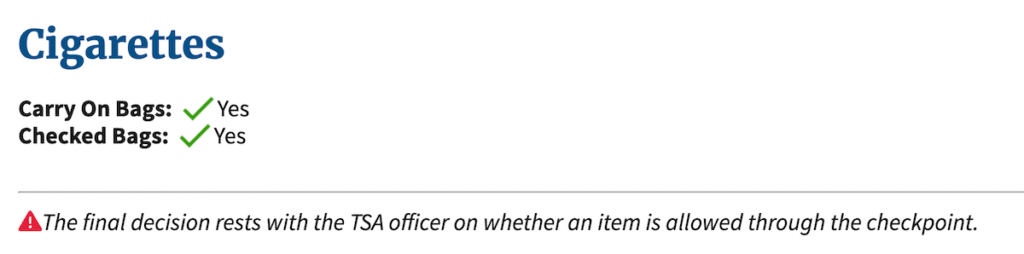
According to official TSA rules (as pictured below), traditional cigarettes, cigars, and loose tobacco are 100% permitted in carry-on bags. There is no official limit on the number of standard cigarette packs you can carry on domestic flights, though international travel involves strict customs duty limits.
Of course, you don’t want to keep your cigars close just to find them damaged after the flight. To keep your packs from getting crushed or torn during screening, it’s best to store them in a protective case or an easily accessible outer pocket.
Finally, keep in mind that even though cigarettes are technically allowed, individual TSA officers always have the final discretion on what passes through security.
Can you bring cigarettes on a plane via checked luggage?
If you prefer to keep your carry-on light, packing cigarettes in your checked luggage is much more straightforward and is recommended.
Both TSA guidelines and major airline policies allow traditional cigarettes, cigars, and pipe tobacco in checked bags without hassle—though you’ll still need to follow standard duty-free customs limits if you are flying internationally.
That said, the biggest challenge with checked bags is rough handling and changing cargo pressure. To keep your packs from getting crushed, torn, or exposed to moisture during transit, avoid tossing them in loosely. Instead, tuck cartons or packs securely in the center of your suitcase, sandwiched between soft layers of clothing for extra padding and protection..
What about electronic cigarettes and vapes?
While traditional tobacco products can go in checked luggage, electronic cigarettes and vaping devices have completely different rules.
Due to fire hazards associated with lithium-ion batteries in cargo holds, the FAA and TSA strictly require all e-cigarettes, vape pens, mod pods, and spare batteries to stay in your carry-on bag or on your person. To prevent accidental heating mid-flight, turn off your devices completely, lock trigger buttons, or remove heating elements before boarding.
E-liquids are also subject to specific security controls. In your carry-on, vape juice bottles must adhere to TSA’s 3-1-1 liquids rule (containers 3.4 ounces or smaller inside a single quart-sized clear bag).
Larger e-liquid bottles can go in your checked luggage, but I always recommend double-bagging them in sealed plastic pouches—cabin pressure fluctuations can easily cause messy leaks all over your clothes.
Lighters, matches, and accessories: What’s allowed?
Navigating airport rules for lighter gear and tobacco accessories can be tricky since restrictions vary by item type.
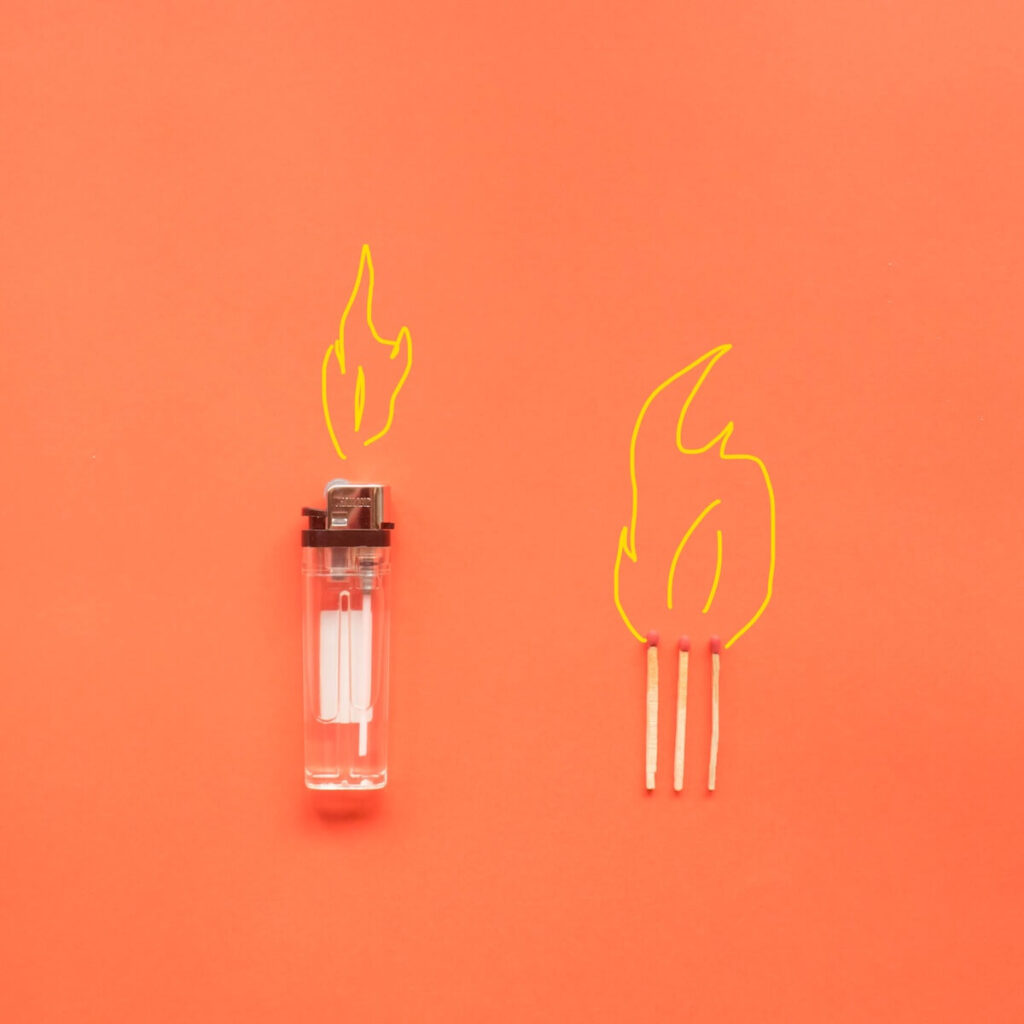
Standard disposable lighters and soft-flame Zippos are generally permitted in carry-on bags (typically limited to one per passenger), but TSA rules prohibit them in checked luggage unless they are unfueled or kept in a DOT-approved case.
Torch lighters are strictly banned from both carry-on and checked bags due to their extreme heat risk, whereas plasma lighters can go in checked luggage. For matches, you’re allowed one small book of safety matches in your carry-on, while strike-anywhere matches are completely forbidden.
Also read: Can You Bring A Lighter on a Plane? Here’s the Answer
If you’re traveling with cigars, small guillotine cigar cutters are typically allowed in carry-on bags—though final approval rests with the individual TSA officer—while larger blades should always be packed in checked luggage. Fortunately, travel humidors are completely hassle-free and permitted in both your hand carry and checked suitcases.
International travel, customs, and duty-free rules
While TSA guidelines establish what passes through airport security checkpoints within the US, international travel introduces a completely different set of rules. When flying across borders, security screening yields to customs regulations set by agencies like US Customs and Border Protection (CBP) and destination countries, which strictly control how much tobacco you can bring tax-free.
Most foreign nations allow a standard duty-free allowance—typically up to 200 cigarettes (one carton) or 50 cigars per adult traveler. Bringing more than the allowance usually means paying steep import taxes or facing confiscation at customs.

Also, if you use e-cigarettes or vapes, research your destination’s laws beforehand. Countries such as Thailand, Singapore, Brazil, the Maldives, and many more enforce strict, full-scale bans on vaping devices. Arriving with a vape in these locations can lead to heavy fines, device confiscation, or worse, detention upon landing.
In-flight rules and airport etiquette
Carrying tobacco on board is simple enough, but once you step onto the aircraft, the rules become absolute. One thing you mustn’t ever forget is that smoking or vaping of any kind on commercial flights is a federal crime. Attempting to smoke on board can lead to massive federal fines—up to $4,000 or more—as well as airline bans or immediate arrest upon landing. Yikes.
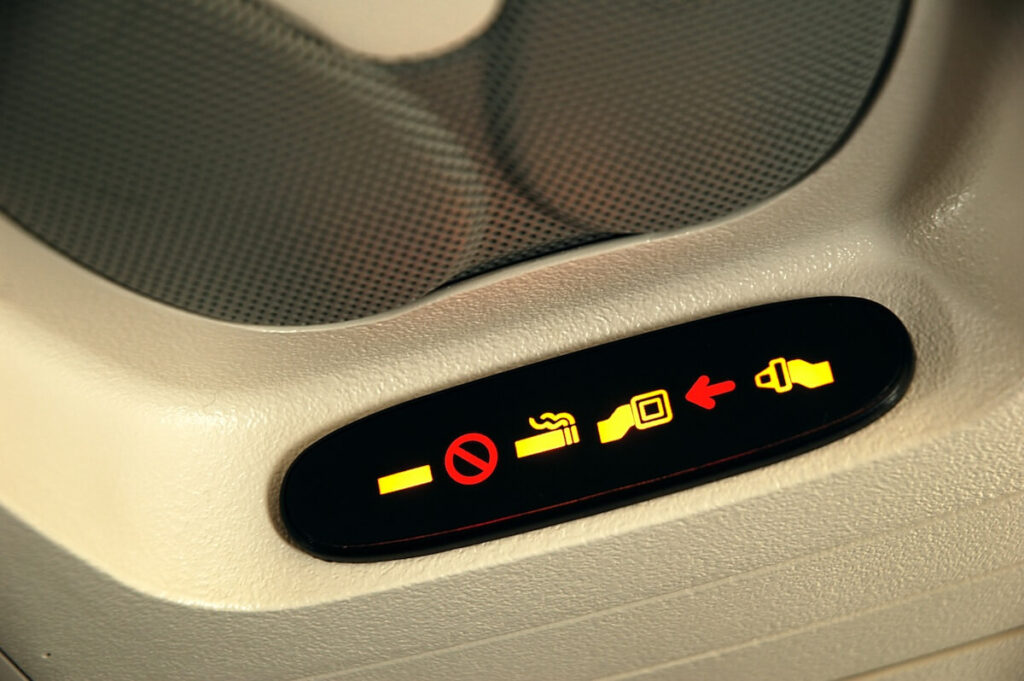
Trying to sneak a quick puff in the lavatory isn’t worth the risk, either. Federal law strictly prohibits tampering with, disabling, or destroying aircraft lavatory smoke detectors. These sensors are incredibly sensitive to both smoke and vape vapor, and interfering with them carries severe legal consequences.
As for layovers, don’t count on lighting up inside the terminal. Most modern airports are completely smoke-free post-security, meaning you’ll need to step back outside the terminal before going through security again. However, a select few international airports still offer enclosed, ventilated smoking lounges inside secure areas.

Conclusion
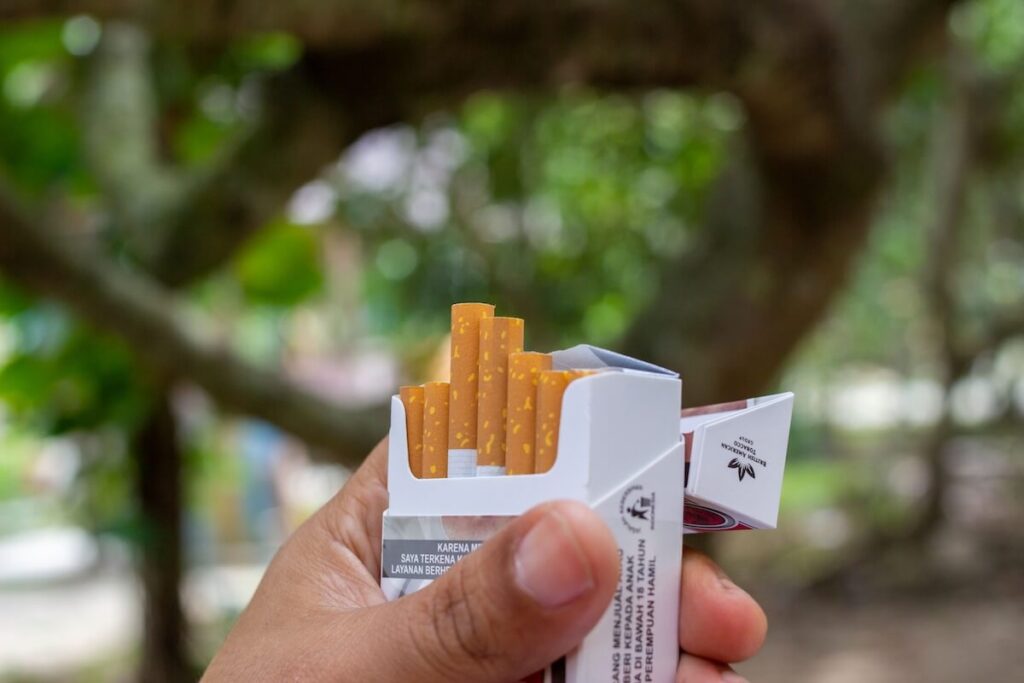
So, can you bring cigarettes on a plane? At its core, taking cigarettes on your journey comes down to one clear distinction: traditional tobacco can go virtually anywhere in your luggage, while electronic devices, vapes, and lithium batteries must stay strictly in your carry-on bag.
Before heading out to the airport, it’s always a smart move to double-check your specific airline’s baggage policies as well as the local customs regulations of your final international destination.
For more packing clarifications, check out our TSA guides. Happy travels!