
Whether you are bringing back world-class Belgian truffles as a souvenir, packing a box of gourmet bonbons for family, or just stashing a few candy bars to survive a long flight, traveling with sweets is very common. But as you stand in front of an empty suitcase, an important question inevitably pops up: Can you bring chocolate on a plane?
While the short answer is yes, airport security isn’t always sweet and simple. Navigating TSA rules can quickly get confusing depending on whether your treats are solid, powdered, or gooey spreads.
This guide breaks down everything you need to know about flying with chocolate in both your carry-on and checked luggage, along with practical packing tips. Knowing these guidelines before you head to the airport is the best way to ensure your favorite treats don’t get confiscated, helping you avoid unnecessary stress and security delays.
Please note: The following has been written using the FAA and TSA guidelines for flights in the U.S. If you are traveling from or in another country, please ensure you check their guidelines for safe flight and permitted substances before check-in.
Table of Contents
Can you bring chocolate on a plane? The quick answer
The quick and short answer is yes, you can bring chocolate on a plane. But how you pack it depends entirely on its texture.
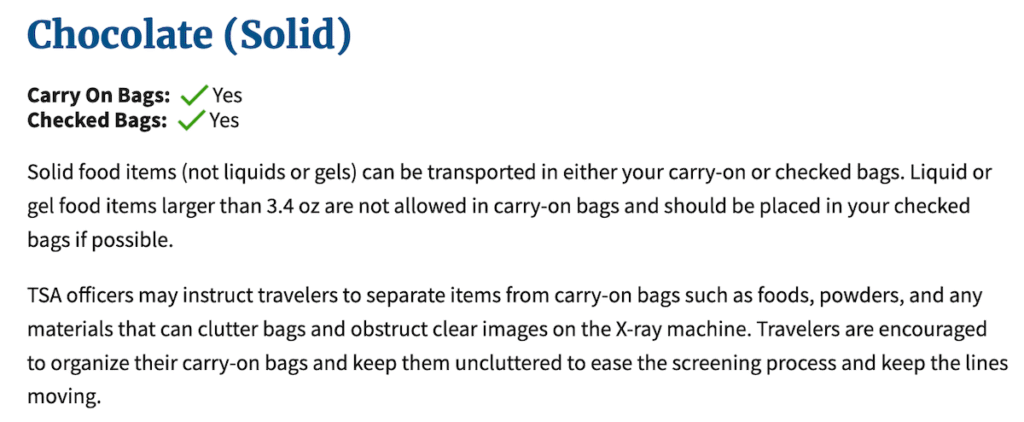
According to TSA rules, solid chocolate (like bars, truffles, and bonbons) is allowed in both your carry-on and checked luggage without any quantity limits.
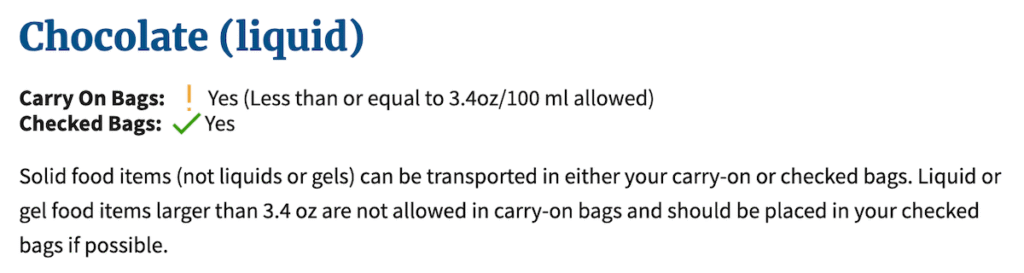
However, creamy chocolates, such as chocolate syrup, Nutella, or liqueur-filled candies, are treated as liquids. In your carry-on, these must comply with the strict 3-1-1 rule and be under 3.4 ounces, though you can pack larger amounts in your checked bags.
Even though it’s generally permitted, chocolate can still raise red flags at the security checkpoint. Thick blocks of fudge or dense stacks of chocolate bars can mimic dangerous materials on the X-ray machine—a phenomenon known as the clumping effect.
Because of this, officers may ask to examine your sweets manually. To ensure a smooth process, never try to conceal your chocolate deep inside your bag. Instead, pack it somewhere accessible so you can easily place it in a separate bin if requested.
Can you bring chocolate in your carry-on luggage?

When it comes to your carry-on, you can bring almost any solid chocolate you like—including bars, tablets, truffles, and bonbons—in unlimited quantities. TSA doesn’t limit how much solid chocolate you pack, as long as it fits within your airline’s baggage weight limits.
While you usually don’t need to separate it from your other items at security, dense stacks of chocolate can sometimes look blurry or suspicious on the X-ray screen. If you are traveling with a heavy stash, a great pro tip is to pull it out of your bag and place it in a separate screening bin to avoid a slow manual bag search.
If you’re thinking of hoarding bottles of that fudge you had with your dessert, not so fast. The rules change completely if your chocolate is liquid, creamy, or gel-like. Items like chocolate syrup, hot fudge, chocolate pudding, and spreads like Nutella are subject to the strict 3-1-1 liquids rule.
This means they must be in containers of 3.4 ounces (100ml) or less and fit inside your single, quart-sized clear plastic bag. Don’t forget that chocolate-covered liquid treats, like liqueur-filled chocolates, also fall into this category if the liquid volume inside is substantial, so pack them carefully to keep your security screening smooth and stress-free.
Can you bring chocolate on a plane via checked luggage?
Packing chocolate in your checked baggage is much more straightforward because the TSA’s 3-1-1 liquids rule does not apply here.
You can pack solid chocolates like bars, chips, and gift boxes in any quantity you like without any restrictions. Liquid or creamy chocolate items—such as large jars of Nutella, chocolate syrup, or liqueur-filled candies—are also fully permitted in checked bags, meaning you can bring home those larger souvenir bottles and jars that wouldn’t clear security.
However, you do need to be smart about how you pack those liquid and creamy treats. The cargo hold experiences significant changes in air pressure and temperature during a flight, which can cause containers to leak or even burst open.

To protect your clothes from a messy chocolate disaster, double-wrap any jars or bottles in sealed plastic ziplock bags, and cushion them well between soft items like sweaters or towels to prevent them from breaking during transit.
International travel and customs regulations
While flying with sweets within the same country is a breeze, crossing international borders adds a whole new layer of rules.
It is important to remember that while the TSA handles airport security and keeps flights safe, Customs handles what physically enters a country. Once you land in a destination like the US or the EU, local agricultural laws take over, and those rules are focused on protecting local ecosystems rather than flight safety.
Because of this, the golden rule of international travel is to declare absolutely all food items on your customs form, including that premium artisanal chocolate bar. Standard chocolate is almost always waved right through, but complications arise with extra ingredients. Sweets containing fresh fruit pieces, specific seeds, or unpasteurized dairy can trigger strict agricultural restrictions designed to keep out foreign pests and diseases.

To keep your travel stress-free, stick to commercially packaged, shelf-stable chocolates, and when in doubt, always declare it to the customs officers.
Practical tips for packing chocolate
Keep it cool to prevent melting
Avoid packing delicate chocolates in your checked luggage if you are traveling through warm climates, as airplane tarmacs can get incredibly hot. Instead, keep them in your carry-on, wrapped in layers of clothing or tucked into an insulated pouch to buffer against sudden temperature changes.
Protect your sweets from getting crushed
Keep luxury gift boxes or fragile truffles safe by packing them in a hard-shell carry-on rather than a stuffed, soft backpack. This shields your treats from the inevitable bumps, shifts, and heavy bags in the overhead bins, ensuring they arrive looking pristine.
Guard spreads against pressure changes
Cabin pressure changes can cause jars of creamy chocolate spreads like Nutella to leak or burst in checked baggage. To prevent a messy cleanup, double-check that the lid is tightly sealed, and always slide the container into a secure ziplock bag before packing it.
Utilize the airport duty-free loophole
If you want to buy large jars of chocolate sauce or alcohol-filled chocolates, wait until you pass the security checkpoint. Buying items at airport duty-free shops allows you to bypass the 3-1-1 liquids rule entirely, so you can carry them directly onto the plane.
Watch out for connecting flight security
Be careful with duty-free liquid chocolates if you have a connecting flight that requires you to exit and re-enter security. Your items will face the 3-1-1 rule again at the transit airport, so you must pack them into your checked luggage before re-clearing security.

More FAQs about bringing chocolates on a plane
Can you bring hot chocolate powder on a plane?
Yes, you can pack hot chocolate mix in both carry-on and checked bags. However, if you are carrying more than 12 ounces (350 ml) of powder in your hand luggage, TSA rules require you to place it in a separate bin for X-ray screening, and it may undergo additional inspection. Check out TSA’s rules on powders here.
Can you bring chocolate-covered strawberries or fruit?
Yes, for domestic flights within the United States, these are perfectly fine to bring in your carry-on or checked bags. However, if you are flying internationally, fresh fruit is heavily restricted by customs laws, so it is best to eat it before you land.
Can you bring chocolate with alcohol or liqueur inside?
Yes, but they are subject to TSA’s liquids rules in your carry-on because of the liquid filling. If you are packing a large box of liquor chocolates, it is safest to put them in your checked luggage to avoid having them confiscated at the security checkpoint.
Does Nutella count as a solid or a liquid?
TSA officially classifies Nutella, chocolate fudge spreads, and peanut butter as liquids or gels, not solids. Because of this, any jar in your carry-on must be 3.4 ounces (100ml) or smaller. For larger, full-sized jars, you will need to pack them securely in your checked bag.
Conclusion

Traveling with chocolate is generally straightforward as long as you keep the texture in mind. Just remember to treat creamy spreads like liquids under the 3-1-1 liquids rule, pack delicate treats carefully to prevent melting, and always declare your snacks when crossing international borders.
Rules can change, so it is always a smart idea to double-check the latest TSA guidelines and your destination country’s customs regulations before you head to the airport. With a little preparation, you can keep your travel stress-free and enjoy your favorite sweet treats.
Check out our other TSA guides to make packing for your next adventure a breeze!