
*This article may contain affiliate links. For full information, please see the disclaimer here.
Visiting Seoul for the first time? Be ready to fall in love with this city!
Tucked along the Han River in the northwestern part of South Korea, Seoul is famous for its wonderful mix of grand royal palaces, futuristic architecture, mouthwatering street food, and, of course, its vibrant K-pop culture. It’s no surprise that it’s the top choice for first-time visitors!

Having had the wonderful opportunity of visiting Seoul myself, I can attest that the city offers so much more than you could ever imagine—and careful planning is an absolute must if you want to make the most out of your trip.
To help you get started, this guide offers plenty of inspiration on fun things to do in Seoul so you can craft your own personalized Seoul itinerary. Whether you want to dive into historical landmarks, sample local eats, or explore trendy neighborhoods, there’s an endless list of experiences waiting for you.
Table of Contents
Historic landmarks and cultural heritage
1. Wear a traditional hanbok and visit Gyeongbokgung Palace
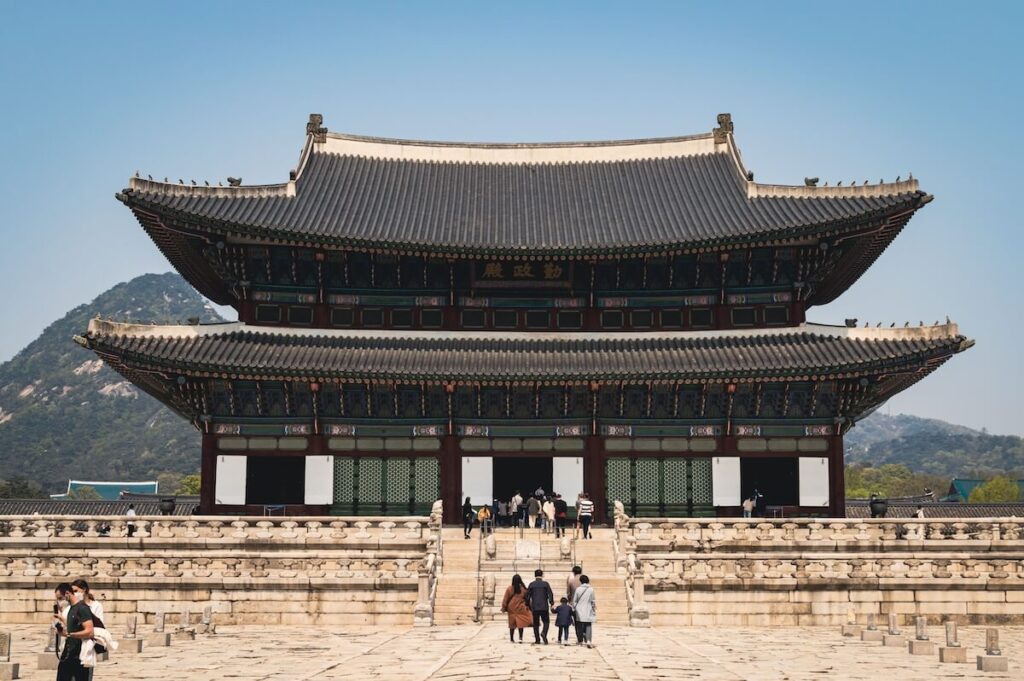
As the main royal palace of the Joseon Dynasty, Gyeongbokgung Palace is a must-visit for your first time in Seoul. It’s the grandest and most iconic of the city’s historic sites—the heart of South Korea’s rich imperial heritage.
Standard admission costs 3,000 KRW for adults, but if you plan on palace-hopping, you can purchase a combination ticket (10,000 KRW) covering Gyeongbokgung, Changdeokgung, Deoksugung, Changgyeonggung, and Jongmyo Shrine. Buying them separately, it costs 12,000 KRW, so getting a combination ticket saves you 2,000 KRW.
While you’re at the main entrance, be sure to catch the colorful Royal Guard Changing Ceremony at Gwanghwamun Gate, which takes place daily (except Tuesdays) at 10:00 AM and 2:00 PM.
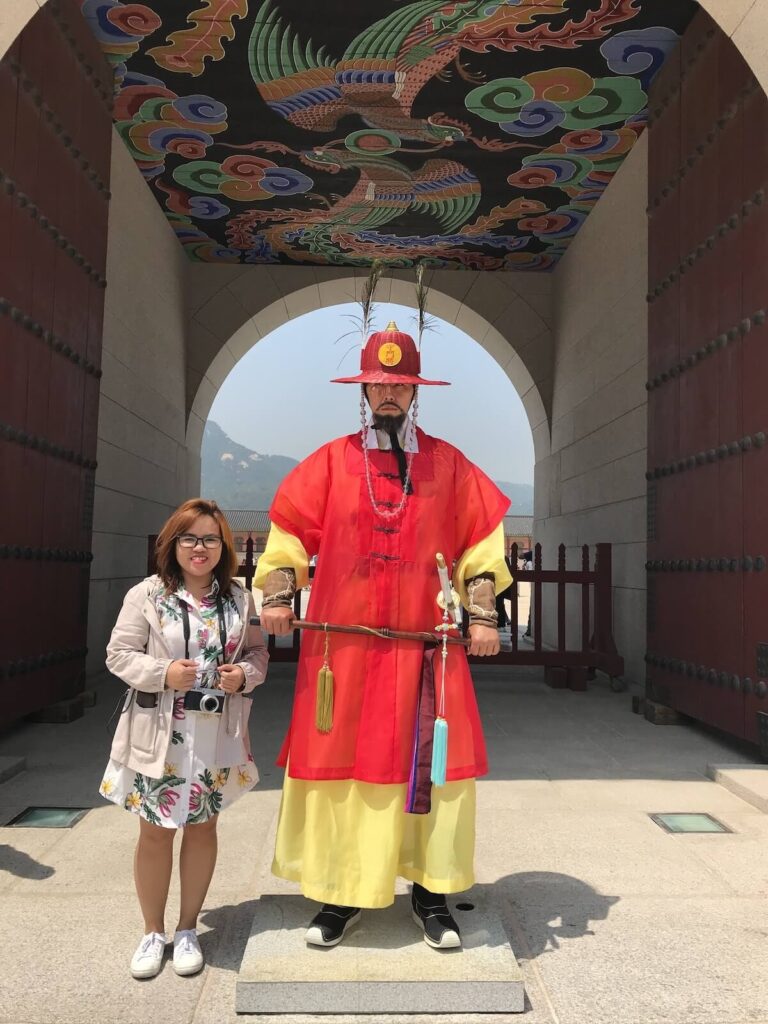
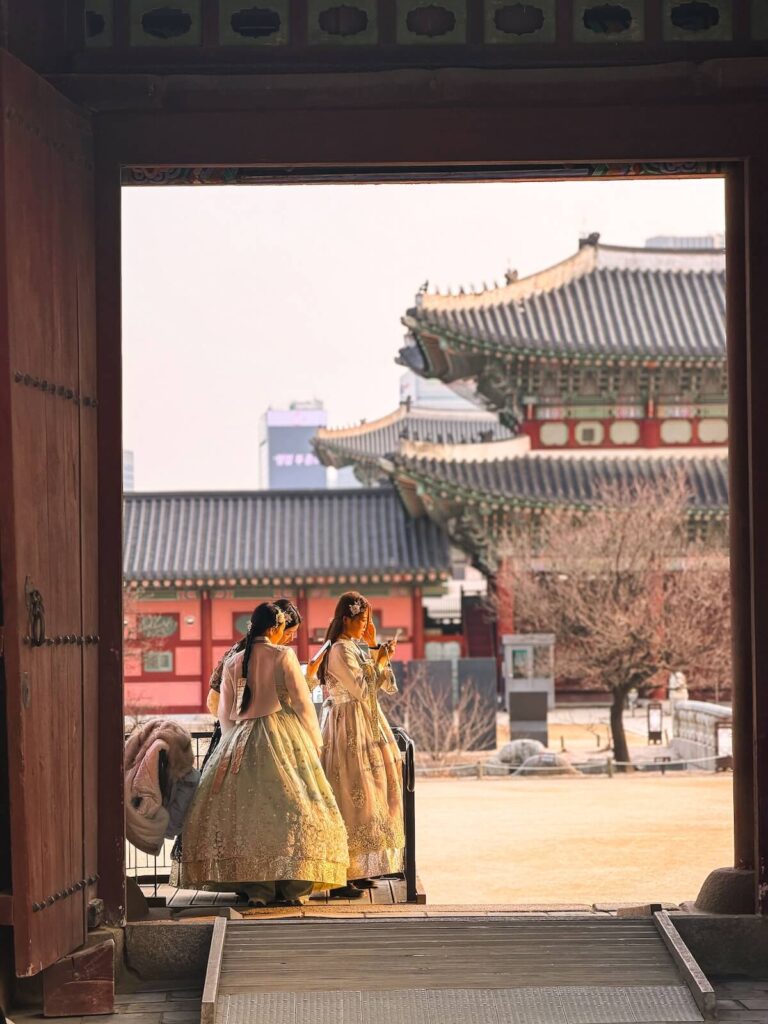
For an even more memorable visit, wear a hanbok, Korea’s traditional attire. Wearing one grants you free entry to all the major palaces and Jongmyo Shrine. If you want a hassle-free experience, rent your hanbok here.
2. Explore the Secret Garden at Changdeokgung Palace
Step into a real-life fairytale at Changdeokgung Palace, the best-preserved royal residence of the Joseon Dynasty and a recognized UNESCO World Heritage site.
While the main grounds showcase stunning ancient architecture, the true crown jewel is its Huwon or Secret Garden—a secluded 78-acre oasis featuring peaceful pavilions, lotus ponds, and centuries-old trees that were once reserved exclusively for the royal family. Exploring it is one of the most enchanting things to do in Seoul if you’re into nature and history.
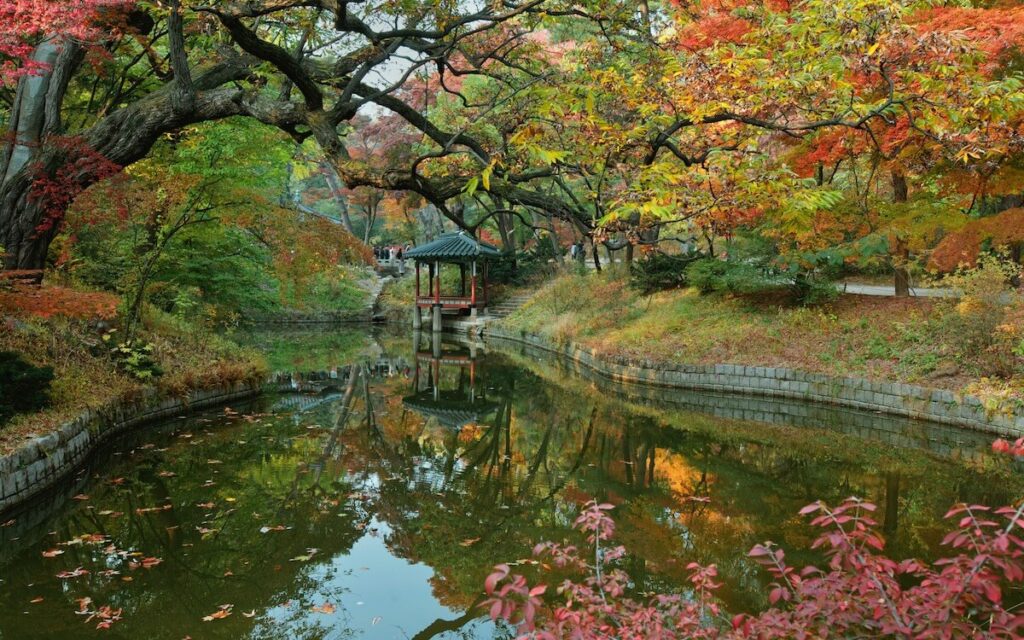
As it is with Gyeokbokgung Palace, general admission to Changdeokgung is 3,000 KRW, or you can use the 10,000 KRW combination ticket. However, access to the Secret Garden requires a separate 5,000 KRW ticket and a timed guided tour. Late arrival means no entry, and you can’t refund your ticket.
Admission is limited to 100 people per session (50 online reservations and 50 onsite purchases) to protect the ecosystem. Spots do fill up fast, so it’s best to book your Secret Garden tour online well in advance so you don’t miss out on exploring these tranquil gardens.
3. Stroll through Bukchon Hanok Village
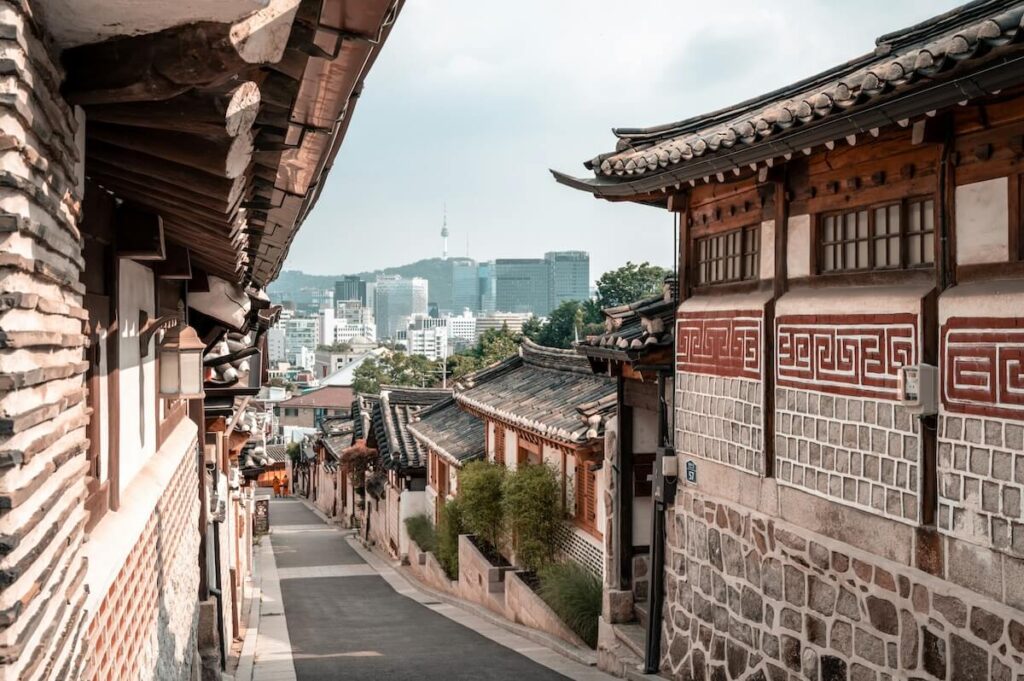
Bukchon Hanok Village was one of my favorite stops in Seoul because it shows such a striking contrast between the city’s rich history and its modern skyline.
Dating back 600 years to the Joseon Dynasty, this neighborhood originally served as an elite residential quarter for royalty, government officials, and high-ranking nobility. Today, it remains one of the most rewarding things to do in Seoul.
While the village is home to many cafés and restaurants, the best thing to do here is stroll along its narrow, winding alleys lined with hundreds of preserved, centuries-old traditional Korean houses (hanoks). Amidst Seoul’s fast-paced streets, this area offers a quiet, picturesque glance into historical living.
Since the village is an actual living neighborhood, taking a guided tour is a fantastic way to explore while respecting local residents. To make the most of your time, consider booking this walking tour, which conveniently combines Gyeongbokgung Palace and Bukchon Hanok Village into one fun morning adventure.
4. Shop for traditional handicrafts along Insadong Cultural Street

If you are looking for authentic Korean art and handcrafted treasures, Insadong Cultural Street is the place to be.
Home to royal painters during the Joseon Dynasty and later an antique hub where noble families sold heirloom treasures, Insadong has long stood as Seoul’s premier cultural enclave. This is where I got most of my Seoul souvenirs, and I loved its winding side alleys lined with artisan shops, ceramic ateliers, antique stores, and independent art galleries.
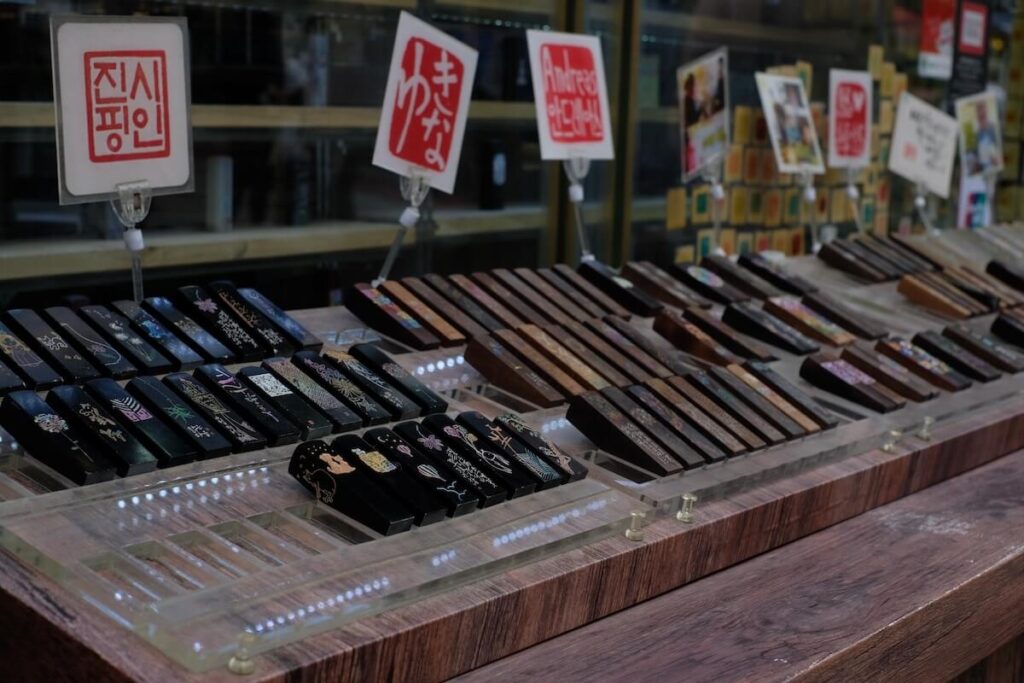
After browsing for handmade pottery, hanji paper, or delicate calligraphy brushes, take a relaxing break inside a serene, wooden hanok teahouse for fresh traditional tea and Korean sweet treats. For a memorable, hands-on keepsake to take home, you can even consider booking this chopstick-making workshop.
5. Find inner peace at Jogyesa Temple
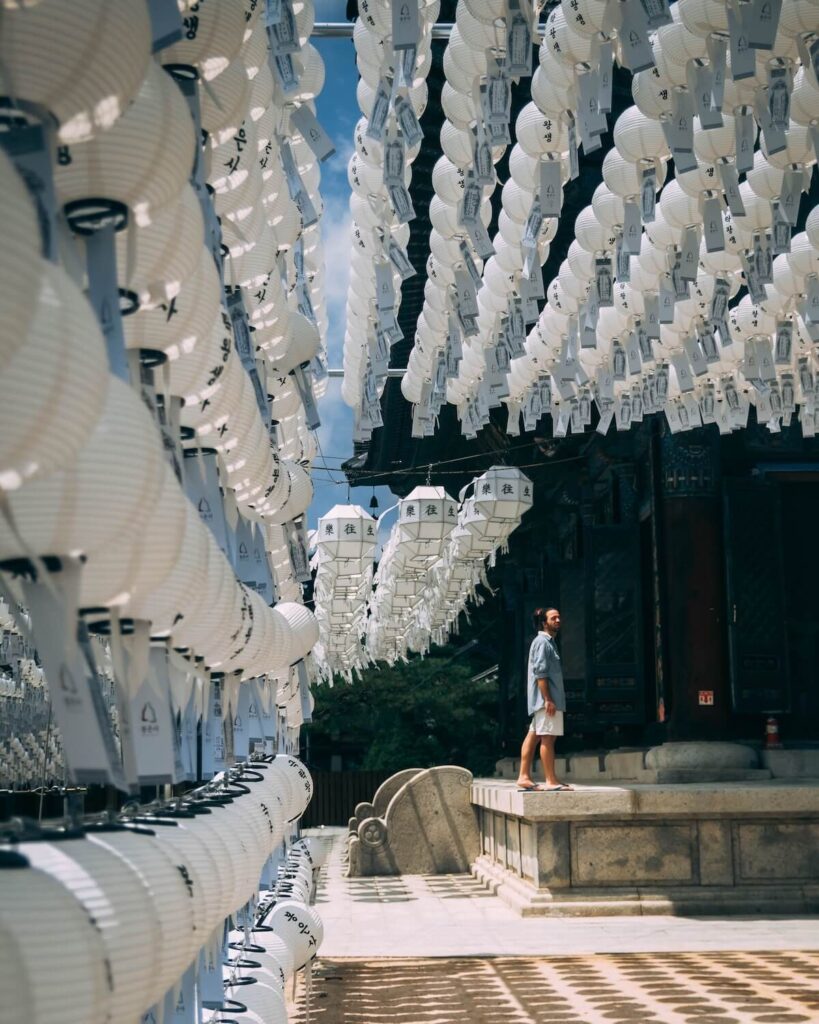
Tucked right in the heart of downtown, Jogyesa Temple serves as the headquarters of the Jogye Order and the chief center of Zen Buddhism in South Korea. First established in 1395 at the start of the Joseon Dynasty, this urban sanctuary offers a serene escape where centuries-old traditions thrive amid towering city skyscrapers.
It’s a marvelous spot to slow down, admire 500-year-old locust trees, gaze at bright paper lanterns, and enjoy the peaceful courtyard. To learn about its rich heritage and the neighboring art district, you can join this guided walking tour that covers Jogyesa Temple and Insadong.
Panoramas and modern wonders
6. Take in panoramic views from N Seoul Tower
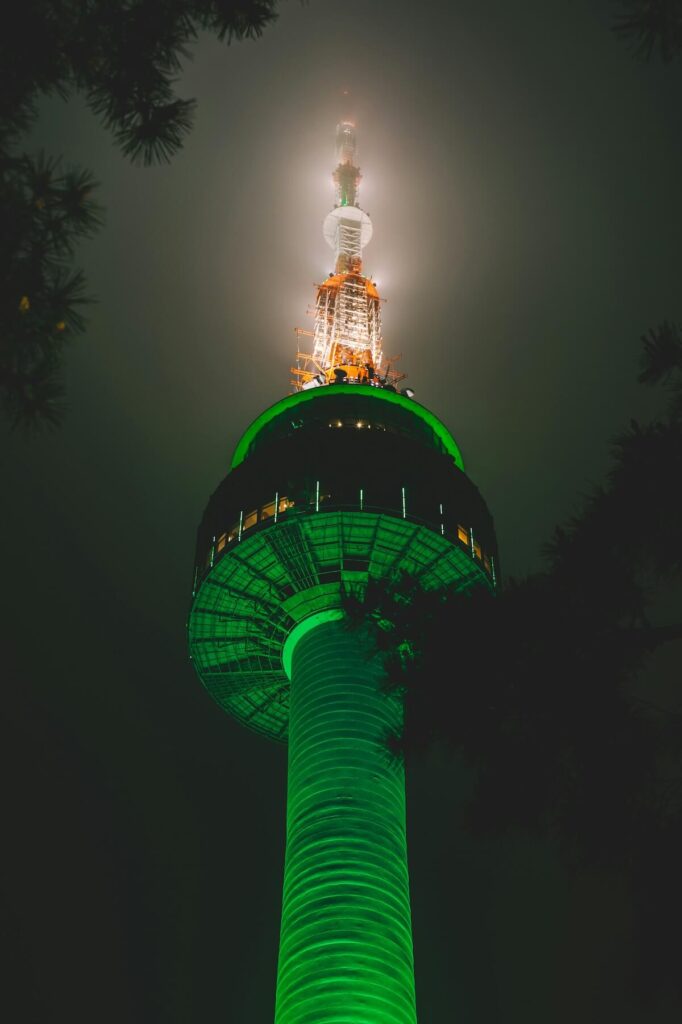
If you are a fan of K-dramas like me, you’re probably already familiar with N Seoul Tower, or Namsan Tower.
Perched atop Namsan (which translates to “South Mountain”), this iconic broadcasting and observation tower built in 1969 has starred in hit series like Boys Over Flowers, My Love from the Star, Oh My Ghostess, and True Beauty. Riding the scenic cable car up the slopes gives you sweeping skyline views, while the colorful “Love Locks” fence at the tower’s base is a world-famous spot for couples to attach a padlock and seal their romantic wishes.
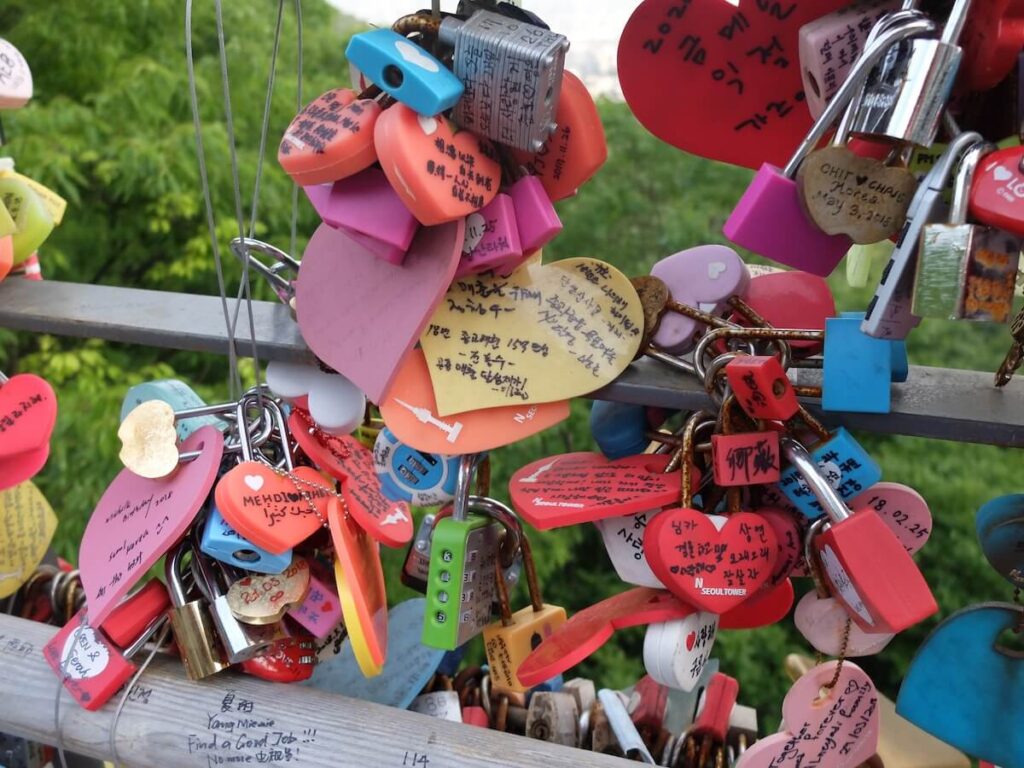
For the ultimate experience, head up to the main observation deck to soak in breathtaking 360-degree panoramic views of the entire city. It’s one of the best things to do in Seoul, especially during sunset or at night when the cityscape lights up. To skip the long ticket lines and secure your spot, book your observatory ticket ahead of time.
7. Marvel at the futuristic architecture of Dongdaemun Design Plaza

Designed by world-renowned architect Zaha Hadid, Dongdaemun Design Plaza (DDP) is a stunning visual spectacle fit for your first time in Seoul. This silver neo-futuristic landmark features sweeping, curved lines without a single straight pillar and is the cultural heart of Seoul’s design and fashion scene.
Walking around the exterior grounds is completely free and accessible 24/7, which is why it’s a popular spot for late-night photos. Inside, you’ll find design shops, art exhibition halls, and museum spaces (where specific exhibits require ticket purchase). Don’t miss checking out the LED Rose Garden and browsing the quirky design products at the DDP Design Store!
8. Read a book at the Starfield Library in COEX Mall
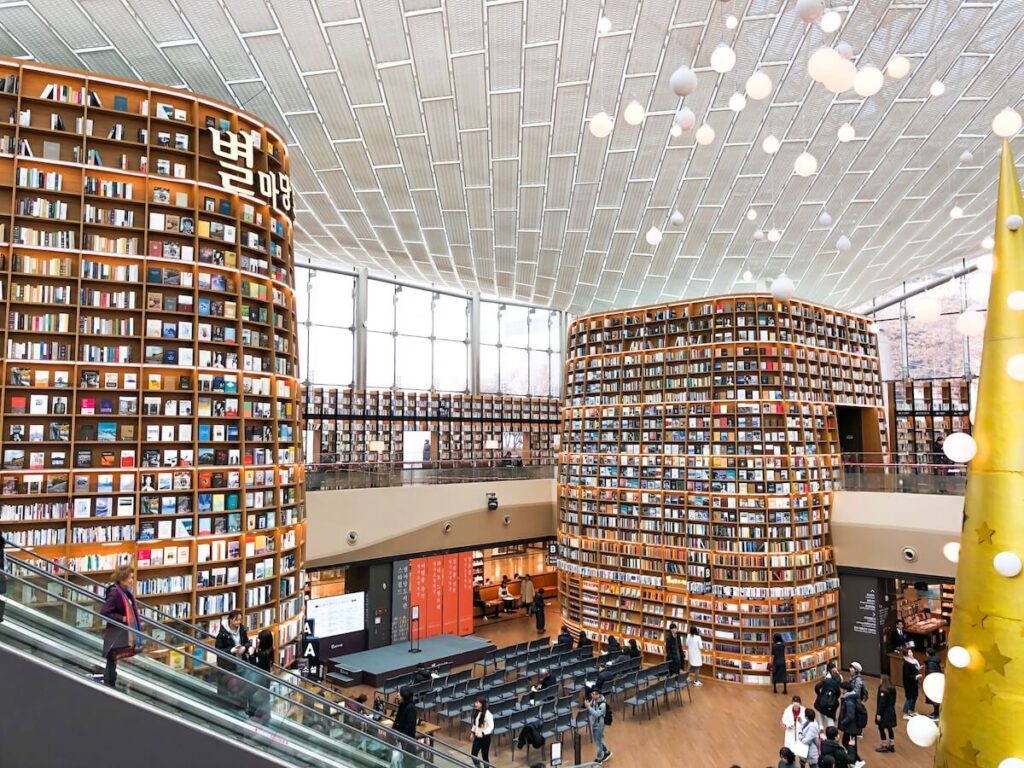
Located inside the massive Starfield COEX Mall in Gangnam, Starfield Library is one of the best things to do in Seoul if you’re a booklover like me.
Since opening in 2017, this breathtaking public library has become a major architectural milestone and cultural hub in the city. Its crowning feature is a central plaza dominated by three towering, 13-meter-tall (42-foot) floor-to-ceiling bookshelves that wrap around two expansive levels—a stunning backdrop that draws both avid readers and photo enthusiasts alike.
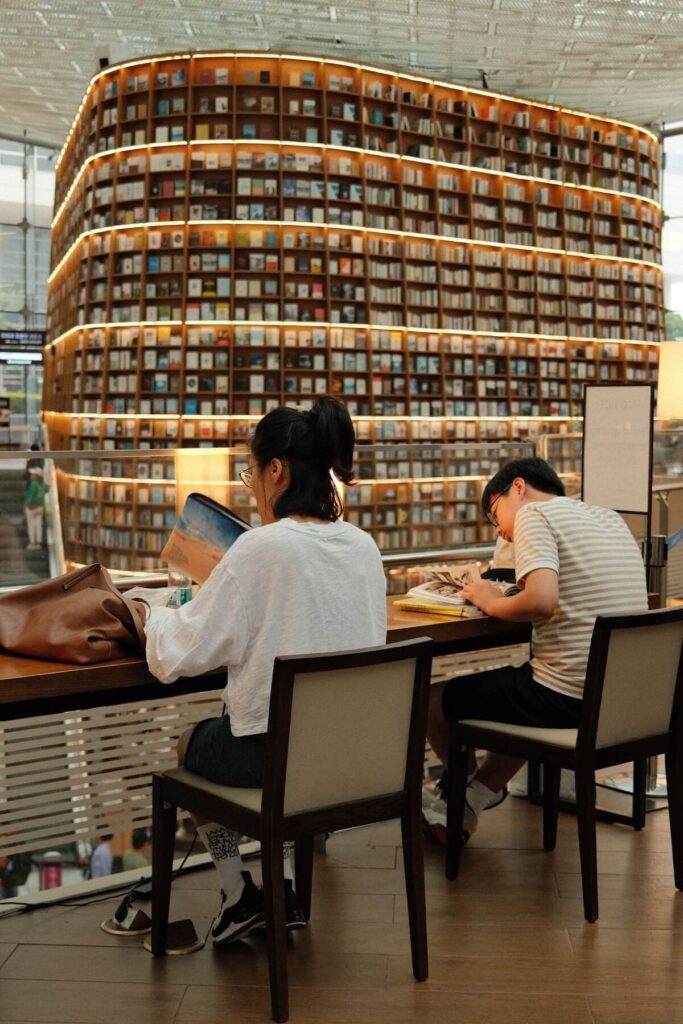
But while it’s truly photogenic, what’s even more impressive is its collection of over 50,000 books and hundreds of domestic and foreign magazines. Plus, anyone can walk in, grab a book, and read completely for free. It’s well-equipped for spending a quiet afternoon, with seating spaces outfitted with power outlets and neighboring coffee shops right inside the space to fuel your reading session.
9. Walk along the elevated Seoullo 7017
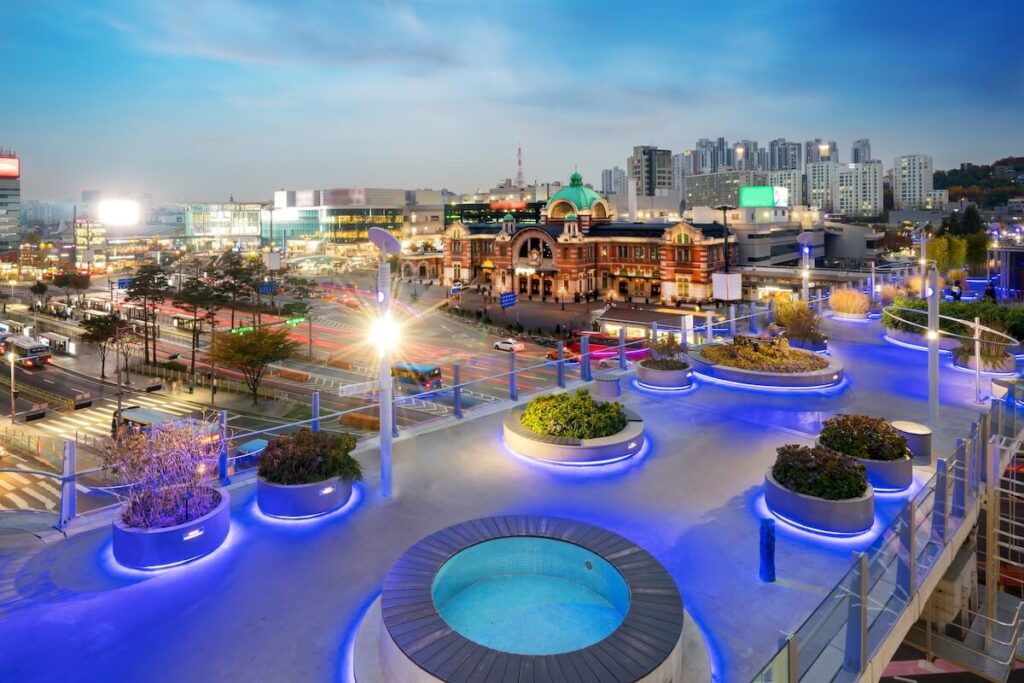
Often called Seoul’s answer to New York City’s High Line, Seoullo 7017 is a brilliant example of urban renewal right in the center of the capital.
Built directly above Seoul Station, this 1-kilometer elevated linear park transformed an abandoned 1970s highway overpass into a thriving pedestrian “skygarden” in 2017—a clever nod reflected in its name (“70” for its original build date and “17” for its rebirth).
Take a stroll along this floating walkway for a green escape directly over the bustling city streets. Lined with thousands of potted native plants, trees, and flowers arranged by the Korean alphabet, it gives you a unique vantage point over Seoul Station’s architectural contrast of historic brick and modern glass.
It’s especially delightful during the late afternoon or evening, when the pathways are illuminated and nearby city lights make the place even more vibrant.
10. Gaze up at Lotte World Tower
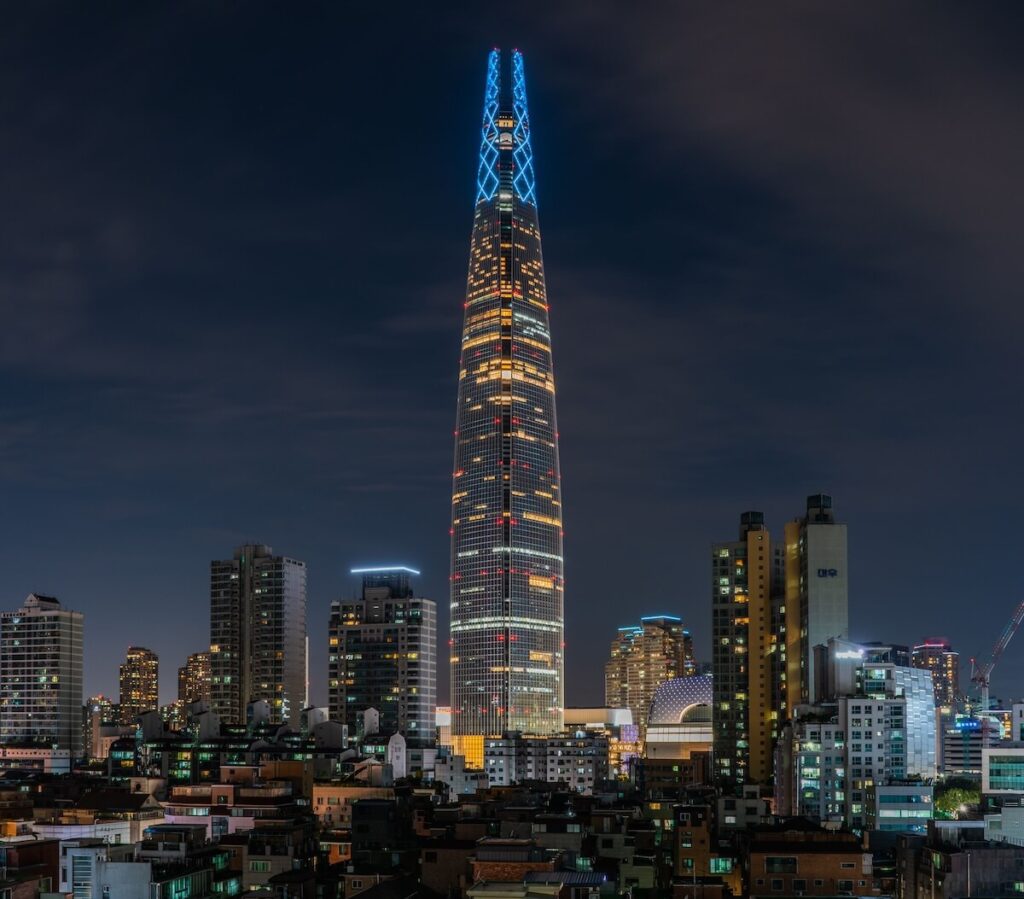
Standing a staggering 555 meters high in the Songpa District, Lotte World Tower is South Korea’s tallest building and the sixth-tallest skyscraper in the world. Opened in 2017, this sleek, 123-story supertall structure blends modern engineering with design elements inspired by traditional Korean porcelain and calligraphy.
For an unforgettable experience, ride one of the world’s fastest elevators up to the Seoul Sky observatory at the very summit. You’ll be treated to jaw-dropping 360-degree panoramic views stretching across the Han River and the entire Seoul metropolis, complete with thrilling glass-bottomed skywalks. Grab your ticket here to secure your observatory spot and skip the long lines.
Street food and culinary hotspots
11. Sample local street food at Gwangjang Market
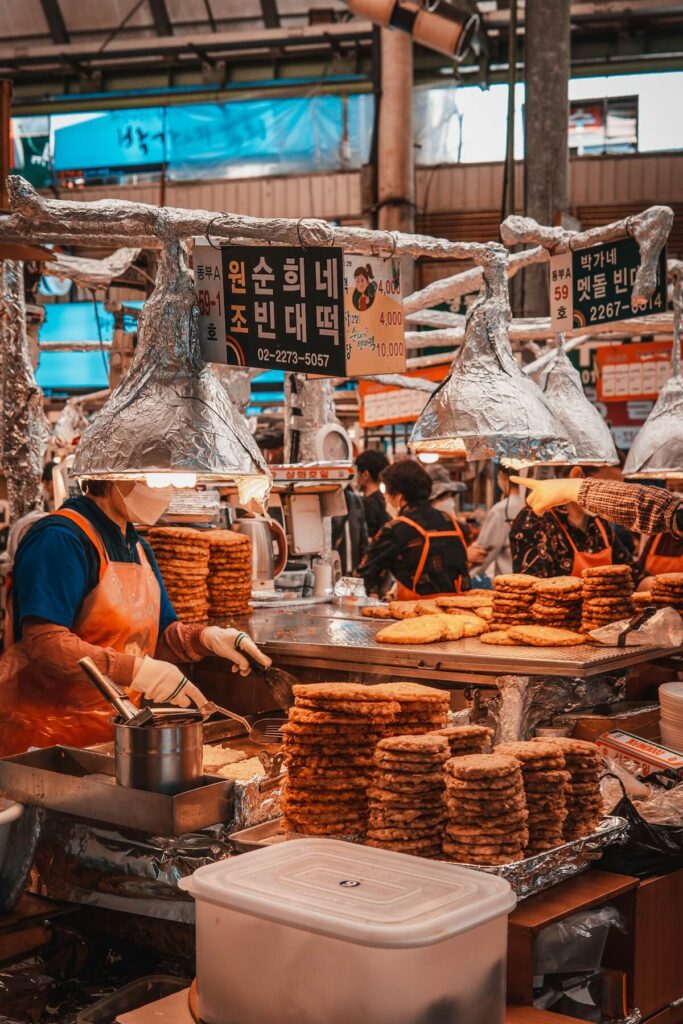
No trip for your first time in Seoul is complete without eating your way through Seoul. And the best place to do this is at the Gwangjang Market.
Established in 1905 in the heart of Jongno, Gwangjang sijang is South Korea’s oldest continuously operating traditional market. It started as a quiet trading hub for agricultural goods and fabrics and has transformed into a world-famous street food paradise, drawing hungry locals and global foodies alike every single day. It became even more popular after being featured in Netflix’s Street Food.
For the ultimate experience, grab a stool at one of the bustling center stalls and watch vendors cook right in front of you. Savor piping-hot bindaetteok (mung bean pancakes), chewy spicy tteokbokki (rice cakes), and kalguksu (hand-cut knife noodles) served in rich broths. If you want to taste the market’s absolute best dishes while learning about local culinary history, this guided night market food tour is worth booking.
12. Eat street snacks along Myeongdong Night Market
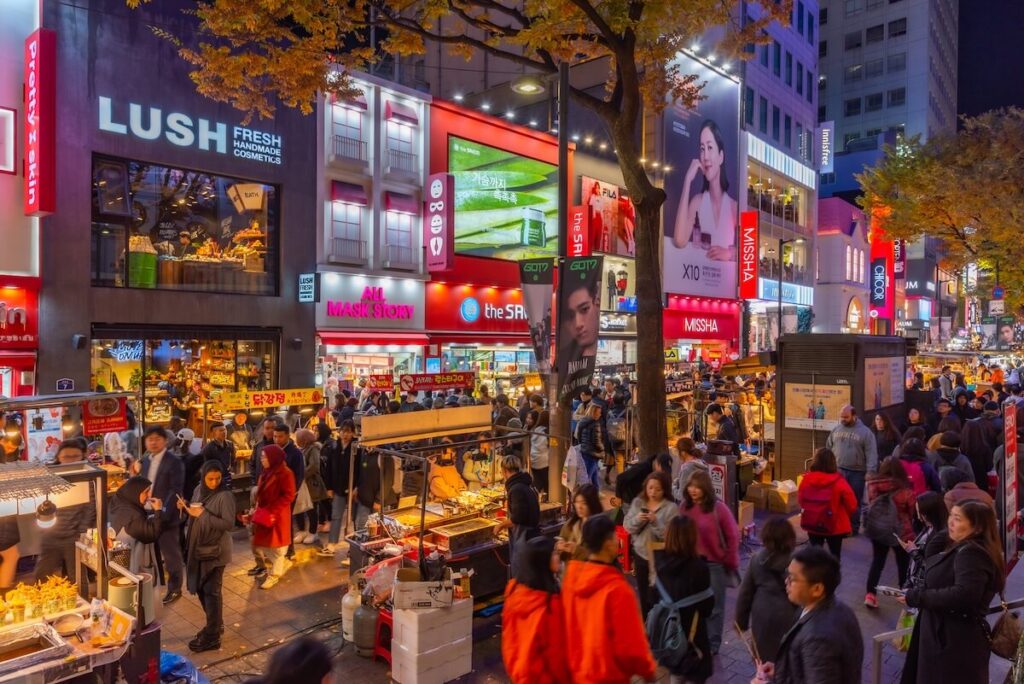
While Gwangjang Market offers a traditional, historic charm, Myeongdong Night Market serves up an entirely different, trendy energy once the sun sets.
Located in the heart of Seoul’s busiest shopping district, Myeongdong transforms at night as neon signs light up and endless street food carts line the pedestrian avenues. It’s one of the most exciting things to do in Seoul for foodies, offering inventive street snacks alongside the surrounding boutiques.
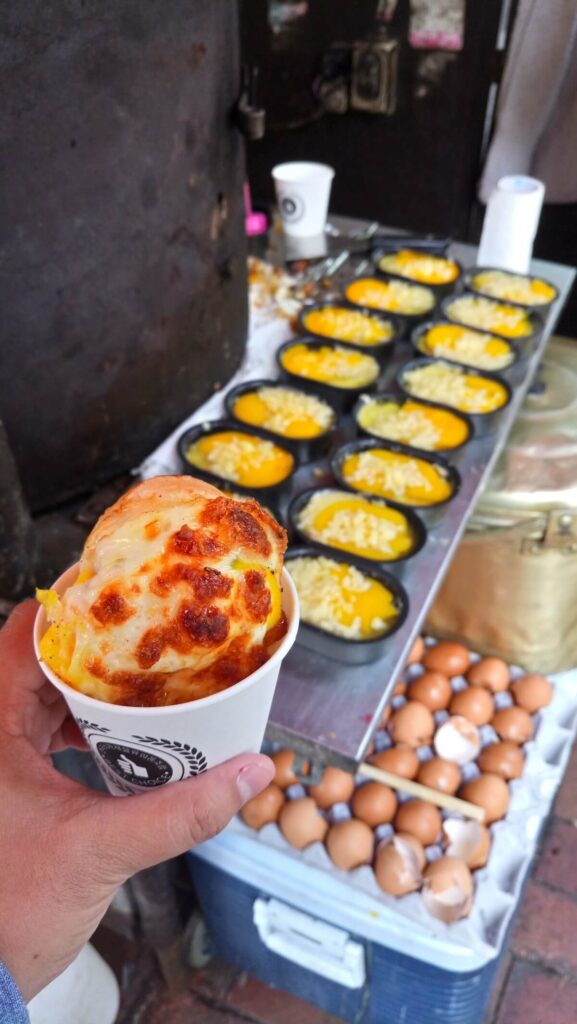
Skip a sit-down dinner and graze your way down the street, sampling popular bites like gyeran-bbang (warm egg bread pictured above, my favorite!), grilled cheese skewers drizzled with condensed milk, and sizzling seafood sticks.
13. Savor authentic Korean BBQ in Euljiro
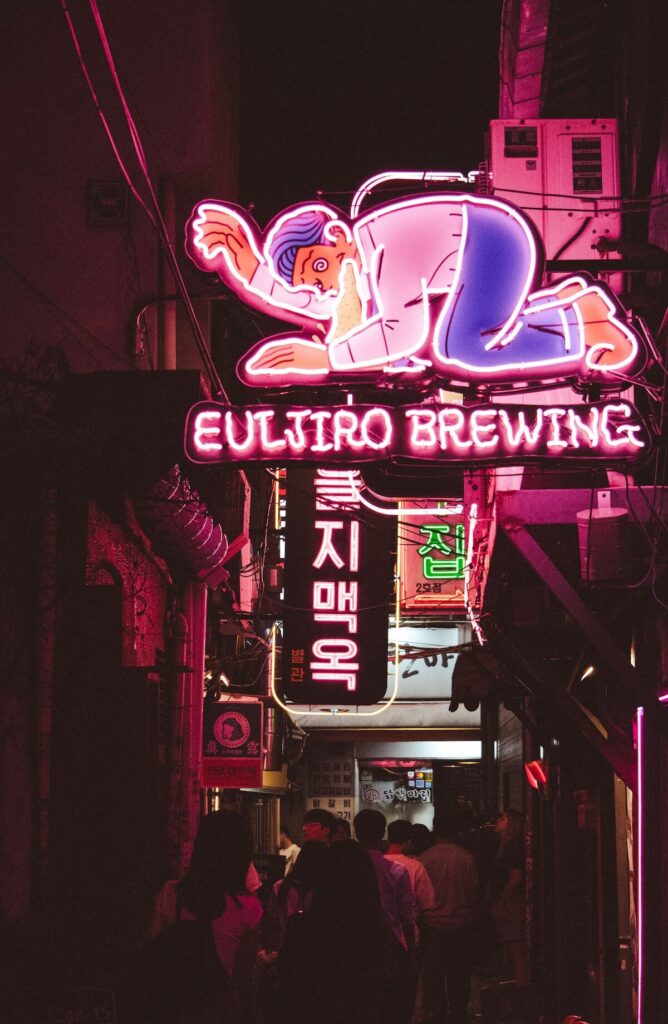
Tucked between Myeongdong and Dongdaemun, Euljiro—affectionately nicknamed “Hipjiro”—is the ultimate spot to experience authentic Korean BBQ. Originally a gritty industrial district filled with 1970s print shops and hardware stores, Euljiro has transformed into a favorite haunt where Seoul’s vintage past meets its modern foodie and nightlife scene.
Korean BBQ is a staple of local dining culture, and grilling meat in the heart of this retro neighborhood just feels right.
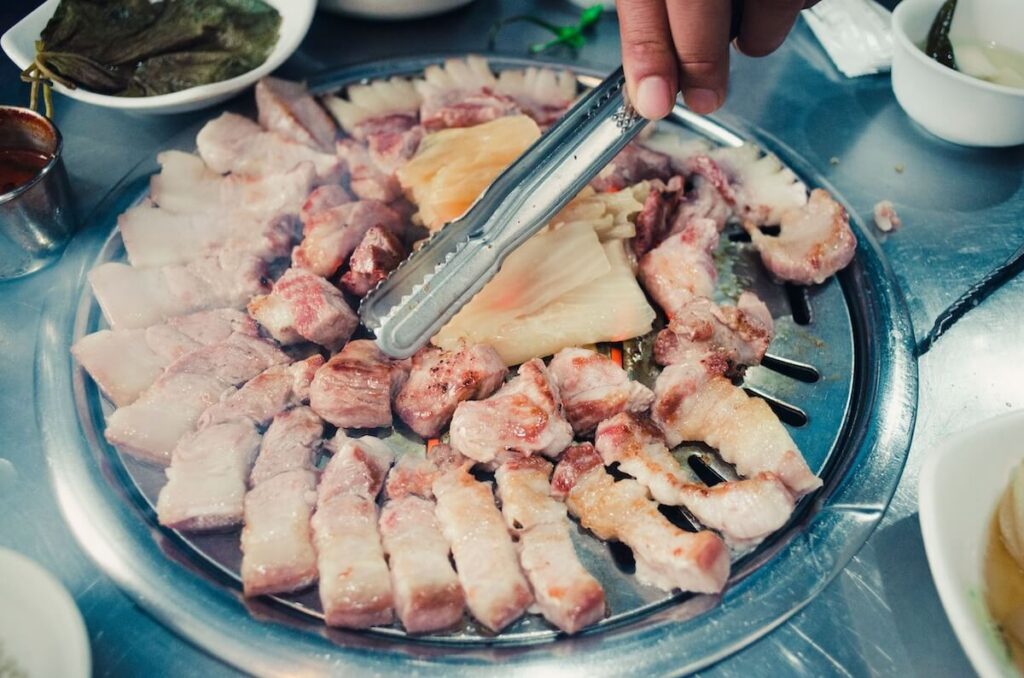
Here, you’ll find cozy, smoky alleyway diners serving up thick slabs of pork belly (samgyeopsal) or tender marinated beef right at your table. Pair it with a spread of fresh banchan (side dishes), crisp lettuce wraps, and an ice-cold drink, and you’ve got a flavorful night.
14. Have a casual chimaek meal by the Han River
Want to experience the epitome of Seoul’s modern leisure scene? Head straight to the Han River for a casual chimaek picnic!
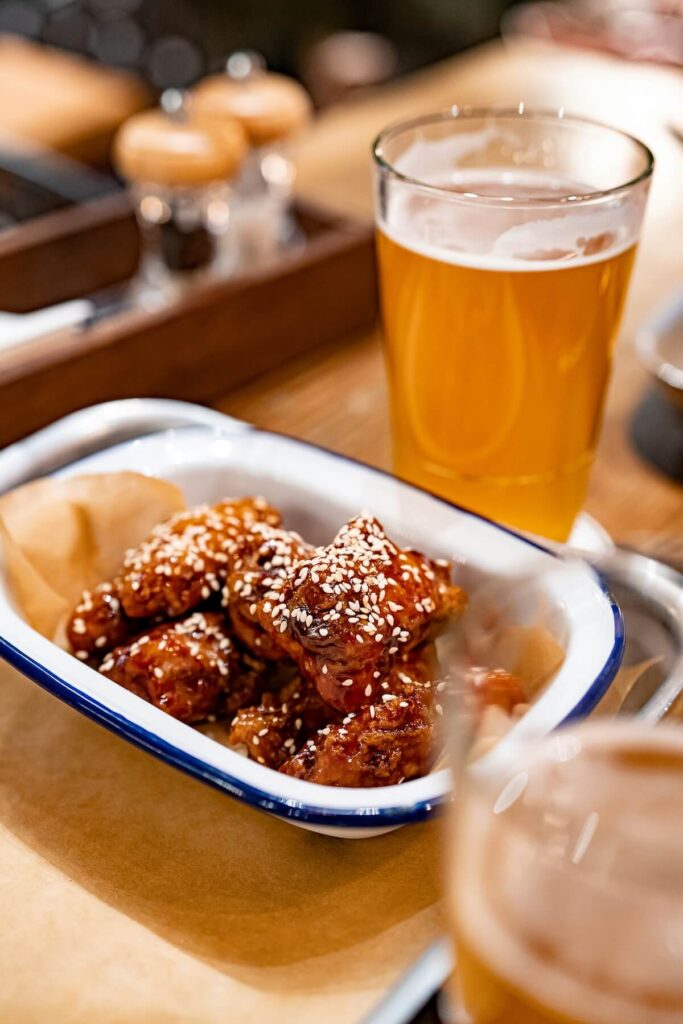
A mashup of chi (chicken) and maekju (beer), this culinary dynamic duo took off in the late 20th century and exploded into a full-blown national pastime during the 2002 World Cup. Today, it stands as a cornerstone of Korean drinking culture and an essential ritual for locals unwinding after a long day.
Grab a picnic mat from a nearby convenience store and settle along the grassy banks of Yeouido or Banpo Hangang Park. Thanks to South Korea’s legendary delivery service, you can order piping-hot, double-fried crispy chicken and draft beer delivered directly to designated drop-off zones right in the park.
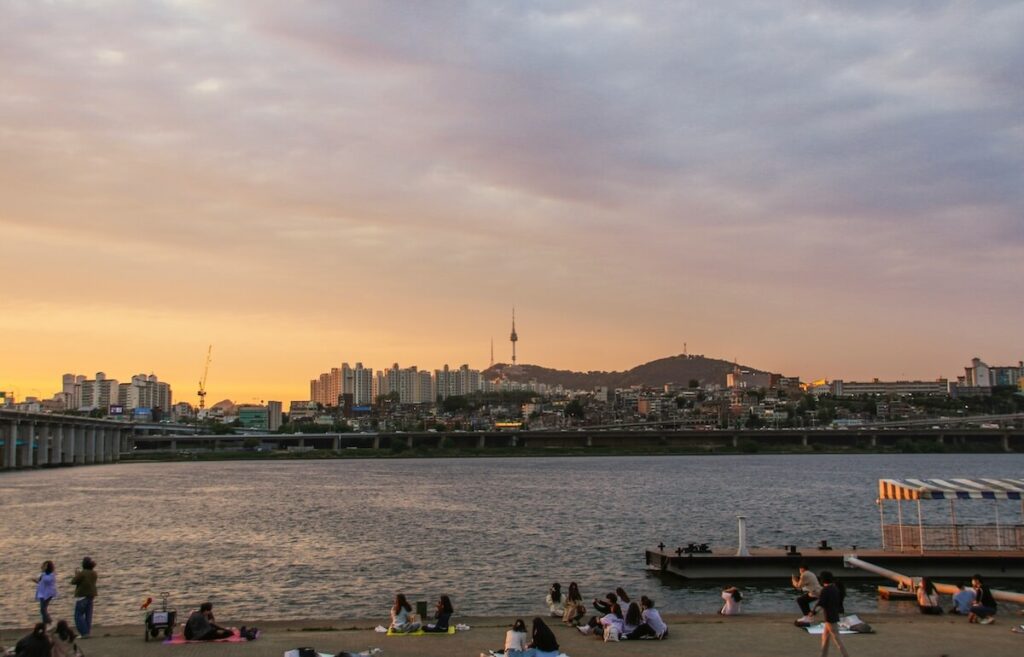
Munching on ultra-crunchy, glazed chicken and sipping an ice-cold brew as the city lights reflect off the river is one of the most relaxing ways to spend an evening in the capital.
15. Taste fresh seafood at Noryangjin Fisheries Wholesale Market
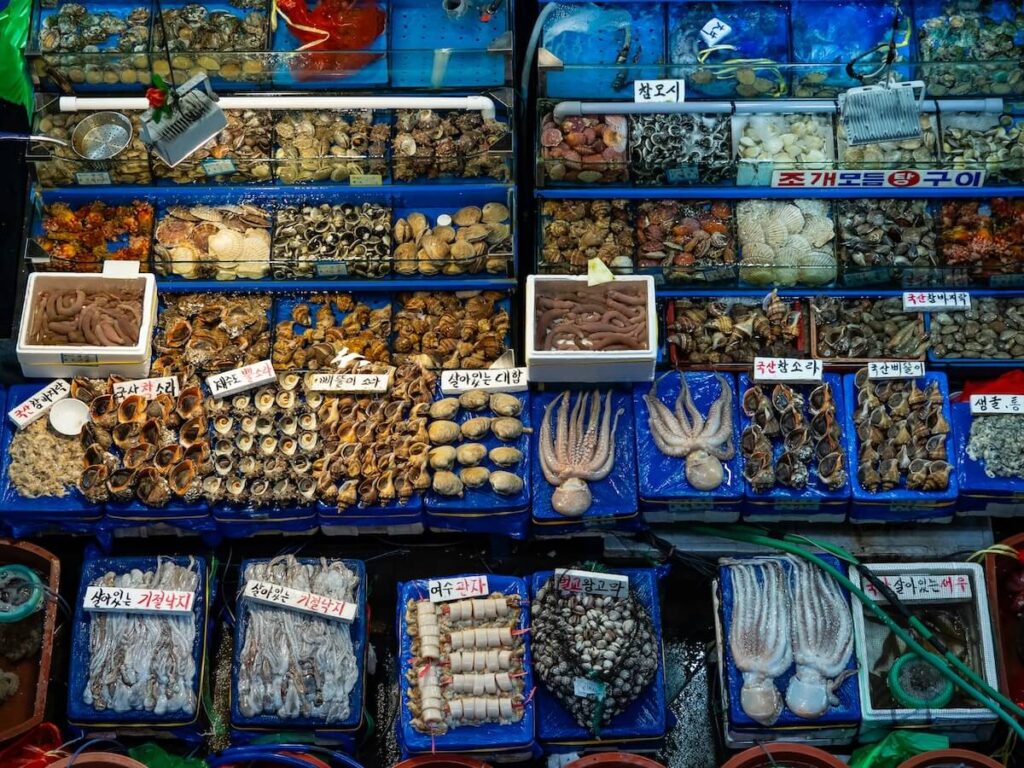
While many first-timers skip Noryangjin Fisheries Wholesale Market in favor of typical downtown sights, missing out on this bustling destination is a huge mistake.
Established in 1927 near Seoul Station and relocated to its current spot along the Han River in 1971, this is South Korea’s largest inland seafood market. It’s an iconic fixture of local food culture, brimming with energy across multi-story modern facilities.
The ultimate way to enjoy it is to select live fish, king crab, or shellfish directly from ground-floor vendors and bring your catch to an upstairs restaurant to be cooked instantly—whether steamed, grilled, or prepared as fresh sashimi (hoe).
To dive straight into the action without feeling overwhelmed, consider booking this 2-hour guided tour that lets you witness high-energy wholesale auctions and observe expert fishmongers’ incredible knife skills up close.
Trendy neighborhoods and shopping
16. Explore the industrial-chic cafes in Seongsu-dong
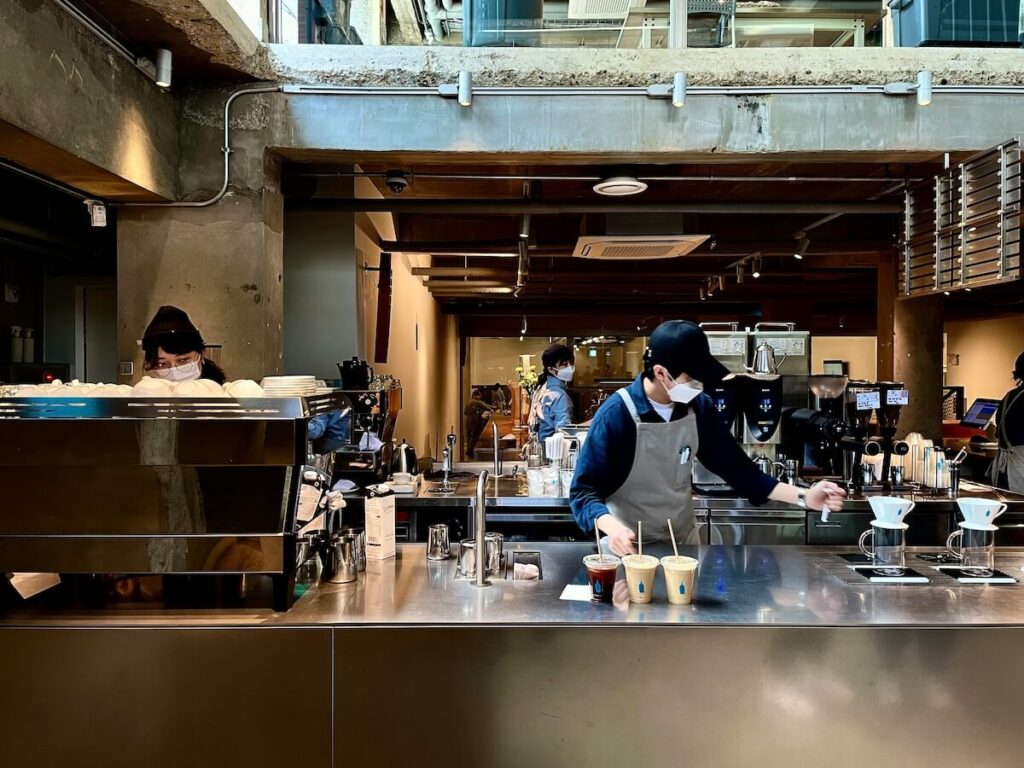
Located in the Seongdong District east of downtown, Seongsu-dong is one of the coolest neighborhoods to explore in Seoul.
Historically an industrial hub filled with shoe factories and auto repair shops throughout the late 20th century, this area is now a massive hot spot for younger generations. Thanks to its social media fame, it’s constantly buzzing with creative energy and stylish crowds.
Affectionately nicknamed the “Brooklyn of Seoul,” Seongsu-dong is home to rugged, exposed-brick industrial structures with a sleek modern aesthetic. You’ll find former warehouses converted into trendy concept stores, exhibition spaces, and world-class bakeries. It’s an ideal neighborhood to grab specialty coffee, snap photos against rustic street murals, and browse independent designer pop-ups.
17. Experience youthful energy and busking in Hongdae
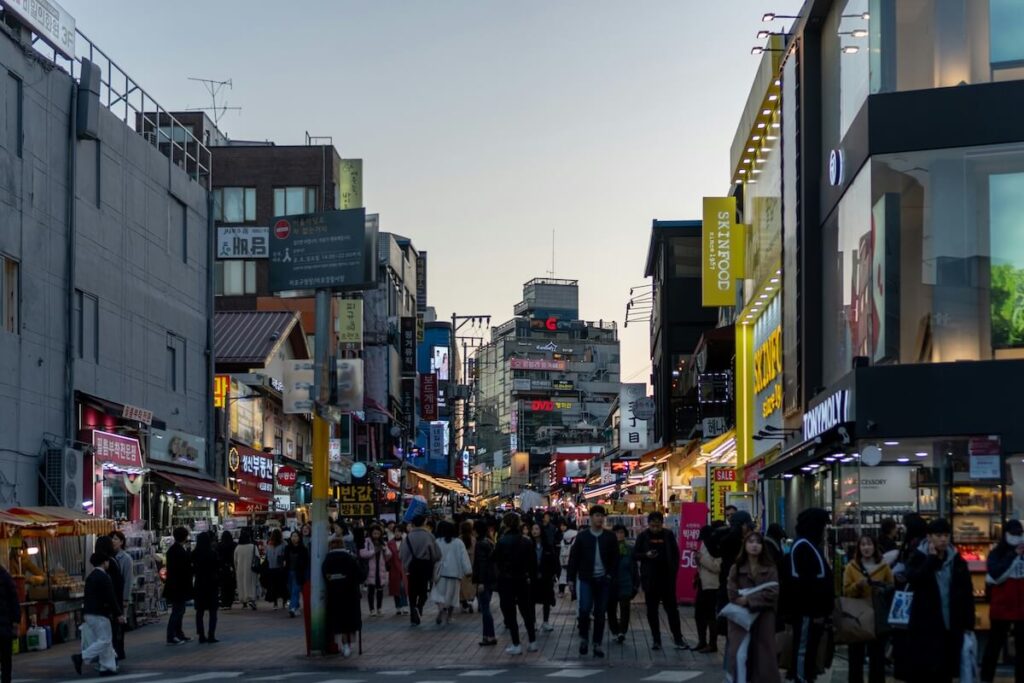
It’s impossible to talk about Korean youth culture without mentioning Hongdae. Located in the Mapo District, this area takes its name as an abbreviation of Hongik Daehakgyo (Hongik University), the prestigious art school at its center.
Rising to fame in the 1990s as the birthplace of Korea’s indie music and youth subculture, Hongdae has evolved into one of Seoul’s most vibrant and energetic neighborhoods. Here, creative energy fills the streets day and night.
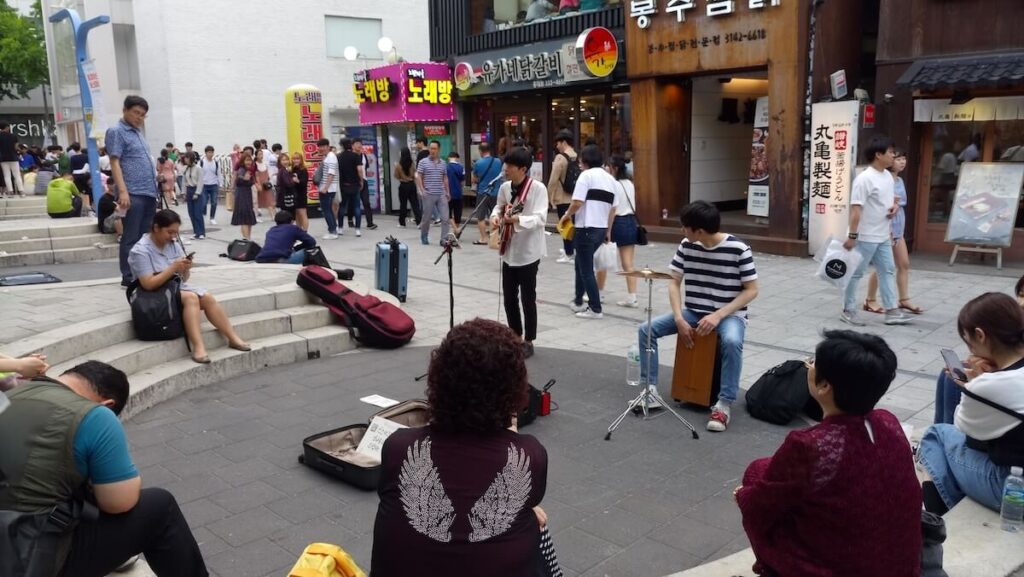
You can wander through dedicated street performance zones to watch talented dancers and musicians busk, shop for unique clothes in indie fashion boutiques, and dive into the thriving nightlife surrounding the university campus..
18. Shop for beauty products in Myeongdong

One of the best things to do in Seoul, whether it’s your first time or not, is to shop for K-beauty products. Globally famous for innovative formulas, gentle ingredients, and glowing “glass skin” results, Korean skincare and cosmetics are a major highlight for travelers.
While you can find beauty shops in trendy areas like Hongdae, Gangnam, and Seongsu-dong, Myeongdong remains the ultimate K-beauty epicenter. Its pedestrian streets are densely packed with multi-story flagship stores, where friendly staff hand out free samples just for stepping inside.
You’ll find massive outposts for famous single-brand names like Innisfree, Laneige, Etude, and Nature Republic, alongside multi-brand megastores like Olive Young. It’s the perfect place to haul must-buy K-beauty products like hydrating sunscreens, pimple patches, soothing sheet masks, snail mucin essences, and cushion compacts.
To make your haul even easier, treat yourself or a fellow skincare lover to an Olive Young gift card so you can stock up on all the viral favorites in one go!
19. Discover hidden alleyway cafes in Ikseon-dong

Nestled right in the heart of downtown, Ikseon-dong is one of Seoul’s oldest and most charming neighborhoods.
Dating back to the 1920s, this historic maze of narrow alleyways was originally developed as an affordable residential area filled with traditional hanok homes. While it remained relatively quiet for decades, the neighborhood has surged in popularity among locals and travelers in recent years, and it eventually become one of the city’s top trendsetting enclaves.
Wandering through Ikseon-dong’s labyrinth of cobblestone paths gives you access to preserved traditional wooden architecture that now houses quirky boutique shops and artisan craft stores. You’ll also find aesthetically stunning dessert cafes serving everything from soufflé pancakes to craft teas.
I recommend this if you want a lazy afternoon of snapping photos and discovering hidden courtyard cafes behind historic tiled roofs.
20. Walk through luxury avenues in Garosu-gil
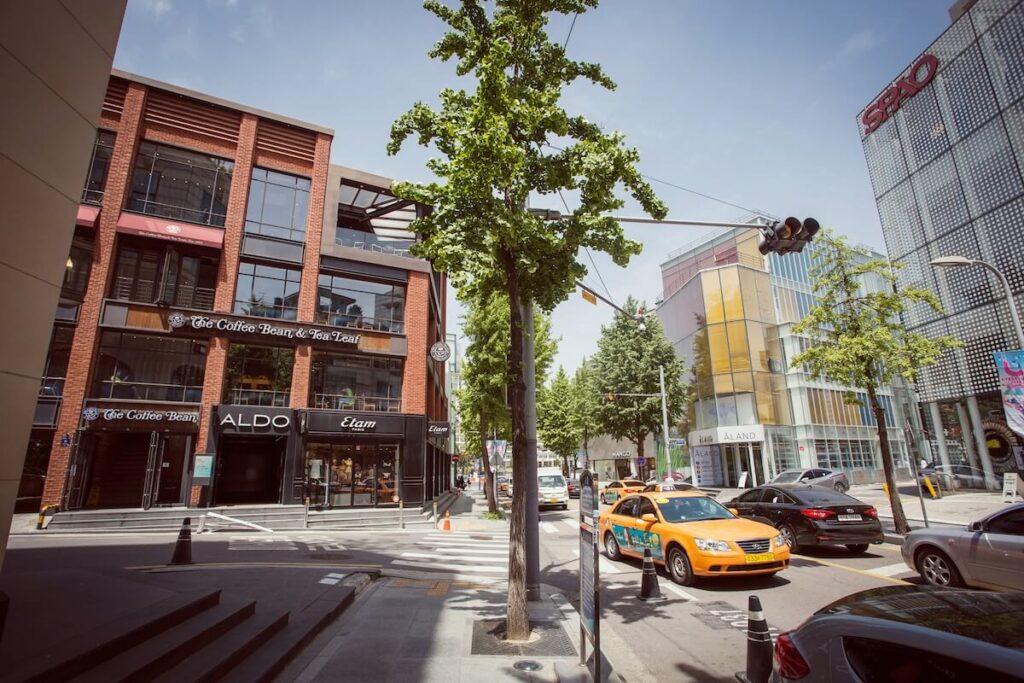
For a taste of Seoul’s sophisticated fashion scene, head south of the river to Gangnam and stroll down Garosu-gil.
Translating to “tree-lined street,” this trendy boulevard in Sinsa-dong got its start in the 1980s as a quiet hub for local art galleries and indie design studios. Over the years, it evolved into one of the city’s premier shopping destinations, famous for its picturesque canopy of ginkgo trees that turns brilliant gold in the autumn.
Garosu-gil is a fantastic spot to spend a relaxed afternoon window shopping and people-watching. You can browse sleek high-end designer stores, explore multi-story concept boutiques tucked into side alleys, and marvel at striking modern architectural landmarks like the flagship stores for Gentle Monster and Maison Kitsuné. Afterward, recharge at one of the neighborhood’s chic European-style outdoor cafes or dessert parlors.
Parks, leisure, and nightlife
21. Walk along the Cheonggyecheon Stream
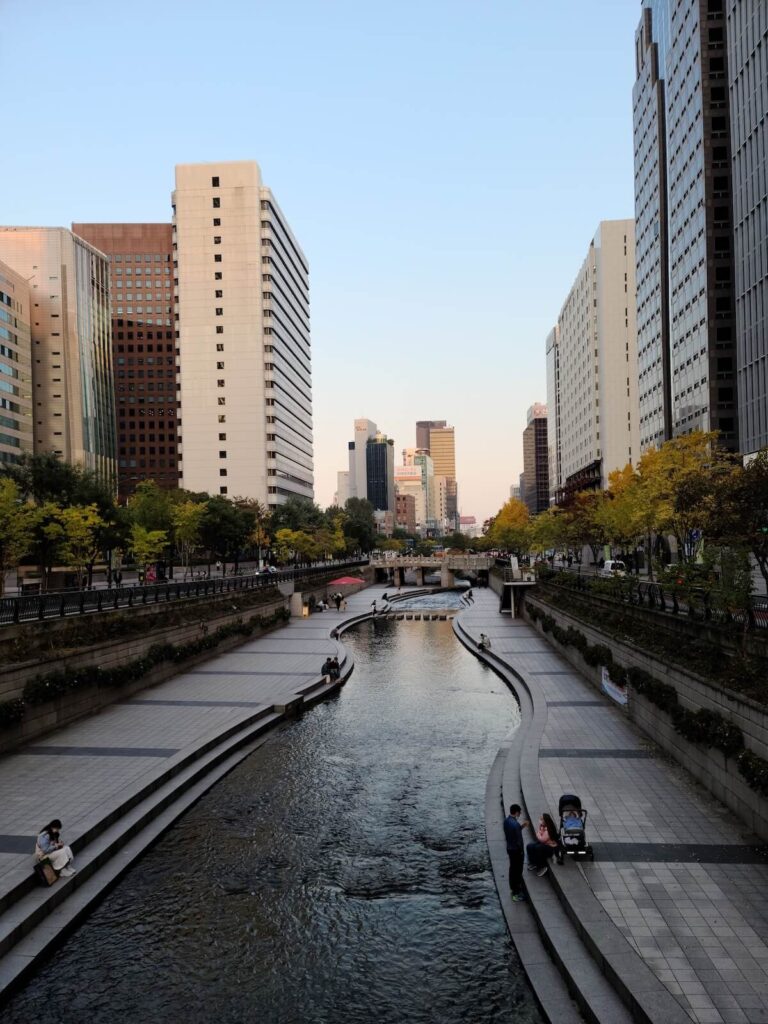
Need a peaceful breather right in the middle of the city? Follow the gentle path of the Cheonggyecheon Stream, an 11-kilometer urban oasis flowing through the heart of downtown.
Covered over with concrete and an elevated highway in the mid-20th century, this historic waterway underwent a massive restoration project in 2005, transforming it into a beloved public park below street level. Today, it offers a serene retreat where you can stroll along sunken walkways, cross stone bridges, and listen to cascading waterfalls right beneath looming skyscrapers.
It’s also a staple location in hit K-dramas like Vincenzo and Little Women, so if you enjoyed those shows, include an evening walk here in your itinerary.
22. Experience late-night nightlife in Itaewon
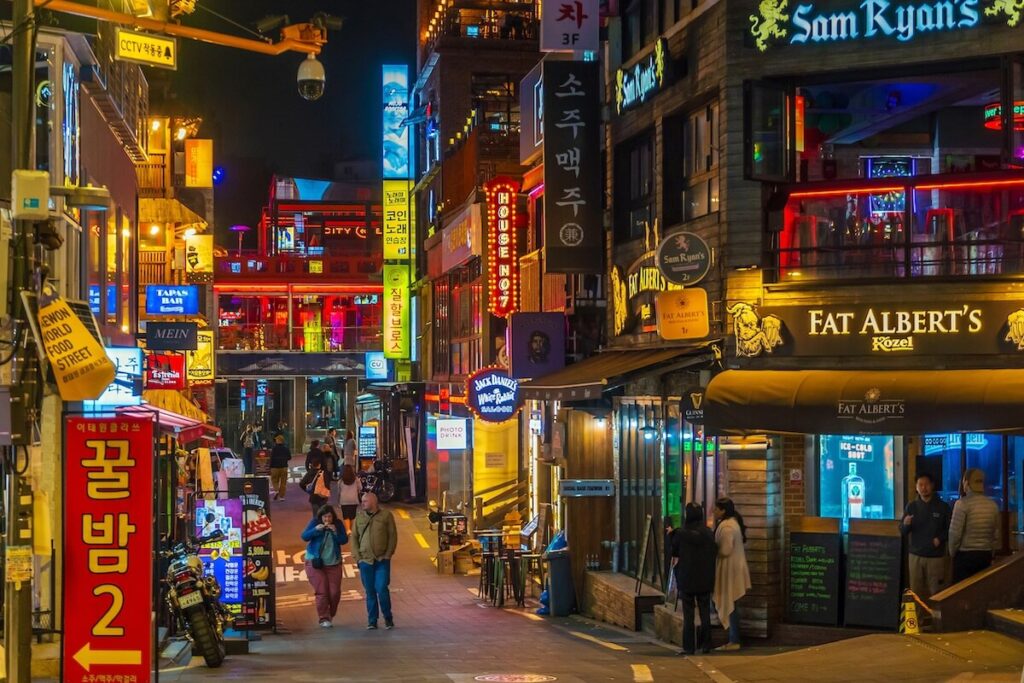
Looking for a nightlife scene where the whole world seems to party under one roof? You’ll find it along the hillsides of Yongsan District.
Itaewon is Seoul’s premier global hub and most international neighborhood. Originally developed as a commercial district for personnel stationed at the neighboring U.S. Army Garrison after the Korean War, it evolved over decades into a melting pot of cultures, global dining, and legendary nightlife.
While the neighborhood faced a profound tragedy during the 2022 Halloween crowd crush, Itaewon has since slowly recovered its spirit through renewed safety measures, community resilience, and a deep respect for its past. Today, it remains a vibrant, welcoming destination to explore.
When visiting, you can hop between international pub lounges, sleek rooftop cocktail bars overlooking N Seoul Tower, and high-energy underground dance clubs playing everything from hip-hop to house until sunrise.
23. Sing your heart out at a private noraebang

No night-out in Seoul is truly complete without experiencing a noraebang, South Korea’s beloved private karaoke tradition.
Noraebang directly translates to “song room,” and the concept emerged in the early 1990s as a local adaptation of Japanese karaoke. It quickly evolved into an important part of Korean social life.
Unlike Western public karaoke stages, a noraebang offers an intimate, judgment-free space where you perform exclusively for your own group. Seoul offers options for every budget and vibe, ranging from pocket-sized coin noraebangs (koin-noraebang) perfect for quick solo tunes to lavish multi-room suites featuring plush seating and tambourines.
You can rent a soundproofed room by the hour, order drinks and snacks directly to your door, and sing your heart out. With glowing disco lights pulsing to thousands of international pop hits, K-pop anthems, and classic ballads, it’s the ultimate way to unleash your inner popstar until the early morning hours.
24. Unwind at a traditional Korean jjimjilbang
If you’ve ever wondered where locals go to reset, recharge, and stay warm around the clock, head straight to a jjimjilbang, South Korea’s iconic 24-hour bathhouse and sauna complex.
Emerging in the 1990s from traditional kiln saunas (hanjeungmak), these wellness hubs have become communal sanctuaries. Unlike standard Western spas, jjimjilbangs feature gender-segregated hot mineral baths paired with large, co-ed lounging halls where guests wear matching casual clothing, sip sweet rice juice (sikhye), eat baked eggs, and even sleep overnight.
Relaxing at a jjimjilbang is one of the best things to do in Seoul in winter when cold winds hit the city streets. You can soak in therapeutic hot springs, sweat out toxins in themed salt, jade, or charcoal saunas, and get a vigorously refreshing exfoliation with a traditional body scrub (seshin).
To secure your spot at one of the city’s most accessible traditional spots in Dongdaemun, grab a ticket to this jjimjilbang and lounge like a local.
25. Take a day trip to the Demilitarized Zone (DMZ)
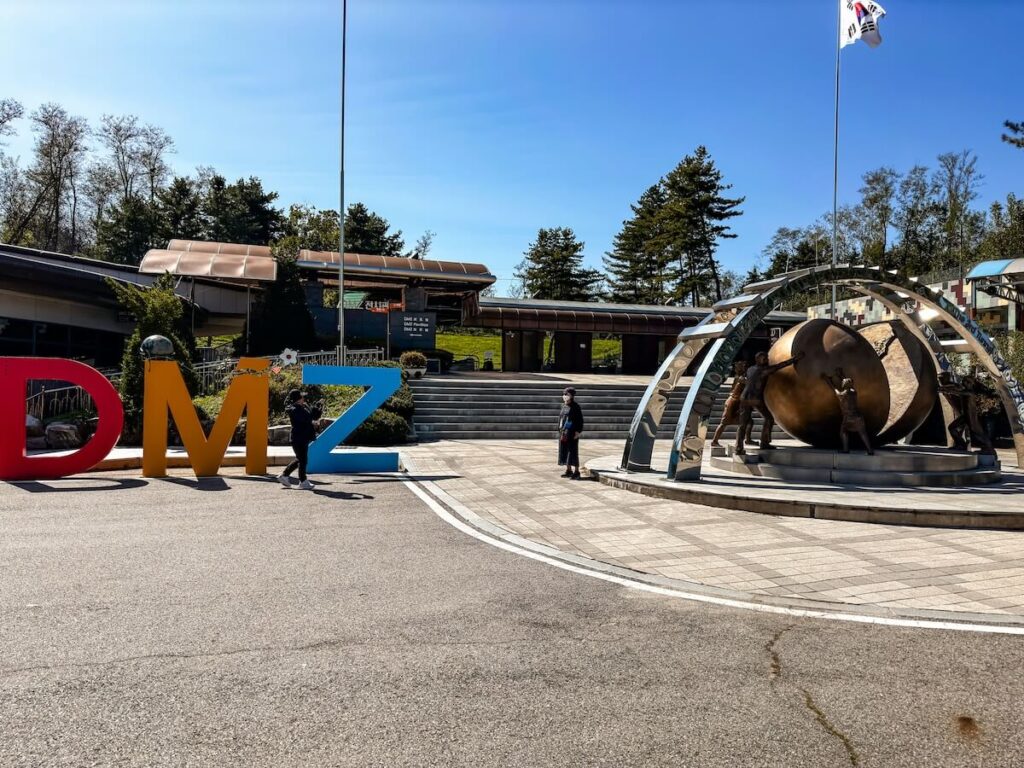
Just an hour north of Seoul lies the Demilitarized Zone (DMZ), a 250-kilometer-long border established during the 1953 armistice agreement. Acting as a tense yet fascinating buffer zone between North and South Korea, it’s one of the world’s most heavily fortified borders.
Booking a guided trip here offers an unmissable look into modern geopolitics and Cold War history. You’ll peer across the border into North Korean territory through binoculars at the Dora Observatory, descend deep into the Third Infiltration Tunnel dug covertly beneath the border in 1978, and explore poignant monuments at Imjingak Park. Just remember to bring your physical passport for the military checkpoints along the way.
Wrap up
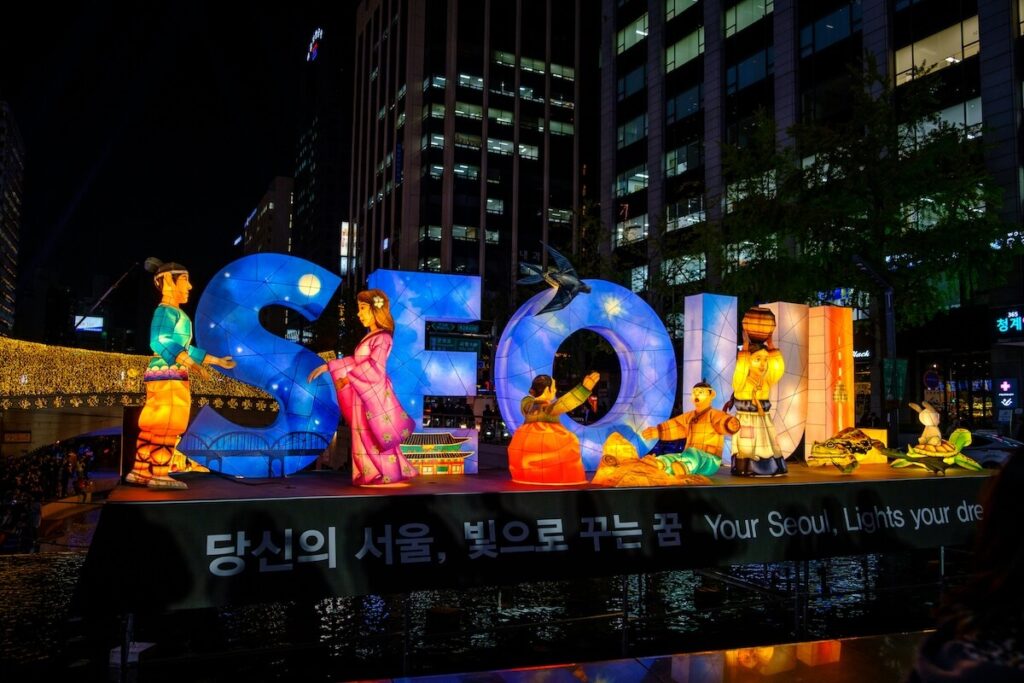
Seoul is a gateway to both centuries of rich history and cutting-edge modern culture, which means you can make an endless variety of memories in this city. Whether you find yourself exploring palaces, slurping noodles at a night market, taking in panoramic views, shopping for K-beauty products, or soaking in a relaxing jjimjilbang, the sheer range of things to do in Seoul ensures your first trip won’t be your last!
If you need a helpful framework to kick-start your travel plans, you can also get practical ideas from our 3-day itinerary to map out an unforgettable adventure. Also check out our helpful guides on Seoul, Busan, and other cities in South Korea. Happy travels!