
*This article may contain affiliate links. For full information, please see the disclaimer here.
Rising from the sparkling waters off the southern coast of the Korean Peninsula, Jeju Island is a place that truly captures the imagination. If, like me, you love watching Korean content, you already know just how legendary Jeju is. Known as the “Hawaii of Korea,” it’s the ultimate getaway destination in every K-drama and variety show, portrayed as a volcanic wonderland where jagged basalt cliffs meet emerald waves.
Whether you’ve seen the island’s rolling green tea fields on screen or admired the incredible haenyeo divers in When Life Gives You Tangerines, Jeju is one of those rare places that actually lives up to the hype. It’s a stunning blend of UNESCO-listed natural wonders, a thriving modern cafe scene, and a food culture that is worth the flight alone.
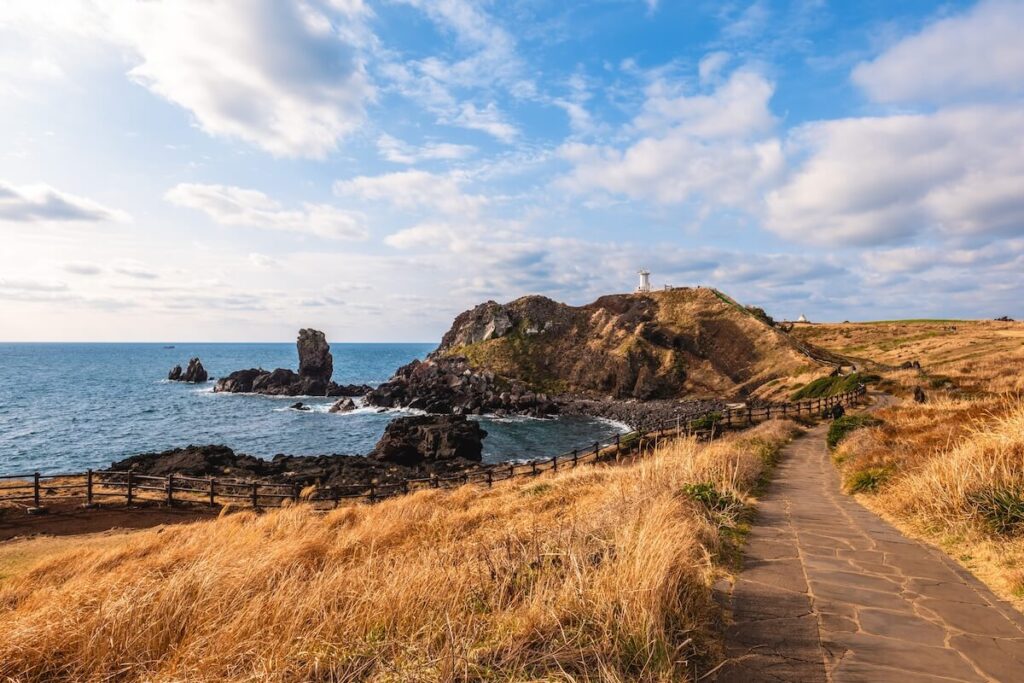
I’ll be honest: attempting to see everything during three days in Jeju is a tall order. The island is surprisingly large, and the winding coastal roads often invite you to slow down rather than rush. However, if you’re short on time, this 3-day Jeju itinerary is designed to help you hit the crowd-pleasers—like the sunrise views at Seongsan Ilchulbong and the depths of ancient lava tubes—while still sneaking in a few hidden gems along the rugged Suwolbong cliffs.
This Jeju Island travel guide will balance the “must-dos” with plenty of time for the “must-eats,” from steaming bowls of seafood ramen and rich black pork BBQ to a sunset stroll along the Aewol coast. Think of this as your highlight reel; it’s a fast-paced but soulful introduction to an island that I guarantee you’ll be planning a return trip to before the three days are even up.
Table of Contents
Tips for your trip to Jeju
Where to stay
Choosing where to plant your bags for three days in Jeju comes down to how much you enjoy driving versus being near the action.
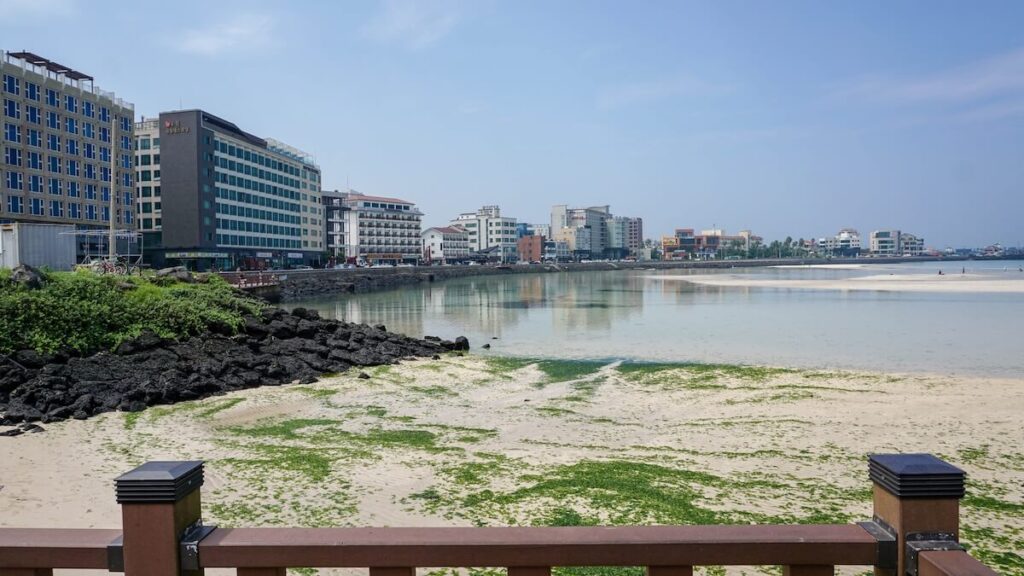
For a short stay, Jeju City is the most practical home base. Being right by the airport saves precious time, and the proximity to late-night food at Dongmun Market is a huge plus.
If you’re a backpacker, Mir Guesthouse is known for its comfy rooms and proximity to Yongduam Rock. For something mid-range, Shin Shin Hotel offers reliable comfort, while the Grand Hyatt Jeju is the ultimate luxury pick with an incredible infinity pool.
If you’re craving those dramatic coastal views you see in K-dramas, head south to Seogwipo. It’s much more laid-back and puts you within striking distance of waterfalls and cliffs.
On the budget end, Kenny Stay Jeju Seogwipo is modern and steps away from the local market. For a mid-range stay, Casaloma Hotel has a great rooftop, while the Parnas Hotel Jeju in the nearby Jungmun area is a stunning luxury escape right on the cliffside.
Finally, for the cafe-lovers, Aewol on the northwest coast is the spot. It’s the heart of Jeju’s modern aesthetic and sunset views.
You can find charming pensions like Morning Beach Pension for a local feel, or the mid-range Aguila Hotel for a gorgeous sea-facing pool. If you want to go all out, Ddosi Aewol Pool Villa offers high-end villas practically built for Instagram.
How to get around
Getting around Jeju is an adventure in itself, but it does require a bit of strategy. Public buses are surprisingly efficient if you have the patience, but for most first-timers, renting a car is recommended.
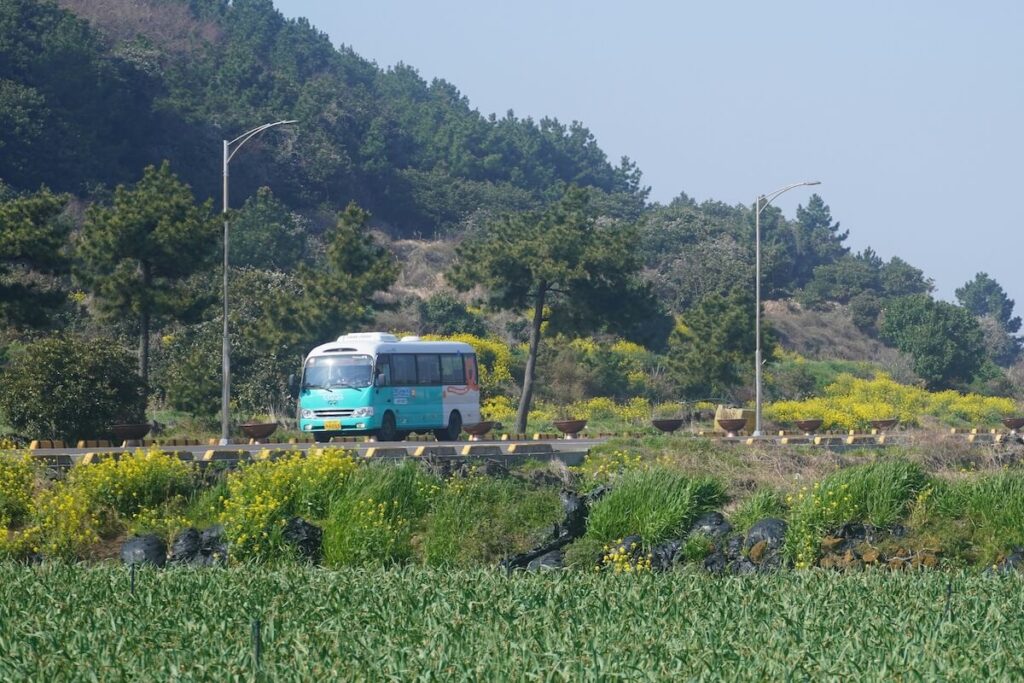
Taxis and ride-hailing apps like Kakao T are great for short hops, while scooters and bikes are fun for coastal stretches. To keep things seamless, I highly recommend picking up a T-Money Card at any convenience store. It’s a rechargeable card used for buses and taxis across Korea, saving you from fumbling with cash.
While some areas are best explored on foot—like the winding Olle Trails or the cafe-lined streets of Aewol—Jeju is much bigger than it looks. To keep you from spending your whole trip in transit, this itinerary is divided into geographical zones: the East for volcanic wonders, the South for lush waterfalls, and the West for those iconic coastal vibes.
This “zonal” approach is the best way to minimize travel time and maximize the fun. To make things even easier, I’ve included Google Maps links for every destination so you can navigate like a local.
What to do in Jeju Island for 3 days
Day 1: The volcanic east
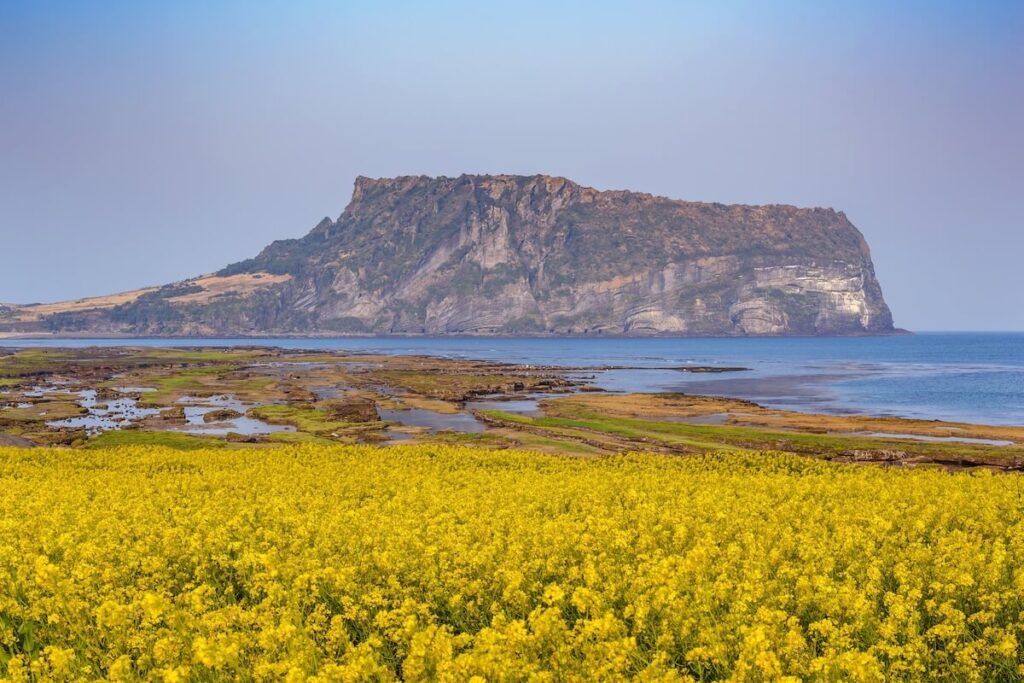
We’re kicking things off in the East, where Jeju’s raw, volcanic energy is most palpable. This day is all about witnessing the island’s natural power, from the dramatic crater of Seongsan Ilchulbong to the underground mysteries of the Manjanggul lava tubes.
You’ll also get a deep dive into the resilient haenyeo (female diver) culture and escape to the Gwangchigi Beach. Of course, we aren’t skipping the food—expect plenty of seafood and a legendary black pork dinner!
Also, if you prefer pre-arranged tours that cover admission fees and tour guides, this Eastern Jeju day tour is worth checking out. Otherwise, have fun DIY-ing my recos below.
Morning: Seongsan Ilchulbong and Gwangchigi Beach
If you can stomach an early alarm, catching the sunrise at Seongsan Ilchulbong is easily one of the best activities on Jeju Island.
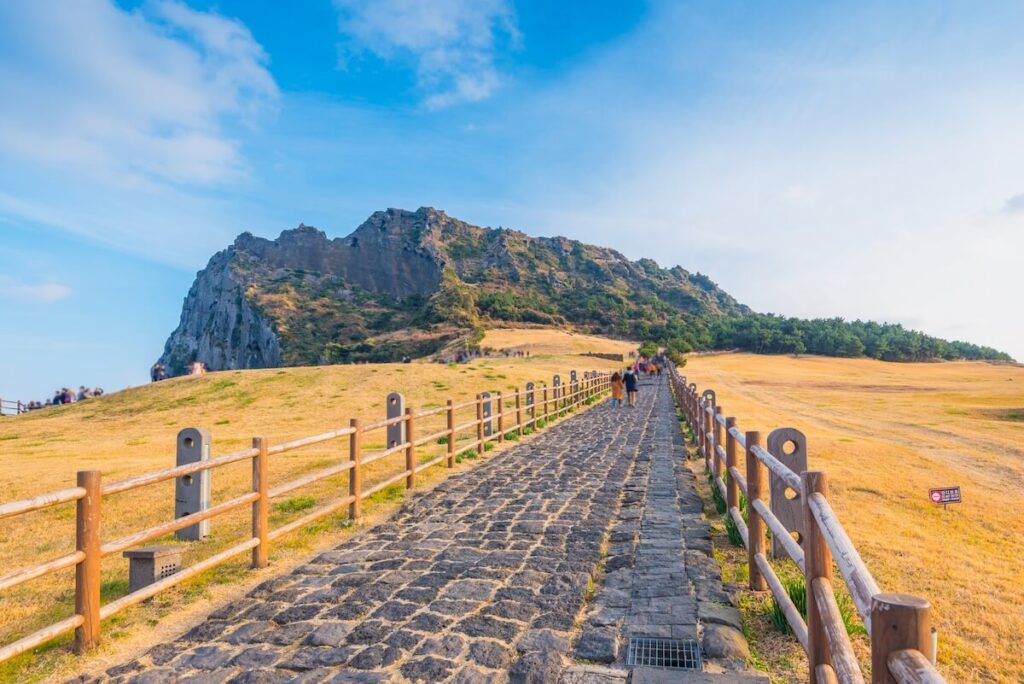
This 180-meter tuff cone was formed by dramatic hydrovolcanic eruptions, and the hike to the top is a manageable 20-30 minute climb. Yes, there are plenty of steep stairs, but once you reach the summit, the 360-degree views of the crater and the surrounding ocean make every step worth it. Plus, the early visit allows you to see the island’s raw beauty before the crowds arrive.
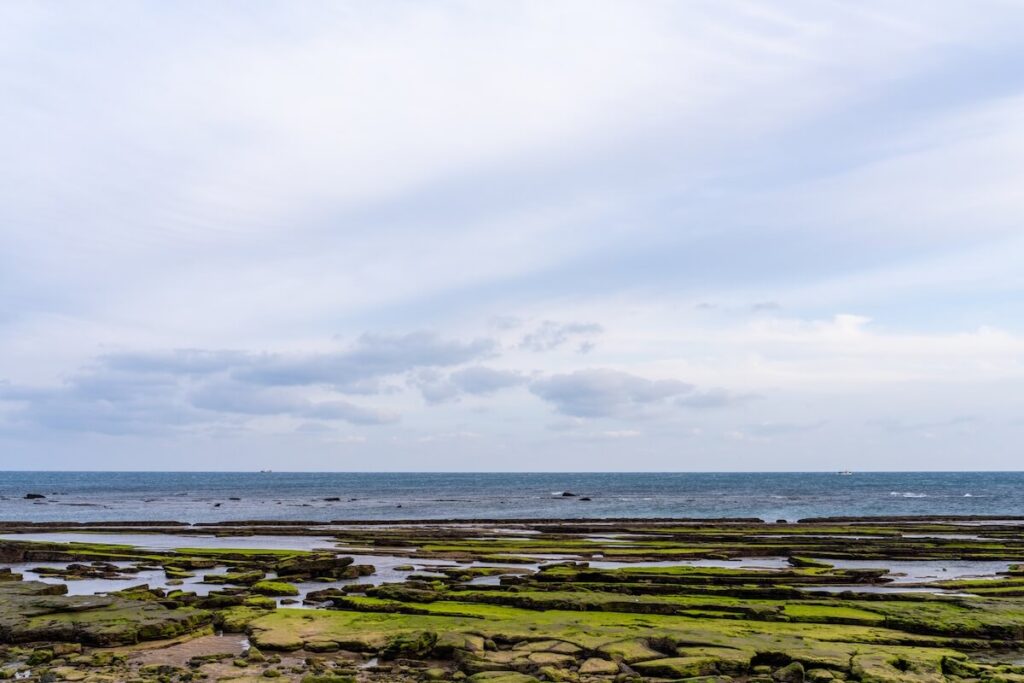
Once you’ve descended, head just down the road to Gwangchigi Beach. This is a local favorite because it’s much quieter than other Jeju beaches, and it offers a unique vantage point of the crater you just climbed. If you time it during low tide, you’ll see the shoreline transform as mossy green rocks are exposed, creating a striking contrast against the dark volcanic sand.
By now, you’ll have worked up a serious appetite. For a quintessential Jeju lunch, head to the House of Divers White Flag for a comforting bowl of jeonbok-juk (abalone porridge). If you’re craving something with a kick, Matna Sikdang serves incredible galchi-jorim (braised cutlassfish) in a savory, spicy sauce that pairs perfectly with a bowl of white rice.
Afternoon: Lava tubes and Haenyeos
After a satisfying lunch, make your way to Manjanggul Cave, one of the most impressive lava tunnels on the planet.
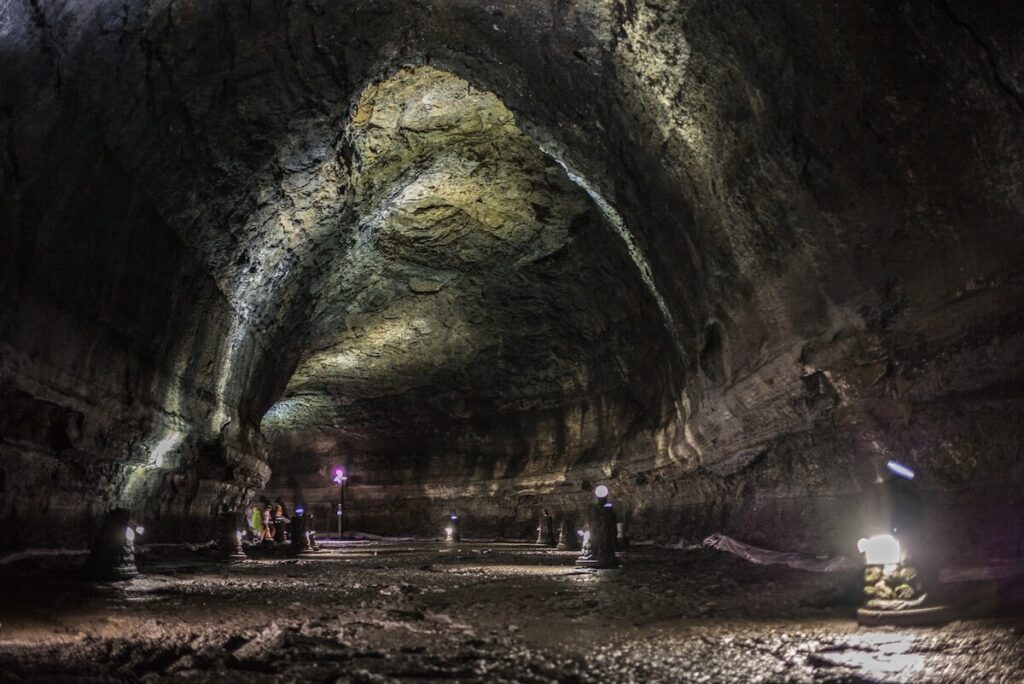
Walking through this UNESCO World Heritage site is a surreal experience—you’ll be surrounded by massive stone columns and intricate lava formations carved thousands of years ago. It stays a constant, chilly 10-12°C inside, so even if it’s a sweltering afternoon outside, you’ll definitely want to have a light jacket handy.
Next, head over to the Jeju Haenyeo Museum to discover the legendary story of the island’s free-diving women. These “mermaids of Jeju” are a symbol of resilience, and the museum does a beautiful job of showcasing their traditional gear and matriarchal culture through heartfelt, inspiring exhibits.
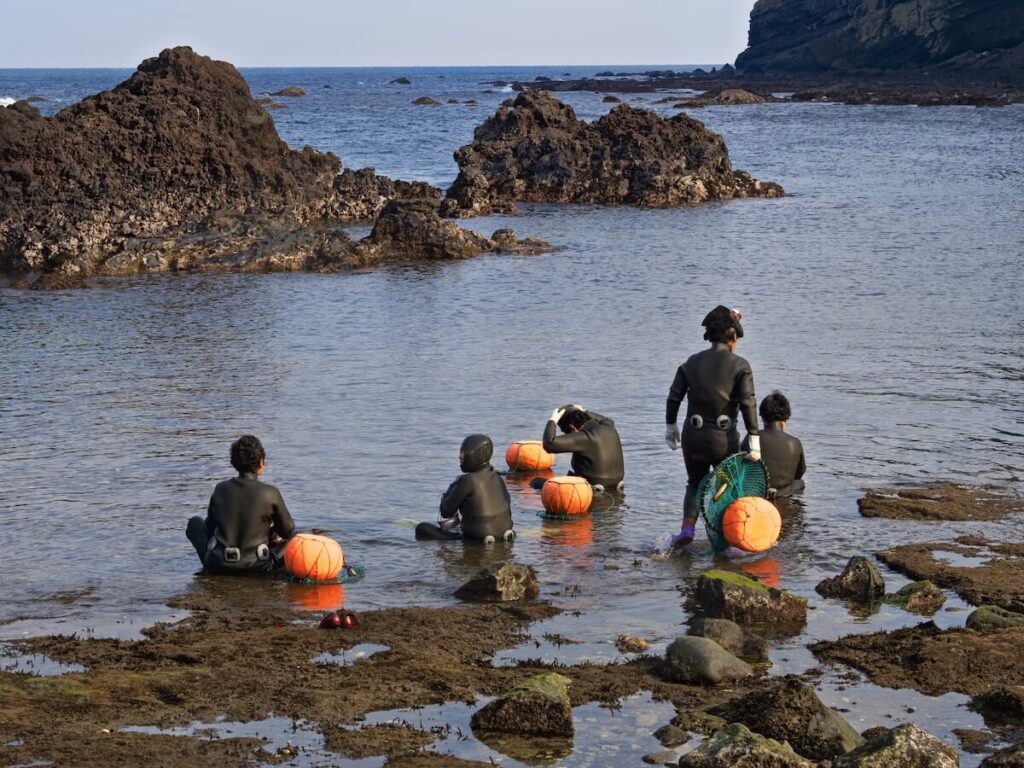
Admission is incredibly affordable at just 1,100 KRW for adults. You should plan to spend about one to two hours here to really soak in the history before you continue your drive toward the coast for sunset.
Evening: Woljeongri Beach and black pork
To wrap up your first day, head over to Woljeongri Beach for a relaxed stroll along its famously white sands. The water here is a stunning emerald hue, and you’ll definitely recognize the iconic colorful wooden chairs lined up along the shore—they’re practically mandatory for a quick photo op.
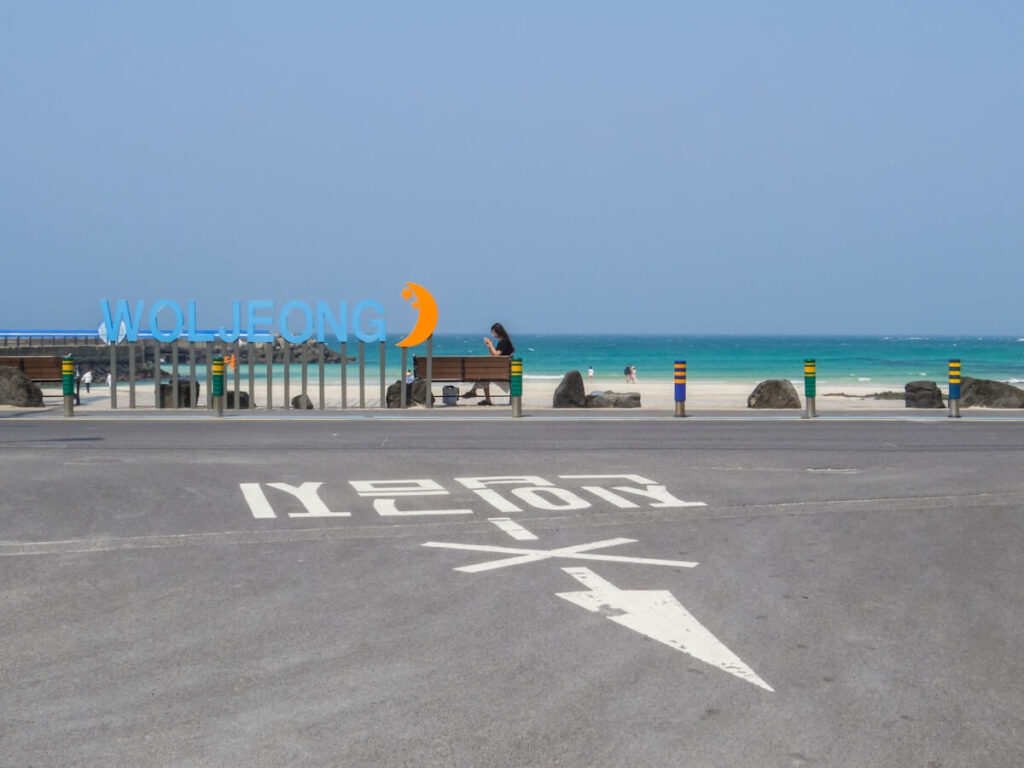
As the sun begins to set, the view becomes even more stunning. You can pick any of the many beautiful cafes overlooking the water to grab a drink and watch the sky change colors from a front-row seat.
For dinner, it’s time to cross a major item off your foodie bucket list: Jeju Black Pork.
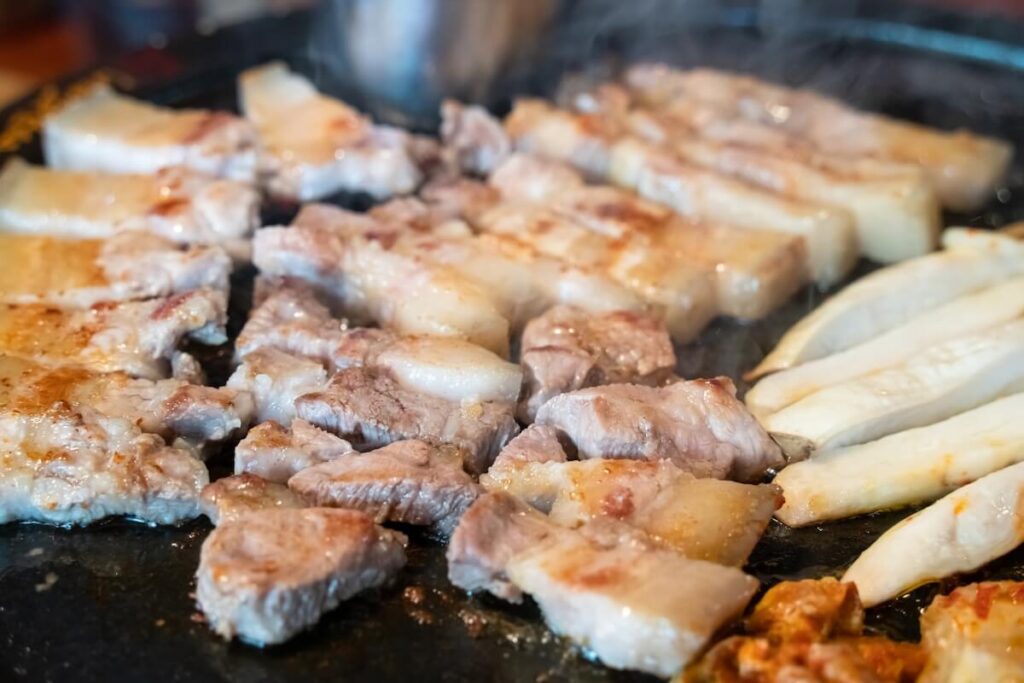
While the famous Black Pork Street is a two-hour haul back to Jeju City, you don’t need to travel that far for a top-tier meal. There are fantastic local spots right in the area that save you the drive.
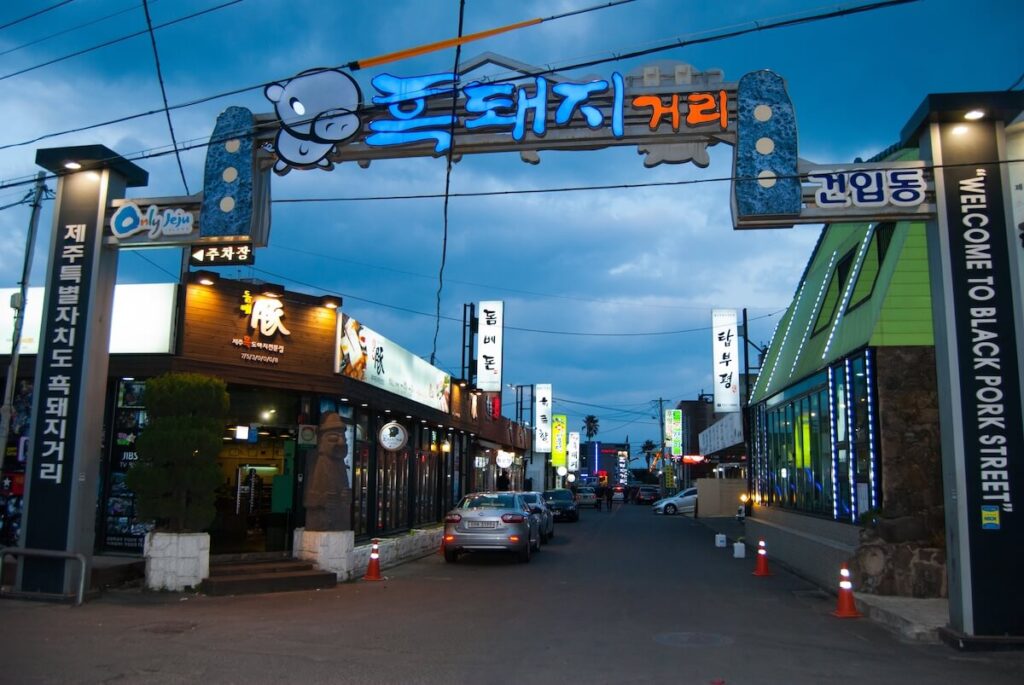
You can head to Dominsanghoe for a high-quality grill experience or check out Woljeongri Ccumungs for a local favorite. There are few things better than ending a day of coastal exploring with the smoky, rich flavor of thick-cut black pork grilled over charcoal.
Day 2: The tropical south
For your second day, head to Seogwipo. This southern part of the island is known for being slightly warmer and much lusher, giving off total tropical garden vibes.
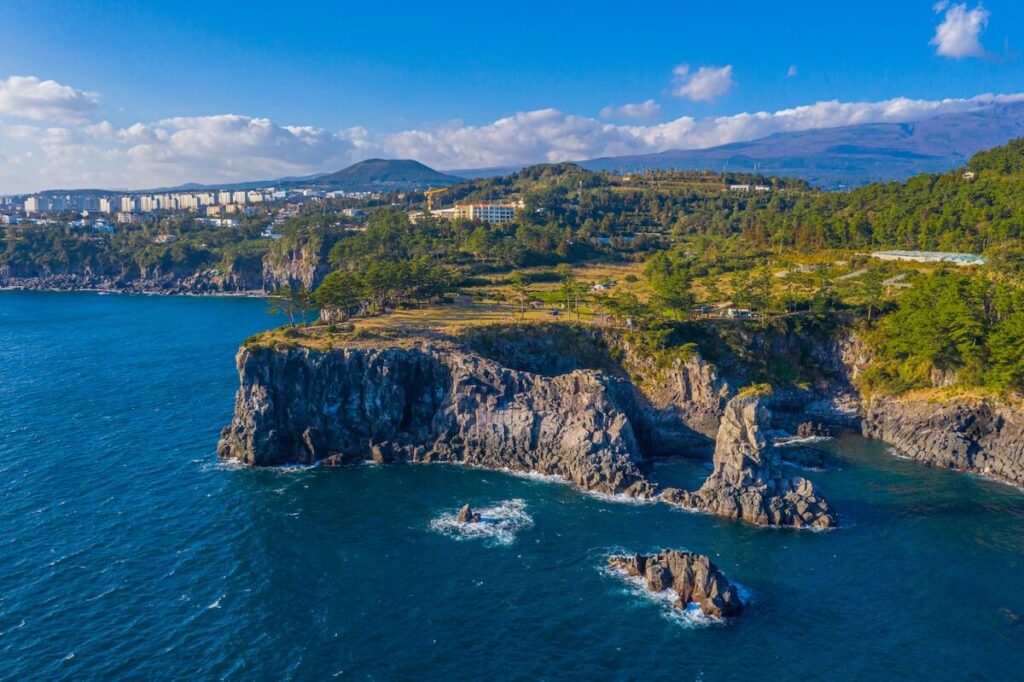
You’ll be chasing the dramatic Jeongbang Waterfall, navigating the turquoise waters of the Soesokkak Estuary, and getting lost in the rolling green fields of the Osulloc Tea Museum. To cap it all off, dive into the sensory overload of the Maeil Olle Market for some of the island’s best street food.
Morning: Jeongbang Waterfall and Soesokkak
If you’re starting your morning in the Seongsan area, grab a coffee and a fresh pastry at Seogwipean Bakery before hitting the road. If not, don’t worry—there are plenty of great cafes tucked away near the entrance of your first stop.
Your first destination is the breathtaking Jeongbang Waterfall, famous for being the only waterfall in Asia that falls directly into the ocean. It’s well-marked and easy to navigate on your own, but I’d definitely recommend arriving early to beat the tour buses.
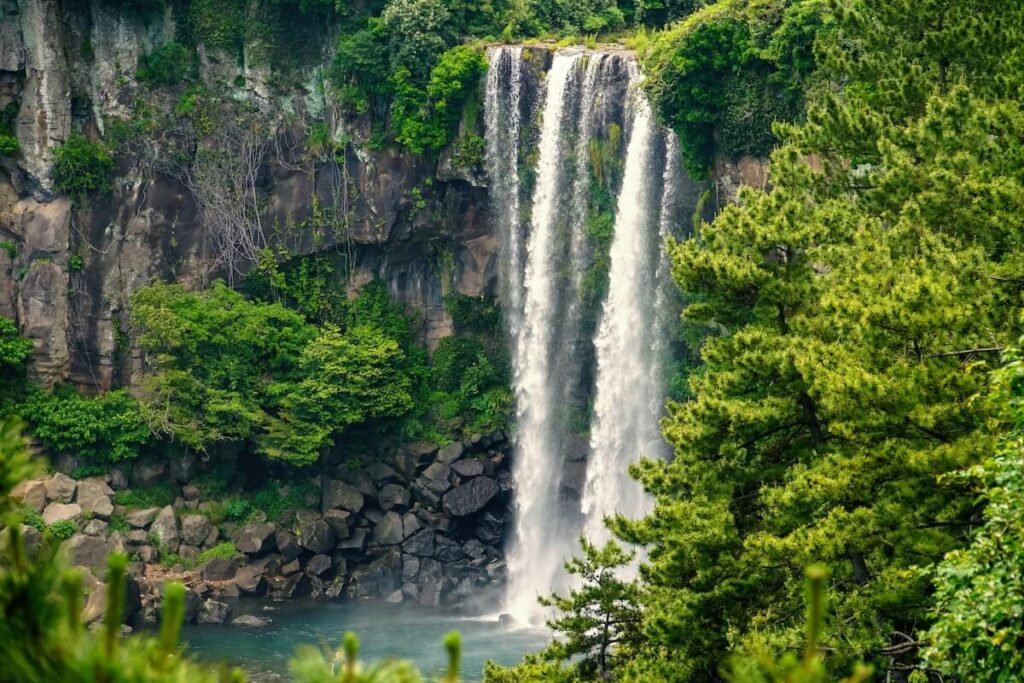
Make sure you wear sturdy shoes, as the rocks near the base can get quite slippery from the mist. Admission is a small fee of about 2,000 KRW, which is a bargain for those views.
Next, head over to Soesokkak Estuary, a true hidden gem where fresh water flows into the sea. The turquoise water against the pine trees is stunning. For the best experience, rent a kayak or hop on a traditional wooden raft to drift through the calm canyon.
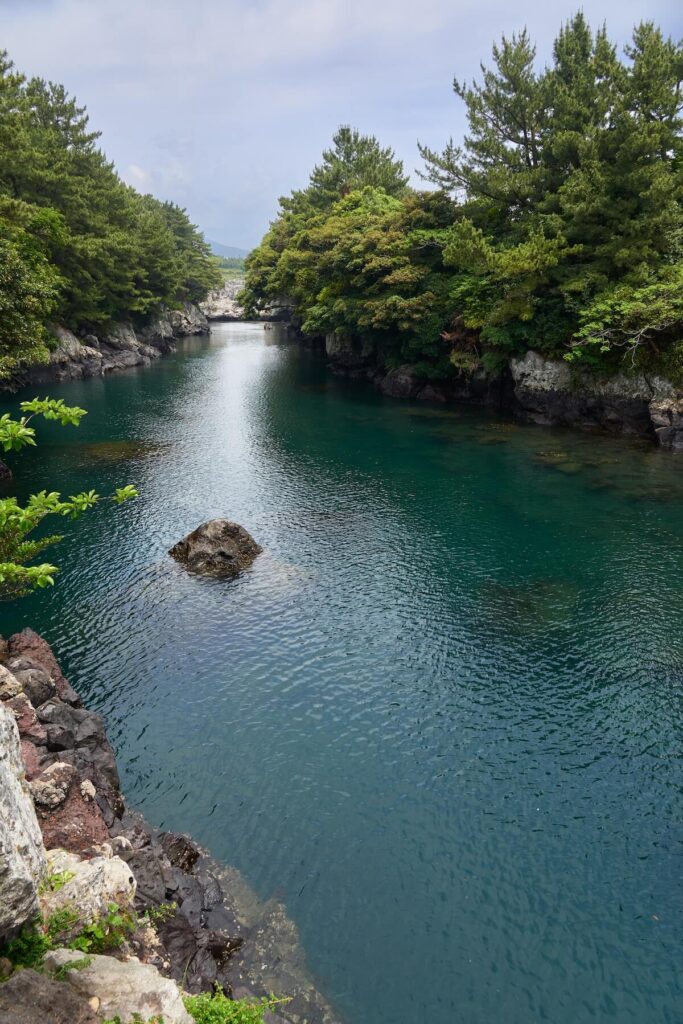
For lunch, you can’t go wrong with a bowl of savory pork noodles at Jemini Noodles or a hearty rockfish and abalone stew at this local fave to fuel up for the afternoon.
Afternoon: Osulloc Tea Museum, Innisfree Jeju House, and southern cliffs
After lunch, drive inland to the Osulloc Tea Museum. If you’ve spent any time in Korea, you’ve likely seen Osulloc—it’s the country’s most famous premium tea brand.
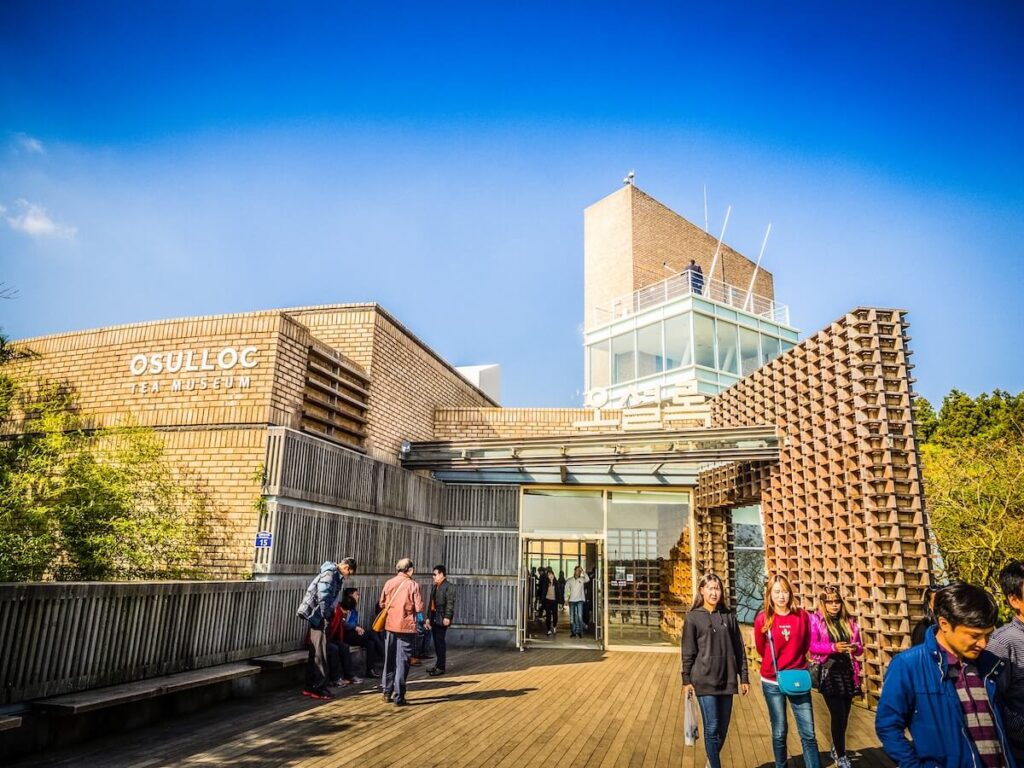
Take a slow walk through the endless, rolling green tea fields; it’s incredibly peaceful and, honestly, a perfect backdrop for photos. Make sure to head to the cafe to try their famous matcha soft serve or a fresh green tea roll cake before you leave.
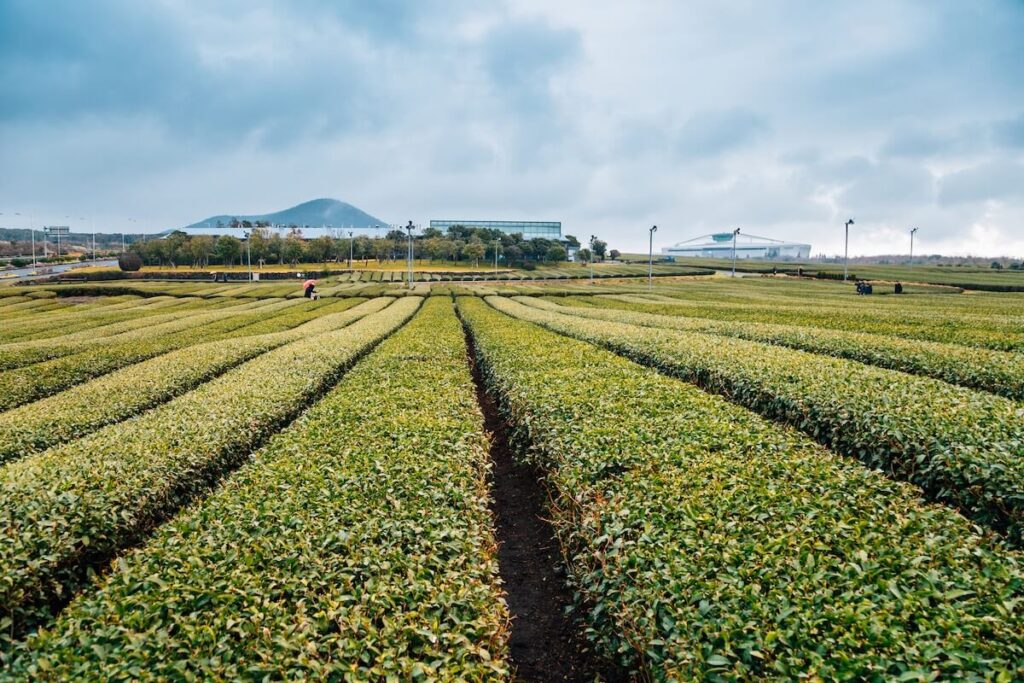
Even if you aren’t a tea connoisseur, the sight of the perfectly manicured, rolling green fields against the blue sky is worth the trip. You can wander through the plantations for photos or head inside to try the legendary Jeju matcha soft ice cream and the green tea crepe cake that’s not available in other Osulloc cafés.
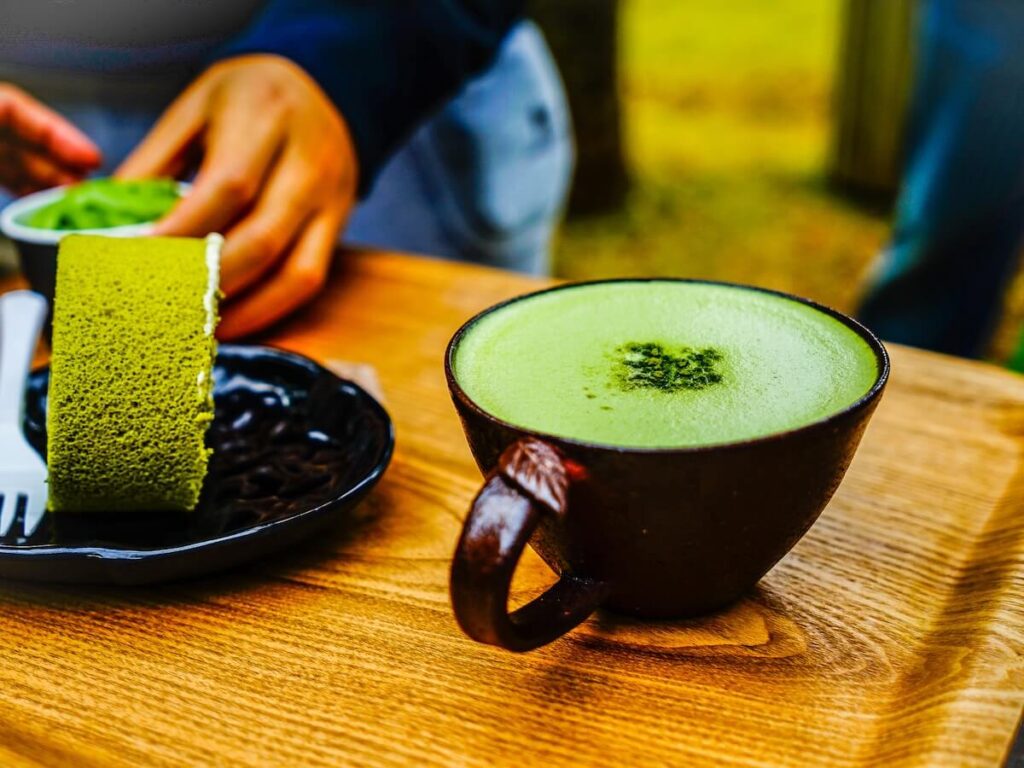
While you’re at the museum, definitely take a peek at the gift shop. It is the perfect place to stock up on beautifully packaged tea sets, matcha spreads, or their famous milk tea powders, which make for much more thoughtful souvenirs.
Just a short walk away is the Innisfree Jeju House. While there are plenty of Innisfree shops throughout Korea and in other countries, this one offers hands-on experiences where you can sit down and make your own natural soap or sheet mask using ingredients sourced from the island, such as green tea, tangerine, and volcanic clay.
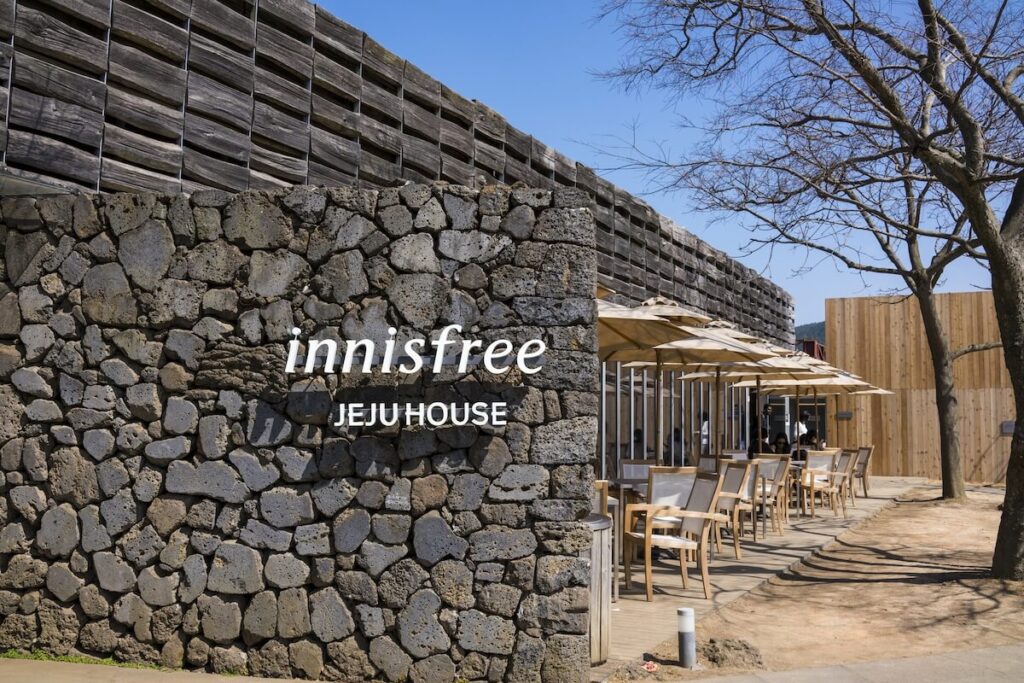
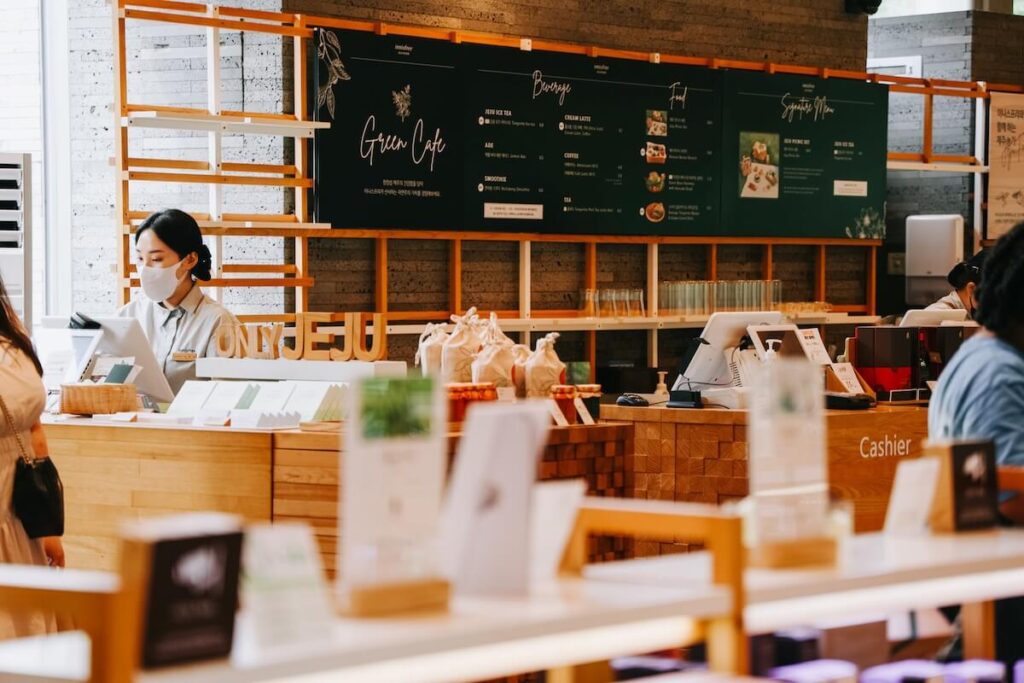
Didn’t get your fill from Osulloc, you can check out Innisfree’s Green Café—the hallabong tea and Hallasan cake are highly recommended.
If you or your travel buddies are into planes and space tech, the Jeju Aerospace Museum is right nearby and surprisingly huge. However, if you’d rather stick to the coastal scenery, head back south toward Oedolgae. It’s a massive, 20-meter-tall rock pillar standing solo in the sea, surrounded by dramatic cliffs and hiking paths that offer some of the best ocean views on the island.
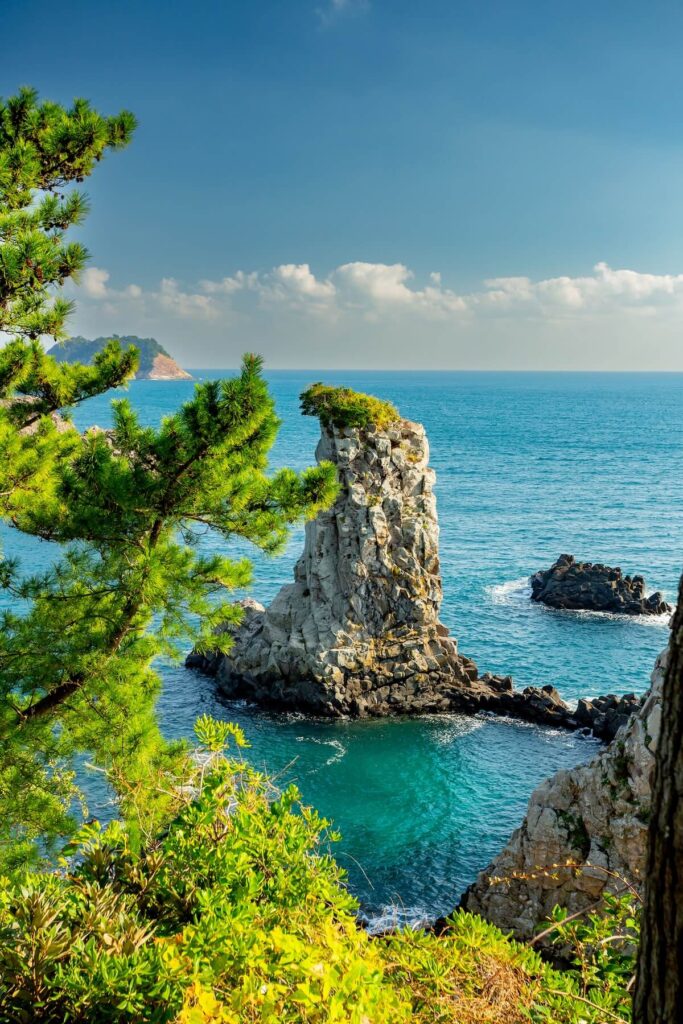
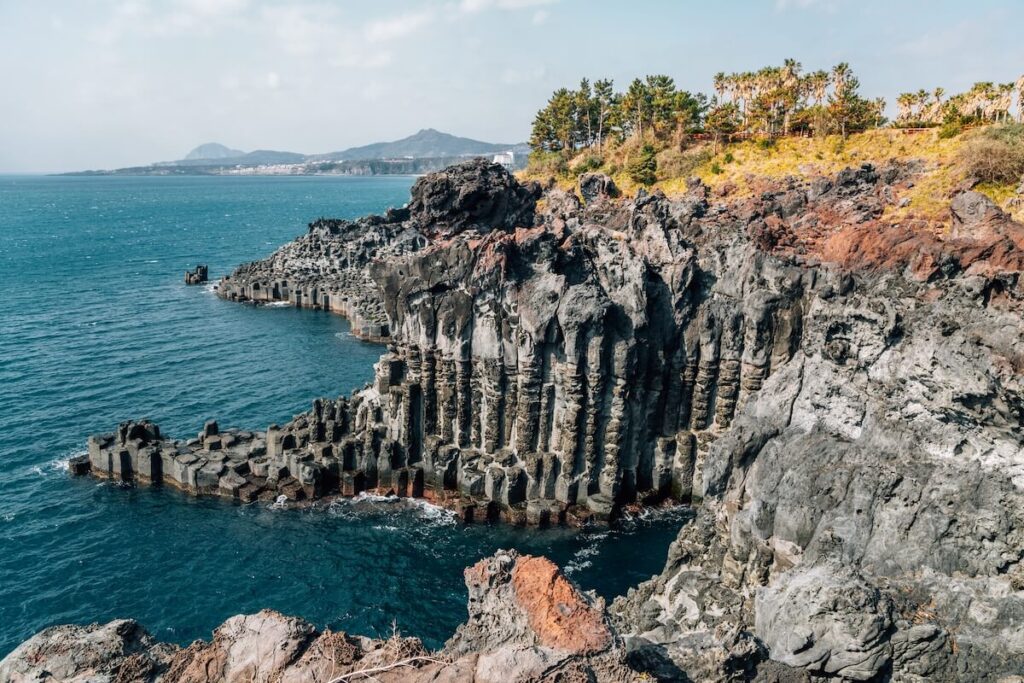
Alternatively, visit Jusangjeolli Cliff. These incredible hexagonal rock columns were formed by cooling lava and look like something straight out of a fantasy novel.
Evening: Seogwipo Maeil Olle Market
To wrap up your second day, immerse yourself in the sights and smells of Seogwipo Maeil Olle Market. This traditional market is one of the most organized and tourist-friendly spots on the island.
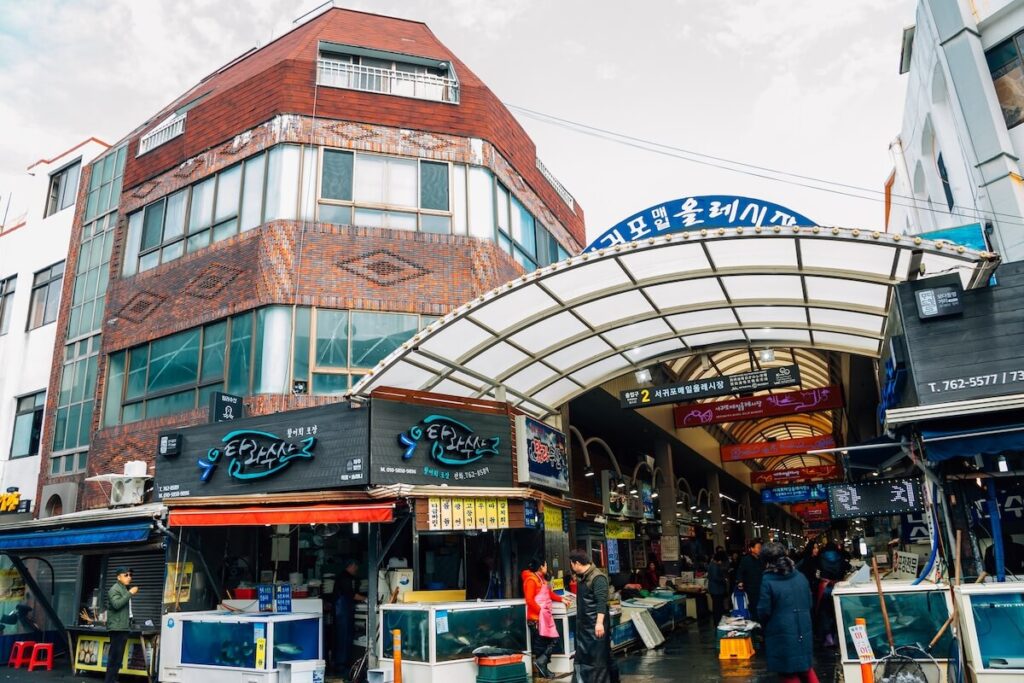
You definitely want to arrive in the evening when the energy is highest, and the food vendors are in full swing—just keep an eye on the clock, as shops close at 9 PM.
Start by grabbing a refreshing Hallabong juice, then work your way through the stalls. You’ll want to try the famous black pork rolls, but don’t stop there. Go for the omegi tteok (rice cakes rolled in beans), crispy kkwabaegi (twisted donuts), or even cheese-coated lobsters and flame-grilled seafood skewers.
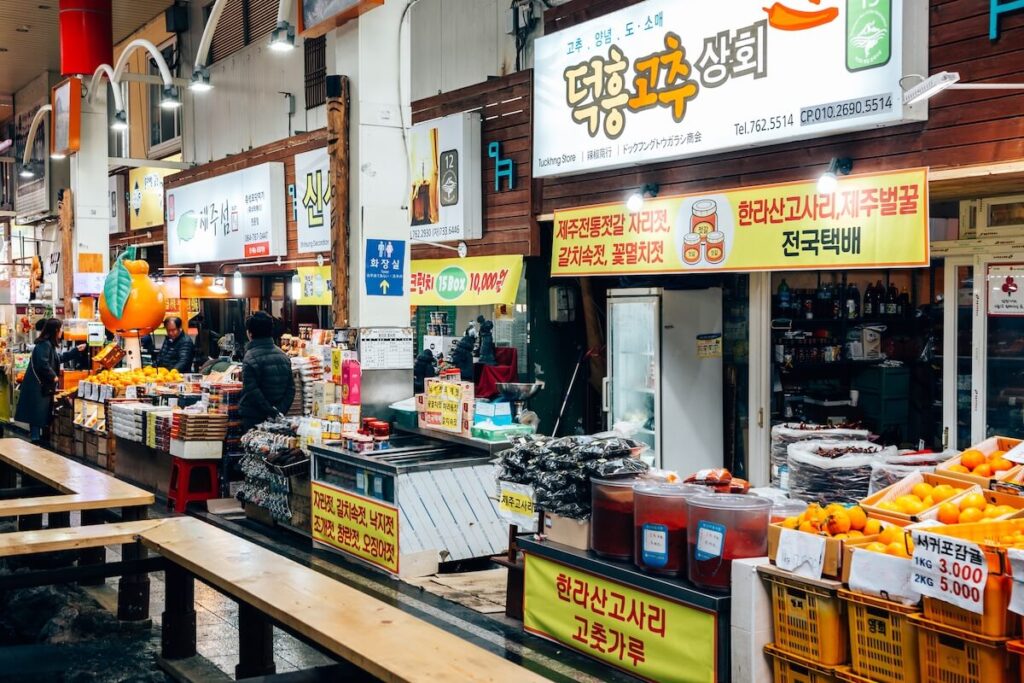
If you’re craving a classic, find a spot serving haemul pajeon (seafood pancake). And if those don’t fill you up, many stalls offer incredibly fresh, pre-packed sashimi that you can eat right there.
Before you leave, take a moment to browse the local crafts. You’ll find unique volcanic rock carvings and citrus-themed accessories that make for much more interesting souvenirs than the usual magnets.
Day 3: The scenic west
For your final day, head westward and wrap things up with rugged coastlines and those famous “Instagrammable” vibes. You’ll be catching panoramic views at Suwolbong Peak, getting lost in the blooms at Camellia Hill, and sinking our toes into the white sands of Hyeopjae Beach.
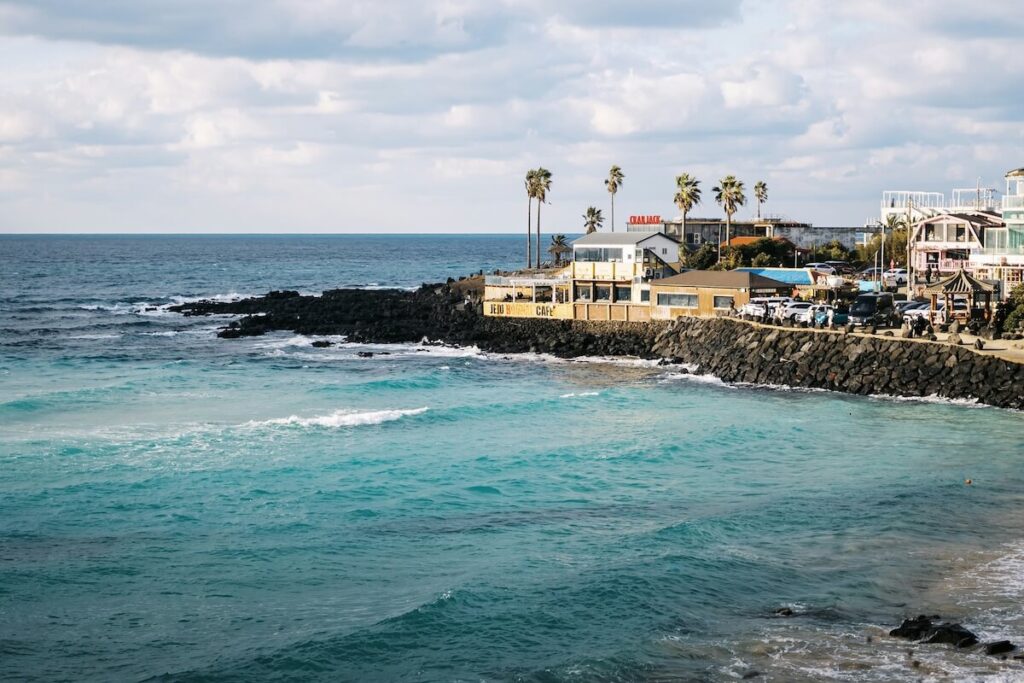
To finish the trip on a high note, hit the trendy Aewol coast—the ultimate spot for sunset watching from some of the most stylish cafes in Korea.
Morning: Coastal trekking
For your final morning, make your way to the island’s westernmost point to visit Suwolbong Peak. While many people stick to the more famous craters, coming here is one of the smartest ways to spend your three days in Jeju if you want to avoid the massive tour bus crowds.
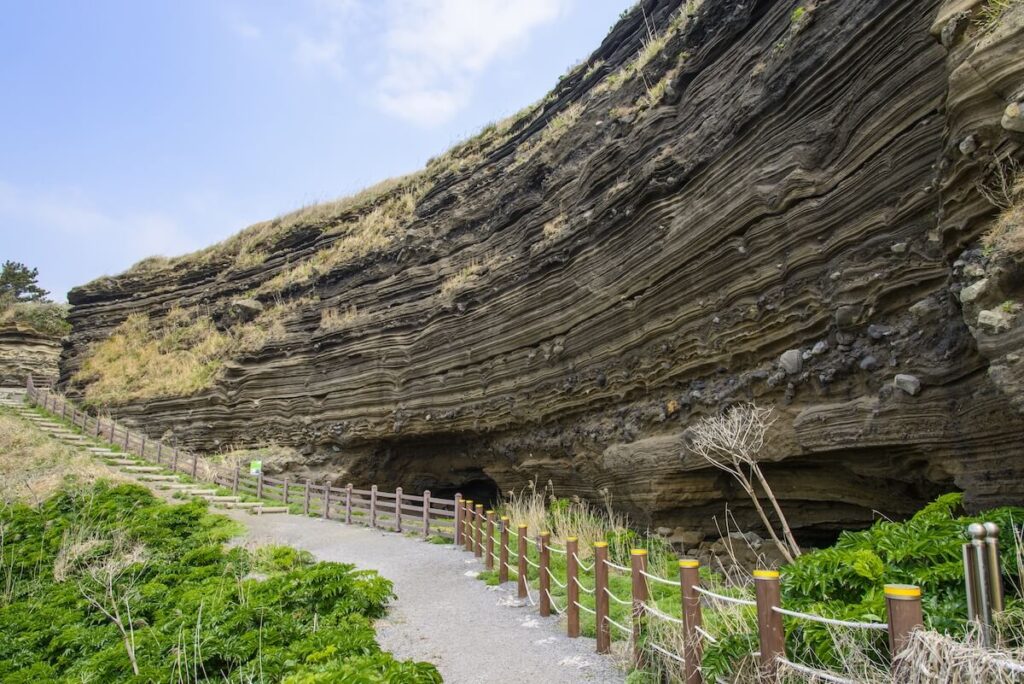
The summit offers a breathtaking panoramic view of the western coastline and the nearby Chagwido Island, but the real star of the show is the “layered” volcanic cliffs.
Dedicate your morning to walking along the Suwolbong Geo Trail. As you stroll the path at the base of the cliff, you’ll see incredibly clear sedimentary layers—basically a giant, natural textbook of Jeju’s volcanic history. It’s one of the few places where you can get up close to these intricate patterns formed by ancient ash and heat.
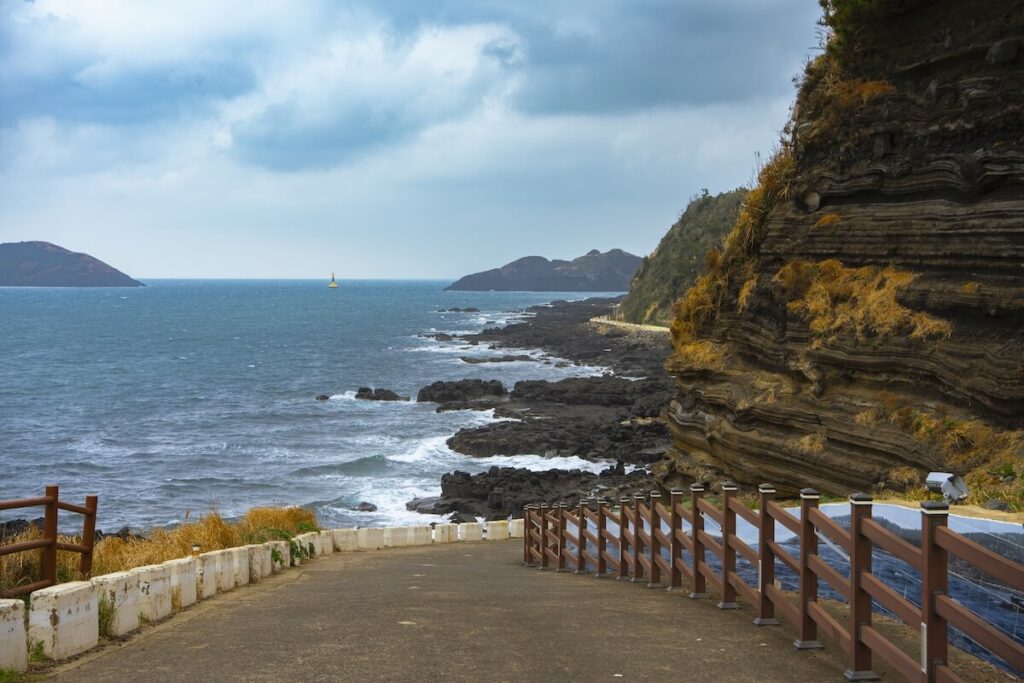
The trail is relatively flat and hugs the ocean, so you get that perfect mix of refreshing sea breeze and geological wonder. If you’re feeling a bit adventurous, you can even rent an electric bike nearby to zip along the coastal road while feeling the breeze in your face.
Also, do check out the Gosan Weather Observatory next to the pavilion in the summit. The observatory’s fifth floor has a viewing deck that’s open to visitors.
Afternoon: Camellia Hill and Hyeopjae Beach
Since you’re heading to Camellia Hill for the afternoon, grab lunch nearby to save on travel time. You can go for a comforting bowl of noodles at Keungil or try the local cutlassfish at Camellia Hill Kitchen.
Once fueled up, step into the arboretum (you can get tickets here in advance), which is famous for housing over 500 species of camellias.
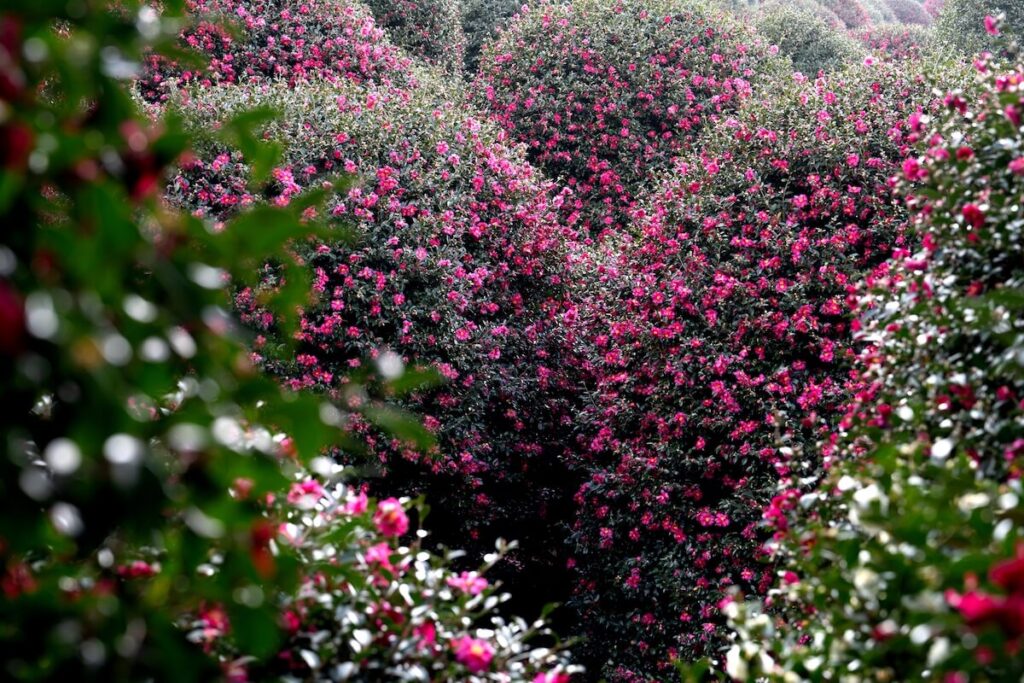
While it’s most vibrant in winter and spring, the lush greenery and seasonal blooms make it a popular photo spot year-round. Admission is around 10,000 KRW, and you’ll want to allot about two hours to wander through the various themed gardens. If you need a break, stop by the Camellia Hill Flower Cafe for a floral-themed drink surrounded by petals.
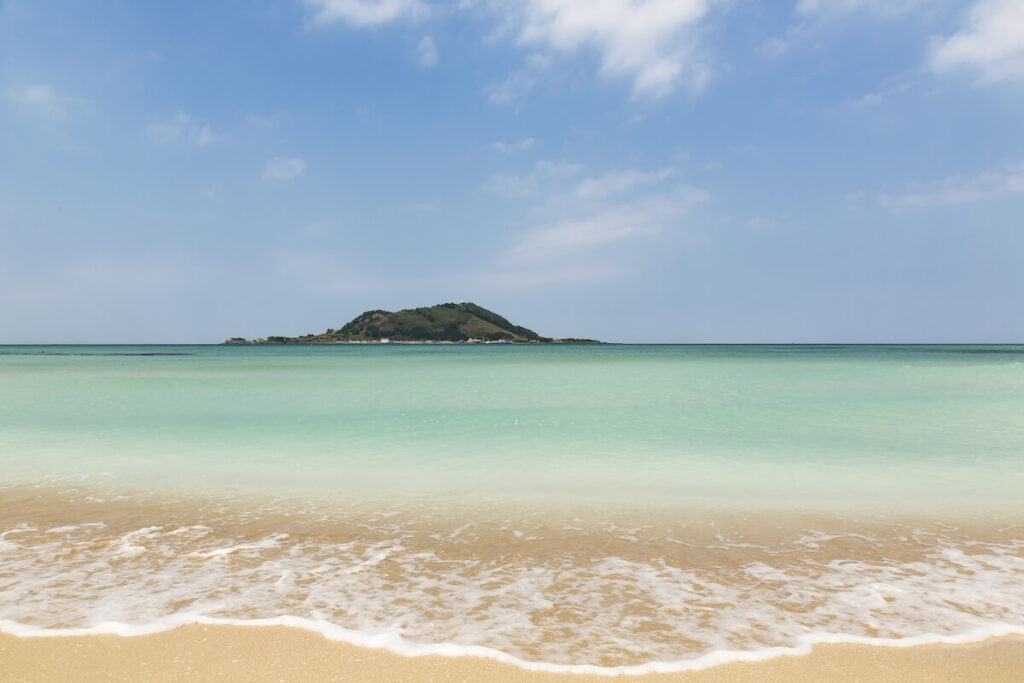
Next, drive back toward the coast to Hyeopjae Beach. This is arguably one of the most beautiful stretches of sand on the island. The water is incredibly shallow and clear—almost like a massive swimming pool. From the shore, you’ll have a perfect, unobstructed view of Biyangdo Island sitting on the horizon.
Evening: Aewol
For your last hurrah on the island, head to Aewol to experience that famous Jeju charm.
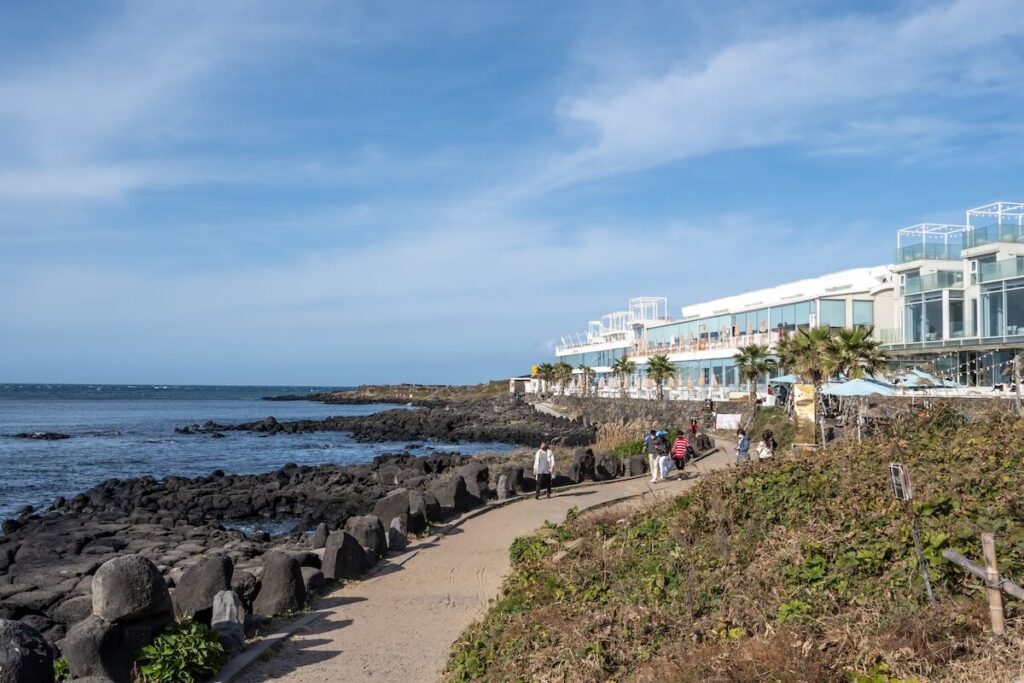
Start by walking the Handam Coastal Walk, a winding path that hugs the rugged shoreline and leads you straight into the heart of Aewol Cafe Street. This area is the epicenter of the island’s modern aesthetic, lined with photogenic spots like Sunset Cliff and Bomnal. Since you’ll want to save plenty of room for your final dinner, just grab a light snack or a coffee and snag a seat with a view.
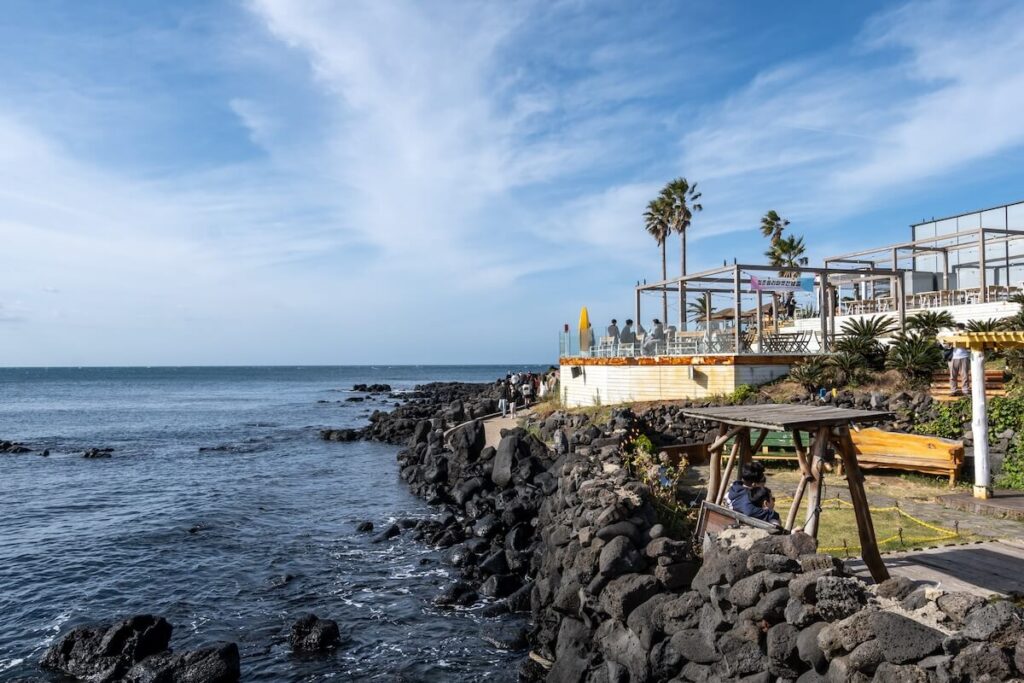
As the day winds down, you have two options for your farewell meal. If you decide to stay in the area, find a table at any of the coastal grill restaurants in Aewol and enjoy watching the sunset while having dinner.
However, if you’re making your way back toward the airport in Jeju City, treat yourself to Donsadon. This is a legendary institution for thick-cut, succulent black pork, and many locals consider it the best grill on the island. I don’t know about you, but I think this is the best way to cap off your trip!
Conclusion
Wrapping up three days in Jeju often feels like you’ve only just scratched the surface of what this “Island of the Gods” has to offer. Whether you’re standing atop a volcanic crater or tucked away in a minimalist seaside cafe, the island’s mix of raw nature and modern comfort makes it clear: is Jeju worth visiting? Absolutely.
This itinerary gives you a solid foundation for your three days in Jeju, but remember that we travel best at the pace we set. Whether you want to spend an extra hour lingering at a seaside cafe or pivot your plans to catch a random sunset on the road, feel free to customize this guide to match your travel style.
That said, Jeju has a magical way of surprising you when you least expect it. So, pack your bags, download your maps, and get ready for an unforgettable island escape!
If you’re also planning a trip to the capital, this 3-day Seoul itinerary is just what you need.