
Mountains and Mormons and the mighty five, oh my! Utah, the forty-fifth state in the Union, does indeed have a whole lot of Mormons, beautiful mountains, and five national parks—the only states that have more are Alaska and California.
Besides mountains and parks and Mormons, though, what is Utah known for, anyway? It may surprise you, but Utah is so. much. more. I mean, can you name another state where you can hit the slopes, float in salt water, and go off-roading in the desert, all in one day? Go ahead, I’ll wait… because Utah is simply unique!
Utah is known for being the headquarters of the Mormon church, hosting the Sundance Film Festival, and being the site of the 2002 Winter Olympics. Utah is famous for the Greatest Snow on Earth, fry sauce, the Great Salt Lake, and five national parks (“the mighty five”).
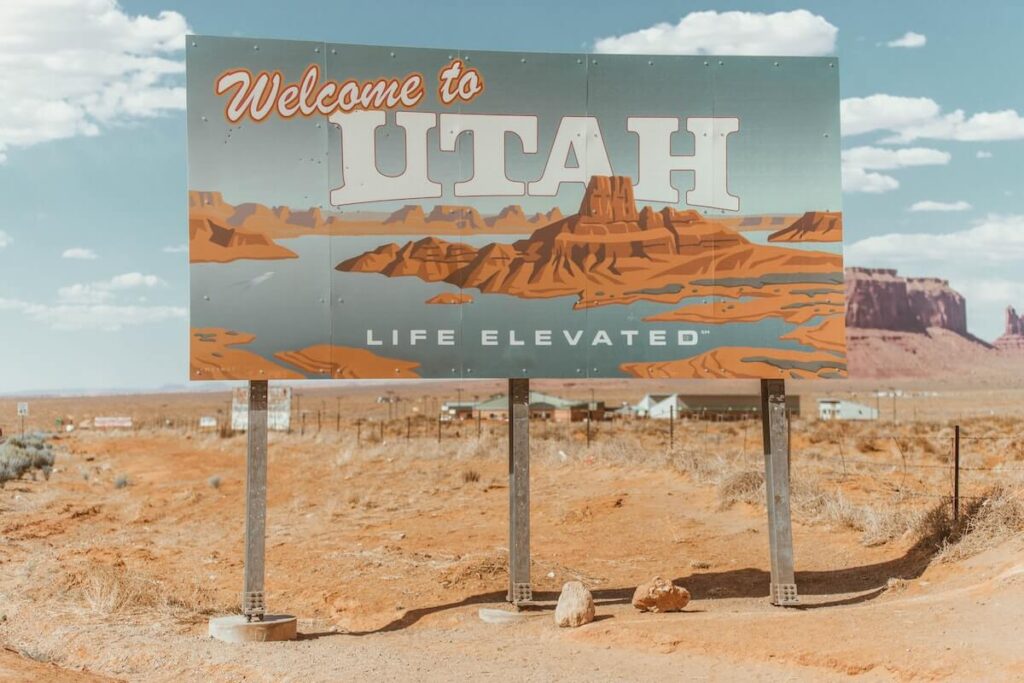
For more answers to the question, what is Utah famous for, read on! Here are 29 things Utah is known and famous for.
Table of Contents
1. Mormons
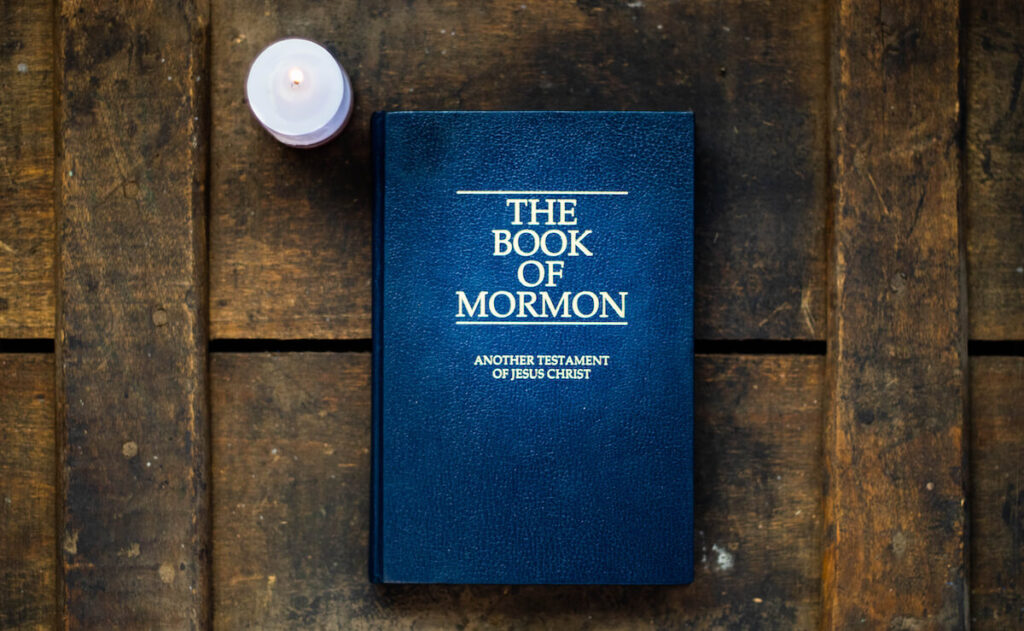
A whole 60% of Utahns are practicing Mormons, as the headquarters of the Church of Jesus Christ of Latter-day Saints (Mormon church, or LDS) is in Salt Lake City.
Brigham Young, the second leader of the church, famously proclaimed “this is the place” upon arrival to the Salt Lake Valley in 1847, with many Mormon pioneers in tow.
Mormon pioneers went on to firmly establish Salt Lake City and Utah, and to create the larger “Mormon corridor,” that covers Utah and parts of other Western states, such as Arizona, Nevada, and Idaho.
In Salt Lake City, you’ll find the LDS offices, the towering Mormon Temple, and other monuments to the Mormon faith, like Temple Square.
Throughout Utah, you’ll find an undeniable Mormon influence: in various temples, the strict alcohol laws, a young population, and the banning of all gambling.
2. The “Mighty Five” National Parks
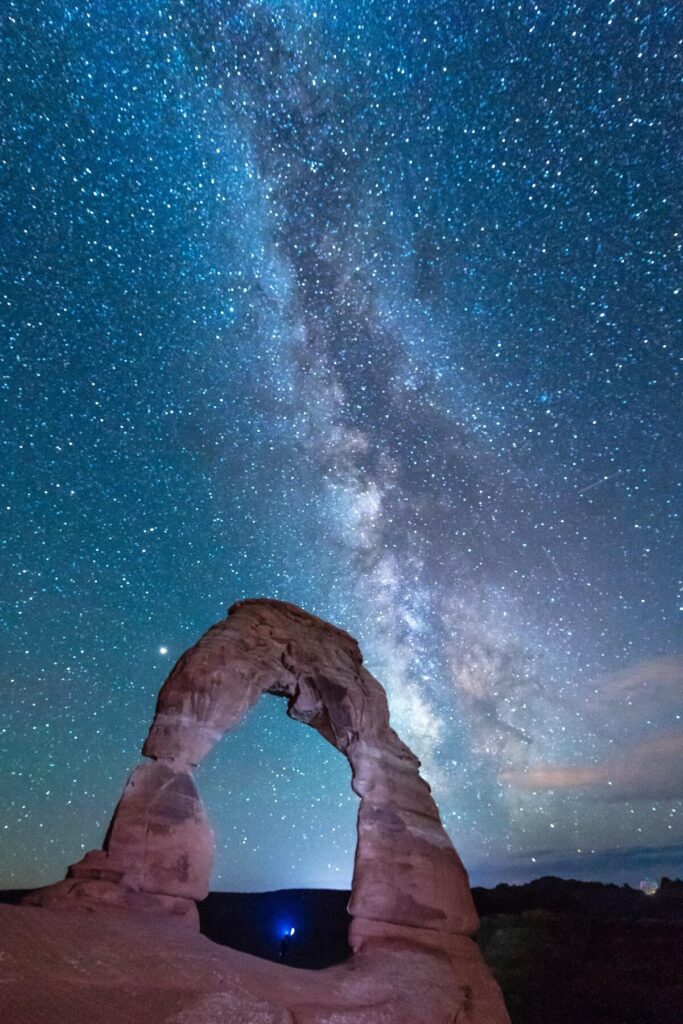
Utah has a whooping five national parks—and this doesn’t include the eight national monuments or 14 national historical sites!
Utah’s five national parks, nicknamed the “Mighty Five,” as they are all so well-known, include Arches, Zion, Canyonlands, Capitol Reef, and Bryce Canyon.
Each national park has its own unique sites and landscape. Arches National Park is known for its natural stone arches, Zion for its giant sandstone cliffs, and Canyonlands for its colorful canyons.
Capitol Reef National Park is famous for its “wrinkle in the Earth,” a geological marvel known as the Waterpocket Fold, and Bryce Canyon is known for its hoodoos (distinctive rock formations).
3. Sundance Film Festival

Every January, you’ll find the ski resort of Park City, outside of Salt Lake, transformed as it hosts the largest independent film festival in the United States. Around 40,000 filmmakers, actors, fans, and film buffs descend on this little mountain town for the star-studded Sundance Film Festival.
Many famous films originally premiered at Sundance, such as American Psycho, The Blair Witch Project, and Get Out. The best part about Sundance, though, is that it’s open to anyone who can buy a ticket.
4. The Great Salt Lake
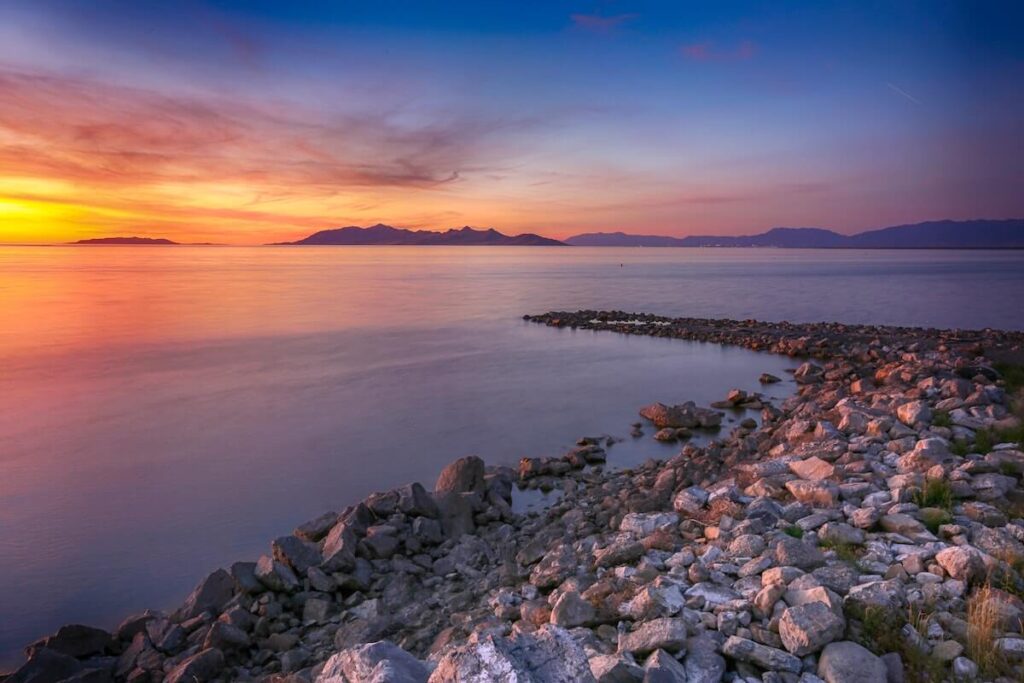
In the northeast corner of the state, near Salt Lake City, lies its namesake, the Great Salt Lake. The Great Salt Lake is the largest salt lake in the western hemisphere and is nearly four times as salty as the ocean. This means you can float very easily, kind of like in the Dead Sea.
The Great Salt Lake can vary in depth immensely and is known to change up to two feet per year, with the biggest variations being 20 feet.
This also means the number of islands is ever-changing, but typically the lake has about 15, including Antelope Island State Park, which has large numbers of wildlife, such as bison.
5. 2002 Winter Olympics
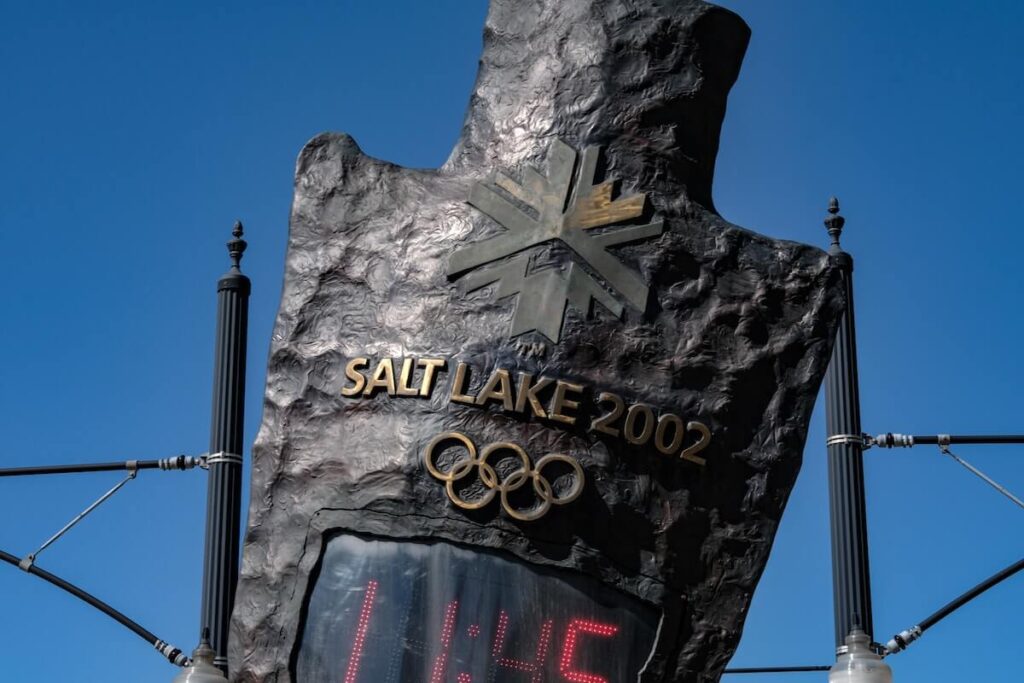
Utah (Salt Lake City specifically) is famous for hosting the 2002 Winter Olympics.
Unlike many other Olympic host cities, Salt Lake has been able to continue using its extensive Olympic facilities, and rumor has it, they hope to host another Winter Olympics someday.
6. Crossroads of the West

Utah is known as “The Crossroads of the West,” because the first Transcontinental Railroad was finished at Promontory Summit in Utah Territory.
When the “Golden Spike” was driven into the rail in 1869, the traditional months-long journey between the East and West coasts was changed to under a week. This changed the face of the West forever.
Nowadays, you can see the location of the “Last Spike” or the “Golden Spike” at the Golden Spike National Historic Park in Utah.
7. Dinosaur National Monument
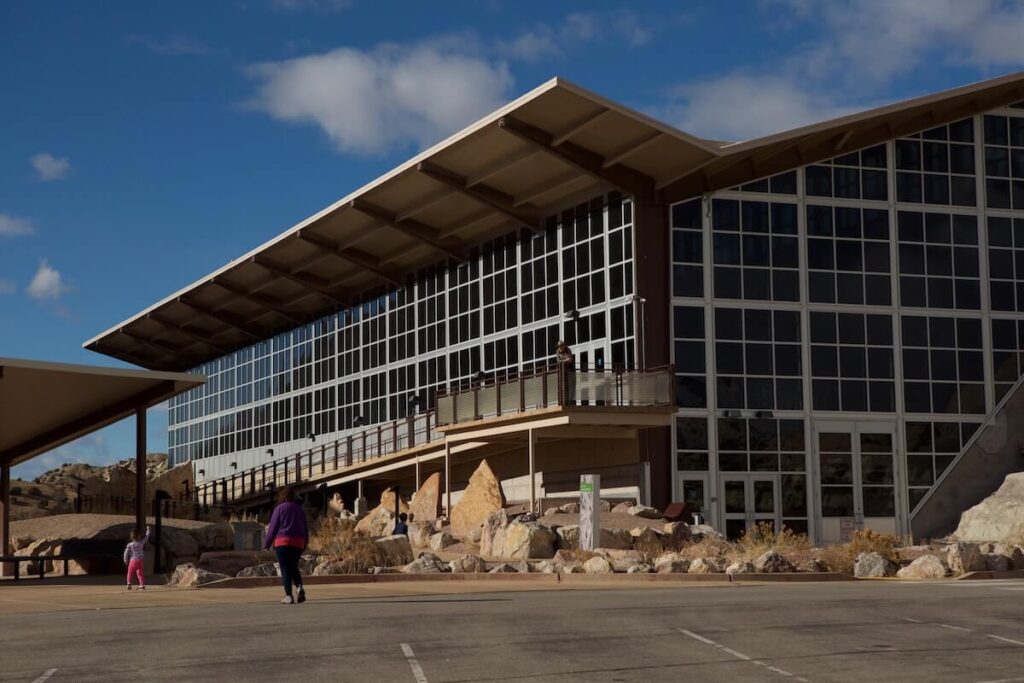
Utah is famous as a paleontology hotspot thanks in a large part to the Dinosaur National Monument. Located near Vernal, Utah, and straddling the border of Colorado, “Dinosaurland” is over 200,000 acres and full of, you guessed it, fossils! At the Quarry Exhibit Hall, you can see thousands of dinosaur fossils still encased in stones.
The monument also has gorgeous canyons, cultural histories from local tribes and later settlers, and unique rock formations that give an extensive look at the geological history of the area.
8. Greatest Snow on Earth

Utah is known for the “Greatest Snow on Earth” and although this sounds like a marketing gimmick, the powder here is truly excellent. It’s the perfect mixture of fluffy and wet, thanks to unique weather patterns and geographical features.
In addition to the makeup of the snow itself, the mountains of Utah also produce some of the most snow in the world, at over 500 inches (on average) each year.
9. Temple Square

In the middle of Salt Lake City, you’ll find Temple Square, which showcases the Salt Lake Temple, the Salt Lake Tabernacle, North and South Visitor Centers, and the Salt Lake Assembly Hall, as well as gardens, paths, and various offices.
This 10-acre plot is the religious center of the LDS Church, and gets millions of visitors every year—and not just Mormons!
Parts of Temple Square are indeed only accessible to Mormons, such as the Temple itself. Even so, the Square is a national historic site, and many parts are open to the public, including the Salt Lake Tabernacle, where you can find the famous Tabernacle Choir.
10. The Jell-O Belt

The famous “Mormon corridor” that covers Utah and parts of several surrounding states is also known as the Jell-O Belt.
Utah consumes more Jell-O than anywhere else in the U.S., and maybe even in the world (although I have no stats to back that up). Mormons certainly love their Jell-O, which is how the nickname came about.
You’d be surprised at the many different ways you can consume Jell-O: you can go the straight-up Jell-O mold route, the Jell-O salad route (with many delightful variations), you can try it in pies or in parfaits… just don’t expect to try it in the form of Jell-O shots. This is the Mormon corridor, after all.
11. Utah Jazz

The Utah Jazz, based out of Salt Lake City, is Utah’s NBA (National Basketball Association) home team.
The Utah Jazz originally hails from New Orleans, the capital of jazz, hence the name. When the team was traded to Utah in 1979, the name stuck.
12. Fry sauce

Rumor has it that fry sauce, that simple yet delectable mix of ketchup and mayonnaise, was invented in Utah. Although there is some dispute about whether or not this is fact, one fact is true: fry sauce is most definitely Utah’s favorite condiment!
Originally popularized out of a small food cart in 1940s Salt Lake City, various parts of Utah (and the world) have put their own spin on this ultimate dipping sauce. Most Utahns, however, prefer it in its purest form: just the two OG ingredients.
13. Pastrami burger
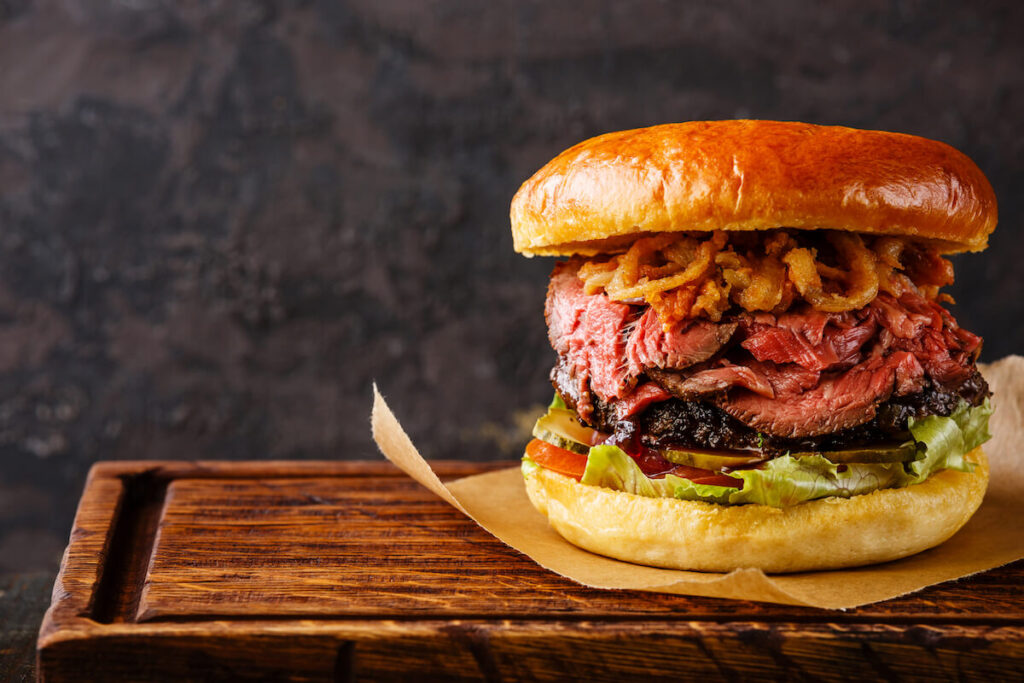
Utahns like to say that while they didn’t technically invent the pastrami burger, they perfected it—and admittedly, this is the pure truth.
A pastrami burger is a beef patty topped with pastrami, lettuce, tomato, cheese, and fry sauce, all in a sesame seed burger.
The original inventor of the pastrami burger was a Greek man living in California at the time, who eventually relocated to Salt Lake City. There, he opened Crown Burgers, which is still one of the best places to try a pastrami burger in Utah.
14. The Beehive State

Utah is known as the Beehive State, and you will see bees and beehives everywhere: on the Utah State Capitol (in sculpture form), in the state emblem, as the state insect.
Although Utah is the leading producer of honey in the United States, the nickname “Beehive State” actually has its roots in the religious ideals of Utah’s founders: the Mormons.
The beehive symbolizes industry, hard work, and community—all things the Mormon pioneers needed to thrive when first settling in the Salt Lake Valley.
Mormons still strive to embody the values of working hard to succeed as a community, and so does the state of Utah. There you have the origins of the “Beehive State.”
15. No gambling & strict alcohol regulations

As you’ve probably got by now, the Mormons had a huge role in forming Utah, and their influence is everywhere, including in the current laws. Mormons still make up around 60% of the population, so this makes sense!
Some of these laws have to do with gambling and alcohol. Gambling is illegal in Utah, and everywhere, and it has the strictest alcohol regulations in the United States.
In recent years, starting with the 2002 Olympics, however, the laws around alcohol are loosening slightly, to entice more visitors and businesses.
16. Bonneville Salt Flats & Speedway

In a state full of unique natural attractions, one of the most unique of all is the Bonneville Salt Flats. The 12-mile-long, five-mile-wide stretch of salt crust is leftover from the prehistoric Lake Bonneville, which used to cover much of Utah (and is also the origin of the Great Salt Lake).
As if this otherworldly landscape wasn’t interesting enough on its own, it also has its own Speedway.
There are races throughout the year on the Bonneville Speedway, and many land speed records have been broken here.
17. Four Corners
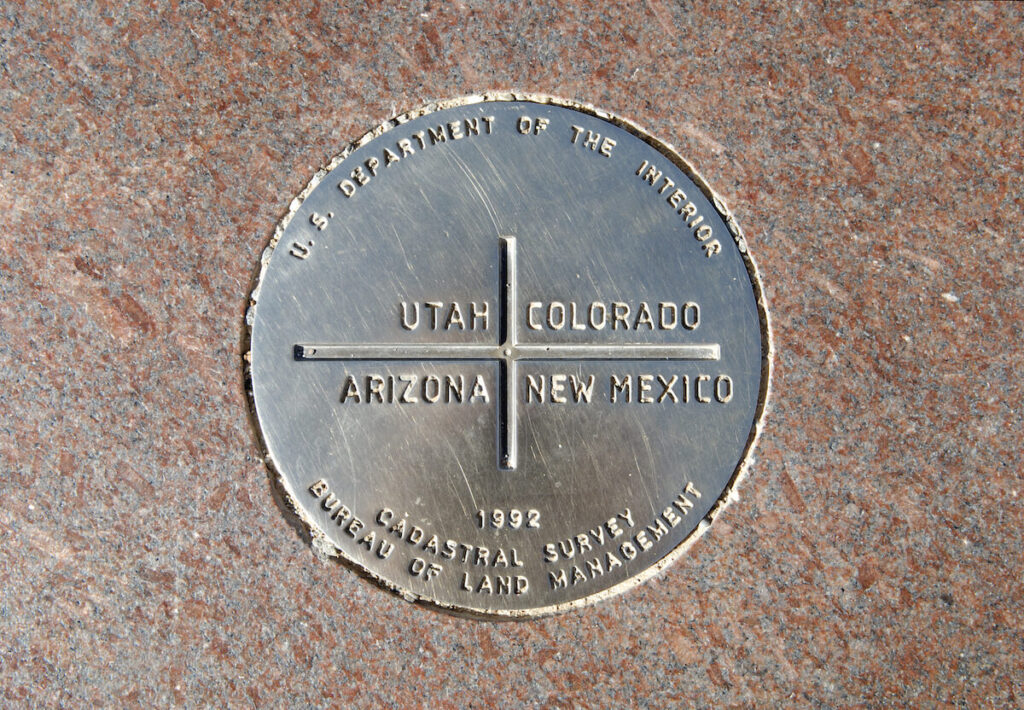
The Four Corners Monument is the only place where four states meet at their four corners: Utah, Arizona, Colorado, and New Mexico.
As part of the Navajo Tribal Park, of the Navajo Nation reservation, you can visit the site of the four corners and technically be in all four states at once.
The monument is also a great place to purchase native artwork and crafts right from the artisan.
18. Monument Valley
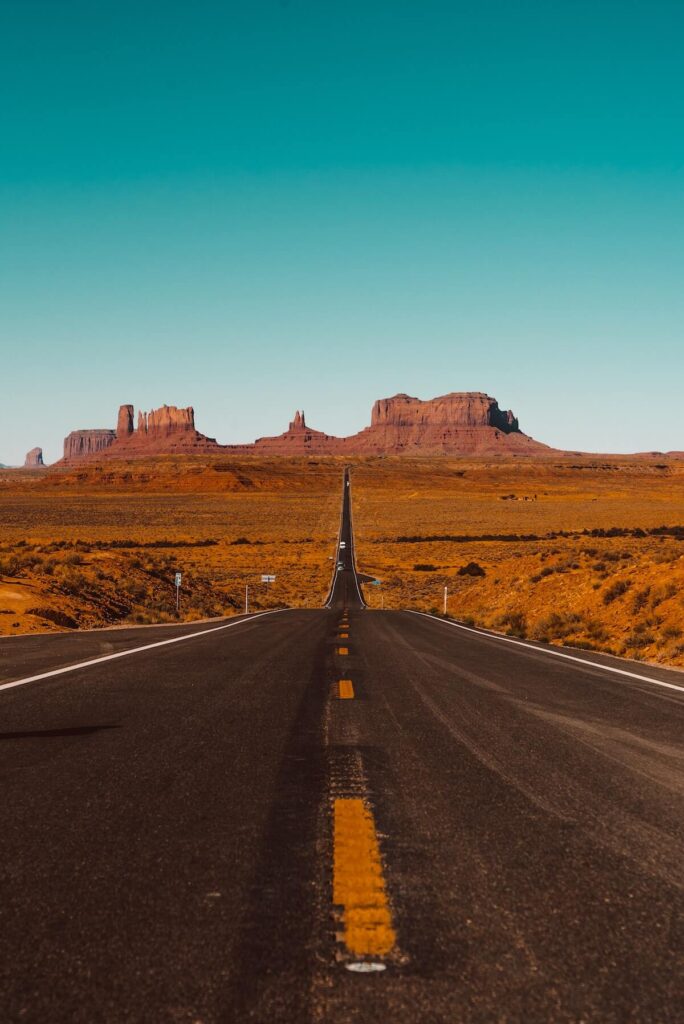
When you picture Utah, you might be picturing one of its most iconic sites: Monument Valley. Monument Valley, also part of the Navajo Tribal park, is famous as a shooting location for hundreds of Western movies.
It is also thought to be one of the most photographed places on Earth, and for good reason. The iconic sandstone formations that tower up to 1,000 feet high from the desert floor are all framed by picturesque clouds (and their shadows) that roam over the valley floor.
The best way to see Monument Valley is via the scenic 17-mile loop road, although the terrain is rough and the sand dunes can be deep.
19. Indigenous groups
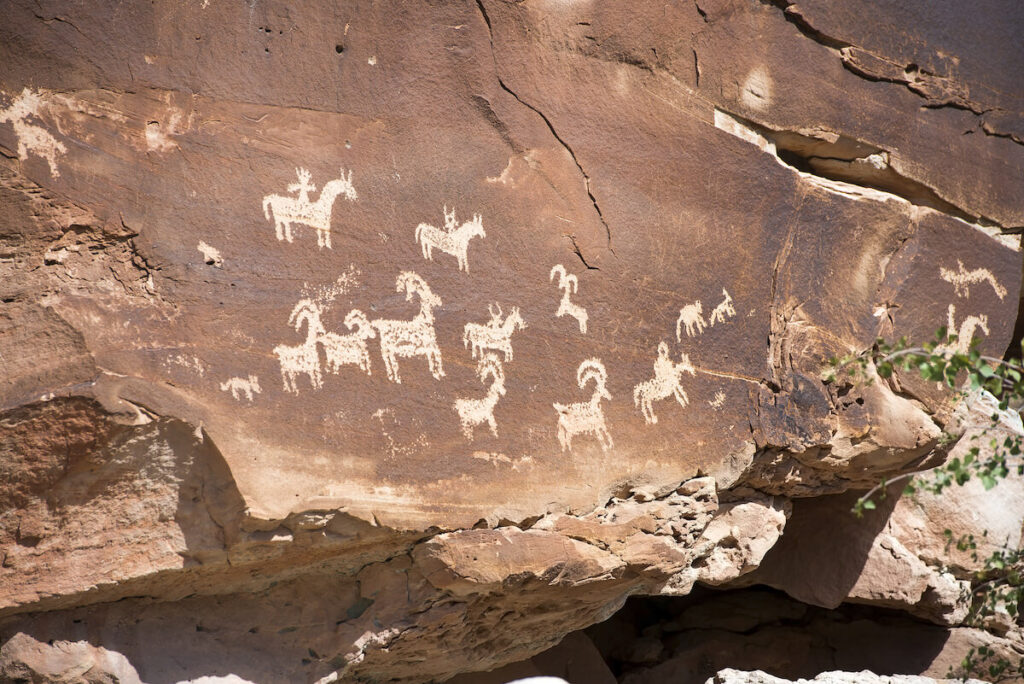
Utah has been inhabited for thousands of years by various indigenous groups.
Unfortunately, Utah, like much of the West (and the Americas in general) did not escape the brutal treatment of its native tribes. Despite this, five major tribes continue to live in Utah: the Ute, Navajo, Shoshone, Paiute, and Goshute tribes.
These five groups are likely descended from ancient communities in Utah, such as the Fremont Culture and the Anasazi.
Both of these mysterious groups left a wealth of cultural artifacts, such as petroglyphs (rock art), village ruins, and other relics.
20. The People of the Mountains (Ute Tribe)
I know you’re wondering: what is Utah named after?
Brigham Young, the Mormon leader who founded Salt Lake City, wanted to name the state Deseret, a word borrowed from the Book of Mormon meaning “honeybee” (those beehives again!), but his idea didn’t take.
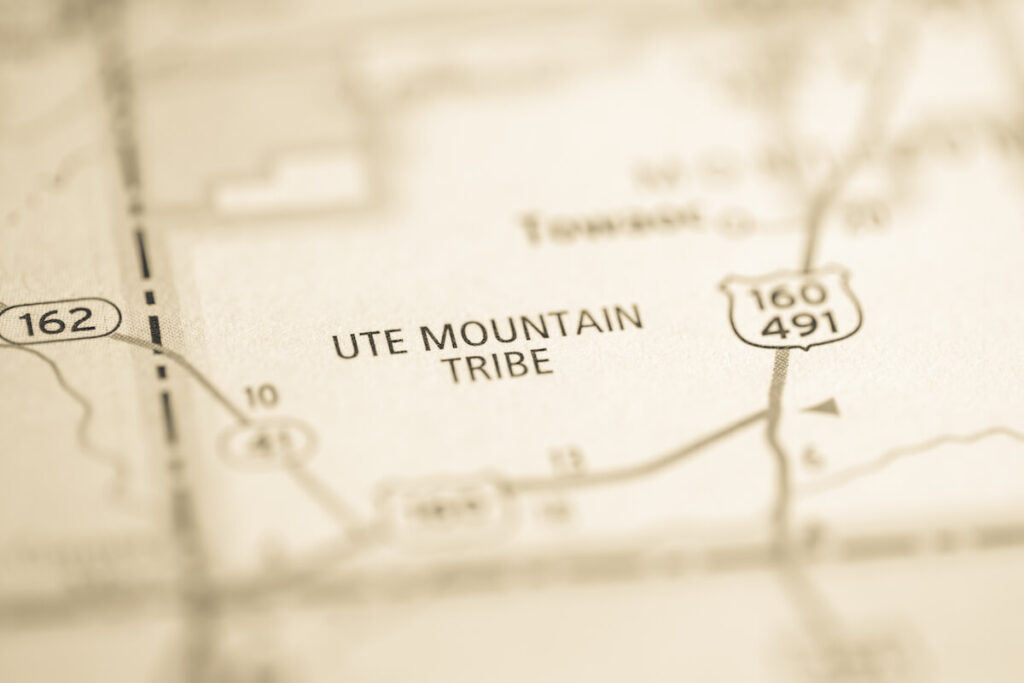
The federal government ultimately chose the name of Utah, after one of the most prominent tribes in the area, the “People of the Mountains,” also known as the Ute Tribe.
The current home of the Ute Tribe is the Uintah and Ouray Reservation, located in northwestern Utah.
21. Pando, the Trembling Giant

One of the largest and oldest organisms in the world is found in Utah: Pando, the Trembling Giant.
Pando, a quaking aspen grove, has been quietly thriving near Richfield, Utah for potentially 80,000 years!
Pando is made up of about 47,000 aspen trees which are all linked to the same root system—which means they are all essentially one giant clone, rather than individual trees.
Pando, which means “I spread” in Latin, is at its best in fall, when all the leaves turn yellow. The millions of yellow leaves trembling in the autumn wind is an awesome—and somewhat unnerving—sight to behold.
22. Youngest population in the US

The age of the population of Utah, which is the youngest in the United States, is also a direct influence of the Mormon church. Although the Mormons no longer practice polygamy (good ole Brigham Young, the founder of Salt Lake City, had some 56 wives and 57 children), they still tend to have a lot of children.
One of the tenets of the Mormon faith is to populate the Earth with more little Mormons (not a direct quote from the Book of Mormon), and since there are so many Mormons in Utah, this means that the population tends to skew younger.
23. Slickrock mountain biking

Utah is known for being a mountain biking mecca, especially in the area around Moab. One unique mountain biking feature around Moab is Slickrock mountain biking, often on Slickrock Trail.
Slickrock is a certain type of sandstone known for its sandpaper-like surface, making it ideal for mountain bike gripping (and for off-roading).
Slickrock gained its name thanks to its consistency when it rains, and due to the pioneers’ experience with horses on the sandstone. The metal horseshoes couldn’t get a trick on the stone, hence, Slickrock.
Nowadays mountain bikers come from all over to give the Slickrock Trail a go. Even though it’s short, it’s difficult, and the Slickrock is notorious for serious abrasion wounds.
24. Gayest city in America

Raise your hand if you thought the “gayest city in America” would be found in the religious, conservative state of Utah! Yeah, me, neither.
Salt Lake City is known as a liberal bubble within Utah, but it’s still surprising that it would gain the nickname. In addition to an openly gay mayor, 5% of Salt Lake’s population identifies as LGBTQ, which puts it higher than Los Angeles, percentage-wise.
25. Apple-Beer
Apple beer, you say? In a state where over 60% of the population doesn’t imbibe alcohol? That’s right!
Except this Apple-Beer that Utah is known for is non-alcoholic. It’s made by a company called SodaBeers, which follows an old Bavarian recipe for “keg soda.”
Keg soda is made with fruit and spices in a wooden keg, and when served, it produces a foamy head, just like beer, sans alcohol.
Apple-Beer is the OG flavor, but the company has recently expanded to Ginger-Beer, Root-Beer, Butterscotch-Beer, and a low-cal version of Apple-Beer.
26. The Inversion
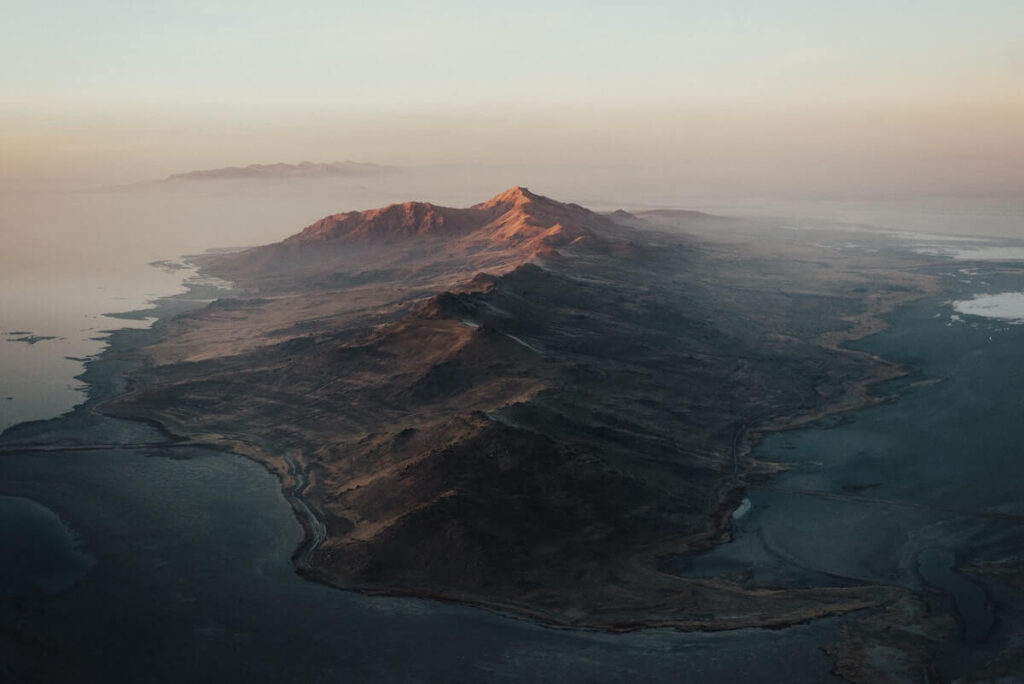
Every winter, along with some incredible snow, the valleys of Utah, especially along the Wasatch Front (the mountain range near Salt Lake City) experience the Inversion.
An inversion happens when warm air traps cooler air near the ground. This warm layer prevents pollutants from leaving, resulting in poor air quality.
Utah’s unique topography causes the Inversion to happen every winter, sometimes for as long as eight-day stretches, until a storm blows in and clears all the grossness away.
27. Slot canyons
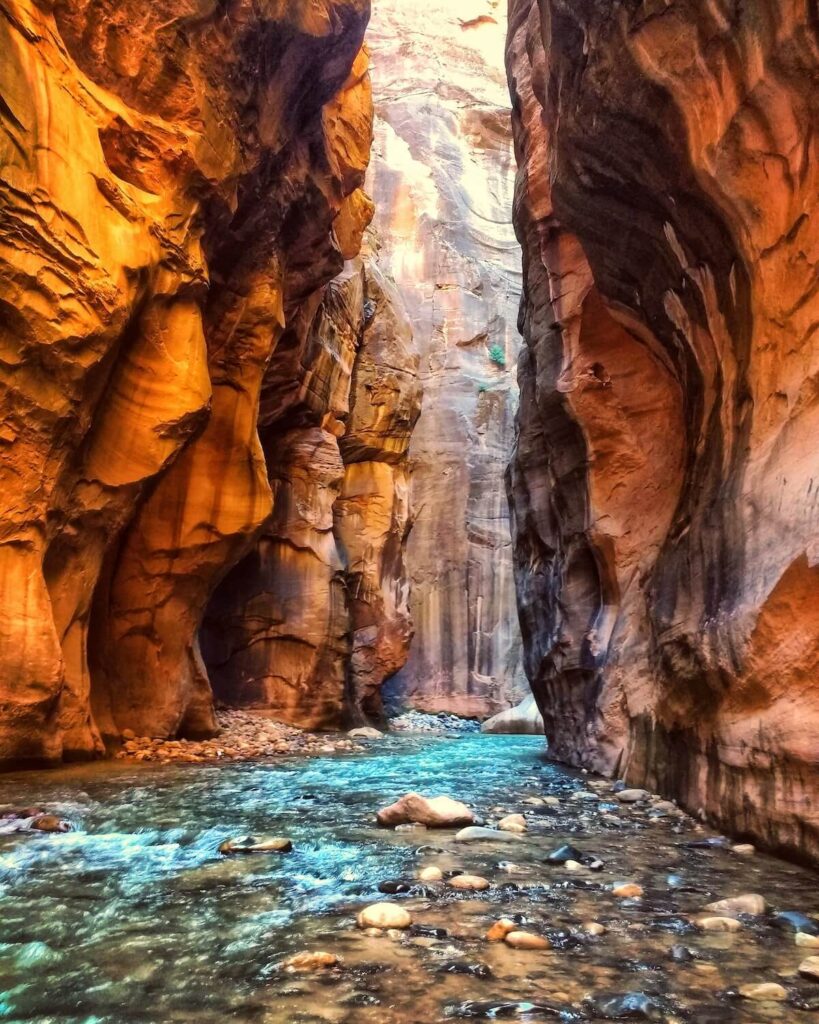
One of the coolest geographical features you can find in Utah is slot canyons. Slot canyons start as a simple crack in the landscape. Add a few million years of erosion, and you have narrow channels in solid rock.
These skinny drainages are characterized by tall, usually sandstone walls, unique ecology, and flash floods.
Although you can find slot canyons all over the world, the most famous can be found in Utah.
The “slot canyon to rule them all” is the Narrows in Zion National Park, although the less-accessible Antelope Canyon in southern Utah may be even more famous.
For the Narrows, you’ll hike in the river, and in Antelope Canyon, you’ll likely need a reservation and a Navajo guide.
28. Only ski-in distillery in the world
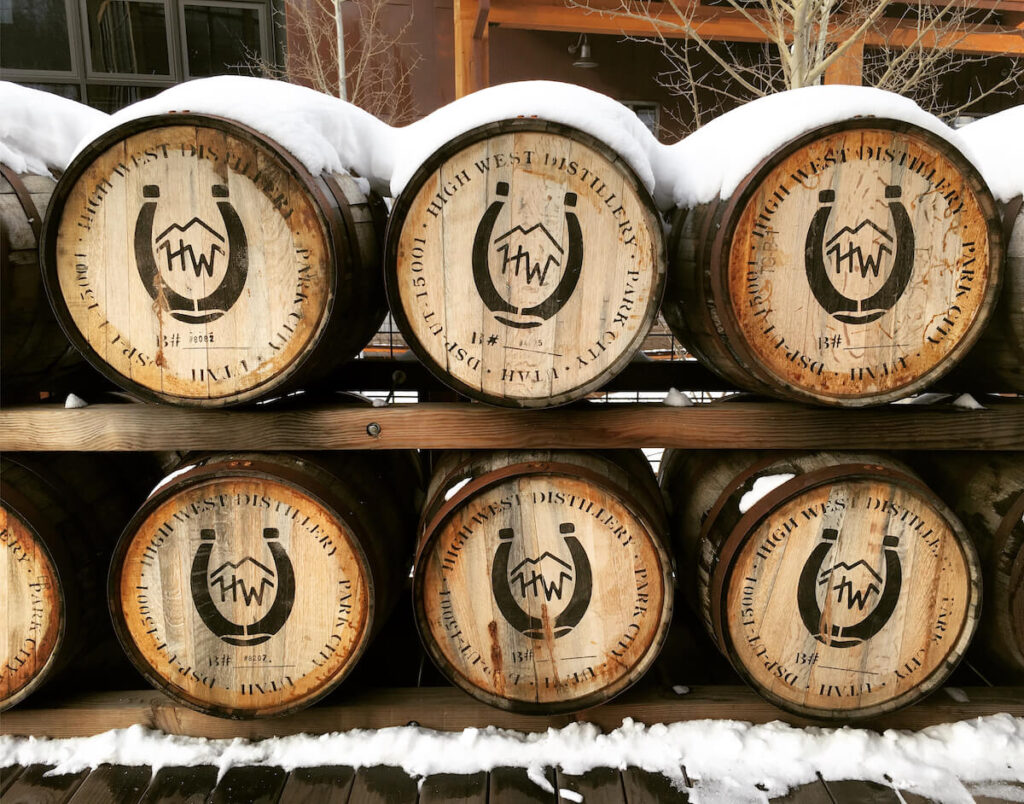
High West Distillery & Saloon in Park City, Utah is the only ski-in (and ski-out!) distillery in the world. Found at the base of Town Lift in the Park City resort, High West specializes in whiskey, vodka, and alpine cuisine.
Visitors can take a tour to learn about the distilling operation, visit the tasting room, or even have their wedding there.
29. Lake Powell
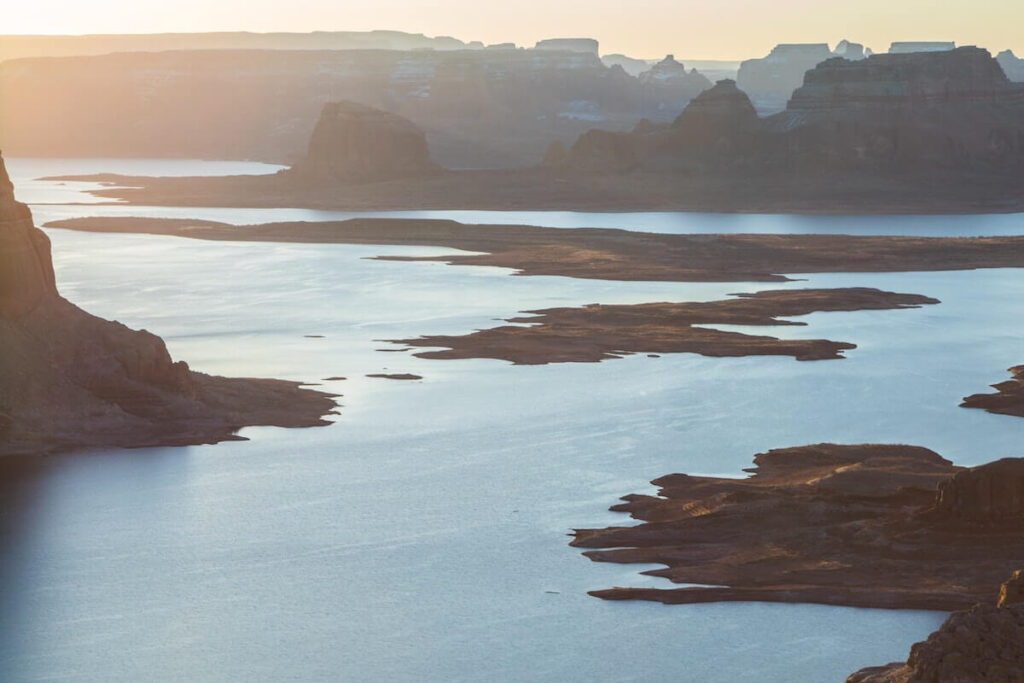
Lake Powell, an artificial reservoir straddling the borders of Utah and Arizona, provides a significant amount of power for the western United States, as well as a wealth of recreational opportunities.
Lake Powell was made by the Glen Canyon Dam and stretches up into Glen Canyon and many smaller canyons.
Other features of the lake are Rainbow Bridge, one of the world’s largest natural bridges; the Defiance House, an Anasazi ruin; the Cathedral in the Desert; and countless more land bridges and rock formations.
Conclusion
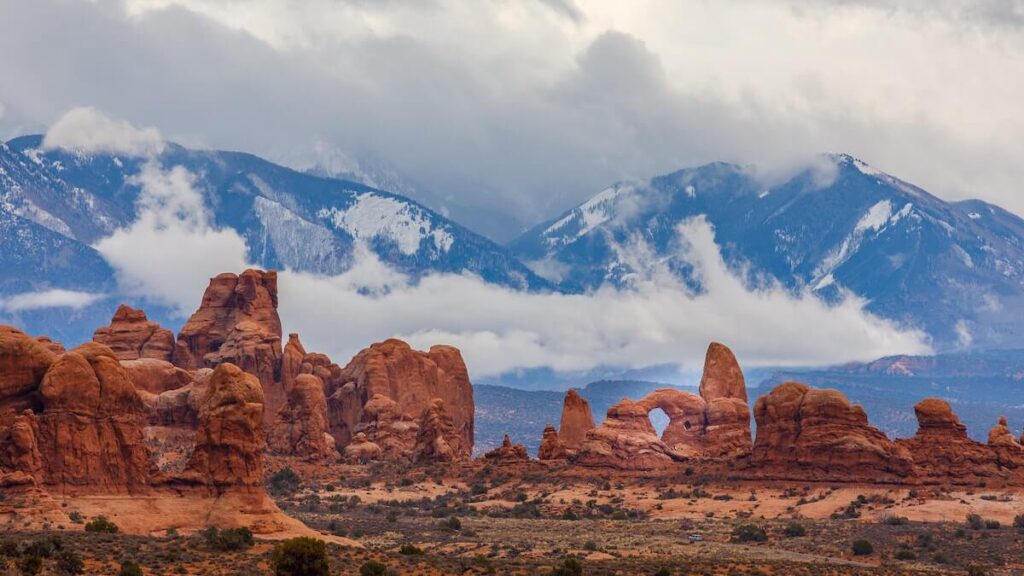
For a place unlike anywhere else on Earth, you need to add Utah to your list! With its otherworldly landscape, world-class skiing, unique Mormon influences, and really the best versions of Jell-O salad, Utah is unforgettable.
What was the most surprising fact on this list? What else would you add that Utah is known for? Tell us in the comments so we can fully round out our Utah visits!

NHL hockey team…we need a name for them
Utah Beehives. With bees swarming the hive while holding hockey sticks.
Utah Hoodoos. Stand Tall!!
Bonnevilles
Utah Salt
Utah “Crossroads” or Silver Skiers
Should be called the Utah Stingers