
An artist’s haven, a central stage for great historical events, a foodie’s dreamland – Vienna is famous for playing many roles. But how much do you know about the capital of Austria?
Vienna is known for its long list of famous residents, its excellent quality of life, and its often-mocked local dialect. Vienna is also famous for its surprisingly vast green areas, stunning architecture, and cosmopolitan cuisine.
Are you curious about what else Vienna is famous for? Come join me and find out!
Table of Contents
1. Wiener Schnitzel

I assure you that this won’t be the only Viennese staple to feature on this list, but there’s arguably none that rivals the cultural recognition and fame of the humble Schnitzel.
Myths and tales abound regarding the origin of world history’s most famous cutlet. Some say it originated in Italy, while others quote a 19th-century Austrian cookbook author.
But whatever the case may be, today the Viennese Schnitzel is among the most widely consumed, praised, and well-known examples of Viennese and Austrian cuisine.
Fun fact: if you pay a visit to Karlsplatz, one of the major Viennese metro stations, you will come across a large wall monument with LED displays counting, among many other statistics, “the number of schnitzels consumed by Viennese this year”.
The last time I checked, which was last summer, it stood at a whopping seven million!
2. The Danube

Much like other crown jewels of the Central European landscape, Vienna would be unthinkable without the defining influence of the Danube river.
Vienna is actually the only major city in Europe that is divided by the Danube twice. As the result of a large urban planning project launched in the 1970s meant to contain potential flooding, the flow of the river is split into two by a large canal.
The Viennese Danube is therefore referred to as the Alte Donau and Neue Donau (old and new Danube) respectively, depending on which stream you are referring to.
3. Royal fairytales

Vienna is famous for having served as the capital of the Austro-Hungarian empire, often named among history’s last great empires.
The Habsburg monarchy that reigned here has become the subject of great folklore and romanticized fables itself.
While many locals will be ready to point out that Viennese culture isn’t all about Sisi and Franz-Josef, there’s no doubt that to millions abroad, these stories of aristocratic romance are what makes Vienna a truly magical, unique place.
4. Schönbrunn Palace

Speaking of the Habsburgs, their royal residence (yes, the one from the movies) has thankfully survived the ravages of time.
In fact, the pristinely preserved rococo Schönbrunn Palace nowadays serves as a prime tourist destination and one of Vienna’s most heavily visited spots.
Even Viennese natives often go here to hang out and soak in some sun in Schönbrunn’s majestic gardens.
5. Sigmund Freud
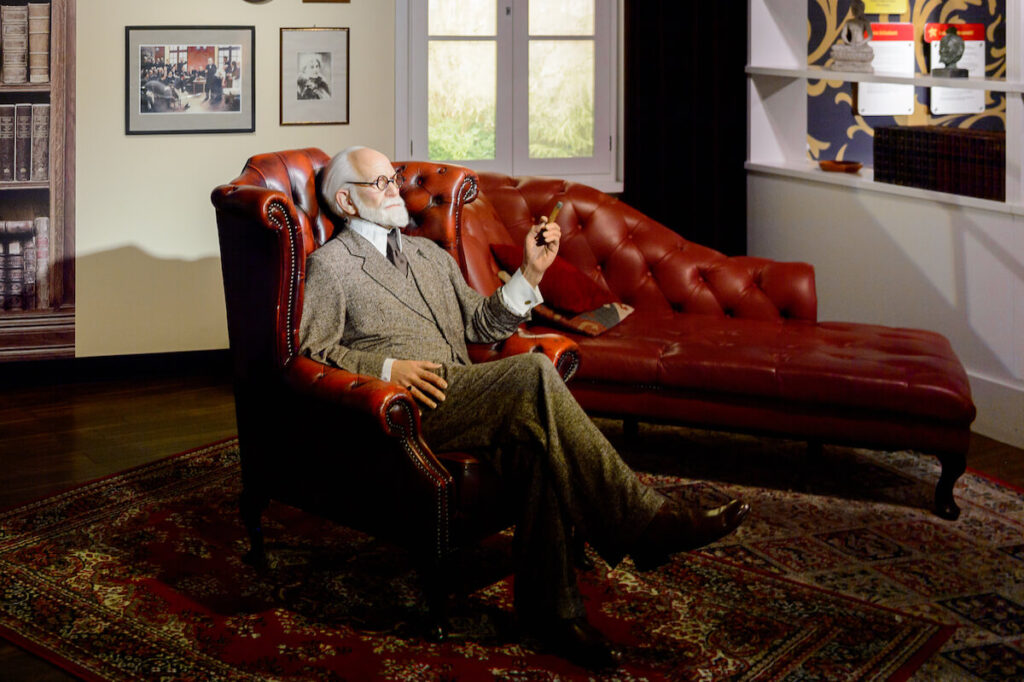
What would psychology or psychiatry look like today without Sigmund Freud? Plenty have attempted to answer this question, with answers ranging from “total anarchy” to “we’d all be better off”. But what nobody can deny is that the eccentric Viennese doctor left a legacy like few others throughout history.
Today, Vienna is known for its association with Freud’s life and work, as well as that of his contemporaries. His former apartment and clinic have since been converted into a museum — one of the most popular in the city — which chronicles not only his professional achievements but even more so his personal life and character.
6. Wienerdeutsch

Vienna is famous for its quirky dialect of German only spoken in the city and surrounding areas, known as Wienerdeutsch.
Wienerdeutsch features not just a totally different pronunciation from Standard German, but also a lot of unique idioms and phrases — some archaic that are no longer found in Standard German, many others modern Viennese inventions, or loanwords from nearby Hungarian, Croatian, or Slovene.
Try repeating the common phrase “I foa in de Hackn” to a German speaker from Berlin and see how much they can decipher. (Hint: it means “I am going to work”).
7. Sachertorte

No Viennese dessert would be complete without a slice of Sachertorte. Or at least, that’s what we would all like to imagine, isn’t it?
Yes, Vienna’s sweetest invention might not be found on literally every family dinner table, but it is nonetheless an incredibly common and widely beloved example of the local cuisine.
8. Nature and urbanism

Vienna is famous for striking a unique balance between a highly urban city center and a green, surprisingly hike-friendly periphery.
Yes, Alpinist culture is very much alive among the Viennese, and there are many kilometers of trails, bike routes, and huge parks worth exploring within and all around the city.
Almost every local I’ve met cited the fact that the great outdoors are always only a few minutes away by tram or metro as one of their greatest sources of pride for their hometown — and only one look at Vienna’s landscape is enough to tell you why!
9. Friedrich Hundertwasser

Speaking of Vienna’s stride to maintain its harmony with nature despite a big-city lifestyle, no one man is more symbolic of this than Friedrich Hundertwasser.
An incredibly innovative and to this day controversial modernist architect, Hundertwasser designed many of Vienna’s most striking sights during the 20th century.
This includes the Hundertwasserhaus, a residential building deliberately left overgrown with flora that features a dizzying array of colors and a complete absence of straight lines (a trademark of Hundertwasser’s work).
10. Quality of life

For over a decade, Vienna has consistently been ranked as the number one in the world when it comes to quality of life.
The reasons for this are plentiful – Vienna is famous for its well-oiled public housing and social security infrastructure, and the highly-developed inner city offers lots of well-paid jobs.
Whatever the case may be, Viennese today are proud to be living here more than anything – and who could blame them?
11. Gustav Klimt

Vienna has been home to many artists throughout the centuries, but few are as famous nor as deeply associated with the city as Gustav Klimt.
With his abstract, highly idiosyncratic works like the immortal Kiss, Klimt has charmed millions from around the globe.
It’s no wonder that many of the most common souvenirs I saw in Viennese stores were referencing Klimt’s work in some way or other. Visitors can also view many of his originals at the Leopold Museum of modern art.
12. Excellent transport
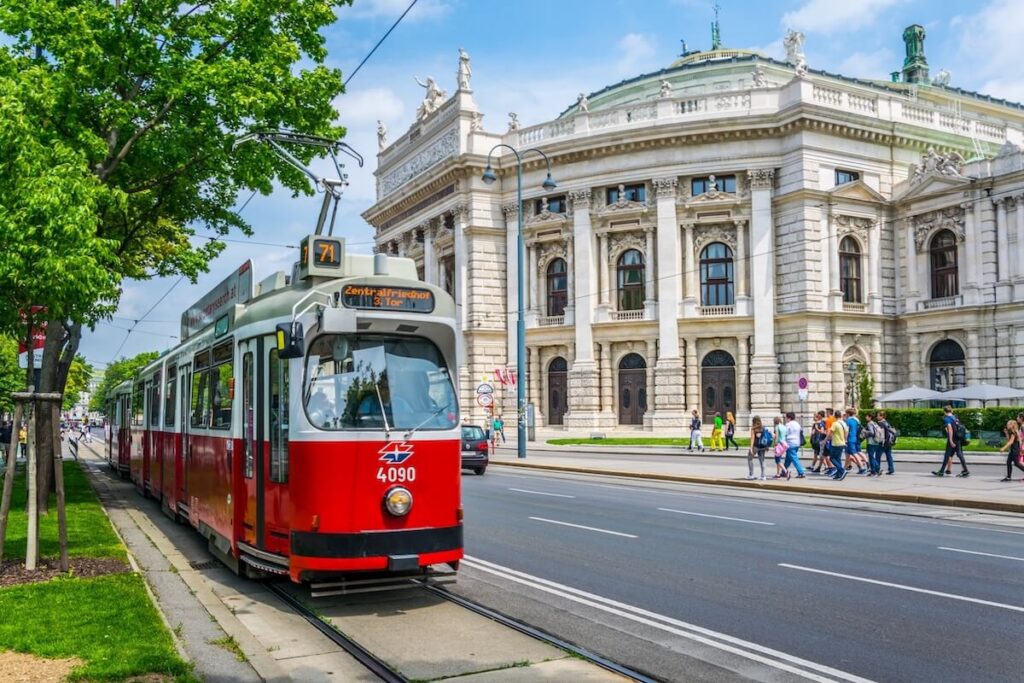
Ample public transportation options are par for the course among big cities in Central Europe, but Vienna is particularly known for its perfectly-oiled, smooth transportation infrastructure that has been a central pillar of the city’s urban planning for generations.
This includes the Vienna metro, whose tracks were first laid in 1898, as well as countless metro and bus lines.
The network is extremely reliable, clean, and efficient, and it can take you nearly anywhere within the city and its suburbs without much hassle.
13. Coffee houses

Like many traditions, the Viennese coffeehouses go back centuries. Not quite a café and not quite a bar or a pub either, these casual establishments are designed as relaxing social venues where socializing is as important as the fine dining-esque atmosphere.
Many of the 19th and 20th century’s greatest minds had breakthroughs over a Viennese pastry, a newspaper, a heated philosophical debate, or a combination of the above while lounging at one of these coffee houses.
14. St. Stephen’s Cathedral

Called Stephansdom in German, St. Stephen’s Cathedral is one of Vienna’s most instantly recognizable landmarks.
The huge Gothic tower combined with the cathedral’s distinct ornamental roof cladding makes it stand out among other examples of Viennese and European architecture.
Because the cathedral is constructed within a large public square, the Stephansplatz, it has been the site of countless public and historically significant events since the 14th century.
15. Musical fame

Along with plenty of other nicknames and sobriquets, Vienna is known as the City of Music. Indeed, music has permeated the city’s history and continues to define its character today!
During the classical and romantic periods, some of the Western canon’s greatest composers, including Haydn, Mozart, Brahms, and Beethoven, spent most of their lives living and performing in Vienna.
Since then, Vienna has never stopped adding to its list of important names in the world of music. From Anton Schönberg to Falco and beyond, music really flows through Vienna’s veins, keeping the city alive through the generations.
16. Wine
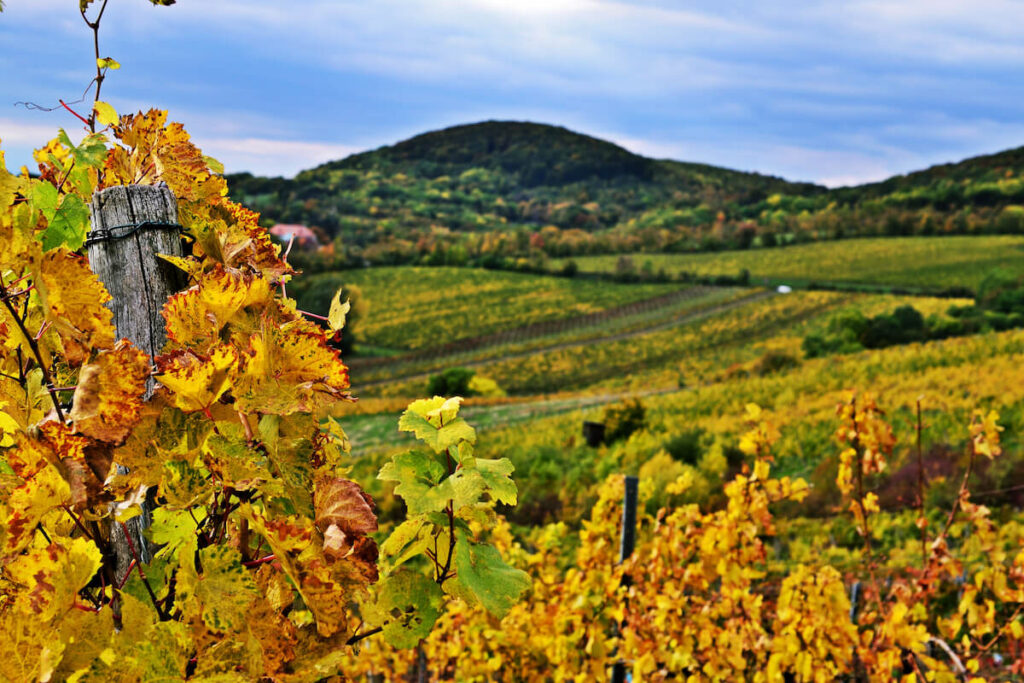
Vienna is famous for its avid viticulture scene – and that’s no wonder! Where else can residents boast of having world-class vineyards only a hop away from the city center?
Indeed, if you want to see the Viennese vineyards for yourself, all you need to do is take a short tram ride from downtown and take on the Stadtwanderweg, one of the major hiking routes.
This will lead you up the nearby hills and right along the fields where some of Central Europe’s most desirable grapes are grown and harvested each year.
17. Krapfen

Another Viennese delicacy, these unimaginably sweet, jam-filled buns topped with copious amounts of powdered sugar are the perfect companion for breakfast — or lunch, supper, or just about any time of day!
Funnily enough, very similar recipes exist in different countries under different names, making the origins of Krapfen a bit unclear.
In Germany (where I personally first discovered them), the lovely sweet pastries are known as Berliner, suggesting they were invented in Berlin.
In Poland, there is a very similar version called the Pączek. And Jews around the world have been baking Sufganiot for Hannukah every year that, if you squint and add a bit of extra sugar, also look stunningly similar!
In the end, no matter where exactly Krapfen came from, one thing we can all agree on is that they taste like sweet heaven and we’re very grateful for their existence!
18. Waltz

The image of the typical Viennese as a white tie-wearing, extremely well-spoken academic type who spends their free time waltzing and discussing poetry at the nearest coffee house might be a bit exaggerated.
However, there is a kernel of truth to some of those stories – as we have already seen above, in part.
Johann Strauss II (not to be confused with his equally Viennese and equally famous father, Johann Strauss sr., or the unrelated Richard Strauss) made a major contribution to the world by introducing us to The Blue Danube Waltz in 1866.
Since then, Vienna has never managed to rid itself of its collective Waltz-o-philia, in spite of all the musical innovation that has taken place since then!
A whopping 500 balls are staged in the city per year by some counts, making Vienna the number one destination worldwide for ballroom dancing.

Now that you should have an easier time answering the question of “What is Vienna famous for?”, it’s your turn! What do you know about the Austrian capital that you would like to share? What did I miss?
Tell us all in the comments!