
Among the many things Verona is known for, a few stand out. The legendary story of Romeo and Juliet and age-old landmarks like the Arena and all the Roman gates make the city a must-see in northeastern Italy.

We’ll discover lovely plazas like Piazza delle Erbe as we stroll around town and check out the coolest things Verona is famous for.
We’ll also get a taste of the world-famous winemaking tradition of the surrounding area, which can never be a bad thing.
Table of Contents
1. Romeo and Juliet

William Shakespeare single-handedly launched Verona into stardom when he picked the city as the setting for his tragic play Romeo and Juliet.
Though the story of Romeo and Juliet’s impossible love is fictional, the Capulets and the Montagues did indeed exist in Renaissance Verona.
The house where Juliet could have lived was remodeled in the 1920s to feature the legendary balcony where they exchanged vows of eternal love.
The balcony and the statue of Juliet that was placed in the house’s courtyard attract thousands of loving couples and hopeless romantics every day.
2. Arena

The Arena stands majestically on the northern end of Piazza Bra, Verona’s largest square, and has been the city’s top landmark and icon from its completion in the 1st century.
Unlike other similar venues, it came out of the Middle Ages almost intact because the local government recognized its architectural value early on and ordered its closure to prevent vandalism.
From the late 16th century, the Arena once again became the stage of live performances (though initially only occasionally), a role it still plays to this very day. The amphitheater hosts a summertime opera festival and many musical acts year-round.
3. Adige River

The Adige River, the third-longest in Italy, is Verona’s no. 1 natural landmark. The prehistoric city was actually founded on the hills overhanging the river to the east of modern Verona
But in Roman times, Verona was moved to the other side of the river, where a dramatic bend forms a natural peninsula.
Throughout the centuries, the Adige has had enormous commercial and military importance.
Bunkers and fortresses were built all along its course, which was also artificially modified several times to allow for increasingly larger ships to travel through it.
Today, the river attracts a lot of water sports fans, who can canoe or raft upstream from Verona, toward the Alps (which is where its source is located).
If that doesn’t sound like you, just stroll along the riverfront promenade and take in the awe-inspiring views.
4. Wine

Verona is the unofficial capital of Italian wine, at least regarding the most prestigious labels. About 15% of all bottles with a controlled designation of origin (DOC) recognition nationwide are produced within the province of Verona.
The best-known wines hailing from Verona are Soave and Amarone della Valpolicella, though the area yields some Prosecco as well.
On top of that, Verona has been hosting Vinitaly, the biggest wine trade show on Earth, for 50+ years. The huge event welcomes over 4,000 exhibitors and 150,000 visitors each year.
Also read: 10 Best Tastings and Wine Tours in Verona to Experience
5. Piazza delle Erbe
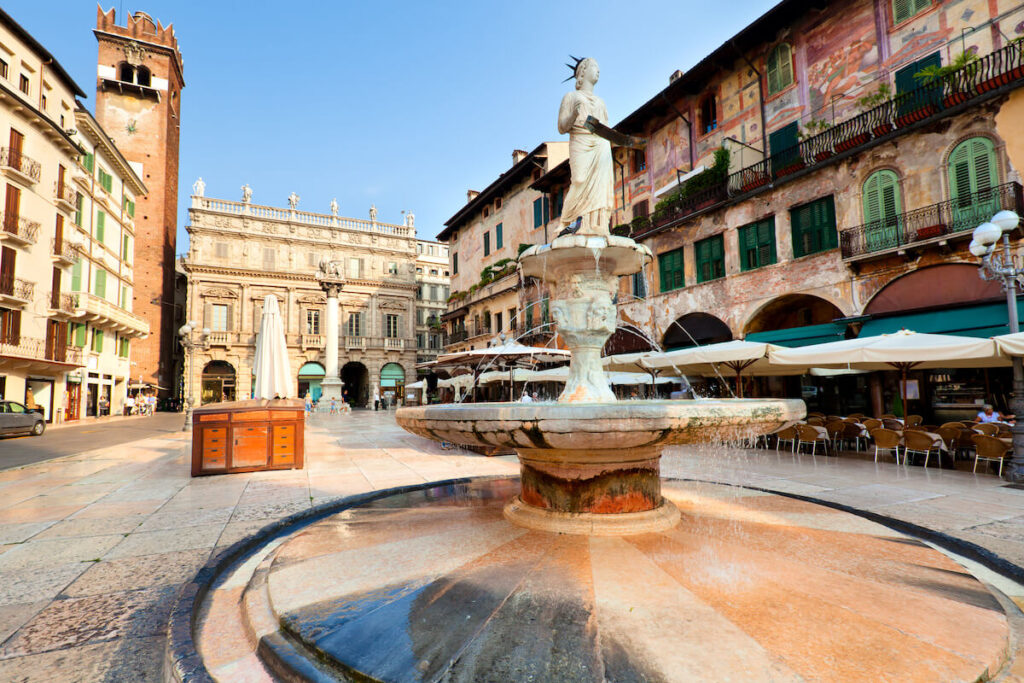
While Piazza Bra is the most monumental square in Verona, thanks to its impressive dimensions and of course the Arena on one corner, the city’s beating heart lies in Piazza delle Erbe. Verona’s oldest square has staged significant events since Roman times.
The ancient structures eventually gave way to medieval ones, which are now side by side with Renaissance and Baroque buildings. Piazza delle Erbe is where Lamberti Tower, one of Verona’s quintessential symbols, is located.
And one of the coolest things about it is, two millennia on, it’s still home to the city’s main producers’ market. Even better, you’ll also find plenty of gifts and souvenirs between one fruit stall and the next!
6. UNESCO World Heritage Site

Verona has been the stage of key historical events which left behind a stunning cultural and architectural heritage. Ever since its founding, it never ceased being a major trading post and a military hub.
The city has managed to preserve its arena, amphitheater, a great deal of its walls, and a bunch of gates, which is something not too many cities in northern Italy can brag about.
In recognition of this rich history, which can be seen in every corner of Verona’s old core, the city was been listed as a UNESCO World Heritage Site in 2000.
7. Ponte Pietra
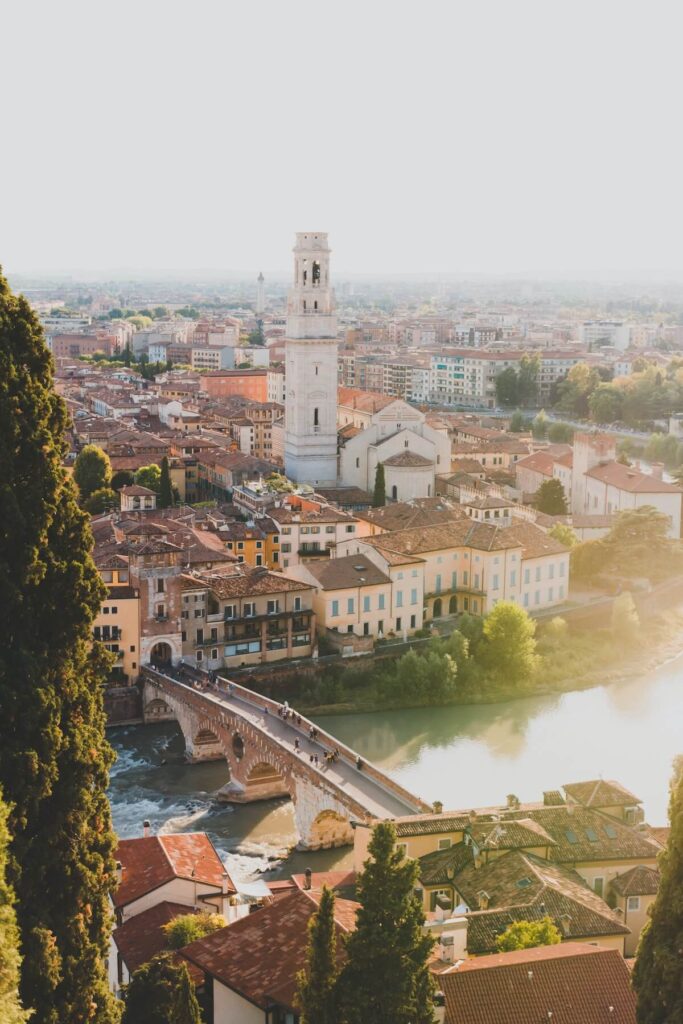
Ponte Pietra’s name is telling of its history — it means “stone bridge” in Italian, which of course refers to the material the Romans used to build it.
You’ll notice, though, that just one side of the bridge is made of stone; the rest is of brickwork. That’s because the bridge was destroyed by floods several times throughout the Middle Ages and had to be rebuilt.
Verona’s oldest and most emblematic bridge was in fact torn down by the Nazis during WWII. Other bridges in town had the same fate and ended up receiving a modern makeover.
Luckily, Ponte Pietra was rebuilt in the early 1950s to look exactly like it did before the bombings. In the process, many of the original stone blocks were retrieved from the Adige.
8. College life

An early college was established in Verona in the 9th century, yet it would take until the 14th century before the pope officially allowed the city to set up a university of its own.
Ironically, however, under Venetian rule, Verona would be stripped of its higher-education institutions for over 500 years.
The modern University of Verona was born a mere 40 years ago and soon went on to become one of the most prestigious nationwide.
Verona is popular with students thanks to its affordable cost of living and intense cultural life, as well as its university’s state-of-the-art infrastructure.
As a mid-size city, its student population is way more visible than in places like Rome and Milan.
9. Basilica of San Zeno
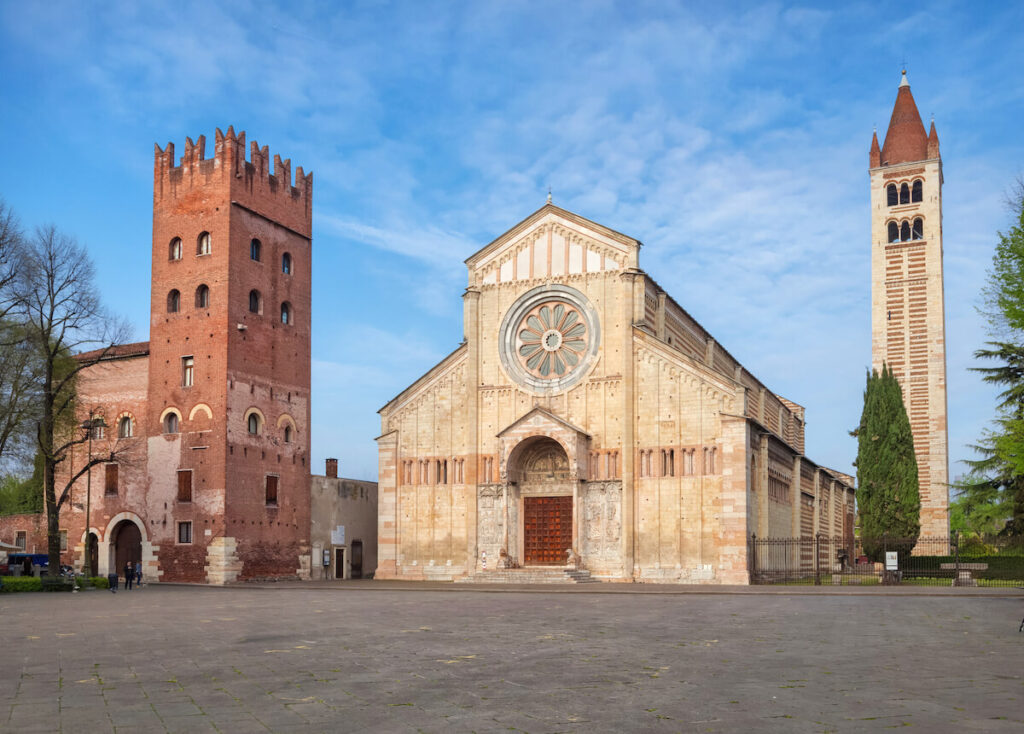
Though the Verona Cathedral, with its marble bell tower and an iconic oil painting by Titian, is definitely worth a visit, ironically the Basilica of San Zeno is the most famous church in town. Why? Legend has it that Romeo and Juliet got married here.
But that’s not the only special thing about San Zeno; the Basilica houses an altarpiece by Renaissance painter Andrea Mantegna and stands on the site of at least five earlier temples.
Its layout is unique too — from the main floor, you can spot both the crypt downstairs and the chancel upstairs, where the masses usually take place.
10. Torricelle
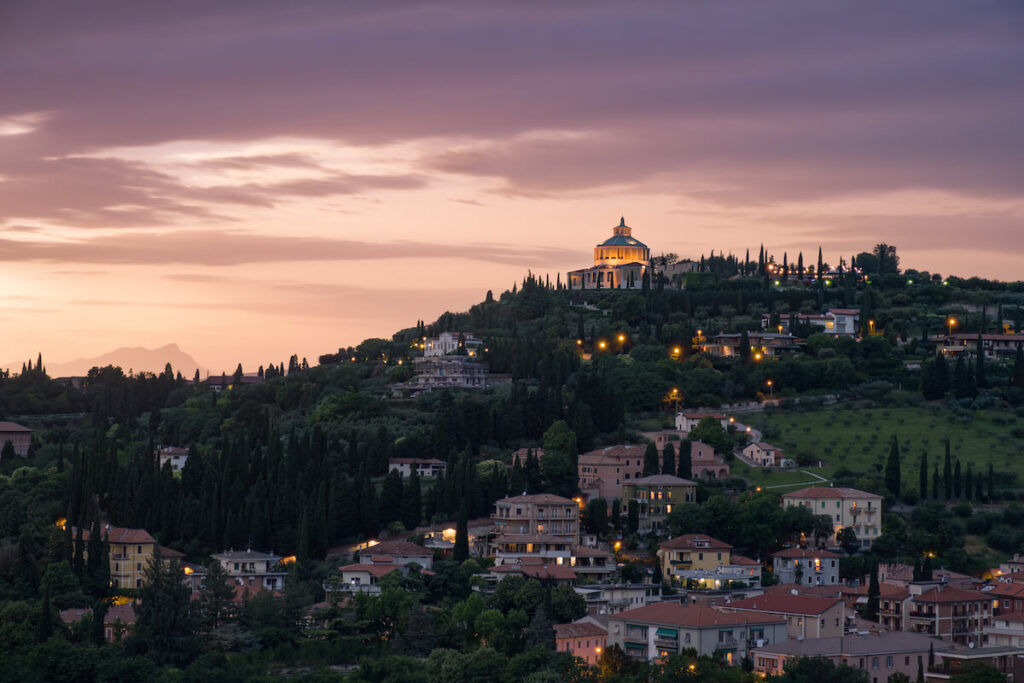
Torricelle is where the city of Verona melts into the surrounding countryside. These hilly suburbs, which make up one of the southernmost sections of the Alpine foothills, are brimming with Neoclassical villas, vineyards, olive groves, and cherry orchards.
Colle San Pietro, the tall hill towering over the city center, marks the border between the Torricelle area and the Veronetta neighborhood (hit no. 14). This is where Verona was founded over 2000 years ago.
Torricelle is crossed by many trails that you should by all means explore if you love being outdoors and have some spare time while in Verona.
11. Walls and gates

Verona was ruled by multiple kingdoms and never lost its military value throughout history. As such, the city received a new perimeter wall each time it expanded and needed further protection against invasions.
To enter and leave town, folks had to cross monumental gates that were always guarded. These gates were often preserved as the walls around them were eventually torn down.
The ancient Roman walls are a prime example of that: Porta Borsari and Porta Leoni are two of the rare remains that have survived.
The so-called communal walls, built between 1194 and 1224, are Verona’s best-preserved walls and can be seen to the east of Piazza Bra along Via Pallone.
12. Pandoro

Every holiday season, a heated debate rages on across Italy. Nobody seems to agree whether pandoro or panettone is the ultimate Christmas dessert.
Both are age-old recipes, but while panettone was invented in Milan, pandoro is an authentic Veronese dish. Panettone is a typical fruitcake. Pandoro in turn is a simpler vanilla sponge cake with a coating of confectioners’ sugar sprinkled on top.
Recently, pandoro makers have started introducing special versions with custard filling or chocolate icing to face the fierce competition, given panettone is naturally more flavorful.
The feud is more intense in the northern parts of the country, as the South has its own assortment of sweet dishes.
13. Castelvecchio

Castelvecchio, Verona’s greatest feat of engineering during the Middle Ages, served as the city’s main fortress between its completion in the 14th century and its near-total destruction during WWII.
Its bridge, Ponte di Castelvecchio, was designed to allow for both an easy evacuation in case of an invasion and the arrival of supplies from the valleys that surround the city.
Both the bridge and the castle were rebuilt anew in the early 1950s, yet that takes nothing away from the charm they instill in visitors.
Today, Castelvecchio is home to one of the most relevant museums in town, where an enormous collection of paintings, sculptures, and medieval weapons and armor is on display.
14. Veronetta

When Napoleon’s troops conquered Verona in 1801, they divided the city in two: the French took over the historic core and left the other side of the river to the Austrians.
They nicknamed that part of town Veronette, or “little Verona”, initially to poke fun at their rivals for ruling over the less important districts of the city.
Since then, Veronetta would go on to become a run-down neighborhood, which would only change about 50 years ago. Now, it headquarters the University of Verona and as such is where most students choose to live.
That means you’ll find a more laidback and younger nightlife in the area than in the central parts of town — as well as breathtaking views if you walk up the hills on the outskirts of Veronetta.
15. Military past
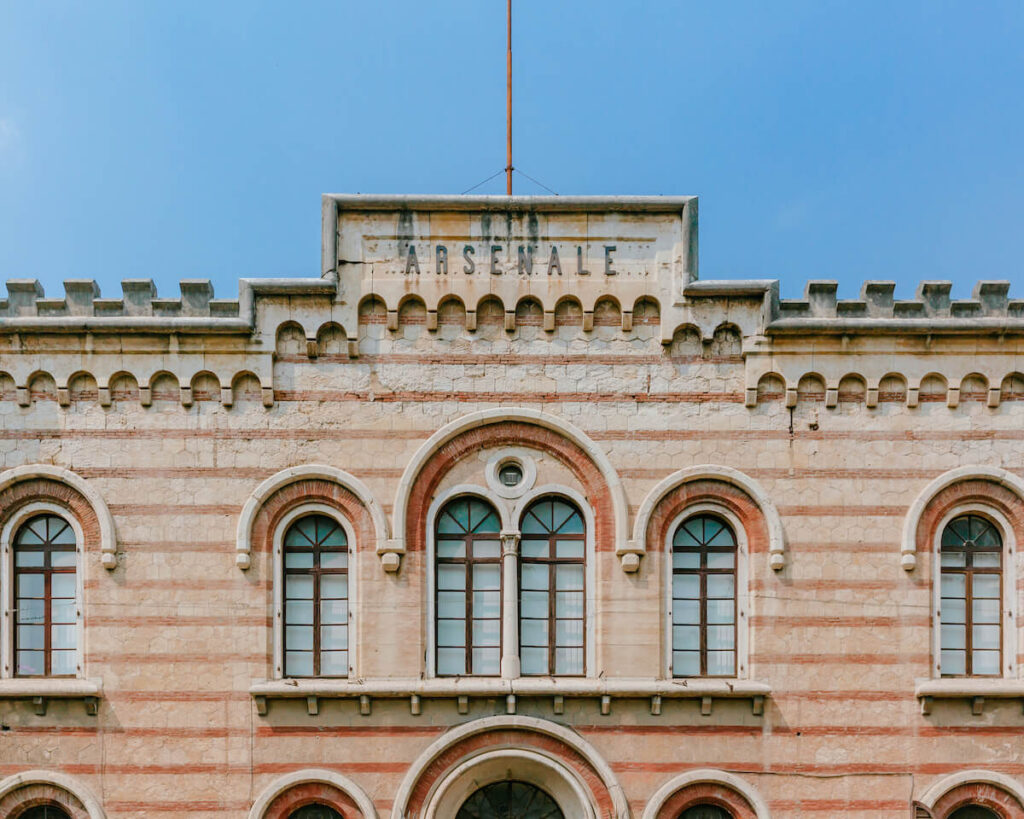
Because of Verona’s strategic location at the crossroads between the Alps and the rest of Italy, it has been set up as a military stronghold since Antiquity. The city is dotted with castles, fortresses, and barracks.
As such, it was invaded and changed hands several times throughout history. After the fall of Rome, it was conquered by the Ostrogoths, the Lombards, the Franks, the Republic of Venice, Napoleonic France, and Austria before being annexed by Italy in 1866.
Verona’s troubled history has left a remarkable architectural heritage across town, from five sets spanning almost 2,000 years to the medieval Castelvecchio and the 31 fortresses built by the Austrians in the 19th century, 19 of which have survived.
Conclusion

It’s no wonder Verona is widely considered one of the most romantic destinations in Italy: William Shakespeare set his most famous tragedy, Romeo and Juliet, in this gorgeous city.
In addition to that, Verona is known for its medieval towers, ancient gates, and imposing churches, which make it look like the perfect backdrop for a fairy tale.
And those are just a few of the reasons why you have to check Verona off your bucket list on your next trip to Italy.