
For many, hearing the name “Tanzania” conjures up images of beautiful animals grazing against the backdrop of Acacia trees and a sprawling savanna. This association of wilderness and wildlife with the country is warranted. Estimates vary, but between 30 and 40% of Tanzania is preserved as a national park, wildlife reserve, or another similar distinction.
And yet, for all of its wildlife glory, there is plenty more to Tanzania. From the spices on the island of Zanzibar to the mountains of Kilimanjaro and Meru, to some of the very first remains of human ancestry, the country has a lot to offer.

In the words of the late, great Anthony Bourdain, “I went looking for the dream of Africa. I woke up in Tanzania.” So, what is Tanzania known for?
Tanzania is famous for being a land of big open spaces, wildlife dreams, and a cultural crossroads. History runs deep in this East African nation, from the dawn of humankind to the lasting nomadic tribes. A beautiful country, a trip to Tanzania will create lasting memories for any traveler.
Let’s check out what else this East African country is known for.
Table of Contents
1. Early human ancestry

Editorial credit: Martina Birnbaum / Shutterstock.com
Tanzania is known for the archeological dig site of Olduvai Gorge, home to some of the oldest evidence of human ancestry in the world.
After years of digging in and around Olduvai Gorge, researchers came across the skulls and other remains of early hominids that are estimated to have been alive nearly 1.75 million years ago. The discovery helped bridge the gap between previous discoveries elsewhere in southern and eastern Africa.
Throughout Tanzania, other remains including footprints, bones, and tools have been found that track the progression of the earliest hominids toward modern-day humans. Tanzania has played a key role in establishing that Africa is the original home of all humankind.
Sandwiched between the Serengeti and Ngorongoro crater, Olduvai Gorge is effectively a ravine and is another place of remarkable natural beauty in Tanzania. It has been recognized for its historical significance, and the gorge is included in the UNESCO Heritage designation of the Ngorongoro Conservation Area.
To learn more about this momentous discovery and Tanzania’s human ancestry, there is a well-renowned museum at Olduvai Gorge. However, if you find yourself in Tanzania and there isn’t enough time to make the drive to the gorge, there is an exhibit about the evolution of humans at the National Museum of Tanzania in Dar Es Salaam that is also worth a visit.
2. Ugali

Tanzania is famous for its ugali. Commonly known as the national dish, ugali is one of the most widely consumed dishes throughout the country and is either served as the main component or a complement to many meals.
Ugali is made by combining flour with hot water to form a firm, almost paste-like consistency that can be rolled up into a ball. The type of flour varies depending on what is available, but is commonly made with maize.
The dish is common not only because it is filling, but it’s affordable, the type of flour is flexible, and it is an excellent complement to many other more flavor-forward dishes.
On a typical plate, you might find ugali served in a ball in the middle of the plate, surrounded by some stew, some cassava leaves, or a pile of nyama choma (grilled meat).
To eat it in the traditional way, pinch off a piece of the ugali and roll it into a small ball, and poke a hole with your thumb. It can then be used to scoop up the surrounding sauce and other food on the plate!
If this article gets you in the spirit for a taste of Tanzania, try making some ugali for yourself!
3. Ngorongoro Crater
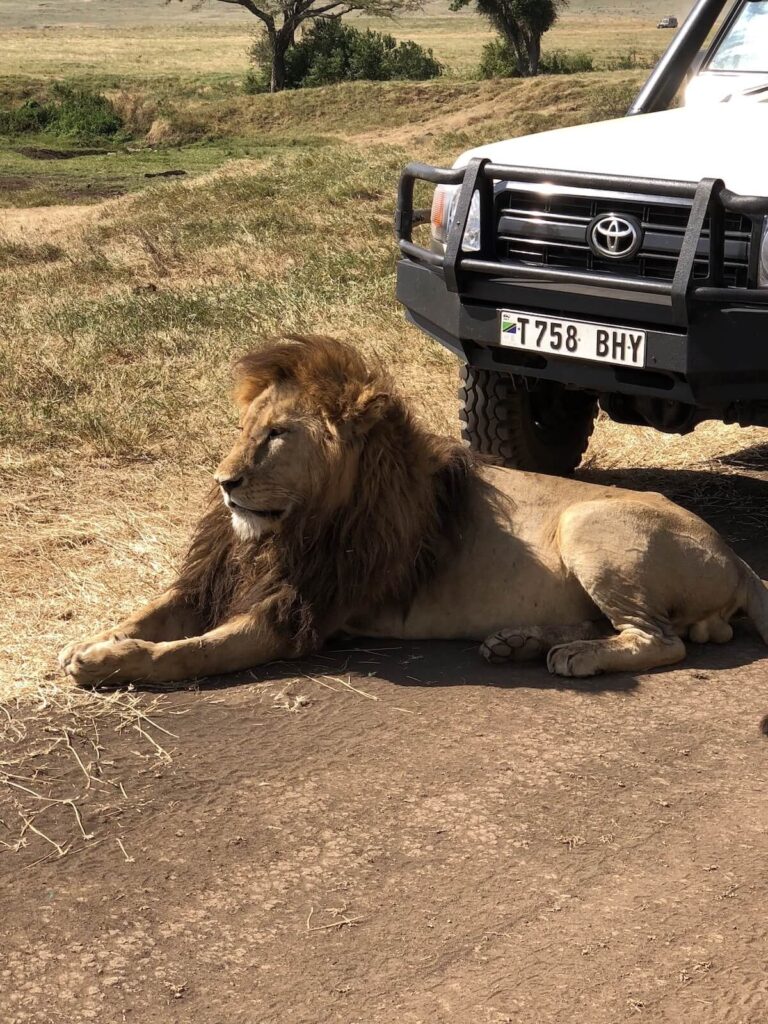
To anyone preparing for a visit to the Ngorongoro Crater, prepare for it to take your breath away. For good reason, the Ngorongoro Crater is one of the three Seven Natural Wonders of Africa that can be found in Tanzania (also including Mount Kilimanjaro and the Serengeti migration).
The crater is technically a caldera, which means that it is a depression in the ground as a result of a volcanic collapse nearly three million years ago. This created a unique ecosystem of swamps, grassland, lakes, and forest, all within a walled enclosure. Its walls are hundreds of meters high, and at its widest is nearly 19 kilometers (or 12 miles) wide.
Within the crater lies an abundance of the world’s most beautiful animals, including the famous “Big Five.” This includes lions, rhinos, elephants, leopards, and buffalo. But there are also Zebras, Gazelles, Hippos, Wildebeests, and countless others.
Thankfully, hunting is banned in the crater and the surrounding Ngorongoro conservation area. Yet, there are plenty of tour operators that will take you into the crater to simply witness one of the great wildlife reserves in the world.
4. Maasai
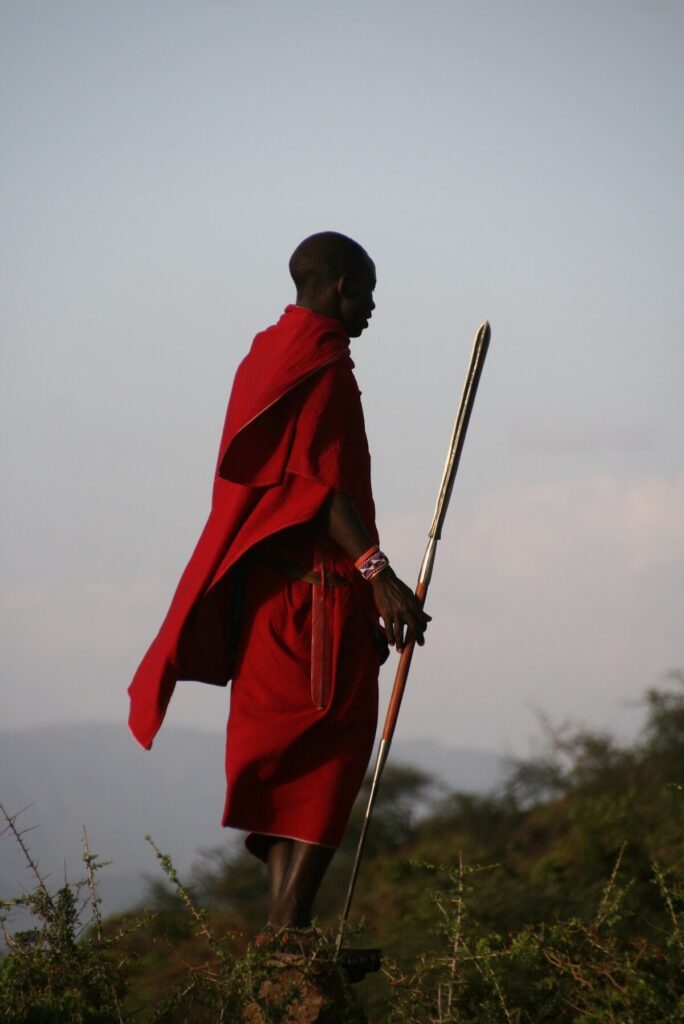
Tanzania is estimated to be home to more than 100 different tribes, giving it incredible ethnic diversity. Yet, one tribe, in particular, is most well-known inside and outside of Tanzania. That would be the Maasai.
The Maasai are famous for their reverence and use of cows for meat and milk, the adamu jumping dance, music, and their bright clothing. Traditionally a tribe of warriors, they once used to hunt lions, but that practice has ceased.
When traveling through the country, you will most likely see groups of Maasai in towns, in fields, and along the roads. While not everyone from the Maasai tribe wears the same clothing style, the traditional clothing often includes bright red robes that are easily recognizable.
The Maasai are traditionally semi-nomadic, herders of goats and cattle. You’ll find Maasai up and down East Africa, but primarily in Kenya and Tanzania.
Much of the land that had once been theirs was taken, and is now either cities, wildlife reserves, or national parks. However, populations of the Maasai still live within many of the reserves and parks, coexisting as they had for centuries before.
5. Bongo flava

Tanzania is famous for giving the world bongo flava. A style of music that comes from a mix of influences from hip-hop, to R&B, to afrobeats, it was developed in the 1990s out of Dar Es Salaam. The name loosely translates to “brain flavor.”
The languages used in bongo flava are primarily Swahili and English, but as it has become more popular, blends of other African languages have mixed in.
The genre gained popularity after a couple of local radio DJs (Mike Muhagama and Taji Liundi) in Dar Es Salaam began playing the songs of local artists. The genre took off after another artist named Saleh Jabir rapped over the top of the then-popular song “Ice Ice Baby,” giving the genre some mainstream appeal and credibility for the Swahili language to express through hip-hop.
The genre continues to spread, and there is a great Spotify playlist titled “Bongo Flava,” which includes a variety of popular artists to listen to. To hone in on a few artists that are currently sitting atop the bongo flava world, turn on some Diamond Platnumz, Zuchu, or Harmonize.
If you want to hear Bongo Flava live and in person, the annual Sauti za Busara music festival is an excellent option. Held in February in Zanzibar every year, the festival features artists from all over Africa, with acts from the DRC (Democratic Republic of the Congo) to Ethiopia, Zimbabwe, and of course, Tanzania.
6. Mt. Kilimanjaro
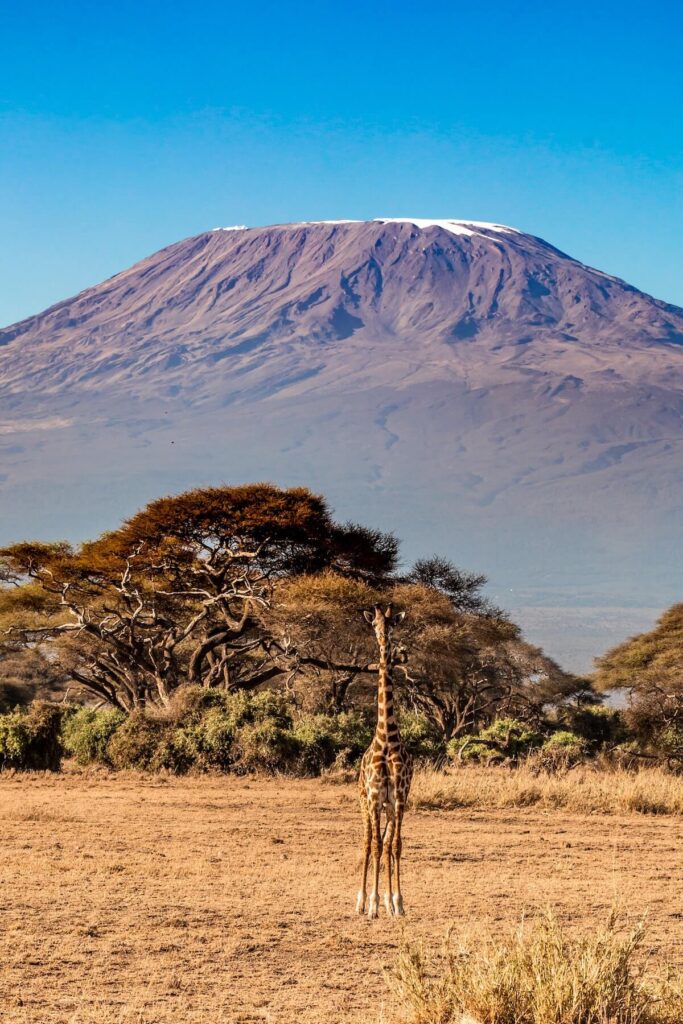
Tanzania is known for being home to Mount Kilimanjaro, also known as the “Roof of Africa.” The summit of Kilimanjaro is the highest point in all of Africa, and is also the highest free-standing mountain in the world (meaning it is not part of a mountain range).
At its highest point, Kilimanjaro rises to just over 19,000 feet (or 5,900 meters). Few may know this, but it is actually a dormant volcano.
One of the most thrilling parts of the climb is experiencing five distinct climate zones. Hikers essentially begin their journey in farmland, pass through a rainforest, and finish in what is known as the “Arctic Zone.”
Depending on the route taken to the top, summiting the mountain can take between five and nine days. For less experienced climbers, it’s generally recommended to go at a slower pace up the mountain to properly acclimatize.
If anyone wants to take a stab at breaking the record at the fastest summit, they’ll have to do it in a mind-blowing four hours and 55 minutes…so good luck!
Not everyone can spend a full five to nine days climbing the mountain, especially if the trip includes a multi-day safari. Speaking from personal experience, it is still worth making the trip to the nearby town of Moshi and doing the day hike to the Mandara hut. It’s gorgeous, and you can still say you hiked part of Kilimanjaro!
7. Blend of cultures

Tanzania is famous for its blend of global cultures, particularly on the island of Zanzibar. It’s a crossroads between the Middle East, South Asia, and East Africa, and you feel that intoxicating mix the second you step on the island.
The story behind much of the blend of cultures is a cruel one. Stone Town was a key part of the Indian Ocean slave trade, and it also was under the control of a variety of foreign powers, from the Portuguese, to the Omani, to the British.
The slave trade was ultimately banned in 1876, and Zanzibar gained independence in 1963.
While acknowledging some of the sad and difficult history that is forever part of the island, the broad, worldly influence makes the island unique. There are buildings designed with Persian architecture. The language is influenced by Arabic. Doorways are reminiscent of what might be found in western India. And most of all, the food is a blend of them all.
8. The Serengeti
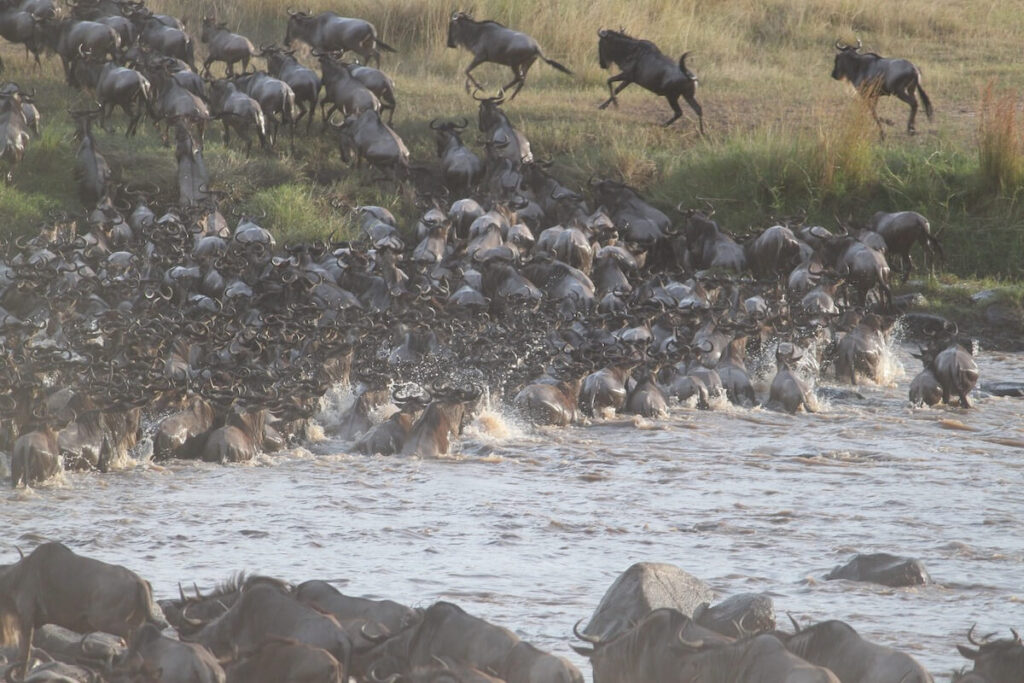
Serengeti National Park is one of the most well-known places to see wildlife on earth. It is about 15 thousand square kilometers (or six thousand square miles) of mostly open savannah, made famous by the “Great Migration.”
The Great Migration refers to the annual movement of millions of wildebeest and zebras from the Serengeti to the Masai Mara in Kenya (a national wildlife reserve). Wildebeest move north across plains and rivers to the Masai Mara when the drought occurs in the spring, and return at the start of the rainy season in the fall, all in search of food (primarily green grasses).
Scenes of the annual wildebeest migration are among the most iconic in Africa, as this stunning movement of animals has been photographed, videotaped, and displayed for the world to see thousands of times over.
The ground shakes like an earthquake, rivers churn like a washing machine, and the sheer number of animals can be hard to fathom. The migration is not without its risks for the wildebeest, as crossing rivers puts them in the way of predators in the water, in addition to the big cats ready to hunt on land.
Like the Ngorongoro crater, the Serengeti is home to the “Big Five,” as well as crocodiles, cheetahs, hyenas, and of course, many wildebeest and zebras. A number of endangered species exist in the park (including the African wild dog and black Rhino), so anyone that bears witness should consider themselves lucky.
9. Stone Town

Tanzania is famous for Stone Town, the maze-like beating heart of the island of Zanzibar. The town itself is another UNESCO World Heritage site, due to its historical significance, architecture, and representation as a cultural crossroads.
Stone Town has been a significant port off the coast of mainland Africa for hundreds of years, from its origins as a Swahili trading town to the many years of foreign rule. It also played a key role in the 1964 Zanzibar Revolution, which ultimately led to the unification with Tanganyika (mainland Tanzania).
Similar to the walled, old towns, or Medinas found in many Arab countries, exploring Stone Town will likely leave you lost and a little confused. But that is all part of the fun. Exploring on foot will lead you to ornate Zanzibar doors, past crumbling old forts, through buzzing markets, and near many beautiful mosques.
As with any city, one way to see into the heart of the culture is to head to the local market. The Darajani Market on the eastern edge of the old town is one of the best. Prepare for some sensory overload, whether it be from cloves and cinnamon from the spice section, or the pungent smell of fresh octopus from the seafood section.
A gem of the old town portion of Stone Town and a gathering point for local Zanzibaris is nicknamed “Jaws Corner.” It’s a small intersection of a few alleyways, where a handful of people sell strong, black coffee served in small communal cups. It’s a good place to relax and enjoy the slow pace of life on the island.
However, I won’t tell you how to get there, you’ll have to stumble upon it on your own!
10. Tree-climbing lions
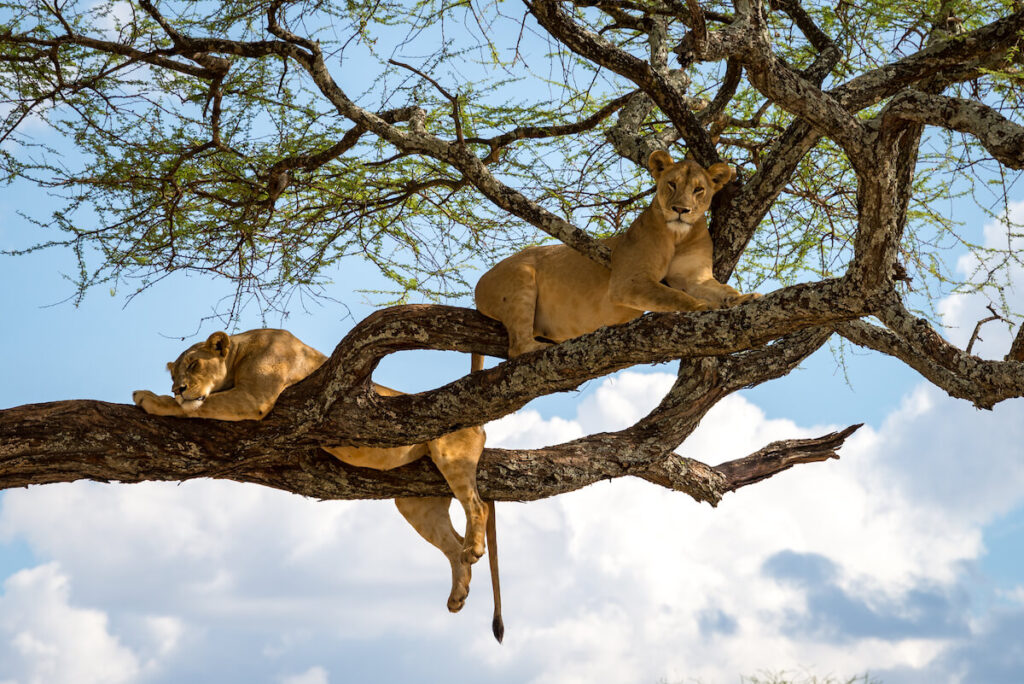
Tanzania is famous for being home to the tree-climbing lions of Lake Manyara National Park. It’s one of just three known places in the world (parks in Uganda and South Africa are the others) to view this unusual lion behavior.
Leopards frequently climb trees, but for the most part, lions don’t. They are typically much bigger than leopards, making it hard to lug all of that weight up the trunk and onto tree branches.
Yet, the lions of Lake Manyara have developed an ability to ascend the acacia trees of the park. It is believed that they make their way up for a number of reasons, including finding shade from the midday heat, protecting themselves from irritating bugs on the ground, and getting better views of their hunting grounds.
After witnessing a pride of tree-climbing lions, you’ll likely find yourself double-checking before sitting down for a picnic beneath an acacia tree!
11. Zanzibar pizza
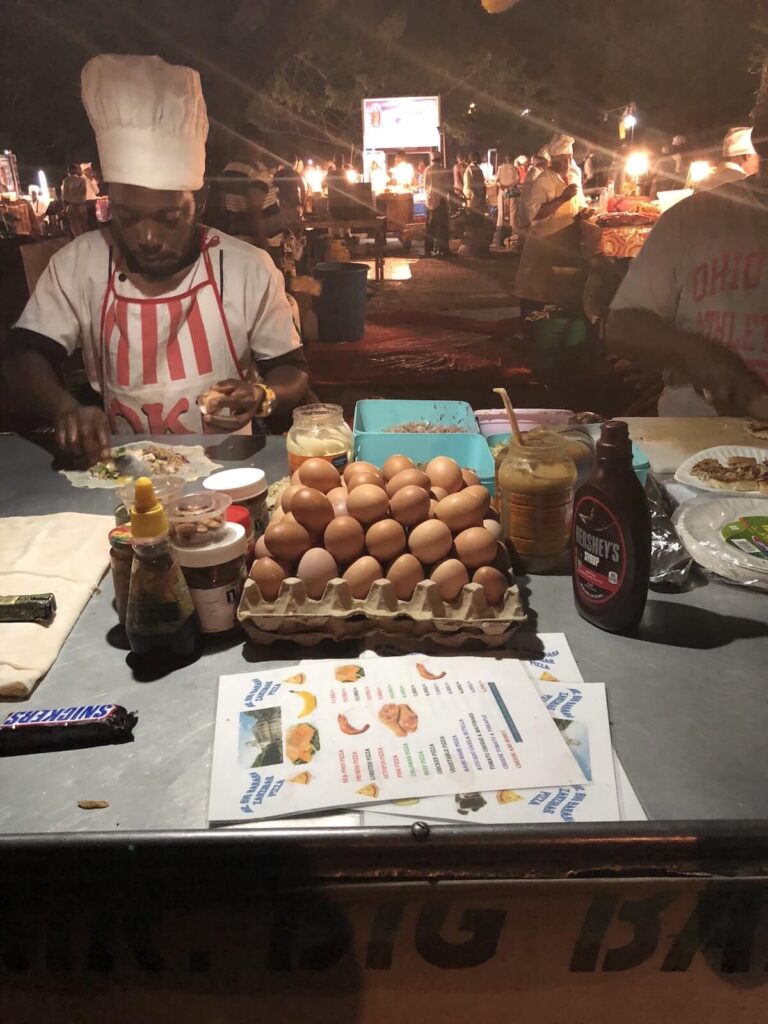
Tanzania, and Zanzibar in particular, is famous for its pizza. This sounds somewhat surprising, given there is little direct Italian influence on the island.
Zanzibar pizza is markedly different from what you might find in corner shops from New York to Rome, yet it is still delicious. I would describe it as a combination of a chapati (flatbread originated in India) and a crepe (thin pancake from France).
After mixing and rolling out a thin dough, it is placed on a flat top griddle and fillings are placed in the middle. As it cooks, the edges are folded inward, creating a pocket to hold everything together.
The beauty of Zanzibar pizza is that there are few boundaries when it comes to ingredients. You’ll find toppings more typical of traditional pizza, such as tomatoes and mozzarella, but you’ll also find mayonnaise and fish. Perhaps best of all, there are sweet flavors, including Nutella, banana, and peanut butter.
One of the best places to go grab yourself some Zanzibar pizza is at the daily night market Forodhani Gardens, a park on the western edge of Stone Town. There you’ll see a number of cooks working quickly, serving up pizzas to locals and tourists alike.
12. Swahili

Tanzania is known for Swahili, both the language and the culture. As a language, various dialects of Swahili can be heard as far as Somalia to the North, Mozambique to the South, and the DRC to the West.
Swahili, also known as Kiswahili, is spoken by the vast majority of Tanzanians (estimates are close to 95%). In many cases, however, it is not the primary language spoken since there are so many distinct ethnic groups, and therefore languages, throughout the country.
Like much of Tanzanian culture, Swahili represents a mixture of influences from further inland (Bantu languages), as well as foreign languages, particularly Arab, brought in through overseas trade.
Culturally, it can be hard and frankly unfair to pin down exactly what it means to be Swahili. However, generally speaking, in Tanzania, it can be felt in the language, the religion and adoption of Islam, and the connection to the ocean and coast (known as the Swahili coast).
As a traveler or tourist, Tanzania is easy to navigate as an English speaker, as English is one of the two official languages (alongside Swahili). However, it’s always more respectful and can be more rewarding to learn a few words in the local dialect.
Anyone who has seen the “Lion King” already knows some Swahili from the phrase “Hakuna Matata,” which means “there are no problems.” You can also try out “mambo Vipi,” meaning “how are you?” or “asante sana,” meaning “thank you.”
13. Spice Island
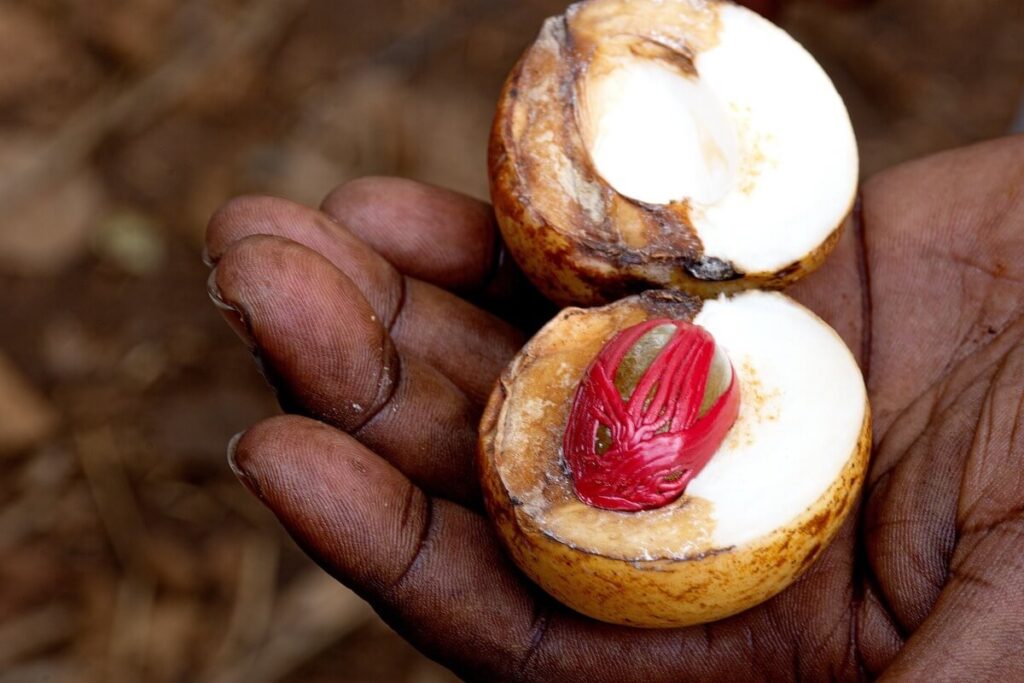
The island of Zanzibar is known for its spices.
Now, many islands across the globe carry the “spice island” moniker, including Grenada (in the Caribbean) and the Maluku Islands (part of the Indonesian Archipelago), but Zanzibar warrants being included in that list because of the plethora of spices available.
On the island, you’ll find clove, nutmeg, black pepper, cinnamon, vanilla, and cardamom, in addition to countless others. Bear in mind that many of these spices are not, in fact, native to the island, but rather they were brought over through the spice trade and periods of foreign rule.
While visiting Stone Town, you’ll find several tour operators offering to take you to local spice farms, which can be a good way to see the variety on the island. While undoubtedly touristy, it can be fascinating to see the source and original forms of spices we so frequently take for granted today.
Spices are one of the best, practical souvenirs to bring home, and towns all over Zanzibar sell their locally grown products. Buying a fish curry mix or a Zanzibari-style bag of ground coffee (beans with cardamom, cinnamon, and some nutmeg) can help transport you back to island life upon return from your travels!
14. Zanzibar doors

Tanzania is known for its gorgeous, intricately designed Zanzibar doors. One of the best experiences to be had in Stone Town is simply wandering around (probably getting lost) and admiring the doors.
The doors in Stone Town are a reflection of the variety of cultural influences that have taken hold in Zanzibar. There are Indian-style doors, Arab and Persian-style doors, and of course, Swahili-style.
Every door is unique, and there is a great variety of colors, textures, and designs. In the more Arab-influenced doors, you may see scripture in Arabic. Doors of Swahili origin may have more floral designs. Indian-style doors are likely to have metal spikes, as they were originally designed across the ocean with the intent of fortifying doors in the event of attacks.
Many of the buildings in Stone Town are in desperate need of repair, showing their age and sea-worn textures, allowing the doors to truly shine. Each one has its own story, adding layers to the tapestry that is Stone Town.
15. Chimpanzees in Western Tanzania
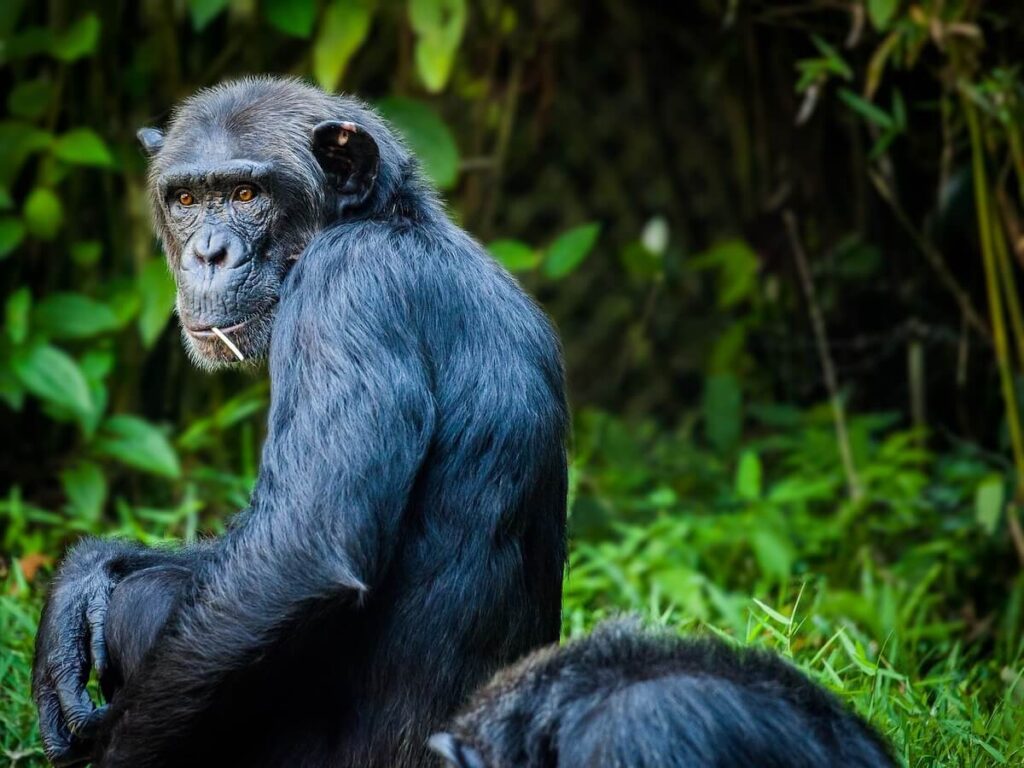
As if Tanzania wasn’t already bursting with wildlife, the country also boasts a sizable population of Chimpanzees. There are primarily two national parks to see these apes: Gombe National Park and Mahale National Park.
Both national parks are located in the farthest western reaches of the country, bordering Lake Tanganyika. Gombe National Park is actually where Jane Goodall arrived in Tanzania in the 1960s and set up a research station that still exists today.
To see the chimpanzees, visitors must be adventurous and savvy hikers. It often requires a fair amount of steep, slippery climbs through dense forests to get a look at a Tanzanian chimp.
16. African Great Lakes Region

Tanzania is famous for its freshwater lakes, as it touches the three largest of the African Great Lakes – Lake Victoria, Lake Malawi, and Lake Tanganyika (the deepest in Africa). The lakes of the region amount to approximately 25% of the world’s unfrozen fresh water.
These lakes are incredibly important to Tanzania and its neighboring countries, as the water provides drinking water and acts as a source of food (fish) and a source of jobs through tourism, farming, and energy generation.
Lake Victoria in the far northwestern corner of Tanzania is particularly significant because it acts as the headwaters to the White Nile, one of the two main tributaries to the legendary Nile River.
The lake region of Tanzania is far less visited than many of the heavily-trodden safari areas and the eastern coast, and for that reason, it can be worth the trip. Much of the world’s fish diversity lives in the African Great Lakes, and there are many islands, beaches, and other areas to witness the natural beauty of the lush region.
17. Scuba diving
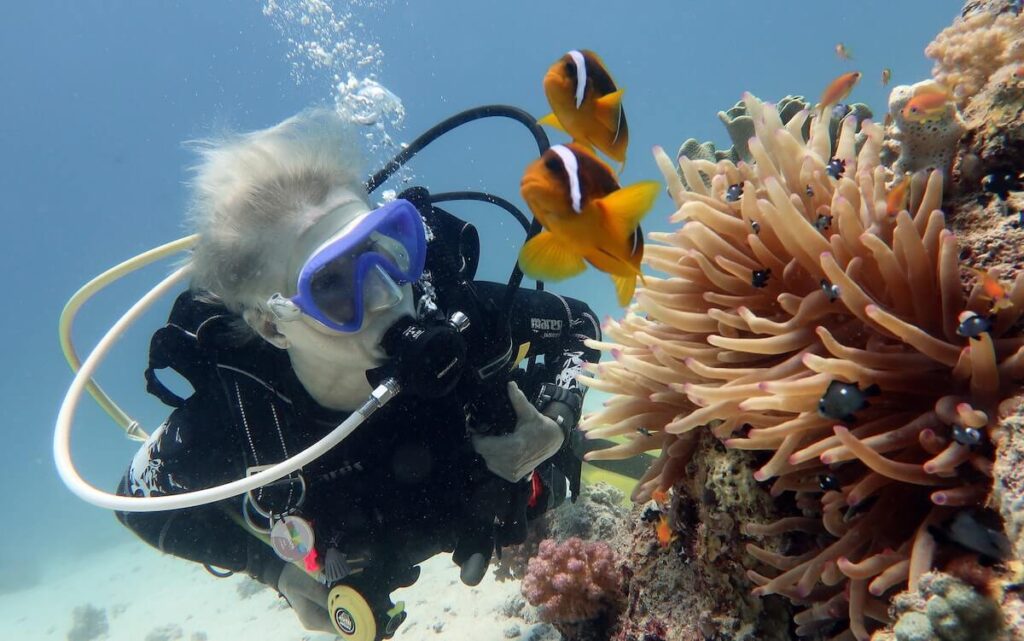
While clearly famous for its wildlife on land, there is also plenty beneath the sea, as Tanzania is known for its scuba diving. As a country with hundreds of miles of coastline and multiple islands that make up the Zanzibar Archipelago, Tanzania is primed for divers.
Pemba island, is a top scuba destination, providing the opportunity to see a variety of sharks, as well as the bizarrely shaped humphead parrot fish.
Located further south off the coast of mainland Tanzania lies Mafia Island, where divers can swim amongst whale sharks, groupers, and even sting rays!
Few also know that there is an opportunity for freshwater diving in Lake Tanganyika, where you can swim with perch, tigerfish, and quite a few other varieties that don’t live off the coast to the east.
Scuba diving isn’t typically the main attraction on a trip to East Africa, but getting underwater after days of climbing and safaris can complete the full picture of the natural diversity that Tanzania has to offer.
Wrapping up

The name “Tanzania” came out of the 1964 agreement that joined the nations of Tanganyika and Zanzibar. This combination of cultures and geographies makes Tanzania a fascinating place to visit.
There’s the Arab and Indian influence on the islands, and there’s the inland tribes. There’s everything from the coral reefs of Pemba to the depths of the Ngorongoro Crater, to the heights of Mount Kilimanjaro.
Tanzania can be a dreamland for outdoor enthusiasts, anthropologists, archaeologists, and the traditional tourist that appreciates it all. So come for the wildlife and natural beauty, but stay for the history, the under-the-radar food, and learn a thing or two along the way.

Sammy that was excellent. So proud and I learned so very much.
Thank you.