
*This article may contain affiliate links. For full information, please see the disclaimer here.
Ah, Mumbai! I don’t know about you, but just the name conjures up a whirlwind of images in my head, from the iconic arch of the Gateway of India to savory vada pav to bustling local trains. I know I’m not alone—as the financial capital and the most populous city proper of India, Mumbai is a true sensory overload in the best possible way.

What is Mumbai known for? The dazzling lights of Bollywood, the glittering curve of Marine Drive, Haji Ali Dargah, and Chhatrapati Shivaji Maharaj Terminus are just some of its popular landmarks. But beyond these postcard icons, Mumbai is also known for its street food, the incredible efficiency of its dabbawalas, and the resilience of Mumbaikars.
A city that never sleeps, Mumbai is a place where majestic scenes blend with more modern gems, where chaotic energy meets unexpected charm. In this article, I’m listing down some of the most famous aspects of this amazing metropolis, giving you a glimpse into what makes Mumbai so unforgettable.
Table of Contents
1. Bollywood
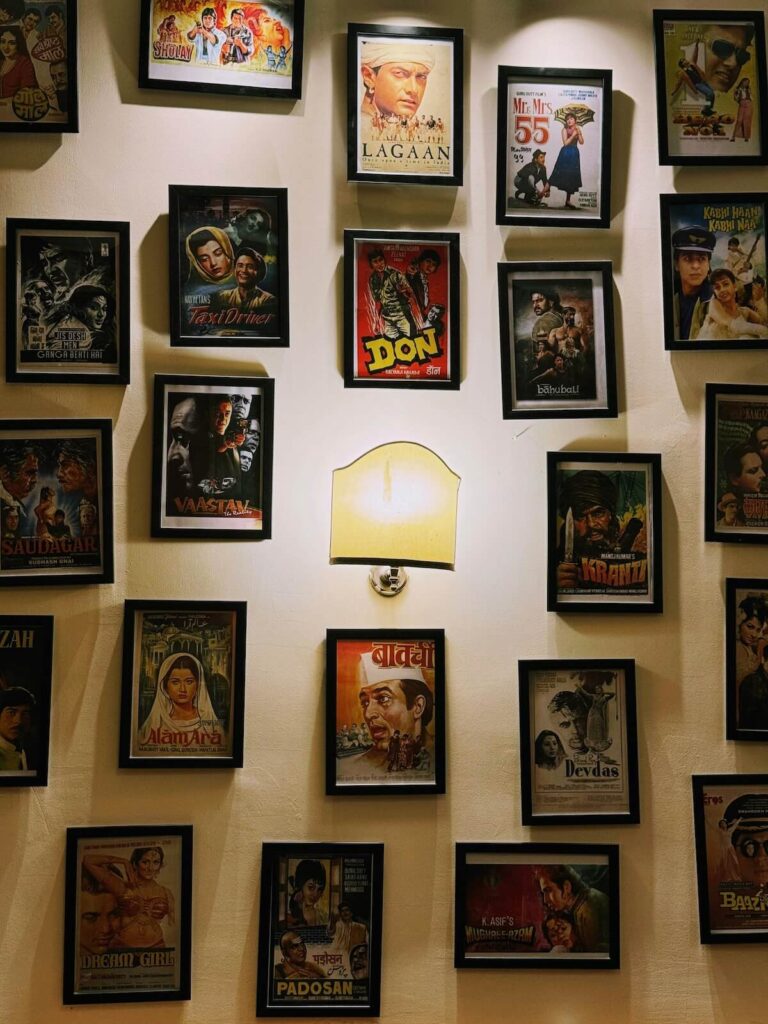
Of all the things Mumbai is known for, perhaps none shines brighter or captures the global imagination quite like Bollywood. This isn’t just an industry; it’s a cultural behemoth, the heart of India’s prolific Hindi-language film scene.
For over a century, Bollywood has been churning out a dazzling array of musicals, dramas, action flicks, and romances, captivating audiences not just across India but worldwide. Fun fact: it produces over 1,000 movies per year, outpacing Hollywood in volume!
While the early days saw black-and-white silent films, Bollywood evolved into the vibrant, song-and-dance spectacle it is today, influencing fashion, music, and even societal norms across the subcontinent. These iconic blockbusters pack emotional punches and often feature catchy tunes you can’t help but hum. It took me quite some time to shake off 3 Idiots’ Aal Izz Well from my head.
Bollywood is home to superstars whose faces are recognized across continents, from legendary figures like Amitabh Bachchan and Aamir Khan to dazzling actresses like Deepika Padukone and Priyanka Chopra Jonas.
For fans eager to get a taste of this cinematic magic firsthand, make sure to visit Film City, officially known as Dadasaheb Phalke Chitranagari, where many of those grand sets and bustling studios come to life. While you might not bump into your favorite actor casually, tours often offer a peek behind the scenes.
2. Gateway of India
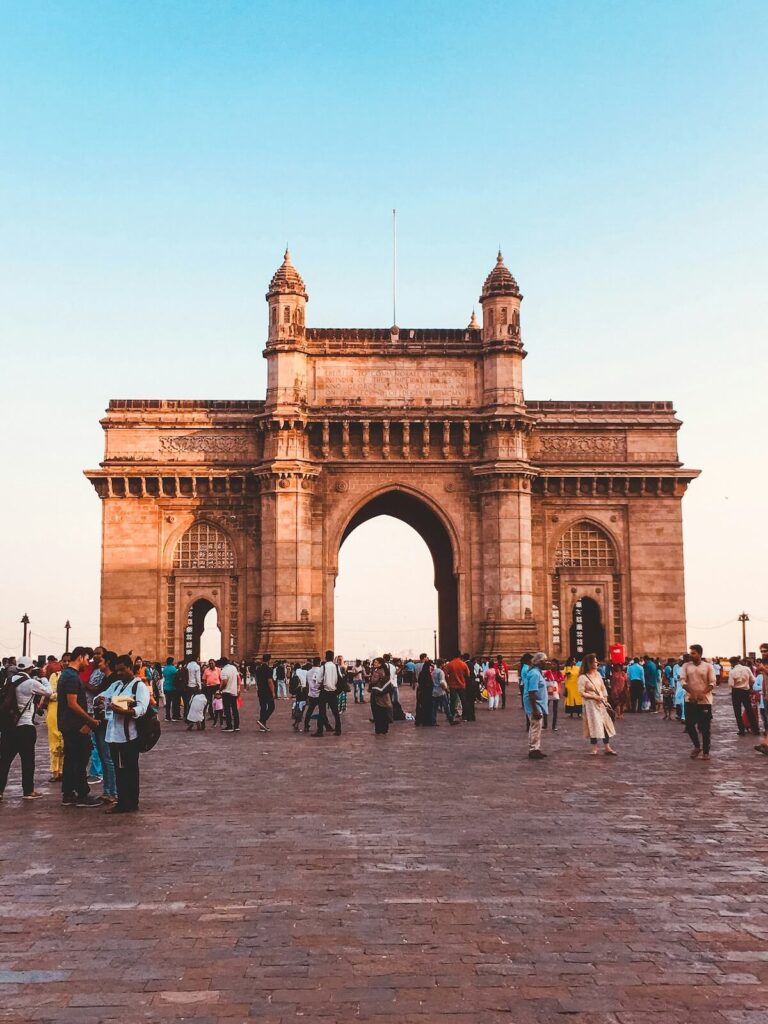
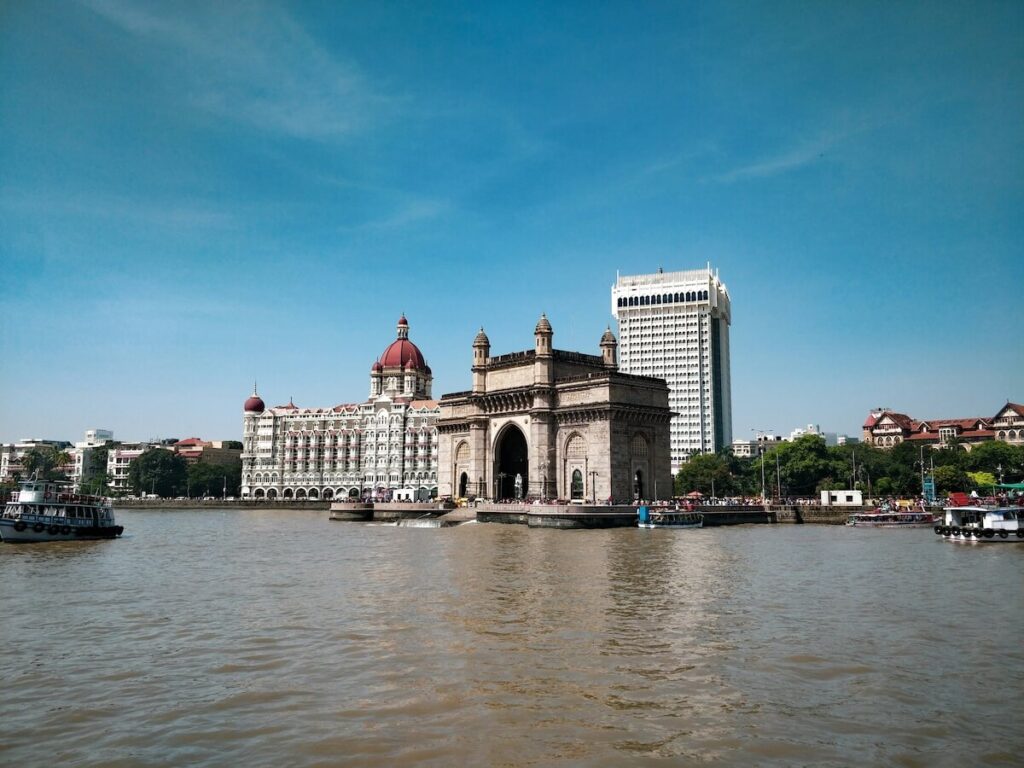
One of the most instantly recognizable landmarks that Mumbai is known for is undoubtedly the majestic Gateway of India. Standing proudly at Apollo Bunder (now known as Wellington Pier), right on the waterfront overlooking the vast Arabian Sea, this impressive arch is the city’s grand welcoming embrace.
The arch-monument was built to commemorate the 1911 visit of King George V and Queen Mary. This grand structure was the first thing many visitors, especially dignitaries and British colonial officials, would see upon arriving by sea. Its Indo-Saracenic architectural style, a blend of Indian and Saracenic elements, gives it a unique and imposing presence.
The Gateway of India was also famously the point from which the last British troops departed India, marking the end of the British Raj. Today, it’s a bustling hub, attracting tourists and locals alike who come to admire its grandeur, snap photos, and enjoy the sea breeze.
3. Financial Capital of India

Mumbai’s journey to becoming the financial heartbeat of India is deeply rooted in its colonial past and strategic port location. During the British Raj, its natural harbor made it a crucial trade hub for merchants. This foundation solidified over time, with the establishment of key institutions like the Bombay Stock Exchange (BSE), Asia’s oldest stock exchange, dating back to 1875.
Today, Mumbai is a powerhouse, home to the Reserve Bank of India (RBI), the National Stock Exchange (NSE), and the headquarters of numerous major Indian banks and multinational corporations. It accounts for a significant portion of India’s GDP and boasts one of the highest per capita incomes in the country.
Beyond the big institutions, the city’s financial landscape is buzzing with startups, fintech innovators, and a vibrant entrepreneurial spirit. And it’s not just about the big bucks; Mumbai’s financial sector also fuels countless ancillary services, from legal and accounting firms to consultancies.
4. City of Dreams

With Mumbai being the financial capital where fortunes are made, it makes sense that it’s also known as the “City of Dreams.” The moniker truly reflects the aspirations of millions who flock here from every corner of India, seeking a slice of the economic pie and a chance at a better life.
The city draws in migrants looking for work and opportunities that might be scarce in their hometowns. It’s a continuous, dynamic migration that still sees thousands arrive daily, hoping to turn their dreams into reality, whether in business, entertainment, or any of the myriad sectors that thrive here.
This constant influx has, over centuries, transformed Mumbai into an incredibly cosmopolitan city—a true melting pot unlike any other in India. Here, the cultural mosaic is evident in the languages, the diverse cuisines, the myriad festivals, and the fascinating blend of traditions.
5. Marine Drive

Another attraction in Mumbai is Marine Drive. This iconic, C-shaped boulevard stretches for about 3.6 kilometers along the Arabian Sea coastline in South Mumbai, connecting Nariman Point to Babulnath and Malabar Hill. And no, it’s not just a road—it’s a beloved promenade, a breathing space for Mumbaikars.
The boulevard was built on reclaimed land in the early 20th century as part of the British government’s efforts to expand the city. It eventually became a prestigious address and was even recognized globally, with its Art Deco buildings being part of the UNESCO World Heritage Site “Victorian Gothic and Art Deco Ensembles of Mumbai.”
Marine Drive looks especially captivating after dusk, which is why it’s also known as the “Queen’s Necklace.” As the city lights twinkle to life, the streetlamps along the curved drive illuminate, creating a breathtaking arc of golden (or sometimes white) lights that, when viewed from an elevated spot like Malabar Hill, resemble a dazzling string of pearls adorning the city’s coastline.
The boulevard is a popular spot for evening strolls, morning jogs, or simply hanging out with friends. It’s also a great place for sampling local street food like bhel puri and pav bhaji.
6. Cost of Living

Being a global city and the financial center of India comes with a significant consequence: a notoriously high cost of living.
While Mumbai offers unparalleled opportunities, it also demands a hefty price for its prime real estate and urban conveniences. The city consistently ranks as one of, if not the, most expensive cities in India, dwarfing the costs in other major metros like Delhi, Bangalore, or Chennai, particularly when it comes to housing.
The sheer demand for space in a geographically constrained city, coupled with the influx of professionals drawn to its financial sector, has driven real estate prices to high levels, making homeownership a distant dream for many. Renting an apartment, even a modest one, can consume a significant chunk of a person’s income.
Beyond housing, daily expenses like transportation, groceries, and dining out also tend to be higher than in other Indian cities.
7. Slums

While Mumbai boasts gleaming skyscrapers and luxury apartments, a large portion of its population resides in informal settlements.
As Mumbai grew into a thriving economic hub, particularly as the financial capital, the influx of migrants seeking opportunities far outpaced the availability of affordable, planned housing. This led to the organic growth of self-built neighborhoods that are often underserved.
Dharavi, often cited as one of Asia’s largest slums, is a prime example. But far from being just a place of poverty, Dharavi is a bustling economic engine, home to a massive informal economy encompassing recycling, pottery, leather goods, and textile industries, contributing hundreds of millions of dollars to the city’s economy annually. These slums, despite challenging living conditions, are tight-knit communities with their own intricate social structures and small businesses.
8. Traffic congestion

If you’ve heard about Mumbai’s bustling energy and relentless pace, you’ve also likely heard about its notorious traffic congestion. Unfortunately, it’s an unavoidable, often exasperating, part of daily life for Mumbaikars.
Interestingly, Mumbai’s congestion doesn’t just happen during rush hour. It’s a constant, pervasive challenge that stems from a combination of factors: an ever-growing population, limited road space due to the city’s island geography, and an explosion in private vehicle ownership alongside an already robust public transport system.
The sheer volume of vehicles on Mumbai’s roads means that average commute times can be staggering, often adding hours to a workday. Statistics frequently place Mumbai among the world’s most congested cities, leading to significant productivity loss and environmental concerns.
9. Local trains

Mumbai’s answer to its notorious traffic congestion? The local trains.
Ferrying millions of commuters daily across a vast urban sprawl, the Mumbai Suburban Railway dates back to the mid-19th century. It’s one of the oldest and most extensive railway networks in Asia, and it’s the city’s undisputed lifeline.
Unfortunately, it’s also super crowded. Mumbai local trains carry over 7 million passengers every day, more than some countries’ entire populations! This translates to eye-watering levels of crowding, especially during peak “rush hour,” a term that takes on a whole new meaning here. Passengers literally “pack” themselves into compartments, a unique phenomenon known as “super-dense crush load.”
Despite the intense squeeze, there’s an unspoken camaraderie and efficiency among daily commuters. It’s a true melting pot on wheels, where people from all walks of life share space, conversations, and sometimes even their lunch boxes.
10. Chhatrapati Shivaji Maharaj Terminus

Speaking of trains, one of the most iconic symbols of the city’s rich history and architectural grandeur is the Chhatrapati Shivaji Maharaj Terminus (CSMT). CSMT is a magnificent landmark, a monument to the golden age of railway expansion in India.
Originally known as Victoria Terminus, this bustling station, completed in 1887, was designed by the British architect Frederick William Stevens. It served as the headquarters of the Great Indian Peninsula Railway, playing a pivotal role in connecting Mumbai, then Bombay, to the vast hinterlands of the country.
More than just a railway station, CSMT is a breathtaking example of Victorian Gothic Revival architecture, blended with traditional Indian elements. Its intricate stone carvings, towering domes, pointed arches, and turrets make it look more like a majestic palace than a transportation hub. It was rightfully declared a UNESCO World Heritage Site in 2004, celebrated for its architectural fusion and its testament to 19th-century railway building.
Today, CSMT remains one of the busiest railway stations in India, serving as both a major long-distance rail hub and a vital junction for the city’s suburban local train network.
11. Dabbawala

Mumbai, a city defined by its ceaseless motion, also boasts an incredible logistical marvel that’s distinctly Mumbaikar: the dabbawala.
This collective of over 5,000 lunchbox deliverymen (dabbawalas) is known for its near-perfect accuracy in ferrying hot, home-cooked meals from suburban homes to thousands of office workers across Mumbai. This ingenious system, which began over a century ago in 1890, was born out of a simple need: to provide office workers with fresh, hygienic home-cooked food, avoiding the limitations of packed lunches or canteen fare.
This 135-year-old system is a fascinating example of precision and teamwork, often cited in business schools worldwide for its incredible “six sigma” accuracy, meaning fewer than one error in every six million deliveries.
Using a unique color-coded system, they collect lunchboxes (dabbas) from homes, sort them at local train stations, transport them across the city on the very same crowded local trains we discussed, deliver them to offices, and then pick up the empties for return. Despite relying on no advanced technology, just human coordination and a deep understanding of Mumbai’s intricate railway network, they deliver around 200,000 meals daily. If that isn’t resourcefulness, I don’t know what is.
12. Street food culture

Mumbai is famous for its vibrant and irresistible street food culture, a true reflection of its diverse population. This street food scene dates back decades, with vendors setting up stalls near markets, railway stations, and business districts to cater to the working class who needed quick, affordable, and delicious meals on the go.
You can’t talk about Mumbai street food without mentioning the iconic pav bhaji, a buttery medley of mashed vegetables served with soft bread, or the tangy explosion of flavors in pani puri, hollow crispy balls filled with spiced water and chutneys. Then there’s the savory chickpea flour fritters of bhajiyas, the satisfying rice and lentil pancake dosa (especially the crispy masala dosa), and the unique Bombay sandwich loaded with vegetables and chutneys.
These dishes, often prepared on makeshift stalls with incredible speed and skill, offer a taste of Mumbai’s soul, feeding millions daily and creating a communal dining experience that’s both delicious and distinctly democratic.
13. Vada pav

Before you all get mad at me, of course, I didn’t forget the humble yet mighty vada pav. I believe it deserves to be a separate entry, simply because of how iconic it is!
For the uninitiated, vada pav is a vegetarian burger that’s practically the culinary emblem of Mumbai. It’s a quick, affordable, and incredibly satisfying meal that fuels millions of Mumbaikars every single day. What’s cool is how simple it is—a spiced mashed potato fritter (vada), deep-fried and tucked into a soft bread roll (pav), usually accompanied by fiery red garlic chutney and a milder green chutney.
You’ll find Vada Pav stalls on nearly every street corner, outside every railway station, and in countless office complexes, each vendor adding their own subtle twist to the classic. While the basic form remains supreme, some variations include a sprinkle of chura (crispy bits from the vada batter), a layer of cheese, or even a different type of pav.
14. Art Deco architecture

Many associate Art Deco with Miami’s vibrant South Beach. But did you know that Mumbai boasts the second-largest collection of Art Deco buildings in the world?
This wasn’t by chance. During the early 20th century, as the city prospered as a financial capital, there was a conscious effort to adopt modern architectural styles. Art Deco, with its sleek lines, geometric shapes, and often futuristic motifs, perfectly captured the aspirational spirit of a city on the rise, symbolizing progress in the inter-war period.
You’ll find these elegant structures predominantly lining Marine Drive and in the Oval Maidan precinct, forming a stunning contrast to the earlier Victorian Gothic architecture that also dots the cityscape. There are an estimated 200 to 300 Art Deco buildings, many of them residential blocks, cinemas, and commercial establishments, showcasing a unique blend of Western Art Deco principles adapted with local Indian influences.
15. Haji Ali Dargah
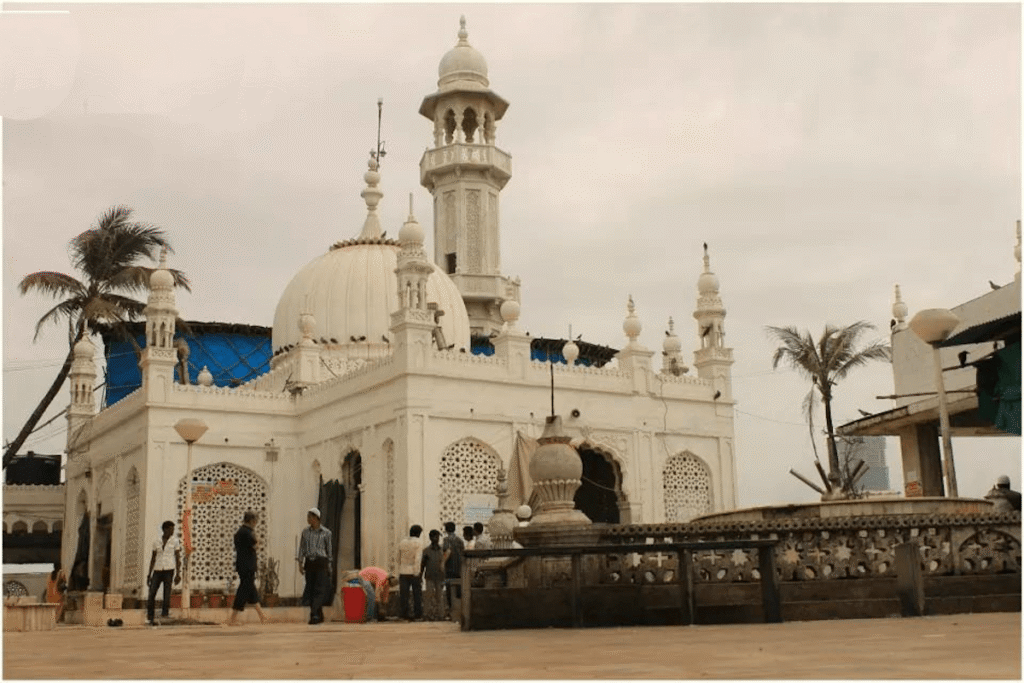
Another landmark that Mumbai is known for is the Haji Ali Dargah. Located on a tiny islet off the coast of Worli, this beautiful mosque and tomb complex appears to float majestically on the Arabian Sea, connected to the mainland by a narrow causeway that’s only accessible during low tide.
This architectural grandeur was built in 1431 in memory of Pir Haji Ali Shah Bukhari, a wealthy Muslim merchant who gave up his worldly possessions and embarked on a pilgrimage to Mecca. Upon his death, it’s believed his casket miraculously floated back to this spot.
The dargah is a revered pilgrimage site for people of all faiths who come seeking blessings and solace. Its pristine white structure, adorned with intricate marble work and a tall minaret, creates a striking silhouette against the Mumbai skyline, especially at sunset.
16. Siddhivinayak Temple

Mumbai’s spiritual landscape further diversifies with the revered Shree Siddhivinayak Ganapati Mandir. Located in Prabhadevi, this temple is one of the city’s most prominent and busiest shrines, dedicated to Ganesha, the elephant-headed deity widely worshipped as the Remover of Obstacles and the Lord of Beginnings.
The temple dates back to 1801, initially a small, modest structure built by a local woman, Deubai Patil, who wished for a barren woman to bear children. Its humble beginnings have since blossomed into a grand complex, drawing devotees from all walks of life, including celebrities and politicians.
What makes Siddhivinayak so significant is not just its age, but the deep faith it inspires. Devotees often visit to seek blessings before new ventures, examinations, or significant life events, believing that Ganesha grants wishes and ensures success. Despite the often overwhelming crowds, especially on Tuesdays, the atmosphere within the temple complex is one of profound devotion and positive energy.
17. Juhu Beach

While Mumbai isn’t traditionally known for its pristine beaches like Goa, Juhu Beach stands out as one of the city’s most beloved stretches of coastline.
Located in the affluent Juhu suburb, this sprawling beach is a vibrant urban recreational hub, drawing throngs of locals and tourists alike, especially in the evenings and on weekends. As the area grew as a residential locale and the city expanded, the beach naturally became a popular spot for leisure.
Here, you’ll find families enjoying picnics, children building sandcastles, and friends catching up, all against the backdrop of the Arabian Sea. It’s particularly famous for its incredible array of street food stalls, camel rides, pony rides, and local vendors selling trinkets add to the carnival-like atmosphere.
18. Fashion Capital

Did you know that Mumbai is also known as India’s fashion capital? It’s a city where traditional textiles meet global trends, and emerging designers find their voice.
It’s not surprising, given its history as a port city and a center for the textile industry. Mumbai’s mills were once the backbone of India’s fabric production, laying a strong foundation for design and manufacturing. Then, as Bollywood’s influence grew, so did the demand for stylish attire.
Today, Mumbai is home to India’s premier fashion weeks, leading design schools, and the headquarters of numerous major fashion houses and retail brands. From the bustling street markets like Colaba Causeway and Linking Road, offering trendy and affordable finds, to the swanky designer stores in Bandra and South Mumbai, the city caters to every fashion sensibility and budget.
19. Elephanta Caves
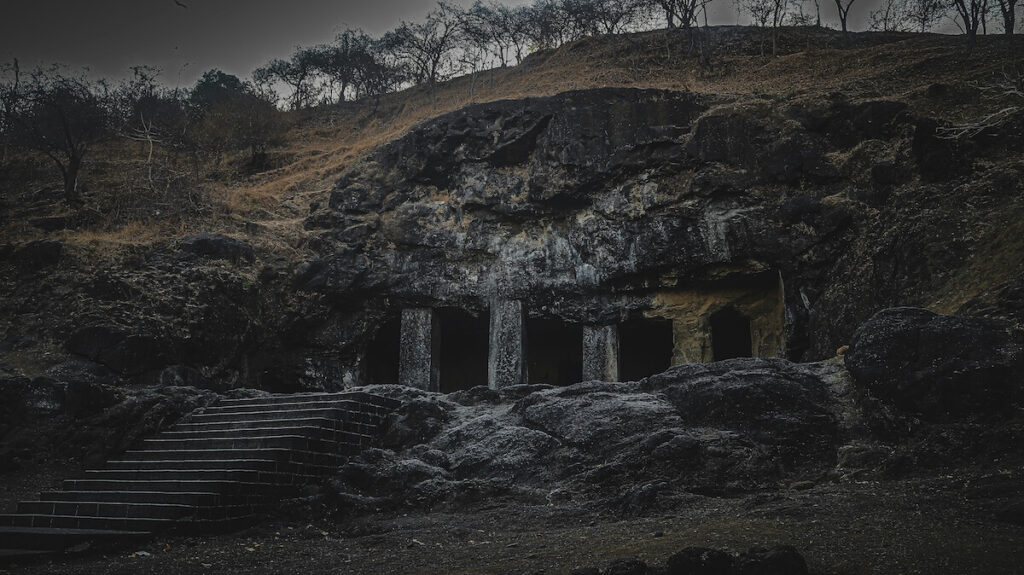
While Mumbai bustles with modern life, just a short ferry ride away lies a spectacular testament to ancient Indian art and spirituality: the Elephanta Caves.
Located on Gharapuri Island (meaning “the city of caves” to locals) in Mumbai Harbor, about 10 kilometers from the Gateway of India, these rock-cut caves are a significant UNESCO World Heritage Site. They date back to the 5th to 8th centuries AD and were later named “Elephanta” by the Portuguese after a large stone elephant sculpture they found near the landing point, which has since been moved to Mumbai’s Jijamata Udyaan zoo.
The Elephanta Caves are primarily famous for their magnificent cave temples dedicated to the Hindu god Shiva. The main cave, also known as Cave 1 or the Great Cave, is a breathtaking masterpiece of Indian rock-cut architecture. It houses colossal sculptures, including the iconic 6-meter-high Trimurti, a three-faced bust of Shiva representing creation, preservation, and destruction.
20. Antilia

Mumbai’s modern, opulent side cannot be underestimated. And Antilia, one of the world’s most expensive homes, is a literal towering symbol of the city’s extreme wealth.
Located on Altamount Road in South Mumbai, one of the most expensive addresses in the world, Antilia is a 27-story private skyscraper, famously owned by Mukesh Ambani, India’s wealthiest person and the chairman of Reliance Industries. Completed in 2010, its construction sparked global fascination and considerable debate, epitomizing the vast economic disparities that coexist within Mumbai.
Despite its 27 visible floors, some of them feature extra-high ceilings, making the building’s height equivalent to a typical 60-story structure. It reportedly includes three helipads, six floors of parking for around 168 cars, multiple swimming pools, a 50-seat private cinema, terraced gardens, a grand ballroom, and even a dedicated ice cream parlor. Staffing this behemoth requires a reported workforce of around 600. Just… wow.
21. Cricket

Mumbai is a city of myriad faiths, with temples, mosques, and churches dotting its landscape, but if you ask a true Mumbaikar, there’s one unifying “religion” that transcends all: cricket.
More than just a sport, cricket is a cultural phenomenon and an integral part of daily life. The city’s deep-seated affection for cricket dates back to the British colonial era, with the very first recorded match in India even taking place in Bombay in 1721. Today, it’s deeply etched into Mumbai’s identity, from the dusty maidans (open fields) where kids dream of glory, to the packed stadiums.
Mumbai holds a legendary status as “the cradle of Indian cricket,” having produced an incredible roster of cricketing legends. Think of names like Sachin Tendulkar, Sunil Gavaskar, and Dilip Vengsarkar—all global icons who honed their skills on the city’s pitches. The iconic Wankhede Stadium, nestled near Marine Drive, has witnessed countless historic moments, including India’s triumphant 2011 Cricket World Cup final victory on home soil.
22. Marathi

Despite being a melting pot of languages and cultures from across India, at Mumbai’s very heart beats the rhythm of Marathi, the official language of Maharashtra, of which Mumbai is the proud capital.
The Marathi language is a foundational pillar of the city’s identity, with deep historical roots tying Mumbai to the rich cultural heritage of the Maratha Empire. You’ll hear it everywhere—in the bustling local trains, the crowded markets, and the everyday conversations of a significant portion of the city’s population, standing alongside Hindi as a dominant linguistic force.
The prevalence of Marathi also means a strong presence of Maharashtrian culture. From traditional festivals like Ganesh Chaturthi to the distinct regional cuisine that includes staples like puran poli and misal pav, the Marathi influence is undeniable. Sure, Mumbai embraces its national and international diversity, but it maintains a strong connection to its regional roots, showcasing traditional Marathi theatre, literature, and music.
23. Monsoon rains
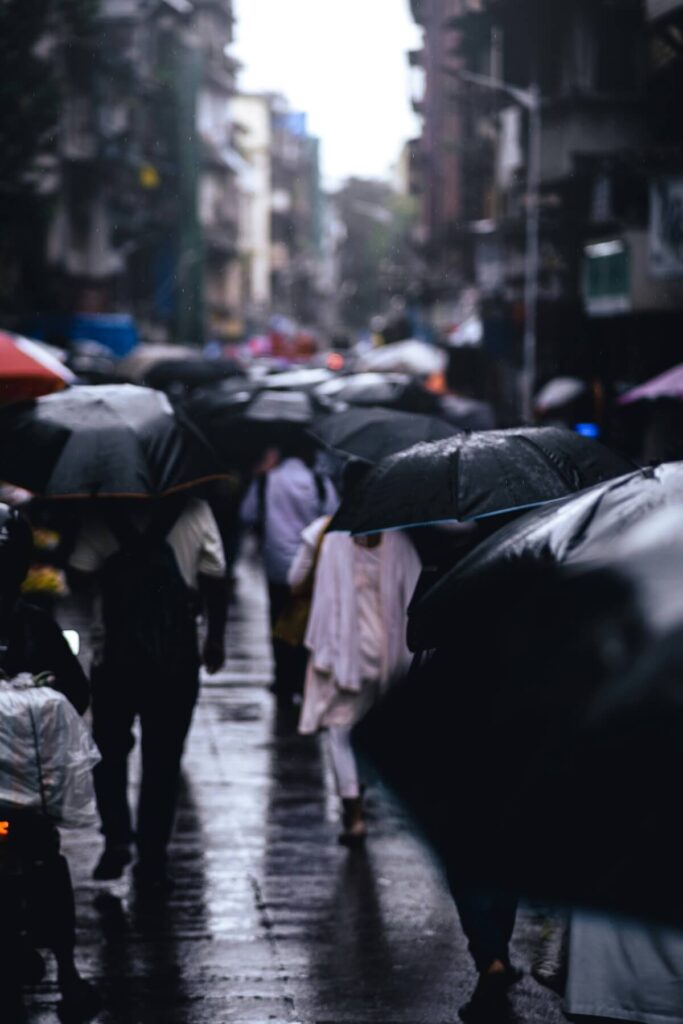
Mumbai is known for its monsoon season. From June to September, the city transforms as the heavens bring torrential downpours that are both a relief from the summer heat and a notorious disruptor of daily life.
This annual cycle shapes everything from agriculture in surrounding regions to the city’s infrastructure challenges. While the initial showers are eagerly awaited, the sheer volume of water can quickly overwhelm Mumbai’s drainage systems, a problem compounded by its low-lying areas and dense population.
The heavy rains frequently lead to waterlogging, especially in low-lying areas, causing significant traffic delays and sometimes even halting the lifeline of the local trains. Images of submerged streets and brave Mumbaikars wading through knee-deep water are common during the peak monsoon season.
Still, you can trust Mumbaikars to find the beauty in the chaos. While it tests the city’s resilience, the monsoon is also a time for piping hot chai and pakoras (fritters).
24. Mumbai Attacks
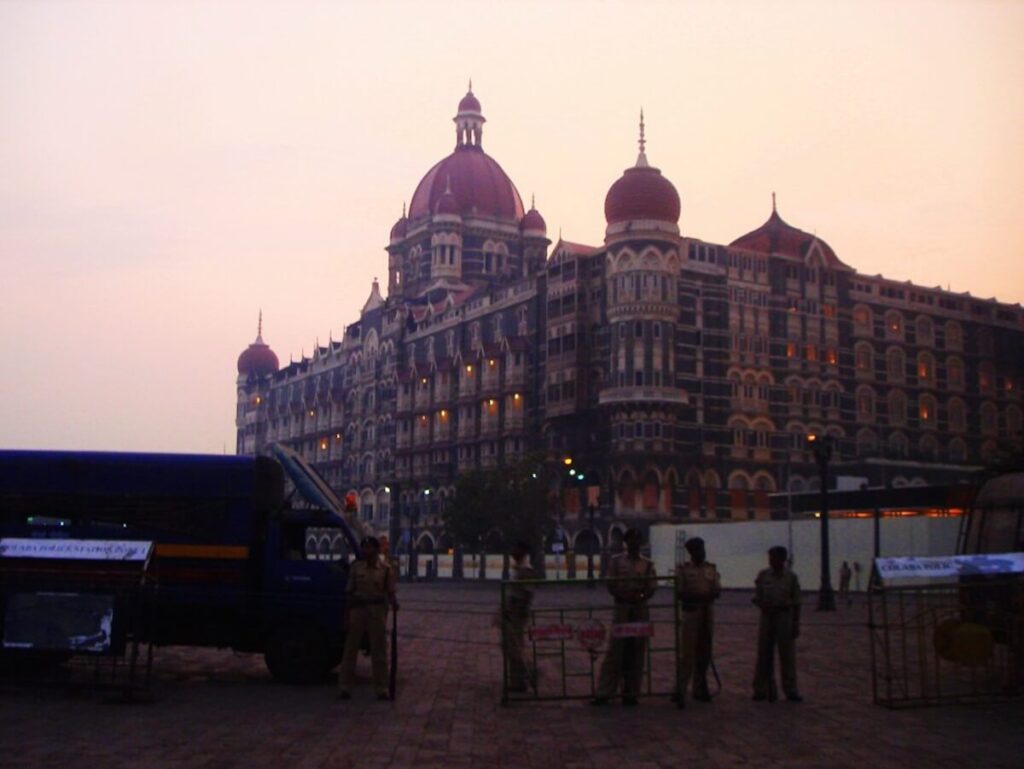
Unfortunately, Mumbai is also known for a tragic but significant historical event that deeply affected the city, the Mumbai Attacks, also known as the 26/11 attacks.
On November 26, 2008, the city endured a series of coordinated terrorist attacks carried out by Lashkar-e-Taiba, a Pakistan-based extremist organization. Over four days, ten terrorists targeted multiple high-profile locations across South Mumbai, including luxury hotels like the Taj Mahal Palace and Tower, the Trident Oberoi, the Chhatrapati Shivaji Maharaj Terminus, the Leopold Cafe, and the Nariman House Jewish community center. These tragic events shook the city, and indeed the world, to its core.
The attacks resulted in the deaths of over 160 people, including many foreign nationals, and left hundreds wounded, marking one of the most devastating acts of terrorism in India’s history. Beyond the immediate casualties, the 26/11 attacks left an indelible mark on Mumbai’s psyche, highlighting vulnerabilities and prompting significant enhancements in security measures across the city.
25. The “Spirit of Mumbai”

It’s fitting to end this list by talking about the “Spirit of Mumbai,” the incredible resilience and never-say-die attitude that defines its residents, especially in the face of adversity.
Far from being just a catchy phrase, it’s a palpable force that binds the city together, enabling it to bounce back from challenges that would cripple many others. Mumbai has seen it all—devastating floods during the monsoon season, poor housing conditions, crime, the horrific 26/11 attacks, riots, and more. Each time, Mumbai picked itself up with remarkable speed and defiance.
This inherent resilience is visible in the daily lives of Mumbaikars: the sheer grit of commuters navigating overcrowded local trains, the relentless hustle of street vendors, and the collective ability to find joy and community amidst the constant ebb and flow of city life. It’s a pragmatic optimism, a quiet strength that acknowledges difficulties but consistently finds a way to move forward.
Conclusion
So, what is Mumbai known for? As we’ve explored, it’s a charming and incredibly energetic city.
From its status as the financial powerhouse behind India’s economy to the glamorous allure of Bollywood, Mumbai pulsates with ambition and dreams. It’s a place where architectural marvels like Victorian and Art Deco buildings stand proudly alongside spiritual havens. And whether you’re navigating the iconic Marine Drive or marveling at the sheer volume of its local trains, you’re constantly reminded of the city’s unique rhythm.
But beyond the landmarks and the daily hustle, Mumbai’s true fame lies in its delectable food, a collective passion for cricket, its melting pot of cultures, and its indomitable spirit. So, if this journey through Mumbai’s many facets has sparked your curiosity, why not start planning your own adventure? Bookmark this article for inspiration and ideas!