
*This article may contain affiliate links. For full information, please see the disclaimer here.
If you’ve ever found yourself defending the char on a thin-crust pizza or wondering why the second “c” in Connecticut is silent, you already know this state has some serious personality. Tucked between the giants of New York and Massachusetts, it often gets labeled as a quiet pass-through, but that couldn’t be further from the truth.
What is Connecticut famous for? It’s the place where the first written constitution was born, where Mark Twain penned his greatest novels, and where Ivy League prestige meets gritty industrial innovation. The state is a powerhouse of “firsts” and quirky claims to fame. From the world’s first telephone book and the launch of the first nuclear submarine to the invention of the hamburger and the Frisbee, Connecticut has always been a hub for big ideas.

Whether you’re heading to New Haven for world-class “apizza,” exploring the halls of Yale University, or tracing the maritime roots of Mystic Seaport, you’ll find that the “Nutmeg State” offers a dense, fascinating mix of high culture and coastal charm.
Read on to know what else this state has in store for you!
Table of Contents
What is Connecticut famous for?
1. New Haven-style pizza

In New Haven, it isn’t called pizza—it’s “apizza” (pronounced ah-beetz). This thin-crust, coal-fired masterpiece is characterized by its charred edges and chewy texture. For many foodies, Connecticut is famous for this specific, non-nonsense style that prioritizes a crispy bite over mountains of toppings.
The tradition started in the 1920s when Frank Pepe opened his legendary shop on Wooster Street, followed closely by his rival, Sally’s Apizza. These spots started as local favorites but are now global bucket-list destinations that often top “Best in the Country” lists.
The most iconic order is the White Clam Pie, a salty, garlicky creation that sounds unusual until you take the first bite. Unlike standard New York or Chicago styles, traditional apizza is often served on rectangular trays and comes “plain”—meaning just tomato sauce, herbs, and a dusting of Pecorino Romano—unless you specifically ask for “mootz” (mozzarella).
This gritty, authentic culinary subculture has turned a small coastal city into the unofficial pizza capital of the United States.
2. Yale University

Aside from being one of the oldest higher education institutions in the U.S., Yale University is Connecticut’s most prestigious global brand. Founded in 1701 as a “Collegiate School” to train clergy, it eventually moved to New Haven and took the name of its early benefactor, Elihu Yale.
Today, this Ivy League powerhouse is a sprawling Gothic masterpiece that has produced five U.S. presidents and scores of Nobel laureates, cementing its status as an elite producer of world leaders.
Walking through the campus feels like stepping into a film set, with its soaring stone towers and secret societies like “Skull and Bones.” Beyond the heavy academics, Yale defines the local culture through its world-class art galleries and the massive Beinecke Rare Book Library. Here, 300 years of history meet cutting-edge research. No wonder it’s the crown jewel of Connecticut’s intellectual identity.
You can explore the campus and know more about its historic spots with this app-guided walking tour.
3. The Constitution State

While every state has a nickname, Connecticut is known for one that carries some serious historical weight: the “Constitution State.”
This title honors the Fundamental Orders of 1639, a document created by early settlers in Windsor, Hartford, and Wethersfield. It’s widely considered the first written constitution in history to establish a government based on individual rights, effectively acting as a rough draft for the American democracy we recognize today.
You’ll see this nickname everywhere, from police cruisers to the state quarter. Even though the nickname wasn’t made official until 1959, the pride behind it dates back centuries. It reflects the state’s long-standing reputation for being steady, organized, and perhaps a little bit stubborn about its legal roots. It’s a pretty big claim to fame for such a small piece of land.
4. ESPN headquarters

It’s a bit of a local flex that the “Worldwide Leader in Sports” is tucked away in the quiet town of Bristol.
Launched in 1979 by Bill Rasmussen, ESPN started as a risky, niche cable experiment that many doubted would survive. Today, it’s the center of the sports universe, housing a sprawling 120-acre campus and thousands of employees who keep the 24-hour cycle of SportsCenter and live broadcasts running smoothly.
While you can’t just walk in for a casual tour, the massive field of satellite dishes visible from the road serves as a constant reminder of the state’s massive media footprint. Having a global titan like ESPN call Connecticut home has turned Bristol into an unlikely landmark for sports journalism.
5. UConn basketball

Speaking of sports, Connecticut has a second home in the “Basketball Capital of the World.” The UConn Huskies have built a dynasty in Storrs that rivals the biggest names in college history.
Since the 1990s, the men’s and women’s programs have combined for a staggering 18 national titles—including the women’s record-setting 12th championship in 2025. The program’s rise from a regional secret to a national powerhouse happened under legendary coaches like Jim Calhoun and Geno Auriemma. It’s a level of dominance that turns the entire state into a sea of blue and white every March.
What makes UConn special is how deeply the fans care. In a state without a major professional “Big Four” team, the Huskies are the local heroes. And whether they’re cutting down nets or producing top NBA and WNBA stars, UConn basketball is the undisputed heartbeat of Connecticut sports.
6. Mystic Seaport Museum and Mystic Aquarium
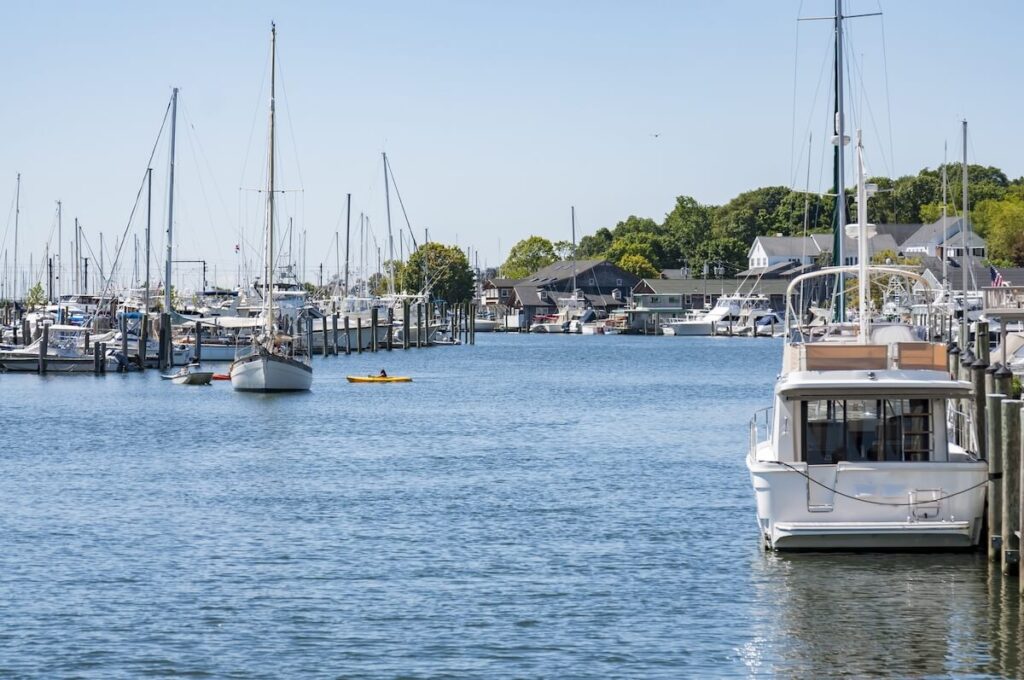
Connecticut is famous for its seafaring soul, and nowhere else captures that spirit better than Mystic.
The Mystic Seaport Museum is the largest maritime museum in the U.S., featuring the Charles W. Morgan, the world’s last wooden whaling ship. It’s a living history village that makes you feel like you stepped back into the 1800s.
To save time, you can even grab a skip-the-line ticket to explore the docks and workshops without the wait.
Just down the road, the Mystic Aquarium offers a modern look at the ocean, famously housing the only beluga whales in New England. Together, these spots make the town a premier destination for anyone wanting to connect with the coast.
7. The Insurance Capital
Hartford earned its “Insurance Capital of the World” title back in the 1800s, largely thanks to its location as a major river port.
Local merchants initially formed informal groups to share the risks of shipping cargo, which eventually evolved into the massive industry we know today. After proving their reliability by paying out massive claims following the Great New York Fire of 1835, Hartford’s firms became the gold standard for trust and stability.
Today, the city remains a global hub, hosting insurance giants like Aetna, Travelers, and the aptly named The Hartford.
While the days of riverboat merchants are long gone, the legacy lives on through a workforce that is essentially the backbone of the global financial sector. Sure, it sounds like a lot of paperwork, but this dense concentration of insurance companies is a major reason why Connecticut is known for keeping the world’s risks in check.
8. The Gold Coast

Southwestern Connecticut is famously known as the “Gold Coast,” a nickname earned by Fairfield County’s concentration of extreme wealth and high-profile residents. Originally a collection of quiet farming and fishing villages, the area transformed in the 20th century as Manhattan’s elite sought a suburban escape.
Today, towns like Greenwich and New Canaan serve as the “bedroom communities,” offering a manicured retreat just a 45-minute train ride from Wall Street.
The region has evolved into a global financial powerhouse in its own right, boasting the densest cluster of hedge funds outside of New York City. And with the glass office parks of Stamford and the historic estates of Darien, the Gold Coast balances big business with coastal charm.
9. Mark Twain House

In 1874, Samuel Clemens—better known as Mark Twain—moved into an architectural marvel in Hartford that he called the happiest home of his life.
This eccentric, Gothic-style mansion wasn’t just a place to live; it was his ultimate creative sanctuary. It was here, in the third-floor billiard room, that he wrote his most iconic masterpieces, including The Adventures of Tom Sawyer, The Prince and the Pauper, and, my favorite, Adventures of Huckleberry Finn.
Walking through the house today feels like catching a glimpse of Twain’s brilliant, cluttered mind. From the intricately carved woodwork to the high-tech (for the 1880s) telephone, the home reflects his fascination with innovation and style. If you’re a fan of his wit, visiting the Mark Twain House is a must—it’s the best way to connect with the man behind the prose in the state he truly loved.
10. Foxwoods and Mohegan Sun

In a state known for colonial history, Foxwoods and Mohegan Sun stand out as modern, high-energy titans. Rising out of the woods in southeastern Connecticut, these are two of the largest and most successful casino resorts on the planet.
Foxwoods, operated by the Mashantucket Pequot Tribal Nation, started as a humble bingo hall in 1986 before exploding into a massive complex of six casinos, while Mohegan Sun followed in 1996 with its striking, nature-inspired design.
Today, these destinations offer way more than just slot machines and card tables. They are full-blown entertainment hubs featuring world-class arenas, luxury spas, and high-end shopping. Mohegan Sun, notably, is home to the WNBA’s Connecticut Sun.
11. Helicopter development

In 1939, Igor Sikorsky made history in Stratford by piloting the Vought-Sikorsky VS-300, the first practical single-rotor helicopter.
While others had experimented with vertical flight, Sikorsky was the one who actually cracked the code, creating a design that could reliably lift off, hover, and land. It was a massive leap for aviation that essentially turned Connecticut into the helicopter capital of the world.
Today, the legacy lives on through Sikorsky Aircraft, which remains a cornerstone of the state’s economy. The company produces the famous Black Hawk and Marine One, the helicopter used by the President of the United States. For a state that’s often viewed as a quiet suburb, having such a high-tech, world-changing industry in its backyard is a pretty impressive claim to fame.
12. First nuclear submarine

From the sky to the sea, Connecticut’s appetite for innovation is just as deep as its history. In 1954, the state solidified its title as the “Submarine Capital of the World” when the USS Nautilus was launched in Groton.
As the world’s first nuclear-powered submarine, it was a massive technological leap that basically turned science fiction into reality. Unlike diesel subs that had to surface constantly, the Nautilus could stay underwater almost indefinitely, eventually becoming the first vessel to reach the geographic North Pole.
Today, the Nautilus is the official state ship and the star attraction at the Submarine Force Library and Museum. You can actually step on board for a self-guided tour to see how the crew lived and worked in such tight, high-stakes quarters.
13. The “Nutmeg State”

While “The Constitution State” is the official title, Connecticut is famous for the much quirkier “Nutmeg State” nickname. It sounds cozy and culinary, but the history is actually a bit more mischievous.
In the 18th and 19th centuries, Connecticut was a hub for traveling peddlers. Legend has it they were so savvy (or perhaps a bit too clever) that they supposedly carved “nutmegs” out of wood and sold them to unsuspecting customers. Whether these wooden nutmegs actually existed or were just a tall tale about the state’s sharp business sense, the name stuck.
Today, it’s a beloved detail that shows up on everything from the state quarter to the name of local theater awards. It’s a perfect example of Connecticut’s dry humor—honoring a legacy of being so industrious that people were warned to watch their wallets.
14. The Hamburger

When it comes to famous foods from Connecticut, nothing sparks a debate quite like Louis’ Lunch in New Haven. Established in 1895, this tiny brick building is recognized by the Library of Congress as the birthplace of the hamburger.
According to local lore, a hurried customer dashed in 1900 asking for a quick meal he could eat on the go, so Louis Lassen sandwiched some broiled meat trimmings between two slices of toast—and a global icon was born.
As the oldest continuously operated hamburger restaurant in the U.S., the rules are strict: don’t even think about asking for ketchup or mustard. To this day, the patties are cooked in the original vertical cast-iron broilers and served only with cheese, onion, and tomato on white toast.
15. Hot lobster rolls
While most of the country is used to the cold, mayo-heavy Maine version, Connecticut prefers its lobster served warm and pure.
The “Connecticut-style” roll is all about simplicity: fresh, succulent lobster meat poached in melted butter and piled high on a toasted top-split bun. It’s a richer, more indulgent way to eat seafood that lets the natural sweetness of the lobster take center stage.
This coastal staple traces back to 1929 at a restaurant called Perry’s in Milford. Legend has it the owner created it for a traveling liquor salesman, and it’s been a shoreline obsession ever since. Whether you’re at a high-end restaurant or a roadside “clam shack,” this warm, buttery sandwich is an essential part of the local summer experience.
16. P.T. Barnum

P.T. Barnum might be synonymous with “The Greatest Show on Earth,” but in Bridgeport, he was much more than a circus man.
Connecticut is famous for being the home base for this legendary showman, who served as Bridgeport’s mayor and helped develop much of the city’s infrastructure. From the ornate Barnum Museum to the sprawling Seaside Park he gifted to the public, his larger-than-life fingerprints are everywhere.
Barnum famously spent his winters in Bridgeport, housing his circus animals and performers in what became known as the city’s “Winter Quarters.” Even today, the annual Barnum Festival keeps his spirit alive, celebrating the eccentric, imaginative, and bold personality that helped put Connecticut on the global map of entertainment history.
17. WWE headquarters
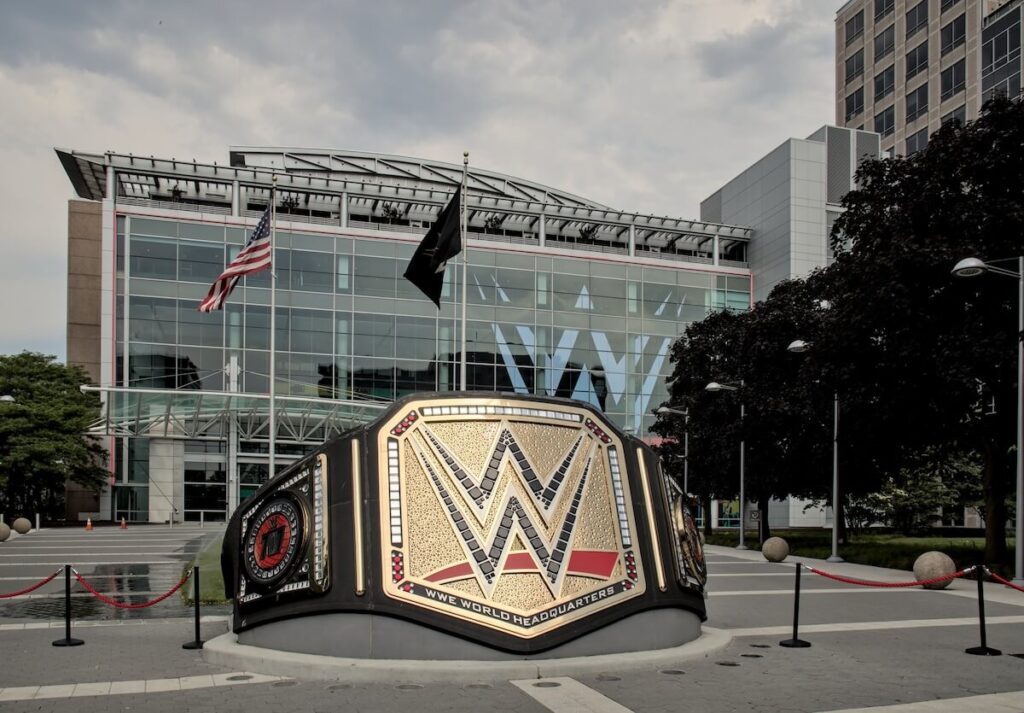
For millions of wrestling fans, the phrase “Stamford, Connecticut” is practically synonymous with the ring. Since 1985, this coastal city has served as the global nerve center for WWE, the undisputed leader in sports entertainment.
While the company recently moved from its iconic, flag-waving “Titan Towers” into a massive, state-of-the-art facility downtown, its commitment to the state remains as strong as a steel chair blow. Having a multi-billion-dollar media empire headquartered here is a major point of pride for the local community.
The new campus consolidates everything from corporate strategy to cutting-edge production studios, keeping hundreds of jobs in Fairfield County. It’s a modern success story that proves you don’t need to be in Hollywood or NYC to dominate global pop culture.
18. Katharine Hepburn

Speaking of Hollywood, Connecticut’s most enduring link to the silver screen is the legendary Katharine Hepburn.
Born and raised in Hartford, this four-time Oscar winner was true Hollywood royalty who famously rejected the glitz of LA for the rocky shores of Old Saybrook. Her fiercely independent spirit and unmistakable New England accent became her trademark, making her a cultural icon who never forgot her roots.
Today, her legacy is preserved at “The Kate” (The Katharine Hepburn Cultural Arts Center) in Old Saybrook. It’s a fitting tribute to a woman who balanced a record-breaking career with a private, grounded life in the state she loved.
19. Leaf peeping

While all of New England gets in on the action, Connecticut’s Litchfield Hills are a top-tier destination for the annual autumn show. Because the state sits a bit further south, its peak colors often arrive just as the northern states are fading, stretching the season into late October.
The rolling terrain and historic covered bridges provide the perfect backdrop for the vibrant reds and deep oranges. And in Litchfield Hills, the tradition of “peeping” took off alongside the rise of the automobile, turning quiet country roads into scenic loops for city dwellers.
Today, the area remains a favorite for its mix of high-end farm-to-table stops and rugged hiking trails like those at Kent Falls. It’s a classic, low-stakes way to spend a weekend.
20. Samuel Colt

Samuel Colt basically pioneered the assembly line in Hartford long before the car industry took off. His factory, topped with an unmistakable onion-shaped blue dome, became the birthplace of the Colt Single Action Army revolver.
Often dubbed the “Gun that Won the West,” the single-action revolver handgun was a marvel of 19th-century mass production, making Connecticut a leader in precision engineering.
Today, the “Coltsville” district is a National Historical Park, preserving the legacy of the neighborhood Colt built for his workers. Even though manufacturing has evolved, that blue dome remains a permanent fixture of the Hartford skyline.
21. The Frisbee

The Frisbee is the quintessential piece of college culture, but its origins are surprisingly domestic. It all started with the Frisbie Pie Company in Bridgeport, where students at nearby Yale University discovered that the empty tin pans flew remarkably well.
They’d toss the tins across the quad, shouting “Frisbie!” to warn passersby. What began as a bored afternoon distraction eventually caught the attention of inventors who saw the potential for a plastic version. In the late 1950s, Wham-O officially trademarked the name (with a slight spelling change), but the Connecticut roots are undeniable.
Today, the sport has evolved from simple catches to competitive Ultimate and Disc Golf. Yet the spirit remains the same. Who knew that the world’s most famous flying disc started out holding pie crusts in a local Bridgeport bakery?!
22. PEZ Candy

While PEZ was actually invented in Austria as a peppermint breath mint for smokers, it became a true international pop-culture icon after moving its North American headquarters to Orange, Connecticut, in the 1970s.
Since 1974, the Orange facility has been the sole manufacturer of every single brick of PEZ candy consumed in the U.S. and Canada. It’s a massive operation that turns out millions of tablets daily.
The headquarters is also home to the PEZ Visitor Center, a neon-bright museum that houses the world’s largest collection of PEZ memorabilia. You can see everything from vintage dispensers to a life-sized motorcycle made entirely of the candy. And with viewing windows that let you peek into the production floor, it’s a rare chance to see how the “click-to-dispense” magic is made.
23. The Glass House

Nestled in the woods of New Canaan, the Glass House is a bucket-list pilgrimage for architects and designers worldwide. Built by Philip Johnson in 1949 as his own residence, it stripped away the traditional concept of walls in favor of floor-to-ceiling glass.
The house is an exercise in extreme minimalism—the ultimate “less is more” statement that turned the surrounding landscape into the only wallpaper Johnson ever needed. The site has since evolved into a 49-acre playground of experimental structures, including a windowless “Brick House” and a geometric painting gallery.
Visiting the Glass House feels like stepping into a life-sized art installation. And because it was a private home for decades, the space still feels personal and lived-in.
24. Witch trials
Salem usually gets all the spooky headlines, but the Connecticut witch trials actually happened first and were arguably more intense per capita.
Decades before the Massachusetts hysteria, Alse Young became the first person executed for witchcraft in the American colonies in 1647. For nearly 50 years, towns like Hartford and Fairfield were the center of a much earlier, lesser-known crackdown on “magic” and “sorcery.”
Unlike the mass trials in Salem, Connecticut’s cases often involved smaller groups or individuals, making the process feel more intimate and eerie. The state has recently taken steps to acknowledge this dark history, officially exonerating those accused in 2023.
25. Nathan Hale

Nathan Hale is the ultimate hometown hero for Connecticut, serving as the official state hero. A young schoolteacher from Coventry, he traded his books for a uniform when the Revolution broke out.
In 1776, he volunteered for a dangerous spy mission behind enemy lines in New York City. Though he was captured and executed by the British at just 21 years old, his poise under pressure made him an instant legend.
Hale is most famous for his final words—”I only regret that I have but one life to lose for my country”—which have been etched into American history books ever since. Today, you can visit his family homestead in Coventry or see his statue standing tall at the Old State House in Hartford.
26. The Hartford Courant
Long before social media or even the United States itself, there was the Hartford Courant. Established in 1764 as a weekly called the Connecticut Courant, it holds the title of the oldest continuously published newspaper in the country.
Connecticut is famous for this deep-rooted journalistic legacy; even George Washington was known to place ads in its pages, proving that the Courant has had a front-row seat to every major event in American history.
These days, the paper remains a respected voice in New England, having transitioned from a colonial broadsheet to a modern digital powerhouse. While the media landscape has changed drastically since the 18th century, the Courant still operates with that same “older than the nation” grit and remains a remarkable survivor of the print era.
27. Gillette Castle
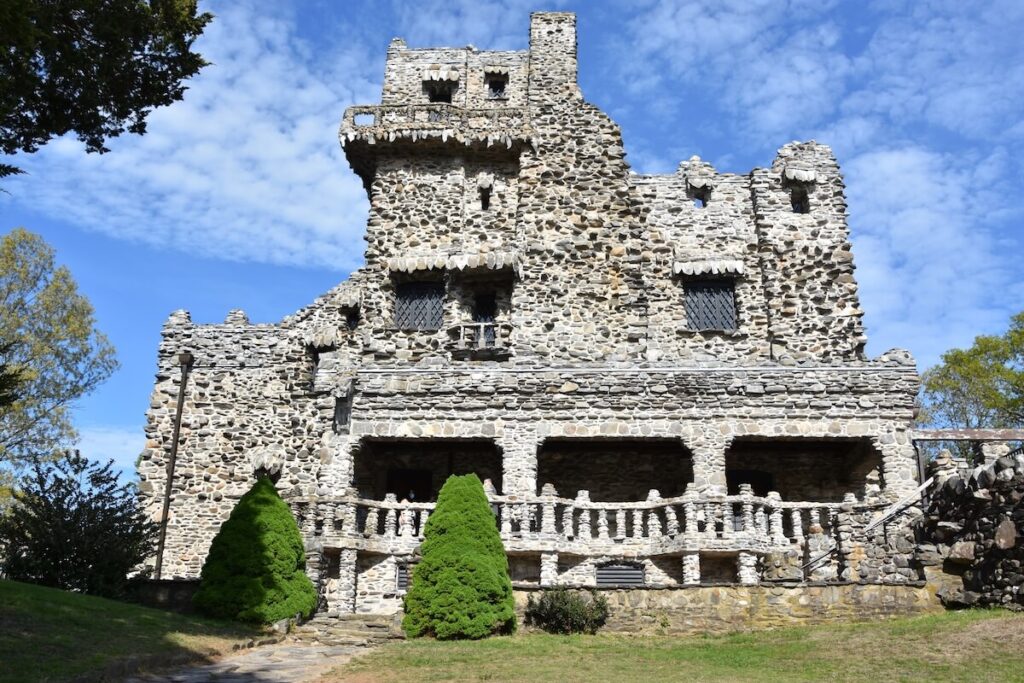
Perched high above the Connecticut River, Gillette Castle is easily the state’s most eccentric landmark. It was built between 1914 and 1919 by William Gillette, the actor who famously portrayed Sherlock Holmes on stage.
This medieval-style fortress isn’t made of European stone, however; it’s constructed from local fieldstone and looks like something pulled straight from a storybook. Gillette designed the entire place himself, filling it with strange, personal touches that reflect his quirky personality.
Inside, the castle is a masterclass in creative engineering, featuring 47 unique hand-carved wooden doors—each with a different complex latch. There’s even a secret mirror system that allowed Gillette to spy on his guests from his bedroom.
The castle remains the centerpiece of a stunning state park in East Haddam. Whether you’re there for the architectural weirdness or the hiking trails, it’s one of the most fun and unique ways to spend a Saturday in the state.
28. Steamed cheeseburgers

While the rest of the country fries or grills their patties, a small pocket of central Connecticut—mostly around Meriden and Middletown—prefers to take a steam bath.
The “steamed cheeseburger” is a hyper-local culinary quirk that dates back to the early 1900s. Instead of hitting a hot griddle, the meat and a thick block of sharp white cheddar are tucked into individual stainless steel trays and steamed until they’re incredibly juicy and gooey.
Every few years, national foodies “rediscover” this method, and it’s easy to see why. Places like Ted’s Restaurant have used the same custom steaming chests for decades to achieve a texture you just can’t get anywhere else. The result is a pile of molten cheese that completely blankets the beef, served on a plain hard roll.
29. The Charter Oak
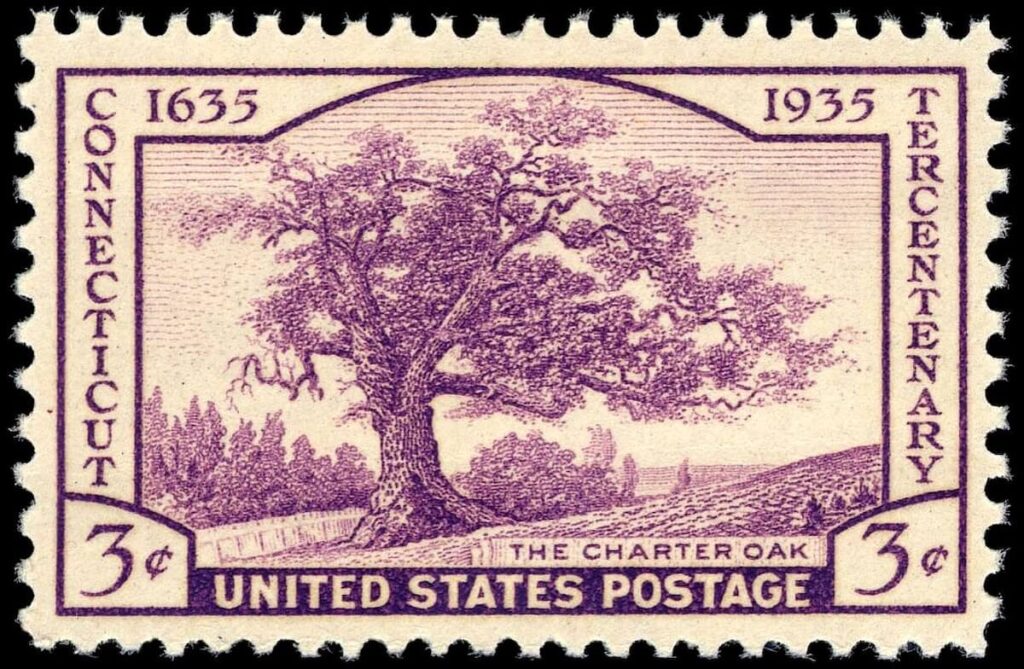
If you’ve ever flipped over a Connecticut state quarter, you’ve seen the Charter Oak.
This massive white oak became a symbol of colonial defiance in 1687 when local leaders allegedly hid the state’s royal charter inside its hollow trunk. They did it to keep King James II’s agent from seizing it and revoking their government rights, making that tree an accidental vault for Connecticut’s independence.
The tree finally fell during a storm in 1856, but its legacy is literally everywhere. Pieces of its wood were salvaged to make everything from the Governor’s chair to jewelry, and “Charter Oak” remains one of the most popular names for local businesses and schools, proving that Connecticut can be just a little bit stubborn when it comes to its freedom.
30. The first telephone book
In 1878, just two years after Alexander Graham Bell’s invention, the world’s first telephone directory was published in New Haven. But it wasn’t the massive yellow volume we remember today.
Instead, it was a single piece of cardboard listing only 50 names. There were no numbers yet—you just called the operator and asked to be connected to a specific person or business, like the local police or a drugstore.
This tiny card represented a massive shift in how people communicated, turning a luxury gadget into a functional network. It’s one of those niche “firsts” that highlights Connecticut’s role as a testing ground for world-changing tech.
A copy of that original list is a high-value collector’s item (it was auctioned for $170,500 in 2008), serving as a paper trail for the start of the modern connected world.
Conclusion
So, what is Connecticut known for? A mix of innovation, tradition, and just the right amount of coastal charm! More importantly, from the list above, I hope you see that Connecticut is a state that packs an incredible amount of history into a relatively small footprint.
Whether you’re here for the legendary New Haven pizza, the vibrant fall colors of the Litchfield Hills, or the birthplace of the modern hamburger, there’s always something new to discover. And if you’re ready to see the Constitution State for yourself, now is the perfect time to start planning your trip. Bookmark this article for inspiration!
If you’re looking to extend your New England adventure, check out our guides on Connecticut’s neighbors—Massachusetts, Rhode Island, and Maine.