
Tucked high away in the Himalayas is a kingdom that deliberately chose to measure its national success by how happy its citizens are rather than how much money they make.
Known locally as the Land of the Thunder Dragon (Druk Yul), Bhutan remains one of the most culturally intact and environmentally conscious places on Earth. Its majestic mountain landscapes and vibrant traditions are fiercely protected by a highly unique, low-volume sustainable tourism policy that keeps the country beautifully preserved.
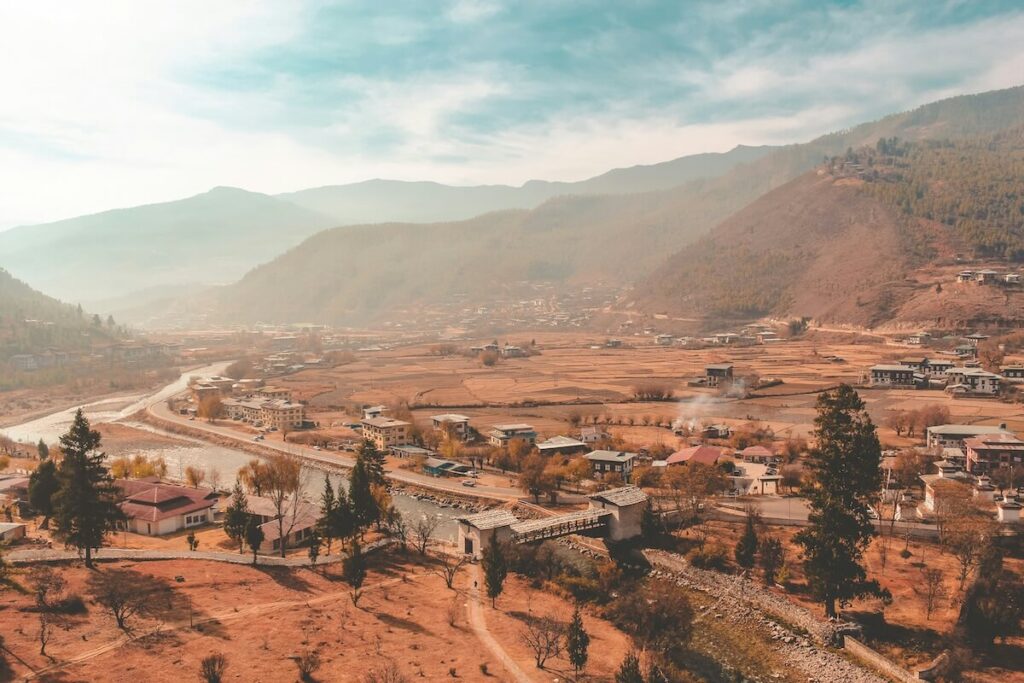
So, what is Bhutan famous for? It’s known for its iconic cliffside monasteries, competitive archery matches, spicy chili stews, and a carbon-negative lifestyle. It’s also known for colorful festivals, a mythological national animal, and its strict dress codes.
Whether you, like me, are fascinated by its ancient history or its modern quirks, this guide dives into everything that makes this Himalayan jewel completely unforgettable.
Table of Contents
What is Bhutan famous for?
1. Gross National Happiness
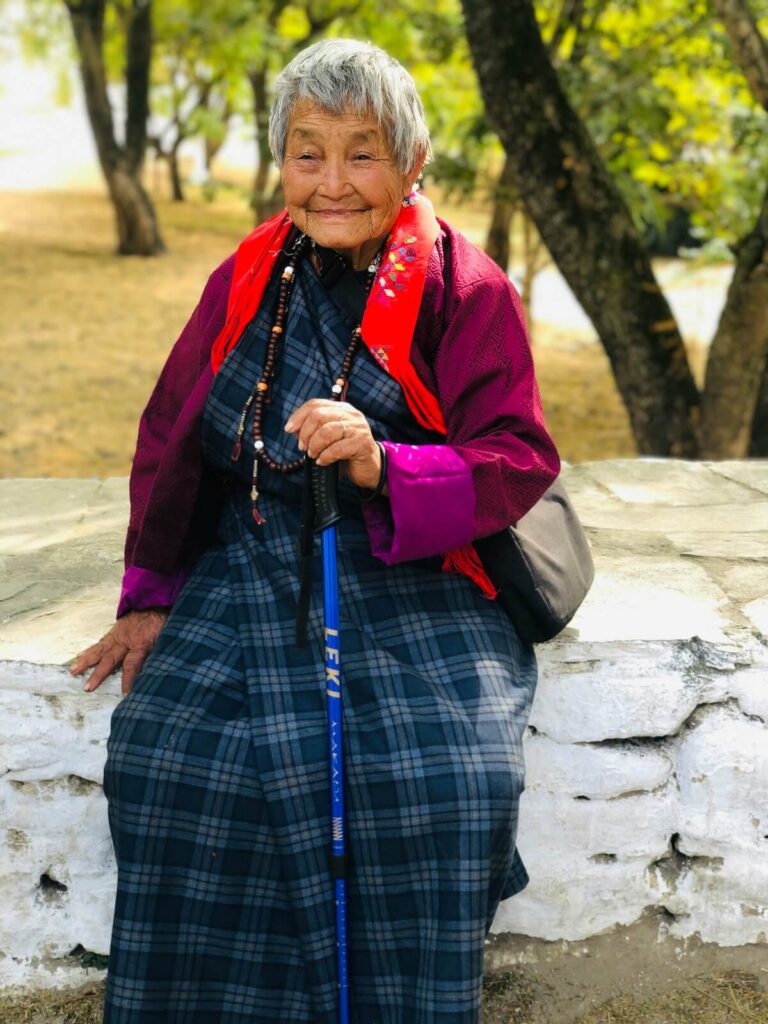
While most countries are locked in a relentless race to grow their economies, Bhutan decided to track something entirely different: smiles.
Back in the 1970s, the country’s fourth king, Jigme Singye Wangchuck, boldly declared that Gross National Happiness (GNH) was far more important than Gross Domestic Product (GDP). Instead of measuring success by pure monetary wealth and industrial output, this unique governance framework shifts the focus to what actually keeps a society thriving.
To keep things structured, the government looks at four main pillars: sustainable development, environmental preservation, cultural identity, and good governance.
It is not just a marketing gimmick, either. Every single government policy has to pass a rigorous GNH screening tool before getting approved. If a proposed project threatens the local forests or communities, it gets sent straight back to the drawing board.
2. The first carbon-negative country

If you ask eco-travelers, “What is Bhutan known for?” the answer is its pioneering status as the world’s first carbon-negative country. It’s basically the ultimate overachiever when it comes to saving the planet!
By constitutional law, the nation must maintain at least 60% forest cover at all times. Right now, that number sits at over 70%. Because of these massive, lush forests and a heavy reliance on clean hydropower, Bhutan actually absorbs far more carbon dioxide than it emits. It’s an inspiring blueprint for global sustainability that proves keeping things green is totally doable.
3. Paro Taktsang
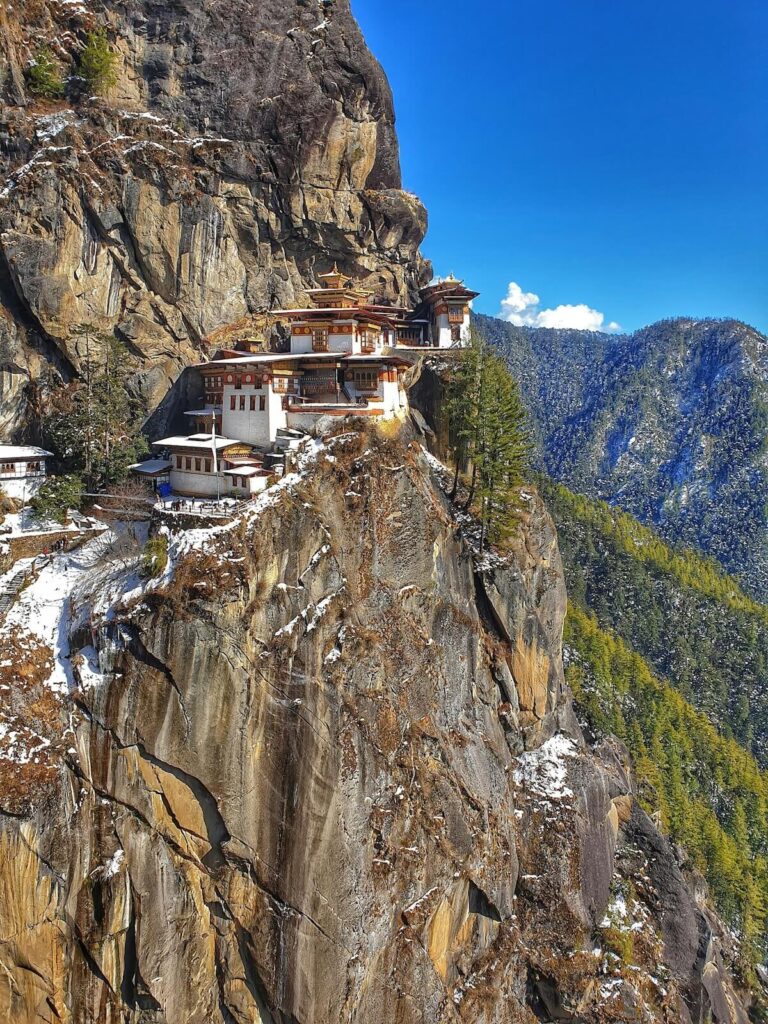
My very first introduction to Bhutan was staring at a photo of a breathtaking temple floating in the clouds, and it completely stopped me in my tracks. That iconic landmark is Paro Taktsang, better known as the Tiger’s Nest Monastery.
Perched precariously on a sheer cliffside 900 meters above the Paro Valley, this sacred complex is the ultimate postcard image of the country. It was built way back in 1692 around the exact cave where Guru Rinpoche, the master who brought Buddhism to Bhutan, is said to have meditated for months.
Getting to the top requires a sweaty, steep, multi-hour uphill hike through pine forests draped in emerald moss. While the trek will absolutely burn your calves, the mist-shrouded mountain views, fluttering prayer flags, and peaceful chanting make the effort totally worth it.
4. “High Value, Low Impact” sustainable tourism policy

Bhutan is definitely not the place for a last-minute backpacker trip on a shoestring budget, and that is entirely by design. To protect its pristine nature and sacred indigenous culture from the crushing effects of mass tourism, the country enforces a strict “High Value, Low Impact” regulatory framework.
Instead of dealing with endless crowds, travelers must pay a mandatory Sustainable Development Fee (SDF)—currently set at $100 per night for international visitors—and book their itineraries through licensed local tour operators. It sounds exclusive, but that fee directly funds free local healthcare, schooling, and conservation, keeping the kingdom completely unspoiled.
5. Majestic dzongs
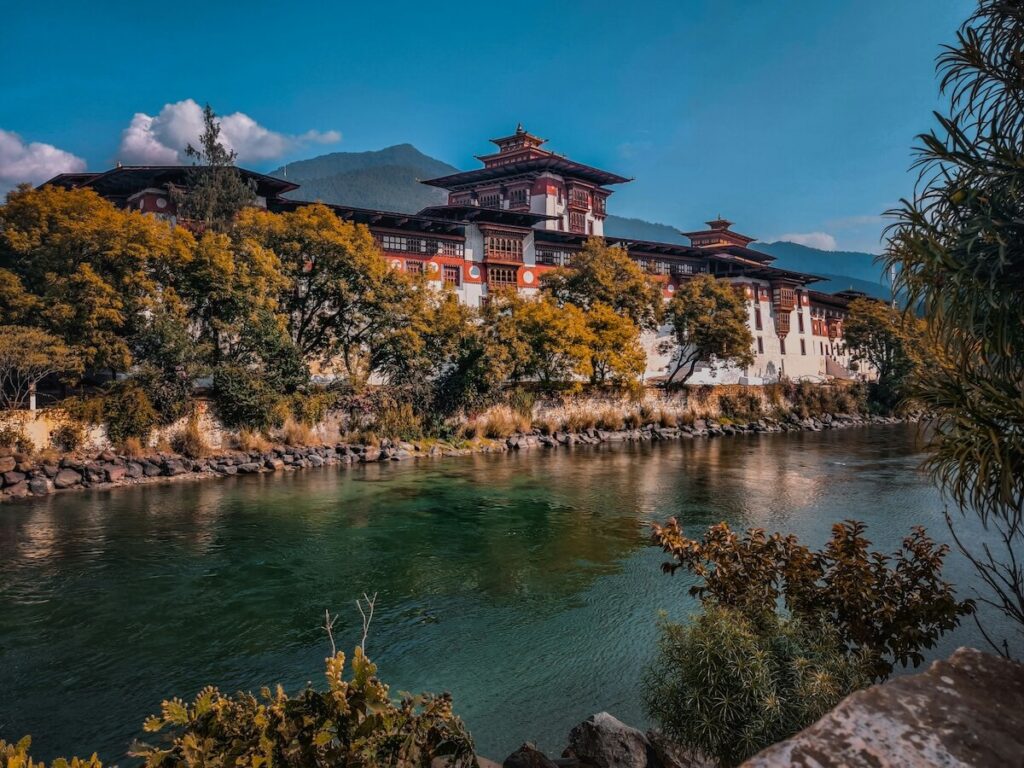
Imagine constructing a massive, towering fortress without using a single metal nail or even a written blueprint. This jaw-dropping architectural marvel is exactly what Bhutan is famous for.
Dotted all across the country’s high valleys, these structures—called dzongs—serve dual purposes as active Buddhist monasteries and local government headquarters. With their white-washed stone walls and distinctive red-and-gold roof bands, they look incredibly majestic.
The riverside Punakha Dzong is widely considered the most beautiful of them all, but Paro’s Rinpung Dzong and Thimphu’s Tashichho Dzong are just as spectacular to explore.
6. The highest unclimbed mountain

If you think Mount Everest has gotten a bit too crowded, there is a giant peak in the Himalayas that has never seen a single human footstep.
Standing at a towering 7,570 meters (24,836 feet), Gangkhar Puensum holds the legendary title of the highest unclimbed mountain in the world. It is destined to stay that way, too.
This pristine, mysterious peak is exactly what Bhutan is known for protecting. To preserve local spiritual beliefs—since the Bhutanese consider high peaks to be the sacred dwellings of gods—the government banned all mountaineering above 6,000 meters in 1994.
7. A capital city with no traffic lights
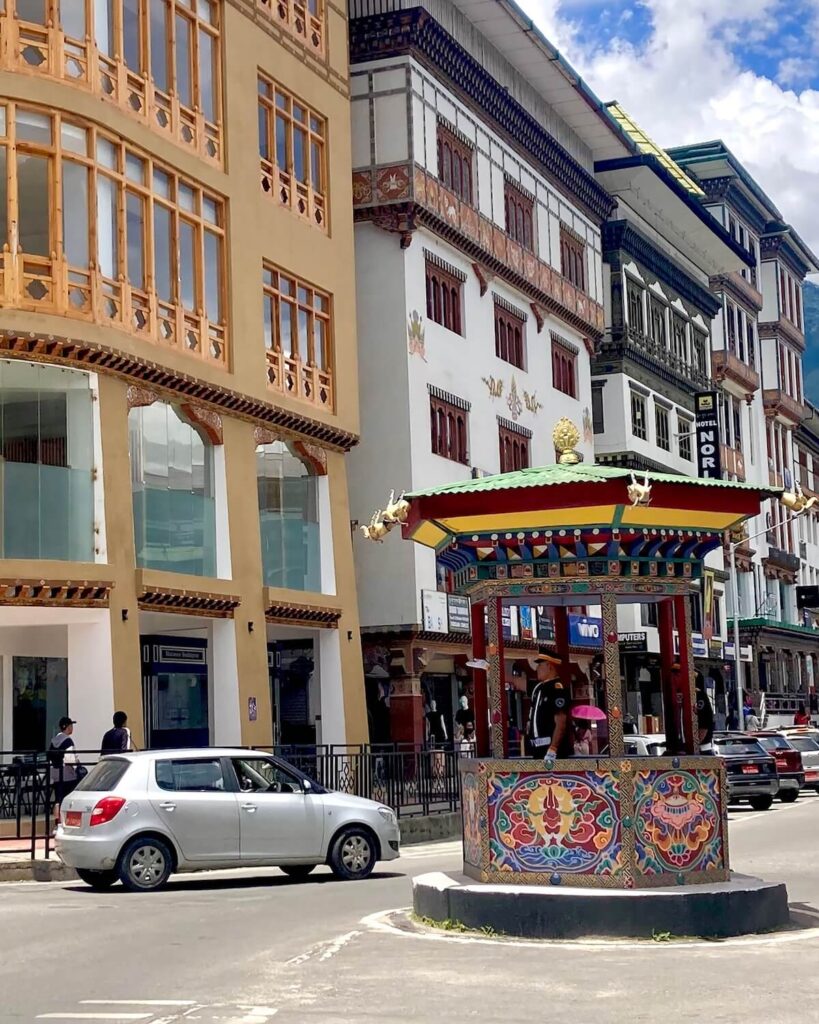
If you are not yet struck by Bhutan’s quirkiness, wait until you drive through its capital city, Thimphu.
Thimpu is one of only two capitals in the world that does not have a single traffic light (the other one being Vatican City, although it’s technically a sovereign city-state). The local government actually tried installing automated signals once, but the public quickly protested, finding the cold electronic boxes way too impersonal. They were promptly pulled down and replaced by traffic policemen.
Today, officers stand in a decorative central booth, directing cars with remarkably elegant, synchronized hand gestures. It turns rush hour into a surprisingly (and fascinatingly) human performance that keeps the city flowing beautifully.
8. Strict dress codes
If you’ve ever wanted to visit a place where fast fashion takes a back seat to vibrant, living history, Bhutan is the place to be.

To protect its distinct national identity, the country legally mandates that citizens wear traditional attire in schools, government offices, temples, and during official public gatherings. Men wear the gho, a knee-length robe tied tightly at the waist that folds into a massive front pouch—hilariously dubbed by travelers as the world’s largest pocket. Women dress in the kira, an elegant, ankle-length wrap dress secured at the shoulders with silver brooches and paired with a silk jacket.
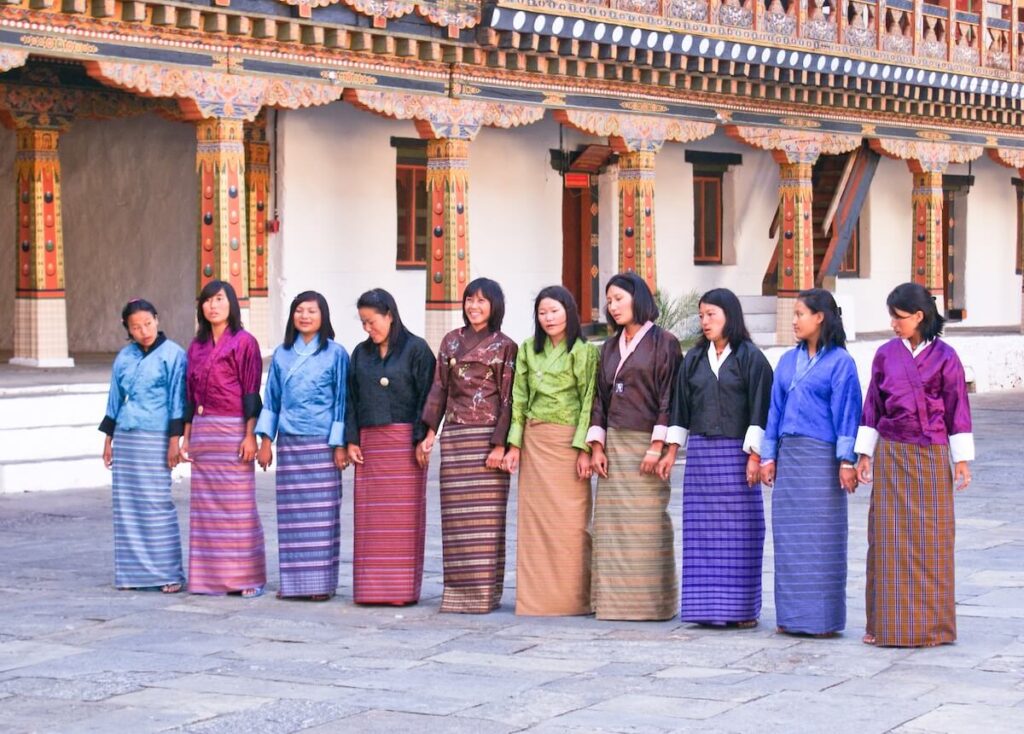
For travelers, you don’t have to worry about looking like an outsider or breaking the bank to participate. Many local shops and tour companies in places like Thimphu and Paro gladly rent out complete gho and kira sets for festivals or day trips.
Slipping into these beautifully woven layers isn’t treated as wearing a costume. Instead, locals view it as a wonderful sign of respect, and it practically guarantees you will be greeted with warm smiles wherever you walk.
9. Ema datshi

If your spice tolerance stops at a mild jalapeño popper, eating dinner in Bhutan might feel like extreme sports. That is because in Bhutan, chili peppers are not used merely as a spice or subtle garnish, but as the main vegetable component of a meal.
This bold kitchen philosophy is exactly what Bhutan is famous for serving up daily. The undisputed national dish is ema datshi, a fiery, deeply comforting stew made almost entirely of split green or red chilies melted down into a thick, creamy sauce of local yak cheese. It is hot, addictive, and best enjoyed over massive mounds of local red rice!
10. Colorful tshechus
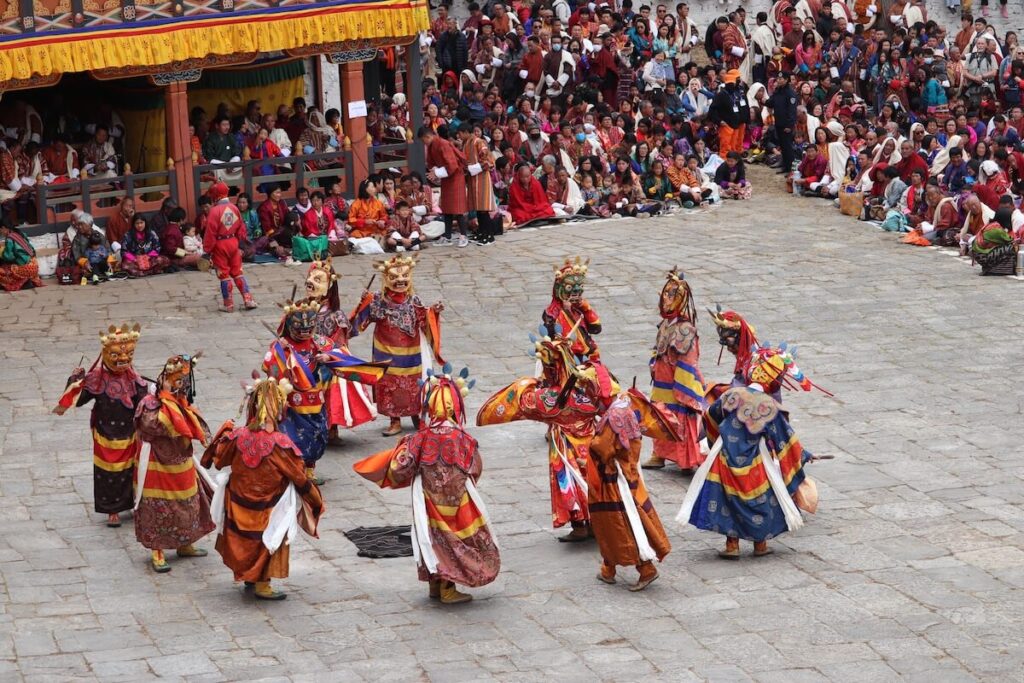
As the steady beat of drums and the blare of long horns echo through a towering monastery courtyard, you quickly realize you are about to witness something spectacular. This sensory explosion is what happens during tshechus, Bhutan’s legendary annual religious festivals.
Held in various districts across the kingdom to honor Guru Rinpoche—the aforementioned master who introduced Buddhism to the region—these vibrant celebrations transform local communities into a swirl of living mythology. Monks and local men dress in elaborate robes and heavy wooden face masks, performing precise, hypnotic Cham dances.
Far from a tourist show, these sacred dances are deeply spiritual narratives designed to banish evil spirits, re-enact historical battles, and wash away the sins of the onlookers. The absolute biggest and most famous gatherings are the Thimphu Tshechu in the capital and the spring-time Paro Tshechu, both culminating in the magical pre-dawn unfurling of a colossal embroidered tapestry called a thongdrol, which promises spiritual liberation.
11. Phalluses painted on houses
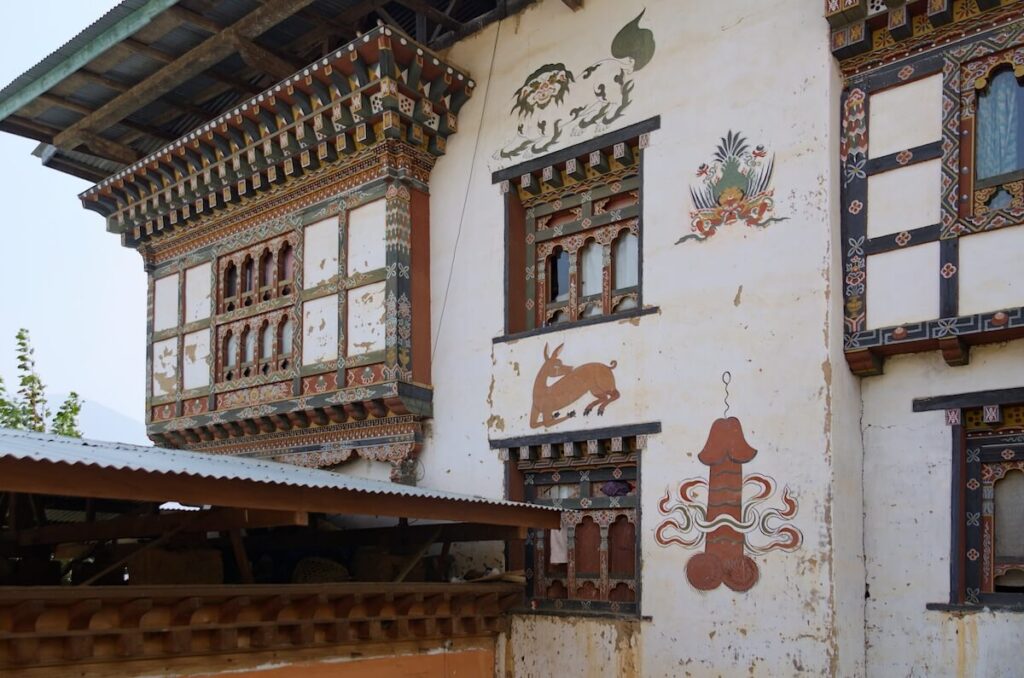
Nothing catches first-time visitors off guard quite like wandering into a quiet Bhutanese village and coming face-to-face with a massive, brightly painted phallus on a wall.
While it might cause a few double-takes, these graphic symbols are deeply embedded in local culture. Rooted in the folklore of the 15th-century Buddhist master Drukpa Kunley—fondly known as the “Divine Madman”—they are meant to ward off malice, evil gossip, and bad spirits rather than shock.
Far from being taboo, they are completely normalized and even used as essential components in traditional housewarming rituals. Locals also carve them out of wood to hang from roof corners to bring good luck. It is a fascinating, unpretentious oddity that shows just how beautifully Bhutan blends spiritual protection with everyday life.
12. Archery

If your idea of a sporting event involves a quiet, polite crowd and golf-clap applause, you have clearly never witnessed a Bhutanese archery match.
Declared the country’s national sport in 1971, archery is a passionate, high-stakes communal party. Teams play across a massive 145-meter field—more than double the standard Olympic distance—aiming at tiny wooden targets using traditional bamboo or modern bows.
While an archer aims, opponents standing right by the target unleash a barrage of good-natured jeers, distracting dances, and funny insults to shatter their concentration. Successful hits erase the tension, igniting joyful team songs and synchronized celebratory dances.
Beyond these boisterous village showdowns, the country’s dedication to the sport runs deep globally. Bhutan has proudly sent national archers to compete in every single Summer Olympics since 1984.
13. Takin
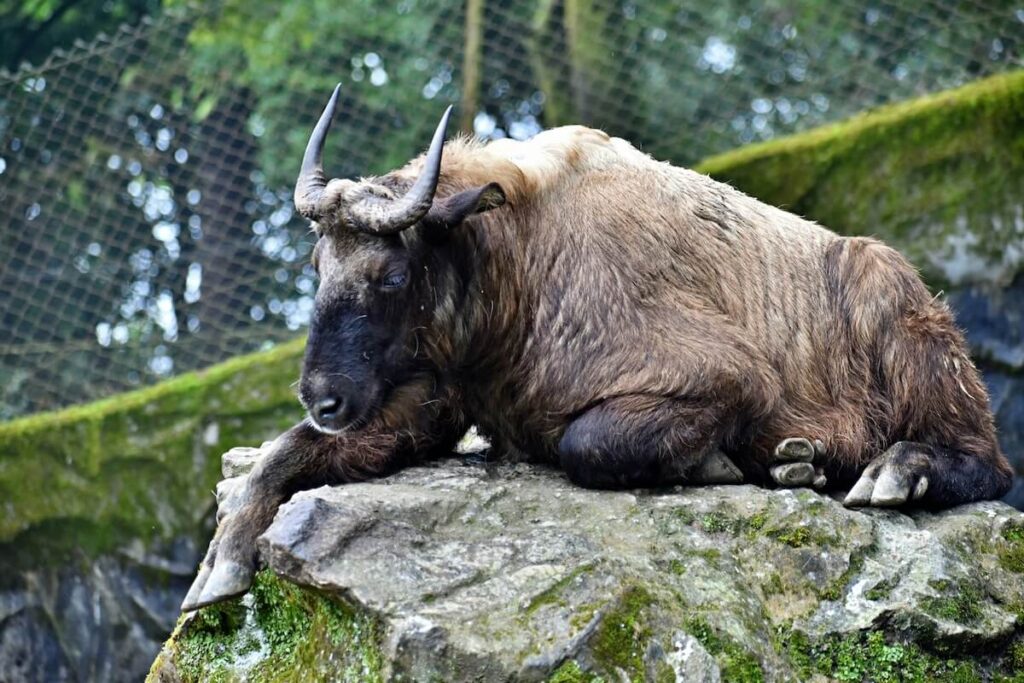
Bhutan’s national animal is as mysterious as the nation itself. The takin is a vulnerable, heavy-set mammal that looks like a bizarre, fascinating cross between a goat and a cow.
Local religious mythology says this unique creature was miraculously created by Drukpa Kunley (the previously mentioned “Divine Madman”), who casually slapped the head of a goat onto a cow’s skeleton after a hearty lunch.
Today, these gentle giants thrive in alpine forests. If you want a guaranteed look, head to the Motithang Takin Preserve just outside Thimphu to see them up close.
14. A nation without tobacco

Bhutan made global headlines by becoming the first country to pass a total ban on the cultivation, harvesting, production, and sale of tobacco under its strict Tobacco Control Act, enacted in 2010. Although the government eventually legalized retail sales to curb black-market border smuggling, the kingdom’s fierce anti-smoking stance hasn’t wavered.
Tourists can bring a limited personal tobacco allowance into the country, though it is subject to heavy import taxes. However, puffing away in public spaces, dzongs, or monasteries remains completely illegal. Breaking the rules results in a swift fine, keeping the Himalayan air perfectly clean.
15. Dzongkha
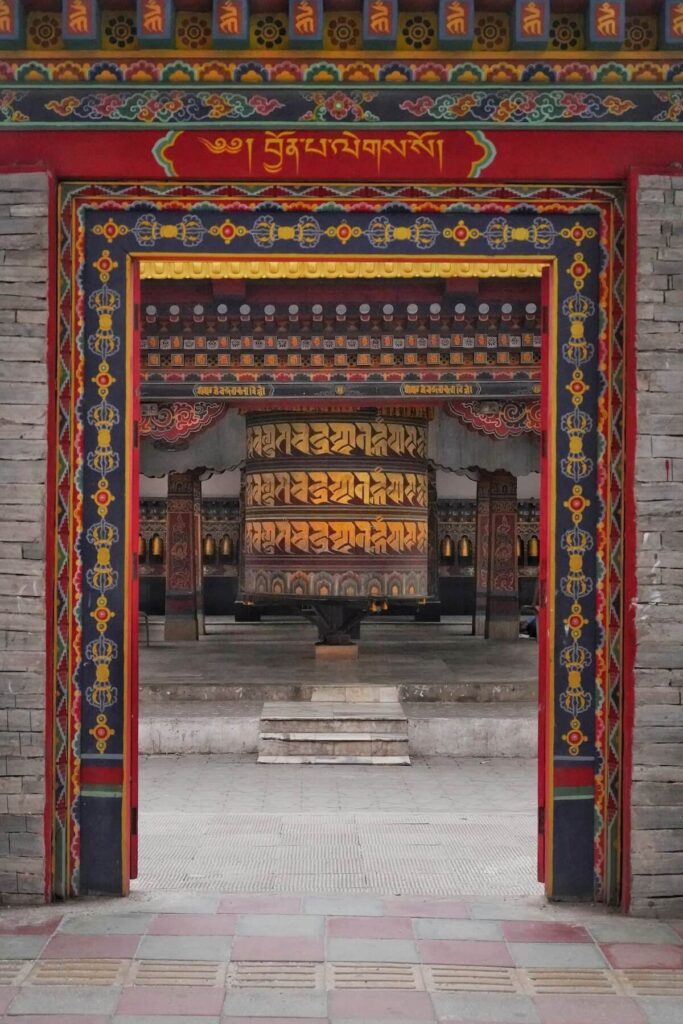
Learning a few local phrases before a trip is standard travel advice, but Bhutan’s national tongue comes with a pretty epic origin story.
The official language is Dzongkha, which literally translates to “the language of the fortress.” Historically spoken by the people who guarded the country’s massive stone strongholds, it is written in a beautiful, classical Tibetan script and remains the dominant tongue in western districts.
Fortunately for travelers, you won’t need a translator to get around. While Dzongkha is a vital point of national pride, English is heavily emphasized and used as the primary medium of instruction in schools nationwide, meaning most locals speak it fluently.
Conclusion
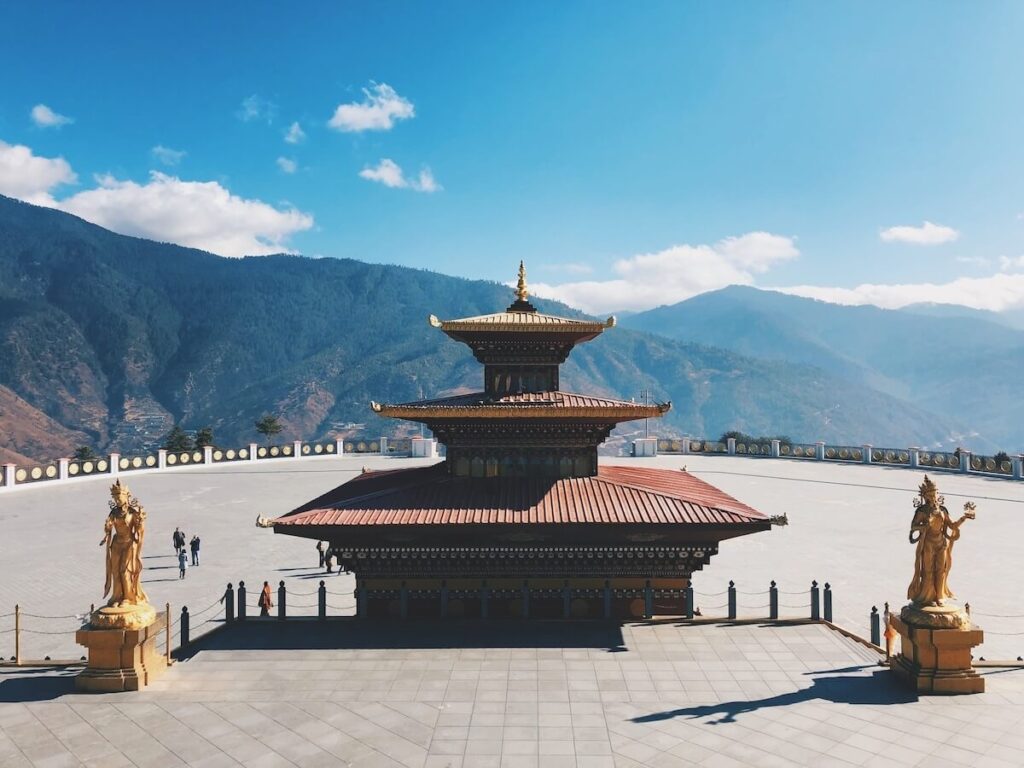
What is Bhutan famous for? Ultimately, it’s a place that prioritizes national happiness, protects its pristine carbon-negative environment, and fiercely guards its living history. From towering fortress-monasteries and festive masked dances to spirited archery matches and spicy stews, this Himalayan kingdom is truly in a league of its own.
Be sure to bookmark this guide to keep these highlights handy, and start planning your bucket-list trip to Bhutan today!