
Welcome to the ultimate guide to choosing between Pompeii or Herculaneum, two of Italy’s most famous ancient cities. Both of these sites are fascinating to visit, but which one should you head to if you can’t afford the time to see the two of them on one trip?

I visited both sites on a single-day trip from Naples, but I felt like I had to rush through each of them. It’s natural, then, to want to focus on only one instead and dive into the intriguing life in ancient Rome at a leisurely pace.
With that in mind, I’ll help you decide between visiting Herculaneum or Pompeii. I’ll compare them based on various factors, such as their history, layout, must-sees, and food.
Table of Contents
Getting there and moving around
Overall, Naples is the no. 1 starting point for exploring the ruins of both Pompeii and Herculaneum. If you’re coming from another Italian city, taking the train is likely your best bet.
Naples has a couple of major train stations, including Napoli Centrale and Napoli Garibaldi, which connect it to other major cities in Italy.
The high-speed train ride from Rome to Naples takes less than 90 minutes, while the trip from Florence to Naples takes around three hours.

If you’re coming from outside Italy or prefer air travel anyway, Naples has its own international airport, Aeroporto di Napoli-Capodichino. Many major airlines offer flights to Naples from around Europe and beyond.
Now to get to Pompeii from Naples, take the Circumvesuviana train from Naples to Pompei Scavi-Villa dei Misteri station.
The journey takes about 30-40 minutes, and trains run frequently throughout the day. Once you arrive, you’ll find the entrance to the archaeological site just a short walk from the station.
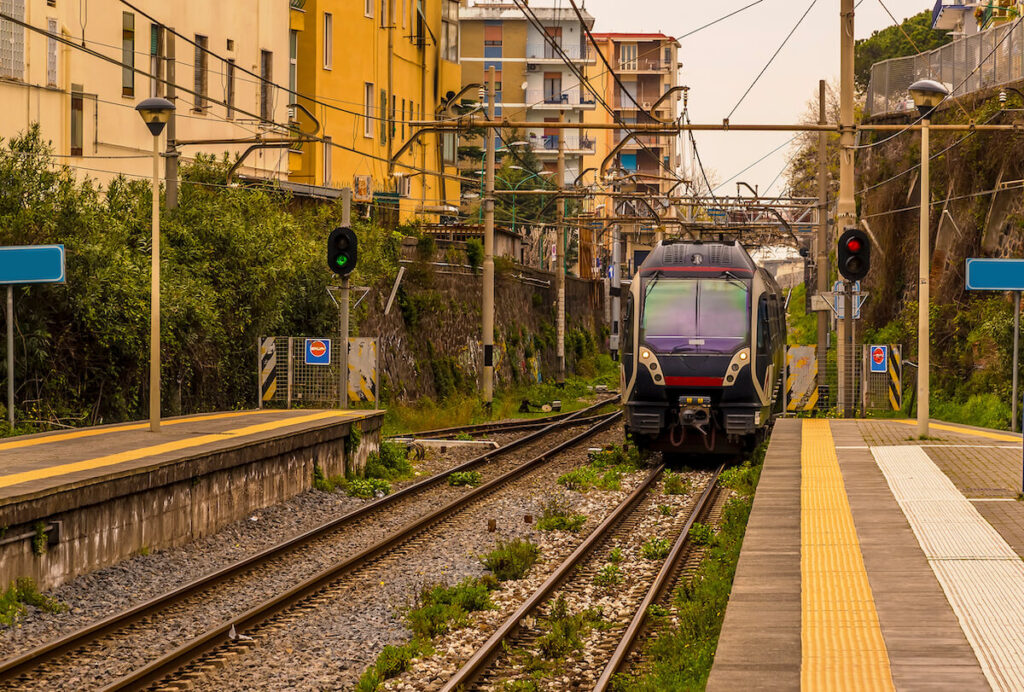
To reach Herculaneum instead, take the Circumvesuviana train from Naples to Ercolano Scavi station, which is located right next to the archaeological site. The journey takes about 20-30 minutes, and trains run every half hour or so.
When it comes to moving around the two towns, both Pompeii and Herculaneum are relatively easy to navigate on foot. Pompeii is a larger site, so be prepared to do a lot of walking.
Herculaneum, on the other hand, is more compact, so you can see everything in a shorter amount of time.
Where to stay
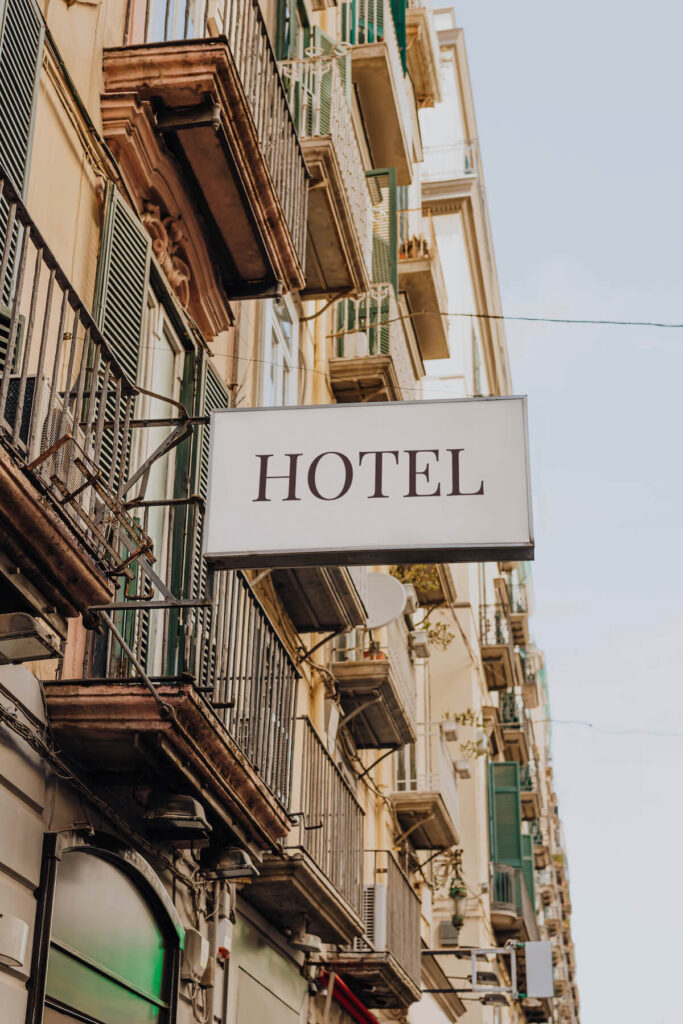
Herculaneum
- Villa Cua is a quaint bed and breakfast whose rooms are decorated in a traditional Italian style. The staff is welcoming and friendly, and the breakfast in the garden is simply decadent.
- 7cento Vesuviano, a lovely B&B in the heart of Herculaneum. The rooms feature antique furnishings, and the outdoor terrace provides commanding views of Mount Vesuvius.
- Il San Cristoforo — Nestled in the foothills of Mount Vesuvius, this fantastic hotel will treat you to a welcoming atmosphere, attentive service, and ample rooms.
Pompeii
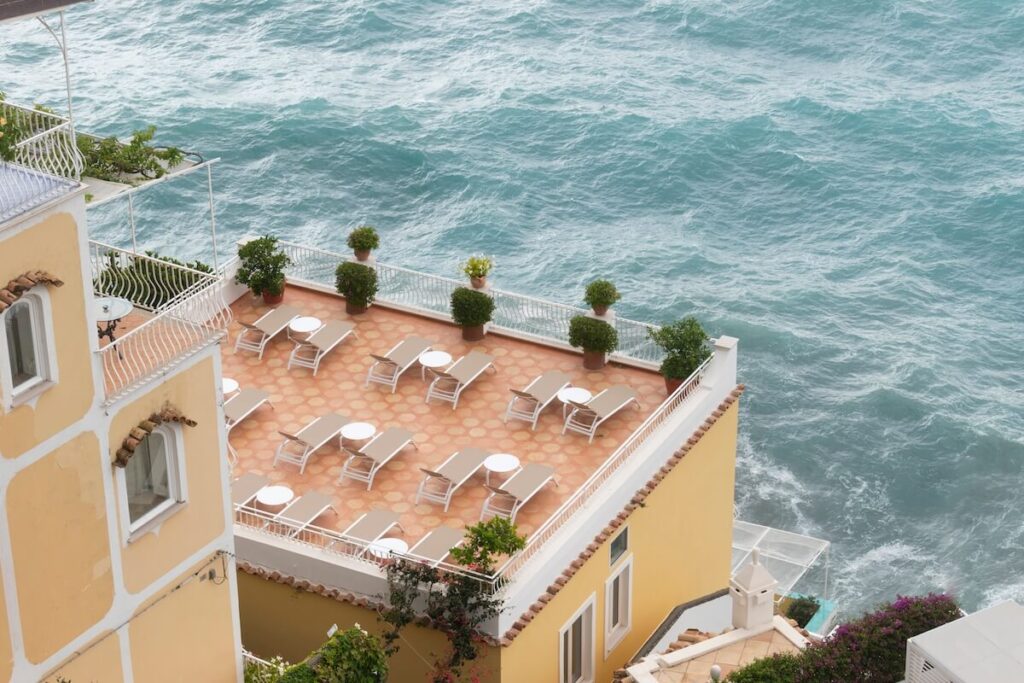
- Habita79 Pompeii – MGallery, which is just a stone’s throw from the Pompeii archaeological site, boasts elegantly decorated rooms with modern amenities and a rooftop terrace with unimpeded views of Mount Vesuvius.
- Resort & Winery Bosco De Medici is a serene property surrounded by vineyards and olive groves. It features spacious rooms, a relaxing spa, and an excellent restaurant serving delectable local cuisine.
- Relais Country House — This rustic bed and breakfast is tucked in the peaceful countryside near Pompeii. Bordered by lush gardens, this cozy hotel is ideal for an idyllic stay.
The ruins
Both Pompeii and Herculaneum stand as lavish archaeological sites that allow you to step back in time and see the ancient Roman world come to life.
Pompeii is the larger of the two sites and is also more popular with tourists. It covers an area of around 170 acres and contains a vast number of buildings, including houses, shops, public baths, and a large amphitheater.

You can easily spend a whole day exploring Pompeii and admiring its well-preserved architecture, which ranges from simple dwellings to elaborate villas.
Herculaneum, in turn, is smaller and less crowded than Pompeii. Having said that, it has its own unique appeal, with colorful buildings and impressive mosaics that have survived through the ages.
Unlike Pompeii, Herculaneum was buried under a thick layer of volcanic material, which helped to preserve its structures and artwork. Visitors can see the remains of houses, shops, and public buildings, which offer a glimpse into the daily lives of the city’s residents.
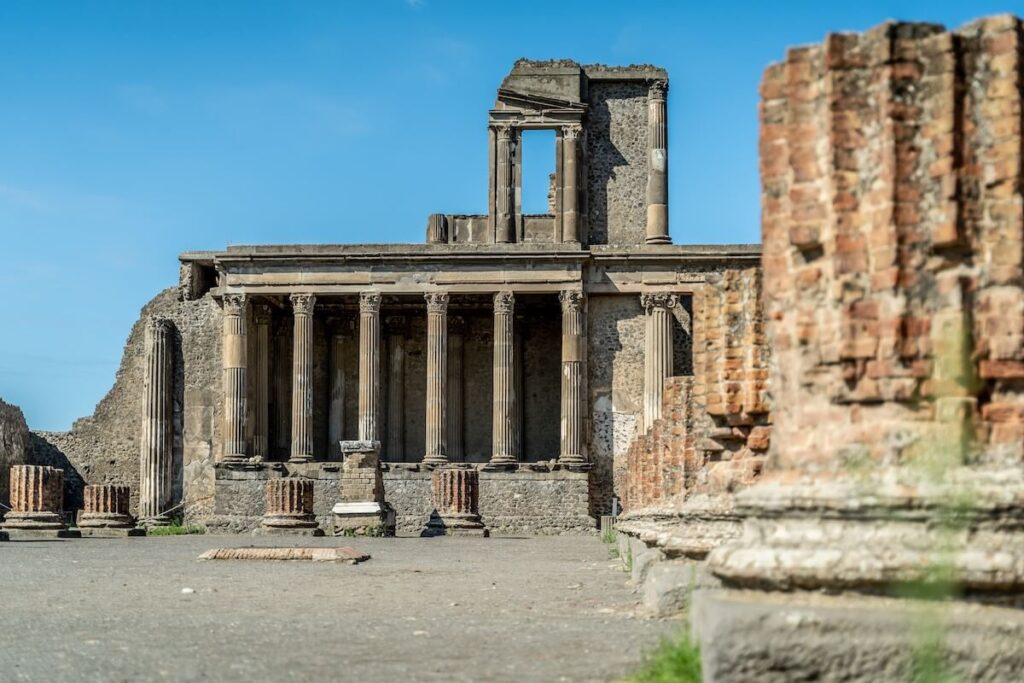
One thing that sets Herculaneum apart from Pompeii is the quality of its buildings. Because it was a wealthier city than Pompeii, many of its houses and public buildings were built with higher-quality materials and more intricate details.
For example, the House of the Carbonized Furniture in Herculaneum contains well-preserved wooden furniture that is over 2,000 years old, whereas the House of the Faun in Pompeii is showcases stunning mosaics.
Must-sees
Pompeii
One of the most astonishing landmarks in Pompeii is the Amphitheater, which is among the oldest surviving Roman amphitheaters of all: it was built around 80 BCE and could seat up to 20,000 spectators.
You’ll get to explore the underground passages where the gladiators and animals were kept before the shows.
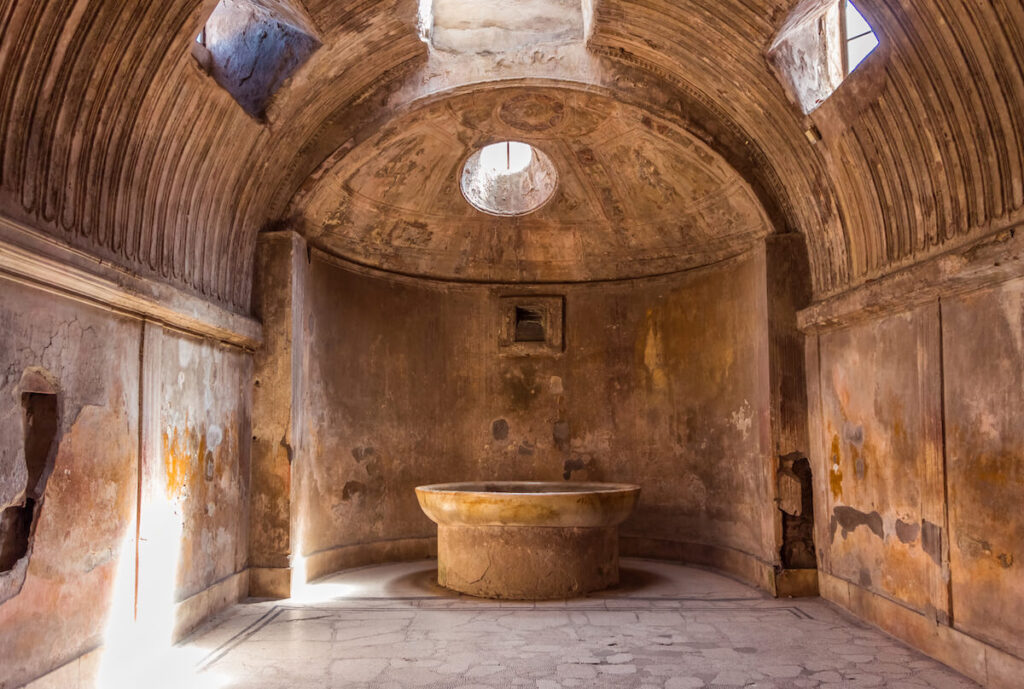
Another highlight of Pompeii is the Forum, which was the political and social center of the city. It is surrounded by imposing buildings like the Temple of Jupiter, the Basilica, and the Macellum.
Visitors can also see the remains of the public baths, which were an essential part of daily life in ancient Rome.
Herculaneum
In Herculaneum, one of the most striking sites is the Villa of the Papyri, which was home to one of the wealthiest families in ancient Rome.
The villa was named after the library of papyrus scrolls that were found there, which is now on display in the National Archaeological Museum in Naples. Don’t miss out on the beautiful frescoes and mosaics that decorate the villa’s walls and floors.
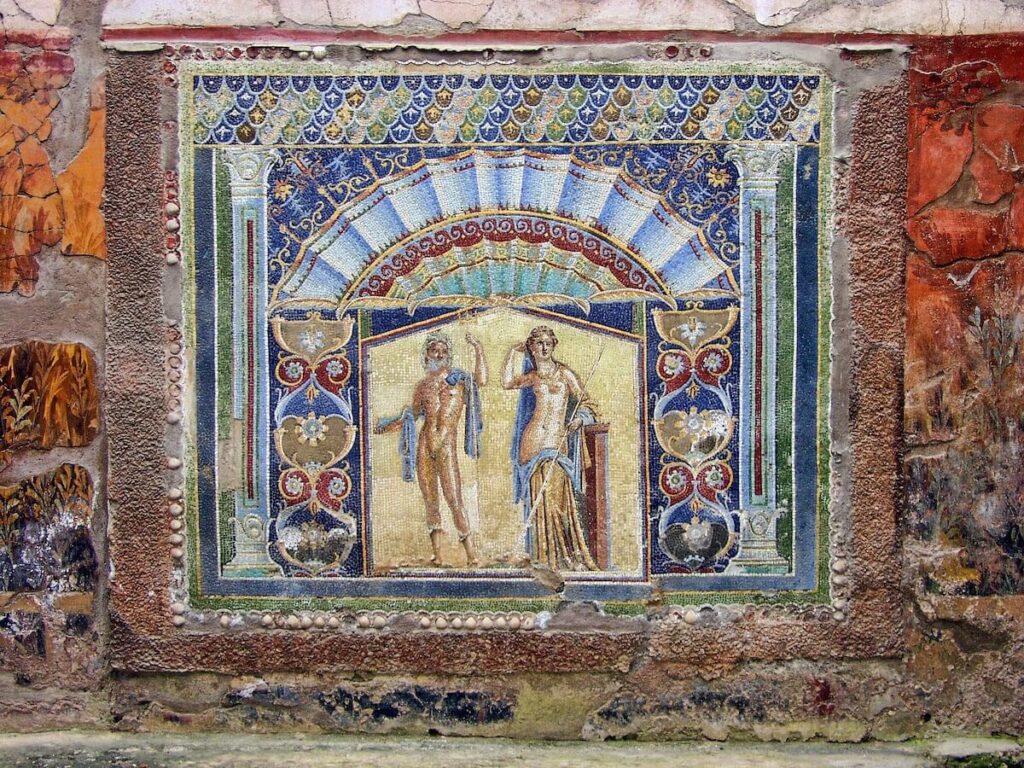
Another must-see site in Herculaneum is the House of the Black Room, which is named after the black walls that were stained by the eruption of Mount Vesuvius.
The house is one of the best-preserved examples of a Roman domus, or upper-class house. Take your time to explore the rooms, courtyards, and gardens that make up the complex, or trust an expert to show you around.
Outside the archaeological site, Herculaneum features three sumptuous 18th-century villas along the so-called Miglio d’Oro (i.e. the “Golden Mile”). Drop by Villa Campolieto, Villa Favorita, and Villa Aprile and you won’t be let down.
The history
Pompeii and Herculaneum were both destroyed by the eruption of Mount Vesuvius in the year 79, which buried the cities under feet of lava and ironically preserved them until their rediscovery many centuries later.
Pompeii
Pompeii was a bustling city with a population of about 11,000 people before the eruption. The city was a trade hub with a vibrant port and a network of roads leading to other cities in the Roman Empire.
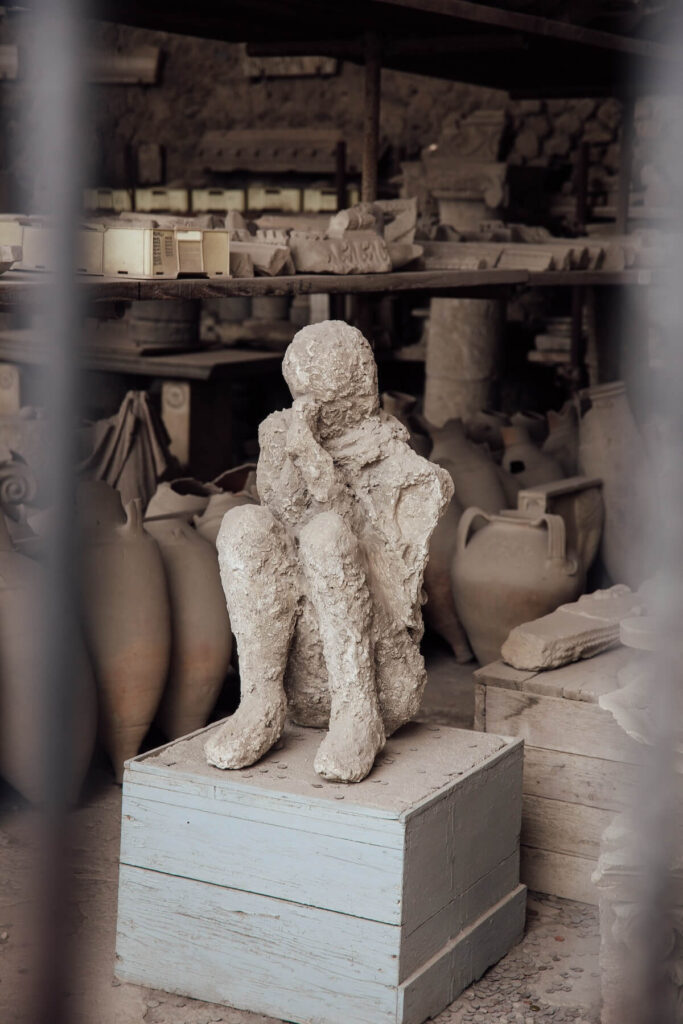
The city’s layout was typical of a Roman city, with a central forum, public baths, a theater, and an amphitheater. The city’s houses ranged from modest to grand, with intricate frescoes and mosaics. Pompeii also had many businesses, including bakeries, taverns, and brothels.
Pompeii was rediscovered in the 18th century, and since then, extensive excavations have revealed much about life in the ancient city.
Herculaneum
Herculaneum, on the other hand, was a smaller and more affluent town, with a population of around 4,000 people.
The town was home to wealthy Romans who built luxurious villas with stunning frescoes and mosaics. Herculaneum also had a port and was known for its fishing industry. Its layout was similar to Pompeii, with a central forum, public baths, and an amphitheater.
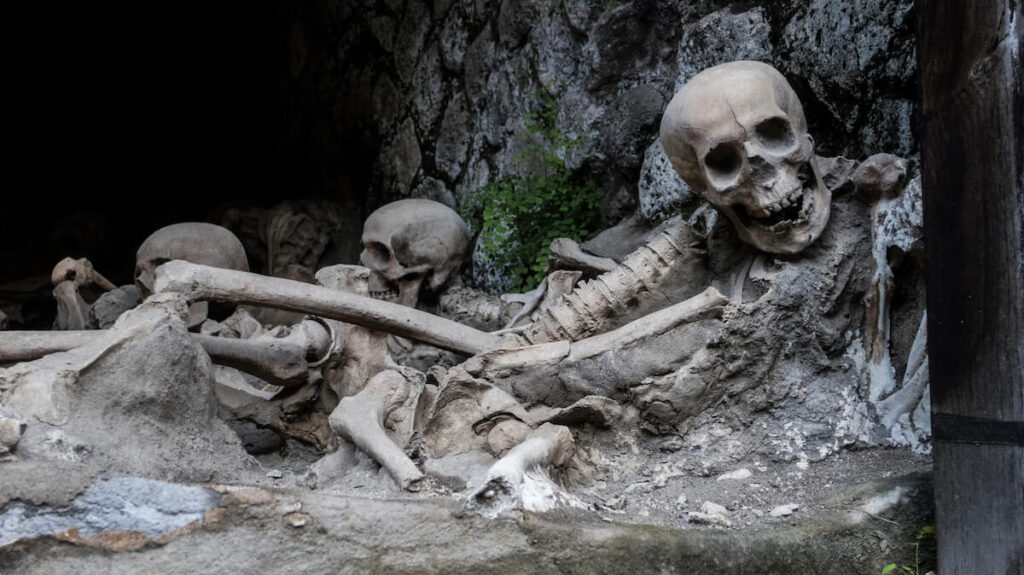
After the eruption of Mount Vesuvius, both cities were lost for centuries. Like Pompeii, Herculaneum was rediscovered in the 18th century as well but was not excavated until the 20th century due to its location under a modern town.
What to eat
Amid pizza Margherita, spaghetti alle vongole (i.e. with clams), and the delicacies of the world-famous Neapolitan pastry tradition, you’ll be in for a treat when it comes to food whether you choose to visit Pompeii or Herculaneum.

When in Pompeii, make sure you swing by Ristorante President, a Michelin-starred eatery located just a short walk from the Piazza Immacolata entrance to the ruins. For a budget-friendly taste of authentic Neapolitan pizza, head to La Gustosa instead.
Though Herculaneum doesn’t feature such a stellar dining scene, it boasts great options as well. Make your way to Pappamonte, a cozy restaurant that offers impeccable seafood dishes. They also serve yummy pasta and desserts, so you can’t go wrong no matter what you order.

Another top-rated option is Masseria Guida, which boasts breathtaking views of the surroundings and an almost overwhelming wine selection.
Best time to visit
The best times to discover either Herculaneum or Pompeii are from April to June or from September to November (i.e. the shoulder season) when the weather is pleasant, and the crowds are thinner.
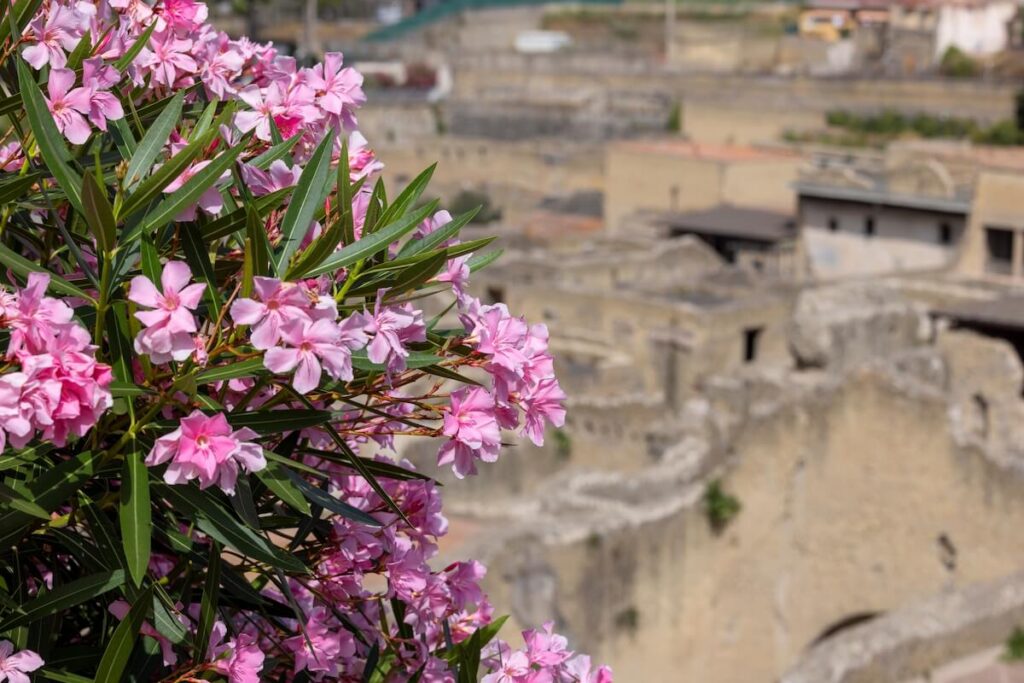
The temperatures are comfortable during these months, and you’ll be able to explore the ruins without feeling too hot or too cold.
If you daydream about the Italian summer, keep in mind that July and August can be really hot and humid. The crowds during these months can also be inconvenient, which can make it hard to fully appreciate the ruins.
If you do decide to go during the summer, it’s best to arrive early in the morning or later in the afternoon to avoid the peak hours.
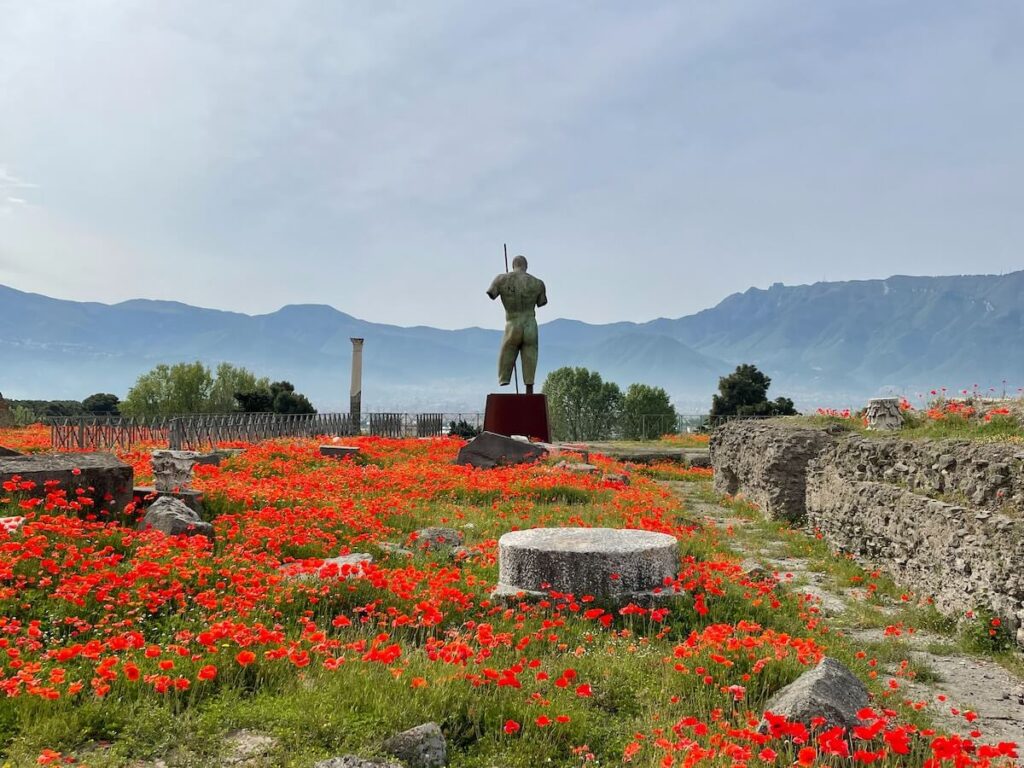
August specifically is best avoided altogether as many Italians take their annual summer vacation this time of year, and some shops and restaurants may be closed for the entire month.
Day trips
Pompeii and Herculaneum are amazing gateways to explore the nearby cities and towns of Campania, one of the most gorgeous regions of Italy.
One of the most popular day trips from either is, of course, Naples. Just a 30-minute train ride away, the capital of Campania features a wealth of history, art, and culinary delights.
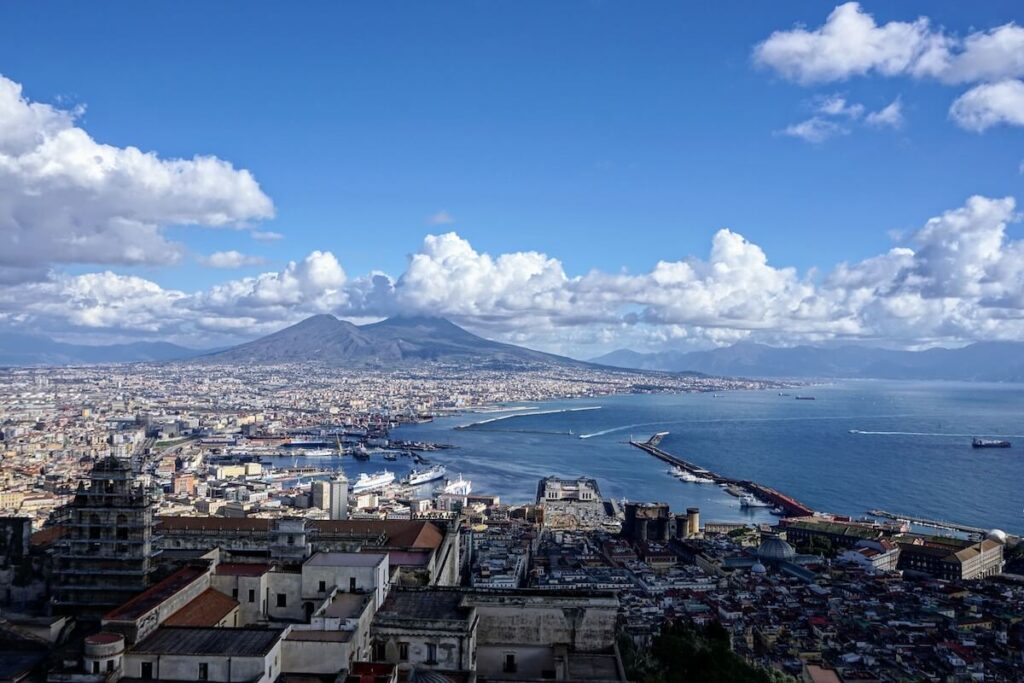
You can visit the superb Naples National Archaeological Museum or take a stroll through the vibrant Spaccanapoli Street.
Another popular day trip is the dazzling Amalfi Coast. Start your journey in the namesake town of Amalfi and stop by its medieval cathedral and paper museum.
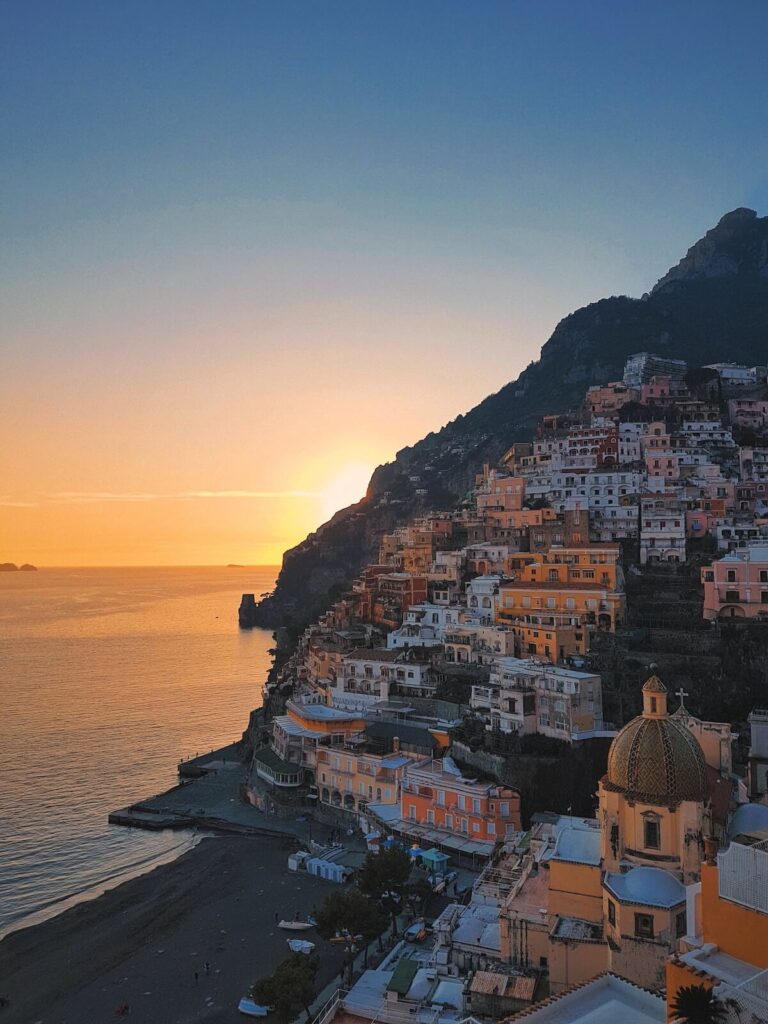
From there, ride a bus or a ferry to Positano, a picturesque town with pastel-colored houses and narrow streets. Alternatively, you can visit Sorrento, a charming town noted for its lemon groves and panoramic views of the Gulf of Naples.
If you’re after a laid-back experience, consider visiting the island of Capri. With its stunning Blue Grotto and jaw-dropping views of the sea, Capri is a favorite destination for couples and honeymooners.
Bottom line: Which city is best?

Following this comprehensive Pompeii vs Herculaneum face-off based on their history, cityscape, must-sees, food, and nearby day trips, hopefully, it’s now easy to see how the two Italian landmarks allow for magical trips.
Pompeii may have larger ruins and more famous sites, but Herculaneum’s better-preserved buildings provide a clearer picture of Roman life. Cuisine-wise, both offer delicious regional specialties that are worth trying, but Pompeii’s food scene is a tad more refined.
And while Pompeii’s location may make it a more convenient launchpad for day trips, you shouldn’t overlook Herculaneum’s proximity to the one and only Amalfi Coast.
Ultimately, the decision of which ancient city to visit comes down to personal preferences and interests. History buffs may prefer the scale and grandeur of Pompeii, whereas those seeking a more immersive experience will enjoy Herculaneum’s intimate setting.
Yet regardless of which one you choose, both Pompeii and Herculaneum offer a one-of-a-kind and unforgettable look into ancient Roman life that should not be missed.