
Italian food culture is one of the richest on the planet, in large part thanks to the importance Italians place on using fresh ingredients and honoring tradition.

In this post, I’ll tell you all you need to know to navigate Italian cuisine like a local and have a delicious time when you land in one of the most famous cities in Italy.
Spoiler alert: We’ll leave Fettuccine Alfredo off the table!
Table of Contents
Italian food culture basics
1. Italians are traditionalists.
When it comes to food, Italians live by the motto “if it ain’t broke, don’t fix it”. They take immense pride in their age-old tradition and frown upon most unwarranted innovations.
Have you ever noticed how few Italian fusion restaurants there are anywhere on Earth compared to other cuisines?
Proof of that is the set of unwritten rules Italians blindly follow—and can be pretty vocal with foreigners who don’t—including not mixing cheese and seafood, not having cappuccinos after breakfast, and especially not putting fruit on pizza.
2. Balance is key.
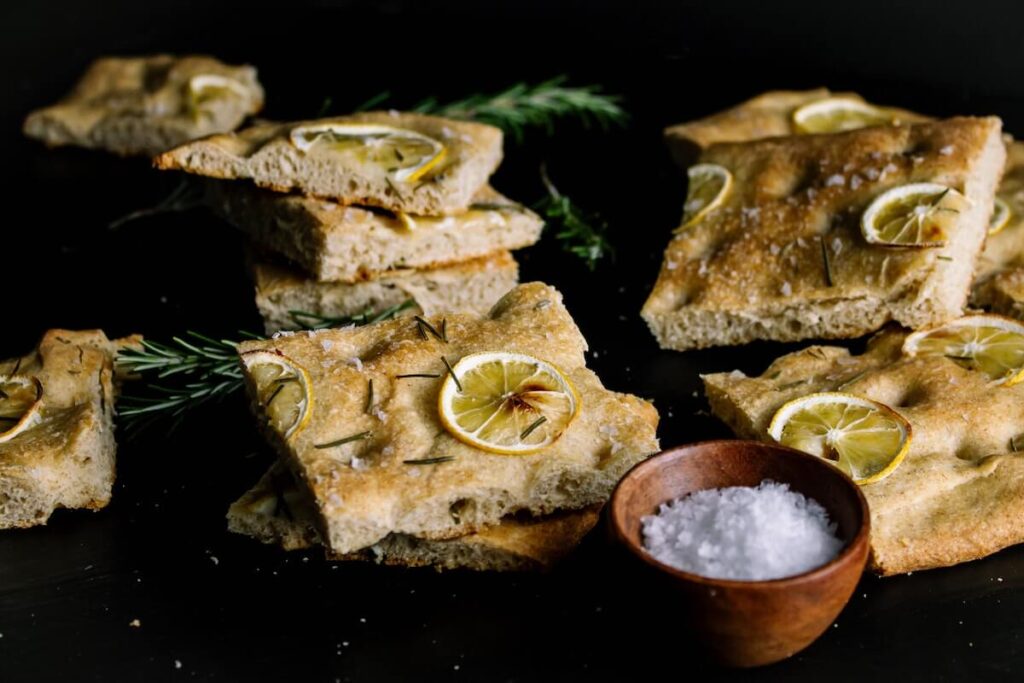
Being from Brazil — where more usually means better — I was quite shocked when I first learned that in Italy there is such a thing as too much cheese on pizza or too much chocolate in a dessert.
Overall, Italians want all ingredients of a dish to be savored equally, which is why strongly flavored items like garlic, olives, and capers are used sparingly.
More importantly, a dough has to taste as good as its filling and not be overpowered by it.
3. Italian cuisine is arguably the healthiest in the world.

Because it prizes the use of fresh ingredients and the consumption of cereals, fruit, vegetables, grains, and olive oil, Italian cuisine is hands down one of the best health-wise.
It’s no wonder Italy has the fourth highest life expectancy on Earth, behind Japan, Switzerland, and Singapore.
What’s more, alongside the rest of the Mediterranean diet, which makes up a consistent whole, Italian cuisine was added to UNESCO’s list of Intangible Cultural Heritage in 2010.
4. And it’s deeply connected to the land.

The majority of Italian recipes were created using ingredients that could be sourced from the immediate surroundings or even harvested directly.
That had two main results: each region developed its very own cuisine, and recipes remained strictly seasonal for a long time.
Thanks to modern agricultural technology and the cultural integration of Italy as a whole, these aspects aren’t as strong as they once were. But they do survive as general trends.
5. Meals are social occasions.

Although Italians love food per se, they cherish everything else it involves as well—namely sharing and socializing.
To them, there’s almost a religious dimension about eating that links back to the day when people would harvest, prepare, and share a meal.
I’d say they have a point. After all, nourishing is the one thing that keeps us alive!
A little bit of history of Italian cuisine
6. Pasta was known from antiquity.
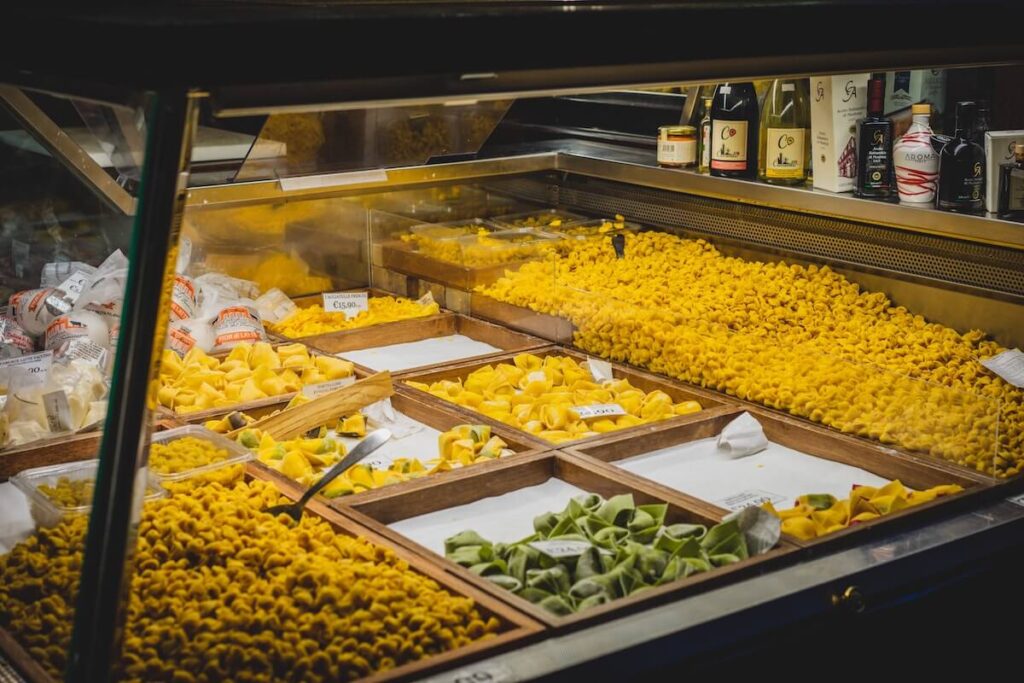
Lots of folks believe pasta was brought over to Italy by Venetian merchant Marco Polo.
Yet that story was actually crafted in the 1930s by American businessmen who wanted to dignify pasta and stop consumers from associating it with “poor” and “criminal” Italian immigrants.
In fact, pasta evolved independently in China and Italy, where it’s been consumed since at least the 8th century BCE.
By the Middle Ages, it was already popular across the country and started being boiled in water instead of being cooked straight in the sauce.
7. Peasants were the original chefs.

For many centuries before the unification of Italy, Italian elites would look up to French nobility for cultural references and even speak French on social occasions.
In the meantime, regular folks were busy developing the culture—and the language!—of the nation-to-be. That helps explain the simplicity of most recipes and their deep connection with seasonal and regional availability.
8. It took a minute before pizza would catch on.
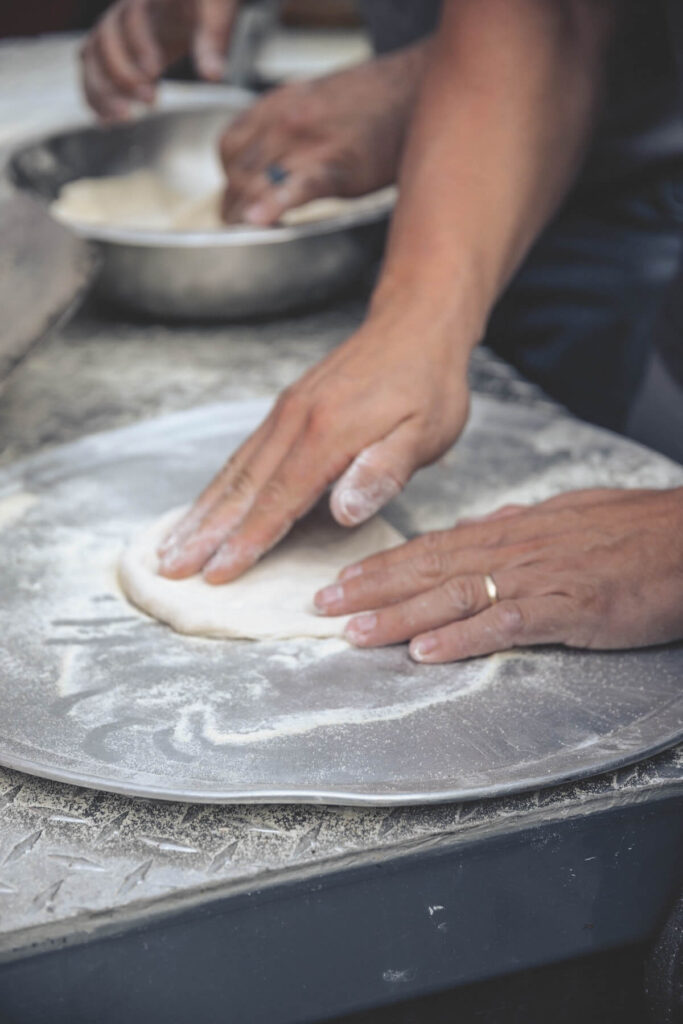
Pizza was developed in Naples between the 10th and the 16th centuries, and from the 1700s the local nobility would munch on it too.
Yet ironically, the first pizzeria outside Naples opened in the early 1900s in Manhattan’s Little Italy, from where Neapolitan immigrants would take over America with their round pieces of paradise.
Only after WWII, when American tourists started landing in Italy en masse, would pizzerias spring up all over the country.
Also read: 12 Best Food Tours in Naples You Should Book
Key trends within Italian food culture
9. Meals are typically long and multi-course.
A full meal at an Italian restaurant consists of an antipasto (i.e. an appetizer), a primo (soup, pasta, or risotto), and a secondo (a cut of meat), which is served alongside one or more side dishes like a salad.
Then you’ll have either some cheese or a dessert—or both—with plenty of wine as you go.
If time-pressed, folks will skip the appetizer and the primo or secondo. Still, folks will usually stop for at least an hour to eat their food at a leisurely pace.
10. Breakfast is mostly a sweet affair.

Bacon, eggs, pancakes, and cereal are nowhere to be seen. At home, the classic breakfast in Italy is made up of toast crackers, jelly, and black coffee.
When grabbing breakfast on the go instead, most Italians will pick a croissant with a jelly or Nutella filling (pear and chocolate will forever be my favorite) plus the ubiquitous cappuccino.
11. Pizza is usually paired with beer.

It’s funny how foreigners commonly pair pizza with wine — what could be more Italian, right?
Actually, however, wine is normally consumed during a full meal, and Italians seem to look at pizza more like a snack.
So, more often than not, you’ll spot them drinking beer or a soda when eating pizza, though you probably won’t get judged if you choose to indulge in a glass of wine—they know foreigners can’t help it.
12. Happy hour is a generous time.

Does freeloading on snacks as you sip on a cocktail sound like fun to you? In case the answer is yes, then hit an Italian bar between 5 and 8 P.M.
Whereas most of them will comp you some chips and peanuts, some will set up entire all-you-can-eat buffets and only charge you for the drink.
13. There’s a fair amount of “weird” stuff around.
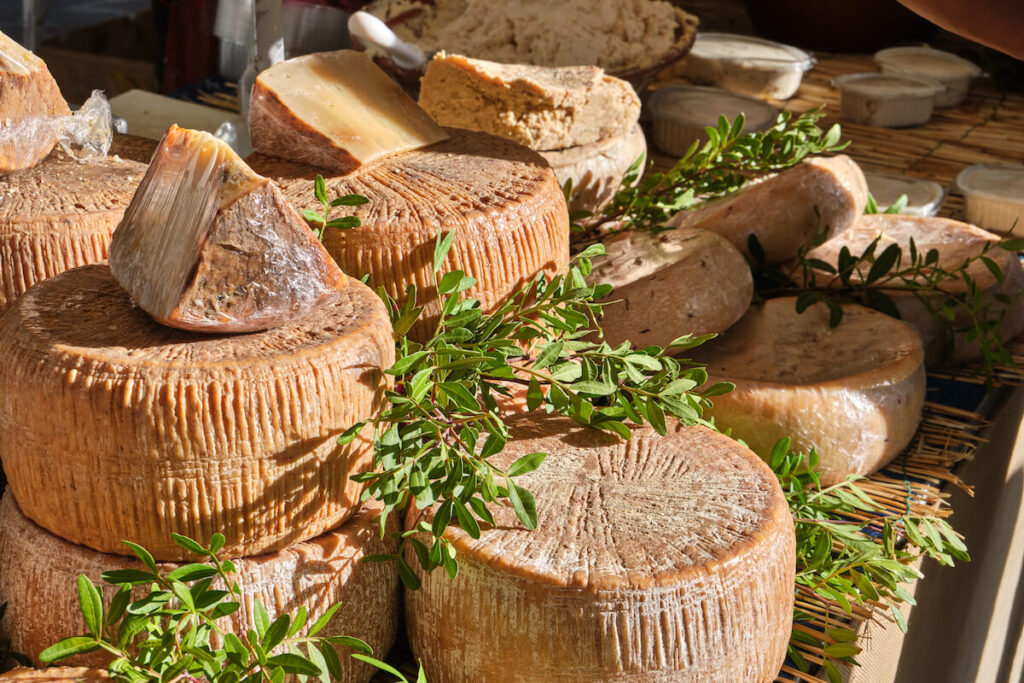
Italian cuisine may be both simple and sophisticated at once, yet it also has its fair share of dishes that may come off as unrefined and even off-putting to foreign tastes, such as
- Lampredotto — It’s ironic how Florence is such an elegant city while its citizens love such a rough specialty. Lampredotto is made from a cow’s fourth stomach and is typically used as a filling for sandwiches in stalls across town.
- Casu fràzigu — This one isn’t for the faint of heart. Casu fràzigu literally translates as “rotten cheese” in Sardinian, which is accurate given the cheese is eaten through by maggots. The “delicacy” has been officially banned for its potential health risks, but it’s still produced on a small scale in Sardinia.
- Horse meat — Despite being popular in several European and Asian countries, horse meat is taboo in most of Latin America and the English-speaking world. Italy is the largest consumer of it in Europe; horse meat there is prized for being leaner and rich in iron.
It’s meal prep time
14. Just two coffee-making processes are acceptable.
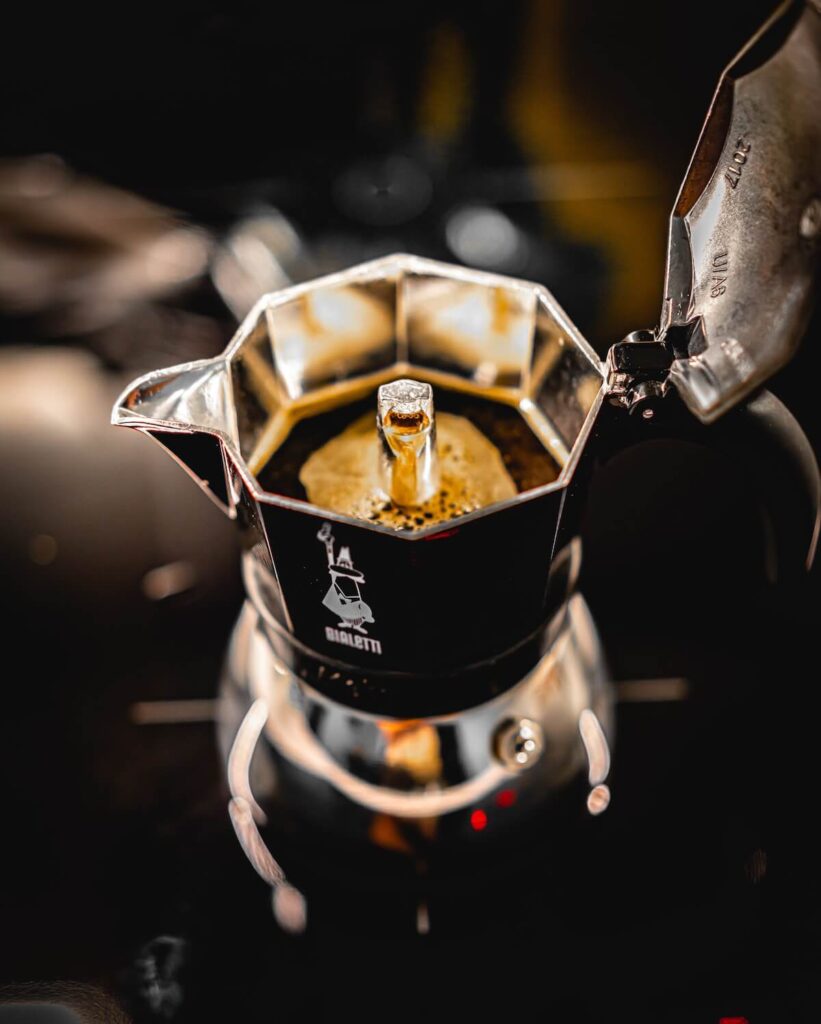
In Italian coffee culture, homemade coffee is synonymous with the cute stove-top Moka pot, which cranks out one of the strongest kinds of coffee second only to espresso.
Espresso, by the way, is what Italians will have at a bar or restaurant. Here, though, the variety is astonishing.
You can order a ristretto, a macchiato caldo or freddo, a corretto, a cappuccino… The list goes on forever.
15. Rice and pasta are always protagonists.

Unlike many nations around the globe, you’ll never see rice and pasta as side dishes in Italy. They’re eaten as either a primo or as a standalone dish.
16. Spices aren’t really a thing.

Given fresh ingredients are so big in Italian cuisine, spices are pretty rare, and fresh herbs always have the upper hand over their dried version.
Two exceptions are black pepper, which is all over the place, and nutmeg, which is normally used to season bechamel sauce.
17. Neither is chicken.
It’s not that Italians don’t eat chicken; roast chicken is a good bet for a Sunday lunch with the whole family, and chicken breasts are prized as a cheap and healthy meal.
Yet there’s an odd shortage of classic traditional Italian food recipes where chicken is the centerpiece; even mushrooms and eggplants seem to be given more of a star treatment than chicken.
More importantly, chicken never goes on pasta or pizza, lest you should be banned from the country for good.
18. Gelato and ice cream are worlds apart.
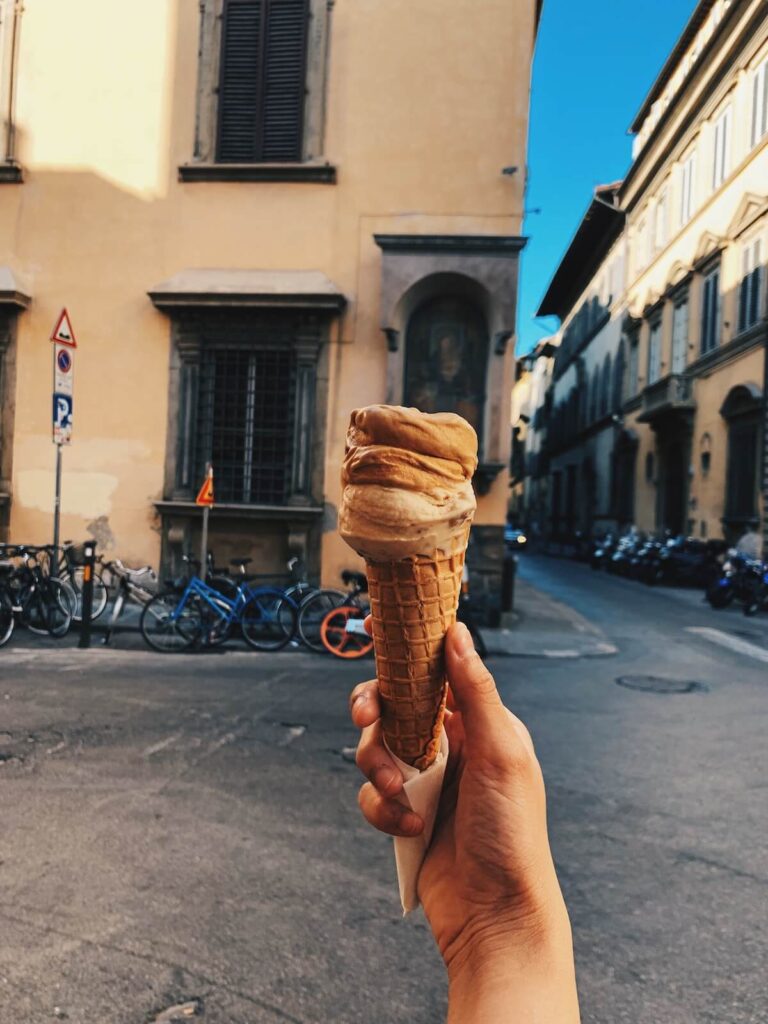
While ice cream is typically creamier thanks to its higher fat content, gelato is a lot more flavorful — that’s because it’s served at a slightly higher temperature.
The texture is also quite different; ice cream is normally fluffier thanks to the whipping process it’s submitted to.
Facts that will help you navigate Italian food culture
19. A few dishes you swear are Italian are actually fake.
Recipes like fettuccine Alfredo, spaghetti and meatballs, garlic bread, and chicken parmesan aren’t exactly staples of Italian cuisine—Italians who are not familiar with the Italian American culinary tradition may not even be aware of their existence.
That said, some of these either meld together real recipes (e.g. chicken parmesan, the lovechild of eggplant parmesan and breaded chicken cutlet) or are inspired by them—spaghetti and meatballs, for instance, evokes spaghetti alla chitarra Teramo style, which features way smaller meatballs.
20. Look out for certificates of origin.

The European Union has adopted a comprehensive certification system that is meant to protect the authenticity of local food specialties.
Italy specifically has three main designations: IGT (typical geographic indication), DOC (controlled designation of origin), and DOCG (controlled and guaranteed designation of origin).
If you buy a certified product, you’ll taste the best Italian cuisine has to offer. The designations span wines like Prosecco, cheeses like gorgonzola, as well as pasta, chocolate, olive oil, and more.
21. Tipping isn’t part of Italian restaurant culture.
In Italy, when service is particularly outstanding (spoiler alert: it rarely is), you can tip as much as you feel like, yet you’ll never be expected to. Fortunately, waiters earn a living wage in the country.
What you may come across when you ask for the check is a fee called coperto, which stands for “table setting”. It’s entirely up to the restaurant to charge the coperto, which usually ranges between 1 and 5 euros per person.
22. Hit a trattoria or an osteria to eat well for cheap.

While these terms originally referred to different types of establishments, trattorie and osterie (along with the less common taverne and locande) are unpretentious eateries where homemade food is served — which means they’re delicious alternatives to restaurants for those of you traveling on a budget.
These days, the distinction has become a little blurred, as Massimo Bottura’s exclusive Osteria Francescana is all but simple. Regardless, keep an eye out for old-style osterie and trattorie and I promise you won’t regret it.
23. The more southwards you go, the better the food you’ll eat.
Although this item is half based on a personal bias of mine and half on a generalization, southern Italians do have an even more intense relationship with food than northern Italians.
In part, that’s because the South remains slightly less urban than the North, and as such southerners lead a less hectic life where both tradition and pleasure still play a big role. Cheers to that!
Wrap-up

While I’ve covered fun facts about Italian cuisine before, this time around I wanted to lay out more of an introduction to Italian food culture rather than putting together a list of anecdotes.
That way, hopefully, you’ll be all good to discover the country’s tastiest treats without missing out on major specialties or making any blunders along the way.

I appreciate that you mentioned how Italian food is unquestionably among the healthiest. This is because, as you mentioned, it values the use of fresh ingredients and the eating of grains, cereals, fruits, and vegetables along with olive oil. I think this would be a fantastic cuisine to try out since my sister has been preparing to eat with the entire family. I’ll make sure to let her know about this and look into local eateries so we can have dinner together. Thanks for sharing!