
The happiest country on Earth is also one of the happiest places to visit! Denmark is also a great place with a long history, great food, rich culture, and a whole lot of bikes. Like, more bikes than cars!
So before you visit, bone up on some fun facts about Denmark to make your trip even better.
Table of Contents
Fun facts about Denmark

1. Happiest country on earth
Here’s the fact you’re probably coming here for: Denmark is consistently ranked as one of the happiest countries on Earth. Denmark ranks so highly due in part to its social equality and strong community spirit.
2. Hygge

The Danish term “hygge” has been embraced around the world as of late. Unless you’ve been living under a rock, you’ve heard the term hygge (hue-guh).
Although it’s not directly translatable, it essentially means coziness or the act of anything that feels cozy.
It’s especially important during the dark, long, Danish winters. Although other countries (side eye U.S.A.) are trying to sell the concept of hygge, it’s not something you can sell, but simply embody.
3. You can swim in the harbor

Most harbors don’t exactly inspire swimming. I mean, look at the water in a certain light and you’ll see what appears to be a straight-up oil slick. Um, no thank you.
Not so in Copenhagen, though! The harbor is so clean you can swim in it, and the Danes do—year-round.
4. Denmark invented LEGO
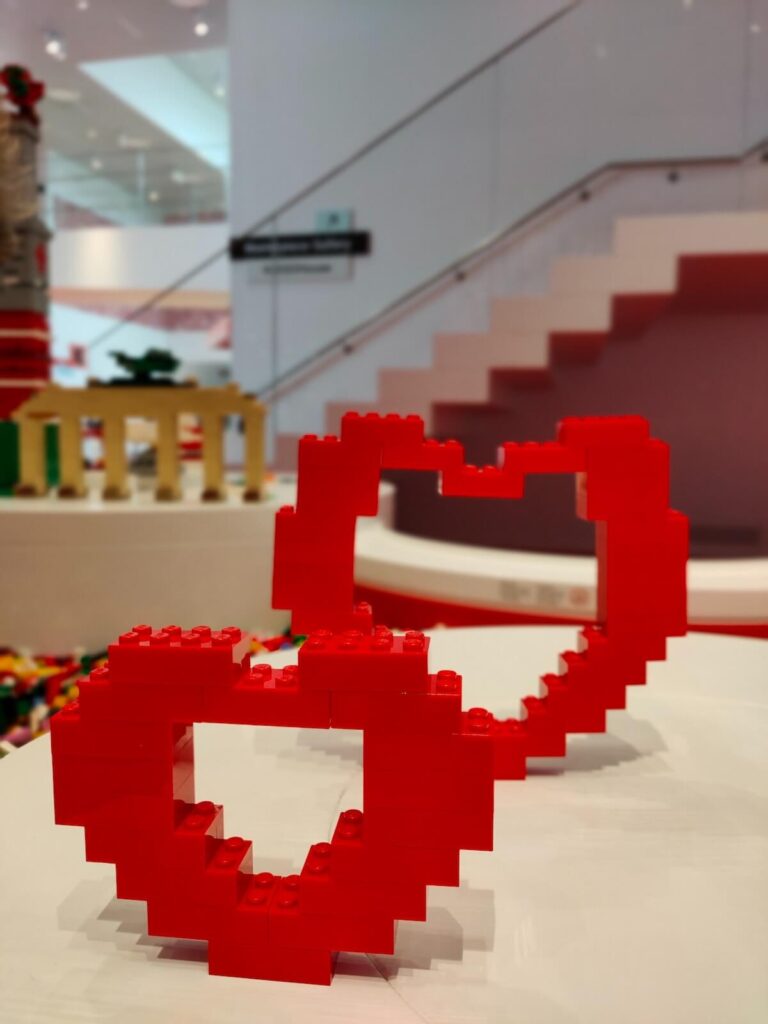
Did you know that LEGOs were invented in Denmark?
The name “LEGO” is a shortened version of a common Danish phrase that translates to “play well” (“leg godt”).
LEGOs can be found all over Denmark, although Legoland in Billund might be the best place for all things LEGO.
5. Denmark loves bikes

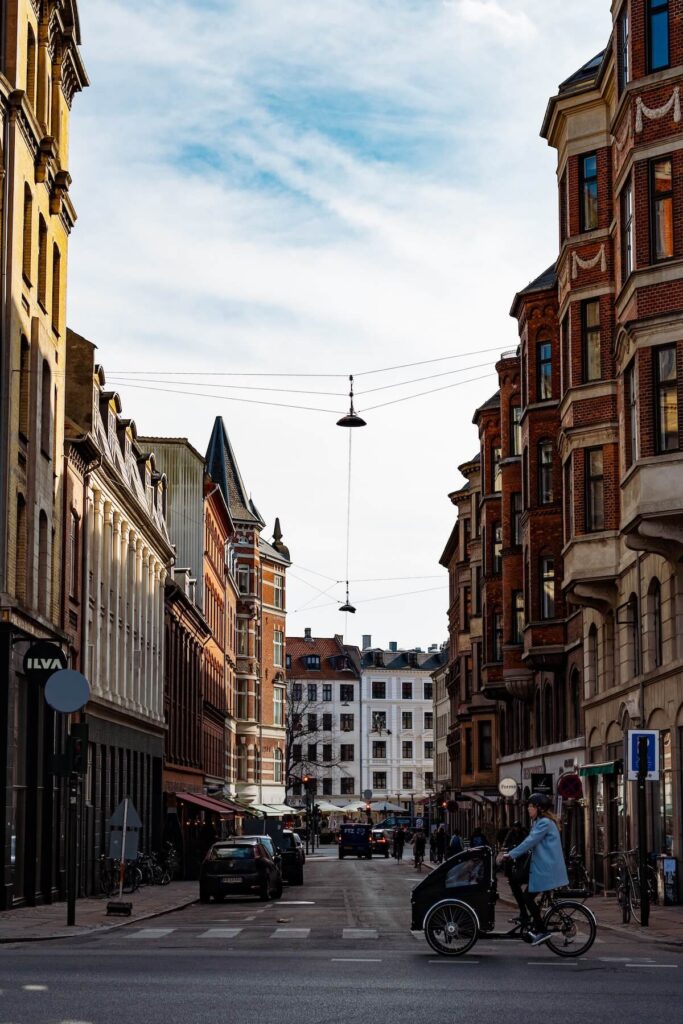
Copenhagen is one of the best biking cities in the world—and this is reflected in the fact that bikes outnumber cars in Denmark by at least two-to-one (although some reports put that number much higher).
If you’re intimidated to bike in Copenhagen, make sure to visit the “Traffic Playground,” designed for children who are learning the system, but definitely good for adults who need practice, too.
Geographical facts about Denmark
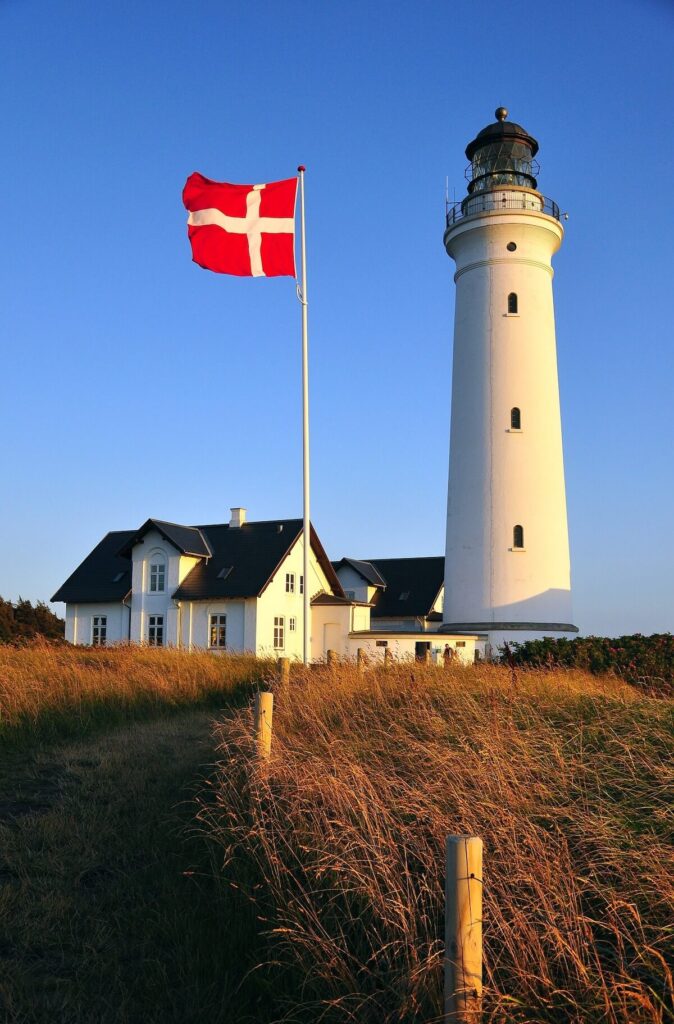
6. More than 400 islands
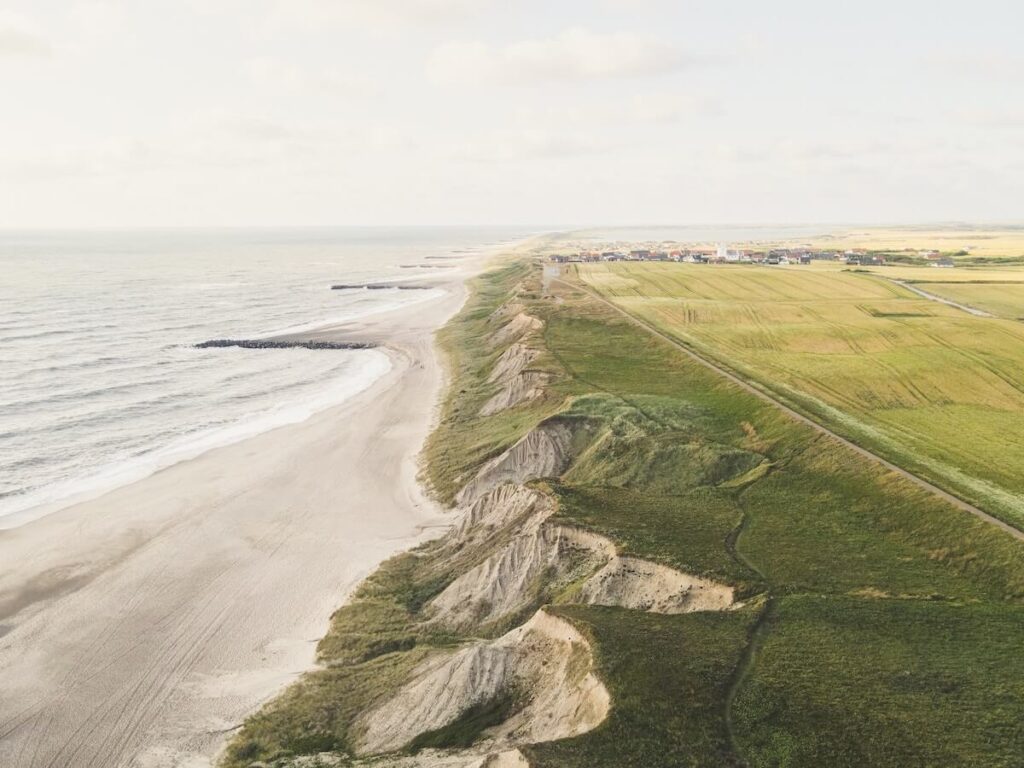
Denmark is actually an archipelago or group of islands. Denmark has over 400 islands, although only 78 of them are inhabited.
If you count the Kingdom of Denmark’s full territory, which includes Greenland and the Faroe Islands, the number reaches over 1100 islands.
7. Never more than an hour from the sea
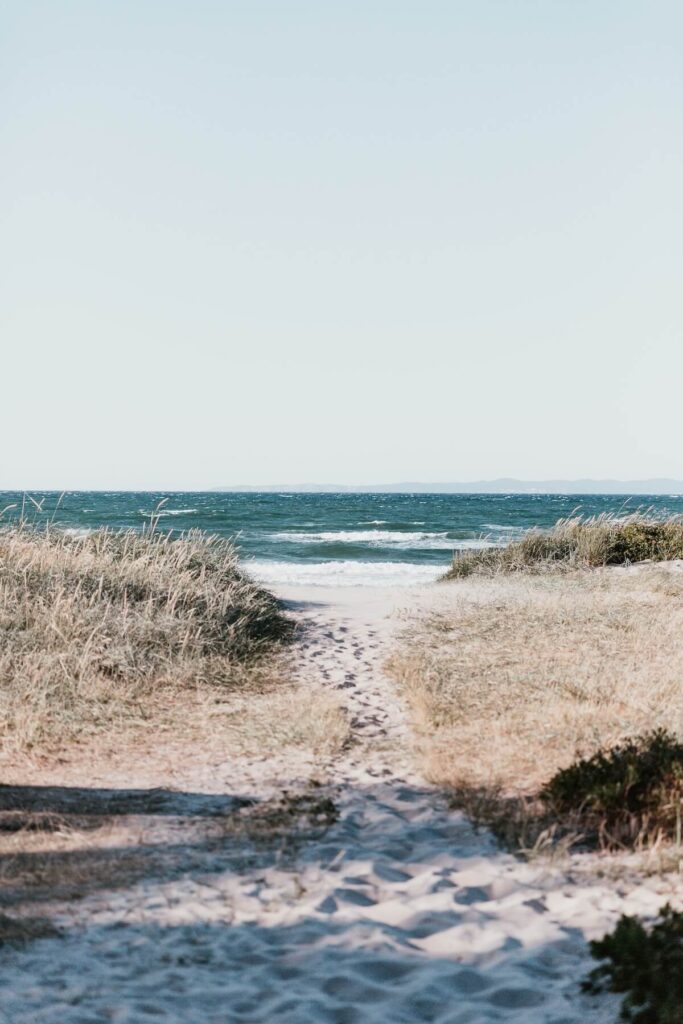
Since Denmark is an archipelago, it has a very long coastline. And with its situation at the tip of the Jutland peninsula, Denmark is surrounded by water.
This means that wherever you are in Denmark, you’re never more than an hour away from the sea!
8. Territories

Did you know that Denmark is actually the Kingdom of Denmark?
And the Kingdom of Denmark includes the autonomous territories (essentially self-governing) of the Faroe Islands and Greenland.
Historical facts about Denmark
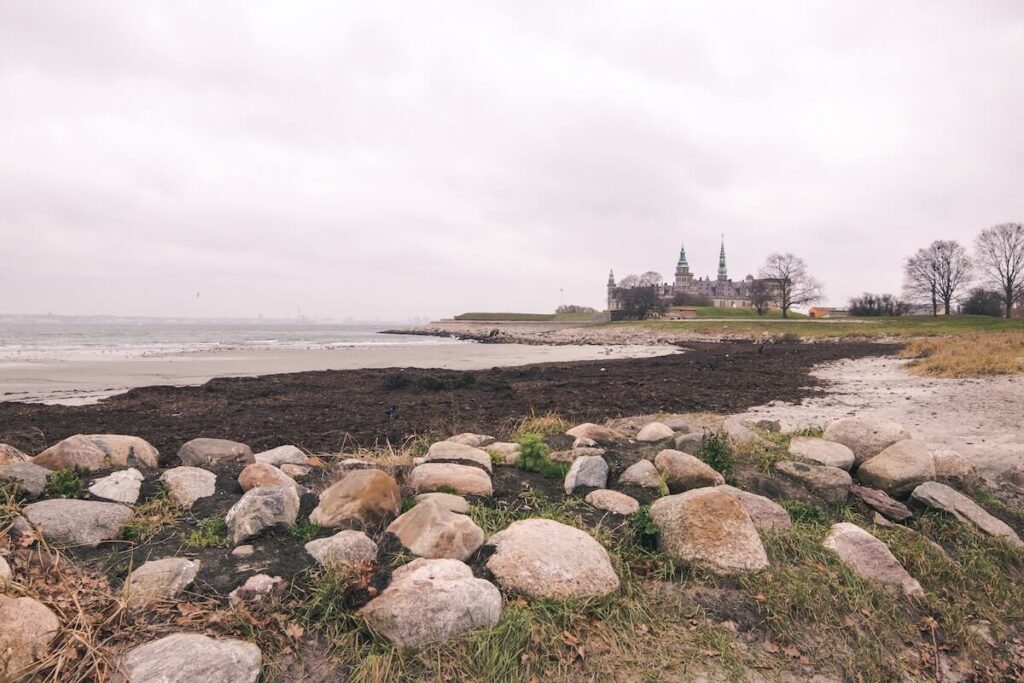
9. Denmark has been inhabited for thousands of years
The area around what is now Denmark has been inhabited by humans for over 12,000 years (since the end of the last Ice Age).
The Danes have lived in the area since approximately 500 A.D., while Denmark as a unified kingdom began in the 8th century.
10. First country in the world to legalize same-sex marriage
Perhaps Denmark is so happy because it gives basic rights to most of its citizens.
Denmark is the first country in the world to grant partnerships to same-sex relationships, in 1989. Then, in June 2012, same-sex marriages became legal, as well.
11. Oldest flag in the world
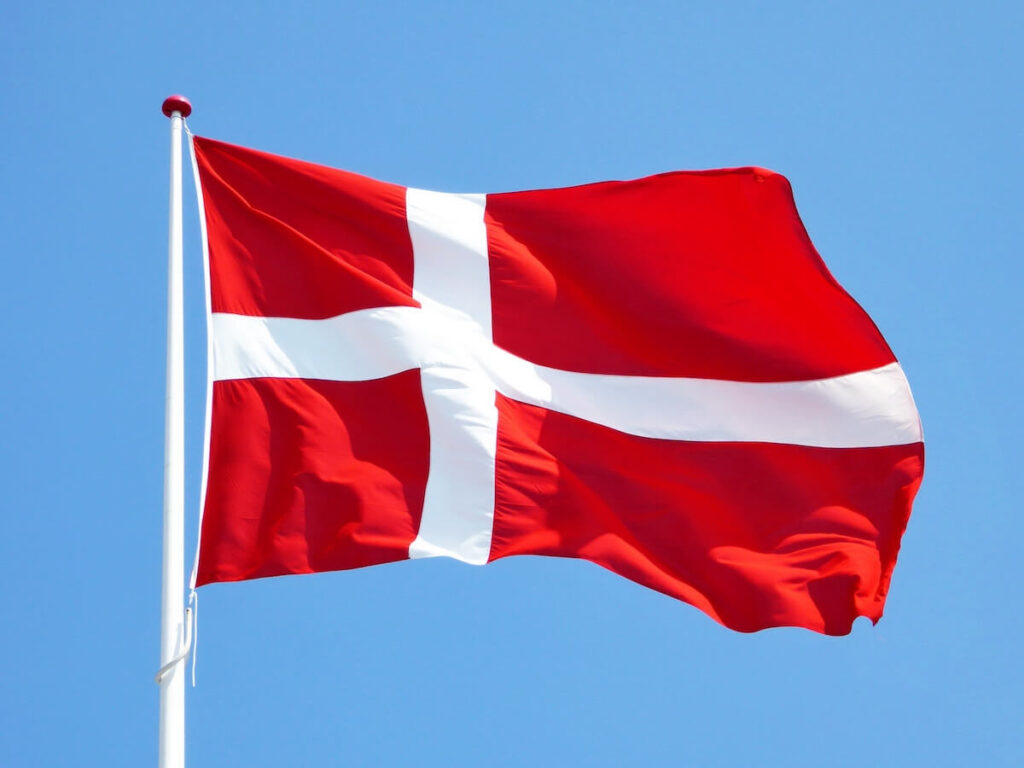
The Danish flag, called the Dannebrog or the “Danish cloth,” is the oldest continuously used flag in the world. The flag, a white cross on a red background, reportedly fell out of the sky during a general’s prayer during the Battle of Lyndanisse in 1219.
The flag appears on official documents in 1307 and has been used since. The Danish flag inspired the white cross designs eventually used by the rest of Scandinavia.
12. A very old monarchy

Can you name the oldest monarchy in Europe and one of the oldest in the world? I’ll give you a hint: it’s the Kingdom of Denmark! (Plot twist!) The monarchy in Denmark goes back to the first historical king, Gorm the Old, born around the year 900.
The current monarch is Queen Margrethe II, who’s been on the throne since 1972.
13. Oldest amusement parks

Denmark holds not one, but two of the world’s oldest and longest-running amusement parks.
Bakken, near the town of Klampenborg, has been open since 1583. Tivoli Gardens, in Copenhagen, first opened its doors in 1843.
Facts about Danish food
14. Friday Candy
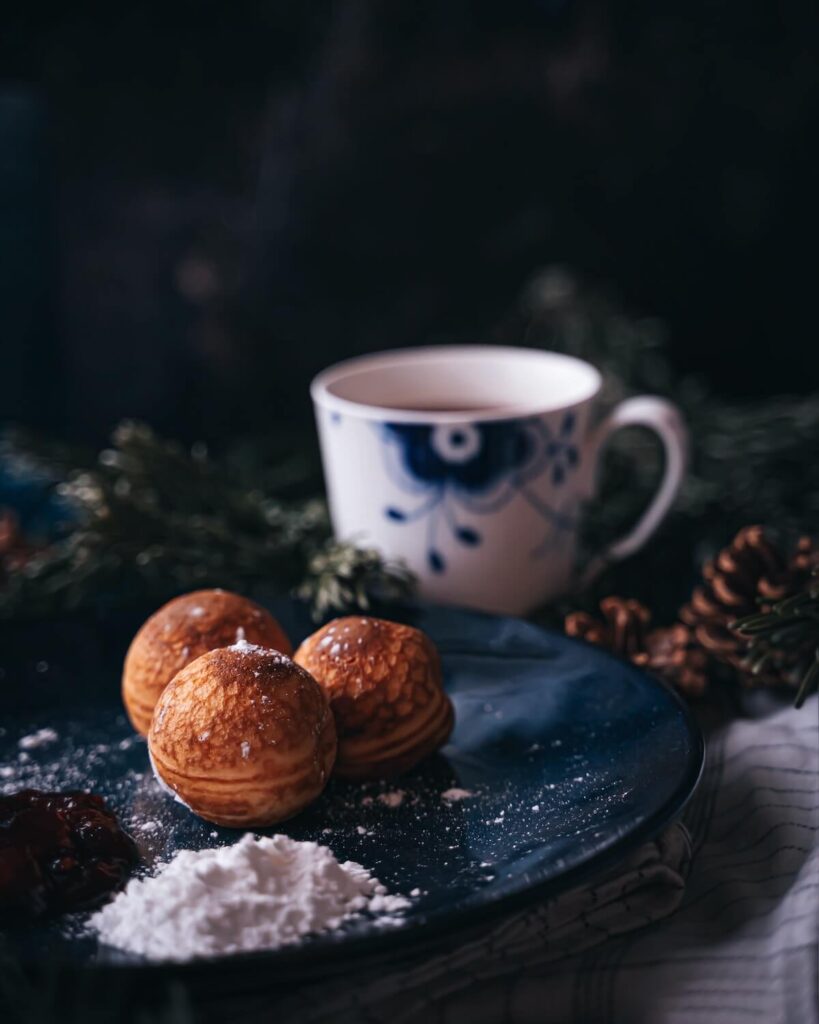
Many Danes, especially ones with children, take part in “Fredag Slik” (Friday sweets/candy). The idea is that they (mostly) abstain from candy during the week, and then go a little candy crazy on Friday.
Some of the most common Danish candy is licorice (“lakrid”) which, to all you Americans out there, bears little to no resemblance to a classic red vine, FYI!
15. 42 sausages a year

If you like a good hot dog, chances are, you’ll find one in Denmark! Danes reportedly eat, on average, 42 sausages a year.
For the best Danish-style hotdogs, find a sausage wagon (hot dog cart) and grab one, with all the fixings, to go.
16. 4 cups of coffee a day
If you’re a coffee lover, you must go to Copenhagen! The Danes really love their coffee, and on average, drink four cups of coffee a day.
This also means there are a plethora of amazing coffee shops and cafés all over the country.
(Also, Denmark has some of the best pastries in the world, so there’s an extra reason to stop for an espresso).
17. Michelin stars
Denmark is a food-lovers paradise and is the Michelin STAR (get it?) of Scandinavia. With a whopping 39 Michelin stars at 28 restaurants, Denmark is a pioneer for “New Nordic” cuisine.
Many of Denmark’s restaurants also routinely make lists of the world’s best restaurants, so you will certainly be able to find unique, inventive, and delicious meals all over the country.
Weird facts about Denmark
18. No word for ‘please’
Here’s a strange fact about the Danish language: there is no word for ‘please.’
Although I find this concept tricky to wrap my head around, the Danes don’t seem to find any lack of politeness or respect, despite not ever saying “please!”
19. Denmark vs Canada
From 1978 to 2022, Denmark was involved in a territorial dispute with Canada (of all places).
The place of the dispute was Hans Island, which is located between Greenland and Ellesmere Island (part of the Canadian province of Nunavut).
Known as the “Whisky War,” the countries would take turns planting their flag and leaving a bottle of their national spirits, generally Canadian whisky or Danish schnapps.
In 2022, with the start of the Russian invasion of Ukraine, the countries officially ended their dispute with a border drawn across the island. This was, in part, a symbol to Russia that it is possible to settle such disputes peacefully.
20. 17.5 hours of sunlight at the height of summer
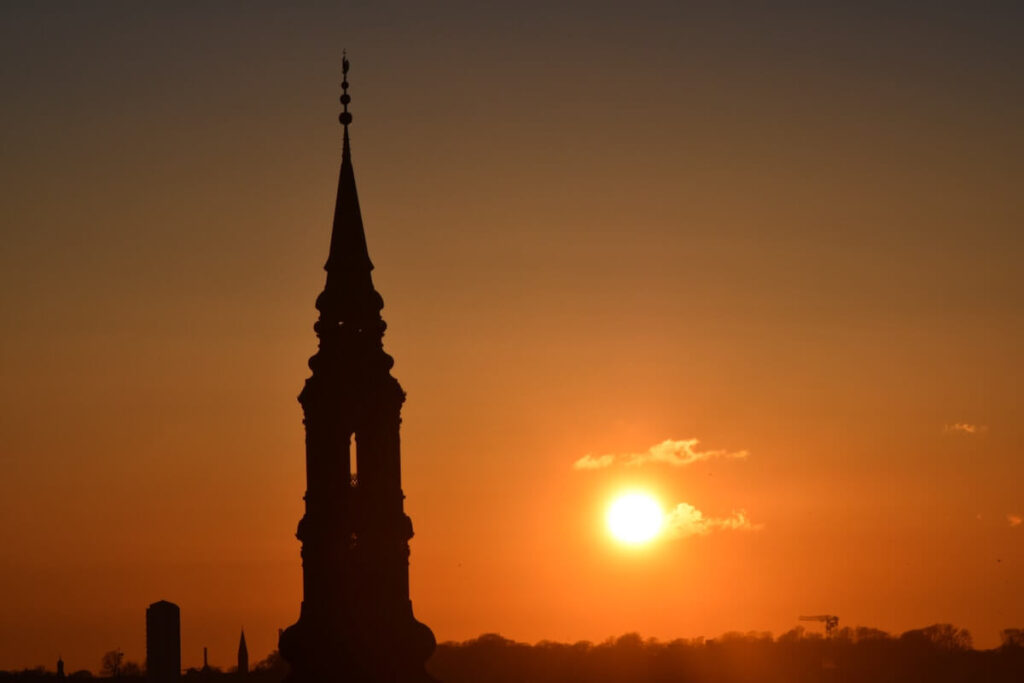
Due to its northerly location, the amount of sunlight Denmark gets each day varies widely with the season.
At the height of summer, Denmark will get over 17 hours of sunlight a day! Conversely, during winter, Denmark can get as little as seven hours of sunlight a day.
21. Danish farming is so efficient it produces three times its own food requirements
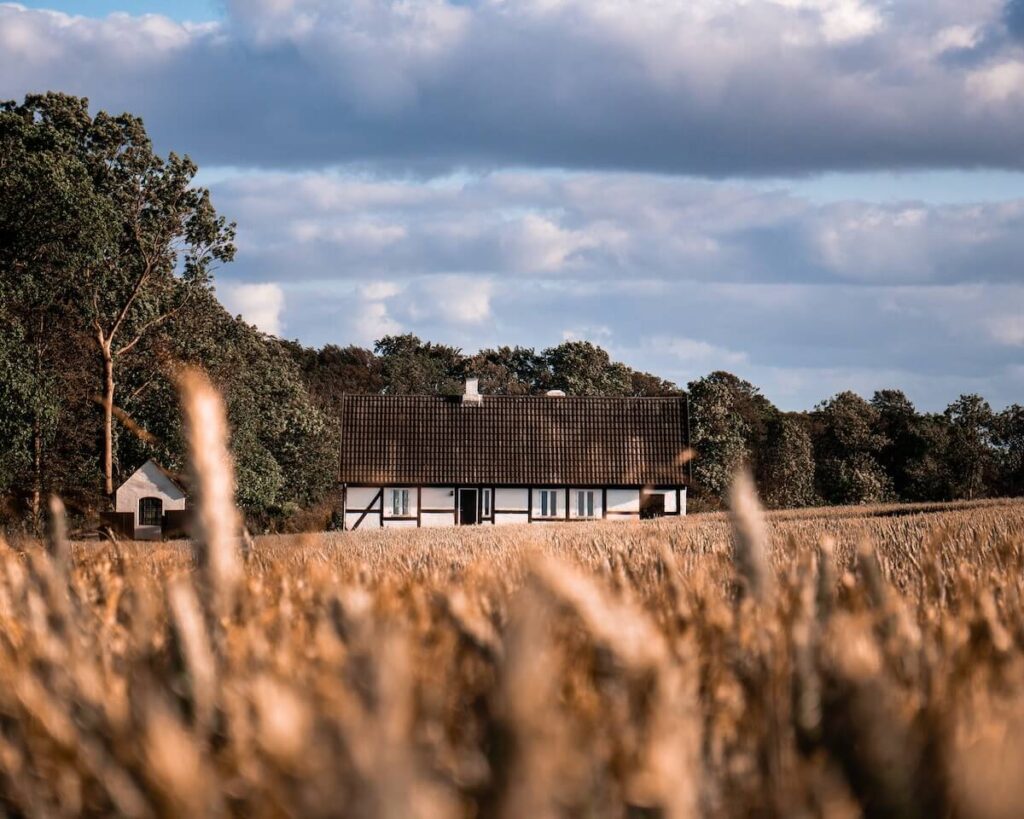
Denmark’s climate, soil, general flatness, and a whole lot of rain make it ideal for agriculture.
This, combined with the farmer’s dedication to their land, livestock, and natural surroundings, has made the farming sector a global role model for efficient farming, as well as sustainable farming.
The farming sector in Denmark is so efficient, it produces three times its own food requirements (the rest is exported).
22. More pigs than people
Speaking of farming…there are more pigs than people in Denmark. Like, a lot more pigs than people.
Denmark’s population is around 5.5 million, while the pig population is nearly 24 million. This makes Denmark the world’s largest exporter of pork!
23. Cinnamon bath at age 25
If you hit 25 years of age and Denmark and you’re single (still! Spinster alert! But also, not really) your friends and family will cover you in cinnamon.
We’re not talking a little sprinkle, but an entire cinnamon bath, sometimes including water or eggs to make it stick better.
This supposedly goes back generations to when merchants, who often sold spices, traveled around too much to settle down and were called “pepper dudes” and “pepper maidens.”
Facts about Danish people

24. Hans Christian Andersen
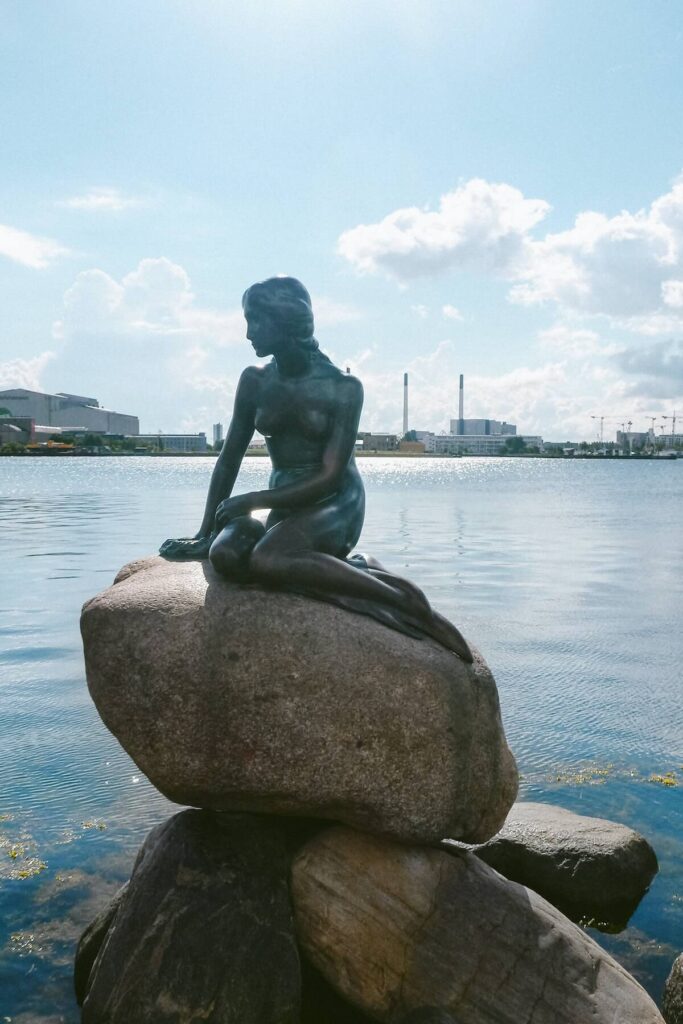
Hans Christian Andersen is probably the most famous Dane. A prolific writer who lived in the 19th century, he’s known around the world for his fairy tales, like the “Little Mermaid” and “The Ugly Duckling.”
When you’re in Copenhagen, visit the Little Mermaid statue in the harbor in honor of his story, and make sure to see one of the houses where he lived in Nyhavn.
25. Harald Bluetooth
Harald “Bluetooth” Gormsson, the king of Denmark circa 958 to 985, was known for introducing Christianity to Denmark and consolidating Denmark into a more unified country.
Nowadays, he’s known as the name inspiration for Bluetooth technology, because, as he united Denmark, so does Bluetooth unite separate pieces of tech. The Bluetooth logo is a combo of the runes for his initials, as well.
26. Prince Amleth of Jutland inspired Hamlet
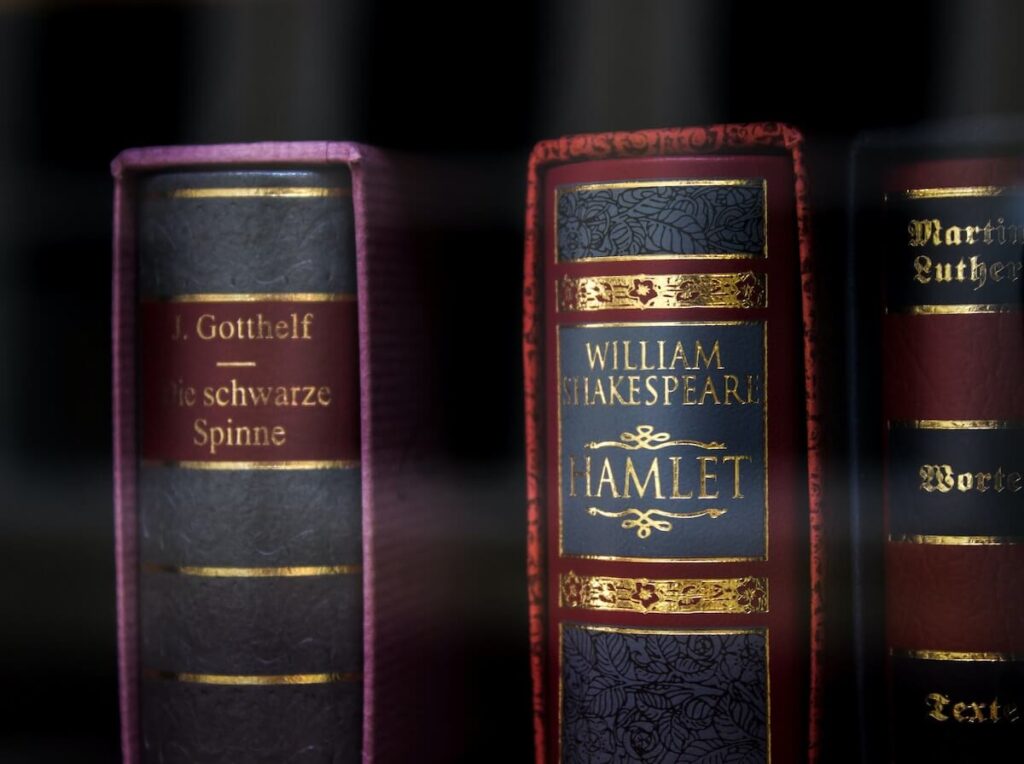
Okay, so Prince Amleth might not actually be a real person. But he is an important figure in a Scandinavian legend that directly inspired Shakespeare’s play, “Hamlet.”
One of Shakespeare’s sources for his play was a Norse saga known as History of the Danes, or “Gesta Danorum,” by Saxo Grammaticus.
Although Prince Amleth might not actually have existed, you can still visit the real Elsinore Castle from the play, Kronborg Castle, in Helsingør.
27. The Danes bike a lot
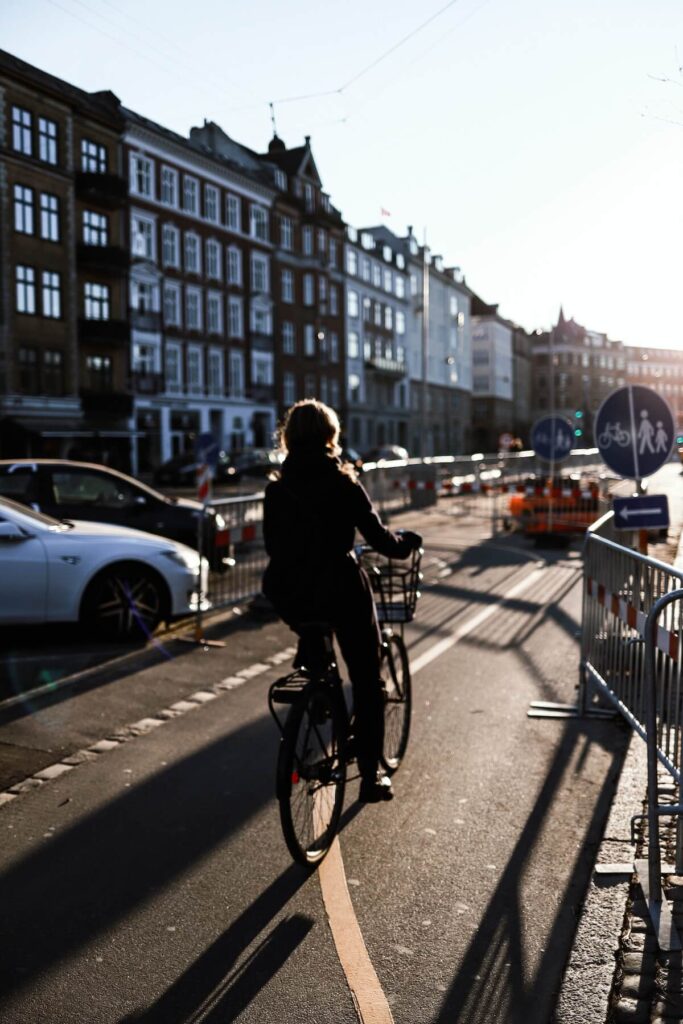
Denmark is nearly synonymous with biking. Witnessing the morning commute in Copenhagen, which is primarily bikes, is actually a beautiful sight!
The Danes combined bike around 5 million miles each day. That’s 8 million kilometers, folks!
Miscellaneous facts about Denmark

28. Swimming is a required class in school
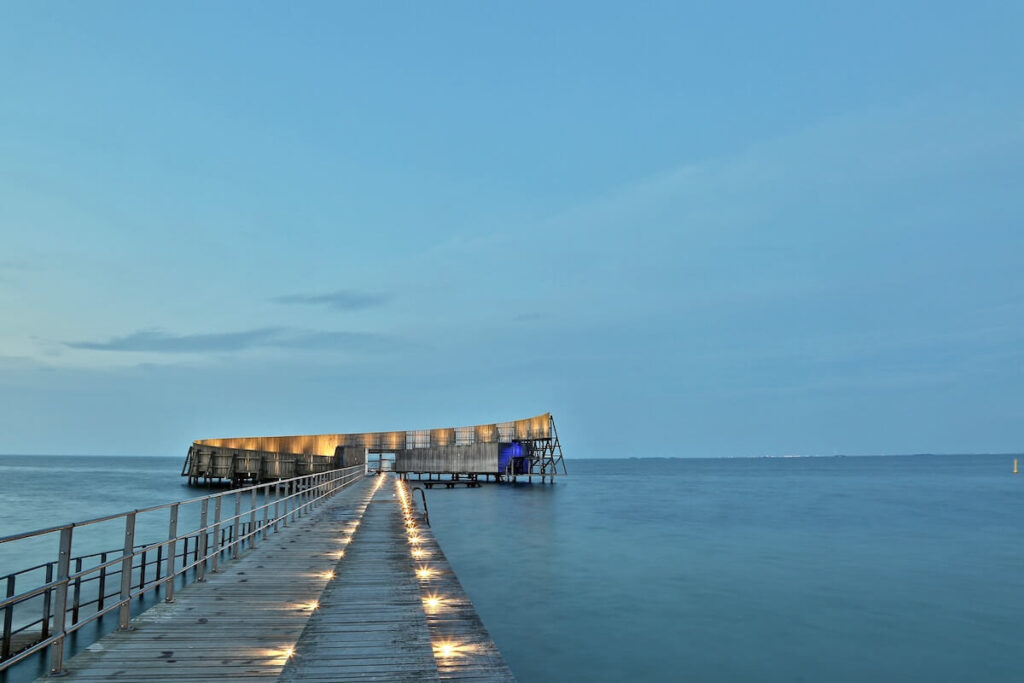
Maybe because Denmark is literally surrounded by ocean, swimming is a required class for all Danish kids.
Ocean dips are an integral part of Danish culture, and we’re not just talking in the summer—plenty of Danes will hop into the ocean during the winter to invigorate themselves and beat off the winter blues.
29. Minkgate
In late 2020, the government of Denmark culled nearly 17 million mink over reports that the COVID-19 virus could jump between mink and humans. The fallout from this decision, still ongoing, has been labeled “minkgate” as the prime minister scrambles to course correct.
Mink farmers lost millions of dollars and around 5,000 lost their jobs completely, and the mink farming industry has been essentially halted in the country. TBD what happens next—including the potential impeachment of their prime min.
30. One of the least corrupt countries
Minkgate aside, Denmark consistently places at the top of the least corrupt countries in the world list. The transparency in government, the trust that is built into Danish society, and integrity within politics all contribute to this ranking.
31. Handball

One of Denmark’s most popular sports, handball, also originated in Denmark.
The modern version of handball was invented in 1897 by two Danish school teachers, although supposedly handball dates back to the Vikings, who were said to play handball with (brace yourself) the heads of their enemies (cue barfing emoji here).
Now no heads are tossed around, just actual balls.
32. Nearly 40% of their electricity comes from wind power
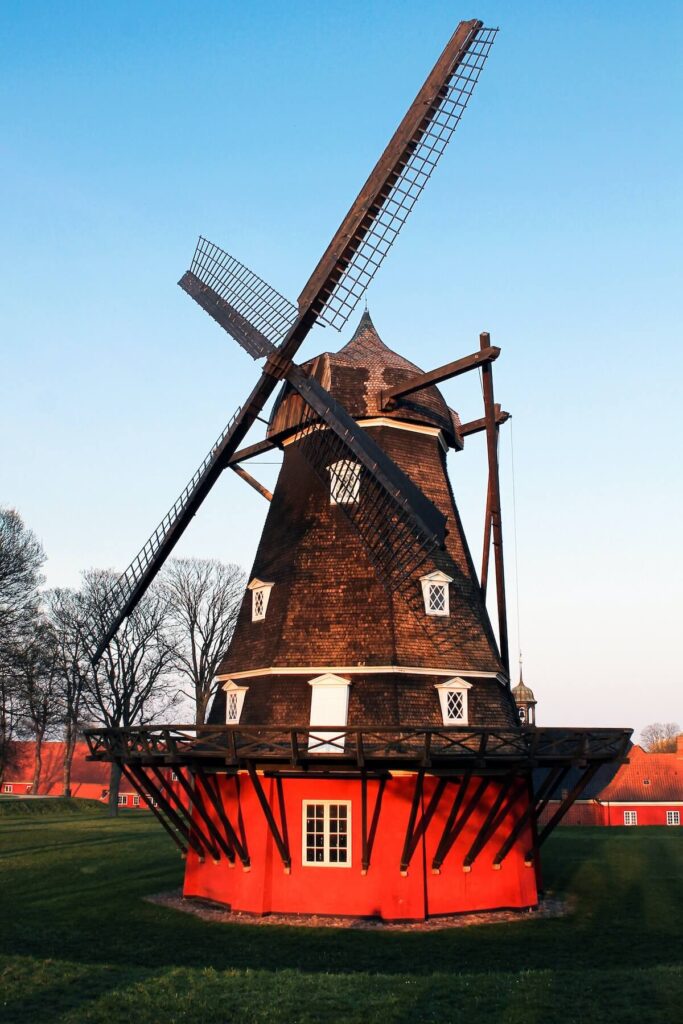
Denmark is a leader in renewable energy! Over 40% of their electricity comes from windmills (both onshore and offshore).
Over 11% of Denmark’s electricity comes from biomass—so, well over half of all of their electricity is renewable. Go, Denmark!
33. 170 days of rain
Denmark gets, on average, 24 inches of rain (or precipitation) each year. This arrives on average over 170 days.
Unlike other climates, though, Denmark is fairly temperate, and there isn’t really a “dry” season—the rain is fairly predictable all year round. Even in what is typically a snowy winter, or smack in the middle of their extra-sunny summer.
Conclusion

Denmark’s long and rich history, interesting culture, natural beauty, coffee, and food culture make it quite the destination! It’s also a model of community and sustainability, which makes it an extra great place to travel if you ask me.
Need more help planning your trip to Denmark? Check out how to fill four days in Copenhagen, and this list of souvenirs from Denmark!