
Growing up in a Filipino household, food was more than just sustenance. It was a love language, a way to connect with family and friends, and a celebration of our rich heritage. Every dish held a story, passed down through generations, with each bite transporting me back to childhood gatherings filled with laughter and the aroma of sizzling garlic and tangy vinegar.
However, this love for Filipino food extends far beyond my own experiences. Filipino cuisine is gaining recognition worldwide, with its unique blend of flavors and influences capturing the hearts (and stomachs!) of many.
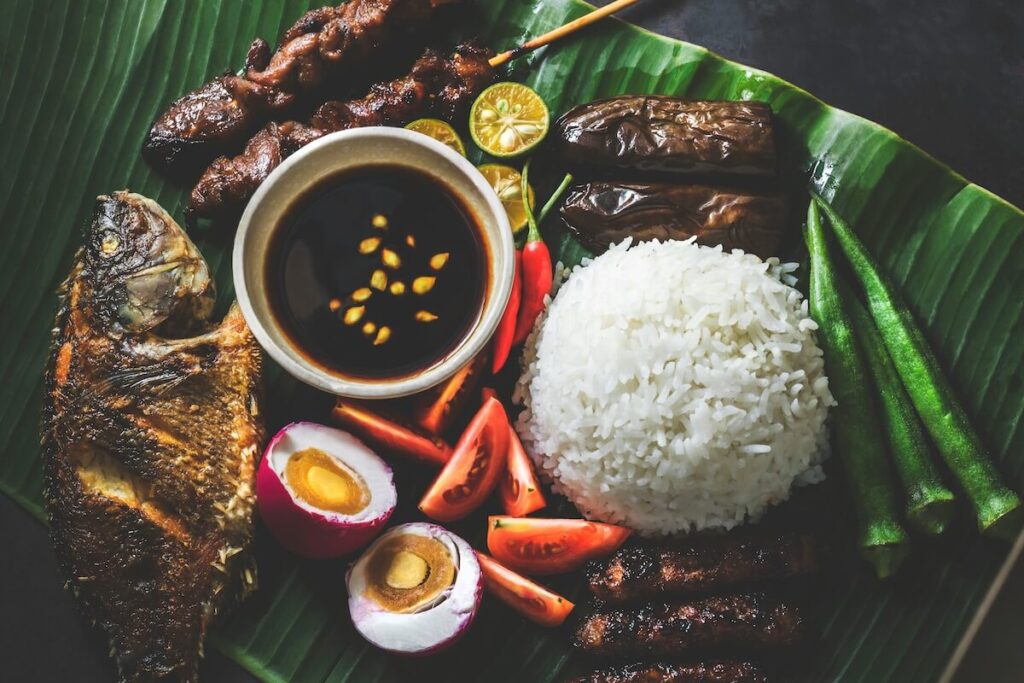
But for Filipinos, it’s more than just a trend. It’s a reminder of home, warm hospitality, and the joy of sharing a delicious meal with loved ones. Ask any overseas Filipino worker (OFW) what they miss about home and they will most likely name a Filipino dish.
In this article, I’ll be sharing fascinating Filipino food facts, from historical tidbits and popular dishes to traditions and cooking techniques. Tara!
Table of Contents
Historical Filipino food facts
1. Filipino cuisine has Austronesian origins.

The story of Filipino cuisine begins thousands of years ago with the arrival of the Austronesian peoples in the Philippines around 4,000 BC. These seafarers, who make up the majority of Filipinos today, brought with them the foundation of Filipino food culture.
The Austronesians introduced rice cultivation, which remains a staple in Filipino meals today. Austronesian cooking techniques like boiling, grilling, and steaming also laid the groundwork for the diverse dishes we Filipinos enjoy.
This Austronesian influence established the core of Filipino cuisine, emphasizing agriculture and aquaculture, elements that continue to define Filipino food across the archipelago and wherever the Filipino diaspora is.
2. Filipino food is heavily influenced by the Chinese.
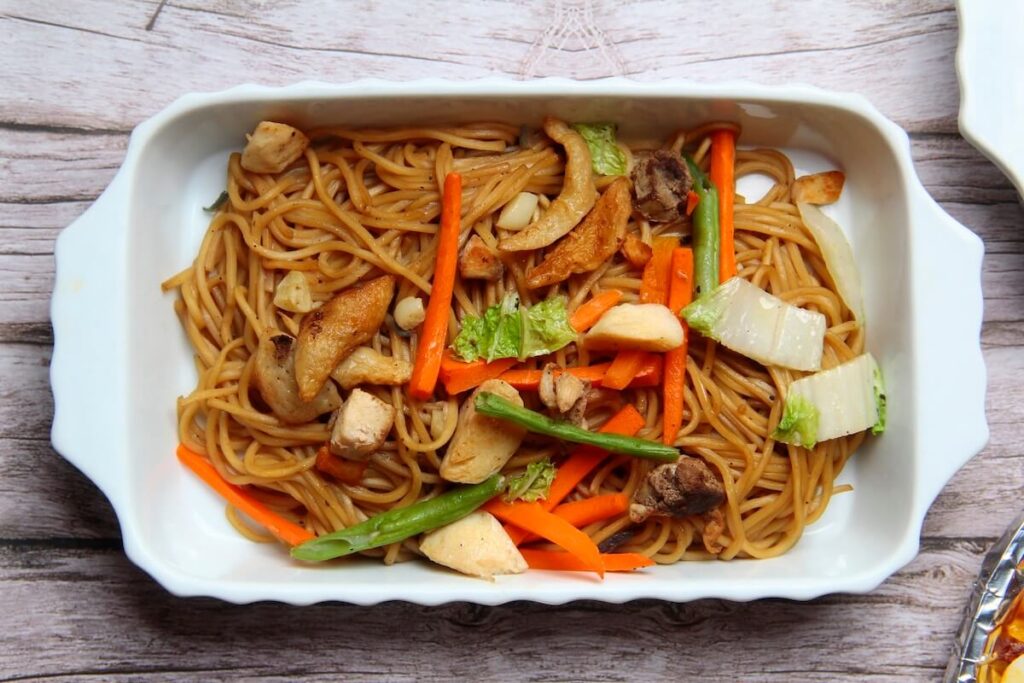
The influence of Chinese cuisine on Filipino food runs deep. Early Chinese traders brought with them not just ingredients like soy sauce, fish sauce, and noodles, but also essential cooking techniques that we continue to use today.
Filipinos readily adopted stir-frying, known as gisa in Filipino cuisine, and techniques like pesa (boiling in ginger broth) and pata tim (braising) became staples in Filipino kitchens.
Dishes like pancit, a collective term for various stir-fried noodle dishes, and lumpia, spring rolls with savory fillings, are testaments to this lasting Chinese influence. Even Filipino staples like siomai (dumplings) and, my favorite, taho (soybean curd) wouldn’t exist without the foundation laid by Chinese culinary traditions.
3. Colonizers brought in new flavors…

If you haven’t noticed by now, Filipino cuisine is a mix of cultural influences. After 333 years of Spanish colonization, it’s not surprising that it left an enduring mark.
The Spanish introduced ingredients like tomatoes, onions, garlic, and chilies, while European cooking techniques like stewing and frying enriched the repertoire. This period also saw the introduction of Catholicism, leading to the tradition of elaborate Christmas feasts featuring dishes like relleno (stuffed meat) and leche flan.
The American occupation in the late 19th century brought staples like potatoes, bell peppers, and processed cheese. These ingredients found their way into Filipino-American dishes, seamlessly integrated into existing culinary traditions.
While widespread food shortages during the Japanese occupation overshadowed any culinary introduction, some Filipinos were exposed to new ingredients and techniques. Today, dishes like tempura and sushi are more familiar, and Filipino-Japanese fusion is a thing.
4. …But pre-colonial Filipino cuisine was already formed.

Before the arrival of foreign influences, Filipino cuisine was already thriving on the bounty of the archipelago. Island communities feasted on a variety of indigenous ingredients such as taro root, yam, tapioca, jackfruit, bananas, and mangoes.
The natives utilized different parts of plants — leafy greens like kangkong were stir-fried, while palm nuts were pressed for oil used in cooking. Seafood was abundant, featuring in dishes like kinilaw, raw fish cured in vinegar, and citrus.
For meat, they hunted wild boar and deer, and domesticated animals like chickens and carabaos provided protein. Forager’s bounty like wild mushrooms, ferns, and indigenous vegetables rounded out these pre-colonial meals, displaying the ingenuity of Filipinos even in those early days.
5. Food was preserved through fermentation.

Kimchi in Korea, doubanjiang in China, miso in Japan, tempeh in Indonesia, nuoc mam in Vietnam… Asians sure love fermented foods! And like its Asian neighbors, the Philippines also has a long history of food fermentation.
The hot and humid climate of the Philippines provided ideal conditions for these microbial processes, allowing Filipinos to develop a wide range of fermented products. Necessity also played a key role — fermentation helped extend the shelf life of precious ingredients, particularly during unpredictable harvests or long sea voyages.
Over time, Filipinos perfected their fermentation techniques, not just for preservation, but also to enhance flavors and create entirely new culinary experiences. Popular fermented condiments and foods include suka (vinegar), bagoong (shrimp paste), patis (fish sauce), achara (pickles), and a variety of local wines made from rice, coconut, or fruits.
6. Sour is king.

Partly due to our love for fermented foods, it shouldn’t come as a surprise that we have a penchant for all things maasim (the Filipino word for ‘sour’).
Early Filipinos utilized various indigenous ingredients to achieve this tang, from calamansi (a small citrus fruit similar to a lime) to kamias (a sour fruit with a distinctive green flesh) and the aforementioned vinegar.
This love for sourness continues to define Filipino cuisine. Dishes like sinigang and sinampalukan (both sour soups) are crowd favorites. Adobo, a savory stew of pork or chicken, often incorporates vinegar for a tangy counterpoint to the soy sauce and garlic base. Even dipping sauces like the previously mentioned bagoong are frequently balanced with a squeeze of calamansi for a delightful interplay of flavors.
7. No rice, no life.

For centuries, Filipinos have held a deep reverence for rice, considering it a gift from the heavens and a symbol of life itself. Archaeological evidence suggests rice cultivation in the Philippines dates back 2,000 years, and it’s not an exaggeration to say that rice is the cornerstone of Filipino cuisine.
This staple grain is present at breakfast, lunch, and dinner, steamed and served alongside an array of flavorful dishes. Rice is so ingrained in Filipino culture that a meal simply feels incomplete without it.
But the love for rice extends beyond the simple grain. We, Filipinos, have developed a remarkable repertoire of rice-based dishes like the delicious porridge such as lugaw and champorado, rice cakes (kakanin) like sapin-sapin, puto, biko, and bibingka, and delicacies like arroz ala valenciana and ampaw. And, of course, I would be remiss if I didn’t mention sinangag, our version of fried day-old rice.
8. Filipinos love their condiments.

One of my favorite Filipino food facts is this: We have a long-standing love affair with condiments or dipping sauces, or what we call sawsawan in Filipino.
Vinegar, likely the most ancient condiment, can be traced back to indigenous Austronesian communities. Early Filipinos used various fermentation methods to create vinegars from palm sap, coconut sap, and sugarcane juice, each with distinct regional variations like sukang paombong from Bulacan.
Another contender for longevity is patis or fish sauce. Made from fermented anchovies, its origins are debated, but some theories suggest Southeast Asian influences as early as the first millennium AD.
Soy sauce or toyo, while not native, arrived through trade with China as early as the 16th century and quickly became a staple. Finally, the ubiquitous calamansi, a small citrus fruit, is believed to have originated from Southeast Asia and possibly arrived with Indian traders centuries ago.
These condiments, brought together on the Filipino table, represent a unique blend of indigenous ingenuity and foreign influences.
Facts about Filipino food traditions and culture
9. Sharing is caring.
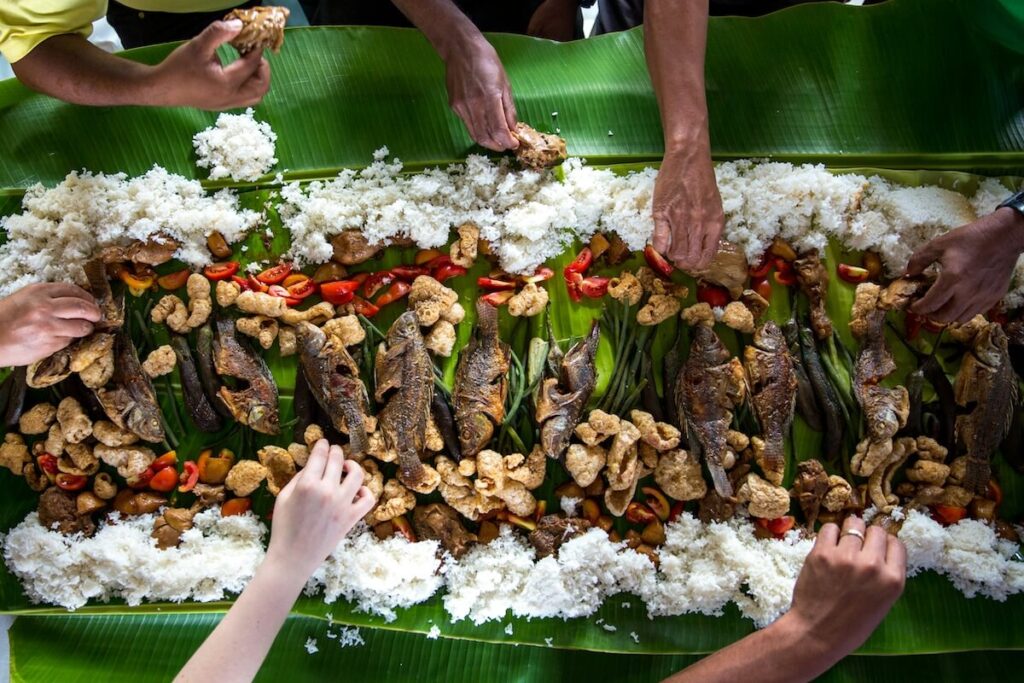
Filipino meals are meant for sharing, fostering a sense of togetherness.
Filipino meals are more than just sustenance; they’re a celebration of community and togetherness. That’s why sharing is ingrained in the culture, evident in the abundance of dishes served family-style on a large table.
The concept of salo-salo (feasting together) takes center stage, with everyone encouraged to partake in the variety of flavors. Elders are typically served first, but then everyone digs in, sharing tastes and stories.
For a truly unforgettable experience, there’s the legendary “boodle fight.” Huge banana leaves become the plates for a feast of rice, grilled meats, seafood, and all the trimmings. Diners then dive in with bare hands, transforming the meal into a playful, messy, and ultimately heartwarming celebration of community.
10. Hospitality reigns.

Filipinos are known for their hospitality, and food is a way to show it. Expect to be offered a plate (or two!) when visiting a Filipino household.
The warmth of Filipino hospitality is evident from the moment you enter a home. The welcoming phrase “kain na” (let’s eat!) is music to a guest’s ears. Hosts prepare a feast, often with an abundance of dishes, reflecting the desire to ensure everyone is well-fed and leaves happy.
Refusing a second helping can even be seen as a slight, as Filipinos take pride in sharing their culinary love with others!
11. Celebrations always come with food.

In Filipino celebrations, food isn’t just fuel, it’s the very foundation of the festivity.
While my introverted self isn’t a fan of Filipino festivities, it’s hard to pass up on the chance to eat good food. Birthdays overflow with dishes like pancit (stir-fried noodles) or Filipino spaghetti, symbolizing prosperity and longevity. Fiestas aren’t complete without lechon (roasted pig), kakanin (rice cakes), kaldereta (beef stew), and barbecue.
Christmas, New Year’s Eve celebrations, graduation… even passing an exam can be an excuse to feast! In any Filipino celebration, food becomes the centerpiece, a delicious invitation to connect, reminisce, and create lasting memories.
12. Recipes are passed down with love.

Filipino families hold recipes close to their hearts, treating them like treasured heirlooms. These culinary secrets are meticulously passed down from generation to generation, often through a process of observation and participation.
Elders become teachers in the kitchen, demonstrating techniques and sharing stories woven into the fabric of each dish. A bowl of kare-kare (peanut stew) might carry memories of lola (grandmother) patiently grinding peanuts, and almost every Filipino family has its own adobo and sinigang recipes.
More than just instructions, these recipes embody a legacy, a way to connect with ancestors and preserve a unique cultural identity.
13. Filipino cuisine boasts an array of regional specialties.

Filipino food is like a beautiful archipelago itself — bursting with diverse flavors that change from island to island!
Travel north to Ilocos for a taste of their famous bagnet, deep-fried pork belly that’s so crispy it shatters with a bite. Head further down to Pampanga and you might be offered a plate of sizzling sisig, a dish made with chopped pig’s face and liver. Down south in Bicol, chilies give laing and Bicol Express a fiery kick.
In Iloilo, the iconic noodle soup La Paz Batchoy is not to be missed. There’s lechon in Cebu, and satti (small skewers of grilled meats) in Zamboanga.
Across the country, the humble adobo takes on a life of its own. In Luzon, it might be a garlicky, soy-sauce marinated pork, while down in Visayas, it can be a vibrant coconut milk and turmeric creation.
14. Filipino street food is a feast for the senses.
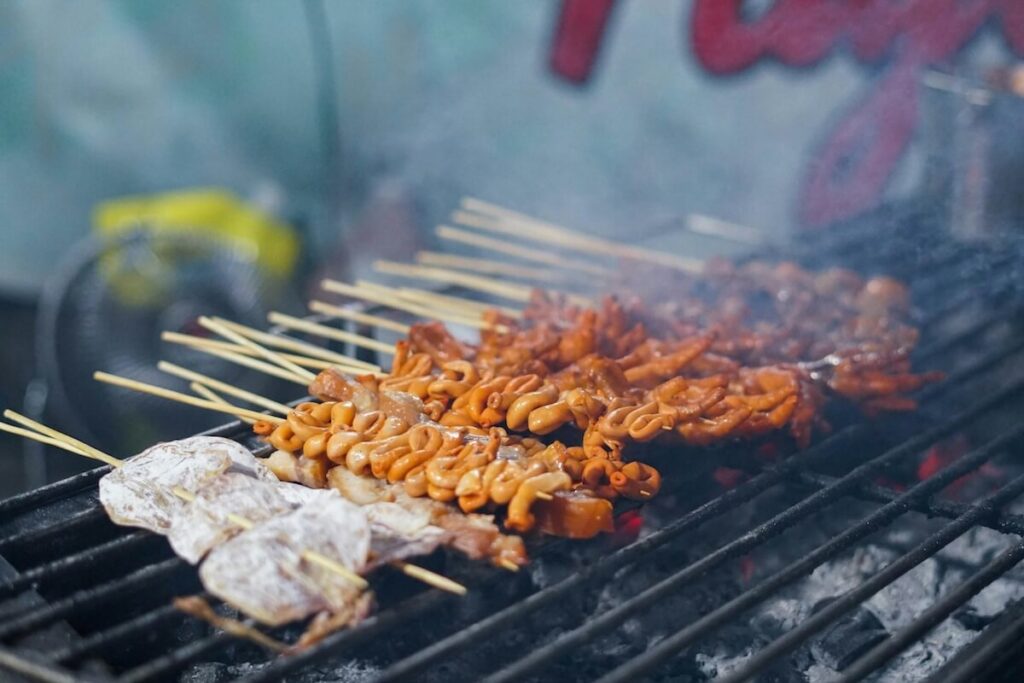
Forget fancy restaurants — the real magic happens right on the sidewalk. Here, the air is thick with the sizzling of grilling meats and the sweet scent of bananas caramelizing.
Colorful carts overflow with skewers of barbecue and smoky chicken inasal, ready to be dipped in a tangy vinegar sauce. Next door, a vendor might be expertly balancing a tower of kwek kwek (deep-fried orange quail eggs).
Don’t forget the halo-halo, a towering dessert masterpiece with shaved ice, sweetened beans, leche flan (custard), ube (purple yam jam), and a whole lot more! It’s a feast for your eyes, a symphony of sizzling and chattering, and most importantly, a delicious adventure for your taste buds.
15. Filipino coffee culture brews tradition and connection.

One of the Filipino food facts I can attest to is this: In the Philippines, coffee isn’t just a drink, it’s a way of life.
Filipinos used to gather around steaming cups of coffee for kapeng barako, a strong brew often enjoyed with sweet pastries like ensaymada. These coffee sessions, called “kapehans,” are more than just caffeine fixes. They’re a chance to connect with family, friends, and neighbors. Conversations flow easily, fostering a sense of community and belonging.
While kapehans are no longer common these days, especially in the cities, you can still find many people hanging out at coffee shops to work, catch up with friends, and socialize.
Beyond social connection, coffee also has an important role in the Philippine economy. During the 18th and 19th centuries, the Philippines became a leading coffee exporter, with its beans reaching tables worldwide. This trade brought economic prosperity and helped shape the country’s agricultural landscape. Even today, coffee production remains important, albeit on a smaller scale.
16. Snacking is a national pastime.
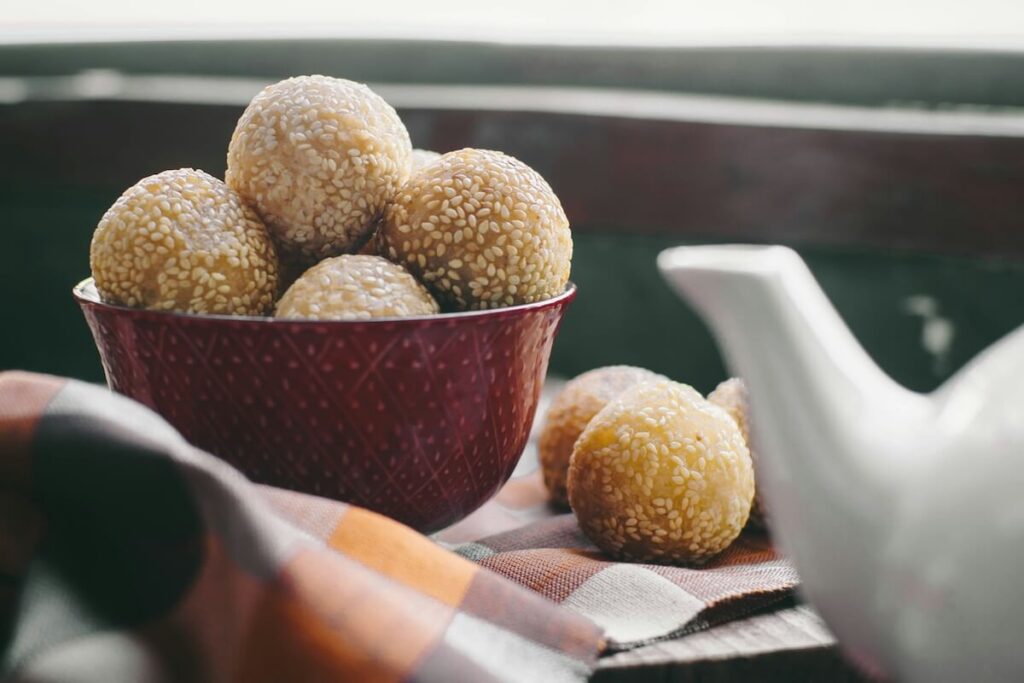
In the Philippines, mealtime takes on a whole new meaning. Forget just three squares a day. Filipinos have embraced the art of the merienda, a cherished tradition of snacking between meals.
There can be two “meriendas” throughout the day. The mid-morning version provides a welcome pick-me-up, often with foods such as pan de sal (a type of Filipino bread), taho (soft tofu with sugar syrup and tapioca pearls), and sandwiches.
The afternoon merienda is a more social affair. Families and friends gather over plates of sweet treats like kakanin or halo-halo, or savory ones like pancit and empanada. The food may differ but know that in many Filipino households, three meals a day just doesn’t cut it.
17. Meals have sweet endings.

A meal simply isn’t complete without a panghimagas, the Filipino word for dessert.
This fondness for sweet treats is rooted in the abundance of sugarcane, a historic crop in the Philippines. Filipino desserts are often made with local ingredients like coconut milk, fruits like mangoes and jackfruit, and various starches like glutinous rice.
These ingredients are transformed into an array of delectable treats, from the creamy comfort of leche flan to the vibrant halo-halo. Other popular Filipino desserts include ice cream, maja blanca (a rich and creamy cornstarch pudding with corn kernels), fruit salad, buko pandan (a salad featuring young coconut strips, pandan leaves, and tapioca pearls), and Brazo de Mercedes (a light and airy sponge cake filled with a rich custard or buttercream).
Facts about Filipino cooking
18. Adobo can be cooked in several ways.
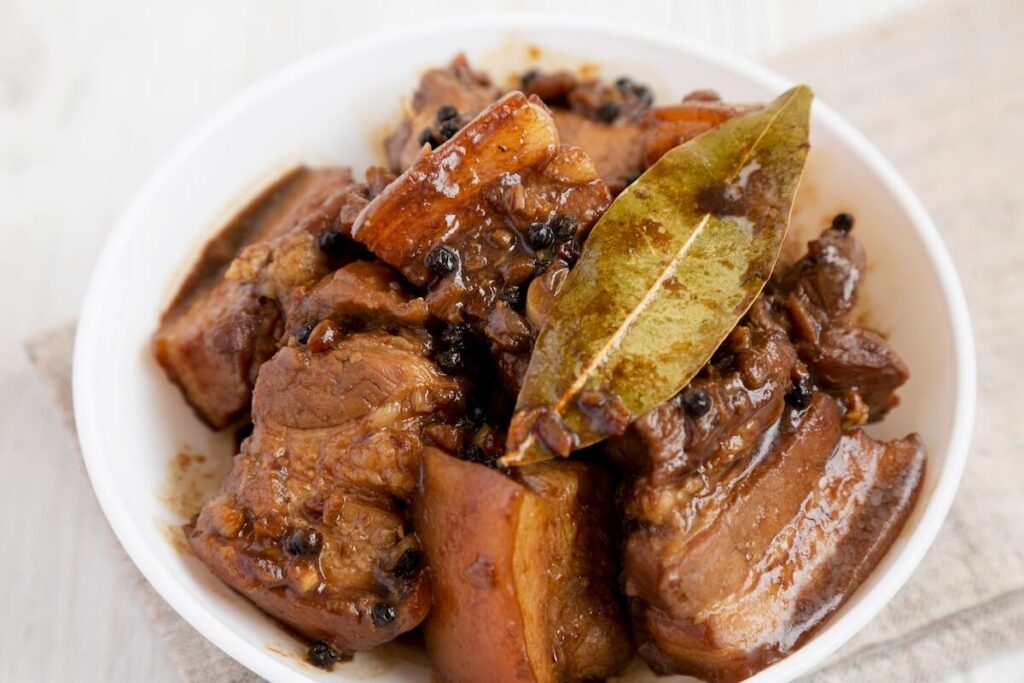
Adobo, the beloved national dish of the Philippines, isn’t just a single recipe. As I said earlier, it has both regional and household variations.
Craving something a little brighter? Head south to Batangas or Pampanga for their adobong dilaw (yellow adobo), where turmeric lends a vibrant yellow hue and a touch of earthiness. Prefer something creamy? The adobo sa gata of Quezon province simmers in coconut milk, creating a luxuriously rich and slightly sweet version.
Perhaps you want something on the drier side? Cebu’s adobong pina-uga skips the usual sauce altogether, instead caramelizing the meat for a deep, smoky flavor. Iloilo is known for its adobong pula (red adobo), which comes with red, shimmering, flavorful sauce from atsuete seeds. There’s also adobong puti (white adobo), a version that foregoes soy sauce.
19. Filipino cooking uses a variety of methods.

Filipino cuisine is a beautiful blend of simplicity and versatility. Unlike some cultures with highly specific cooking techniques, Filipino cooking embraces a variety of methods, each bringing out the best in the ingredients.
Take gisa, for example, a method similar to sauteing. Aromatics like garlic and onions are softened in oil, forming the base for fragrant stews and flavorful sauces. For a crispier result, there’s prito, the classic technique of frying. It’s used for everything from crunchy lumpia (spring rolls) to perfectly golden fried fish.
Looking for something lighter? Kulo or boiling produces healthy and flavorful soups like sinigang and tinola. And when it comes to infusing smoky goodness, ihaw or grilling takes center stage, charring juicy skewers of meat and seafood to smoky perfection.
This variety of techniques allows Filipino cooking to create an impressive range of dishes, from light and refreshing to rich and savory.
20. Sweet and savory can go together.
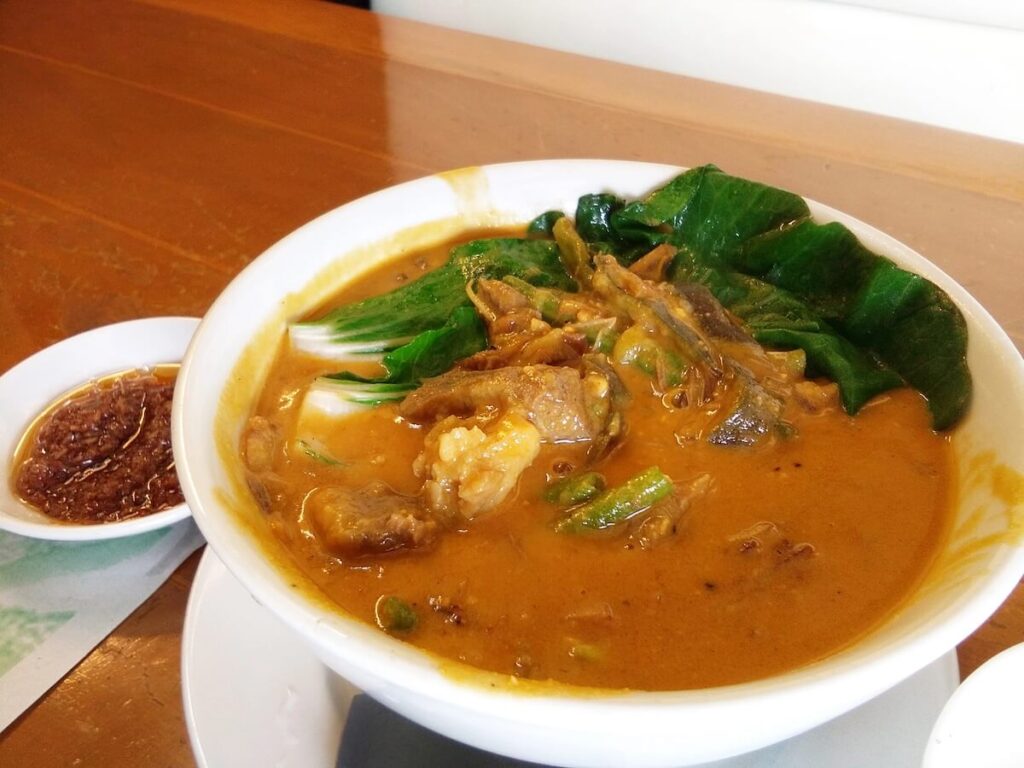
Filipino cuisine breaks the mold when it comes to flavor profiles. Forget the rigid categories of sweet and savory — Filipino food revels in the delightful dance between the two.
Take a classic like leche flan. This creamy custard boasts a rich, caramelized sugar topping. But it doesn’t stop there. Filipinos often enjoy leche flan with a sprinkle of cheese, adding a touch of salty savoriness that cuts through the sweetness.
Another great example is kare-kare, a peanut butter-based stew with oxtail, vegetables, and shrimp paste. The creamy peanut sauce provides a nutty sweetness, while the bagoong (shrimp paste) adds a salty depth. The combination might sound unusual, but believe me, it’s good.
Even seemingly simple dishes can embrace this sweet and savory magic. Chicken inasal, a grilled chicken dish marinated in coconut milk and lemongrass, often comes with a side of sweet and tangy banana ketchup, adding a surprising yet delicious dimension to the savory chicken.
21. All parts are welcome.

Filipino cuisine is known for its resourcefulness, and this extends to its use of meat. We follow a “waste nothing” policy, so every part of the animal is used.
The more tender cuts, like pork loin or chicken breast, are often grilled, fried, or stir-fried for quick dishes. But tougher cuts, like beef chuck or pig’s trotters, are braised or stewed for extended periods to make them melt-in-your-mouth tender. These slow-cooked dishes are packed with flavor and collagen, a protein that breaks down into gelatin during cooking, creating a rich and satisfying broth.
Even the innards and offal aren’t spared. Chicken livers add richness to stews, while pig’s blood is used in savory desserts like dinuguan. Crispy pork ears and intestines are popular bar snacks, and sisig, a beloved Kapampangan dish, uses the parts of the pig’s head many wouldn’t normally consider, like the ears, snout, and cheeks.
Talk about delicious and economical!
22. Coconut is widely used…

Speaking of wasting nothing, here’s another ingredient known as a gift that keeps on giving: coconut.
The coconut’s versatility and abundance have made it a staple ingredient, playing a crucial role in countless Filipino dishes.
Coconut milk or gata, the creamy essence extracted from the flesh, forms the base of countless savory dishes. Coconut cream or kakang gata, on the other hand, is the thicker variant that’s used for desserts and richer sauces. Even the coconut water, the refreshing liquid found inside young coconuts, is enjoyed as a natural beverage.
But Filipino ingenuity extends beyond the flesh. Coconut oil, extracted from dried coconut meat, is a popular cooking fat, adding a subtle coconut flavor to dishes.
Coconut has many uses outside of cooking too. Coconut shells are transformed into bowls, cups, and utensils, while the fibrous husk is used for scrubbing and even mattress stuffing. The coconut tree itself provides lumber for construction and its leaves for roofing.
23. …and so is garlic!
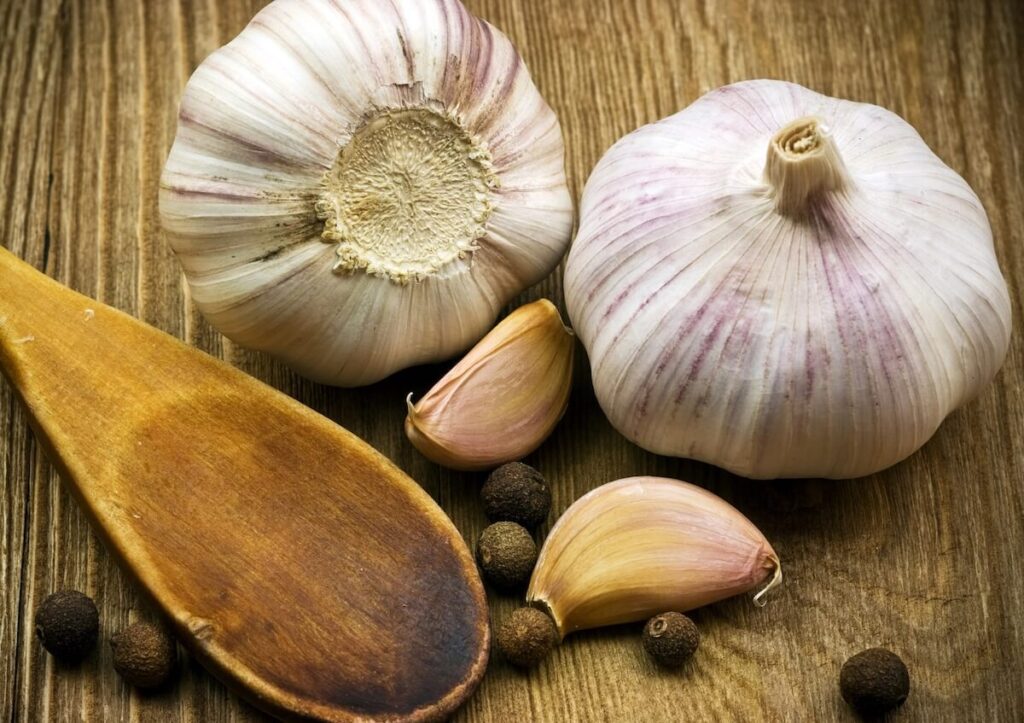
Garlic is an essential element in Filipino cooking, not just for its pungent flavor, but for the depth and complexity it brings to dishes.
Filipino cuisine often features savory and sour elements, and garlic perfectly complements this balance. The allicin released when garlic is chopped or crushed adds a distinct bite that cuts through richness and complements the tang of vinegar or tamarind.
The prevalence of garlic in Filipino cooking is undeniable. It’s a base ingredient in countless dishes, from meaty adobo stews and sizzling sisig to vegetable stir-fries, seafood dishes, and fried rice. Garlic is often sauteed in oil at the beginning of cooking to infuse its flavor throughout the dish.
Crushed or minced, garlic can be a major flavor component or a subtle background note, depending on the amount used and the cooking method. While not every Filipino dish utilizes garlic, it’s a safe bet that a significant portion will.
Facts about common Filipino foods
24. Lechon is the star of the show.

Lechon, or whole roasted pig loved for its crispy skin and tender meat, is a culinary masterpiece and a cultural icon in the Philippines.
The origins of lechon can be traced back to Spanish colonization when the technique of spit-roasting was introduced. However, Filipinos have elevated this art form to new heights, infusing their own unique flavors and traditions.
The name “lechon” comes from the Spanish word “leche,” meaning milk, as traditionally, young suckling pigs were used. Today, larger pigs are the norm, but the essence of the dish remains the same — succulent, crispy-skinned pork cooked to perfection over charcoal.
In Filipino culture, lechon holds a special place as the centerpiece of countless celebrations, from weddings and birthdays to fiestas and holidays. Sharing a lechon is a symbol of abundance, hospitality, and community. The act of breaking bread, or in this case, sharing the roasted pig, deepens bonds and creates lasting memories.
25. Halo-halo is the unofficial national dessert.

Halo-halo, a beloved Filipino dessert, is a colorful concoction of shaved ice, evaporated milk, and an assortment of sweet and chewy ingredients like beans, jellies, fruits, and sweet potatoes. Sometimes, purple yam jam (ube) and leche flan are added.
Its name, translating to “mix-mix,” perfectly captures the essence of this delightful treat. While its exact origins are debated, it is believed to have roots in the Japanese dessert kakigori. It is said that kakigori was the inspiration for many ice-based desserts found in Asia — ais kacang in Malaysia, bingsu in Korea, chè in Vietnam, baobing in Taiwan, and many more.
Regardless of its origins, halo-halo is an iconic Filipino dessert that is often enjoyed with family and friends, especially during gatherings and celebrations. If you’re visiting the Philippines, definitely treat yourself to a cup or bowl of this dessert — it’s available any time of the year.
26. Buko pie is more than just a pasalubong favorite.
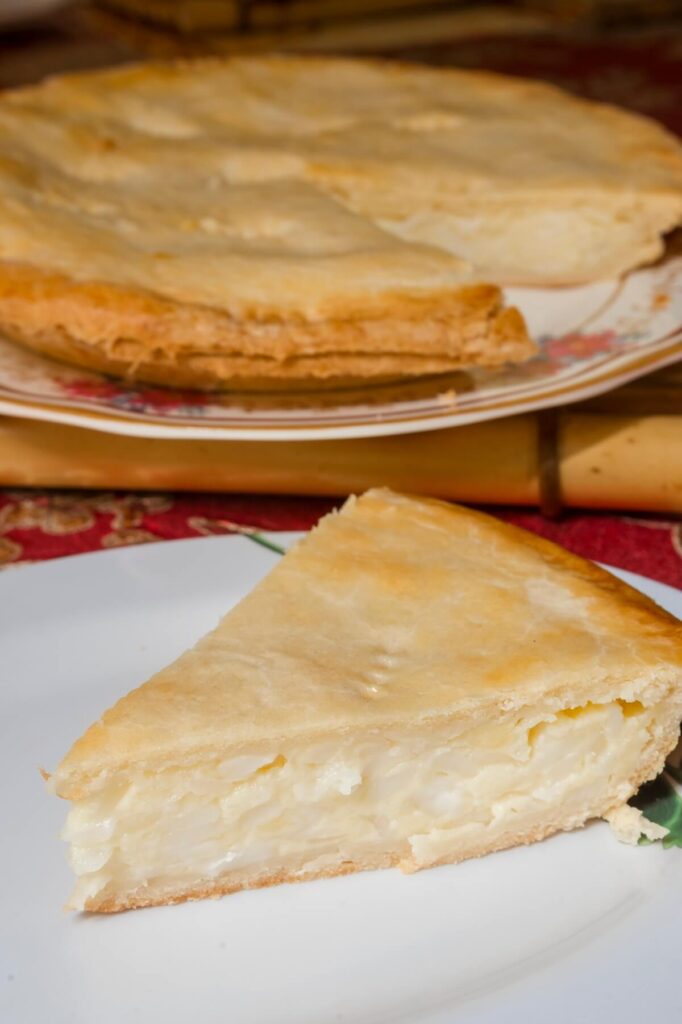
I previously talked about the Filipinos’ love for coconuts. Buko pie is a testament to this.
Considering how popular this pie is as a pasalubong (a souvenir, or a treat you bring back home for family and friends), it’s easy to think that it’s an ancient recipe. But contrary to popular belief, this beloved Filipino pastry is a relatively young invention.
Originating in the 1960s in Los Baños, Laguna, it was a stroke of genius by the Pahud sisters. Inspired by apple pie but lacking the main ingredient, they creatively substituted it with the abundant and versatile coconut. The young coconut, or buko, is the star of this delectable creation, its tender meat and sweet water contributing a unique flavor and texture to the pie.
The perfect balance of flavors and textures is what sets buko pie apart. The rich and creamy coconut filling, often enhanced with sweetened condensed milk, harmonizes beautifully with the buttery and flaky crust. If you’re visiting Laguna or Tagaytay, don’t miss out on a box (or two) of this!
27. Filipino rice cakes come in different shapes, sizes, and colors.
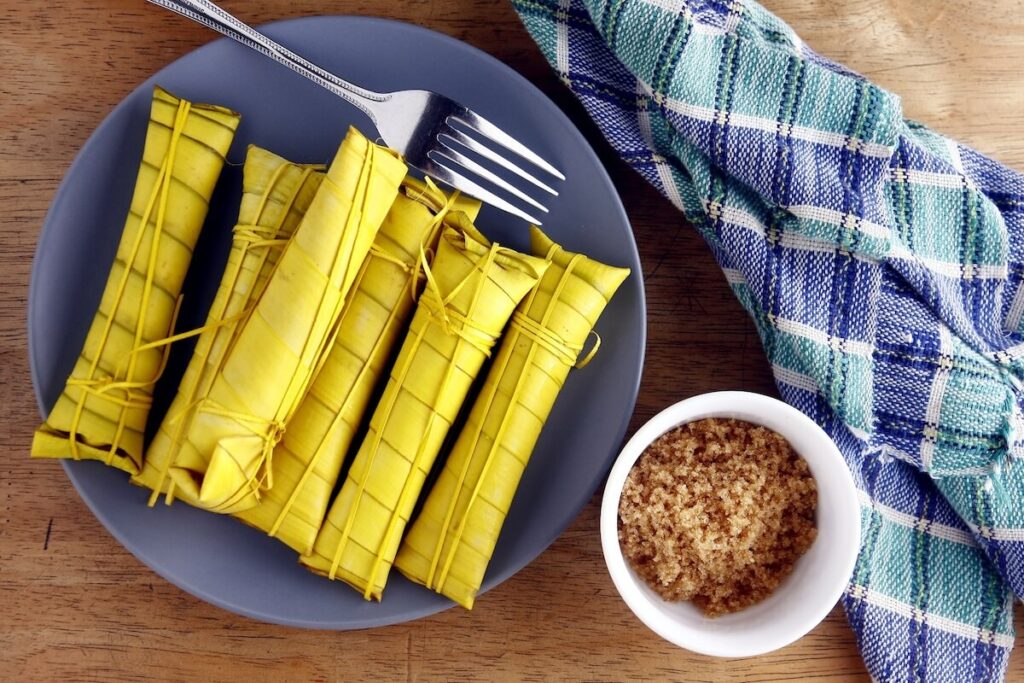
Kakanin, the collective term for Filipino rice cakes, boasts an astonishing diversity of forms, sizes, and colors. The name itself is derived from the Tagalog words “kain” (to eat) and “kanin” (rice), highlighting the central role of rice in these treats.
Primarily made from glutinous rice, coconut milk, and sugar, kakanin undergoes various cooking methods, including steaming, grilling, and deep-frying, to achieve different textures. Some, like the suman pictured above, are wrapped in banana leaves.
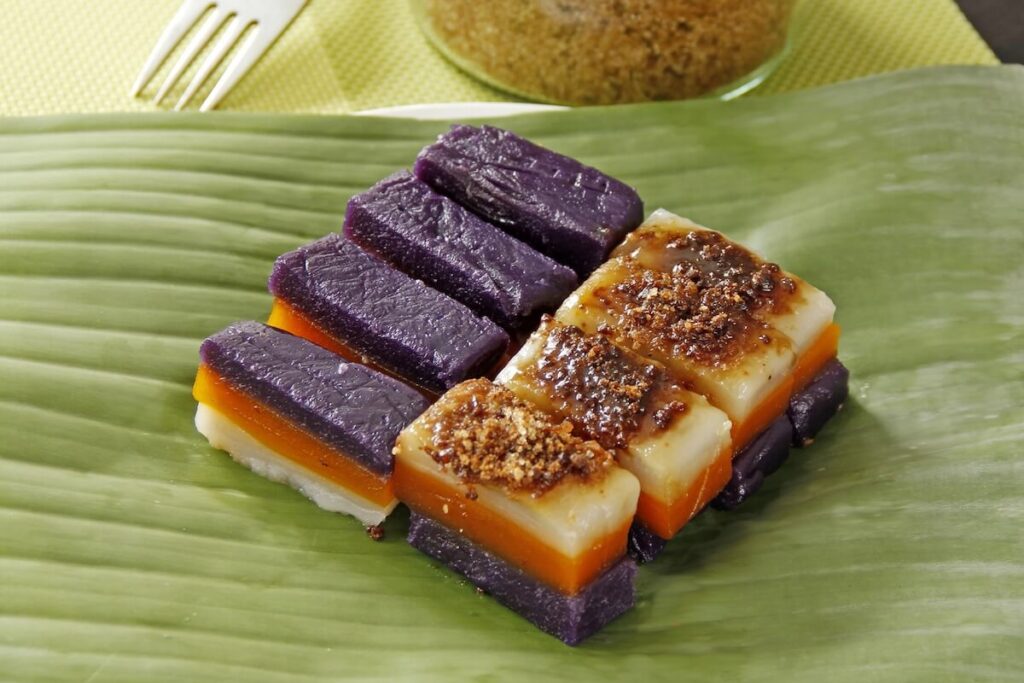
You’ll find a whole range of kakanin in the market — from the nutty and sweet biko and the chewy and sticky puto bungbong to the delicate sapin-sapin and squiggly kutsinta. These sweet delicacies are often enjoyed during celebrations and gatherings, but they’re just as commonly consumed as merienda and street food fare.
28. Banana ketchup was born out of necessity.

First off, yes, banana ketchup is a thing on this side of the world.
Banana ketchup is a uniquely Filipino condiment born out of necessity during World War II when tomato shortages plagued the country. Food technologist Maria Y. Orosa spearheaded the creation of this sweet and tangy alternative, using the abundant banana crop.
Unlike its tomato counterpart, banana ketchup boasts a sweeter and tangier flavor profile, with a naturally brownish-yellow hue. However, many commercial brands opt for artificial red coloring to mimic tomato ketchup’s appearance.
A staple in Filipino households, banana ketchup complements a wide array of dishes. It adds a delightful sweetness to fried chicken, hotdogs, and hamburgers, and it’s a key ingredient in the beloved Filipino spaghetti. It can also enhance the flavors of grilled meats, omelets, and even French fries.
29. Parties aren’t complete without lumpia.

Lumpia, a popular Filipino snack, traces its roots back to China. Introduced by early Chinese immigrants, it has since become a quintessential part of Filipino cuisine. While its origins are foreign, Filipinos have wholeheartedly embraced lumpia, adapting it to their own tastes and preferences.
One of the most remarkable aspects of lumpia is its versatility. The classic filling typically includes ground pork, carrots, and cabbage, but the possibilities are endless. From seafood to vegetables and even sweet combinations, the filling can be tailored to suit any palate. It can also be enjoyed fresh (lumpiang sariwa) for a lighter and refreshing option or fried (lumpiang prito) for a crispy and indulgent experience.
Among the many lumpia varieties, lumpiang shanghai stands out as particularly popular. This crispy variant is filled with ground pork, carrots, and onions, and is a party staple. It’s so popular that it has been named one of the best street foods in Asia.
30. Yes, fertilized duck eggs are edible.

Balut, a fertilized duck egg incubated for 14 to 21 days before boiling, is a culinary adventure that’s not for the faint of heart. While it might sound unusual, this delicacy isn’t just beloved in the Philippines but also a treat in other parts of Southeast Asia. Don’t let its appearance deter you — balut is packed with protein, calcium, and iron, making it a surprisingly nutritious snack.
Traditionally enjoyed hot, balut is often sprinkled with salt or vinegar to enhance its flavor. Its taste is a unique combination of creamy yolk, savory broth, and the texture of the developing embryo, a flavor profile that’s sure to be a memorable experience.
Thanks to the global fascination with unique foods, balut has even made its way onto menus worldwide!
Wrap-up
So, there you have it — a tantalizing glimpse into the world of Filipino cuisine! From the unexpected origins of adobo to the fiery passion of balut, Filipino food is a delicious adventure waiting to happen.
While you can savor the taste of the Philippines in many corners of the globe, there’s truly no substitute for experiencing it firsthand. So, what are you waiting for? Pack your bags, and get ready to embark on a culinary journey like no other! Your taste buds will thank you.