
Costa Rica as a country was born out of a dazzling mix of national and cultural origins. These varied influences reflect not only in the makeup of Costa Rican society, but also of course in its cuisine!

That’s going to be our subject for today. Let’s take a look at and explore the diverse and amazing world of Costa Rican food culture!
Table of Contents
An intro to traditional foods in Costa Rica
For starters, let’s take a look at some of the most renowned, popular, and well-known traditional foods of Costa Rica.
From small snacks to dinnertime favorites, these versatile and taste-rich recipes are the shining star of any Costa Rican kitchen.
1. Gallo Pinto is King
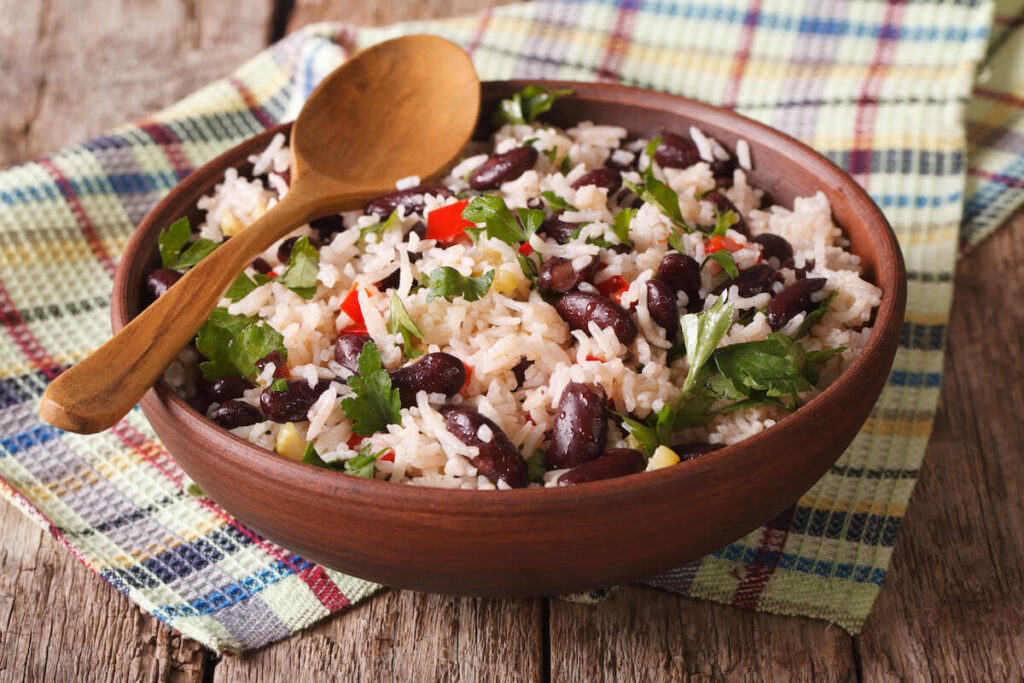
If you have to learn one word of the specifically Costa Rican variety of Spanish, make it “Pinto”. I’m only half-joking!
Gallo Pinto, or often just Pinto, is not just one of the most common recipes in Costa Rica — it serves as a basis for countless other staples, making it a really crucial element of the country’s food culture.
What is it? In plain English, a small breakfast bowl (sometimes served as an afternoon snack) consisting of a rice-and-beans base with various toppings and extras for taste.
There are as many variations of Pinto as there are Costa Rican households. Often, the rice is reused from leftovers of previous lunches or dinners, and the beans may be mixed in with fresh or fried vegetables as well as sauces and spices.
Fresh local fruit, such as avocado or guava, and fried eggs are often added on the side. And there you have the easy-to-cook, everyday Costa Rican meal!
2. Fruit, fruit everywhere
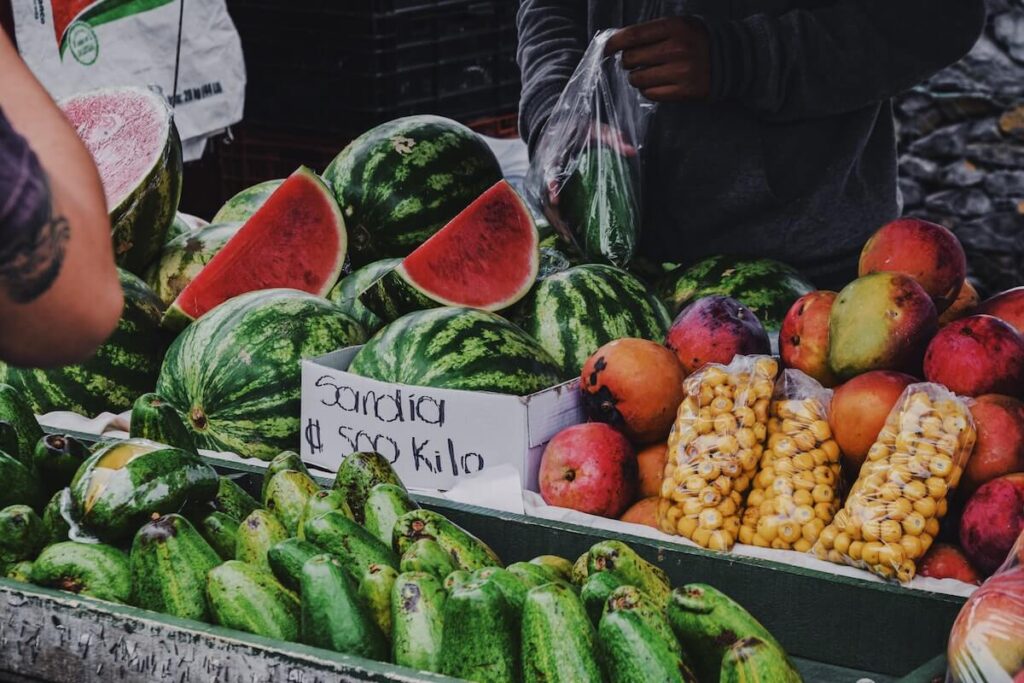
A major feature of any Costa Rican meal is the fresh fruit. After all, the country not only exhibits stunning biodiversity, but many of its crops (like bananas and coconuts) are so widely exported that they make up a significant portion of the country’s economy.
Because of this, expect a side of fruit with almost every meal. Popular choices include as mentioned avocado (which you can find on just about anything), mango, papaya, guava, melon, bananas, pineapple, cassava, and more!
3. The national beverage: jugo de tamarindo
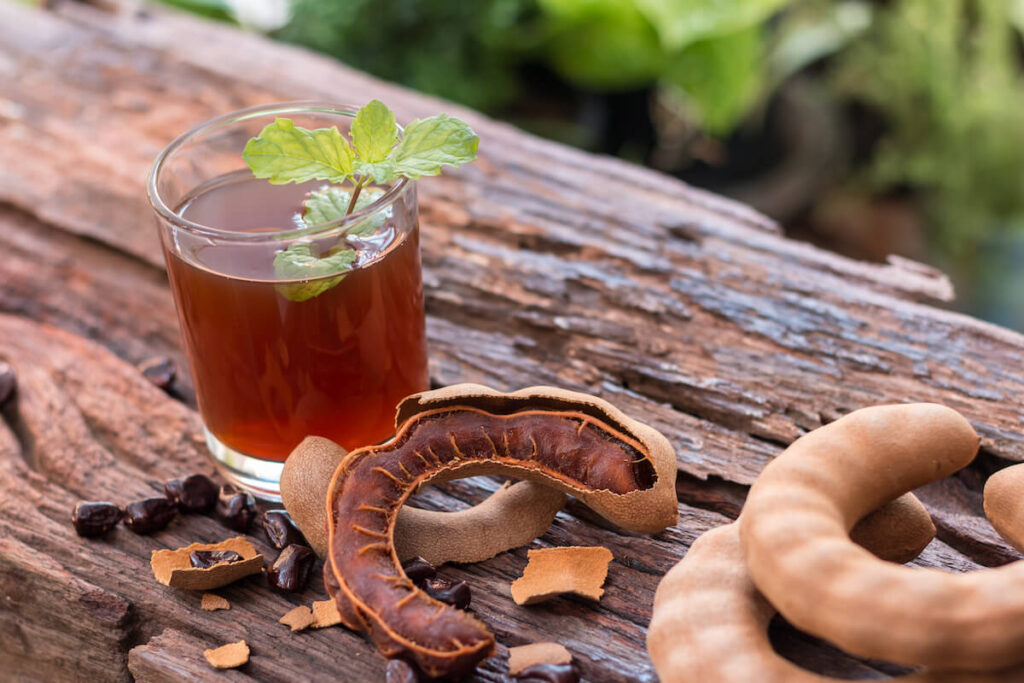
Many people are surprised to learn that Costa Rica’s one national beverage is not alcoholic. Something about that betrays the stereotypical image of an always-sunny Central American paradise — but don’t let that stop you from trying a jugo de tamarindo yourself!
The juice is prepared from the fruit of the tamarind tree, which also happens to be the national tree of Costa Rica (duh!). It might look a bit off with its dark brownish color and all, but the drink is surprisingly sweet with lovely colorful aftertastes.
4. Casado is not just for married couples

The word Casado in Spanish means “married”, so it’s a bit strange that one of the most traditional and popular lunch options at Costa Rican restaurants bears that name. In fact, even the locals aren’t quite sure how it came about!
There are plenty of origin stories out there, relating to everything from the number of ingredients to the way they are arranged on the plate. But however it may have come about, casado deserves to be on your culinary radar!
If you squint a bit, casado essentially looks like the heftier, more nutritious brother (or spouse, if you will) of Gallo Pinto. It also uses rice and beans as a base, but the end result is much heartier and usually served in significantly larger portions.
Usually, this includes plenty of meat (chicken and turkey are the most common) as well as a fresh vegetable salad and fried eggs. Even “fuller” casados that include seafood, grilled veggies, fresh cheese, and a tortilla are also common — and don’t forget about the jugo de tamarindo to top it off!
5. Don’t forget your patacones!

Among the staple ingredients of Costa Rican cuisine are plantains, or green, unripe cooking bananas. They may be used to add a healthy dose of sweet taste and nutrition to almost any meal, including many (or honestly, all if you’re creative enough) of the ones on today’s list!
One extremely beloved Costa Rican snack that deserves mention at this stage are patacones, which are made by slicing, flattening, and frying pieces of plantain.
Savory and delicious, patacones are the universal Costa Rican side dish and dessert in one. You will easily find them in a bowl at the center of the lunch or dinner table just about anywhere in the country.
Often, patacones will be spiced up with homemade sauces, fresh cheese, or chopped vegetables.
Costa Rican eating habits and customs
Costa Ricans are generally very proud of their cuisine, and it shows. While most of the traditional Costa Rican staple dishes are rather simple in concept, preparing and enjoying them is coveted as an art form and a way of life.
This means that Costa Rica is full of unwritten rules and customs that make it so unique to experience as a traveler! Here’s a selection of some of the ones that stood out to me the most.
6. Abuela knows best

This is a bit of a generalization, but by and large, most of the great classic Costa Rican recipes you will encounter have been passed down by oral tradition through the generations.
This, combined with the very pronounced importance of family life in Costa Rican culture, means that by far the best way to enjoy the most famous Costa Rican dishes is to experience them in their natural habitat: homemade, usually by a talented abuela who has honed her craft all her life.
7. Sodas present a healthy alternative
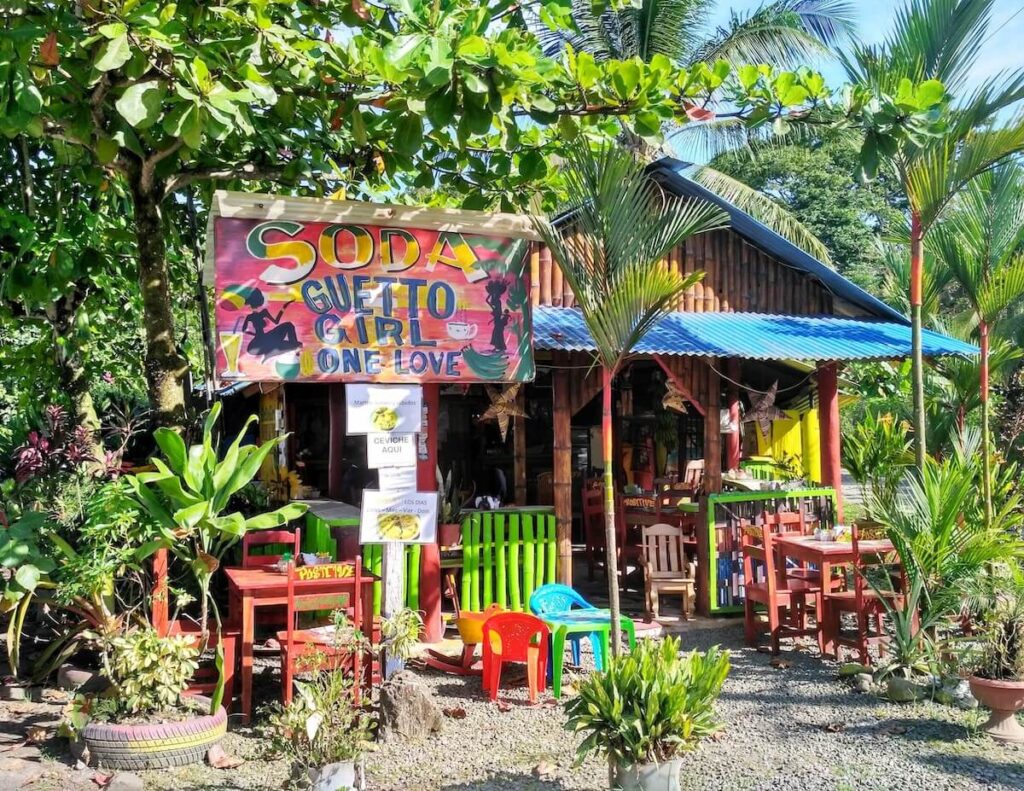
Of course, not everyone will have the luck to be invited to a genuine Costa Rican family lunch table — and even if so, you will probably want to eat out sometime anyway.
Your best option, in this case, are sodas. No, I am not talking about soft drinks of any kind!
Sodas in Costa Rica are a type of low-cost, local restaurant. Usually, they only serve a few staple recipes, and the majority of them are family-owned and source all their ingredients from the local town or village.
Apart from that, each soda is a world unto itself, with its own rules and habits. Some operate more like traditional restaurants, with written menus and the same formal etiquette as in most of the Americas.
Others are fashioned more in the style of canteens, where you pick and choose your own meals based on a list of ingredients.
8. You won’t have trouble finding snacks

Street food in Costa Rica is simple and easy to digest. It’s usually a blend of fresh fruit and some sources of protein (eggs, chicken, beans, and such) wrapped in a tortilla in some form or another.
Quick snacks like these are incredibly easy to find no matter where you happen to be in the country. Street vendors will often travel along busy (and even far less busy) roads and offer their self-made desserts and smaller meals.
I learned just how important these street vendors are when traveling from the capital city of San Jose to the Pacific coast by bus, across about half of the country. On our way, we stopped at least a dozen times in the middle of a country road because people wanted to get out and buy some fresh mango or pineapple from a trader who happened to be passing by!
There are also plenty of markets and bakeries in most towns where you can get fresh produce and local specialties relatively cheaply. Especially in more urban areas, these can be a great opportunity.
9. Meal times and portions in Costa Rica

Contrary to how it works in most of North America, Costa Ricans operate on the principle that three roughly equal-sized meals are the key to a successful, happy day.
Most ticos and ticas will start off with a (by Western standards) large breakfast sometime between 7 and 9. This is followed up by an equal-sized lunch at around noon.
Students and workers alike usually get enough time off around these hours to head back home and have lunch together with the whole family household – a great Costa Rican tradition that once again shows how important family life is in the country!
Dinner is timed with the setting of the sun, as in most of Central and South America. Because Costa Rica is located only a few degrees off the equator, sunsets are remarkably consistent year-round: always right around 7 pm!
Note that it is perfectly common to use leftovers from lunch for the evening meal, even on the same day. Special dinner recipes are mostly reserved for family celebrations and holidays (to their credit, ticos do celebrate a lot of those!).
10. Restaurant culture and etiquette in Costa Rica
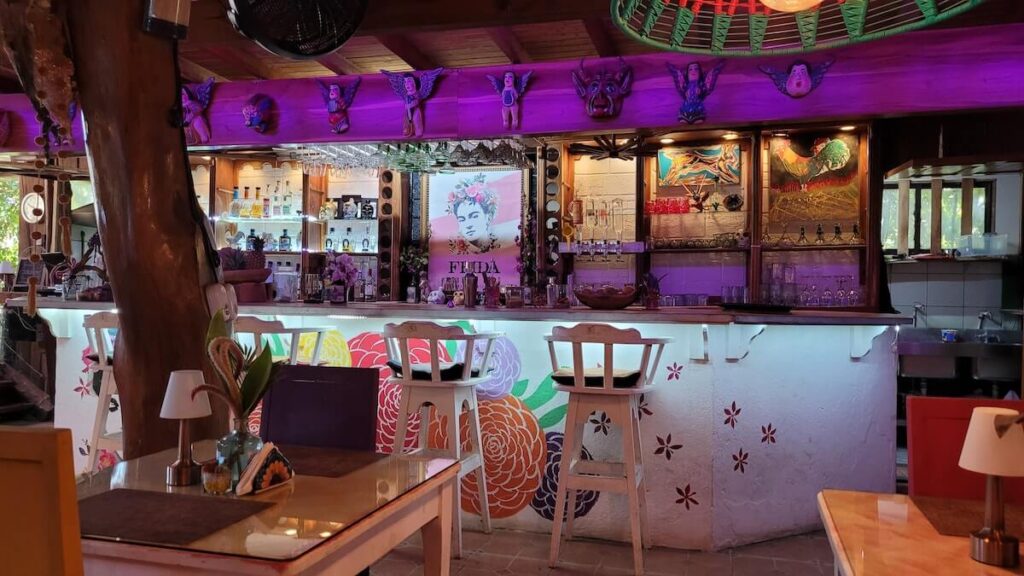
For the most part, restaurants in Costa Rica function the same way as in most other American countries, especially those south of Mexico.
However, there are a few curveballs that foreign travelers should watch out for — believe me, you’ll save yourself some potential embarrassment!
Unlike in North America for instance, Costa Ricans like to always keep both of their hands in view and on the table while seated, even when they’re not eating. Not doing so is usually not a big deal, but it can seem a bit sloppy.
A major pet peeve, however, has to do with salads. You will probably come across vegetable salads a lot during your stay in Costa Rica, so many meals are based around them, and they’re very often added on the side no matter what.
You should know, then, that using anything but a fork to eat salad is an absolute no-no. Especially cutting the lettuce or any other leafy greens with a knife will get you eye-rolled at in no time.
When you’re done with your meal, also remember that tipping in Costa Rica might work a bit differently than what you’re used to. Every restaurant in the country has to add a sales tax and a separate obligatory tip of 10% to their bills, so adding anything on top is mostly considered optional.
For exceptional service and where you consider it well-deserved, feel free to add a few coins or up to a 2,000-colones note for an average lunch for one or two people.
Costa Rican dining culture facts
Now, let’s take a look at some unique and fascinating facts about all aspects of Costa Rican dining culture – from its history to its habits and beyond!
11. You might need to swap hands

Here’s one odd fact about dining in Costa Rica: you’re supposed to hold your knife in your left and your fork in your right hand. Most of the world has it the other way around, and it’s still a mystery to me why it is any different in Costa Rica!
In any case, don’t expect to be called out on this if you don’t get it right immediately. Many Costa Ricans, especially the younger generation, now use the “Northern” way of holding cutlery anyway, so it’s not a hard and fast rule. Just a curious observation!
12. There’s an eclectic mix of international influences
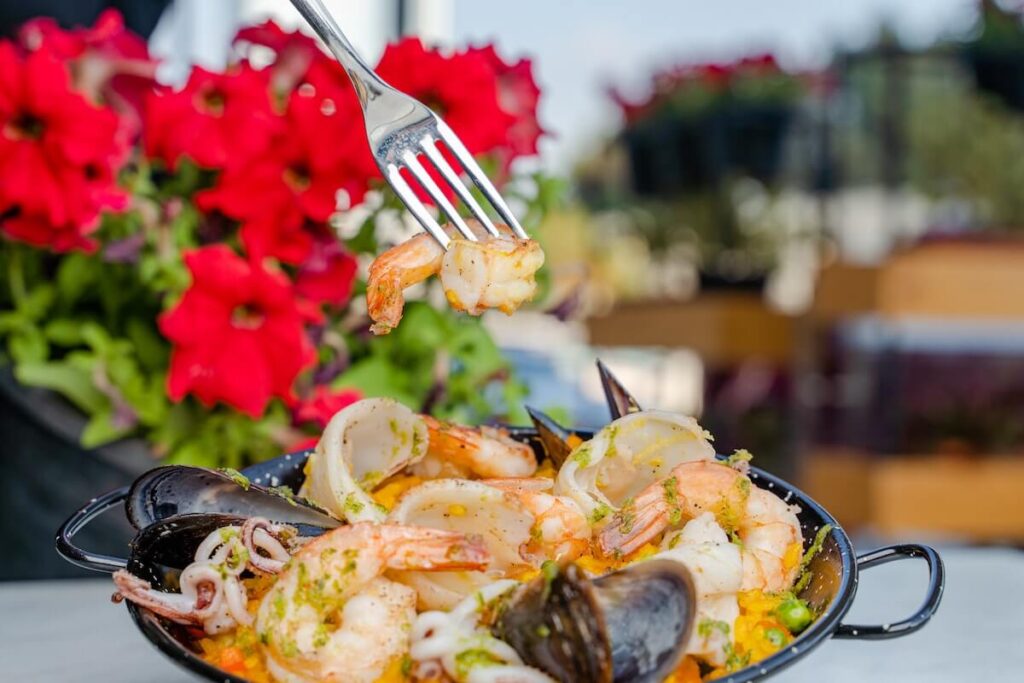
Costa Rica has a stunning and rich history filled with international clashes and exchanges throughout the generations. This is reflected in the food scene, of course!
For example, much of the seafood in dishes such as casado is prepared and sourced completely differently depending on whether you’re closer to Costa Rica’s Atlantic or Pacific coast, respectively.
On the former, Afro-Caribbean and Native traditions reign supreme, utilizing coconut milk very prominently for both dressing and cooking, whereas the Pacific combines more influences from Mexican, Spanish, and North American ideas. In the far north, there are also some stunning examples of surviving Mayan cuisine, kept alive by their modern-day native descendants!
Condiments and spices used throughout the country also differ significantly depending on where exactly you’re located and what nationality’s food traditions are the most prominent in that region.
13. Grab a pint of Imperial while you’re there

Here’s another example of Costa Rica’s surprisingly rich international history!
You probably won’t have a hard time finding large, roadside signs all throughout Costa Rica’s country roads reading Imperial. This is advertising for the country’s national beer, a kind of lager that is similar to Pilsner (which, by the way, is also huge in Costa Rica).
Why beer of all things? The answer lies in history, of course! Especially throughout the late 1800s, Costa Rica experienced a ton of immigration from German citizens.
Many of these happened to be talented brewers, and soon this created a significant beverage scene in the country that is rather unique compared with Costa Rica’s neighborhood.
14. Coffee out of a sock is surprisingly yummy!

Costa Rica is one of the world’s largest producers of coffee beans, so as you would expect the country offers some world-class brews.
Unlike many others in the Americas, Costa Ricans have their coffee with milk by default, no matter the time of day. Be sure to specify your preference on this when out at a café!
But where it really gets interesting is how coffee is traditionally made in Costa Rica. As a sign of its prideful coffee culture, Costa Rica has its very own design of coffee maker – a neat little device called a chorreador, which was apparently already used in pre-Colombian times!
In addition to that Spanish name, the chorreador is also known by the nickname of “coffee sock”, or “little coffee bag”.
That’s not very appetizing, but it’s got to do with the chorreador‘s appearance!
In basic terms, coffee is first ground by hand and then put in a sort of filter made of cloth, which hangs down like a sock. A cup or mug is placed right below and boiling water is poured through the cloth. This extracts the coffee, and voilà!
It’s a really simple design, so much so that most chorreadors in Costa Rica are homemade. Their appearance obviously varies a lot, from extremely cheap and basic to stunning displays of craftsmanship featuring ornamental woodcut patterns.
What a nice way to keep a centuries-old tradition going!
15. There’s a growing trend of fusion dining
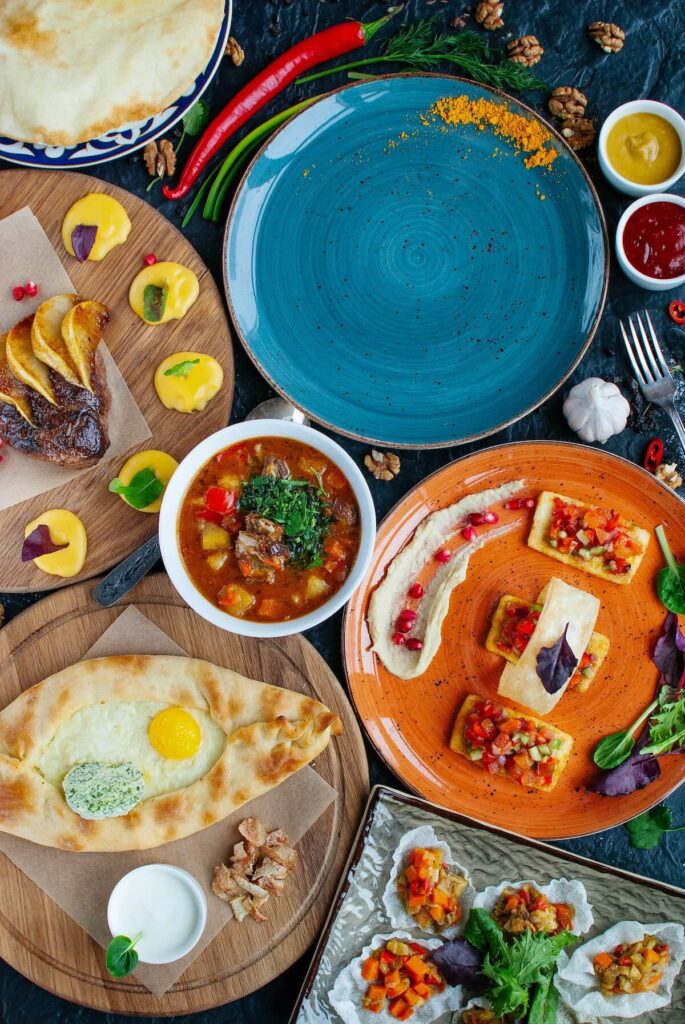
In today’s Costa Rica, especially in the Central Valley in and around San José, the foodie landscape is evolving. More and more innovative, small restaurants are popping up across the country delivering fresh takes on the existing culinary landscape.
The most widespread trend right now is fusion — combining influences from various Costa Rican traditions with those from abroad.
It’s a natural choice considering the modern-day demographics of Costa Rica. Since at least the 1960s, countless travelers from places like the United States, Jordan, Turkey, Germany, France, Spain, Italy, Portugal, China, and more have made the tiny paradise country their home, creating a significant expat minority.
The last time I was in San José in late 2022, this shift was already displaying huge leaps. I caught locals and foreigners alike standing in a huge line to order at a brand-new bubble tea shop, opened up by fresh Korean immigrants just a short while prior.
And only a few minutes away, there was a popular Brazilian restaurant that blended their own national dishes with Costa Rican classics and Middle Eastern influences!
Concepts like these are becoming more and more commonplace in Costa Rica. Let’s hope that that trend continues, as it’s only made dining in the country that much more fun and exciting!
Conclusion
I hope you enjoyed this trip through the amazing world of Costa Rican food culture!
As you can tell, this tiny country is full of culinary wonders, and I hope I managed to give you one more reason (or a few) to put it on your list!
Feel free to tell us more about your experiences with Costa Rican cuisine down in the comments. That’s all for now, till next time!

thank you so much, we both enjoyed reading this. We are heading to the Caribbean side of Costa Rica, Cocles beach near Panama, on 8. Feb.
so looking forward to it!