
Walking through an airport with a wedge of aged Gouda from Amsterdam or a wheel of creamy brie from Paris feels like carrying a piece of your travels back home. But as you approach the security line, the anxiety kicks in: can you bring cheese on a plane, or is your delicious souvenir destined for the TSA trash bin?
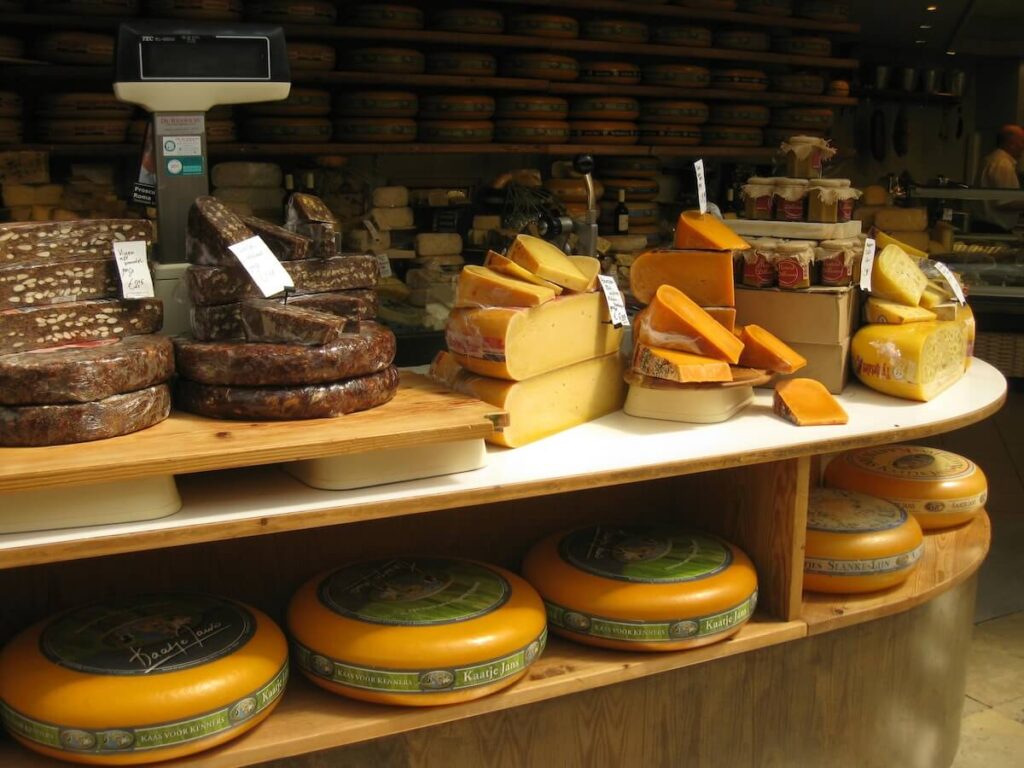
The short answer is yes, though the “how” depends entirely on the texture of the cheese and whether you are flying domestic or international. TSA rules can be confusing, especially when one type of cheddar is treated like a solid while another is treated like a liquid.
Fret not. This article provides a comprehensive look at the regulations for both carry-on and checked luggage, along with practical packing tips to keep your dairy fresh. Understanding these details is essential to avoiding unnecessary delays, stressful bag searches, or the heartbreak of having your expensive artisanal finds confiscated at the gate.
Please note: The following has been written using the TSA guidelines for flights in the U.S. If you are traveling from or in another country, please ensure you check their guidelines for safe flight and permitted substances before check-in.
Table of Contents
Solid vs. creamy cheese
Can you bring cheese on a plane? The answer depends on whether your snack is a solid or a spread.

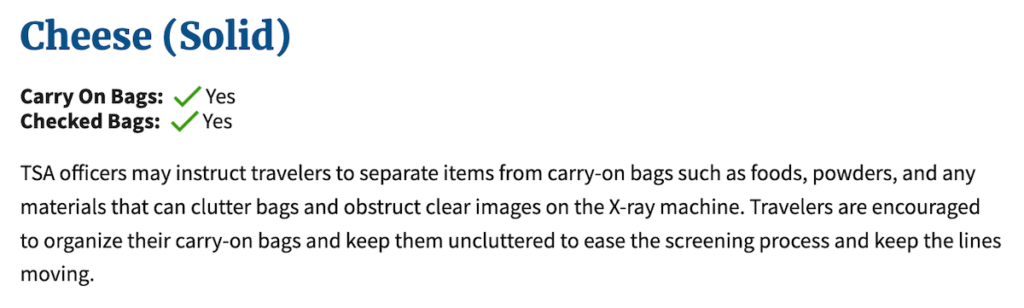
The Transportation Security Administration (TSA) categorizes food based on whether it can be “spilled, spread, or sprayed.” Solid cheeses like cheddar, Parmesan, and Gouda are the “easy travelers”—you can pack them in unlimited quantities in both carry-on and checked bags.
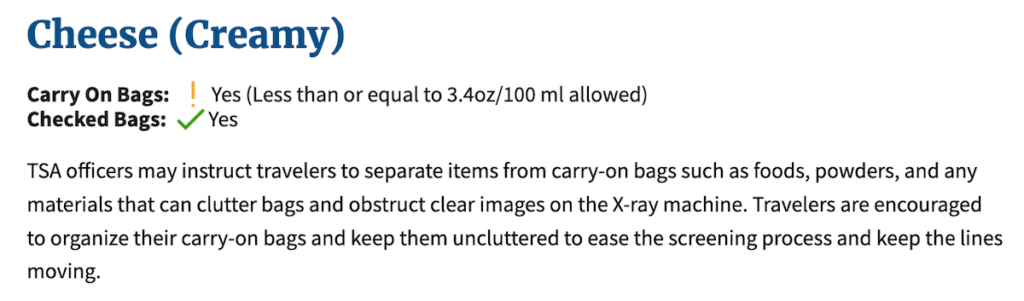
However, creamy varieties like brie, ricotta, or feta in brine are treated as liquids. These must follow the 3-1-1 rule for carry-ons, meaning they must be 3.4 ounces or less.
Because cheese is an organic material, it can sometimes appear dense or unusual on X-ray scanners, which may trigger a manual bag search. To avoid delays, don’t even think of concealing your cheese. Keeping it accessible or in a separate bin helps officers clear it quickly.
If you’re carrying large amounts of soft cheese, it is best to pack it in your checked luggage to avoid confiscation. This ensures they make it home without unnecessary stress at security.
Can you bring cheese in your carry-on luggage?
Yes, but again, the main thing to remember is the texture of the cheese. Solid cheeses, like blocks of sharp cheddar, wheels of Manchego, or wedges of Parmesan, have no weight limit and are generally easy to clear.
It’s cheese lover’s day! Are you still packing around your cheese head? It’s gouda to go, along with any other solid cheese you’d like to bring.
— TSA (@TSA) January 20, 2026
If you’re at a loss on what else you can pack, reach out to the G.O.A.T. @AskTSA. pic.twitter.com/IbATz0N1tJ
However, be aware that dense blocks of cheese can sometimes look suspicious on an X-ray screen. Because organic matter can occasionally mimic the appearance of explosives, a TSA officer might need to pause the belt for a closer look or a manual bag search.
Soft or spreadable cheeses are a different story. Since varieties like brie, goat cheese, or Camembert fall under the “liquid, gel, or aerosol” category, you must strictly adhere to the 3.4-ounce (100ml) limit if they’re in your carry-on.
Who likes a plane bagel? If this snack is your everything, it’s good to go. Just make sure any cream cheese not on your bagel is 3.4 oz or less, and that each container fits within a single quart-size bag per passenger. pic.twitter.com/F9RYU6hhTL
— TSA (@TSA) January 15, 2026
A pro tip to keep things moving: take your cheese out of your bag and place it in a separate bin for screening. This transparency makes the TSA officer’s job easier and helps you breeze through the checkpoint without holding up the line.
Can you bring cheese on a plane via checked luggage?
If you are traveling with a significant haul or several containers of spreadable cheese, checked luggage is definitely your best bet. Since the 3.4-ounce restriction only applies to carry-ons, you can pack as much brie or Gorgonzola as you like in your hold baggage without worrying about it being tossed at security.
Creamy, spreadable food items, like cottage cheese, must be in containers 3.4oz or less and placed in your quart-sized bag with other travel-sized liquids, gels and aerosols. Larger sizes and quantities must be packed in checked bags. See details at: https://t.co/4KLR9PffjI
— AskTSA (@AskTSA) December 7, 2024
Another major advantage is the temperature. The cargo hold is generally cooler than the pressurized cabin, which helps keep your cheese from sweating or losing its texture during a long-haul flight.
However, odor management is crucial when your cheese is sharing a confined space with your wardrobe. Stronger varieties like Epoisses or Limburger can easily permeate your fabrics if not properly sealed.

To keep your clothes from smelling like a French deli, it is a good idea to double-bag your cheese or use airtight containers. This extra layer of protection keeps the scents contained and ensures that your favorite stinky cheese doesn’t leave a lasting impression on your clothes.
International travel and customs regulations
While domestic flights are relatively simple, international travel introduces a new layer of complexity: customs.
Many countries, including the U.S., have strict regulations to prevent the spread of animal diseases like Foot-and-Mouth Disease (FMD). Because of this, certain dairy products from specific regions may be restricted or prohibited.
2: Customs and Border Protection manages entry procedures into the U.S. For their guidance on bringing food into the country, pls visit: https://t.co/qp3grQPpFX
— AskTSA (@AskTSA) January 1, 2024
Generally, solid hard or semi-soft cheeses are allowed, but unpasteurized “raw milk” cheeses or those in liquid form (like cottage cheese or ricotta) can face tighter scrutiny depending on their country of origin.
The most important rule is to always declare your cheese on your customs form. Even if you are certain your cheese wedge is permitted, failing to mention it can lead to hefty fines, sometimes reaching hundreds or even thousands of dollars. It is much better to have a customs officer take a quick look and approve your haul than to risk a penalty.
When in doubt, keep the original packaging and receipts handy to prove the origin and ingredients of your delicious souvenirs.
Packing tips for freshness
Vacuum sealing
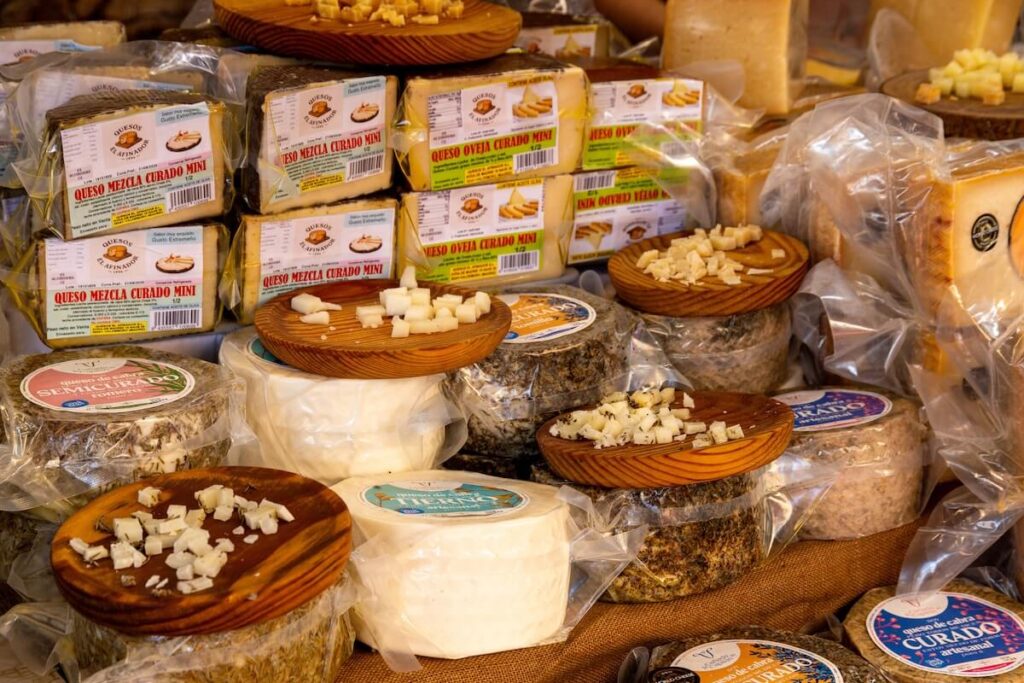
Highly recommended for traveling with cheese, vacuum sealing removes all air, which significantly slows down spoilage and keeps the cheese from drying out during the flight. As an added bonus, it’s the most effective way to contain strong odors, ensuring your luggage (and fellow passengers) won’t be overwhelmed by pungent aromas.
Ice packs
If you need to keep your cheese chilled in a carry-on, pay close attention to your ice packs. To pass through security, they must be completely frozen solid. If they are even slightly slushy or have any liquid at the bottom, the TSA will treat them as a liquid and likely confiscate them.
The “butter barrier”
If you’re traveling with a cut wheel or a large wedge, the exposed side can quickly become dry and waxy. A clever trick is to rub a thin layer of butter over the cut surface. This creates a natural seal that locks in moisture and keeps the cheese creamy until you get it home.

Conclusion
Fortunately, bringing cheese on your journey is easy as long as you make the distinction between solids and liquids. Remember, hard cheeses are essentially worry-free, while soft, spreadable varieties need to follow the 3.4-ounce rule for carry-ons or be tucked safely into your checked luggage.
Don’t let the logistics discourage you—traveling with your favorite flavors is one of the best ways to bring your trip home with you. Pack smart, declare your food, and enjoy your yummy finds!

And because rules can change and international customs are often strict, always double-check the regulations for your specific destination and airline. Before you head to the airport, I recommend using the TSA’s “What Can I Bring?” tool, sending a quick message to @AskTSA on X, or reading any of our TSA guides.