
Pisa is a city like a few others. Despite a population of just past 100,000 — peanuts compared to nearby Florence or Rome — it has become one of the most recognizable places in the whole world. No travel montage is complete without a shot of that famous leaning tower, after all!
But is that it? Is Pisa just a one-trick pony, not much of a sight beyond its one claim to fame?

In other words: is Pisa worth visiting?
If you’re asking me, the answer is a loud and clear sì! However, don’t just take my word for it alone. Instead, let’s go through a few more detailed reasons why Pisa deserved a closer look from you.
Especially if you’ve written it off as a minor landmark in the past, you might be surprised at how much culture, beauty, and adventure you can gain out of this little Tuscan town!
Table of Contents
Why some travelers avoid Pisa
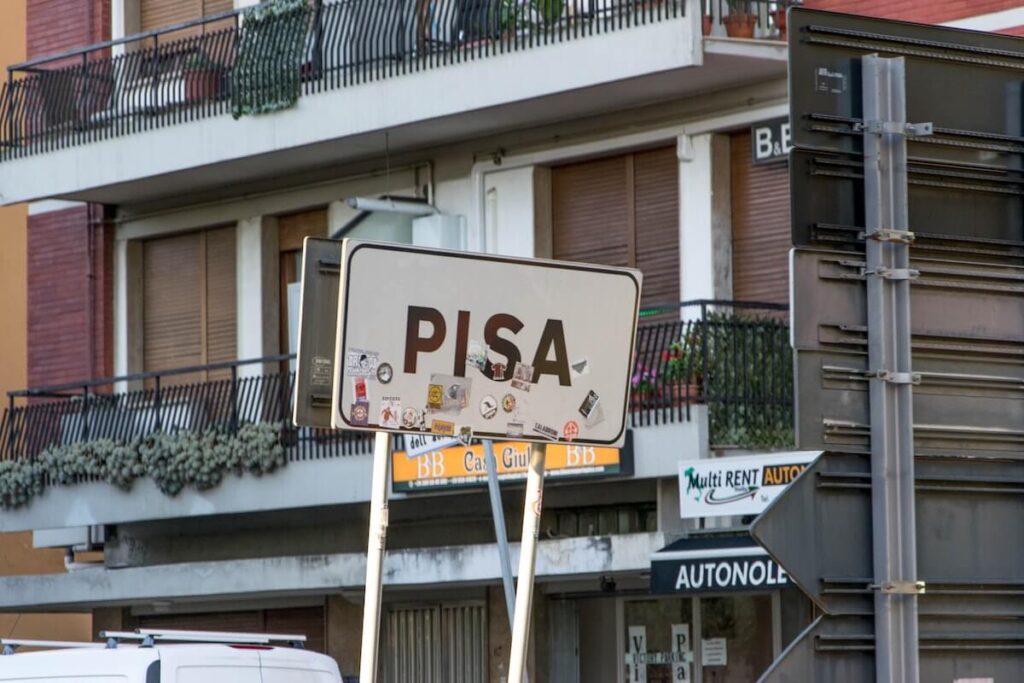
For the sake of fairness, let’s first take a look at why some of you might actually want to give Pisa a pass. Despite being one of the most famous cities in Italy, Pisa is also one of the less frequently visited, and of course, there are good reasons for that.
First of all, Pisa is a fairly small place. With a total land area roughly corresponding to that of Brooklyn, it’s fairly soon till Pisa will start looking familiar to you. Of course, that doesn’t have to be a bad thing — but those expecting a huge, bustling city the likes of Florence are likely to be disappointed.
Speaking of Florence, that would be the other big reason why many travelers skip Pisa. Only an hour away (closer to 30 minutes if you rush it) and bigger in every way, with more sights, more things to do, more food, more everything, Florence steals the show for many people.
Why is Pisa worth visiting?
All the above is totally understandable, but I am convinced that there is far more to the authentic Tuscan beauty of Pisa than you might think.
Let me prove that to you with the following 15 reasons why I think Pisa is definitely worth a spot on your list!
1. The Piazza dei Miracoli is a must-see

That Pisa is home to the world’s most famous leaning tower is a self-explanatory statement.
However, far too many people are unaware – and even those who aren’t might still neglect – the beauty and significance of the Piazza dei Miracoli.
What is it? In short, a large public square, smack-dab in the heart of Pisa, housing not only the famous crooked tower but also a whole arena of other notable Italian landmarks, all extremely important to the national and wider European history.
There’s the Duomo, the ancient cathedral where the leaning tower serves as the campanile (bell tower) for, as well as the majestic yet imposing Campo Santo, originally built as something akin to a holy burial ground.
The final prominent sight within the square is the Battistero di San Giovanni, a monumental baptistry that is instantly recognizable by its ornamental dome structure.
All of these count among the most significant and breathtaking symbols of medieval Italian architecture and history – and in Pisa, you can view them all side by side!
2. It’s one of Europe’s oldest (and cutest) university towns

The University of Pisa was founded as early as 1343, making it one of the oldest higher-level institutes of education still active worldwide.
The presence of this large uni attracting students from all over Italy and the world means that much of Pisa is defined by its student population. Compared to much of Tuscany, and indeed much of Italy as a whole, Pisa is a very young and youthful town.
To me, this is not just a great statistic that every pisano should feel proud of – it’s also a personal matter. I myself attended the University of Pisa on a foundation year, and the people I met there — fellow students but also academics — ended up becoming some of my most significant and cherished friendships.
Suffice it to say that if you enjoy the university lifestyle even one bit, you’re going to love the atmosphere in Pisa!
3. The sunsets by the river are priceless

The river Arno shapes much of the local landscape in and around Pisa, cutting right through the city. Now as 500 years ago, it also defines Pisa’s most frequented hangout spots.
Both the young and the old rush towards the water during the afternoons and evenings — whether to have a chat over an espresso, attend one of Pisa’s many festivals (almost all big events are usually staged by the river), or simply admire the view.
Especially the latter is something that I can only recommend to any serious traveler. Simply put, the sight of orange-pink sun rays striking the beautifully weathered ancient facades of Pisa and the waters below is something magical that you never quite forget.
4. The Marina is quiet, peaceful, and sunny year-round
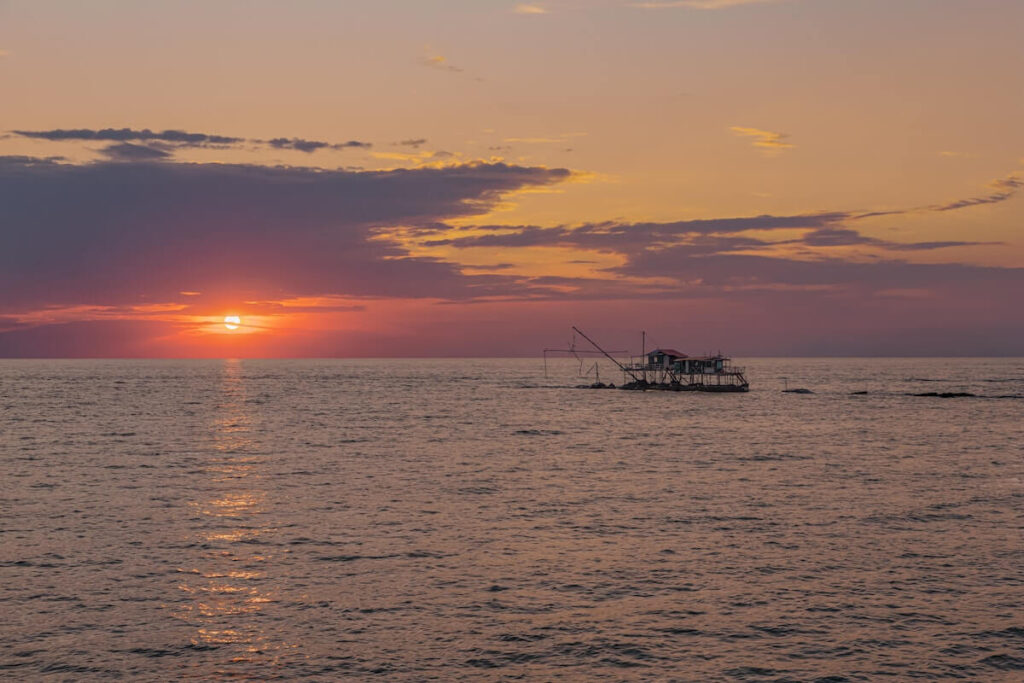
The Arno riverbank isn’t the only place in Pisa where you can relax and have a good time by the water, taking in some sun or relaxing with a good book. Pisa also has its own resort and seaport, the Marina di Pisa.
Because it is actually located a few kilometers away from the town’s center, many foreign visitors often miss it. However, among Italians both local and from other regions, it is a well-known and beloved spot that gets a lot of traction (and traffic) during peak summer.
The Marina and its outlying beaches have just about everything you could ask for from the Tuscan seaside – gentle waves, extremely clear water, near-white sand, and unbelievable charm dripping from its narrow streets.
Originally built in the late 1800s specifically to attract more tourists to the Tyrrhenian sea, the Marina quickly established itself as one of Pisa’s greatest attractions, especially thanks to its numerous bathhouses and the impressive Art Nouveau architecture.
5. Pisa makes the best gelato in the world

Okay, this one might be controversial (especially to Tuscans from elsewhere), but few that have tasted gelato pisano will be able to contest the fact that Pisa offers some of the best cool, sweet delights you can get.
True artisan ice cream has been a specialty here for centuries, and you’d do yourself a disservice to not try it at least once. Radical, exotic flavors and rainbow colors are not the norm here as much as in boutique ice cream stores in North America, but rather the focus lies on skillful execution and peak-quality ingredients.
6. It’s incredibly walkable and bike-friendly
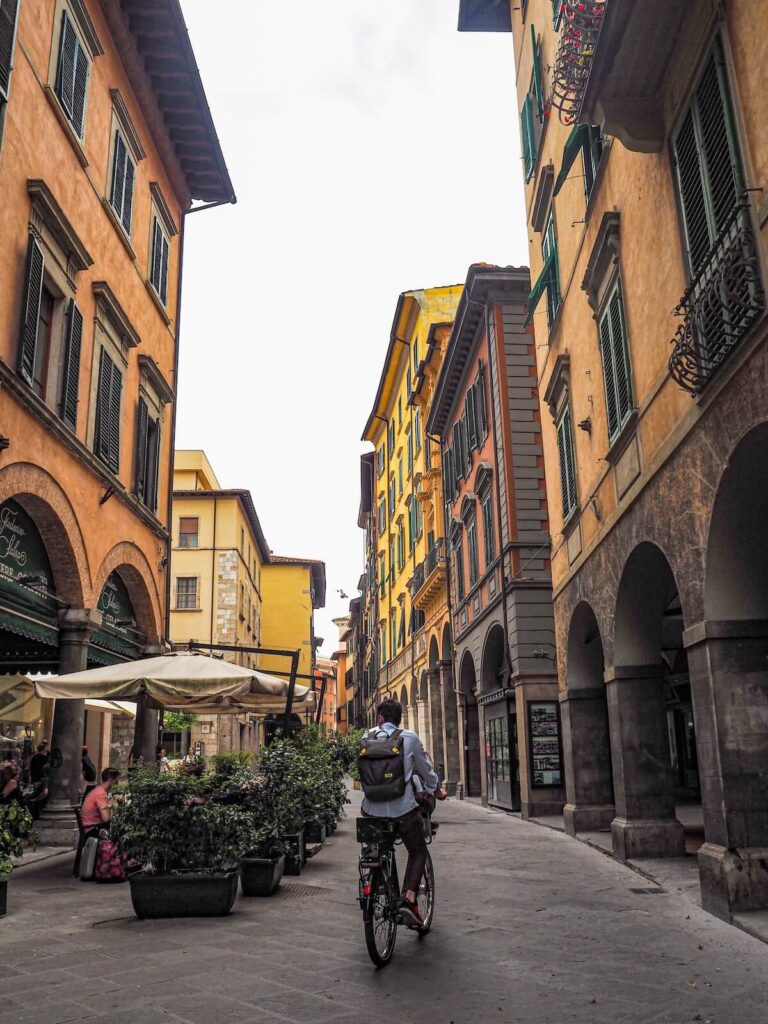
On top of being fairly compact in size, Pisa is also wonderfully pedestrian-friendly. Pretty much the whole town retains its original medieval layout, which was heavily optimized for travel on foot.
As such, expect lots of cobblestone walkways, narrow alleys, and smartly integrated bike routes. For small excursions outside, for instance to the nearby national parks, especially the latter are not just convenient, but also offer breathtaking sights of the nearby countryside.
7. The beauty of Tuscany is right at your doorstep

Speaking of which, don’t make the mistake of just meandering around the old town center all day! Pisa is literally a few minutes from San Rossore, one of Italy’s most stunning natural parks which features thick marshes and swamps – and only minutes away, real sand dunes facing the sea!
Sights like these are plentiful in the area surrounding Pisa. On top of that, major destinations, like the cozy, luxurious port town of Livorno and the Tuscan capital Florence, are close enough to make for easy day trips.
8. Pisa is a city of art and culture
From its earliest days, Pisa has distinguished itself as one of Italy’s most artistic cities. And that’s saying a lot, in a country that gave us Michelangelo, da Vinci, and others!
Pisa has served as the inspiration for countless poets, from Dante Alighieri (yes, that Dante) to Gabriele D’Annunzio, one of the most important of the Italian Romantic poets, who frequently alluded to it in his works.
Giosuè Carducci, Italy’s first Nobel Prize laureate in literature, was also born just outside of Pisa and attended the Scuola Normale Superiore.
Art features all over, from the facades of the main university building to the awe-inspiring frescoes of Pisa’s churches! More than anything else, Pisa’s poets, writers, and artists of all kinds have left their mark on the city’s wider landscape.
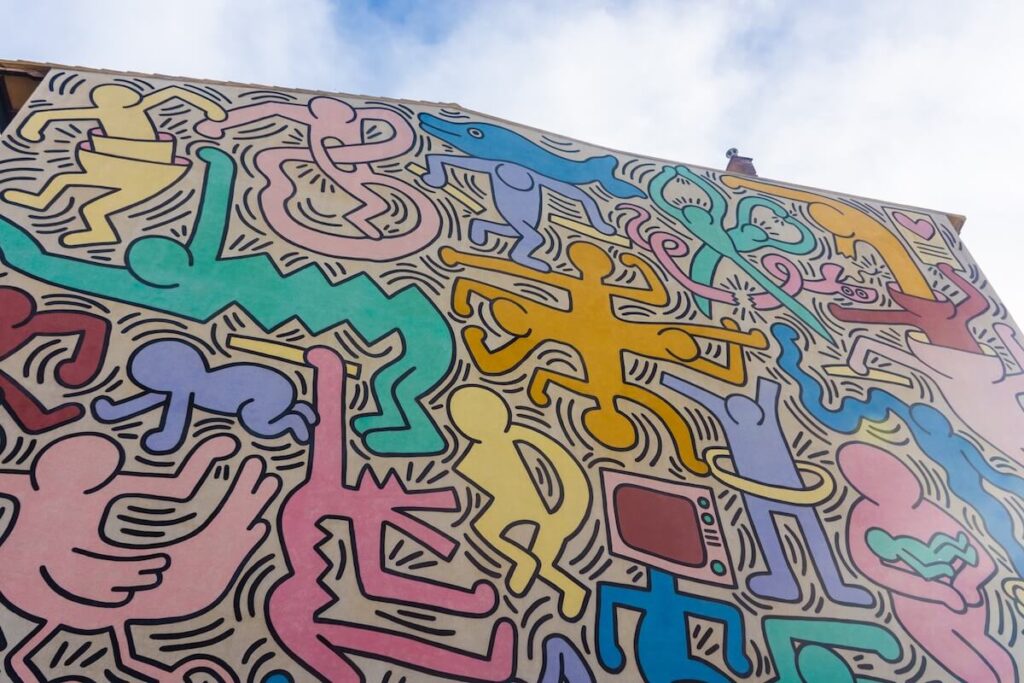
Most recently, this happened in a stark literal fashion in the 1980s with the sadly underappreciated Keith Haring, who authored a large mural in Pisa called “TuttoMondo”. Following his untimely death at only 31, it has become one of the city’s most enduring and important public art pieces.
Thousands of other works in every genre imaginable, in particular those authored by pisani, can be viewed at any of Pisa’s exquisite art galleries, which number more than a dozen.
For an art and history buff like me, that’s definitely one of the most compelling reasons to visit!
9. Galileo’s legacy lives here
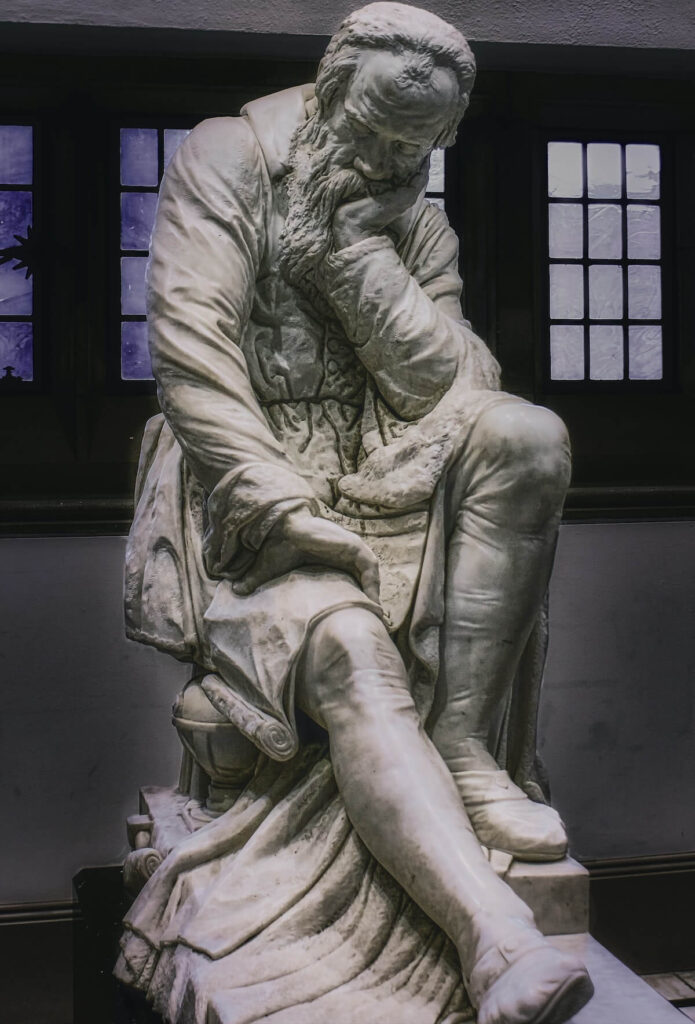
Of course, Pisa’s real claim to fame in terms of notable former residents lies not only in the arts, but also in the sciences. From Enrico Fermi, father of atomic power, to Leonardo Fibonacci, often called the founder of European mathematics, Pisa’s list of big names is a mighty one.
But perhaps no legacy is mightier than that of one particular Pisa native, Galileo Galilei.
Born and raised in the city, Galileo went on to become one of the world’s most important scientists to have ever lived, contributing in massive ways to modern understandings of math, astronomy, engineering, and physics.
His experiment of throwing stone spheres of different weights off the top of the leaning tower probably helped immortalize the building in the public consciousness.
The findings from that experiment also ended up forming the basis of his theory of gravity – one of the single most influential paradigm shifts in the history of physics apart from the heliocentric model of the solar system, which Galileo also championed.
Today, traces of Galileo are all over Pisa, and you can’t ignore the legacy he left behind. It is still possible to visit Galileo’s birthplace and former home in Pisa, in addition to countless public monuments and exhibits made in his honor.
10. Pisa is easy on the wallet

Tuscany, especially along the coast, is known among Italians for being one of the most tourist-heavy regions in the country, making it far less affordable than some others.
However, smaller, less frequented towns like Pisa are the glaring exception to this rule. Prices for food, amenities, and even accommodation are far below the regional average. Of course, it’s still Tuscany, and as such it will be slightly costlier than some locations further down south.
But compared to many, if not most of the most well-known destinations in Italy and abroad, Pisa is a real steal!
11. Its churches are some of the world’s most beautiful

All of Italy is filled with more world-class architecture than the locals know what to do with, so perhaps it’s no surprise that visiting Pisa is like stepping into an open-air exhibit of medieval and Renaissance art.
If I may just throw out some of my favorites, I invite you to go see the Chiesa di Santa Maria della Spina, la Chiesa di Santa Caterina d’Alessandria, and the San Michele in Borgo.
From early medieval to neoclassicist styles, almost every major era of religious architecture is represented in Pisa’s many, many churches and cathedrals. Which is your favorite?
12. So is the botanical garden

Antique houses of worship aren’t the only highlight in town. Pisa is also home to another major historical landmark, the Orto Botanico, one of the world’s first botanical gardens in the contemporary sense.
Established all the way back in 1543, the Orto Botanico is one of Europe’s most amazing collections of rare flora as well as one of the most celebrated centers of botanical research, nowadays part of the affiliated faculty at the local university.
And the best part? Five centuries on, its gardens remain open to the public, easily making for one of the most unforgettable spring and summertime walks you could ask for!
13. Pisa is a piece of the little-known side of Italy
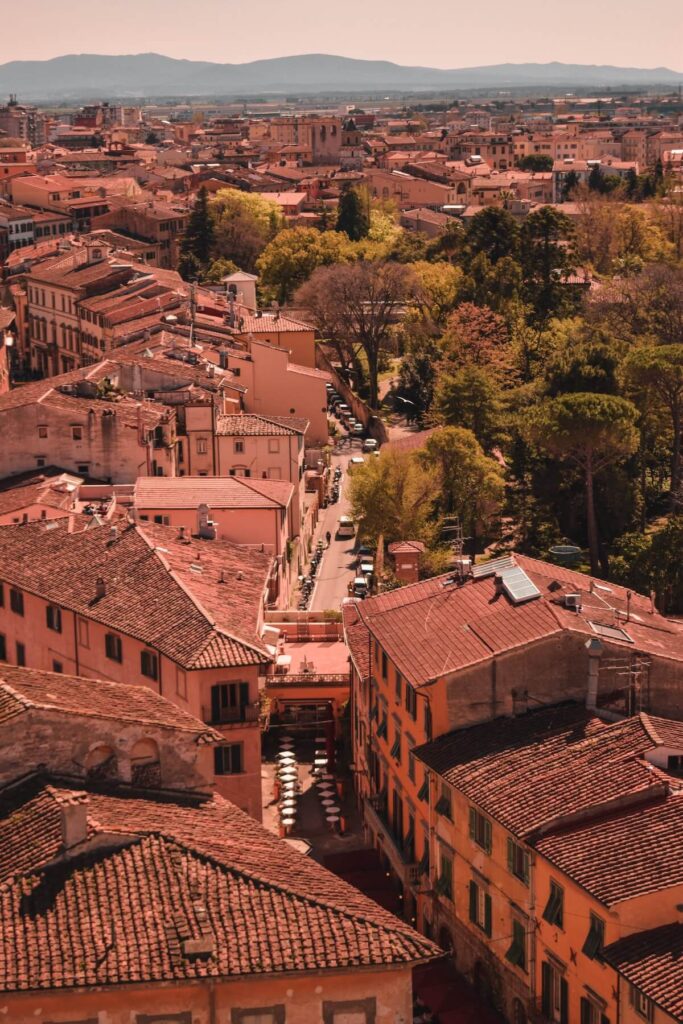
Away from the big cities that most travelers will be familiar with, Pisa can feel like a microcosm all of its own contrasted with “bigger siblings” in the area like Florence.
Most people you’ll meet in Pisa, despite the overwhelming presence of the university, will be native pisani, or at the very least people native to the local region of Tuscany that Pisa is located in.
Speaking in native Tuscan dialect, or at the very least in heavily Tuscan-accented standard Italian, is also a lot more commonplace here than it would be in more “major”, tourist-heavy destinations.
From the quieter, mostly pedestrian streets to the looser daily hours and the still frequently honored riposo (the Italian analog to the siesta) during midday, Pisa is your chance to experience “small-town Italy” in its more authentic sense.
14. The food is to die for
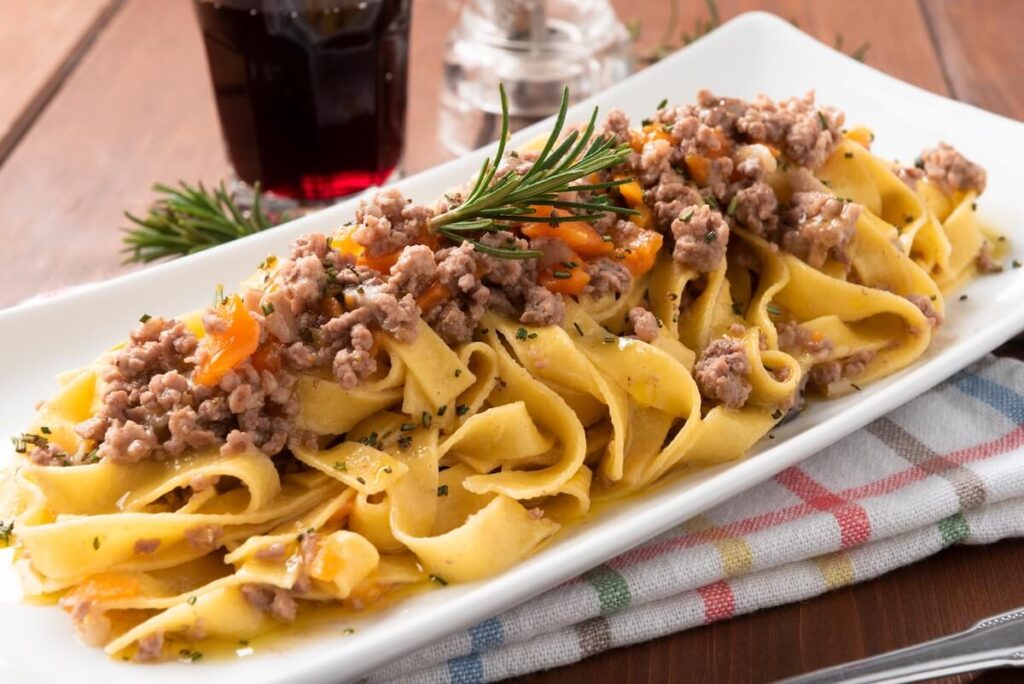
Being not just located in the heart of Tuscany but also right by the Mediterranean sea, of course, Pisa is just overflowing with terrific local cuisine.
The combination of fresh (and surprisingly cheap) seafood with centuries’ worth of culinary traditions results in pisano-style dishes that are just pure bliss for the palate.
My suggestion: shop around at the local markets (the fresh fruit and ingredients here are of much better quality than those at any grocery store you’ll ever see) and go to small, family-run restaurants, even in the peripheries – language barriers permitting, of course.
For some of my absolute favorite recipes, try looking up Tordelli di mucco pisano al ragù as well as the hearty Stoccafisso con le patate. For dessert, there is a special Pisan delicacy called Kinzica: small, puffy sugary balls made with pine nuts gathered from Pisa’s local forest and national park.
15. It’s a feast on the eyes, too
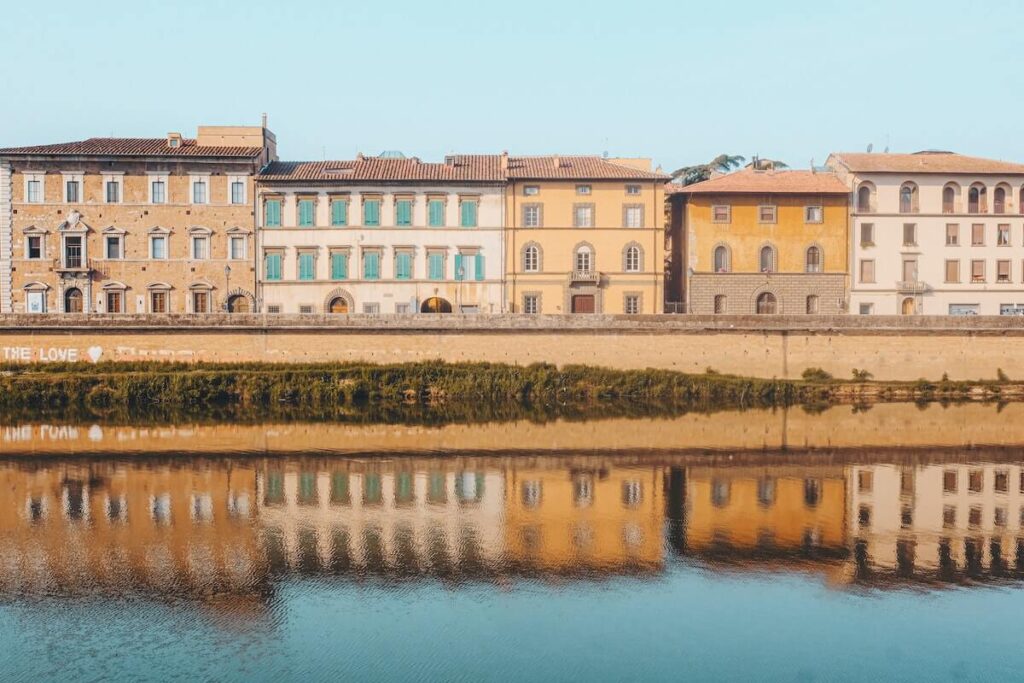
Judging by what I have already covered, this last point may seem a little quaint, but hear me out!
One of the greatest reasons to visit Pisa, to put it very bluntly, is that it is a simply gorgeous place to be. The town reeks of romance and beauty, ancient poetry, and seaside adventure.
Whether that flows directly from Pisa’s looks – the aforementioned elegant churches, the tattered Renaissance facades of the residential buildings, the banks and bridges of the Arno, the dozens of bicycles and Vespas parked at every corner downtown – or from something else within the city is debatable.
What’s for sure is that being in Pisa is a completely cathartic experience, especially for someone who has mostly interacted with Italy through its large, famous cities.
It’s a place that never feels rushed or stressed, where time seems to go by just a tad more slowly, and where, although the big cities are comfortably within reach, there never seems to be any urgency in the air whatsoever.
That is an increasingly rare feeling to get from a major travel destination these days, in our era of gentrification and urbanization. Better savor it for however long it may last!
Conclusion

Now, however you may have made up your mind, I hope that you have no doubts left as to whether Pisa is worth visiting for you!
I myself will think of the little Tuscan jewel very dearly, so there’s no question for me that it’s one of Italy’s continuously underrated gems. But what about you?
If you have been to Pisa yourself, feel free to tell us about your experience. Did the city match or completely contradict your expectations? Most importantly, do you consider Pisa to be a place worth visiting for yourself and others?
I can’t wait to hear all your stories! That’s all from me for now – till next time and happy travels!